You are currently browsing Gijs Grob’s articles.
Directors: William Hanna & Joseph Barbera
Airing date: February 1, 1963
Stars: The Flintstones
Rating: ★★★½
Review:
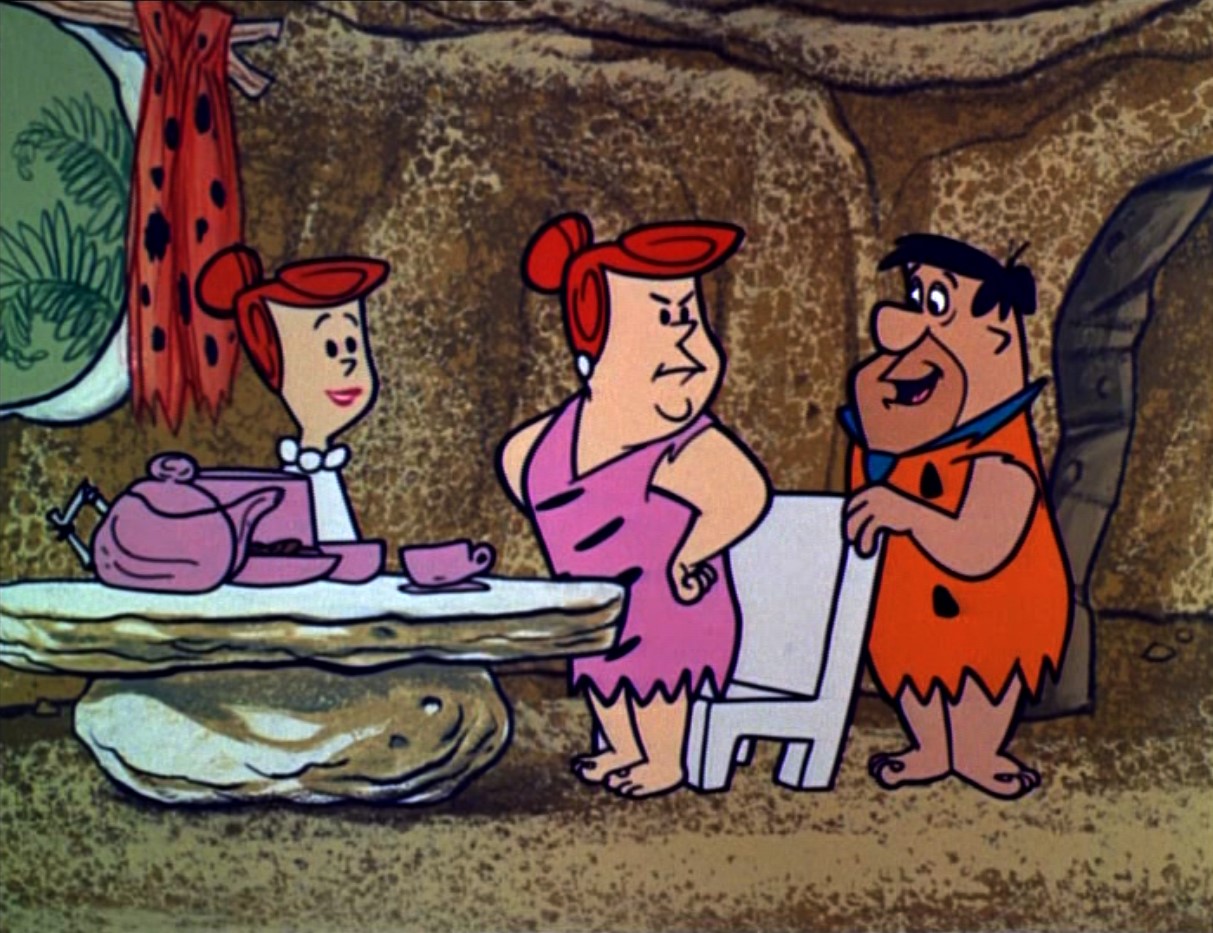
The second episode of the ‘The Flintstones get a baby’ continuum is all around a visit of Fred’s mother-in-law. True to formula, Wilma’s mother is a genuine hag, but Fred tries his best, repeating to himself ‘I love my mother-in-law’ over and over again. When Barney suggests Fred work overtime as a taxi driver, the episode takes a surprising turn.
‘Mother-in-Law’s Visit’ is hampered by the all too old evil mother-in-law trope, but rescued by the fine comedy during the taxi night. Nevertheless, the silliest part is when a motor agent takes Fred and his mother-in-law to a maternity hospital, thinking she will deliver any time soon.
Outside of the comedy, the episode’s highlight is watching Wilma walking around pregnant, being the first animated cartoon character shown to be in expectation.
Watch an excerpt from ‘Mother-in-Law’s Visit’ yourself and tell me what you think:
This is The Flintstones Season Three episode 20
To the previous The Flintstones episode: The Surprise
To the next Flintstones episode: Foxy Grandma
‘Mother-in-Law’s Visit’ is available on the Blu-Ray ‘The Flintstones – The Complete Series’ and the DVD-box ‘The Flintstones Season 3’
Directors: William Hanna & Joseph Barbera
Airing date: January 25, 1963
Stars: The Flintstones
Rating: ★★★
Review:
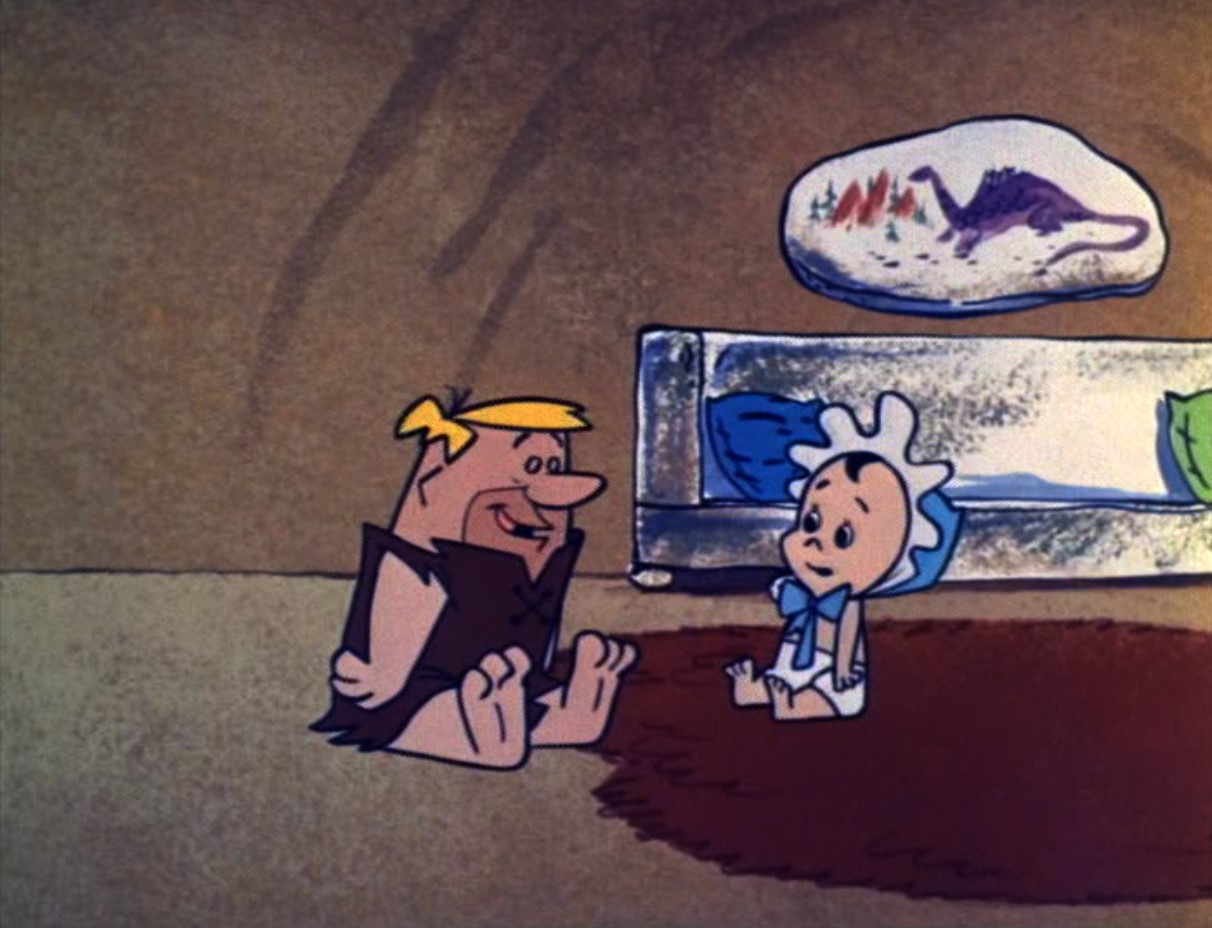
‘The Surprise’ is the first episode in what was to become the first continuum in television animation. The show starts with Betty pushing a baby carriage. The carriage contains little Marblehead, her nephew.
Barney completely falls for the baby, and even forsakes the last game of the bowling tournament, making his team lose. Fred, of course, is not amused, and throughout the episode expresses a disliking of babies. Of course, he softens up as time progresses, and then Wilma indeed has some surprising news.
The whole episode is more gentle and cute than genuinely funny, but Fred’s doubletake when Barney and Betty catch him entertaining little Marblehead is priceless. The episode is also noteworthy for Fred addressing the public directly at the end.
The stone age gags, meanwhile, are modest: a crab and a bird used as scissors, and a mammoth as a water hose. None of these animals speaks, which spares us some lame gags.
Watch an excerpt from ‘The Surprise’ yourself and tell me what you think:
This is The Flintstones Season Three episode 19
To the previous The Flintstones episode: The Hero
To the next Flintstones episode: Mother-in-Law’s Visit
‘The Surprise’ is available on the Blu-Ray ‘The Flintstones – The Complete Series’ and the DVD-box ‘The Flintstones Season 3’
Directors: William Hanna & Joseph Barbera
Airing date: January 18, 1963
Stars: The Flintstones
Rating: ★★
Review:
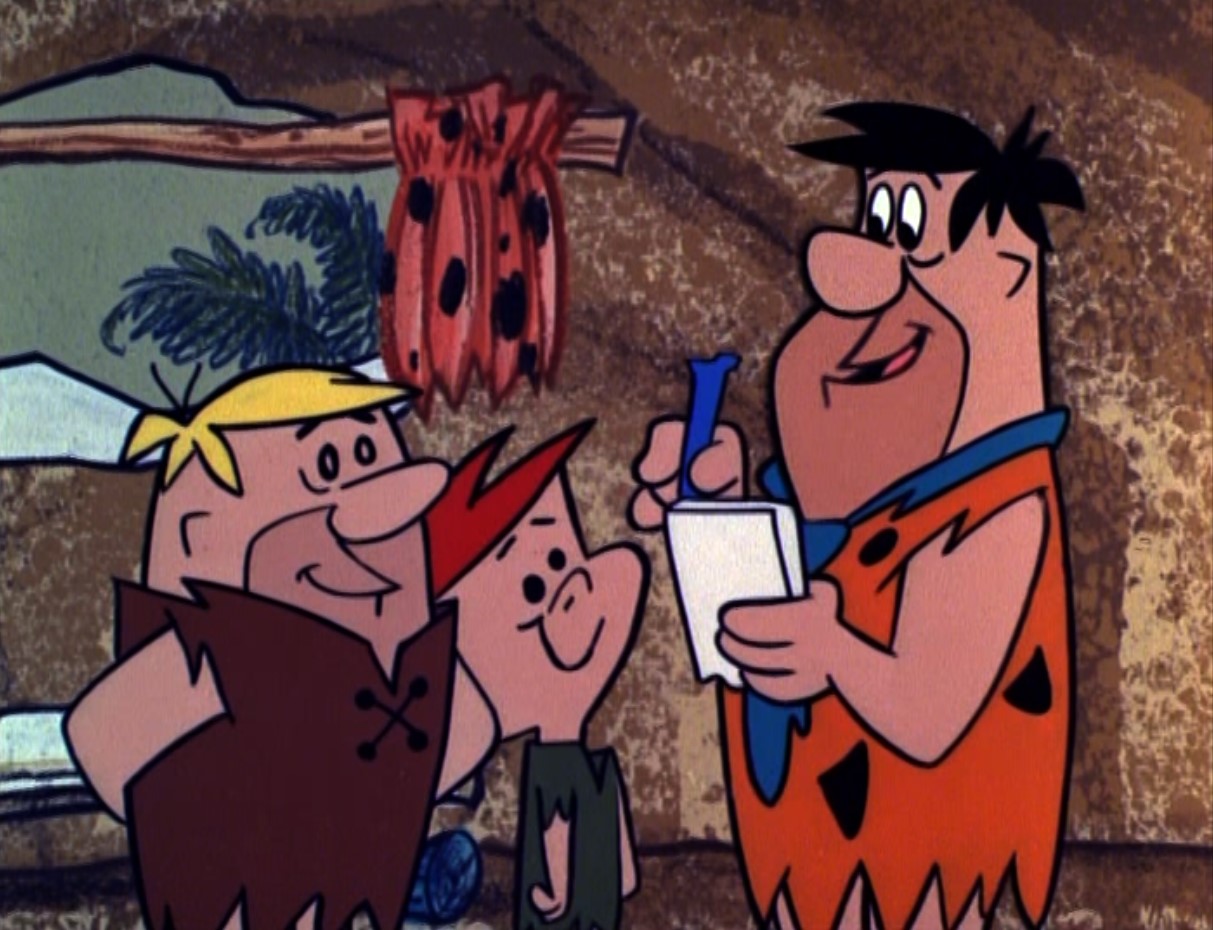
In ‘The Hero’ Fred and Barney both are nominated for the election of ‘Grand Imperial Pooh Bah’ at the Royal Order of Water Buffaloes, but then one of them rescues a baby…
‘The Hero’ progresses in all too predictable strides, and is one of the most boring of the Flintstones episodes. The episode gets a little surreal when Fred’s ‘self’ materializes as a blue doppelganger, haunting our hero. The episode shows how mild the characters had become: Fred certainly behaves much less nasty than in the first series. but with that, some of the sharpness of the humor was also lost.
There are a few stone age gags: a tortoise as a jack, a mammoth as a tow and a porcupine as a hairbrush, but they cannot rescue this boring entry.
Watch an excerpt from ‘The Hero’ yourself and tell me what you think:
This is The Flintstones Season Three episode 18
To the previous The Flintstones episode: Wilma the Maid
To the next Flintstones episode: The Surprise
‘The Hero’ is available on the Blu-Ray ‘The Flintstones – The Complete Series’ and the DVD-box ‘The Flintstones Season 3’
Director: Bill Justice
Release date: December 1962
Stars: Ludwig von Drake
Rating: ★★★★★
Review:
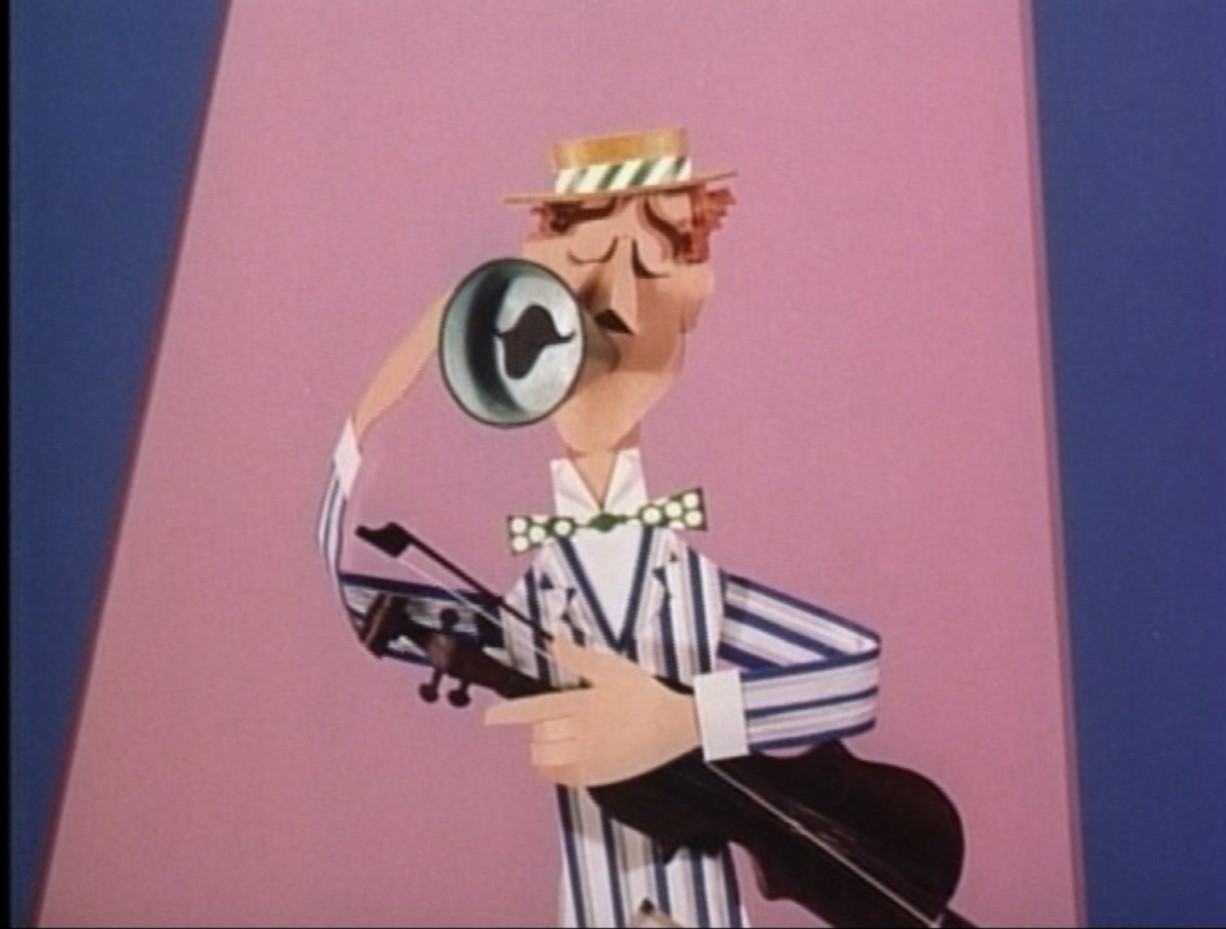
‘A Symposium on Popular Songs’ is the only theatrical cartoon to star Ludwig von Drake. This looney professor was created in 1961 when the Disney television series needed a new host, due to their move from ABC to NBC.
Voiced by an inspired Paul Frees, Von Drake is a wonderful character: he’s very talkative, often saying wrong things and correcting himself, and he has very lively hand gestures. Moreover, his talking is accompanied by all sorts of little sight gags, which makes his ‘lecture’ a delight to watch.
In ‘A Symposium on Popular Songs’ Von Drake leads the viewer along seven of his ‘greatest hits’, which are all wonderfully conceived parodies of 20th century popular music from ragtime to rock ‘n roll. All these hits were penned by the Sherman brothers, and it’s obvious that the two had a great time writing this spoof music, the highlight probably being their parody on the boogie-woogie of the Andrew Sisters.
Von Drake himself is traditionally animated, but his songs are accompanied by delighftul stop-motion and cut-out animations, designed by Xavier Atencio and animated by Bill Justice. In the first song, ‘Rutabaga Rag’, the two indulge in traditional stop-motion of vegetables dancing to the music. But in the subsequent songs the two favor a more sophisticated blend of cut-out and stop-motion, both attractively designed and well-animated.
After the ragtime we get a Charleston (‘Charleston Charlie’, sung by a flapper girl), an Al Jolson-like post-1929-crash song called ‘Although I Dropped a Hundred Thousand in the Market, Baby (I Found a Million Dollars in Your Smile)’, a Bing Crosby-like crooner song called ‘I am blue for you’, in which the crooner (no more than a head with a rudimentary armless stick-body) figures as a bouncing ball illustrating the lyrics, the aforementioned Andrews Sisters-like boogie-woogie song titled ‘The Boogie Woogie Bakery Man’, a doo-wop song called ‘Puppy Love’, and finally a wild rock ‘n’ roll song called ‘Rock, Rumble and Roar’, which is the only one delivered by Ludwig von Drake in person, but it figures excerpts from all six earlier songs.
The result is a wonderful cartoon that is both nonsensical, entertaining and educational.
Watch ‘A Symposium on Popular Songs’ yourself and tell me what you think:
‘A Symposium on Popular Songs’ is available on the DVD ‘Walt Disney Treasures: Disney Rarities’
Directors: William Hanna & Joseph Barbera
Airing date: January 11, 1963
Stars: The Flintstones
Rating: ★★★
Review:
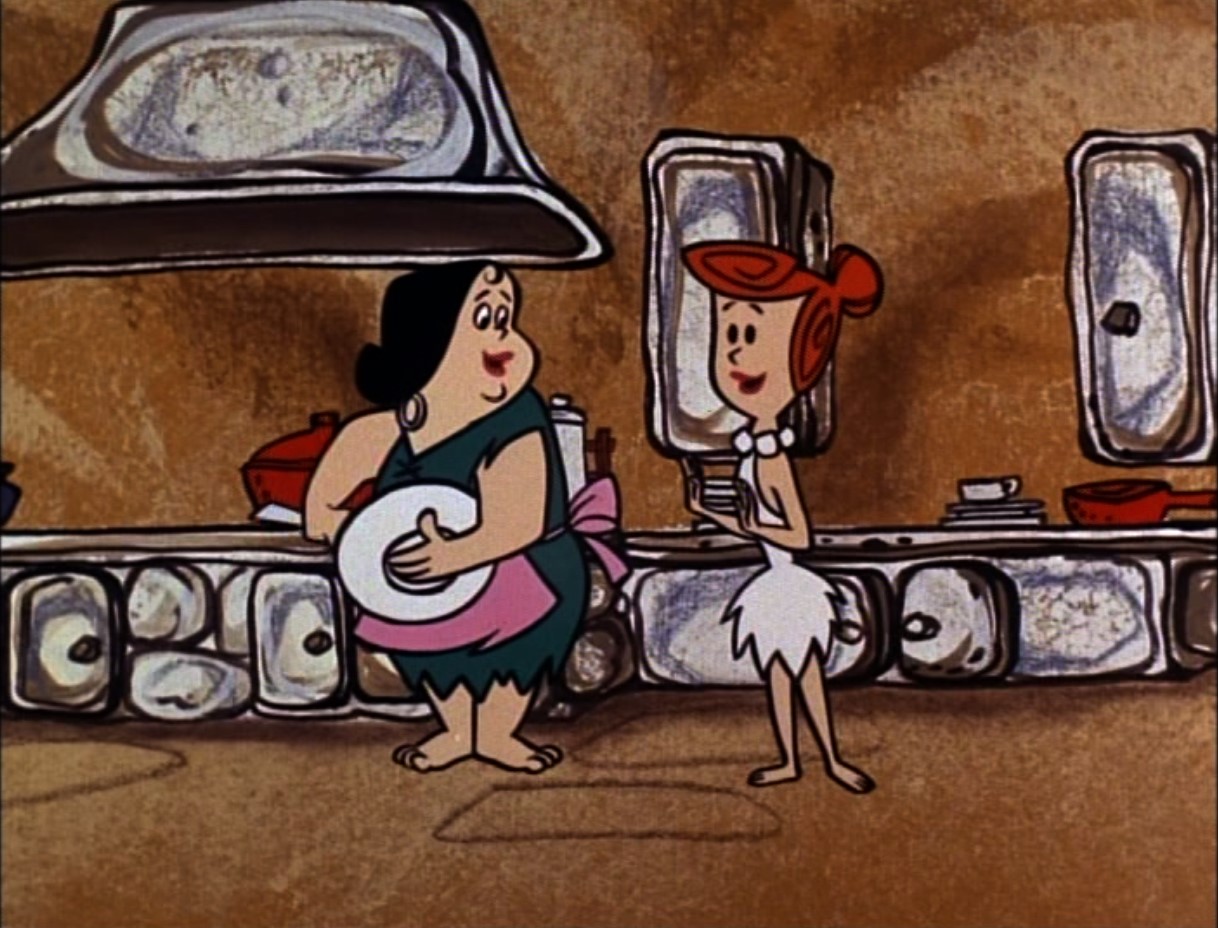
In this Flintstones episode Wilma would like to have a maid. The story takes some unexpected turns, however, and even a real maid shows up.
The maid has the telling name of Lollobrickida, but does not look like the stunning actress Gina Lollobrigida who was the inspiration of her name. How a maid can be Italian in a prehistoric world is never explained, but it doesn’t spoil the comedy, which is of a fine sort, even if things turn out well all too easily in the end.
The prehistory gags include long-billed birds as knitting needles and a huge dinosaur acting as a toll bridge.
Watch an excerpt from ‘Wilma the Maid’ yourself and tell me what you think:
This is The Flintstones Season Three episode 17
To the previous The Flintstones episode: The Kissing Burglar
To the next Flintstones episode: The Hero
‘Wilma the Maid’ is available on the Blu-Ray ‘The Flintstones – The Complete Series’ and the DVD-box ‘The Flintstones Season 3’
Directors: William Hanna & Joseph Barbera
Airing date: January 4, 1963
Stars: The Flintstones
Rating: ★★★½
Review:
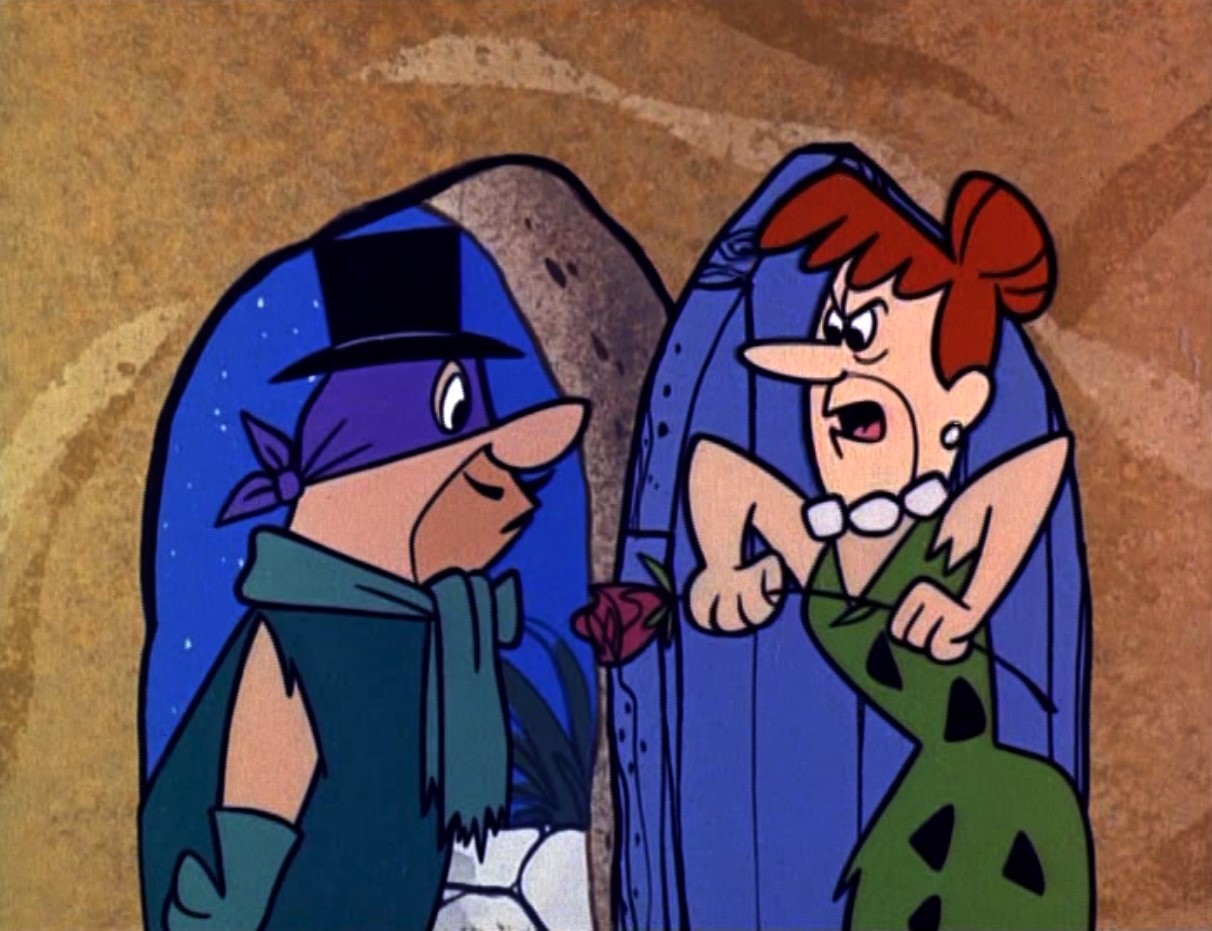
‘The Kissing Burglar’ is literally about a kissing burglar, a crook with apparently a romantic side to him. Wilma and Betty are all excited about meeting him, so Fred decides to teach Wilma a lesson.
The kissing burglar is a pretty silly character, especially because he’s shown to have a jealous wife, and there are some cartoony antics. But in the end the episode turns out to be a nice play on Fred and Wilma’s relationship to each other. Especially the end scene is a beauty, in that respect.
The stone age gags meanwhile are scarce. They makers don’t even show how the night lamps work, but the typewriter is well done.
Watch an excerpt from ‘The Kissing Burglar’ yourself and tell me what you think:
This is The Flintstones Season Three episode 16
To the previous The Flintstones episode: Flashgun Freddie
To the next Flintstones episode: Wilma the Maid
‘The Kissing Burglar’ is available on the Blu-Ray ‘The Flintstones – The Complete Series’ and the DVD-box ‘The Flintstones Season 3’
Directors: William Hanna & Joseph Barbera
Airing date: December 21, 1962
Stars: The Flintstones
Rating: ★★★
Review:
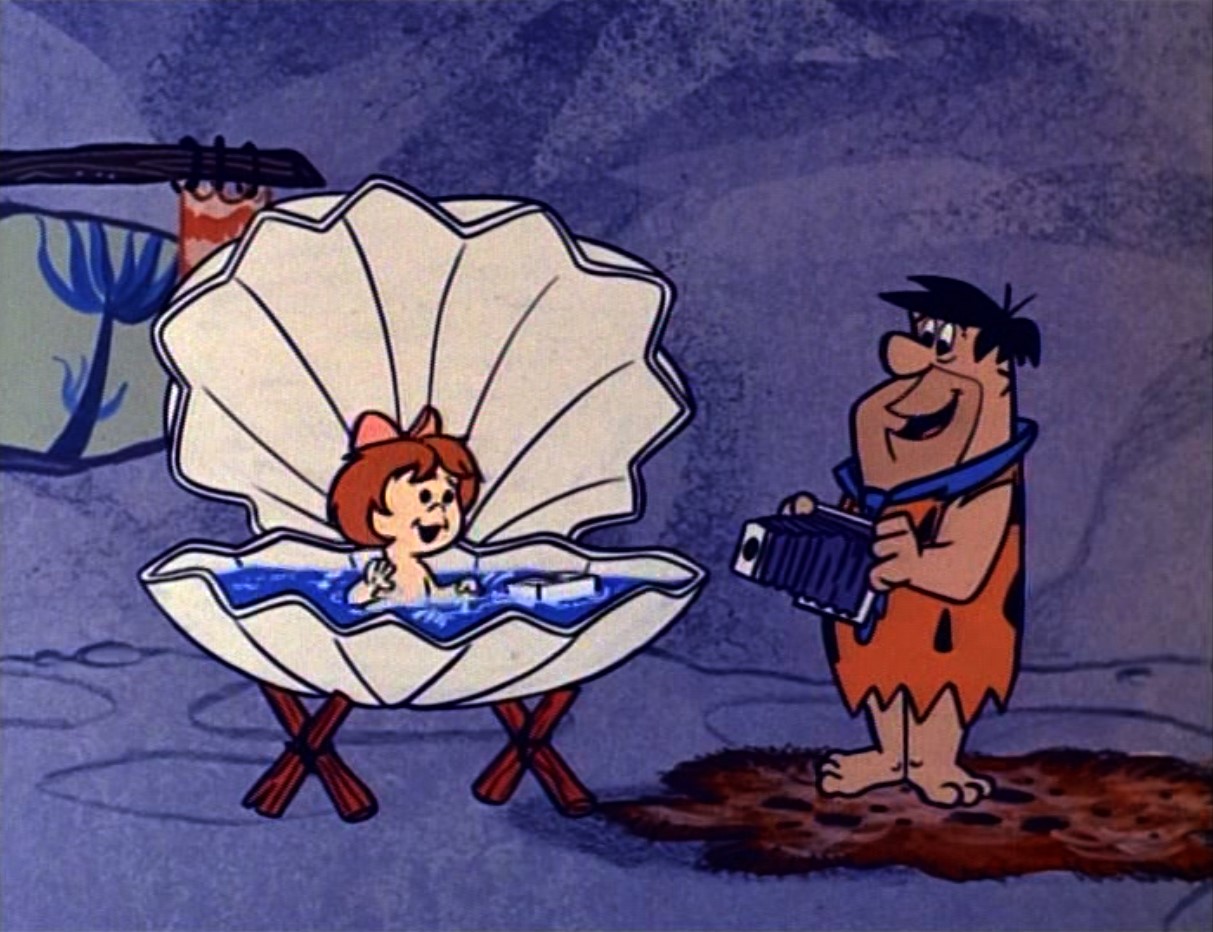
The boys are having their vacation at home, and the episode starts with a long and superfluous slapstick routine of Fred trying to get Dino to the vet for a shot. Then another long scene at a store leads to the main story in which Fred and Barney take up photography.
The result is another slapstick episode with a story that never satisfies the story ideas to their full potential. The stone age gags are all in the beginning with one of those numerous mammoths functioning as a tap, a porcupine, and a little bird inside Fred and Barney’s camera.
The designs on Fred and Barney are erratic from one scene to the next and the background art is particularly dull in this episode, with its faint shades of gray and blue. Harvey Milstone and his wife look like stone age versions of George and Judy from The Jetsons, a series that had just started in September.
Watch an excerpt from ‘Flashgun Freddie’ yourself and tell me what you think:
This is The Flintstones Season Three episode 15
To the previous The Flintstones episode: Dial “S” for Suspicion
To the next Flintstones episode: The Kissing Burglar
‘Flashgun Freddie’ is available on the Blu-Ray ‘The Flintstones – The Complete Series’ and the DVD-box ‘The Flintstones Season 3’
Directors: William Hanna & Joseph Barbera
Airing date: December 14, 1962
Stars: The Flintstones
Rating: ★★★★
Review:
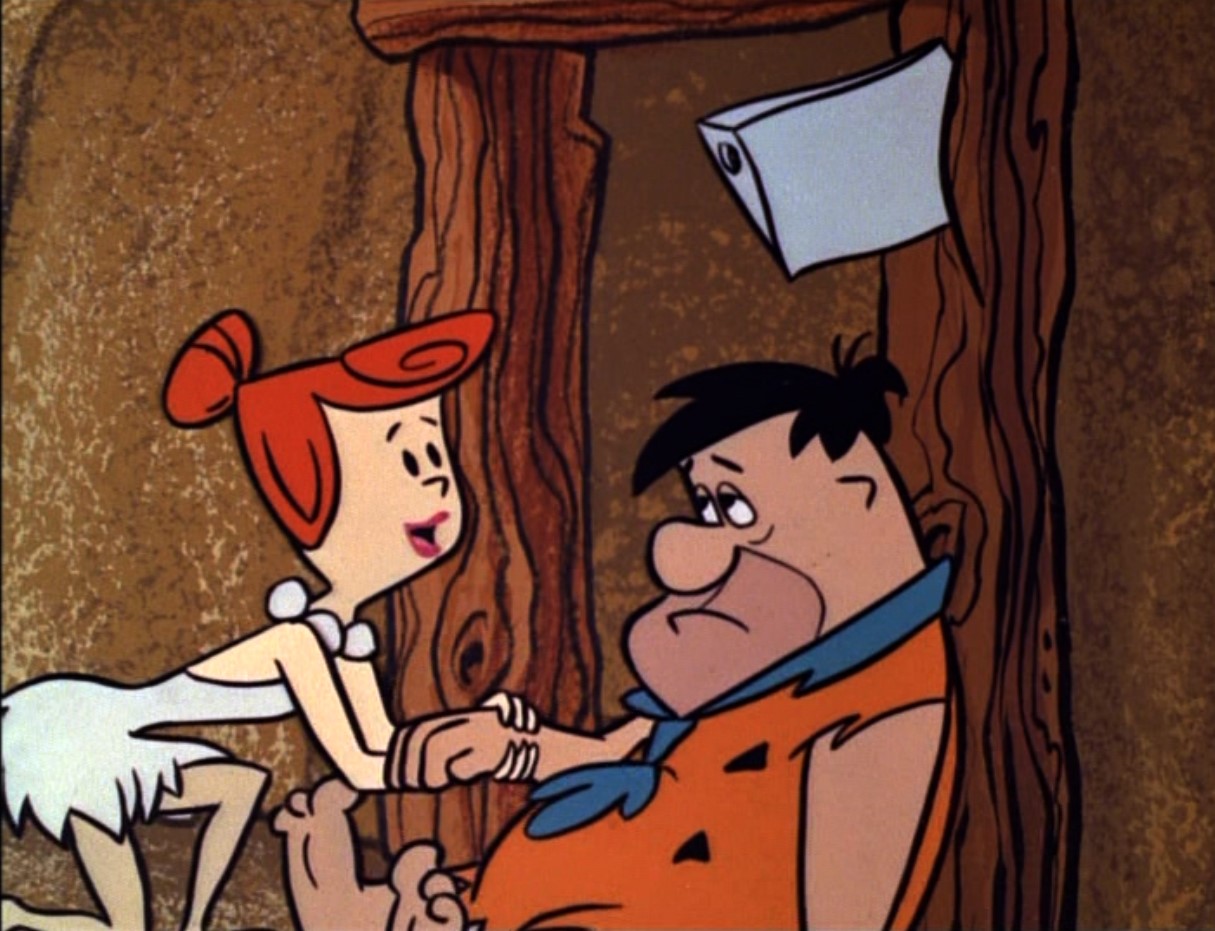
‘Dial “S” for Suspicion’ starts with Fred having applied for a job at the exclusive Stone Valley Inn. As Fred has lied about his degrees and his ability to speak Spanish, one can guess where the episode will head to, but the story takes a surprise turn, in which Fred gets suspicious about his wife to downright paranoid.
It’s almost unbelievable that this sophisticated comedy of errors comes from the same writers as the silly slapstick from ‘Nuthin’ but the Tooth’. When the different characters are played against each other, the Flintstones episodes are so much finer. Fred’s paranoia is enhanced by the score, which features some eerie organ music in several scenes.
The stone age gags are less inspired and consist of a monkey and a mammoth functioning as a shower, a long-billed bird as a can opener, and a particularly silly checkerboard turtle. The designs, too, are erratic, and in some scenes, Fred’s design is downright poor.
Watch an excerpt from ‘Dial “S” for Suspicion’ yourself and tell me what you think:
This is The Flintstones Season Three episode 14
To the previous The Flintstones episode: High School Fred
To the next Flintstones episode: Flashgun Freddie
‘Dial “S” for Suspicion’ is available on the Blu-Ray ‘The Flintstones – The Complete Series’ and the DVD-box ‘The Flintstones Season 3’
Directors: William Hanna & Joseph Barbera
Airing date: December 7, 1962
Stars: The Flintstones
Rating: ★★½
Review:
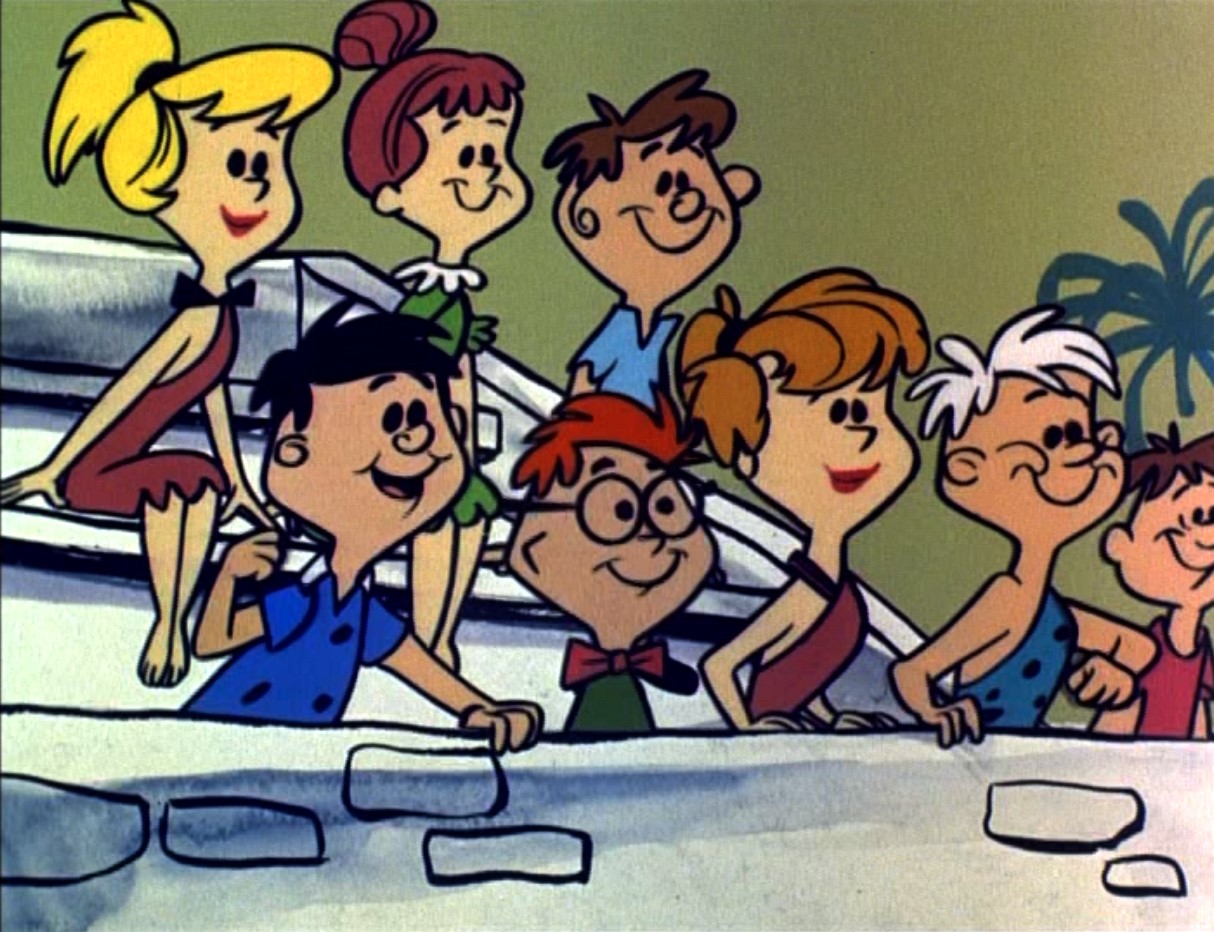
In ‘High School Fred’ Fred’s employer calls in an efficiency expert who tells Fred that he will be ‘terminated’ because he hasn’t got a high school diploma. But Fred’s boss lets Fred finish his missed last two weeks in high school, so he can stay. When Fred tries to tell Wilma all this, she misunderstands and thinks Fred goes to an executive school to get promoted.
Unfortunately, the writers do little with the high school premise and mostly show Fred excelling at sports. The whole episode is low on gags, the most bizarre being a throwaway gag of a roast bird preparing itself, while Barney and Betty are talking. There’s also a mini-mammoth used as a spray gun, and the occasional bird acting like a record player needle.
Watch an excerpt from ‘High School Fred’ yourself and tell me what you think:
This is The Flintstones Season Three episode 13
To the previous The Flintstones episode: Nuthin’ but the Tooth
To the next Flintstones episode: Dial “S” for Suspicion
‘High School Fred’ is available on the Blu-Ray ‘The Flintstones – The Complete Series’ and the DVD-box ‘The Flintstones Season 3’
Directors: William Hanna & Joseph Barbera
Airing date: November 30, 1962
Stars: The Flintstones
Rating: ★★★
Review:
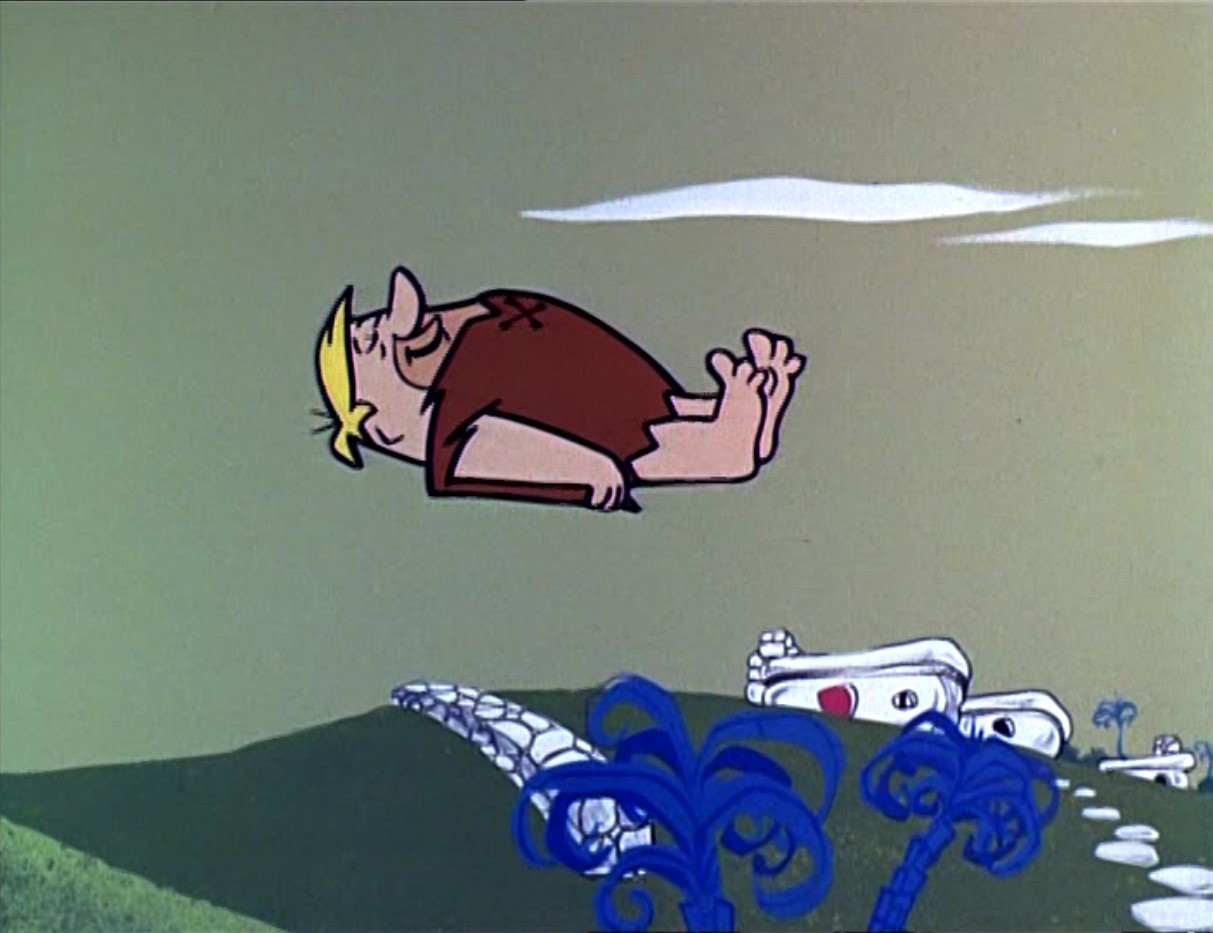
This episode starts with some mysterious wailing in the night, which turns out to be Barney with a toothache. The next day Fred takes Barney to the dentist, but when Fred wants to save the necessary $10 to see a fight, he changes plans.
‘Nuthin’ but the Tooth’ is one of the silliest Flintstones episodes, full of nonsensical cartoon humor and slapstick scenes. Unfortunately, the writers milk the gas gag way too long, and there’s nothing of the more subtle character comedy of other episodes.
The best stone age gag is the parrot who functions as the dentist’s intercom. Notice the rare appearance of the sabretooth cat, so frequently seen during the titles, within an episode itself.
Watch an excerpt from ‘Nuthin’ but the Tooth’ yourself and tell me what you think:
This is The Flintstones Season Three episode 12
To the previous The Flintstones episode: Ladies’ Day
To the next Flintstones episode: High School Fred
‘Nuthin’ but the Tooth’ is available on the Blu-Ray ‘The Flintstones – The Complete Series’ and the DVD-box ‘The Flintstones Season 3’
Directors: William Hanna & Joseph Barbera
Airing date: November 23, 1962
Stars: The Flintstones
Rating: ★★★★½
Review:
Until this point in the third season the Flintstones episodes were only mildly funny at best, and frankly more often than not dragged a little, but ‘Ladies Day’ is over before you know it.
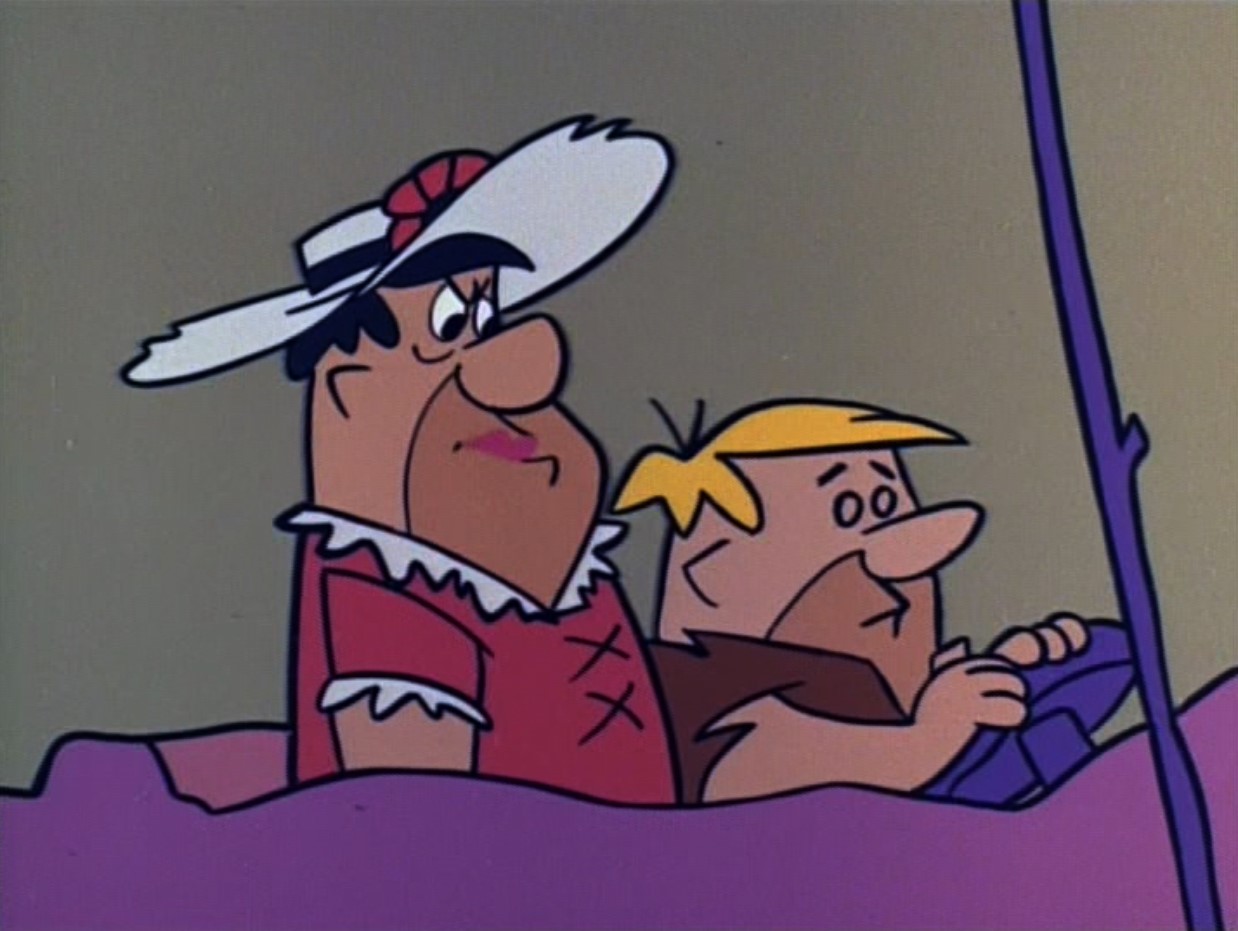
The story starts rolling when Fred wants to go to the ball game, but he’s both flat broke and he has to work. When he learns from Barney it’s “ladies’ day” at the ball game he gets an idea. What follows is a comedy of errors that involves the wives, the police and Fred’s boss and the boss’s South American customer, who appears to be a ladies man.
For once the story stays surprising throughout and the writers play nicely around with the four main characters. Naturally, there’s less room for stone age gags, and we have to do with a single crocodile acting as Betty’s laundry machine. But it doesn’t matter, for ‘Ladies’Day’ is one of the best written Flintstones episodes of all.
Watch an excerpt from ‘Ladies’ Day’ yourself and tell me what you think:
This is The Flintstones Season Three episode 11
To the previous The Flintstones episode: Hawaiian Escapade
To the next Flintstones episode: Nuthin’ but the Tooth
‘Ladies’ Day’ is available on the Blu-Ray ‘The Flintstones – The Complete Series’ and the DVD-box ‘The Flintstones Season 3’
Directors: William Hanna & Joseph Barbera
Airing date: November 16, 1962
Stars: The Flintstones
Rating: ★★★
Review:
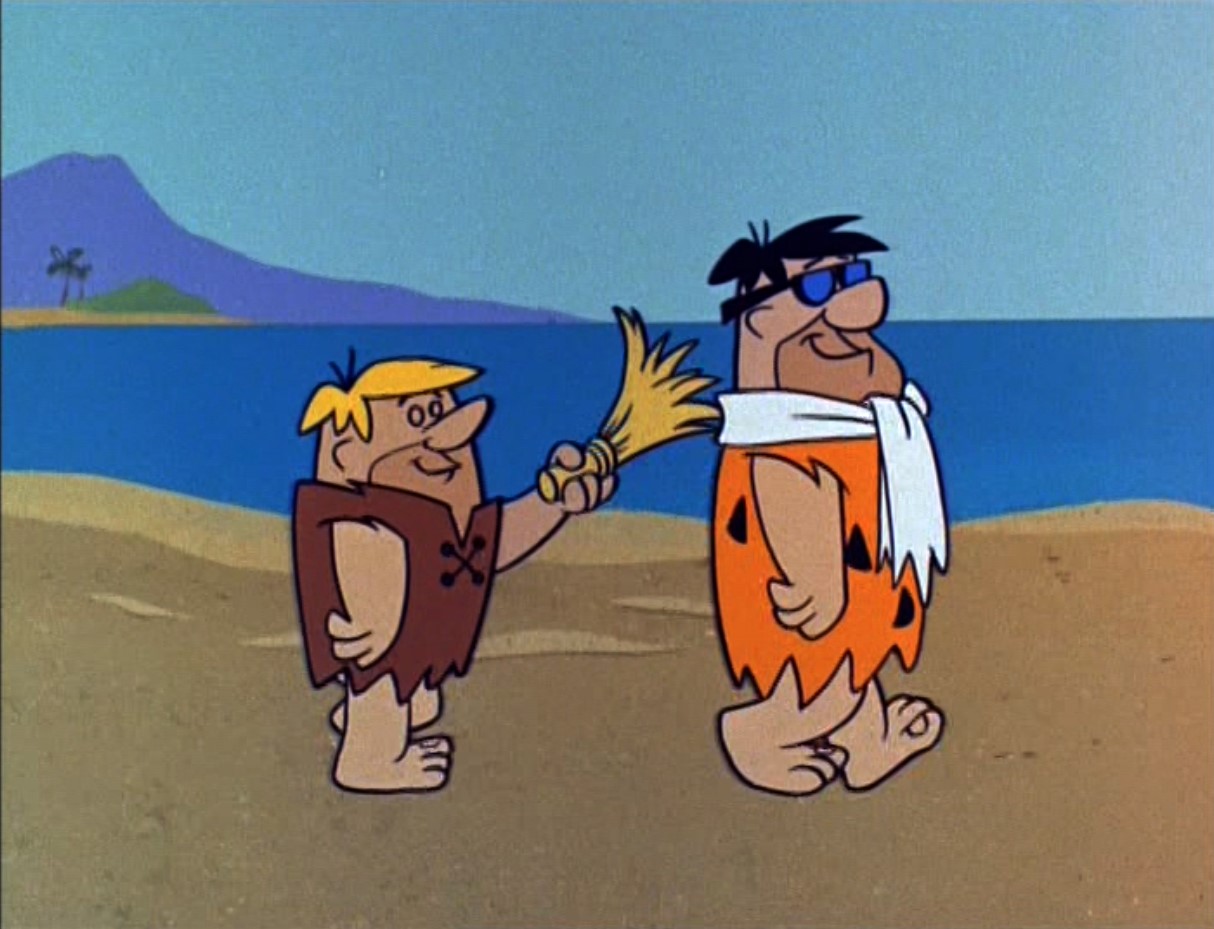
Surprisingly many Flintstones episodes deal with the average viewer’s dream to become an actor. In the third season ‘Hawaiian Escapade’ is the second after ‘Dino Goes Hollyrock‘.
This episode feels mostly like a remake from ‘The Monster from the Tarpits‘ from the first series. In both episodes Fred ends up as a stunt double, and even the Hollywood star, Larry Lava, is a faint echo of the Gary Granite of the former episode. There’s also an echo from ‘Hollyrock, Here I Come‘, another episode from the first season, as in both episodes, fame goes to Fred’s head.
The rehash of earlier tried tropes make ‘Hawaiian Escapade’ rather dull and uninspired. Even the stone age gags fall flat. Much more interesting is the running gag of Wilma burning Fred’s steak, and the cute finale.
Watch an excerpt from ‘Hawaiian Escapade’ yourself and tell me what you think:
This is The Flintstones Season Three episode 10
To the previous The Flintstones episode: Baby Barney
To the next Flintstones episode: Ladies’ Day
‘Hawaiian Escapade’ is available on the Blu-Ray ‘The Flintstones – The Complete Series’ and the DVD-box ‘The Flintstones Season 3’
Directors: William Hanna & Joseph Barbera
Airing date: November 9, 1962
Stars: The Flintstones
Rating: ★★★
Review:

After ‘The Little Stranger’ ‘Baby Barney’ is the second Flintstones episode trying out Fred’s attitude to fatherhood, anticipating the great continuity later in the series.
This time Fred’s fatherhood is triggered by the coming of a rich uncle Tex, whom he promised a ‘little Tex’. It’s the unfortunate Barney who has to pose as the improbable baby. This accounts for a lot of slapstick, but in the end it’s Fred acting like a father for the first time that stays most. Stone age gags, meanwhile, are rare, as I can only mention a lawnmower dinosaur.
Watch an excerpt from ‘Baby Barney’ yourself and tell me what you think:
This is The Flintstones Season Three episode 9
To the previous The Flintstones episode: The Little Stranger
To the next Flintstones episode: Hawaiian Escapade
‘Baby Barney’ is available on the Blu-Ray ‘The Flintstones – The Complete Series’ and the DVD-box ‘The Flintstones Season 3’
Directors: William Hanna & Joseph Barbera
Airing date: November 2, 1962
Stars: The Flintstones
Rating: ★★★
Review:
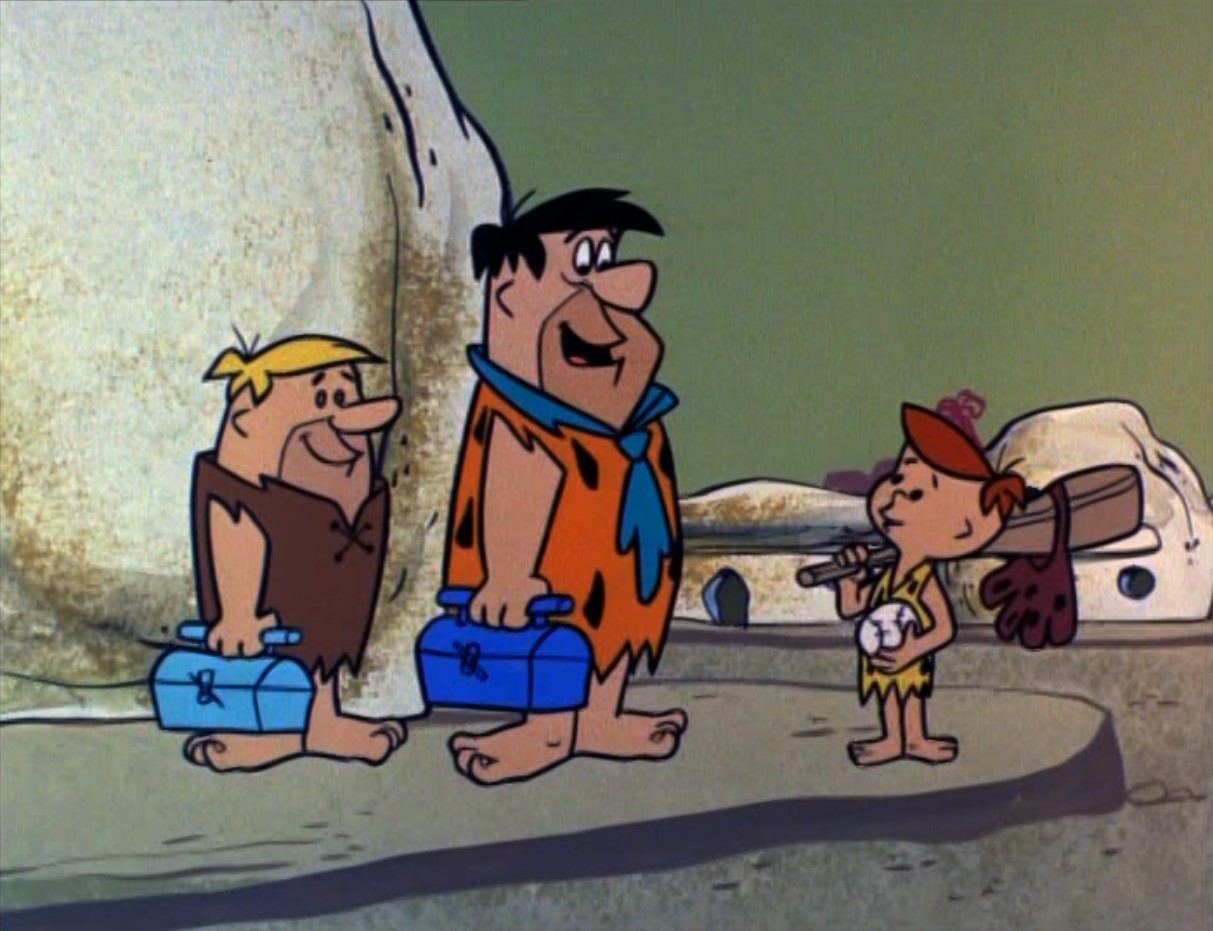
‘The Little Stranger’ starts with a Fred so grumpy Wilma sends him to a doctor to get examined. On the way Fred and Barney repeatedly meet a paper delivering little boy called Arnold, who gets the better of Fred each time. However, we have to wait until the 11th minute before the story really begins.
As with some of the best Flintstones episodes ‘The Little Stranger’ is a comedy of errors, and it is a delight to watch Fred’s sweet side, as well as him running back and forth when he thinks Wilma is expecting a little baby any minute. The best sight gag however, is when the doctor makes Fred inhale and exhale, a breath so powerful it moves Barney, who’s reading on a chair, through the office.
‘The Little Stranger’ feels like a prequel to the continuous story of the Flintstones getting a baby, which makes the third season so unique. It’s the first episode in which the baby idea comes up, and Fred’s reaction indeed is inviting to make the character deal with the real thing.
The stone age gags, meanwhile, are modest, and include a dish washing pelican, the now almost regular mammoth vacuum cleaner, and a bizarre bag-crocodile. Notice that for once, one of the windows is glass-covered, to get a gag with Arnold along.
Watch an excerpt from ‘The Little Stranger’ yourself and tell me what you think:
This is The Flintstones Season Three episode 8
To the previous The Flintstones episode: The Buffalo Convention
To the next Flintstones episode: Baby Barney
‘The Little Stranger’ is available on the Blu-Ray ‘The Flintstones – The Complete Series’ and the DVD-box ‘The Flintstones Season 3’
Directors: William Hanna & Joseph Barbera
Airing date: October 26, 1962
Stars: The Flintstones
Rating: ★★
Review:
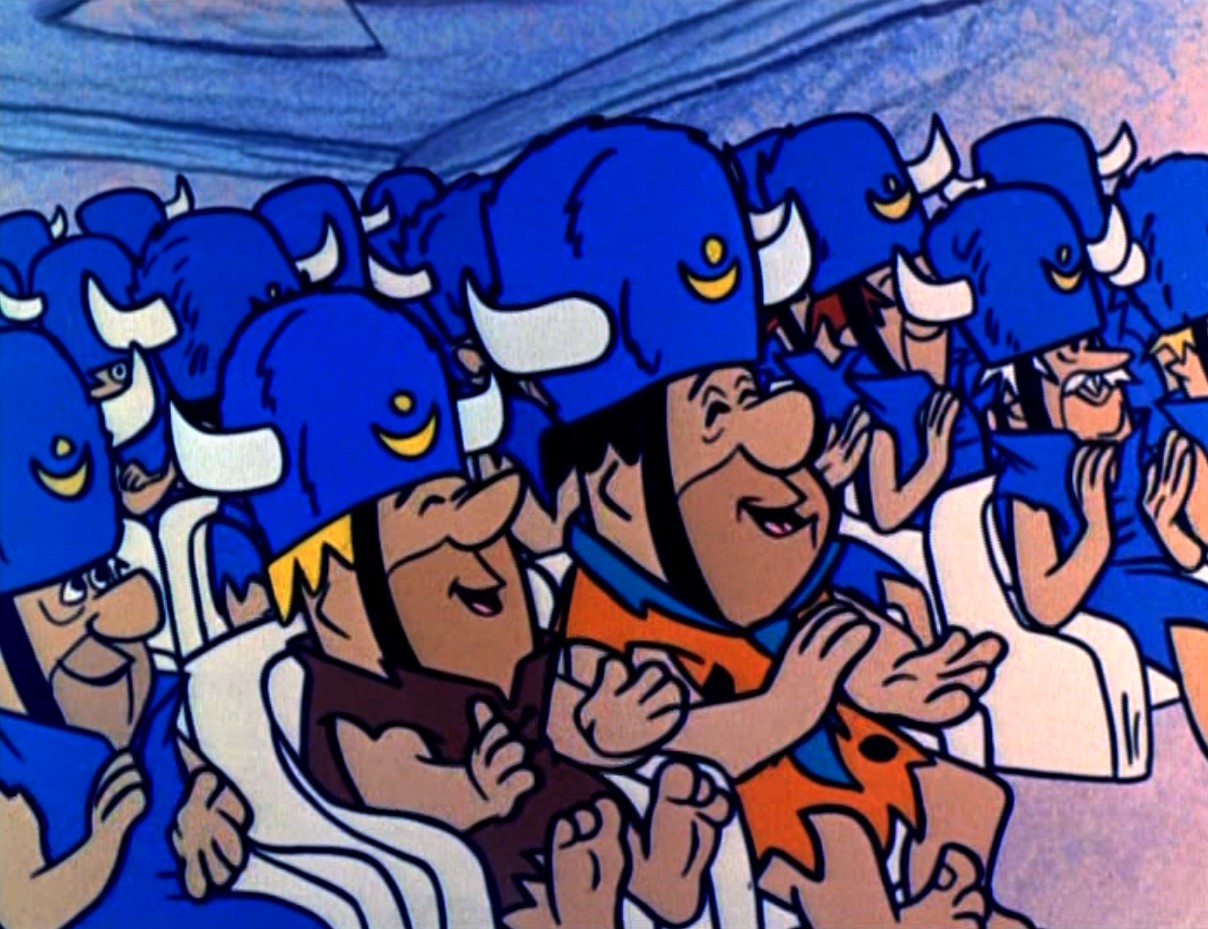
It’s Wilma’s birthday and Fred buys her a doozy dodo, a talking bird, from a seedy street vendor. At home it first seems the bird doesn’t talk after all, but when Fred and Barney are conspiring to go a three days convention of the Loyal Order of Water Buffaloes in ‘Frantic City’, the bird reveals all to their wives.
This episode follows all familiar tropes existing since the Laurel and Hardy feature ‘Sons of the Desert’ (1933) and is utterly predictable from start to end. The stone age gags bring some light into this listless episode, and involve a sneezing mini mammoth as a malfunctioning vacuum cleaner, a dinosaur bus, and best of all, a monkey-operated traffic light.
Watch an excerpt from ‘The Buffalo Convention’ yourself and tell me what you think:
This is The Flintstones Season Three episode 7
To the previous The Flintstones episode: Here’s Snow in Your Eyes
To the next Flintstones episode: The Little Stranger
‘The Buffalo Convention’ is available on the Blu-Ray ‘The Flintstones – The Complete Series’ and the DVD-box ‘The Flintstones Season 3’
Director: Abe Levitow
Release date: October 24, 1962
Rating: ★★½
Review:
‘Gay Purr-ee’ was the second of only two feature films made by UPA, the first being ‘1001 Arabian Nights’ from 1959 and starring the studio’s only star, Mr. Magoo. In fact, ‘Gay Purr-ee’ was the artistic swansong of the once famed animation studio. Most daring and influential in the 1950s, by the early 1960s UPA had become only a shadow of its former self, as this feature film painfully demonstrates.
In fact, UPA had already entered a stage of decay when Steve Bosustow, one of the founding members of the studio sold his interests to businessman Henry G. Saperstein. Saperstein had no interest in UPA’s “fine-art crap” (as quoted in Adam Abraham’s excellent book on the studio ‘When Magoo Flew’, p. 212) and was only interested in making the cartoons as cheaply as possible. When Saperstein fired Bosustow in 1961, one can say UPA was in fact braindead. It’s thus the more surprising that the studio did make such a costly product as a feature film anyway.
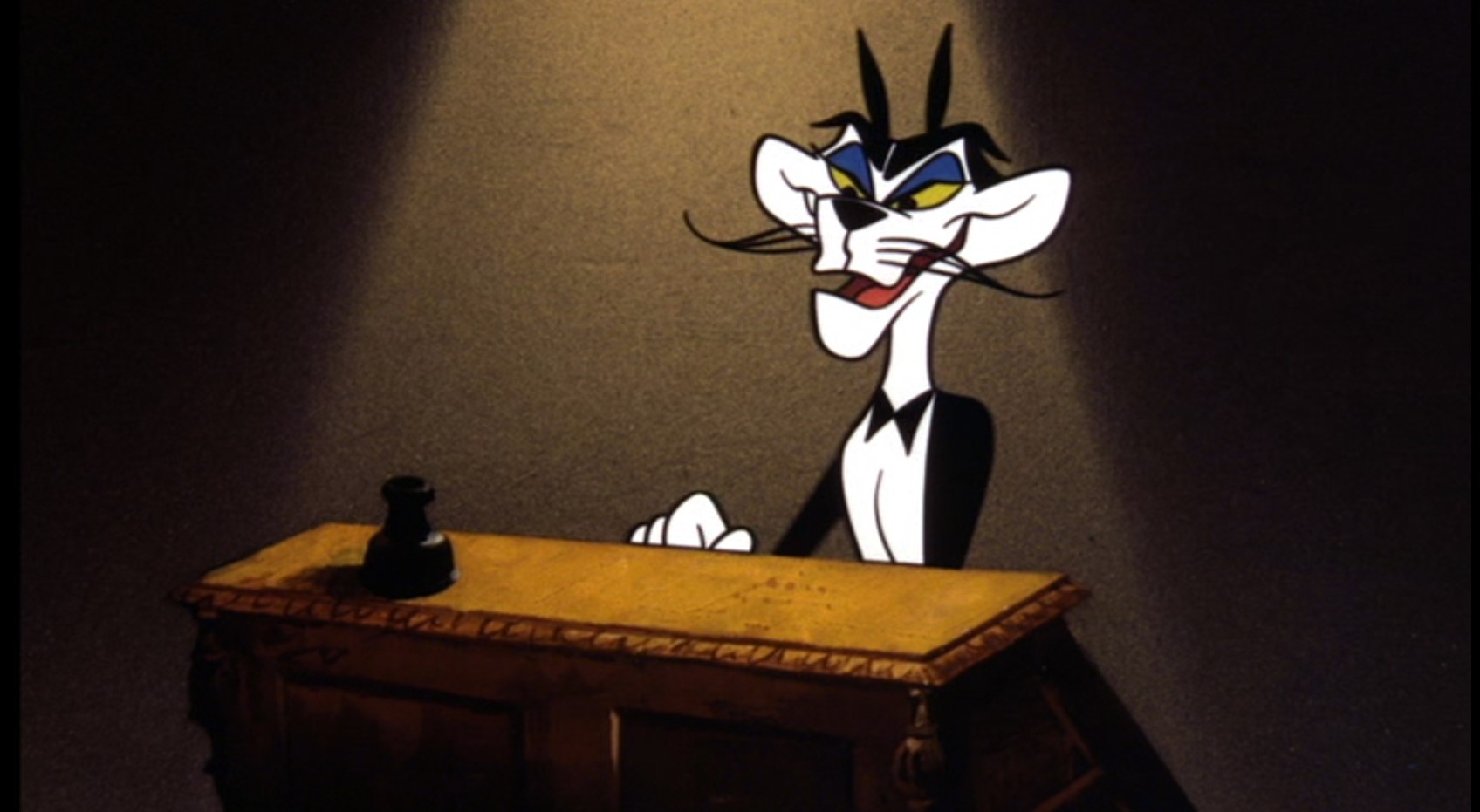
‘Gay Purr-ee’ was distributed for Warner Bros. and the film breathes that studio as much, if not more than the UPA vibe. There’s of course the bad pun in the title, a Warner Bros. trademark. Then the film stars cats, not humans, breaking with a long UPA tradition, but fitting perfectly in the Warner Bros. practice. Moreover, the story was by Chuck Jones and his wife Dorothy. In fact, Jones was moonlighting when he worked for this feature film, and when Warner Bros. found out, he was duly fired because of breach of contract. Jones clearly was responsible for the designs of the three lead characters, if less so for supporting characters like Robespierre and Mme. Rubens-Chatte. To add to the Warner Bros. vibe, the film was directed by Jones’ former animator and co-worker Abe Levitow, and Warner Bros. voice man Mel Blanc voices several characters.
The UPA influence, in fact, is only visible in the gorgeous background art, supervised by Victor Haboush, who had worked on layout and background art for Disney features ‘Peter Pan’, ‘Lady and the Tramp’ and ‘Sleeping Beauty’. The background art of ‘Gay Purr-ee’ is strikingly modern, with bold fauvist color schemes, an unmistakable Van Gogh-influence in the Provencal scenes, and allusions to various other painters in the Parisian ones. In fact, the background art can count as the film’s highlight, for the rest of the movie, unfortunately, is not that good, and the viewer has ample time to marvel at the gorgeous background paintings and pastels.
The film has several problems:
First, the animation doesn’t follow the background layouts. Painted sidewalks are completely ignored, and when Jaune Tom and Robespierre ride the rails, there’s no connection between their walk and the ties they’re supposed to step on.
Second, there’s Dorothy and Chuck Jones’s story: the film takes place in Paris at the end of the 19th century, and tells about a female cat called Mewsette (yes, a pun) who lives in the countryside, but longs to go to Paris. This story is a variation of the age-old trope of a country girl going to the big city only to become ensnared there. Back in 1920 Władysław Starewicz had already made an animation film with this theme called ‘Dans les griffes de l’araignée’ (In the Spider’s Grip). The Joneses add little to this cliché, and the story unfolds in an all too predictable pattern. Moreover, the villain Meowrice’s (yes, another pun) scheme is an all too bizarre one. It would be more logical if he would put poor Mewsette into prostitution, but this was of course off limits in a family film.
Third, there’s the wonky level of anthropomorphism. The cats all walk on fours, and are clearly cats, especially when interacting with men, but at the same time Meowrice is able to write a letter, and there’s a Moulin-rouge-like bar (called Mewlon Rouge, yes, yes) in which cats dance and drink alcohol. The inconsistency is neither explained nor resolved and hampers the overall believability of the film.
Fourth, the characters are not that interesting. Mewsette is more spoiled and naive than sympathetic, Jaune Tom clearly has his heart in the right place, but his only other character trait is that he loves chasing mice. Meowrice is clearly a villain from the very beginning, and his dual character is never played out well. I guess Robespierre was included as comic relief, but he has a particularly weak voice (by Red Buttons) and he is tiresome, not funny. Most interesting and best designed is the opportunistic Mme. Rubens-Chatte, but her role is small and her change of heart all too predictable.
Fifth, Abe Levitow’s all too relaxed direction slows the film down. Excitement or fear are shown, but not felt. Just before the finale there’s a long sequence in which Meowrice describes portraits of Mewsette by several of the leading painters of the era, including Monet, Gauguin and Picasso. This is fun of course, but of no consequence to the narrative, and stalls the story. Then there’s a grand finale on a train, but this, too, is lacking the necessary tension. Never does the viewer fear that things could go wrong.
And finally, sixth, the film contains eight songs by the famed duo of Harold Arlen and Yip Harburg, who have enriched the world with their songs for ‘The Wizard of Oz’ (1939), but none of the songs for ‘Gay Purr-ee’ even remotely approach the quality of the ones for the former musical. Even singer Judy Garland, who sings most of the songs, cannot raise these above the level of forgettable. Even worse, the songs contribute to the slowness of the film, as none of them propels the story forward, but only drag the narrative down. For example, when Jaune Tom sings ‘Little Drops of Rain’ in which he expresses his longing for Mewsette, we watch nice semi-abstract images of sea life, but nothing happens, and the story only resumes after the song.
‘Gay Purr-ee’ still is well animated, and one of the last products of the golden age of studio animation, which came to its end somewhere in the 1960s. It’s thus still worth a watch for anyone interested in the era, but barely a rewarding one, and after viewing what lingers is the background art, and the sad notion that a lot of talent was wasted on a feature film that just was not that good. The UPA animation studio, meanwhile, lasted until 1970, but never regained its artistic heights of the 1950s, or even that of ‘Gay Purr-ee’, for that matter.
Watch the trailer for ‘Gay Purr-ee’ yourself and tell me what you think:
‘Gay Purr-ee’ is available on Blu-Ray and DVD
Directors: William Hanna & Joseph Barbera
Airing date: October 19, 1962
Stars: The Flintstones
Rating: ★★★½
Review:
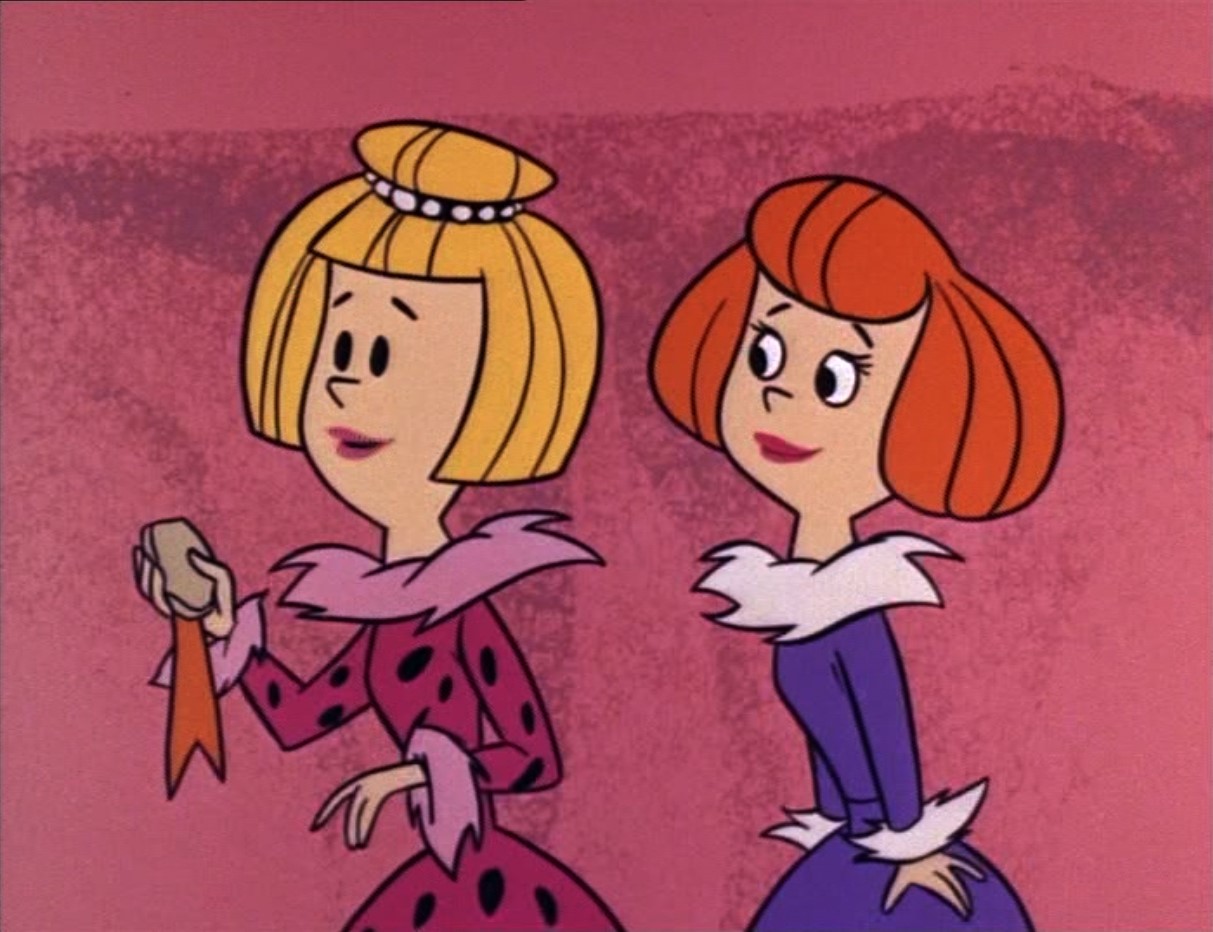
Here’s Snow in Your Eyes’ starts with Wilma grouching over housework. Then she hears that Fred and Barney are invited to a state convention of the Royal Order of Water Buffaloes in Stone Mountain, a luxurious ski resort, and naturally she assumes she and Betty can go, too.
Unfortunately, Fred has to talk her out of that idea, as there wasn’t enough money for the wives, so the girls stay home. But when Betty and Wilma discover there’s a beauty contest at the very place, they change their minds, and go anyway to keep an eye on their husbands.
‘Here’s Snow in Your Eyes’ knows a quite complicated plot, which also involves a diamond theft, but for once the guys have nothing to hide, and the episode is one of two happily married couples. Unfortunately the beauty contest subplot ends abruptly, and one gets the feeling there’s was more to the story material than what finally materialized in this episode. Nevertheless, this is one of the more enjoyable Flintstones episodes from the third season, with fun little scenes, some nice takes on all four main characters, and an enjoyable final scene.
Watch an excerpt from ‘Here’s Snow in Your Eyes’ yourself and tell me what you think:
This is The Flintstones Season Three episode 6
To the previous The Flintstones episode: The Twitch
To the next Flintstones episode: The Buffalo Convention
‘Here’s Snow in Your Eyes’ is available on the Blu-Ray ‘The Flintstones – The Complete Series’ and the DVD-box ‘The Flintstones Season 3’
Directors: William Hanna & Joseph Barbera
Airing date: October 12, 1962
Stars: The Flintstones
Rating: ★★★
Review:

‘The Twitch’ is the Flintstones’ answer to Chubby Checker’s huge success with ‘The Twist’ (1960).
In this episode Fred promises Wilma to get ‘Rock Roll’ (voiced by Hal Smith) to play for free at her auxilliary show. Rock Roll’s big hit is ‘The Twitch’, a catchy parody song, which is accompanied by the familiar twist gestures, as well as Chuck Berry’s duckwalk.
The fun is further enhanced by the final scene (a twist in itself), a series of terrible vaudeville acts and several stone age gags, like a horned crocodile-like potato peeler, a nail-polishing bird and a weird massage device. Also note the caricature of Fred Sullivan. All these aspects make ‘The Twitch’ one of the more enjoyable episodes of the Flintstones’ third season.
Watch an excerpt from ‘The Twitch’ yourself and tell me what you think:
This is The Flintstones Season Three episode 5
To the previous The Flintstones episode: Bowling Ballet
To the next Flintstones episode: Here’s Snow in Your Eyes
‘The Twitch’ is available on the Blu-Ray ‘The Flintstones – The Complete Series’ and the DVD-box ‘The Flintstones Season 3’
5
Director: unknown
Production date: ca. 1962
Stars: The Marx Brothers
Rating: ★★★
Review:
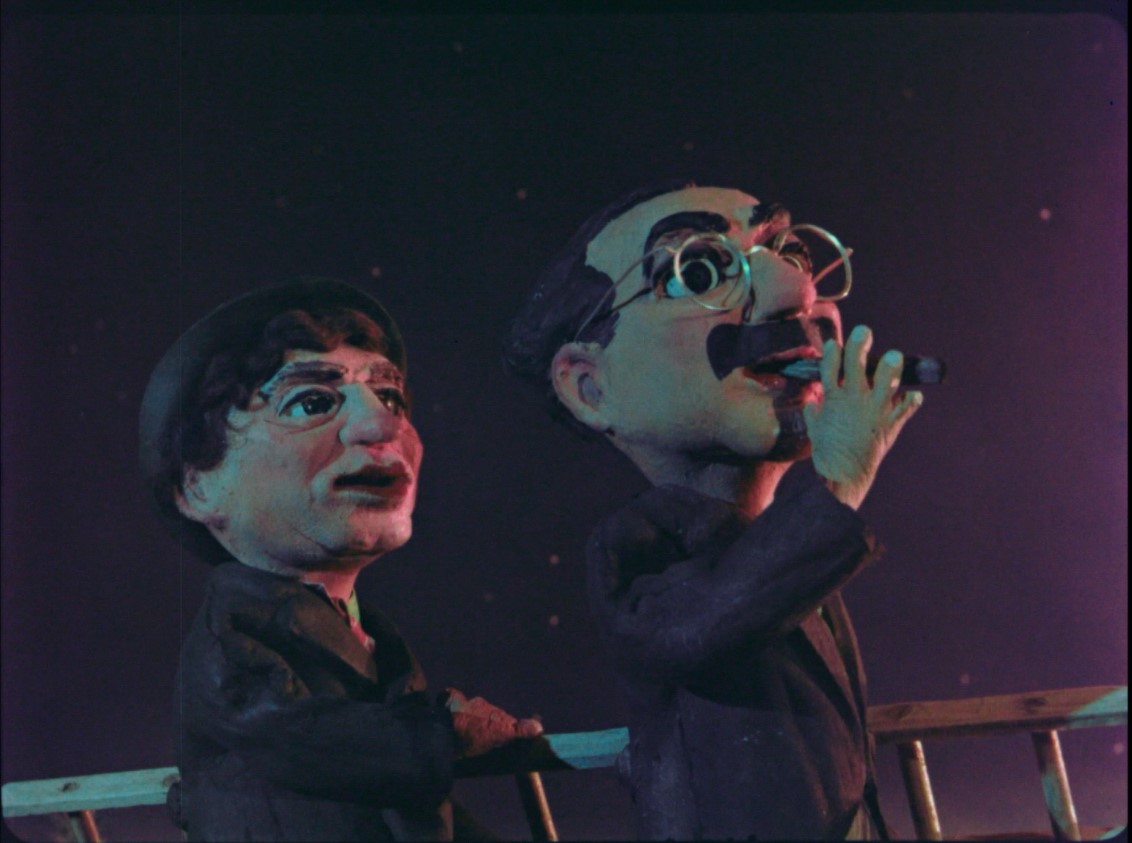
‘The Marx Brothers’ is an odd curiosity unearthed by the ever amazing Steve Stanchfield, who specializes in discovering animated oddities. Apparently this is a pilot from the early sixties by Screen Gems for a Marx Brothers cartoon series, curiously done in stop-motion (more cartoon plans were made at the time, see Jim Korkis’s excellent article on this).
The short involves the three Marx Brothers, and a stout woman called Hortense. The puppets are immediately recognizable as the Marx Brothers, but also crude and on the ugly side. The least well-done is Chico, whose puppet falls short both in looks and voice, and he hardly has any gags. Harpo should translate easier to the cartoon medium, but due to the poor timing he more comes over as an obligatory additional clown than the great comedian he could be in the live action films.
The fun comes mostly from Groucho and his side-cracks, but there’s hardly anything done with the powers of animation, the pacing is slow, and the animation not beyond fair. Moreover, the ‘story’ amounts to nothing. Most striking is a close-up of the magazine called ‘Babes’ Groucho is reading in the opening scene, which shows real nudity.
Watch ‘The Marx Brothers’ yourself and tell me what you think:
Steve Stanchfield put this short on his private DVD release ‘Top Shelf Scans (Goosed)’
Directors: William Hanna & Joseph Barbera
Airing date: October 5, 1962
Stars: The Flintstones
Rating: ★★
Review:

In this appallingly unfunny episode Fred secretly takes ballet lessons to restore his bowling skills.
This episode starts with a long morning routine in which Wilma tries to wake up Fred. This part contains two stone age gags: Fred shaving himself with a clam containing a bumble bee, and Wilma frying a humongous dinosaur egg. Later we watch Wilma and Betty trying to swap a giant fly, and Wilma’s gigantic Brontosaur ribs dinner for Fred.
These gags are fair, at best, but much better than the main story, which drags on, despite the deadline of a big game Fred hopes to win and its stakes being high. Why Fred doesn’t tell anyone he is taking ballet lessons in the first place is never explained, and this secrecy is as puzzling as discomforting, given the fact that Fred and Wilma are supposed to have a happy marriage.
Watch an excerpt from ‘Bowling Ballet’ yourself and tell me what you think:
This is The Flintstones Season Three episode 4
To the previous The Flintstones episode: Barney the Invisible
To the next Flintstones episode: The Twitch
‘Bowling Ballet’ is available on the Blu-Ray ‘The Flintstones – The Complete Series’ and the DVD-box ‘The Flintstones Season 3’


 Dr. Grob's Animation Review