Director: David Hand
Release Date: June 29, 1935
Rating: ★★★★★ ♕
Review:
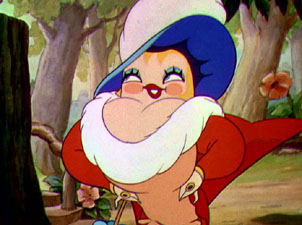
Who Killed Cock Robin? © Walt Disney‘Who Killed Cock Robin?’ is a musical mystery very loosely based on the nursery rhyme of the same name. Its source material notwithstanding, ‘Who Killed Cock Robin’ is the most adult Silly Symphony ever made.

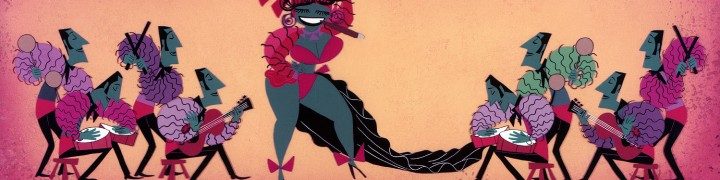
True to the Silly symphony concept, all characters either sing or speak in rhyme to Frank Churchill’s music (with Jenny Wren’s sensual blues as a highlight), but in a bare seven minutes the cartoon manages to mock both the law, racialism and gay people, while displaying an unusual eroticism through Jenny Wren, who is a very fine caricature of famous Hollywood actress Mae West, a tour de force by Joe Grant (design) and Hamilton Luske (animation).

These features are especially striking when one bears in mind that the Hays Code was already active in 1935. Due to his self-censorship of the movie industry sex and violence were banned from the movies. To illustrate its effect: due to this code an erotic cartoon character like Betty Boop had to be tuned down and was turned into a goody-goody and quite a bland character. Yet, ‘Who Killed Cock Robin’ displays its satire and eroticism in full glory.

When Cock Robin has been shot by a mysterious shadow, the Keystone Cop-like police randomly arrests some bystanders: a tough-looking guy, a black bird (in those days blacks were easily arrested just because of their color) and a cuckoo who resembles Harpo Marx. They’re treated very roughly, being knocked by the cops almost all the time. And when Jenny exclaims that justice should be done, the judge simply orders to hang all verdicts even though nobody knows who’s guilty!

It’s Cupid, an obvious caricature of a homosexual, who prevents this cruel sentence. Cock Robin appears to be alive, and finally he and Jenny Wren reunite in a hot kiss. Thus ends one of the most spectacular cartoons of the 1930s.

Watch ‘Who Killed Cock Robin?’ yourself and tell me what you think:

This is Silly Symphony No. 54
To the previous Silly Symphony: The Cookie Carnival
To the next Silly Symphony: Music Land

Director: David Hand
Release Date: April 18, 1936
Stars: The Three Little Pigs
Rating: ★★★½
Review:

The Three Little Wolves © Walt Disney‘Three Little Wolves’ follows ‘The Big Bad Wolf”, being the third cartoon in the ‘Three Little Pigs’ series.

Penned by Joe Grant & Bill Cottrell, it introduces the Wolf’s three sons, who anticipate Huey, Dewey and Louie (who would make their cinema debut two years later, in ‘Donald’s Nephews‘). They even speak in a similar way. The wolf, on the other hand, suddenly has an inexplicable German accent.

In this cartoon he dresses up ridiculously again, this time as Bo-Beep, but he does manage to lure two of the little pigs to his house. When he closes the door, the pigs turn red and say ‘why, Bo-Beep!’, as if they’re being seduced. Of course, the wise pig comes to the rescue, this time using an elaborate Rube Goldberg machine, called the ‘wolf pacifier’.

The three little wolves would return in the last ‘three little pigs’-cartoon, ‘The Practical Pig’ (1939), but in the subsequent comic strip only one would remain, and he eventually would befriend the pigs, contrary to his lookalikes in this cartoon, who are even more aggressive than their father.

The end-shot of this cartoon was later reused in the propaganda film ‘Food will win the War‘ (1942).

Watch ‘Three Little Wolves’ yourself and tell me what you think:

This is Silly Symphony No. 60
To the previous Silly Symphony: Elmer Elephant
To the next Silly Symphony: Toby Tortoise Returns

Director: Graham Heid
Release Date: May 27, 1938
Rating: ★★★★
Review:

Wynken, Blynken and Nod © Walt Disney‘Wynken, Blynken and Nod’ is one of the last, and certainly one of the most spectacular Silly Symphonies ever made.

There is hardly any story: at the start of the cartoon we hear the poem being sung by a sugary soprano, then we watch Wynken, Blynken and Nod sailing the Milky Way and fishing ‘starfish’ and being at the mercy of some clouds.

The three babies are very alike, with Nod being the ‘Dopey’ of the three, and the humor is mild. But, boy, the looks of this cartoon! Like two other Silly Symphonies obsessed with babies and their bare behinds (‘Lullaby Land’ from 1933 and ‘Water Babies’ from 1935), ‘Wynken, Blynken and Nod’ is a showcase of Disney Animation. The cartoon features extraordinarily beautiful backgrounds, and literally bursts with effect animation, rendering astonishingly beautiful stars, comets, clouds and lightnings. The fantasy is enhanced by a wonderful score, which makes clever use of ‘Twinkle Twinkle Little Star’. All this gives one the feeling of watching a mini-Fantasia.

Certainly, no animated cartoon would ever show such lushness again. As such, in a sense ‘Wynken, Blynken and Nod’ forms the end and culmination of an era, which had started in the end of 1933, in which the Disney studio combined ever growing ambitions with childish and sugary material.

‘Wynken, Blynken and Nod’ was the only cartoon directed by Graham Heid. Remarkably little is known about this artist, who also contributed to ‘Pinocchio‘, ‘Fantasia’ and ‘Bambi‘. In fact, I can only find a birth date (November 14, 1909). This is rather surprising, for one can have worse seven minutes of fame than this delightful short. Luckily, animation historians Jerry Beck & Michael Barrier help us out on the Cartoon Research F.A.Q. page.

One trivial remark: ‘Wynken, Blynken and Nod’ is based on the 1889 published poem ‘Dutch Lullaby’ by Eugene Field. Indeed, the words Wynken and Blynken seem to suggest some Dutch origin, but there are no such verbs in the Dutch language, which would translate ‘to wink’ and ‘to blink’ as ‘knipogen’ and ‘knipperen’, respectively.

Watch ‘Wynken, Blynken and Nod’ yourself and tell me what you think:

This is Silly Symphony No. 70
To the previous Silly Symphony: Moth and the Flame
To the next Silly Symphony: Farmyard Symphony

Director: Wilfred Jackson
Release Date: October 31, 1936
Rating: ★★★★★ ♕
Review:

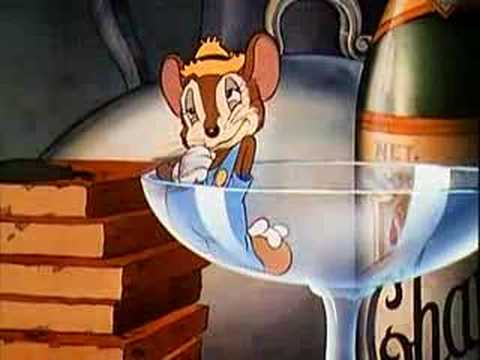
The Country Cousin © Walt DisneyA very beautifully executed rendering of the classic tale, ‘The Country Cousin’ is a gem among the Silly Symphonies.

Its story is lean and economical, its characterization highly effective and its silent acting superb. Particularly noteworthy is the drunken performance of the Country Cousin, animated by Art Babbitt, which belongs to the highlights of animation.

Everyone who wants to know what ‘character animation’ is all about, should go and watch this cartoon. One cannot find a better example of it: the two mice look similar, but are very different in their behavior, attitude, and personality. Moreover, their personalities are played completely in mime, without any help from characteristic voices.

Besides this, ‘The Country Cousin’ contains some very realistic animation of people’s feet walking on the sidewalk. Indeed, the human realism of ‘Snow White and the Seven Dwarfs’ (1937) was not far away anymore.

Thirteen years later, Tex Avery would explore the theme of ‘The Country Cousin’ once again, albeit quite differently and way more ridiculously, in his hilarious short ‘Little Rural Riding Hood’ (1949).

Watch ‘The Country Cousin’ yourself and tell me what you think:

This is Silly Symphony No. 63
To the previous Silly Symphony: Three Blind Mouseketeers
To the next Silly Symphony: Mother Pluto

Director: Wilfred Jackson
Release Date: August 22, 1936
Stars: Max Hare, Toby Tortoise, The Three Little Pigs
Rating: ★★★★★
Review:

Toby Tortoise Returns © Walt DisneyOne of the few sequels in Disney’s pre-video era, ‘Toby Tortoise Returns’ features the two stars of ‘The Tortoise and the Hare’ from 1935.

In this cartoon, written by Ward Kimball and featuring his typically zany style of humor, Max Hare (who’s still a bragging bully) and Toby Tortoise combat each other in a boxing match, which – of course – Toby eventually wins, albeit by means of Max’s own trickery.

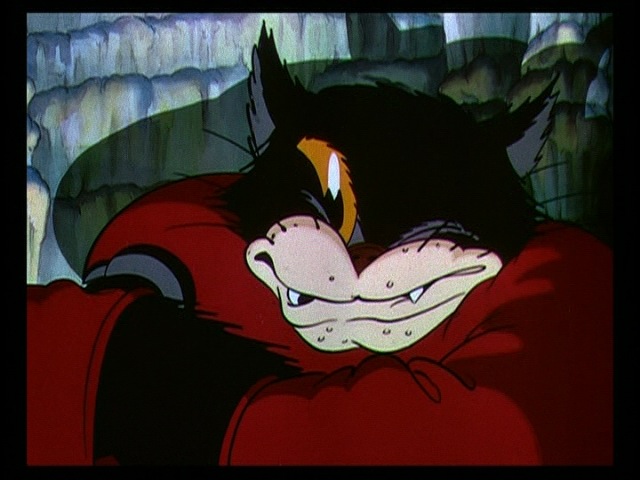
Apart from Toby Tortoise and Max Hare there are many cameos of other Silly Symphony stars, among them the three little pigs, Dirty Bill (from ‘The Robber Kitten’), Jenny Wren and the Cuckoo from ‘Who Killed Cock Robin?’ and, Elmer Elephant and Tilly Tiger (from ‘Elmer Elephant’), as if all Silly Symphonies were taking place in the same space and time.

This makes ‘Toby Tortoise Returns’ akin to the earlier ‘Mickey’s Polo Team’ from the same year. The whole atmosphere is rather like that of a future Warner Brothers-cartoon, and one can sense the sheer joy the makers had in bringing all these characters together in a cartoon which sole reason of existence seems to be pure fun.

Notice the black bunny and the black turtle that are Max’s and Toby’s helpers, respectively.

Watch ‘Toby Tortoise Returns’ yourself and tell me what you think:


This is Silly Symphony No. 61
To the previous Silly Symphony: Three Little Wolves
To the next Silly Symphony: Three Blind Mouseketeers

Director: Wilfred Jackson
Release Date: May 11, 1935
Rating:
★★★
Review:

Water Babies © Walt Disney‘Water Babies’ is sugary cute, contains a lot of repetitive animation and is one of those Silly Symphonies obsessed with babies and their bare behinds (other examples are ‘Lullaby Land’ (1933) and ‘Wynken, Blynken and Nod’ (1938)).

There is not much of a story either: the sexless water babies wake up, make fun and go to bed again (apparently a day only lasts seven minutes in their world).

And yet, this is undoubtedly one of Disney’s most impressive efforts of the era. It feels like a showcase cartoon of the Disney studio, excelling in lush pictures, great effect animation and beautiful theme music by Leigh Harline. Especially the opening scene (dawn) and the last shot (night) are stunningly beautiful. The Disney staff had reached yet another peak, and more was still to come.

‘Water Babies’ itself at least must have been a success, for it was followed by the similar ‘Merbabies’ in 1938, featuring more or less girl characters instead of the boy-like babies in ‘Water Babies’.

Watch ‘Water Babies’ yourself and tell me what you think:

This is Silly Symphony No.52
To the previous Silly Symphony: The Robber Kitten
To the next Silly Symphony: The Cookie Carnival

Director: David Hand
Release Date: November 14, 1936
Stars: Pluto
Rating: ★★★
Review:

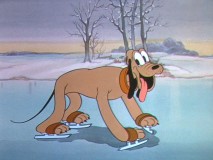
Mother Pluto © Walt DisneyPluto unwillingly starts a career as a mother to a number of chicks.

When he finally has learned to love them, their real mother returns and together with her husband, a violent rooster, tries to chase Pluto away.

Although introduced as such, ‘Mother Pluto’ is not really a Silly Symphony. It lacks both the obligate music and the fairy tale character typical of the series. It’s actually Pluto’s first solo outing. It seems that at the time Disney didn’t dare to introduce new series besides the Mickey Mouse cartoons and the Silly Symphonies. But with Mickey giving way more and more to his co-stars Goofy, Donald and Pluto, this step would soon be made.

At the end of 1937 Pluto would become the first Mickey Mouse co-star to start his own series with ‘Pluto’s Quin-Puplets’, immediately followed by Donald with ‘Donald’s Ostrich’. Goofy followed one-and-a-half year later, in 1939, with ‘Goofy and Wilbur’. These three stars would be heading most of the Disney shorts of the 1940s and 1950s when the Silly Symphony series had been dropped and the number of Mickey Mouse shorts diminished.

Watch ‘Mother Pluto’ yourself and tell me what you think:

This is Silly Symphony No. 64
To the previous Silly Symphony: The Country Cousin
To the next Silly Symphony: More Kittens

Director: Wilfred Jackson
Release Date: October 5, 1935
Rating: ★★★★★ ♕
Review:

Music Land © Walt DisneyIn ‘Music Land’ a young violin falls in love with a young saxophone, much to the disapproval of their parents, the queen of ‘The Land of Symphony’ and the king of ‘The Isle of Jazz, respectively, whose realms are separated by the ‘Sea of Discord’.

When the young saxophone is imprisoned, the feud between the two very different nations leads to a war, in which the two young lovers are almost killed… The whole story is told through music, even the characters ‘speak’ with the sounds of the instruments they are. The complete score, by Leigh Harline, is a delight to listen to.

This reading of ‘Romeo and Juliette’ is one of the most inspired of all Silly Symphonies. The very idea of musical instruments ‘speaking’ in their own sound is brilliant. But there is much more. For example, when the saxophone prince is locked up, he’s imprisoned in a metronome and when he writes a letter to his father (a caricature of bandleader Paul Whiteman, ‘the king of jazz’) he does this in staff-notation!

The complete design of the cartoon is delightful. The backgrounds are particularly beautiful, rendering a totally convincing fantasy world, in which the cartoon develops as if it were an age-old story. The concept of a battle between classical music and jazz was a topical one in the 1930s, when jazz was still regarded by many as devilish music and a threat to ‘high culture’. Nevertheless, during the second half of the 1930s jazz gradually became a respected genre, as exemplified by Benny Goodman’s concert in Carnegie Hall in 1938.

Watch ‘Music Land’ yourself and tell me what you think:

This is Silly Symphony No. 55
To the previous Silly Symphony: Who Killed Cock Robin?
To the next Silly Symphony: Three Orphan Kittens

Director: Ben Sharpsteen
Release Date: May 25, 1935
Rating: ★★½
Review:

The Cookie Carnival © Walt DisneyOf all Silly Symphonies this one is particularly silly. The very idea of a cookie land is as original as it is looney.

Yet, the cartoon is literally sugary, not funny. The story, about a Charlie Chaplin-like tramp (voiced by Pinto Colvig) making a poor lonesome girl queen of the parade, is pure sentimental melodrama. Moreover, the characters speak in operetta-like recitatives and when the girl, having become queen, has to choose a king the cartoon shifts to a tiresome medley of song-and-dance-routines.

Nevertheless, the art direction of this Silly Symphony is stunning and its backgrounds lush and beautiful, making this one of the most impressive cartoons of the era. The girl is quite beautifully animated by Gram Natwick, the man who had created Betty Boop five years earlier, and who had joined Disney in 1934. After her transformation into a carnival queen, the girl doesn’t resemble a cookie at all, but she is pictured and animated as a real girl. Natwick would later be an animator on Snow White in ‘Snow White and the Seven Dwarfs’ (1937), and it’s as if the cookie girl was Natwick’s exercise for the real thing.

Notice the contrast between the sissy Angelic Cakes and the fun-loving Devil Cakes, whose theme music is jazz (the most ‘evil’ music of the era).

Watch ‘The Cookie Carnival’ yourself and tell me what you think:

This is Silly Symphony No. 53
To the previous Silly Symphony: Water Babies
To the next Silly Symphony: Who Killed Cock Robin?

Director: Wilfred Jackson
Release Date: September 1, 1934
Rating: ★★★
Review:

Peculiar Penguins © Walt Disney‘Peculiar Penguins’ can be summarized as ‘love story in the Antarctic’: a penguin falls in love with a girl, blows it, but saves the day by rescuing her from a terrible shark.

Being one of the weaker entries in the Silly Symphonies, ‘Peculiar Penguins’ nevertheless contains some fine animation, especially in the under water chase, which is literally packed with special effects. Like in ‘Funny Little Bunnies‘, the setting is introduced by a sugary song, accompanying a complex opening shot, with lots of penguins moving and seagulls flying in it.

Ten years later Disney would return to the Antarctic to tell about a particularly peculiar penguin called Pablo in ‘The Three Caballeros‘ (1944).

Watch ‘Peculiar Penguins’ yourself and tell me what you think:

This is Silly Symphony No. 47
To the previous Silly Symphony: The Flying Mouse
To the next Silly Symphony: The Goddess of Spring

Director: Ben Sharpsteen
Release Date: September 28, 1935
Stars: Donald Duck, Goofy, Mickey Mouse, Minnie Mouse, Pluto
Rating: ★★★½
Review:

On Ice © Walt DisneyOn Ice is the first of Disney’s ‘ensemble cartoons’.

Everyone is in it: Mickey, Minnie (in her color debut), Donald, Goofy, Pluto and even, albeit very briefly, Horace Horsecollar and Clarabelle Cow. ‘On Ice’ introduces two story ideas that would be used again much later: Pluto’s problems on ice in ‘Bambi’ (1942) and the idea of skating near a waterfall in the ‘Once upon a Wintertime’ sequence of ‘Melody Time’ (1948), although this latter idea first appears in the Popeye cartoon ‘Season’s Greetinks!‘ from 1933.

Apart from this, ‘On Ice’ has been very important in the development of Goofy. He’s been completely restyled, has more body to his looks and a much more distinct personality. All these important improvements on the character are attributed to Art Babbitt, one of the greatest animators of all time. Goofy sings ‘The world owes me a living’ from ‘The grasshopper and the ants’ (1934). The song naturally becomes his theme song. No wonder, for the grasshopper and Goofy share the same voice: that of Pinto Colvig. Also of note is Goofy’s original fishing style, using chew to catch fish.

Watch ‘On Ice’ yourself and tell me what you think:

This is Mickey Mouse cartoon No. 79
To the previous Mickey Mouse cartoon: Pluto’s Judgement Day
To the next Mickey Mouse cartoon: Mickey’s Polo Team

Director: David Hand
Release Date: August 31, 1935
Stars: Mickey Mouse, Pluto
Rating: ★★★★★
Review:

Pluto's Judgement Day © Walt DisneyAlthough this cartoon is part of the Mickey Mouse series, Pluto is its star.

After he has chased a little kitten, he dreams that his Judgement Day has come and that he’s put on trial by a number of cheating cats.

Like most of Disney’s dream-cartoons this one contains wonderful backgrounds, characters and ideas, thanks to story men Joe Grant and Bill Cottrell. The dream sequence is executed in a Silly Symphony-like fashion with lots of rhyme and song and very beautiful animation. The prosecutor, animated by Bill Roberts, is particularly well done: he’s an impressive figure, whose stature anticipates Stromboli from ‘Pinocchio‘ (1940).

Pluto now is a fully developed character who easily carries the complete cartoon on his own. Mickey’s part, on the other hand, is reduced to that of a cameo, something that would occur more and more in the years to come.

Watch ‘Pluto’s Judgement Day’ yourself and tell me what you think:


This is Mickey Mouse cartoon No. 78
To the previous Mickey Mouse cartoon: Mickey’s Fire Brigade
To the next Mickey Mouse cartoon: On Ice

Director: Ben Sharpsteen
Release Date: August 3, 1935
Stars: Clarabelle Cow, Donald Duck, Goofy, Mickey Mouse
Rating: ★★★★★
Review:

Mickey's Fire Brigade © Walt Disney‘Mickey’s Fire Brigade’ is the second of the classic trio cartoons featuring Mickey, Donald and Goofy, and the first of its kind in color.

When one compares this cartoon to the similar ‘The Fire Fighters’ from 1930, one can see what stunning progress the Disney studio had made in a mere five years: the backgrounds, the camera angles, the character animation, the effect animation: everything has improved considerably.

What’s more, its gags are faster, more clever and better constructed, and they build up to a wonderful finale. Among the numerous brilliant ideas are a burning title card, water splashing against ‘the camera’ and a bathing Clarabelle Cow who is not amused when saved by our heroes.

This cartoon is both Goofy’s first color appearance as the last time he’s seen in the design he got in ‘The Whoopee Party’ about three years before. In this film he’s got a particularly goofy cuckoo theme song, while some of the anthropomorphized flames play ‘who’s afraid of the big bad wolf’ from ‘Three Little Pigs‘ on the piano.

Watch ‘Mickey’s Fire Brigade’ yourself and tell me what you think:

This is Mickey Mouse cartoon No. 77
To the previous Mickey Mouse cartoon: Mickey’s Garden
To the next Mickey Mouse cartoon: Pluto’s Judgement Day

Director: Wilfred Jackson
Release Date: July 13, 1935
Stars: Mickey Mouse, Pluto
Rating: ★★★★
Review:

Mickey's Garden © Walt Disney‘Mickey’s Garden’ is Mickey’s second color cartoon (after ‘The Band Concert‘).

It’s also Pluto’s first: he passes the transition into color fluently, getting his typical orange color we’re all familiar with now.

Mickey and Pluto are in the garden trying to kill a number of insects eating Mickey’s crop. When Mickey accidentally sprays himself with bug poison he starts to hallucinate (the transition to the dreamworld is particularly psychedelic: everything, including the background becomes unsteady and wobbly). He dreams that all plants and bugs have grown. This leads to some imaginative scenes. The bugs are not very lifelike, though. The animators even make a weird mistake by giving a particularly evil-looking beetle eight legs instead of six.

Watch ‘Mickey’s Garden’ yourself and tell me what you think:

This is Mickey Mouse cartoon No. 76
To the previous Mickey Mouse cartoon: Mickey’s Kangaroo
To the next Mickey Mouse cartoon: Mickey’s Fire Brigade

Director: David Hand
Release Date:
July 14, 1934
Rating:
★★½
Review:

The Flying Mouse © Walt Disney‘The Flying Mouse’ is a musical short about a little mouse who wants to fly like the birds.

A blue fairy grants him that wish, giving him bat-like wings, but he soon discovers that these don’t bring him any luck: he is not allowed to join the xenophobic birds, not recognized by his relatives and called ‘a nothing’ by a group of crooked bats. Luckily, the same fairy releases him from his wings and in the end we see our little hero running to his mother in the sunset light.

This cartoon is one of many silly symphonies that seem to aim directly at kids and that are rather moralistic. This seems to be a strong trend in 1934 and it gradually led Disney away from carefree humor towards sugary sanctimony.

This cartoon is quite humorless, yet beautifully drawn. The blue fairy is a good try at the human figure (if not near the humans in ‘Snow White and the Seven Dwarfs’ (1937), let alone the blue fairy in ‘Pinocchio‘, 1940), and the mice, designed by Albert Hurter, are drawn much more realistically than Mickey. Moreover, ‘The Flying Mouse’ is another stunning example of character animation: our main hero acts out his feelings mostly in pantomime. Nevertheless, we can feel his joy, his embarrassment, his fear and his grief. It’s this combination of ambitious designs and great character animation that makes Silly Symphonies like these stand out among the cartoons of the thirties.

Indeed, it was this particular cartoon that prompted Frank Thomas to try to become an animator at Disney’s. Thomas joined Disney on September 24, 1934, only a few months after this cartoon. He would stay with the studio until 1978, becoming one of Walt’s ‘Nine Old Men’. He is especially famous for his emotional animation, e.g. the dwarfs’ grief in ‘Snow White and the Seven Dwarfs’, Pinocchio trapped in the birdcage in ‘Pinocchio’,  the romantic diner in ‘Lady and the Tramp‘ (1956), and Baloo trying to tell Mowgli he cannot stay in the jungle in ‘Jungle Book’ (1967).

And it was ‘The Flying Mouse’, which showed him the way…

Watch ‘The Flying Mouse’ yourself and tell me what you think:


This is Silly Symphony No. 46
To the previous Silly Symphony: The Wise Little Hen
To the next Silly Symphony: Peculiar Penguins

Director: Burt Gillett
Release Date: November 25, 1933
Stars: Mickey Mouse, The Orphan Mice
Rating: ★★★½
Review:

Giantland © Walt DisneyMickey tells the story of Jack and the Beanstalk to his numerous nephews with him in the starring role.

These nephews come out of nowhere, even though they had appeared in ‘Mickey’s Nightmare‘ (1932), where they were, indeed, part of a nightmare. In ‘Giantland’ they’re real alright, and they would star in five other Mickey Mouse cartoons of the 1930s.

In his story Mickey meets the first giant of his career. This giant is very well drawn, with great use of perspective and realistic details, especially in the hands. This must have been the closest the studio could come to the human form in 1933. The cartoon also contains many shadows. Both features are a testimony of Disney’s urge to master more naturalism in his cartoons.

Nevertheless, one can see that the animators were still struggling with such elaborate designs. The giant is not drawn very consistently, and some sequences are more convincing than others. The best and most beautiful scene is when Mickey ends up inside the Giant’s mouth. This is an original scene by all means, and one that could almost only be done in animation.

Notably, the cartoon emphasizes that the story is a fantasy, with Mickey only telling it. Mickey was slowly becoming more settled, and while he’s still the hero of this cartoon, as the years progressed his quieter nature meant that he lost more and more screen time to less timid characters, like Pluto, Donald Duck and Goofy.

Mickey would deal with giants again in ‘Brave Little Tailor’ (1938) and in ‘Fun and Fancy Free’ (1947), a re-telling of the same fairy tale. ‘Gulliver Mickey’ from six months later follows the same story line as ‘Giantland’, but now in reverse, with Mickey himself being the giant, while Floyd Gottfredson retold the story of ‘Giantland’ in his Sunday Mickey Mouse comics from March 11 to April 29, 1934.

Watch ‘Giantland’ yourself and tell me what you think:


This is Mickey Mouse cartoon No. 62
To the previous Mickey Mouse cartoon: The Pet Store
To the next Mickey Mouse cartoon: Shanghaied

Director: Wilfred Jackson
Release Date: October 28, 1933
Stars: Mickey Mouse, Minnie Mouse
Rating: ★★★
Review:

The Pet Store © Walt DisneyMickey applies for a job at Tony’s pet store. Then Minnie drops by and together they perform their usual song-and-dance-routine.

‘The Pet Store’ was Mickey’s last cartoon to feature the half song-and-dance routine half story formula, a story structure that by 1933 had become old-fashioned.

This time Minnie’s quite tiresome lalala’s are interrupted by ‘Beppo, the movie monk’, an ape who has read about King Kong (that movie was released the same year) and who wants to imitate him, after he had imitated Stan Laurel. This leads to a nice spoof of King Kong, in which the ape climbs a pile of boxes with Minnie under his arm while being attacked by birds, mimicking the planes in the original feature. In the end Mickey and Minnie are fleeing the pet shop, just before the owner returns, leaving it in complete ruin.

Unfortunately, by 1933 such battle scenes had become as jaded as the song-and-dance routines, and the one in ‘The Pet Store’ is not really different from the ones in ‘The Bird Store‘, ‘King Neptune‘, or ‘Babes in the Woods‘ (all 1932). Nevertheless, the take on ‘King Kong’ is marvelous, and more original than Walter Lantz’s much more literal spoof ‘King Klunk‘ from one month earlier.

Tony is the first elaborate human to enter Mickey’s world, being on par with the human characters in the Silly Symphony ‘The Pied Piper‘ from one month earlier. He would be topped, however, by the giant in Mickey’s next cartoon, ‘Giantland‘. Part of the fun in this cartoon is provided by Tony’s pseudo-Italian labels (like “birda seed” and “biga da sale”), a type of pun that was later borrowed extensively by Chuck Jones in his Pepe le Pew-cartoons.

Watch ‘The Pet Store’ yourself and tell me what you think:


This is Mickey Mouse cartoon No. 61
To the previous Mickey Mouse cartoon: The Steeple Chase
To the next Mickey Mouse cartoon: Giantland

Director: Burt Gillett
Release Date: July 1, 1933
Stars: Clarabelle Cow, Horace Horsecollar, Mickey Mouse, Minnie Mouse, Pete, Pluto
Rating: ★★★★★ ♕
Review:

Mickey's Gala Premiere © Walt Disney‘Mickey’s Gala Premier’ is without doubt one of the greatest of all Mickey Mouse Cartoons.

The short both celebrates the enormous popularity Mickey enjoyed in the early 1930s, and establishes him as one of the leading actors of that period.

We’re witnessing the premiere of a new Mickey Mouse cartoon at the famous Grauman’s Chinese Theater in Hollywood, where Mickey and the gang are welcomed as celebrities (only Goofy is absent, his character was not yet established at that time).

The cartoon that is shown at the premiere is called ‘Galloping Romance’. It is an early and fantastic self-parody. This short only exists within ‘Mickey’s Gala Premier’ and is a ridiculous variation on ‘The Cactus Kid’ (1930), in which Mickey rides a number of silly animals in his pursuit of Pete, including a marimba. This self-consciously silly cartoon is way more old-fashioned than ‘Mickey’s Gala Premier’ itself.

Nevertheless, the crowd, which consists solely of well-known performers of the time, laugh their heads off and, after the show, all try to congratulate Mickey. Mickey’s wet dream appears to be being kissed by Swedish actress Greta Garbo, because it is the cartoon’s climax before it’s being revealed that all has been just a dream.

All the caricatures are the work of Joe Grant, whose work was also quoted by the Disney studio in the short special ‘Parade of the Award Nominees‘ (1932). For ‘Mickey’s Gala Premier’ Disney went directly to Grant, and the film became the story man’s first job for Disney. However, it was only two months after this film that Joe Grant became a full-time employee at the Disney studio. There he would also draw caricatures for ‘Broken Toys’ (1935) and ‘Mickey’s Polo Team’ (1936), but his main contribution would be to the story department.

The self-conscious nature of ‘Mickey’s Gala Premiere’ would remain rare at Disney’s, but it would become one of the key features of the Warner Brother Cartoons, who would produce similar cartoons as ‘You Ought to be in Pictures’ (1940) and ‘What’s Cookin’ Doc?’ (1944). Both cartoons are tributary to ‘Mickey’s Gala Premier’.

The short also sprouted several other cartoons featuring caricatures of contemporary Hollywood stars, among others ub Iwerks’s ‘Soda Squirt‘ (1933), Walter Lantz’s ‘The Merry Old Soul‘ (1933) and ‘Toyland Premiere’ (1934), Disney’s own ‘Mickey’s Polo Team’ (1936) and ‘Mother Goose goes Hollywood’ (1938), and the Warner Brothers cartoons ‘The Coo-Coo Nut Groove’ (1936), ‘Porky’s Road Race’ (1937) and ‘Hollywood Steps Out‘ (1941). Nevertheless, ‘Mickey’s Gala Premier’ was not the first in his kind, for already ten years earlier Felix the Cat made the trip to Hollywood to meet the stars in ‘Felix in Hollywood’ (1923).

Among the stars featured in ‘Mickey’s Gala Premier’ I managed to identify The Keystone Cops, Marie Dressler, Laurel & Hardy, the Marx Brothers, Maurice Chevalier, Eddie Cantor, Jimmy Durante, Harold Lloyd, Edward G. Robinson, Clark Gable, Joe E. Brown, Charlie Chaplin, Buster Keaton, Mae West, Greta Garbo, Bela Lugosi, Frederic March and Boris Karloff.

Also featured is some guy who has a striking resemblance to Prince Charles of Wales and who’s dressed as a king. This is a caricature of Will H. Hays, the president of the Motion Picture Producers and Distributors of America (MPPDA). Hays was Hollywood’s chief censor and the man behind the Hays code, the censorship Hollywood imposed on itself between 1930 and 1968. Interestingly, the censorship only became severe when Hays made place for Joseph Breen in 1934…

Watch ‘Mickey’s Gala Premier’ yourself and tell me what you think:

This is Mickey Mouse cartoon No. 58
To the previous Mickey Mouse cartoon: Mickey’s Mechanical Man
To the next Mickey Mouse cartoon: Puppy Love

Director: Burt Gillett
Release Date: April 8, 1933
Stars: Clarabelle Cow, Goofy, Mickey Mouse, Minnie Mouse
Rating: ★★★★½
Review:

Ye Olden Days © Walt DisneyMickey and the gang are staged in many different times and places in their cartoons. Yet, this medieval short is the only cartoon in which they are introduced as actors performing their parts.

This idea of Mickey being an actor was first coined in ‘The Wayward Canary’ (1932) and played out to the max in ‘Mickey’s Gala Premier’ (1933). This cartoon nevertheless is played without any awareness of the public.

Minnie is the princess of Lalapazoo, and forced by her father to marry prince Goofy from Pupupadoo. Minnie refuses and is locked up in the high tower. Fortunately, there is minstrel Mickey to save her and to battle the evil prince, chasing him through the window, and marrying the princess himself. This adventure film cliche Disney already had visited in the Oswald cartoon ‘Oh, What A Knight‘, but it is expanded and improved in ‘Ye Olden Days’.

Like ‘Building a Building’ and ‘The Mad Doctor’ from the same year, this cartoon is partly a musical with lots of parts sung. It also contains a very anachronistic guillotine and an elaborately designed horse that shows the aspirations of the studio to master more lifelike designs and animation.

Goofy, who is introduced as Dippy Dawg, is quite miscast here, playing the villain, whom he acts out more sillily than threateningly. It seems that the animators didn’t really know what to do with the character, so far only funny because of his typical voice. So, after this film they dropped him for more than a year.

Watch ‘Ye Olden Days’ yourself and tell me what you think:

This is Mickey Mouse cartoon No. 55
To the previous Mickey Mouse cartoon: Mickey’s Mellerdrammer
To the next Mickey Mouse cartoon: The Mail Pilot

Director: David Hand
Release Date: January 21, 1933
Stars: Mickey Mouse, Pluto
Rating: ★★★★★
Review:

The Mad Doctor © Walt Disney‘The Mad Doctor’ is Mickey’s third horror cartoon and easily his best (the other two are ‘The Haunted House’ from 1929 and ‘The Gorilla Mystery’ from 1930).

The plot is simple: it’s night, the weather is foul and Pluto is kidnapped by an evil scientist called Dr. XXX, who takes him into his laboratory, which is reminiscent of that of Frankenstein in James Whales’ film of the same name, 1931. Mickey follows Pluto’s tracks into a creepy castle, entering it in a scene which reuses some footage of ‘Egyptian Melodies‘ from 1931. Inside the castle he has to deal with several skeletons, including a ridiculous hybrid of a skeleton and a spider. Soon, he’s captured, too, and about to be killed by a chainsaw. Fortunately, it turns out to be all just a dream…

Besides the horror, this cartoon also features elaborate designs and loads of special effects. Especially beautiful is its shadowing on the characters. It also has a strong musical element, as the mad scientist sings all his lines. Some of the gags are quite surreal and reminiscent of the Fleischer style, like a lock locking itself or the scientist cutting off Pluto’s shadow. The cartoon also features a gag with many doors in one doorpost. This gag would be reused and improved by Tex Avery in ‘The Northwest Hounded Police’ from 1946.

Watch ‘The Mad Doctor’ yourself and tell me what you think:

This is Mickey Mouse cartoon No. 52
To the previous Mickey Mouse cartoon: Building a Building
To the next Mickey Mouse cartoon: Mickey’s Pal Pluto

Enter your email address to follow this blog and receive notifications of new posts by email.

Join 918 other subscribers
Bookmark and Share

Categories