You are currently browsing the category archive for the ‘Walt Disney films’ category.
Director: Walt Disney
Release Date: July 25, 1927
Stars: Lois Hardwick (Alice)
Rating: ★★★
Review:
 ‘Alice the Whaler’ was one of the last of the Alice Comedies. It was only followed by two other titles, before Alice was replaced by Oswald the Lucky Rabbit. It features Lois Hardwick as Alice, who had replaced Margie Gay at the end of 1926.
‘Alice the Whaler’ is a cartoon that consists of rather unrelated gags. This time Alice and the gang are on a ship, looking for whales. In this cartoon both Disney’s character designs as the flexible animation have matured. Gone are the goggly eyes, and even one character (a cat cook) is wearing Mickey Mouse-type gloves. Also starring is a small mouse that peels potatoes just the way Mickey would do a year later in ‘Steamboat Willie‘.
Alice has almost disappeared from the screen, by now: she’s visible in four shots only, two total shots of the ships and two close ups that contain no animation whatsoever. Indeed, in his next series, Walt Disney would abandon live action altogether, relying on animation only, which by now already was the best in the business.
Watch ‘Alice the Whaler’ yourself and tell me what you think:
‘Alice the Whaler’ is available on the DVD ‘Walt Disney Treasures: Disney Rarities’
Director: unknown
Release Date: February 15, 1926
Stars: Margie Gay (Alice), Julius
Rating: ★★★★
Review:
 Two dog catchers, a bear and a mouse, catch a whole school of dogs.
They also lure some dogs using a girl dog on a balcony. They all end in a prison-like sausage factory, which contains a death chamber. We see a dog actually walk in there (after having been salvaged by a dog priest). He comes out as a string of sausages… Luckily, detectives Alice (Margie Gay) and Julius free all remaining dogs.
This cartoon contains quite some flexible animation, especially of the bear emptying the school.
Watch ‘Alice’s Mysterious Mystery’ yourself and tell me what you think:
‘Alice’s Mysterious Mystery’ is available on the DVD ‘Walt Disney Treasures: Disney Rarities’
Director: unknown
Release Date: December 15, 1925
Stars: Virginia Davis (Alice), Julius
Rating: ★★½
Review:
 Alice (Virginia Davis) and her friend Julius the cat are on a safari in the jungle.
The cartoon consists of several unrelated gags: Julius encounters some crocodiles, two elephants go bathing, Julius makes a barber sign post out of a tiger’s tail, and both Alice and Julius are chased by lions (a scene similar to the finale of Alice’s pilot cartoon).
The cartoon contains many surreal gags, a lot of them unashamedly Felix the Cat-like, especially when Julius uses his comic expressions and balloons as tools. Alice’s role, however, is extremely limited here. This is no surprise, for ‘Alice in the Jungle’ is made around leftover footage of Virginia Davis, who, after some salary problems, had been replaced by Margie Gay in early 1925.
Watch ‘Alice in the Jungle’ yourself and tell me what you think:
‘Alice in the Jungle’ is available on the DVD ‘Walt Disney Treasures: Disney Rarities’
Director: unknown
Release Date: November 1, 1924
Stars: Virginia Davis (Alice)
Rating: ★★★½
Review:
 Alice is at school singing out of tune and blowing a balloon that contains ink. When it explodes in the teacher’s face, Alice is cornered. There she falls asleep.
Alice dreams she’s making music with a cat, a dog and a donkey, until they are being attacked by a evil horned teacher and three anthropomorphized schoolbooks called ‘reading’, ‘writing’ and ‘arithmetic’. The cat invents a canon to shoot pepper with. The first shot is successful, but the second one explodes in their faces, so Alice and the gang are sneezing their heads off. At that point Alice awakes.
‘Alice Gets in Dutch’ is a rather unremarkable entry in the Alice Comedies series. None of the animation in this short is particularly noteworthy, although the animation of the cat thinking up an invention looks quite good. This cat character would eventually evolve into Alice’s main sidekick, the very Felix the Cat-like Julius. The technique of combining live action and drawings suffers in this short; at some scenes Alice is rendered so light, she’s almost invisible.
Watch ‘Alice Gets In Dutch’ yourself and tell me what you think:
‘Alice Gets In Dutch’ is available on the DVD ‘Walt Disney Treasures: Disney Rarities’
Director: Walt Disney
Release Date: May 1, 1924
Stars: Virginia Davis (Alice)
Rating: ★★★★½
Review:
 Alice organizes a wild west show for the kids in the neighborhood.
All goes well until the bully Tubby O’Brien and his gang show up. Her fellow actors chicken out, so Alice has to improvise some stories about her experiences in the ‘wild and woolly west’. Enter the cartoon sequence.
In her first story she defeats some Indians. In the second one she’s a sheriff in a saloon, smoking a cigar and attending a bad performance of ‘Sweet Adeline’. Meanwhile, the villain, “Wild Bill Hiccup” tries to steal the safe. He and Alice end up in a gunfight in which every other person in the saloon gets killed. She chases the villain by car, returning the safe in the end.
The gang of bullies is not impressed and they pelt her with vegetables. But Alice chases them all out of her humble theater, beating up Tubby O’Brien herself. The cartoon ends with her triumphant smile.
The live action footage, with the instantly lovable Virginia Davis as Alice and a bunch of local children, is highly entertaining. None of the animation, by Ham Hamilton and Walt Disney himself, is particularly interesting, however. Indeed, two months later, Disney would quit animating himself, leaving that to his more skilled employees, like Ub Iwerks.
Watch ‘Alice’s Wild West Show’ yourself and tell me what you think:
‘Alice’s Wild West Show’ is available on the DVD ‘Walt Disney Treasures: Disney Rarities’
Director: Walt Disney
Production Date: 1923
Stars: Virginia Davis (Alice), Walt Disney, Hugh Harman, Rudolf Ising, Ub Iwerks, Carman Maxwell
Rating: ★★★½
Review:
 ‘Alice’s Wonderland’ is the pilot film for the Alice cartoons, which Disney made in Kansas city, before trying his luck in Hollywood.
The title card of this pilot reads: “Scenario and direction by Walt Disney. Photography by Ubbe Iwerks and Rudolf Ising. Technical direction by Hugh Harman and Carman Maxwell.”
Alice (the four year old Virginia Davis) drops by the studio and tells Walt Disney she likes to watch him drawing some funnies. Walt Disney lacks his familiar mustache in this sequence, but he is already the kind entertainer of children here, and he takes her to a sheet of paper on where a cat chases a dog out of a dog house. The rest of the studio is also populated by animators (Iwerks, Harman, Ising and Maxwell all appear in this cartoon) and toons alike. The whole crew ‘s watching a boxing match between a dog and a cat, for example.
That night Alice dreams she arrives in cartoonland by train. She’s welcomed by animals and she performs a little dance for them. Unfortunately four lions break out of Cartoonland Zoo and they chase her into a tree, into a cave, into a rabbit hole and finally, to a cliff. She falls off the cliff, and then she awakes.
This cartoon is very entertaining. The idea of a girl in a cartoon (the inverse of the idea of Fleischer’s Out of the Inkwell, a series that was around for eight years by then) works wonderfully, and the cartoon is lively. It already contains lots of music and dance, and a very rubbery animated train, besides the normal stiff animation you find in most cartoons of the twenties. The animation of the train looks forward to the flexible animation style that would later make Ub Iwerks and Walt Disney famous.
Luckily, Disney was able to sell the Alice series, starting his Hollywood career. His fledgling studio released 56 Alice Comedies in the next four years, until the series was replaced by Oswald the Lucky Rabbit in 1927. The series was quite successful, allowing Disney to expand and to improve. In that sense, ‘Alice’s Wonderland’ lay the foundation of the Disney imperium.
Watch ‘Alice’s Wonderland’ yourself and tell me what you think:
‘Alice’s Wonderland’ is available on the DVD ‘Walt Disney Treasures: Disney Rarities’
Director: Jack King
Release Date: October 14, 1938
Rating: ★★½
Review:
 ‘Farmyard Symphony’ is the only Silly Symphony directed by Donald Duck director Jack King.
Unfortunately, the cartoon just doesn’t deliver what it seems to offer. Literally stuffed with classical music themes (from Beethoven’s Pastoral Symphony to Wagner’s Tannhäuser), it’s mainly filled with animals just doing things.
One can detect two weak story lines: one about a piglet looking for food and the other about a rooster falling in love with a slender white chick. The latter story leads to the most symphony-like part of the cartoon in which all animals join the rooster and the chicken in their duet from Verdi’s La Traviata.
This remains one of the less interesting entries in the Silly Symphonies series, despite its sometimes stunning and convincingly realistic animal designs. It is very likely that these have influenced the animal designs of ‘Animal Farm‘ from 1954, which also features scenes of singing animals. Especially the pigs look very similar.
Watch ‘Farmyard Symphony’ yourself and tell me what you think:
This is Silly Symphony No. 71
To the previous Silly Symphony: Wynken, Blynken and Nod
To the next Silly Symphony: Merbabies
Director: Wilfred Jackson
Release Date: November 5, 1937
Rating: ★★★★½
Review:
 ‘The Old Mill’ is a milestone in effect animation.
From the first scene on special effects seem to be the sole raison d’être of the film. The cartoon is literally stuffed with them: dew on a cobweb, ripples in the water, light beams, fireflies, wind, rain and a thunderstorm.
Disney’s famous multiplane camera, with which the feeling of depth could be realized, makes its debut here. Together these effects create an astonishing level of realism, necessary for the upcoming first animated feature, ‘Snow White and the Seven Dwarfs’. In ‘The Old Mill’ even the animal characters are more or less realistic, a rare feat in Disney cartoons until then.
All this realism leads to awe-inspiring images, based on concept art by Danish illustrator Gustaf Tenggren, who had joined the studio in 1936. Unfortunately, the images do not lead to much of a story. The film is more of a series of moods from dusk to dawn. Despite its clever pacing, reaching a climax in the thunderstorm sequence, ‘The Old Mill’ is an overly romantic depiction of nature, and less enjoyable as a cartoon than as a showcase of Disney animation.
Watch ‘The Old Mill’ yourself and tell me what you think:
This is Silly Symphony No. 68
To the previous Silly Symphony: Little Hiawatha
To the next Silly Symphony: Moth and the Flame
Director: Wilfred Jackson
Release Date: March 13, 1937
Rating: ★★★★★
Review:
 ‘Woodland Café’ returns to the origin of the Silly Symphony series: music.
This enjoyable gem depicts a Harlem-like nightclub for bugs, in which blackface grasshoppers perform hot jazz, led by a Cab Calloway-like bandleader. All bugs swing to it as soon as they enter the club.
After a remarkably erotic act played by a spider and a fly the cartoon climaxes in the jazz song ‘Truckin’, recorded by both the Mills Blue Rhythm Band and Duke Ellington in 1935, and celebrating a dance style that was fashionable around ca. 1935-1938. The main feature of trucking is the shoulders which rise and fall as the dancers move towards each other while the fore finger points up and wiggles back and forth like a windshield wiper. At this point in the short even some astonishing effect animation joins in, delivering totally convincing glitter ball effects and beautiful descending fluffy flowers.
Both charming and entertaining, the whole mood of this delightful cartoon is one of sheer joy.
Watch ‘Woodland Café’ yourself and tell me what you think:
This is Silly Symphony No. 66
To the previous Silly Symphony: More Kittens
To the next Silly Symphony: Little Hiawatha
Director: Dick Rickard
Release Date: February 24, 1939
Stars: The Three Little Pigs
Rating: ★★
Review:
 ‘The Practical Pig’ was the fourth and last of the ‘Three Little Pigs’ cartoons*. It’s also arguably the least inspired one of the four.
Again, the two pigs flout the practical pig’s warnings. Again, the wolf dresses up (this time as a mermaid, and, surprisingly, it works), and again, his three little brats try to bake the two pigs alive. The complete cartoon feels routine, it’s as even the animators had lost the interest in the trio, and the result is a rather tiresome watch. The only new idea comes in the very end of the cartoon, when the rather goody-goody practical pig is punished by his own lie detector.
It’s no wonder that the three little pigs were dropped after this cartoon. Of course, the Silly Symphony series were about to stop, but the pigs had had their time, anyway.
Nevertheless, in 1963, they were revived for a special animated sequence for the Mexican live action feature ‘Cri Cri el grillo cantor’, which can be seen on Youtube: https://www.youtube.com/watch?v=xSkbZArXSXI.
Watch ‘The Practical Pig’ yourself and tell me what you think:
This is Silly Symphony No. 74
To the previous Silly Symphony: Mother Goose Goes Hollywood
To the next Silly Symphony: The Ugly Duckling
* Not counting ‘The Thrifty Pig’, which was a propaganda film made for the Canadian government and which used the opening music of this cartoon.
Director: Wilfred Jackson
Release Date: March 28, 1936
Rating: ★★★★
Review:
 ‘Elmer Elephant’ is a beautiful cartoon. It’s full of cute animals, but despite its cuteness it never becomes cloying. Based on an idea by story artist Bianca Majolie, its storyline is very straightforward and really heartfelt, like the best of Disney’s works.
Elmer visits the birthday party of one of his jungle friends, the extremely cute girl tiger Tilly. He appears to be her favorite guest, but all the other animals (including some non-tropical foxes) mock him because of his trunk, singing “your nose is like a rubber hose”. Moreover they bully and taunt him and send him away.
Unhappy, Elmer wanders through the jungle, but then he encounters even stranger-looking animals: an old giraffe and three Jimmy Durante-like pelicans, who comfort him a little. Then, suddenly, there’s a fire in Tillie’s tree hut. Elmer comes to the rescue, and with help of his nose and of his new odd friends he saves Tillie from the anthropomorphized flames. Thus being the hero of the day he wins Tillie’s love, displayed by a kiss.
Elmer Elephant has the looks of a storybook. It’s beautifully animated, with lots of shadows, and it has well-designed characters. Especially the hippo, who has an absurdly low voice, is a wonderful character. It’s both surprising and a shame that no other cartoon has been made with these cute characters in their beautiful jungle forest, although Elmer and Tilly have a cameo appearance in ‘Toby Tortoise Returns‘.
Of course, the idea of a kind elephant being mocked for a handicap would later return in ‘Dumbo’ (1941), making ‘Elmer Elephant’ its immediate predecessor.
Watch ‘Elmer Elephant’ yourself and tell me what you think:
This is Silly Symphony No. 59
To the previous Silly Symphony: Broken Toys
To the next Silly Symphony: Three Little Wolves
Director: David Hand
Release Date: June 29, 1935
Rating: ★★★★★ ♕
Review:
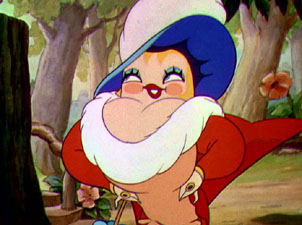 ‘Who Killed Cock Robin?’ is a musical mystery very loosely based on the nursery rhyme of the same name. Its source material notwithstanding, ‘Who Killed Cock Robin’ is the most adult Silly Symphony ever made.
True to the Silly symphony concept, all characters either sing or speak in rhyme to Frank Churchill’s music (with Jenny Wren’s sensual blues as a highlight), but in a bare seven minutes the cartoon manages to mock both the law, racialism and gay people, while displaying an unusual eroticism through Jenny Wren, who is a very fine caricature of famous Hollywood actress Mae West, a tour de force by Joe Grant (design) and Hamilton Luske (animation).
These features are especially striking when one bears in mind that the Hays Code was already active in 1935. Due to his self-censorship of the movie industry sex and violence were banned from the movies. To illustrate its effect: due to this code an erotic cartoon character like Betty Boop had to be tuned down and was turned into a goody-goody and quite a bland character. Yet, ‘Who Killed Cock Robin’ displays its satire and eroticism in full glory.
When Cock Robin has been shot by a mysterious shadow, the Keystone Cop-like police randomly arrests some bystanders: a tough-looking guy, a black bird (in those days blacks were easily arrested just because of their color) and a cuckoo who resembles Harpo Marx. They’re treated very roughly, being knocked by the cops almost all the time. And when Jenny exclaims that justice should be done, the judge simply orders to hang all verdicts even though nobody knows who’s guilty!
It’s Cupid, an obvious caricature of a homosexual, who prevents this cruel sentence. Cock Robin appears to be alive, and finally he and Jenny Wren reunite in a hot kiss. Thus ends one of the most spectacular cartoons of the 1930s.
Watch ‘Who Killed Cock Robin?’ yourself and tell me what you think:
This is Silly Symphony No. 54
To the previous Silly Symphony: The Cookie Carnival
To the next Silly Symphony: Music Land
Director: David Hand
Release Date: April 18, 1936
Stars: The Three Little Pigs
Rating: ★★★½
Review:
 ‘Three Little Wolves’ follows ‘The Big Bad Wolf”, being the third cartoon in the ‘Three Little Pigs’ series.
Penned by Joe Grant & Bill Cottrell, it introduces the Wolf’s three sons, who anticipate Huey, Dewey and Louie (who would make their cinema debut two years later, in ‘Donald’s Nephews‘). They even speak in a similar way. The wolf, on the other hand, suddenly has an inexplicable German accent.
In this cartoon he dresses up ridiculously again, this time as Bo-Beep, but he does manage to lure two of the little pigs to his house. When he closes the door, the pigs turn red and say ‘why, Bo-Beep!’, as if they’re being seduced. Of course, the wise pig comes to the rescue, this time using an elaborate Rube Goldberg machine, called the ‘wolf pacifier’.
The three little wolves would return in the last ‘three little pigs’-cartoon, ‘The Practical Pig’ (1939), but in the subsequent comic strip only one would remain, and he eventually would befriend the pigs, contrary to his lookalikes in this cartoon, who are even more aggressive than their father.
The end-shot of this cartoon was later reused in the propaganda film ‘Food will win the War‘ (1942).
Watch ‘Three Little Wolves’ yourself and tell me what you think:
This is Silly Symphony No. 60
To the previous Silly Symphony: Elmer Elephant
To the next Silly Symphony: Toby Tortoise Returns
Director: Graham Heid
Release Date: May 27, 1938
Rating: ★★★★
Review:
 ‘Wynken, Blynken and Nod’ is one of the last, and certainly one of the most spectacular Silly Symphonies ever made.
There is hardly any story: at the start of the cartoon we hear the poem being sung by a sugary soprano, then we watch Wynken, Blynken and Nod sailing the Milky Way and fishing ‘starfish’ and being at the mercy of some clouds.
The three babies are very alike, with Nod being the ‘Dopey’ of the three, and the humor is mild. But, boy, the looks of this cartoon! Like two other Silly Symphonies obsessed with babies and their bare behinds (‘Lullaby Land’ from 1933 and ‘Water Babies’ from 1935), ‘Wynken, Blynken and Nod’ is a showcase of Disney Animation. The cartoon features extraordinarily beautiful backgrounds, and literally bursts with effect animation, rendering astonishingly beautiful stars, comets, clouds and lightnings. The fantasy is enhanced by a wonderful score, which makes clever use of ‘Twinkle Twinkle Little Star’. All this gives one the feeling of watching a mini-Fantasia.
Certainly, no animated cartoon would ever show such lushness again. As such, in a sense ‘Wynken, Blynken and Nod’ forms the end and culmination of an era, which had started in the end of 1933, in which the Disney studio combined ever growing ambitions with childish and sugary material.
‘Wynken, Blynken and Nod’ was the only cartoon directed by Graham Heid. Remarkably little is known about this artist, who also contributed to ‘Pinocchio‘, ‘Fantasia’ and ‘Bambi‘. In fact, I can only find a birth date (November 14, 1909). This is rather surprising, for one can have worse seven minutes of fame than this delightful short. Luckily, animation historians Jerry Beck & Michael Barrier help us out on the Cartoon Research F.A.Q. page.
One trivial remark: ‘Wynken, Blynken and Nod’ is based on the 1889 published poem ‘Dutch Lullaby’ by Eugene Field. Indeed, the words Wynken and Blynken seem to suggest some Dutch origin, but there are no such verbs in the Dutch language, which would translate ‘to wink’ and ‘to blink’ as ‘knipogen’ and ‘knipperen’, respectively.
Watch ‘Wynken, Blynken and Nod’ yourself and tell me what you think:
This is Silly Symphony No. 70
To the previous Silly Symphony: Moth and the Flame
To the next Silly Symphony: Farmyard Symphony
Director: Wilfred Jackson
Release Date: October 31, 1936
Rating: ★★★★★ ♕
Review:
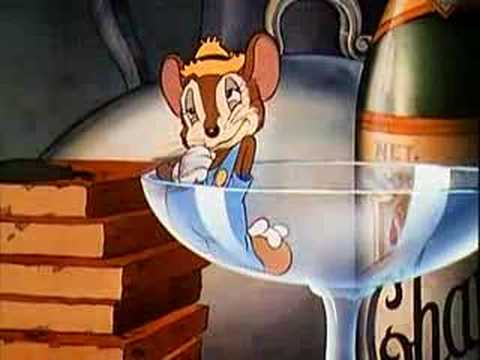 A very beautifully executed rendering of the classic tale, ‘The Country Cousin’ is a gem among the Silly Symphonies.
Its story is lean and economical, its characterization highly effective and its silent acting superb. Particularly noteworthy is the drunken performance of the Country Cousin, animated by Art Babbitt, which belongs to the highlights of animation.
Everyone who wants to know what ‘character animation’ is all about, should go and watch this cartoon. One cannot find a better example of it: the two mice look similar, but are very different in their behavior, attitude, and personality. Moreover, their personalities are played completely in mime, without any help from characteristic voices.
Besides this, ‘The Country Cousin’ contains some very realistic animation of people’s feet walking on the sidewalk. Indeed, the human realism of ‘Snow White and the Seven Dwarfs’ (1937) was not far away anymore.
Thirteen years later, Tex Avery would explore the theme of ‘The Country Cousin’ once again, albeit quite differently and way more ridiculously, in his hilarious short ‘Little Rural Riding Hood’ (1949).
Watch ‘The Country Cousin’ yourself and tell me what you think:
This is Silly Symphony No. 63
To the previous Silly Symphony: Three Blind Mouseketeers
To the next Silly Symphony: Mother Pluto
Director: Wilfred Jackson
Release Date: August 22, 1936
Stars: Max Hare, Toby Tortoise, The Three Little Pigs
Rating: ★★★★★
Review:
 One of the few sequels in Disney’s pre-video era, ‘Toby Tortoise Returns’ features the two stars of ‘The Tortoise and the Hare’ from 1935.
In this cartoon, written by Ward Kimball and featuring his typically zany style of humor, Max Hare (who’s still a bragging bully) and Toby Tortoise combat each other in a boxing match, which – of course – Toby eventually wins, albeit by means of Max’s own trickery.
Apart from Toby Tortoise and Max Hare there are many cameos of other Silly Symphony stars, among them the three little pigs, Dirty Bill (from ‘The Robber Kitten’), Jenny Wren and the Cuckoo from ‘Who Killed Cock Robin?’ and, Elmer Elephant and Tilly Tiger (from ‘Elmer Elephant’), as if all Silly Symphonies were taking place in the same space and time.
This makes ‘Toby Tortoise Returns’ akin to the earlier ‘Mickey’s Polo Team’ from the same year. The whole atmosphere is rather like that of a future Warner Brothers-cartoon, and one can sense the sheer joy the makers had in bringing all these characters together in a cartoon which sole reason of existence seems to be pure fun.
Notice the black bunny and the black turtle that are Max’s and Toby’s helpers, respectively.
Watch ‘Toby Tortoise Returns’ yourself and tell me what you think:
This is Silly Symphony No. 61
To the previous Silly Symphony: Three Little Wolves
To the next Silly Symphony: Three Blind Mouseketeers
Director: Wilfred Jackson
Release Date: May 11, 1935
Rating: ★★★
Review:
 ‘Water Babies’ is sugary cute, contains a lot of repetitive animation and is one of those Silly Symphonies obsessed with babies and their bare behinds (other examples are ‘Lullaby Land’ (1933) and ‘Wynken, Blynken and Nod’ (1938)).
There is not much of a story either: the sexless water babies wake up, make fun and go to bed again (apparently a day only lasts seven minutes in their world).
And yet, this is undoubtedly one of Disney’s most impressive efforts of the era. It feels like a showcase cartoon of the Disney studio, excelling in lush pictures, great effect animation and beautiful theme music by Leigh Harline. Especially the opening scene (dawn) and the last shot (night) are stunningly beautiful. The Disney staff had reached yet another peak, and more was still to come.
‘Water Babies’ itself at least must have been a success, for it was followed by the similar ‘Merbabies’ in 1938, featuring more or less girl characters instead of the boy-like babies in ‘Water Babies’.
Watch ‘Water Babies’ yourself and tell me what you think:
This is Silly Symphony No.52
To the previous Silly Symphony: The Robber Kitten
To the next Silly Symphony: The Cookie Carnival
Director: David Hand
Release Date: November 14, 1936
Stars: Pluto
Rating: ★★★
Review:
 Pluto unwillingly starts a career as a mother to a number of chicks.
When he finally has learned to love them, their real mother returns and together with her husband, a violent rooster, tries to chase Pluto away.
Although introduced as such, ‘Mother Pluto’ is not really a Silly Symphony. It lacks both the obligate music and the fairy tale character typical of the series. It’s actually Pluto’s first solo outing. It seems that at the time Disney didn’t dare to introduce new series besides the Mickey Mouse cartoons and the Silly Symphonies. But with Mickey giving way more and more to his co-stars Goofy, Donald and Pluto, this step would soon be made.
At the end of 1937 Pluto would become the first Mickey Mouse co-star to start his own series with ‘Pluto’s Quin-Puplets’, immediately followed by Donald with ‘Donald’s Ostrich’. Goofy followed one-and-a-half year later, in 1939, with ‘Goofy and Wilbur’. These three stars would be heading most of the Disney shorts of the 1940s and 1950s when the Silly Symphony series had been dropped and the number of Mickey Mouse shorts diminished.
Watch ‘Mother Pluto’ yourself and tell me what you think:
This is Silly Symphony No. 64
To the previous Silly Symphony: The Country Cousin
To the next Silly Symphony: More Kittens
Director: Wilfred Jackson
Release Date: October 5, 1935
Rating: ★★★★★ ♕
Review:
 In ‘Music Land’ a young violin falls in love with a young saxophone, much to the disapproval of their parents, the queen of ‘The Land of Symphony’ and the king of ‘The Isle of Jazz, respectively, whose realms are separated by the ‘Sea of Discord’.
When the young saxophone is imprisoned, the feud between the two very different nations leads to a war, in which the two young lovers are almost killed… The whole story is told through music, even the characters ‘speak’ with the sounds of the instruments they are. The complete score, by Leigh Harline, is a delight to listen to.
This reading of ‘Romeo and Juliette’ is one of the most inspired of all Silly Symphonies. The very idea of musical instruments ‘speaking’ in their own sound is brilliant. But there is much more. For example, when the saxophone prince is locked up, he’s imprisoned in a metronome and when he writes a letter to his father (a caricature of bandleader Paul Whiteman, ‘the king of jazz’) he does this in staff-notation!
The complete design of the cartoon is delightful. The backgrounds are particularly beautiful, rendering a totally convincing fantasy world, in which the cartoon develops as if it were an age-old story. The concept of a battle between classical music and jazz was a topical one in the 1930s, when jazz was still regarded by many as devilish music and a threat to ‘high culture’. Nevertheless, during the second half of the 1930s jazz gradually became a respected genre, as exemplified by Benny Goodman’s concert in Carnegie Hall in 1938.
Watch ‘Music Land’ yourself and tell me what you think:
This is Silly Symphony No. 55
To the previous Silly Symphony: Who Killed Cock Robin?
To the next Silly Symphony: Three Orphan Kittens
Director: Ben Sharpsteen
Release Date: May 25, 1935
Rating: ★★½
Review:
 Of all Silly Symphonies this one is particularly silly. The very idea of a cookie land is as original as it is looney.
Yet, the cartoon is literally sugary, not funny. The story, about a Charlie Chaplin-like tramp (voiced by Pinto Colvig) making a poor lonesome girl queen of the parade, is pure sentimental melodrama. Moreover, the characters speak in operetta-like recitatives and when the girl, having become queen, has to choose a king the cartoon shifts to a tiresome medley of song-and-dance-routines.
Nevertheless, the art direction of this Silly Symphony is stunning and its backgrounds lush and beautiful, making this one of the most impressive cartoons of the era. The girl is quite beautifully animated by Gram Natwick, the man who had created Betty Boop five years earlier, and who had joined Disney in 1934. After her transformation into a carnival queen, the girl doesn’t resemble a cookie at all, but she is pictured and animated as a real girl. Natwick would later be an animator on Snow White in ‘Snow White and the Seven Dwarfs’ (1937), and it’s as if the cookie girl was Natwick’s exercise for the real thing.
Notice the contrast between the sissy Angelic Cakes and the fun-loving Devil Cakes, whose theme music is jazz (the most ‘evil’ music of the era).
Watch ‘The Cookie Carnival’ yourself and tell me what you think:
This is Silly Symphony No. 53
To the previous Silly Symphony: Water Babies
To the next Silly Symphony: Who Killed Cock Robin?


 Dr. Grob's Animation Review