You are currently browsing the category archive for the ‘Merrie Melodies’ category.
Director: Chuck Jones
Release date: December 28, 1963
Stars: Road Runner & Wile E. Coyote
Rating: ★★★★
Review:
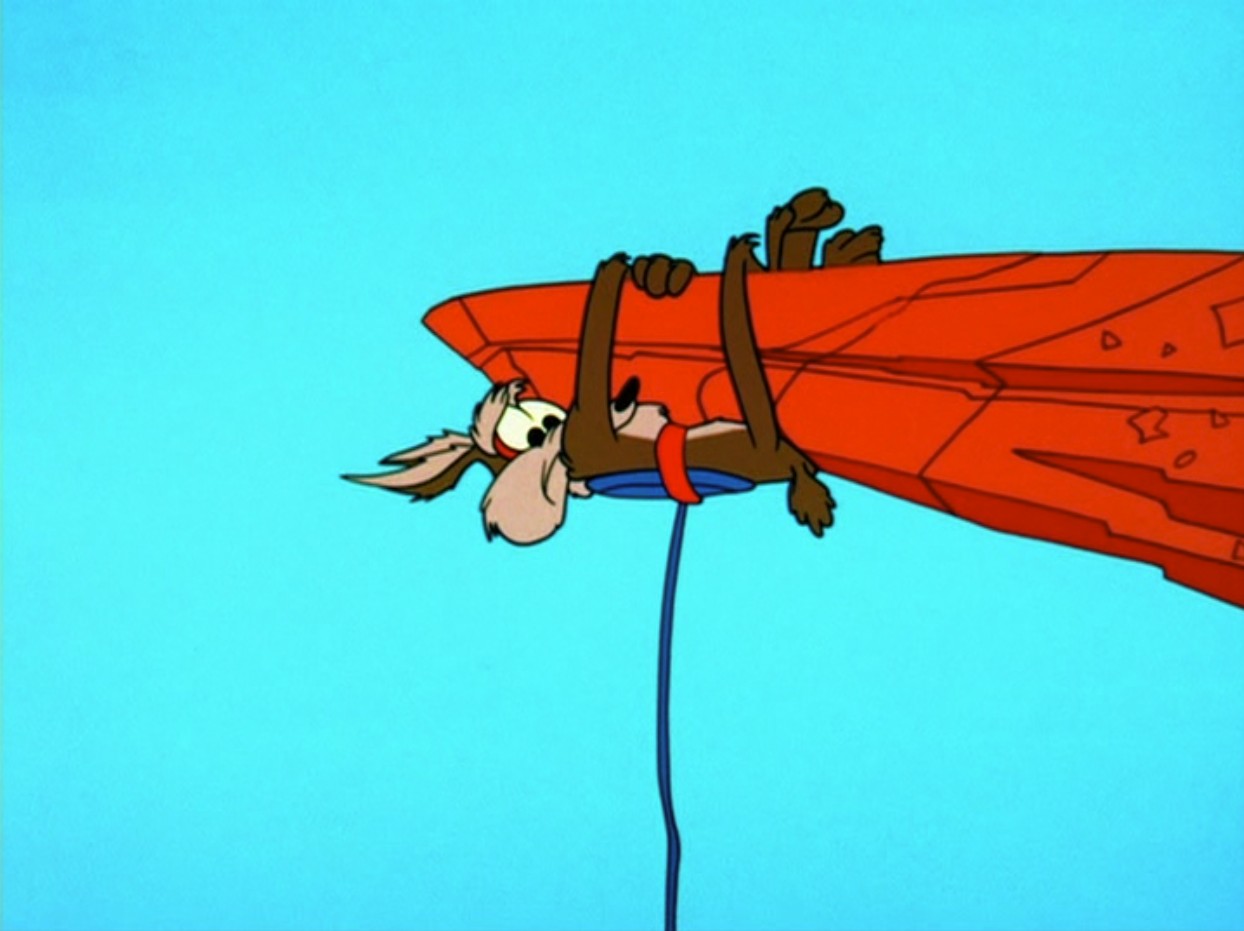
‘To Beep or not to Beep’ is a late, but fine entry in the Road Runner series, exemplifying Chuck Jones’ late, rather deft style.
The short is noteworthy for a string of gags that all use a large catapult, which of course, fails the coyote repeatedly. Apart from the catapult gags, the giant spring gag is a nice one. Note the extreme deformation of the coyote’s body when it gets caught in a telephone wire: the coyote’s eyes and feet stretch for several meters at that point.
The animation and background art are gorgeous throughout, and even Bill Lava’s music is apt.
Watch an excerpt from ‘To Beep or not to Beep’ yourself and tell me what you think:
‘To Beep or not to Beep’ is available on the DVD-set ‘Looney Tunes Golden Collection Volume Three’
Director: Alex Lovy
Release date: February 3, 1968
Rating: ★★★½
Review:

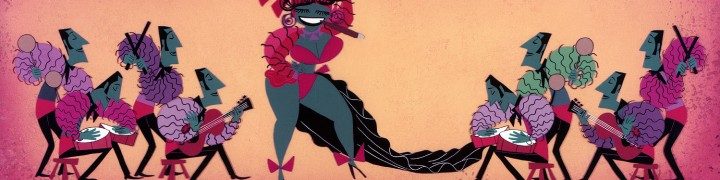
The Warner Bros. Studio was in its fifth incarnation and almost at the end of its life (the studio closed down in 1969) when ‘Norman Normal’ was released. The film is one of the most original of the entire Warner Bros. output, and remarkable for being a collaboration with musician Paul Stookey, the Paul of famed folk trio Peter, Paul and Mary.
‘Norman Normal’ knows a pleasant cartoon modern design and there’s no funny animal in sight. Instead, the short is rather puzzling and hardly knows a narrative, but seems to say something about emotional blackmail in society, and how trying to fit in in society can conflict with one’s own moral standards.
Introduced by a colorful beat band, we follow Norman who struggles with an abject order by his boss, while he seems at loss at a party. Especially the party sequence is strikingly modern, addressing the pushy coercion into drinking alcohol, while Norman himself questions a joke on being funny at the expense of a minority group. I didn’t expect such modern stances in a 1960s cartoon, at all.
Unfortunately, the short is too directionless and ends too abruptly to become a classic, but it’s certainly an interesting product of the 1960s, an era of more experimental approach to storytelling, both in live action and animation.
The film’s title song also appeared on Peter, Paul and Mary’s 1966 release ‘The Peter, Paul and Mary Album’. According to Wikipedia more ‘Norman Normal’ cartoons were envisaged, but this would remain the only one.
Watch a video clip based on ‘Norman Normal’ yourself and tell me what you think:
‘Norman Normal’ is available on the DVD-set ‘Looney Tunes Golden Collection Volume Six’
Director: Robert McKimson
Release date: February 29, 1964
Rating: ★★★½
Review:

‘Bartholomew versus the Wheel’ is an oddball cartoon in both the Warner Bros. Canon and in Robert McKimson’s oeuvre. Narrated by a little boy the film tells about a dog, Bartholomew, who hates wheels, and bites them all. But things change when he tries to bite an airplane wheel.
‘Bartholomew versus the Wheel’ is a sweet little narrative directed at children and knows very charming cartoon modern designs that are unlike any other Warner Bros cartoon. Bartholomew himself has a very handsome rounded design, and the humans are often of a monochrome cartoon modern design. Also striking is the background art, which emulates children pencil drawings. This film thus is another pleasant surprise out of the studio’s last days.
Watch ‘Bartholomew versus the Wheel’ yourself and tell me what you think:
‘Bartholomew versus the Wheel’ is available on the DVD-set ‘Looney Tunes Golden Collection Volume Six’
Director: Robert McKimson
Release date: February 27, 1960
Rating: ★★★½
Review:

‘Wild Wild World’ is an obvious parody on the documentary series ‘Wide Wide World’, which run on NBC from 1955 to 1958. Of all cavemen cartoons ‘Wild Wild World’ is the one most directly anticipating The Flintstones, who would make their debut only seven months after the release of this cartoon.
The film is introduced and narrated by one Cave Darroway (a caricature of the original televison series’ host Dave Garroway), but the main cartoon is supposedly found footage (in “cromagnonscope”) from 75,000,000 B.C., which would explain the dinosaurs but not the cavemen. The trope of cavemen and dinosaurs existing together is almost as old as cinema itself, but ‘Wild Wild World’ goes at lengths to show the society of 75 million years ago as being just like ours, with sky scrapers, barbers, elevators and such.
The film exploits a pleasant cartoon modern design and knows a running gag of three hunters trying to catch a dinosaur, to no avail. These cavemen are drawn all too tiny compared to the dinosaurs, exaggerating the prehistoric animals’ sizes way too much.
‘Wild Wild World’ is more of a curiosity than a classic Warner Bros. cartoon, but shows that the studio could be inspired even in its nadir.
Watch excerpts from ‘Wild Wild World’ yourself and tell me what you think:
‘Wild Wild World’ is available on the DVD-set ‘Looney Tunes Golden Collection Volume Six’
Director: Chuck Jones
Release date: February 25, 1961
Rating: ★★½
Review:
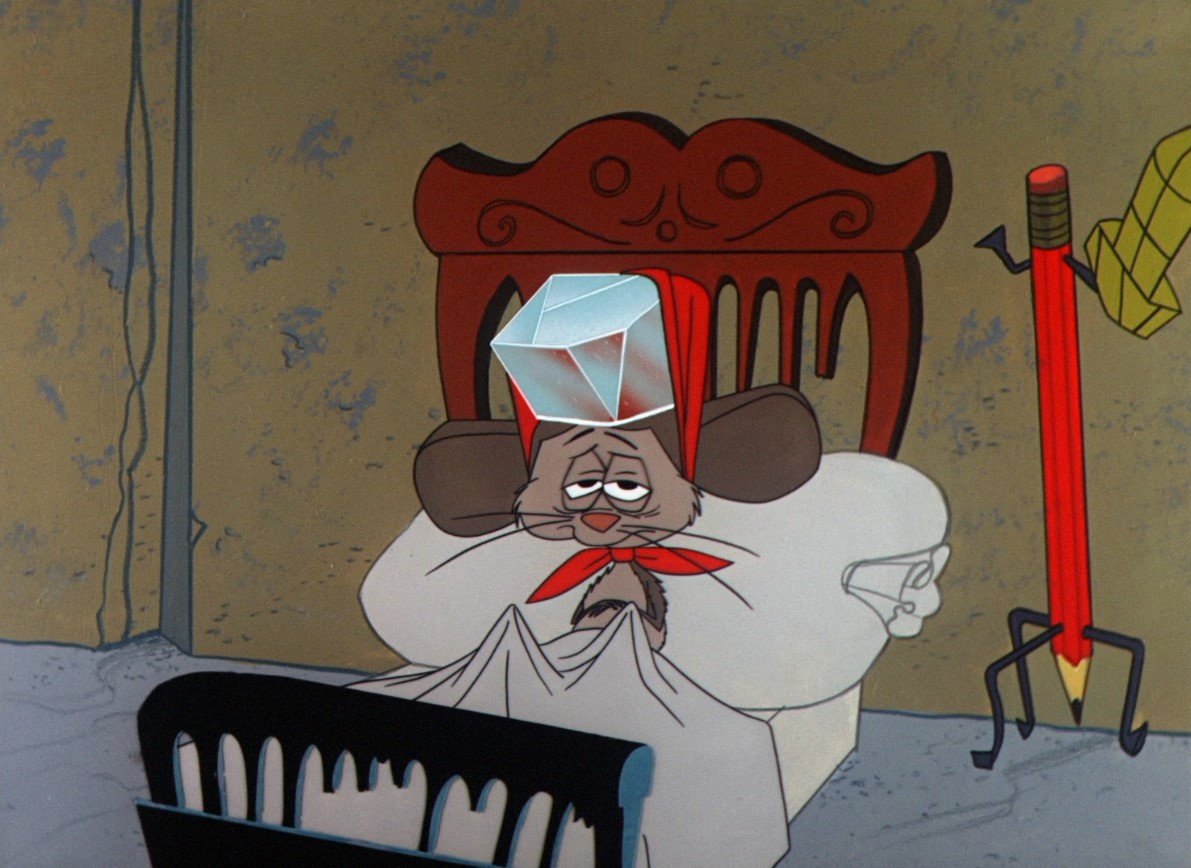
This short starts with a mouse eating his way through the largest uncut rum cake and getting drunk.
For a while we watch some fine silent comedy, but when the mouse mistakes a diamond for ice, the cartoon turns into an ordinary chase cartoon starring two talkative cops, with one being a late addition to a plethora of characters inspired by Lon Chaney jr.’s Lennie in the 1939 film ‘Of Mice and Men’.
These sequences are more tiresome than funny, but give the viewer ample time to watch the gorgeous background art, with its beautiful cityscapes. The animation, too, is top notch, but these elements cannot rescue the rather uninspired story.
Watch an excerpt from ‘The Mouse on 57th Street’ yourself and tell me what you think:
‘The Mouse on 57th Street’ is available on the Blu-Ray ‘Looney Tunes Collector’s Choice Vol. 3’
Director: Friz Freleng
Release date: September 1, 1962
Stars: Yosemite Sam
Rating: ★★
Review:
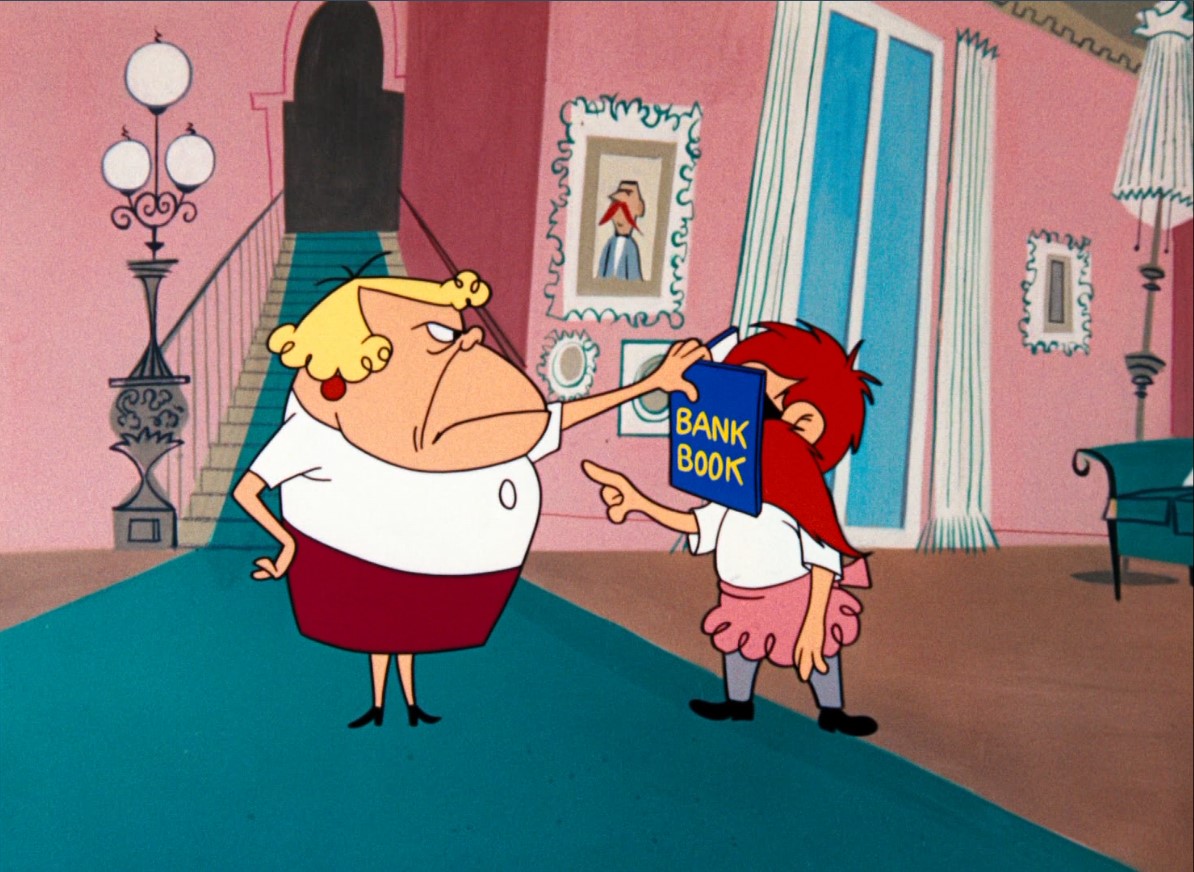
‘Honey’s Money’ opens with Yosemite Sam reading about a local widow inheriting five million dollars. He sets out to court the lady immediately, and marries her too, despite the fact that she is ugly. But married life isn’t what Sam had expected, and then he has to meet his oversized baby son Wentworth…
‘Honey’s Money’ is a remake of the earlier Friz Freleng cartoons ‘His Bitter Half’ (1950) and ‘Hare Trimmed’ (1953). The short is noteworthy for being Yosemite Sam’s only solo cartoon, and only one of two not co-starring Bugs Bunny, the other one being ‘Along Came Daffy’ from 1947.
Unfortunately, the short can hardly be called a classic within the Looney Tunes canon: Yosemite Sam is particularly unpleasant in this short, his sole motive being greed. And as he apparently can’t even spend the money, this motive becomes a muddled one. Moreover, the character designs and animation are only fair, and the gags mediocre.
One thus has ample time to admire Hawley Pratt’s layouts and Tom O’Loughlin’s background art, which form the highlight of an otherwise run-of-the-mill cartoon. Another highlight is the card crediting Friz Freleng, which features a caricature of the director on a dollar bill.
Watch ‘Honey’s Money’ yourself and tell me what you think:
‘Honey’s Money’ is available on the Blu-Ray and DVD ‘Looney Tunes Platinum Collection Volume Three’
Director: Chuck Jones
Release date: November 30, 1963
Stars: Bugs Bunny
Rating: ★
Review:

‘Transylvania 6-5000’ is one of those late Warner Bros. Cartoons, which are equally beautiful to look at as they are boring to watch.
In this short Bugs Bunny wanted to travel to Pittsburgh, Pennsylvania, only to end up in Transylvania, where he encounters a vampire with the name Count Bloodcount.
The cartoon is very talkative, and features an annoying female two-headed bird. Worse are the central gags, which are all constructed around the words Abacadabra, which turn the count into a vampire, and ‘hocus pocus’, which turn him back to a human form, again. These sequences suffer from a lack of inner logic and sloppy timing, and are hardly as funny as intended. Bill Lava’s canned music doesn’t help, either.
Despite its gorgeous settings, one cannot conclude but that the Warner Bros. studio ran out of inspiration and of ideas quickly in the early 1960s, contributing to its own shutdown after only one other cartoon, ‘Señorella and the Glass Huarache‘ (which, incidentally, is more fun than this jaded Bugs Bunny cartoon). And yet, already in 1964 Warner Bros. cartoons appeared again, now produced by the DePatie-Freleng cartoon studio of Pink Panther fame. And thus four more Bugs Bunny cartoon were released in 1964, before the character was retired.
Watch ‘Transylvania 6-5000’ yourself and tell me what you think:
This is Bugs Bunny cartoon No. 164
To the previous Bugs Bunny cartoon: Mad as a Mars Hare
To the next Bugs Bunny cartoon: Dumb Patrol
‘Transylvania 6-5000’ is available on the DVD-box ‘Looney Tunes Golden Collection Volume Five’
Director: Friz Freleng
Release Date: March 16, 1957
Stars: Tweety & Sylvester
Rating: ★★
Review:
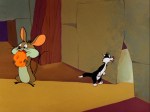
This short could better have been called ‘Sylvester and the Beanstalk’, because it’s Sylvester who finds himself on top of the beanstalk, and in giantland.
In the giant’s castle Sylvester discovers a giant Tweety, which he tries to catch in four attempts, before the giant chases him down. The cartoon ends rather poorly with the giant falling on the cat, making him fall straight through the earth, and ending in China.
‘Tweety and the Beanstalk’ is essentially a normal Tweety and Sylvester routine, making little use of the size difference (for example, at one point Sylvester uses a saw and a string fit to his own size – how on earth did he find those in giantland?). Freleng’s excellent timing cannot rescue the used and tried spot gags, and the result is a disappointing and forgettable cartoon.
Watch ‘Tweety and the Beanstalk’ yourself and tell me what you think:
https://www.dailymotion.com/video/x7o4y8f
‘Tweety and the Beanstalk’ is available on the DVD-set ‘Looney Tunes Golden Collection Volume Five’
Director: Robert McKimson
Release Date: January 23, 1960
Stars: Speedy Gonzales, Sylvester
Rating: ★★★
Review:
 The setting of ‘West of the Pesos’ is a ‘veelage’, where several mice have been caught and put into cages inside the ‘ACME Laboratorio por experimentao’, guarded by Sylvester.
The remaining mice of the village would gladly rescue their comrades, so Speedy Gonzales is lured by the beautiful female mouse Camilla to come to the rescue. As the gags come fast and plenty, this is one of the more satisfying Speedy Gonzales cartoons, if hardly really funny. This time, Sylvester doesn’t stand a chance, and isn’t even given time to think of some counter measures.
Despite all the action, the main attractions of this cartoon are the attractive and strikingly modern backgrounds by Robert Givens and William Butler. The list of mice caught for the laboratory includes the names of animators Rudy Zamora, Manuel Perez and Gus Arriola, as well as painter Pablo Picasso.
Watch ‘West of the Pesos’ yourself and tell me what you think:
https://www.dailymotion.com/video/x5bd3gm
‘West of the Pesos’ is available on the DVD-set ‘Looney Tunes Golden Collection Volume Four’
Director: Friz Freleng
Release Date: December 6, 1941
Rating: ★★★★★ ♕
Review:
 ‘Rhapsody in Rivets’ without doubt is one of Friz Freleng’s finest films. The very idea of turning a building site into a symphony orchestra with the foreman as a conductor is marvelous.
The execution, too, is superb. Using Franz Liszt’s Second Hungarian Rhapsody, Freleng presents a string of clever sight gags, perfectly timed to the music. When the foreman enters the stage, an audience applauds. The foreman uses his blueprint as sheet music. We watch a cement mixer mixing as if it were a cocktail shaker, and a brick layer frantically building a wall to the fast music. While performing, the workers really do build a skyscraper (with some twists and turns), until a Droopy-like dog destroys it all.
Liszt’s composition had been a staple since the advent of sound in cartoons. For example it had been used in the Mickey Mouse cartoons ‘The Opry House‘ (1929) and ‘The Mechanical Man‘ (1933) and the Betty Boop cartoon ‘Betty in Blunderland‘ (1934). But Freleng was the first to devote an entire cartoon to the composition. With this move Freleng made his own mini-Fantasia. The short uses no dialogue, whatsoever, and is a prime example of Freleng’s famous musical timing. In 1942 the film was rightfully nominated for an Academy Award. Freleng would return to Liszt’s rhapsody several times, most notably in ‘Rhapsody Rabbit‘ (1946) and ‘Back Alley Uproar‘ (1948).
Watch ‘Rhapsody in Rivets’ yourself and tell me what you think:
‘Rhapsody in Rivets’ is available on the DVD ‘Warner Bros. Home Entertainment Academy Award-Nominated Animation: Cinema Favorites’
Director: Friz Freleng
Release Date: June 7, 1941
Stars: Bugs Bunny
Rating: ★★★★
Review:
 This cartoon opens with the voice of Bugs Bunny reciting the first lines of Longfellow’s famous poem ‘The Song of Hiawatha’, while we watch the Indian paddling through a beautiful scenery.
Bugs soon discovers that Hiawatha is hunting rabbits. Luckily, in Freleng’s cartoon the Indian is one of those nit-witted characters based on Lon Chaney jr.’s portrayal of Lennie Small in ‘Of Mice and Men’ (1939), so popular at Warner Bros. (see also ‘Of Fox and Hounds’). In the end the mighty warrior leaves the scene empty-handed, while Bugs recites some last lines from the poem. Nevertheless, it’s the hunter who has the last laugh…
‘Hiawatha’s Rabbit Hunt’ marks Friz Freleng’s first try at Warner Bros.’ new star. He understands the character very well: his Bugs Bunny is both self-assured and capable of making mistakes. In one scene Bugs wants to take one of his graceful dives into a hole, only to land hard on the ground besides it. There’s a priceless scene in which Bugs enters Hiawatha’s cooking pot as if he were taking a hot bath. This is by all means already classic Bugs Bunny material. The looks of the rabbit, on the other hand, are highly unstable, and at times Bugs looks more like his predecessor from ‘Elmer’s Candid Camera‘ (1940) than himself.
In his book ‘Chuck Amuck’ Chuck Jones writes that he feels that “[Freleng], too, went wide of the mark in understanding Bugs’s persona. Not as wide as I did and Tex did, but ’twas enough, ‘twould serve“. I don’t quite agree. Tex Avery indeed is way more off in ‘Tortoise Beats Hare‘. Freleng’s Bugs is not really defined, yet, but he’s well underway.
‘Hiawatha’s Rabbit Hunt’, being Bugs Bunny’s only fourth cartoon, proved once again that this was a character to stay. Nevertheless, in this cartoon Freleng’s unit is at his best in the animation of Bugs’s adversary, Hiawatha. The moves of this dumb and clumsy character are very well-timed and matched with equally funny music by Carl Stalling. The cartoon also boasts some gorgeous background art, which add to the poetic atmosphere, despite all the delightful nonsense.
Watch ‘Hiawatha’s Rabbit Hunt’ yourself and tell me what you think:
https://www.dailymotion.com/video/x20z1vd
This is Bugs Bunny cartoon No. 4
To the previous Bugs Bunny cartoon: Tortoise Beats Hare
To the next Bugs Bunny cartoon: The Heckling Hare
‘Hiawatha’s Rabbit Hunt’ is available on the DVD ‘Warner Bros. Home Entertainment Academy Award-Nominated Animation: Cinema Favorites’
Director: Chuck Jones
Release Date: May 9, 1942
Rating: ★★½
Review:
 In 1942 Chuck Jones found his own voice as a director. Gone were the Disneyesque characters and settings. Instead, Jones put forward his own recognizable character designs, a very original animation approach based on strong poses, and an unprecedented emphasis on facial expressions.
Gone, too, were the cute, childish subjects, now replaced by wild, mature and gag rich stories. Suddenly Jones became one of the most recognizable directors in the field, equaled only by Bob Clampett. The most obvious example of this change is ‘The Dover Boys‘ from September 1942, but the new style is already very present in the Conrad Cat cartoons from January/February (‘The Bird Came C.O.D.’, ‘Conrad the Sailor‘ and ‘Porky’s Cafe’ ).
‘The Draft Horse’, from May, is also a nice example of Jones’s new self-assurance. The short features a plow horse who, after reading a billboard saying ‘Horses wanted for US Army’ plows all the way to the next army training camp to get himself enlisted. His race is depicted marvelously: we don’t see the horse himself, but we watch several images of the countryside wrecked by his plow, accompanied by a frantic rendering of Gioacchino Rossini’s William Tell overture.
Besides an example of Jones’s new style, ‘The Draft Horse’ was also the first Warner Bros. cartoon penned by Tedd Pierce, after his return from his move to the Max Fleischer studios. Highlight of the cartoon is the horse acting out a complete war scene for the eyes of a bewildered colonel. This scene, animated by Ken Harris, can match the much praised scene from ‘Brave Little Tailor’ (1938, animated by Frank Thomas), in which Mickey Mouse tells his story of how he beat seven [flies] in one blow. In this scene the horse looks like a forerunner of Charlie Dog, who does an equally hilarious performance in ‘Often an Orphan‘ (1949).
Unfortunately, the rest of the cartoon doesn’t live up to the high standards set here. Tedd Pierce’s story is too loosely jointed to engage the viewer, falling back on spot gags. Soon the horse ends in a war exercise, and he flees home with equal speed. In the end we watch him knitting V-sweaters as part of the ‘Bundles for Blue Jackets’ program, in which local ladies knitted sweaters for navy men.
‘The Draft Horse’ mocks the over-zealous response after the United States had entered World War II. At the same time, it shows that every citizen can do his part, even when he is not in the army itself. The horse is designed interestingly, remaining halfway anthropomorphization. For example, he retains his hoofs, and remains on all fours half of the time.
Watch ‘The Draft Horse’ yourself and tell me what you think:
https://www.dailymotion.com/video/x5pce36
‘The Draft Horse’ is available on the DVD-set ‘Looney Tunes Golden Collection Volume Six’
Director: Friz Freleng
Release Date: October 25, 1941
Rating: ★
Review:
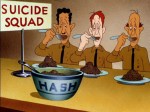
Like Bob Clampett’s earlier ‘Meet John Doughboy‘ Friz Freleng’s ‘Rookie Revue’ is a spot gag cartoon on the army, which grew by the minute due to the draft that had been installed since October 1940.
Note that both cartoons predate the attack on Pearl Harbor, showing that the US armed forces were growing even before the United States were being attacked. The premise of ‘Rookie Revue’ is that we “join the army for a day and get a glimpse of military life”. None of the spot gags are remotely funny, however, making ‘Rookie Revue’ very, very tiresome, and only interesting as a period piece. Nevertheless, animation lovers will appreciate the caricatures of Tex Avery, Henry Binder and Ray Katz in the mess.
Watch ‘Rookie Revue’ yourself and tell me what you think:
‘Rookie Revue’ is available on the DVD-set ‘Looney Tunes Golden Collection Volume Six’
Director: Friz Freleng
Release Date: January 18, 1941
Rating: ★★★★
Review:
 ‘The Fighting 69 1/2th’ opens with peaceful scenes of a picnic in a forest. Soon a red ant and a black ant argue about an olive. When the red ant smothers the black ant with it, he exclaims, Groucho Marx style: ‘Of course you know this means war!’.
Soon the picnic cloth is encircled by trenches, with several ants trying to obtain the food on it, until a lady comes to clear it all away. When only a cake is left behind, the generals try to make peace, which is thwarted by a discussion on how to cut the cake.
‘The Fighting 69 1/2th’ is a rather somber war film, in the tradition of e.g. ‘Bosko the Doughboy’ (1931), ‘There’s Something about a Soldier’ (1934), ‘What Price Porky’ (1938), and ‘Ants in the Plants‘ (1940) and arguably the last to show war as it looked like in World War I. Eleven months later war would come to the US itself, changing the looks of war cartoons forever.
‘The Fighting 69 1/2th’ is not really funny, but it boasts beautiful oil backgrounds, Silly Symphony-like production values like careful shading, and Freleng’s trademark musical timing. There’s even a ‘hold the onions’ gag, when several ants build a hamburger.
Watch ‘The Fighting 69 1/2th’ yourself and tell me what you think:
https://www.dailymotion.com/video/x119jer
‘The Fighting 69 1/2th’ is available on the DVD-set ‘Looney Tunes Golden Collection Volume Six’
Director: Tex Avery
Release Date: August 2, 1941
Rating: ★
Review:
 Tex Avery’s spot gag cartoons always were rather loose-jointed affairs, but ‘Avation Vacation’ tops them all in randomness.
The main frame involves a plane trip around the world, but we also watch ostriches hiding and butterflies emerging. None of the gags is remotely interesting, least of all the plane gags themselves. This results in arguably the weakest of all Avery’s spot gag cartoons.
The short is noteworthy, however, for featuring the first occurrence of the ‘hair-in-the-projector-gag, a 4th wall breaking gag that Avery would perfect in ‘The Magical Maestro’ (1952). In this first version the hair pops up, while a highly realistic Irishman sings a ballad in operetta style. The hair is less convincing than the one in ‘The Magical Maestro’, but the gag works nonetheless, and it’s the undisputed highlight of the otherwise ultimately boring cartoon.
Watch ‘Aviation Vacation’ yourself and tell me what you think:
https://www.dailymotion.com/video/x5x2ed2
‘Aviation Vacation’ is available on the French ‘Tex Avery’ DVD Box Set
Director: Bob Clampett
Release Date: December 20, 1941
Stars: Bugs Bunny, Elmer Fudd
Rating: ★★★½
Review:
 When Tex Avery left Warner Bros. in 1941, Bob Clampett inherited his unit.
This is best visible in ‘Wabbit Twouble’, which features the same rich oil background art as Avery’s earlier cartoons. The short is Clampett’s only third Merrie Melody (and thus color cartoon), and his first take on Bugs Bunny, who still was only one-and-a-half year and seven cartoons old. Clampett’s take on the rabbit is quite different from his contemporaries. In a way he goes all the way back to Bugs Bunny’s forerunner in ‘Porky’s Hare Hunt‘ (1938), with Bugs Bunny taunting Elmer just for fun.
Elmer comes to ‘Jellostone park’ for rest and relaxation. But as soon as he has installed himself, Bugs starts nagging him. Bugs Bunny’s best trick is giving Elmer glasses which he paints black, making Elmer think it has become night already. Also involved in the routine is a bear, who even replaces Bugs as Elmer’s main problem. This leads to a chase scene, which is very remarkable as it almost consists of poses only, with little to no movement in between. Chuck Jones would expand on this animation on poses in ‘The Dover Boys‘, and this animation technique would become more dominant in the postwar era.
‘Wabbit Twouble’ features very unusual opening credits. First Bugs Bunny’s name is photographed using real carrots. Second, the credits are written on a moving landscape, a device that would be used extensively by Chuck Jones in the late 1950s and 1960s, and third, the names of all contributors are written in ‘Elmerfuddese’: thus ‘Wobert Cwampett’, ‘Sid Suthewand’ and ‘Cawl W. Stawwing’. This sequence alone shows how important Arthur Q. Bryan’s voice had become for the Elmer Fudd character, after only six cartoons.
Even more interesting, ‘Wabbit Twouble’ suddenly shows a fatter design of Elmer, which was modeled on Arthur Q. Bryan’s looks, so the animators could also use the actor’s funny movements. Unfortunately, Elmer lost a lot of his appeal with this fatty design, and it was only used in three more cartoons (‘The Wabbit Who Came to Supper‘, ‘The Wacky Wabbit’ and ‘Fresh Hare’, all from 1942). With Friz Freleng’s ‘The Hare-Brained Hypnotist‘ Elmer luckily was his normal self again.
Watch ‘Wabbit Twouble’ yourself and tell me what you think:
https://www.dailymotion.com/video/x3ft9a5
This is Bugs Bunny cartoon No. 7
To the previous Bugs Bunny cartoon: All This and Rabbit Stew
To the next Bugs Bunny cartoon: The Wabbit Who Came to Supper
‘Wabbit Twouble’ is available on the Blu-Ray set ‘Looney Tunes Platinum Collection: Volume 2’ and on the DVD-set ‘Looney Tunes Golden Collection Volume One’
Director: Tex Avery
Release Date: May 24, 1941
Stars: a.o. Cary Grant, Greta Garbo, Edward G. Robinson, Johnny Weismuller, James Cagney, Humphrey Bogart, George Raft, Harpo Marx, Bing Crosby, Leopold Stokowski, James Stewart, Sonja Henie, Boris Karloff, the Three Stooges, Oliver Hardy, Mickey Rooney, Judy Garland, Peter Lorre, Henry Fonda, Buster Keaton, Jerry Colonna, Clark Gable, Groucho Marx
Rating: ★★★★
Review:
 Caricatures of Hollywood stars have been featured in many animated cartoons since ‘Felix goes Hollywood’ (1923).
With cartoons like ‘Mickey’s Gala Premier‘ (1933), ‘Soda Squirt‘ (1933), ‘Mickey’s Polo Team’ (1936). ‘The Woods Are Full of Cuckoos’ (1937) and ‘Mother Goes to Hollywood’ (1938) the caricatures even became the main attraction of the cartoon. This trend reached its climax in Tex Avery’s ‘Hollywood Steps Out’, as this is a spot gag cartoon on nothing but Hollywood stars. After this short Hollywood stars kept popping up in cartoons, but not in such abundance as in this short.
In ‘Hollywood Steps Out’ we watch the stars of the silver screen going out at the Ciro’s nightclub, which had opened in 1940. The gags are actually rather lame, but it’s a sheer joy to see all these caricatures of late 1930s Hollywood stars, some still famous, others forgotten. Among the more familiar names are Cary Grant, Greta Garbo, Edward G. Robinson, Johnny Weismuller (as Tarzan), James Cagney, Humphrey Bogart, George Raft, Harpo Marx, Bing Crosby, Leopold Stokowski, James Stewart, Sonja Henie, Boris Karloff (as Frankenstein), the Three Stooges, Oliver Hardy, Mickey Rooney, Judy Garland, Peter Lorre, Henry Fonda, Buster Keaton and Jerry Colonna.
Also featured are Henry Binder and Leon Schlesinger, the animators’ bosses. The cartoon contains some rotoscoped dance movements, including a rather sexy bubble dance, and a running gag about Clark Gable following a girl who turns out to be Groucho Marx.
The caricatures in ‘Hollywood Steps Out’ were based on drawings by Ben Shankman, whose work was first used by Friz Freleng in ‘Malibu Beach Party’ (1940), and who clearly is a worthy successor of Joe Grant (e.g. ‘Mickey’s Gala Premier’) and T. Hee (e.g. ‘Mother Goes to Hollywood’). All Shankman’s caricatures in ‘Hollywood Steps Out’ are pretty good to excellent. Moreover, most of them are well-animated, with the animation of James Stewart as a particular highlight. Like the otherwise very different ‘Old Glory‘ (1939) this short shows that by the turn of the decade the Warner Bros. animators could handle the human figure very well.
The voices, too, are very well done. In ‘The 100 Greatest Looney Tunes Cartoons’ Keith Scott reveals they were all done by one Kent Rogers, who was not yet 18 when ‘Hollywood Steps Out’ was released. Rogers also voiced e.g. Willoughby, Beaky Buzzard, and ‘Henery Hawk’. Unfortunately, he died in World War II in 1944, cutting short a career that might have become as illustrious as Mae Questel’s or Mel Blanc’s. In a way ‘Hollywood Steps Out’ stands out as his greatest work.
Apart from a celebration of Hollywood stars, ‘Hollywood Steps Out’ is also a testimony of the conga craze that took over the United States in the early forties: the irresistible conga beat sounds in the opening sequence and during the dance scene. Other examples of cartoons prominently featuring conga music are ‘Mickey’s Birthday Party’ (1942), ‘Juke Box Jamboree‘ (1942) and ‘Springtime for Pluto‘ (1944).
Watch ‘Hollywood Steps Out’ yourself and tell me what you think:
‘Hollywood Steps Out’ is available on the Blu-Ray set ‘Looney Tunes Platinum Collection: Volume 2’ and the DVD set ‘Looney Tunes Golden Collection Volume Two’
Director: Bob Clampett
Release Date: May 10, 1941
Rating: ★★
Review:
 ‘Farm Frolics’ was the second Merrie Melodie directed by Bob Clampett.
In this cartoon Clampett follows Tex Avery with his own spot gag cartoon, this time on farm life, making it strangely similar to the Walter Lantz cartoon ‘Fair Today‘ from only three months earlier.
The Warner Bros.’ spot gag cartoons rarely belonged to the best of their repertoire, and ‘Farm Frolics’, too, is hardly funny. Even the running gag of this forgettable cartoon is trite, and fails to provide a welcome finale. Nevertheless, the animation is very fine. For example, there’s some surprisingly realistic animation on a horse. Thus even this weak short shows that by 1941 the Warner Bros. animators could do almost everything.
Watch ‘Farm Frolics’ yourself and tell me what you think:
‘Farm Frolics’ is available on the DVD set ‘Looney Tunes Golden Collection Volume 5’
Director: Friz Freleng
Release Date: July 18, 1942
Rating:★
Review:
 ‘Foney Fables’ is a spot gag cartoon on fairy tales, very much in the vain of ‘A Gander at Mother Goose‘ (1940), sharing the realistic hand skipping pages of a storybook with the former cartoon.
‘A Gander at Mother Goose’ already was anything but classic, but ‘Foney Fables’ is even worse. Neither writer Michael Maltese nor director Friz Freleng seem inspired, and the often beautiful animation is wasted on all the lame spot gags. Even the running gag is trite and predictable.
The most interesting aspects of the cartoon are the war references: the grasshopper will survive winter, because he has bought war bonds, the wolf in sheep’s clothing is called ‘the fifth columnist of his day’, the goose that lays golden eggs lays normal eggs for national defense, and old mother Hubbard is being accused of hoarding food. These gags cannot rescue the cartoon, however, which remains uninteresting and forgettable.
Watch ‘Foney Fables’ yourself and tell me what you think:
‘Foney Fables’ is available on the DVD set ‘Looney Tunes Golden Collection Volume 5’
Director: Friz Freleng
Release Date: April 26, 1941
Rating:★★★★★ ♕
Review:
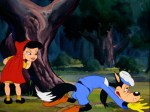 ‘The Trial of Mr. Wolf’ stands in a great tradition of fairy tale spoofs, which go all the way back to 1931, with cartoons like Van Beuren’s ‘Red Riding Hood‘ and Max Fleischer’s ‘Dizzy Red Riding Hood‘.
More recent inspirations must have been Disney’s ‘The Big Bad Wolf‘ (1934), and especially Tex Avery’s ‘Cinderella Meets Fella‘ (1938) and ‘The Bear’s Tale‘ (1940).
‘The Trial of Mr. Wolf’ tops all these cartoons, however, and can be regarded as Warner Bros.’ first mature film: the short fuses Tex Avery’s silliness with Michael Maltese’s inspired story writing, and above all, Friz Freleng’s excellent timing, which at this stage was much better than Avery’s. The result is an outrageously funny cartoon, unlike everything seen before (yes, I’m including ‘A Wild Hare‘ in this!).
The short opens with a court scene, in which the wolf tells his side of the story about Little Red Riding Hood. The wolf portrays himself as an innocent boy from Sunday school, being a hapless victim of a double-crossing Red Riding Hood, and her extremely homicidal grandma, who is only after the wolf’s fur.
Red Riding Hood is a fantastic caricature of Katherine Hepburn, and never has the fairy tale character been so portrayed so vile on the animated screen. But all the characters have an assured, modern, and rubbery design – there’s no trace of the primitivism left that haunted much of Warner Bros.’ earlier output. But moreover, the gags come in fast and plenty, like they never did before. Highlight is the scene in which the wolf opens several doors, only to find grandma behind it, heavier armed every time (by the last door she has mounted a tank). This type of scene would recur in several other cartoons.
The door scene is done very fast, as are all other gags in the cartoon, with the ending being a particular standout: the wolf exclaims that if what he has told weren’t the truth, then he hopes to get run over by a streetcar. And immediately, the vehicle kicks in, taking just a few frames. Such quick timing tops everything Avery had done before, and would be hugely influential, arguably even to Avery himself.
Nevertheless, ‘The Trial of Mr. Wolf’ owes a lot to Avery, with its numerous throwaway gags, like the skunk jury member, and puns, like Red Riding Hood literally having guilt written all over her face. No doubt this cartoon was a great inspiration to the other directors at Warner Bros., who all sped their cartoons up during 1941 and 1942, even Chuck Jones, who had made the slowest cartoons of the lot thus far. The Schlesinger studio could now enter its classic era.
Watch ‘The Trial of Mr. Wolf’ yourself and tell me what you think:
https://www.dailymotion.com/video/x2wzcxr
‘The Trial of Mr. Wolf’ is available on the DVD set ‘Looney Tunes Golden Collection Volume 5’


 Dr. Grob's Animation Review