You are currently browsing the tag archive for the ‘art’ tag.
Director: David Gemmill
Airing date: May 27, 2020
Stars: Bugs Bunny, Elmer Fudd
Rating: ★★★
Review:
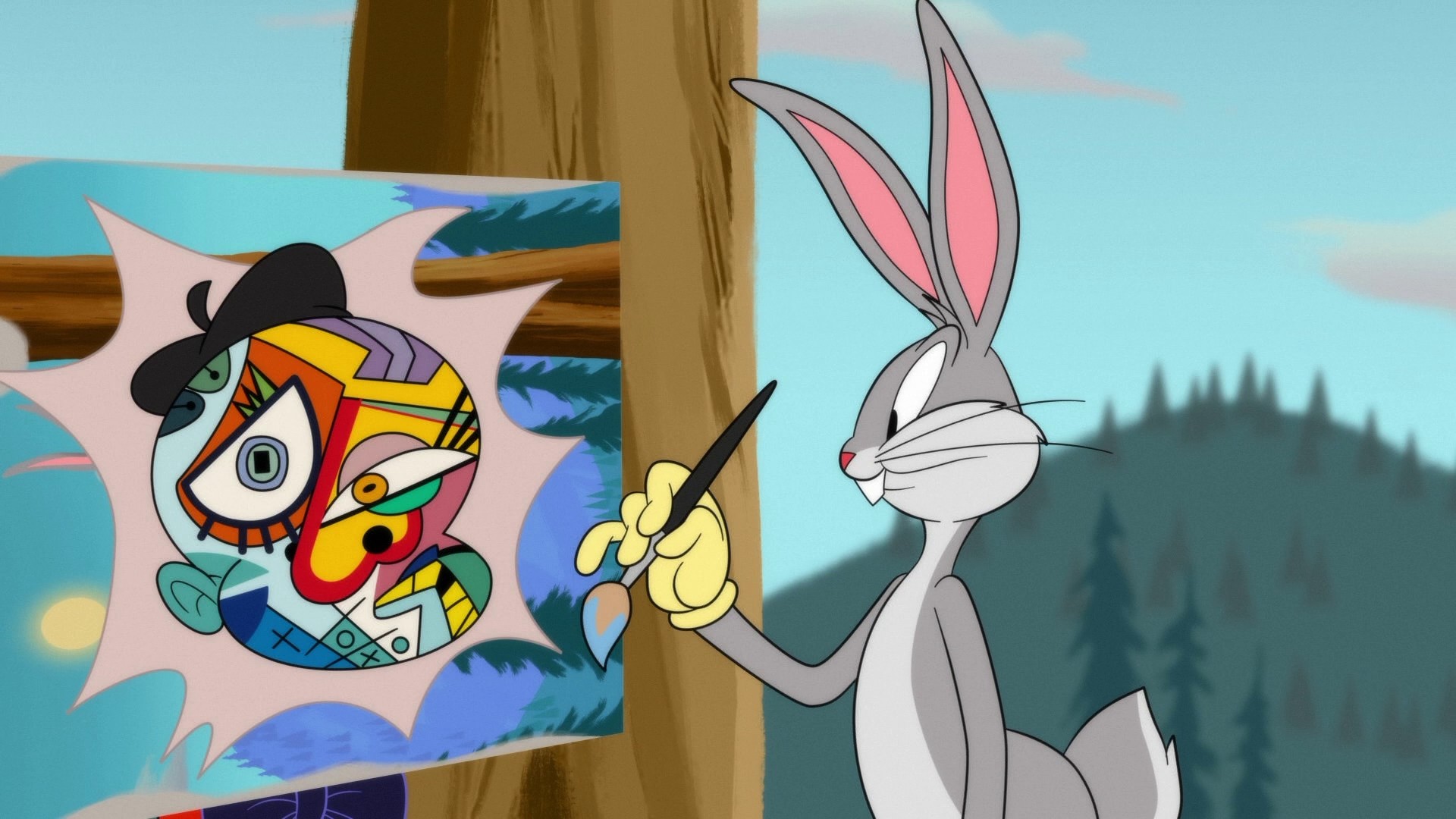
In this short Elmer Fudd wants to paint a picture in the woods, but when he blocks Bugs Bunny’s sunlight by sitting on the hare’s entrance, a classic chase cartoon start.
This cartoons contains both a classic death scene and a falling scene, harking all the way back to Bugs Bunny’s very first shorts (‘A Wild Hare‘ from 1940 and ‘The Heckling Hare‘ from 1941). But the best part is an original gag in which Bugs Bunny paints Elmer Fudd’s face with several pieces of art.
Watch the opening of ‘Vincent van Fudd’ yourself and tell me what you think:
‘Vincent van Fudd’ is available on the Blu-Ray-set ‘Bugs Bunny 80th Anniversary Collection’
Director: Abe Levitow
Release date: October 24, 1962
Rating: ★★½
Review:
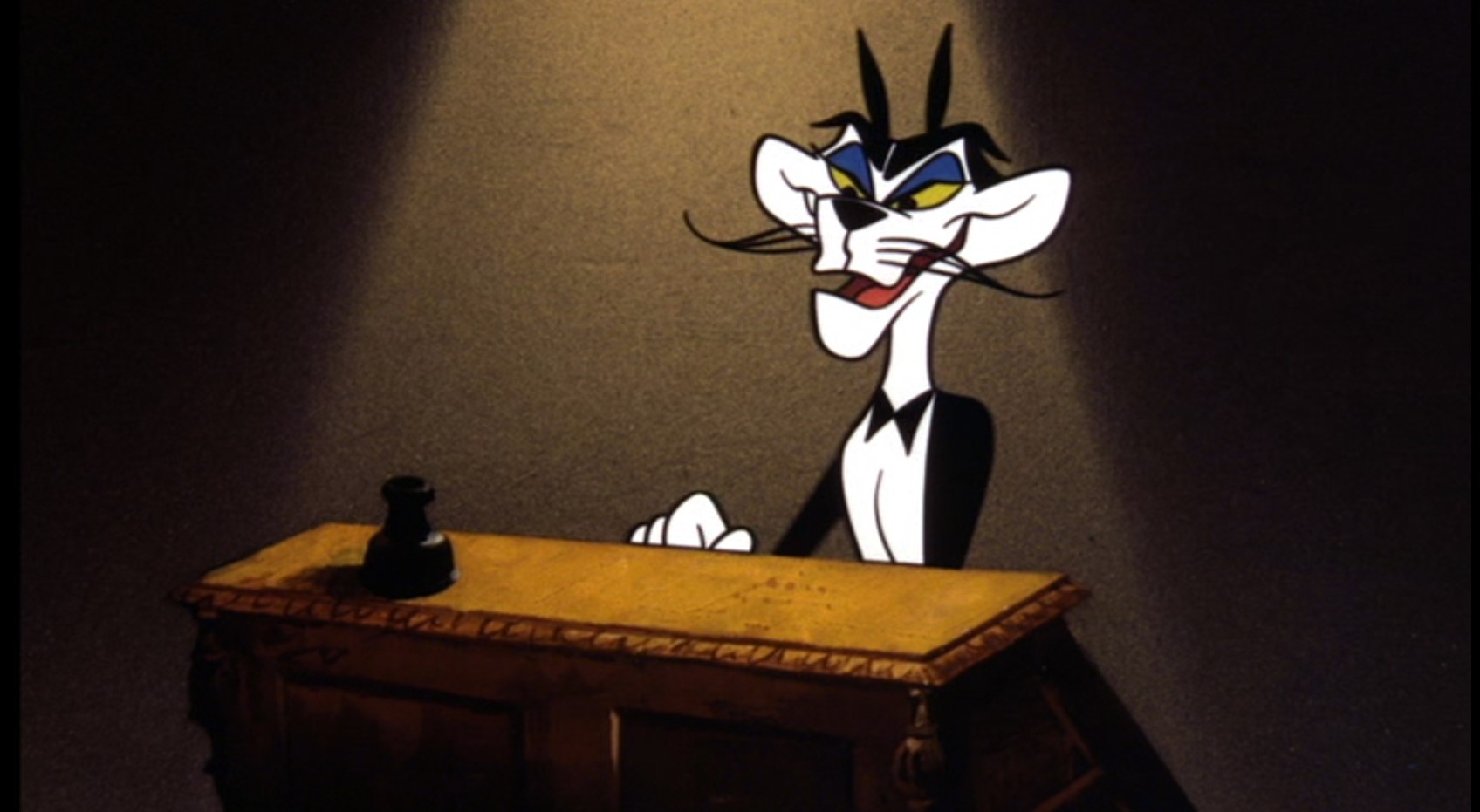
‘Gay Purr-ee’ was the second of only two feature films made by UPA, the first being ‘1001 Arabian Nights’ from 1959 and starring the studio’s only star, Mr. Magoo. In fact, ‘Gay Purr-ee’ was the artistic swansong of the once famed animation studio. Most daring and influential in the 1950s, by the early 1960s UPA had become only a shadow of its former self, as this feature film painfully demonstrates.
In fact, UPA had already entered a stage of decay when Steve Bosustow, one of the founding members of the studio sold his interests to businessman Henry G. Saperstein. Saperstein had no interest in UPA’s “fine-art crap” (as quoted in Adam Abraham’s excellent book on the studio ‘When Magoo Flew’, p. 212) and was only interested in making the cartoons as cheaply as possible. When Saperstein fired Bosustow in 1961, one can say UPA was in fact braindead. It’s thus the more surprising that the studio did make such a costly product as a feature film anyway.
‘Gay Purr-ee’ was distributed for Warner Bros. and the film breathes that studio as much, if not more than the UPA vibe. There’s of course the bad pun in the title, a Warner Bros. trademark. Then the film stars cats, not humans, breaking with a long UPA tradition, but fitting perfectly in the Warner Bros. practice. Moreover, the story was by Chuck Jones and his wife Dorothy. In fact, Jones was moonlighting when he worked for this feature film, and when Warner Bros. found out, he was duly fired because of breach of contract. Jones clearly was responsible for the designs of the three lead characters, if less so for supporting characters like Robespierre and Mme. Rubens-Chatte. To add to the Warner Bros. vibe, the film was directed by Jones’ former animator and co-worker Abe Levitow, and Warner Bros. voice man Mel Blanc voices several characters.
The UPA influence, in fact, is only visible in the gorgeous background art, supervised by Victor Haboush, who had worked on layout and background art for Disney features ‘Peter Pan’, ‘Lady and the Tramp’ and ‘Sleeping Beauty’. The background art of ‘Gay Purr-ee’ is strikingly modern, with bold fauvist color schemes, an unmistakable Van Gogh-influence in the Provencal scenes, and allusions to various other painters in the Parisian ones. In fact, the background art can count as the film’s highlight, for the rest of the movie, unfortunately, is not that good, and the viewer has ample time to marvel at the gorgeous background paintings and pastels.
The film has several problems:
First, the animation doesn’t follow the background layouts. Painted sidewalks are completely ignored, and when Jaune Tom and Robespierre ride the rails, there’s no connection between their walk and the ties they’re supposed to step on.
Second, there’s Dorothy and Chuck Jones’s story: the film takes place in Paris at the end of the 19th century, and tells about a female cat called Mewsette (yes, a pun) who lives in the countryside, but longs to go to Paris. This story is a variation of the age-old trope of a country girl going to the big city only to become ensnared there. Back in 1920 Władysław Starewicz had already made an animation film with this theme called ‘Dans les griffes de l’araignée’ (In the Spider’s Grip). The Joneses add little to this cliché, and the story unfolds in an all too predictable pattern. Moreover, the villain Meowrice’s (yes, another pun) scheme is an all too bizarre one. It would be more logical if he would put poor Mewsette into prostitution, but this was of course off limits in a family film.
Third, there’s the wonky level of anthropomorphism. The cats all walk on fours, and are clearly cats, especially when interacting with men, but at the same time Meowrice is able to write a letter, and there’s a Moulin-rouge-like bar (called Mewlon Rouge, yes, yes) in which cats dance and drink alcohol. The inconsistency is neither explained nor resolved and hampers the overall believability of the film.
Fourth, the characters are not that interesting. Mewsette is more spoiled and naive than sympathetic, Jaune Tom clearly has his heart in the right place, but his only other character trait is that he loves chasing mice. Meowrice is clearly a villain from the very beginning, and his dual character is never played out well. I guess Robespierre was included as comic relief, but he has a particularly weak voice (by Red Buttons) and he is tiresome, not funny. Most interesting and best designed is the opportunistic Mme. Rubens-Chatte, but her role is small and her change of heart all too predictable.
Fifth, Abe Levitow’s all too relaxed direction slows the film down. Excitement or fear are shown, but not felt. Just before the finale there’s a long sequence in which Meowrice describes portraits of Mewsette by several of the leading painters of the era, including Monet, Gauguin and Picasso. This is fun of course, but of no consequence to the narrative, and stalls the story. Then there’s a grand finale on a train, but this, too, is lacking the necessary tension. Never does the viewer fear that things could go wrong.
And finally, sixth, the film contains eight songs by the famed duo of Harold Arlen and Yip Harburg, who have enriched the world with their songs for ‘The Wizard of Oz’ (1939), but none of the songs for ‘Gay Purr-ee’ even remotely approach the quality of the ones for the former musical. Even singer Judy Garland, who sings most of the songs, cannot raise these above the level of forgettable. Even worse, the songs contribute to the slowness of the film, as none of them propels the story forward, but only drag the narrative down. For example, when Jaune Tom sings ‘Little Drops of Rain’ in which he expresses his longing for Mewsette, we watch nice semi-abstract images of sea life, but nothing happens, and the story only resumes after the song.
‘Gay Purr-ee’ still is well animated, and one of the last products of the golden age of studio animation, which came to its end somewhere in the 1960s. It’s thus still worth a watch for anyone interested in the era, but barely a rewarding one, and after viewing what lingers is the background art, and the sad notion that a lot of talent was wasted on a feature film that just was not that good. The UPA animation studio, meanwhile, lasted until 1970, but never regained its artistic heights of the 1950s, or even that of ‘Gay Purr-ee’, for that matter.
Watch the trailer for ‘Gay Purr-ee’ yourself and tell me what you think:
‘Gay Purr-ee’ is available on Blu-Ray and DVD
Director: Milorad Krstić
Release date: August 9, 2018
Rating: ★★★½
Review:
One of the more surprising and more original animated feature films from 2018 was this little gem from Hungary. Conceived and directed by Milorad Krstić, a director of Slovenian origin, ‘Ruben Brandt’ shows that one can make an adult animation film without an immature focus on sex and violence (there is violence in this feature film, because ‘Ruben Brandt’ is a crime thriller, but this violence is part of the plot, and not a gratuitous display of gore).
‘Ruben Brandt’ tells about a psychiatrist treating some criminals, who in turn help him overcome his nightmares by collecting artworks from all over the world. This plot is exciting, but on the flimsy side and as nonsensical as a James Bond movie. Moreover, the film fails to solve all the initiated plotlines, and the all too easy ending is a bit of a letdown.
Nevertheless, ‘Ruben Brandt’ remains an entertaining watch from start to finish, not only because of the surreal atmosphere, enhanced by the depiction of several of the art collector’s nightmares, but because of the film’s idiosyncratic looks.
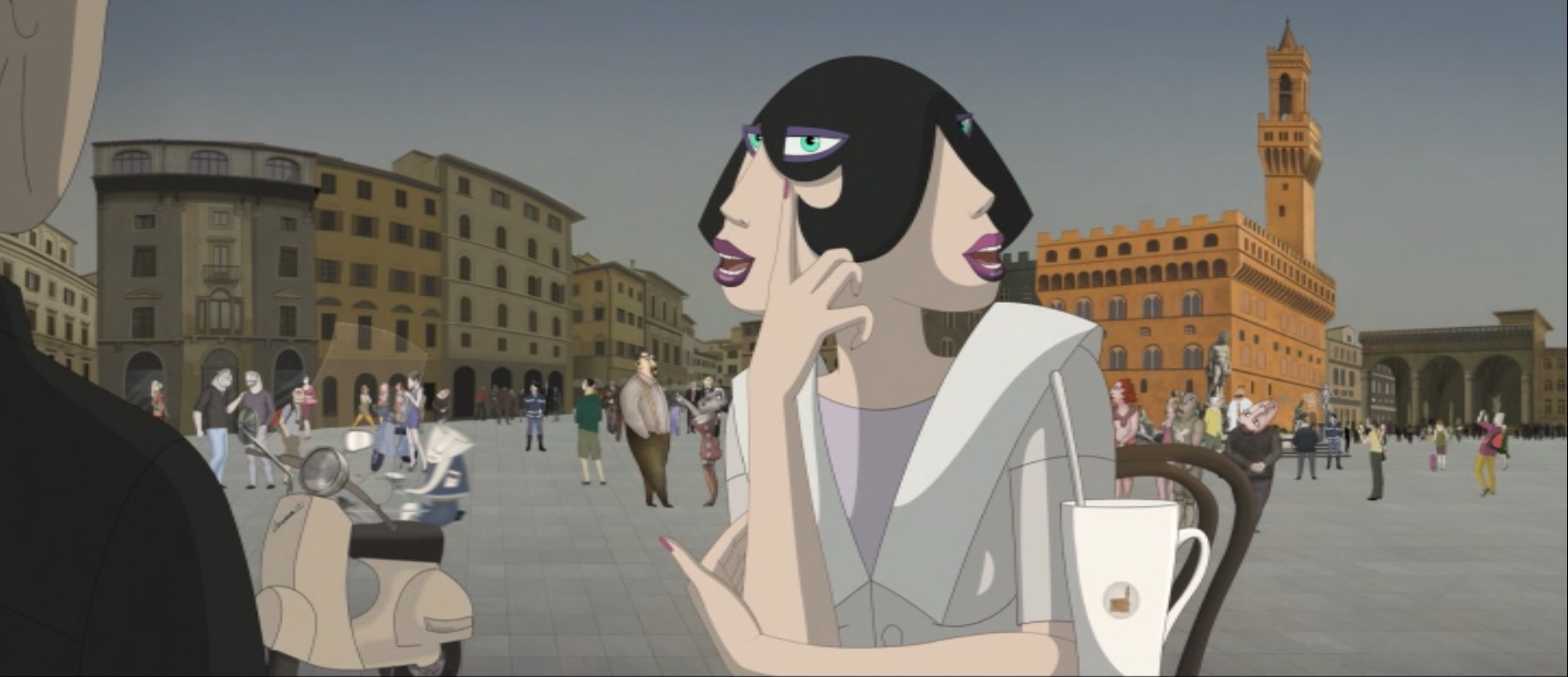
Being a film on art, the film draws a huge inspiration from its subject, and the film breathes art in almost every frame. According to the end titles the film cites more than fifty art works, and part of the fun of watching the movie is to identify a reference in the background. Moreover, the color schemes, the designs and especially the character designs are very bold and unlike anything in any other animation film.
True, the three main characters Ruben Brandt, Kowalski and Mimi look fairly normal, even if their facial designs are already unique, but their co-stars can have two noses, eyes placed above each other, an eye placed inside an ear, three eyes, three breasts, and so forth and so on. There’s even a character with a Janus head, who is only two-dimensional, a characteristic used in the plot. The background characters are often even more bizarre, let alone the birds and fish depicted, and even if the movie were dull (which it certainly isn’t) one can enjoy the surreal imagery.
The film uses both traditional and computer animation and although the computer animation is less satisfying than the traditional animation, the mix is very well done.
In all, ‘Ruben Brandt’ is a highly authentic film that shows surrealism is far from dead, and with his grotesque designs Krstić shows that even 3D computer animation can be exciting and strikingly original.
Watch the trailer for ‘Ruben Brandt, Collector’ yourself and tell me what you think:
‘Ruben Brandt, Collector’ is available on Blu-Ray and DVD
Director: Émile Cohl
Release Date: 1910
Rating: ★★
Review:
 This animation film uses both cut-out, stop-motion and pen animation in a mix unique to Émile Cohl.
Nevertheless ‘L’enfance de l’art’ is among Cohl vaguest and least impressive films: things are just happening on the screen, like a monster disturbing a painter or some monsters drawn on human hands. We can also watch some morphing images of animals and more monsters. In this respect the title is well chosen…
Watch ‘L’enfance de l’art’ yourself and tell me what you think:
‘L’enfance de l’art ‘ is available on the DVDs ‘Émile Cohl – L’agitateur aux mille images’
Director: Wilfred Jackson
Release Date: February 10, 1934
Rating: ★★★★★ ♕
Review:
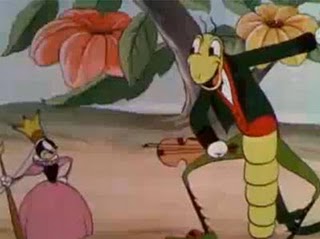 ‘The Grasshopper and the Ants’ is easily one of the best Silly Symphonies: it has a catchy song, great use of color and beautiful effect animation. Notice, for instance, the realism of the leaves blowing away during the autumn scene. One can even recognize which trees they’re from!
The grasshopper, too, is a wonderfully designed character, based on concept art by the great Albert Hurter. In contrast, the design of the ants looks a little primitive, still belonging to the black and white era. But, by now, the Disney staff has fully mastered the idea of character animation. This is best shown in the final dance scene: even in a crowd of lookalikes one easily recognizes the joyful ant the Grasshopper had tempted earlier.
Note that morality notwithstanding, the grasshopper is allowed to do what he does best: singing and playing. An encouragement to view art as an important contribution to society. Even so, the way the queen finally invites him is a real cliff-hanger.
This cartoon’s theme song, ‘the world owes me a living’ was composed by Leigh Harline, who would also compose the catchy songs of ‘Pinocchio‘. the grasshopper’s catchy song would become Goofy’s theme song. No wonder, for he and the Grasshopper share the same voice, by Pinto Colvig.
Watch ‘The Grasshopper and the Ants’ yourself and tell me what you think:
This is Silly Symphony No. 42
To the previous Silly Symphony: The China Shop
To the next Silly Symphony: Funny Little Bunnies


 Dr. Grob's Animation Review