
You are currently browsing the category archive for the ‘cut-out animation films’ category.
Director: Sean Charmatz
Release date: July 7, 2020
Stars: Tiny Diamond
Rating: ★
Review:

‘Tiny Diamond Goes Back to School’ is a bonus cartoon to the ‘Trolls World Tour‘ DVD. It revolves around Tiny Diamond, who was born to Guy Diamond in the feature film.
Voiced by Kenan Thompson, Tiny Diamond is indeed a tiny hip-hop troll with a deep mature voice. Now, Tiny Diamond already was pretty annoying in the feature film, and he is, too, in this short. In this short he thinks he needs a new stunning outfit to impress his friends at school, but he learns that they like hem for what he is, not what he wears.
One can see the morale of this short from miles away, and the cartoon isn’t very funny either, but I must say it is well-timed and rendered in a pleasant cut-out animation style, that is refreshing in the modern 3D computer animation world. Nonetheless, the short is as Superfluous as its forgettable.
Watch ‘Tiny Diamond Goes Back to School’ yourself and tell me what you think:
‘Tiny Diamond Goes Back to School’ is available on the Blu-Ray or DVD of ‘Trolls World Tour’
Director: Walerian Borowczyk
Release date: June 1963
Rating: ★★★★
Review:
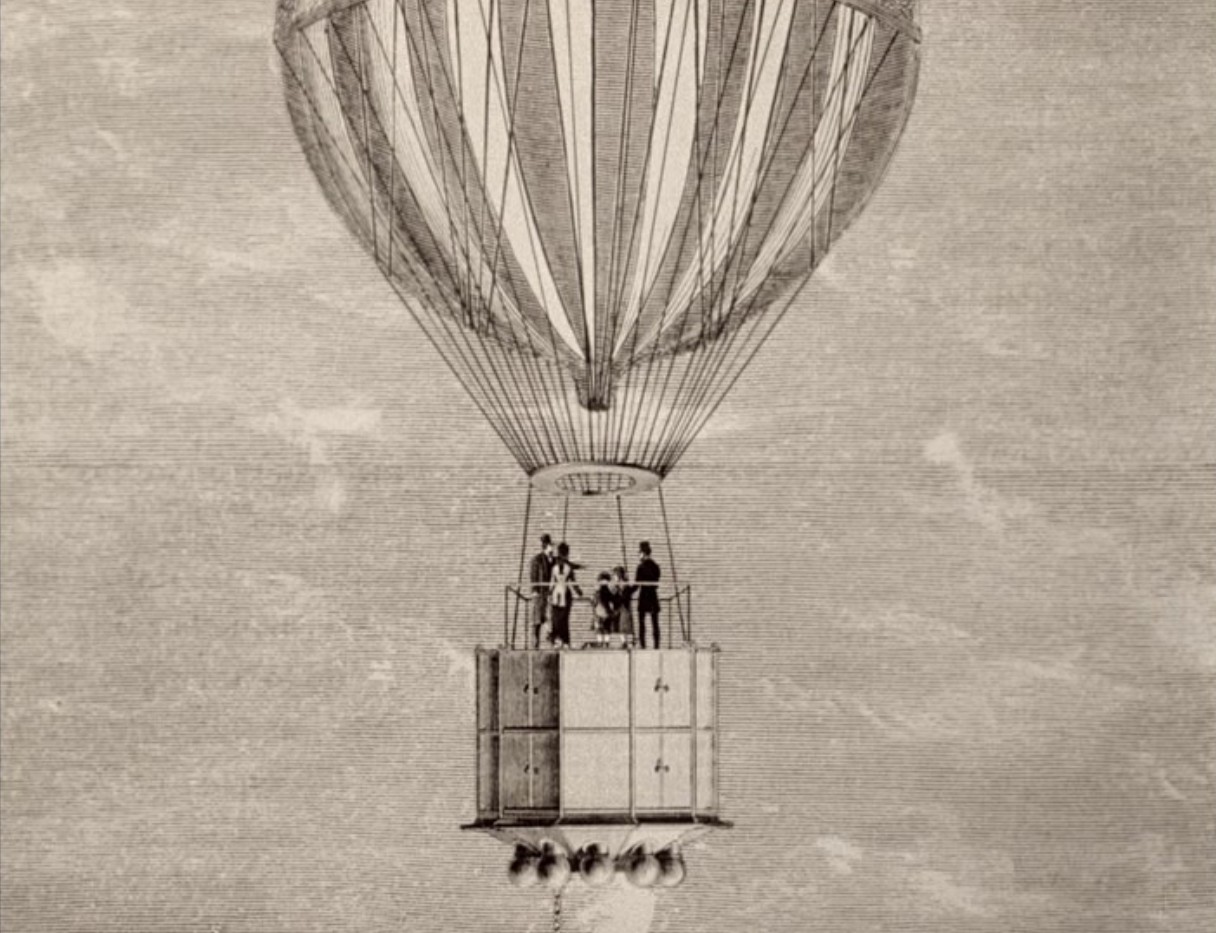
With ‘Encyclopédie de Grand-Maman’ Borowczyk continues the silly surrealism of ‘Les Astronautes‘ from 1959. Although we are promised 13 volumes, we only watch three words from the Encyclopédie: A is for automobiles, B for Balloons and C for Chemin de fer (Railways).
The film uses 19th century engravings to a great effect, especially the car race in ‘Automobiles’ is as inventive as it is entertaining. Borowczyk makes clever use of his source material, and the animation is greatly helped by the stark sound effects. These aspects make ‘Encyclopédie de Grand-Maman’ a fun film, if not more than that.
Watch ‘Encyclopédie de Grand-Maman en 13 Volumes’ yourself and tell me what you think:
‘Encyclopédie de Grand-Maman en 13 Volumes’ is available on the Blu-Ray/DVD set ‘Walerian Borowczyk: Short Films and Animation’
Director: Walerian Borowczyk
Release date: 1962
Rating: ★★
Review:
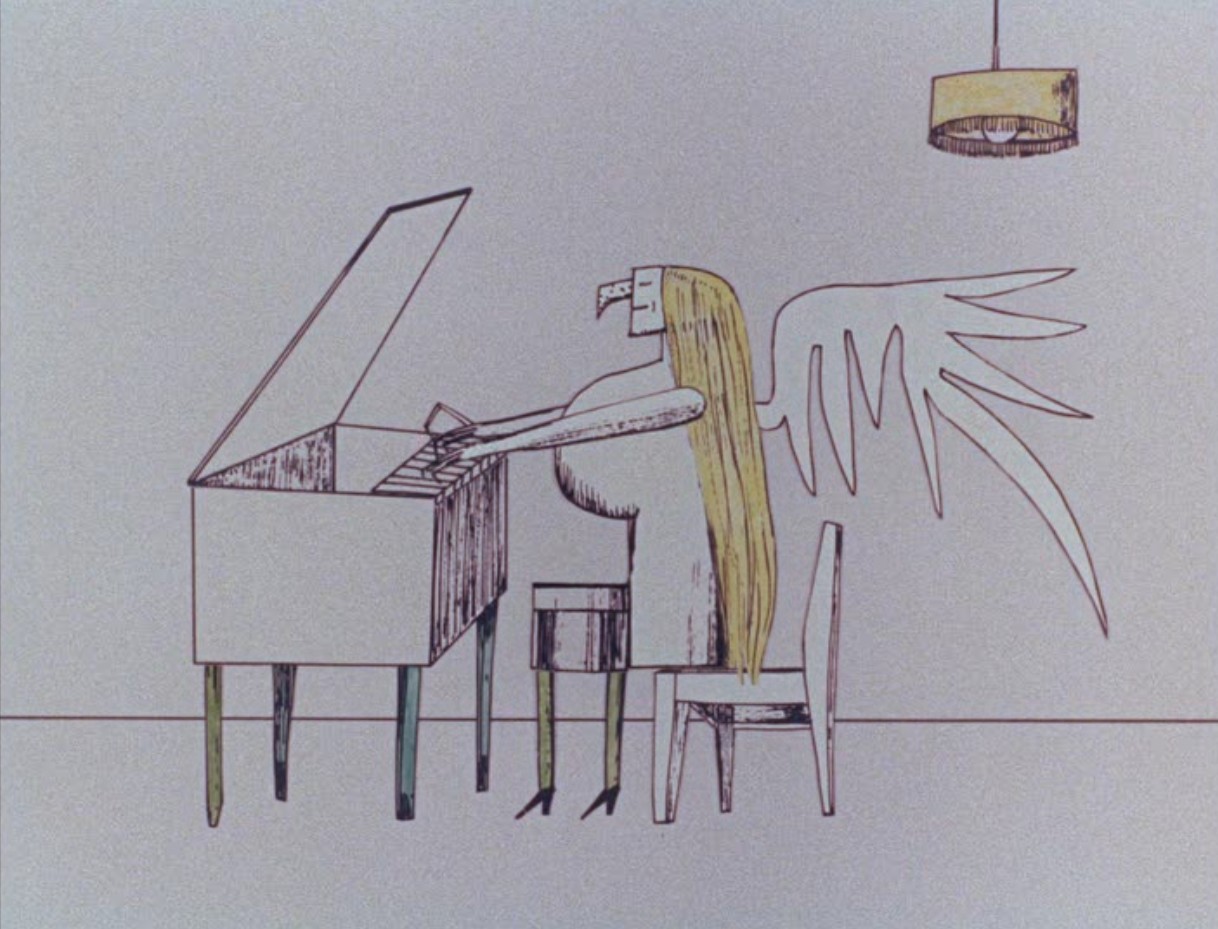
‘Concert’ stars Monsieur and Madame Kabal from the later feature film ‘Théâtre de Monsieur & Madame Kabal’ from 1967. This couple, a short man who constantly drinks and a grotesque tall woman with a hooked nose, are known for their domestic violence, and ‘Concert’ is no exception. When Madame Kabal catches Monsieur Kabal snoring through her piano recital her revenge is severe.
Unfortunately, Borowczyk’s cut-out animation is crude and emblematic, and even the violence is rather abstract. Even worse, a lot of time is wasted on less interesting scenes. Moreover, Monsieur and Madame Kabal are neither interesting or appealing characters and Borowcyk does nothing to establish their relationship. Thus, it doesn’t interest the viewer at all what happens to them on the screen, a problem that also haunts Borowczyk’s feature animation film.
Luckily, the next year Borowczyk would prove he could do much better with ‘Encyclopédie de Grand-Maman en 13 Volumes ‘ and especially the dark stop-motion short ‘Renaissance‘.
Watch ‘Concert’ yourself and tell me what you think:
‘Concert’ is available on the Blu-Ray/DVD set ‘Walerian Borowczyk: Short Films and Animation’
Director: Walerian Borowczyk
Release date: 1959
Rating: ★★★
Review:
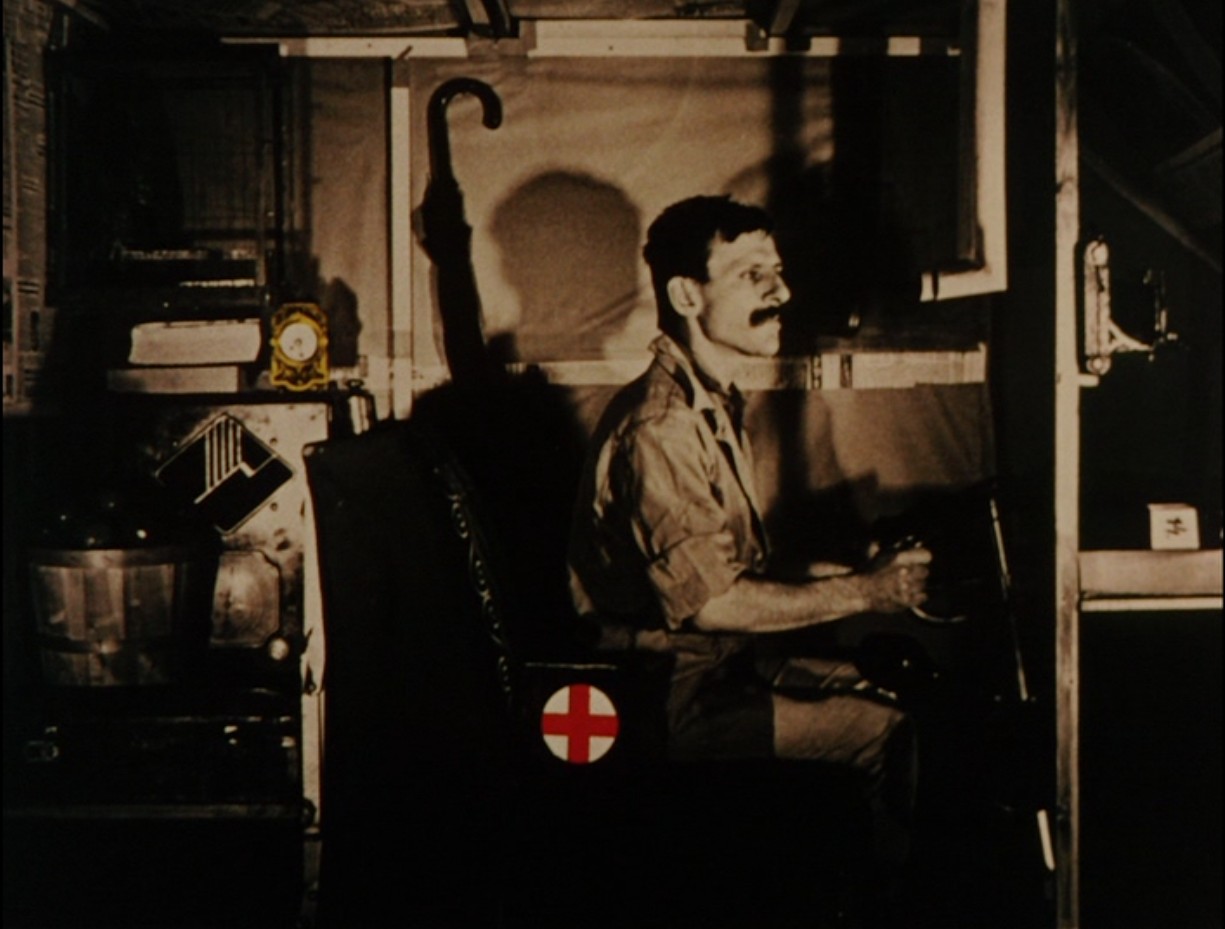
‘Les Astronautes’ was the first film the Polish film maker Walerian Borowczyk made in France. In this short a mustached inventor with a pipe builds his own spaceship.
This film is as surreal as it is silly and it consist of several hardly related gags. For example, the first thing the man does with his spaceship is spying on a woman dressing. Throughout, Borowczyk combines pixilation and cut-out animation of hand-colored photographs to a great effect. The surreal atmosphere is enhanced by Andrzej Markowski’s electronic score and sounds.
‘Les Astronautes’ may be of little substance, it’s an entertaining film, nonetheless.
Watch ‘Les Astronautes’ yourself and tell me what you think:
‘Les Astronautes’ is available on the Blu-Ray/DVD set ‘Walerian Borowczyk: Short Films and Animation’
Director: Daniel Szczechura
Release date: 1963
Rating: ★★★
Review:

‘The Chair’ is another film subtly criticizing communist society as it was imposed on Poland at the time. Apart from the intro, the film is completely filmed from above, and features a conference.
At one point one of the conference leader’s chairs remains unoccupied, and members from the audience are invited to fill the spot. But the other audience members don’t allow each other to get to the stage, and the volunteers are hindered and blocked everywhere. Yet, one does make it, and is accepted due to his clever entrance.
The idea of ‘The Chair’ is as simple as it is well executed. Again, I am surprised the film got past the censors, as it clearly criticizes the oppressive system.
Watch ‘The Chair’ yourself and tell me what you think:
‘The Chair’ is available on the DVD-set ‘Anthology of Polish Animated Film’
Director: Kazimierz Urbański
Release date: 1962
Rating: ★★
Review:

‘Playthings’ is a film on fighting. The film knows only monochrome yellow and red backgrounds and silhouetted, abstracted human figures and weapons.
The film starts with some designs based on ancient cave paintings. We watch a group of human figures hunt a deer. When one is killed, another group of more tangram-like humans, arrives, and the fighting starts, with more and more advanced weaponry, like cannons, machine guns, tanks, bomber planes. As can be expected, in the end everybody is killed by a giant, probably nuclear explosion. The message of ‘Playthings’ is crystal clear, but the short is too one-dimensional to make a lasting impression.
Watch ‘Playthings’ yourself and tell me what you think:
‘Playthings’ is available on the DVD-set ‘Anthology of Polish Animated Film’
Director: Jan Lenica
Release date: 1961
Rating: ★★★★
Review:
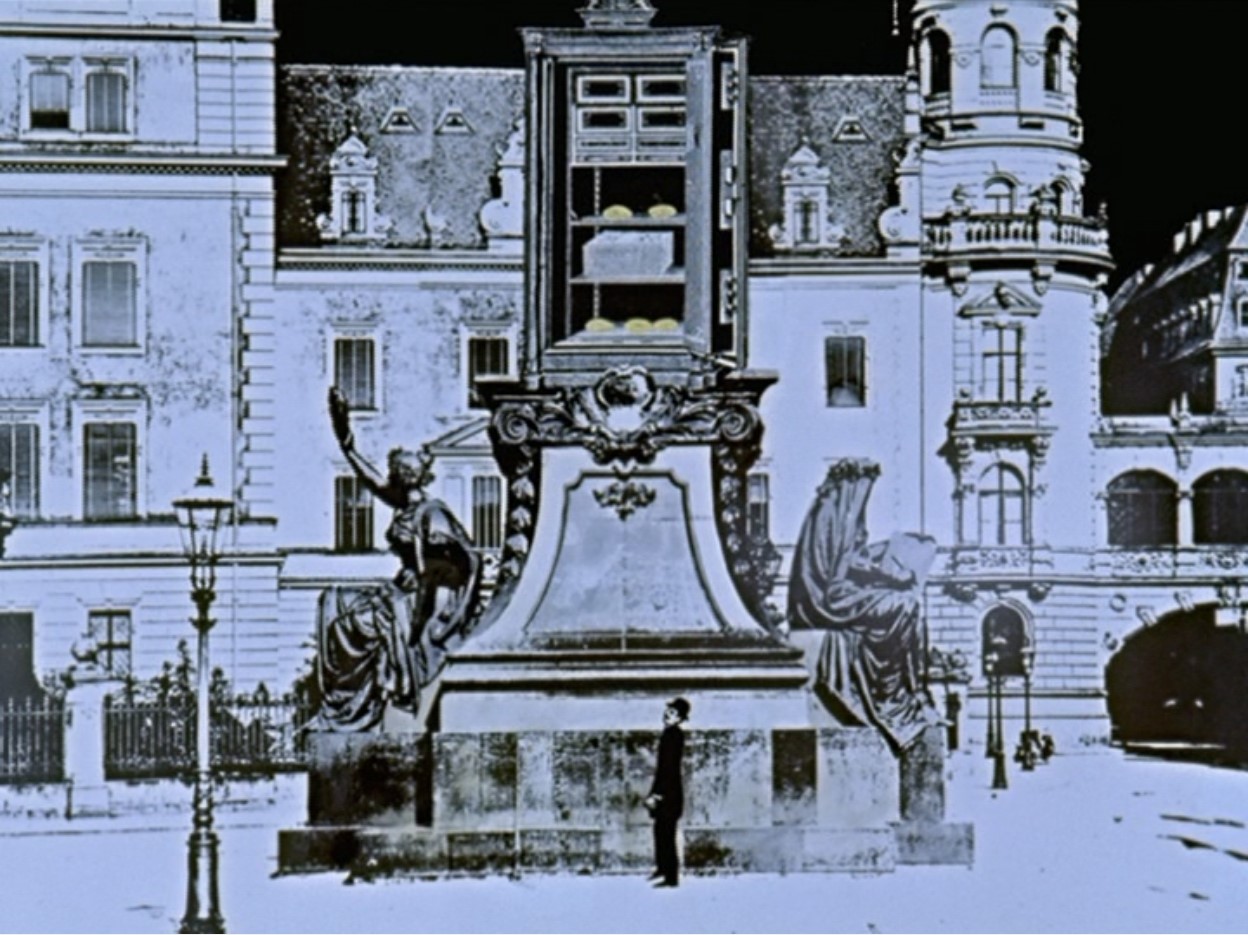
In ‘Labirynt’ a man flies into a seemingly abandoned city, only to find it to be a dangerous place, terrorized by strange creatures and machines, alike.
This is one of those rare animation films from Eastern Europe depicting what it’s like to live in an oppressive communist state. The film is highly surreal, featuring strange creatures, often mixes of animal and human parts, but I am still surprised the film got past the censors. For example, at one moment the man is captured by a bearded machine-man and thoroughly examined. At one key scene we watch is thoughts roaming freely inside his head, only to get barred by a strange contraption. The end, too, in which the man tries to escape the paranoid city is telling enough.
Jan Lenica’s world is based on partly colored old photographs and engravings. His animation is emblematic, but at one point we surely feel the man’s fear, as he tries to flee from his oppressors. The surrealist atmosphere is enhanced by Jan Radlicz’s sound design and by Włodzimierz Kotoński’s score.
Watch ‘Labirynt’ yourself and tell me what you think:
‘Labirynt’ is available on the DVD-set ‘Anthology of Polish Animated Film’
Director: Nina Paley
Release date: February 11, 2008
Rating: ★★★★★
Review:
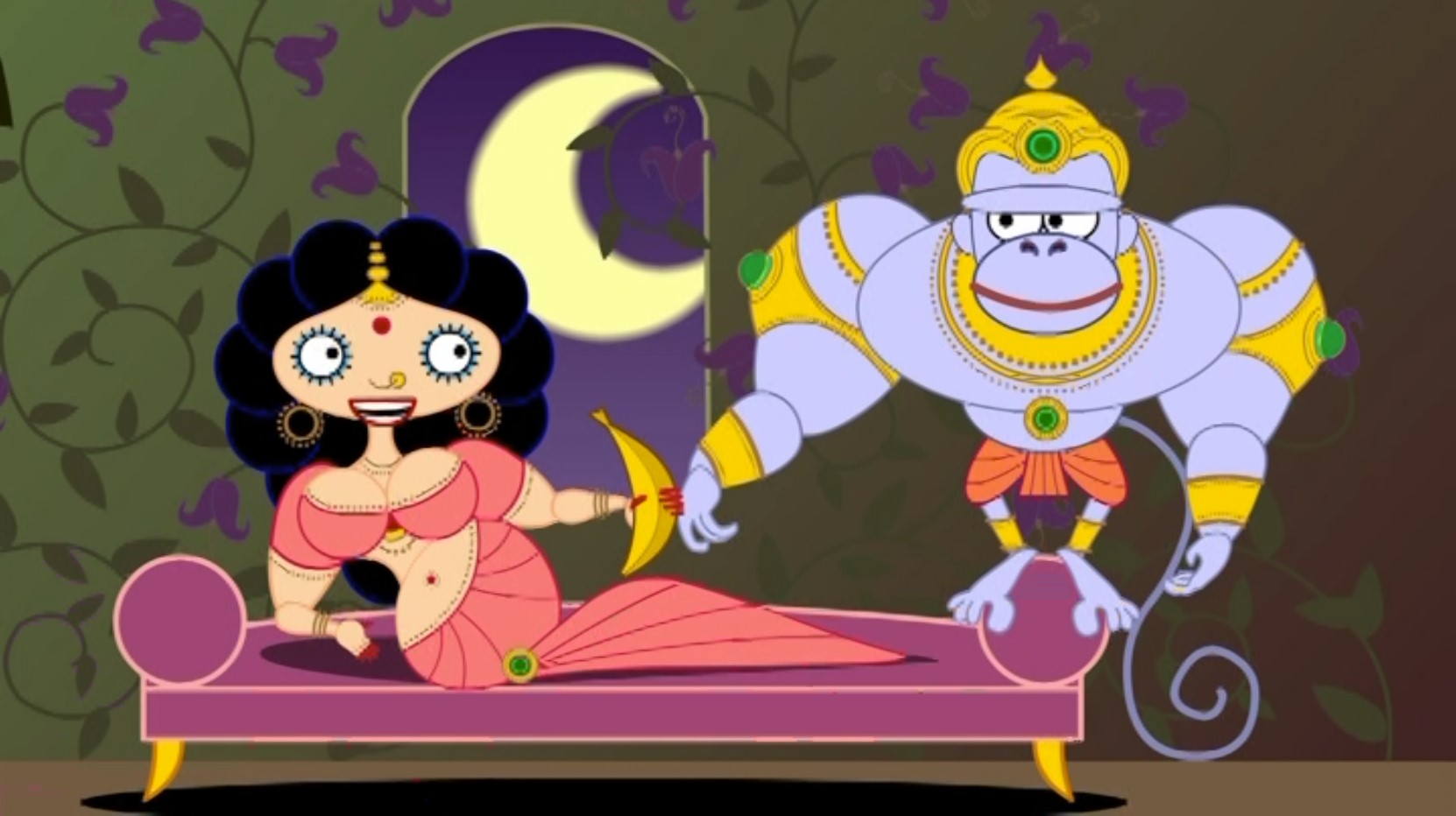
Unlike the European and Japanese animation field, the American animation studio system is unkind to author films. Walt Disney’s ‘Lilo & Stitch’ (Chris Sanders, 2002) probably comes closest, apart from several feature films based on animated television series. Thankfully, some individual artists have filled this gap, most notably Bill Plympton, releasing no less than seven features. Other notable artists are Don Hertzfeldt (‘It’s Such a Beautiful Day’ from 2012), and Nina Paley. Amazingly, all these artists mostly work totally alone, which makes their accomplishments even more stunning.
Nina Paley ‘Sita Sings the Blues’ for example, is written, directed and produced by Paley alone, which took her five to six years, and which could only be finished with help from crowd-funding, being one of the first animated projects to use this type of fund raising.
‘Sita Sings the Blues’ retells the Indian epic ‘The Ramayana’, but it’s also a personal film, in which Paley links her own situation to that of Sita, the perfect wife to the hero Rama. The most incongruous element are the eleven songs by 1920s jazz singer Annette Hanshaw, an artist sadly almost forgotten, whom Paley had discovered prior to the film making. The linking of these sweet and gentle tin pan alley songs to the Ramayana is as odd as it is effective, and the pairing certainly contributes to the uniqueness of the film.
The film uses several different animation styles: Nina Paley’s own personal story is told in a traditional scribbly animation style, with sets based on photographic material. These parts are the least attractive of the lot, even though Paley shows to be a very able animator in this classic cartoon style. The Ramayana is retold by three Indians (Aseem Chhabra, Bhavana Nagulapally and Manish Acharya) who are depicted as traditional shadow puppets of Hanuman, Sita, and Rama, respectively. The story they are telling together is shown in tongue-in-cheek cut-out animation.
The ‘official’ story is also told in cut-out animation, using very attractive recreations of traditional Indian paintings. But the best parts to look at are the songs, which are done in a most attractive cartoon modern design. In these song parts Paley reuses a lot of animation cycles, but actually she makes excellent use of the flash medium, and she makes the most of her limited animation.
Apart from these five alternating styles, there’s also a short sequence using rotoscope and a much more pop-art influenced videoclip-like filming style. All these are apparently done in Macromedia flash.
As said, ‘Sita Sings the Blues’ retells the Ramayana, reducing the huge epic to its barest elements. For example, Lakshmana is hardly mentioned, and the monkey king Sugriva not at all. Moreover, unlike the traditional poem, the focus is on Sita, not Rama, and Paley highlights the questionable parts from the original poem (one at the end of the Yuddha Kanda, and another in the Uttara Kanda), in which Rama treats Sita very unfairly indeed, just like Paley’s own partner does in real life. This makes ‘Sita Sings the Blues’ a feminist film, which sheds a welcome critical light on the traditional depiction and treatment of women, then and now.
As the story is told by three people, who remember the story differently and interpret it in different ways, this leads to some very funny moments. But Paley adds some humor, too, in the ‘official’ story part, for example when the female rakshasa (a sort of demon) Shurpanakha tells her brother Ravana about the beauty of Sita, comparing all her body parts with lotuses.
As said, the Annette Hanshaw songs boast the most attractive designs, and like traditional opera arias, they shed an emotional light on the events. However, Paley cleverly propels the story forward even during these sequences. Yet, as the songs are featured in their entirety, typically lasting ca. 3 minutes, they also drag the film down. As there are eleven of them, one tends to grow a little weary of them as the film progresses. Nevertheless, ‘Sita Sings the Blues’ does a great job in restoring interest in this almost forgotten singer. Unfortunately, the Hanshaw songs were not free from copyright, causing Paley a lot of trouble, and eventually causing her to release the film completely free from copyright.
The Annette Hanshaw songs are juxtaposed to some Indian pop music, mostly by artist Masaladosa. Particularly strong is the angry song which follows the scene in which Paley gets dumped by email. The complete soundtrack is as attractive as the film’s visual designs, and the two complement each other very well.
In all, ‘Sita Sings the Blues’ is not without its flaws, but as it is made by a single woman, it’s no less than a tour-de-force, and the result is a very interesting personal film, which makes one think. Moreover, the film shows the great power and endless possibilities of animation, and single-handedly puts Paley into the pantheon of the medium’s greats. In 2018 Paley made yet another feature called ‘Seder-Masochism’, which unfortunately has attracted much less attention.
Watch the trailer for ‘Sita Sings the Blues’ yourself and tell me what you think:
‘Sita Sings the Blues’ is available on DVD
Director: Zofia Oraczewska
Release date: 1976
Rating: ★★★
Review:

In ‘Banquet’ a bunch of waiters and chefs are preparing a huge banquet for a large number of guests. But when the guests arrive, the banquet turns out to be very different than expected.
‘Banquet’ has a mixed design: the waiters and chefs are rather classic cartoony figures, while the meals and the guests are collages partly made out of photo material.
Jan Skorża’s cut-out animation is fair, if not outstanding, and the whole film is a little too empty to be memorable. I guess the Polish film makers were less in their game when trying an attempt at humor.
Watch ‘Banquet’ yourself and tell me what you think:
‘Banquet’ is available on the DVD-set ‘Anthology of Polish Animated Film’
Director: Yuri Norstein
Release date: 1973
Rating: ★★★★
Review:
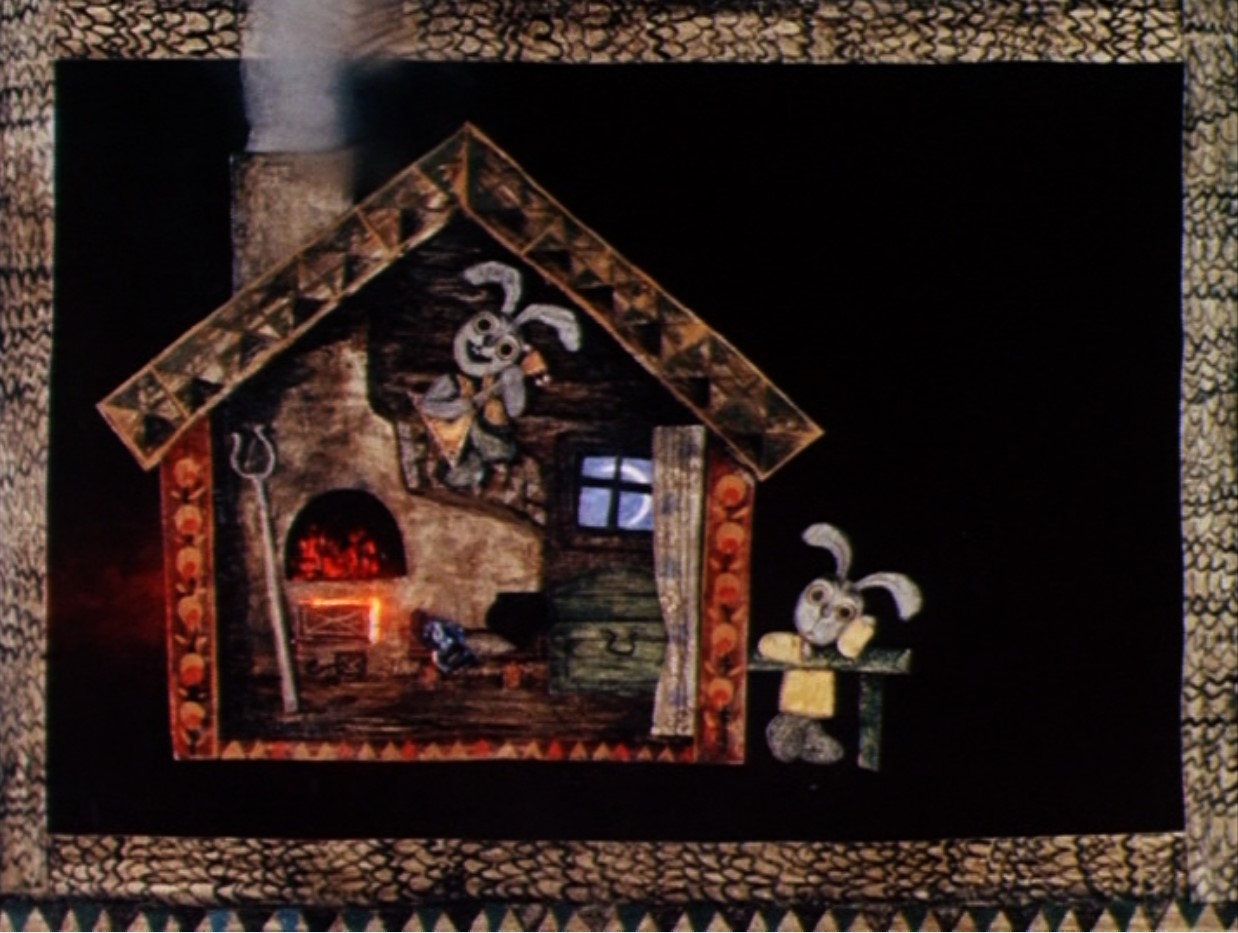
In ‘Fox and Rabbit’ (actually Fox and Hare) Norstein retells a Russian folktale in which a fox chases a rabbit out of his own house. A wolf, a bear and a bull all three promise the rabbit to help him regain his house, but when threatened by the fox they run off. Only a small rooster at least tries it.
The story is told by a voice-over, and is illustrated in a very charming semi-folkloristic style, which striking and colorful supposedly wooden frames framing the action, as if were looking at paintings. M. Meyerovich’s, rather Stravinsky-like music only adds to the folkloristic character. Norstein’s cut-out animation, meanwhile, is of the highest order, and full of little subtleties, signifying the different characters.
‘Fox and Rabbit’ may be less famous than the later ‘Hedgehog in the fog’ (1975) or ‘Tale of Tales‘ (1979), the film already shows Norstein’s extraordinary talent and charming animation style. Fyodor Khitruk thought highly of the film, and was completely surprised that such commonplace material (Soyuzmultfilm had made fable films for several decades) turned into such an original, idiosyncratic film.
Watch ‘Fox and Rabbit’ yourself and tell me what you think:
‘Fox and Rabbit’ is available on the DVD ‘Masters of Russian Animation Volume 2’
Director: Stefan Janik
Release date: 1972
Rating: ★★★
Review:
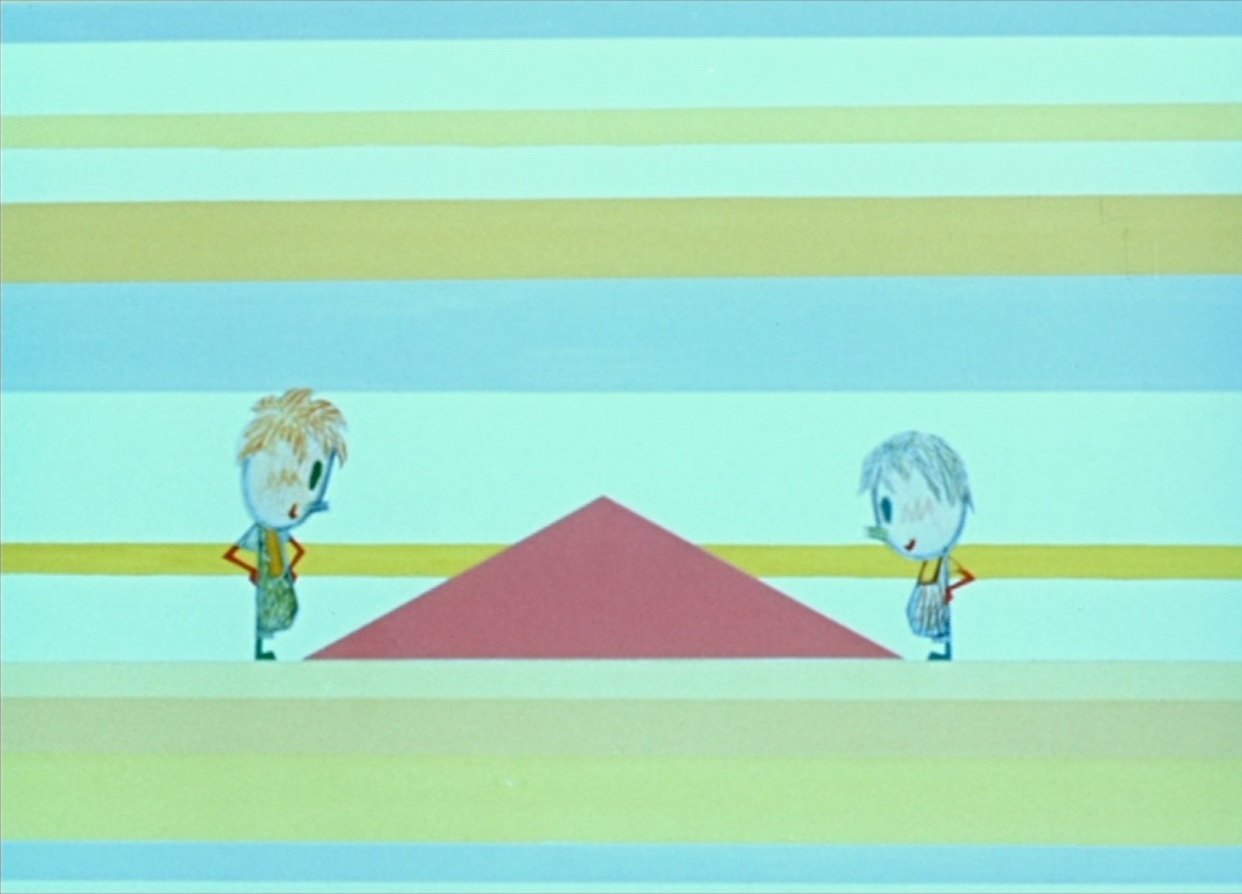
‘Enchanted Triangles’ is a cute children’s films from Poland about triangles. The film makes clever use of the imagination of children to transform triangles into church towers, mountains, pyramids, sailing boats, birds and butterflies.
Two boys explore this triangle world. The film uses a voice over by a girl and cut-out animation. The two boys are charmingly drawn in crayons in a semi-childish style, but the triangles remain abstract. The result is cute if unassuming and rather forgettable.
Watch ‘Enchanted Triangles’ yourself and tell me what you think:
‘Enchanted Triangles’ is available on the DVD-set ‘Anthology of Polish Children’s Animation’
Director: Daniel Szczechura
Release date: 1971
Rating: ★★
Review:

‘If You Spot a Cat Flying Through the Air’ is a strange little film in bold seventies design and with an avant-garde jazz score by W. Pażyński to tell us that If You Spot a Cat Flying Through the Air, it’s a cat who love birds. These words reappear a few times in the short itself.
Unfortunately, both animation and movement are rather limited, and the short is more interesting as an experiment than entertaining to watch.
Watch ‘If You Spot a Cat Flying Through the Air’ yourself and tell me what you think:
‘If You Spot a Cat Flying Through the Air’ is available on the DVD-set ‘Anthology of Polish Children’s Animation’
Director: Andrei Khrjanovsky
Release date: 1970
Rating: ★★
Review:
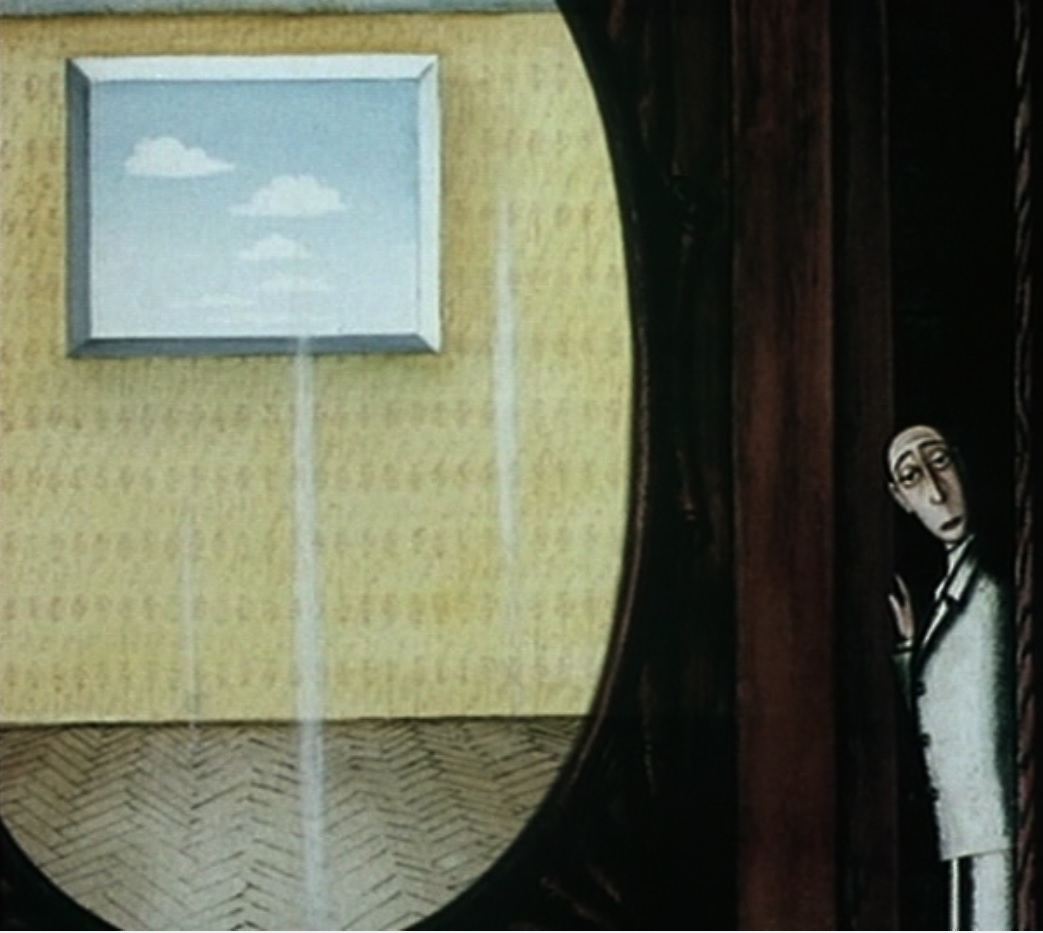
‘Armoire’ is an enigmatic cut-out animation film about a man in an apartment who puts an enormous cupboard into his room. Once inside, he starts to put all his belongings into the cupboard, until he can live inside it. In the end it’s revealed that even his tiny room is inside another cupboard.
Several shots of depressing apartment blocks suggest that this is a critical satire on the living conditions inside the Soviet Union, but I’m not sure. ‘Armoire’ is as avant-garde as was possible in the Soviet-Union, especially Alfred Schnittke’s score is very modernistic. But because the film is just the illustration of one puzzling idea, and because the one protagonist is as phlegmatic as Buster Keaton, the film fails to make a lasting impression.
Watch ‘Armoire’ yourself and tell me what you think:
‘Armoire’ is available on the DVD ‘Masters of Russian Animation Volume 2’
Director: Julian Antonisz
Release date: 1970
Rating: ★★★
Review:

‘How Is That…?’ is another children’s film by Julian Antonisz and this film is made in the same vein as ‘How Learning Came Back tothe Woods’. This time a little girl tells us how television works.
Antonisz again illustrates the narration with very rough designs, and cut-out animation of household objects on top of a light table. For examples, the people wear real glasses, and some nature is suggested by real flowers and plants.
‘How Is That…’ is not too serious. At several points things go wrong, and a ‘Please Stand By’ sign is shown. The result is a very original and delightful little avant-garde film for children.
Watch ‘How Is That…?’ yourself and tell me what you think:
‘How Is That…?’ is available on the DVD-set ‘Anthology of Polish Children’s Animation’
Director: Julian Antonisz
Release date: 1970
Rating: ★★★½
Review:
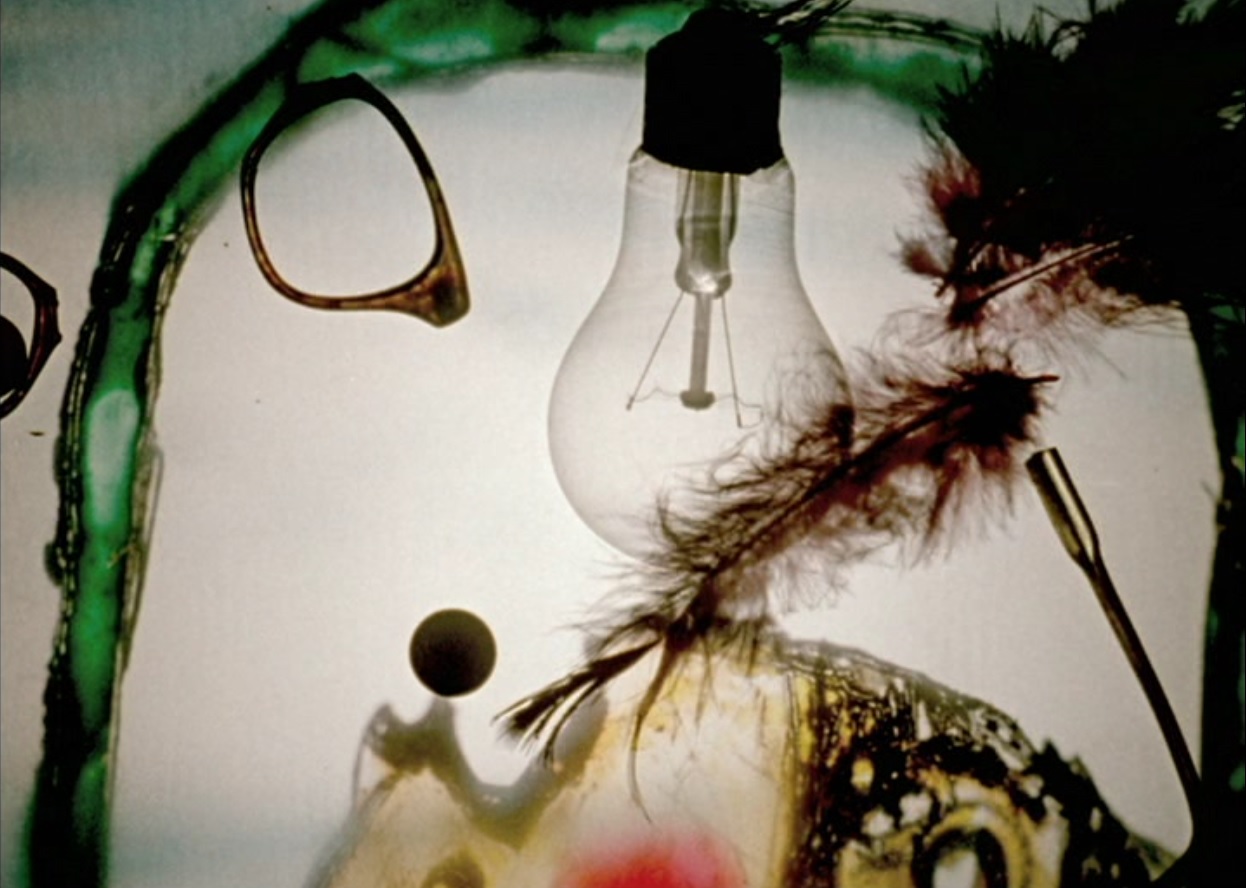
Told by a little girl ‘How Learning Came Back Out of the Woods’ is an educational film for children on how books are made.
Julian Antonisz’s animation style, however, is highly avant-garde. The animator uses a light table to illuminate his drawings and a multitude of household objects from below. Antonisz’s style is very rough and graphic. There’s motion, but the cut-out animation itself is limited. Human movement, for example, is only suggested by using two key frames, rather than animated fully. Nevertheless, this children’s film is a good example of the sheer creativity of the Polish animation industry of the seventies.
Watch ‘How Learning Came Back Out of the Woods’ yourself and tell me what you think:
‘How Learning Came Back Out of the Woods’ is available on the DVD-set ‘Anthology of Polish Children’s Animation’
Director: Ryszard Czekała
Release date: 1970
Rating: ★★★★½
Review:

If ‘Syn‘ was an unsettling watch, ‘Apel’ is no less than a grueling. Set in a German concentration camp, the film shows a Nazi officer commanding a large group of prisoners to bow and to rise, over and over again. Then one of them refuses to bow…
‘Apel’ is an extreme film, not only in concept, but also in execution. Czekała uses very original cinematography and extreme ‘depth of field’, with large parts of his drawing being out of focus. Especially the shot in which the Nazi officer walks by rows and rows of people is particularly impressive, and it’s unclear to me how Czekała reached this effect. The film is as bleak as can be, and quite an unpleasant watch, but Czekała’s mastery of the animated form is undeniable.
Watch ‘Apel’ yourself and tell me what you think:
‘Apel’ is available on the DVD-set ‘Anthology of Polish Animation’ and on the DVD box ‘Annecy – Le coffret du 50e Anniversaire’
Director: Daniel Szczechura
Release date: 1970
Rating: ★★★½
Review:
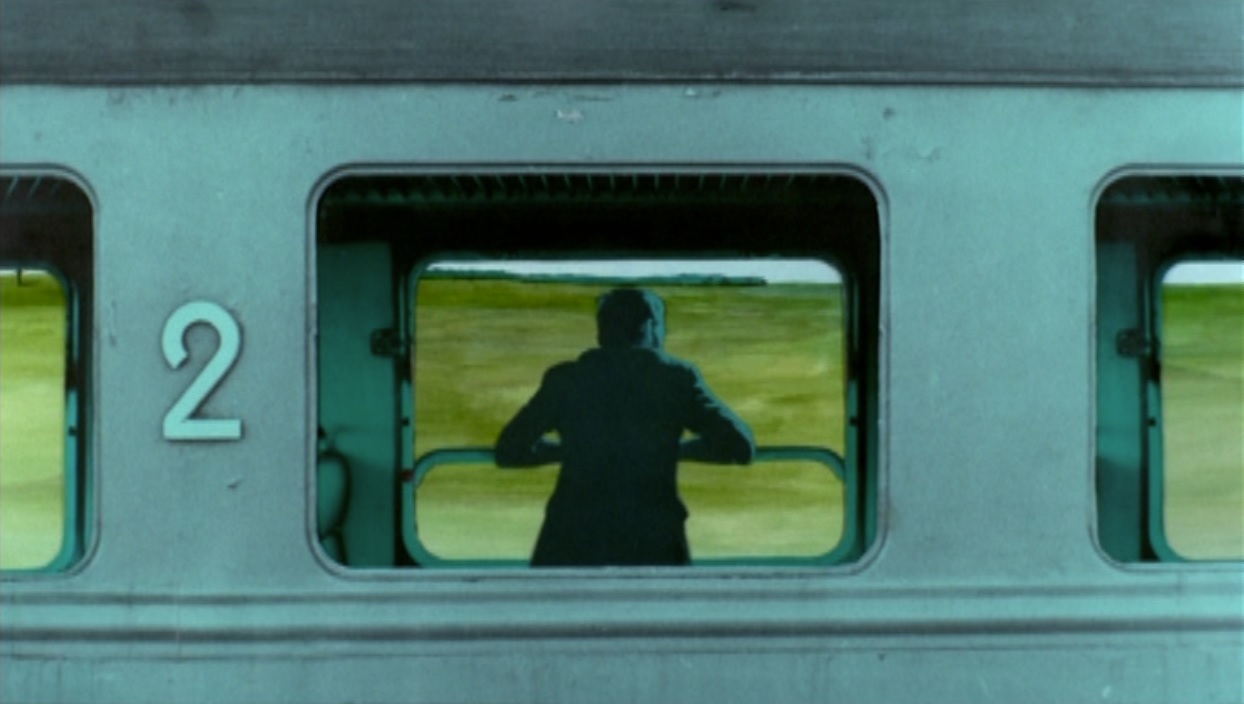
‘Podróż’ (The Journey) is a Polish avant-garde film in which a man makes a rather pointless train trip to a house somewhere in the countryside.
For a large part of the short we watch the man in the train from the back, while he stares at the countryside floating by his window. There’s constant movement, but barely any animation. During the train sequence, for example, the train itself and the man remain completely static. When the man walks towards the house this is done in a sequence of stills, not in animation.
Nevertheless, the film intrigues because of its original visual style and because of its extreme soundtrack by Eugeniusz Rudnik using unsettling mechanical sounds.
Watch ‘The Journey’ yourself and tell me what you think:
‘The Journey’ is available on the DVD-set ‘Anthology of Polish Animation’
Director: Ryszard Czekała
Release date: 1970
Rating: ★★★
Review:
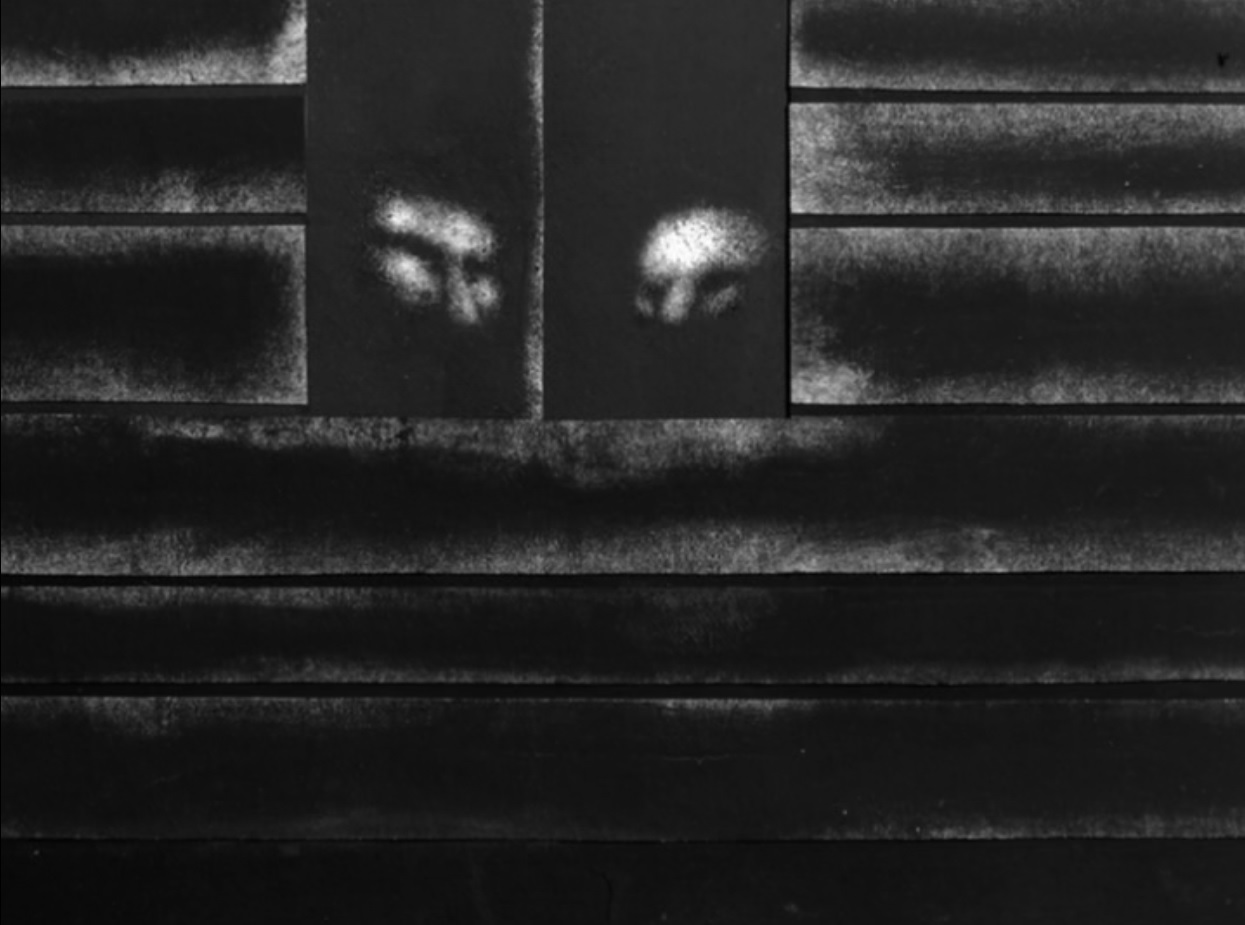
In ‘Syn’ (The Son) an old couple at the countryside wait for their son, who has gone off to lead a different life in the city. But when he arrives at his parental home, his visit turns out to be a deception.
‘Syn’ shows Ryszard Czekała’s original style: the film is in black and white, and features a very original cinematography: altering extreme close-ups of hands, ears and such with strange depictions of the barren wintery landscape, with the ground filling up almost the complete frame.
The story is told without dialogue, and because of Czekała’s extreme graphical style, rather hard to follow. Most striking is the sound design, which arguably is as important as the imagery. The result is a puzzling, but quite unsettling and bleak short.
Watch ‘The Son’ yourself and tell me what you think:
‘The Son’ is available on the DVD-set ‘Anthology of Polish Animation’
Director: Craig Welch
Release Date: 1996
Rating: ★★★½
Review:
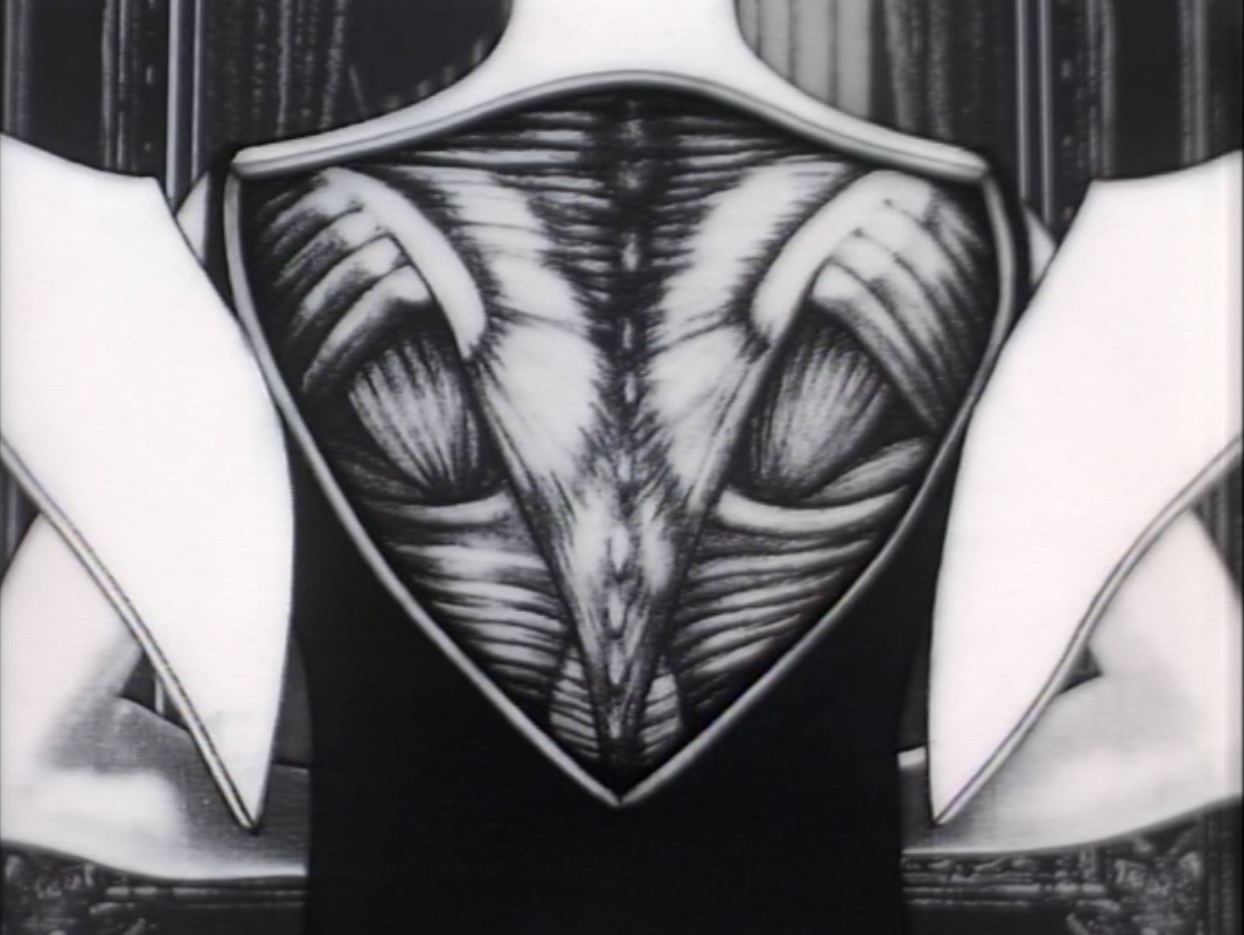
In ‘How Wings Are Attached to the Backs of Angels’ Craig Welch combines traditional animation, cut-out animation and pixilation to tell a puzzling but ominous tale about a man obsessed with contraptions and redesigning humans into angels. In one of his contraptions he attaches wing bones to a skeleton, but then a real woman (the pixilated actress Louise Leroux) appears…
Most disturbing is the scene in which the man caresses the woman’s shoulder blades, imaging their inner workings. The discomfort is enhanced by the use of a real woman. Welch’s cinematic style seems to be influenced by that of Raoul Servais and Terry Gilliam, and shares a high level of surrealism with these celebrated film makers. The animator certainly knows how to show and don’t tell; his film retains a morbid atmosphere throughout, all by suggestion and by clever cutting.
Watch ‘How Wings Are Attached to the Backs of Angels’ yourself and tell me what you think:
‘How Wings Are Attached to the Backs of Angels’ is available on the DVD ‘Desire & Sexuality – Animating the Unconscious Vol.2’
Director: Marlies van der Wel
Release Date: September 26, 2015
Rating: ★★★★ ½
Review:

‘Zeezucht’ (which can be translated as ‘a longing for the sea’) tells about a man desiring to be able to dive into the sea from a young age on.
Van der Wel tells her tale by alternating images of the present with those of the past. In the scenes set in the present we watch the old man, complete with Jacques Cousteau-style red bonnet, doing some impressive beach combing during a stormy night. In the scenes from the past we learn how he came to love the sea, and how he made several attempts to dive into the deep with various contraptions, all to no avail.
Meanwhile his home on the dunes expands and expands by the use of flotsam and jetsam washed up by the sea. Then, when a giant fish factory ship sinks, the old man finally sees his chance…
‘Zeezucht’ is made in a very charming cut-out animation style, combining painted material with cut-out photographic material. There’s no dialogue, but the experiences and emotions of the sea-lover are greatly enhanced by the romantic music by Dutch band Benny Sings, and by the excellent sound design by Shark @ Haaifaaideluxe.
Watch ‘Zeezucht’ yourself and tell me what you think:
‘Zeezucht’ has been issued on DVD by the director herself in a limited number


 Dr. Grob's Animation Review