
You are currently browsing the category archive for the ‘Russia’ category.
Director: Roman Davidov
Release date: 1963
Rating: ★★★
Review:
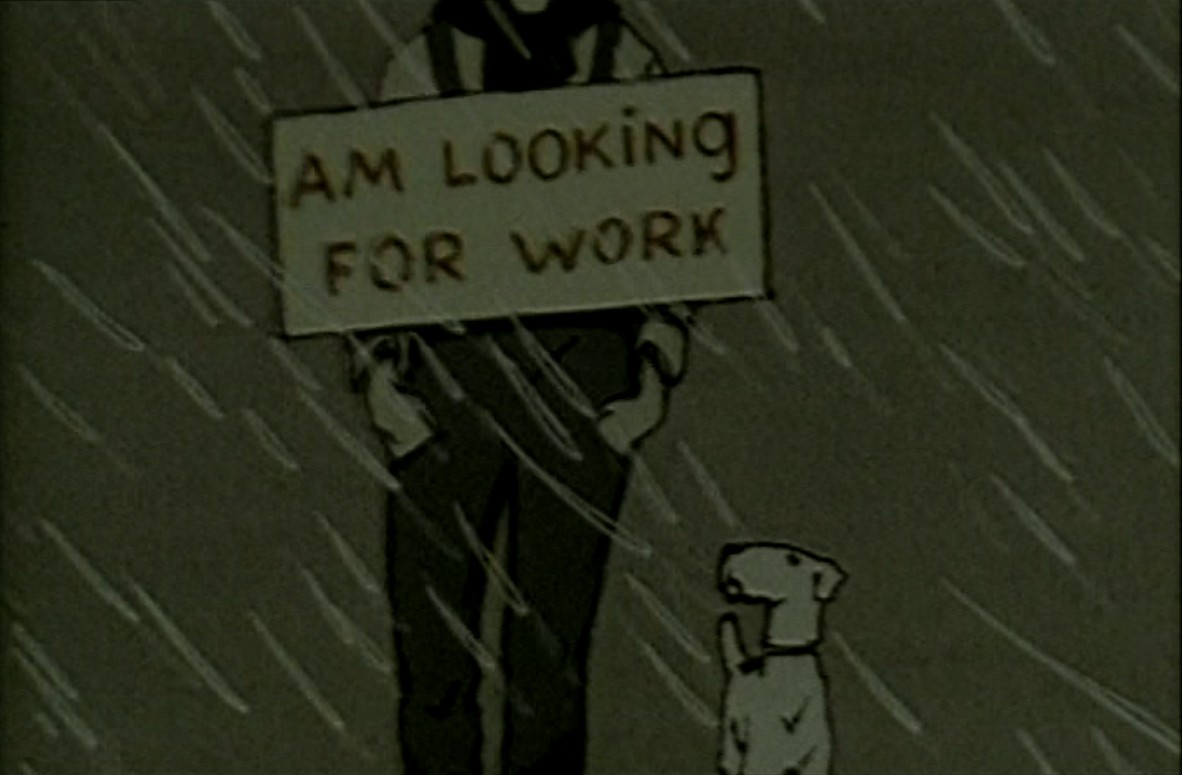
‘The Shareholder’ is the third of three animated Soviet propaganda shorts aimed at American capitalism from 1963, the other two being ‘Mister Twister‘ and ‘The Millionaire‘.
Of the three this short is by far the most interesting visually. The short uses a strikingly graphic style and cel animation of the highest quality. The animators working on this short clearly have full command of the human and animal form, making this propaganda short a feast for the eye. The story, on the other hand, is not as attractive: at 24 minutes it is slow, meandering, repetitive and overlong.
‘The Shareholder’ is worker Michael Chase, who is made shareholder of the Pearson company. But when he gets fired, he soon discovers that this share is worth nothing, nor are his possessions, which were all bought on credit. Broken and without a job he wanders the streets.
The film’s highlight is the scene in which Michael Chase loses all his possessions: they change into cheaper and cheaper forms for his eye, before vanishing altogether. It’s also interesting to note that the film predicts how robotization leads to unemployment. However, the film’s message remains fuzzy, and its ending unclear.
Watch ‘The Shareholder’ yourself and tell me what you think:
‘The Shareholder’ is available on the DVD set ‘Animated Soviet Propaganda’
Director: Anatoly Karanovitch
Release date: 1963
Rating: ★★★★
Review:
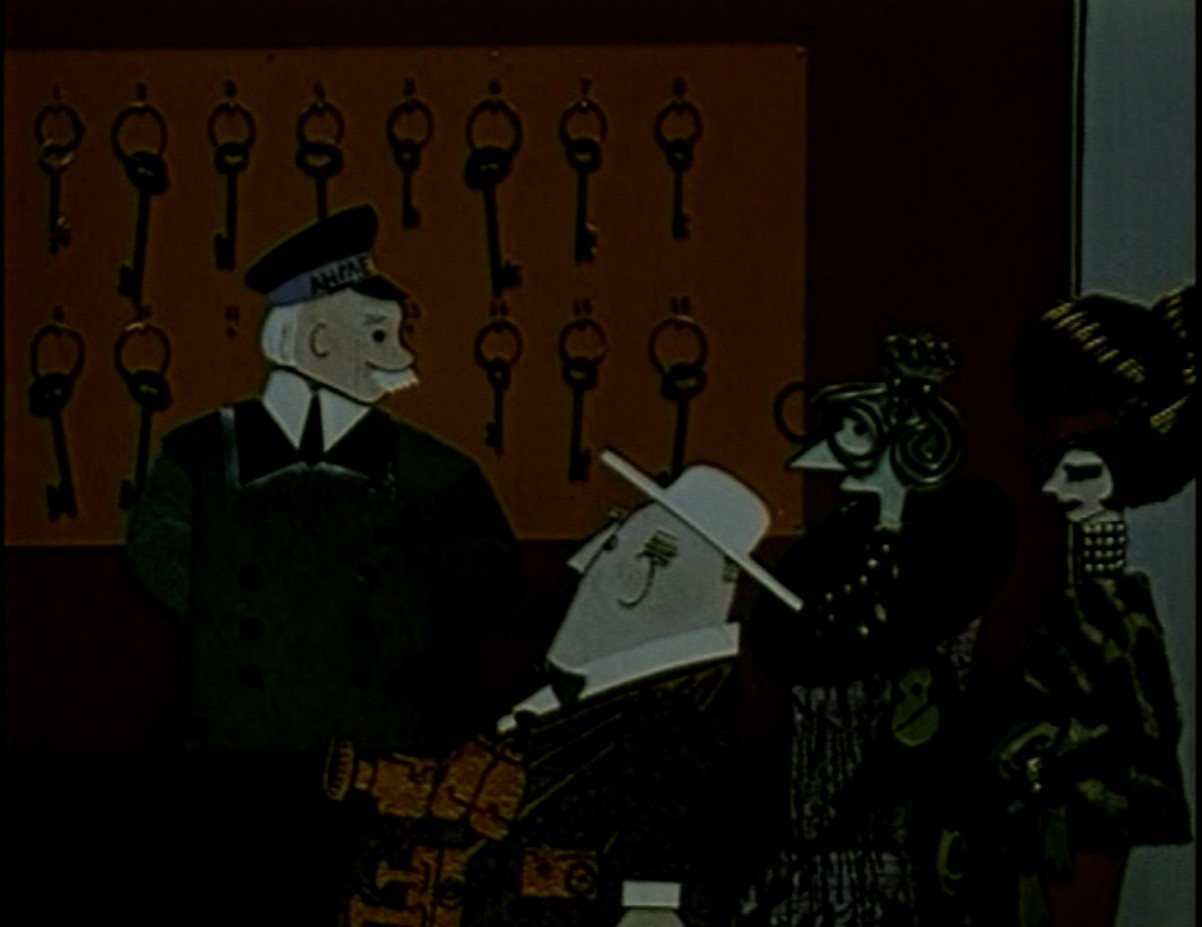
After Fyodor Khitruk gave Soviet animation a huge update with ‘Story of One Crime’, the animated Soviet propaganda shorts also became more modern and interesting to look at. A good example is ‘Mister Twister’ from 1963.
Based on the poem of the same name by Samuel Marshak (1887-1964) ‘Mister Twister’ is a story in rhyme about Mr. Cook (alias ‘Mister Twister’), an American millionaire who visits the Soviet Union on request of his daughter Susie. When he arrives in Leningrad, he refuses to sleep in the appointed hotel, because a black man sleeps there, too. The doorman of the hotel calls all his colleagues from other hotels to tell the millionaire they’re full. After a tiring day of searching and a night in the doorman’s office, the millionaire and his family are completely humbled. Now, Mr. Cook will rent a room, even though he will be surrounded by colored people, all visiting Leningrad because an international conference.
This cartoon uses both cel animation and cut-out techniques and is conceived as a children’s book coming alive. The animation (e.g. by a young Yuri Norstein) is crude and emblematic, but shows modern influences in its unnatural depictions of movement.
‘Mister Twister’ is one of no less than three animated Soviet propaganda films from 1963 aimed at American capitalism. Despite the rather poor animation, it’s the best of the three, because of the charmingly little story, and because its anti-racist message, which is of a much more lasting quality than say the glory of communism.
Watch ‘Mister Twister’ yourself and tell me what you think:
‘Mister Twister’ is available on the DVD set ‘Animated Soviet Propaganda’
Directors: Vitold Bordzilovsky & Yuri Prytkov
Release date: 1963
Rating: ★★★
Review:
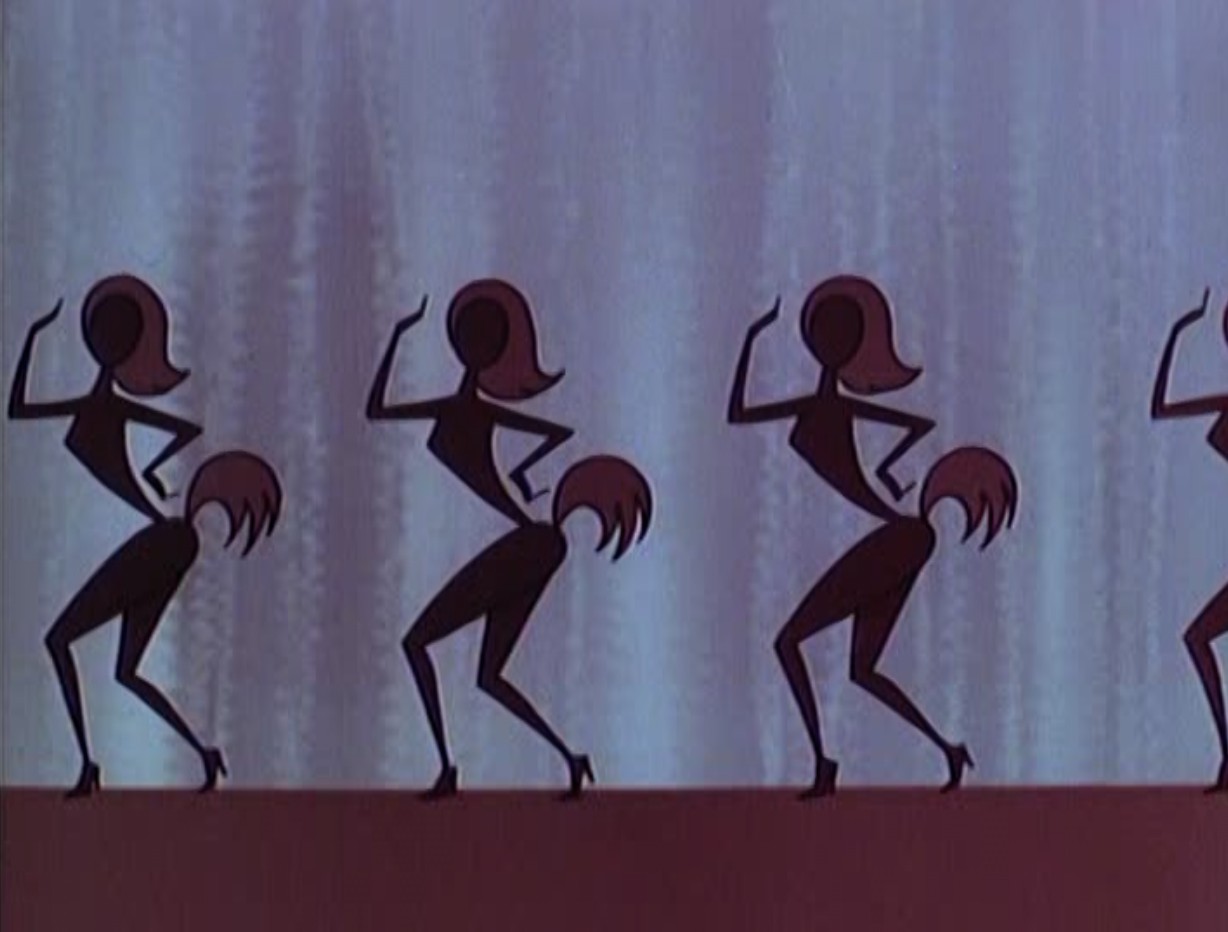
‘The Millionaire’ is an animated Soviet propaganda film, aimed at American capitalists, just like ‘Mister Twister‘ and ‘The Shareholder’ from the same year. Of the three its visuals are the most conventional: the simple cartoon style harks back to the 1930s and 1940s and is a little reminiscent of the work by Otto Soglow.
Like in ‘Mister Twister’, the story is narrated in rhyme, and this time tells about a bulldog which inherits a great fortune from an old lady. Now the dog is top of the bill, he behaves more and more human-like. He even manages to be elected into the senate, where, as a true capitalist (according to the narrator), he opposes peace. The short’s moral is a little unclear, but seems to be that money can even make the dumbest person mighty. Like in ‘Mister Twister’ the animation is emblematic, although there are some good takes on the dog.
Watch ‘The Millionaire’ yourself and tell me what you think:
‘The Millionaire’ is available on the DVD set ‘Animated Soviet Propaganda’
Director: Fyodor Khitruk
Release date: 1962
Rating: ★★★★
Review:
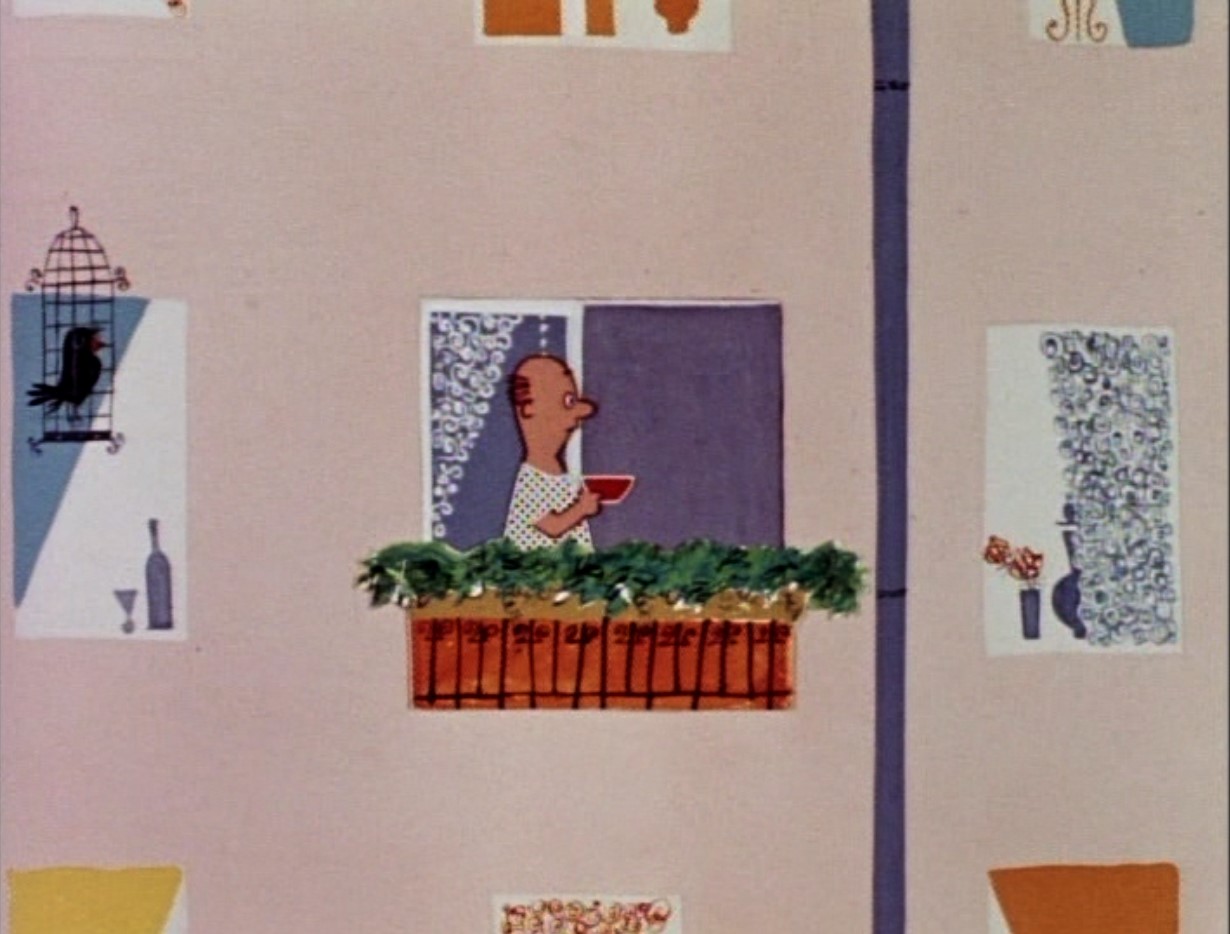
‘Story of One Crime’ was the first film directed by acclaimed film maker Fyodor Khitruk (1917-2012). Khitruk was one of the best comic talents in the Soviet era, as is already visible in this delightful early film.
The short starts with a man sneaking upon two talking ladies and hitting them with a large pan. At that point the narrator interrupts and takes us viewers 24 hours back. The rest of the film is told wordlessly, and shows the criminal, comrade Manin, to be a nice, gentle and hard working man. We watch him going to work, and working at the office.
All seems well, but as soon as he returns to his home, in an apartment block, the problems start. When he wants to rest on his balcony, he’s disturbed by ridiculously loud domino players playing in the courtyard. When he returns inside to watch some television, a neighbor turns on some loud jazz music, and later, when he tries to sleep, more neighbors deprive him of a good night’s rest in various ways. The film ends with a message to the viewers themselves, no doubt, more often than not living in such noisy apartments themselves.
Khitruk tells his tale with an understated sense of humor, and a relaxed, but effective sense of timing. The animation is limited, and far from fluent, but as Khitruk knows how to pose, very effective. The designs by Sergei A. Alimov, too, are a delight: the film is a rare example of Soviet cartoon modern design, and both characters and backgrounds are gorgeous throughout the film. They are partly made by snippets from magazines, and especially the neighbor’s gargantuan stereo installation is a great example of good cut and paste work.
With ‘Story of One Crime’ Khitruk took Soviet animation away from the classic fairy tale worlds of the 1950s into the modern age. The film contains some criticism on Soviet society, which is depicted as less than ideal, but the film was an enormous success, nonetheless.
With this short Khitruk immediately became one of the Soviet Union’s most important animation film makers, as he would prove, e.g. by delivering the world his delightful ‘Vinnie Puch’ (Winnie the Pooh) films of 1969-1972.
Watch ‘Story of One Crime” yourself and tell me what you think:
‘Story of one Crime’ is available on the DVD ‘Masters of Russian Animation Volume 1’
Director: Fyodor Khitruk
Release date: 1973
Rating: ★★★★
Review:
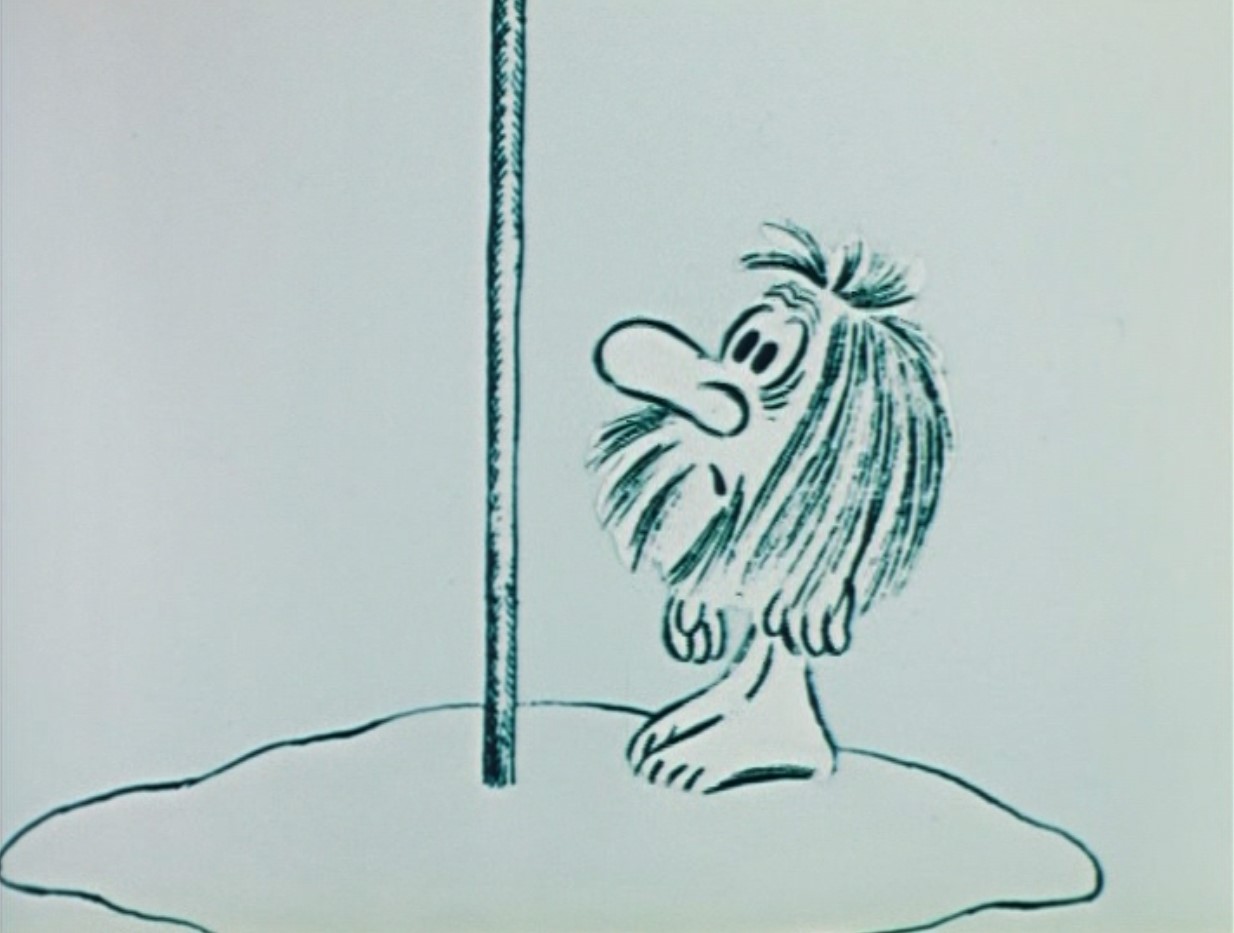
‘The Island’ is a short gag film in which a bearded castaway is stranded on a tiny island.
Khitruk explores this traditional cartoon setting, and brings it into new directions. The man longs to be rescued, but nobody helps him, though the ocean turns out to be very crowded, indeed. In fact, in the end, the man is far worse off than he was in the beginning.
Khitruk’s cell animation is effective, his designs are charming, and his timing is excellent. But the film is more than just a mere series of gags, as Khitruk satirizes man’s aggression, greed, emptiness and folly. It’s signifying that the only person helping the main protagonist, is one who has even less than the castaway he helps. Thus ‘Island’ is more than just a little gag film, it’s a humorous essay on the human condition, and it’s not an optimistic one.
Watch ‘The Island’ yourself and tell me what you think:
‘The Island’ is available on the DVD ‘Masters of Russian Animation Volume 2’
Director: Yuri Norstein
Release date: 1973
Rating: ★★★★
Review:
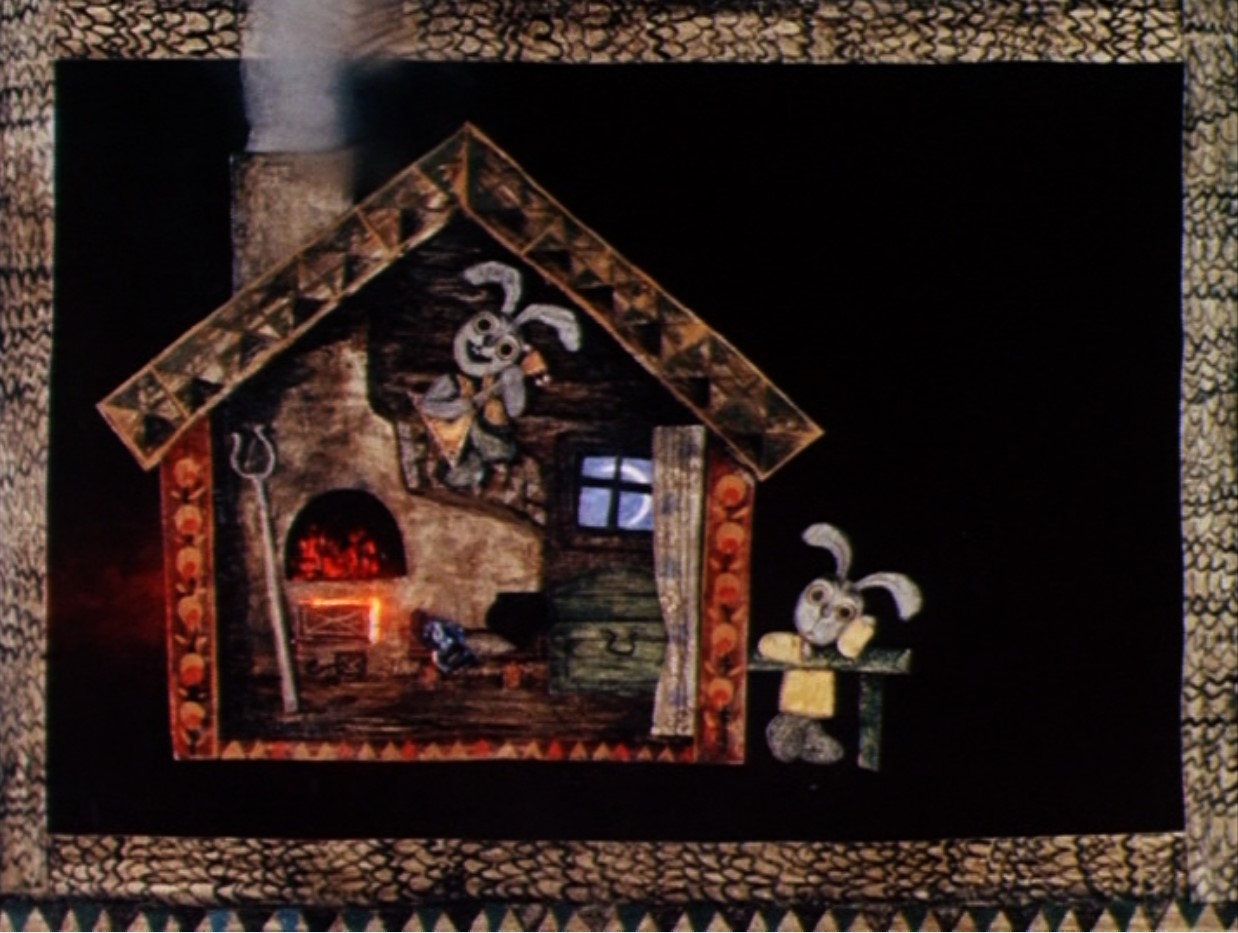
In ‘Fox and Rabbit’ (actually Fox and Hare) Norstein retells a Russian folktale in which a fox chases a rabbit out of his own house. A wolf, a bear and a bull all three promise the rabbit to help him regain his house, but when threatened by the fox they run off. Only a small rooster at least tries it.
The story is told by a voice-over, and is illustrated in a very charming semi-folkloristic style, which striking and colorful supposedly wooden frames framing the action, as if were looking at paintings. M. Meyerovich’s, rather Stravinsky-like music only adds to the folkloristic character. Norstein’s cut-out animation, meanwhile, is of the highest order, and full of little subtleties, signifying the different characters.
‘Fox and Rabbit’ may be less famous than the later ‘Hedgehog in the fog’ (1975) or ‘Tale of Tales‘ (1979), the film already shows Norstein’s extraordinary talent and charming animation style. Fyodor Khitruk thought highly of the film, and was completely surprised that such commonplace material (Soyuzmultfilm had made fable films for several decades) turned into such an original, idiosyncratic film.
Watch ‘Fox and Rabbit’ yourself and tell me what you think:
‘Fox and Rabbit’ is available on the DVD ‘Masters of Russian Animation Volume 2’
Director: Andrei Khrzhanovsky
Release date: 1973
Rating: ★★★
Review:
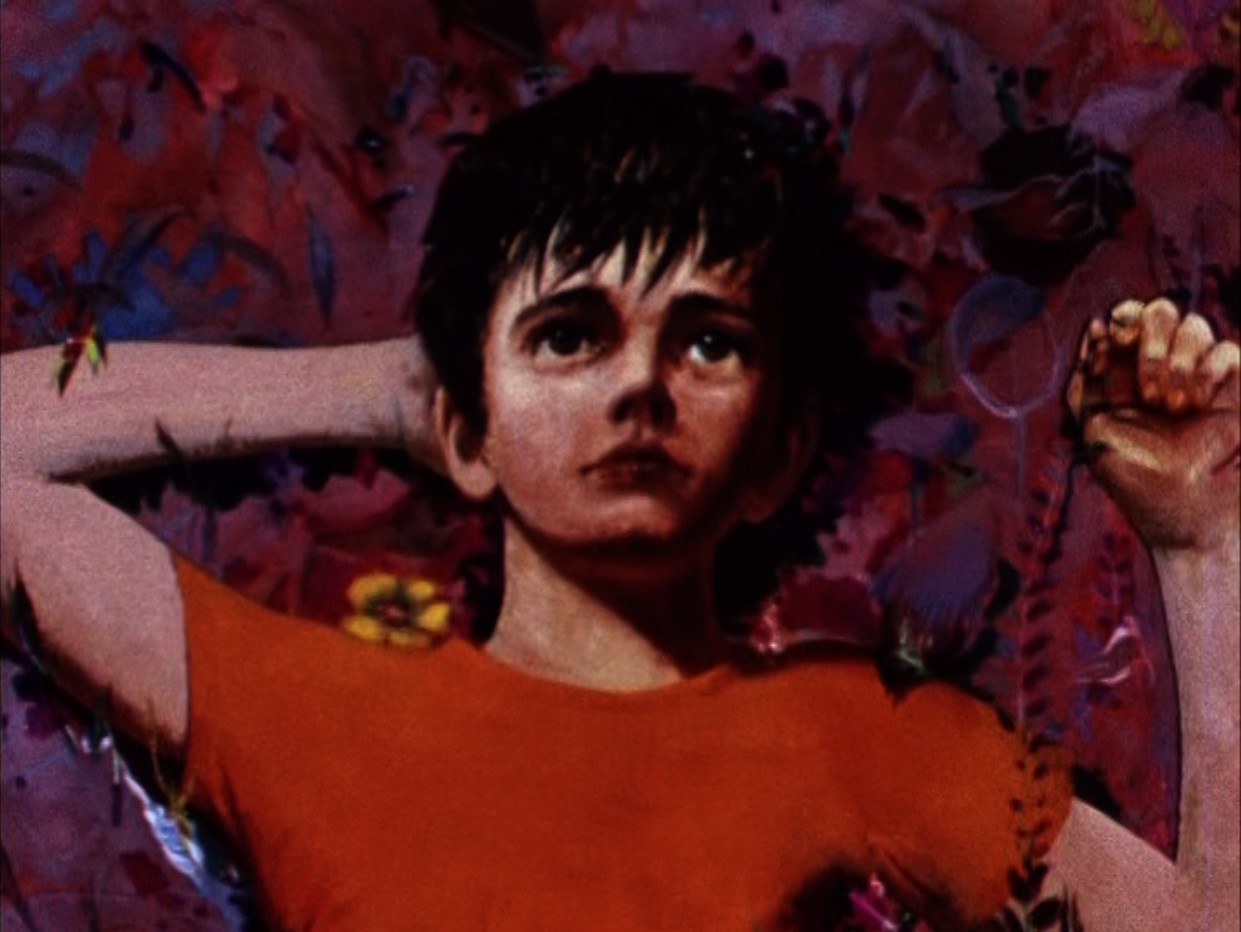
In ‘Butterfly’ a boy catches some butterflies, but after a nightmarish scene in which he himself is trapped, he releases them again.
The plot of ‘Butterfly’ is far from original, and rather predictive and boring, but Khrzhanovsky’s eclectic style is not. Part of the story is told in still oil paintings, but there’s also a little cell animation and cut-out animation.
The oil paintings are most interesting, with their rather high level of realism, and their painful contrast between colorful nature, and the dull, grey world of the modern city. Especially the scene inside the boy’s flat is most depressing, with only grey electronic robots to play with. Nevertheless, the most striking aspect of this film are not the animation nor the visuals, but the fascinating score by avant-garde composer Alfred Schnittke.
Watch ‘Butterfly’ yourself and tell me what you think:
‘Butterfly’ is available on the DVD ‘Masters of Russian Animation Volume 2’
Directors: Ivan Ivanov-Vano & Yuri Norstein
Release date: 1971
Rating: ★★★
Review:
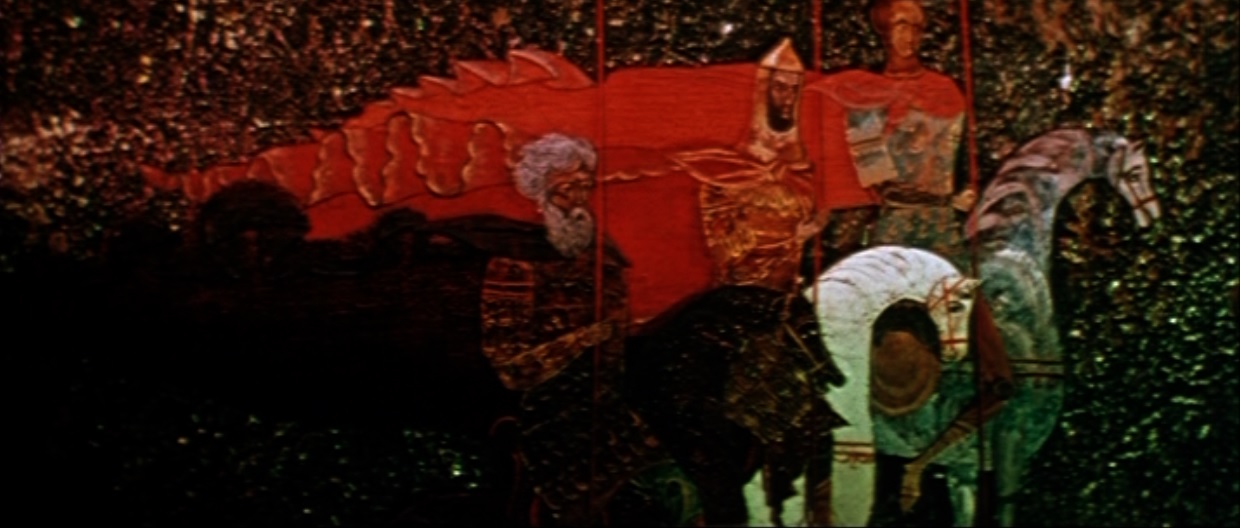
Veteran director Ivan Ivanov-Vano and young and up-and-coming talent Yuri Norstein co-direct the rather enigmatic ‘The Battle of Kerzhenets’.
Set to music by Nikolai Rimsky-Korsakov (excerpts from his opera ‘the Invisible City of Kitezh’), the film tells of a legendary epic battle of a Russian army against an invading army of Mongols, and of its aftermath. The film consists of three parts: in the first we watch the soldiers saying goodbye to their wives and children, the second depicts the battle itself, and the third part shows how life continues, with images of farmers sowing and harvesting and of children playing.
The short stops quite abruptly, and it’s quite unclear what the duo wanted to tell with their film. Nevertheless, the film is a marvel to watch. As the directors state themselves in the opening of the film, the visuals are based on Russian icons and frescos of the 14th to 16th century, and these give the short its unique style.
The cut-out animation is fair, and more emblematic than realistic, but the real treat lies in the way the two directors filmed their short. For a film about a battle, the filming is remarkably poetic: the images often flow into each other by the use of dissolves into black and back, and there’s a lot of soft focus on the images, creating a magical distance. In fact, the images are mesmerizing throughout the picture, and clearly look forward to Norstein’s individual poetic style.
Watch ‘The Battle of Kerzhenets’ yourself and tell me what you think:
‘The Battle of Kerzhenets’ is available on the DVD ‘Masters of Russian Animation Volume 2’
Director: Andrei Khrjanovsky
Release date: 1970
Rating: ★★
Review:
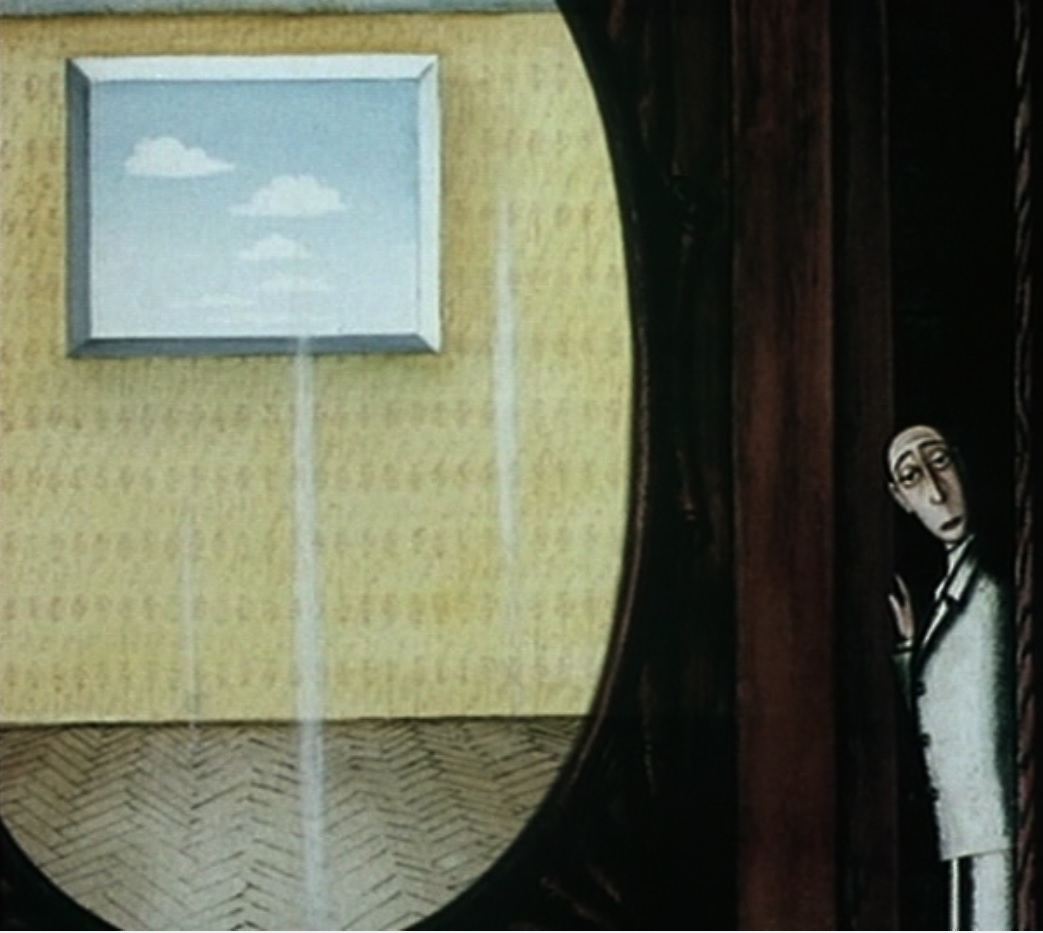
‘Armoire’ is an enigmatic cut-out animation film about a man in an apartment who puts an enormous cupboard into his room. Once inside, he starts to put all his belongings into the cupboard, until he can live inside it. In the end it’s revealed that even his tiny room is inside another cupboard.
Several shots of depressing apartment blocks suggest that this is a critical satire on the living conditions inside the Soviet Union, but I’m not sure. ‘Armoire’ is as avant-garde as was possible in the Soviet-Union, especially Alfred Schnittke’s score is very modernistic. But because the film is just the illustration of one puzzling idea, and because the one protagonist is as phlegmatic as Buster Keaton, the film fails to make a lasting impression.
Watch ‘Armoire’ yourself and tell me what you think:
‘Armoire’ is available on the DVD ‘Masters of Russian Animation Volume 2’
Director: Ivan Ivanov-Vano
Release date: 1969
Rating: ★★½
Review:

‘Seasons’ is a very poetic stop-motion film set to music by Pyotr Ilyich Tchaikovsky.
The film tells about two lovers through the seasons, although we see mostly images of autumn (the two riding together through a forest) and winter (a lengthy sleigh ride), with summer being reduced to a reminiscence of happier times, and spring hardly identifiable, at all.
The film is directed by Ivan Ivanov-Vano, but co-directed by Yuri Norstein, and already contains several elements of the later director’s mature style: the stop-motion is close to cut-out animation, there are plenty multi-plane effects, and the filming of the images has a soft, poetic edge to it. The designs are extraordinary beautiful, especially that of the crystalline forest, but as practically nothing happens during the entire film, the result is as enchanting as it is boring.
Watch ‘Seasons’ yourself and tell me what you think:
‘Seasons’ is available on the DVD ‘Masters of Russian Animation Volume 2’
Director: Lev Atamanov
Release date: 1969
Rating: ★★★★
Review:
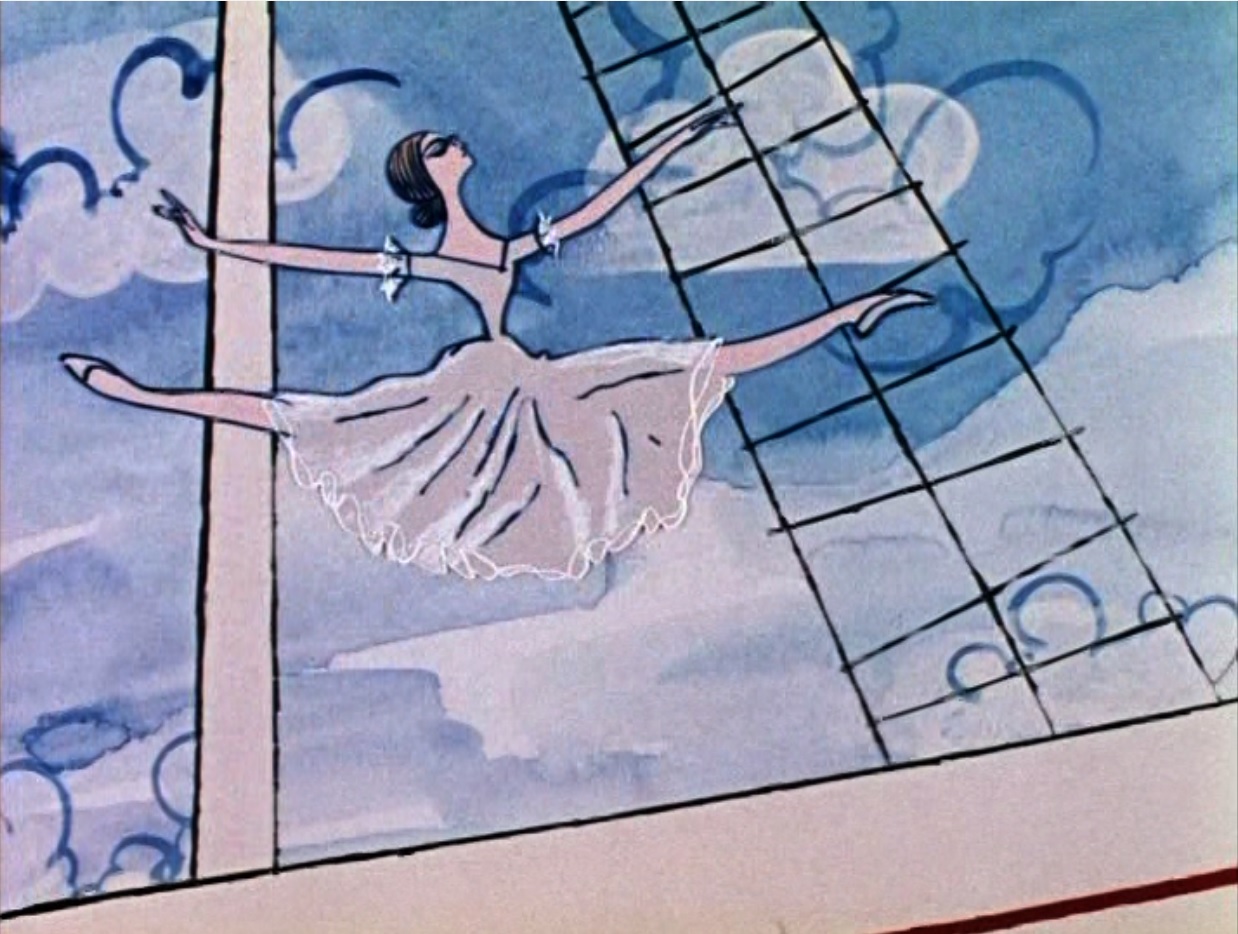
In ‘Ballerina on the Boat’ a ballerina boards a ship. When she practices her moves, several sailors try to copy her, but only succeed in falling overboard. In the end they all get so angry, the gentle ballerina retreats into her cabin. But that night she rescues the ship from a terrible storm.
‘Ballerina on the Boat’ is a very charming film using stark cartoon modern designs and watercolor backgrounds reminiscent of Raoul Dufy. Even the storm consists of beautifully colored paint strokes. The film thus has a strong 1950s feel, enhanced by the peppered modern music by star composer Alfred Schnittke.
The film uses no dialogue and has a very poetic feel, as the ballerina defies gravity more than once. The ballerina herself is animated beautifully and very convincingly, and indeed, two people are credited for choreography. If the film has one drawback, it’s its length. For, after all, not too much is happening throughout the 17 minute long short.
Watch part 1 of ‘Ballerina on the Boat’ yourself and tell me what you think:
‘Ballerina on the Boat’ is available on the DVD ‘Masters of Russian Animation Volume 2’
Director: Valentin Karavaev
Release date: 1970
Rating: ★★
Review:

‘A Lesson Not Learned’ is a rather blatant and vicious Soviet propaganda film suggesting that West Europe is led by fascists trying to restore the Germany of old.
The film starts with images from World War II, accompanied by the sounds of bombs and gunfire. Then we cut to an old Nazi in sheep’s clothing, who seeks refuge in the American-British zone. Accepted and retired, the old Nazi preaches ‘revanchism’, in order to restore Germany’s borders from before World War II. However, he is stopped by the Berlin wall and the peace treaty signed between the USSR and the DDR, in which the current borders are accepted.
This film uses a satirical style more reminiscent of the forties than of the seventies, rendering an old-fashioned imagery. The best idea is the little Hitler angel helping the old Nazi. There’s no dialogue. For example, when the old Nazi starts to speech, we only hear the sound of guns. There’s pretty little animation and the message is emphasized with writings as in political cartoons.
It’s hard to watch a film so full of lies, which shows that up to its very end the Soviet Union partly based its legitimation on the idea that its existence was the only way to stop fascism. And the saddest thing is that the current Russian regime has revived this falsehood to defend its current war in the Ukraine.
Watch ‘A Lesson Not Learned’ yourself and tell me what you think:
‘A Lesson Not Learned’ is available on the DVD set ‘Animated Soviet Propaganda’
Director: Natalia Chernysheva
Release Date: September 2012
Rating: ★★★★
Review:
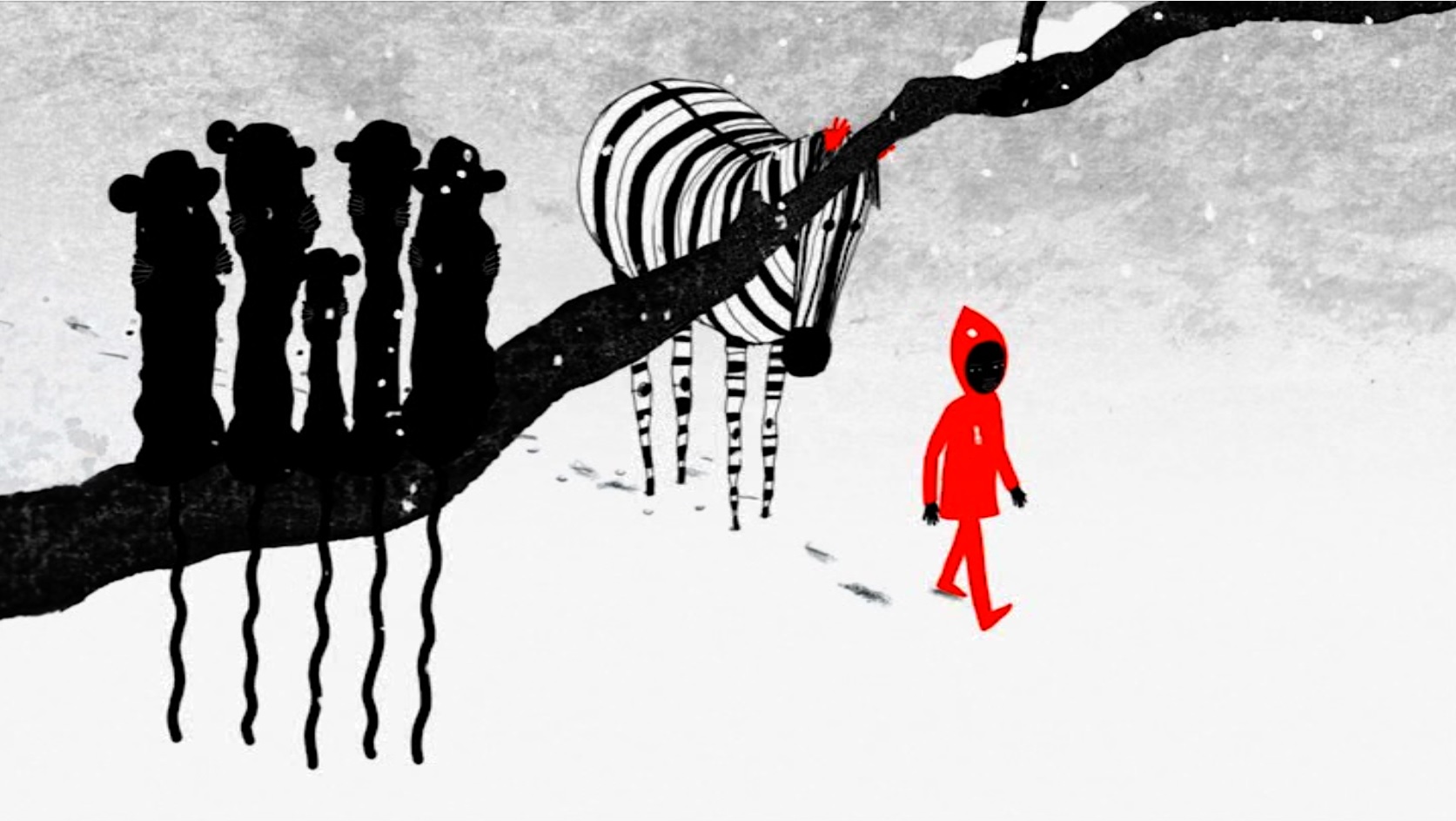
In ‘Snowflake’ a little boy in Africa gets a paper-cut snowflake by mail. That night he dreams his surroundings are covered with snow, making all animals shiver.
This is a charming little film done in a quasi-naive style, and making good use of black and whites, with occasional flashes of color. Especially the scenes in which the boy explores the snow-covered world are beautiful, with his red coat, shawl, hood and mittens standing out against the blacks, whites and greys of the animals and their surroundings. Also noteworthy is Chernysheva’s excellent timing, and the sound design, which is spot on.
Watch ‘Snowflake’ yourself and tell me what you think:
‘Snowflake’ is available on the Belgian DVD ‘Haas & Hert en andere verhaaltjes’
Director: Anna Kadykova
Release Date: September 2012
Rating: ★★★½
Review:
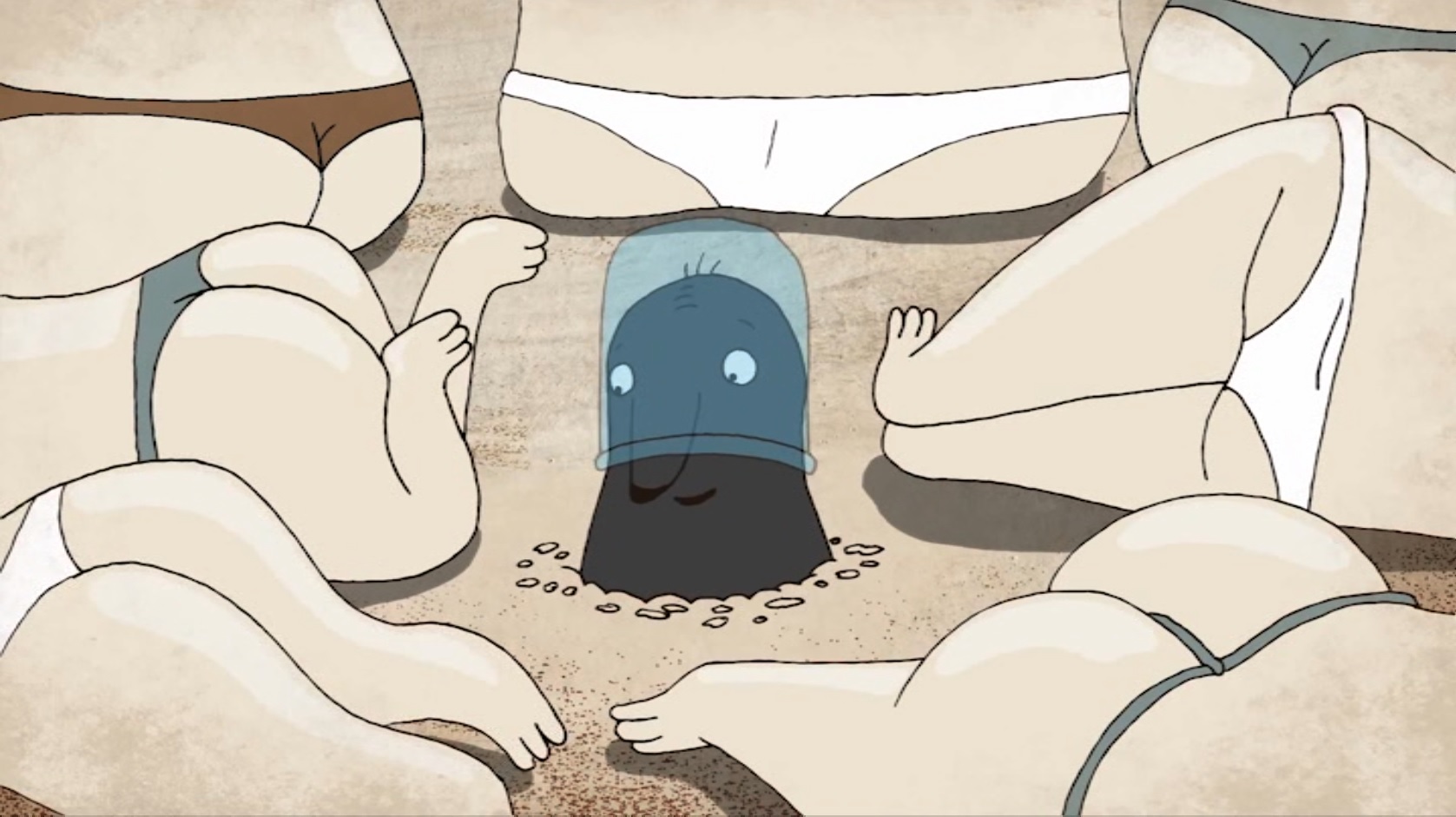
A little mole, living in a grey, polluted city discovers images of the sea in an abandoned magazine. He longs to go there, and travels, like moles do, underground to go there. Unfortunately, the beach is as crowded as the city was.
‘The Mole at the Sea’ (also known as ‘Moe Goes to the Beach’) is a charming little film, with lots of little jokes, many of which are slightly on the surreal side. Kadykova’s style is instantly likable, and her timing excellent. Especially the scenes of the over-crowded beach are nice to watch.
Watch ‘The Mole at the Sea’ yourself and tell me what you think:
‘The Mole at the Sea’ is available on the Belgian DVD ‘Haas & Hert en andere verhaaltjes’
Director: Sergei Ryabov
Release Date: February 20, 2007
Rating: ★★★½
Review:
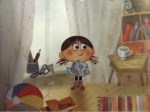 ‘The Tiny Fish’ is a charming little children’s film with a winter setting.
We follow a little girl who encounters an evil fisherman catching a fish. Shocked by this event the girl stays at home, leaving it to other kids to play outside in the snow. She draws a picture of the fish and then dreams that she and the fish are attacked by a giant version of the fisherman, who grows bigger and bigger in size. With her paper fish the girl returns to the ice hole where the fish had been caught. She returns her paper fish to the water, which immediately comes to life.
‘The Tiny Fish’ is made with a virtuoso cut-out technique. The designs are soft and tender, if a little old-fashioned. The story is told without words, and with a great feel of atmosphere. The girl’s emotions are not shown all too explicitly, but one immediately feels with her. The magical transformation of the paper fish is in complete agreement with the child’s world of wonder.
Watch ‘The Tiny Fish’ yourself and tell me what you think:
‘The Tiny Fish’ is available on the Belgian DVD ‘Kleine helden & rare kwasten – 14 animatiefilms voor kinderen’
Directors:Ivan Ivanov-Vano & Leonid Amalrik
Release Date: 1933
Rating: ★★★★★
Review:
 Of all animated Soviet propaganda films, ‘Black & White’ certainly is one of the most powerful. The film is essentially silent, but it’s accompanied by the beautiful negro spiritual “Sometimes I Feel Like a Motherless Child” sung in a deep mournful voice.
The film is based on a poem of the same name from 1925 by Vladimir Mayakovsky, who wrote the poem during a trip to Cuba. Like the poem, the film shows American racism and the exploitation of black people. We watch them being oppressed by the white, as if they were still slaves, and kept quiet by religion. The images are strong and very stylized. Each image of the film is staged wonderfully to the best effect. A most impressive image is that of numerous blacks in prison, but the bleakest of them all is the final shot of a car passing a lawn with a black man hanging on each tree.
The overall mood of the film is absolutely depressing, especially when one realizes that for once the Soviet propagandists were not too far from the truth. Nevertheless, the Soviet solution, “Lenin”, may be a little too short-sighted, and I doubt whether this film has ever been watched by its intended audience, and if it struck any international chord at all. Who knows? At least, Cuba has been the only country in the Americas to experience a Marxist regime…
Anyhow, despite its abrupt and inapt Lenin-ending, ‘Black & White’ is one of the darkest and strongest of all animated films of the 1930s, and certainly the most interesting animation film to come from the Soviet Union in that decade.
Watch ‘Black & White’ yourself and tell me what you think:
‘Black & White’ is available on the DVD-set ‘Animated Soviet Propaganda’
Director: Fyodor Khitruk
Release Date: 1983
Rating: ★★★★
Review:
 ‘Lion and Ox’ is one of Fyodor Khitruk’s most serious films. It’s a very beautiful short about an ox who befriends a lion. Unfortunately, a devious little fox sets the two against each other, with fatal results.
This simple fable is told without words. They’re not necessary, for the animation is stunning. Apart from the fox, the animals are animated very reallistically, but they still retain a strong sense of emotion, telling the tale in expressions. The designs are very graphic, with beautiful ink lines. The backgrounds, too, are gorgeous, and reminiscent of Chinese paintings in their suggestions of the savanna by using a few powerful paintbrushes.
Watch ‘Lion and Ox’ yourself and tell me what you think:
Director: Grigori Lomidze
Release Date: 1947
Rating: ★★★
Review:
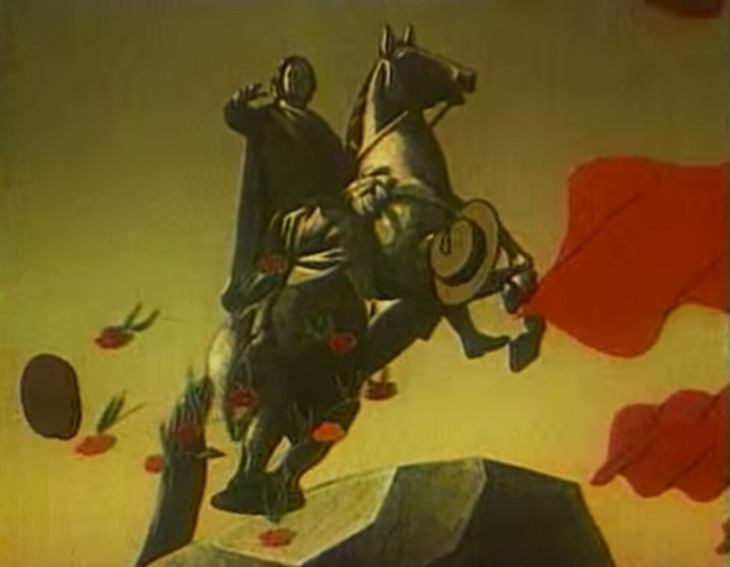 ‘To You, Moscow’ is a long and slow Soviet propaganda film celebrating Moscow’s 800th birthday by depicting its turbulent history.
During the film we watch Moscow’s settlement, the victory of Ivan III over the Tartars (15th century), the revolt against Polish occupation (17th century), the defeat of Napoleon’s army in 1812, the 1905 revolution, the 1917 socialist revolution (‘led by Lenin and Stalin’) and the 1941 defeat of the fascist army to the present day.
The socialist revolution section leads to live-action footage of Moscow, a happy child, flowers, some buildings and street scenes and statues of Lenin and Stalin. The last section, the celebration, shows photographs of heroic inhabitants of the Soviet Union, and not only glorifies Moscow as “our youth, our glory”, “our dear mother” and “our birthday girl”, but also as a “glory to Stalin”.
The different sections are bridged by letters and postcards to comrade Stalin. The sections themselves focus on strives and battles, and are accompanied by alternately realistic and symbolic images. For example, the 1917 revolution is depicted by the czarist double-headed eagle struggling and falling to pieces, while the most impressive part may be that of 1812, with its realistic images of fire.
It may be clear that this film is propaganda at its worst. The film is saved from becoming totally unwatchable by the beautiful animation, the stark images, and the lively patriotic music.
Watch ‘To You, Moscow’ yourself and tell me what you think:
‘To You, Moscow’ is available on the DVD box set ‘Animated Soviet Propaganda’
Director: Mikhail Kamenetsky
Release Date: 1984
Rating: ★★
Review:
 Mikhail Kamenetsky (1924-2006) was a director of numerous puppet films made between 1965 to 1995, almost all featuring animals.
In his ‘Wolf and Calf’ an old wolf steals a calf to eat, but he starts to like it and raises it like his own son. In the end, when a hungry bear, a vixen and a boar try to steal his loot, he is saved by the calf itself, which has turned into a strong bull.
‘Wolf and Calf’ is a fable-like children’s film with an old-fashioned look. The designs of the protagonists look like they have come from a 1950’s toy shop. Kamenetsky’s puppet animation is elaborate, and actually quite good, if erratic, but the film suffers from an excess of dialogue, which not always seems to correspond with the animated characters themselves.
Moreover, the film’s world is rather inconsistent, stretching its believability: the wolf, like all other animals, is highly anthropomorphic and even lives in a house, alongside humans, who are afraid of him nonetheless. The calf, on the other hand, remains on all fours, and stays an animal, even though it is able to speak.
Watch ‘Wolf and Calf’ yourself and tell me what you think:
Director: Ideya Garanina
Release Date: 1981
Rating: ★★½
Review:
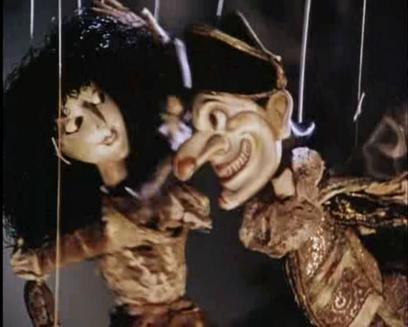 Based on plays by Federico García Lorca, Cabaret (a better translation would be ‘farce’) is a puppet animation film, using puppets in a puppet theater.
The film is something of a musical and tells about the love between Donna Rosita and Don Cristobál. The music, by world famous composer Sofia Gubaidulina is odd and rather unconvincing in its avant-garde version of the musical genre.
The film falls into two parts: the first part looks most like an ordinary puppet play: it’s fast, hectic, humorous, and even vulgar, with a strong sense of eroticism. Halfway the film, however, the mood changes drastically. Don Cristobál gets rid of his strings and tears off his grotesque mask to reveal a more noble face. With that the film enters the second part, a dreamlike, lyrical one. Unfortunately, the narrative gets lost in this part, and in the end the film suffers from its length, from its meandering music and beautiful, but vague imagery.
‘Cabaret’ was Garanina’s Fourth film, and her third after she had joined Soyuzmultfilm in 1976. In 1988 Garanina and Gubaidulina would work together again on “The Cat That Walked by Itself”, a feature film based on Rudyard Kipling’s ‘Just So Stories’. Unfortunately she came to a tragic end, as she was murdered in her own house in 2010.
Watch ‘Cabaret’ yourself and tell me what you think:
http://www.dailymotion.com/video/x27btal_08-ideya-garanina-1981-cabaret_shortfilms


 Dr. Grob's Animation Review