You are currently browsing the category archive for the ‘Feature films’ category.
Director: Hayao Miyazaki
Release Date: March 11, 1984
Rating: ★★★★★
Review:
 Although the titles say ‘based on the graphic novel’, the manga of the same name was actually created to be able to make the picture.
Based on his own original story, ‘Nausicaä of the Valley of Wind’ is Miyazaki’s first mature film. It’s already a typical Miyazaki film, with its strong environmental message, strong female characters, the absence of clear villains, and the setting of an alien, yet totally convincing world.
The film tells of Nausicaä, princess of a small medieval-like state in a green valley, which is threatened not only by the strange, hostile and poisonous insect world nearby, but also by other human states, especially the militaristic state of Tolmekia. The humans are more preoccupied with destruction than with comprehension. Because of this shortsighted and drastic behavior, the humans almost destroy their entire environment. It is Nausicaä, with her unique understanding of animals and her pacifistic nature, who saves the day.
‘Nausicaä of the Valley of Wind’ is an epic science fiction film, made on a grand scale, with layered characters, beautiful designs, and excellent animation. Its production led to the foundation of the Ghibli studios, which high quality standards it already meets. In no sense it feels like a first-born or a dated film. Even though it’s from 1984, it is remarkably fresh and its message still viable. In other words, ‘Nausicaä of the Valley of Wind’ is the first of a long series of Ghibli studio classics.
Miyazaki would revisit the theme of a sick and angered nature in the similar and equally impressive ‘Princess Mononoke’ (1997). Once again it’s a princess who saves the day…
Watch the trailer for ‘Nausicaä of the Valley of Wind’ yourself and tell me what you think:
Director: Alain Ughetto
Release Date: June 10, 2013
Rating: ★★½
Review:
 After ‘Persepolis’ (2007) ‘Jasmine’ is the second animation film about the Iranian revolution of 1979.
In his strongly autobiographical film Ughetto rediscovers his love relationship with Jasmine, a young woman from Iran, whom he visited during the turmoils of 1978/1979, and whom he left behind, to return to France, alone.
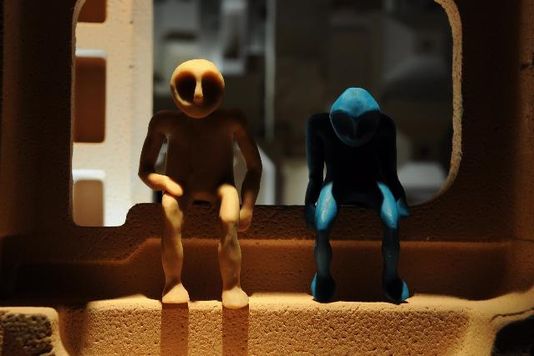
Ughetto doesn’t spare himself, and realizes leaving her was a big mistake on his part. To tell his story he uses love letters from the time, 8mm film images he shot during the Iran revolution and clay animation. He also shows the clay animation process, his elaborate sets made from styrofoam packaging material and collections of clay figures.
Unfortunately, Ughetto’s clay animation is very limited. His plasticine figures are devoid of any facial expression, and they all look the same. The only difference between the Alain and Jasmine puppets is their color (caramel vs. blue – reflecting the color of her eyes). There’s only a limited amount of animation, and little of it is expressive.
Because of this, the film relies heavily on the voice overs, Alain telling his story, a woman reading Jasmine’s love letters. Without the soundtrack the film becomes utterly incomprehensible. Only at one point in the film, the animation images leave a strong impression themselves: when the oppressive forces of the new Islamic regime strike down and kill the former revolutionaries. This is shown by giant floating turbans suddenly falling down and crushing discussing people.
‘Jasmine’ is an intimate, very personal and honest film, and the story of the Iranian revolution and its effects on the everyday lives of people remains moving. But ‘Jasmine’ is no ‘Persepolis’ and in the end falls short as an animation film. It could easily have been a live action film, a documentary, or even a novel, instead.
Watch the trailer for ‘Jasmine’ and tell me what you think:
Director: Âle Abreu
Release Date: September 20, 2013
Rating: ★★★★½
Review:
 It seems that with their growing economies the BRIC countries enter a new creative era, in which costly projects like animated features are now possible. Especially Brazil is a surprising new country from which unique and distinct animation films sprout.
In 2013 the Holland Animation Film Festival had shown the ambitious ‘Uma História de Amor e Fúria‘, this year it’s the charming film ‘O menino e o mundo’ (The Boy and the World). Surprisingly, given the extremely different animation styles, the two features have more in common than one would expect.
According to its director Âle Abreu* the idea of ‘O menino e o mundo’ was conceived when the little boy character suddenly appeared in his notes when studying Latin American protest music of the last hundred years. The film tells about this little boy growing up in the countryside, near the jungle, who goes to seek his father, who has left for the city to work. On his trip he discovers the real world that is Brazil, far from his idyllic place in the hills. He meets cotton pickers, people in the cotton industry, and even discovers how cotton is shipped to some futuristic cities (vaguely resembling the US) to be made into clothes, which are shipped back to Brazil to be sold at ridiculous prices.
I say Brazil, but Abreu insists that this story is the story of practically every Latin American country, or even every third world country emerging from a dark dictatorial past and now getting caught up in the World Economy. Indeed, the film’s world may be one great fantasy, with vehicles like animals, towns like mountains, and great futuristic cities in the sky. Yet, what happens in this world is instantly recognizable to people all over the world,
Meanwhile, the film clearly shows the grand effects of the global economy on the lives of ordinary and poor people. Without reservation Abreu shows us cotton pickers being fired because they are old and sick, workers working ridiculously long hours in hot industries to produce cotton, only to be replaced by a machine in the end. We watch poor people living in favelas (slums), while advertisements on the streets and on television produce images of a happy life they’ll never be able to reach. We watch people who demand more freedom being oppressed by military police, in a particular powerful sequence in which a colorful bird of freedom is crushed by a black bird of oppression, etc.
It’s this focus on social injustice that ‘O menino e o mundo’ shares with ‘Uma História de Amor e Fúria’. Unlike the latter film, however, Abreu’s film never becomes too heavy-handed, because we keep on seeing this world through the eyes of a child. To achieve this, Abreu uses a wonderfully naive style resembling children’s drawings and pastel crayons. All images are drenched in imagination and wonder, even those of the city and the oppressive forces, whose tanks look like large elephants. When the boy approaches the city, more and more magazine clippings are added to the colorful images. Abreu says he wanted to tell a tale about freedom, so he wanted to have freedom during the making of this film, too. He says: “A director should listen to the voice of his film, and listen to where the film wants to go“.
The result is an absolutely gorgeously looking film, simply bursting in color and fantasy. The animation, too, is superb, especially when considering that most of it was done in Photoshop. According to Abreu the drawings were then printed, filmed, and imported in After Effects for compositing. Moreover, the whole film was made with a very small crew. Nevertheless, the makers have reached a high quality by any standards.
To tell his story Abreu uses no dialogue. Yes, we hear people speak, but in a language that is constructed of Portuguese words spoken out backwards. Indeed, the voice actors had to act and sing in this backward language. However, in no way comprehensible dialogue is missed, for Abreu is perfectly capable of storytelling by images alone. Added to the mix is the cheerful score by Ruben Feffer and Gustavo Kurlat, which is a perfect match to the colorful images. According to Abreu, even the sounds of nature are made by musical means, like hand claps for rain.
‘O menino e o mundo’ is a magical film of sheer delight, deserving to be shown everywhere in the world. And unlike American films, it doesn’t shun the big questions our world needs to answer. For this bravery alone, it deserves a large audience.
Watch the trailer for ‘O menino e o mundo’ and tell me what you think:
* Quotations from Abreu are taken from his introduction and Q&A at the screening of his film at the Holland Animation Film Festival, March 20, 2014.
Director: Sabrina Peña Young
Release Date: October 5, 2013
Rating: ★
Review:
 ‘Libertaria: The Virtual Opera’ must be one of the most unwatchable animated features ever made.
This science fiction film is utterly pretentious, using heavy texts to tell a dystopian story about some post-apocalyptic America. The film makes use of some interesting split-screen techniques, but is hampered by erratic storytelling and the most primitive computer animation techniques. The animation of the characters is appallingly poor and amateurish, and the designs hideously ugly. The emotions of the songs are not mirrored in the images, at all. Even the cheapest video game looks better than this.
This combination of dead serious pretentiousness and extremely poor execution make the film a nightmare to watch. Its best aspect is its music, because that, at least, has some quality. Indeed, Sabrina Peña Young is a composer, not an animator, and it remains puzzling why she wanted to make this film in the first place.
Cobbler, stick to your last!
[UPDATE: Sabrina Peña Young reacted to this blog post to explain why she made this film. Please read her response below]
Watch ‘Libertaria: The Virtual Opera’ yourself and tell me what you think:
Director: Bill Plympton
Release Date: October 11, 2013
Rating: ★★★½
Review:
 ‘Cheatin’ is Plympton’s sixth feature – no small achievement for an independent animator who insists on drawing everything on his own.
‘Cheatin’ is no exception to his rule. True, for this film Plympton had hired some staff to reproduce the looks of his watercolor illustration style, but he still drew every single frame himself. According to Plympton*, the costs of the extra staff broke him, and he had to go for a (luckily successful) Kickstarter campaign to be able to finish his film. Unfortunately, distribution in his homeland, the United States, will remain problematic, as, according to Plympton, ‘Cheatin’ is 1) no computer animation film, and 2) it’s not directed at children. Both ‘handicaps’ are enough to alienate the average American distributor. Add the absence of dialogue, and ‘Cheatin”s chances become mighty low, indeed…
This is a pity, for Plympton is in great shape in this film. His sketchy drawing style is as virtuoso as ever, and his human protagonists are drawn to the extreme – using weird camera angles and outrageous exaggeration. Practically every single frame is a beauty.
‘Cheatin’ is a surprisingly lighthearted love story. It tells about Ella and Jake, who meet each other at a bumper car stand – and it’s love at first sight. They marry shortly after, and nothing seems to stand in the way of their happiness. Unfortunately, more women take interest in the muscular Jake, and one of them frames Ella – making Jake belief she meets other men. Prostrated with grief, Jake decides to take revenge, and to pick up as many girls as possible himself…
At this point, the film starts to falter a little. Plympton steers away from reality to plunge into a weird plot using a strange machine to get to his happy end. This is a pity, for his outrageous portraits of the common aspects of love are perfect in itself. To me the film would have been better if he’d stuck to a more familiar pattern of love, rut, adultery, and revenge. For example, Plympton’s depiction of Ella opening her heart to let love in is the most endearing sequence in the whole film. And his depiction of the married couple’s happiness accounts for the film’s most stream-of-consciousness-like sequence, accompanied by the drinking song from Giuseppe Verdi’s ‘La Traviata’.
When Jake starts cheating, Plympton focuses on his behavior at the EZ motel. However, it remains a rather unclear how Jake behaves at home. He has clearly become cold and distant, and denies Ella the love and sex she desires. But at no point in the film there’s any trace of irritations, rows or fights between the two lovers.
Plympton says the film is based on a experience of his own, in which he discovered he wanted to strangle and to make love to his girl at the same time. There’s indeed a scene depicting this feeling. However, it gets a little lost in the strange plot twist. What it does show is that Ella’s desire to hurt Jake is weaker than her desire to be loved by him. Although both characters look rather cliche, in the end Ella is a far more interesting character than Jake, who remains a rather simple strong man loaded with testosteron. Plympton doesn’t show much of Ella’s character, but her more complex inner feelings can be distilled from several scenes.
Despite the plot flaws, ‘Cheatin’ remains a well-told film throughout, making clever use of Nicole Renaud’s gorgeous score, and of some classical pieces – apart from Verdi, e.g. Leoncavallo’s ‘Ridi Pagliaccio’ sung by Caruso, and Maurice Ravel’s Bolero. The absence of dialogue never becomes a handicap – on the contrary. And the emotions of the characters are played out well – sometimes grotesquely cliche, like Jake’s ride of grief; sometimes subtle and sincere, like Ella’s suffering from Jake’s rejection.
Plympton calls his film ‘anti-Disney’, but ‘Cheatin” is in no way a reaction to Disney’s world. One can say it’s decidedly non-Disney: the film stands on its own and shows us an animation world totally different from Disney’s, one in which American animated features are not synonymous to family films, but can be as wildly diverse as live action features.
I certainly hope Plympton’s world will once come true.
Watch the trailer for ‘Cheatin’ yourself and tell me what you think:
* quotations from Bill Plympton are taken from his introduction to the film at the screening at the Holland Animation Film Festival, March 19, 2014.
Directors: John Halas & Joy Batchelor
Release Date: January 31, 1954
Rating: ★★★★★ ♕
Review:
 Based on George Orwell’s famous fable (published only nine years before), Animal Farm is the first animated feature made in England, it’s one of Europe’s first feature films, and it’s undoubtedly among the masterpieces of feature animation.
The film falls into the tradition of Disney-style semi-realistic cel animation. However, it sets itself apart from the Disney tradition in its grim and political story, its lack of sentimentality and its open depiction of cruelty and violence. Moreover, the backgrounds are bold oil paintings, with visible brush strokes and darker colors than any Disney film had ever shown.
Nevertheless, the realistic and wonderful animation of the animals pays some depths to the Disney tradition (watch the Silly Symphony ‘Farmyard Symphony‘ for example), greatly helped by the presence of ex-Disney animator John Reed. The film even contains one sweet character for comical relief in a little duckling who tries to keep up with the other animals, echoing the turtle in ‘Snow White and the Seven Dwarfs’ (1937). However, when the story turns particularly grim, with the killing of the Trotsky-like pig Snowball by Napoleon’s dog henchmen, we do not see this cute character again.
The assassination of Snowball is the first of several alarming events in which the animals’ revolution is betrayed. The most disturbing of these is Boxer’s ride to a certain death. This scene is the emotional highlight of the film, and it creates strong feelings of outrage and alarm, still. The horror on the face of his friend Benjamin is very well captured, and moves to this day.
Using a voice over and evocative music by Hungarian composer Mátyás Seiber, the film retells Orwell’s story effectively, using only Orwell’s own words. Its only strong deviation from the book is its ending. Where Orwell’s novel ends with the Stalin-like pig Napoleon’s regime installed, the film ends with yet another revolution – some wishful thinking that in the real world never quite came true until the late 1980s, when encouraged by Gorbachev’s perestroika, the people all over Eastern Europe revolted against their communist oppressors.
‘Animal Farm’, which was released within a year after Stalin’s death, is still a moving portrait of the corrupting force of power. Even though its subject, the Soviet Union, has long been a state of the past, the forces depicted in this movie are still active. The world is not free of its Napoleons, yet…
Watch ‘Animal Farm’ yourself and tell me what you think:
Director: Jiří Trnka
Release Date: April 15, 1949
Rating: ★★★
Review:
 ‘The Emperor’s Nightingale’ is Jiří Trnka’s second feature film (he made no less than six in total).
It tells the familiar story by Hans Christian Andersen from an original perspective: he frames the fairy tale by a live-action story about a lonely rich boy, who lives in a restricted environment. When the boy goes to bed, he dreams the fairy-tale, which stars some of his toys. Thus, after more than seven minutes, the animation kicks in.
In the boy’s dream, the Chinese emperor is a lonely little rich boy, restricted by rules, too, and the whole film seems a plea for freedom and against rules and restrictions, quite some message in communist Czechoslovakia. This theme is enhanced by the English narration, wonderfully voiced by Boris Karloff, which is a welcome addition to Trnka’s silent comedy. The whole film breathes a kind of surrealistic atmosphere and Trnka’s use of camera angles is astonishing, as is his sometimes very avant-garde montage.
Nevertheless, the pacing of the film is slow, its humor sparse and only mildly amusing, and the puppet animation still too stiff to allow elaborate character animation. Therefore, the film hasn’t aged very well, and although a tour-de- force, ‘The Emperor’s Nightingale’ falls short as a timeless masterpiece.
Watch ‘The Emperor’s Nightingale’ yourself and tell me what you think:
Director: Pete Doctor
Release Date: November 2, 2001
Rating: ★★★★★
Review:
 Pixar’s fourth film can be considered the studio’s best up to that point.
The very idea of monsters needing to scare children to fuel their city is a masterstroke. As is their mutual fright for children. The idea of closet doors leading to a parallel world is used to the max, especially in the breathtaking finale, whose premise is both logical to the plot as strikingly original and totally unexpected. Nothing to the story is predictable, and its lead characters Sully, Mike and Boo and their nemesis, the slithery Randall, are very well developed.
The only two lesser points may be Monstropolis itself, which is a surprisingly unimaginative copy of an average American town, and the film’s humor. Compared to Dreamworks’s ‘Shrek’, released earlier that year, Monsters, Inc.’s humor is rather mild. It heads for steady smiles, not for loud guffaws. Moreover, the loudmouth comic sidekick, the green eyeball Mike (voiced by Billy Crystal), never really gets convincingly funny or very sympathetic, and he pales compared to Eddie Murphy’s Donkey in ‘Shrek’.
No, the main selling point of Monsters Inc. is heart: the endearing ‘love story’ between top scare Sully and the little child Boo is completely convincing. This makes ‘Monsters, Inc.’, apart from being startlingly original, a sweet film. One that is able to move you time and time again.
Besides, ‘Monsters, Inc.’ displays some spectacular effect animation, the highlight being Sully laying in the snow, with his hair blowing in the blizzard, something unseen up to that point.
In 2013 ‘Monsters, Inc.’ fell prey to Hollywood’s sequel mania ,spawning the prequel ‘Monster University’.
Director: John Lounsberry, Wolfgang Reitherman & Art Stevens
Release Date: June 22, 1977
Rating: ★★★★½
Review:
 ‘The Rescuers’ was a joint venture of an old and a new generation of animators at the Disney studio. It is without doubt the best of the three features the studio made in the seventies.
It was Disney’s first feature film since ‘One Hundred and One Dalmatians‘ (1961) in which Wolfgang Reitherman shared the direction duties, and this fact alone arguably improves the end product.
Unlike the earlier features ‘The Aristocats’ (1970) and ‘Robin Hood‘ (1973) it doesn’t contain any reused animation (with a possible exception of animation from ‘Bambi‘ in a minor mood scene). And while ‘The Aristocats’ and ‘Robin Hood’ relied on proven formulas, both being very reminiscent of ‘Jungle Book’ (1967), ‘The Rescuers’ has a fresh story (based on a children’s book by Margery Sharp), and a unique, surprisingly gloomy atmosphere. In Sharp’s book the mice rescue a prisoner, but for the film the Disney story men chose an orphan girl named Penny to be rescued. A masterstroke, for the lovable little girl easily becomes the center of the story, which contains a lot of heart.
However, all the film’s main characters are adorable: the lovely Hungarian mouse Bianca (voiced by Eva Gabor) and her companion, the superstitious yet valiant janitor Bernard are such great characters that they were able to spawn Disney’s first sequel, ‘The Rescuers Down Under’ in 1990. Medusa is a real and wonderful villain. She hasn’t got any special powers and at times she’s portrayed as preposterous, but mostly she’s sly, mean and genuinely scary: a worthy adversary for our heroes to deal with. She was animated by Milt Kahl, the last and arguably best piece of animation he ever did for the studio.
Medusa may steal the show, but even the minor characters like Orville the Albatross, Rufus the cat, Evenrude the damselfly, Snoops and the two Alligators are delightful. They all contribute to a story, which is concise and well-told. It evolves without delays or side-ways, and leads to a great finale in Devil’s Bayou.
‘The Rescuers’ is also the first Disney feature since ‘Bambi’ (1942) not to be a musical, but to use songs to evoke moods only. All these elements contribute to a story which is both thrilling and moving. The film’s opening credits use a song and beautiful oil paintings by Mel Shaw to start the story. Unfortunately, the background paintings in the rest of the movie are more prosaic, mixing moody oil paintings with more graphic backgrounds to an uneven effect. The animation on the other hand is superb throughout.
Unfortunately, ‘The Rescuers’ proved more of a swansong of the old generation of nine old men than the beginning of a new era. The following features were much weaker, and only with ‘The Little Mermaid’ (1989) Disney found a genuinely new and strong voice. Thus stands ‘The Rescuers’ as a beacon of light in the dark ages of animation that were the 1970s and 1980s.
Watch the trailer of’The Rescuers’ and tell me what you think:
Director: Wolfgang Reitherman
Release Date: November 8, 1973
Rating: ★★★
Review:
‘Robin Hood’ was Walt Disney studio’s 21st feature. The film’s story and designs lean heavily on the 1938 feature ‘The Adventures of Robin Hood’, starring Errol Flynn.
But by now the characters are portrayed as animals, a relic of an abandoned feature film project about Reynard the fox called ‘Chanticleer’. This great idea doesn’t lead to a great film, however. Despite the fine character designs, the strong voice cast (a nice mix of British and American accents) and the often superb animation, Robin Hood must be placed among the weaker Disney features.
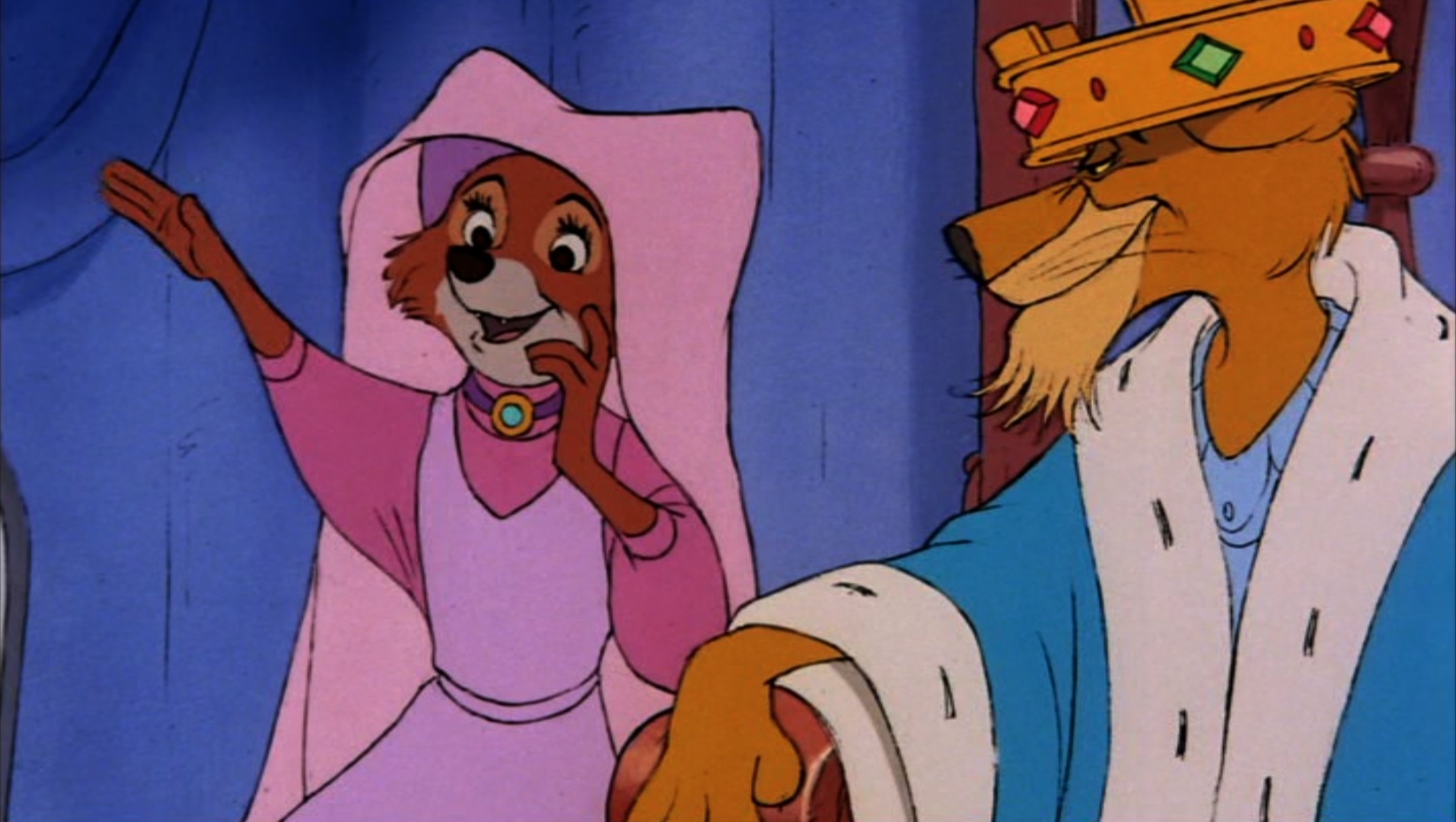
Many of the character designs are so reminiscent of those in ‘Jungle Book’, the film almost feels like a rip-off. There’s a bear, voiced by Phil Harris, the voice of Baloo, there’s a snake with the power of hypnosis and there are some funny vultures. The story evolves at a remarkably slow pace, taking almost half an hour to introduce the characters (first Robin and Little John, then Prince John and Sir Hiss, followed by the Sheriff, and in another scene Maid Marian and Lady Kluck), before some sort of plot sets in.
More than any earlier Disney feature ‘Robin Hood’ seems particularly aimed at children: both great drama and great comedy are absent and danger is never really felt, save for two very short moments. The great finale is anything but that, and King Richard serves as an off-stage deus ex machina, putting an equally welcomed as unsatisfying end to the film.
In a 1973 letter to animator Larry Ruppel, cited in John Canemaker’s book ‘Walt Disney’s Nine Old Men & The Art of Animation’, animator Frank Thomas expressed the film’s shortcomings:
“We obviously decided to keep it on the ‘fun’ side, but I have worried that the audiences would feel it was too flimsy – that we were not being quite serious enough with our characters. For instance, does anyone really fear Prince John? Is Robin ever worried about his ability to achieve something or even how it should be done? Did winning Maid Marian make any difference in Robin’s behavior. In real life it would have.”
The rather tinned music doesn’t help, either. What’s more, the film’s three forgettable songs are all presented within a twelve minutes period of the film (0’46-0’58), with which the film reaches dead waters after the tournament scene, which was less spectacular than it could be in the first place. Even worse, the dance scene blatantly reuses complete dance animation sequences from ‘Snow White and the seven dwarfs’ (1937), ‘Jungle Book’ (1967) and ‘Aristocats’ (1970). All these aspects give the film a cheap feel. It frustrated younger animators like Don Bluth, who thought the film lacked both quality and soul, and it indirectly led to Bluth’s departure in 1979, during the production of ‘The Fox and the Hound‘ (1981).
The film’s best moments are the opening song ‘Oo-De-Lally’, sung by Roger Miller (as Alan-a-Dale), sir Hiss flying around with his head in a balloon and propelling himself like a helicopter, and King John as a whole. This is by all means a marvelous character, perfectly voiced by Peter Ustinov, and animated with gusto. Because of the film’s strong visuals (after all, it’s the only Robin Hood film starring foxes), the film fares better in memory than by actually watching it.
In all, Robin Hood is a timid, rather lifeless and all too safe feature, which makes painfully clear that in the seventies Disney’s glory days lay years behind. Indeed, it would take the studio another fifteen years to crawl out of the uncertain times the studio went through after Walt Disney’s death.
Watch the trailer for ‘Robin Hood’ and tell me what you think:
‘Robin Hood’ is available on Blu-Ray and DVD
Director: René Laloux
Release Date: May 11, 1973
Rating: ★★★★★ ♕
Review:
‘La planète sauvage’ is an old love of mine. I first watched it when I was ca. six or seven. It took me fifteen years before I learned which film I had actually watched, and it would take me another ten years before I could watch it again. However, all the time the film’s powerful images never left me.
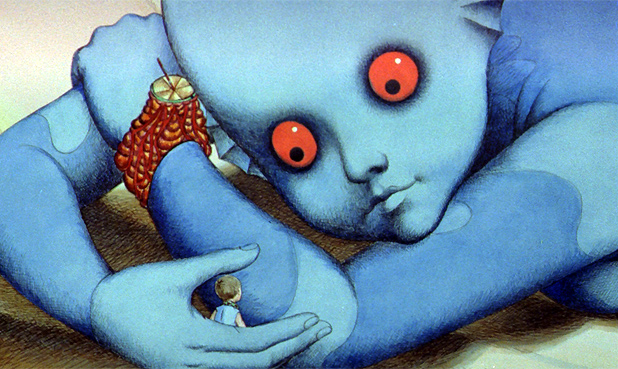
‘La planète sauvage’ is a science-fiction feature, which tells about the life of humans (‘Oms’, which sounds like the french word for humans, ‘hommes’) on a strange planet occupied by story-block-high humanoid giants, called Draags. To them humans are no more than pets and pests. By accident, a pet Om, Terr (symbolically named after the French word for Earth, terre), learns the Draags’ knowledge and he leads his fellow humans into an uprising.
However, ‘La planète sauvage’ is not particularly famous for its straightforward and rather cliche plot. Its strength lies in its effective use of Roland Topor’s very surrealistic designs, which makes the depicted planet incomprehensible, foreign and scary. For example, the Draag’s behavior is so strange, that despite their humanoid form they feel very alien, indeed. The film’s original technique of combining drawn animation with cut-out adds to the surreal atmosphere. Even the space funk music accompanying the action sounds outlandish.
Even though the animation sometimes is rather stiff and at times even ridiculously poor, the graphic imaginary is so strong that these shortcomings never spoil the enjoyment of the film. On the contrary, the film’s totally unique and disturbing atmosphere and its philosophical questions about what makes man human make watching ‘La planète sauvage’ a very rewarding experience.
Together with Bruno Bozzetto’s ‘Allegro non troppo’ (1976) and Martin Rosen’s ‘Watership Down’ (1978) Laloux’s film must be counted among the most outstanding features of the seventies. René Laloux would make two other science fiction features, ‘Les maîtres du temps‘ (1981) and ‘Gandahar‘ (1988), but these do not reach the stunning originality of the visuals in this film.
Watch the trailer for ‘La Planète sauvage’:
Director: Fernando Cortizo
Release Date: October 31, 2012
Rating: ★★★★½
Review:
 2012 was a good year for stop motion animation fans: no less than four stop motion features were released that year. In March we had Aardman’s ‘The Pirates! In an Adventure with Scientists!’, followed by Laika’s ‘ParaNorman’ in August and Disney’s ‘Frankenweenie’ in September. Least known among these was the last release, from October: ‘O Apóstolo’ from Spain.
Somehow, stop motion feature film makers seem to favor horror-inspired plots, and ‘O Apóstolo’ is no exception. However, unlike ‘ParaNorman’ or ‘Frankenweenie’, ‘O Apóstolo’ is not a lighthearted family film. Instead, it’s a dark gothic thriller, and it succeeds surprisingly well in maintaining a high level of suspense throughout most of the picture.
Both the film’s theme and setting are typical Spanish: the film is drenched in a catholic atmosphere, and it’s set in a remote village on the road to Santiago de Compostela, famous for its numerous pilgrims. We follow the thief Ramon, who has escaped from prison to turn to this village to collect a treasure his cell mate has hidden there.
We soon discover that there is something terribly wrong with the little village. Its inhabitants seem to lure innocent pilgrims, and try to keep them there. It remains long unknown why, keeping the suspense at a high level. And even when the obligatory explanation of the events comes, the makers present it elegantly: the explanation, despite being long and quite absurd, is beautifully done in 2D animation with quasi-medieval designs, accompanied by a song.
Luckily, the film also has its lighter moments, mostly in a subplot, involving a particularly unsympathetic archbishop, who goes on his way to invest the loss of pilgrims. It’s soon clear that the film makers have plotted a punishment for this haughty, selfish character.
Apart from the gripping plot, ‘O Apóstolo’ excels in gorgeous production values. The little village and its sinister forest surroundings are conceived with stunning detail. They are as rich as any life action background, and contribute highly to the dark and creepy atmosphere. The puppets are designed less originally than the other features mentioned above, but retain a certain realism, which makes it possible to relate to them, especially with the main protagonist, Ramon the thief. The sole exception is the priest, whose appearance is too absurd and too sinister to blend in. It’s a pity, because his dominant presence casts a shadow on the more underplayed (and underdesigned) other village characters, whose threat is much more subtle, and therefore more disturbing.
In all, ‘O Apóstolo’ easily draws you in. It is without doubt one of the most original and best animated films of 2012. It definitely deserves to be more well-known.
Watch the official trailer of ‘O Apóstolo’ and tell me what you think:
Director: Luiz Bolognesi
Release Date: April 5, 2013
Rating: ★★
Review:
 ‘Uma História de Amor e Fúria’ (Rio 2096: a Story of Love and Fury) is a a rather depressing film from Brazil, showing three violent episodes in Brazilian history, plus one in the future.
Main protagonist is the Tupinambá Indian Abeguar, who is granted the possibility of flight and immortality, reincarnating as a bird. Through his eternal love interest Janaína he can reincarnate back into a human form, which he does three times during the film.
This framing story binds the four separate episodes, which take place in 1556, the 1820s, 1968-1980 and 2096. The first episode shows us his Tupinambá self, and how his tribe gets slaughtered and enslaved by Portuguese colonists. In the second episode Abeguar reincarnates as a poor farmer joining a troop of enraged farmers and escaped slaves during Brazil’s war of independence. In the third episode he’s a teacher fighting the military dictatorship, and in the last episode, taking place in the future, he fights in a war over scarce water.
‘Uma História de Amor e Fúria’ shows Brazil’s troubled history. Throughout the picture life is showed through the eyes of the underdog. Abeguar sarcastically observes that his oppressors get statues, while the oppressed remain anonymous.
‘Uma História de Amor e Fúria’ is an accomplished work: the animation is fairly good, if a little mechanical, the backgrounds are gorgeous, and the production values pretty high. The film clearly aims at a more adult audience, not eschewing nudity or graphic violence.
The film is hampered, however, by rather ugly designs: the humans look like those from Disney’s Pocahontas (1995), but with even more angular designs. The animation of emotions is crude and stereotypical. But more important: the film is totally devoid of humor. It is dark and heavy throughout, without any light moments. This gives the film a propagandistic gravity, which becomes tiresome in the end.
Watch the official trailer of ‘Uma História de Amor e Fúria’ and tell me what you think:
Directors: Bill Jones, Jeff Simpson & Ben Timlett
Release Date: November 2, 2012
Stars: Graham Chapman
Rating: ★★★
Review:
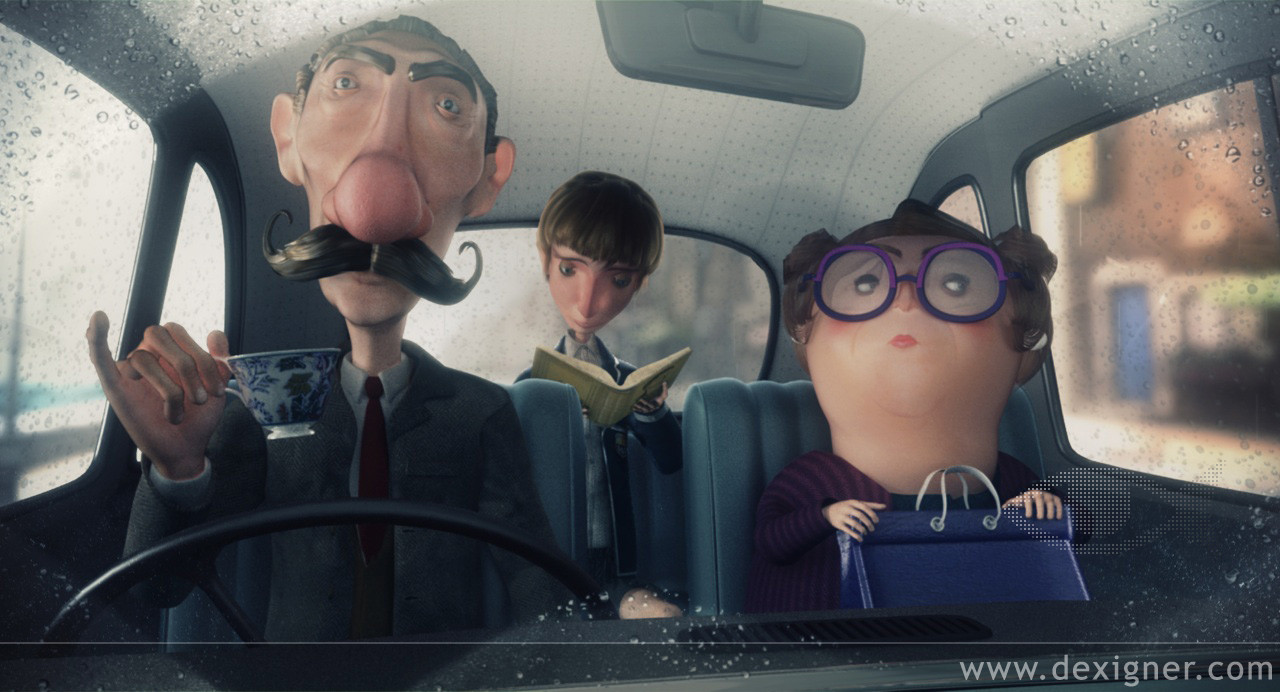 ‘A Liar’s Autobiography: The Untrue Story of Monty Python’s Graham Chapman’ is a film adaptation of Graham Chapman’s own nonsensical autobiography.
At first the film appears to follow Chapman’s book closely, using his own voice over from a audiobook recording. In fact, apart from one song all of Chapman’s vocalizations are by Graham Chapman himself, using various sources. Other former Monty Python members provide some voices, too.
The film adaptation of Chapman’s book is excellent, perfectly blending his dry humor with tongue-in-cheek images. However, the film makers want to make the film a biopic, leaving the book half way and adding some chapters of their own. At this point the film starts to drag. It becomes less humorous and more wandering, with lots of images drenched in sex and alcohol. And so, the film fades out ingloriously, leaving less an impression than it did when it started.
‘A Liar’s Autobiography’ was made by no less than fourteen different animation studios, and the overall array of styles is refreshing and at times mesmerizing. At the same time it can become a bit tiring to watch a changing of style at every scene, and sometimes the design is subpar, or downright ugly. The result is a moderately entertaining film that remains shallow and unmoving, nonetheless.
Watch the trailer of ‘A Liar’s Autobiography: The Untrue Story of Monty Python’s Graham Chapman’ yourself and tell me what you think:
Director: Don Hertzfeldt
Release Date: August 24, 2012
Rating: ★★★★★ ♕
Review:
 ‘It’s such a Beautiful Day’ tells about Bill, a man with some kind of terminal disease, which affects his memory. The film uses an episodic, non-linear narrative, and at times feels as confused as the protagonist’s mind.
Hertzfeldt uses some unconventional ways to tell his story. He himself tells us the story in a dry, matter-of-factly, slightly worrying voice over, which makes the sometimes poignant episodes even more gripping. The images themselves are very simple: the people in the film are no more than stick figures. But because of Hertzfeldt’s perfect sense of timing, these simple images are richer than many more elaborately drawn animation films. The stick figure images are interchanged with 8mm-film-like live action fragments of details in streets, trees, the sea etc. Hertzfeldt’s basic screen is black, in which often more than one of his images is projected. This technique harks back to the silent era, and gives his film a timeless look.
Hertzfeldt uses all these techniques to tell a fragmented, associative narrative, which is rich in detailed observations on daily life. The scenes motivate the viewer to try to connect the presented information into an overall story. The scenes are often comical, even hilarious, with Bill watching a man with a leaf blower as a particular highlight. As often, however, the scenes are moving and very emotional. Throughout the feature the deterioration of Bill’s mind becomes clearly visible, and when he decides to take a walk around the block, the result is as funny as it is painful. The most beautiful part, however, is when Bill celebrates life, paying attention to details that normally go unnoticed. The film’s finale, too, is no less than glorious.
‘It’s such a Beautiful Day’ is a compilation of three short films released earlier: ‘Everything will be OK’ (2006), ‘I Am So Proud of You’ (2008), and ‘It’s Such a Beautiful Day’ (2012). To compile these into one feature is a very logical step. In fact, watching them together as one continuous story actually makes much more sense. The result is one of the most original feature films ever made, and also one of the most moving. An impressive effort by any standard, and especially when considering that this is a one-man-project.
Watch the trailer of ‘It’s Such a Beautiful Day’ and tell me what you think:
Directors: James Algar, Clyde Geronimi, Jack Kinney
Release Date: October 5, 1949
Rating: ★★★
Review:
 The adventures of ‘Ichabod and Mr. Toad’ was the last of the Disney compilation features so typical of the 1940s.
Like ‘Fun and Fancy Free‘ (1947) it consists of only two stories, this time both drawn from literature. Both use a narrator, which gives the films a feeling of moving illustrations. Neither of the stories is particularly endearing: the story of Mr. Toad lacks the poetry of the original story, the story of Sleepy Hollow lacks speed. It would be a happy return to direct story telling (opposed to using voice overs) in ‘Cinderella‘, the next year.
The six directing animators of this feature all belong to the group of ‘nine old men’.
‘The Adventures of Ichabod and Mr Toad’ consists of the following two episodes, which I will discuss in more detail elsewhere:
1. The Wind in the Willows
2. The Legend of Sleepy Hollow
Watch ‘The Adventures of Ichabod and Mr Toad’ yourself and tell me what you think:
Directors: Clyde Geronimi, Wilfred Jackson, Jack Kinney, Hamilton Luske
Release Date: May 27, 1948
Stars: Donald Duck, Joe Carioca, The Aracuan Bird
Rating: ★★
Review:
 Melody Time’ is a compilation film in the same vein as ‘Make Mine Music’ (1946).
It consists of seven unrelated episodes, connected by a voice over and an animated brush. The songs of these sequences are sung by popular artists, who, except for the Andrews Sisters and Roy Rogers, are all but forgotten today. Even more obviously than in ‘Make Mine Music’, these songs are clearly designed for the cartoons, instead of the other way round, like in ‘Fantasia’ (1940). In any sense ‘Melody Time’ is a far cry from that latter film, and the most interesting feature of this film is not the animation, but the film’s beautifully stylized backgrounds, especially in ‘Once upon a Wintertime‘ and ‘The Legend of Johnny Appleseed‘.
The sequences themselves are mediocre, often slow and only moderately funny at best. Luckily, Disney would soon return to real features, for ‘Melody Time’ shows that the studio’s compilation features had outstayed their welcome.
Melody Time consists of the following episodes, which I will discuss in more detail, elsewhere:
Directors: Jack Kinney, Hamilton Luske & Bill Roberts
Release Date: September 27, 1947
Stars: Jiminy Cricket, Mickey Mouse, Donald Duck, Goofy, Edgar Bergen, Luana Patton
Rating: ★★★★
Review:
 Fun and Fancy Free’ was the fourth of six package features Disney released in the 1940s.
It consists of two unrelated stories, which were both originally conceived as feature films in 1940/1941. The two stories, ‘Bongo’ and ‘Mickey and the Beanstalk’ are loosely linked by Jiminy Cricket, who sings the happy-go-lucky theme song.
He plays a record to a sad doll and a gloomy bear which features Dinah Shore telling the story of Bongo in rhyme and song. This cute, if unassuming and forgettable little film (after a story by Sinclair Lewis) tells about Bongo the circus bear, who breaks free from the circus, falls in love with a cute female bear called Lulubelle, and combats a large brutal bear called Lumpjack.
Immediately after this story has ended, we follow Jiminy Cricket to a live action setting: a private party with a little girl (Luana Patton), Edgar Bergen and his two ventriloquist sidekicks, the cynical Charlie and the dumb, but gentle Mortimer.
Bergen tells a version of ‘Jack and the Beanstalk’, starring ‘famished farmers’ Mickey, Donald and Goofy in their last classic trio outing. This part had a long genesis, the early drafts of this film go back to 1940. Apparently Pinto Colvig had returned to the Disney studio, because Goofy has his voice back after having been silenced for eight years. Pinto Colvig would do Goofy’s voice in two subsequent shorts, ‘Foul Hunting‘ (1947) and ‘The Big Wash‘ (1948), before leaving again, leaving Goofy voiceless, once more. This sequence is also the last theatrical film in which Walt Disney does Mickey’s voice. Halfway the production Jimmy MacDonald took over.
This second episode of ‘Fun and Fancy Free’ is a delight, if a little bit slow. Its humor derives mostly from Charlie’s sarcastic interruptions. Nevertheless, the animation of the growing beanstalk and of Willie the giant is stunning.
Willie would be the last giant Mickey defeated, after having done with giants in ‘Giantland‘ (1933) and ‘Brave Little Tailor’ (1938). Unlike the other giants, Willie is an instantly likeable character, and he was revived as the ghost of Christmas Present in ‘Mickey’s Christmas Carol‘ (1983).
‘Fun and Fancy Free’ is a lighthearted film. Like Disney’s other package features, it is not too bad, but it is certainly not among the ranks of masterpieces.
Watch the opening scene of ‘Fun and Fancy Free’ yourself and tell me what you think:
Director: David Hand
Release Date: August 13, 1942
Rating: ★★★★★ ♕
Review:
 Although it was released after ‘Dumbo‘, ‘Bambi’ is essentially Disney’s fourth feature, and it was also the last in which the studio really pushed the envelope.
‘Bambi’ had been long in the making, with initial work already starting in 1937. In fact, it was initially planned as Disney’s second feature, but soon pushed back in favor of ‘Pinocchio’.
After having made such great and diverse efforts as ‘Snow White’, ‘Pinocchio‘ and ‘Fantasia’, Disney set the stakes even higher in Bambi, reaching a zenith in naturalism. But the film is way more than that: it’s a symphony of nature, utterly romantic in its depiction of forest life. It’s also a coming of age story and a depiction of the circle of life.
‘Bambi’ is full of great scenes, starting with the stunning opening scene, a long and complicated shot, which shows the vastness and depth of the forest using a multiplane camera, and which leads us straight into the story, when we come to follow friend owl in his flight.
The storytelling is very lean, it uses little dialogue and it consists of only a few distinct parts, which all concentrate on Bambi’s experiences. Most of the story is told by images and music only, and there are three pure mood pieces very reminiscent of a Silly Symphony like ‘The Old Mill‘ (1937) and parts of ‘Fantasia’: the April Shower sequence, the autumn sequence and Bambi’s love scene. In these sequences especially, it’s clear that atmosphere prevails above character development, and the studio indulges in beautiful imagery that is still impressive and enchanting today.
The film can be divided into eight sections (the titles are all mine):
1) Birth: which also introduces the lovable little rabbit Thumper;
2) Discovery of the world: including the introduction of the little skunk Flower and a rain scene, set to the beautiful song ‘April shower’;
3) The meadow: where both danger and other deer are introduced, including Bambi’s father and his later love interest, Feline;
4) Autumn: a short transitional mood piece;
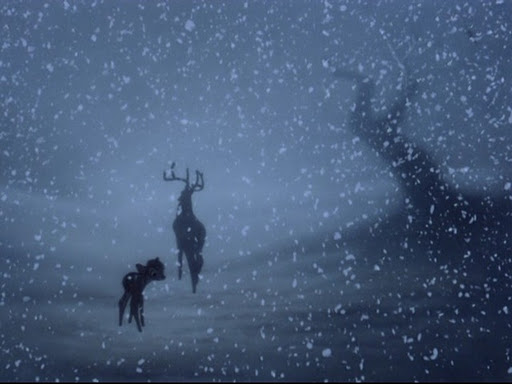
5) Winter: which includes the famous skating scene, inspired by Pluto’s difficulties on ice in ‘On ice‘ (1935) and which ends with that harrowing, yet off screen death of Bambi’s mother;
6) Spring: where all our characters have become adolescents and discover the power of love;
7) Man: where man, who never is seen on screen, but whose threatening presence is so much more felt, once again brings danger into the forest, shooting animals (including Bambi) and causing a forest fire, which leads to great dramatic and apocalyptic shots of the burning forest;
and finally
8) Birth again: in which the cycle is completed.
The first five sections take almost two-thirds of the film and are responsible for Bambi’s reputation of being a childish film full of cute animals. This may be partly true, but is does no justice to the complete film, for the last three sections, starting with the death of Bambi’s mother (which essentially ends his childhood) are more artistic, more expressionistic and more dramatic. These scenes belong to the most powerful animated images ever brought to the screen.
But throughout the complete picture the artwork is stunning: the backgrounds, based on designs by Tyrus Wong, are lush and suggestive, the use of color is very clever and often amazing, and the music, which is very important to the narrative and which uses off-screen songs to evoke moods, is rich and effective. Indeed, Bambi’s soundtrack, by composers Frank Churchill and Edward Plumb, ranks among the best scores of any animation film. Backgrounds, design, color, music – all these make the film a mood piece of an astonishing quality.
The animation itself, too, is a highlight. It was supervised by four of the later so-called ‘nine old men’: Eric Larson, Milt Kahl, Frank Thomas and Ollie Johnston, and it’s the first testimony of their legendary status. The animation is amazingly well-done both in its naturalism as in its sense of character. It ranks from pure naturalism in Bambi’s mother exploring the meadow and Bambi preparing to fight to pure character animation. A highlight of the latter is Bambi having to say hello to Feline. Bambi’s behavior in this scene is perfect that of a young bashful boy.
The only deviation from believability is during the Twitterpated sequence: Eric Larson’s animation on friend Owl is zany and cartoony, as is the animation of the lovestruck Flower. The whole sequence is a little bit ridiculous, and out of place with the rest of the film. Luckily as soon as Bambi falls in love with Feline, the last part starts, which in its drama, powerful imagery and stunning effects is the undisputed highlight of the whole movie.
Bambi never ceases to amaze: it is simply beautiful.
Watch the skating scene from ‘Bambi’ yourself and tell me what you think:
Director: Bruno Bozzetto
Release Date: October 1, 1965
Rating: ★★★
Review:
 ‘West And Soda’ has a classic Western story: an evil villain is after the land owned by the lovely Clementine. Luckily she is rescued by our cool hero, Johnny, who doesn’t talk much, but who can shoot!
‘West and Soda’ is Bruno Bozzetto’s first feature film and unfortunately, it shows. The Italian animator is at his best in short, well-timed pantomime gags, and he clearly has difficulties with this longer medium. Neither the animation nor the designs are particularly appealing, and the feature suffers a little from its length. Generously mocking almost every aspect of the classic western, ‘West and Soda’ is as silly as it is predictable. Luckily there are many throwaway gags to keep the viewer laughing from time to time.
However, Bozzetto’s comic genius really shines through in two offbeat scenes, in which Bozzetto does what he does best: like his funny short ‘I Due Castelli’ from 1963, these two scenes use a fixed long distance perspective, pantomimed action and a perfect timing, with hilarious results. The first of these two scenes shows us several failing attacks of ferocious ants on Johnny, who is buried up to his head in the desert. The second depicts the villain’s attempts to drop a huge rock on our hero.
Watch the ant scene from ‘West And Soda’ yourself and tell me what you think:


 Dr. Grob's Animation Review