
You are currently browsing the category archive for the ‘Bugs Bunny’ category.
Director: unknown
Airing date: May 27, 2020
Stars: Bugs Bunny, Elmer Fudd
Rating: ★★
Review:
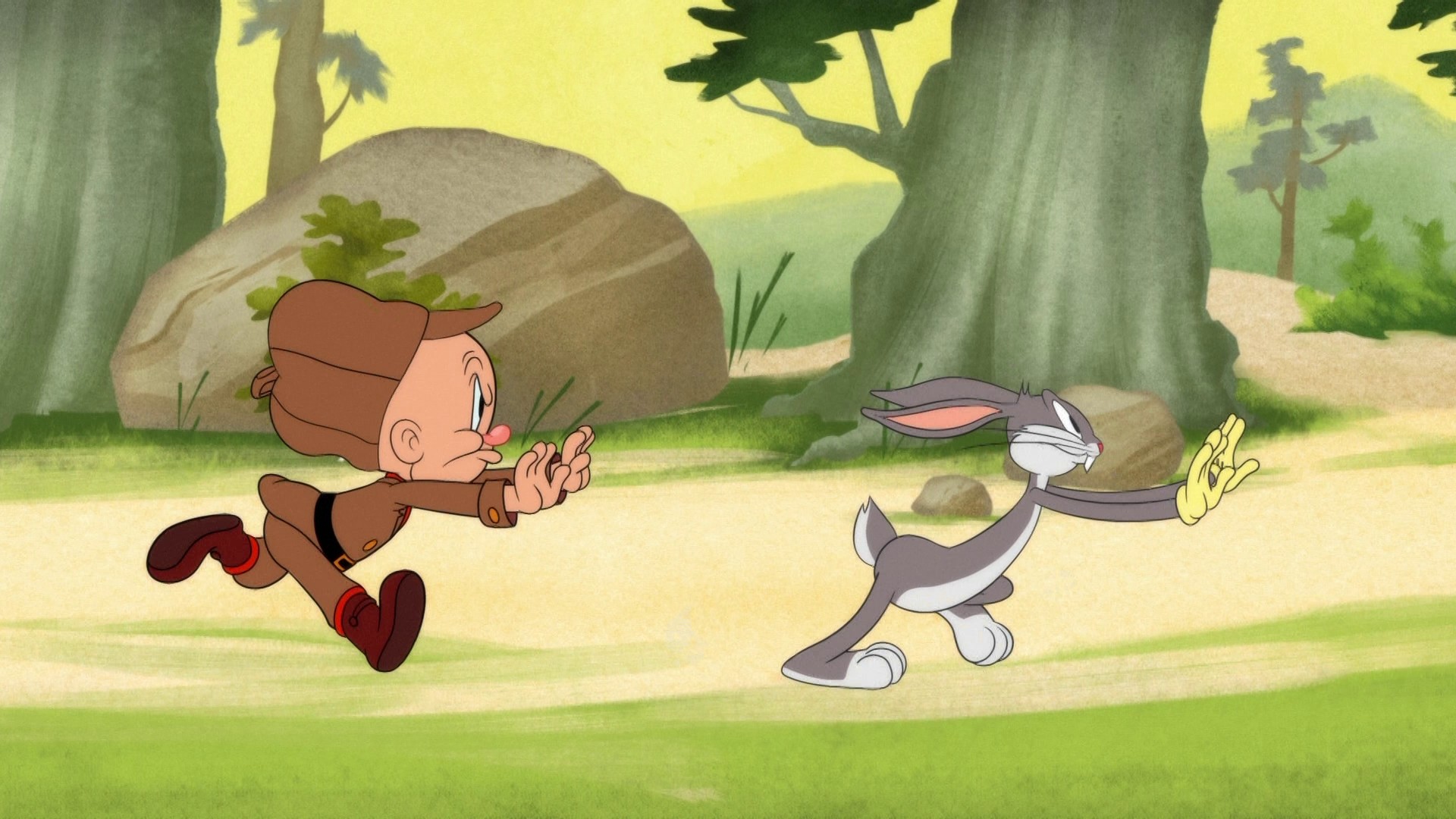
This a series of seven short filler gags that bridged two cartoons within an episode in the original ‘Looney Tunes Cartoons’ television series. All start with Elmer Fudd in his hunter costume chasing Bugs Bunny through the woods.
All the gags in this compilation feature holes: in the first Elmer Fudd uses a plunger to get Bugs Bunny out, in the second he loses his pants, in the third, he uses a carrot and a fishing rod, in the fourth there are more than one holes, in the fifth there’s short falling gag, in the sixth Elmer Fudd becomes small after emerging from one of the holes, and the seventh is a wack-the-rabbit gag.
If anything, these short gags show the original chase concept of the very first Bugs Bunny cartoon, ‘A Wild Hare‘ from 1941, can still be very much alive today, even if they’re not that funny when watched in sequence.
‘Hole Gags: Plunger, Fishing Pole, Bees, Mini Elmer’ is available on the Blu-Ray-set ‘Bugs Bunny 80th Anniversary Collection’
Director: Kenny Pittenger
Airing date: May 27, 2020
Stars: Bugs Bunny, Elmer Fudd
Rating: ★★★
Review:

‘Hare Restoration’ is the first part of the tenth episode of the Looney Tunes Cartoons television series of 2020-2024.
In this short Bugs Bunny wakes up in what turns out to be Elmer Fudd’s rabbit stew. He tricks himself out of the predicament by helping Elmer get more hair before Elmer’s date comes to dinner. This cartoon contains some particularly Ren & Stimpy like expressions on Elmer Fudd’s face.
Watch part 1 of ‘Hare Restoration’ yourself and tell me what you think:
‘Hare Restoration’ is available on the Blu-Ray-set ‘Bugs Bunny 80th Anniversary Collection’
Director: David Gemmill
Airing date: May 27, 2020
Stars: Bugs Bunny, Elmer Fudd
Rating: ★★★
Review:
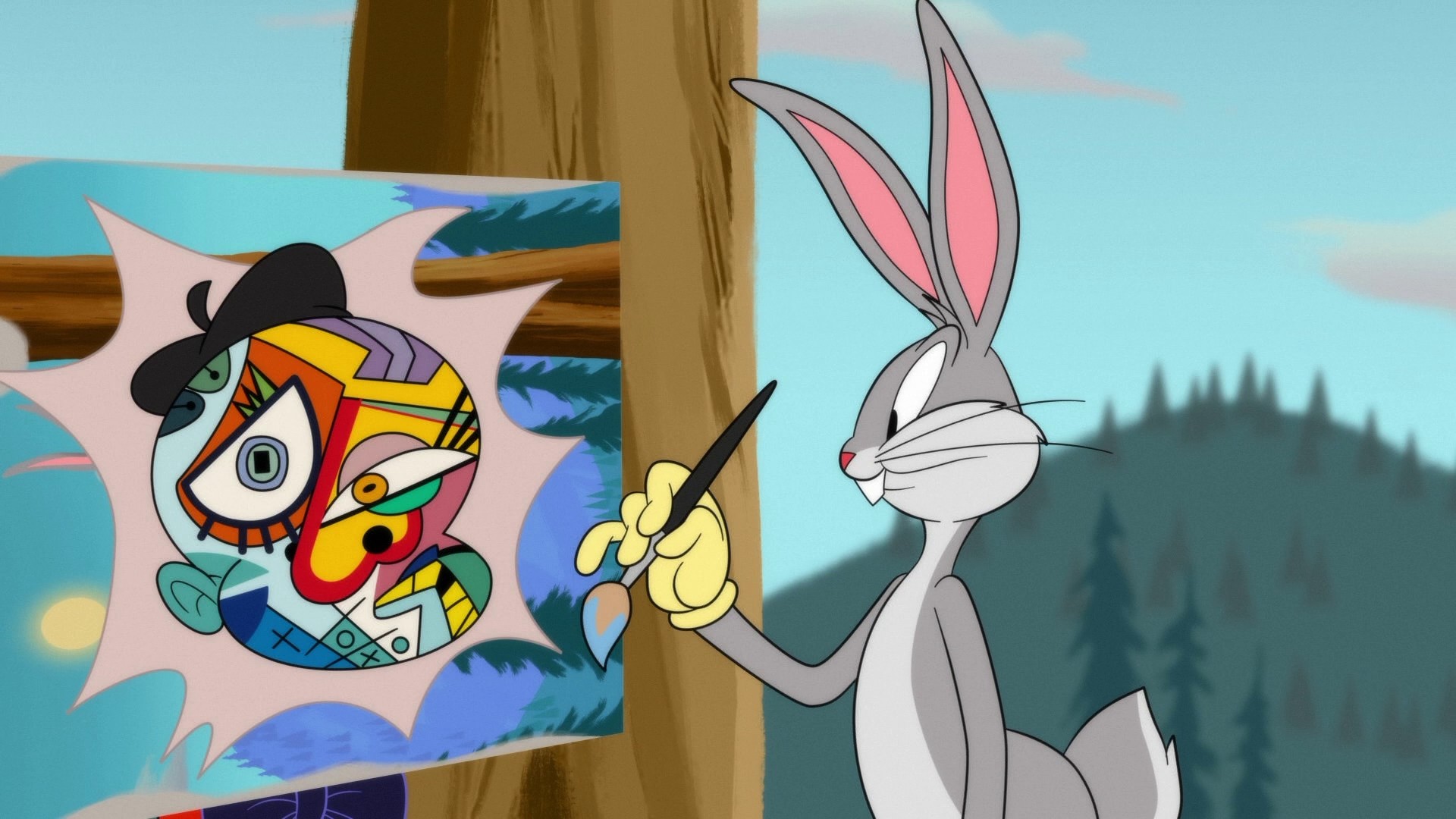
In this short Elmer Fudd wants to paint a picture in the woods, but when he blocks Bugs Bunny’s sunlight by sitting on the hare’s entrance, a classic chase cartoon start.
This cartoons contains both a classic death scene and a falling scene, harking all the way back to Bugs Bunny’s very first shorts (‘A Wild Hare‘ from 1940 and ‘The Heckling Hare‘ from 1941). But the best part is an original gag in which Bugs Bunny paints Elmer Fudd’s face with several pieces of art.
Watch the opening of ‘Vincent van Fudd’ yourself and tell me what you think:
‘Vincent van Fudd’ is available on the Blu-Ray-set ‘Bugs Bunny 80th Anniversary Collection’
Director: Kenny Pittenger
Airing date: May 27, 2020
Stars: Bugs Bunny, Elmer Fudd
Rating: ★★
Review:
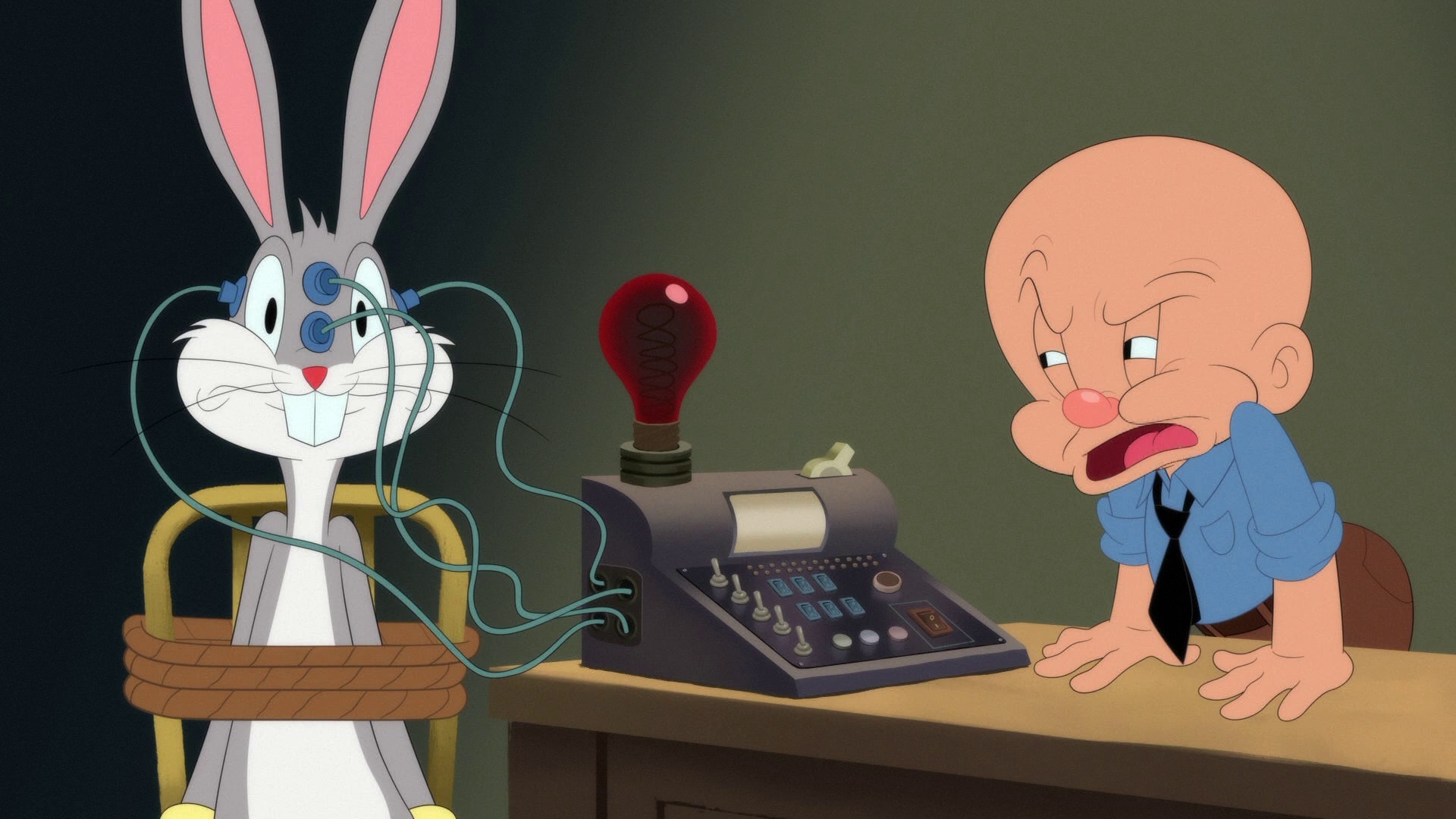
‘Grilled Rabbit’ is the first cartoon of the eight episode of the ‘Looney Tunes Cartoons’ series of 2020-2024. It’s a one scene short which immediately starts with Elmer Fudd interrogating Bugs for carrot theft.
This is one of the weaker cartoons of the first series, although Bugs Bunny playing good cop, bad cop on Elmer is a nice gag.
Watch part 1 of ‘Grilled Rabbit’ yourself and tell me what you think:
‘Grilled Rabbit’ is available on the Blu-Ray-set ‘Bugs Bunny 80th Anniversary Collection’
Director: unknown
Airing date: May 27, 2020
Stars: Bugs Bunny, Yosemite Sam
Rating: ★★★
Review:
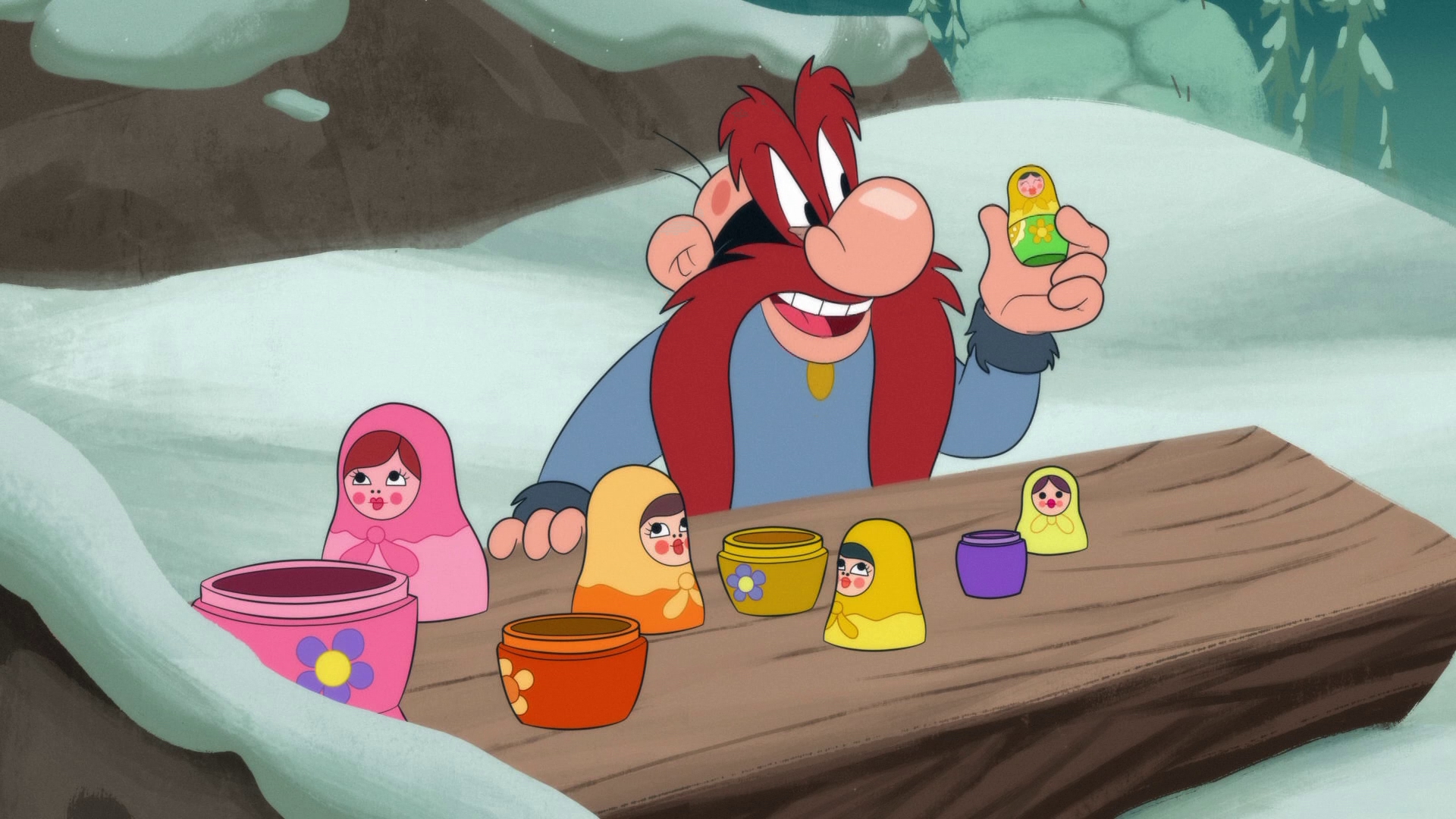
In the original Bugs Bunny cartoons Yosemite Sam could be found everywhere around the world and in history, and the Looney Tunes Cartoons series from 2020-2024 continue that tradition. Thus, we find Yosemite Sam in Siberia as ‘Siberian Sam’.
In the opening scene he tells the audience the importance of a fur hat in the Siberian cold, only to get his one stolen by a bird of prey within seconds. In his search for a new hat, his eye naturally falls on Bugs Bunny. The chase cartoon that follows also features a Siberian Tiger and, unfortunately, too much dialogue. In the best gag Bugs Bunny makes Sam believe he is going to watch some Russian ballet.
Watch ‘Siberian Sam’ yourself and tell me what you think:
‘Siberian Sam’ is available on the Blu-Ray-set ‘Bugs Bunny 80th Anniversary Collection’
Directors: David Gemmill & Michael Ruocco
Airing date: May 27, 2020
Stars: Bugs Bunny, Beaky Buzzard
Rating: ★★★
Review:
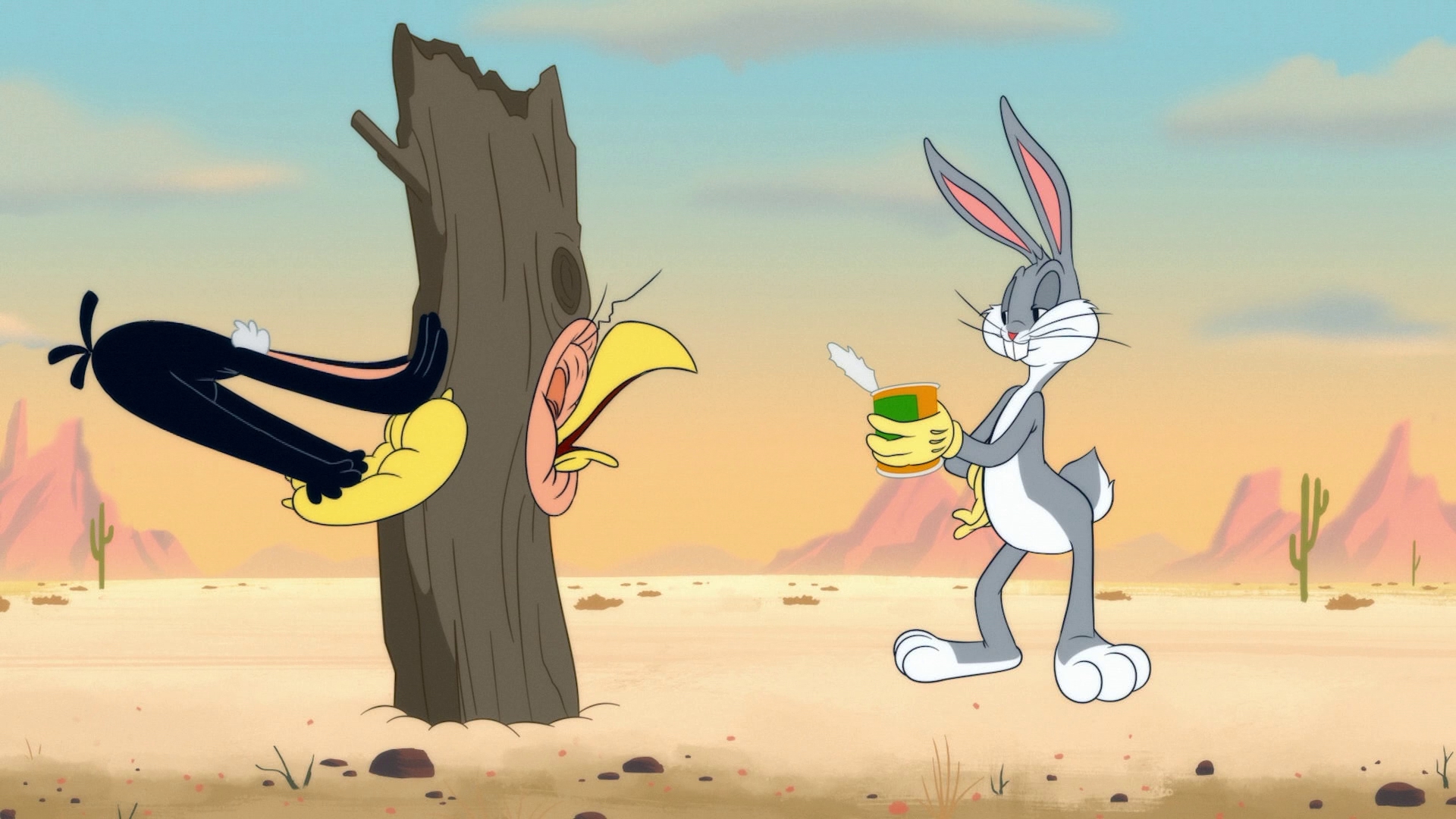
‘Buzzard School’ sees the return of Beaky Buzzard and his mother from ‘Bugs Bunny Gets the Boid’ (1942).
As in the original short, Beaky’s mother sends her son away to catch a rabbit for dinner, and Bugs “helps” the dumb bird by teaching him how to catch rabbits. Highlight of this short may be scene in which Beaky fights himself.
The design and animation of Beaky Buzzard are practically indistinguishable from the original ones in Clampett’s 1940s cartoons, making ‘Buzzard School’ an excellent example of the nostalgic homage quality of this 2020-2024 television series.
‘Buzzard School’ is available on the Blu-Ray-set ‘Bugs Bunny 80th Anniversary Collection’
Director: Ryan Kramer
Airing date: May 27, 2020
Stars: Bugs Bunny, Yosemite Sam
Rating: ★★½
Review:
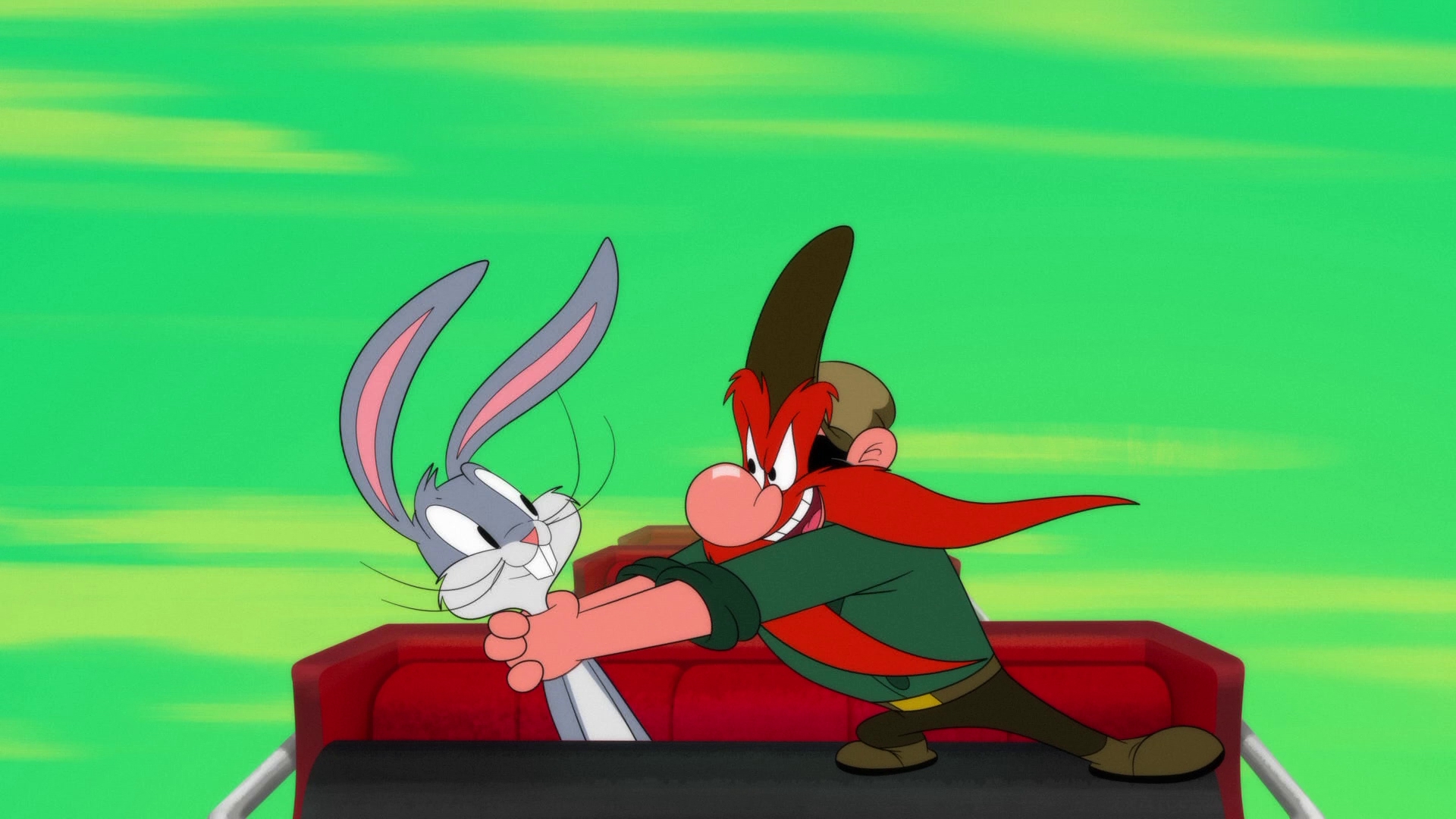
‘Pest Coaster’ is the first cartoon of the fifth episode of the new Looney Tunes Cartoons series from 2020-2024. This episode starts with Bugs Bunny classically travelling underground, now ending up at an amusement park. In this park he wants to ride the rollercoaster called ‘The Murderizer’. Unfortunately, this ride is operated by Yosemite Sam, who has made a lot of rules, one of which is ‘no rabbits allowed’.
What follows is a string of gags in which Bugs Bunny does ride the rollercoaster and Yosemite Sam tries to prevent that. At one point Bugs dresses up like a Veronica Lake-like woman, emphasizing the nostalgia modus of the series. More interesting than the antics is the rather Joan Miró-like background art.
‘Pest Coaster’ is available on the Blu-Ray-set ‘Bugs Bunny 80th Anniversary Collection’
Director: Ryan Kramer
Airing date: May 27, 2020
Stars: Bugs Bunny, Elmer Fudd
Rating: ★★★
Review:

‘Pool Bunny’ starts with Bugs crossing a scorching hot desert. The chase cartoon starts when the hare enters Elmer Fudd’s swimming pool, but Elmer kicks him out, prompting Bugs Bunny to say: “of course you realize this means… You know what”.
This short is both a nice new take on classic tropes as a homage to the old cartoons. Bugs Bunny is particularly cruel in this cartoon and his revenge on Elmer is sweet, and even includes a classic death scene.
Watch ‘Pool Bunny’ yourself and tell me what you think:
‘Pool Bunny’ is available on the Blu-Ray-set ‘Bugs Bunny 80th Anniversary Collection’
Director: Unknown
Airing date: May 27, 2020
Stars: Bugs Bunny, Gossamer
Rating: ★★½
Review:
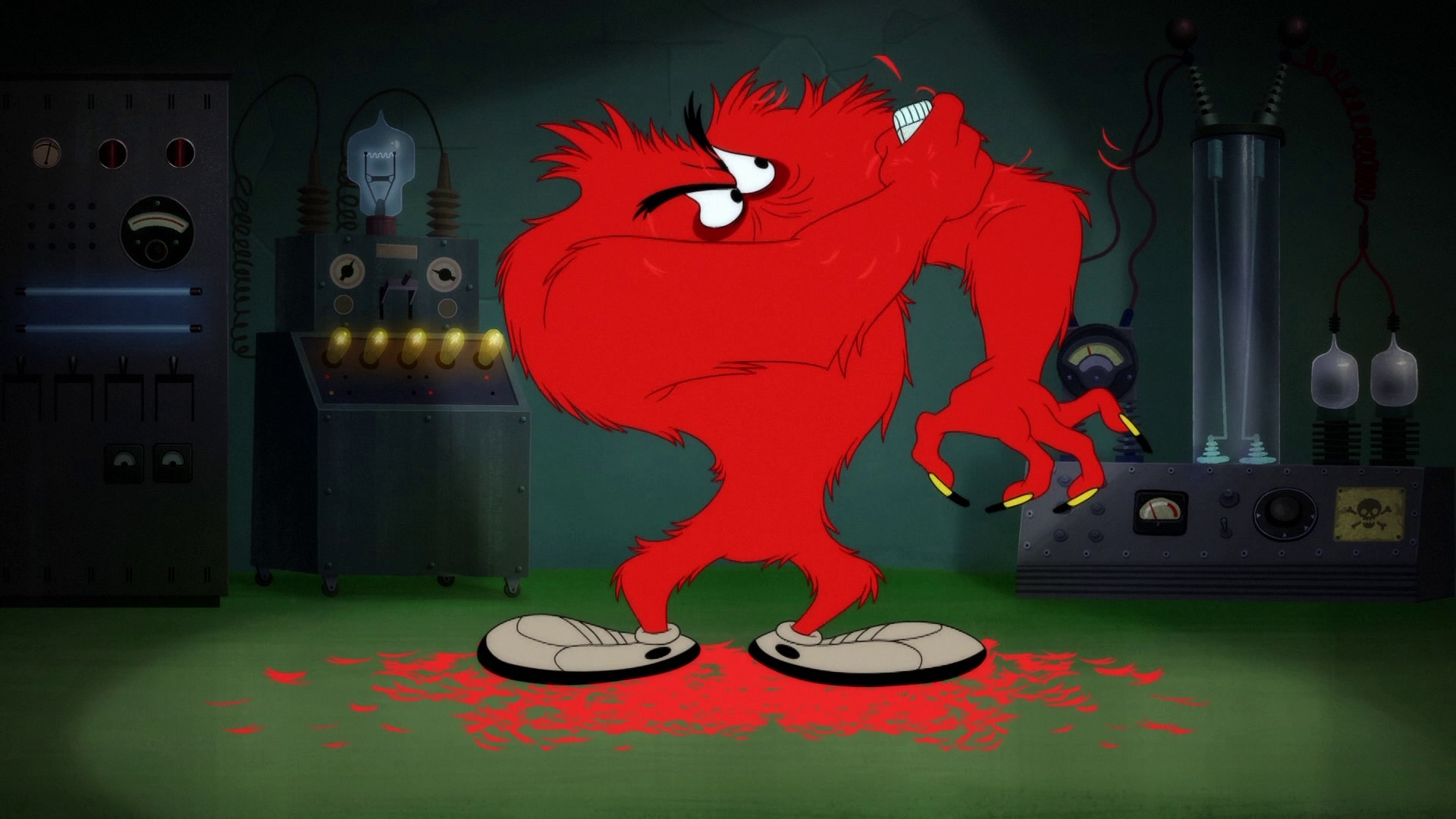
‘Big League Beast’ is the first cartoon of the second episode of ‘Looney Tunes Cartoons’ and in this short Bugs Bunny is reunited with the evil scientist and red monster with sneakers from ‘ Water, Water Every Hare‘ (1952).
This red monster was christened ‘Gossamer’ by Chuck Jones in 1980, and Bugs Bunny addresses the hairy fellow by this name. Unfortunately, the plot is rather weak (Bugs Bunny wants to see the big (baseball) game on the scientist’s television) and the gags are more of a homage to Jones’s classic shorts than adding anything new.
Watch the opening of ‘Big League Beast’ yourself and tell me what you think:
‘Big League Beast’ is available on the Blu-Ray-set ‘Bugs Bunny 80th Anniversary Collection’
Director: David Gemmill
Airing date: May 27, 2020
Stars: Bugs Bunny, Yosemite Sam
Rating: ★★★½
Review:

‘Looney Tunes Cartoons’ was a television series that ran from 2020 to 2024 and which was a surprising revival of the classic Warner Bros. Cartoons of the 1940s and 1950s, featuring the same stars and the same frantic classic animation of the originals, but with slightly more modern designs and animation influences from the Renaissance period, most obviously from ‘Ren and Stimpy’.
The third disc of the ‘Bugs Bunny 80th Anniversary Edition’ Blu-Ray set contains nine Bugs Bunny shorts from the first season of this series and these show the high quality of this revival series. At their worst the cartoons are mere homages, but at their best they reshuffle the classic characters into new situations with new gags.
‘Harm Wrestling’, for example, the third cartoon from the very first episode, takes Yosemite Sam back to his Western roots, where he claims to be the arm wrestling champion of ‘Tough City’. Then, of course, Bugs Bunny comes along. This short reuses some classic gags from the 1940s, but add new ones and some particularly Ren & Stimpy-like takes on Yosemite Sam. Bugs Bunny, meanwhile, looks most like his 1940s self, harking mostly back to the Robert McKimson design for the Bob Clampett unit.
Watch ‘Harm Wrestling’ yourself and tell me what you think:
‘Harm Wrestling’ is available on the Blu-Ray-set ‘Bugs Bunny 80th Anniversary Collection’
Director: Robert McKimson
Release date: July 16, 1964
Stars: Bugs Bunny
Rating: ★★★½
Review:
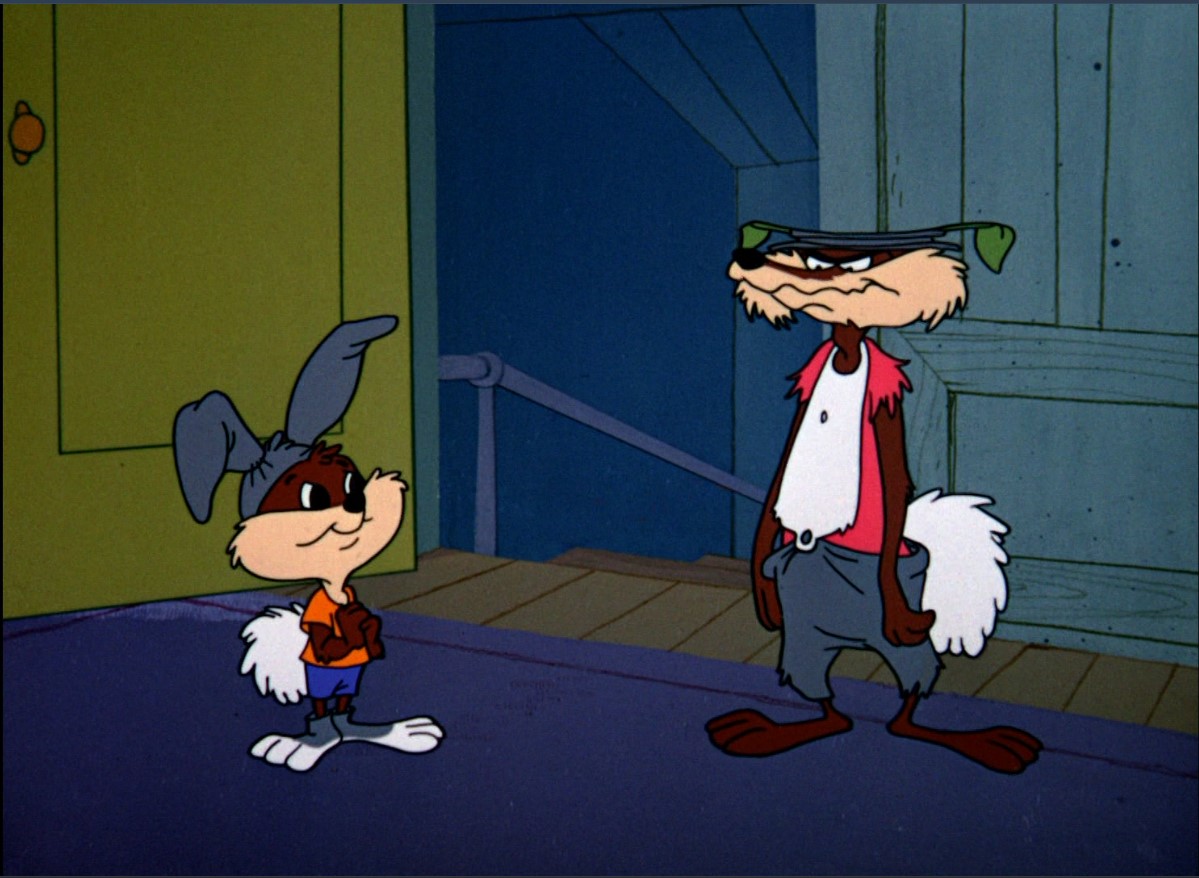
‘False Hare’ starts with two wolves, ‘Big Bad’ and his nephew, who unconvincingly pose as rabbits to make Bugs Bunny join their ‘club del conejo’ (or Rabbit Club). Bugs is way ahead of the duo, and only plays along because he is bored.
The gags, which involve a falling safe, an iron maiden, a cannon and a lot of dynamite are surprisingly fine, and this makes ‘False Hare’ anything but a sad farewell to our hero. Sure, the short is no standout, but at least we can laugh with Bugs to the very end.
The wolf and his nephew [ who had been introduced in ‘Now Hare This’ from 1958 as Isla points out in the comments below] seem destined for a long series of cartoons, but in fact ‘False Hare’ was the very last Bugs Bunny cartoon of the classic era, and the second to last cartoon made at the original Warner Bros. studio (‘Señorella and the Glass Huarache‘ being the final one). Thus we would never see this comic duo again. Note the cameo of Foghorn Leghorn.
Watch ‘False Hare’ yourself and tell me what you think:
This is the 168th and last Bugs Bunny cartoon
To the previous Bugs Bunny cartoon: The Iceman Ducketh
‘False Hare’ is available on the Blu-Ray-set ‘Bugs Bunny 80th Anniversary Edition’
Director: Friz Freleng
Release date: September 7, 1963
Stars: Bugs Bunny
Rating: ★★★★★
Review:
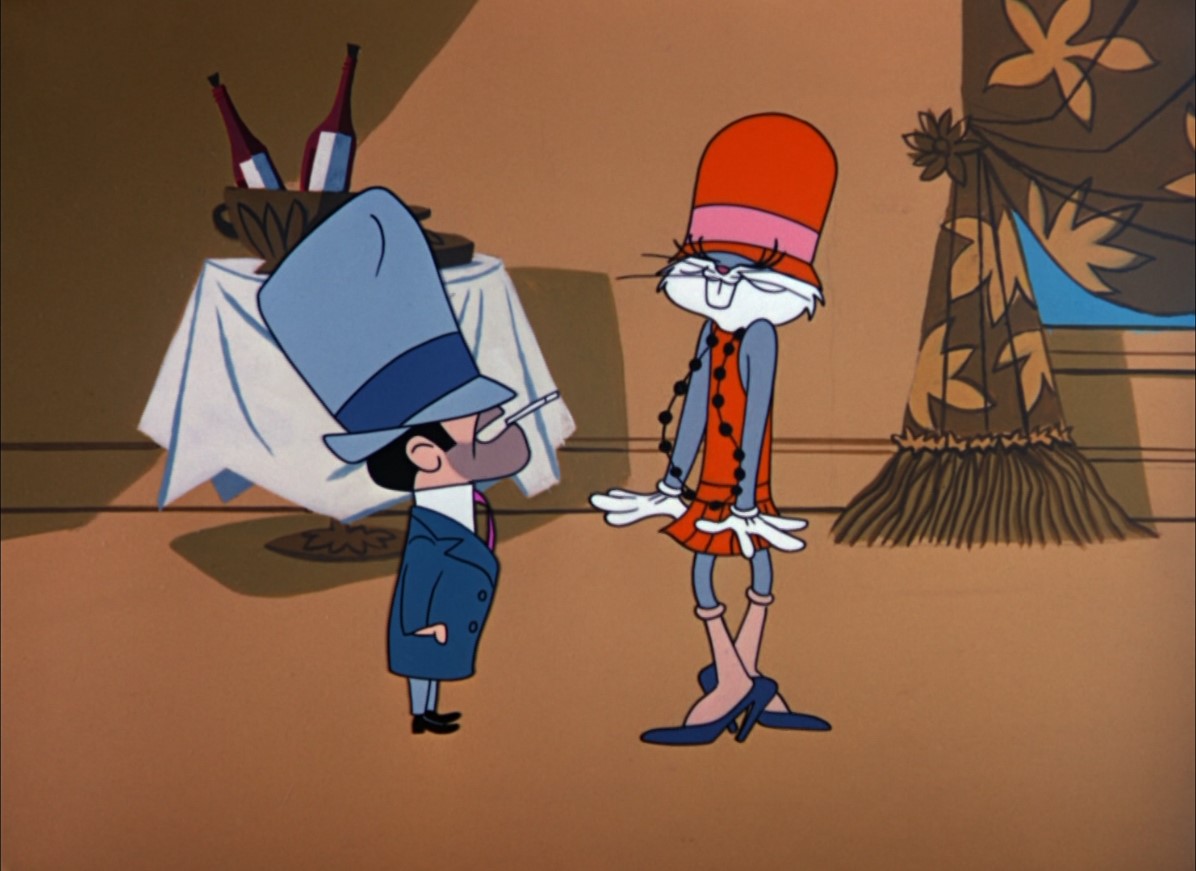
In the 1960s the quality of the Warner Bros. Cartoons rarely reached the heights of the best of the 1940s and 1950s, but there were a few which did so.
‘The Unmentionables’ surely is one of them. The cartoon obviously parodies the television series ‘The Untouchables’, with Bugs Bunny as Elliott Ness (or Elegant Mess, as he’s called in the cartoon). Luckily, ‘The Unmentionables’ doesn’t rely much on the parody element, but has many gags of its own, like silly gangsters (a series of gags harking all the way back to ‘The Great Piggy Bank Robbery’ of 1946) and a great example of Friz Freleng’s timeless lightswitch routines.
The cartoon also sees the welcome return of that infamous gangster duo Rocksy and Mugsy, who make their final appearance here. And then there’s Bugs as a flapper girl! Even the opening shots are wonderful, with some nice 1920s scenes drawn in a retro-1920s art deco style. The whole cartoon is a delight and one of the studio’s final best moments.
Watch ‘The Unmentionables’ yourself and tell me what you think:
This is Bugs Bunny cartoon No. 162
To the previous Bugs Bunny cartoon: Hare-Breath Hurry
To the next Bugs Bunny cartoon: Mad as a Mars Hare
‘The Unmentionables’ is available on the Blu-Ray-set ‘Bugs Bunny 80th Anniversary Edition’
Director: Robert McKimson
Release date: April 1, 1963
Stars: Bugs Bunny, Daffy Duck
Rating: ★★★
Review:
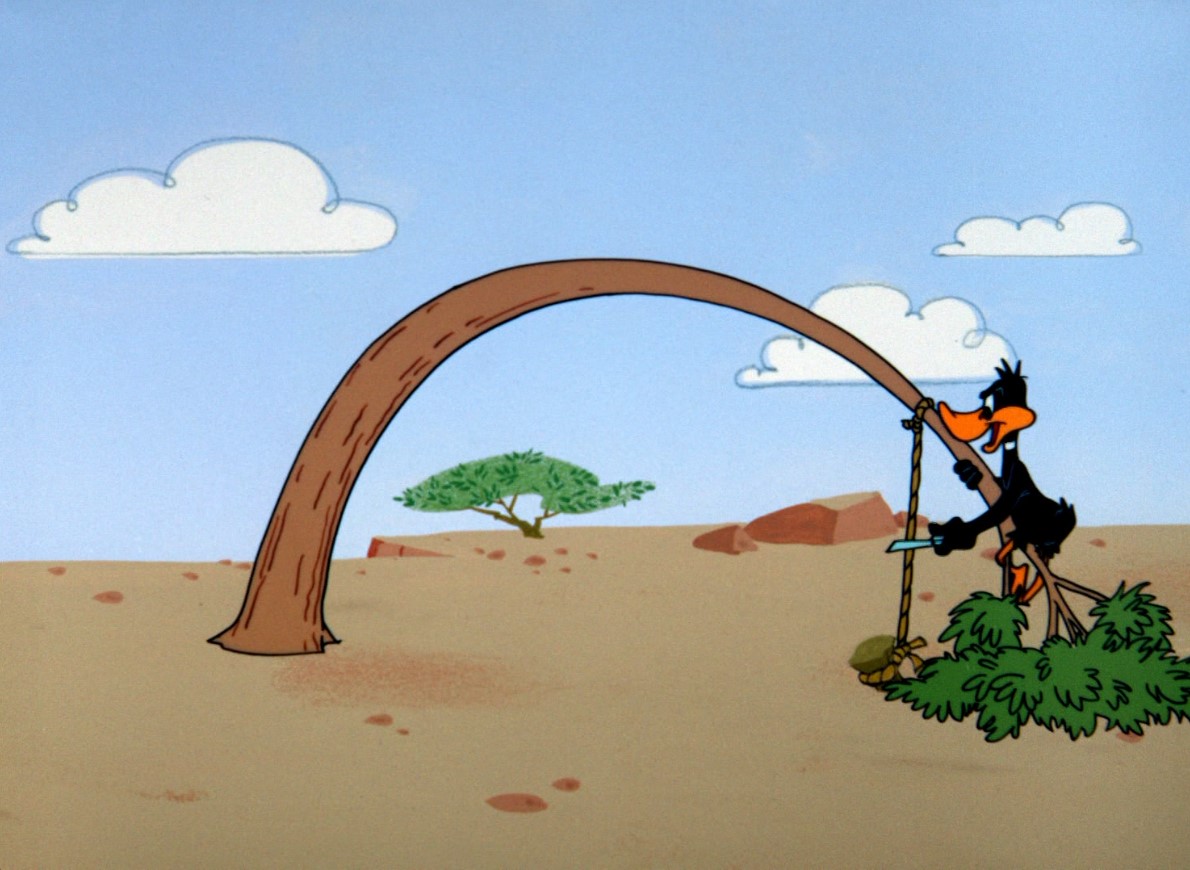
In ‘The Million-Hare’ Daffy Ducks spends his holiday at Bugs’s place, watching tv. The action only starts when their two names are mentioned on tv as contestants in a ‘buddy race’: whoever gets first to the studio, wins.
What follows is a series of rather Roadrunner-like gags, in which gravity often is as much Daffy’s enemy as it were the coyote’s in the Roadrunner films. The cartoon is very talkative, but some of the gags are good. I liked Bugs’s wonderings about Daffy’s abilities.
The staging on the other hand, is often rather odd. I especially thought that the characters were a little too big on the screen several times.
Watch two excerpts from ‘The Million-Hare’ yourself and tell me what you think:
This is Bugs Bunny cartoon No. 160
To the previous Bugs Bunny cartoon: Devil’s Feud Cake
To the next Bugs Bunny cartoon: Hare-Breath Hurry
This is Daffy Duck cartoon no. 92
To the previous Daffy Duck cartoon: Fast Buck Duck
To the next Daffy Duck cartoon: Aqua Duck
‘The Million-Hare’ is available on the Blu-Ray-set ‘Bugs Bunny 80th Anniversary Edition’
Director: Friz Freleng
Release date: December 8, 1962
Stars: Bugs Bunny, Yosemite Sam
Rating: ★
Review:

In one of his last appearances (only two would follow in the classic era) Yosemite Sam is a cook for a king (who’s, I guess, a caricature of Charles Laughton, an actor already dead at the time).
Despite Yosemite Sam’s efforts the king is bored with what he’s offered and demands Hasenpfeffer, a dish unknown to Sam. He soon finds out, and happily Bugs Bunny comes along to borrow some carrots. What follows are some terribly unfunny routines, with too much dialogue and rather poor animation for a Warner Bros. cartoon.
Worst is the scene in which Bugs talks while laying in a large oven tray: in an obvious and unconvincing cheat only his head is animated, while his body remains perfectly still. I would expect that in a Hanna-Barbera television cartoon, not in a theatrical Warner Bros. cartoon.
Better than anything moving in this cartoon is the background art by Hawley Pratt (layouts) and Tom O’Loughlin (paintings)
Watch ‘Shishkabugs’ yourself and tell me what you think:
This is Bugs Bunny cartoon No. 158
To the previous Bugs Bunny cartoon: Bill of Hare
To the next Bugs Bunny cartoon: Devil’s Feud Cake
‘Shishkabugs’ is available on the Blu-Ray-set ‘Bugs Bunny 80th Anniversary Edition’
Director: Gerry Chiniquy
Release date: January 18, 1964
Stars: Bugs Bunny, Yosemite Sam, Porky Pig
Rating: ★★★
Review:
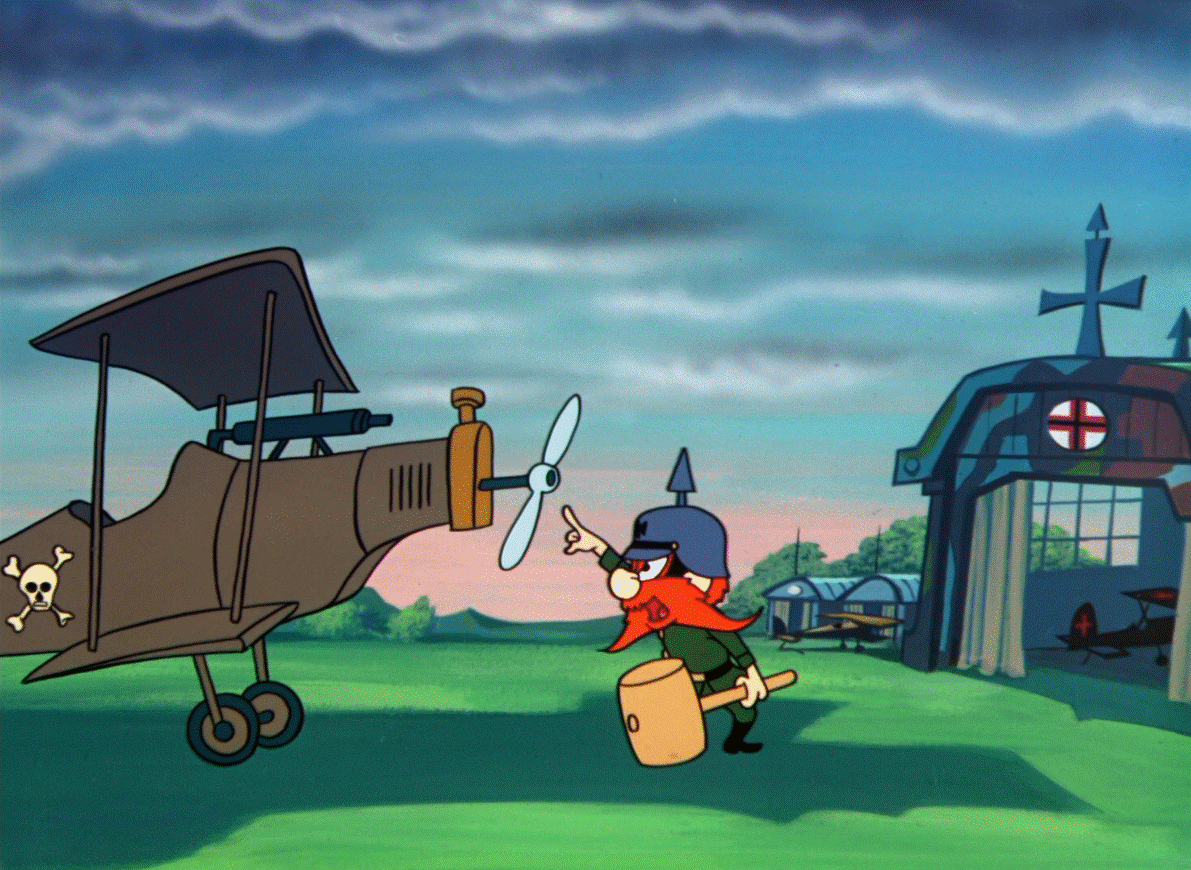
‘Dumb Patrol’ is the last of the Bugs Bunny vs. Yosemite Sam cartoons, being the last screen appearance by the hot-tempered little villain, after a career of nineteen years. Set in World War I the film is dedicated to an air battle between Bugs and Sam, here billed as Sam von Shpamm.
Gerry Chiniquy’s timing is all too relaxed, and unfortunately there’s way too much talking, but there are some fine gags, like Sam shooting his own plane to pieces. The short is no standout, but certainly no bad farewell to the little mustached character. Note Porky Pig’s short cameo as a French soldier.
Watch ‘Dumb Patrol’ yourself and tell me what you think:
This is Bugs Bunny cartoon No. 165
To the previous Bugs Bunny cartoon: Transylvania 6-5000
To the next Bugs Bunny cartoon: Dr. Devil and Mr. Hare
‘Dum Patrol’ is available on the Blu-Ray ‘Looney Tunes Collector’s Choice Vol. 3’
Director: Robert McKimson
Release date: January 20, 1962
Stars: Bugs Bunny
Rating: ★★★
Review:

In ‘Wet Hare’ Bugs Bunny battles one ‘Black Jack Shellac’ over a waterfall which the apparently French Canadian wants to dam (we’ll never know why).
The gags are not as they could have been due to McKimson’s all to relaxed timing and the talkative characters. Nevertheless, Bugs’ final scheme is a fine one, as are his Al Jolson-impersonations when singing under the waterfall, which mean that Mel Blanc manages to make Bugs Bunny sound like himself and like Al Jolson at the same time!
Watch ‘Wet Hare’ yourself and tell me what you think:
This is Bugs Bunny cartoon No. 156
To the previous Bugs Bunny cartoon: Prince Violent
To the next Bugs Bunny cartoon: Bill of Hare
‘Wet Hare’ is available on the Blu-Ray ‘Looney Tunes Collector’s Choice Vol. 3’
Director: Chuck Jones
Release date: June 8, 1963
Stars: Bugs Bunny & Wile E. Coyote
Rating: ★★
Review:
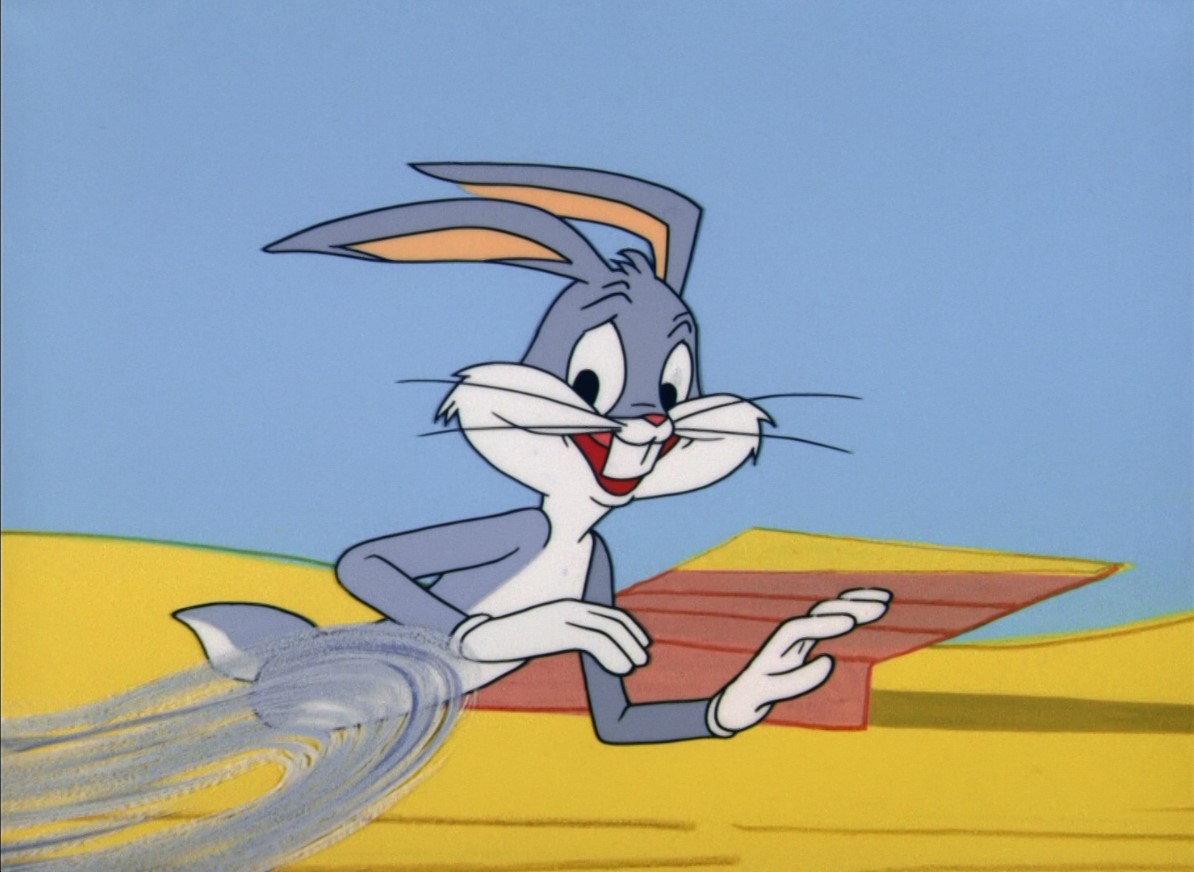
‘Hare-breadth Hurry’ is the last of five cartoons in which Chuck Jones combined the Coyote with Bugs Bunny. This is a particularly weird one, as Bugs Bunny replaces the Road Runner, as he explains at the beginning of the short.
The coyote, thus, is his silent self as in other Road Runner cartoons, and not the suave talkative character of ‘Operation: Rabbit’ (1952) or ‘To Hare Is Human’ (1956). In fact, this is a Road Runner cartoon in everything but the coyote’s co-star. In two of the gags Bugs doesn’t even participate, with the coyote hampering himself.
The gags are fair, but Bugs is very talkative, addressing the audience several times, and he’s actually the most tiresome aspect of the cartoon. The end scene, which features a string of gags around a telephone, is the most inspired, but I can hardly count ”Hare-breadth Hurry’ among either the coyote’s or Bugs Bunny’s classics.
Watch ‘Hare-breadth Hurry’ yourself and tell me what you think:
This is Bugs Bunny cartoon No. 161
To the previous Bugs Bunny cartoon: The Million-Hare
To the next Bugs Bunny cartoon: The Unmentionables
‘Hare-breadth Hurry’ is available on the Blu-Ray ‘Looney Tunes Collector’s Choice Vol. 2’
Director: Chuck Jones
Release date: November 30, 1963
Stars: Bugs Bunny
Rating: ★
Review:

‘Transylvania 6-5000’ is one of those late Warner Bros. Cartoons, which are equally beautiful to look at as they are boring to watch.
In this short Bugs Bunny wanted to travel to Pittsburgh, Pennsylvania, only to end up in Transylvania, where he encounters a vampire with the name Count Bloodcount.
The cartoon is very talkative, and features an annoying female two-headed bird. Worse are the central gags, which are all constructed around the words Abacadabra, which turn the count into a vampire, and ‘hocus pocus’, which turn him back to a human form, again. These sequences suffer from a lack of inner logic and sloppy timing, and are hardly as funny as intended. Bill Lava’s canned music doesn’t help, either.
Despite its gorgeous settings, one cannot conclude but that the Warner Bros. studio ran out of inspiration and of ideas quickly in the early 1960s, contributing to its own shutdown after only one other cartoon, ‘Señorella and the Glass Huarache‘ (which, incidentally, is more fun than this jaded Bugs Bunny cartoon). And yet, already in 1964 Warner Bros. cartoons appeared again, now produced by the DePatie-Freleng cartoon studio of Pink Panther fame. And thus four more Bugs Bunny cartoon were released in 1964, before the character was retired.
Watch ‘Transylvania 6-5000’ yourself and tell me what you think:
This is Bugs Bunny cartoon No. 164
To the previous Bugs Bunny cartoon: Mad as a Mars Hare
To the next Bugs Bunny cartoon: Dumb Patrol
‘Transylvania 6-5000’ is available on the DVD-box ‘Looney Tunes Golden Collection Volume Five’
Director: Chuck Jones
Release date: May 20, 1961
Stars: Bugs Bunny, Daffy Duck
Rating: ★★
Review:
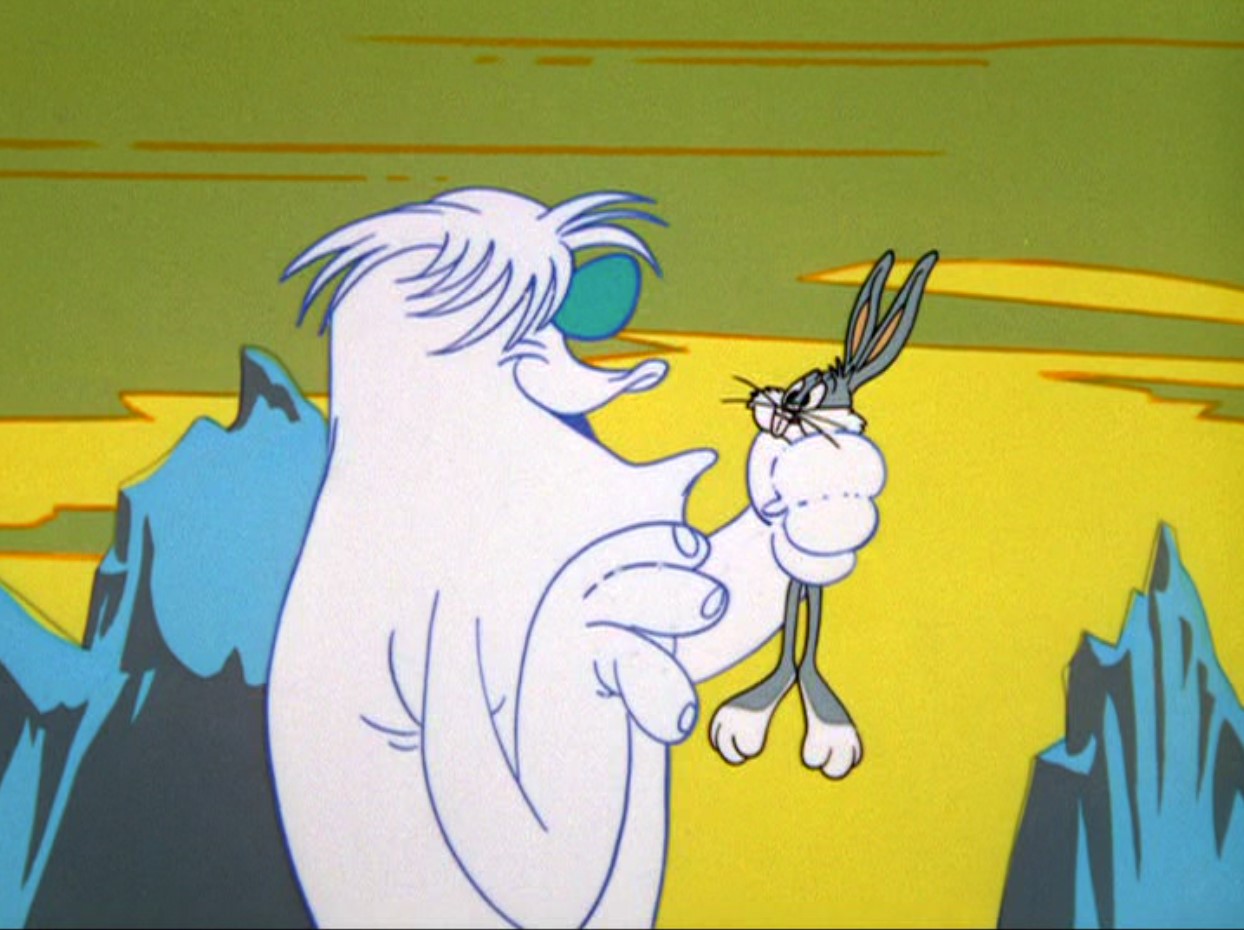
By the early 1960s the classic age of animated cartoons was clearly over. ‘The Abominable Snow Rabbit’ clearly shows the insipid state of affairs. Although both animation and background art are still top notch, and a delight to watch, the gags are uninspired and stale, and never reach the heights from similar films of the early 1950s.
In this cartoon Bugs and Daffy both travel underground, apparently on their way to Palm Springs, only to end up in the Himalayas, where they encounter a very cartoony and blue-nosed abominable Snowman. The Snowman is a late addition to a plethora of characters based on Lon Cheney’s depiction of Lenny in ‘Of Mice and Men’ from 1939, without adding anything. Apart from the jaded gags, the cartoon suffers from a large amount of dialogue, rendering the cartoon almost like the “illustrated radio” Chuck Jones detested in contemporary television animation.
Watch ‘The Abominable Snow Rabbit’ yourself and tell me what you think:
This is Bugs Bunny cartoon No. 153
To the previous Bugs Bunny cartoon: Lighter than Hare
To the next Bugs Bunny cartoon: Compressed Hare
This is Daffy Duck cartoon No. 87
To the previous Daffy Duck cartoon: Person to Bunny
To the next Daffy Duck cartoon: Daffy’s Inn Trouble
‘The Abominable Snow Rabbit’ is available on the DVD-box ‘Looney Tunes Golden Collection Volume Five’
Director: Douglas McCarthy
Release Date: August 25, 1995
Stars: Bugs Bunny, Daffy Duck, Yosemite Sam, Tweety, Laszlo, Penelope Pussycat, Pepe le Pew a.o.
Rating: ★★★
Review:
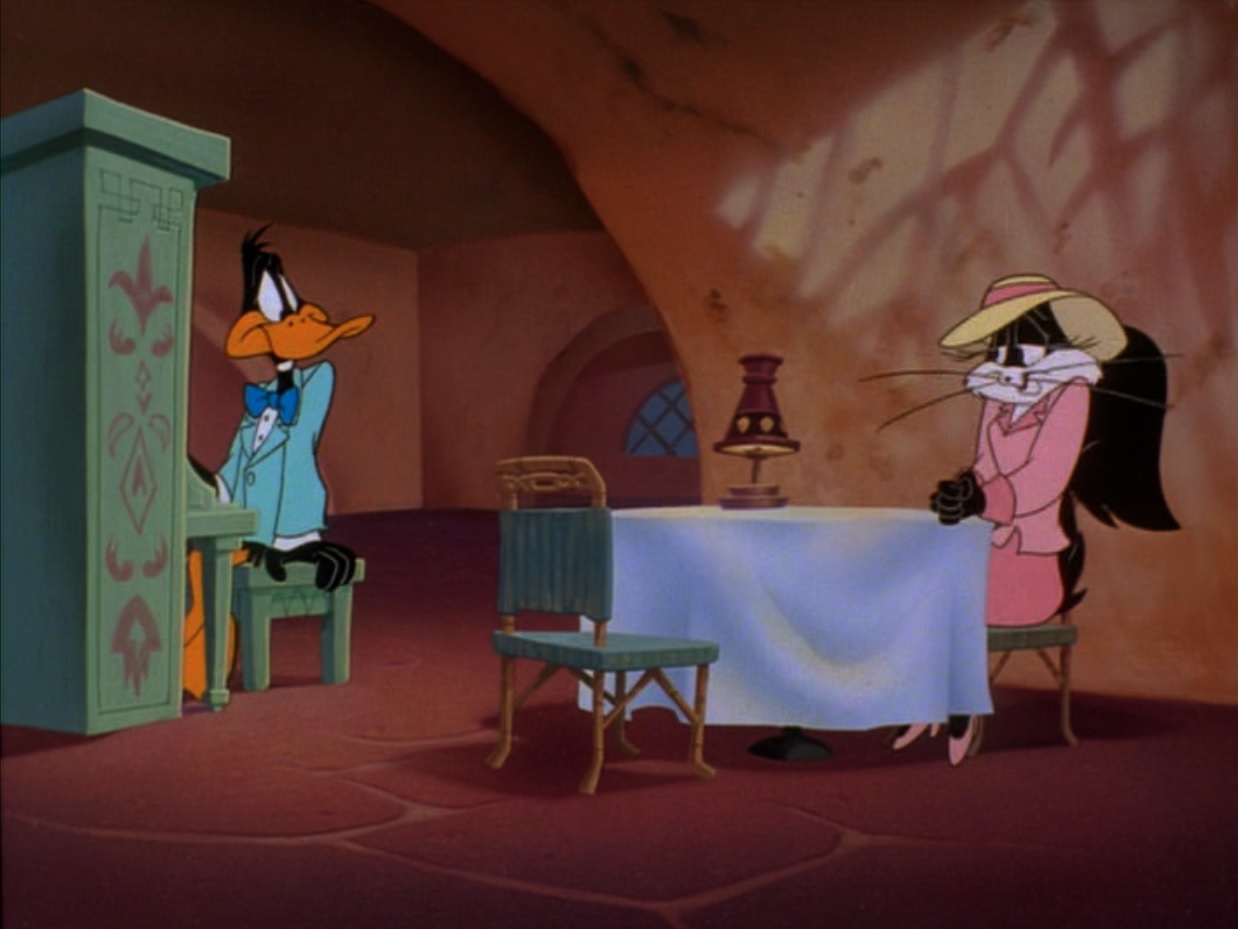
‘Carrotblanca’, as the title implies, is a parody on the classic feature ‘Casablanca’ (1942) and appears on several DVD releases of that film.
The short, however, originally was shown theatrically, accompanying the live action feature ‘The Amazing Panda Adventure’ in North America and the animated feature ‘The Pebble and the Penguin’ internationally. Thus, the film is a clear product of the cartoon renaissance, reviving many characters from the classic Looney Tunes and Merrie Melodies.
The most familiar faces have the starring roles, so we watch Bugs Bunny as Rick Blaine, Daffy Duck as Sam, Yosemite Sam as ‘General Pandemonium’, Tweety as Ugarte, Sylvester as Laszlo, Penelope Pussycat as Ilsa, and Pepe le Pew as Captain Louis. Also visible are e.g. Foghorn Leghorn, Sam Sheepdog, Porky Pig, the Crusher, Beaky Buzzard, Miss Prissy, Giovanni Jones and Pete Puma. Strangely absent are Elmer Fudd on the Looney Tune side, and Signor Ferrari on the Casablanca side.
The short compresses the original movie into a mere eight minutes, and parodies many of its classic scenes, including the flashback scene. As expected, the result is rather silly, but unfortunately not very funny, as somehow most of the gags fall flat (it doesn’t help that Tweety goes into a Peter Lorre impersonation four times). The film remains at its best when parodying the feature, but as soon as the cartoon characters go into their own routines the results get unpleasantly stale. Thus the film is more a product of nostalgia than one breathing new life into the decades old characters.
Thus ‘Carrotblanca’ may not be an essential film, yet it’s still a fun watch, I guess more for Looney Tunes lovers than Casablanca lovers. If anything, the short showed that the characters still had potential to entertain, a notion Warner Bros. cashed on with the feature length ‘Space Jam’ (1996).
Watch ‘Carrotblanca’ yourself and tell me what you think:
‘Carrotblanca’ is available on several Blu-Ray and DVD editions of ‘Casablanca’


 Dr. Grob's Animation Review