
You are currently browsing the tag archive for the ‘1970’ tag.
Director: Eiichi Yamamoto
Release date: September 15, 1970
Rating: ★★½
Review:

The most important development in animation of the late 1960s and 1970s was the coming of animated feature films aimed at adults, instead of children/families. Heralding the new era was George Dunning’s 1968 film ‘Yellow Submarine’, but the two most important film makers pioneering in this new field were Ralph Bakshi in America (with e.g., ‘Fritz the Cat’ from 1972 and ‘Heavy Traffic’ from 1973) and Osamu Tezuka in Japan.
The three adult oriented anime films Tezuka made at his own Mushi Productions studio are called the Animerama trilogy and consist of ‘A Thousand and One Nights’ (1969), ‘Cleopatra’ (1970) and ‘Belladonna of Sadness’ (1973). The three show that Tezuka, like Bakshi, confuses adult oriented with a rather juvenile focus on sex and violence, making the films adult in content indeed, but otherwise rather immature and even exploitative products.
More than its adult orientation, ‘Cleopatra’ stands out for its highly eclectic style. The film tackles a variety of designs and animation styles, none weirder than the opening sequence, which takes place in the future year of 2001, and which starts live action actors with animated faces, an experiment luckily not repeated, for the results are pretty ridiculous, especially because there’s absolutely no lip synchronization, at all.
The film’s plot revolves around an alien planet called Pasatorine, which has a secret plan to wipe out mankind called ‘Cleopatra’. In order to find out the plans a trio of humans, naturally, goes back into time by “psycho-teleportation”, taking the souls of ancient characters in Cleopatra’s time.
Thus, the three main protagonists change identity: Jirov becomes Ionius, a powerful slave, Maria becomes Libya, an Egyptian city girl, and Hal turns into Lupa, a close companion of Cleopatra, who turns out to be a leopard, much to Hal’s chagrin. His character is the most annoying of the film, for the leopard is sex crazed and tries to get laid all the time, despite its animal features.
After ten minutes we’re in Egypt where Tezaku depicts the Roman conquest of the ancient kingdom in a very silly style, accompanied by some attractive space funk music. When we first see Libya, the adult orientation immediately becomes clear, for she’s bare breasted the whole time. The Egyptian plot is bizarre, too, with an ugly freckled girl changing into the sex goddess of Cleopatra with the sole reason to seduce Caesar and to kill him. Adding to the weirdness is the coloring, for Libya is rendered bright red, while Caesar is depicted as a green man.
Stylistically, the film is all over the place, anyhow, altering tiresome silliness and cheap rotoscoping with quite some beautiful graphic imagery, like the stylized fighting of the Romans and the Egyptian conspirators. The animation, too, is a mixed bag, from non-animation and cheating jump takes from pose to pose, without any animation in between, to far more interesting animation done in watercolors. The animation of the horse ride, and the struggle between Ionius and an Egyptian warrior are actually quite good, and even the first two sex scenes are interesting in their semi-abstract and even poetical stylization, while the third is depicted as a broken-down film. At one point the imagery reminds one of UPA or the Zagreb school, and at another point there’s even a cut-out sequence featuring variations on classic paintings.
What the film completely lacks, is character animation. Emotions are just indicated, not felt, and there’s only broad caricature, not character development. The potentially dramatic story is further hampered by random gags, often strange and out of place. Likewise, the story is sloppy and meandering, with the film makers having difficulty on whom to focus. For great chunks of screen time, the three protagonists from the opening sequence aren’t anywhere to be seen, and after the events in ancient Egypt have ended tragically (in that respect the film does follow Cleopatra’s real life), the film ends abruptly, leaving the viewer wondering why the whole ‘psycho-teleportic’ excursion, and thus most of the movie, was needed in the first place.
It must be said: ‘Cleopatra’ is not a good movie. It is more of an experiment than a success, more of a product of its time than a timeless movie, and rather a curio than an essential watch. It is a product of a more experimental era, but after watching the film, one can hardly wonder why this short age of adult oriented experimentalism stopped.
Watch the trailer for ‘Cleopatra’ yourself and tell me what you think:
‘Cleopatra’ has been released on Blu-Ray
Director: Andrei Khrjanovsky
Release date: 1970
Rating: ★★
Review:
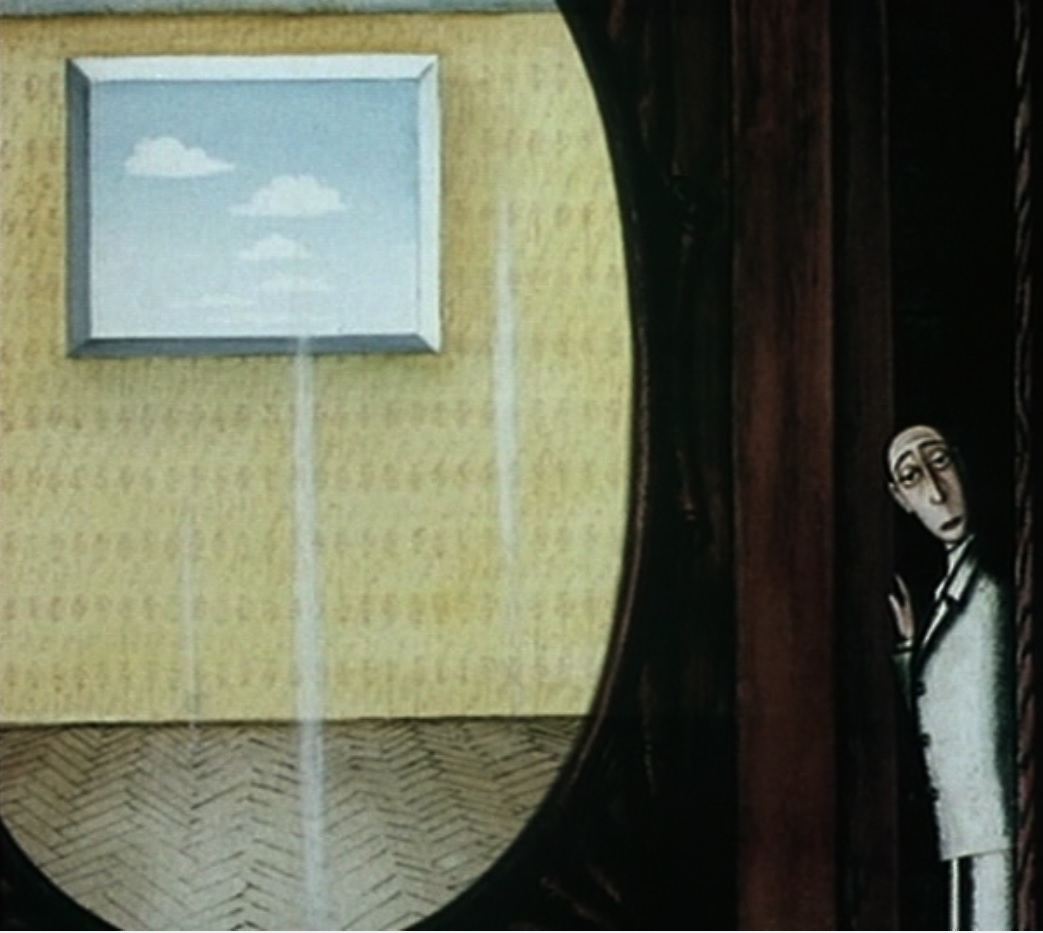
‘Armoire’ is an enigmatic cut-out animation film about a man in an apartment who puts an enormous cupboard into his room. Once inside, he starts to put all his belongings into the cupboard, until he can live inside it. In the end it’s revealed that even his tiny room is inside another cupboard.
Several shots of depressing apartment blocks suggest that this is a critical satire on the living conditions inside the Soviet Union, but I’m not sure. ‘Armoire’ is as avant-garde as was possible in the Soviet-Union, especially Alfred Schnittke’s score is very modernistic. But because the film is just the illustration of one puzzling idea, and because the one protagonist is as phlegmatic as Buster Keaton, the film fails to make a lasting impression.
Watch ‘Armoire’ yourself and tell me what you think:
‘Armoire’ is available on the DVD ‘Masters of Russian Animation Volume 2’
Director: Witold Giersz
Release date: 1970
Rating: ★★★½
Review:

‘The Wonderful March’ is a traditional animation film, which retells the story ‘The Marvelous March of Jean François’ (1965) by John Raymond.
Jean François is a drummer boy in Napoleon’s army, who’s told to march ever onward. Following this direction rather obsessively, Jean François travels the world, using his drum e.g. as a boat and as a basket for a balloon, only to return to Napoleon in the end, right in the battle of Waterloo.
The film’s conclusion is a bit puzzling and rather disappointing. Nevertheless, ‘The Wonderful March’ can boast very pleasant images, full of painted animation, and charming music by Polish composer Kazimierz Serocki.
Watch ‘The Wonderful March’ yourself and tell me what you think:
‘The Wonderful March’ is available on the DVD-set ‘Anthology of Polish Children’s Animation’
Director: Julian Antonisz
Release date: 1970
Rating: ★★★
Review:

‘How Is That…?’ is another children’s film by Julian Antonisz and this film is made in the same vein as ‘How Learning Came Back tothe Woods’. This time a little girl tells us how television works.
Antonisz again illustrates the narration with very rough designs, and cut-out animation of household objects on top of a light table. For examples, the people wear real glasses, and some nature is suggested by real flowers and plants.
‘How Is That…’ is not too serious. At several points things go wrong, and a ‘Please Stand By’ sign is shown. The result is a very original and delightful little avant-garde film for children.
Watch ‘How Is That…?’ yourself and tell me what you think:
‘How Is That…?’ is available on the DVD-set ‘Anthology of Polish Children’s Animation’
Director: Julian Antonisz
Release date: 1970
Rating: ★★★½
Review:

Told by a little girl ‘How Learning Came Back Out of the Woods’ is an educational film for children on how books are made.
Julian Antonisz’s animation style, however, is highly avant-garde. The animator uses a light table to illuminate his drawings and a multitude of household objects from below. Antonisz’s style is very rough and graphic. There’s motion, but the cut-out animation itself is limited. Human movement, for example, is only suggested by using two key frames, rather than animated fully. Nevertheless, this children’s film is a good example of the sheer creativity of the Polish animation industry of the seventies.
Watch ‘How Learning Came Back Out of the Woods’ yourself and tell me what you think:
‘How Learning Came Back Out of the Woods’ is available on the DVD-set ‘Anthology of Polish Children’s Animation’
Director: Ryszard Czekała
Release date: 1970
Rating: ★★★★½
Review:

If ‘Syn‘ was an unsettling watch, ‘Apel’ is no less than a grueling. Set in a German concentration camp, the film shows a Nazi officer commanding a large group of prisoners to bow and to rise, over and over again. Then one of them refuses to bow…
‘Apel’ is an extreme film, not only in concept, but also in execution. Czekała uses very original cinematography and extreme ‘depth of field’, with large parts of his drawing being out of focus. Especially the shot in which the Nazi officer walks by rows and rows of people is particularly impressive, and it’s unclear to me how Czekała reached this effect. The film is as bleak as can be, and quite an unpleasant watch, but Czekała’s mastery of the animated form is undeniable.
Watch ‘Apel’ yourself and tell me what you think:
‘Apel’ is available on the DVD-set ‘Anthology of Polish Animation’ and on the DVD box ‘Annecy – Le coffret du 50e Anniversaire’
Director: Daniel Szczechura
Release date: 1970
Rating: ★★★½
Review:
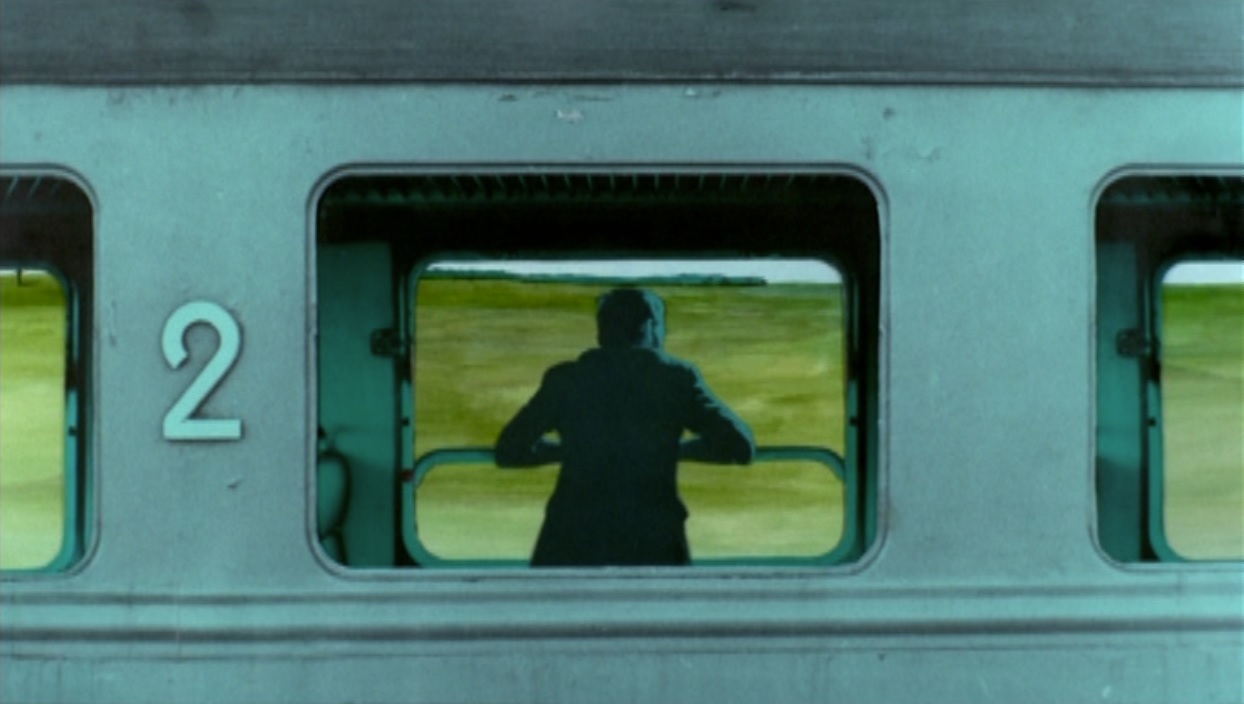
‘Podróż’ (The Journey) is a Polish avant-garde film in which a man makes a rather pointless train trip to a house somewhere in the countryside.
For a large part of the short we watch the man in the train from the back, while he stares at the countryside floating by his window. There’s constant movement, but barely any animation. During the train sequence, for example, the train itself and the man remain completely static. When the man walks towards the house this is done in a sequence of stills, not in animation.
Nevertheless, the film intrigues because of its original visual style and because of its extreme soundtrack by Eugeniusz Rudnik using unsettling mechanical sounds.
Watch ‘The Journey’ yourself and tell me what you think:
‘The Journey’ is available on the DVD-set ‘Anthology of Polish Animation’
Director: Ryszard Czekała
Release date: 1970
Rating: ★★★
Review:
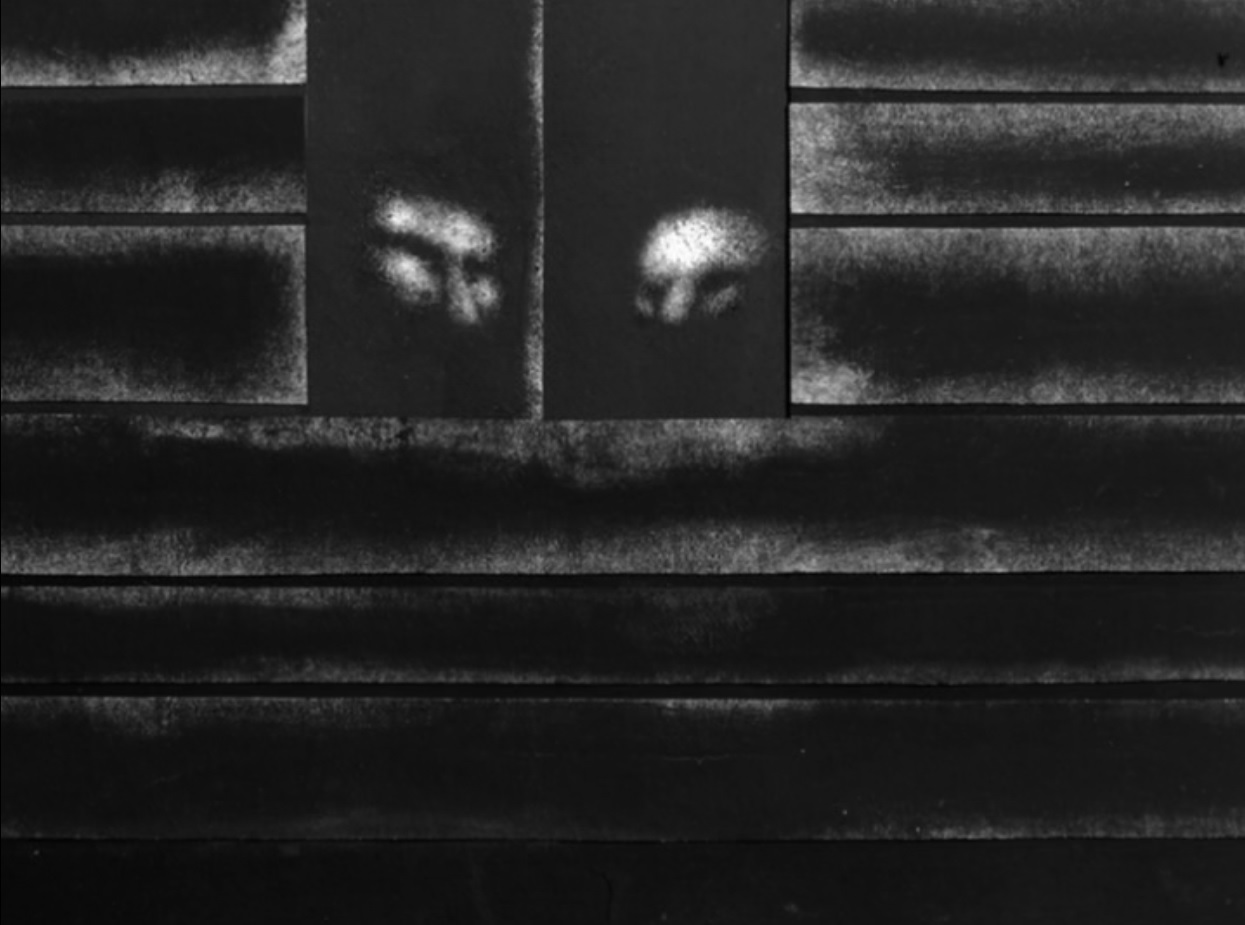
In ‘Syn’ (The Son) an old couple at the countryside wait for their son, who has gone off to lead a different life in the city. But when he arrives at his parental home, his visit turns out to be a deception.
‘Syn’ shows Ryszard Czekała’s original style: the film is in black and white, and features a very original cinematography: altering extreme close-ups of hands, ears and such with strange depictions of the barren wintery landscape, with the ground filling up almost the complete frame.
The story is told without dialogue, and because of Czekała’s extreme graphical style, rather hard to follow. Most striking is the sound design, which arguably is as important as the imagery. The result is a puzzling, but quite unsettling and bleak short.
Watch ‘The Son’ yourself and tell me what you think:
‘The Son’ is available on the DVD-set ‘Anthology of Polish Animation’
Director: Valentin Karavaev
Release date: 1970
Rating: ★★
Review:

‘A Lesson Not Learned’ is a rather blatant and vicious Soviet propaganda film suggesting that West Europe is led by fascists trying to restore the Germany of old.
The film starts with images from World War II, accompanied by the sounds of bombs and gunfire. Then we cut to an old Nazi in sheep’s clothing, who seeks refuge in the American-British zone. Accepted and retired, the old Nazi preaches ‘revanchism’, in order to restore Germany’s borders from before World War II. However, he is stopped by the Berlin wall and the peace treaty signed between the USSR and the DDR, in which the current borders are accepted.
This film uses a satirical style more reminiscent of the forties than of the seventies, rendering an old-fashioned imagery. The best idea is the little Hitler angel helping the old Nazi. There’s no dialogue. For example, when the old Nazi starts to speech, we only hear the sound of guns. There’s pretty little animation and the message is emphasized with writings as in political cartoons.
It’s hard to watch a film so full of lies, which shows that up to its very end the Soviet Union partly based its legitimation on the idea that its existence was the only way to stop fascism. And the saddest thing is that the current Russian regime has revived this falsehood to defend its current war in the Ukraine.
Watch ‘A Lesson Not Learned’ yourself and tell me what you think:
‘A Lesson Not Learned’ is available on the DVD set ‘Animated Soviet Propaganda’
Director: Jan Švankmajer
Release Date: 1970
Rating: ★★★
Review:
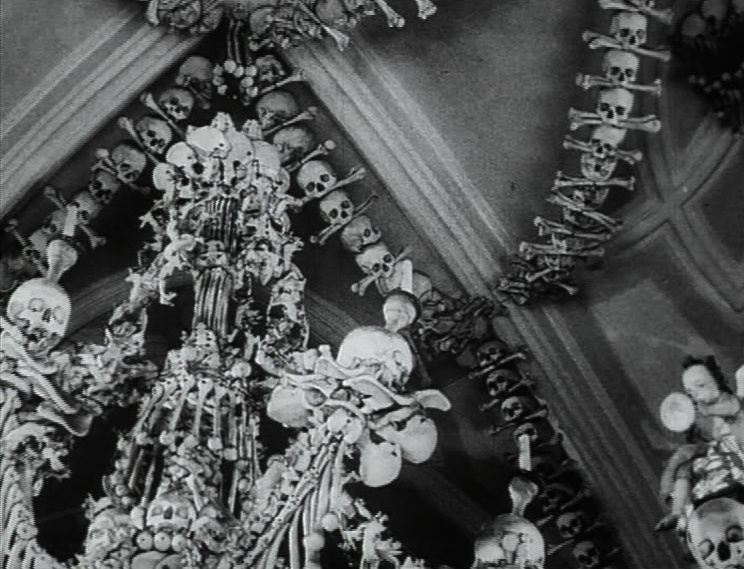 ‘The Ossuary’ is a commissioned documentary film about a Czech chapel in Sedlec, which is decorated with thousands of bones and skulls of victims of the 1318 plague and of the Hussite wars of 1421.
Two versions of this film exists: one with a soundtrack of a rather mundane guide guiding a group of children, in which she repeatedly warns not to touch the bones on a penalty of fifty crowns. Her tour is mixed with the uncanny sound of a rattling bicycle. For unclear reasons this soundtrack was considered subversive and forbidden by the Czechoslowakian regime. Therefore a second version was made using a jazz soundtrack.
In both versions the soundtrack conflicts with the morbid images, which are composed in a rhythmical way that even appeals when watched silently. The film contains no animation, but is full of Švankmajer’s idiosyncratic cinematography.
Watch ‘The Ossuary’ yourself and tell me what you think:
‘The Ossuary’ is available on the DVD ‘Jan Svankmajer – The Complete Short Films’
Director: Lev Atamanov
Release Date: 1970
Rating: ★★★★★
Review:
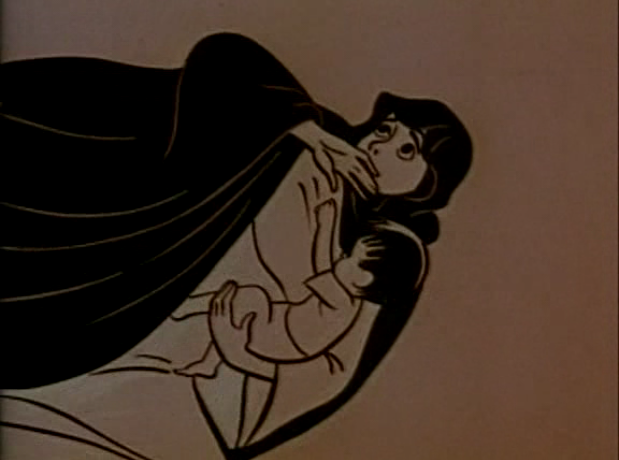 From a fascistic egg sprouts a military bird.
The young bird is fed by a capitalist and a general (who both are clearly American) with money and weapons. It grows into a huge black war-bird, which flies over the whole world, threatening loving couples in London, Paris, Moscow and Japan, and an old man, two mothers and several children in an unclear place. When the war-bird starts to attack, one mother turns Asian, Muslim and black, in order to illustrate that war can affect everybody everywhere. Eventually, however, the war-bird is overthrown by a multitude of peace doves, created by workers, writers, children, artists, musicians and pacifists.
‘We Can Do It’ is a beautiful and strikingly pacifistic film and undoubtedly one of the best propaganda films ever created in the Soviet Union. The film clearly is designed for international audiences, with its final message (the title) depicted not only in Russian, but also in German, English, Spanish and French.
Despite its anti-American sentiment, its pacifistic theme is timeless and universal. The film tells its clear message without any dialogue or voice over. Moreover, its designs are stunning and very effective, especially that of the war-bird.
Watch ‘We Can Do It’ yourself and tell me what you think:
‘We Can Do It’ is available on the DVD box set ‘Animated Soviet Propaganda’
Director: Paul Driessen
Release Date: 1970
Rating: ★★½
Review:
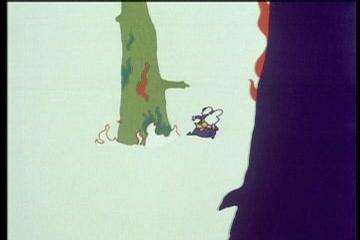 Paul Driessen’s very first film is a charming little short for children.
Made largely in Spain with help of small subsidy from the Dutch Ministry of Culture, the film tells about a small boy who accidentally sets a forest on fire, but repays his deed by extinguishing another one with help of an elephant with two trunks.
The simple story is hampered by the childish voice over (the English version is much more enjoyable than the original in that respect), and the film certainly doesn’t belong to Driessen’s best works, but its imaginative colors and weird perspectives are still thrilling. It already shows the film maker’s very distinctive animation style, which he would expand and improve over the years, creating such masterpieces as ‘On Land, at Sea and in the Air‘ (1980) and ‘The Writer‘ (1988).
Watch ‘Het verhaal van Kleine Yoghurt’ yourself and tell me what you think:
http://v.youku.com/v_show/id_XNzQ1MTE2NTI=.html
‘Het verhaal van Kleine Yoghurt’ is available on the DVD ‘The Dutch Films of Paul Driessen’


 Dr. Grob's Animation Review