
You are currently browsing the tag archive for the ‘boy’ tag.
Director: Mamoru Hosoda
Release date: May 16, 2018
Rating: ★★★
Review:

‘Mirai’ was the third feature film Mamoru Hosoda made for his own studio, Studio Chizu. Hosoda favors rather episodic films about growing up, and ‘Mirai’ is no exception, although the film takes place in a much smaller time frame than ‘Wolf Children’ or ‘The Boy and the Beast’.
Main protagonist of the film is ca. four-year-old boy Kun, who lives in a design house in Yokohama (the town is depicted regularly during the film in swooping bird-eye’s view shots), but more importantly, who gets a baby sister, the Mirai from the title. Mirai also means future, and in fact, the Japanese title is ‘Mirai no Mirai’, or ‘Mirai from the future’. Indeed, Kun meets an older version of his younger sister from the future, as well as some other characters, while he struggles to adapt to the new situation he finds himself in.
Because with the coming of little Mirai a lot changes for the young boy: his parents have less attention for him, focusing more on the new baby, they’re more often tired and crabby, and they struggle with combining working and caring, now there are two children around. Needless to say, Kun has a hard time getting adjusted, and even gets jealous of his innocent baby sister.
The film focuses on some key scenes, in which Kun experiences a setback, at least in his own mind, and then something magical happens in the little courtyard of his house. First the little boy first meets a humanized form of the family dog, and then his younger sister in older form (there’s more, but I won’t spoil it here).
Unfortunately, Hosoda doesn’t stick to the boy-sister relationship, and at some point, the magic scenes also help Kun overcome his fears. Moreover, a four-year-old is a difficult and questionable protagonist of a film that wants to show the hero’s progress. After all, he is just a little boy. It’s little surprising that Hosoda spends considerable time on Kun’s parents, and their development during this crucial part of their lives. And, indeed, to be frank, Hosoda’s honest depiction of the hardships of young parenthood and of raising one’s own children is much more interesting than Kun’s ‘development’ of character.
Main attraction of the film are the five magical scenes, with the first two showing some broad comedy, as the man-dog and Mirai from the future roam around the house. The third and fourth start to feel obligatory, even though the fourth has a nice nostalgic feel to it. But with the fifth, Hosoda goes completely overboard, and one wonders why these nightmarish scenes, taking the film to a altogether other atmosphere, were even necessary. In fact, this finale, in which Hosoda wants to tell us something about family ties, is too overtly self-explanatory and spoils a film that wasn’t perfect to start with.
In fact, ‘Mirai’ drags a little, being mostly confined to the small space of Kun’s house and with Kun’s development of character as an important, but very weak story device. The film’s episodic nature doesn’t really help, spreading the story thin, a problem that also invades ‘Wolf Children’ and ‘The Boy and the Beast’. I wish Hosoda was able to keep his use of time as tight as his use of space in this movie. ‘Mirai’ is not a failure, the film is too original for that, but it’s arguably Hosoda’s weakest feature film so far, never reaching the emotional heights of either ‘Wolf Children’, ‘The Boy and the Beast’ or even his debut film, ‘The Girl Who Leapt Through Time’ from 2006.
Watch the trailer for ‘Mirai’ yourself and tell me what you think:
‘Mirai’ is available on Blu-Ray and DVD
Director: Andrei Khrzhanovsky
Release date: 1973
Rating: ★★★
Review:
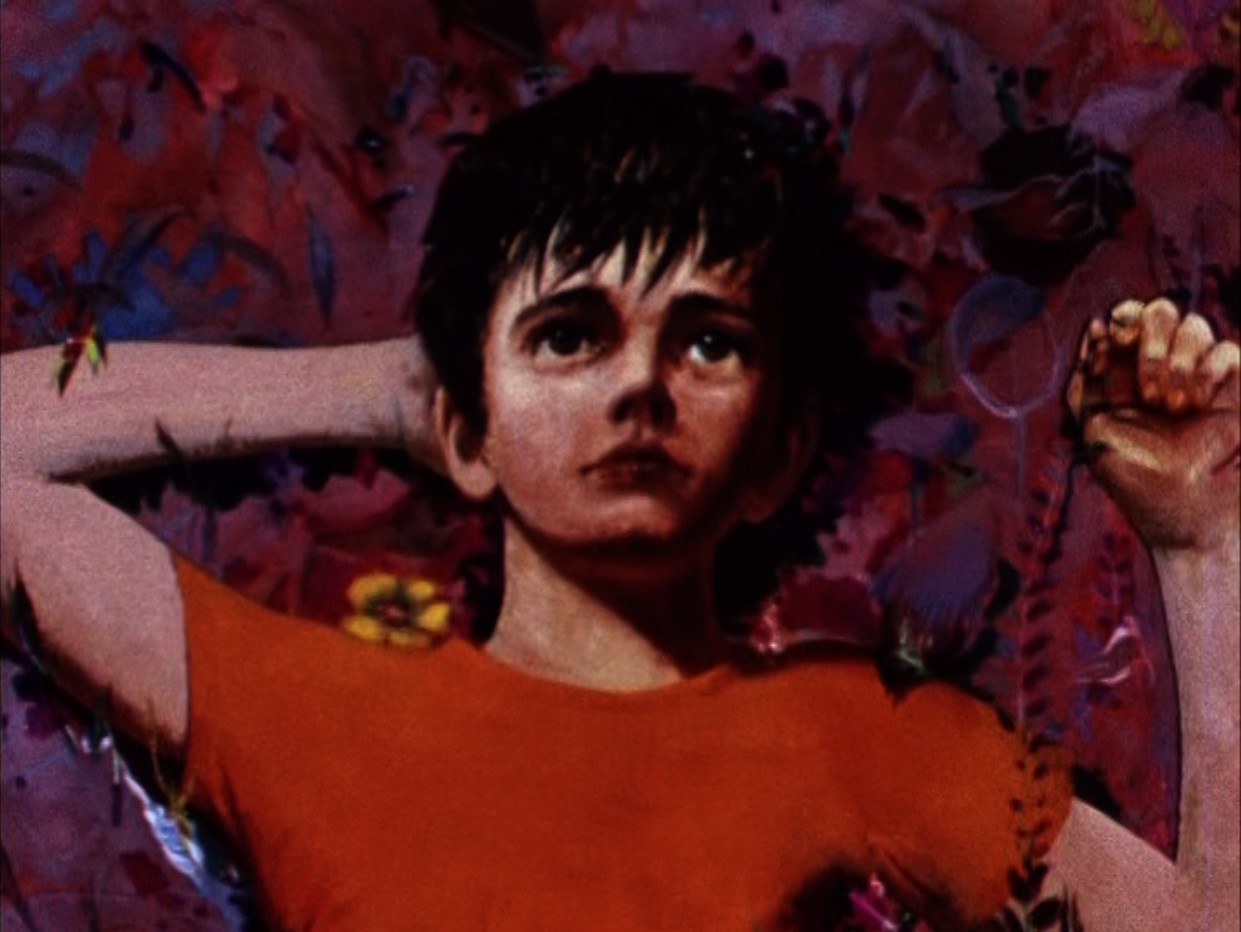
In ‘Butterfly’ a boy catches some butterflies, but after a nightmarish scene in which he himself is trapped, he releases them again.
The plot of ‘Butterfly’ is far from original, and rather predictive and boring, but Khrzhanovsky’s eclectic style is not. Part of the story is told in still oil paintings, but there’s also a little cell animation and cut-out animation.
The oil paintings are most interesting, with their rather high level of realism, and their painful contrast between colorful nature, and the dull, grey world of the modern city. Especially the scene inside the boy’s flat is most depressing, with only grey electronic robots to play with. Nevertheless, the most striking aspect of this film are not the animation nor the visuals, but the fascinating score by avant-garde composer Alfred Schnittke.
Watch ‘Butterfly’ yourself and tell me what you think:
‘Butterfly’ is available on the DVD ‘Masters of Russian Animation Volume 2’
Director: Eduard Nazarov
Release Date: 1979
Rating: ★★
Review:
 This Soviet animation film starts when a boy enters a hunting shop.
When he looks at a photo of a hunter on top of a dead lion, his imagination starts to wander. He imagines himself in a forest, and on a Savannah, full of wildlife. When encountering the lion, he prevents the hunter from shooting. Unfortunately, he’s awoken by the shop owner.
‘Hunt’ is a silent film, told with realistic images, strong 1970s designs, and dated electronic music. The film’s opening is probably its best: we’re watching images of busy and indifferent city life, before zooming in on the boy. The film clearly celebrates life, especially in the Savannah scenes, which form a rich contrast to the dull city life images. Nevertheless, the film feels traditional and naive, and more as a product of its time than as a timeless classic.
Watch ‘Hunt’ yourself and tell me what you think:
Director: Andreas Hykade
Release Date: September 2006
Rating: ★★★★
Review:
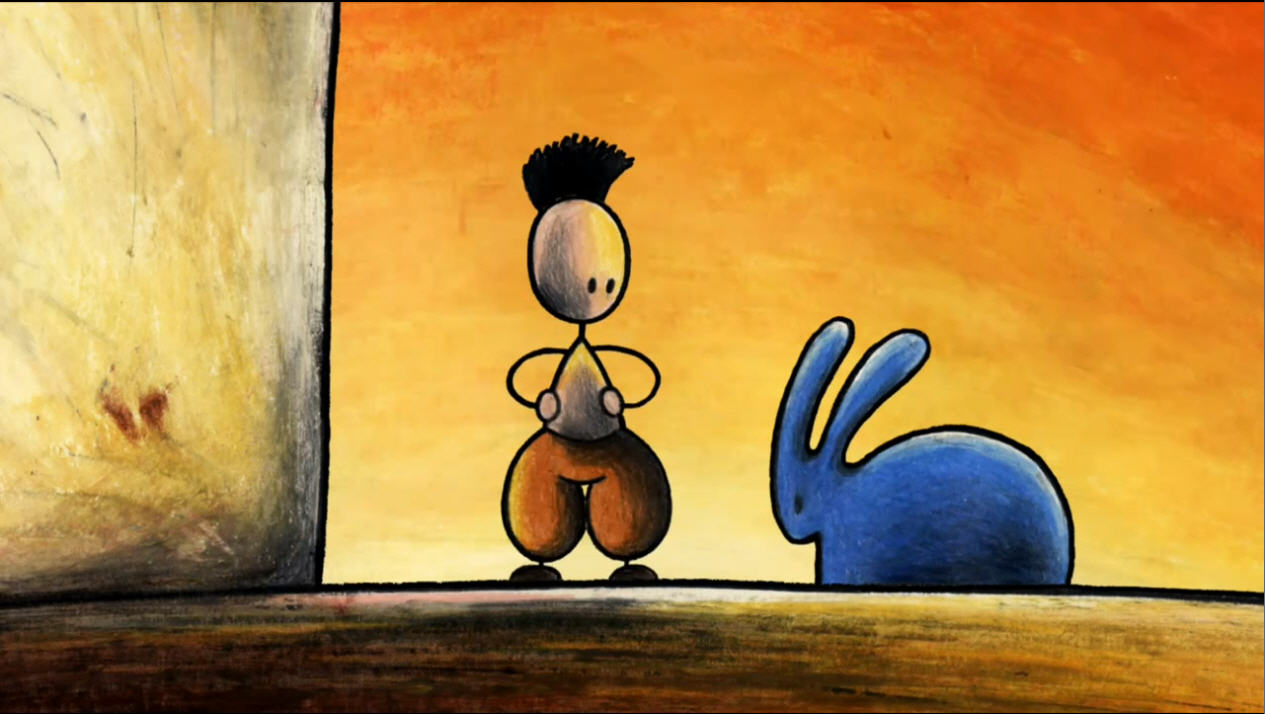 ‘The Runt’ is Hykade’s fourth independent film. It’s a disturbing short about a little boy who is allowed to keep a pet rabbit, if he’s going to kill it himself the next year.
Hykade’s simple and cute designs, and use of bright colors contrast with the film’s grim story, but they also make it watchable for everybody. There’s practically no reference to any time or place, and its story about death and coming of age has a universal appeal. Its timelessness makes the film an instant classic.
‘The Runt’ may not be as bold as his previous film, ‘Ring of Fire’ (2000), it is a great example of Andreas Hykade’s talent. He has succeeded in creating one of those rare shorts that make you think.
Watch ‘The Runt’ yourself and tell me what you think:
‘The Runt’ is available on the DVD ‘International Animation: Modern Classics’
Director: Bruno Bozzetto
Release Date: 1983
Rating: ★★
Review:
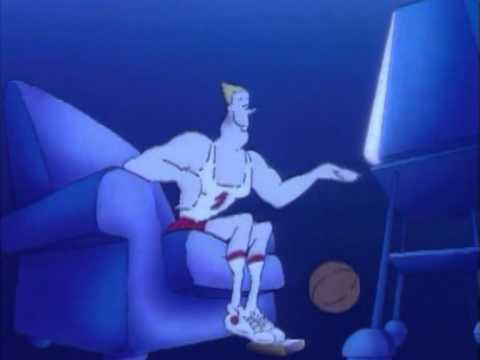 ‘Sigmund’ is a very short cartoon, commissioned for the 1984 Olympic Games in Los Angeles.
The cartoon consists of one scene in a blue room in which a bespectacled little boy imagines himself as the sport stars he watches on television. The little boy’s imagination is shown by metamorphosis: we watch him change into the sport stars, growing with every metamorphosis.
‘Sigmund’ is a sweet short, but neither memorable, funny or one of Bozzetto’s best.
Watch ‘Sigmund’ yourself and tell me what you think:


 Dr. Grob's Animation Review