
You are currently browsing the tag archive for the ‘illness’ tag.
Director: Earl Hurd
Release date: April 23, 1919
Stars: Bobby Bumps and Fido
Rating: ★★★
Review:

‘Bobby Bumps’ Pup Gets the Flea-Enza’ is a funny take on the devastating Spanish Flu epidemic of 1918-1920. In this cartoon Bobby Bumps and Fido both think Fido’s got the influenza, while he only got a flea (depicted as a black devilish little man).
The humor is mild, but Earl Hurd once again demonstrates to be one of the best animators of the era. Every shot and move look smooth and elegant. The best gag may be the visit to the horse doctor.
‘Bobby Bumps’ Pup Gets the Flea-Enza’ is available on the Blu-Ray-DVD combo ‘Cartoon Roots: The Bray Studios Animation Pioneers’
Director: Shinichiro Ushijima
Release date: July 24, 2018
Rating: ★★★★
Review:
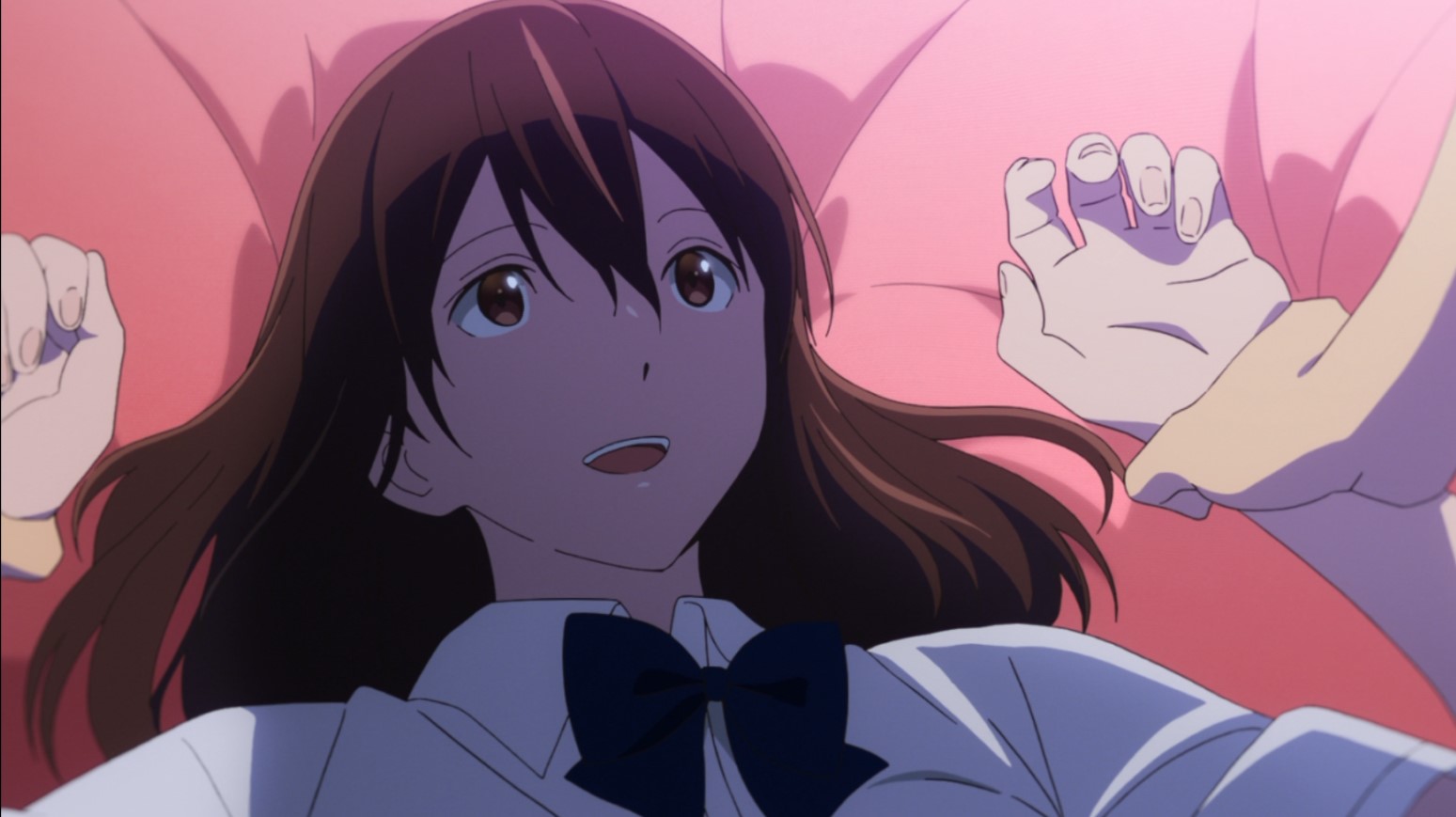
‘I Want to Eat You Pancreas’ is the first of only two animated feature films by the rather obscure Studio VOLN, which at least I had never heard of before. Studio VOLN isn’t even a big player in the television anime world, with only four series produced thus far. Strangely enough the studio made both its feature films in 2018.
The title of this film, which is a literal translation of the Japanese one, is a contender of the strangest film title of all time award, but what it means is revealed soon enough. The film is based on a novel, and as Japanese animation films often go, there’s nothing that implies the need for animation (except, maybe, for the long spiritual finale).
The film is told by a seventeen year old anonymous schoolboy (his name is only revealed in the very end). He tells about his surprising friendship with a fellow classmate, a girl called Sakura Yamauchi. Sakura is an apt name this character, as Sakura means ‘cherry blossom’, which is a symbol of impermanence in Japan, while the Sakura of the film is already dying from a pancreatic disease at her tender age of seventeen.
Sakura is a bit too much of a pixie girl, and although we also follow her own emotions and anxieties, it’s the story teller’s transformation through her influence that is the film’s focus. At the film’s start the unnamed narrator is a phlegmatic loner, always buried in a book, but indifferent to others and unwilling to commit himself to any relationship. Obviously, the extravert Sakura is going to change all that.
Highlight of this journey is a trip by the two to another town. Part of this trip is told in an original way by still images with dialogue on top, but even better are the scenes in the hotel, which are full of erotic tension. The film’s finale, on the other hand, with its overlong diary sequence is overblown and threatens to harm the complete film. Nevertheless, don’t forget to wait after the end titles!
Throughout, the background art and lighting are both of an extraordinary beauty, making the film a pleasant watch. The character designs, animation and soundtrack on the other hand are very generic and leave much to be desired. In fact, often the animation doesn’t transcend that of the average anime television series. There’s a little computer animation, but this is only used functionally on background art, traffic, fireworks, and such.
Even if the film is not the most interesting one in terms of animation, the film is (for most of the time) well-told, and its emotional tale does move. By all means the film shows that feature animation can be so much more than family entertainment, a message that is still lost on the American studio system.
Watch the trailer for ‘I Want to Eat You Pancreas’ yourself and tell me what you think:
‘I Want to Eat You Pancreas’ is available on Blu-Ray and DVD
Directors: Alain Gagnol & Jean-Loup Felicioli
Release Date: September 12, 2015
Rating: ★★★★★ ♕
Review:

2015 was a good year for French animation. June already saw the release of the great movies ‘Avril et le monde truqué’ (April and the Extraordinary World) and ‘Tout en haut du monde’ (Long Way North), but these were topped in September by the Franco-Belgian production ‘Phantom Boy’.
‘Phantom Boy’ was created by Alain Gagnol and Jean-Loup Felicioli, who have been working together at the French Folimage studio since the mid-nineties, and who brought us the entertaining feature film ‘Une vie de chat’ (A Cat in Paris) in 2010. But compared to the earlier feature scenarist Gagnol adds an extra layer of depth to ‘Phantom Boy’, because this is not only an adventure film, but it also tells about a boy suffering from a deadly disease.
‘Phantom Boy’ is a children’s film set in New York, and tells about Léo, an eleven years old boy, who’s seriously ill (he’s probably suffering from cancer, but the exact illness is never revealed) and hospitalized. In the hospital Léo discovers that his spirit can leave his body and look around, encountering other spirits while doing so.
During one of these wanderings, he encounters the spirit of Alex Tanguy, an injured policeman. Tanguy is after a master villain, the “man with the deformed face”, who threatens to shut down the whole of New York with a computer virus if not delivered a huge sum of money. Unfortunately, Tanguy is stuck at the hospital, but he discovers Léo’s spirit can snoop around for him. Thus, Léo can help miss Delauney, a feisty journalist, who’s also on the villain’s trail. There’s a catch, however, Léo’s spirit must return to Léo’s body in time, or Léo will certainly die…
The film is thus a very nice mix of adventure, in which Léo’s superpower is used to a great effect, and drama, because the film makers never lose sight of Léo’s illness, and show the ails, fears, and sorrows of Léo and his family, as well. Thus, the film is not only exciting, but knows some really moving scenes, too.
Nevertheless, the film never becomes heavy-handed, and in fact is often very funny. Especially the master villain’s two helpers are great comic relief, but the best gag goes to the master villain himself, who several times tries to tell the story behind his deformation, only to get cut short all the time.
The film has a very pleasant visual style, courtesy of Jean-Loup Felicioli, who has given the film a very idiosyncratic take on the Franco-Belgian comic strip tradition. Typical for Felicioli is a strongly graphical and very angular style (not a thing is straight in this film), and the slant eyes of most characters. The man with the deformed face is practically cubist, with his multi-colored and checkered face. The color palette is warm and appealing, and the animation uses the jittery style often encountered in independent shorts.
Films like this prove that traditional animation is far from dead (‘Phantom Boy’ was even drawn on paper, and hand colored, even though the final composition was done on the computer), and in fact allows for a less generic and more adventurous style than contemporary computer animation. I’ll even go that far to name ‘Phantom Boy’ the best animated feature of 2015, despite serious competition from both ‘Shaun the Sheep Movie’ and ‘Inside Out’.
Watch the trailer for ‘Phantom Boy’ yourself and tell me what you think:
‘Phantom Boy’ is available on Blu-Ray and DVD
Director: Dave Fleischer
Release Date: May 29, 1938
Stars: Popeye, Olive Oyl
Rating: ★★★½
Review:
 ‘I Yam Love Sick’ opens with Olive Oyl reading a romance.
Popeye drops by, but Olive ignores him completely. Later she explains she has a new boyfriend now, Bluto. To win her back, Popeye feigns to fall very ill. This leads to a bizarre, and rather surreal series of hospital scenes, in which weird bearded doctors try to examine Popeye. In the end Popeye reveals he was only fooling, only to get clobbered by Olive.
‘I Yam Love Sick’ is full of delightful nonsense. The best gag is when Olive steps out of the panel to address the audience with an ‘is there a doctor in the house?’.
Watch ‘I Yam Love Sick’ yourself and tell me what you think:
This Popeye film No. 60
To the previous Popeye film: Big Chief Ugh-Amugh-Ugh
To the next Popeye film: Plumbing is a “Pipe”
‘I Yam Love Sick’ is available on the DVD-set ‘Popeye the Sailor Volume Two’
Director: Jack Kinney
Release Date: April 27, 1951
Stars: Goofy
Rating: ★★★
Review:
 ‘Cold War’ introduces a new name for the Goofy character as the average American, as he had already been portrayed in ‘Goofy Gymnastics‘ (1949) and ‘Hold That Pose‘ (1950).
From now on our hero is known as Mr. George G. Geef, who has a characterless, average voice and who is married to a human wife, of whom we only see her arms and legs. Despite these departures, ‘Cold War’ stills uses the voice over from the sports cartoons, putting the cartoon firmly back into a great tradition. Nevertheless, George G. Geef has little to do with the original Goofy from ‘On Ice‘ (1935), and it’s almost inconceivable that it’s still the same character.
As George Geef Goofy would deal with the troubles of the average American man, like diets, children, and cigarettes. And so, in this first entry of the ‘George Geef’ series within the Goofy series, Mr. Geef catches a cold at work, and is nursed to the max by his over-caring wife…
Watch ‘Cold War’ yourself and tell me what you think:
This is Goofy cartoon No. 29
To the previous Goofy cartoon: Home Made Home
To the next Goofy cartoon: Tomorrow We Diet!


 Dr. Grob's Animation Review