
You are currently browsing the category archive for the ‘European films’ category.
Directors: Tomm Moore & Ross Stewart
Release date: October 30, 2020
Rating: ★★★★★ ♕
Review:
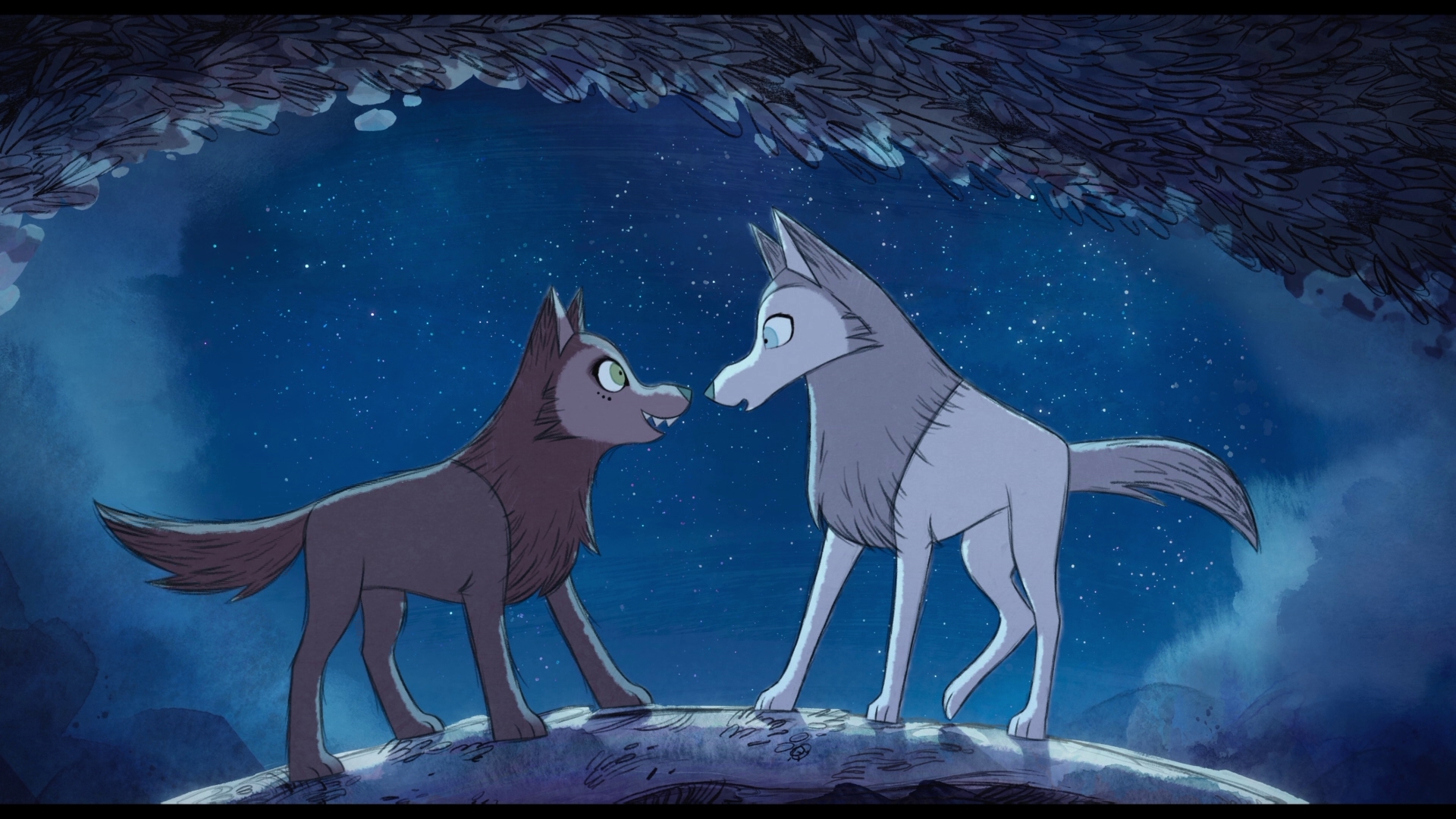
When these films were released, I doubt that many people were aware of that, but Irish studio Cartoon Saloon’s ‘The Secret of Kells’ (2009) and ‘Song of the Sea’ (2014) were part of an Irish folklore trilogy, which was rounded up in 2020 by ‘Wolfwalkers’.
All three films are indeed deeply rooted in Irish culture, and could not have been made elsewhere, but certainly ‘Song of the Sea’ and ‘Wolfwalkers’ also feature universal stories, ‘Song of the Sea’ one of loss and grief, ‘Wolfwalkers’ one of repression.
The idea of ‘Wolfwalkers’ is rooted in the fact that Ireland once used to be a forested country, with wolves roaming around. According to Wikipedia the last wolf in Ireland was killed in 1786, thus the species has long since been extinct on the island. The film goes further back, though, to the town of Kilkenny in 1649-1650, during Oliver Cromwell’s invasion of Ireland (who, without doubt, is the Lord Protector of the film, even though the film makers turn him into a fictional character, resulting in an alternate history ending).
In this town we follow English hunter Goodfellowe, who is deployed by the Lord Protector to hunt down the wolves of the forests surrounding the town, and his feisty daughter, Robyn, who befriends an even livelier mysterious forest girl called Mebh. In an interview on the Kaboom! Animation Festival director Tomm Moore told us they first thought of Robyn as a boy, but a girl fitted better, as she would feel the repressive times even more than a boy would do. And indeed, the film is not necessarily about repression of the Irish, but about repression in general, not in the least of women, with Robyn being forced into a gender role very unsuitable for her (or any other woman of the era, for that matter). It’s painful to see that Robyn’s own father ties the knots to in order to protect her (this story arc is reminiscent of ‘Finding Nemo’ – both films star over-protected fathers stifling their children). This makes ‘Wolfwalkers’ one of at least two great feminist animation films of 2020, the other one being ‘Calamity, une enfance de Martha Jane Cannary’ from France.
Apart from repression the film discusses deep topics like man vs. nature, Christianity vs. paganism, certainty vs. softness, man vs. woman, and single truth fanatism vs. a multi-voiced and more ambivalent reality, all packed in a perfectly told and family friendly adventure fantasy film. ‘Wolfwalkers’ is also vaguely reminiscent of Ghibli’s ‘Princess Mononoke’ from 1997: both films show the problems of man’s handling of nature, without regressing to a mere good and evil. Indeed, the Lord Protector as depicted, is less cruel than I presume the real Oliver Cromwell would have been (no one gets killed in the movie, for example), and his motivations are clearly explained. The film makes clear that the Lord Protector is not necessarily evil, but a fanatic, who is certain that he is on the right path.
As with the previous two Irish folklore films ‘Wolfwalkers’ is an absolutely delight to look at. The film uses very stylized designs and strong color arrangements, both in characters and in the background art. The rigid straightforwardness of the Lord Protector and the city is translated by the straight horizontals and verticals depicting the town, and even of many of its inhabitants. The film makers even show the town as a straight grid when seen in the distance, showing the town with a daringly complete lack of perspective. The grid-like is greatly contrasted by the curves of the forest, which symbolize freedom from the societal straitjackets of the city. The film becomes even more free, when showing the raw animation drawings of running wolves, with the digital pencil lines themselves becoming free from restriction. In this respect, this film is even more beautiful than the two earlier pictures – in fact every frame is a beauty, making this film one of the most beautiful animation films ever made.
The animation is of a high standard anyway: despite all the flat designs there’s a lot of perspective animation and there are even quite a lot of moving backgrounds, especially during the scent and running scenes. The character animation is subtle and often understated. For example, the character difference between Robyn and Mebh is shown by the different movements of the two characters, while Goodfellowe becomes less mobile when the repression ties him further and further.
In all, ‘Wolfwalkers’ is easily the best animation film of 2020, even outcompeting the strong Pixar film ‘Soul’, and must be ranked among the best animation films of all time. Strongly recommended.
Watch the trailer for ‘Wolfwalkers’ yourself and tell me what you think:
‘Wolfwalkers’ is available on the Blu-Ray or DVD set ‘Cartoon Saloon’s Irish Folklore Trilogy’
Director: Rémi Chayé
Release date: June 28, 2020
Rating: ★★★★★
Review:
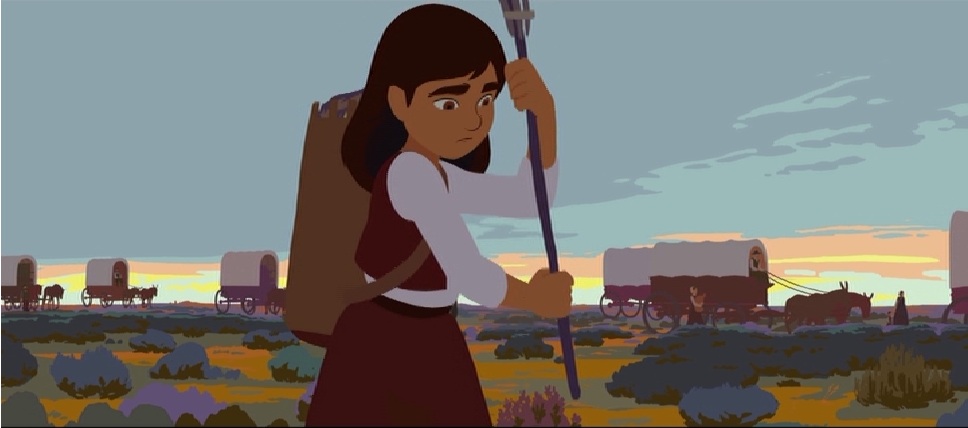
In 2015 Rémi Chayé surprised the animation world with his strong feature film ‘Tout en haut du monde’ (Long Way North), but his second feature, ‘Calamity, une enfance de Martha Jane Cannary’ arguably is even better.
Like the previous film ‘Calamity’ excels in an absolutely gorgeous digital background art, showing the prairies and mountains of the West in a plethora of colors, making each frame a delight to watch. But of course, this isn’t enough to sustain a feature film, and I am glad I can say that the story is also very good.
Like ‘Tout en haut du monde’ ‘Calamity’ stars a strong young female protagonist, and even more than in the previous film, ‘Calamity’ deals with the oppressive gender roles women were forced into, even if it didn’t suit their characters, ambitions and talents, at all. The film, of course, is based on real life enfant terrible Calamity Jane (1852-1903), but only vaguely so, and the film is called ‘A childhood’ and not ‘THE Childhood’, because the events depicted are mostly fictional and do not correspond to what we know about the historical Martha Jane Can(n)ary.
Nevertheless, with this film Chayé succeeds in making a subtle yet strong feminist statement. In fact, ‘Calamity’ is one of two strong European animation films from 2020 showing the historical plight of women, and how a masculine society kept them down for ages, for ‘Wolfwalkers’ by Cartoon Saloon tackles the same issues.
In the film we follow young Martha Jane (ca. 12-14 years old, I guess) accompanying her father and her two younger siblings on a caravan to Oregon. Her rather clumsy father is quite an outcast in the caravan, and Martha Jane is frequently mocked by Ethan, the son of the caravan’s leader, Mr. Abraham. When Martha Jane’s father breaks his ribs and must lay down in the wagon, and when goods get stolen from the caravan there’s an opportunity for Martha to break out of her role as an obedient girl, which she does with gusto, defying all counterforces she meets.
During the film Martha Jane poses as a boy called Marcus for a long time, and the only implausibility is when she gets chained to a real boy called Jonas. How she manages to maintain her disguise during these days baffles me. Otherwise, this is a strong coming of age film, which shows that women can be the equals of men, if they’re only allowed to.
Apart from gorgeous background art, the film includes appealing character designs, an effective, often surprisingly Japanese-like animation style and appropriate music. The result is one of the best feature films of 2020, on the same level as the more famous ‘Soul’ and ‘Wolfwalkers’.
Watch the trailer for ‘Calamity, a Childhood of Martha Jane Cannary’ yourself and tell me what you think:
‘Calamity, une enfance de Martha Jane Cannary (Calamity, a Childhood of Martha Jane Cannary)’ is available on Blu-Ray and DVD
Director: Vladimír Šilhan
Release date: 1963
Rating: ★★★★
Review:
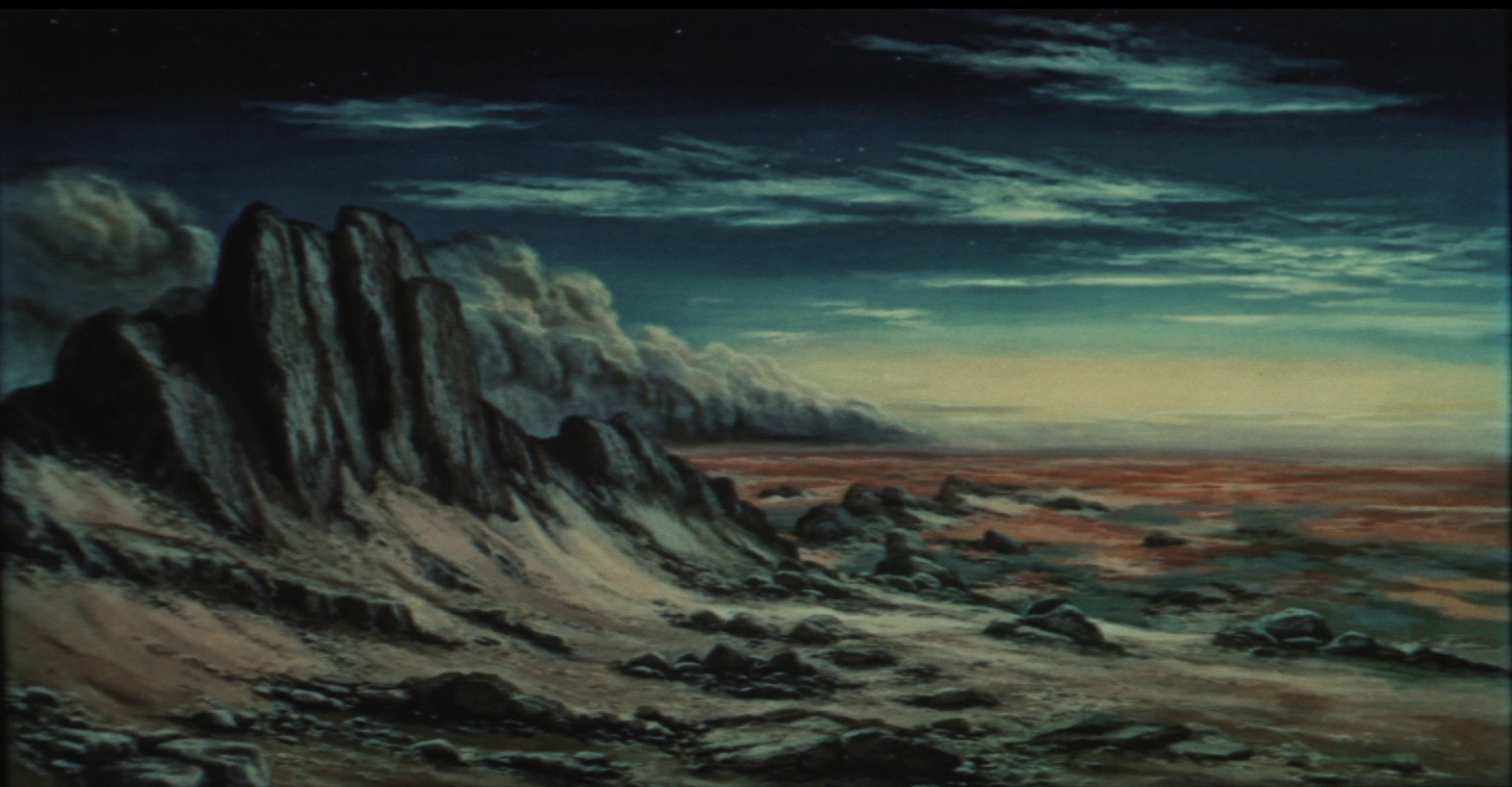
‘Hypotézy’ is a film on how landscapes would look like if we were on other planets.
We watch beautiful paintings of a hypothesized Mercury, Venus, Moon, Mars, Jupiter and Ganymede, Saturn and Titan, Uranus, Neptune and Pluto. Mars is shown as a planet with a possibility of life, while the moon sequence uses a little animation. The whole film is rather poetic and thoroughly enjoyable despite consisting of still images mostly.
Watch ‘Hypotézy’ (unfortunately Czech only) yourself and tell me what you think:
‘Hypotézy’ is available on the Blu-Ray of ‘Ikarie XB-1’
Directors: Max Lang & Daniel Snaddon
Release date: December 25, 2019
Rating: ★★★½
Review:

‘The Snail and the Whale’ is yet another Magic Light Pictures production based on a Julia Donaldson and Axel Scheffler book. Like all the books and films based on them since 2009’s ‘The Gruffalo’ the film is told in rhyme. But because this adventure takes place mostly at sea, there’s much more CGI involved than usual, and the film thus is less tactile than Magic Light Pictures earlier productions.
The story is cute and shows that even the smallest can make a difference. Yet, the film is less compelling than say ‘The Gruffalo’ (2009), ‘Room on the Broom‘ (2012) or ‘Stick Man’ (2015) and that’s because of the source material, which just isn’t on the same level of story telling. The small gags present in earlier films are also lacking, and for a too large part we just watch the little snail enjoy its travels without anything else happening.
The animation, of course, is top notch, and the designs are, as always, appealing, although the human figures are much less interesting than the animals, and the whale is rendered rather straight. You can also sense the difficulty of the interaction between the two animals, because of the gigantic size difference. The result is a charming film, if not among Magic Light Pictures’ best works.
Watch the trailer of ‘The Snail and the Whale’ yourself and tell me what you think:
‘The Snail and the Whale’ is available on DVD
Director: Floor Adams
Release date: February 23, 2019
Rating: ★★★★
Review:
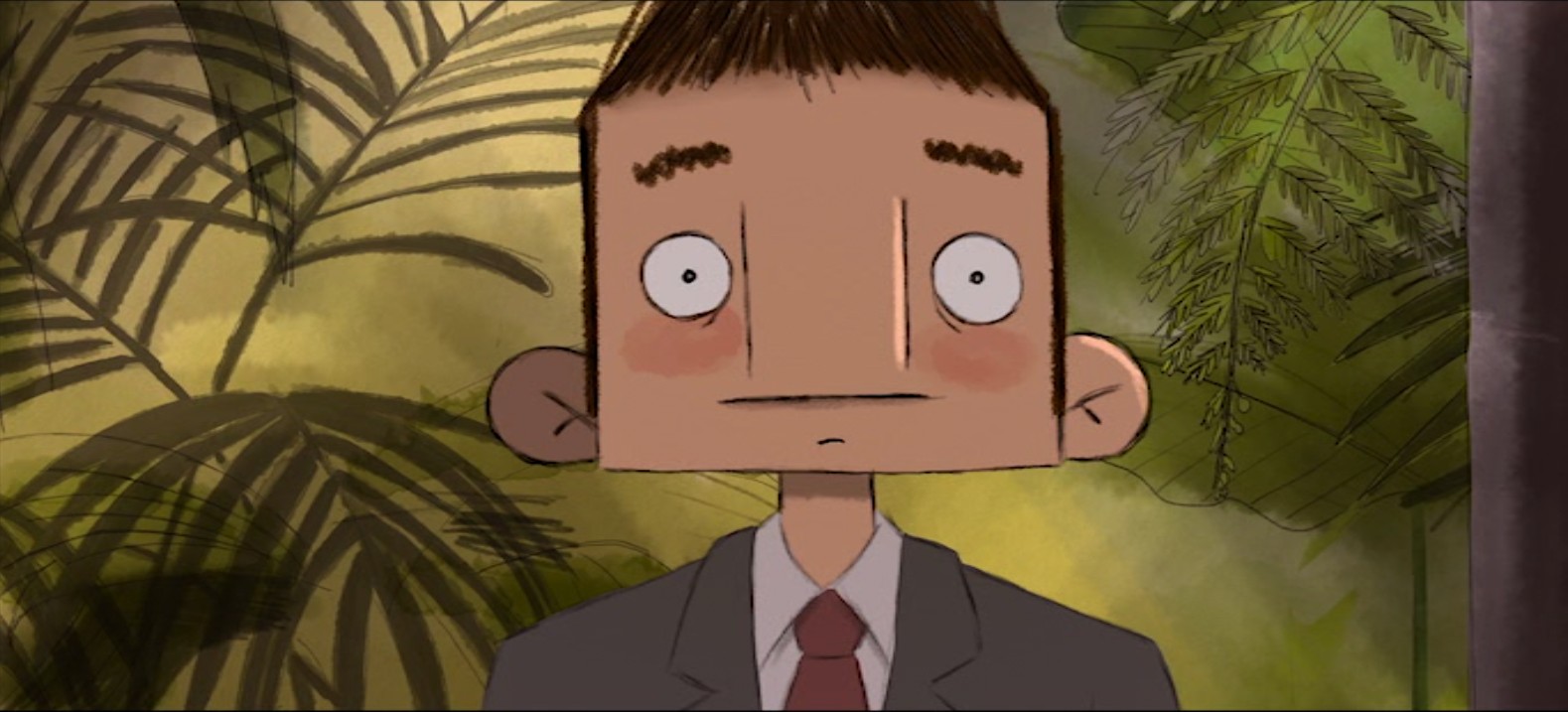
Christopher is a man on the autism spectrum, He loves his model Stuka dive bomber airplanes, but he has difficulties with social relationships. When is older brother invites him along to a party, a whole new adventure for him starts.
Christopher’s autism is shown by a homunculus inside his head who has to look up and memorize everything and thus easily gets an information overload, for example when too much is happening at the same time during the party. Christopher clearly is as sympathetic as he is social awkward, but I cannot help but admire the patience of his love interest Gwen, who has to suffer a lot through Christopher’s erratic behavior.
‘Mind My Mind’ is a nice insight in the mind of a person on the autism spectrum, but succeeds not entirely or convincingly in making the audience believe he can function easily in society.
The designs are pleasant, although I found the homunculus too sketchy a character. The animation meanwhile, is fair, and focuses on the characters’ emotions and relationships. Despite being a Dutch-Belgian co-production, the voices are in English, and thus the film can be enjoyed by a large audience.
Watch the trailer of ‘Mind My Mind’ yourself and tell me what you think:
‘Mind My Mind’ is available on DVD
Director: Walerian Borowczyk
Release date: December 1963
Rating: ★★★★★ ♕
Review:
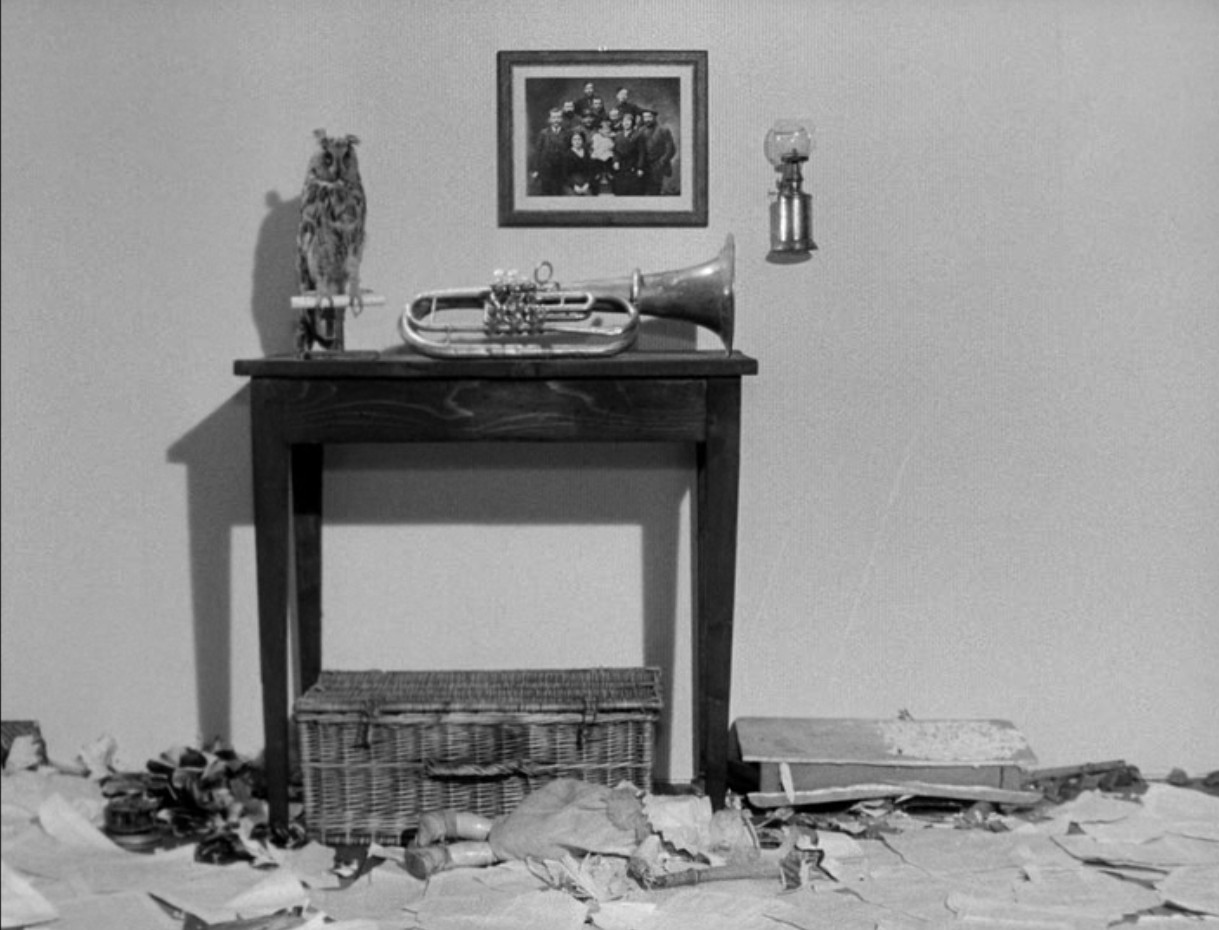
‘Renaissance’ must be counted among Walerian Borowczyk’s best and most powerful works. Instead of the silliness of ‘Les Astronautes‘ and ‘Encyclopédie de Grand-Maman‘, ‘Renaissance’ is a powerful stop-motion film on destruction.
The short starts bleak enough with the scene of a completely destroyed chamber. But then the objects in the room start to reassemble themselves…
Borowczyk’s command of stop-motion and reverse film making is astonishing, and although the tricks used are as old as cinema itself, these are used to an impressive effect, greatly enhanced by the soundtrack with all its crystal clear sounds. The whole surreal atmosphere looks forward to Jan Švankmajer’s stop-motion works, as does the morbid atmosphere.
Watch ‘Renaissance’ yourself and tell me what you think:
‘Renaissance’ is available on the Blu-Ray/DVD set ‘Walerian Borowczyk: Short Films and Animation’
Director: Walerian Borowczyk
Release date: June 1963
Rating: ★★★★
Review:
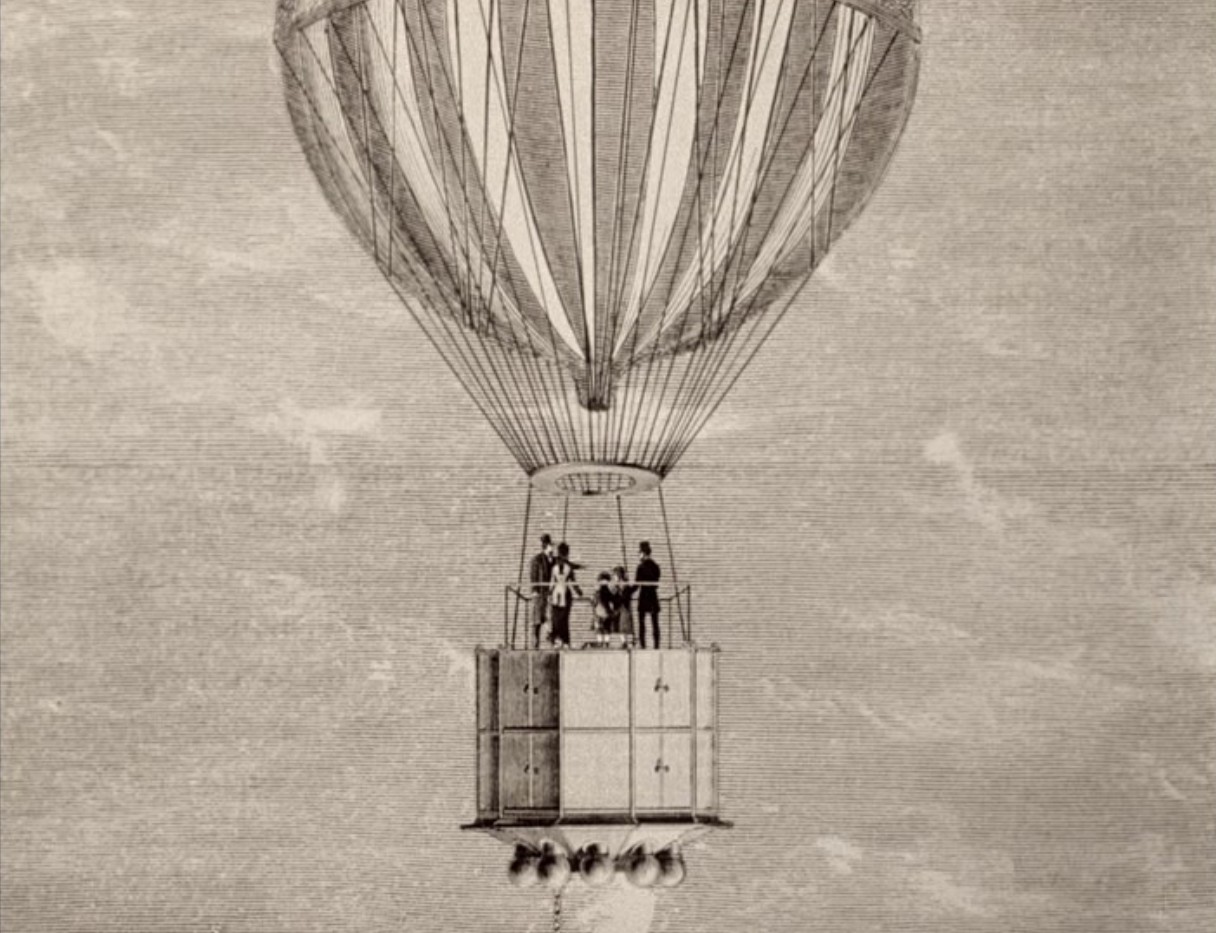
With ‘Encyclopédie de Grand-Maman’ Borowczyk continues the silly surrealism of ‘Les Astronautes‘ from 1959. Although we are promised 13 volumes, we only watch three words from the Encyclopédie: A is for automobiles, B for Balloons and C for Chemin de fer (Railways).
The film uses 19th century engravings to a great effect, especially the car race in ‘Automobiles’ is as inventive as it is entertaining. Borowczyk makes clever use of his source material, and the animation is greatly helped by the stark sound effects. These aspects make ‘Encyclopédie de Grand-Maman’ a fun film, if not more than that.
Watch ‘Encyclopédie de Grand-Maman en 13 Volumes’ yourself and tell me what you think:
‘Encyclopédie de Grand-Maman en 13 Volumes’ is available on the Blu-Ray/DVD set ‘Walerian Borowczyk: Short Films and Animation’
Director: Walerian Borowczyk
Release date: 1962
Rating: ★★
Review:
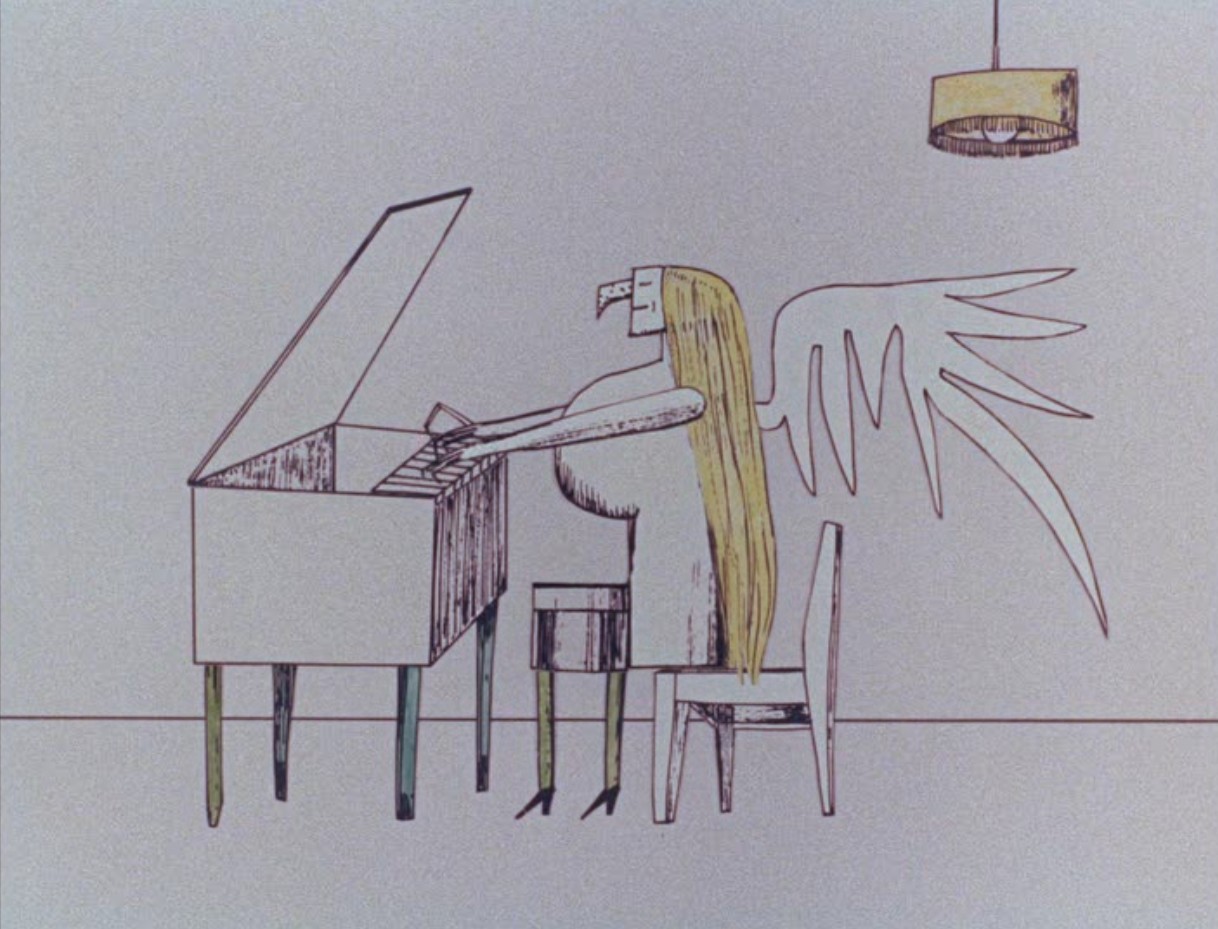
‘Concert’ stars Monsieur and Madame Kabal from the later feature film ‘Théâtre de Monsieur & Madame Kabal’ from 1967. This couple, a short man who constantly drinks and a grotesque tall woman with a hooked nose, are known for their domestic violence, and ‘Concert’ is no exception. When Madame Kabal catches Monsieur Kabal snoring through her piano recital her revenge is severe.
Unfortunately, Borowczyk’s cut-out animation is crude and emblematic, and even the violence is rather abstract. Even worse, a lot of time is wasted on less interesting scenes. Moreover, Monsieur and Madame Kabal are neither interesting or appealing characters and Borowcyk does nothing to establish their relationship. Thus, it doesn’t interest the viewer at all what happens to them on the screen, a problem that also haunts Borowczyk’s feature animation film.
Luckily, the next year Borowczyk would prove he could do much better with ‘Encyclopédie de Grand-Maman en 13 Volumes ‘ and especially the dark stop-motion short ‘Renaissance‘.
Watch ‘Concert’ yourself and tell me what you think:
‘Concert’ is available on the Blu-Ray/DVD set ‘Walerian Borowczyk: Short Films and Animation’
Director: Walerian Borowczyk
Release date: 1959
Rating: ★★★
Review:
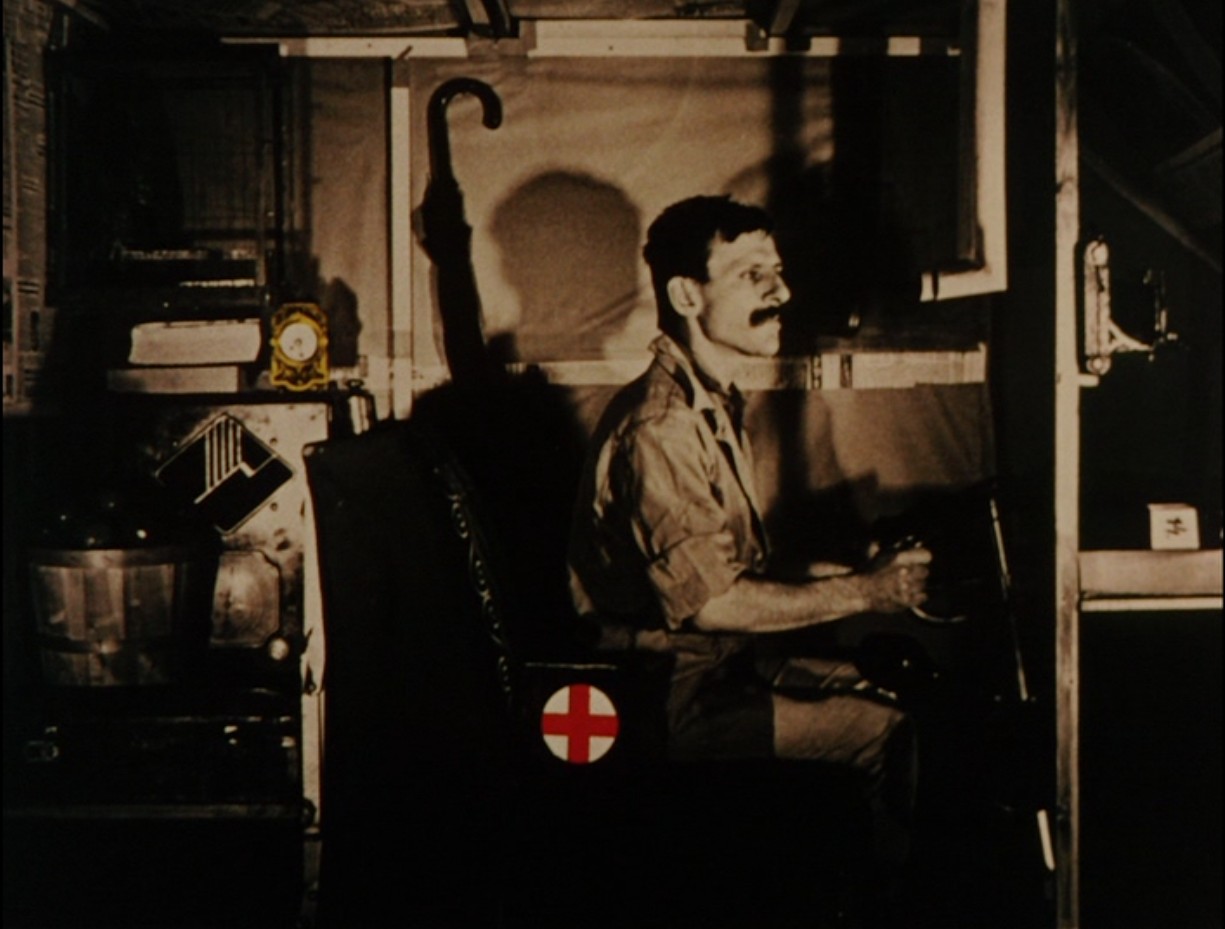
‘Les Astronautes’ was the first film the Polish film maker Walerian Borowczyk made in France. In this short a mustached inventor with a pipe builds his own spaceship.
This film is as surreal as it is silly and it consist of several hardly related gags. For example, the first thing the man does with his spaceship is spying on a woman dressing. Throughout, Borowczyk combines pixilation and cut-out animation of hand-colored photographs to a great effect. The surreal atmosphere is enhanced by Andrzej Markowski’s electronic score and sounds.
‘Les Astronautes’ may be of little substance, it’s an entertaining film, nonetheless.
Watch ‘Les Astronautes’ yourself and tell me what you think:
‘Les Astronautes’ is available on the Blu-Ray/DVD set ‘Walerian Borowczyk: Short Films and Animation’
Director: Roman Davidov
Release date: 1963
Rating: ★★★
Review:
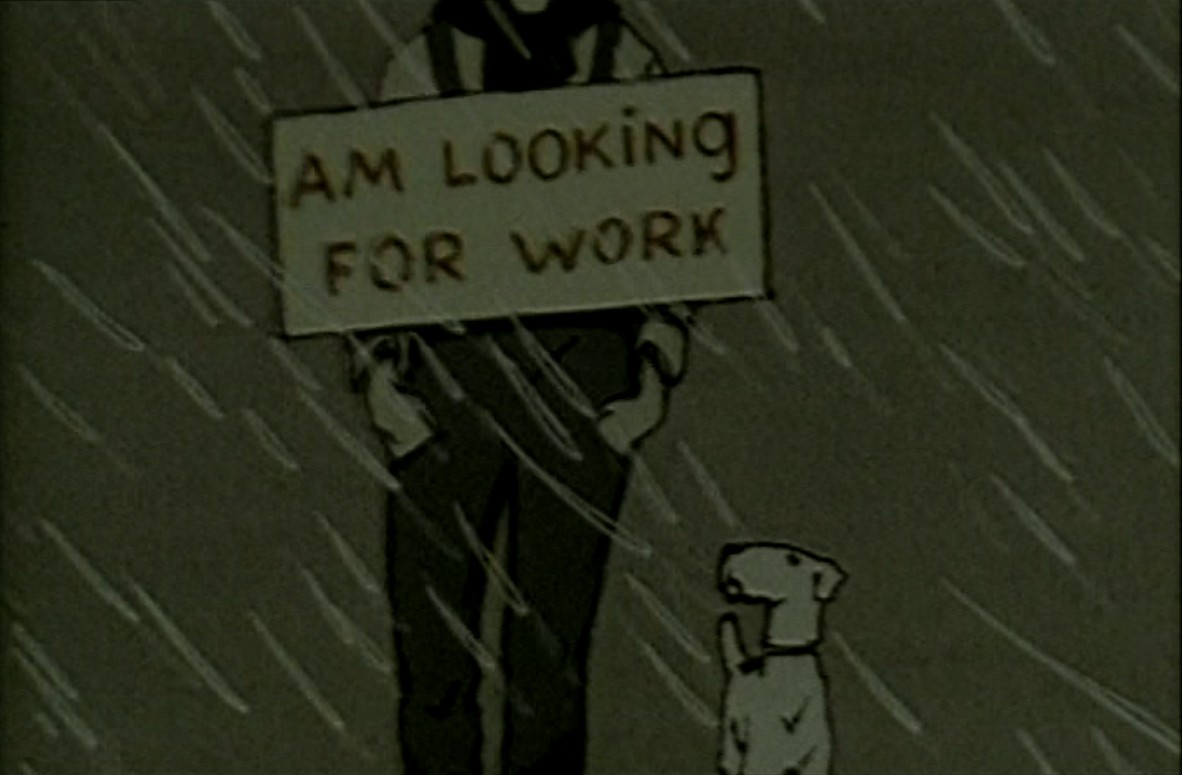
‘The Shareholder’ is the third of three animated Soviet propaganda shorts aimed at American capitalism from 1963, the other two being ‘Mister Twister‘ and ‘The Millionaire‘.
Of the three this short is by far the most interesting visually. The short uses a strikingly graphic style and cel animation of the highest quality. The animators working on this short clearly have full command of the human and animal form, making this propaganda short a feast for the eye. The story, on the other hand, is not as attractive: at 24 minutes it is slow, meandering, repetitive and overlong.
‘The Shareholder’ is worker Michael Chase, who is made shareholder of the Pearson company. But when he gets fired, he soon discovers that this share is worth nothing, nor are his possessions, which were all bought on credit. Broken and without a job he wanders the streets.
The film’s highlight is the scene in which Michael Chase loses all his possessions: they change into cheaper and cheaper forms for his eye, before vanishing altogether. It’s also interesting to note that the film predicts how robotization leads to unemployment. However, the film’s message remains fuzzy, and its ending unclear.
Watch ‘The Shareholder’ yourself and tell me what you think:
‘The Shareholder’ is available on the DVD set ‘Animated Soviet Propaganda’
Director: Anatoly Karanovitch
Release date: 1963
Rating: ★★★★
Review:
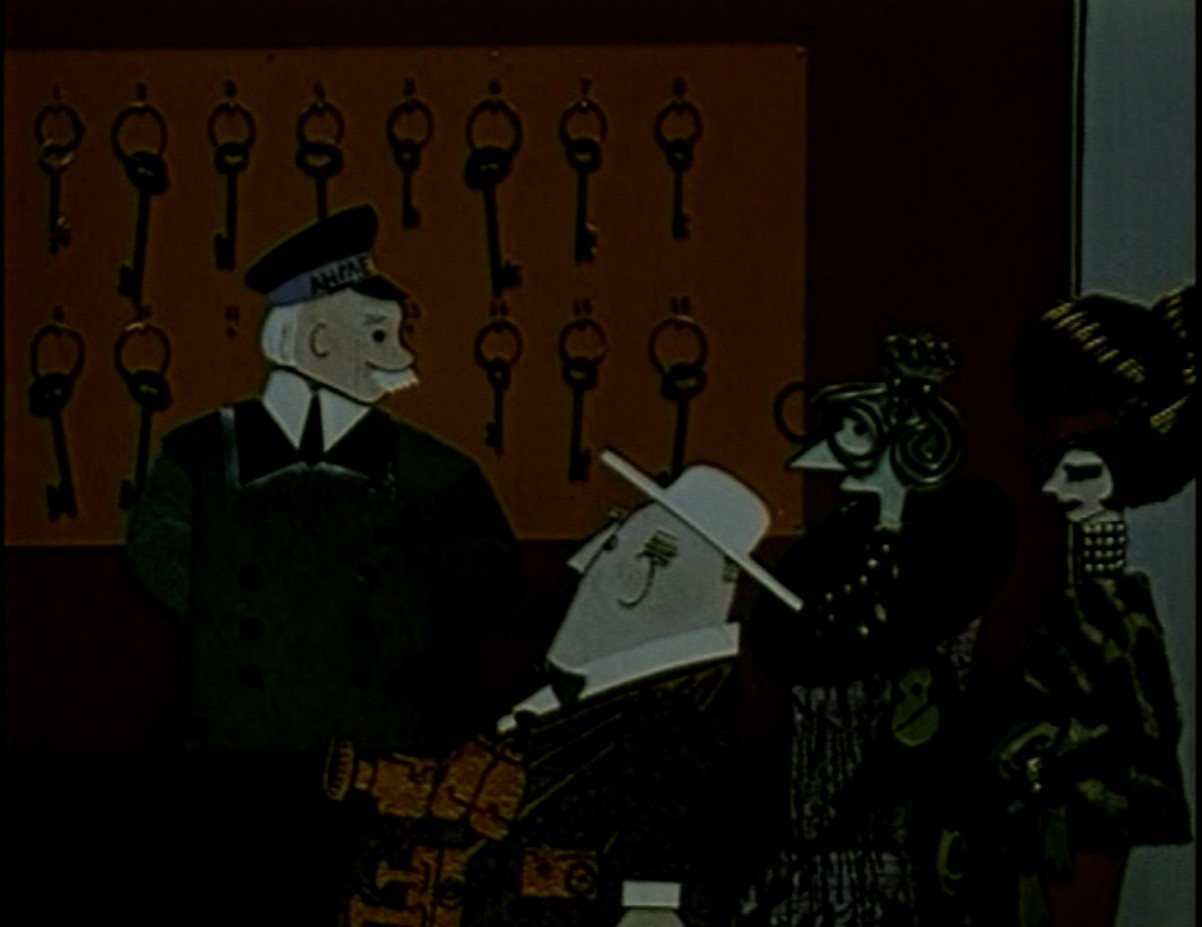
After Fyodor Khitruk gave Soviet animation a huge update with ‘Story of One Crime’, the animated Soviet propaganda shorts also became more modern and interesting to look at. A good example is ‘Mister Twister’ from 1963.
Based on the poem of the same name by Samuel Marshak (1887-1964) ‘Mister Twister’ is a story in rhyme about Mr. Cook (alias ‘Mister Twister’), an American millionaire who visits the Soviet Union on request of his daughter Susie. When he arrives in Leningrad, he refuses to sleep in the appointed hotel, because a black man sleeps there, too. The doorman of the hotel calls all his colleagues from other hotels to tell the millionaire they’re full. After a tiring day of searching and a night in the doorman’s office, the millionaire and his family are completely humbled. Now, Mr. Cook will rent a room, even though he will be surrounded by colored people, all visiting Leningrad because an international conference.
This cartoon uses both cel animation and cut-out techniques and is conceived as a children’s book coming alive. The animation (e.g. by a young Yuri Norstein) is crude and emblematic, but shows modern influences in its unnatural depictions of movement.
‘Mister Twister’ is one of no less than three animated Soviet propaganda films from 1963 aimed at American capitalism. Despite the rather poor animation, it’s the best of the three, because of the charmingly little story, and because its anti-racist message, which is of a much more lasting quality than say the glory of communism.
Watch ‘Mister Twister’ yourself and tell me what you think:
‘Mister Twister’ is available on the DVD set ‘Animated Soviet Propaganda’
Directors: Vitold Bordzilovsky & Yuri Prytkov
Release date: 1963
Rating: ★★★
Review:
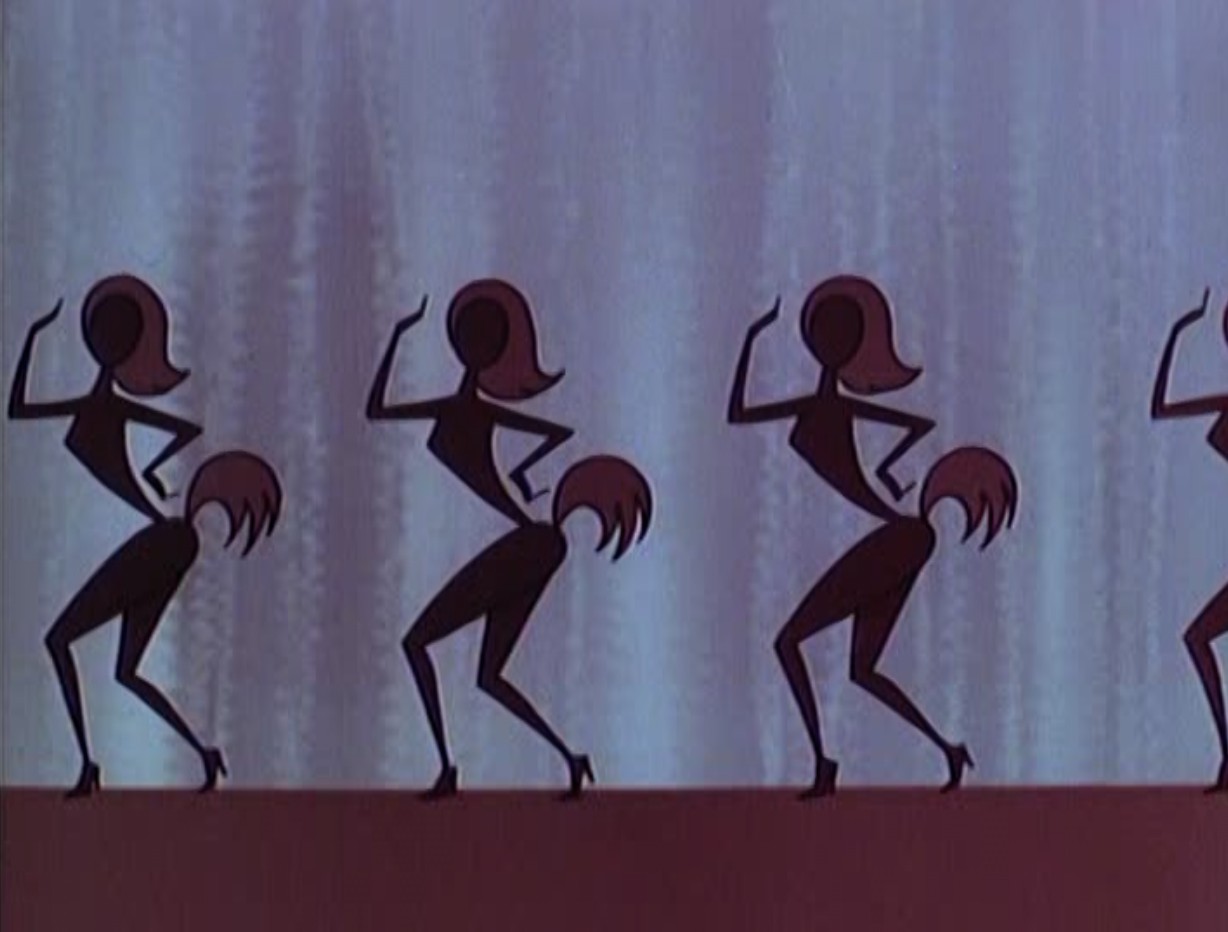
‘The Millionaire’ is an animated Soviet propaganda film, aimed at American capitalists, just like ‘Mister Twister‘ and ‘The Shareholder’ from the same year. Of the three its visuals are the most conventional: the simple cartoon style harks back to the 1930s and 1940s and is a little reminiscent of the work by Otto Soglow.
Like in ‘Mister Twister’, the story is narrated in rhyme, and this time tells about a bulldog which inherits a great fortune from an old lady. Now the dog is top of the bill, he behaves more and more human-like. He even manages to be elected into the senate, where, as a true capitalist (according to the narrator), he opposes peace. The short’s moral is a little unclear, but seems to be that money can even make the dumbest person mighty. Like in ‘Mister Twister’ the animation is emblematic, although there are some good takes on the dog.
Watch ‘The Millionaire’ yourself and tell me what you think:
‘The Millionaire’ is available on the DVD set ‘Animated Soviet Propaganda’
Director: Piet Kroon
Release date: October 13, 2018
Rating: ★★
Review:

The Dutch animated feature film industry long consisted of one movie only, ‘Als je begrijpt wat ik bedoel’ (The Dragon That Wasn’t (Or Was He?)) from 1983. But in recent years several other films saw the light, mostly directed at youngsters: ‘Nijntje de film’ (Miffy the Movie) from 2013 , ‘Pim & Pom: Het Grote Avontuur’ and ‘Trippel Trappel – Dierensinterklaas’, which are both from 2014, and more recently ‘Knor’ (‘Oink’) from 2022 and ‘Vos en haas redden het bos’ from 2024. An oddball within this recent canon is ‘Heinz’ from 2018.
‘Heinz’ was a comic strip by René Windig and Eddie de Jong that run in Dutch newspapers from 1987 to 2000 and again from 2004 to 2006. The comic strip was about a cat, Heinz, who quickly got more anthropomorphized until he became a sort of everyman. The strip knew some continuities but remained first and foremost a gag strip. Nevertheless, the authors dreamt of an animation film at least since the early 2000s.
Although film studio Zig Zag film started working on a film already in 2002, Windig’s and De Jong’s dream never amounted to anything. That is, until the project got new backing and new support from veteran animator Piet Kroon in 2015.
Piet Kroon had ample experience in America, having directed the animation for ‘Osmosis Jones’ (2001) and having worked on stories for a wide variety of animated feature films, e.g. ‘The Iron Giant’ (1999), ‘The Tale of Despereaux’ (2008), ‘Rio’ (2011) and ‘Ferdinand’ (2017). Kroon wrote a completely new story for the film, and with this much of the charm of the original comic strip got lost, and I doubt whether Windig and De Jong are pleased with the end result.
The first aspect of the original comic strip that went out of the window was its family-friendly nature, despite being produced by Burny Bos, who produced some of the best Dutch live action children’s movies. The feature film is clearly directed to adults and has little to offer for younger audiences (in the Netherlands the film is advised for 12 years and older, that says enough). The second major change Kroon made was the setting. The original comic strip takes place in an undefined fantasy Netherlands, but the movie Heinz clearly lives in the center of Amsterdam, which incidentally is also the residence of the comic strip’s two authors.
A more profound and more disturbing change than these two is the change of character of the cat himself. In the comic strip Heinz certainly is cranky, and sometimes insufferable, but in the movie, he is a downright irresponsible drunkard and deadbeat. In fact, in the early scenes the cat is so unsympathetic one wonders why he must watch the cat’s immature antics in the first place. Heinz’s voice by Ruben van der Meer, on the other hand, is well-chosen.
Heinz’s girlfriend Dolly fares little better, as she has changed from a sweet love to a working-class shrew, while Heinz’s friend Frits is nastier and more unsympathetic than his comic book counterpart. Frits also suffers from a bad voice choice (Reinder van der Naalt). In fact, one must look hard for any sympathetic character in the film…
Kroon certainly has tried to put as many characters from the original comic strip as possible into the film, and thus the movie is simply crowded with characters, who mostly make little to no sense to anyone not familiar with the source material. These characters and the rather random inclusion of some gags from the original comic strip make the film too much of an inside joke. On the other hand, the story itself is entertaining enough: it involves time travel, takes Heinz to a remote volcano island and to New York, where he must battle an evil scientist from outer space. But the unsympathetic leads, the plethora of characters, and the random, and often repeated gags make the film a tiresome watch.
The film’s stylistic choices don’t help. The background art is pretty ugly and consists of reworked photo material against which the characters don’t read very well. The ocean is even live action footage. Again, with this method much of the original charm of the comic strip gets lost. The computer animation is a mixed bag. There are a lot of animation cycles, and especially the numerous background characters walk around like automatons with little to no life in them.
No doubt, these technical drawbacks result from an all too tight budget, as it’s a marvel that the film came about in the first place. Most charming are the depictions of Heinz’s fantasies, which consist of traditional animation of René Windig’s idiosyncratic drawings. It’s too bad only these little sequences were made this way.
In all, ‘Heinz’ is a disappointing movie that will attract small audiences, neither satisfying fans of the original comic strip nor anyone else. I cannot find any figures, but I am pretty sure the movie turned out to be a box office flop, and I regret to say unsurprisingly so.
Watch the Dutch trailer for ‘Heinz’ yourself and tell me what you think:
‘Heinz’ is available on DVD (Dutch only)
Director: Michel Ocelot
Release date: June 11, 2018
Rating: ★★★
Review:

Michel Ocelot belongs to the great author-directors of animated feature films, bringing us such gems as ‘Kirikou et la Sorcière’ (1998), ‘Azur & Asmar’ (2006) and ‘Les Contes de la nuit’ (2011). But somehow, his latest movie, ‘Dilili à Paris’ from 2018 has escaped international attention.
The most obvious reason for this is that ‘Dilili à Paris’ is first and foremost an ode to Paris of 1900-1901*. It’s thus an utterly French film, simply crowded by famous people, many of which actively play a role in the story. I counted 26 painters, actors, dancers, authors, composers, and scientists, not counting a multitude of more in the background. Luckily, this doesn’t mean that film is a nationalistic one, for Ocelot includes a lot of foreigners in his pantheon of greats, e.g. Polish scientist Marie Curie, Romanian sculptor Constantin Brâncuși, Venezuelan composer Reynaldo Hahn, future British king Edward VII and Brazilian aviation pioneer Alberto Santos-Dumont.
In fact, by centering the film on these great minds in science and art, the film is also an ode to the fantasy and free thought of people. At the same time, the film is a firm statement against narrowmindedness, xenophobia, and oppression. Which brings us to the third theme of the film, which is a strong feminist one. In fact, apart from Dilili’s friend, the Parisian boy Orel, all main players are women, including soprano Emma Calvé (voiced by Natalie Dessay), stage actress Sarah Bernhardt, the aforementioned Marie Curie, and the feminist Louise Michel. Together with these women and many of the other famed people, Dilili and Orel unravel a secret plot in which the mysterious ‘male-masters’ kidnap little girls. Their anti-feminist scheme turns out to be one of nightmarish proportions. It’s clear that to Ocelot one should not underestimate, let alone oppress any human being, whether based on age, sex, color, nationality or whatever. A message that cannot be reinstated enough.
Dilili herself is an original heroine, a tiny Kanak girl from New Caledonia, who speaks French fluently, but who’s only brought to Paris to reenact her lifestyle in the jungle at the Exposition Universelle, a world exhibition that run from April 14 to November 12, 1900. When touring through Paris Dilili is dressed like a prize doll, and she also provides the film running gag, because to every person she meets she repeats the utterly polite sentence of ‘je suis heureuse de vous rencontrer’ (I am delighted to meet you). Of course, she experiences racism during her Parisian journeys, but this is not the film’s main theme.
Paris meanwhile comes to life in the extremely intricate background art, which is clearly based on photo material of contemporary Paris. The computer animation unfortunately is less impressive, and at times downright stiff. Especially Orel is poorly animated. When he makes friends with Dilili his moves and facial expressions are so terribly rigid, it doesn’t transcend puppet theater. The ending, too, leaves much to be desired, as the film’s finale is partly told during the end titles.
In the end the film is a little bit too crowded by famous people and certainly too poorly animated to be a masterpiece, but the mystery plot is a fine one, and the film’s message an important one. Above all ‘Dilili à Paris’ is a fine children’s film that deserves to be seen at least once.
Watch the trailer for ‘Dilili à Paris’ yourself and tell me what you think:
‘Dilili à Paris’ is available on Blu-Ray and DVD
* In fact, we can date the time period of the film pretty well, as Pablo Picasso first set foot in Paris in September 1900, and Edward VII became king on January 22, 1901, thus the events must be placed between September 1900 and January 1901.
Director: Milorad Krstić
Release date: August 9, 2018
Rating: ★★★½
Review:
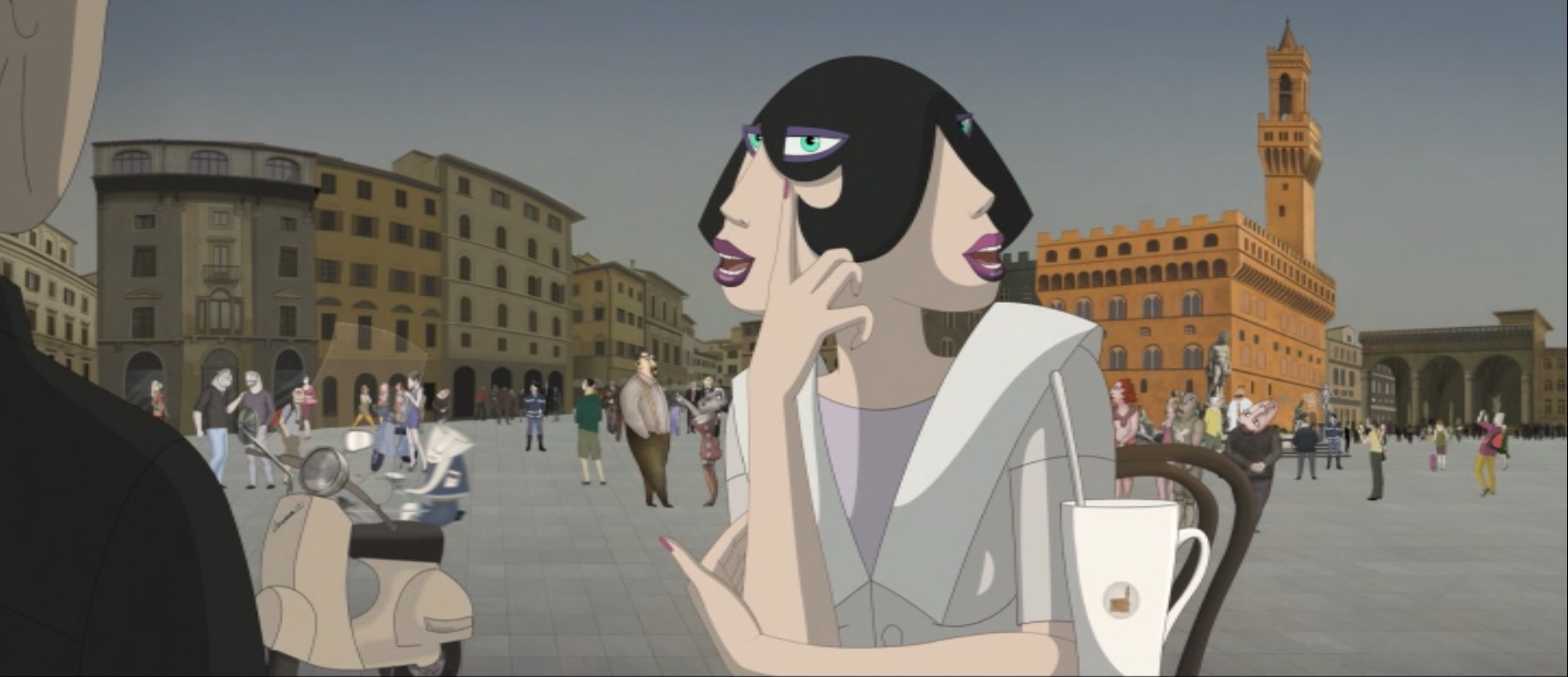
One of the more surprising and more original animated feature films from 2018 was this little gem from Hungary. Conceived and directed by Milorad Krstić, a director of Slovenian origin, ‘Ruben Brandt’ shows that one can make an adult animation film without an immature focus on sex and violence (there is violence in this feature film, because ‘Ruben Brandt’ is a crime thriller, but this violence is part of the plot, and not a gratuitous display of gore).
‘Ruben Brandt’ tells about a psychiatrist treating some criminals, who in turn help him overcome his nightmares by collecting artworks from all over the world. This plot is exciting, but on the flimsy side and as nonsensical as a James Bond movie. Moreover, the film fails to solve all the initiated plotlines, and the all too easy ending is a bit of a letdown.
Nevertheless, ‘Ruben Brandt’ remains an entertaining watch from start to finish, not only because of the surreal atmosphere, enhanced by the depiction of several of the art collector’s nightmares, but because of the film’s idiosyncratic looks.
Being a film on art, the film draws a huge inspiration from its subject, and the film breathes art in almost every frame. According to the end titles the film cites more than fifty art works, and part of the fun of watching the movie is to identify a reference in the background. Moreover, the color schemes, the designs and especially the character designs are very bold and unlike anything in any other animation film.
True, the three main characters Ruben Brandt, Kowalski and Mimi look fairly normal, even if their facial designs are already unique, but their co-stars can have two noses, eyes placed above each other, an eye placed inside an ear, three eyes, three breasts, and so forth and so on. There’s even a character with a Janus head, who is only two-dimensional, a characteristic used in the plot. The background characters are often even more bizarre, let alone the birds and fish depicted, and even if the movie were dull (which it certainly isn’t) one can enjoy the surreal imagery.
The film uses both traditional and computer animation and although the computer animation is less satisfying than the traditional animation, the mix is very well done.
In all, ‘Ruben Brandt’ is a highly authentic film that shows surrealism is far from dead, and with his grotesque designs Krstić shows that even 3D computer animation can be exciting and strikingly original.
Watch the trailer for ‘Ruben Brandt, Collector’ yourself and tell me what you think:
‘Ruben Brandt, Collector’ is available on Blu-Ray and DVD
Director: Fyodor Khitruk
Release date: 1962
Rating: ★★★★
Review:
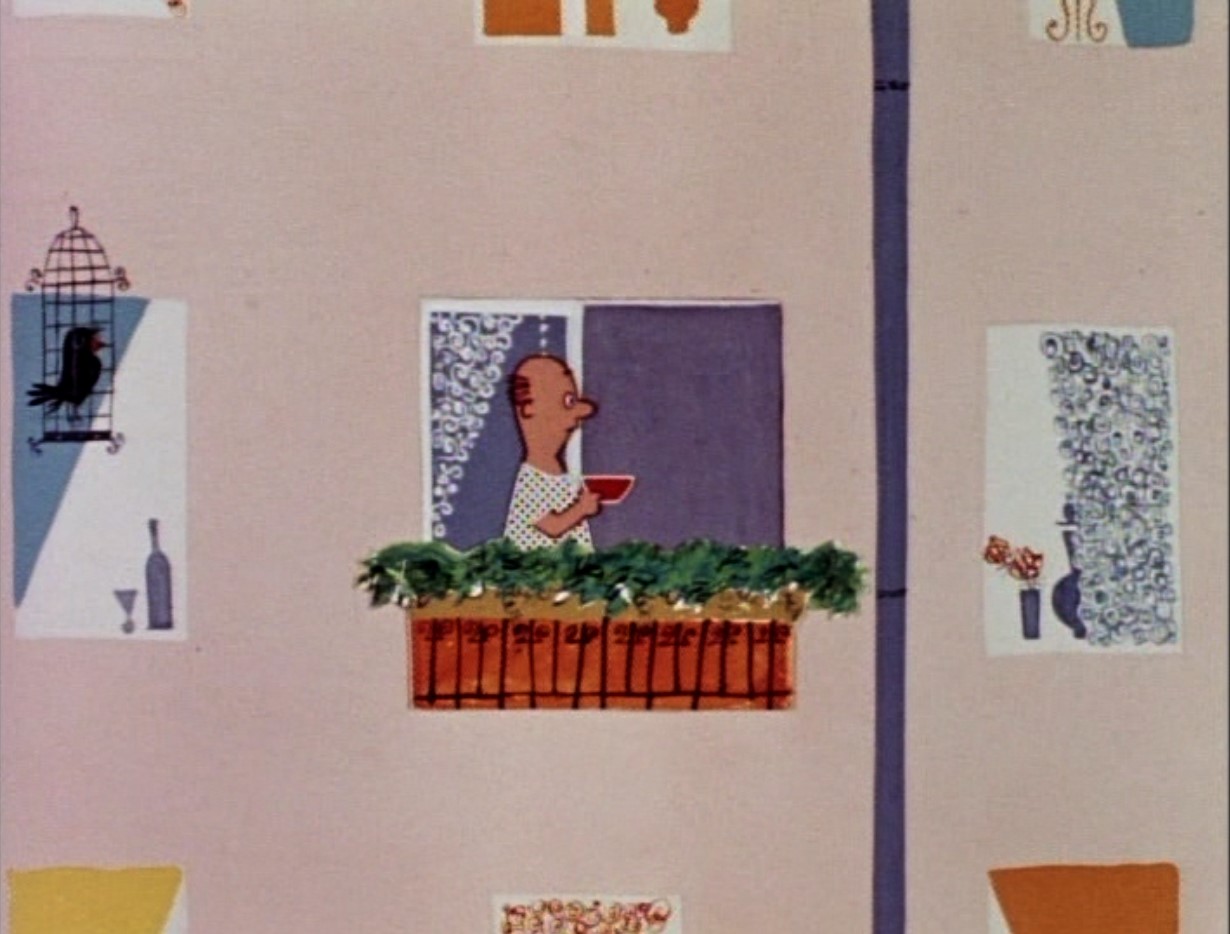
‘Story of One Crime’ was the first film directed by acclaimed film maker Fyodor Khitruk (1917-2012). Khitruk was one of the best comic talents in the Soviet era, as is already visible in this delightful early film.
The short starts with a man sneaking upon two talking ladies and hitting them with a large pan. At that point the narrator interrupts and takes us viewers 24 hours back. The rest of the film is told wordlessly, and shows the criminal, comrade Manin, to be a nice, gentle and hard working man. We watch him going to work, and working at the office.
All seems well, but as soon as he returns to his home, in an apartment block, the problems start. When he wants to rest on his balcony, he’s disturbed by ridiculously loud domino players playing in the courtyard. When he returns inside to watch some television, a neighbor turns on some loud jazz music, and later, when he tries to sleep, more neighbors deprive him of a good night’s rest in various ways. The film ends with a message to the viewers themselves, no doubt, more often than not living in such noisy apartments themselves.
Khitruk tells his tale with an understated sense of humor, and a relaxed, but effective sense of timing. The animation is limited, and far from fluent, but as Khitruk knows how to pose, very effective. The designs by Sergei A. Alimov, too, are a delight: the film is a rare example of Soviet cartoon modern design, and both characters and backgrounds are gorgeous throughout the film. They are partly made by snippets from magazines, and especially the neighbor’s gargantuan stereo installation is a great example of good cut and paste work.
With ‘Story of One Crime’ Khitruk took Soviet animation away from the classic fairy tale worlds of the 1950s into the modern age. The film contains some criticism on Soviet society, which is depicted as less than ideal, but the film was an enormous success, nonetheless.
With this short Khitruk immediately became one of the Soviet Union’s most important animation film makers, as he would prove, e.g. by delivering the world his delightful ‘Vinnie Puch’ (Winnie the Pooh) films of 1969-1972.
Watch ‘Story of One Crime” yourself and tell me what you think:
‘Story of one Crime’ is available on the DVD ‘Masters of Russian Animation Volume 1’
Director: Hermína Týrlová
Release date: 1962
Rating: ★★★
Review:
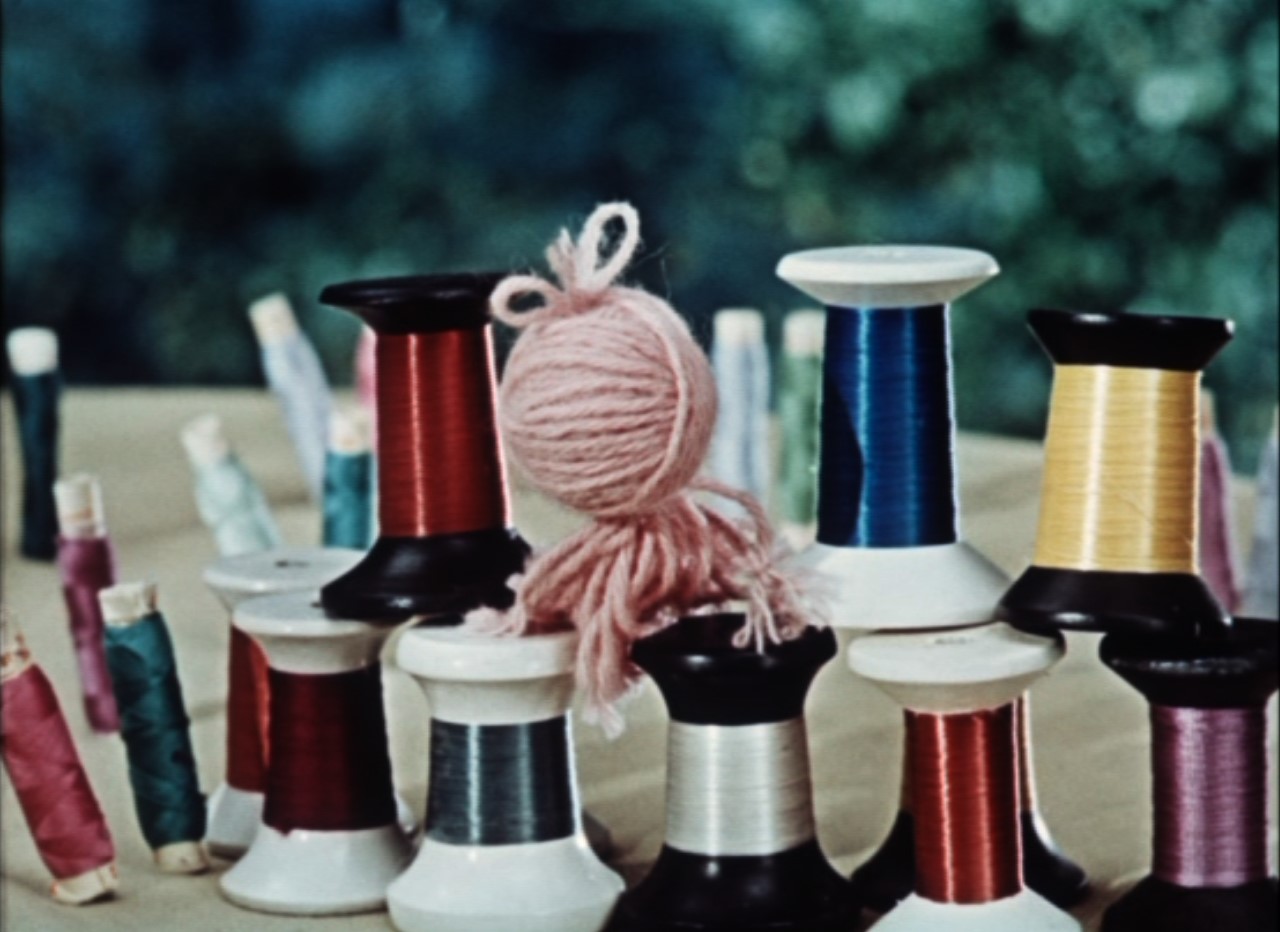
In ‘Two Balls of Wool’ the insides of a sewing box come to life, including a scissors, a measuring tape, thread spools, a horse-like pincushion, and, most importantly, two balls of wool.
The pink ball of wool turns into a girl, while the blue one turns into a boy. The boy plays the flute on a needle, charming the measuring tape, who acts like a snake. When the snake captures the girl, the boy comes to the rescue, riding the pincushion horse. The two also perform some acrobatic tricks, and accidentally unwind a knitted piece, until the scissors forces them to knit the piece back again
The film has a rather weak story, but it’s a marvel how Týrlová spins a film out of such ordinary material, making use of the properties of these objects. The animation is top notch. For example, note how Týrlová manages to turn the scissors (which can’t do anymore than the scissors in your drawer) into an authority figure, imposing on the other objects. ‘Two Balls of Wool’ thus is a charming little short, showing Týrlová’s great talent as an animator.
Watch ‘Two Balls of Wool’ yourself and tell me what you think:
https://noodlemagazine.com/watch/-167471844_456240845
‘Two Balls of Wool’ is available on the DVD box ‘Hermína Týrlová Výběr z tvorby/Selected Works’
Director: Jan Iván
Release date: 1961
Rating: ★★★
Review:
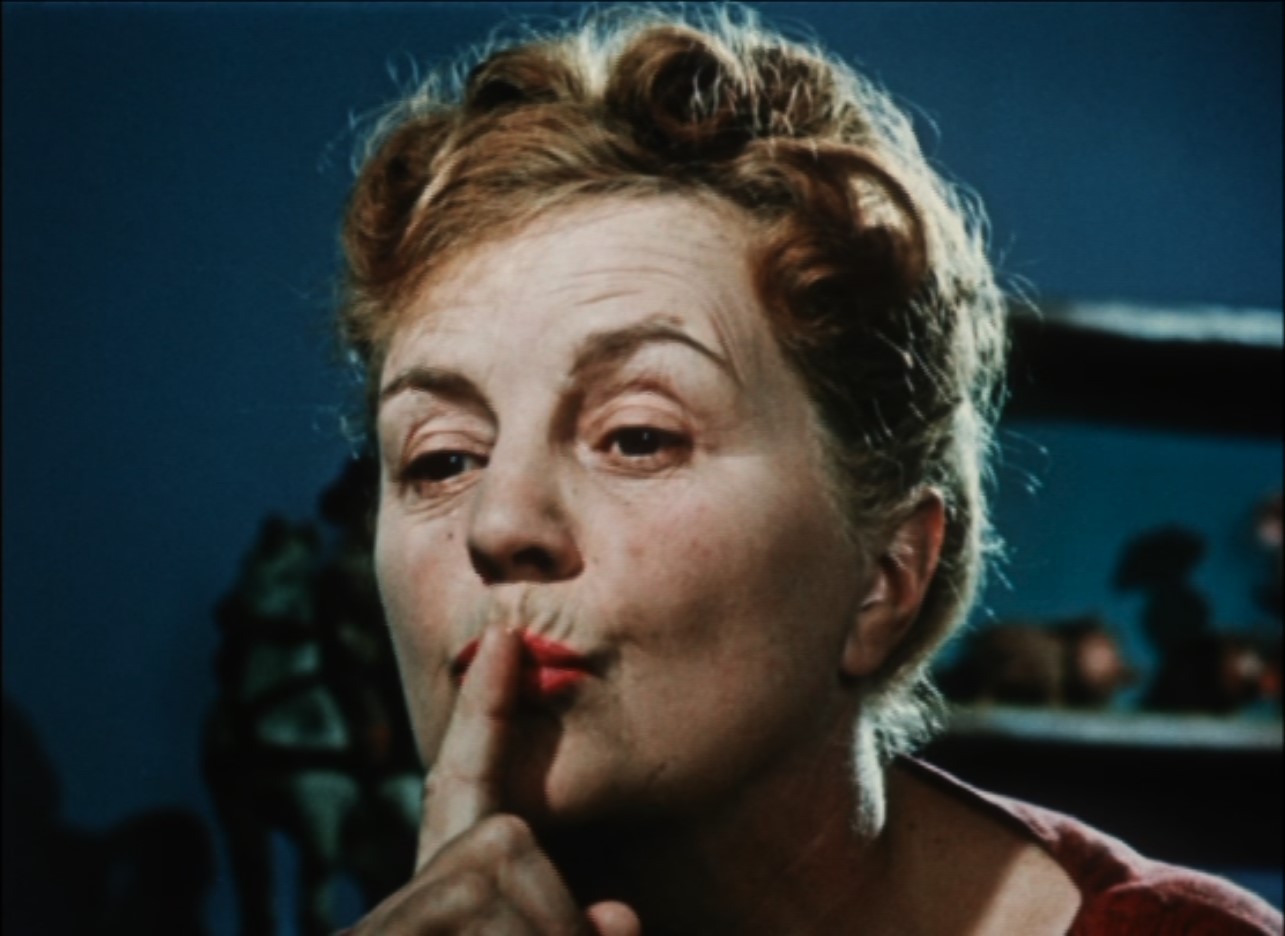
This a gentle documentary film made in honour of the Czech animation pioneer’s sixtieth birthday.
The film showcases excerpts from quite a few of Hermína Týrlová’s films, including her first, ‘Ferda the Ant’ (1944), Czechoslowakia’s first stop motion film anyhow. Other excerpts are from ‘Revolt of the Toys’ (1945), apparently an anti-fascist film, ‘The Knot in the Handkerchief’ (1958) and ‘Badly Made Toy-Man’ (1951), which is revealed as Týrlová’s favorite character.
Indeed, it’s the Badly Made Toy-Man who stars the bridging stop-motion sequences, for this documentary features quite some original animated material, made by Týrlová especially for this film. Especially, the short sequence starring the two balls of whool-characters for her upcoming ‘Two Balls of Wool’ (1962) are a delight, for this cannot be found in the final film, and is presented as a depiction of Týrlová’s imagination.
The film is narrated, and although we watch Týrlová acting out herself, e.g. recreating the painstaking ways with which she made ‘Ferda the Ant’ and interacting with children, her main audience, we do not hear her, and there are no interviews, only images. Nevertheless, the documentary succeeds in showing where Týrlová’s greatest talent lies: in creating charming animation films for children in which ordinary toys and objects come to life.
‘Hermína Týrlová’ is available on the DVD box ‘Hermína Týrlová Výběr z tvorby/Selected Works’
Director: Daniel Szczechura
Release date: 1963
Rating: ★★★
Review:

‘The Chair’ is another film subtly criticizing communist society as it was imposed on Poland at the time. Apart from the intro, the film is completely filmed from above, and features a conference.
At one point one of the conference leader’s chairs remains unoccupied, and members from the audience are invited to fill the spot. But the other audience members don’t allow each other to get to the stage, and the volunteers are hindered and blocked everywhere. Yet, one does make it, and is accepted due to his clever entrance.
The idea of ‘The Chair’ is as simple as it is well executed. Again, I am surprised the film got past the censors, as it clearly criticizes the oppressive system.
Watch ‘The Chair’ yourself and tell me what you think:
‘The Chair’ is available on the DVD-set ‘Anthology of Polish Animated Film’
Director: Witold Giersz
Release date: 1963
Rating: ★★
Review:
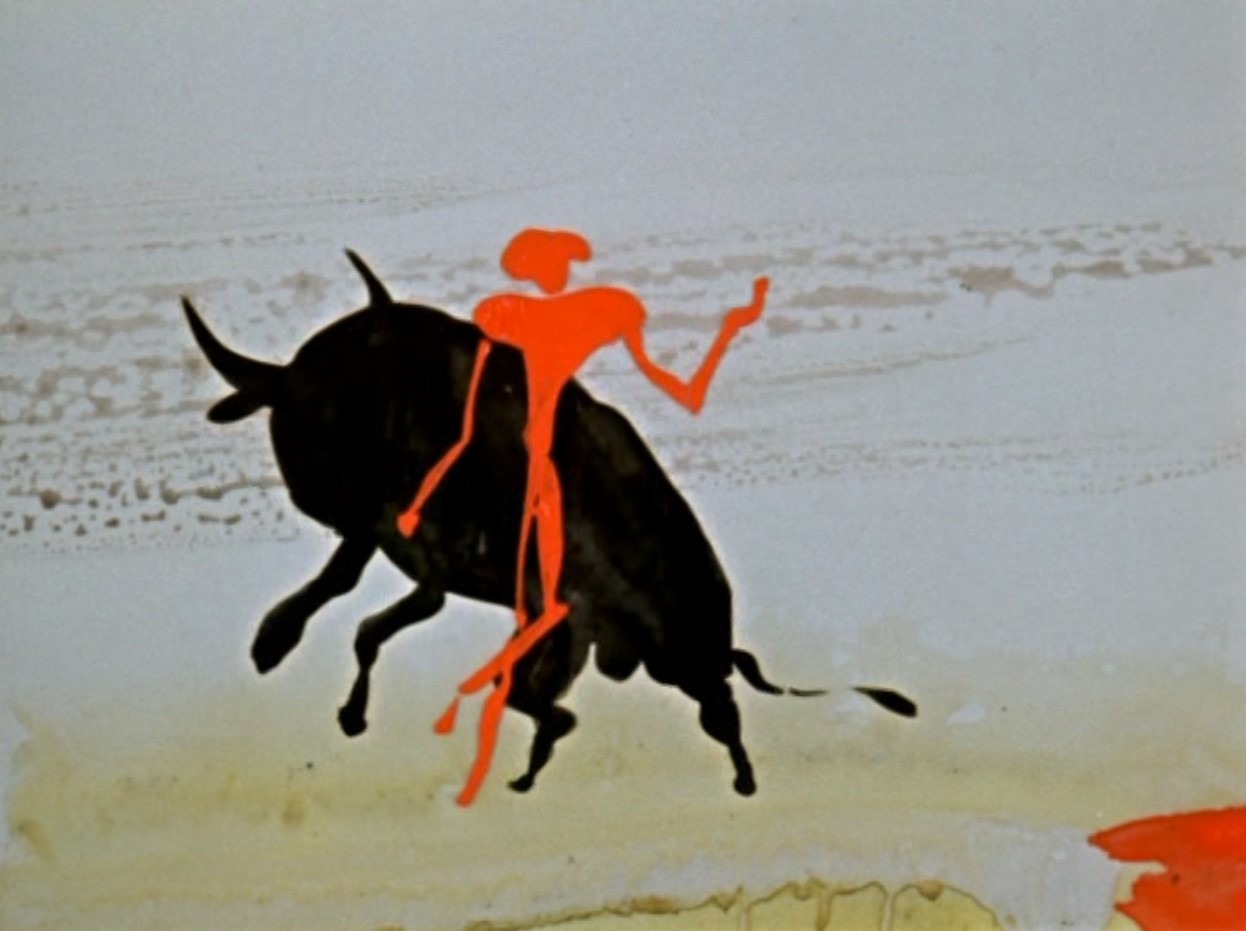
‘The Red and the Black’ is a rare attempt at a gag cartoon in a Polish studio. True, the film’s designs are no less avant-garde as that of other contemporary films from the era, this time featuring highly abstracted painted characters, but unlike his countrymen, Witold Giersz aims at laughs.
The film is an addition to a long canon of bullfighting cartoons, with the Red being the bullfighter, and the black being the bull. There are some fine gags, like the two drinking beer together, or the bull suddenly revealing the film makers, but the characters and the action remain emblematic, and Giersz has no sense of timing, so the gags all fall flat. Thus, despite some clever ideas, ‘The Red and the Black’ is a rather tiresome watch, and the film well overstays its welcome.
Watch ‘The Red and the Black’ yourself and tell me what you think:
‘The Red and the Black’ is available on the DVD-set ‘Anthology of Polish Animated Film’


 Dr. Grob's Animation Review