
You are currently browsing the category archive for the ‘European films’ category.
Director: Marcell Jankovics
Release date: 1974
Rating: ★★★★
Review:

‘Sisyphus’ is a very short animation film, which is indeed about a man pushing a large rock up a steep hill.
The animation is done in black pen on white paper, and there’s no background art whatsoever. Most impressive is Jankovics’s animation: his command of the human form is formidable, and of the suggestion of muscles pushing up an enormous weight absolutely convincing. What’s even more wonderful is that the man is rendered in various variations of abstraction, from quite realistic to only suggestive splashes of ink. The soundtrack, with its very heavy breathing and growning, maybe a little too much, but this short is a wonderful example of the marvelous things animation can do.
Watch ‘Sisyphus’ yourself and tell me what you think:
‘Sisyphus’ is available on the Blu-Ray of ‘Son of the White Mare’
Director: Marcell Jankovics
Release date: 1968
Rating: ★★★★
Review:

‘Dreams on Wings’ is an advertising film, but a most beautiful at that.
All the animation is done in watercolor paintings in very bold colors. Moreover, there’s a lot of metamorphosis, with images hardly staying static for more than a few frames. In one sequence, for example, an image of a galloping centaur changes into an arrow, which changes into a jet, which morphs into an airplane, which form the words Air India, etc.
Also the countries Air India flies to are depicted in the most poetic fashion. For example, Switzerland is depicted by mountains made of chocolate, and Egypt by a camel with a pyramid hump. The colorful images never seize to amaze, and the fun is enhanced further by a lively soundtrack by János Gyulai Gaál.
‘Dreams on Wings’ is available on the Blu-Ray of ‘Son of the White Mare’
Director: Fyodor Khitruk
Release date: 1973
Rating: ★★★★
Review:
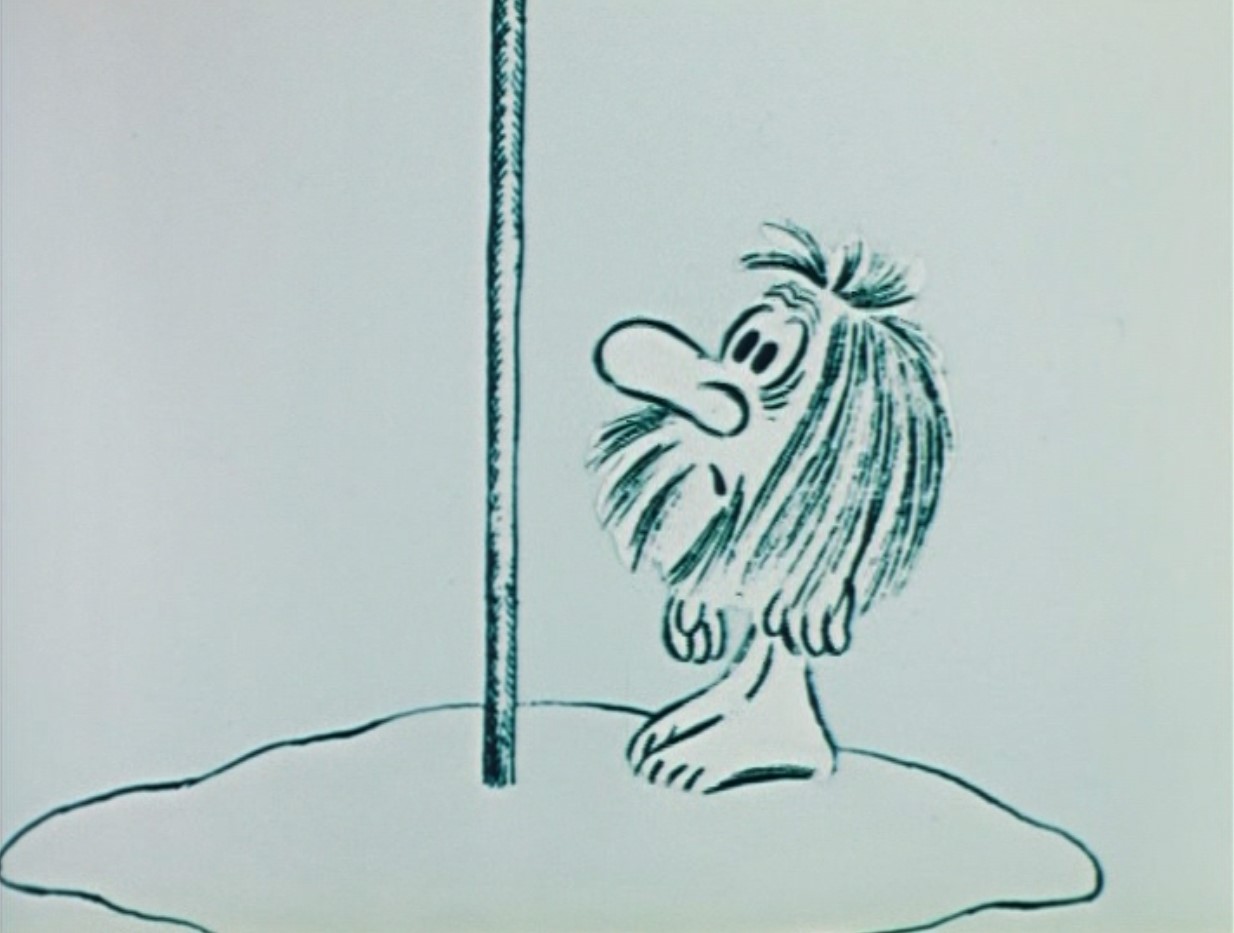
‘The Island’ is a short gag film in which a bearded castaway is stranded on a tiny island.
Khitruk explores this traditional cartoon setting, and brings it into new directions. The man longs to be rescued, but nobody helps him, though the ocean turns out to be very crowded, indeed. In fact, in the end, the man is far worse off than he was in the beginning.
Khitruk’s cell animation is effective, his designs are charming, and his timing is excellent. But the film is more than just a mere series of gags, as Khitruk satirizes man’s aggression, greed, emptiness and folly. It’s signifying that the only person helping the main protagonist, is one who has even less than the castaway he helps. Thus ‘Island’ is more than just a little gag film, it’s a humorous essay on the human condition, and it’s not an optimistic one.
Watch ‘The Island’ yourself and tell me what you think:
‘The Island’ is available on the DVD ‘Masters of Russian Animation Volume 2’
Director: Yuri Norstein
Release date: 1973
Rating: ★★★★
Review:
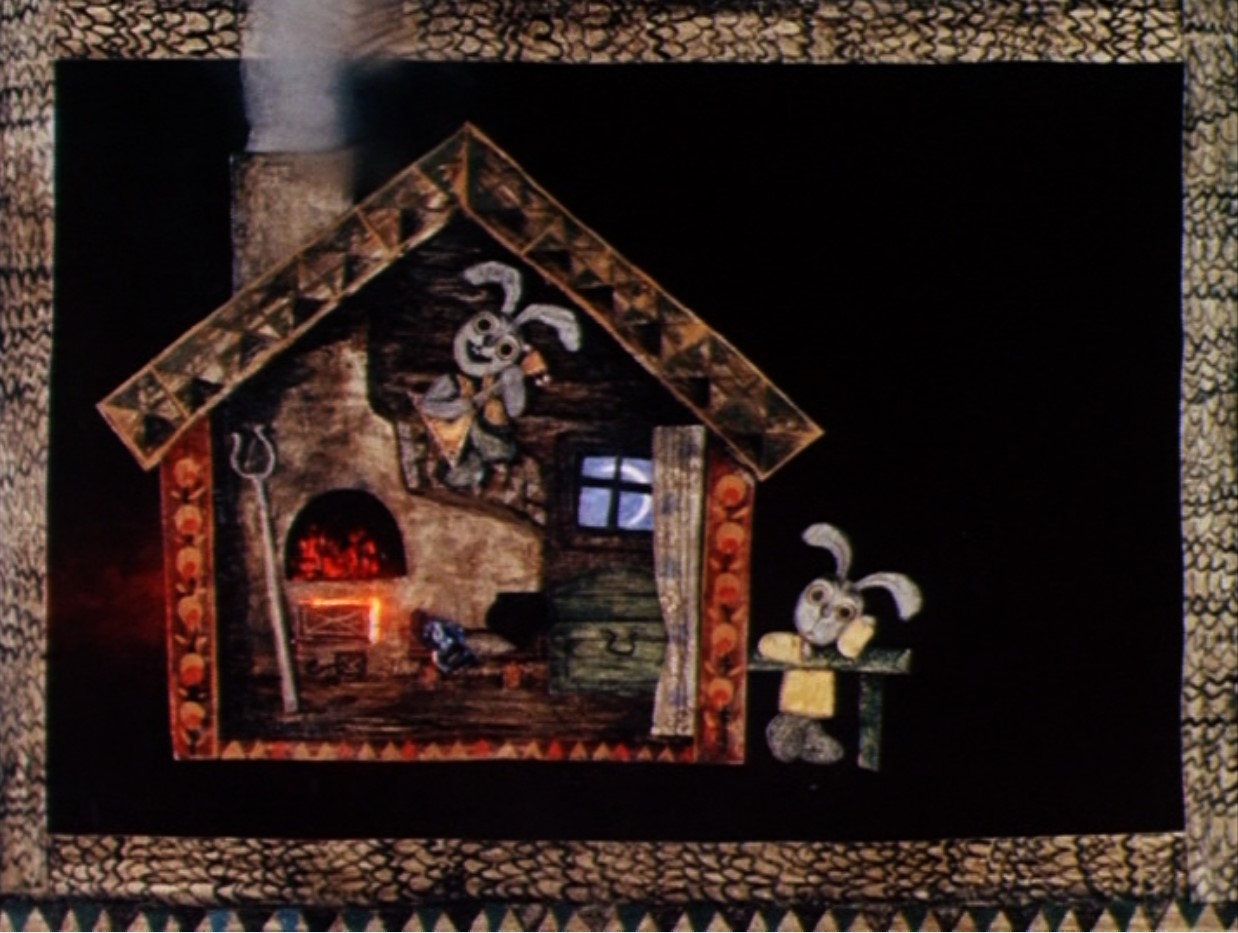
In ‘Fox and Rabbit’ (actually Fox and Hare) Norstein retells a Russian folktale in which a fox chases a rabbit out of his own house. A wolf, a bear and a bull all three promise the rabbit to help him regain his house, but when threatened by the fox they run off. Only a small rooster at least tries it.
The story is told by a voice-over, and is illustrated in a very charming semi-folkloristic style, which striking and colorful supposedly wooden frames framing the action, as if were looking at paintings. M. Meyerovich’s, rather Stravinsky-like music only adds to the folkloristic character. Norstein’s cut-out animation, meanwhile, is of the highest order, and full of little subtleties, signifying the different characters.
‘Fox and Rabbit’ may be less famous than the later ‘Hedgehog in the fog’ (1975) or ‘Tale of Tales‘ (1979), the film already shows Norstein’s extraordinary talent and charming animation style. Fyodor Khitruk thought highly of the film, and was completely surprised that such commonplace material (Soyuzmultfilm had made fable films for several decades) turned into such an original, idiosyncratic film.
Watch ‘Fox and Rabbit’ yourself and tell me what you think:
‘Fox and Rabbit’ is available on the DVD ‘Masters of Russian Animation Volume 2’
Director: Andrei Khrzhanovsky
Release date: 1973
Rating: ★★★
Review:
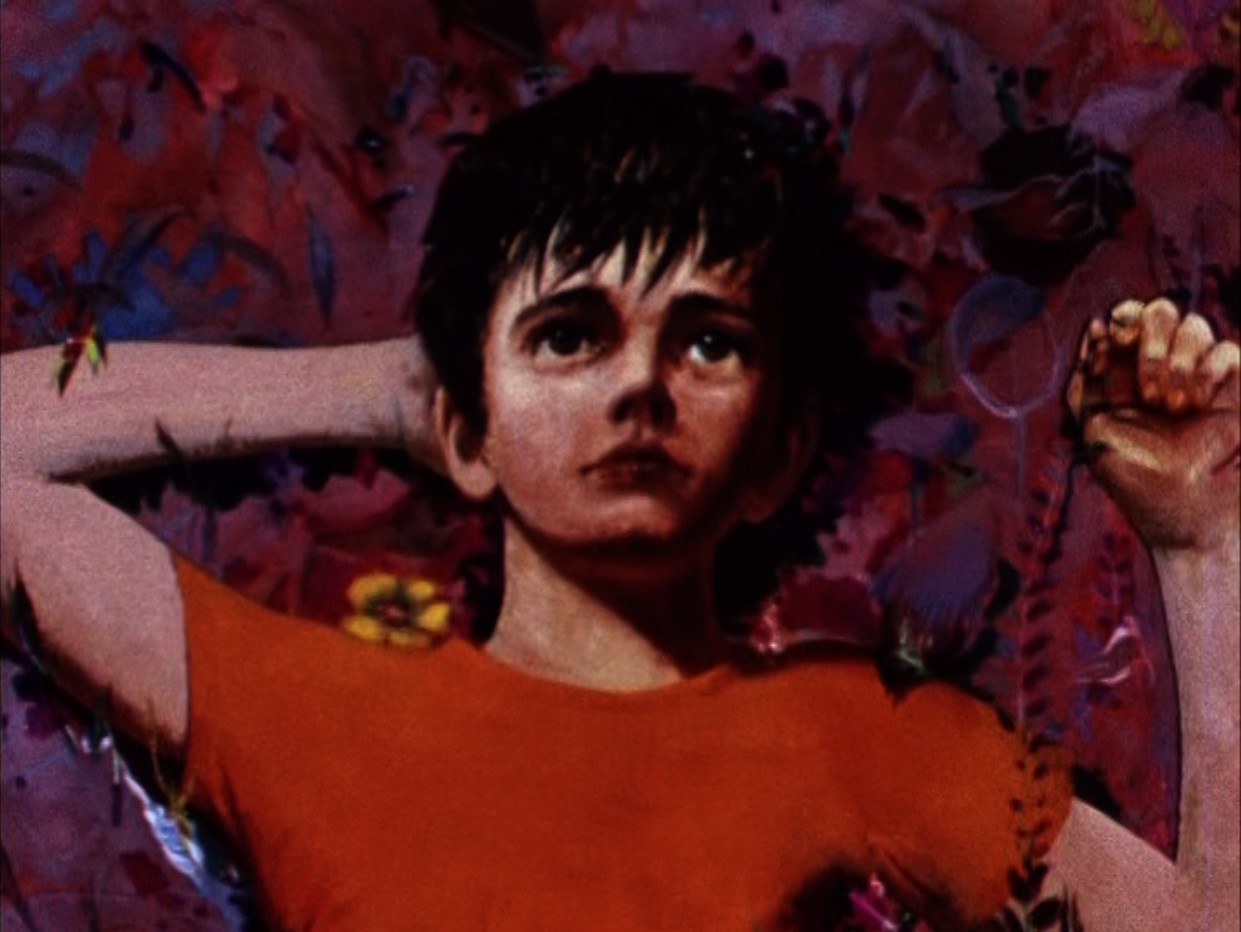
In ‘Butterfly’ a boy catches some butterflies, but after a nightmarish scene in which he himself is trapped, he releases them again.
The plot of ‘Butterfly’ is far from original, and rather predictive and boring, but Khrzhanovsky’s eclectic style is not. Part of the story is told in still oil paintings, but there’s also a little cell animation and cut-out animation.
The oil paintings are most interesting, with their rather high level of realism, and their painful contrast between colorful nature, and the dull, grey world of the modern city. Especially the scene inside the boy’s flat is most depressing, with only grey electronic robots to play with. Nevertheless, the most striking aspect of this film are not the animation nor the visuals, but the fascinating score by avant-garde composer Alfred Schnittke.
Watch ‘Butterfly’ yourself and tell me what you think:
‘Butterfly’ is available on the DVD ‘Masters of Russian Animation Volume 2’
Director: Zbginiew Rybczyński
Release date: 1976
Rating: ★★★★
Review:

Avant-garde animator Zbginiew Rybczyński, of later ‘Tango’ fame, brings us a fun little children’s film based on a poem by Julian Tuwim on trains.
The poem is set to lively jazz music by Janusz Hajdan, which Rybczyński accompanies with images of anything but trains. The lyrics are illustrated associatively, with animated pictures of a baby, a dog, an elephant. etc.
The most common element is a fat moustached man, done in pixilation. The pixilated photos are rendered in monochromes, mostly on a monochrome green canvas, which give the film a unique and very avant-garde look. Apart from the pixilation there’s a little, rather cartoony cel animation that convinces less.
‘Locomotive’ may be much less compelling than ‘Tango’, this children’s short already show that Rybczyński was a very original and idiosyncratic film maker.
Watch ‘Locomotive’ yourself and tell me what you think:
‘Locomotive’ is available on the DVD-set ‘Anthology of Polish Children’s Animation’
Director: Ryszard Antoniszczak
Release date: 1974
Rating: ★★★
Review:

‘Farewell to Steam’ is a Polish children’s film set to a rock song. The short tells about a person who wants to become a train engineer.
This is one of those films from the early seventies that display a huge ‘Yellow Submarine’ influence. This short just breaths groovy seventies design. The man himself is a prototype of a seventies hippie.
The film uses full cell animation to show us images that are cartoony, surreal and weird. The images never cease to amaze, but a story is hardly present, and hard to follow anyway. In the end ‘Farewell to Steam’ succeeds more musically and visually than narratively.
Watch ‘Farewell to Steam’ yourself and tell me what you think:
‘Farewell to Steam’ is available on the DVD-set ‘Anthology of Polish Children’s Animation’
Director: Stefan Janik
Release date: 1972
Rating: ★★★
Review:
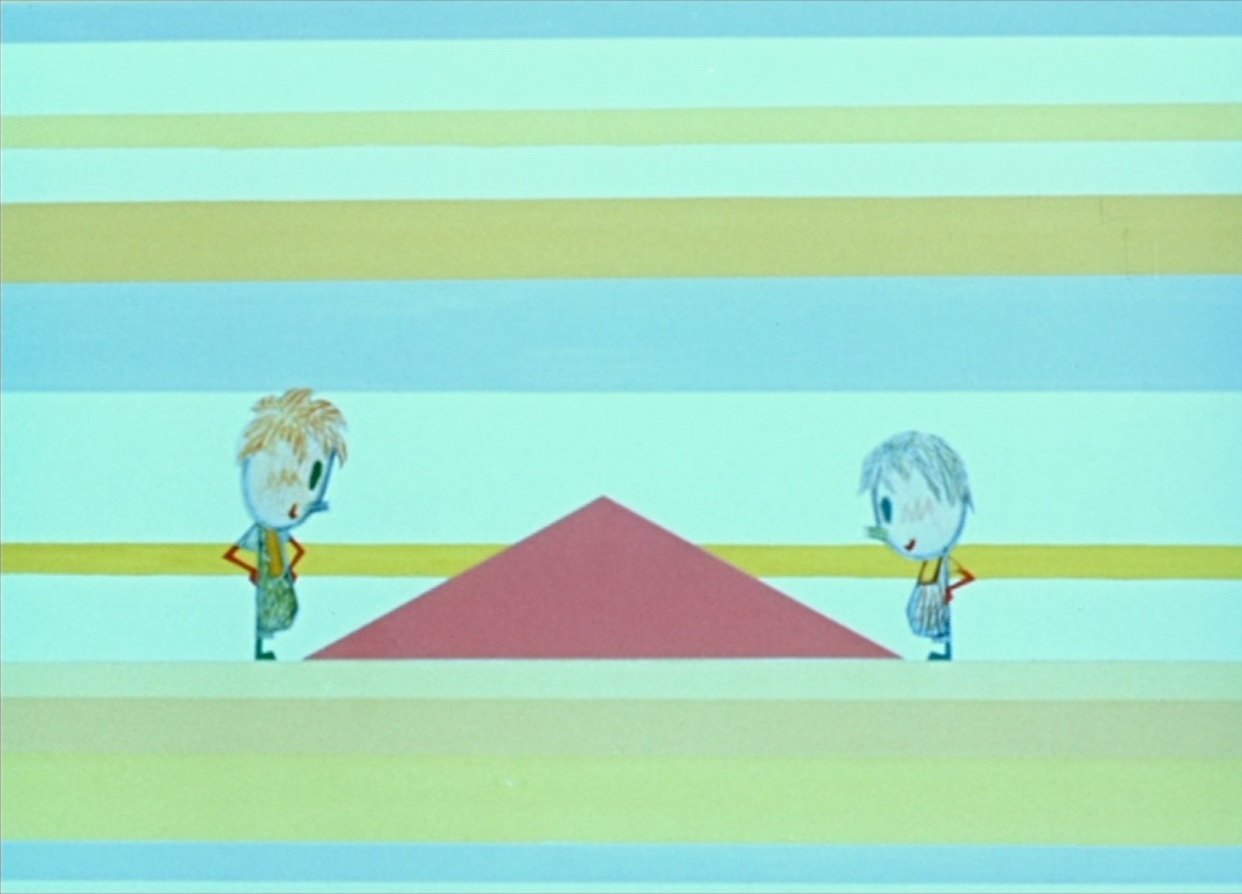
‘Enchanted Triangles’ is a cute children’s films from Poland about triangles. The film makes clever use of the imagination of children to transform triangles into church towers, mountains, pyramids, sailing boats, birds and butterflies.
Two boys explore this triangle world. The film uses a voice over by a girl and cut-out animation. The two boys are charmingly drawn in crayons in a semi-childish style, but the triangles remain abstract. The result is cute if unassuming and rather forgettable.
Watch ‘Enchanted Triangles’ yourself and tell me what you think:
‘Enchanted Triangles’ is available on the DVD-set ‘Anthology of Polish Children’s Animation’
Director: Daniel Szczechura
Release date: 1971
Rating: ★★
Review:

‘If You Spot a Cat Flying Through the Air’ is a strange little film in bold seventies design and with an avant-garde jazz score by W. Pażyński to tell us that If You Spot a Cat Flying Through the Air, it’s a cat who love birds. These words reappear a few times in the short itself.
Unfortunately, both animation and movement are rather limited, and the short is more interesting as an experiment than entertaining to watch.
Watch ‘If You Spot a Cat Flying Through the Air’ yourself and tell me what you think:
‘If You Spot a Cat Flying Through the Air’ is available on the DVD-set ‘Anthology of Polish Children’s Animation’
Director: Marcell Jankovics
Release date: May 3, 1973
Rating: ★★★★
Review:
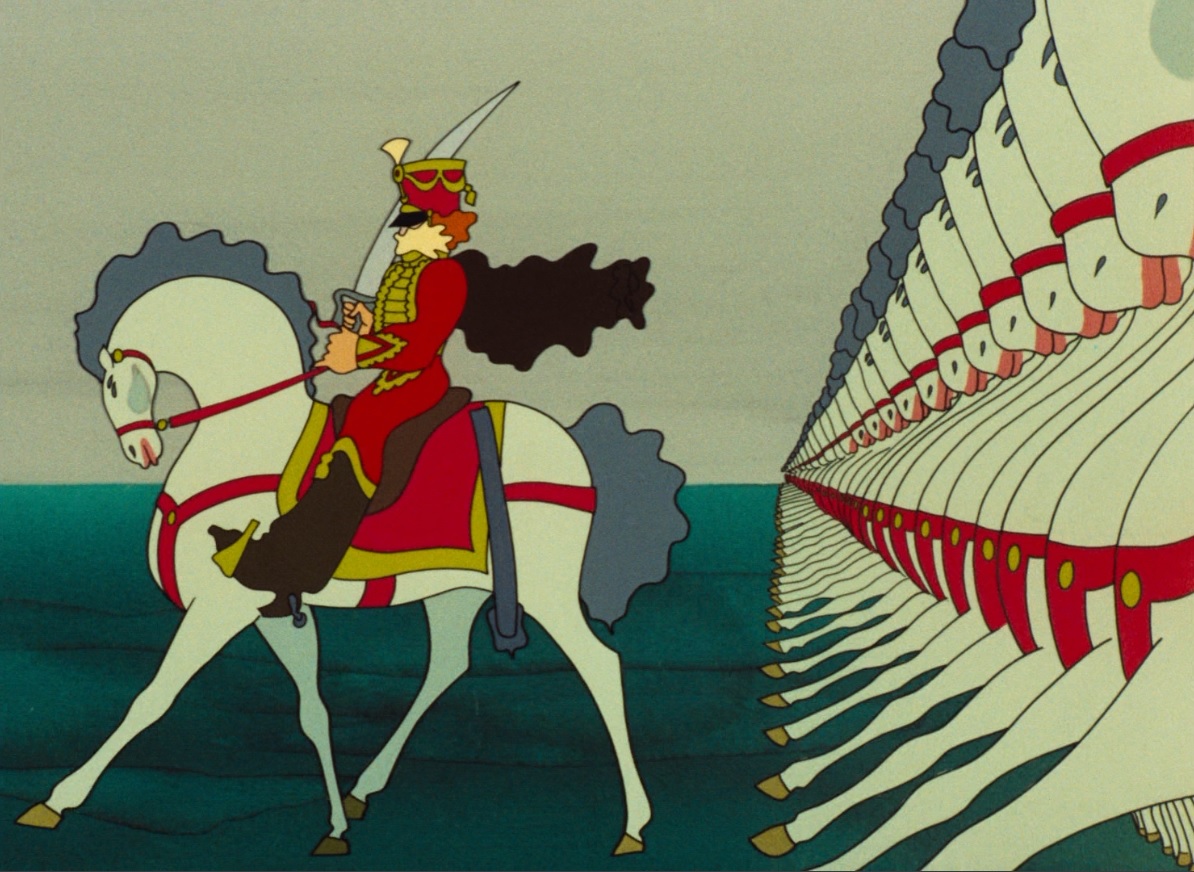
Hungarian director Marcell Jankovics (1941-2021) is most famous for his second animated feature, the mind-blowing masterpiece ‘Fehérlófia’ (Son of the White Mare) from 1981. But his first feature, ‘János Vitéz’ certainly deserves to be equally famous.
‘János Vitéz’ was Hungary’s ever first animated feature ever, but this doesn’t show, at all. The feature is a remarkably mature product that owes nothing to earlier animation films, save George Dunnings’ ‘Yellow Submarine’ from 1968 (and one scene of a devils’ dance, which harks all the way back to Disney’s Silly Symphony ‘The Goddess of Spring’ from 1934). Like Dunning’s film, ‘János Vitéz’ uses very striking visuals in bold colors, and with a genuine contemporary design. In fact, no movie from the seventies looks so enormously ‘seventies’ as this film.
The film was commissioned by the Hungarian government to commemorate the 150st birthday of Hungary’s national poet Sándor Petőfi (1823-1849), whose stature in Hungary is comparable to that of Pushkin in Russia. Petőfi wrote ‘János Vitéz’, a long epic poem in 1844, and despite the strikingly modern visuals, the film follows the poem quite faithfully. János Gyulai-Gaál’s score is unmistaken Hungarian, akin to the music of Zoltán Kodály’s folk opera ‘Háry János’ from 1926 and contributes greatly to the utterly Hungarian character of the movie. There are also a few charming songs, adding to the experience.
The story is pretty nonsensical and more of a tall tale than a classic epic poem. It tells about the hero János Vitéz who is a sheep herder in love with the neighboring Iluska. Unfortunately, Iluska’s stepmother, the witch Mostoha, doesn’t approve of the young lovers’ romance, and makes János Vitéz’ flock of sheep disappear. Banished from his village, János Vitéz first joins a band of robbers, then joins the army, but keeps longing for his beloved Iluska.
The film retains much of Petőfi’s poetic quality: the dialogue is in rhyme, and the images themselves have a lyric quality. For example, the love of Iluska and János Vitéz is shown by associative images, full of flowers and a radiant sun. Moreover, a lot of the story is told through the images, and more by suggestion than by literally showing what’s happening. For example, when János Vitéz is banished this is shown by a street in which every house shuts its shutters when János Vitéz passes by.
The images are as folkloristic as they are psychedelic, and never cease to please or to amaze. The character designs are more of a mixed bag. János Vitéz and Iluska are drawn as rather bland beautiful people, while Mostoha, the robbers and the Turks are very cartoony. These and other characters provide some small gags. Character animation is absent. For example, when János Vitéz mourns for Iluska, this emotion is indicated more than heartfelt. Nevertheless, there is a clever use of metamorphosis and animation cycles, and it’s clear the animation is in service of the graphics and of the story.
In all, ‘János Vitéz’ is a joy to watch from start to end and deserves a much wider audience than it has now.
Watch an excerpt from ‘János Vitéz’ yourself and tell me what you think:
‘János Vitéz’ is available on the Blu-Ray of ‘Son of the White Mare’
Director: Jeroen Jaspaert
Airing date: December 25, 2017
Rating: ★★★½
Review:
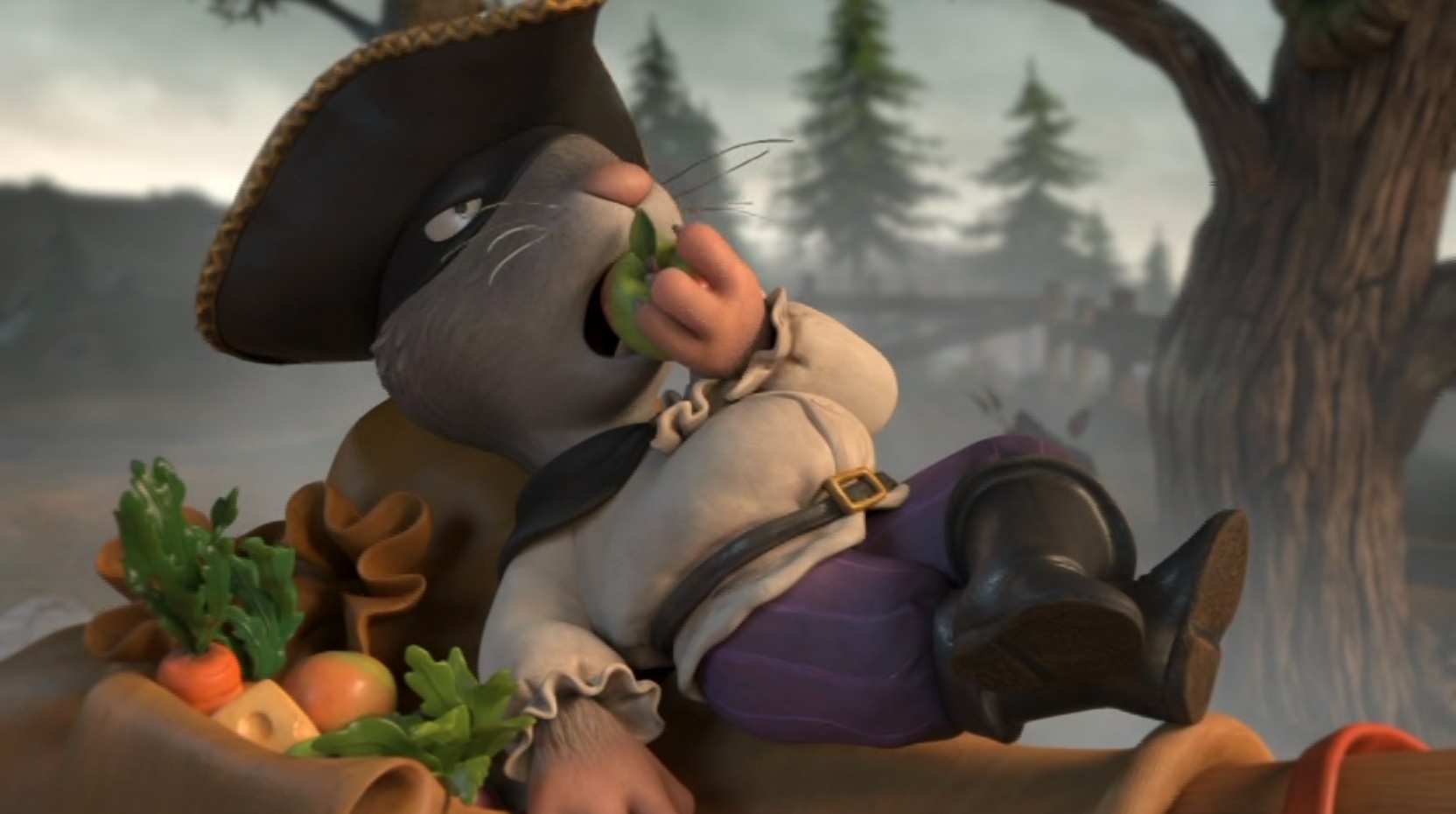
‘The Highway Rat’ is the sixth animated Christmas special by Magic Light Pictures. Like all the others (save ‘Revolting Rhymes’ from 2016) the film is based on a children’s book by Julia Donaldson and Axel Scheffler, and like all, narrated in rhyme.
The film boasts the same charming stop-motion-like computer animation and elaborate real sets as the others, and features excellent music by René Aubry, but frankly, the film’s source material is less engrossing than for example ‘The Gruffalo’ (2009) or ‘Room on the Broom‘ (2012). The first half consists of the highway rat taking away food from passing animals only, and the creature’s punishment and reform feel rather obligate and uninspired.
Nevertheless, the film remains a wonderful thing to look at, as neither the animation nor the visuals cease to charm. Especially entertaining is the silent comedy, mostly provided by the Highway Rat’s horse. Done with great subtlety and excellent use of eye expressions this is animation at its very best.
Watch an excerpt from ‘The Highway Rat’ yourself and tell me what you think:
‘The Highway Rat’ is available on DVD
Director: Nora Twomey
Release date: September 8, 2017
Rating: ★★★★★
Review:

2017 was a good year for the animated feature film: Warner Bros., Dreamworks and the French Polivari and Panique studios gave us great laughs with ‘The Lego Batman Movie’, ‘Captain Underpants: The First Epic Movie’, and ‘ Le grand méchant renard et autres contes…’ (The Big Bad Fox and Other Tales), respectively; Pixar amazed us with the magnificent ‘Coco’, and the Japanese Science Saru studio made quite an impression with the mind-blowing film‘Night Is Short, Walk on Girl’.
However, the most important and most moving animated feature film was the Irish-Canadian-Luxembourgian co-production ‘The Breadwinner’. This was the third feature by the Irish Cartoon Saloon studio, which can be regarded as the most welcome and most original studio additions to the animated feature field of the 21st century, thus far. The Breadwinner’ shares with their previous two films, ‘The Secret of Kells’ (2009) and ‘The ‘Song of the Sea’ (2014) a very charming traditional animation style, and a surprisingly graphic overall design, although the latter is rather toned down in ‘The Breadwinner‘ when compared to the earlier two movies. But unlike the other two, ‘The Breadwinner’ completely lacks the Irish flavor, being set in, of all places, Afghanistan.
Based on the book by Deborah Ellis from 2000 ‘The Breadwinner’ is set in Kabul, the unfortunate country’s capital during the first Islamic Emirate of Afghanistan (better known as the Taliban regime, 1996-2001). By the time the film was made, this extremely oppressive regime was a ghost of the past, at least in Kabul (the Taliban never fully disappeared from the country), but sadly, since August 2021 this misogynist, backward movement is in full charge of the country, once again.
‘The Breadwinner’ makes no mistake how hard it is to live in such a violent, insecure country, where arbitrariness prevails, and where women have no rights, at all, whatsoever. The film follows the eleven-year-old Afghan girl Parvana, who lives with her disabled father, her mother, elder sister Soraya, and a baby brother called Zaki in a tiny house in Kabul. When the father gets arrested and thrown into a prison far outside town, the family quickly get into way more problems than they already had: as women cannot do anything outside without a man, their means to even obtain food completely come to a standstill. At this point Parvana takes an important decision to save her family’s life…
‘The Breadwinner’ is a very believable story, much more subtle than almost anything coming out of the United States. For example, the Afghan people are portrayed as real people, with a rich an ancient culture. Added to the sense of authenticity is the use of Afghan voices (except for the brabbling Zaki), while Mychael and Jeff Danna’s score clearly borrows from the Afghan musical tradition. Thus, the film’s Afghanistan is a convincing one, not a caricature seen through Western eyes. Moreover, although the film makes no mistake about the oppressive and misogynist nature of the Taliban regime, there are many shades of gray between the heroes and villains. Even the villain that causes Parvana’s family’s demise is shown in one last shot as not only evil, but insecure and afraid, too. Moreover, Parvana remains a relatable character, throughout. Despite her courage and adult responsibility, she remains a child, and is shown delighting in childish behavior, especially with her friend Shauzia.
Contrasted with Parvana’s dire circumstances are the images of a story she tells her beloved (her first audience is her baby brother, but she also tells the tale to others, and others even blend in, altering the direction of the story while doing so. These images are rendered in the most colorful, storybook illustration-like, faux cut-out animation, and tell about a boy who goes on a quest to retrieve his village’s seeds from an evil elephant king. This fantastical tale is picked up several times during the movie, and often reflects the events depicted in real life. Especially in the finale, in which the two seem to come together, this dual story telling comes to a harrowing conclusion.
As said, the film’s design is less graphic than that of Cartoon Saloon’s Celtic features. The background art is semi-realistic, with depressing greys, browns and yellows depicting the seemingly treeless town of Kabul. The character design is more graphic, with especially Zaki being an echo of the character designs from the earlier films. Noteworthy is the background art of a rather surreal scene in which Parvana and Shauzia are seen in a field full of abandoned tanks. The traditional animation is a delight, not only the very moving animation of the main characters, but also the cartoony quasi-cut-out animation of Parvana’s story. There’s only a little computer animation present, mostly for crowd scenes.
In all, ‘The Breadwinner’ is one of the best, most adult and most moving animation films to come out of any animation studio, and should be considered a modern classic.
According to director Nora Twomey ‘The Breadwinner’ may be set in Afghanistan but tells a universal story of all children growing up in oppressive countries, everywhere. Yet, we are still waiting for the animated depictions of their stories, while Afghanistan has been the subject of no less than three other animated feature films since then: ‘The Swallows of Kabul’ from 2019 and ‘My Sunny Maad’ and ‘Flee’ from 2021. Surely, the people of say North Korea, Syria, Eritrea, the Central African Republic, or Yemen deserve better.
Watch the trailer for ‘The Breadwinner’ yourself and tell me what you think:
‘The Breadwinner’ is available on Blu-Ray and DVD
Directors: Patrick Imbert & Benjamin Renner
Release date: June 15, 2017
Rating: ★★★★★
Review:
One of the more pleasant developments of the 21st century was the coming of animated feature films, the whole purpose of which was to make people laugh. One could say this trend started off with the successful ‘South Park, Bigger, Longer & Uncut’ (1999), and like that film these films were mostly off-shoots from series (‘The Simpsons Movie’ and the Spongebob Squarepants movies from 2004, 2015 and 2021) or offshoots from other films (‘Minions’ from 2015, ‘The Lego Batman Movie’ from 2017).
But occasionally, a film comes to you, which is both very funny, and totally original, even if it’s based on an earlier comic strip, like the Franco-Belgian feature ‘Le grand méchant renard et autres contes…’. The film is co-directed by Benjamin Renner, one of the producers of the attractive, if flawed ‘Ernest et Célèstine’ from 2012, and the original author of the comic strip, ‘Le grand méchant renard et autres contes…’. . Both comic strip and movie aim for the laughs, and are highly successful at it, too.
The film is advertised as a children’s film, and it certainly is fit for all ages, but don’t let this fool you. There’s nothing childish about this film. Instead, we get high quality cartoon comedy, perfectly animated and perfectly timed.
Based on three separate stories, ‘Le grand méchant renard et autres contes…’ is an anthology film, bridged by the idea of a play performed by the main characters. As soon as the first tale starts, the backdrop changes into the scenery in which all three stories take place: a farm in the countryside.
In the first film a stork talks a pig, a duck, and a rabbit into delivering a baby for him to his parents. Unfortunately, the baby must be delivered in faraway Avignon, and sadly for the pig both the duck and the rabbit are as incapable as they are optimistic. This tale is chockfull of cartoon slapstick, as the duck and the rabbit keep on thinking more and more outlandish schemes to deliver the baby, while the pig desperately tries to keep the little one safe.
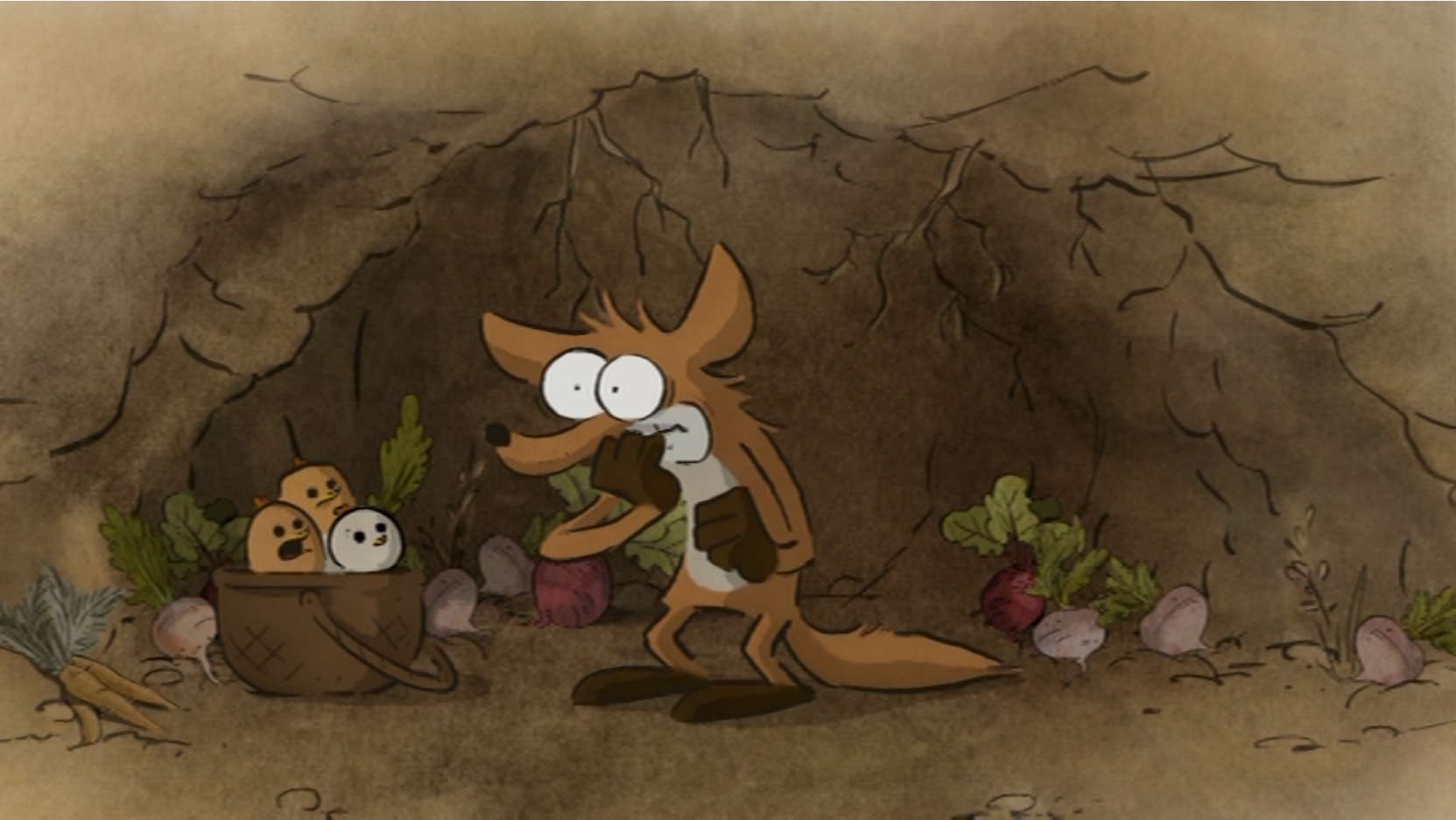
The next story is a little cuter and involves a totally inept fox who teams up with a lazy and selfish wolf. The wolf talks the fox into stealing some eggs to raise them into fat chickens, but of course the fox grows attached to the little ones. Nevertheless, this tale, too, moves and shifts into surprising directions, and is less straightforward than this summary.
The third and final story is a genuine Christmas story, which sees the happy return of the pig, duck, and rabbit trio of the first part. This time, duck and rabbit think they’ve killed Father Christmas, and make resolutions to deliver the presents themselves… General mayhem is ensured.
The film uses a very charming drawing style, which like the earlier ‘Ernest et Célèstine’ consists of watercolor backgrounds and fake watercolor-coloring of characters, open lines and appealing character designs, which more or less fit in a long and diverse Franco-Belgian cartoon style tradition. The film is continuously pleasant to look at, and the attractive score, by Robert Marcel Lepage, adds to the film’s charm, as well. Scored for a small ensemble, Lepage makes excellent use of some familiar themes, like the morning theme from Giachino Rossini’s Overture ‘William Tell’, the wolf theme from Sergei Prokofiev’s ‘Peter and the Wolf’, and in the last story, ‘Jingle Bells’.
In all, ‘Le grand méchant renard et autres contes…’ once again shows that France is one of the most interesting animation film-producing countries around. Recommended to all.
Watch the trailer for Le grand méchant renard et autres contes… (The Big Bad Fox and Other Tales) yourself and tell me what you think:
Le grand méchant renard et autres contes… (The Big Bad Fox and Other Tales) is available on Blu-Ray and DVD
Directors: Ivan Ivanov-Vano & Yuri Norstein
Release date: 1971
Rating: ★★★
Review:
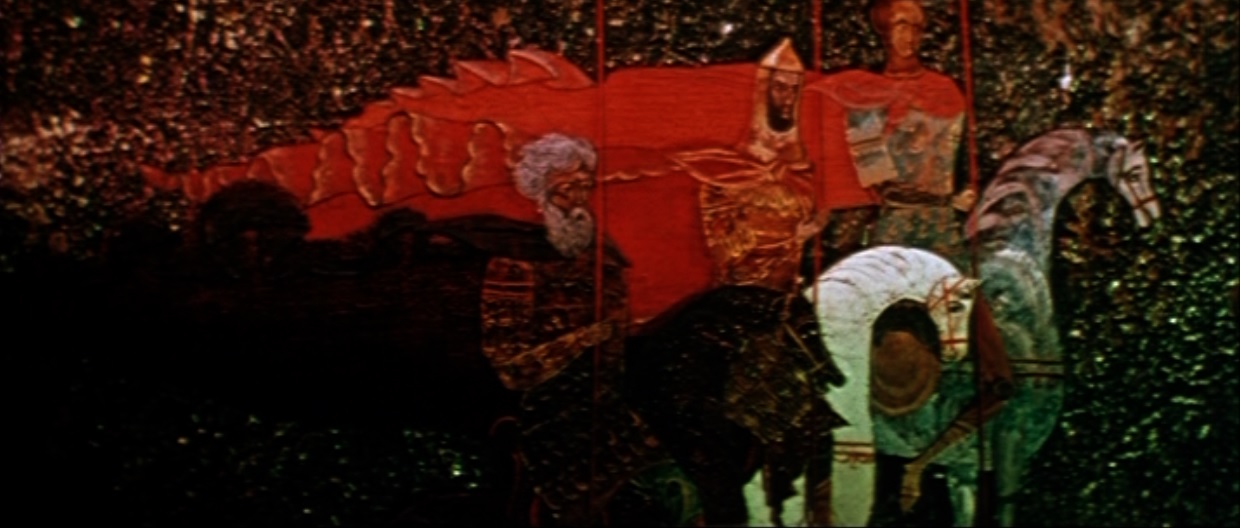
Veteran director Ivan Ivanov-Vano and young and up-and-coming talent Yuri Norstein co-direct the rather enigmatic ‘The Battle of Kerzhenets’.
Set to music by Nikolai Rimsky-Korsakov (excerpts from his opera ‘the Invisible City of Kitezh’), the film tells of a legendary epic battle of a Russian army against an invading army of Mongols, and of its aftermath. The film consists of three parts: in the first we watch the soldiers saying goodbye to their wives and children, the second depicts the battle itself, and the third part shows how life continues, with images of farmers sowing and harvesting and of children playing.
The short stops quite abruptly, and it’s quite unclear what the duo wanted to tell with their film. Nevertheless, the film is a marvel to watch. As the directors state themselves in the opening of the film, the visuals are based on Russian icons and frescos of the 14th to 16th century, and these give the short its unique style.
The cut-out animation is fair, and more emblematic than realistic, but the real treat lies in the way the two directors filmed their short. For a film about a battle, the filming is remarkably poetic: the images often flow into each other by the use of dissolves into black and back, and there’s a lot of soft focus on the images, creating a magical distance. In fact, the images are mesmerizing throughout the picture, and clearly look forward to Norstein’s individual poetic style.
Watch ‘The Battle of Kerzhenets’ yourself and tell me what you think:
‘The Battle of Kerzhenets’ is available on the DVD ‘Masters of Russian Animation Volume 2’
Director: Andrei Khrjanovsky
Release date: 1970
Rating: ★★
Review:
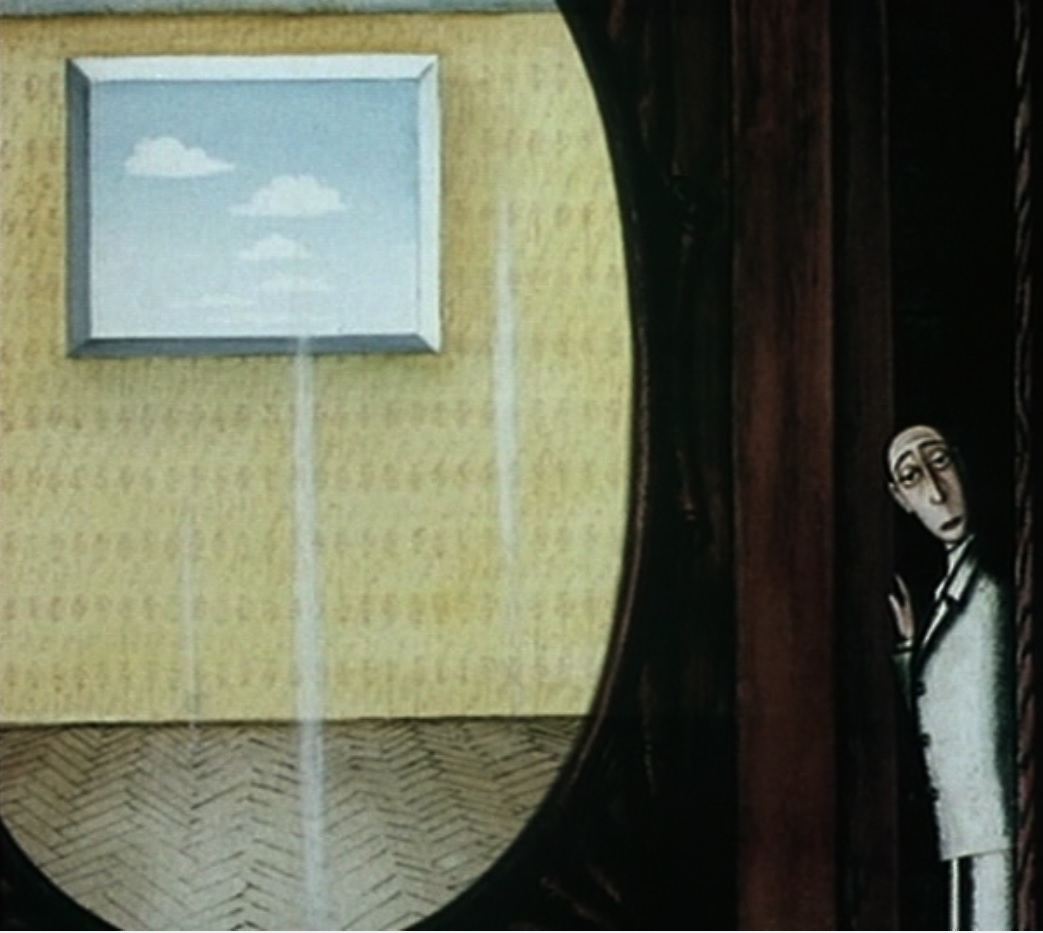
‘Armoire’ is an enigmatic cut-out animation film about a man in an apartment who puts an enormous cupboard into his room. Once inside, he starts to put all his belongings into the cupboard, until he can live inside it. In the end it’s revealed that even his tiny room is inside another cupboard.
Several shots of depressing apartment blocks suggest that this is a critical satire on the living conditions inside the Soviet Union, but I’m not sure. ‘Armoire’ is as avant-garde as was possible in the Soviet-Union, especially Alfred Schnittke’s score is very modernistic. But because the film is just the illustration of one puzzling idea, and because the one protagonist is as phlegmatic as Buster Keaton, the film fails to make a lasting impression.
Watch ‘Armoire’ yourself and tell me what you think:
‘Armoire’ is available on the DVD ‘Masters of Russian Animation Volume 2’
Director: Ivan Ivanov-Vano
Release date: 1969
Rating: ★★½
Review:

‘Seasons’ is a very poetic stop-motion film set to music by Pyotr Ilyich Tchaikovsky.
The film tells about two lovers through the seasons, although we see mostly images of autumn (the two riding together through a forest) and winter (a lengthy sleigh ride), with summer being reduced to a reminiscence of happier times, and spring hardly identifiable, at all.
The film is directed by Ivan Ivanov-Vano, but co-directed by Yuri Norstein, and already contains several elements of the later director’s mature style: the stop-motion is close to cut-out animation, there are plenty multi-plane effects, and the filming of the images has a soft, poetic edge to it. The designs are extraordinary beautiful, especially that of the crystalline forest, but as practically nothing happens during the entire film, the result is as enchanting as it is boring.
Watch ‘Seasons’ yourself and tell me what you think:
‘Seasons’ is available on the DVD ‘Masters of Russian Animation Volume 2’
Director: Lev Atamanov
Release date: 1969
Rating: ★★★★
Review:
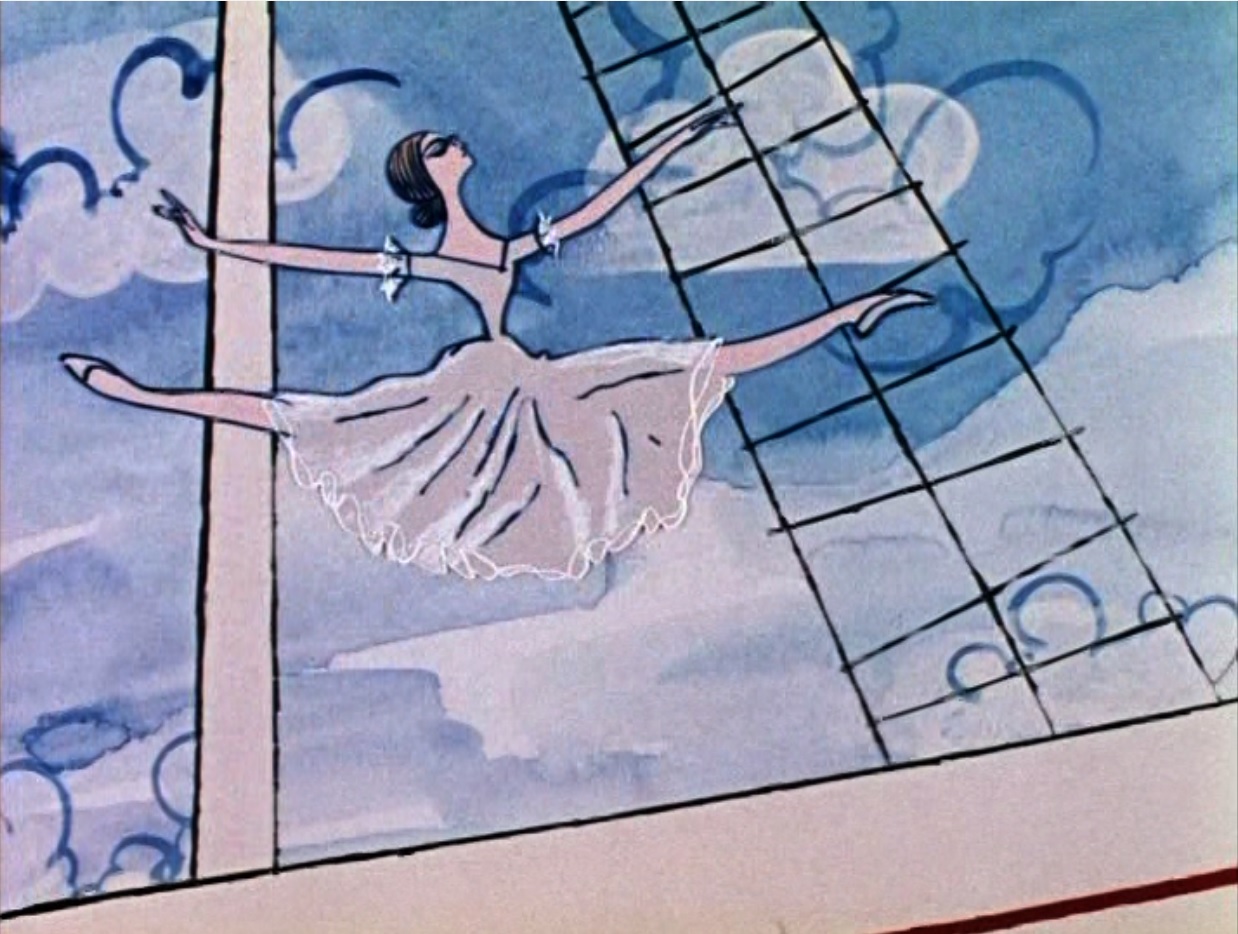
In ‘Ballerina on the Boat’ a ballerina boards a ship. When she practices her moves, several sailors try to copy her, but only succeed in falling overboard. In the end they all get so angry, the gentle ballerina retreats into her cabin. But that night she rescues the ship from a terrible storm.
‘Ballerina on the Boat’ is a very charming film using stark cartoon modern designs and watercolor backgrounds reminiscent of Raoul Dufy. Even the storm consists of beautifully colored paint strokes. The film thus has a strong 1950s feel, enhanced by the peppered modern music by star composer Alfred Schnittke.
The film uses no dialogue and has a very poetic feel, as the ballerina defies gravity more than once. The ballerina herself is animated beautifully and very convincingly, and indeed, two people are credited for choreography. If the film has one drawback, it’s its length. For, after all, not too much is happening throughout the 17 minute long short.
Watch part 1 of ‘Ballerina on the Boat’ yourself and tell me what you think:
‘Ballerina on the Boat’ is available on the DVD ‘Masters of Russian Animation Volume 2’
Director: Witold Giersz
Release date: 1970
Rating: ★★★½
Review:

‘The Wonderful March’ is a traditional animation film, which retells the story ‘The Marvelous March of Jean François’ (1965) by John Raymond.
Jean François is a drummer boy in Napoleon’s army, who’s told to march ever onward. Following this direction rather obsessively, Jean François travels the world, using his drum e.g. as a boat and as a basket for a balloon, only to return to Napoleon in the end, right in the battle of Waterloo.
The film’s conclusion is a bit puzzling and rather disappointing. Nevertheless, ‘The Wonderful March’ can boast very pleasant images, full of painted animation, and charming music by Polish composer Kazimierz Serocki.
Watch ‘The Wonderful March’ yourself and tell me what you think:
‘The Wonderful March’ is available on the DVD-set ‘Anthology of Polish Children’s Animation’
Director: Julian Antonisz
Release date: 1970
Rating: ★★★
Review:

‘How Is That…?’ is another children’s film by Julian Antonisz and this film is made in the same vein as ‘How Learning Came Back tothe Woods’. This time a little girl tells us how television works.
Antonisz again illustrates the narration with very rough designs, and cut-out animation of household objects on top of a light table. For examples, the people wear real glasses, and some nature is suggested by real flowers and plants.
‘How Is That…’ is not too serious. At several points things go wrong, and a ‘Please Stand By’ sign is shown. The result is a very original and delightful little avant-garde film for children.
Watch ‘How Is That…?’ yourself and tell me what you think:
‘How Is That…?’ is available on the DVD-set ‘Anthology of Polish Children’s Animation’
Director: Julian Antonisz
Release date: 1970
Rating: ★★★½
Review:
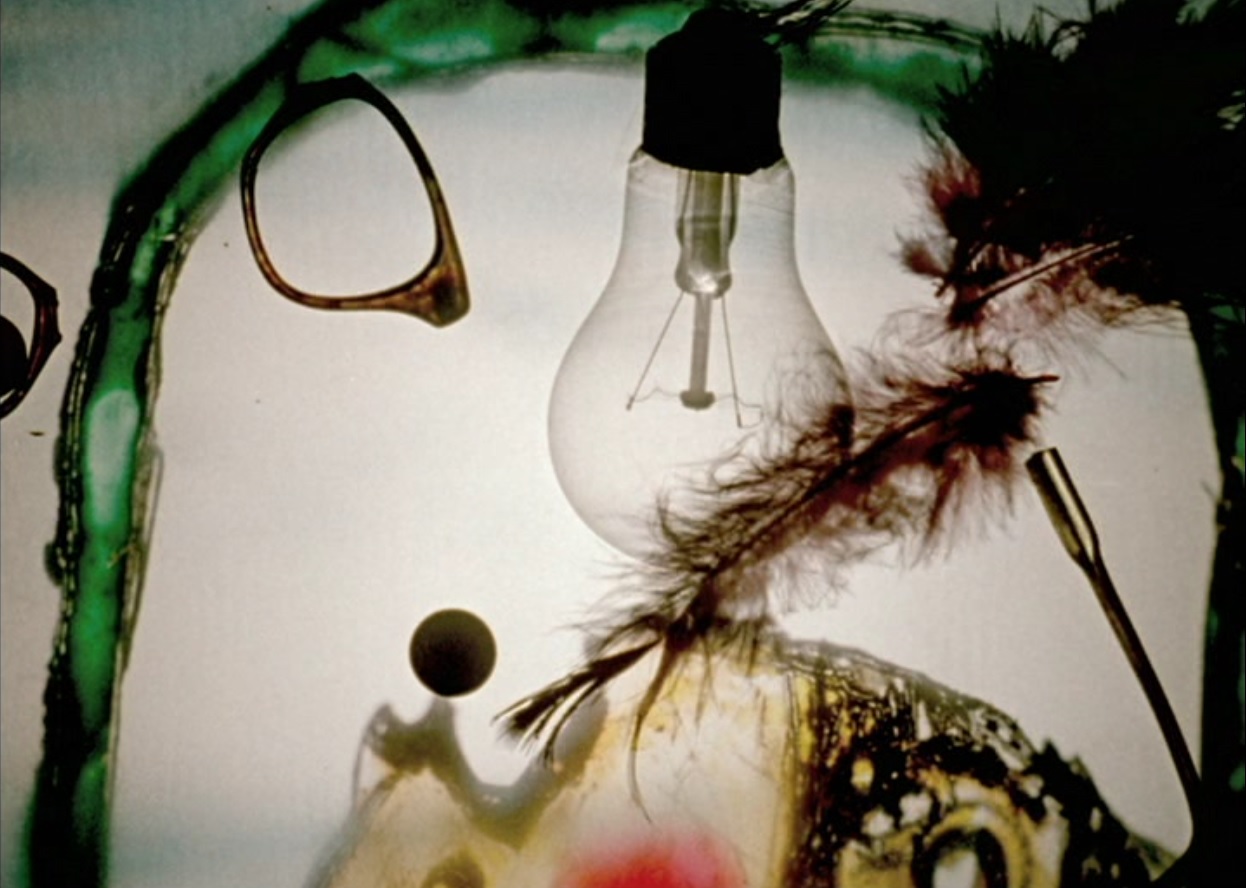
Told by a little girl ‘How Learning Came Back Out of the Woods’ is an educational film for children on how books are made.
Julian Antonisz’s animation style, however, is highly avant-garde. The animator uses a light table to illuminate his drawings and a multitude of household objects from below. Antonisz’s style is very rough and graphic. There’s motion, but the cut-out animation itself is limited. Human movement, for example, is only suggested by using two key frames, rather than animated fully. Nevertheless, this children’s film is a good example of the sheer creativity of the Polish animation industry of the seventies.
Watch ‘How Learning Came Back Out of the Woods’ yourself and tell me what you think:
‘How Learning Came Back Out of the Woods’ is available on the DVD-set ‘Anthology of Polish Children’s Animation’


 Dr. Grob's Animation Review