
You are currently browsing the category archive for the ‘Films by female artists’ category.
Directors: Norman McLaren & Evelyn Lambart
Release date: 1965
Rating: ★★★★
Review:
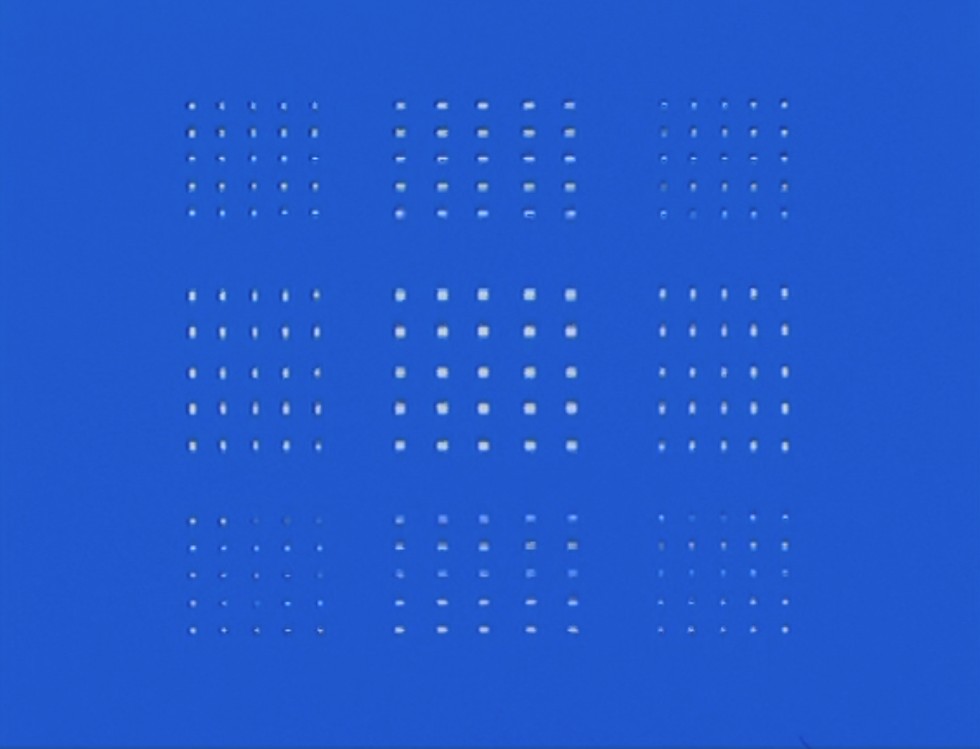
‘Mosaic’ starts with Norman McLaren himself entering an empty stage with a ball, while whistling. When he places the ball in empty air, it soon turns into a dot, which quickly splits into four dots, then nine, then sixteen and so on, until very complex patterns of dots fill the screen. The result is somewhat like a moving Piet Mondriaan painting, with the dots forming endless patterns, which change color over time.
It’s thanks to McLaren’s and Evelyn Lambart’s geniuses that this highly abstract film remains entertaining throughout, and seems to follow some inner logic. Indeed, McLaren himself said that ‘Mosaic’, like ‘Lines Vertical‘ and ‘Lines Horizontal‘ followed the structure of Hindu classical music, which also start with an easy pattern (a raga), which becomes increasingly complex and fast moving.
Watch ‘Mosaic’ yourself and tell me what you think:
‘Mosaic’ is available on the DVD-box ‘Norman McLaren – The Master’s Edition’
Directors: Norman McLaren & Evelyn Lambart
Release date: 1962
Rating: ★★★
Review:

‘Lines Horizontal’ is essentially ‘Lines Vertical‘ from 1960, but turned 90 degrees, re-colored and with a new, rather folky soundtrack by Peter Seeger. Even though the patterns are essentially the same, the result feels like a new film, especially because the horizontal lines cause some different effects to the eye, like creating non-existent triangles.
‘Lines Vertical’ and ‘Lines Horizontal’ both are extreme films in that they only use parallel lines, but Norman McLaren and Evelyn Lambart are able to turn this extreme concepts into intriguing films, thanks to their timing and overall structure, which follows an inner logic.
Watch ‘Lines Horizontal’ yourself and tell me what you think:
‘Lines Horizontal’ is available on the DVD-box ‘Norman McLaren – The Master’s Edition’
Director: Nina Paley
Release date: June 11, 2018
Rating: ★★★
Review:

Seder-Masochism is the second feature animation film by independent animation artist Nina Paley (born 1968), who created quite a stir with the lovely ‘Sita Sings the Blues’ (2008) in which she blended events in her personal life with the story of the Ramayana, but from a woman’s view.
Apparently, Paley was criticized for using a myth from another culture for her feminist message, with attackers typically focusing on Paley’s supposed lack of understanding of Hindu religion, an irrelevant argument, as the misogyny that Paley attacked is plainly visible in the source text (especially in the last book). Moreover, the Ramayana is hardly unique in its treatment of women as second rate citizens, which can be found in practically all ancient texts.
To underline this message, for her second feature Paley dived into her own heretical religious culture, that of Jewism. The result is a more vicious and more pamphlet-like feature than ‘Sita Sings the Blues’, mostly because the personal note is hardly present, only in an interview of Paley with her father, recorded years prior, about his stance towards Judaism, and that of the Pesach (or Passover) in particular. In these scenes Paley is shown as a sacrificial goat and her father as God himself.
The Pesach, and the story from the book of Exodus behind it, forms the central element of ‘Seder-Masochism’. The ‘Seder’ in the title apparently is a ritual feast at the beginning of the Jewish Pesach celebration, and contains some questionable elements, like rejoicing over the Egyptian victims of the ten plagues and of the closing of the Red Sea.
Surprisingly, Paley juxtaposes the story of Exodus with the idea that initially human culture was matriarchal and devoted to mother goddesses, a theory popular with feminists, but unsupported by archeological evidence. Paley even goes so far as suggesting the golden calf from the Exodus story was a return to such a mother goddess, and thus to times of more equality between and women. Indeed, Paley seems to blame Moses, or monotheism in general for the misogynist patriarchy that dominates most of human culture in its historical existence. This is pure fantasy and can be easily debunked. But of course, ‘Seder-Masochism’ is no documentary, but Paley’s personal take on monotheism and its approach to women.
Yet, Paley’s clear atheist approach to the biblical story is more vicious than anything in ‘Sita Sings the Blues’, which makes the film less approachable and less a classic than Paley’s first movie. Especially when Paley turns to real life footage of religion-inspired violence the film becomes pure agit-prop. Nevertheless, the scene in which Moses returns from Mount Sinai, commanding a stop to the women’s temporal liberation and forcing them back into their niqab-like clothing remains a painful one, and rightfully evokes anger about religious societies who limit the freedom of women.
Even with its strong message, Paley’s way of storytelling remains highly attractive. Paley’s dry sense of humor permeates much of the film, and her visual style is charming throughout, her command of minimal, but effective animation one of the highest degrees. I especially like the poetic intro in which a female goddess flows through space, and sprouts plants, animals, and eventually men on a soundtrack of the most beautiful Bulgarian female chant. Paley’s dance animation of ancient female statues is also a masterstroke, and an attraction in its own right (Paley offers them as singular GIFs).
Moreover, Paley very skillfully mixes the interview excerpts, an enormous variety of existing music and even a 1950s record in which a man tells about the Seder celebration. In contrast with ‘Sita Sings the Blues’, in which only records by 1920s singer Annette Hanshaw were used, ‘Seder-Masochism’ plunders the Western pop music tradition, often to a very striking effect. Notice, for example the single sample of ‘Helter Skelter’ from The Beatles during the sixth plague, and the earlier mentioned scene in which Moses returns uses Led Zeppelin’s ‘Your Time Is Gonna Come’ to a painful effect. But the film’s highlight in this respect must be the use of 10cc’s ‘The Things We Do for Love’ which accompanies images of Jews gleefully chopping off foreskins, beheading little goats and killing men and women.
The bitter irony of this sequence is topped by the ‘This Land Is Mine’ sequence, which Paley finished first, and which can be watched as a separate video clip. In this utterly bleak section, we watch several nations fight over the land of Israel, killing one another in greater and greater numbers, with Death itself ultimately being triumphant. With Israel raging the war in Gaza today, with its tens of thousands of innocent Palestine victims, this bleak sequence remains as topical as ever.
The ‘This Land Is Mine’ sequence was also one of the last pieces of animation Paley did in Macromedia Flash, before moving over to Moho. But the most surprising piece of animation in the film is not done on either platform but done with embroidery, in a process Paley calls ‘embroidermation’. This is a lovely piece of stop-motion that Paley rightfully saves for the end, just before the ‘This Land Is Mine’ finale.
In all, ‘Seder-Masochism’ is a beautiful, if rather angry film with a strong feminist message. It cannot stand the comparison with ‘Sita Sings the Blues’, which remains the more balanced work, but as author feature films like this remain utterly rare in the animation field, I strongly recommend watching this feature nonetheless. At least it will make you think about the position of women in society. Paley offers her film for free online, and the movie can be downloaded from her site.
Watch the trailer for ‘Seder-Masochism’ yourself and tell me what you think:
‘Seder-Masochism’ can be downloaded for free from Nina Paley’s website
Director: Hermína Týrlová
Release date: 1962
Rating: ★★★
Review:

In ‘Two Balls of Wool’ the insides of a sewing box come to life, including a scissors, a measuring tape, thread spools, a horse-like pincushion, and, most importantly, two balls of wool.
The pink ball of wool turns into a girl, while the blue one turns into a boy. The boy plays the flute on a needle, charming the measuring tape, who acts like a snake. When the snake captures the girl, the boy comes to the rescue, riding the pincushion horse. The two also perform some acrobatic tricks, and accidentally unwind a knitted piece, until the scissors forces them to knit the piece back again
The film has a rather weak story, but it’s a marvel how Týrlová spins a film out of such ordinary material, making use of the properties of these objects. The animation is top notch. For example, note how Týrlová manages to turn the scissors (which can’t do anymore than the scissors in your drawer) into an authority figure, imposing on the other objects. ‘Two Balls of Wool’ thus is a charming little short, showing Týrlová’s great talent as an animator.
Watch ‘Two Balls of Wool’ yourself and tell me what you think:
https://noodlemagazine.com/watch/-167471844_456240845
‘Two Balls of Wool’ is available on the DVD box ‘Hermína Týrlová Výběr z tvorby/Selected Works’
Director: Jan Iván
Release date: 1961
Rating: ★★★
Review:
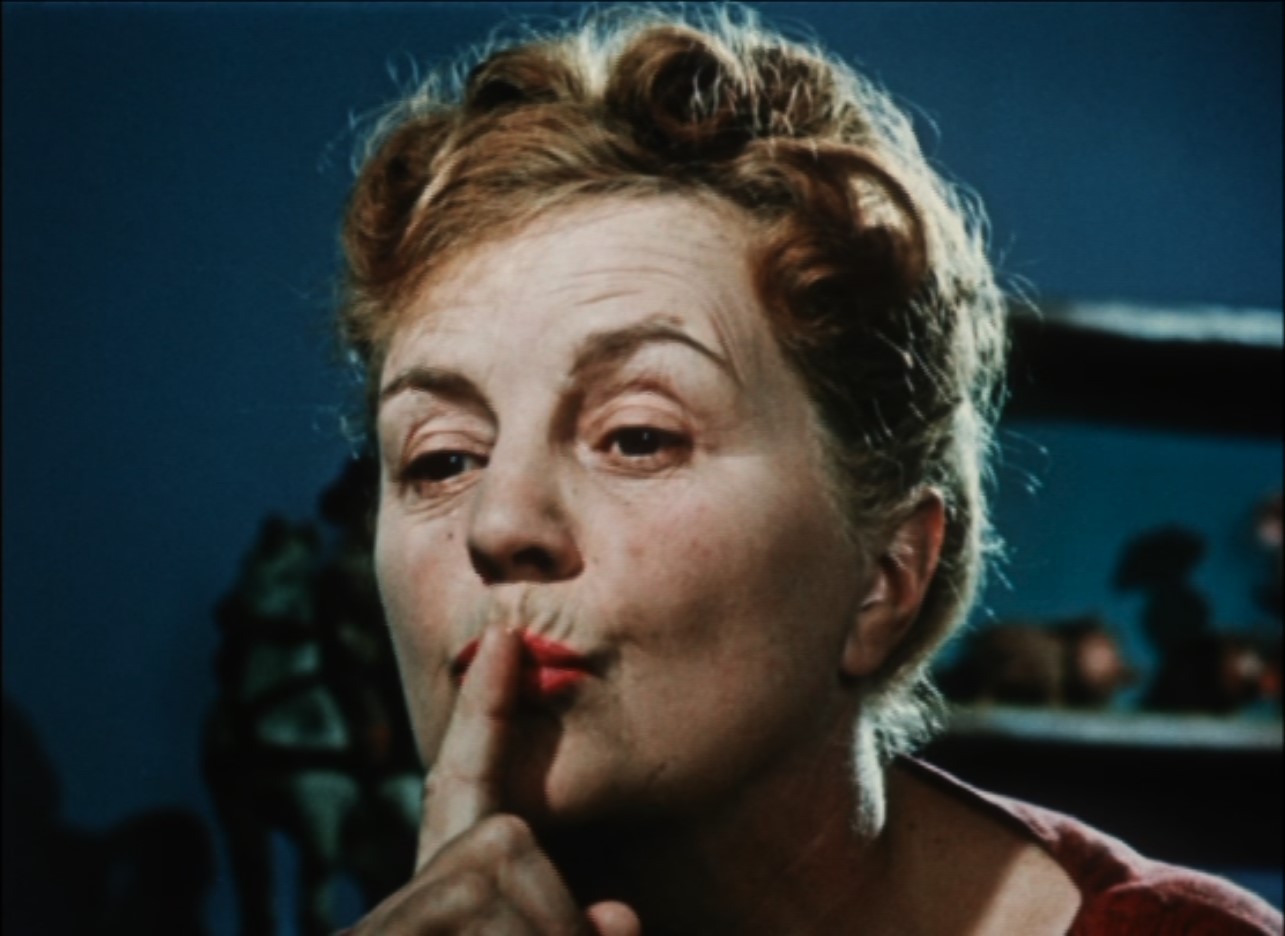
This a gentle documentary film made in honour of the Czech animation pioneer’s sixtieth birthday.
The film showcases excerpts from quite a few of Hermína Týrlová’s films, including her first, ‘Ferda the Ant’ (1944), Czechoslowakia’s first stop motion film anyhow. Other excerpts are from ‘Revolt of the Toys’ (1945), apparently an anti-fascist film, ‘The Knot in the Handkerchief’ (1958) and ‘Badly Made Toy-Man’ (1951), which is revealed as Týrlová’s favorite character.
Indeed, it’s the Badly Made Toy-Man who stars the bridging stop-motion sequences, for this documentary features quite some original animated material, made by Týrlová especially for this film. Especially, the short sequence starring the two balls of whool-characters for her upcoming ‘Two Balls of Wool’ (1962) are a delight, for this cannot be found in the final film, and is presented as a depiction of Týrlová’s imagination.
The film is narrated, and although we watch Týrlová acting out herself, e.g. recreating the painstaking ways with which she made ‘Ferda the Ant’ and interacting with children, her main audience, we do not hear her, and there are no interviews, only images. Nevertheless, the documentary succeeds in showing where Týrlová’s greatest talent lies: in creating charming animation films for children in which ordinary toys and objects come to life.
‘Hermína Týrlová’ is available on the DVD box ‘Hermína Týrlová Výběr z tvorby/Selected Works’
Director: Nina Paley
Release date: February 11, 2008
Rating: ★★★★★
Review:
Unlike the European and Japanese animation field, the American animation studio system is unkind to author films. Walt Disney’s ‘Lilo & Stitch’ (Chris Sanders, 2002) probably comes closest, apart from several feature films based on animated television series. Thankfully, some individual artists have filled this gap, most notably Bill Plympton, releasing no less than seven features. Other notable artists are Don Hertzfeldt (‘It’s Such a Beautiful Day’ from 2012), and Nina Paley. Amazingly, all these artists mostly work totally alone, which makes their accomplishments even more stunning.
Nina Paley ‘Sita Sings the Blues’ for example, is written, directed and produced by Paley alone, which took her five to six years, and which could only be finished with help from crowd-funding, being one of the first animated projects to use this type of fund raising.
‘Sita Sings the Blues’ retells the Indian epic ‘The Ramayana’, but it’s also a personal film, in which Paley links her own situation to that of Sita, the perfect wife to the hero Rama. The most incongruous element are the eleven songs by 1920s jazz singer Annette Hanshaw, an artist sadly almost forgotten, whom Paley had discovered prior to the film making. The linking of these sweet and gentle tin pan alley songs to the Ramayana is as odd as it is effective, and the pairing certainly contributes to the uniqueness of the film.
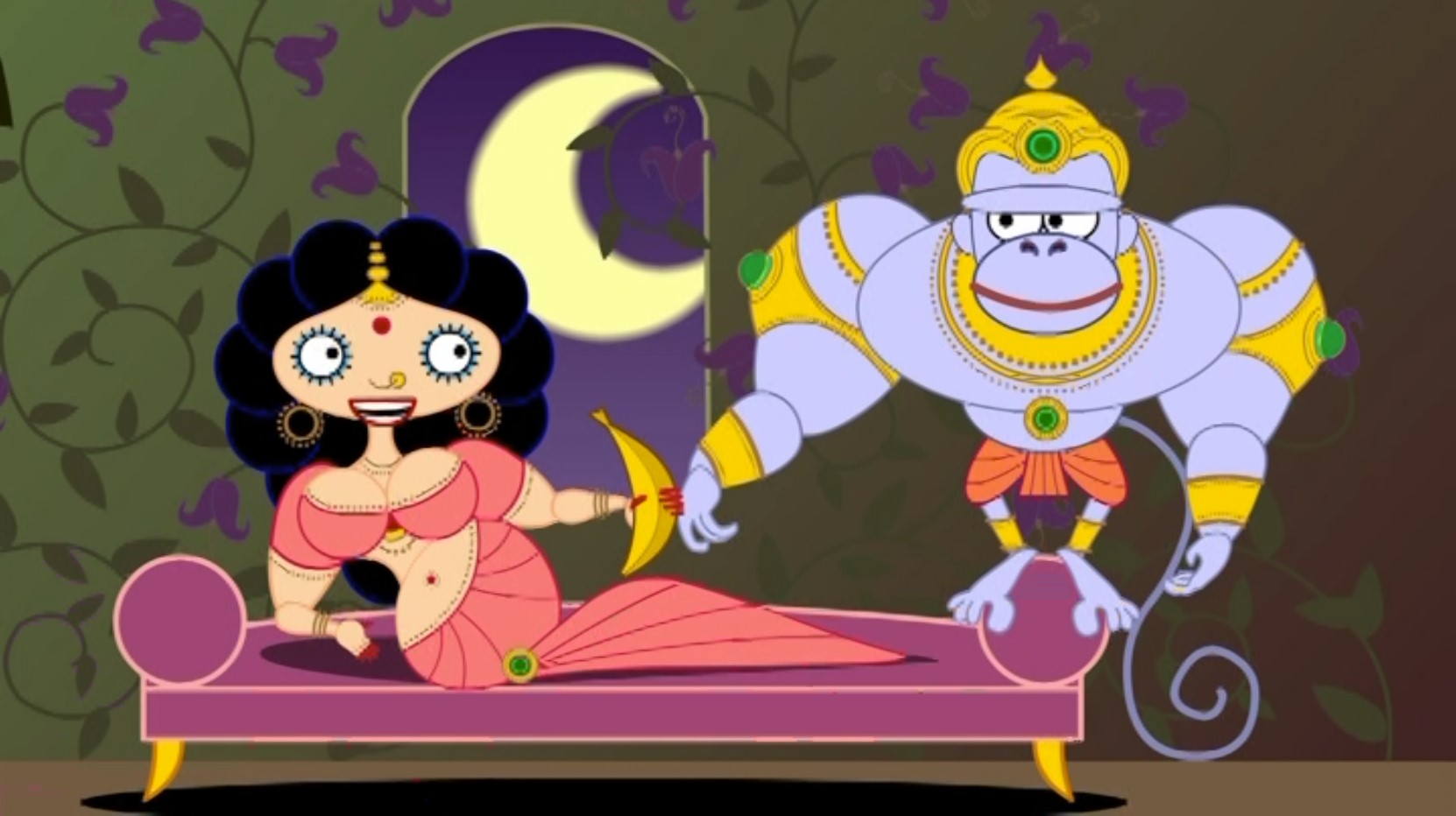
The film uses several different animation styles: Nina Paley’s own personal story is told in a traditional scribbly animation style, with sets based on photographic material. These parts are the least attractive of the lot, even though Paley shows to be a very able animator in this classic cartoon style. The Ramayana is retold by three Indians (Aseem Chhabra, Bhavana Nagulapally and Manish Acharya) who are depicted as traditional shadow puppets of Hanuman, Sita, and Rama, respectively. The story they are telling together is shown in tongue-in-cheek cut-out animation.
The ‘official’ story is also told in cut-out animation, using very attractive recreations of traditional Indian paintings. But the best parts to look at are the songs, which are done in a most attractive cartoon modern design. In these song parts Paley reuses a lot of animation cycles, but actually she makes excellent use of the flash medium, and she makes the most of her limited animation.
Apart from these five alternating styles, there’s also a short sequence using rotoscope and a much more pop-art influenced videoclip-like filming style. All these are apparently done in Macromedia flash.
As said, ‘Sita Sings the Blues’ retells the Ramayana, reducing the huge epic to its barest elements. For example, Lakshmana is hardly mentioned, and the monkey king Sugriva not at all. Moreover, unlike the traditional poem, the focus is on Sita, not Rama, and Paley highlights the questionable parts from the original poem (one at the end of the Yuddha Kanda, and another in the Uttara Kanda), in which Rama treats Sita very unfairly indeed, just like Paley’s own partner does in real life. This makes ‘Sita Sings the Blues’ a feminist film, which sheds a welcome critical light on the traditional depiction and treatment of women, then and now.
As the story is told by three people, who remember the story differently and interpret it in different ways, this leads to some very funny moments. But Paley adds some humor, too, in the ‘official’ story part, for example when the female rakshasa (a sort of demon) Shurpanakha tells her brother Ravana about the beauty of Sita, comparing all her body parts with lotuses.
As said, the Annette Hanshaw songs boast the most attractive designs, and like traditional opera arias, they shed an emotional light on the events. However, Paley cleverly propels the story forward even during these sequences. Yet, as the songs are featured in their entirety, typically lasting ca. 3 minutes, they also drag the film down. As there are eleven of them, one tends to grow a little weary of them as the film progresses. Nevertheless, ‘Sita Sings the Blues’ does a great job in restoring interest in this almost forgotten singer. Unfortunately, the Hanshaw songs were not free from copyright, causing Paley a lot of trouble, and eventually causing her to release the film completely free from copyright.
The Annette Hanshaw songs are juxtaposed to some Indian pop music, mostly by artist Masaladosa. Particularly strong is the angry song which follows the scene in which Paley gets dumped by email. The complete soundtrack is as attractive as the film’s visual designs, and the two complement each other very well.
In all, ‘Sita Sings the Blues’ is not without its flaws, but as it is made by a single woman, it’s no less than a tour-de-force, and the result is a very interesting personal film, which makes one think. Moreover, the film shows the great power and endless possibilities of animation, and single-handedly puts Paley into the pantheon of the medium’s greats. In 2018 Paley made yet another feature called ‘Seder-Masochism’, which unfortunately has attracted much less attention.
Watch the trailer for ‘Sita Sings the Blues’ yourself and tell me what you think:
‘Sita Sings the Blues’ is available on DVD
Director: Caroline Leaf
Release date: 1974
Rating: ★★★★
Review:

‘The Owl Who Married a Goose: An Eskimo Legend’ was the first film acclaimed animator Caroline Leaf made for the National Film Board of Canada.
Done entirely in sand animation (in fact, Caroline Leaf was one of the very first animations to explore this technique for an entire film) the short tells about an owl, who marries a goose, but cannot follow her life style, with disastrous results. The legend is told and sung by real inuit, who also provide the goose’s and owl’s voices. As their Inuktitut language remains untranslated, one is lost in what is said, but luckily Leaf’s charming animation tells it all.
With its simple designs, effective animation and original soundtrack ‘The Owl Who Married a Goose: An Eskimo Legend’ created quite a stir, and the film surely is one of the most Canadian the NFB ever made. After this film Leaf set off to a great career as one of the most interesting of independent animation film makers, creating such intriguing masterpieces like ‘The Street’ (1976) and ‘Two Sisters’ (1990).
Watch ‘The Owl Who Married a Goose: An Eskimo Legend’ yourself and tell me what you think:
‘The Owl Who Married a Goose: An Eskimo Legend’ is available on the DVD ‘Best of the Best – Especially for Kids!’
Director: Zofia Oraczewska
Release date: 1976
Rating: ★★★
Review:

In ‘Banquet’ a bunch of waiters and chefs are preparing a huge banquet for a large number of guests. But when the guests arrive, the banquet turns out to be very different than expected.
‘Banquet’ has a mixed design: the waiters and chefs are rather classic cartoony figures, while the meals and the guests are collages partly made out of photo material.
Jan Skorża’s cut-out animation is fair, if not outstanding, and the whole film is a little too empty to be memorable. I guess the Polish film makers were less in their game when trying an attempt at humor.
Watch ‘Banquet’ yourself and tell me what you think:
‘Banquet’ is available on the DVD-set ‘Anthology of Polish Animated Film’
Directors: Amanda Forbis & Wendy Tilby
Release date: June 1, 2011
Rating: ★★★
Review:
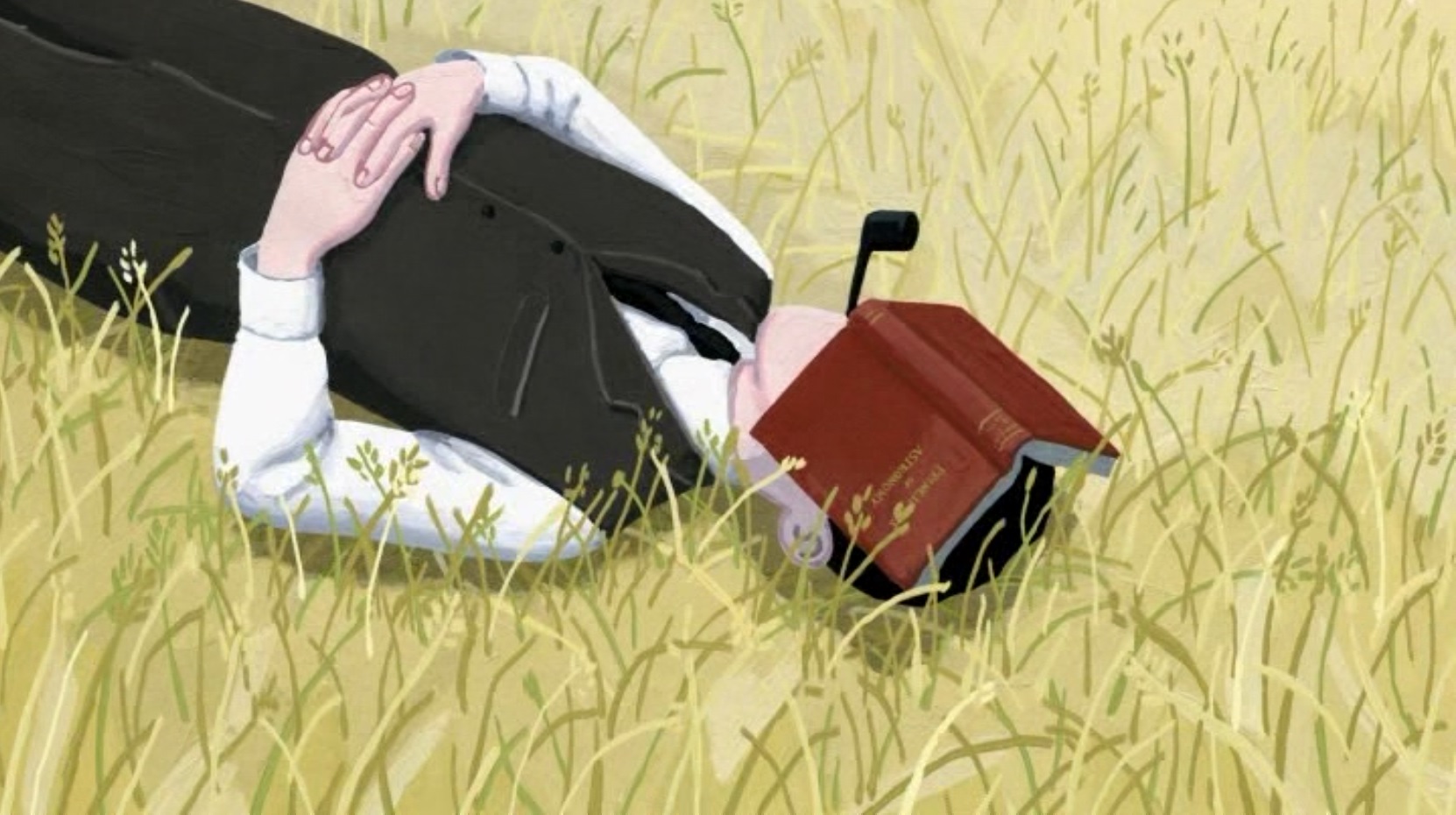
In this short Amanda Forbis and Wendy Tilby tell about a young Englishman migrating to Alberta, Canada in 1909, where he ends in a small hut on the countryside. The young man’s letters to his father and mother paint a rosier picture than his actual circumstances deserve.
For their short Forbis and Tilby use a very attractive form of painted animation, mixed with a little traditional animation. They tell their story using “interviews” with people who knew him and with intertitles, which often rather puzzling tell us about comets.
The film is told rather tongue-in-cheek, but the story is ultimately tragic, and the film could be seen as a meditation on loneliness and failure. But it’s to the viewer to connect the loose snippets of information together in his head, for Forbis and Tilby don’t tell their story straightforward, but associatively and free flowing. The soundtrack is great, using very fitting original songs, as well as old recordings and an instrumental rendering of Gilbert & Sullivan’s big hit ‘I Am the Very Model of a Modern Major-General’.
Watch ‘Wild Life’ yourself and tell me what you think:
‘Wild Life’ is available on the The Animation Show of Shows Box Set 9
Director: Michèle Cournoyer
Release Date: 1996
Rating: ★★★★
Review:
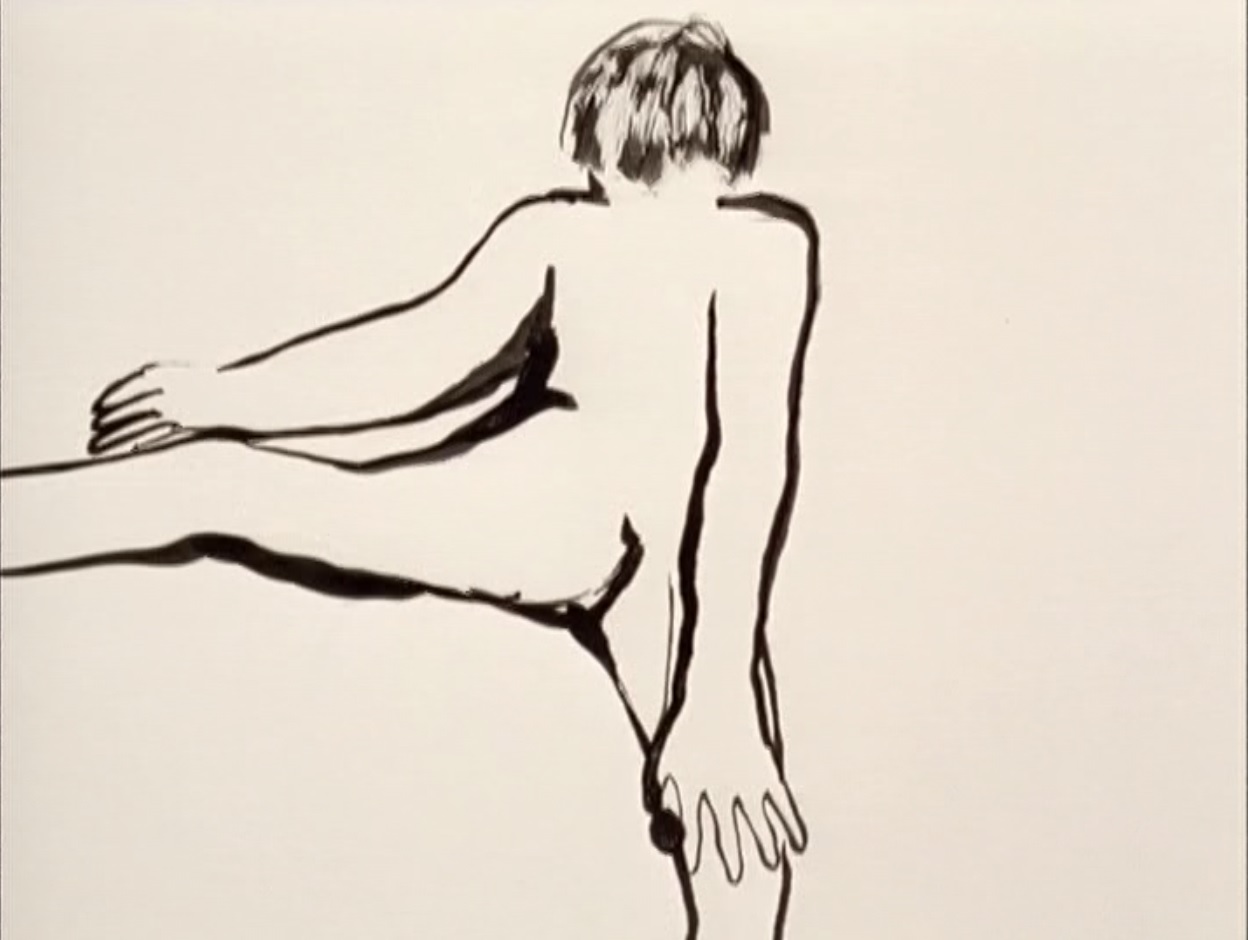
‘Le chapeau’ is a nonlinear, stream-of-consciousness-like film of flowing pen drawings morphing into each other on a white empty canvas, using the hat as a recurring motive.
The film is very associative, but it clearly says something about the male gaze and how it reduces women to mere objects of desire. The images show e.g. a female dancer dancing nude for a male audience, and images of sex. Most disturbing are the images in which the adult woman suddenly changes into a little girl and back, suggesting child abuse.
Cournoyer’s animation is flowing, her pen drawings are rough and sketchy, and her use of metamorphosis is mesmerizing. The result is a powerful, if rather uncomfortable short.
Watch ‘Le chapeau’ yourself and tell me what you think:
‘How Wings Are Attached to the Backs of Angels’ is available on the DVD ‘Desire & Sexuality – Animating the Unconscious Vol.2’
Director: Julia Gromskaya
Release Date: 2012
Rating: ★★★½
Review:
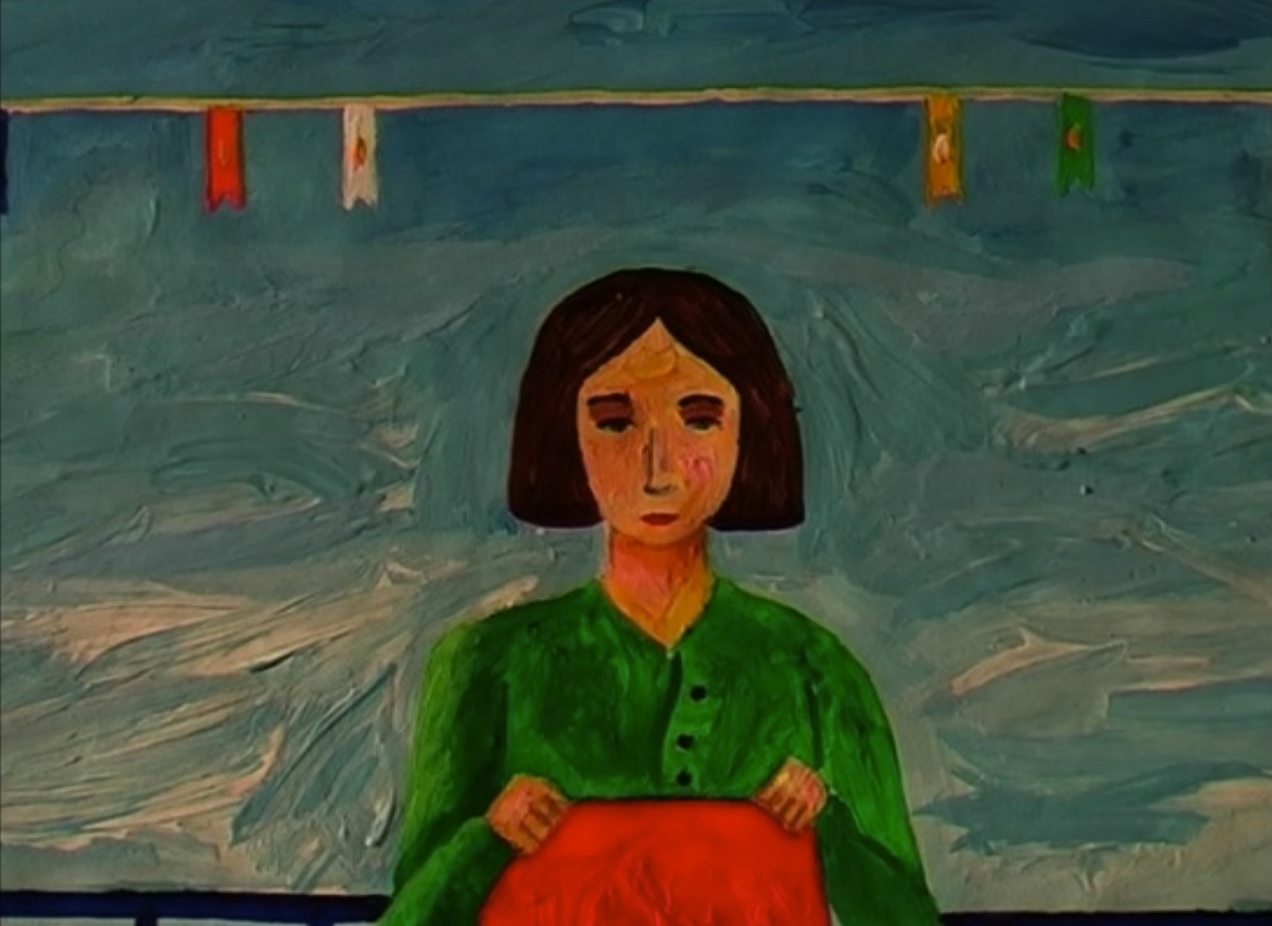
‘Fiumana’ shows that Georges Schwizgebel’s particular way of animating has made school. Julia Gromskaya adapts Schwizgebel’s painting techniques and constantly shifting perspective to tell a tale of a woman waiting for her man, while drowning in her memories.
Gromskaya’s film is much more stream-of-consciouslike than Schwizgebel’s films, however, and has strong surrealist overtones, with some original metamorphosis going on while the images flow into each other. For example, at one point the woman’s eyes change into boats on a river, which in turn changes into the smoke of the man’s pipe.
Gromskaya’s painting style, too, differs from Schwizgebel’s, and is much more fauvist and naive. Her flow of images is supported by a gentle chamber music score by Francesca Badalini. The result is a puzzling yet beautiful film that is over before you know it.
Watch ‘Fiumana’ yourself and tell me what you think:
‘Fiumana’ is available on the DVD-box ‘The Animation Show of Shows Box Set 7’
Director: Natalia Chernysheva
Release Date: September 2012
Rating: ★★★★
Review:
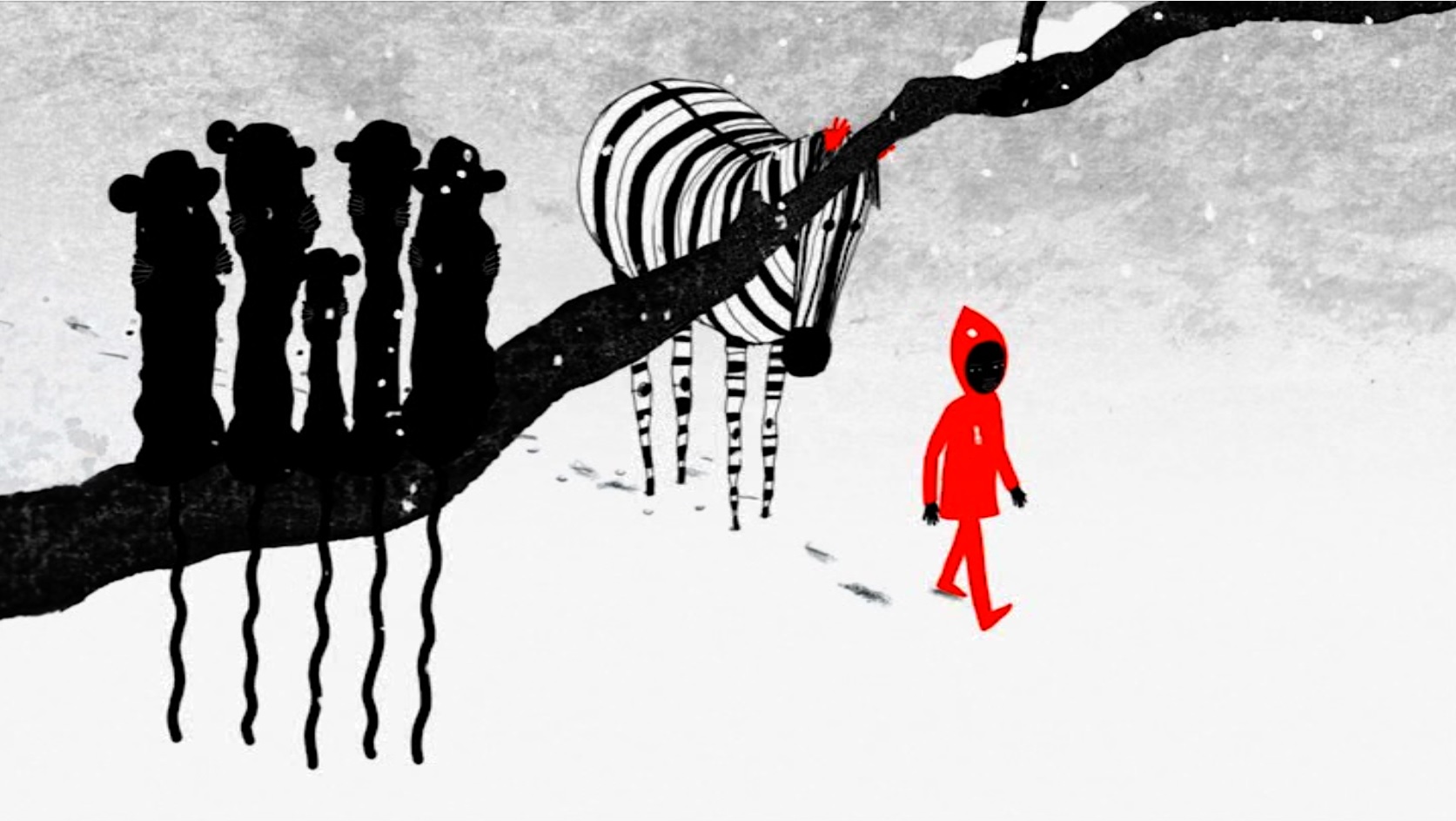
In ‘Snowflake’ a little boy in Africa gets a paper-cut snowflake by mail. That night he dreams his surroundings are covered with snow, making all animals shiver.
This is a charming little film done in a quasi-naive style, and making good use of black and whites, with occasional flashes of color. Especially the scenes in which the boy explores the snow-covered world are beautiful, with his red coat, shawl, hood and mittens standing out against the blacks, whites and greys of the animals and their surroundings. Also noteworthy is Chernysheva’s excellent timing, and the sound design, which is spot on.
Watch ‘Snowflake’ yourself and tell me what you think:
‘Snowflake’ is available on the Belgian DVD ‘Haas & Hert en andere verhaaltjes’
Director: Anna Kadykova
Release Date: September 2012
Rating: ★★★½
Review:
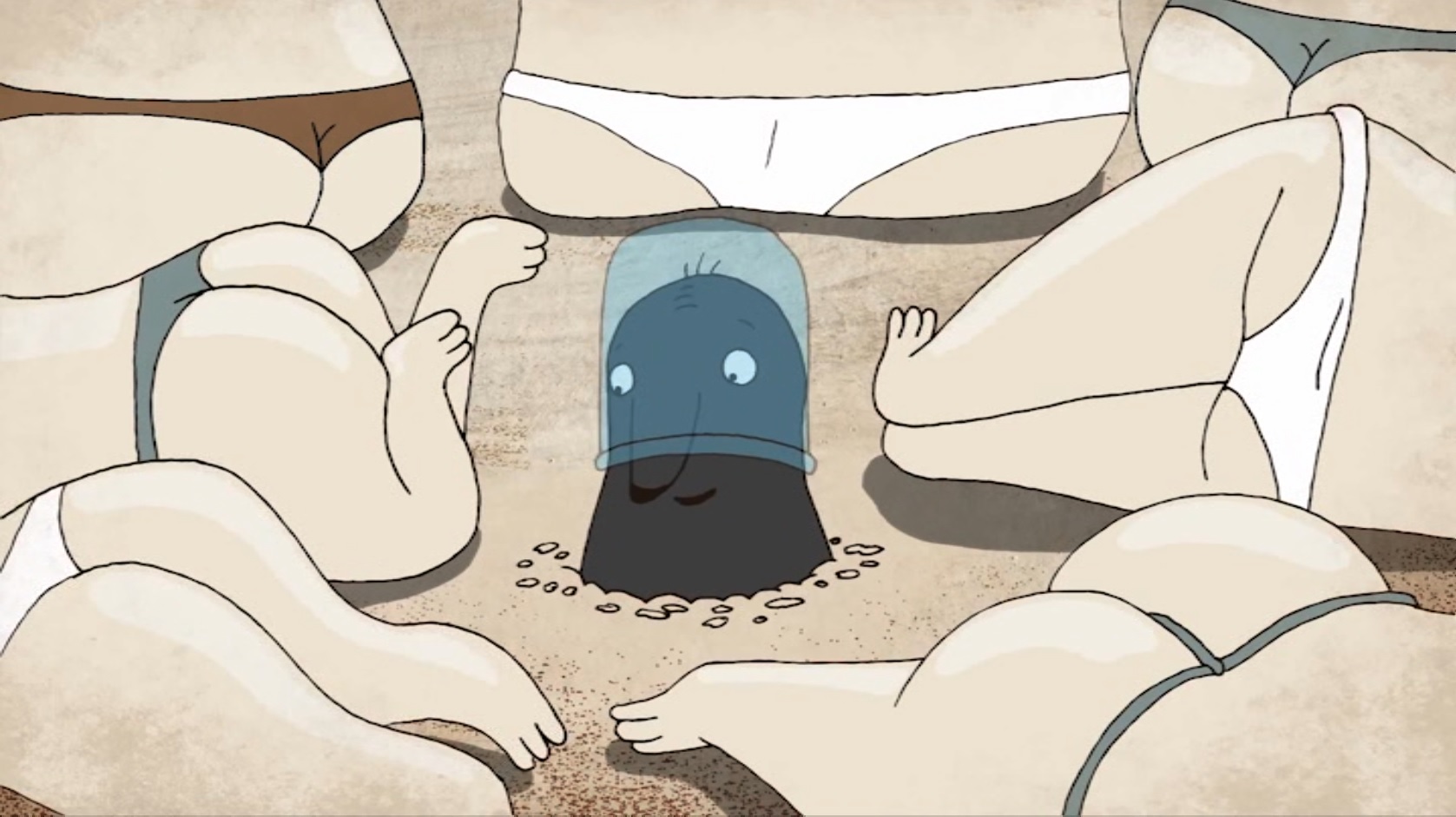
A little mole, living in a grey, polluted city discovers images of the sea in an abandoned magazine. He longs to go there, and travels, like moles do, underground to go there. Unfortunately, the beach is as crowded as the city was.
‘The Mole at the Sea’ (also known as ‘Moe Goes to the Beach’) is a charming little film, with lots of little jokes, many of which are slightly on the surreal side. Kadykova’s style is instantly likable, and her timing excellent. Especially the scenes of the over-crowded beach are nice to watch.
Watch ‘The Mole at the Sea’ yourself and tell me what you think:
‘The Mole at the Sea’ is available on the Belgian DVD ‘Haas & Hert en andere verhaaltjes’
Director: Pascale Hecquet
Release Date: June 9, 2012
Rating: ★★
Review:
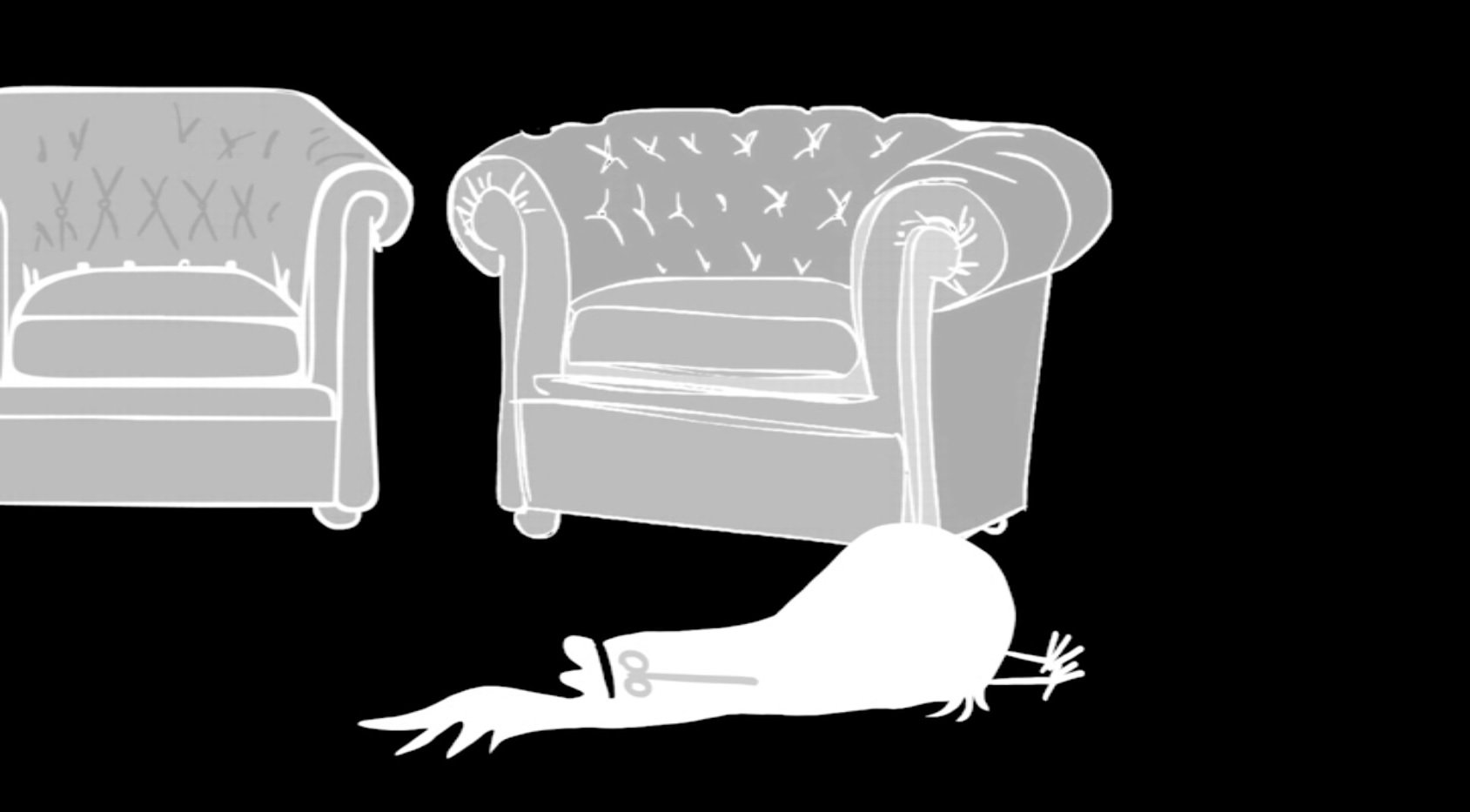
‘Duo de Volailles, Sauce Chasseur’ is a short comedy film in which a white and a black chicken are threatened by a fox in their own home.
The film is is black and white itself and tries to play with the idea that the white chicken is invisible in light and the black chicken invisible in the dark. Thus the film features a lot of on and off switching of lights.
Unfortunately, the film never succeeds in getting funny. Hecquet’s facial designs on the fox are more trite than funny, and his timing is sloppy. It certainly doesn’t help that at one point the two chickens start dancing a tango. How this deludes the fox is beyond me, because both thus remain visible to the fox throughout. Hecquet’s use of split screen is a rather petty try to make the action more exciting than it really is. The end result is a disappointingly tiresome film that never lives up to its clever premise.
Watch ‘Duo de Volailles, Sauce Chasseur’ yourself and tell me what you think:
‘Duo de Volailles, Sauce Chasseur’ is available on the Belgian DVD ‘Haas & Hert en andere verhaaltjes’
Director: Lena von Döhren
Release Date: February 14, 2012
Rating: ★★★½
Review:
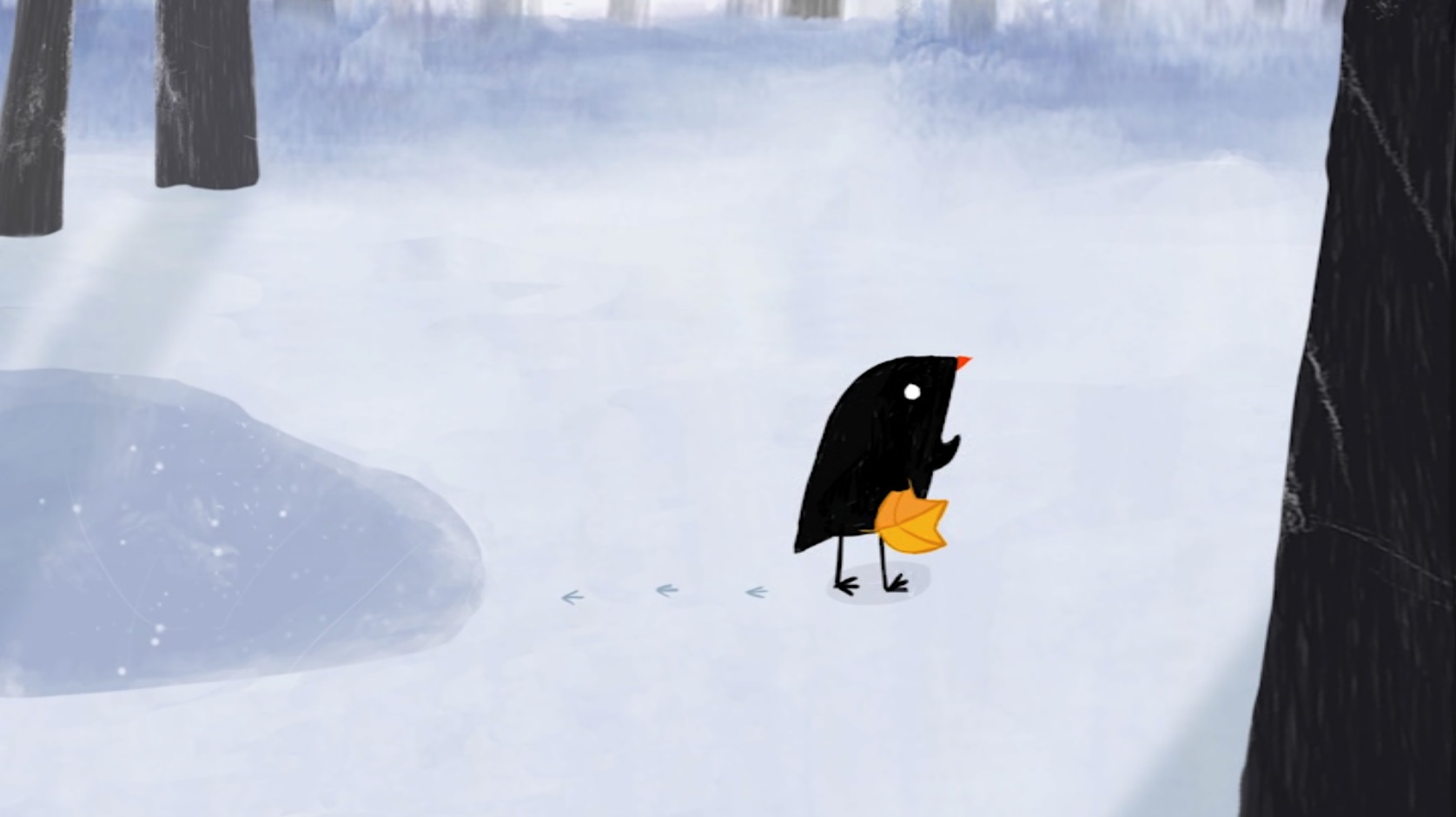
‘Der kleine Vogel und das Blatt’ is a charming little film starring a small bird caring for a single leaf.
When the leaf falls off, the little bird tries to retrieve it, while being chased by a hungry fox. The film uses no dialogue, but simple, attractive designs, and excellent timing. Animated in 2D in the computer, the film makes great use of its winter setting.
Watch ‘Der kleine Vogel und das Blatt’ yourself and tell me what you think:
‘Der kleine Vogel und das Blatt’ is available on the Belgian DVD ‘Haas & Hert en andere verhaaltjes’
Director: Michèle Lemieux
Release Date: February 15, 2012
Rating: ★★★★½
Review:
One of the most original devices for animation is the pinscreen, deviced by Alexandre Alexeïeff and his wife Claire Parker in the 1930s. Already in 1933 Alexeïeff himself demonstrated the power of this instrument with ‘Une nuit sur le mont chauve‘. However, it almost seemed that the use of machine would die with the great master.
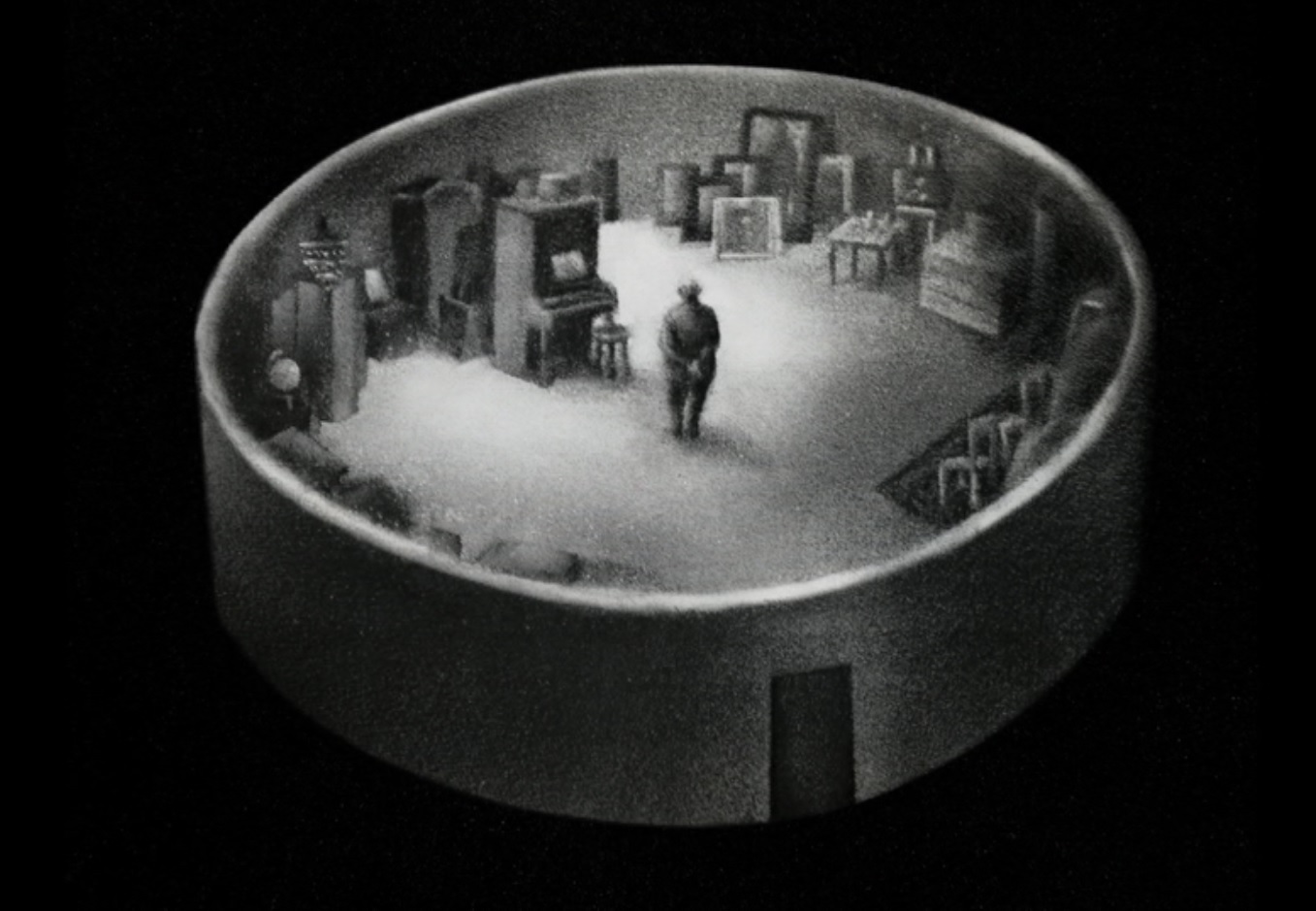
Luckily, Canadian animator Jacques Drouin has continued this tradition, and passed it on to Michèle Lemieux. With its soft black and white images the pinscreen is especially fit for poetical images, and Lemieux’s film certainly is very lyrical. The film is subtitled ‘four meditations on space and time’, and consists of four parts, only bridged by the short’s protagonist, a piano playing man, living in a round chamber.
There’s no traditional story and no dialogue, and little music (which can only be heard during one episode and the finale). But the images are very absorbing, and the sound design is superb. The first episode, in which the man watches some strange phenomenons in the sky, is most intriguing, as is the second episode, which makes great use of metamorphosis. The third, however, is rather static, and relies a little too much on the music to evoke mood. Most disturbing is the fourth chapter, ‘The return of Nothingness’, in which a flying object sucks all objects in the man’s room away from him.
Lemieux ends her beautiful, if rather puzzling film with the pinscreen itself, and she cleverly uses the device to depict the man’s transfiguration. In all, Lemieux proves a very capable animator on this intriguing device, and one hopes she’ll make more animation films this way.
Watch an excerpt from ‘Here and the Great Elsewhere’ yourself and tell me what you think:
‘Here and the Great Elsewhere’ is available on The Animation Show of Shows DVD Box Set 8
Director: Emily Hubley
Release Date: 1995
Rating: ★★★

‘Her Grandmother’s Gift’ is directed and animated by Emily Hubley, and narrated by her mother, Faith Hubley.
Faith Hubley recalls her own first period, and the unhealthy attitude her own mother had towards this natural phenomenon. Emily Hubley illustrates this remarkably frank and autobiographical tale with images that are related to but different from her own mother’s art. The younger Hubley relies much less on animation cycles than her mother, and pimps her images with collage art, photographs and the use of bits of cut-out animation. Her style is less poetic than her mother’s, but her images support her mother’s narrative very well.
Watch ‘Her Grandmother’s Gift’ yourself and tell me what you think:
‘Her Grandmother’s Gift’ is available on the DVD ‘The Hubley Collection Volume 2’
Directors: Faith Hubley & Emily Hubley
Release Date: 1995
Rating: ★★★½
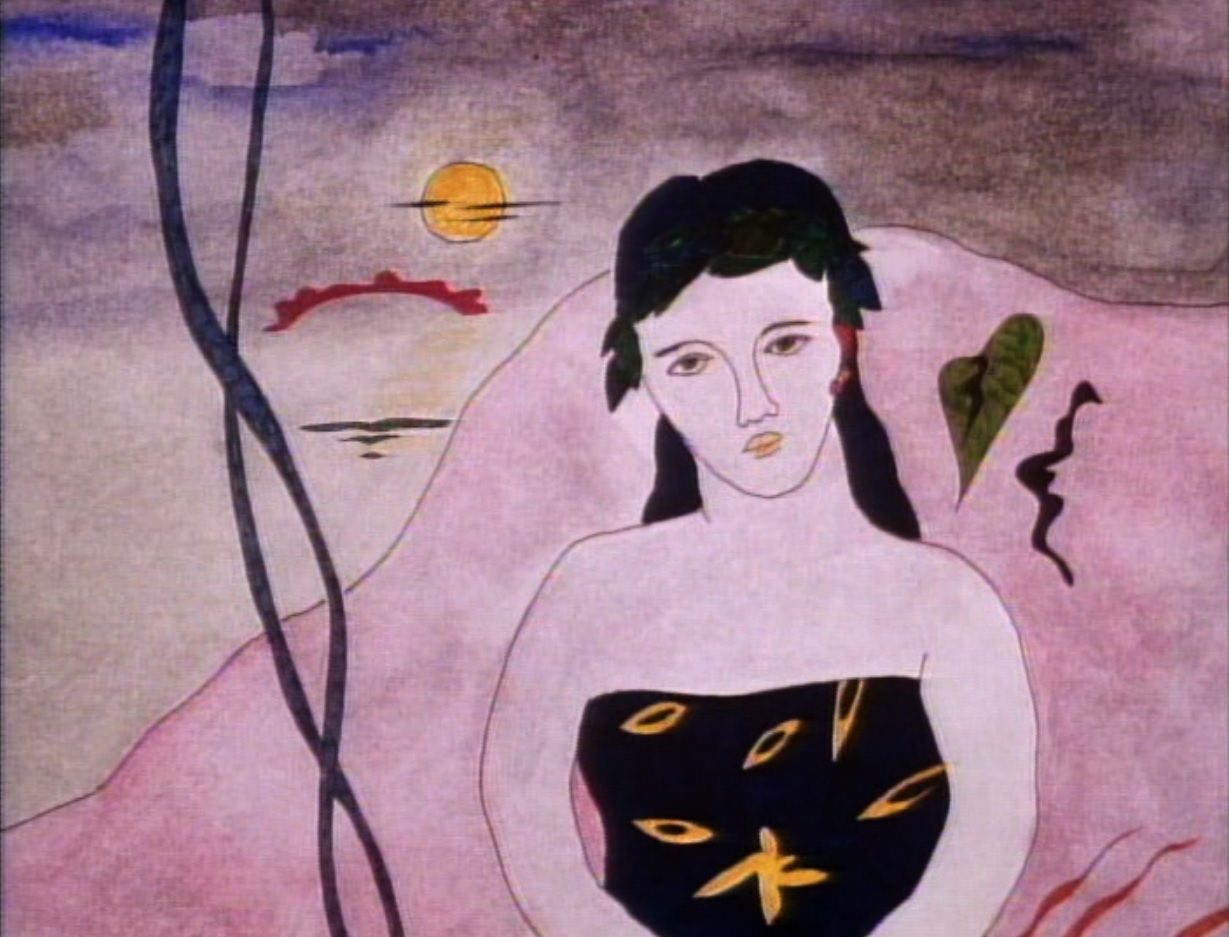
In ‘Rainbows of Hawai’i’ director Faith Hubley, ever thirsty for mythology, turns her attention to the isles of Hawaii. She retells four Hawaiian stories, in her own idiosyncratic way, using a lot of repetitive animation cycles, dancing figures, and semi-abstract, yet vibrant images.
In terms of animation most interesting is the first story, ‘Hisaka Asks the Dragon’s Permission to Enter the Forest – They Do Battle’, in which the animation of the dragon is surprisingly traditional. Most intriguing is the second story, in which a woman gives birth to a friendly green shark. The four stories are followed by a last section, titled ‘All Children Are Sacred and the Dance of Life and Death Goes on and on’, which reshuffles images from all four previous stories with images of dancing figures.
According to the titles, Hubley took inspiration from Oceanic art, but frankly, this is not really visible, as the images in ‘Rainbows of Hawai’i’ aren’t very different from those in her earlier films.
‘Rainbows of Hawai’i’ is available on the DVD ‘The Hubley Collection Volume 2’
Director: Faith Hubley
Release Date: 1994
Rating: ★★★★½
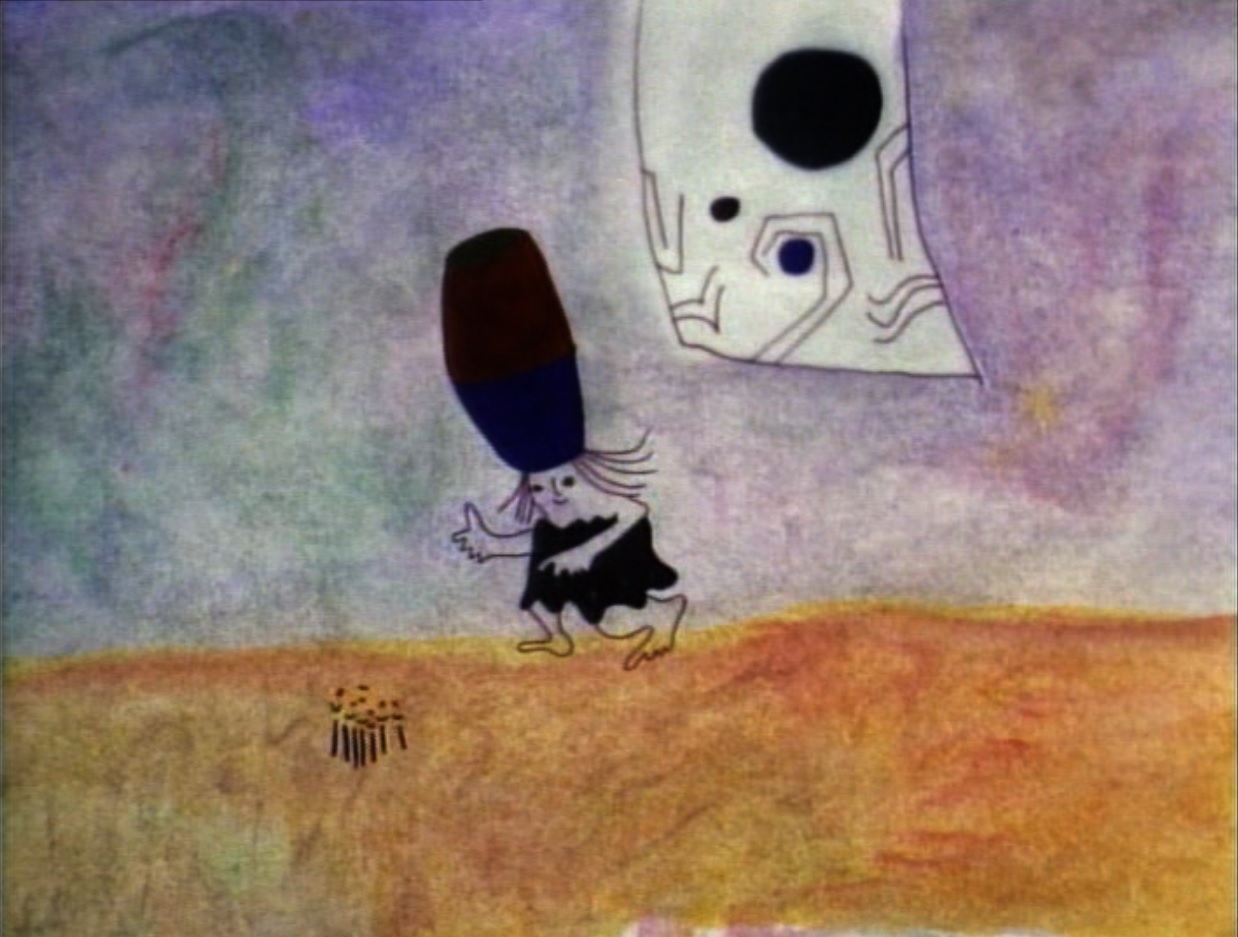
‘Seers and Clowns’ is one of Faith Hubley’s less comprehensible films. Like many of her other works, the short is drenched in mythology.
The film consists of five very short chapters, and uses citations from Chief Seattle, Lao Tse and Kabir. Throughout the film Hubley’s Joan Miró-like imagery remains beautiful, poetic and intriguing, but as most images consist of short animation cycles of semi-abstract figures dancing with joy, any story is hard to follow.
Most interesting is when Hubley’s enriches her style with Eastern influences (in ‘A Chinese Seer Divines Change’) or from Ancient Greece (in ‘Cybele’s Dream’). The mythological atmosphere is greatly enhanced by Don Christensen’s quasi-ethnic music.
Watch ‘Seers and Clowns’ yourself and tell me what you think:
‘Seers and Clowns’ is available on the DVD ‘The Hubley Collection Volume 2’
Director: Erica Russell
Release Date: 1994
Rating: ★★★★★
Review:
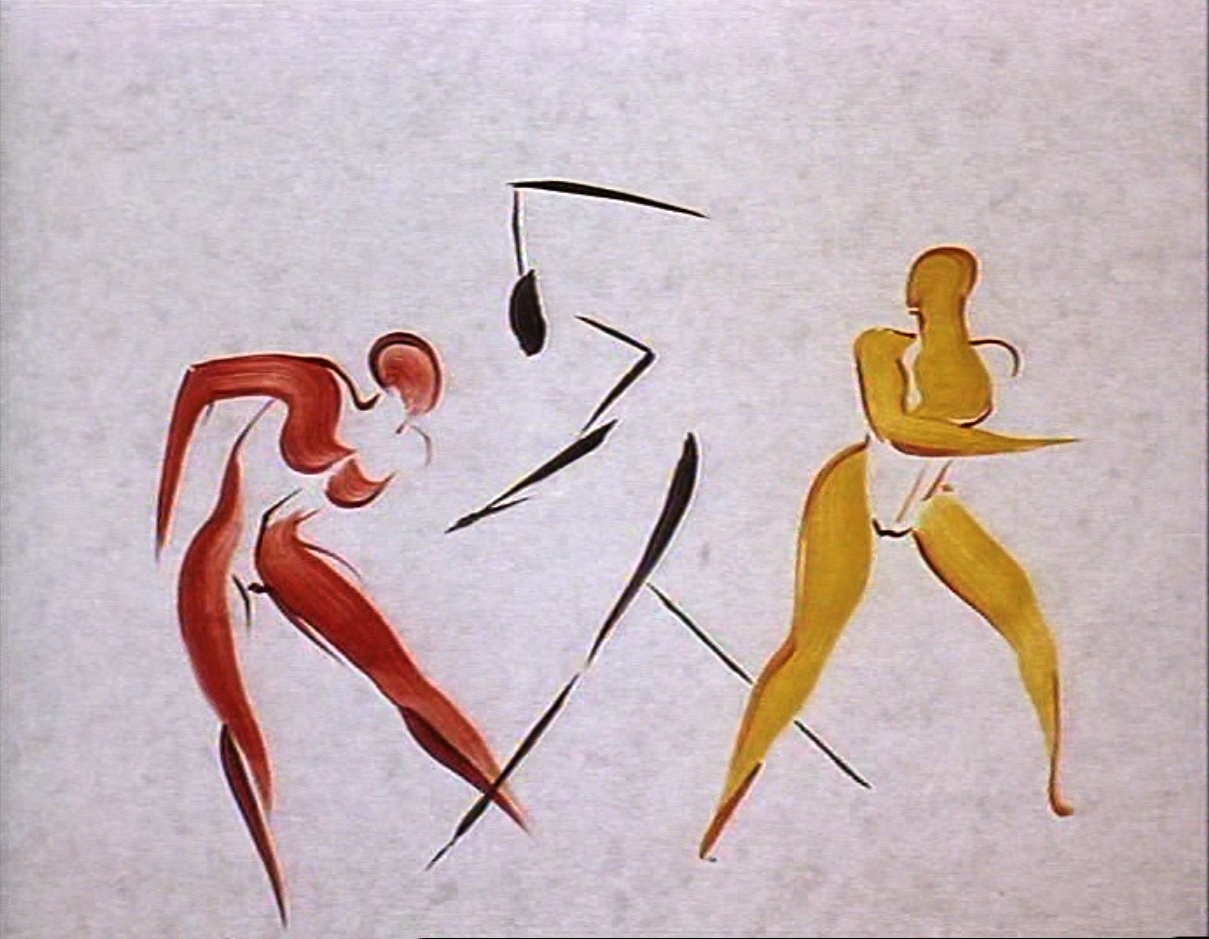
Six years after ‘Feet of Song‘ Erica Russell returned with another extraordinarily beautiful dance film, this time using three dancers in a triangular relationship.
During most of the dance two women compete for a man, and the film features several dances between the man and either one of the women, the two women together, and, in the end, all three together.
The fluency of the movement combined with the elegance of Russell’s paintwork make the film a delight to watch. During most of the film the three dancers remain recognizable as human forms, but at times they change into almost abstract forms, with a strong Bauhaus influence.
Despite the high level of abstraction ‘Triangle’ is a very sensual film, and one never loses the idea that the film is about three characters with solid bodies, no matter how sketchily drawn. Charlie Hart’s score fits the images very well with its quasi-African touch to it.
Watch ‘Triangle’ yourself and tell me what you think:
‘Triangle’ is available on the DVD ‘The Best of British Animation Awards 1’


 Dr. Grob's Animation Review