
You are currently browsing the category archive for the ‘★★★’ category.
Director: Daniel Szczechura
Release date: 1963
Rating: ★★★
Review:

‘The Chair’ is another film subtly criticizing communist society as it was imposed on Poland at the time. Apart from the intro, the film is completely filmed from above, and features a conference.
At one point one of the conference leader’s chairs remains unoccupied, and members from the audience are invited to fill the spot. But the other audience members don’t allow each other to get to the stage, and the volunteers are hindered and blocked everywhere. Yet, one does make it, and is accepted due to his clever entrance.
The idea of ‘The Chair’ is as simple as it is well executed. Again, I am surprised the film got past the censors, as it clearly criticizes the oppressive system.
Watch ‘The Chair’ yourself and tell me what you think:
‘The Chair’ is available on the DVD-set ‘Anthology of Polish Animated Film’
Director: Mamoru Hosoda
Release date: May 16, 2018
Rating: ★★★
Review:

‘Mirai’ was the third feature film Mamoru Hosoda made for his own studio, Studio Chizu. Hosoda favors rather episodic films about growing up, and ‘Mirai’ is no exception, although the film takes place in a much smaller time frame than ‘Wolf Children’ or ‘The Boy and the Beast’.
Main protagonist of the film is ca. four-year-old boy Kun, who lives in a design house in Yokohama (the town is depicted regularly during the film in swooping bird-eye’s view shots), but more importantly, who gets a baby sister, the Mirai from the title. Mirai also means future, and in fact, the Japanese title is ‘Mirai no Mirai’, or ‘Mirai from the future’. Indeed, Kun meets an older version of his younger sister from the future, as well as some other characters, while he struggles to adapt to the new situation he finds himself in.
Because with the coming of little Mirai a lot changes for the young boy: his parents have less attention for him, focusing more on the new baby, they’re more often tired and crabby, and they struggle with combining working and caring, now there are two children around. Needless to say, Kun has a hard time getting adjusted, and even gets jealous of his innocent baby sister.
The film focuses on some key scenes, in which Kun experiences a setback, at least in his own mind, and then something magical happens in the little courtyard of his house. First the little boy first meets a humanized form of the family dog, and then his younger sister in older form (there’s more, but I won’t spoil it here).
Unfortunately, Hosoda doesn’t stick to the boy-sister relationship, and at some point, the magic scenes also help Kun overcome his fears. Moreover, a four-year-old is a difficult and questionable protagonist of a film that wants to show the hero’s progress. After all, he is just a little boy. It’s little surprising that Hosoda spends considerable time on Kun’s parents, and their development during this crucial part of their lives. And, indeed, to be frank, Hosoda’s honest depiction of the hardships of young parenthood and of raising one’s own children is much more interesting than Kun’s ‘development’ of character.
Main attraction of the film are the five magical scenes, with the first two showing some broad comedy, as the man-dog and Mirai from the future roam around the house. The third and fourth start to feel obligatory, even though the fourth has a nice nostalgic feel to it. But with the fifth, Hosoda goes completely overboard, and one wonders why these nightmarish scenes, taking the film to a altogether other atmosphere, were even necessary. In fact, this finale, in which Hosoda wants to tell us something about family ties, is too overtly self-explanatory and spoils a film that wasn’t perfect to start with.
In fact, ‘Mirai’ drags a little, being mostly confined to the small space of Kun’s house and with Kun’s development of character as an important, but very weak story device. The film’s episodic nature doesn’t really help, spreading the story thin, a problem that also invades ‘Wolf Children’ and ‘The Boy and the Beast’. I wish Hosoda was able to keep his use of time as tight as his use of space in this movie. ‘Mirai’ is not a failure, the film is too original for that, but it’s arguably Hosoda’s weakest feature film so far, never reaching the emotional heights of either ‘Wolf Children’, ‘The Boy and the Beast’ or even his debut film, ‘The Girl Who Leapt Through Time’ from 2006.
Watch the trailer for ‘Mirai’ yourself and tell me what you think:
‘Mirai’ is available on Blu-Ray and DVD
Director: Mari Okada
Release date: February 24, 2018
Rating: ★★★
Review:

The Japanese animation industry apparently is so rich that new interesting films can pop up seemingly out of nowhere. For example, ‘Maquia: When the Promised Flower Blooms’ (from now on ‘Maquia’) is made by the P.A. Works studio, which since its founding in 2000 focused on television series, and which only made four feature films, the first being based on a video game, the second made for television, the third for training purposes, and the fourth based on a television series.
So, their fifth feature film to be a completely original story, not based on a video game, television series or even a manga, comes as a surprise. It seems that ‘Maquia’ was the pet project by its director Mari Okada, who wrote the story herself. Okada, apparently is somewhat of a modern legend as she has written for over fifty television series since 2001, and is called by Wikipedia “one of the most prolific writers currently working in the anime industry”. She’s one of the brains behind ‘Anohana: The Flower We Saw That Day’ (2011), one of only two anime television series I have watched, and it comes to no surprise to me that the ‘Maquia’s’ story style has something in common with that series. Both series and film have a strong focus on human drama, with emotions reigning uncontrolled, and tears flowing frequently. In fact, despite the high fantasy setting, ‘Maquia’ has a strong element of melodrama, and the rather forced emotions, so different from the more restrained style in studio Ghibli, or the films by Yasujirō Ozu for that matter, actually made it harder for me to relate with these people.
‘Maquia’ is a fantasy film, set in a rather Middle Earth-like world, and starts with the depiction of a society of near-immortals called Lorphs, whose surroundings are particularly like the depictions of elven kingdoms in Peter Jackson’s adaptation of The Lord of the Rings. These Lorphs write their memories by weaving cloths and live far away from more mortal men. One of these, a young girl called Maquia (from which the English film title takes its name) rather out of nowhere complaints she is so alone. Shortly after this scene of distress the eternal city is attacked by an army of men, and Maquia soon finds herself in the outside world, where she adopts a baby, whose mother is killed.
From then on, the film takes an episodic nature, showing us various stages of the mother-son relationship until the son, whom Maquia calls Ariel, has matured, while his mother, in contrast, has retained the same teen appearance she had in the beginning.
The film apparently tries to say something about how to love is to lose and to let go, how to find beauty in the short lives we have, and how relationships form the most important part of life, but the film’s messages get deluded in a rather complex story, in which we do not only follow Maquia, but also her childhood friend Leilia, who is forced to become a queen by her abductors, the captain who destroyed the Lorph city in the first place and one Lang, a boy/man with whom Maquia spent her first years in the mortal world. The bigger story, and all its subplots are far less interesting than Maquia’s relationship to her adopted son, and both prolong and distract the film unnecessarily.
Apart from being unfocused and very, very emotional, ‘Maquia’ is also hampered by an overblown score by Kenji Kawai, all too forcefully guiding the viewer in which emotion to feel. Even worse, are the rather lazy and utterly generic human designs, which nowhere transcend your average anime television series. The animation, too, is fair, but not outstanding. There’s also a small dose of computer animation that is used sparingly and effectively. No, the film’s highlights are not the story, music, character designs or the animation, but the background art and the lighting, which are both no less than magnificent, and which both give ‘Maquia’ a splendor that make the film a delight to watch, even when the characters and events themselves don’t.
I like ‘Maquia’ being an original story, and its theme of what it means to be (im)mortal is interesting, but the film is too long, too episodic, too meandering and too dramatic to entertain, and I am pretty sure in the end I will not remember either the film’s story or its characters, but the beautiful background art and superb lighting, which the make the film a standout, after all.
Watch the trailer for ‘Maquia: When the Promised Flower Blooms’ yourself and tell me what you think:
‘Maquia: When the Promised Flower Blooms’ is avaiable on Blu-Ray and DVD
Director: Henry Selick
Date: 1977
Rating: ★★★
Review:

Compared to the earlier ‘Tube Tales‘ ‘Phases’ much better shows what Henry Selick was capable of.
This film was made at CalArts and in it Selick shows great command of motion, convincingly animating a human walk cycle, a big cat and a horse, all also in stunning perspective. But even more, the film itself is nice to look at with its poetic metamorphosis of red paints on a black canvas.
Watch ‘Phases’ yourself and tell me what you think:
‘Phases’ is available on the DVD ‘Giants’ First Steps’
Director: Eric Goldberg
Date: 1974
Rating: ★★★
Review:

‘Good Old Fashioned Cartoon Violence’ is another gag cartoon made by top animator Eric Goldberg when he was still in his teens.
In this black and white cartoon a cartoon figure watches a Tom & Jerry like violent cartoon on television. Immediately after that, cartoon violence starts happening to him, too. It only ends when the poor guy shoots his creator (a nice self caricature of Goldberg).
This is not really a funny or good cartoon, but Eric Goldberg’s talent is unmistakable.
‘Good Old Fashioned Cartoon Violence’ is available on the DVD ‘Giants’ First Steps’
Director: Eric Goldberg
Date: 1973
Rating: ★★★
Review:
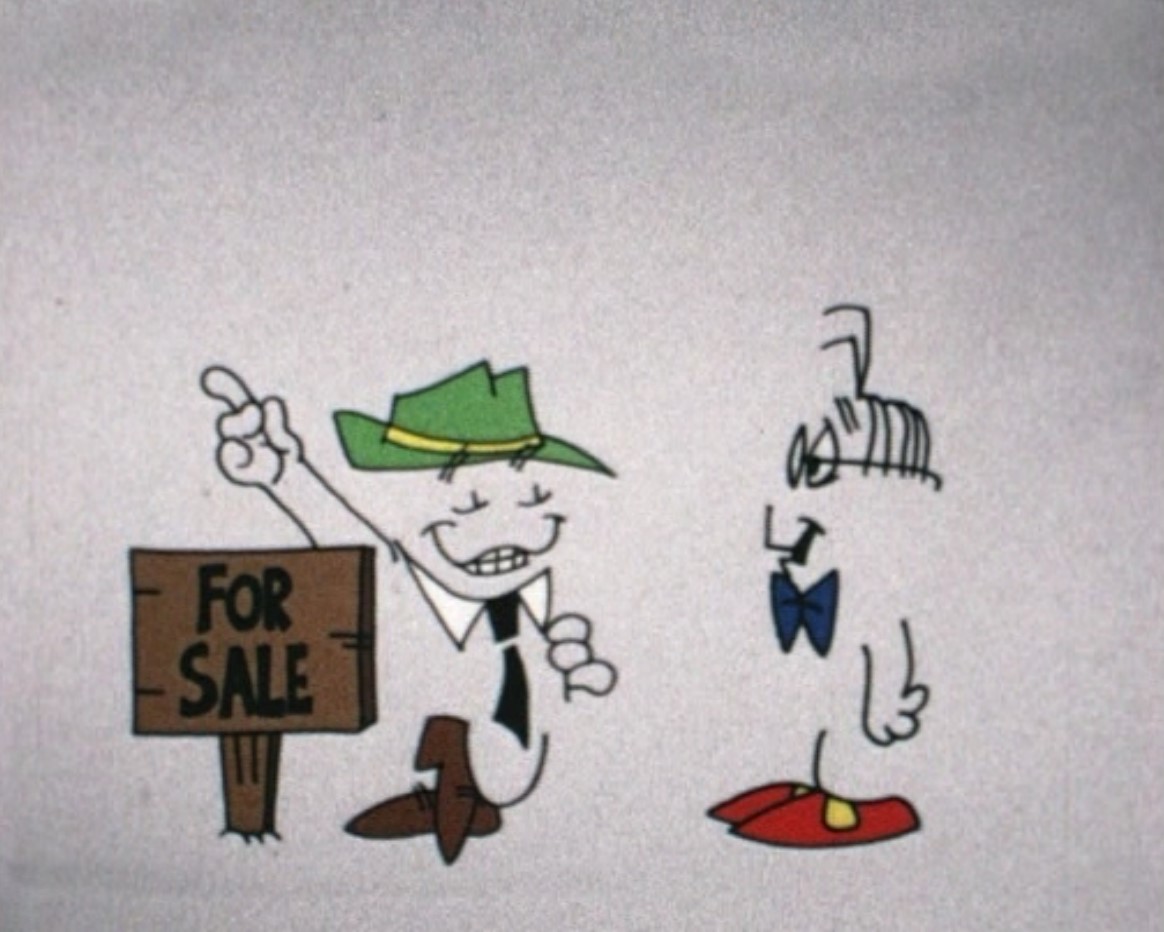
Legendary animator Eric Goldberg made this film when he was only 17 or 18. ‘For Sale’ is a short gag cartoon in which a man pursuits a background which can change into every scenery by snapping one’s fingers.
The main characters are designed with interesting open lines, and Goldberg already demonstrates his skills as an animator. Even the timing is rather good.
‘For Sale’ is available on the DVD ‘Giants’ First Steps’
Director: Nick Park
Date: 1978
Rating: ★★★
Review:
The interesting aspect of the DVD ‘Giants’ First Steps’ is that it shows well known animators and animation directors were not always that good. They had to start somewhere, and their early films show where they already succeeded and where they faltered.
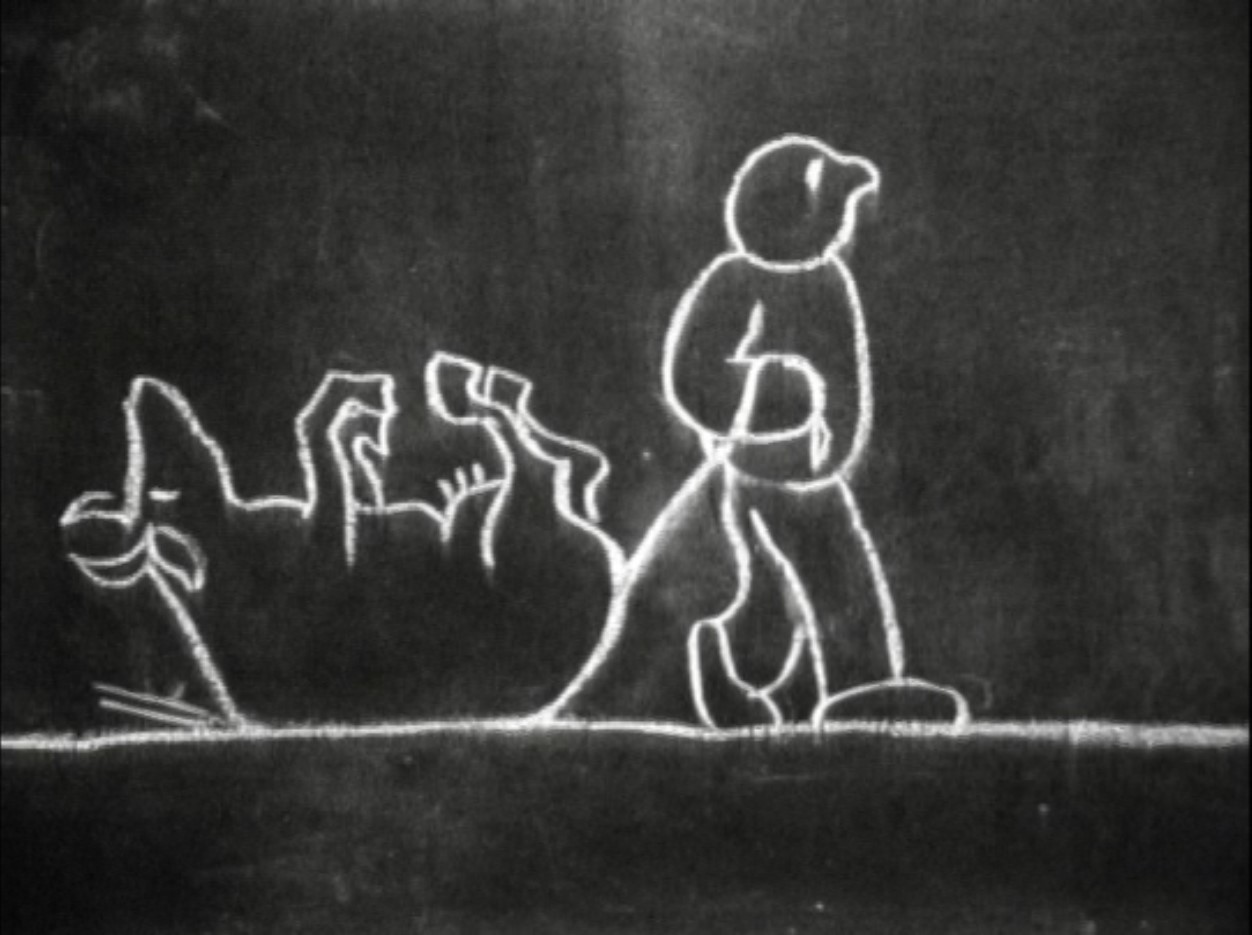
With the charcoal animation of ‘Jack and the Beanstalk’ (made at the Sheffield Art School) Nick Park returns to the very origin of animation, with its earliest films using a blackboard. Nick Park retells the classic fairy tale in an original, stream of consciousness-like manner, with a lot of metamorphosis and weird sound effects.
Even though Park’s animation is crude, the film is pleasantly odd and original throughout. For example, Jack shoots a cow from the sky, and puts in a vending machine to obtain his magic bean, which turns out to be huge. My favorite part is a little guy talking gibberish into a microphone before the titles appear.
Park, of course, would later become world famous with his ‘Creature Comforts’ and Wallace and Gromit films, made at Aardman.
‘Jack and the Beanstalk’ is available on the DVD ‘Giants’ First Steps’
Director: Paul Driessen
Release date: 1974
Rating: ★★★
Review:
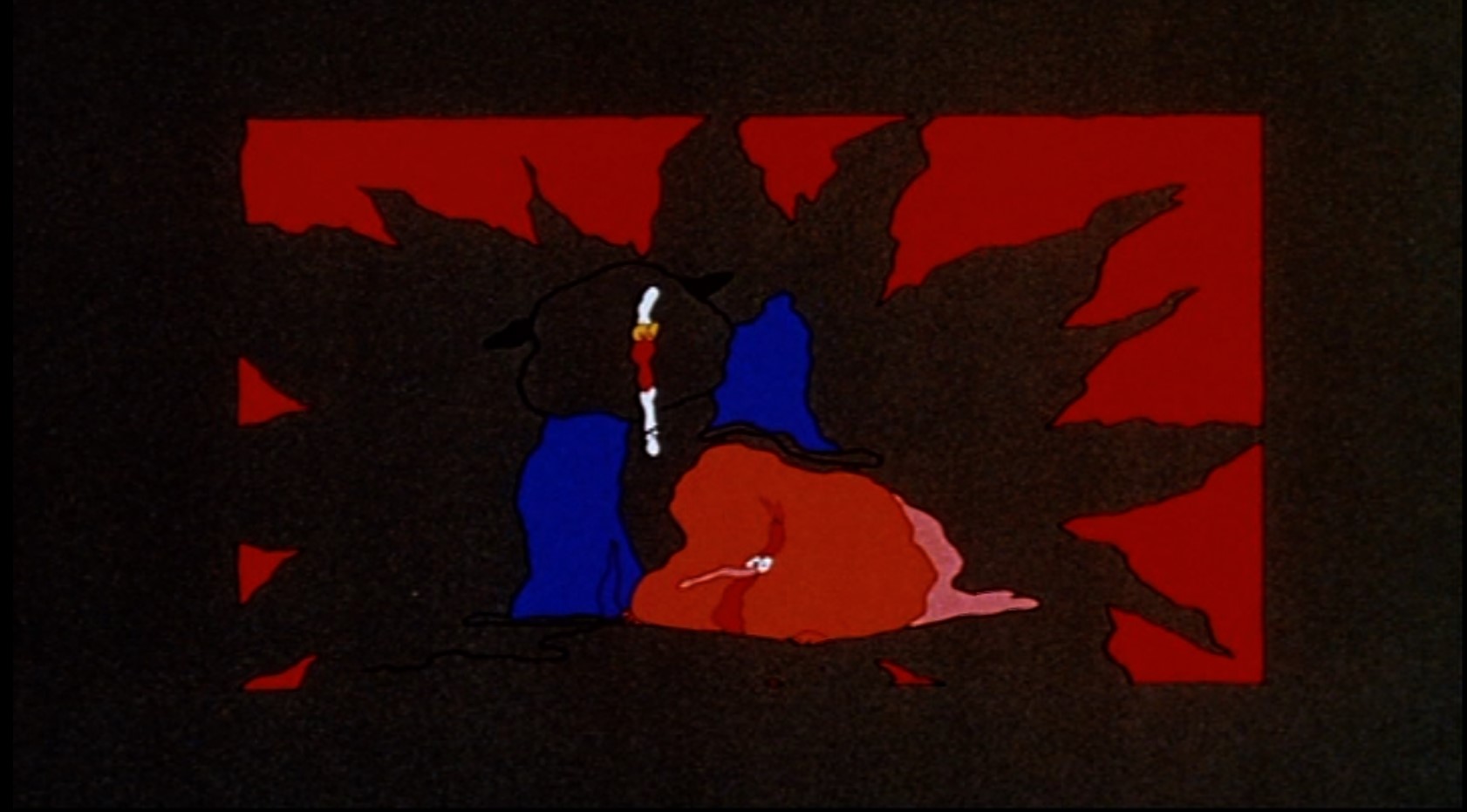
‘Cat’s Cradle’ is an early film by Dutch animator Paul Driessen for the National Film Board of Canada.
This is one of Driessen’s most enigmatic films, in which the images seem to flow in a stream-of-consciousness-like fashion, bridged by a string spun by tiny spider. Somehow the tale, if there is one, has a retrograde character, but it’s hard to make head or tail of Driessen’s narrative in this short.
The background art again is very limited and made of monochromes, and Driessen’s typical morbid humor is very present. For example, the spider is handled by a man, who in turn turns out to hang at a gallows pole.
Watch ‘Cat’s Cradle’ yourself and tell me what you think:
‘Cat’s Cradle’ is available on the DVD ‘Des histoires pas comme les autres’
Director: Zofia Oraczewska
Release date: 1976
Rating: ★★★
Review:

In ‘Banquet’ a bunch of waiters and chefs are preparing a huge banquet for a large number of guests. But when the guests arrive, the banquet turns out to be very different than expected.
‘Banquet’ has a mixed design: the waiters and chefs are rather classic cartoony figures, while the meals and the guests are collages partly made out of photo material.
Jan Skorża’s cut-out animation is fair, if not outstanding, and the whole film is a little too empty to be memorable. I guess the Polish film makers were less in their game when trying an attempt at humor.
Watch ‘Banquet’ yourself and tell me what you think:
‘Banquet’ is available on the DVD-set ‘Anthology of Polish Animated Film’
Director: Zbginiew Rybczyński
Release date: 1974
Rating: ★★★
Review:

In ‘Soup’ avant-garde film maker Zbigniew Rybczyński shows his fondness of repetitive use of live action material to create startling new images.
Rybczyński would perfect this technique in 1980 with the Academy Award winning short ‘Tango’, but ‘Soup’ already is intriguing and hard to describe. Rybczyński has tinted his source material in stark, contrasting colors, with reds, greens, yellows and blues really popping out of the screen.
The images show the daily routines of a married couple, until it is suggested that the man dies in a train crash. At that point the film burns down. The daily routines are strangely juxtaposed to each other, and there are some very odd touches, like a fork taking a bite out of cheek.
The alienating effect is greatly enhanced by the soundtrack. For sound designer Mieczysław Janik and composer Eugeniusz Rudnik have provided a highly disturbing score full of ordinary sounds amplified to a grotesque effect. For example, when the man brushes his teeth, this rather sounds like a fork scratching on a plate.
I don’t think ‘Soup’ is for everyone, but this intriguing film shows both Rybczyński’s unique approach to film making and the sheer creativity that Communist Poland was in the graphic arts in the 1960s and 1970s.
Watch ‘Soup’ yourself and tell me what you think:
‘Soup’ is available on the DVD-set ‘Anthology of Polish Animated Film’
Director: Mirosław Kijowicz
Release date: 1971
Rating: ★★★
Review:
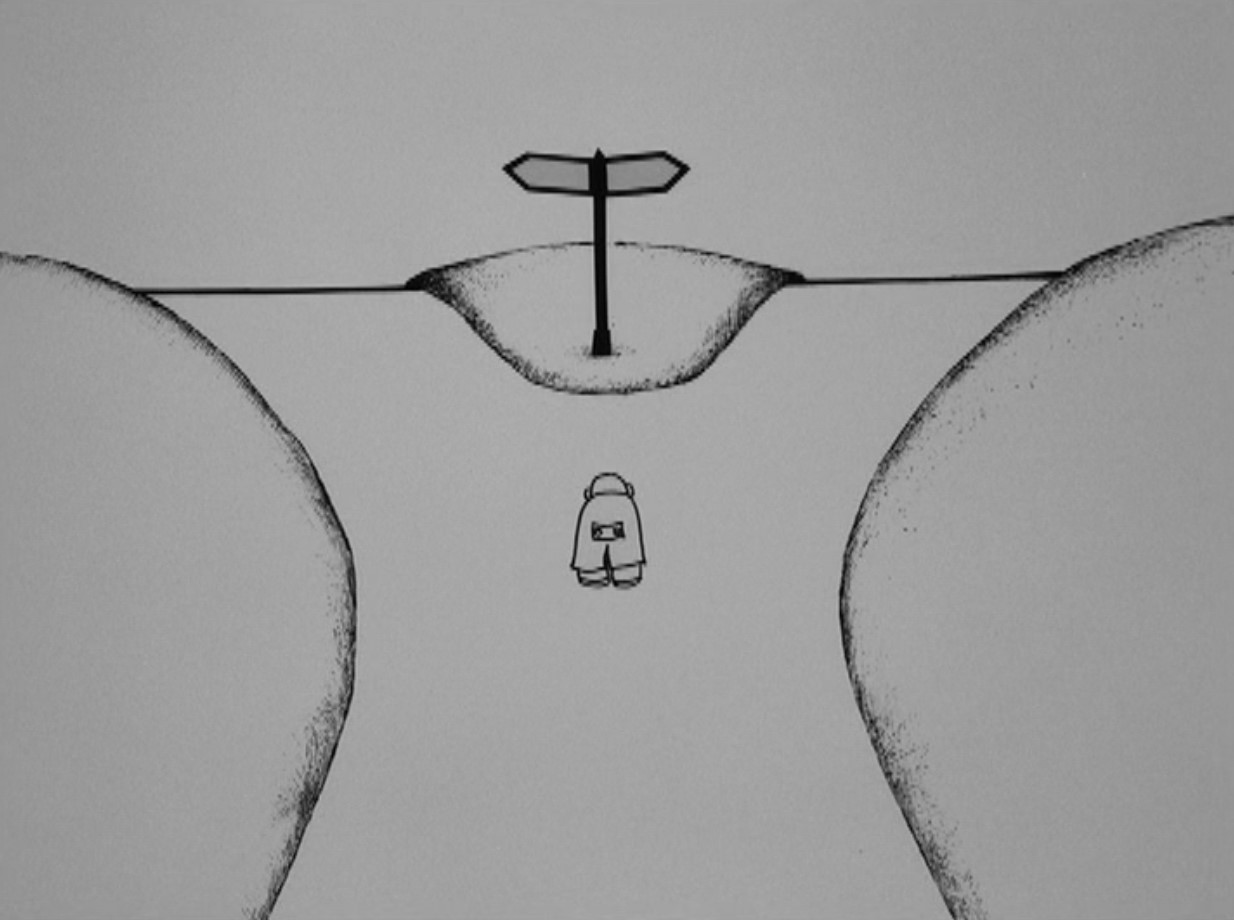
‘The Road’ is a simple little black and white film about a man walking a road, but then he faces a fork in the road.
According to IMDb this is a parable on how choices have consequences, and I can see something in that. Nevertheless the film may be a little too simple, making its message rather vague and puzzling. For example, we only see the man from the back, and only the second choice he has is clearly motivated, with help from a text balloon. Nevertheless, ‘The Road’ is a charming example of the experimental approach to animation in Poland.
Watch ‘The Road’ yourself and tell me what you think:
‘The Road’ is available on the DVD-set ‘Anthology of Polish Animated Film’
Director: Phil Roman
Airing date: April 9, 1974
Stars: Charlie Brown, Linus, Lucy, Marcie, Peppermint Patty, Sally, Schroeder, Snoopy, Woodstock
Rating: ★★★
Review:

The twelfth Peanuts special was another holiday special, this time celebrating Easter. As with all Peanuts specials the story evolves at a leisurely speed, this time mixing ca. three stories into very short cross-cutting scenes.
The first and most entertaining story is about Peppermint Patty trying to teach Marcie how to paint eggs, but this goes haywire, because Marcie has absolutely no clue on how to prepare the eggs. The second story is about Snoopy buying a birdhouse for Woodstock, who initially shivers in the cold rain. Then there’s a story arc in which Linus tells the gospel of the Easter Bunny, just like he did on the Great Pumpkin.
Several scenes take place in a department store, and some of them are charming, if totally independent of the main story material, like Peppermint Patty, Marcie and Snoopy dancing to some Christmas-themed music boxes. This gives the episode a rather disjointed, almost improvisatory feel.
Vince Guaraldi’s soundtrack is great throughout, giving Snoopy and Woodstock an especially groovy soul-jazz theme, while the Easter Beagle is accompanied by a jazzy version of Beethoven’s seventh symphony.
Watch ‘It’s the Easter Beagle, Charlie Brown’ yourself and tell me what you think:
It’s the Easter Beagle, Charlie Brown’ is available on the DVD-set ‘Peanuts 1970’s Collection Vol. 1’
Director: Joško Marušić
Release date: 1979
Rating: ★★★
Review:
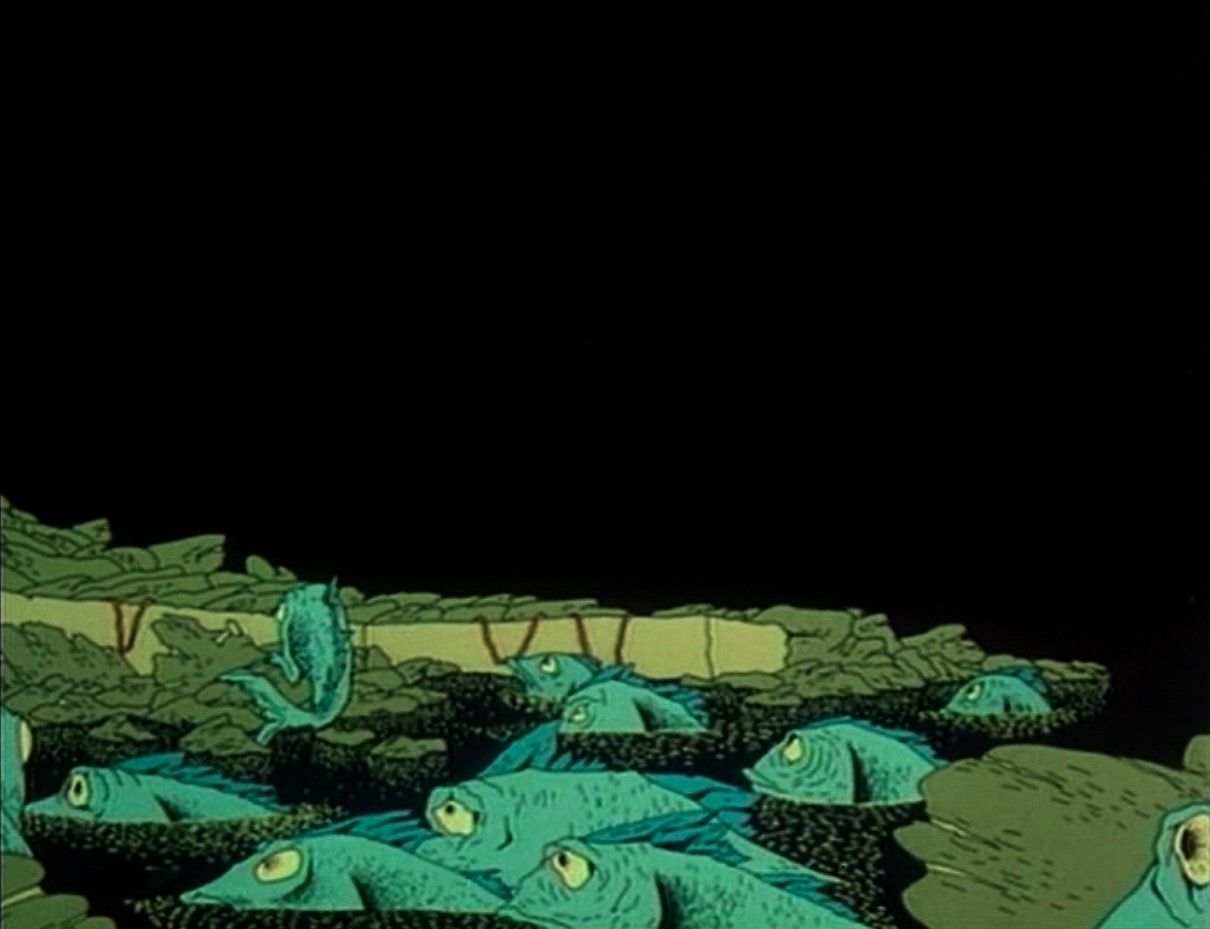
This dark and surreal film starts with fishing villagers saying goodbye to their men who go out fishing on the sea. But when they’re gone, the fish suddenly come to the shore…
‘Fisheye’ is animated very well and knows a sickly color palette with its pale yellows, greens and blues on a black canvas. There’s some great moving perspective animation of the fishing village. The film contains a grim atmosphere, but in the end is too one-dimensional to make a lasting impression. The abrupt and inconclusive ending doesn’t help.
Watch ‘Fisheye’ yourself and tell me what you think:
‘Fisheye’ is available on the DVD ‘The Best of Zagreb Film: Be Careful What You Wish For and The Classic Collection’
Director: Radivoje Gvozdanović
Release date: 1972
Rating: ★★★
Review:

This is a very short cartoon not clocking even one minute in which a man gets bunt at a stake. When the flames reach him he starts to pray…
This is a one gag cartoon that is over before you know it and a great example of the quirky humor that prevailed in the Zagreb Film studio.
Watch ‘Prayer’ yourself and tell me what you think:
‘Prayer’ is available on the DVD ‘The Best of Zagreb Film: Be Careful What You Wish For and The Classic Collection’
Director: Zlatko Grgić
Release date: 1971
Stars: Maxicat
Rating: ★★★
Review:
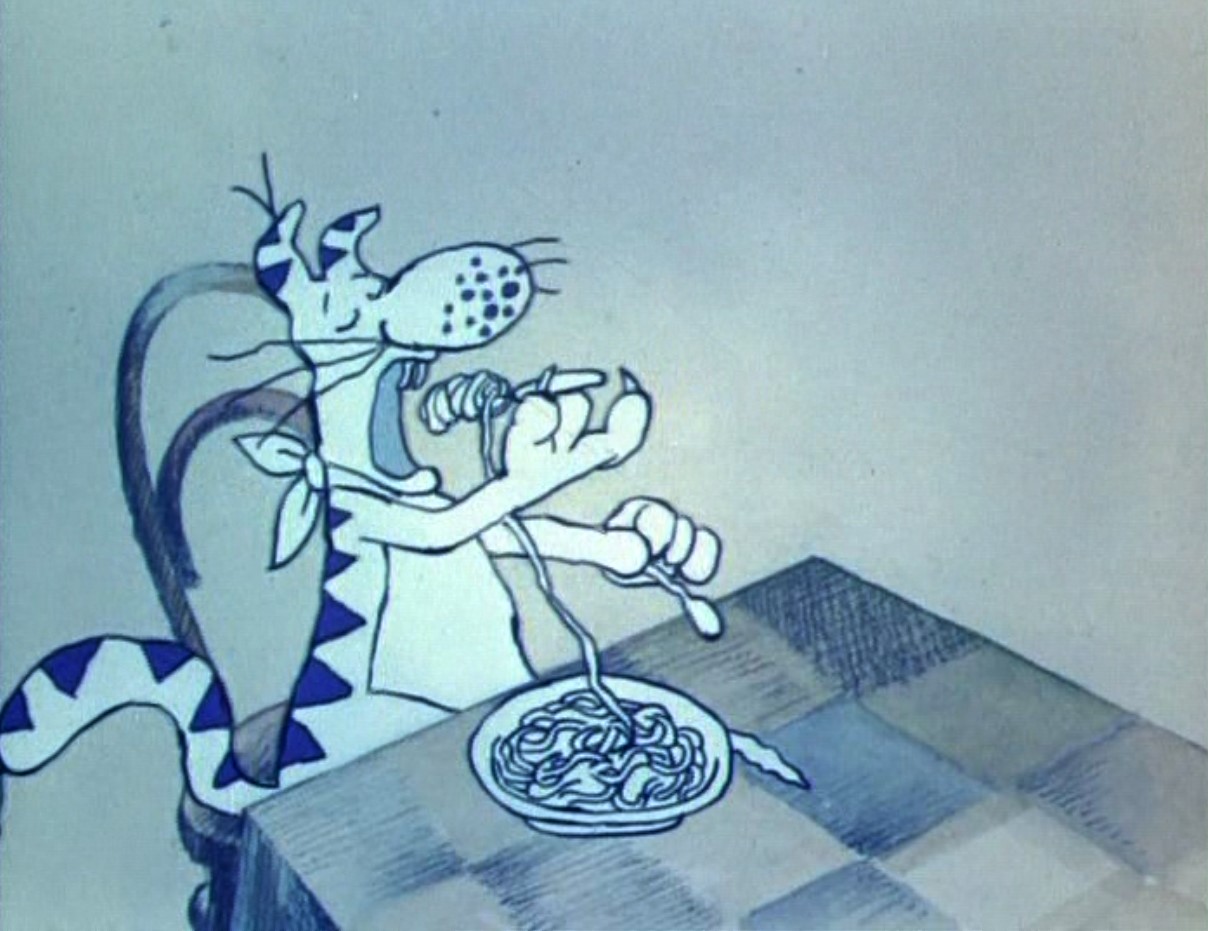
These are three very short episodes of the Maxicat series, which consisted of 24 episodes in total. These feature a very cartoony cat with a big nose experiencing Pink Panther-like adventures on a grey, featureless canvas.
In the first Maxicat finds a magical hat, in the second he eats spaghetti, and in the last he finds a flying broom. All three are short and classic gag cartoons with the dialogue-less action being accompanied by very jolly music. As these three episodes prove, Maxicat is an enjoyable series from the very creative Zagreb Film Studio from Yugoslavia.
Watch some Maxicat episodes yourself and tell me what you think:
These Maxicat episodes are available on the DVD ‘The Best of Zagreb Film: Be Careful What You Wish For and The Classic Collection’
Directors: Bill Melendez & Phil Roman
Airing date: November 20, 1973
Stars: Charlie Brown, Franklin, Linus, Lucy, Marcie, Peppermint Patty, Sally, Snoopy, Woodstock
Rating: ★★★
Review:
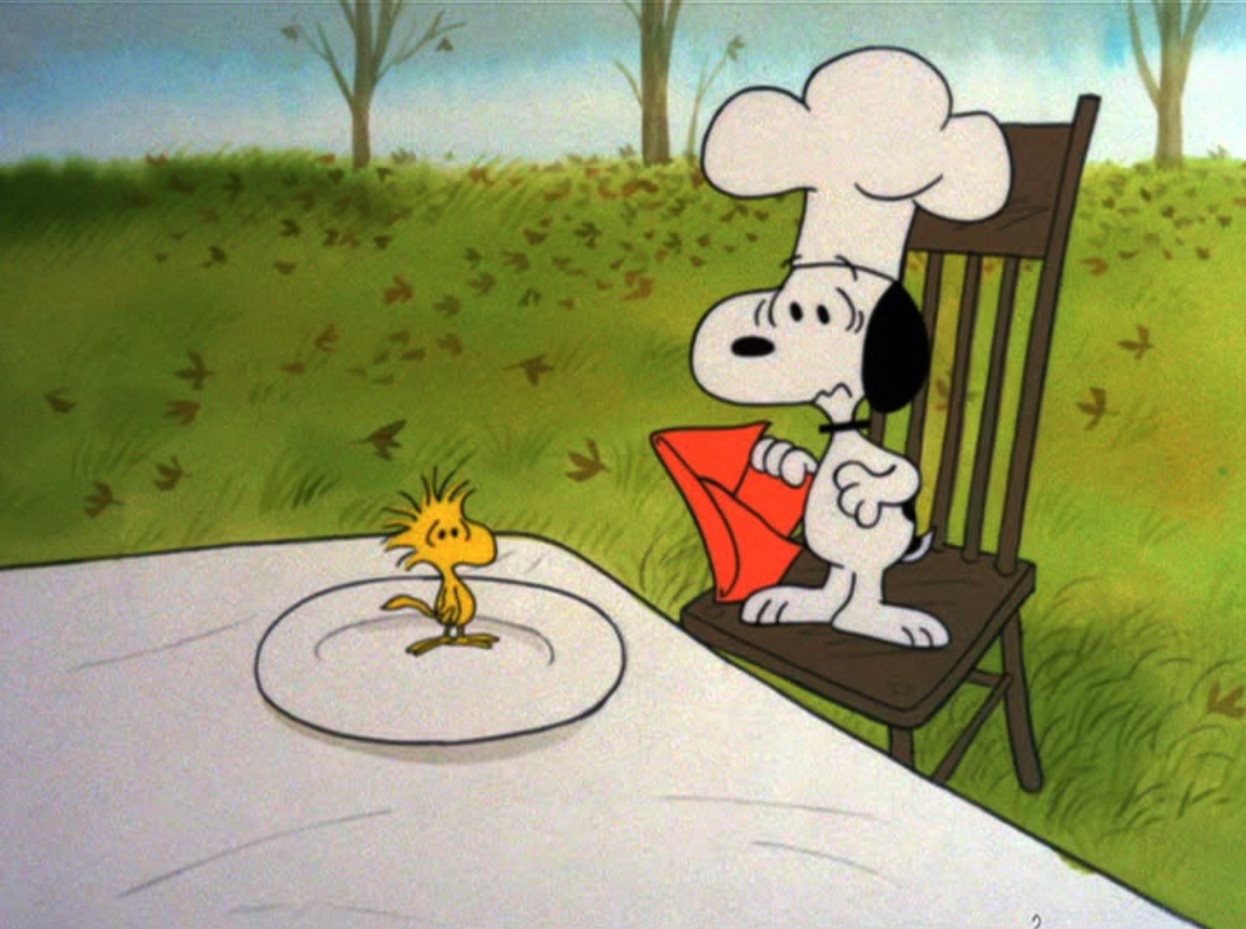
‘A Charlie Brown Thanksgiving’, the tenth of the Peanuts television specials, is the third of the Charlie Brown holiday specials, this time devoted to Thanksgiving. As such it’s a little preachy, especially through Linus’s lines.
The episode’s main problem is caused by Peppermint Patty when she invites herself, Marcie and Franklin over to Charlie Brown’s house, when he’s not even supposed to be home. Luckily, Linus, Snoopy and Woodstock help out.
The episode’s highlight is the silent comedy of Snoopy and Woodstock setting up a dinner table in the yard. This part is accompanied by a charming soul song devoted to the little yellow bird. Actually, the background music is very charming throughout most of the episode, with Vince Guaraldi lively piano trio music, joined by Tom Harrell on trumpet and Chuck Bennett on trombone. Only when Snoopy and Woodstock are putting on Thanksgiving costumes, this is exchanged for some ugly electronic music.
As always with the Peanuts films, the pace is relaxed. The animation is fair, if not outstanding, and the characters charming, and faithful to Schulz’s original comic strip.
Watch an excerpt from ‘A Charlie Brown Thanksgiving’ yourself and tell me what you think:
‘A Charlie Brown Thanksgiving’ is available on the DVD-set ‘Peanuts 1970’s Collection Vol. 1’
Director: Andrei Khrzhanovsky
Release date: 1973
Rating: ★★★
Review:
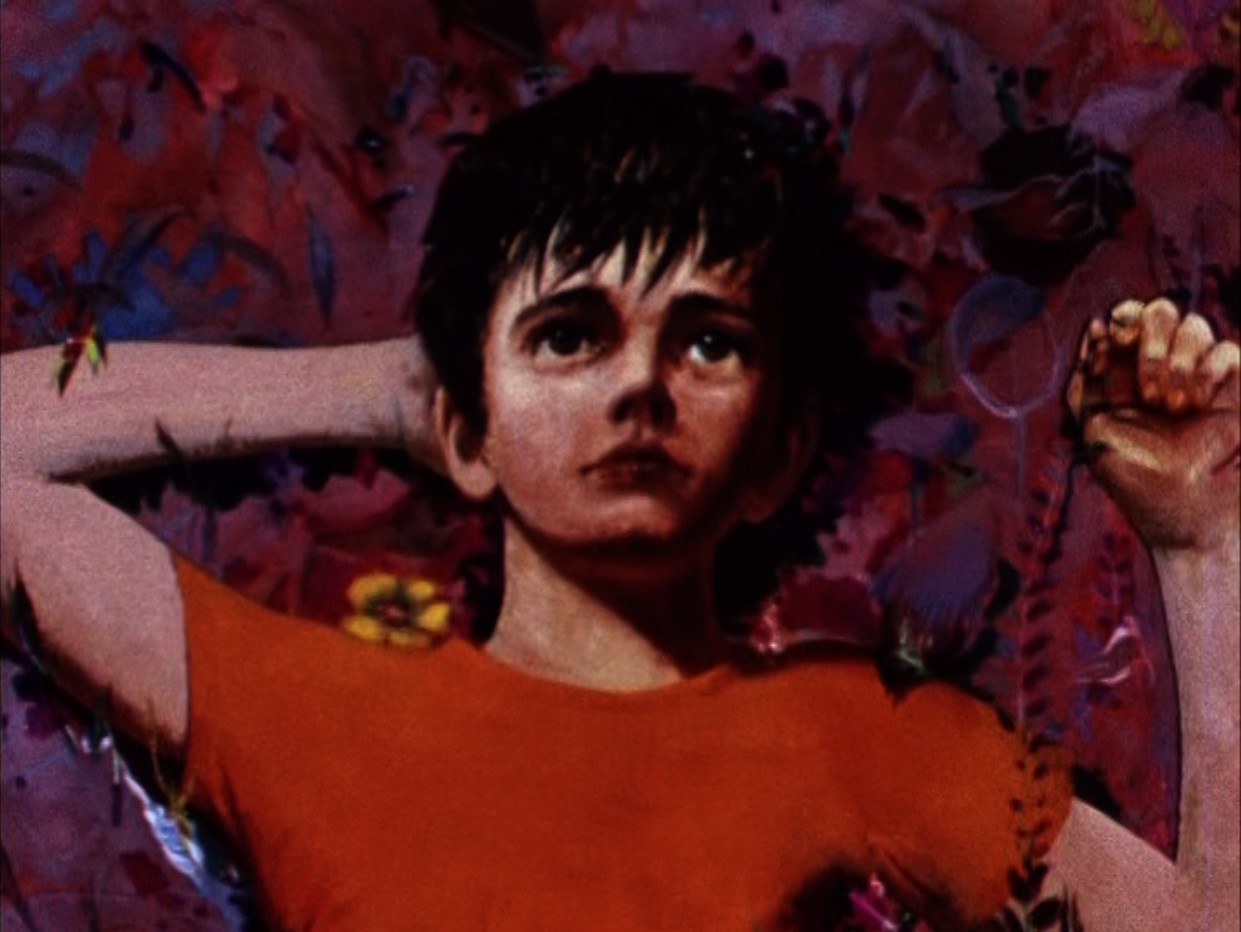
In ‘Butterfly’ a boy catches some butterflies, but after a nightmarish scene in which he himself is trapped, he releases them again.
The plot of ‘Butterfly’ is far from original, and rather predictive and boring, but Khrzhanovsky’s eclectic style is not. Part of the story is told in still oil paintings, but there’s also a little cell animation and cut-out animation.
The oil paintings are most interesting, with their rather high level of realism, and their painful contrast between colorful nature, and the dull, grey world of the modern city. Especially the scene inside the boy’s flat is most depressing, with only grey electronic robots to play with. Nevertheless, the most striking aspect of this film are not the animation nor the visuals, but the fascinating score by avant-garde composer Alfred Schnittke.
Watch ‘Butterfly’ yourself and tell me what you think:
‘Butterfly’ is available on the DVD ‘Masters of Russian Animation Volume 2’
Director: Ryszard Antoniszczak
Release date: 1974
Rating: ★★★
Review:

‘Farewell to Steam’ is a Polish children’s film set to a rock song. The short tells about a person who wants to become a train engineer.
This is one of those films from the early seventies that display a huge ‘Yellow Submarine’ influence. This short just breaths groovy seventies design. The man himself is a prototype of a seventies hippie.
The film uses full cell animation to show us images that are cartoony, surreal and weird. The images never cease to amaze, but a story is hardly present, and hard to follow anyway. In the end ‘Farewell to Steam’ succeeds more musically and visually than narratively.
Watch ‘Farewell to Steam’ yourself and tell me what you think:
‘Farewell to Steam’ is available on the DVD-set ‘Anthology of Polish Children’s Animation’
Director: Stefan Janik
Release date: 1972
Rating: ★★★
Review:
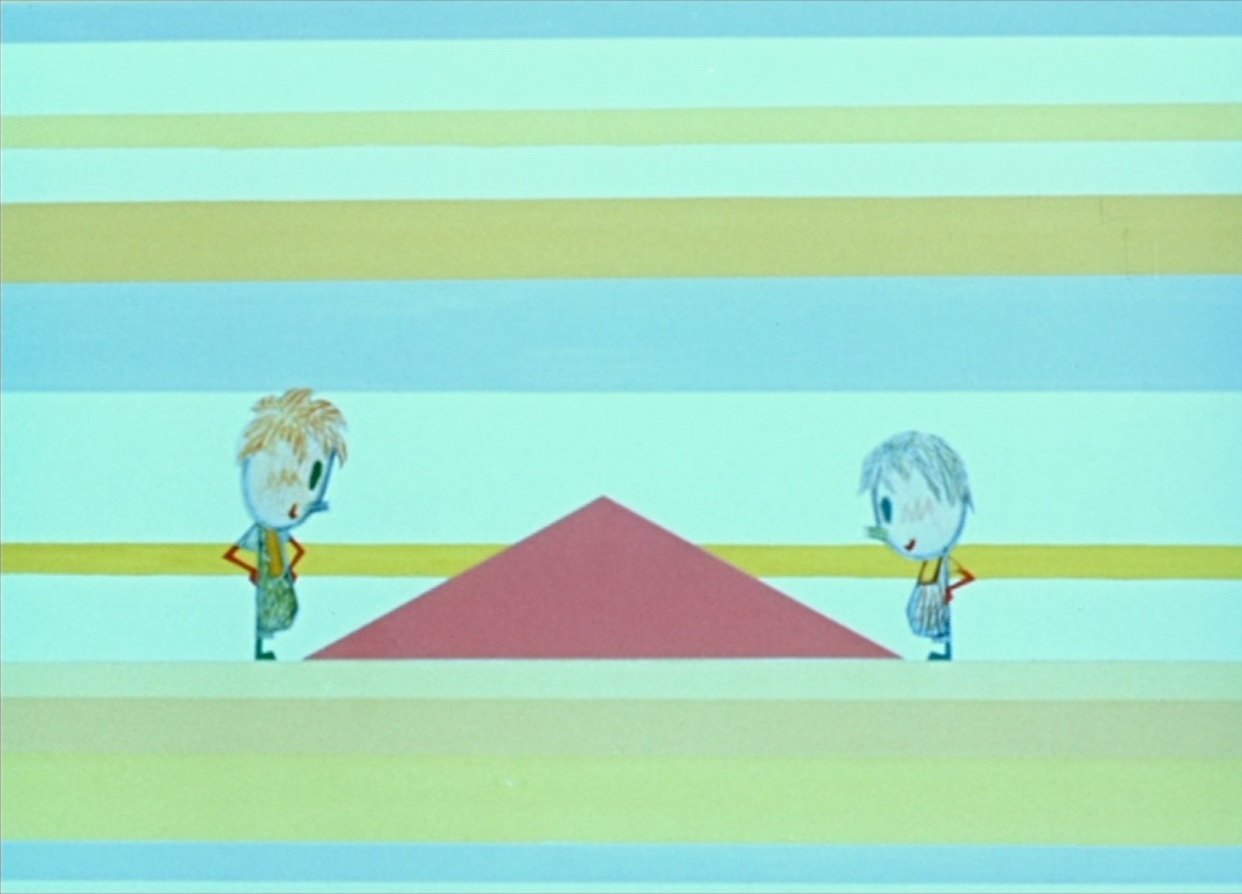
‘Enchanted Triangles’ is a cute children’s films from Poland about triangles. The film makes clever use of the imagination of children to transform triangles into church towers, mountains, pyramids, sailing boats, birds and butterflies.
Two boys explore this triangle world. The film uses a voice over by a girl and cut-out animation. The two boys are charmingly drawn in crayons in a semi-childish style, but the triangles remain abstract. The result is cute if unassuming and rather forgettable.
Watch ‘Enchanted Triangles’ yourself and tell me what you think:
‘Enchanted Triangles’ is available on the DVD-set ‘Anthology of Polish Children’s Animation’
Director: Bill Melendez
Airing date: March 11, 1973
Stars: Charlie Brown, Franklin, Linus, Lucy, Margie, Peppermint Patty, Sally, Snoopy
Rating: ★★★
Review:
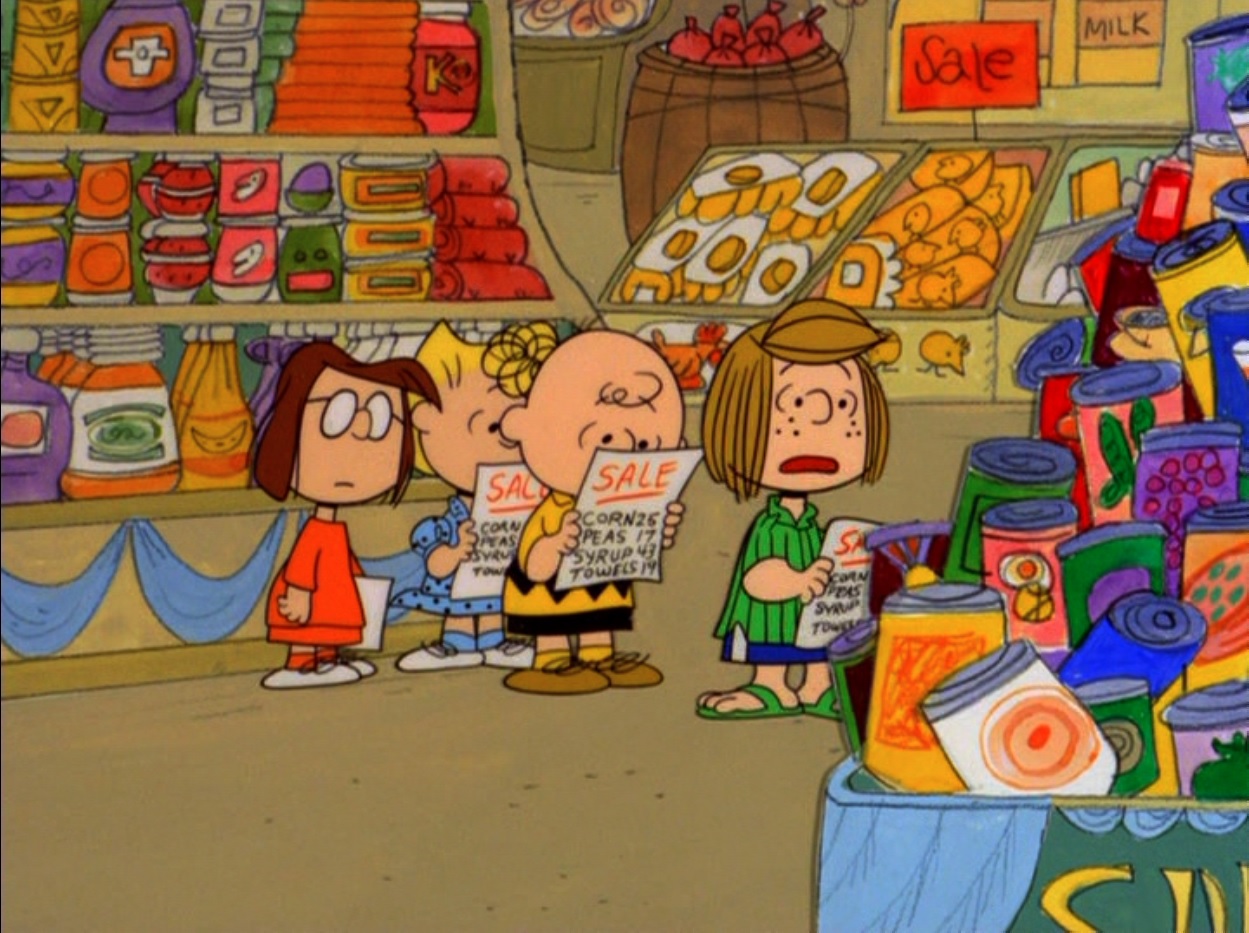
‘There’s No Time for Love, Charlie Brown ‘is the ninth Peanuts television special. This instalment is a nice, quiet little affair, with a rather stream-of-consciousness-like quality to it.
The special starts with several comic-based loose gags on school, most of them starring Sally and Peppermint Party. After seven minutes the main story kicks in, in which the kids have to go on a field trip to a museum and write a report on it. Unfortunately, Charlie Brown, Sally, Peppermint Patty and Marcie end up in a supermarket. What’s worse, Peppermint Patty hurts Charlie Brown’s feelings there, too.
Marcie, who makes her screen debut here, has a particularly young sounding voice (by one Jimmy Ahrens). It’s nice to watch her interaction with Peppermint Patty on screen, as is the interplay between Peppermint Patty and Charlie ‘Chuck’ Brown.
Halfway the supermarket scenes there’s a short song on Snoopy’s Joe Cool character, while the accompanying images show Snoopy imagining himself as a world famous grocery clerk. The rest of the episode features a very attractive jazz score by Vince Guaraldi. Throughout, both the animation and the facial expressions are fair, and the whole episode is a pleasant, if rather understated affair.
Watch ‘There’s No Time for Love, Charlie Brown’ yourself and tell me what you think:
‘There’s No Time for Love, Charlie Brown’ is available on the DVD-set ‘Peanuts 1970’s Collection Vol. 1’


 Dr. Grob's Animation Review