Directors: Pierre Coffin & Kyle Balda
Release date:
June 14, 2017
Rating: ★★★
Review:

The third installment of the Despicable Me franchise (not counting the spin-off ‘Minions‘ from 2015) is also the weakest of the trio. Like the other two the film is a fun ride, full of humor and action, but this time the film makers simply wanted to tell too much in one film. There are no less than six plot lines in this film divided over different main characters.

The first, and most enjoyable one considers Gru and his apparent arch nemesis Evil Bratt, a former child-actor from the 1980s gone bad. Evil Bratt, excellently voiced by Trey Parker of South Park fame, is a delightful villain, and the film makers indulge in 1980s tropes to make this character. For example, Evil Bratt sports a mustache and a mullet, and his weapons are based e.g., on bubblegum, Rubik’s cube, and a keytar. Moreover, whenever he appears, he’s accompanied by a 1980s hit, e.g., ‘Jump’ by Van Halen, ‘Take on Me’ by A-Ha, ‘Into the Groove’ by Madonna, and even ’99 Luftballons’ by German star Nena. The film immediately starts with this character, and it’s thanks to this wonderful villain that ‘Despicable me 3’ keeps on the right side between failure and entertainment, if barely so.

Much less interesting are the other story lines: Gru and Lucy are fired, and Gru desperately tries to get his former job back. In a third and totally unexpected twist Gru suddenly discovers he has a twin brother (also voiced by Steve Carrell, voice of Gru), who wants to be a villain, like Gru used to be, but who clearly lacks the skills. The fourth story line involves the minions, who walk out of Gru, a fifth involves Agnes (the youngest of Gru’s three adopted children) and her wish to see a unicorn. And the sixth is about Lucy, and how she tries to be a substitute mom for the girls, especially to Margo, the eldest of the three.

Now, the first three plot lines, all involving Gru, at least intertwine into one, albeit rather loose narrative, but the other three feel forced and superfluous: they’re only there to give the other characters something to do. And even then, Judith, the middle one, is lost in the plot.

Much of the action takes place in ‘Freedonia’ (a clear nod to the Marx Brothers), while the finale takes place in Hollywood. Freedonia clearly is modelled as some French Mediterranean island, and betrays the Illumination studio’s French origin.

The character animation, like in the other installments, is delightfully cartoony and over the top, and better suited for the broad comedy than for the more subtle moments, and only Margo is animated straight, acting like a normal girl, and not like a cartoon character. By now, the effect animation is so good that one hardly notices. For example, the water and smoke animation is excellent and feels so natural, one easily forgets it’s animated, too. I also liked how the film makers made the 1980s Evil Bratt episodes look like old video recordings. The cinematography, too, is top notch, throughout.

But all the quality cannot rescue an overcrowded film that scores high on action, but very low on originality and heart. There’s even an obligatory breakup scene, which feels extra unnecessary, because it lasts so shortly. ‘Despicable Me 3’ is well made, but also mediocre, and with the exception of Evil Bratt, forgettable.

Watch the trailer for ‘Despicable Me 3’ yourself and tell me what you think:

‘Despicable Me 3’ is available on Blu-Ray and DVD
Director: Brian Fee
Release date:
March 28, 2017
Rating: ★★★
Review:

Cars’ was the first Pixar film after Toy Story to get a sequel in 2011. Unfortunately, ‘Cars 2’ was as much as a digression from the original narrative as it was disappointing. With ‘Cars 3’ the studio returned to the original source material, once again focusing on Lightning McQueen.

The film takes a brave step in showing the effects of getting older and realizing that you’re not young anymore, and thus is a film more appealing to parents than to youngsters. The whole idea of characters getting older is a bold one in animation land, and the film does a good job in the depiction of passing the torch from one generation to a new one.

Unfortunately, Lightning McQueen never was a wholly sympathetic character, and he certainly isn’t in this film. When his reign on the racetrack is threatened by a new generation of rookies, he desperately tries to stay in place. But his reckless and selfish behavior leads to disaster, and when he’s offered a training program, he’s too impatient and too self-centered to follow the rules, wrecking some expensive equipment and putting his younger trainer into danger.

In fact, this trainer, the female car Cruz Ramirez (wonderfully voiced by Cristela Alonzo), by far is the most interesting character of the movie. She’s apparently from a humbler background and shows McQueen that some people must struggle hard to achieve the confidence and success he took for granted. But the film is not her story, and this important message is pushed aside by McQueen’s struggle with his own ageing and mortality.

In this, the film relies heavily on McQueen’s relation to his own mentor, Doc Hudson. This character was voiced by Paul Newman, who passed away in 2008, so his dialogue comes from unused recordings for the first film. This mentor-theme is pushed rather forcefully and heavy-handedly into the story, with a series of flashbacks in which McQueen realizes how he has mistreated Cruz as a low point of stating the obvious.

Moreover, for a large part the film blindly follows the rules of the sports film, with an unlikely outsider winning from the established and unsympathetic competitor thanks to an unconventional training scheme. This training part, under the auspices of Smokey, Doc Hudson’s former partner, is by far the weakest part of the film. This cliché path fills most of the second part of the film, hampering a story that could have been more daring and more original.

The characters from the first film are hardly present in ‘Cars 3’. Even Mater’s role is surprisingly modest, considering he was the leading character of ‘Cars 2’. Especially disappointing is the role of Sally, McQueen’s girlfriend. In fact, McQueen hardly behaves as if he were in a relationship, at all. There’s no conflict at all between him and Sally when he goes training at the other side of the continent, nor when he sees the younger woman Cruz more than he sees her. This somehow feels like a missed opportunity.

Meanwhile, the effect animation, the background art, the scene setting, and lighting are all of the highest quality. The world building of ‘Cars 3’ feels so effortless, one can focus on the characters and forget how well it is done. In fact, the character animation of the cars themselves remain the weakest element of the animation, as the car-living-being-combination remains a bit uncanny and unconvincing, with those large continuous eyes filling the front window, and those odd mouths in the bumper regions.

‘Cars 3’ pleasantly rounds up McQueen’s story, from an all too hasty rookie in ‘Cars’ to a veteran who realizes his days are over, but who manages to pass his knowledge to a new generation. I certainly hope Pixar does not make the same mistake as with ‘Toy Story’ and leaves the franchise with a perfect ending after three films.

Watch the trailer for ‘Cars 3’ yourself and tell me what you think:

‘Cars 3’ is available on Blu-Ray and DVD

Director: Dave Mullins
Release date:
March 12, 2017
Rating: ★★★★
Review:

When, after recess, the playground of a school is empty, a mysterious being creeps out of the lost and found box to collect all lost toys from the site. He brings all these toys back to his lost and found box so children can find them there. But when he watches a bully taking toys from other children, he comes into action…

‘Lou’ is a short that is well-made but in an uninteresting generic Disney-Pixar style. Nevertheless, the story is well-told. There’s no dialogue, but the film manages to move the audience through clever timing and a well-placed flashback, showing the origin of the bully’s behavior. This part may be over-simplistic, but does give some depth to the bully character.

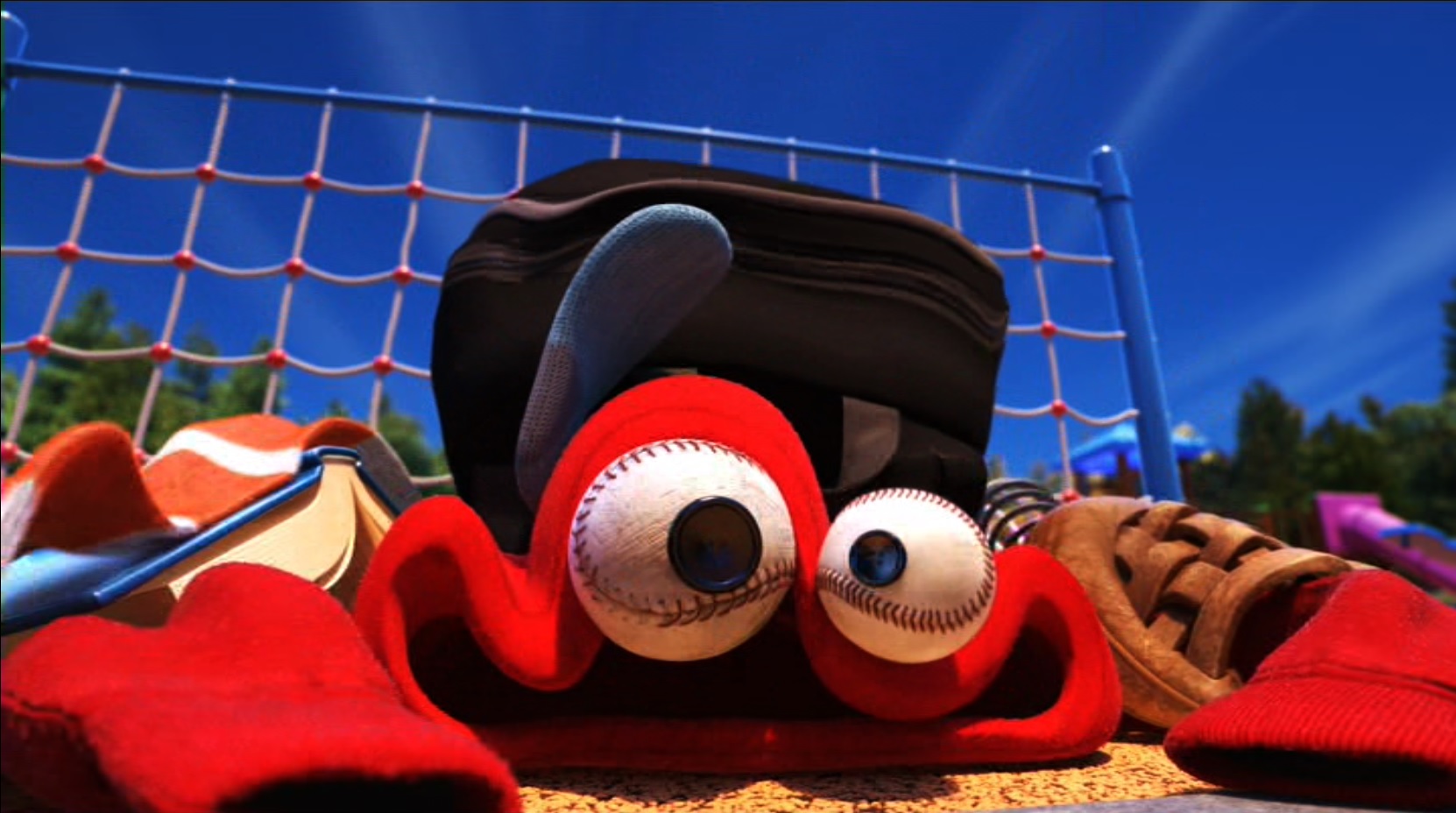
Moreover, the mysterious lost and found thing is a wonderful invention: it is essentially shapeless and only exists through the lost items. During the chase scene the thing thus changes its form repeatedly, in a wonderful sequence of variations on the same set of items. The origin of the title of the film is only revealed in the end.

Watch ‘Lou’ yourself and tell me what you think:

‘Lou’ is available on the Blu-Ray & DVD of ‘Cars 3‘ and on those of ‘Pixar Short Film Collection 3’


Director: David Soren
Release date:
May 21, 2017
Rating: ★★★★★
Review:

In Captain Underpants two boys, George Beard and Harold Hutchins, write and draw comic book stories together. Unfortunately, their elementary school is the dullest, most depressing place on earth, thanks to the mean principal, Mr. Krupp. But then one day, somehow their comic book hero, Captain Underpants, comes alive, and he is even dumber than George and Harold had imagined…

This movie was one of the surprises of 2017. I saw this movie in a plane, not expecting much from a film with such a childish title, but boy, was I pleasantly surprised! Compared to this film most of the American computer-animated output of the 2010s feels pretty generic. Dreamworks’ ‘Captain Underpants: The First Epic Movie’, on the other hand, boasts visuals that are incomparable to any other animated feature.

Moreover, the film’s story is delightfully unpredictable, and knows neither dull moment nor any of the cliches invading almost every American animated feature of the era. Even the moral, the value of laughter and that of friendship, is played rather casually, and never takes over from the sheer mayhem put on the screen. On the contrary, a lot of what’s happening on the screen is pleasantly over the top. I liked the use of Yello’s song ‘Oh Yeah’ when the two children make a particularly cool entrance, and when later an Einstein-like villain from ‘New Switzerland’ joins in, mayhem is ensured.

Most of the film is genuinely silly, and even though its target audience obviously is about as old as George and Harold, the film is enjoyable to everyone. What certainly helps is the great voice cast. Both George and Harold are voiced by adults (Kevin Hart and Thomas Middleditch), and Ed Helms does a great job as both Mr. Krupp and Captain Underpants. It’s also interesting to note that Mr. Krupp isn’t only bad, he’s depicted as a shy and lonesome human, too.

Of course, much of the charm of ‘Captain Underpants: The First Epic Movie’ comes from the original source material, the illustrated children’s book series by American author and illustrator Dav Pilkey, which already counted twelve volumes by the time this movie was made. The film is apparently based on the first and fourth volume first four volumes [thanks Jonathan Wilson for the correction]. During production Pilkey worked closely together with director David Soren, and that certainly has paid off.

The film has translated Pilkey’s charming drawing style into 3D computer animation surprisingly well. What’s better, several parts are animated in 2D, in the children’s comic book style, there’s even a sequence in cut-out animation. Even the animation during the end titles is nice to watch. But the most outlandish sequence comes when Harold’s imagination of the future runs away with him. This scene was done by Screen Novelties in live action, with sock puppets, with hilarious results.

In all, ‘Captain Underpants: The First Epic Movie’ is a pleasant and very welcome diversion from Dreamworks, and one of the best animated movies of 2017, which with e.g., ‘Coco’ and ‘The Breadwinner’ was a strong animated feature year, anyway.

Watch the trailer for the ‘Captain Underpants: The First Epic Movie’ yourself and tell me what you think:

‘Captain Underpants: The First Epic Movie’ is available on Blu-Ray and DVD
Director: Masaaki Yuasa
Release date:
April 7, 2017
Rating: ★★★★★
Review:

Japan knows several distinguished animation directors, from Hayao Miyazaki to Mamoru Hosoda, but perhaps no feature director* is so original as Masaaki Yuasa. He created quite a stir with ‘Mind Game’ (2004) and kept on pouring out original work since then.

What’s striking about Yuasa’s films is that they don’t follow the general anime aesthetic, at all, on the contrary. ‘Night Is Short, Walk on’ is an excellent example in that respect. This mind-blowing feature film boasts human designs that are very different from your typical anime, highly original color schemes, more offbeat background art, interludes in a line-less style with vibrant digital coloring, wild, even grotesque animation (for example, watch people swallow in the first scene), and a highly original, almost stream-of-consciousness-like way of storytelling, using unpredictable editing techniques, and an occasional split screen, surprising camera angles, extreme perspectives, and moving background art, when necessary (there’s a very impressive example when Senpai runs up an exterior staircase).

Apart from Yuasa’s way of storytelling the plot of ‘Night Is Short, Walk on’ is highly original in its own right. The two main protagonists don’t even have names but are referred to as Otome (maiden) and Senpa (senior). We follow the two for one night, a night in which apparently anything can happen. Otome, a young woman, is ready to discover the adult world, while Senpa, who’s madly in love with her, has decided to finally express his feelings to her. Meanwhile, during this one night, both people meet a plethora of strange people, bizarre situations, and odd gatherings in a free-flowing narrative that nevertheless can be cut into four parts, which naturally flow into each other. Nevertheless, it’s best not to know anything about the plot, and just let it come to you. You’ll be in for quite a ride. What’s more, despite all its weirdness, ‘Night Is Short, Walk on Girl’ is essentially a film about love, and unexpectedly gentle despite all the mayhem surrounding the main story.

Surprisingly for such a visually stunning film, ‘Night Is Short, Walk on Girl’ is based on a novel, by Tomihiko Morimi. His novel was divided into four seasons, which explains the high number of events in the film version. Morimi was also responsible for the novel on which Yuasa’s earlier series ‘The Tatami Galaxy’ (2010) was based, and the series and ‘Night Is Short, Walk on Girl’ are very similar in visual style and general atmosphere.

In all ‘Night Is Short, Walk on Girl’ is hardly like anything you’ve seen before, and a great testimony of what can be done in animation. In my opinion this is one of the most important animation films of the decade. Highly recommended.

* There are also several highly original independent Japanese directors of shorts, e.g. Kōji Yamamura, Atsushi Wara & Mirai Mizue. Check them out!

Watch the trailer for ‘Night Is Short, Walk on Girl’ yourself and tell me what you think:

‘Night Is Short, Walk on Girl’ is available on Blu-Ray and DVD

Director: Chris McKay
Release date:
January 29, 2017
Rating: ★★★★★
Review:

After the successful and surprisingly intelligent ‘The Lego Movie’ it was only natural for Warner Bros. to make another Lego themed movie. This time they took the character of Batman, who also co-stars ‘The Lego Movie’ and made the dark knight the star of a very funny sequel.

Compared to ‘The Lego Movie’, ‘The Lego Batman Movie’ is less deep and less layered, and the film wears its family theme on its sleeve, but like ‘The Lego Movie’ this sequel is really, really funny. The film makers play with all the batman tropes, and never take the superhero too seriously. In that respect, the film immediately starts off greatly, with Batman himself commenting on the opening titles. Another hilarious scene arrives a little bit later when we watch Batman waiting for the microwave.

Batman is a superhero, but pretty much a loser, as well. In fact, during most of the film, Batman is an ass, more of a self-centered, egotistic obligate loner than the usual tormented superhero. The Joker, too, is not just a supervillain, but one who longs for a special love-hate relationship with his foe. The film also introduces Robin and kickass female character Barbara Gordon (who’ll later turn into Batgirl). Part of the success of all these characters and how they are presented lies in the great voice acting. Especially, Will Arnett is a treat as the over-serious, pompous, self-important gravelling voice of Batman himself. Zach Galifianakis is a surprisingly emotional Joker, while Michael Cera shines as the overenthusiastic, geeky Robin. Rosario Dawson gives us a strong Barbara Gordon, and Ralph Fiennes a worthy Alfred, Batman’s butler.

Apart from the family theme, the plot revolves around the Joker letting all supervillains free from the Phantom Zone (a prison inside another dimension, borrowed from the Superman world). Because the film makers could browse the complete Warner Bros. catalogue, the villains include King Kong, the Wicked Witch from the West, Sauron, Voldemort, the Gremlins, the dinosaurs from Jurassic Park, Agent Smith from ‘The Matrix’, and the Dalek from Dr. Who. Like Batman none of these villains are treated with respect. For example, the Dalek are introduced as “British Robots! (ask your nerd friends)”.

Being a Lego movie, the character animation is pretty jumpy, while some of the special effects are done in Lego, too (flames, lava). But both the world building, the textures, the lighting and camera movements are top notch, and together with Lorne Balfe’s epic score contribute to the action part of the movie. The result is a deft combination of exciting adrenaline-rich action and plain silliness. In any case, the film moves at a reckless speed, pouring gags over the audience almost non-stop, while retaining the family theme at heart. Even if it’s not as good as ‘The Lego Movie’ was, this is a fun film all the way. In fact, I prefer ‘The Lego Batman’ over the all too dark and serious recent Batman movies any time.

Watch the trailer for the ‘The Lego Batman Movie’ yourself and tell me what you think:

‘The Lego Batman Movie’ is available on Blu-Ray and DVD

Directors: Ivan Ivanov-Vano & Yuri Norstein
Release date:
1971
Rating: ★★★
Review:

Veteran director Ivan Ivanov-Vano and young and up-and-coming talent Yuri Norstein co-direct the rather enigmatic ‘The Battle of Kerzhenets’.

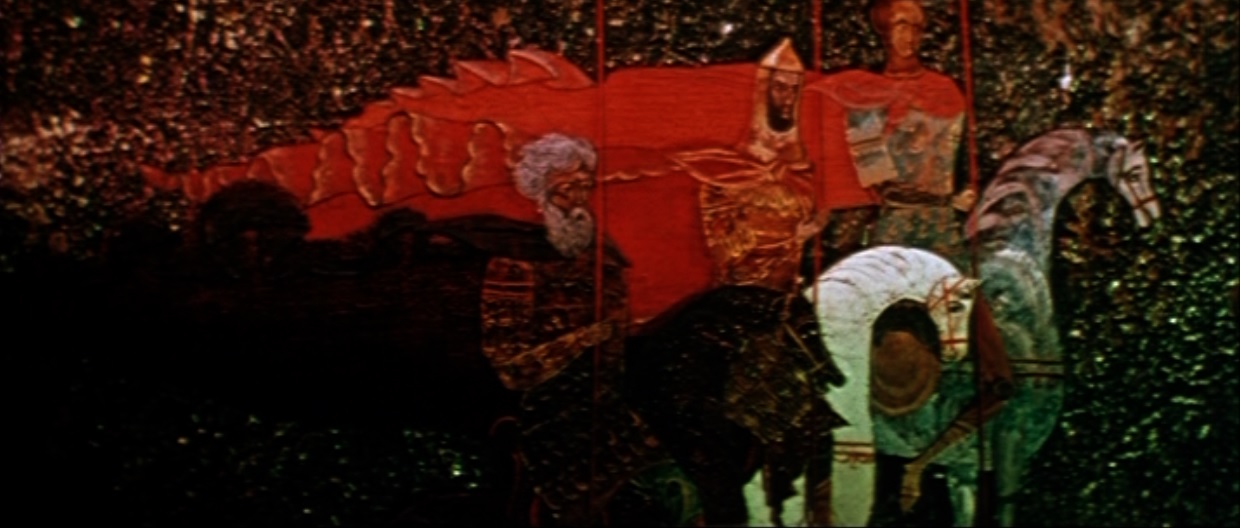
Set to music by Nikolai Rimsky-Korsakov (excerpts from his opera ‘the Invisible City of Kitezh’), the film tells of a legendary epic battle of a Russian army against an invading army of Mongols, and of its aftermath. The film consists of three parts: in the first we watch the soldiers saying goodbye to their wives and children, the second depicts the battle itself, and the third part shows how life continues, with images of farmers sowing and harvesting and of children playing.

The short stops quite abruptly, and it’s quite unclear what the duo wanted to tell with their film. Nevertheless, the film is a marvel to watch. As the directors state themselves in the opening of the film, the visuals are based on Russian icons and frescos of the 14th to 16th century, and these give the short its unique style.

The cut-out animation is fair, and more emblematic than realistic, but the real treat lies in the way the two directors filmed their short. For a film about a battle, the filming is remarkably poetic: the images often flow into each other by the use of dissolves into black and back, and there’s a lot of soft focus on the images, creating a magical distance. In fact, the images are mesmerizing throughout the picture, and clearly look forward to Norstein’s individual poetic style.

Watch ‘The Battle of Kerzhenets’ yourself and tell me what you think:

‘The Battle of Kerzhenets’ is available on the DVD ‘Masters of Russian Animation Volume 2’

Director: Andrei Khrjanovsky
Release date:
1970
Rating: ★★
Review:

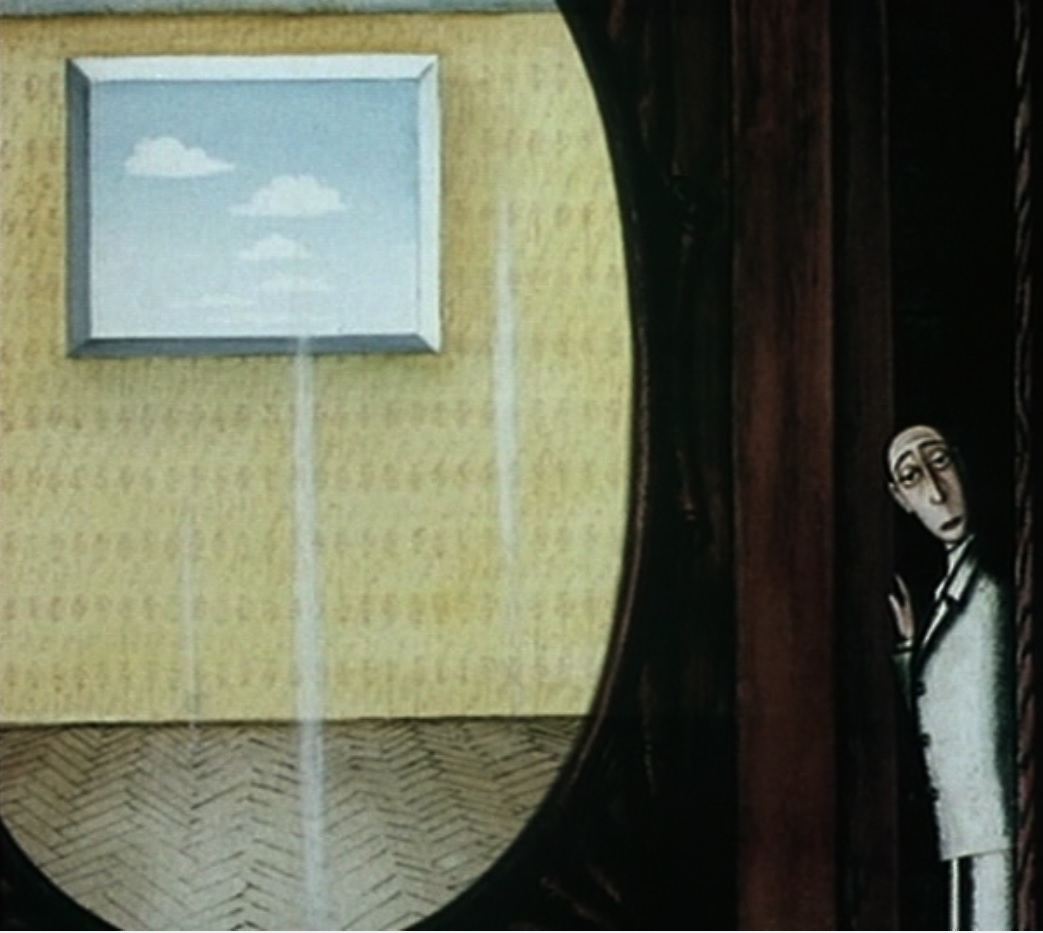
‘Armoire’ is an enigmatic cut-out animation film about a man in an apartment who puts an enormous cupboard into his room. Once inside, he starts to put all his belongings into the cupboard, until he can live inside it. In the end it’s revealed that even his tiny room is inside another cupboard.

Several shots of depressing apartment blocks suggest that this is a critical satire on the living conditions inside the Soviet Union, but I’m not sure. ‘Armoire’ is as avant-garde as was possible in the Soviet-Union, especially Alfred Schnittke’s score is very modernistic. But because the film is just the illustration of one puzzling idea, and because the one protagonist is as phlegmatic as Buster Keaton, the film fails to make a lasting impression.

Watch ‘Armoire’ yourself and tell me what you think:

‘Armoire’ is available on the DVD ‘Masters of Russian Animation Volume 2’

Director: Ivan Ivanov-Vano
Release date:
1969
Rating: ★★½
Review:

‘Seasons’ is a very poetic stop-motion film set to music by Pyotr Ilyich Tchaikovsky.

The film tells about two lovers through the seasons, although we see mostly images of autumn (the two riding together through a forest) and winter (a lengthy sleigh ride), with summer being reduced to a reminiscence of happier times, and spring hardly identifiable, at all.

The film is directed by Ivan Ivanov-Vano, but co-directed by Yuri Norstein, and already contains several elements of the later director’s mature style: the stop-motion is close to cut-out animation, there are plenty multi-plane effects, and the filming of the images has a soft, poetic edge to it. The designs are extraordinary beautiful, especially that of the crystalline forest, but as practically nothing happens during the entire film, the result is as enchanting as it is boring.

Watch ‘Seasons’ yourself and tell me what you think:

‘Seasons’ is available on the DVD ‘Masters of Russian Animation Volume 2’

Director: Lev Atamanov
Release date:
1969
Rating:
 ★★★★
Review:

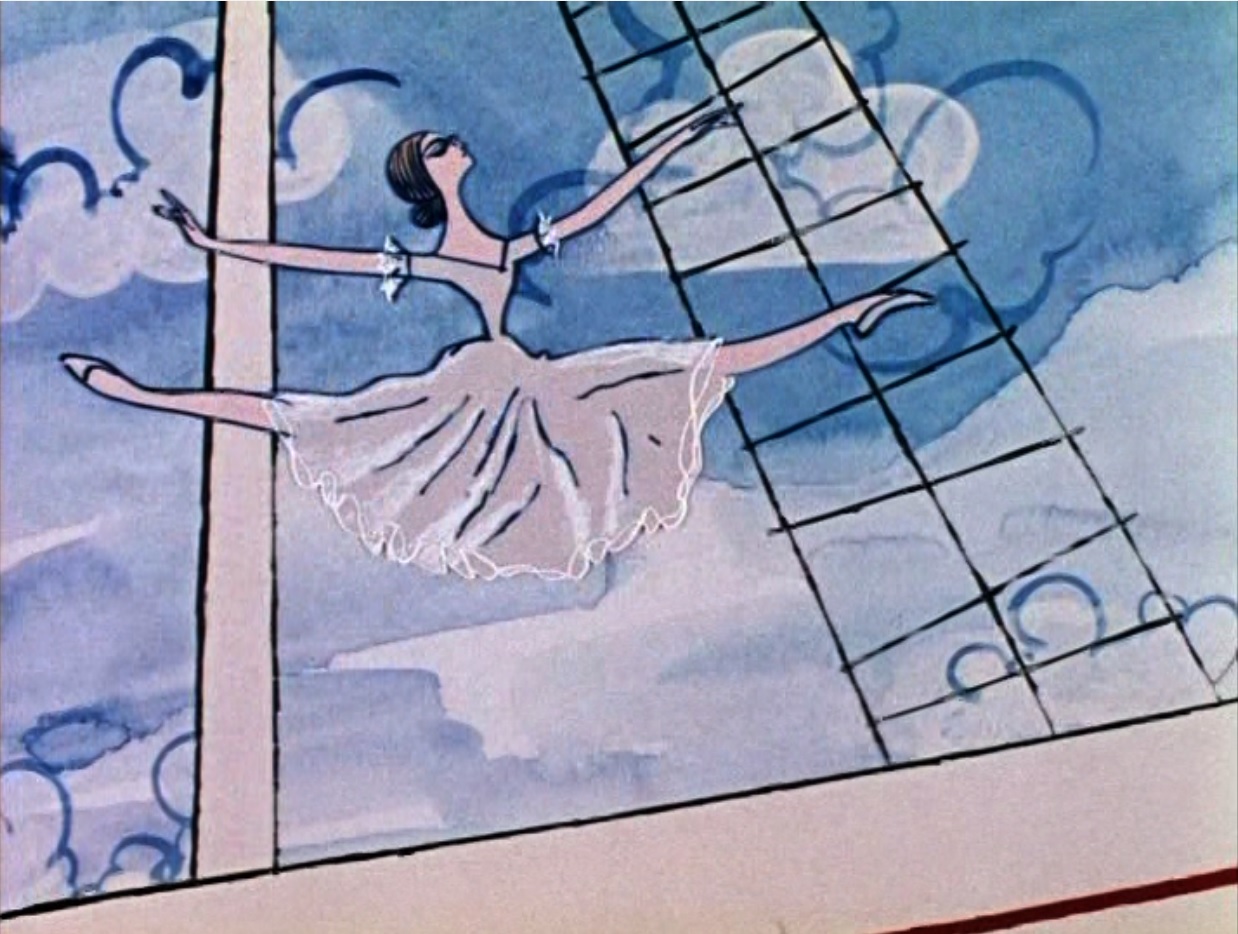
In ‘Ballerina on the Boat’ a ballerina boards a ship. When she practices her moves, several sailors try to copy her, but only succeed in falling overboard. In the end they all get so angry, the gentle ballerina retreats into her cabin. But that night she rescues the ship from a terrible storm.

‘Ballerina on the Boat’ is a very charming film using stark cartoon modern designs and watercolor backgrounds reminiscent of Raoul Dufy. Even the storm consists of beautifully colored paint strokes. The film thus has a strong 1950s feel, enhanced by the peppered modern music by star composer Alfred Schnittke.

The film uses no dialogue and has a very poetic feel, as the ballerina defies gravity more than once. The ballerina herself is animated beautifully and very convincingly, and indeed, two people are credited for choreography. If the film has one drawback, it’s its length. For, after all, not too much is happening throughout the 17 minute long short.

Watch part 1 of ‘Ballerina on the Boat’ yourself and tell me what you think:

‘Ballerina on the Boat’ is available on the DVD ‘Masters of Russian Animation Volume 2’

Director: Witold Giersz
Release date:
1970
Rating:
 ★★★½
Review:

‘The Wonderful March’ is a traditional animation film, which retells the story ‘The Marvelous March of Jean François’ (1965) by John Raymond.

Jean François is a drummer boy in Napoleon’s army, who’s told to march ever onward. Following this direction rather obsessively, Jean François travels the world, using his drum e.g. as a boat and as a basket for a balloon, only to return to Napoleon in the end, right in the battle of Waterloo.

The film’s conclusion is a bit puzzling and rather disappointing. Nevertheless, ‘The Wonderful March’ can boast very pleasant images, full of painted animation, and charming music by Polish composer Kazimierz Serocki.

Watch ‘The Wonderful March’ yourself and tell me what you think:

‘The Wonderful March’ is available on the DVD-set ‘Anthology of Polish Children’s Animation’

Director: Julian Antonisz
Release date:
1970
Rating:
 ★★★
Review:

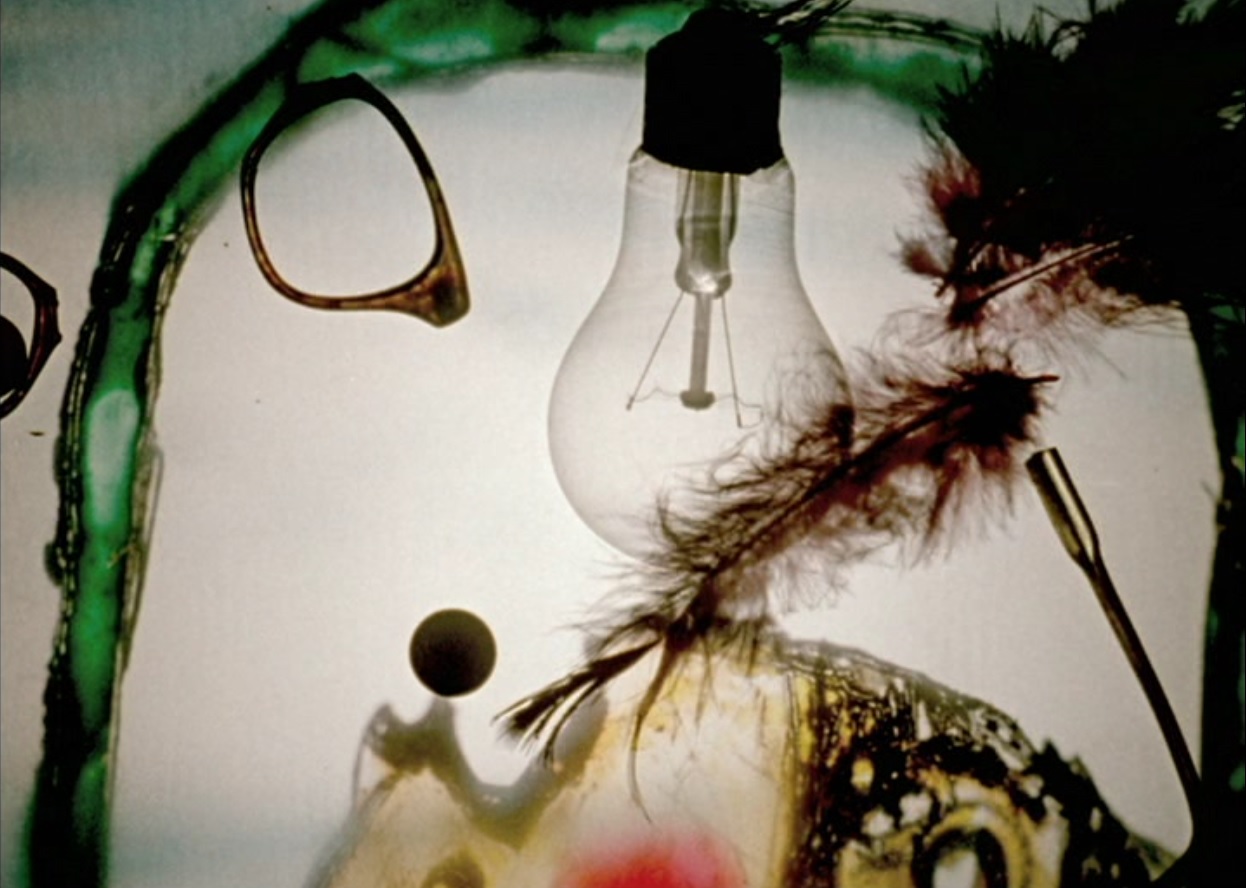
‘How Is That…?’ is another children’s film by Julian Antonisz and this film is made in the same vein as ‘How Learning Came Back tothe Woods’. This time a little girl tells us how television works.

Antonisz again illustrates the narration with very rough designs, and cut-out animation of household objects on top of a light table. For examples, the people wear real glasses, and some nature is suggested by real flowers and plants.

‘How Is That…’ is not too serious. At several points things go wrong, and a ‘Please Stand By’ sign is shown. The result is a very original and delightful little avant-garde film for children.

Watch ‘How Is That…?’ yourself and tell me what you think:

‘How Is That…?’ is available on the DVD-set ‘Anthology of Polish Children’s Animation’

Director: Julian Antonisz
Release date:
1970
Rating:
 ★★★½
Review:

Told by a little girl ‘How Learning Came Back Out of the Woods’ is an educational film for children on how books are made.

Julian Antonisz’s animation style, however, is highly avant-garde. The animator uses a light table to illuminate his drawings and a multitude of household objects from below. Antonisz’s style is very rough and graphic. There’s motion, but the cut-out animation itself is limited. Human movement, for example, is only suggested by using two key frames, rather than animated fully. Nevertheless, this children’s film is a good example of the sheer creativity of the Polish animation industry of the seventies.

Watch ‘How Learning Came Back Out of the Woods’ yourself and tell me what you think:

‘How Learning Came Back Out of the Woods’ is available on the DVD-set ‘Anthology of Polish Children’s Animation’

Director: Ryszard Czekała
Release date:
1970
Rating:
 
★★★★½
Review:

If ‘Syn‘ was an unsettling watch, ‘Apel’ is no less than a grueling. Set in a German concentration camp, the film shows a Nazi officer commanding a large group of prisoners to bow and to rise, over and over again. Then one of them refuses to bow…

‘Apel’ is an extreme film, not only in concept, but also in execution. Czekała uses very original cinematography and extreme ‘depth of field’, with large parts of his drawing being out of focus. Especially the shot in which the Nazi officer walks by rows and rows of people is particularly impressive, and it’s unclear to me how Czekała reached this effect. The film is as bleak as can be, and quite an unpleasant watch, but Czekała’s mastery of the animated form is undeniable.

Watch ‘Apel’ yourself and tell me what you think:

‘Apel’ is available on the DVD-set ‘Anthology of Polish Animation’ and on the DVD box ‘Annecy – Le coffret du 50e Anniversaire’

Director: Daniel Szczechura
Release date:
1970
Rating:
 
★★★½
Review:

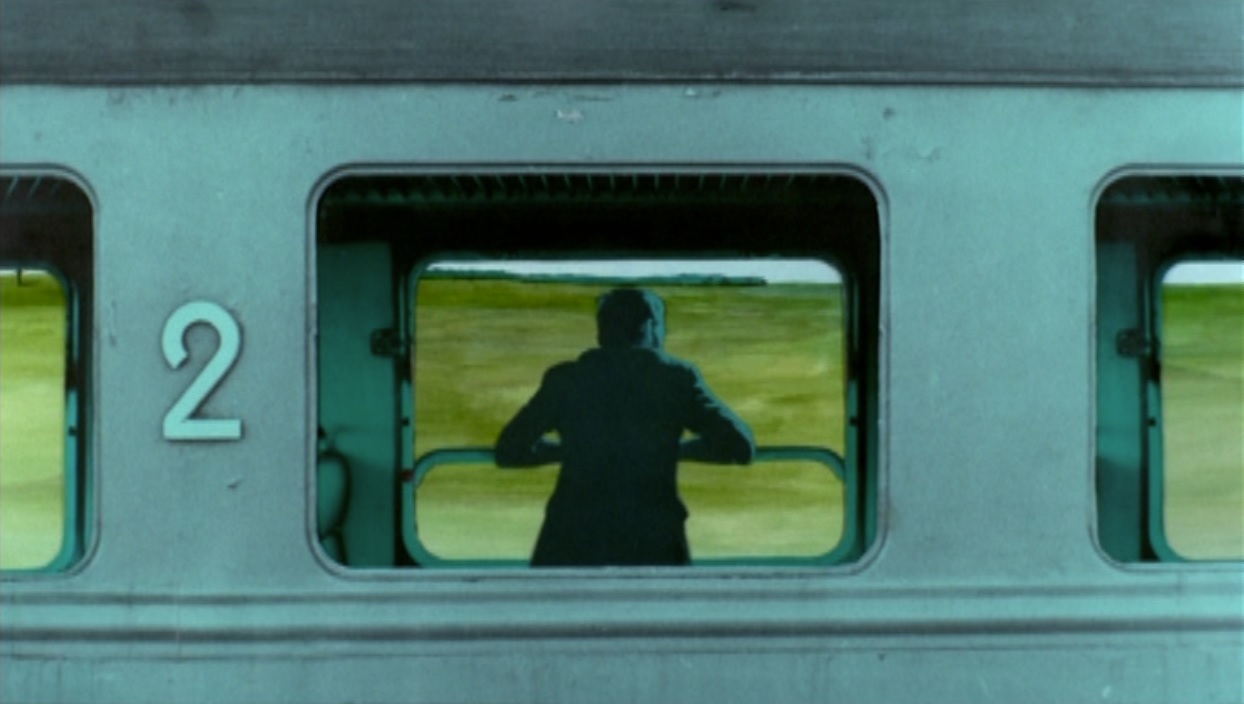
‘Podróż’ (The Journey) is a Polish avant-garde film in which a man makes a rather pointless train trip to a house somewhere in the countryside.

For a large part of the short we watch the man in the train from the back, while he stares at the countryside floating by his window. There’s constant movement, but barely any animation. During the train sequence, for example, the train itself and the man remain completely static. When the man walks towards the house this is done in a sequence of stills, not in animation.

Nevertheless, the film intrigues because of its original visual style and because of its extreme soundtrack by Eugeniusz Rudnik using unsettling mechanical sounds.

Watch ‘The Journey’ yourself and tell me what you think:

‘The Journey’ is available on the DVD-set ‘Anthology of Polish Animation’

Director: Ryszard Czekała
Release date:
1970
Rating:
 
★★★
Review:

In ‘Syn’ (The Son) an old couple at the countryside wait for their son, who has gone off to lead a different life in the city. But when he arrives at his parental home, his visit turns out to be a deception.

‘Syn’ shows Ryszard Czekała’s original style: the film is in black and white, and features a very original cinematography: altering extreme close-ups of hands, ears and such with strange depictions of the barren wintery landscape, with the ground filling up almost the complete frame.

The story is told without dialogue, and because of Czekała’s extreme graphical style, rather hard to follow. Most striking is the sound design, which arguably is as important as the imagery. The result is a puzzling, but quite unsettling and bleak short.

Watch ‘The Son’ yourself and tell me what you think:

‘The Son’ is available on the DVD-set ‘Anthology of Polish Animation’

Director: Valentin Karavaev
Release date:
1970
Rating:
 
★★
Review:

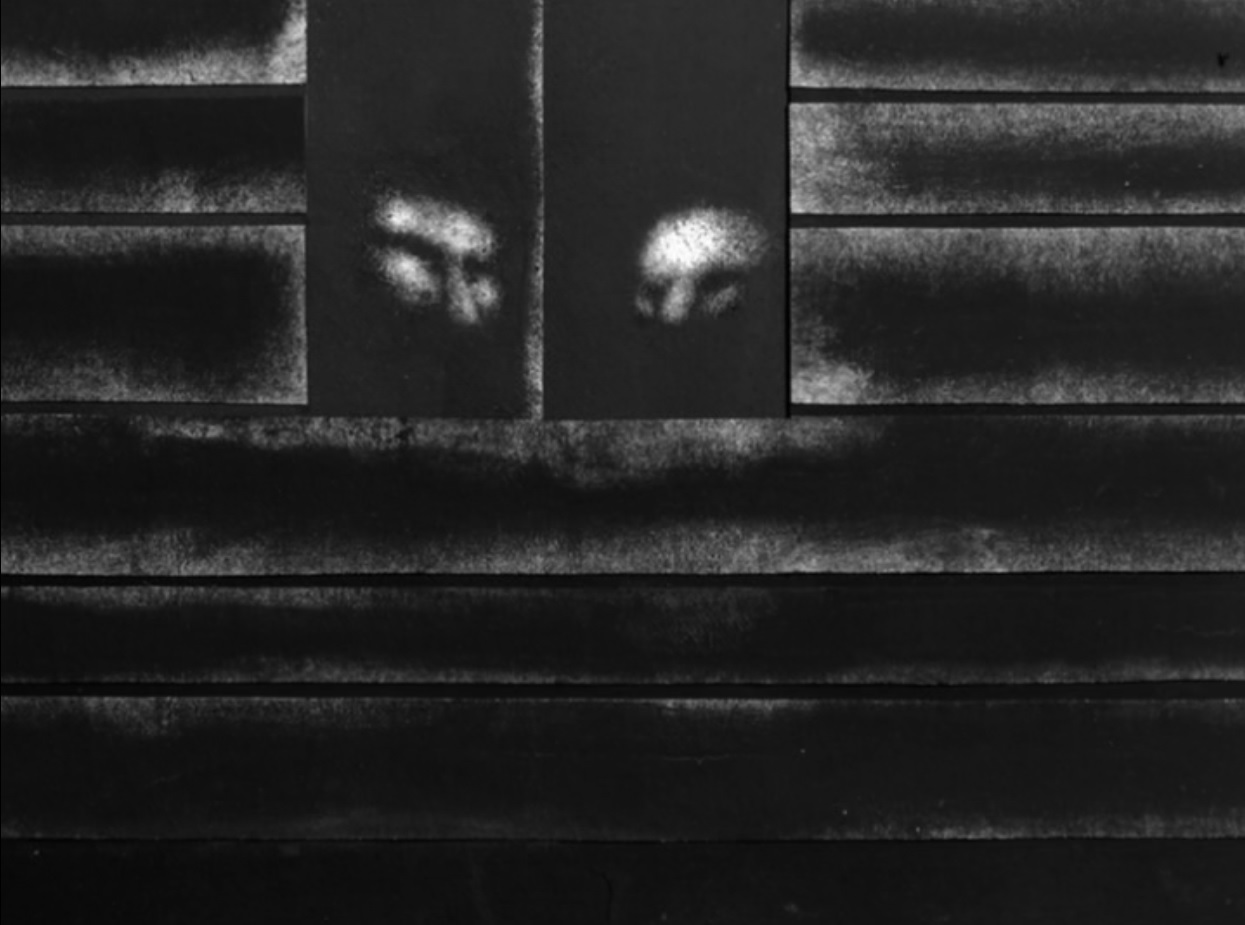
‘A Lesson Not Learned’ is a rather blatant and vicious Soviet propaganda film suggesting that West Europe is led by fascists trying to restore the Germany of old.

The film starts with images from World War II, accompanied by the sounds of bombs and gunfire. Then we cut to an old Nazi in sheep’s clothing, who seeks refuge in the American-British zone. Accepted and retired, the old Nazi preaches ‘revanchism’, in order to restore Germany’s borders from before World War II. However, he is stopped by the Berlin wall and the peace treaty signed between the USSR and the DDR, in which the current borders are accepted.

This film uses a satirical style more reminiscent of the forties than of the seventies, rendering an old-fashioned imagery. The best idea is the little Hitler angel helping the old Nazi. There’s no dialogue. For example, when the old Nazi starts to speech, we only hear the sound of guns. There’s pretty little animation and the message is emphasized with writings as in political cartoons.

It’s hard to watch a film so full of lies, which shows that up to its very end the Soviet Union partly based its legitimation on the idea that its existence was the only way to stop fascism. And the saddest thing is that the current Russian regime has revived this falsehood to defend its current war in the Ukraine.

Watch ‘A Lesson Not Learned’ yourself and tell me what you think:

‘A Lesson Not Learned’ is available on the DVD set ‘Animated Soviet Propaganda’

Director: Rob Gibbs
Release date:
November 1, 2011
Rating:
 
★★
Review:

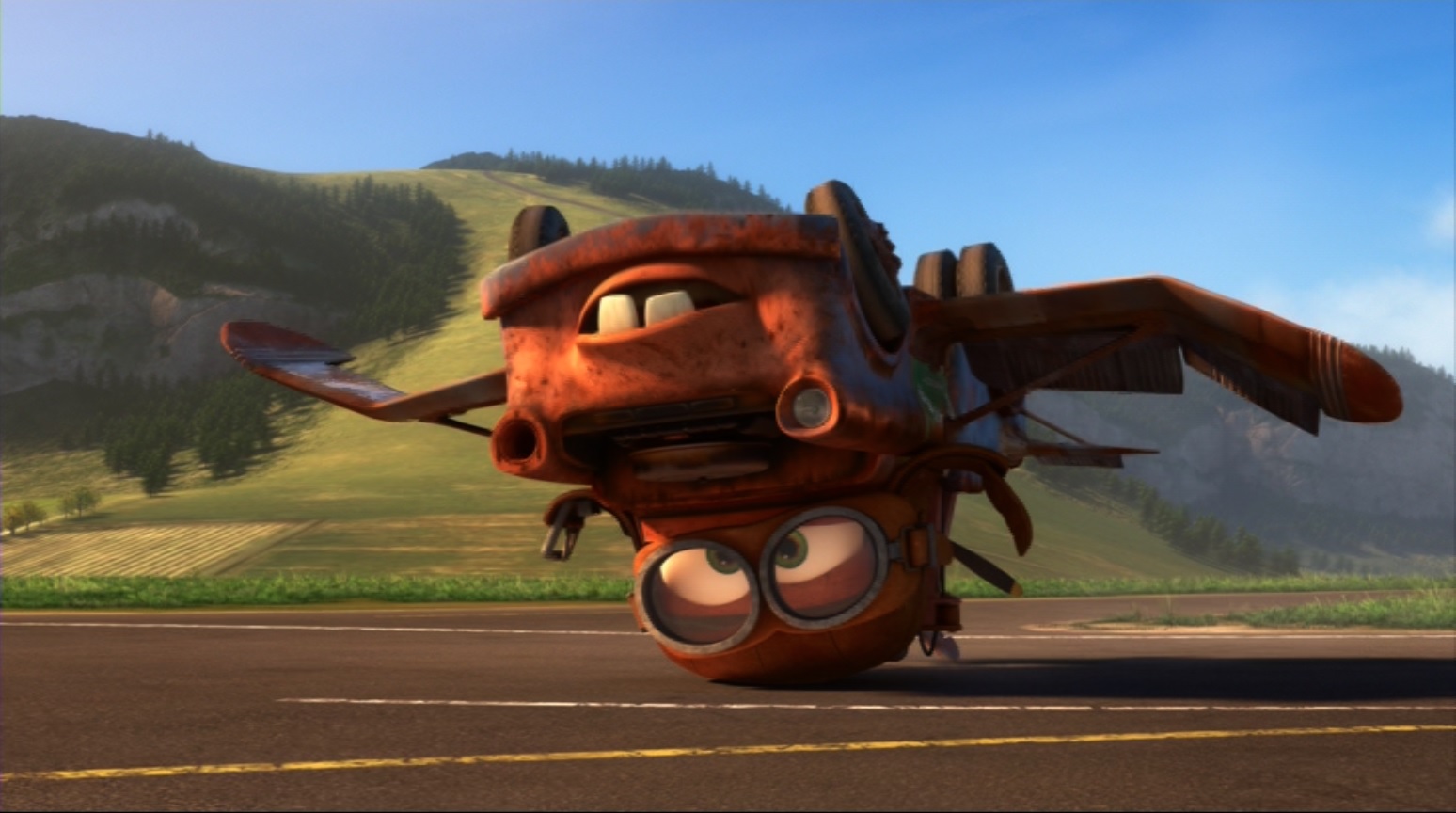
‘Air Mater’ is a late addition to ‘Mater’s Tall Tales’, being aired a year (minus a day) after the ninth episode. In this episode Mater visits a town of planes and takes the air.

Mater’s tall tale is amusing, if very shallow and completely forgettable. Worse, the whole film seems an exercise for the ‘Planes’ feature, released by Disney (not Pixar) in 2013, and feels like an advertisement.

Watch an excerpt from ‘Air Mater’ and tell me what you think:

‘Air Mater’ is available on the Blu-Ray/DVD of ‘Cars 2’ and on the Blu-Ray/DVD ‘Pixar Short Films Collection Volume 2’

Director: Gary Rydstrom
Release date:
June 24, 2011
Rating:
 
★★★
Review:

‘Hawaiian Vacation’ is the first of three ‘Toy Story Toons’ produced in 2011 and 2012. The short opened for ‘Cars 2‘ and is set in Bonnie’s house after the events of ‘Toy Story 3’.

The film opens on a wintery day with Bonnie’s family going on a vacation to Hawaii. Ken and Barbie have been hiding in her rucksack as stowaways, for Ken has decided he will give Barbie her first kiss on the tropical island. Unfortunately, they’ve been hiding in Bonnie’s school rucksack, which remains at home, but Woody and the other toys have an idea.

‘Hawaiian Vacation’ relies a lot, and maybe too much on the familiar tropes of all the Toy Story characters. The idea of friends helping out a friend distress is charming, but I wonder whether Ken and Barbie were the best choice as the film’s main protagonists. Oh well, it accounts for six minutes of unpretentious fun.

Watch an excerpt from ‘Hawaiian Vacation’ and tell me what you think:

‘Hawaiian Vacation’ is available on the Blu-Ray/DVD of ‘Cars 2’ and on the Blu-Ray/DVD ‘Pixar Short Films Collection Volume 2’

Director: Bibo Bergeron
Release date:
October 12, 2011
Rating:
 
★★★½
Review:

‘Un monstre à Paris’ is a charming and friendly French computer animation film by Bibo Bergeron who not only directed the film, but also wrote both the story and the screenplay.

The film is set in Paris in the winter of 1910 when the river Seine caused an enormous flood in the French capital. During this winter small and timid projectionist Émile and brassy, irresponsible delivery driver and inventor Raoul create a monster by accident. But cabaret singer Lucille discovers that this monster has surprising talents. Meanwhile, arrogant, and ambitious police commissioner Victor Maynott has his own plans with both Lucille, the monster, and the Great Flood. There’s also a proboscis monkey called Charles, who talks with reference cards, an idea that also occurs in Aardman’s ‘The Pirates! In an Adventure with Scientists!’ from a year later.

‘Un monstre à Paris’ knows quite a number of characters and has arguably three main protagonists. But Bergeron plays out his story surprisingly well, giving ample time and background stories to all three of them, even if the one of Raoul and Lucille only arrives during the end titles. The film is very talkative, but not too much so, and has its focus and heart firm in place. The action and drama are further ornamented with several little gags, which never ask too much attention. The best gag may be when Maynott’s balloon starts to lose helium.

In fact, Bergeron envisioned the city of Paris as the film’s main character, and indeed, the movie uses wonderful images of the great city, not only in computer animation, but also by classic matte paintings. Bergeron’s Paris, realized by Sébastian Piquet, is crooked, asymmetrical, and rather ramshackle character, which is always pleasant to look at. In addition, in several scenes the metropolis is clouded in mist, which give the backgrounds and settings an extra poetical atmosphere. Moreover, Bergeron’s Paris is a very, very familiar Paris, also to people who’ve never been there: the film takes mostly place in Montmartre, with the finale taking place on the Eiffel tower, both locations well-known to almost everyone.

Christophe Lourdelet’s character designs are a bit of a mixed bag: the male characters are all firmly rooted in the Franco-Belgian comic tradition, especially Raoul and inspector Pâté. The women Lucille and Maud (Émile’s love interest) on the other hand, have more generic 3D computer animation designs, with all too large eyes and all too slender bodies. The monster is well-designed, being both large and overpowering and delicate and friendly. He looks best when given an Aristide Bruant-like hat and shawl. In that respect the later zoot suit is way off for a film set in 1910.

The animation, directed by Fabrice Joubert, is fair, but not outstanding, and although the film makers are very proud of the dance scenes, the dance moves herein come over as stiff and unnatural. Worse are Lucille’s performances of the song ‘La Seine’. It seems the film makers didn’t know what to do with her long slender arms, which are all over the place. Compare the animation of Lucille with Preston Blair’s animation of Red in e.g., ‘Red Hot Riding Hood’ (1943) and the difference between an approximation of natural movement and natural song and dance animation becomes clear. The effect animation, on the other hand is fine: the water, the clouds and the mist all look very fine.

The songs are quite out of tune with the otherwise faithful 1910 setting, being all too modern and typical products of 2011, not 1910. Composer M (Matthieu Chedid) also provides the monster’s voice, singing in a very high voice, apparently to accentuate the creature’s innocent, childish and fragile nature. Lucille is lovely voiced by Belgian singer Vanessa Paradis of Eurovision Song Contest fame, and her rendering of ‘La Seine’ is very pleasant, even if the song doesn’t sound like a French cabaret song of the 1910s, at all.

In all, ‘Un monstre à Paris’ is not perfect, but certainly well-told and entertaining. The film may be more conventional than contemporary French films like ‘Une vie de chat’ (2010), ‘Le tableau’ (2011) or ‘Ernest & Célestine’ (2012), it still shows the extraordinary rich breeding ground of animation that France has been in the 21st century thus far.

Watch the trailer for ‘A Monster in Paris’ yourself and tell me what you think:

‘A Monster in Paris’ is available on Blu-Ray and DVD
Enter your email address to follow this blog and receive notifications of new posts by email.

Join 917 other subscribers
Bookmark and Share

Categories