Director: Don Patterson
Release Date: November 20, 1954
Stars: Woody Woodpecker
Rating:
Review:

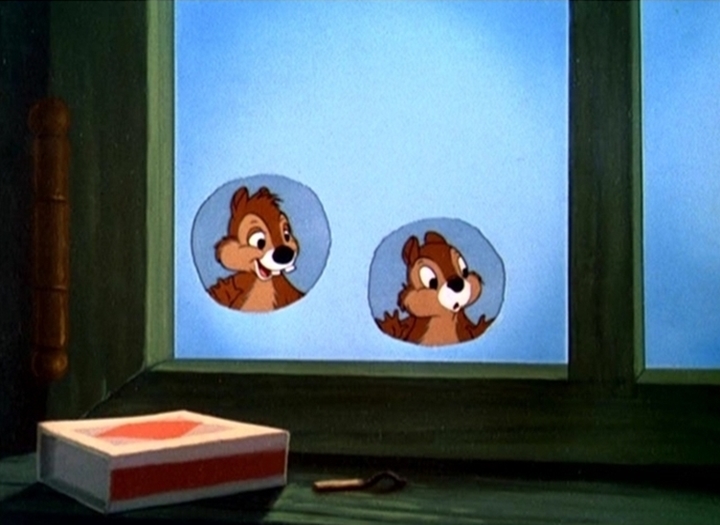
Convict Concerto © Walter LantzIn ‘Convict Concerto’ Woody Woodpecker is a piano tuner, who’s ordered by a gangster to play the piano continuously, while he hides inside the piano.

Consequently, during the rest of the cartoon we hear Woody play the Hungarian Rhapsody by Franz Liszt. This is the only interesting aspect of this cartoon…

‘Convict Concerto’ was the last of fifteen cartoons Don Patterson directed for Walter Lantz during 1952-1954. None of his cartoons were interesting enough to become classics, with ‘Convict Concerto’ being particularly bad. So he is all but forgotten now. He was replaced by Tex Avery, who, in contrast, was already an animation classic at the time.

Watch ‘Convict Concerto’ yourself and tell me what you think:

This is Woody Woodpecker cartoon No. 57
To the previous Woody Woodpecker cartoon: Fine Feathered Frenzy
To the next Woody Woodpecker cartoon: Helter Shelter

‘Convict Concerto’ is available on the DVD-set ‘The Woody Woodpecker and Friends Classic Cartoon Collection Volume 2’

Director: Jack Hannah
Release Date: August 13, 1954
Stars: Donald Duck, Humphrey the Bear
Rating: ★★★★
Review:

Grin and Bear it © Walt Disney‘Grin and Bear it’ was the second of six cartoons featuring the nervous bear Humphrey, Disney’s last cartoon star to hit the cinema screen.

It also introduces the fidgety park ranger, voiced by Bill Thompson (more commonly known as the voice of Droopy and Mr. Smee in ‘Peter Pan’, 1953). The park ranger would star in five cartoons. In this short he orders the bears to mix with the tourists, something they gladly do, because this means getting fed. Humphrey, however, is stuck to Donald, who doesn’t share a crumb with the bear. This leads to Humphrey making more and more desperate attempts to obtain food.

Donald is hardly anything more than a straight man in this short. But it’s an entertaining film, nonetheless, featuring beautiful backgrounds.

Watch ‘Grin and Bear it’ yourself and tell me what you think:

This is Donald Duck cartoon No. 107
To the previous Donald Duck cartoon: Dragon Around
To the next Donald Duck cartoon: The Flying Squirrel

Director: Jack Kinney
Release Date: March 5, 1954
Stars: Donald Duck, Daisy Duck, Huey, Dewey and Louie
Rating: ★★★★
Review:

Donald's Diary © Walt DisneyIn this strange and original cartoon Donald is a bachelor in San Francisco during the 1920s, who falls in love with Daisy, but who flees from the prospect of marriage, after having a horrible nightmare.

Like Mickey in ‘Mickey’s Nightmare‘ (1932), Donald has a rather distorted view of married life. While Mickey was haunted by hundreds of little kids, Donald’s fear is virtual slavery.

This short is narrated by an eloquent voice over (reminiscent of Donald’s dream voice in the cartoon of the same name from 1948), supposedly Donald’s ‘written’ voice. Most of the gags originate in the contrast between what’s being said and what the viewer sees.

‘Donald’s Diary’ is a very atypical Donald Duck cartoon. Maybe because it was not directed by his regular director Jack Hannah, but by Jack Kinney, whose own Goofy series had stopped the previous year. The short uses strong and beautiful 1950s backgrounds, more angular animation, and a very different design of Daisy. Moreover, Huey, Dewey and Louie are not Donald’s nephews here, but Daisy’s little brothers.

‘Donald’s Diary’ was the fourth of five Donald Duck cartoons Jack Kinney directed. In it he reused some animation from his first Donald Duck cartoon, ‘Der Fuehrer’s Face‘ from 1943.

Watch ‘Donald’s Diary’ yourself and tell me what you think:

This is Donald Duck cartoon No. 105
To the previous Donald Duck cartoon: Spare the Rod
To the next Donald Duck cartoon: Dragon Around

Director: Tex Avery
Release Date: December 26, 1953
Stars: Droopy, The Wolf
Rating: ★★★★★
Review:

Three Little Pups © MGM‘The Three Little Pups’ starts as a pastiche of the Disney classic ‘Three Little Pigs‘ (1933) with dogs instead of pigs, and the wolf being a dogcatcher.

However it changes into a typical Avery-cartoon as soon as the wolf has failed to blow the smart little pup’s dog house down. He then goes completely berserk on trying to break the house down only to freeze and say into the camera in a remarkably laid-back Southern voice, provided by Daws Butler: “Well, that’s a well-built dog house, man”.

This is clearly a completely different wolf than we had seen before in Tex Avery’s cartoons. Instead of having wild takes, his reactions to his humiliations are absurdly stolid. All through the picture, he remains completely calm, and several times we can hear him whistling the civil war tune ‘Kingdom Coming’, accompanied by the barest minimum of percussion. This would become his signature song in his reappearances in the Tex Avery one-shot ‘Billy Boy’ (1954), and in two of Michael Lah’s Droopy cartoons: ‘Sheep Wrecked‘ (1958) and ‘Blackboard Jumble’ (1957), which reuses some animation from ‘The Three Little Pups’.

Incidentally, the wolf is not the first animated character to whistle this tune. Twenty years earlier, Pooch the Pup already whistled it in the Walter Lantz cartoon ‘King Klunk‘ (1933). Avery worked at Lantz at the time – is it possible he remembered the tune from this cartoon?

The phlegmatic Southern Wolf is by all means a hilarious character to watch, and he plays surprisingly well against the equally deadpan Droopy. Add lots of gags, Tex Avery’s superb timing and spot on music by Scott Bradley, and we have a fine cartoon of excellent comedy. ‘Meow, man!’

Note the anti-television gags in this short. Tex Avery would make more of those in ‘Drag-along Droopy’ (1954). During the 1950s television made things difficult indeed for theatrical cartoons. Less and less visits were paid to the cinemas, and so studios were forced to cut down their costs. This process ultimately led to the demise of the theatrical cartoon, and to the decline of American studio animation in general, which reached an all-time low in the 1970s, only to be revived again at the end of the 1980s.

Watch ‘The Three Little Pups’ yourself and tell me what you think:

‘The Three Little Pups’ is available on the DVD-set ‘Tex Avery’s Droopy – The Complete Theatrical Collection’ and on the French DVD-box ‘Tex Avery’
Director: Paul J. Smith
Release Date: February 15, 1954
Stars: Sugarfoot
Rating: ★
Review:

A Horse's Tail © Walter LantzIn their search for new characters the Lantz Studio introduced yet another character after launching Maw and Paw in 1953. Their new star, Sugarfoot the horse, was even less successful than the barnyard couple.

In his debut cartoon Sugarfoot is expelled from his farm for wrecking his replacement, a tractor. He soon finds a job at the movies as a double for a star horse, earning enough money for his boss to buy a new tractor.

Sugarfoot was an interesting character for the 1950s, because he did not speak. Nevertheless, he was so remarkably unfunny, he lasted only two cartoons, the other one being ‘Hay Rube’ from the same year. It remains an almost unbelievable fact that this terribly unfunny cartoon was penned by the great Michael Maltese.

Watch ‘A Horse’s Tale’ yourself and tell me what you think:

http://www.trilulilu.ro/video-animatie/sugarfoot-a-horses-tale

Director: Paul J. Smith
Release Date: August 10, 1953
Stars: Maw and Paw
Rating: ★
Review:

Maw and Paw © Walter LantzIn the early 1950s Lantz seemed to be in search of new characters for his cartoons.

This cartoon introduces Maw and Paw, two poor, phlegmatic farmers with hundreds of kids and one pig, who’s introduced as being the most intelligent of the lot. In an almost plotless story the pig wins a sports car. This leads to a lot of gags, without getting any funny. The cartoon even seem to look back all the way to the early 1930s with its barnyard setting and its abundance of repetitive animation.

Maw and Paw were no strong characters, and their series stopped two years later after only four films.

Director: Dick Lundy
Release Date: March 25, 1949
Stars: Woody Woodpecker, Buzz Buzzard
Rating: ★★★
Review:

Drooler's Delight © Walter LantzWoody wants to go and buy a ‘drooler’s delight’ (a large sorbet), but Buzz Buzzard steals his quarter.

The rest of the cartoon consists of Woody and Buzz fighting for it, with mildly amusing results.

‘Drooler’s Delight’ was to be Dick Lundy’s last cartoon at Walter Lantz. After a squabble with his distributor, Universal, and a short fling with United Artists, Walter Lantz was forced to close down his studio in 1948, and Lundy was left on the street. In May 1950 he replaced Tex Avery at MGM, who had left for a sabbatical. At MGM Lundy directed one Droopy cartoon and revived the Barney Bear series.

Lantz meanwhile was able to reopen his studio in 1950. But because he had to watch his budgets more than ever, the quality of the cartoons would rarely match that of his 1940s output.

Watch ‘Drooler’s Delight’ yourself and tell me what you think:

https://www.dailymotion.com/video/xadkeu

This is Woody Woodpecker cartoon No. 31
To the previous Woody Woodpecker cartoon: Wild and Woody
To the next Woody Woodpecker cartoon: Puny Express

‘Drooler’s Delight’ is available on the DVD-set ‘The Woody Woodpecker and Friends Classic Cartoon Collection’

Director: Dick Lundy
Release Date: August 27, 1948
Stars: Woody Woodpecker, Buzz Buzzard
Rating: ★★★★½
Review:

Wet Blanket Policy © Walter Lantz

Wet Blanket Policy’ uses exactly the same idea as Dick Lundy’s last Donald Duck short, ‘Flying Jalopy‘ (1943).

The cartoon even uses the same adversary in Buzz Buzzard, a swindler who makes Woody sign an insurance contract that will give Buzz a $10,000 when Woody dies (in the original Donald Duck cartoon the character was called Ben Buzzard).This leads to a fast and very murderous chase sequence full of nonsense.

Penned by Warner Bros. alumnus Ben Hardaway and Heck Allen, who had collaborated with Tex Avery at MGM, ‘Wet Blanket Policy’ is one of Woody’s wildest cartoons. Unfortunately, it’s also the first in which Woody’s proportions start to waver. At one point he’s particularly tiny. This unsteady sizing of Woody would become a particular problem of the cartoons of the 1950s. Buzz Buzzard, however, proved to be a strong adversary for Woody, and became Woody’s antagonist in many of the following Woody Woodpecker cartoons.

Watch ‘Wet Blanket Policy’ yourself and tell me what you think:

This is Woody Woodpecker cartoon No. 29
To the previous Woody Woodpecker cartoon: Wacky-Bye Baby
To the next Woody Woodpecker cartoon: Wild and Woody

‘Wet Blanket Policy’ is available on the DVD-set ‘The Woody Woodpecker and Friends Classic Cartoon Collection’

Director: Jack Hannah
Release Date: May 21, 1948
Stars: Donald Duck, Daisy Duck
Rating: ★★
Review:

Donald's Dream Voice © Walt DisneyDonald is a travelling salesman trying to sell brushes, but nobody understands him.

He then discovers Ajax voice pills, which give him a smooth voice. Soon he sells all his brushes, and he dreams of asking Daisy to marry him, but the pills only work for a short while and soon only one is left…

Like ‘Donald’s Dilemma‘ from 1947, ‘Donald’s Dream Voice’ is built on a strong idea around Donald’s voice. Unfortunately, in both cartoons the idea is funnier than the execution. In ‘Donald’s Dream Voice’ much time is wasted on Donald trying to retrieve his last pill.

Watch ‘Donald’s Dream Voice’ yourself and tell me what you think:

This is Donald Duck cartoon No. 69
To the previous Donald Duck cartoon: Daddy Duck
To the next Donald Duck cartoon: The Trial of Donald Duck

Director: Dick Lundy
Release Date: May 1, 1948
Stars: Woody Woodpecker (cameo)
Rating: ★★★½
Review:

Pixie Picnic © Walter Lantz‘Pixie Picnic’ was the last of only three Musical Miniatures, cartoons based on classical music. 

In this cartoon we watch an orchestra of pixies playing the overture to ‘La gazza ladra’ by Gioachino Rossini.

The pixies are extraordinarily dwarf-like, and resemble the seven dwarfs from Disney’s ‘Snow White and the Seven Dwarfs’ (1937) a lot. This is no wonder, as one of those dwarfs’ key-animators and designers, Fred Moore, is also one of the animators of ‘Pixie Picnic’. Thanks to Moore the animation of this cartoon is very Disney-like and belongs to the best ever produced by the Lantz studio.

Unfortunately for Lantz, this was the last of only a handful cartoons Moore animated for his studio (others are ‘The Mad Hatter’ and ‘Banquet Busters’ from earlier that year). After that Moore returned to Disney, where he stayed until his premature death in 1952.

‘Pixie Picnic’ is beautifully animated, but it’s rather disappointing otherwise: the story makes no sense, and the gags come along almost randomly. Moreover, the cartoon suffers from a sloppy timing. The result is a well-animated, yet only moderately funny cartoon.

Watch ‘Pixie Picnic’ yourself and tell me what you think:

Director: Dick Lundy
Release Date: June 16, 1947
Stars: Wally Walrus
Rating: ★★★
Review:

Overture to William Tell © Walter Lantz‘Overture to William Tell’ was the second of three Musical Miniatures, a short-lived series similar to ‘Swing Symphonies’, but based on classical music instead of jazz.

In this one Wally Walrus stars in his very own cartoon as a conductor conducting an extraordinarily sleepy orchestra in a concert hall. The main gag involves a horsefly, which looks like a miniature horse with wings.

‘Overture to William Tell’ is better than the erratic ‘Musical Moments from Chopin‘, the first of the Musical Miniatures. But still it’s only moderately inspired, and pales when compared to that other concert cartoon using the same music by Gioachino Rossini, ‘The Band Concert‘ (1935).

Watch ‘Overture to William Tell’ yourself and tell me what you think:

http://tu.tv/videos/overture-to-william-tell-1947-walter-l

Director: Friz Freleng
Release Date: May 8, 1948
Stars: Bugs Bunny, Yosemite Sam
Rating: ★★★★
Review:

Buccaneer Bunny © Warner BrothersAlready in his third cartoon Yosemite Sam is used outside his original Western setting, and changed into a timeless adversary of Bugs Bunny.

In ‘Buccaneer Bunny’ he’s a 18th century pirate called Seagoin’ Sam. This idea of Sam as a timeless foe was a masterstroke, and in the following years, Sam would be Bugs Bunny’s nemesis in a wide variety of settings, like the American war of independence, the Sahara desert, ancient Rome and the middle ages.

‘Buccaneer Bunny’ is a wonderful start of this series, consisting of wonderful gags, including a beautifully timed multiple door gag. Bugs Bunny also does a great Charles Laughton parody, disguising as captain Bligh, as portrayed by Laughton in ‘Mutiny on the Bounty’ (1935).

Watch ‘Buccaneer Bunny’ yourself and tell me what you think:

https://www.dailymotion.com/video/x5jma78

This is Bugs Bunny cartoon No. 49
To the previous Bugs Bunny cartoon: Rabbit Punch
To the next Bugs Bunny cartoon: Bugs Bunny Rides Again

Director: Jack Hannah
Release Date: November 28, 1947
Stars: Donald Duck, Chip and Dale
Rating: ★★★★
Review:

Chip an' Dale © Walt DisneyAfter two early appearances (‘Private Pluto‘ from 1943 and ‘Squatter’s Rights‘ from 1946) ‘Chip ‘n Dale’ marks the true debut of those lovable two little chipmunks, Chip and Dale.

In this cartoon they are named for the first time, and it’s also the first cartoon in which they are two distinct characters, although Dale still lacks his characteristic red nose here. Here they’re teamed against Donald Duck for the first time, their former adversary being Pluto. The short marks the beginning of a series of twenty cartoons, only ending in 1956, at the very end of the era of Disney shorts.

The story of ‘Chip an’ Dale’ provides the blueprint for the series: Donald wants to chop some wood for his winter cottage, and chops down the dead tree in which Chip and Dale live with their storage of nuts. In the subsequent scenes the lively duo tries to prevent Donald from burning up their tree and to get it back. The result is a cartoon of excellent comedy, not only between the chipmunks and Donald, but also between the two little critters themselves.

Watch ‘Chip an’ Dale’ yourself and tell me what you think:

This is Donald Duck cartoon No. 66
To the previous Donald Duck cartoon: Wide Open Spaces
To the next Donald Duck cartoon: Drip Dippy Donald

Director: Jack Hannah
Release Date: August 22, 1947
Stars: Donald Duck, Bootle Beetle
Rating: ★★★
Review:

Bootle Beetle © Walt DisneyIn the postwar era Jack Hannah introduced three adversaries of Donald Duck: Bootle Beetle, Chip ‘n Dale*, and a little bee. Bootle Beetle, a little insect, was the first and surely the cutest of the lot.

In his first film Bootle Beetle, who resembles Jiminy Cricket a little, is introduced here as a rare species. In fact, we’re watching two Bootle Beetles, with the elderly one telling a younger one about his meeting with bug collector Donald Duck, who, in some scenes, is depicted as an enormous giant. These scenes with a humongous Donald are the highlights of a cute and gently cartoon, which is unfortunately low on gags.

Bootle Beetle would return in two 1949 Donald Duck cartoons, ‘Sea Salts‘  and ‘The Greener Yard‘. The little insect never became funny, and Hannah dropped him as Donald’s adversary after these three cartoons. His last role was as a narrator in ‘Morris, the Midget Moose‘ (1950).

Watch ‘Bootle Beetle’ yourself and tell me what you think:

This is Donald Duck cartoon No. 64
To the previous Donald Duck cartoon: Donald’s Dilemma
To the next Donald Duck cartoon: Wide Open Spaces

* Chip ‘n Dale actually made their debut in the war short ‘Private Pluto‘ (1943), directed by Clyde Geronimi, but it was Hannah who turned the two chipmunks into two different characters and made them opponents of Donald Duck.

Director: Paul Grimault
Release Date: 1947
Rating:  ★★★★★ ♕
Review:

Le petit soldat © Paul GrimaultOne of the most poetic animation films ever made, ‘le petit soldat’ is a very inspired re-telling of Hans Christian Andersen’s classic fairy tale of the steadfast tin soldier.

In this version, written by poet Jacques Prévert and undoubtedly inspired by the recent experiences of World War II, the soldier is actually an acrobat doll who gets drafted by a humming-top into an unexplained war.

In his absence, Jack-in-the-box tries to seduce his love, a ballerina doll. And when our little soldier finally returns from the battlefield, injured, Jack tries to kill him by taking his heart-shaped winding key away and by trying to drown him into an icy river. Fortunately, in a dramatic climax, the ballerina saves her love from drowning, while the villain gets stuck in a gin-trap.

‘Le petit soldat’ is entirely told in pantomime and a great improvement upon ‘La flûte magique‘, Grimault’s film from the previous year: its storytelling is better, its settings more dramatic, its characterization more convincing, and its animation more sophisticated. Indeed, this beautiful short about triumphant love arguably is Grimault’s masterpiece, even topping his beautiful, but uneven feature film ‘Le roi et l’oiseau’ (1952/1980), which is also based on a Jacques Prévert story.

Watch ‘Le petit soldat’ yourself and tell me what you think:

http://www.dailymotion.com/video/x3qi9b_le-petit-soldat-grimault-prevert-19_shortfilms

‘Le petit soldat’ is available on the DVD ‘Le roi et l’oiseau’

Director: Paul Grimault
Release Date: 1946
Rating:  ★★★
Review:

La flûte magique © Paul Grimault

In this sweet little film, a boy-like minstrel and his misshapen dog disturb a nobleman in a castle.

The nobleman destroys the minstrel’s lute, whereupon a little bird gives the boy a magical flute, which makes alle people dance, including the evil nobleman and his birdlike soldiers.

This pantomime story is elaborately animated, but its designs belong more to the thirties than to the forties, and its story is hampered by uneven timing.

The idea of a flute making people dance was reused twelve years later by Belgian comic artist Peyo in his ‘La flûte à six schtroumpfs’ introducing his famous creations, the smurfs. This was also made into an animation film in 1976.

‘La flûte magique’ is available on the DVD ‘Le roi et l’oiseau’

Director: Jack King
Release Date: July 11 1947
Stars: Donald Duck, Daisy Duck
Rating: ★★
Review:

Donald's Dilemma © Walt DisneyDaisy tells an off-screen psychiatrist that a flower pot has changed her boyfriend Donald into a crooner with a beautiful, Frank Sinatra-like voice.

We hear Donald singing ‘When You Wish Upon a Star’ from ‘Pinocchio‘ (1940), and watch him becoming world famous instantly. Unfortunately he forgets about Daisy’s existence, as well.

This cartoon is actually about Daisy, who for the first time gets star billing. Despite its great premise, the cartoon is hampered by Daisy’s jabbering voice over, its sparsity of gags and an all too predictable finale. Like Donald’s other voice cartoon, ‘Donald’s Dream Voice‘ (1948), the idea is way stronger than the execution.

Watch ‘Donald’s Dilemma’ yourself and tell me what you think:

This is Donald Duck cartoon No. 63
To the previous Donald Duck cartoon: Clown of the Jungle
To the next Donald Duck cartoon: Bootle Beetle

s.Director: Jack Hannah
Release Date: June 20 1947
Stars: Donald Duck, The Aracuan Bird
Rating:  ★★★★★
Review:

Clown of the Jungle © Walt Disney‘Clown of the Jungle’ reintroduces the Aracuan bird from ‘The Three Caballeros‘ (1944), now hindering Donald’s attempts to photograph birds.

The Aracuan bird is a surreal character, defying all laws of nature. For example, it can cycle in mid-air, duplicate itself and draw a door on a rock, and enter it. These abilities are very rare for a Disney character, and there’s no doubt that the Aracuan bird was inspired by the more absurd humor from the Warner Bros. and Tex Avery’s MGM cartoons.

Director Jack Hannah handles this type of humor remarkably well, delivering the gags in a fast pace and with an excellent timing, making ‘Clown of the Jungle’ not only the most surreal, but also one of the wildest and funniest Disney cartoons from the postwar era.

Being such a wonderful character, The Aracuan bird would return once more the following year, in the sequence ‘Blame it on the Samba‘ from ‘Melody Time‘ (1948). Unfortunately, the character remained alone in its zaniness within the Disney canon, and other Disney postwar cartoons remained much more conventional.

Watch ‘Clown of the Jungle’ yourself and tell me what you think:

This is Donald Duck cartoon No. 62
To the previous Donald Duck cartoon: Sleepy Time Donald
To the next Donald Duck cartoon: Donald’s Dilemma

Director: Robert McKimson
Release Date: July 12, 1947
Stars: Foghorn Leghorn, Henery Hawk, Sylvester
Rating:  ★★★½
Review:

Crowing Pains © Warner Brothers‘Crowing Pains’ is Foghorn Leghorn’s second cartoon, and it immediately starts where the first (‘Walky Talky Hawky‘, from the previous year) left off: Henery Hawk wants to catch a chicken, and Foghorn Leghorn tricks him by pointing out somebody else as a chicken. This time it’s Sylvester, in an early appearance.

The cartoon is full of Warren Foster-penned nonsense, but the interplay between the four characters (the barnyard dog is also involved) doesn’t develop very well, and seems an early forerunner of the odd pairings of characters of some Warner Brothers cartoons from the 1960s. Unlike those, however, ‘Crowing Pains’ remains an enjoyable cartoon, albeit not among McKimson’s most inspired shorts.

Watch ‘Crowing Pains’ yourself and tell me what you think:

http://vimeo.com/50238080

Director: Robert McKimson
Release Date: April 12, 1947
Stars: Daffy Duck
Rating:  ★★★
Review:

Birth of a Notion © Warner BrothersDaffy Duck tricks a dog called Leopold with a ‘poisoned bone’ to let him stay at his house during the winter.

Unfortunately, the dog’s owner is an evil scientist (a caricature of Peter Lorre) who happens to be looking for a duck’s wishbone. This leads to a wild chase full of pretty weird gags and off-beat dialogue penned by Warren Foster.

‘Birth of a Nation’ is the second of two Warner Bros. cartoons featuring Peter Lorre as a mad scientist, the other being ‘Hair-Raising Hare’ from 1946. New voice artist Stan Freberg does an excellent job in mimicking and parodying Lorre’s typical voice.

Watch ‘Birth of a Notion’ yourself and tell me what you think:

This is Daffy Duck cartoon No. 36
To the previous Daffy Duck cartoon: The Great Piggy Bank Robbery
To the next Daffy Duck cartoon: Along Came Daffy

‘Birth of a Notion’ is available on the DVD-set ‘Looney Tunes Golden Collection Volume Six’

Enter your email address to follow this blog and receive notifications of new posts by email.

Join 905 other subscribers
Bookmark and Share

Categories