Director: Sarah Smith
Release date
: November 11, 2011
Rating: 
★★½
Review:

After making ‘Flushed Away’ (2006) in cooperation with Dreamworks, the British animation studio Aardman made another computer animated film, this time in cooperation with Sony, as part of a three year contract with the American production company. Upon its release ‘Arthur Christmas’ was a box office success, but since then it has rather went into oblivion, and I can see why, because the film unfortunately is a flawed one.

In the world of ‘Arthur Christmas’ Father Christmas is not an eternal figure, but a dynasty, with Santa Clauses succeeding each other in time. The film tells about Arthur, whose father is the current Santa Claus, but whose mission are much controlled by his son, Arthur’s elder brother Steve, with military precision. In contrast, Arthur is clumsy, cowardly, afraid of heights and thus totally useless to the Santa Claus clan. Or is he? When, despite all military precision, one present is not delivered, Arthur comes into action.

I’ve once read an article in which someone from Aardman complained that ‘Arthur Christmas’ was not even nominated for an Academy Award, blaming it on the fact that their film was overlooked because it was a holiday film. But the truth is, ‘Arthur Christmas’ is just not that good.

The film’s characters aren’t that sympathetic. The current Santa is as incapable, as he is irresponsible. His son Steve is more ambitious than he is caring, and Arthur may have his heart in the right place, he stumbles through most of the film, which is rather tiring to watch. The finale, in which all elder Santa Clauses realize Arthur’s worth, feels forced and obligatory, and one hardly believes Arthur’s clumsy days are now over.

But the film’s biggest problem is its lack of originality. The film lacks the quirky charm of the British studio’s stop motion work (there are some nice touches here and there, like a wobbly toy on Grandsanta’s sleigh, but these are rare). And despite the British voice cast and mostly European setting, the film feels very, very American. Plot-wise the film ticks all familiar boxes, without straining from tried paths.

Moreover, the designs are erratic and inconsistent: the humans are all cartoony, but the reindeer have realistic designs, and the film features some pretty ugly lions. In fact, the film is utterly unrecognizable as an Aardman product, the only feature film in their catalogue being so generic and bland in its looks.

Luckily, ‘Arthur Christmas’ would be Aardman’s last computer animated movie. With their next project the studio returned to more familiar and much more satisfying waters with ‘The Pirates! In an Adventure with Scientists!’ (2012).

Watch the trailer for ‘Arthur Christmas’ yourself and tell me what you think:

‘Arthur Christmas’ is available on Blu-Ray and DVD

Director: Nina Paley
Release date
: February 11, 2008
Rating: 
★★★★★
Review:

Unlike the European and Japanese animation field, the American animation studio system is unkind to author films. Walt Disney’s ‘Lilo & Stitch’ (Chris Sanders, 2002) probably comes closest, apart from several feature films based on animated television series. Thankfully, some individual artists have filled this gap, most notably Bill Plympton, releasing no less than seven features. Other notable artists are Don Hertzfeldt (‘It’s Such a Beautiful Day’ from 2012), and Nina Paley. Amazingly, all these artists mostly work totally alone, which makes their accomplishments even more stunning.

Nina Paley ‘Sita Sings the Blues’ for example, is written, directed and produced by Paley alone, which took her five to six years, and which could only be finished with help from crowd-funding, being one of the first animated projects to use this type of fund raising.

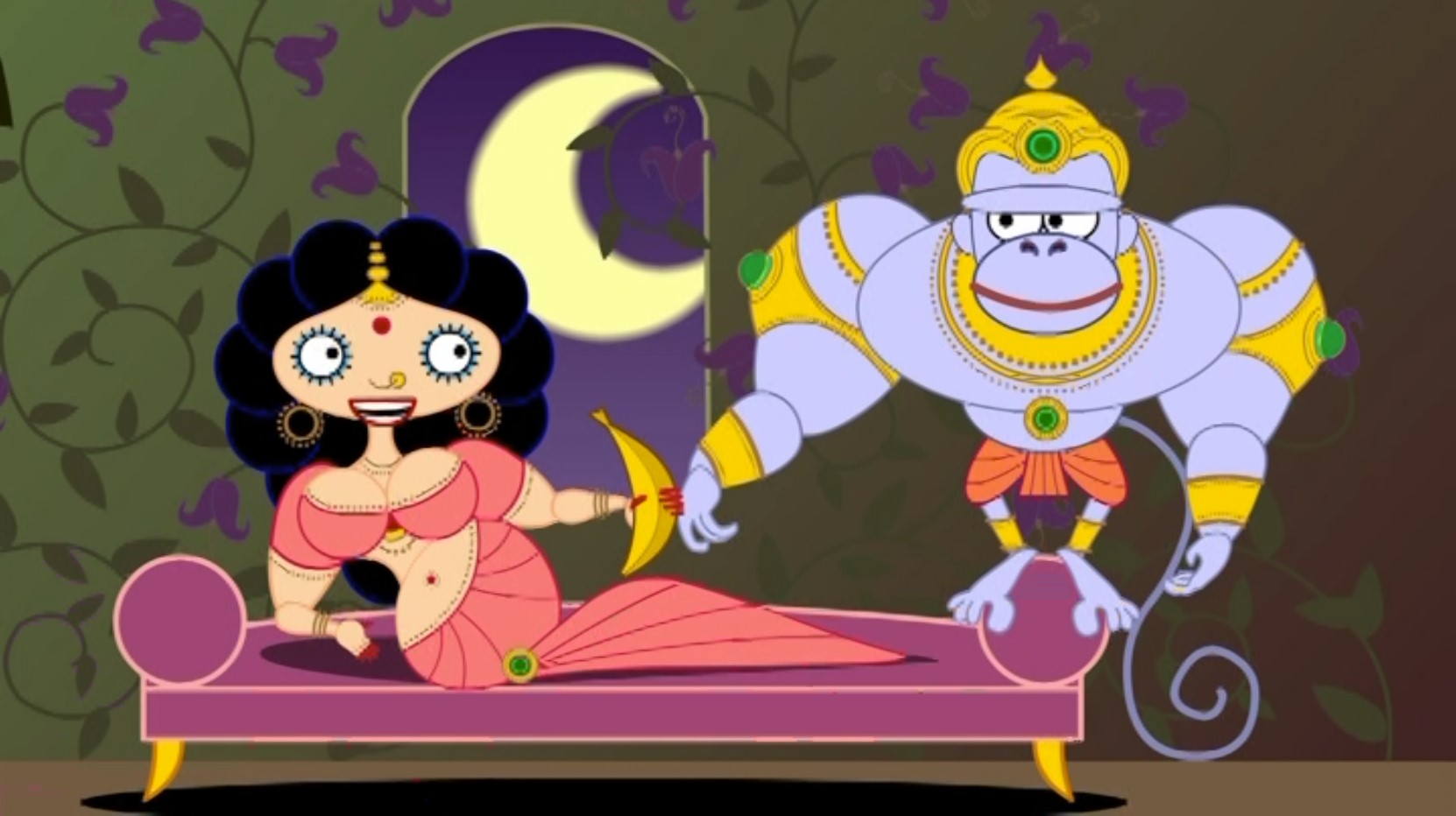
‘Sita Sings the Blues’ retells the Indian epic ‘The Ramayana’, but it’s also a personal film, in which Paley links her own situation to that of Sita, the perfect wife to the hero Rama. The most incongruous element are the eleven songs by 1920s jazz singer Annette Hanshaw, an artist sadly almost forgotten, whom Paley had discovered prior to the film making. The linking of these sweet and gentle tin pan alley songs to the Ramayana is as odd as it is effective, and the pairing certainly contributes to the uniqueness of the film.

The film uses several different animation styles: Nina Paley’s own personal story is told in a traditional scribbly animation style, with sets based on photographic material. These parts are the least attractive of the lot, even though Paley shows to be a very able animator in this classic cartoon style. The Ramayana is retold by three Indians (Aseem Chhabra, Bhavana Nagulapally and Manish Acharya) who are depicted as traditional shadow puppets of Hanuman, Sita, and Rama, respectively. The story they are telling together is shown in tongue-in-cheek cut-out animation.

The ‘official’ story is also told in cut-out animation, using very attractive recreations of traditional Indian paintings. But the best parts to look at are the songs, which are done in a most attractive cartoon modern design. In these song parts Paley reuses a lot of animation cycles, but actually she makes excellent use of the flash medium, and she makes the most of her limited animation.

Apart from these five alternating styles, there’s also a short sequence using rotoscope and a much more pop-art influenced videoclip-like filming style. All these are apparently done in Macromedia flash.

As said, ‘Sita Sings the Blues’ retells the Ramayana, reducing the huge epic to its barest elements. For example, Lakshmana is hardly mentioned, and the monkey king Sugriva not at all. Moreover, unlike the traditional poem, the focus is on Sita, not Rama, and Paley highlights the questionable parts from the original poem (one at the end of the Yuddha Kanda, and another in the Uttara Kanda), in which Rama treats Sita very unfairly indeed, just like Paley’s own partner does in real life. This makes ‘Sita Sings the Blues’ a feminist film, which sheds a welcome critical light on the traditional depiction and treatment of women, then and now.

As the story is told by three people, who remember the story differently and interpret it in different ways, this leads to some very funny moments. But Paley adds some humor, too, in the ‘official’ story part, for example when the female rakshasa (a sort of demon) Shurpanakha tells her brother Ravana about the beauty of Sita, comparing all her body parts with lotuses.

As said, the Annette Hanshaw songs boast the most attractive designs, and like traditional opera arias, they shed an emotional light on the events. However, Paley cleverly propels the story forward even during these sequences. Yet, as the songs are featured in their entirety, typically lasting ca. 3 minutes, they also drag the film down. As there are eleven of them, one tends to grow a little weary of them as the film progresses. Nevertheless, ‘Sita Sings the Blues’ does a great job in restoring interest in this almost forgotten singer. Unfortunately, the Hanshaw songs were not free from copyright, causing Paley a lot of trouble, and eventually causing her to release the film completely free from copyright.

The Annette Hanshaw songs are juxtaposed to some Indian pop music, mostly by artist Masaladosa. Particularly strong is the angry song which follows the scene in which Paley gets dumped by email. The complete soundtrack is as attractive as the film’s visual designs, and the two complement each other very well.

In all, ‘Sita Sings the Blues’ is not without its flaws, but as it is made by a single woman, it’s no less than a tour-de-force, and the result is a very interesting personal film, which makes one think. Moreover, the film shows the great power and endless possibilities of animation, and single-handedly puts Paley into the pantheon of the medium’s greats. In 2018 Paley made yet another feature called ‘Seder-Masochism’, which unfortunately has attracted much less attention.

Watch the trailer for ‘Sita Sings the Blues’ yourself and tell me what you think:

‘Sita Sings the Blues’ is available on DVD

Director: Trey Parker
Release date
: June 30, 1999
Rating: 
★★★★★ ♕
Review:

The South Park television series was only midway in its third season when its first (and only!) theatrical feature film was released. Thus, the film contains many of the quirks so typical of the earliest seasons but long since forgotten, like Kenny’s obligatory death, Kyle performing the act of ‘kick the baby’ with his little brother Ike or Stan compulsory vomiting on meeting Wendy.

Also prominent are characters that years ago have disappeared from the sitcom like Chef and Mr. Hat. Moreover, Cartman’s personality as a complete and pretty evil ass is not yet defined here, and although he’s already a jerk, he’s just one of the gang here.

The animation, too, retains much more of its cut-out origins than later seasons, although in the feature film the all too primitive animation is juxtaposed to a swirling 3D computer animation, especially in the hell scenes, which gives the film extra grandeur, but which would become more of a style element in later seasons of the series.

The South Park series always was at its best in social commentary, and it that respect, ‘South Park: Bigger, Longer & Uncut’ delivers big time. The film painfully clearly shows America’s obsession to prevent their children to experience anything subversive, except gun violence (incidentally by now the major death cause of American youth). It’s best not to reveal the plot, but it’s enough to know that when the kids go see the new Philip and Terrance movie ‘Asses on Fire’, things quickly go out of hand.

The film also introduces the idea that Terrance and Philip are Canadian, and that all Canadians have disjointed heads and square hands, so the difference between the designs of the main characters and that of their favorite television show turns out not be one of style, but one of ‘nature’. This ridiculous idea is played out well, and was continued in the television series, too.

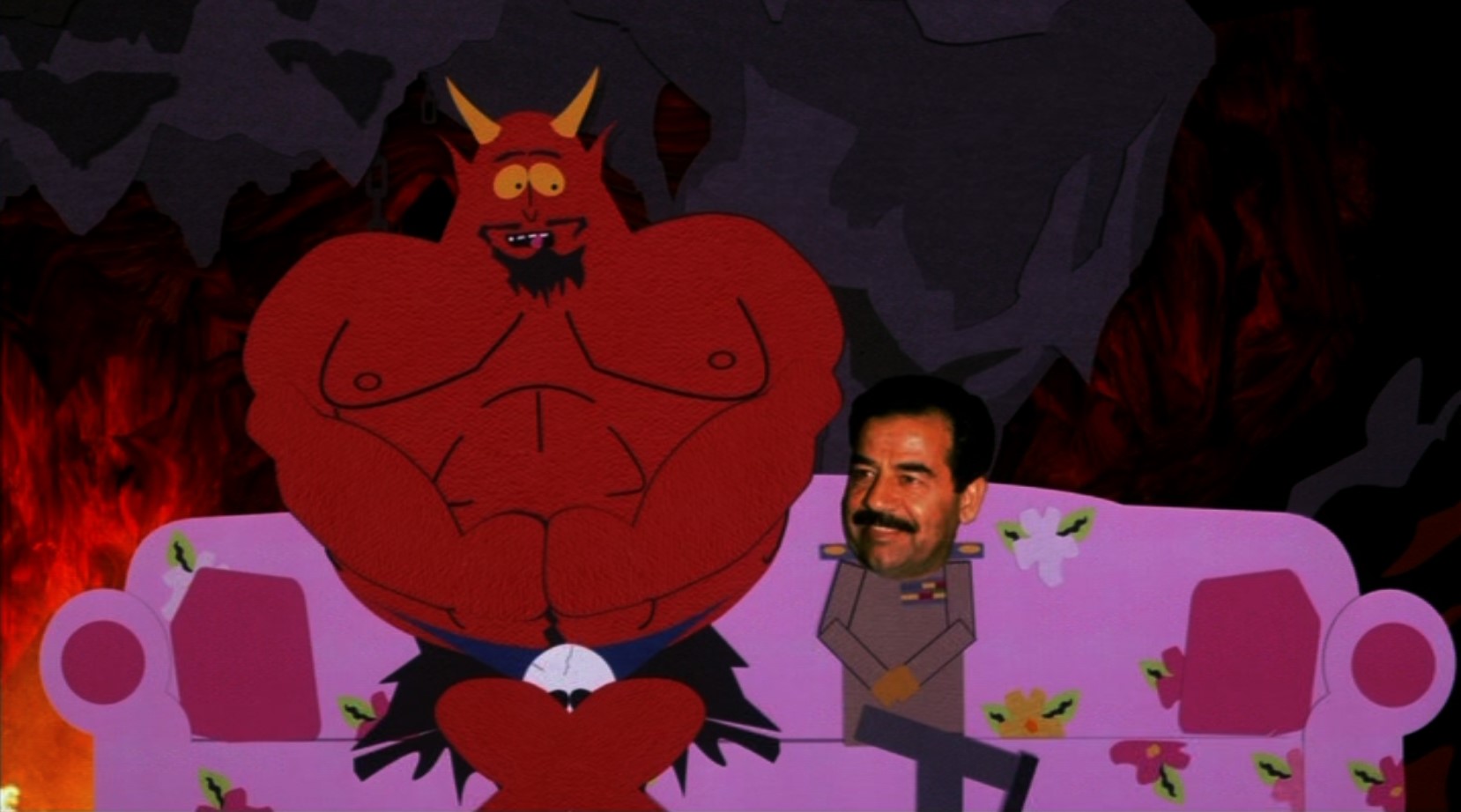
Kenny dies, of course, but for the first time we see what happens to him after his death, and quite a bit of the action takes place in hell, where Satan and Saddam Hussein get involved in the plot. Now, the Iraqi dictator was very much alive back then, and the film is a testimony of the US’ frustration they didn’t remove the villain from the office in the first Gulf War (1990-1991).

Because of Hussein Iraq was included in George Bush jr.’s nonsensical ‘Axis of evil’ (together with its arch enemy Iran), which ultimately lead to the misguided and very questionable invasion of Iraq in 2003. In ‘South Park: Bigger, Longer & Uncut’ Saddam Hussein is shown as being even more evil than Satan himself, dominating the prince of darkness in a toxic relationship. Of course, the inclusion of Saddam Hussein ages the film more than necessary, as do other references to real people, like Brian Boitano (whom I as a non-American had never heard of).

Yet, the biggest surprise of ‘South Park: Bigger, Longer & Uncut’ is not its high level of satire, nor its excellent plot, nor the introduction of elements that would become more familiar later on in the series. No, the biggest surprise of the film is that it is in fact, a musical, and a very good one at that, too. The film literally bursts with songs (there are fourteen of them), all ranging from good to excellent.

It seems Trey Parker knew exactly how to write a musical song: yes, practically all his songs are parodies of musical tropes, but his own creatures have such beautiful and memorable melodies they perfectly stand on their own. Absolutely top are ‘What would Brian Boitano do?’ and Satan’s Jesus Christ Superstar-like ‘Up there’. And then there’s a great musical moment when the Les misérables-like song ‘La résistance’ suddenly gets intermixed by four other songs, including a new one sung by soldiers, and the outstanding ‘Blame Canada’. This latter song, which was introduced much earlier in the film, is the undisputed highlight of the feature and was nominated for an academy award for best original song (which it unjustly lost to the bland ‘You’ll Be in My Heart’ Phil Collins composed for Disney’s ‘Tarzan’).

In fact, ‘South Park: Bigger, Longer & Uncut’ is so good at being a musical that it can easily be counted among the best animated musicals ever. Main composer Trey Parker, at least got on a new career as a musical writer. No, there were no other South Park movies to come, but not only did more and more songs creep into the South Park series itself, but Parker made another musical with the bizarre puppet movie ‘Team America: World Police’ (2004) and even hit Broadway with the stage musical ‘The Book of Mormon’ (2011).

In all, South Park: Bigger, Longer & Uncut’ is great satire, it’s a great musical, and it’s a great proof that feature films based on television series could (and should) be an improvement on the original series.

Watch the trailer for ‘South Park: Bigger, Longer & Uncut’ yourself and tell me what you think:

‘South Park: Bigger, Longer & Uncut’ is available on Blu-Ray and DVD

Director: Norman McLaren
Release date:
1972
Rating: 
★★
Review:

In the final stages of his career Norman McLaren apparently got interested in ballet, for three of his final films (‘Pas de deux’, ‘Ballet Adagio’ and ‘Narcissus’) are on the movements of ballet dancers.

‘Ballet Adagio’ is the most straightforward of the three: it is a documentary recording of a two and a half minute pas de deux, danced by David and Anna Marie Holmes, played on a quarter speed and set to the faux-Albinoni adagio in G minor by Remo Giazotto.

There’s no trickery, let alone animation involved – it’s just the two dancers on an empty stage doing their thing. Due to the slow motion one gets ample opportunity to watch the sheer virtuosity of the two dancers, the sometimes almost impossible stunts of the two, and their muscle movements. But, as there’s nothing else going on, the result is as fascinating as it is boring. It doesn’t really matter, for the film’s intentions were purely educational, giving ballet students an opportunity to study movement.

Watch ‘Ballet Adagio’ yourself and tell me what you think:

‘Ballet Adagio’ is available on the DVD Box ‘Norman McLaren – The Master’s Edition’

Director: Henry Selick
Date:
1977
Rating: 
★★★
Review:

Compared to the earlier ‘Tube Tales‘ ‘Phases’ much better shows what Henry Selick was capable of.

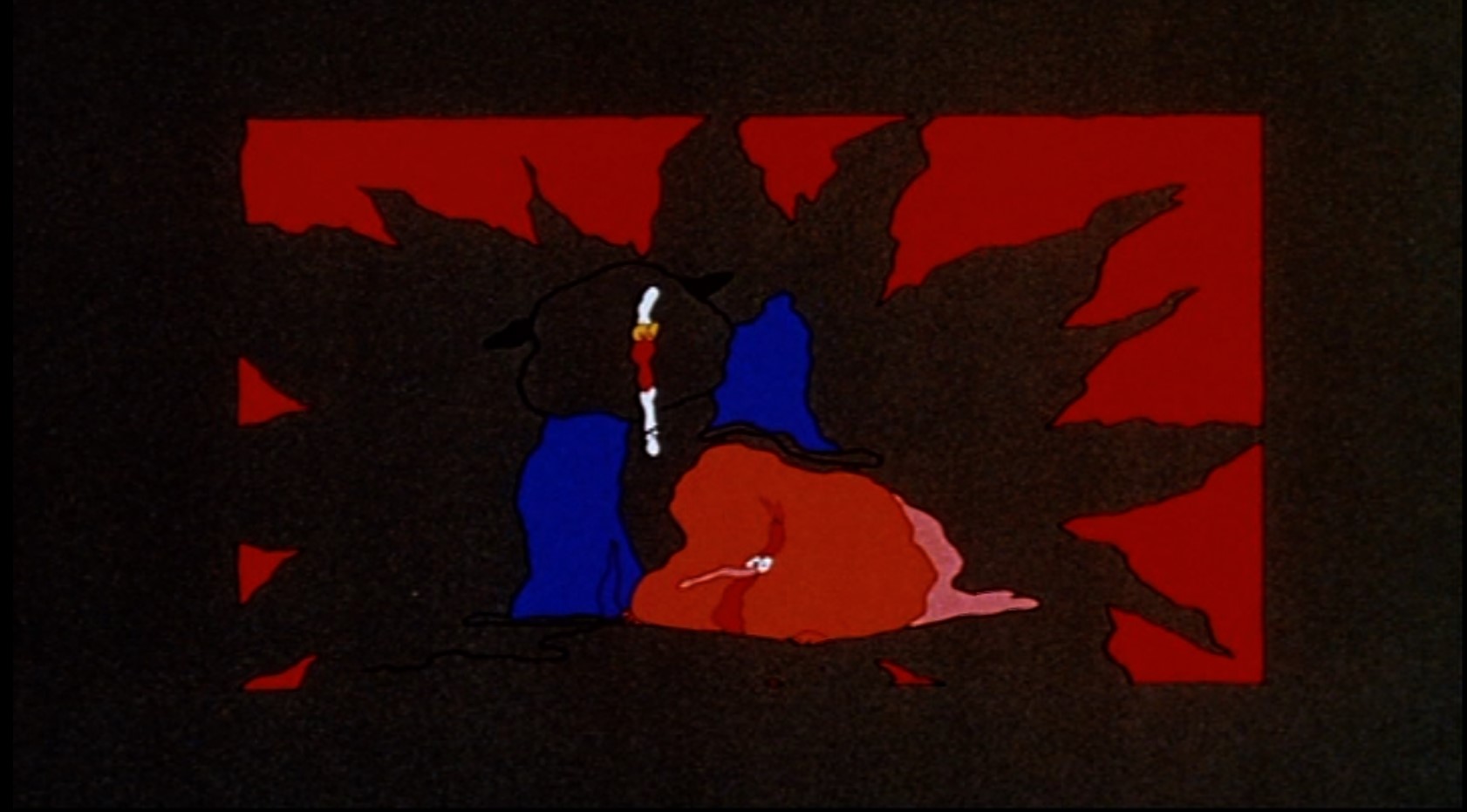
This film was made at CalArts and in it Selick shows great command of motion, convincingly animating a human walk cycle, a big cat and a horse, all also in stunning perspective. But even more, the film itself is nice to look at with its poetic metamorphosis of red paints on a black canvas.

Watch ‘Phases’ yourself and tell me what you think:

‘Phases’ is available on the DVD ‘Giants’ First Steps’

Director: John Musker
Release date:
1977
Rating: 
★★
Review:

‘Little Darlin” is a short animation film that apparently never transcended the pencil test phase. Made by John Musker (of later e.g. ‘The Little Mermaid, ‘Aladdin’ and ‘Moana’ fame) at CalArts, the film immediately shows Musker’s great talent as an animator. All classic animation techniques can be found in this short film, and all are done with the virtuosity of a great talent.

Unfortunately, the film’s designs and story are much less appealing, and the overacting of all three protagonists is tiresome, not funny.

‘Little Darlin” is available on the DVD ‘Giants’ First Steps’

Director: Henry Selick
Date:
1975
Rating: 

Review:

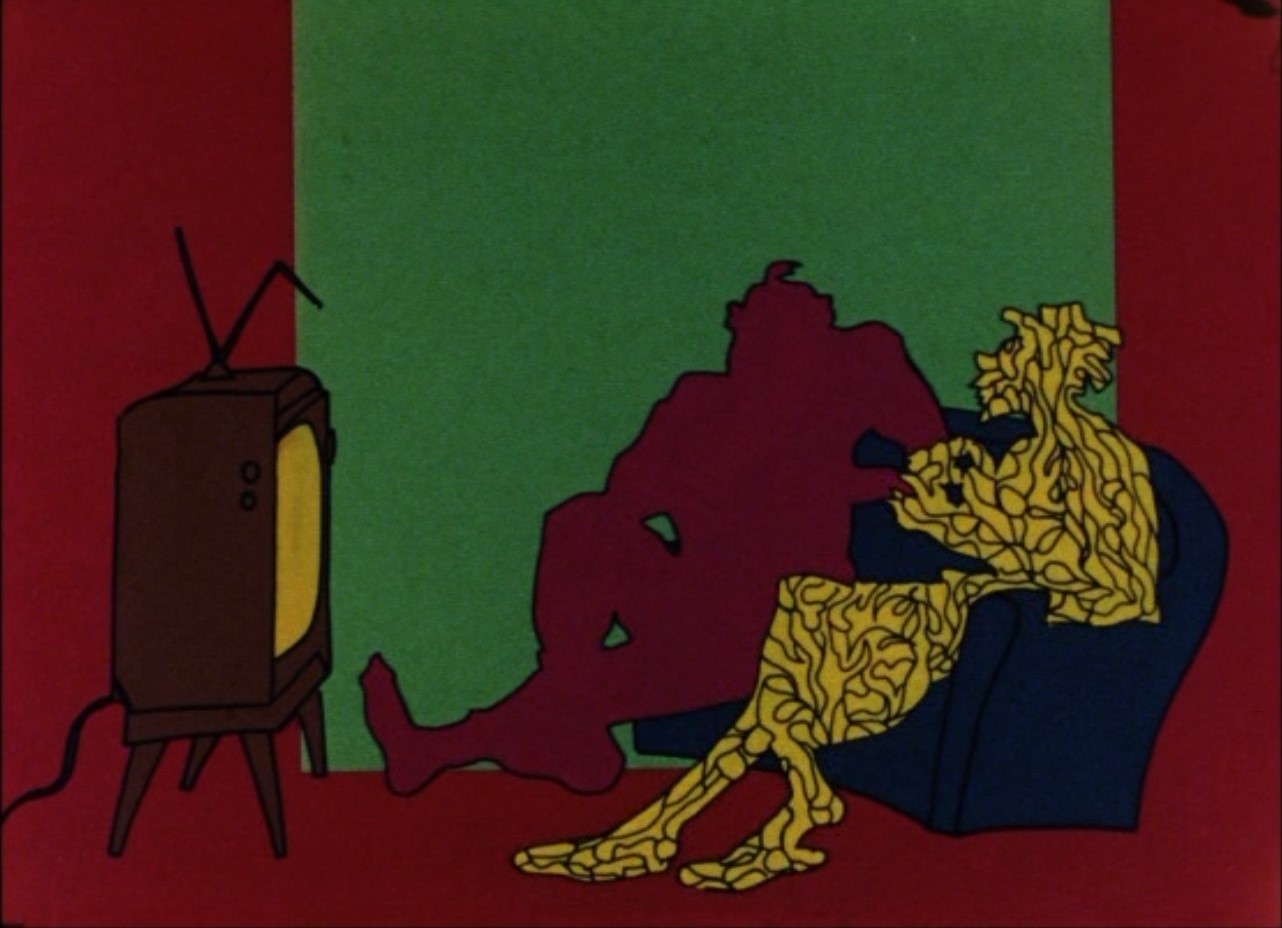
Made by Henry Selick (of later ‘James and the Giant Peach‘ and ‘Coraline’ fame’) at Syracuse University ‘Tube Tales’ is a rather experimental short about the influence of television.

The film features a couple watching a television set, which vomits numerous adverts out on the two. The most idiotic is one on welding. Selick’s designs are angular, and pretty ugly, and with its mere three minutes the short overstays its welcome big time.

Watch ‘Tube Tales’ yourself and tell me what you think:

‘Tube Tales’ is available on the DVD ‘Giants’ First Steps’

Director: Eric Goldberg
Date:
1974
Rating: 
★★★
Review:

‘Good Old Fashioned Cartoon Violence’ is another gag cartoon made by top animator Eric Goldberg when he was still in his teens.

In this black and white cartoon a cartoon figure watches a Tom & Jerry like violent cartoon on television. Immediately after that, cartoon violence starts happening to him, too. It only ends when the poor guy shoots his creator (a nice self caricature of Goldberg).

This is not really a funny or good cartoon, but Eric Goldberg’s talent is unmistakable.

‘Good Old Fashioned Cartoon Violence’ is available on the DVD ‘Giants’ First Steps’

Director: Eric Goldberg
Date:
1973
Rating: 
★★★
Review:

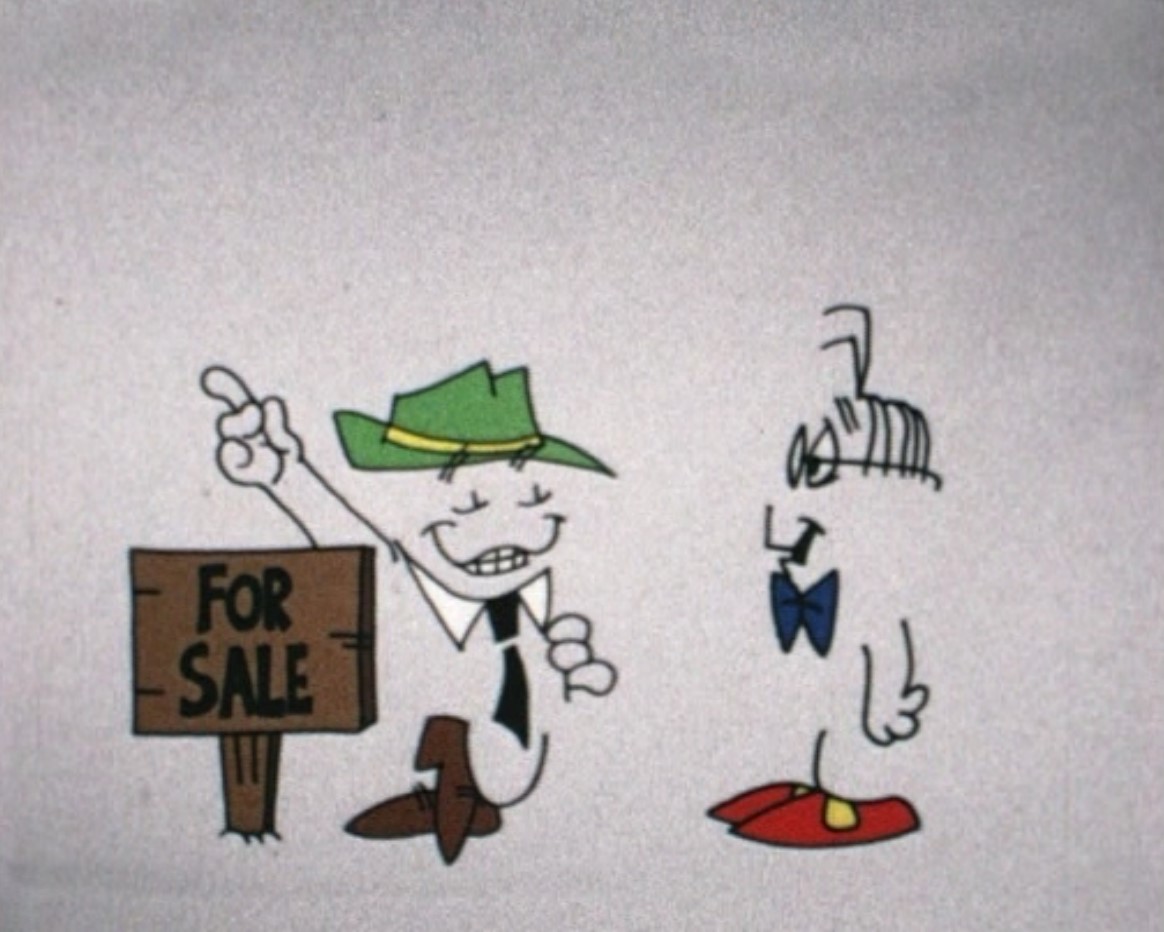
Legendary animator Eric Goldberg made this film when he was only 17 or 18. ‘For Sale’ is a short gag cartoon in which a man pursuits a background which can change into every scenery by snapping one’s fingers.

The main characters are designed with interesting open lines, and Goldberg already demonstrates his skills as an animator. Even the timing is rather good.

‘For Sale’ is available on the DVD ‘Giants’ First Steps’

Director: Ron Clements
Date:
1972
Rating: 
★★
Review:

Ron Clements, of later e.g. ‘The Little Mermaid’, ‘Aladdin’ and ‘Moana’ fame, turns out to be influenced by cheap television animation in his early short ‘Shades of Sherlock Holmes’.

His cartoon features generic designs, limited animation, a lot of dialogue and a rather Scooby Doo-like plot. Absolutely nothing in this short indicates a great talent, and the film is as generic as it is boring. The bad sound mixing doesn’t help either. Luckily, Clements turned out fine, and became one of the most famous directors in feature animation.

‘Shades of Sherlock Holmes’ is available on the DVD ‘Giants’ First Steps’

Director: Nick Park
Date:
1978
Rating: 
★★★
Review:

The interesting aspect of the DVD ‘Giants’ First Steps’ is that it shows well known animators and animation directors were not always that good. They had to start somewhere, and their early films show where they already succeeded and where they faltered.

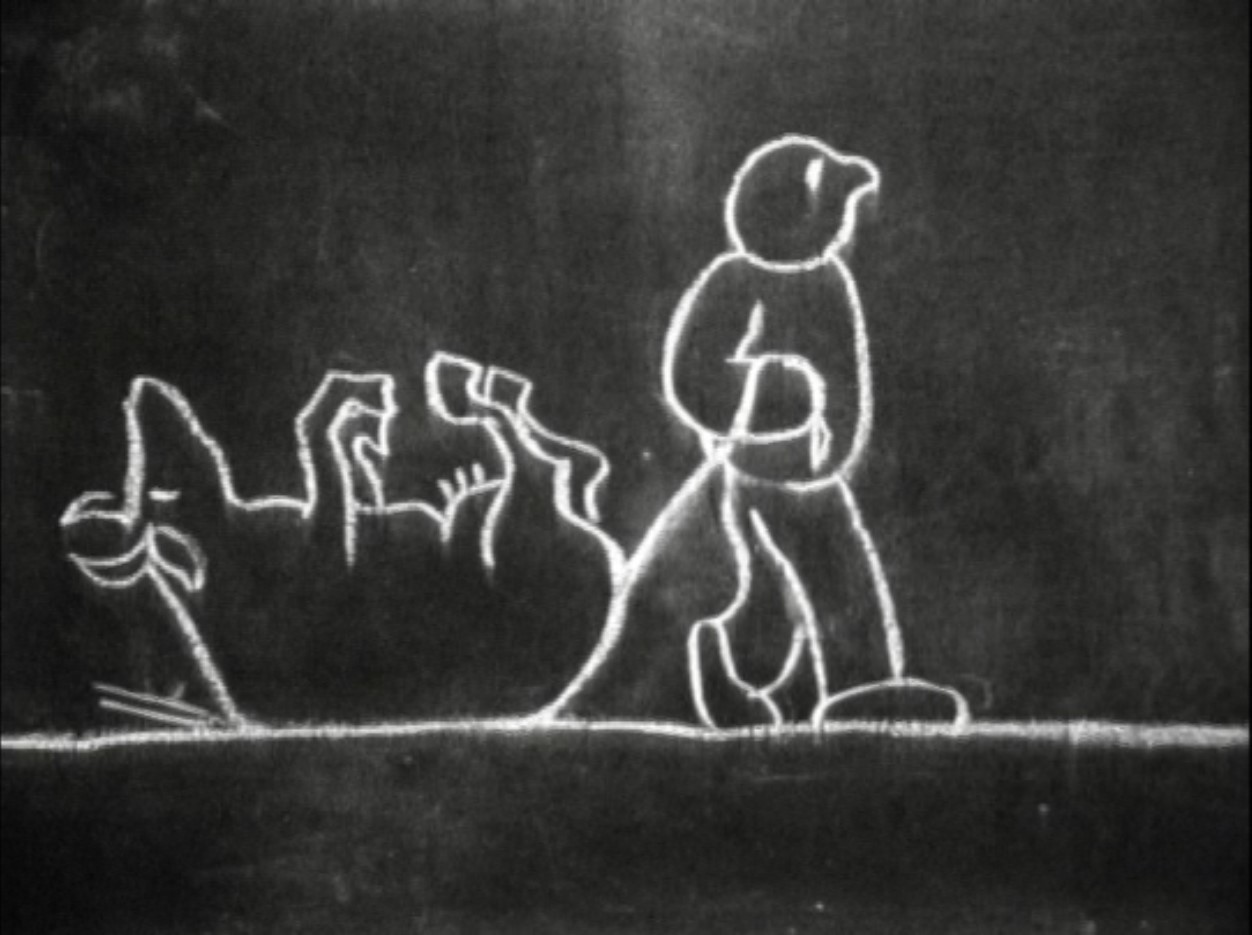
With the charcoal animation of ‘Jack and the Beanstalk’ (made at the Sheffield Art School) Nick Park returns to the very origin of animation, with its earliest films using a blackboard. Nick Park retells the classic fairy tale in an original, stream of consciousness-like manner, with a lot of metamorphosis and weird sound effects.

Even though Park’s animation is crude, the film is pleasantly odd and original throughout. For example, Jack shoots a cow from the sky, and puts in a vending machine to obtain his magic bean, which turns out to be huge. My favorite part is a little guy talking gibberish into a microphone before the titles appear.

Park, of course, would later become world famous with his ‘Creature Comforts’ and Wallace and Gromit films, made at Aardman.

‘Jack and the Beanstalk’ is available on the DVD ‘Giants’ First Steps’

Director: John Lounsberry
Release date:
December 20, 1974
Stars: Winnie the Pooh, Piglet, Tigger, Rabbit, Kanga, Roo & Christopher Robinson
Rating: 
★★★★
Review:

The third of the Winnie the Pooh-featurettes is based on chapter seven and four from ‘The House at the Pooh Corner’ and both stories are centered around Tigger.

Now Tigger was from the start a wonderful character, superbly animated, and he shines again in his second appearance after ‘Winnie the Pooh and the Blustery Day’ from 1968. In both stories Tigger’s main adversary is the serious and rather sour Rabbit, who, too, is greatly animated, and the enormous difference in movement and expressions between the two characters is a great testimony of what character animation is all about, and of the extraordinary art of the nine old men.

As the two stories are very simple and straightforward, it’s best not to say much else about them, but in the second one Pooh himself is at his best when he discovers some mysterious tracks in the snow. There’s again a little playing with the book setting, even if it’s less than in the previous featurette.

The result is another delightful little film that will appeal to youngsters and adults, alike.

‘Winnie the Pooh and Tigger Too’ was planned as the last of the Winnie the Pooh featurettes, and in 1977 all three were combined into a feature (which had been Walt’s original plan, anyway) called ‘The Many Adventures of Winnie the Pooh’, which adds one last and moving little scene to end it all. Nevertheless, 1983 saw another Winnie the Pooh short ‘Winnie the Pooh and a Day for Eeyore’.

And even that was not the end of the Disney-Pooh-adventure, as in 1988 the television series ‘The New Adventures of Winnie the Pooh’ started, followed by a few television specials and several straight to video features. And of course, in more recent times, the Winnie the Pooh franchise has gotten an update with films like ‘The Tigger Movie’ (2000) and ‘Piglet’s Big Movie’ (2003). One would almost blame the Disney company for milking the Pooh franchise too much, especially when getting far away from the source material, but then the company surprised us with the absolutely delightful ‘Winnie the Pooh‘ from 2011.

Watch an excerpt from ‘Winnie the Pooh and Tigger Too’ yourself and tell me what you think:

‘Winnie the Pooh and Tigger Too’ is available on Blu-Ray and DVD as part of ‘The Many Adventures of Winnie the Pooh’

Director: Paul Driessen
Release date:
1975
Rating: 
★★★
Review:

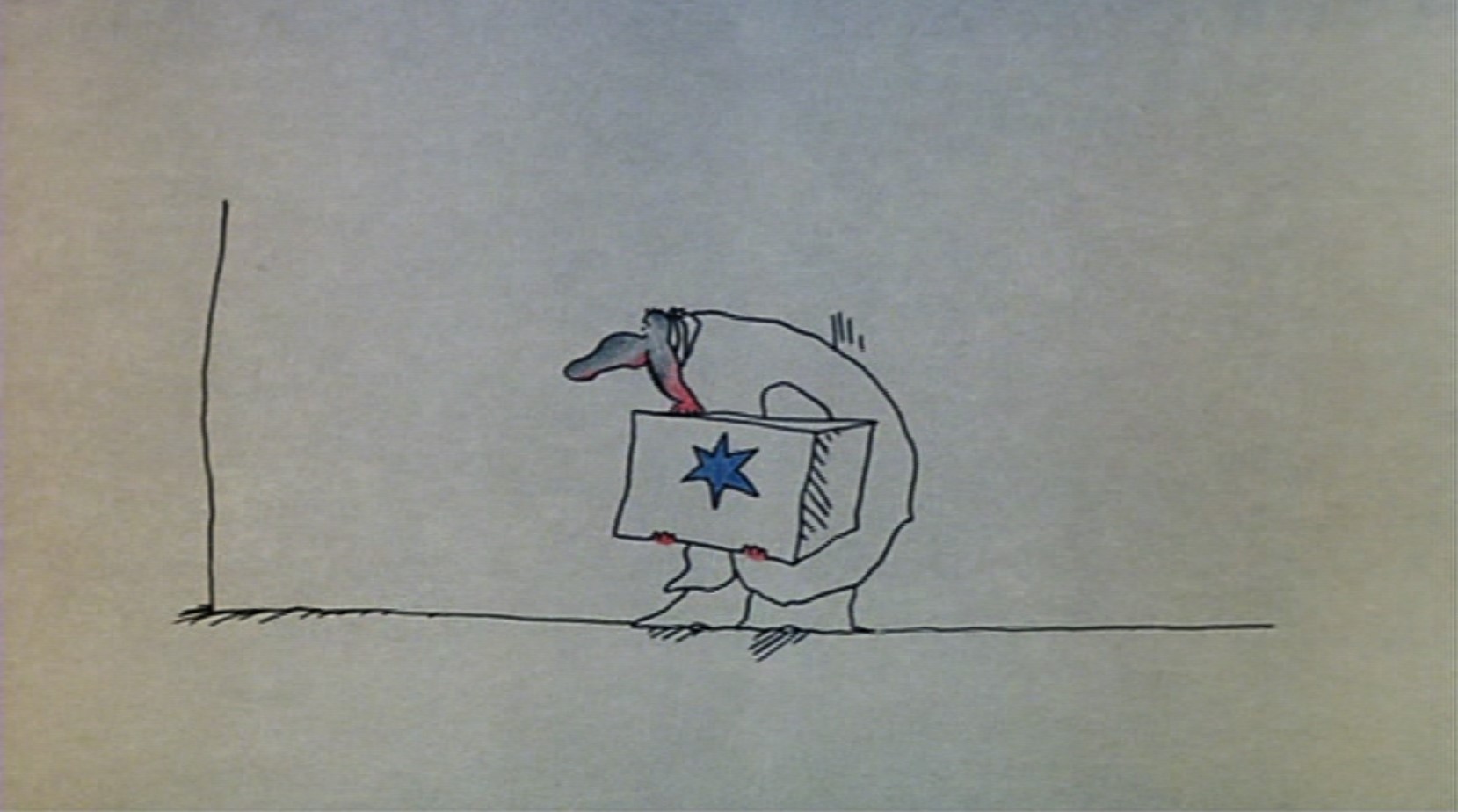
‘An Old Box’ is Paul Driessen’s own variation on the Hans Christian Andersen fairy tale ‘The Little Match Girl’.

In his own film a poor man paints an old box in order to entertain people, but he is at the wrong corner of the town, and nobody passes by, while a short distance away a county fair takes place.

In this short Driessen introduces his idiosyncratic way of showing background art only when necessary. Thus lines indicating backgrounds appear from and dissolve into nothingness as we progress from scene to scene.

Likewise, Driessen’s color use is very limited, emphasizing the most important elements. Only in the very end the animator bursts into a fantastical multi-colored perspective animation before returning to the prevailing depressing grays of the rest of the short.

Watch ‘An Old Box’ yourself and tell me what you think:

‘An Old Box’ is available on the DVD ‘Des histoires pas comme les autres’

Director: Paul Driessen
Release date:
1974
Rating: 
★★★
Review:

‘Cat’s Cradle’ is an early film by Dutch animator Paul Driessen for the National Film Board of Canada.

This is one of Driessen’s most enigmatic films, in which the images seem to flow in a stream-of-consciousness-like fashion, bridged by a string spun by tiny spider. Somehow the tale, if there is one, has a retrograde character, but it’s hard to make head or tail of Driessen’s narrative in this short.

The background art again is very limited and made of monochromes, and Driessen’s typical morbid humor is very present. For example, the spider is handled by a man, who in turn turns out to hang at a gallows pole.

Watch ‘Cat’s Cradle’ yourself and tell me what you think:

‘Cat’s Cradle’ is available on the DVD ‘Des histoires pas comme les autres’

Director: Paul Driessen
Release date:
1972
Rating: 
★★★½
Review:

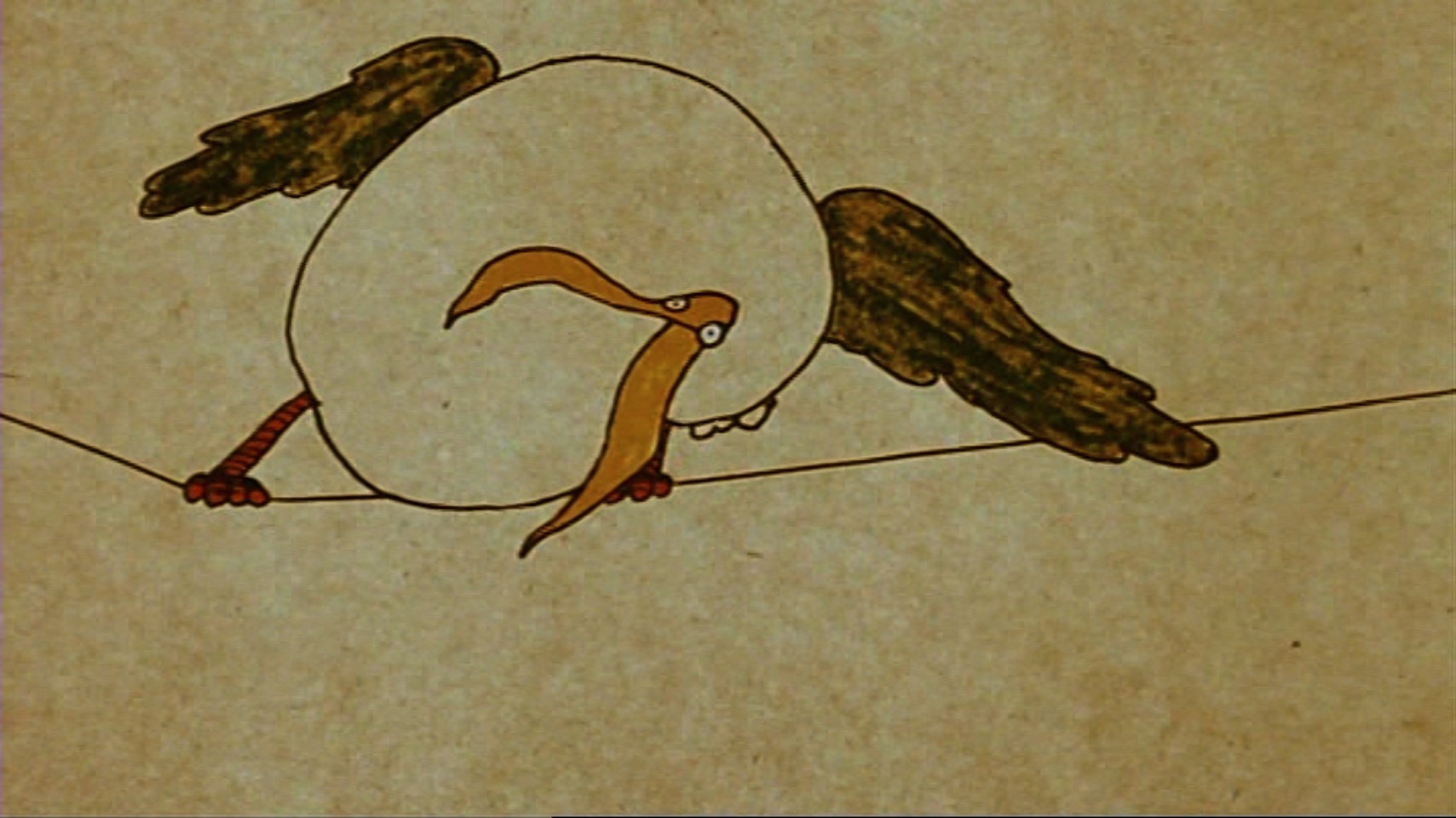
‘Air!’ was the first animated short Dutch animator Paul Driesen made for the National Film Board of Canada. In this very short film (it only takes two minutes) everything and everyone is gasping for air. Only at the very end we experience why.

Driessen makes the most of the barest background art: a monochrome background with a single horizontal line, which in each scene depicts something else. This is an early short by the Dutch master, but the film already showcases Driessen’s idiosyncratic animation style and morbid sense of humor.

Watch ‘Air!’ yourself and tell me what you think:

https://www.nfb.ca/film/air_fr/

‘Air’ is available on the DVD ‘Des histoires pas comme les autres’

Director: Ralph Bakshi
Release date:
August 8, 1973
Rating: 
★★
Review:

Ralph Bakshi arrived on the scene when American classic studio animation was in steady decline, reaching its low point in the 1970s and early 1980s. In this dry period, Bakshi tried to reinject classic animation with new energy, most notably by ripping it of its association with children. Now, in the golden age animation never had been solely associated with children, but due to the advent of the Saturday-morning cartoon in the mid-1960s American animation more and more became something just for kids.

Bakshi, on the other hand, saw the full potential of the medium, and enriched the animation world with several animated features aimed at adult audiences, thus bypassing the middle ground of the family film, which was Disney’s monopoly at the time, anyway. Thus, Bakshi is sometimes seen as the savior of animation during the medium’s dark ages, but I find it hard to subscribe to that opinion, and that’s because his films are sadly just not good.

Now, I will not talk about the abysmal ‘The Lord of the Rings’ (1977), which is a disgrace to the medium, but even ‘Heavy Traffic’, his supposed masterpiece, fails on several key features.

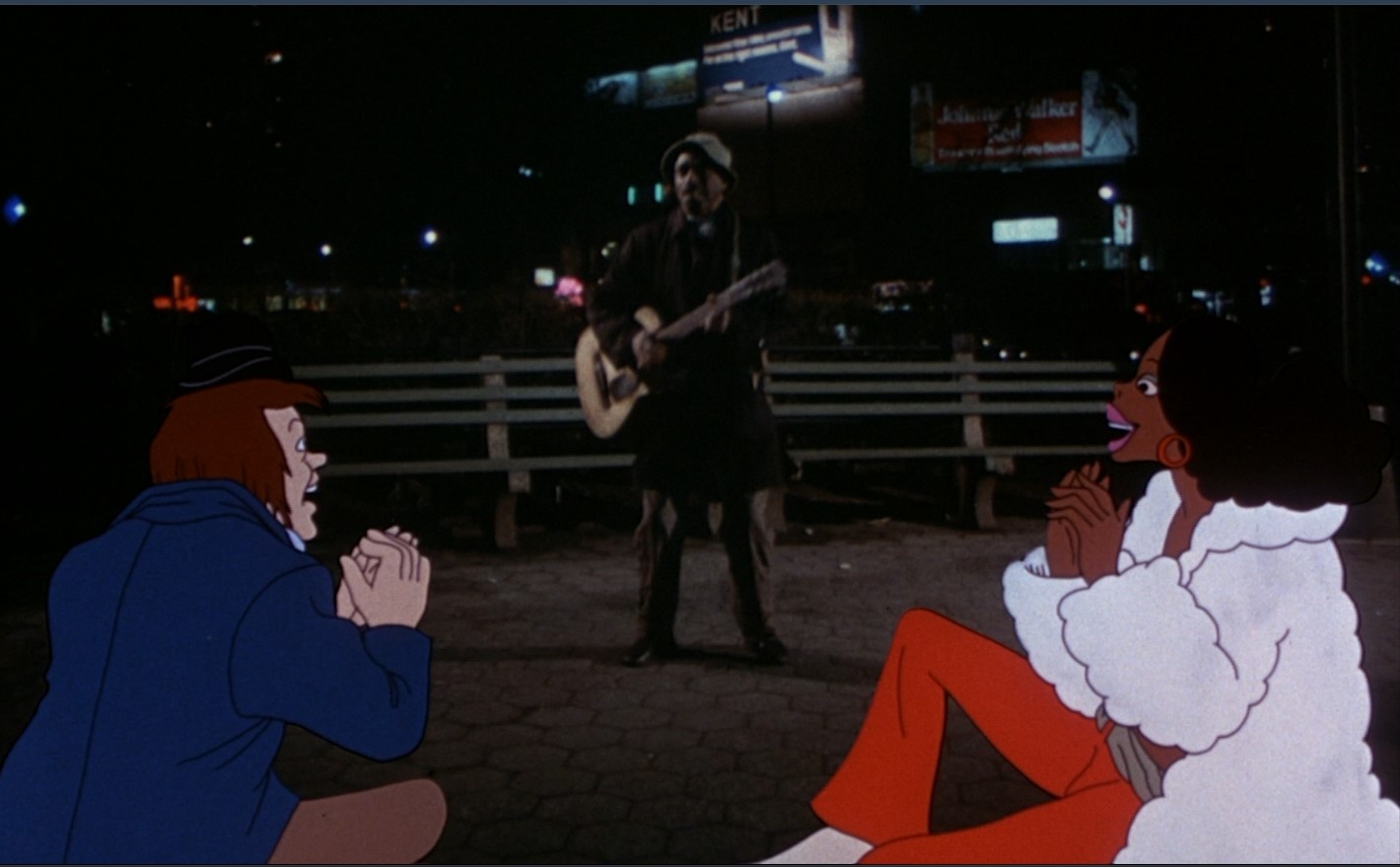
‘Heavy Traffic’ was written by Bakshi himself and has strong autobiographical elements. Set in New York the feature film tells of Michael Corleone, a young and aspiring underground cartoonist, who stills live with his quarreling parents (a Jewish mother and an Italian father), and who dates a black girl called Carole.

The film uses a voice over and the images of a pinball machine as bridging elements, but this cannot hide the fact that the film is a loose bag of scenes, and hardly goes anywhere. Sure, the film is depressing and draws a dark picture of the Big Apple, but its fourteen scenes have little to do with each other and are more about atmosphere than storytelling.

It certainly doesn’t help that none of the characters are remotely sympathetic. Even Michael himself, our supposed hero, is more of a self-centered jerk than anything else. For example, the comics he shows a publisher, wouldn’t interest anyone with a sane mind.

Worse, ‘Heavy Traffic’ falls for the misguided idea that making a film for an adult audience means it must contain sex and violence. ‘Heavy Traffic’ was not the first film to fall into this trap, and certainly not the last one (the unappealing ‘Sausage Party’ from 2016 comes to mind), but Bakshi clearly indulges in both, not only in this film, but also in ‘Fritz the Cat’ from the year before, ‘Wizards’ (1977) and ‘Cool World’ (1992), to name a few, which, to me, only proofs his immaturity. In ‘Heavy Traffic’, for example, bare breasts pop up from everywhere, with little other purpose than arousing the male audience.

Bakshi’s character designs are a mixed bag, sometimes reminiscent of the work of Mort Walker, as in the design of Michael’s father, at other times very cartoony, and reminiscent of DePatie-Freleng (e.g. the gay drag queen Snowflake), at other times quasi-realistic (Carole). Especially ill-conceived is Michael himself, whose quasi-realistic design is as mediocre as it is unappealing.

The background art too is a strange mix of drawings and photographs to a gritty effect. There are even some real live action footage elements from old films, like ‘Red Dust’ (1932) and ‘The Gang’s All Here’ (1943). In the end, the characters change into their live action counterparts, and suddenly one asks himself why this gritty film was not filmed in live action in the first place, as Bakshi’s animation adds surprisingly little.

Now, ‘Heavy Traffic’’s animator list features such illustrious names like Tom Ray, Carlo Vinci, Irv Spence, Manny Gould and Dave Tendlar, and it’s admirable that Bakshi kept these animation greats at work, but I doubt how many people watch ‘Heavy Traffic’ for its beautiful animation, for there’s hardly any. There’s manic animation, there’s outrageous animation, there’s fair animation, and there’s a lot of rotoscoping, but I’d prefer ‘Robin Hood’ from the same year anytime, even if that is the poorest of all classic Disney features.

For a supposed masterpiece, ‘Heavy Traffic’ feels like a sad affair, wasting a lot of animation talent on an egotistical document too heavy-handed for its own good, a film that is as depressing as it is boring and unappealing.

No, to me, Bakshi was more like the wrong guy at the right time: he could not save animation, for he lacked both the talent and the vision to do so. His films never transcend the dark ages, but are firmly rooted in them, and because of Bakshi’s limited view on what an adult film can be, the whole concept never really took off in the United States. This is an infinite pity, for this is one of the reasons we still must deal with the narrowminded view of animation being equal to family entertainment, today.

Watch the theatrical trailer for ‘Heavy Traffic yourself and tell me what you think:

‘Heavy Traffic’ is available on Blu-Ray and DVD
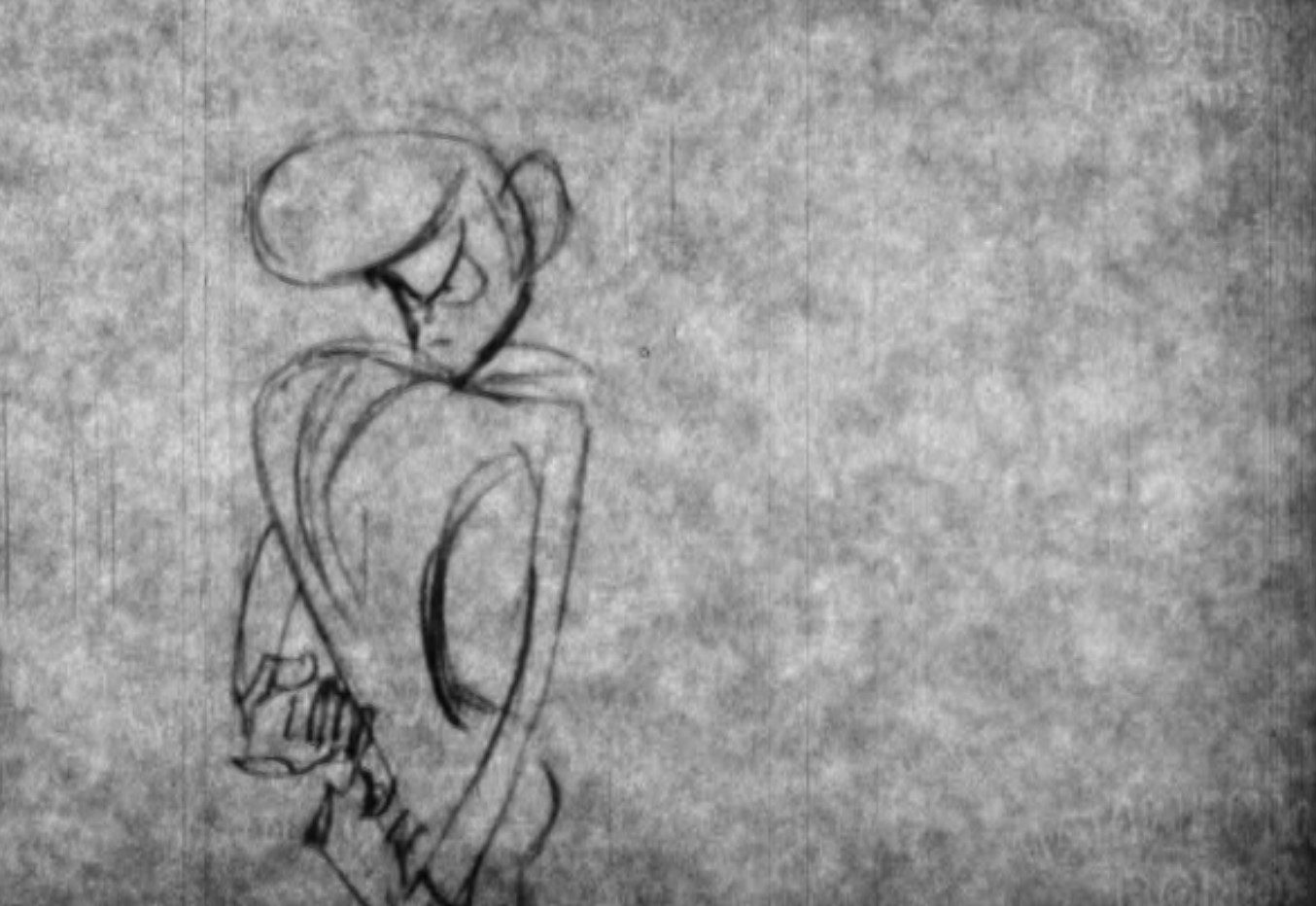
Directors: André Leduc & Bernard Longpré
Release date:
1974
Rating: 

Review:

Monsieur Pointu is a clown played by Paul Cormier, who also provides the short’s fiddle soundtrack. The clown tries to play the fiddle, but this turns out harder than it seems.

‘Monsieur Pointu’ consists of general clown routines, exaggerated and augmented by animation. André Leduc’s and Bernard Longpré’s pixilation animation is quite impressive, although the black screen also helps with all the tricks.

Unfortunately, their command of pixilation is much better than their comic timing, and literally none of the antics is funny. In fact, the action is very tiresome, and with its twelve minutes the short overstays its welcome extensively, especially if you don’t like clowns anyway, like me.

Watch ‘Monsieur Pointu’ yourself and tell me what you think:

‘Monsieur Pointu’ is available on the DVD ‘Best of the Best – Especially for Kids!’

Director: Caroline Leaf
Release date:
1974
Rating: 
★★★★
Review:

‘The Owl Who Married a Goose: An Eskimo Legend’ was the first film acclaimed animator Caroline Leaf made for the National Film Board of Canada.

Done entirely in sand animation (in fact, Caroline Leaf was one of the very first animations to explore this technique for an entire film) the short tells about an owl, who marries a goose, but cannot follow her life style, with disastrous results. The legend is told and sung by real inuit, who also provide the goose’s and owl’s voices. As their Inuktitut language remains untranslated, one is lost in what is said, but luckily Leaf’s charming animation tells it all.

With its simple designs, effective animation and original soundtrack ‘The Owl Who Married a Goose: An Eskimo Legend’ created quite a stir, and the film surely is one of the most Canadian the NFB ever made. After this film Leaf set off to a great career as one of the most interesting of independent animation film makers, creating such intriguing masterpieces like ‘The Street’ (1976) and ‘Two Sisters’ (1990).

Watch ‘The Owl Who Married a Goose: An Eskimo Legend’ yourself and tell me what you think:

‘The Owl Who Married a Goose: An Eskimo Legend’ is available on the DVD ‘Best of the Best – Especially for Kids!’

Director: Michael Mills
Release date:
1971
Rating: 
★★½
Review:

‘Evolution’ is Michael Mills’ cartoony take on the biological concept. The short features several fantasy creatures, starting with single cells in a pond (which all look like eye balls).

Mills depicts the origin of sex, the struggle of life, and the colonization of land, but none of his images are remotely serious, and most scenes consist of short gags. Unfortunately, the short is not too funny, and feels a little empty, ending quite abruptly and disappointingly.

Five years later Bruno Bozzetto did a much better job when depicting the same subject in his Boléro section of ‘Allegro non troppo’ (1976)

Watch ‘Evolution’ yourself and tell me what you think:

‘Evolution’ is available on the DVD ‘Best of the Best – Especially for Kids!’

Director: Zofia Oraczewska
Release date:
1976
Rating: 
★★★
Review:

In ‘Banquet’ a bunch of waiters and chefs are preparing a huge banquet for a large number of guests. But when the guests arrive, the banquet turns out to be very different than expected.

‘Banquet’ has a mixed design: the waiters and chefs are rather classic cartoony figures, while the meals and the guests are collages partly made out of photo material.

Jan Skorża’s cut-out animation is fair, if not outstanding, and the whole film is a little too empty to be memorable. I guess the Polish film makers were less in their game when trying an attempt at humor.

Watch ‘Banquet’ yourself and tell me what you think:

‘Banquet’ is available on the DVD-set ‘Anthology of Polish Animated Film’

Enter your email address to follow this blog and receive notifications of new posts by email.

Join 915 other subscribers
Bookmark and Share

Categories