You are currently browsing the tag archive for the ‘1973’ tag.
Director: Eric Goldberg
Date: 1973
Rating: ★★★
Review:
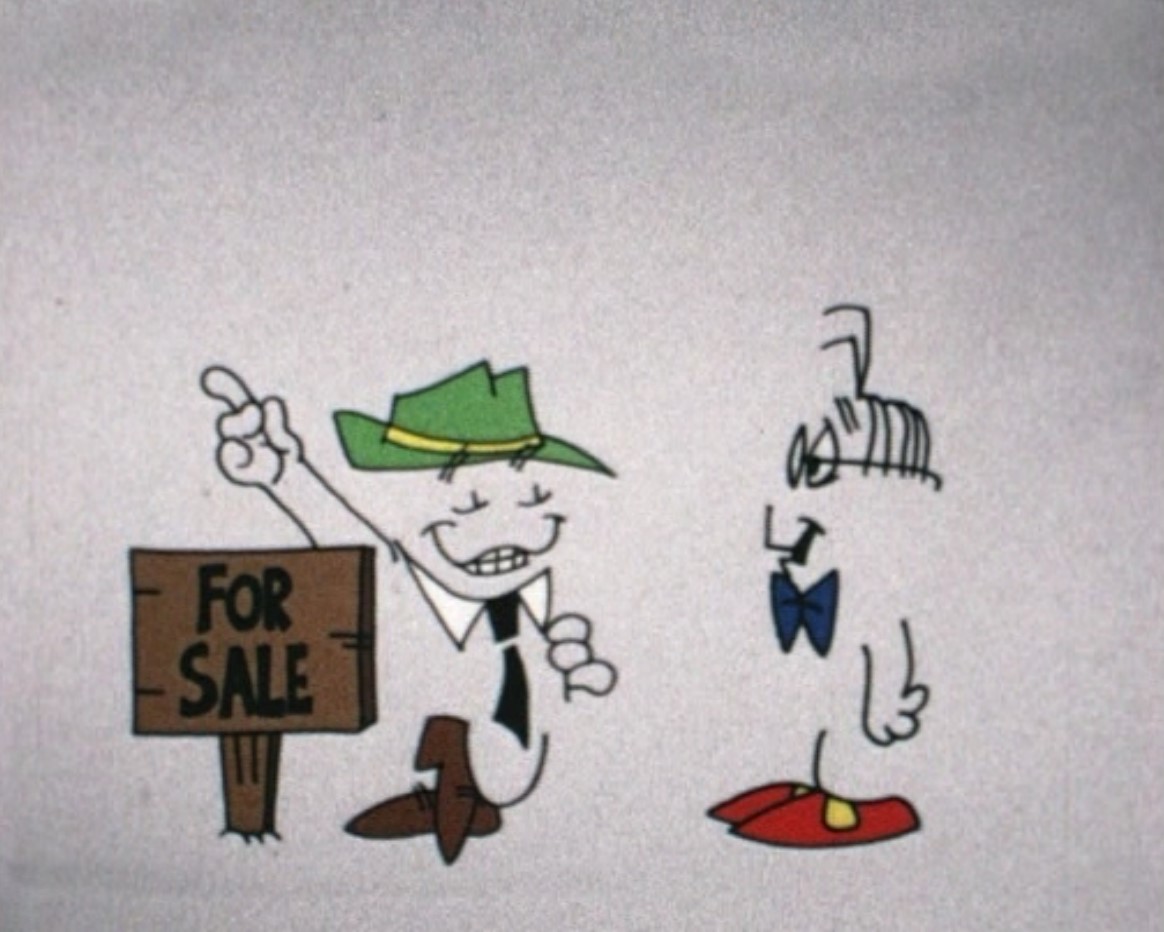
Legendary animator Eric Goldberg made this film when he was only 17 or 18. ‘For Sale’ is a short gag cartoon in which a man pursuits a background which can change into every scenery by snapping one’s fingers.
The main characters are designed with interesting open lines, and Goldberg already demonstrates his skills as an animator. Even the timing is rather good.
‘For Sale’ is available on the DVD ‘Giants’ First Steps’
Director: Ralph Bakshi
Release date: August 8, 1973
Rating: ★★
Review:
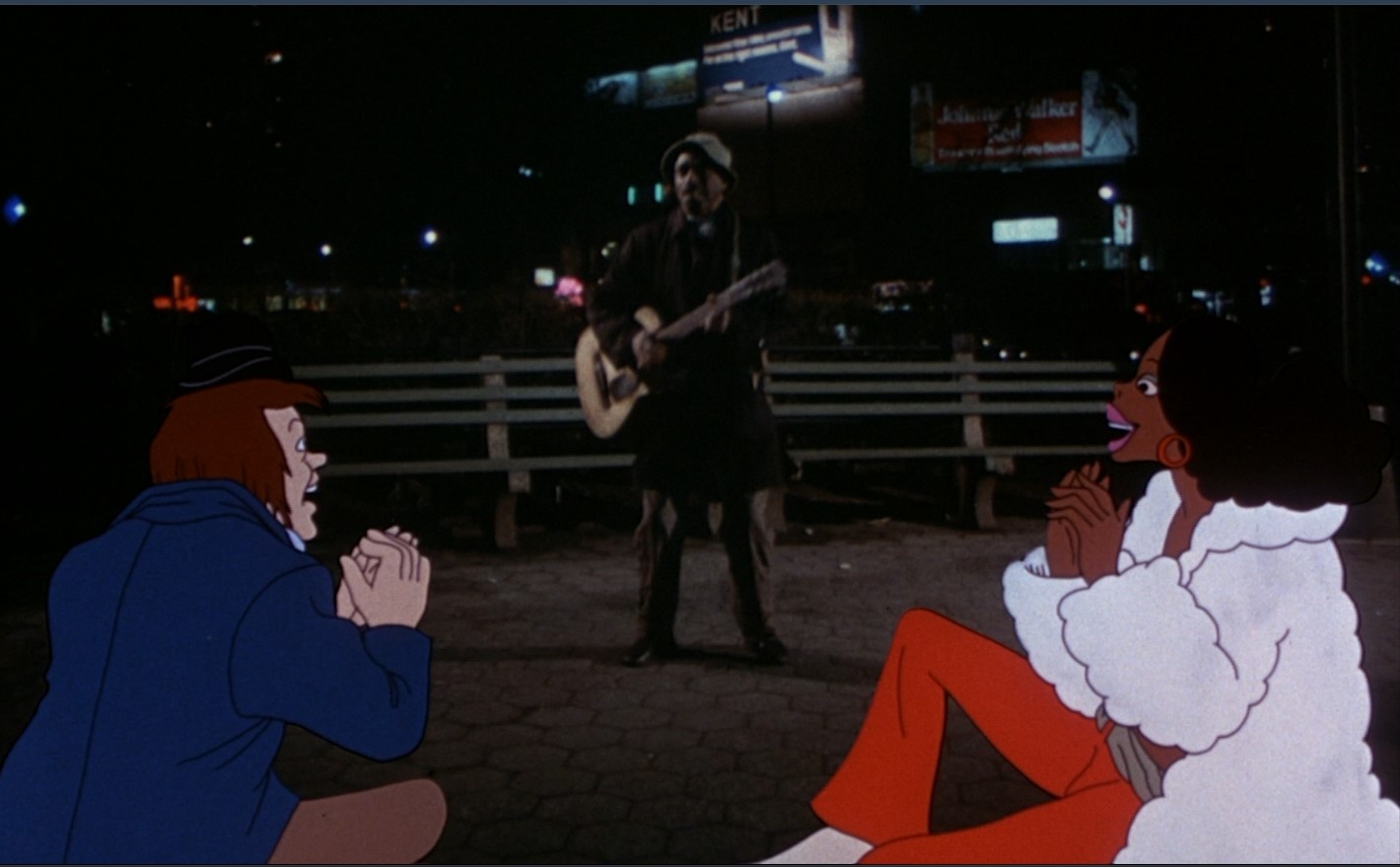
Ralph Bakshi arrived on the scene when American classic studio animation was in steady decline, reaching its low point in the 1970s and early 1980s. In this dry period, Bakshi tried to reinject classic animation with new energy, most notably by ripping it of its association with children. Now, in the golden age animation never had been solely associated with children, but due to the advent of the Saturday-morning cartoon in the mid-1960s American animation more and more became something just for kids.
Bakshi, on the other hand, saw the full potential of the medium, and enriched the animation world with several animated features aimed at adult audiences, thus bypassing the middle ground of the family film, which was Disney’s monopoly at the time, anyway. Thus, Bakshi is sometimes seen as the savior of animation during the medium’s dark ages, but I find it hard to subscribe to that opinion, and that’s because his films are sadly just not good.
Now, I will not talk about the abysmal ‘The Lord of the Rings’ (1977), which is a disgrace to the medium, but even ‘Heavy Traffic’, his supposed masterpiece, fails on several key features.
‘Heavy Traffic’ was written by Bakshi himself and has strong autobiographical elements. Set in New York the feature film tells of Michael Corleone, a young and aspiring underground cartoonist, who stills live with his quarreling parents (a Jewish mother and an Italian father), and who dates a black girl called Carole.
The film uses a voice over and the images of a pinball machine as bridging elements, but this cannot hide the fact that the film is a loose bag of scenes, and hardly goes anywhere. Sure, the film is depressing and draws a dark picture of the Big Apple, but its fourteen scenes have little to do with each other and are more about atmosphere than storytelling.
It certainly doesn’t help that none of the characters are remotely sympathetic. Even Michael himself, our supposed hero, is more of a self-centered jerk than anything else. For example, the comics he shows a publisher, wouldn’t interest anyone with a sane mind.
Worse, ‘Heavy Traffic’ falls for the misguided idea that making a film for an adult audience means it must contain sex and violence. ‘Heavy Traffic’ was not the first film to fall into this trap, and certainly not the last one (the unappealing ‘Sausage Party’ from 2016 comes to mind), but Bakshi clearly indulges in both, not only in this film, but also in ‘Fritz the Cat’ from the year before, ‘Wizards’ (1977) and ‘Cool World’ (1992), to name a few, which, to me, only proofs his immaturity. In ‘Heavy Traffic’, for example, bare breasts pop up from everywhere, with little other purpose than arousing the male audience.
Bakshi’s character designs are a mixed bag, sometimes reminiscent of the work of Mort Walker, as in the design of Michael’s father, at other times very cartoony, and reminiscent of DePatie-Freleng (e.g. the gay drag queen Snowflake), at other times quasi-realistic (Carole). Especially ill-conceived is Michael himself, whose quasi-realistic design is as mediocre as it is unappealing.
The background art too is a strange mix of drawings and photographs to a gritty effect. There are even some real live action footage elements from old films, like ‘Red Dust’ (1932) and ‘The Gang’s All Here’ (1943). In the end, the characters change into their live action counterparts, and suddenly one asks himself why this gritty film was not filmed in live action in the first place, as Bakshi’s animation adds surprisingly little.
Now, ‘Heavy Traffic’’s animator list features such illustrious names like Tom Ray, Carlo Vinci, Irv Spence, Manny Gould and Dave Tendlar, and it’s admirable that Bakshi kept these animation greats at work, but I doubt how many people watch ‘Heavy Traffic’ for its beautiful animation, for there’s hardly any. There’s manic animation, there’s outrageous animation, there’s fair animation, and there’s a lot of rotoscoping, but I’d prefer ‘Robin Hood’ from the same year anytime, even if that is the poorest of all classic Disney features.
For a supposed masterpiece, ‘Heavy Traffic’ feels like a sad affair, wasting a lot of animation talent on an egotistical document too heavy-handed for its own good, a film that is as depressing as it is boring and unappealing.
No, to me, Bakshi was more like the wrong guy at the right time: he could not save animation, for he lacked both the talent and the vision to do so. His films never transcend the dark ages, but are firmly rooted in them, and because of Bakshi’s limited view on what an adult film can be, the whole concept never really took off in the United States. This is an infinite pity, for this is one of the reasons we still must deal with the narrowminded view of animation being equal to family entertainment, today.
Watch the theatrical trailer for ‘Heavy Traffic yourself and tell me what you think:
‘Heavy Traffic’ is available on Blu-Ray and DVD
Director: Zlatko Plavinic
Release date: 1973
Rating: ★★
Review:

This is another very short gag cartoon from the Zagreb studio. In this short a man and a woman haggle for paid sex, or are they?
This cartoon features a monochrome ochre background, cartoonish designs, and dialogue in gibberish and loud nos. The single gag unfortunately is too lame for words.
‘Okay!’ is released on the DVD ‘The Best of Zagreb Film: Be Careful What You Wish For and The Classic Collection’
Directors: Bill Melendez & Phil Roman
Airing date: November 20, 1973
Stars: Charlie Brown, Franklin, Linus, Lucy, Marcie, Peppermint Patty, Sally, Snoopy, Woodstock
Rating: ★★★
Review:
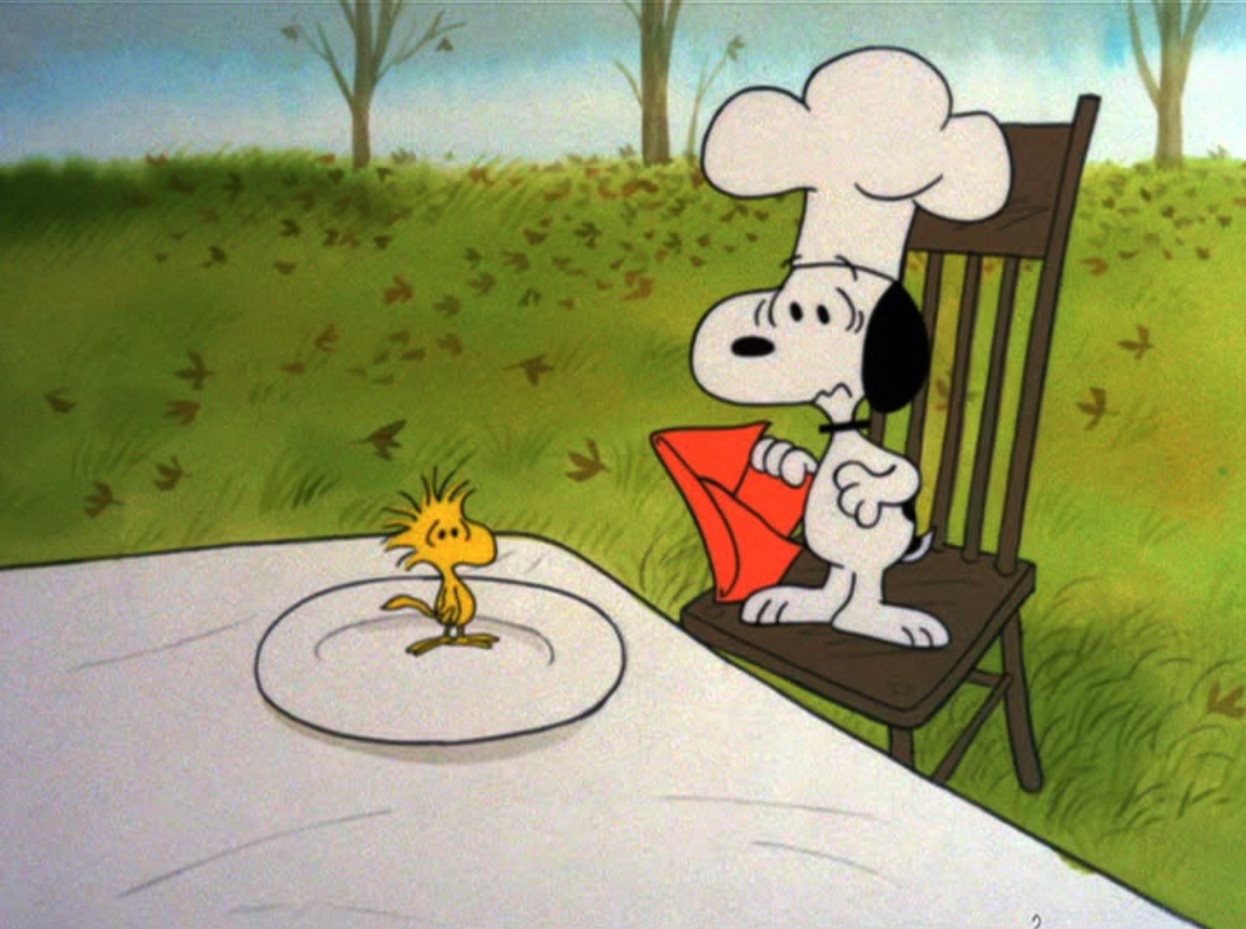
‘A Charlie Brown Thanksgiving’, the tenth of the Peanuts television specials, is the third of the Charlie Brown holiday specials, this time devoted to Thanksgiving. As such it’s a little preachy, especially through Linus’s lines.
The episode’s main problem is caused by Peppermint Patty when she invites herself, Marcie and Franklin over to Charlie Brown’s house, when he’s not even supposed to be home. Luckily, Linus, Snoopy and Woodstock help out.
The episode’s highlight is the silent comedy of Snoopy and Woodstock setting up a dinner table in the yard. This part is accompanied by a charming soul song devoted to the little yellow bird. Actually, the background music is very charming throughout most of the episode, with Vince Guaraldi lively piano trio music, joined by Tom Harrell on trumpet and Chuck Bennett on trombone. Only when Snoopy and Woodstock are putting on Thanksgiving costumes, this is exchanged for some ugly electronic music.
As always with the Peanuts films, the pace is relaxed. The animation is fair, if not outstanding, and the characters charming, and faithful to Schulz’s original comic strip.
Watch an excerpt from ‘A Charlie Brown Thanksgiving’ yourself and tell me what you think:
‘A Charlie Brown Thanksgiving’ is available on the DVD-set ‘Peanuts 1970’s Collection Vol. 1’
Directors: John & Faith Hubley
Release date: 1973
Rating: ★★★★
Review:
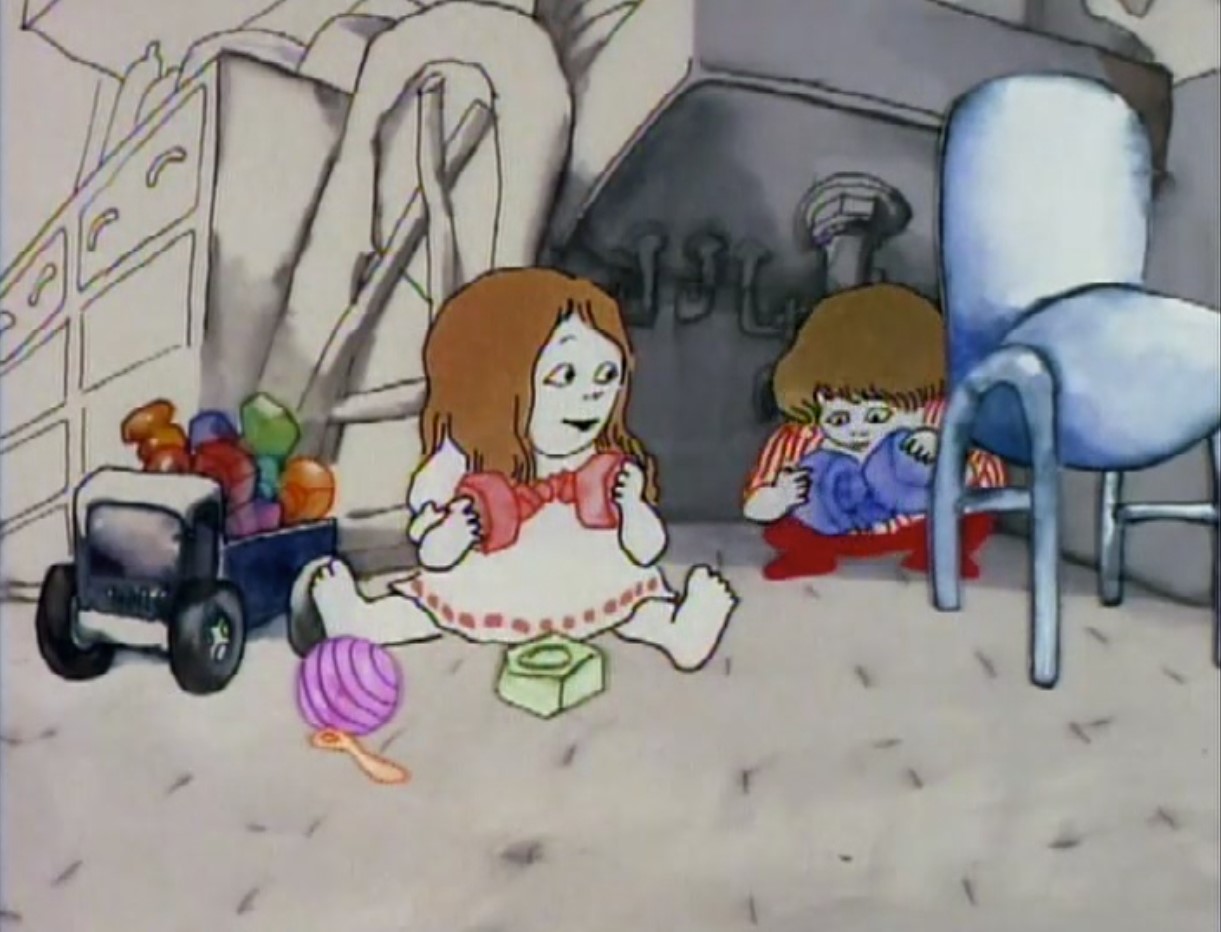
In ‘Cockaboody’ John and Faith Hubley returned to the techniques and world of ‘Moonbird‘ (1959). Once again they recorded the voices of their own children, this time the toddlers Emily and Georgia, while playing. The soundtrack is thus by design completely improvised and as children’s conversations go, all over the place.
John and Faith Hubley illustrate the dialogue with delightful drawings that augment the fantasy of the two girls. For example, when Georgia goes into a tantrum, it takes the form of a green tiger threatening her older sister. Or when Georgia utters the original word ‘cockaboody’, which gives the film its title, it’s transformed into a mysterious duck-like creature.
The watercolor background art convincingly depicts the Hubley’s house as one big place to play in. Throughout the film, we remain with the two little girls, for one little scene in which we see the mother’s reaction to the loud noises the two toddlers produce.
‘Cockaboody’ may be a rather random film, starting and ending nowhere, but in between we have a lovely ride together with the two children.
Watch ‘Cockaboody’ yourself and tell me what you think:
‘Cockaboody’ was released on the DVD ‘Selected Films of John and Faith Hubley 1956-1973’, which came with the March/April 2014 issue of magazine ‘The Believer’
Director: Fyodor Khitruk
Release date: 1973
Rating: ★★★★
Review:
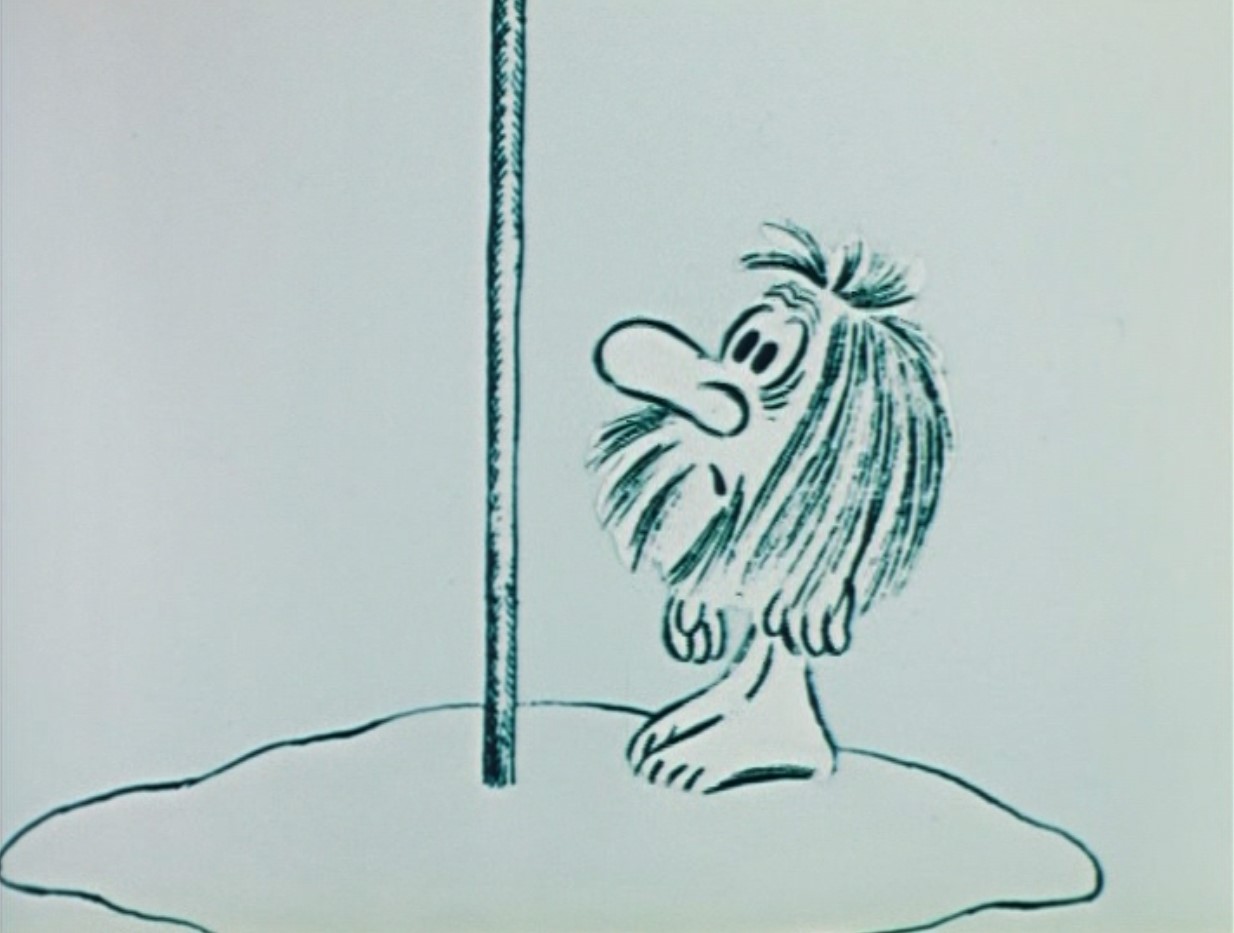
‘The Island’ is a short gag film in which a bearded castaway is stranded on a tiny island.
Khitruk explores this traditional cartoon setting, and brings it into new directions. The man longs to be rescued, but nobody helps him, though the ocean turns out to be very crowded, indeed. In fact, in the end, the man is far worse off than he was in the beginning.
Khitruk’s cell animation is effective, his designs are charming, and his timing is excellent. But the film is more than just a mere series of gags, as Khitruk satirizes man’s aggression, greed, emptiness and folly. It’s signifying that the only person helping the main protagonist, is one who has even less than the castaway he helps. Thus ‘Island’ is more than just a little gag film, it’s a humorous essay on the human condition, and it’s not an optimistic one.
Watch ‘The Island’ yourself and tell me what you think:
‘The Island’ is available on the DVD ‘Masters of Russian Animation Volume 2’
Director: Yuri Norstein
Release date: 1973
Rating: ★★★★
Review:
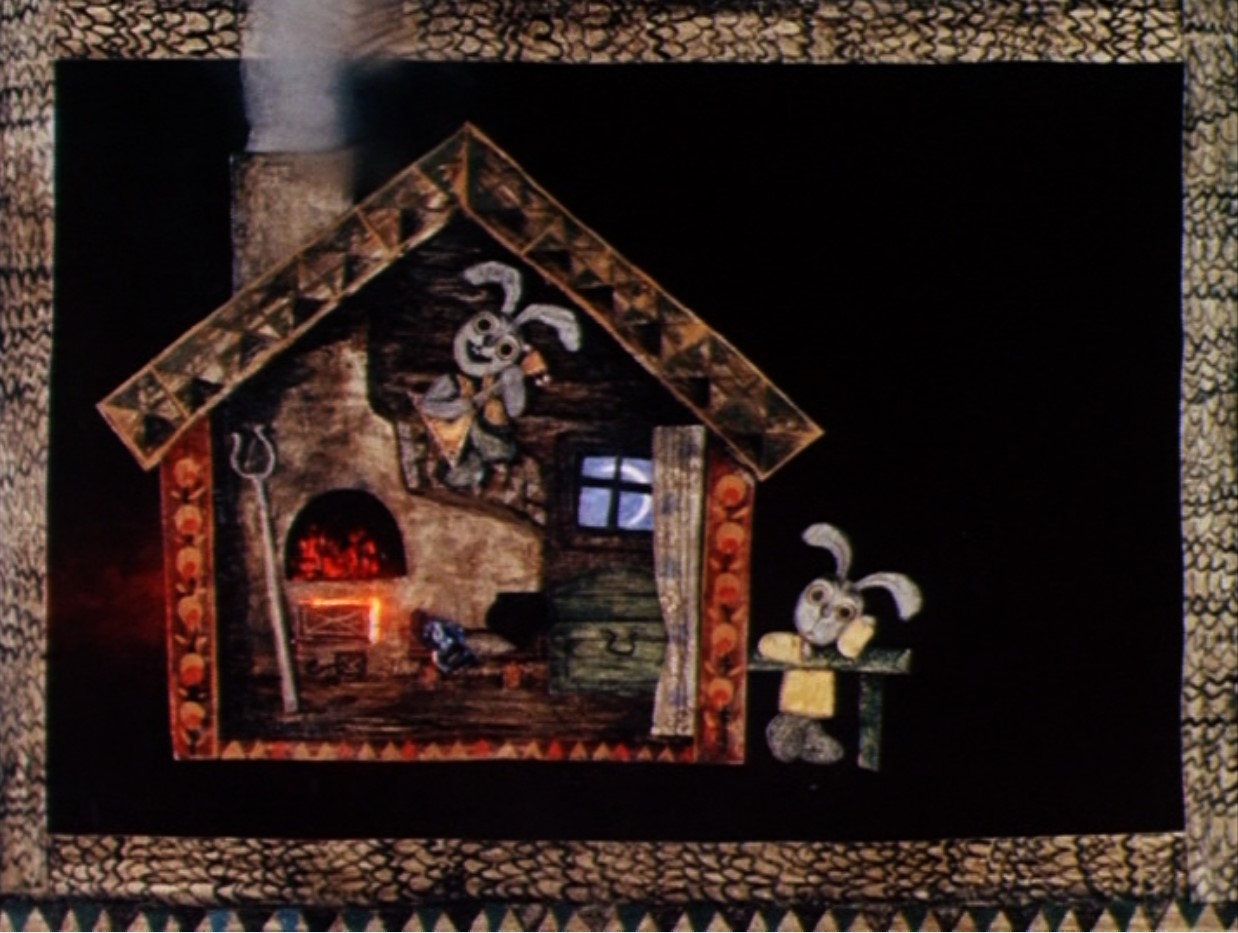
In ‘Fox and Rabbit’ (actually Fox and Hare) Norstein retells a Russian folktale in which a fox chases a rabbit out of his own house. A wolf, a bear and a bull all three promise the rabbit to help him regain his house, but when threatened by the fox they run off. Only a small rooster at least tries it.
The story is told by a voice-over, and is illustrated in a very charming semi-folkloristic style, which striking and colorful supposedly wooden frames framing the action, as if were looking at paintings. M. Meyerovich’s, rather Stravinsky-like music only adds to the folkloristic character. Norstein’s cut-out animation, meanwhile, is of the highest order, and full of little subtleties, signifying the different characters.
‘Fox and Rabbit’ may be less famous than the later ‘Hedgehog in the fog’ (1975) or ‘Tale of Tales‘ (1979), the film already shows Norstein’s extraordinary talent and charming animation style. Fyodor Khitruk thought highly of the film, and was completely surprised that such commonplace material (Soyuzmultfilm had made fable films for several decades) turned into such an original, idiosyncratic film.
Watch ‘Fox and Rabbit’ yourself and tell me what you think:
‘Fox and Rabbit’ is available on the DVD ‘Masters of Russian Animation Volume 2’
Director: Andrei Khrzhanovsky
Release date: 1973
Rating: ★★★
Review:
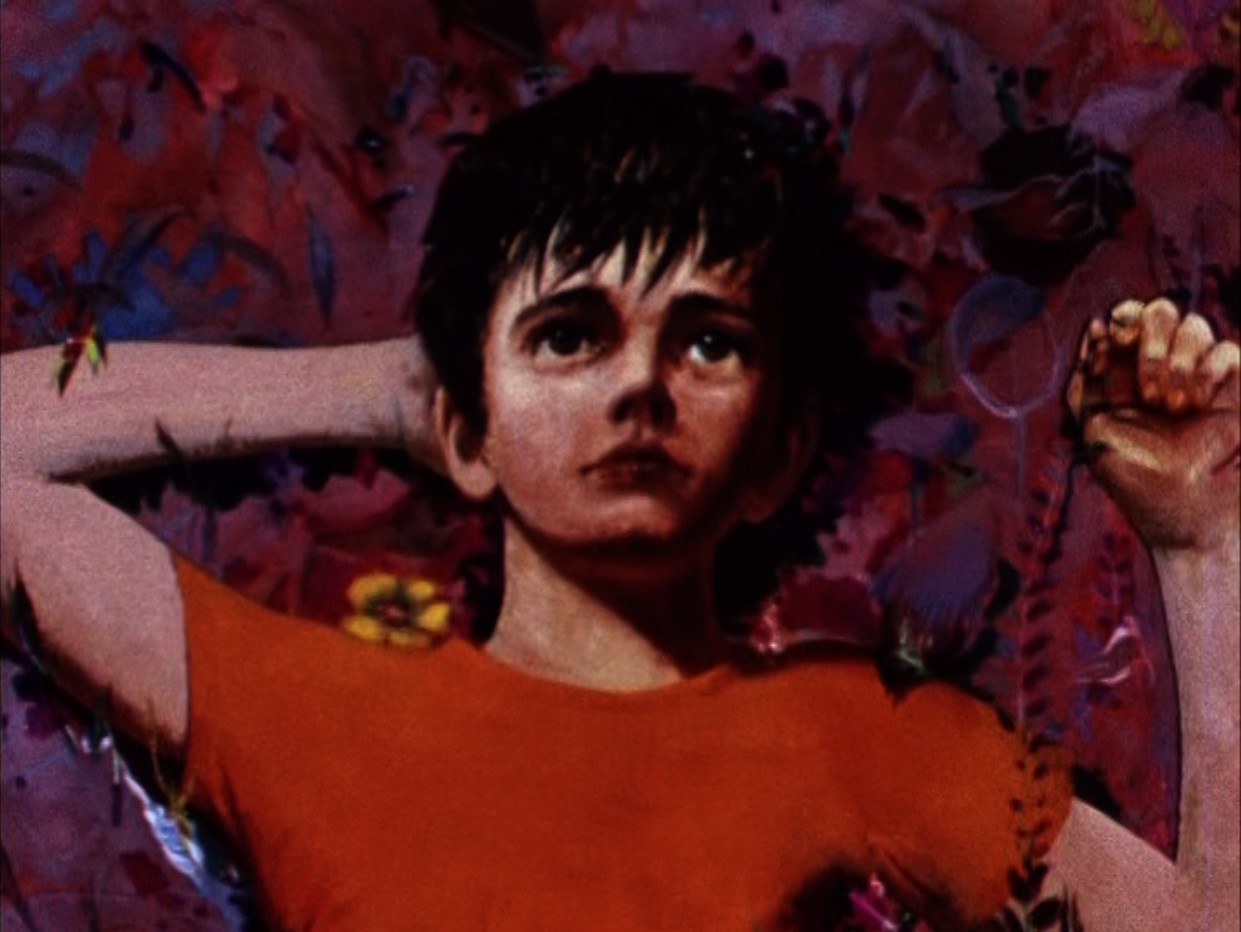
In ‘Butterfly’ a boy catches some butterflies, but after a nightmarish scene in which he himself is trapped, he releases them again.
The plot of ‘Butterfly’ is far from original, and rather predictive and boring, but Khrzhanovsky’s eclectic style is not. Part of the story is told in still oil paintings, but there’s also a little cell animation and cut-out animation.
The oil paintings are most interesting, with their rather high level of realism, and their painful contrast between colorful nature, and the dull, grey world of the modern city. Especially the scene inside the boy’s flat is most depressing, with only grey electronic robots to play with. Nevertheless, the most striking aspect of this film are not the animation nor the visuals, but the fascinating score by avant-garde composer Alfred Schnittke.
Watch ‘Butterfly’ yourself and tell me what you think:
‘Butterfly’ is available on the DVD ‘Masters of Russian Animation Volume 2’
Director: Eiichi Yamamoto
Airing date: June 27, 1973
Rating: ★★★½
Review:
The late sixties and early seventies saw some striking experiments in the animated feature film. These films left the tried paths of family film and aimed at a more adult audience. In Europe Walerian Borowczyk arguably made the first experimental animated feature with ‘Théâtre de Monsieur & Madame Kabal (Theatre of Mr & Mrs Kabal)’ (1967), René Laloux made quite an impact with ‘La planète sauvage’ (1973), while in the UK George Dunning’s ‘Yellow Submarine’ (1968) caused a revolution, inspiring for example ‘János Vitéz’ (Johnny Corncob) in Hungary. Meanwhile in the US Ralph Bakshi experimented with more adult themes in ‘Fritz the Cat’ (1972) and ‘Heavy Traffic’ (1973).
In Japan, Osamu Tezuka led the way with his Mushi Productions studio, releasing three more adult themed feature films: first ‘A Thousand and One Nights’ in 1969, followed by ‘Cleopatra’ (1970) and ‘Belladonna of Sadness’ from 1973.
All three were directed by Eiichi Yamamoto, but in contrast to the earlier two features Tezuka had no direct involvement in ‘Belladonna of Sadness’. Even more striking, the great master left his own studio halfway production. Thus, ‘Belladonna of Sadness’ is very, very different from Tezuka’s own rather cartoony creations.
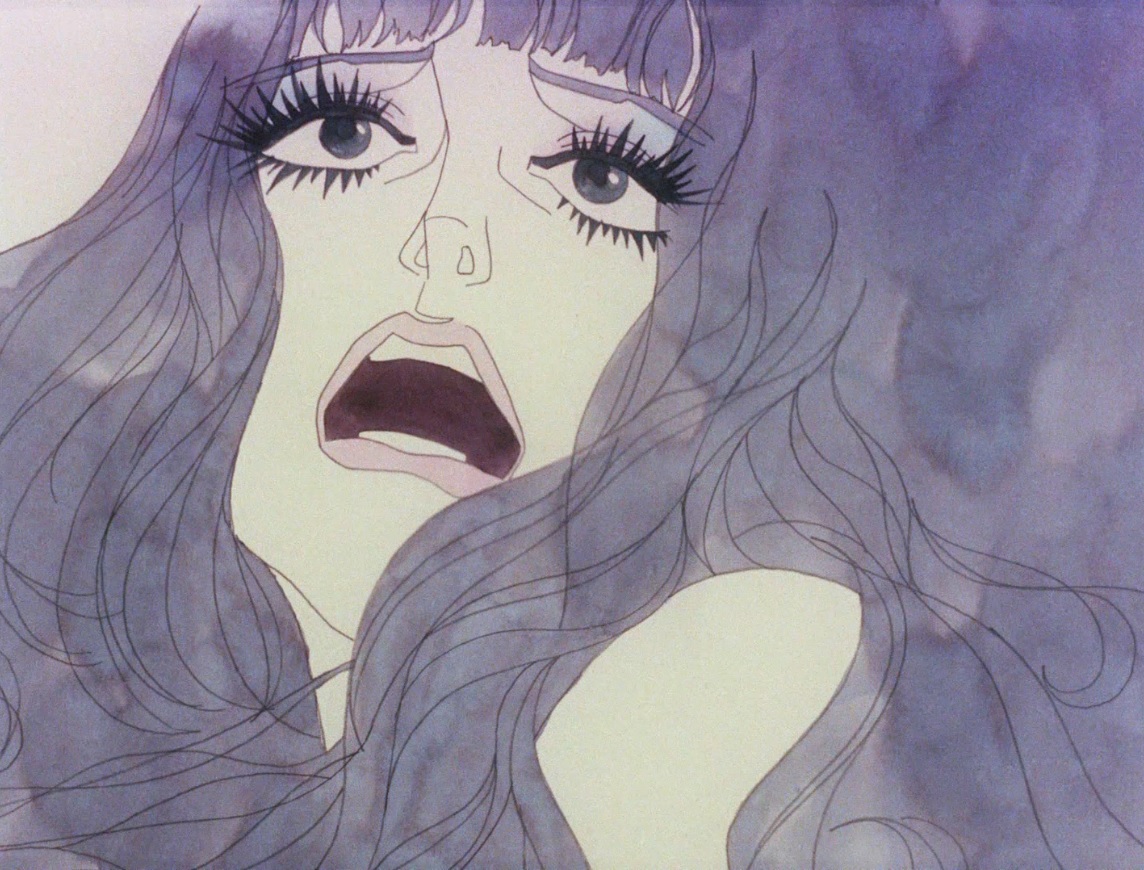
According to Yamamoto he wanted his film to be a Japanese answer to ‘Yellow Submarine’, and to make it one the drew inspiration from the artwork by Kuni Fukai. However, Kunai’s dark and disturbing artwork is quite the opposite from Dunning’s cheerful fantasies. On the Blu-ray Fukai calls his own work from the early seventies ‘decadent’, and that certainly is an apt description. Fukai’s drawings are baroque, graphical, lush, and highly erotic. They have a distinct neo-art-nouveau character, which is both very psychedelic and very seventies. For Belladonna of Sadness’ Fukai functioned as the art director, and his drawings form the base of the complete film, which uses animation only sparingly, often leaving the camera tracking over the static artwork.
And what artwork! ‘Belladonna of Sadness’ sure is a marvel to look at. The watercolor-and-pen drawings are all interesting and of a high artistic quality. Fukai almost always uses a white canvas, in which the drawings more or less disappear, and there’s ample and expressive ornamentation to accentuate the feeling of the scene. There are some odd design choices, however. For example, the villain looks like he has no eyes and as if three bones are stuck into his skull, making him rather grotesque and unbelievable.
Animation, as said, is only used only sparingly. There is no lip-synchronization, whatsoever, and some of the animation is crude and simple. The most interesting animation occurs when the events are not shown directly, but only suggested. For example, in the best erotic scenes more is hinted at than shown, and when the world is struck with the plague, we watch the landscape melt. There are certainly some trippy scenes, full of metamorphosis, which form the best parts of the movie. The undisputed highlight of the film comes when the baroque images are suddenly changed for a rapid-fire delivery of much more cartoony designs in bold seventies colors. This frenzy of animated images is followed by beautiful glass painted animation full of metamorphosis.
The psychedelic images are further enhanced by the soundtrack, which mixes psychedelica, spacefunk and rock into a very seventies-like mix, akin to Alain Goraguer’s soundtrack for ‘La planète sauvage’ from the same year, albeit of a lesser quality. There are even a few songs to enhance the mood.
In contrast to the beautiful art the story of ‘Belladonna of Sadness’ is subpar, and even objectionable. The film is based on ‘La sorcière’ (1862) by Jules Michelet, a non-fiction book on witchcraft, and the film’s story is set in a fictive oppressive kingdom in which a peasant girl becomes a witch. However, Yamamoto’s and Yoshiyuki Fukuda’s screenplay apparently only uses the book as a source of inspiration, as their own tale is as predictable as it is boring.
Yamamoto apparently instructed Fukai that his film was ‘porn but make it a love story’. Well, the movie is certainly porn, but hardly a love story. The two lovers Jean and Jeanne are more vignettes than characters, and if anything, Jean is a weak and will-less coward. Worse, the porn is exploitive, featuring several rapes and a lot of violence. As can be expected, there is a lot of female nudity, but hardly any male one, although penises are omnipresent, especially as the devil takes the shape of a penis himself. Jeanne’s best moment comes when she reveals herself as a full-blown witch, which provides one of the film’s most iconic moments. But during most of the film she’s used and abused by powers beyond her control. The ending, too, is unsatisfying, and all too abrupt, forcingly trying to make the porn story into something political.
Thus, ‘Belladonna of Sadness’ may transcend normal porn (it’s certainly weird and original enough to do so), but not that of a cheap comic. There’s no depth to the story, at all, and the film’s exploitive character gives a bad taste in the mouth. Nevertheless, the movie is a feast of the eye and stands as a great example of the sheer experimentation that were the seventies.
Watch the trailer for ‘Belladonna of Sadness’ yourself yourself and tell me what you think:
‘Belladonna of Sadness’ has been released on Blu-Ray, but this is currently out of print
Director: Marcell Jankovics
Release date: May 3, 1973
Rating: ★★★★
Review:
Hungarian director Marcell Jankovics (1941-2021) is most famous for his second animated feature, the mind-blowing masterpiece ‘Fehérlófia’ (Son of the White Mare) from 1981. But his first feature, ‘János Vitéz’ certainly deserves to be equally famous.
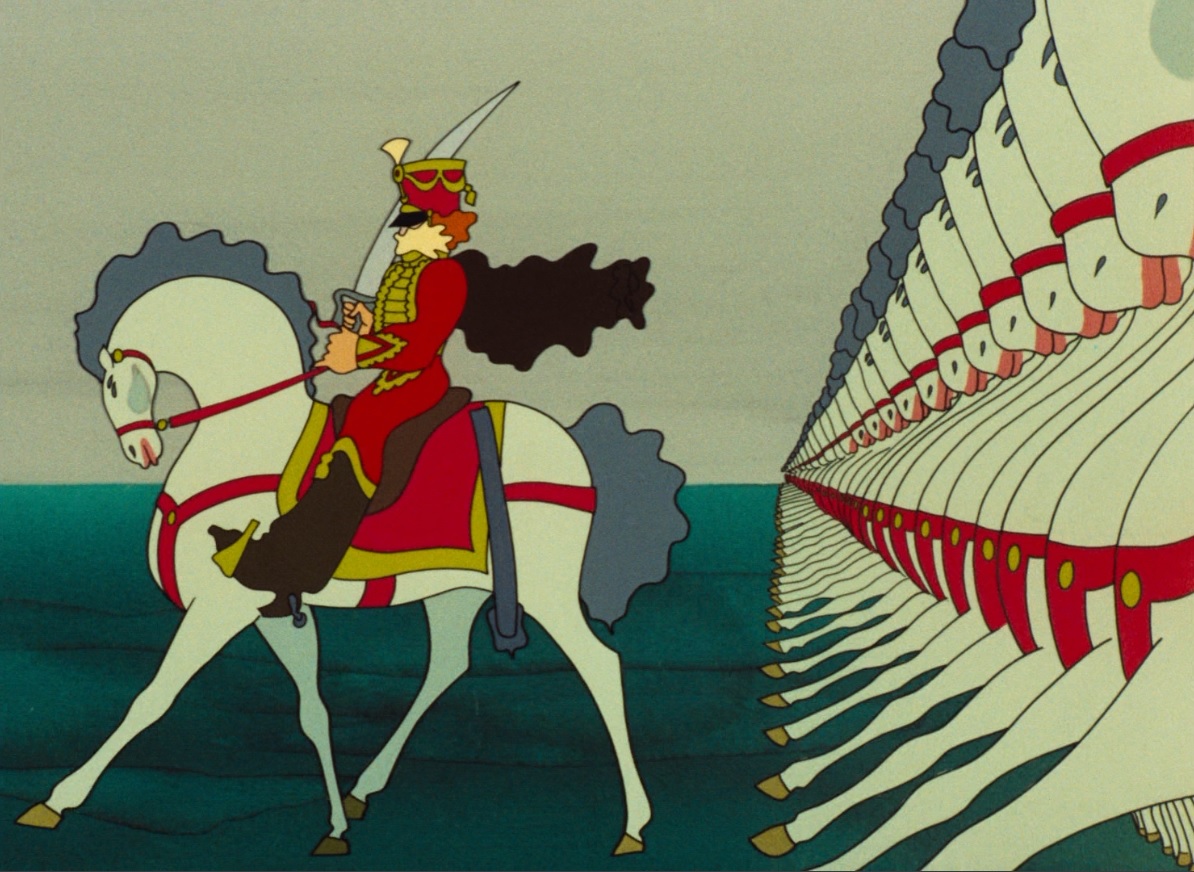
‘János Vitéz’ was Hungary’s ever first animated feature ever, but this doesn’t show, at all. The feature is a remarkably mature product that owes nothing to earlier animation films, save George Dunnings’ ‘Yellow Submarine’ from 1968 (and one scene of a devils’ dance, which harks all the way back to Disney’s Silly Symphony ‘The Goddess of Spring’ from 1934). Like Dunning’s film, ‘János Vitéz’ uses very striking visuals in bold colors, and with a genuine contemporary design. In fact, no movie from the seventies looks so enormously ‘seventies’ as this film.
The film was commissioned by the Hungarian government to commemorate the 150st birthday of Hungary’s national poet Sándor Petőfi (1823-1849), whose stature in Hungary is comparable to that of Pushkin in Russia. Petőfi wrote ‘János Vitéz’, a long epic poem in 1844, and despite the strikingly modern visuals, the film follows the poem quite faithfully. János Gyulai-Gaál’s score is unmistaken Hungarian, akin to the music of Zoltán Kodály’s folk opera ‘Háry János’ from 1926 and contributes greatly to the utterly Hungarian character of the movie. There are also a few charming songs, adding to the experience.
The story is pretty nonsensical and more of a tall tale than a classic epic poem. It tells about the hero János Vitéz who is a sheep herder in love with the neighboring Iluska. Unfortunately, Iluska’s stepmother, the witch Mostoha, doesn’t approve of the young lovers’ romance, and makes János Vitéz’ flock of sheep disappear. Banished from his village, János Vitéz first joins a band of robbers, then joins the army, but keeps longing for his beloved Iluska.
The film retains much of Petőfi’s poetic quality: the dialogue is in rhyme, and the images themselves have a lyric quality. For example, the love of Iluska and János Vitéz is shown by associative images, full of flowers and a radiant sun. Moreover, a lot of the story is told through the images, and more by suggestion than by literally showing what’s happening. For example, when János Vitéz is banished this is shown by a street in which every house shuts its shutters when János Vitéz passes by.
The images are as folkloristic as they are psychedelic, and never cease to please or to amaze. The character designs are more of a mixed bag. János Vitéz and Iluska are drawn as rather bland beautiful people, while Mostoha, the robbers and the Turks are very cartoony. These and other characters provide some small gags. Character animation is absent. For example, when János Vitéz mourns for Iluska, this emotion is indicated more than heartfelt. Nevertheless, there is a clever use of metamorphosis and animation cycles, and it’s clear the animation is in service of the graphics and of the story.
In all, ‘János Vitéz’ is a joy to watch from start to end and deserves a much wider audience than it has now.
Watch an excerpt from ‘János Vitéz’ yourself and tell me what you think:
‘János Vitéz’ is available on the Blu-Ray of ‘Son of the White Mare’
Director: Bill Melendez
Airing date: March 11, 1973
Stars: Charlie Brown, Franklin, Linus, Lucy, Margie, Peppermint Patty, Sally, Snoopy
Rating: ★★★
Review:
‘There’s No Time for Love, Charlie Brown ‘is the ninth Peanuts television special. This instalment is a nice, quiet little affair, with a rather stream-of-consciousness-like quality to it.
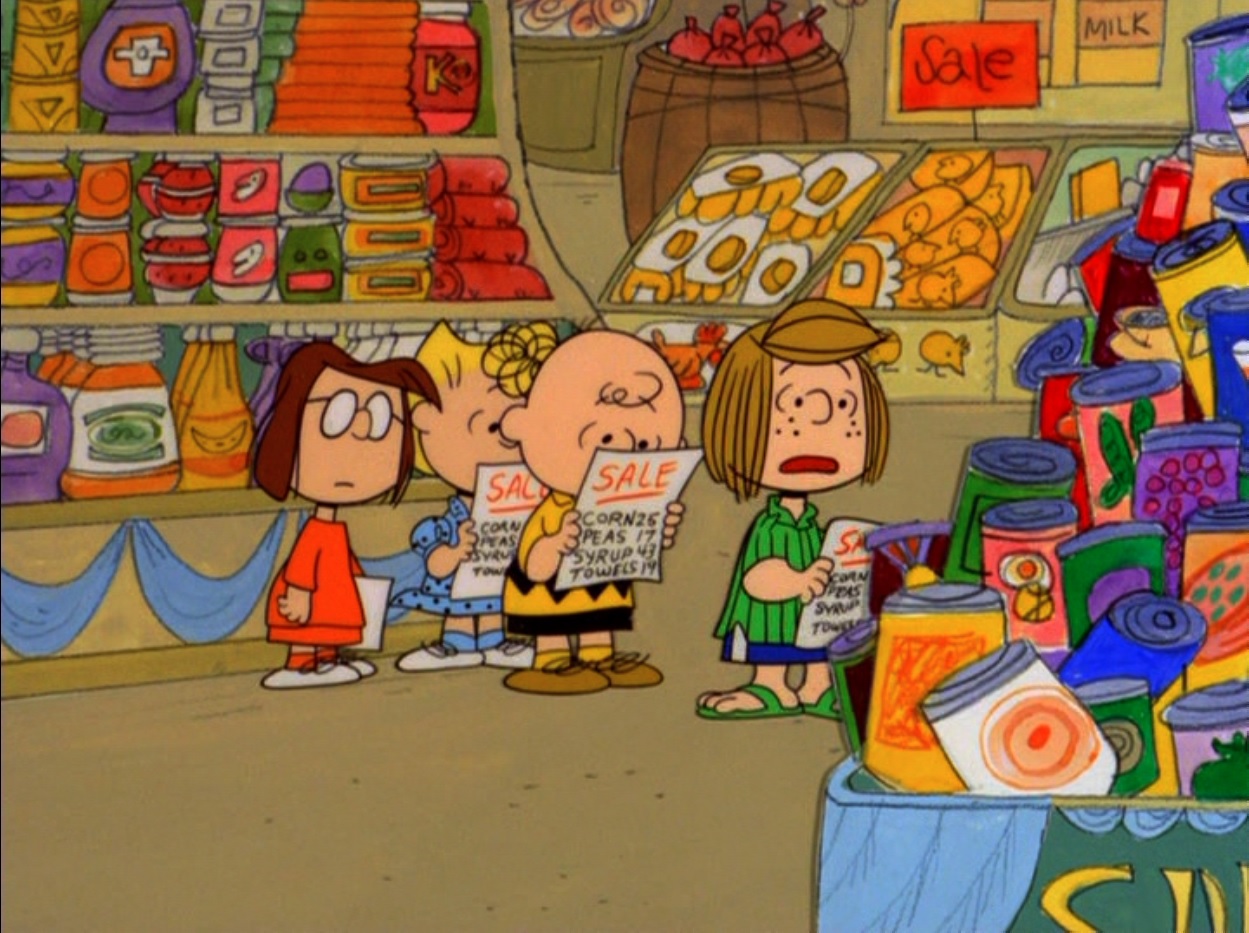
The special starts with several comic-based loose gags on school, most of them starring Sally and Peppermint Party. After seven minutes the main story kicks in, in which the kids have to go on a field trip to a museum and write a report on it. Unfortunately, Charlie Brown, Sally, Peppermint Patty and Marcie end up in a supermarket. What’s worse, Peppermint Patty hurts Charlie Brown’s feelings there, too.
Marcie, who makes her screen debut here, has a particularly young sounding voice (by one Jimmy Ahrens). It’s nice to watch her interaction with Peppermint Patty on screen, as is the interplay between Peppermint Patty and Charlie ‘Chuck’ Brown.
Halfway the supermarket scenes there’s a short song on Snoopy’s Joe Cool character, while the accompanying images show Snoopy imagining himself as a world famous grocery clerk. The rest of the episode features a very attractive jazz score by Vince Guaraldi. Throughout, both the animation and the facial expressions are fair, and the whole episode is a pleasant, if rather understated affair.
Watch ‘There’s No Time for Love, Charlie Brown’ yourself and tell me what you think:
‘There’s No Time for Love, Charlie Brown’ is available on the DVD-set ‘Peanuts 1970’s Collection Vol. 1’
Director: Raoul Servais
Release Date: 1973
Rating: ★★★
Review:
 ‘Pegasus’ tells about a lonely blacksmith who lives in the countryside.
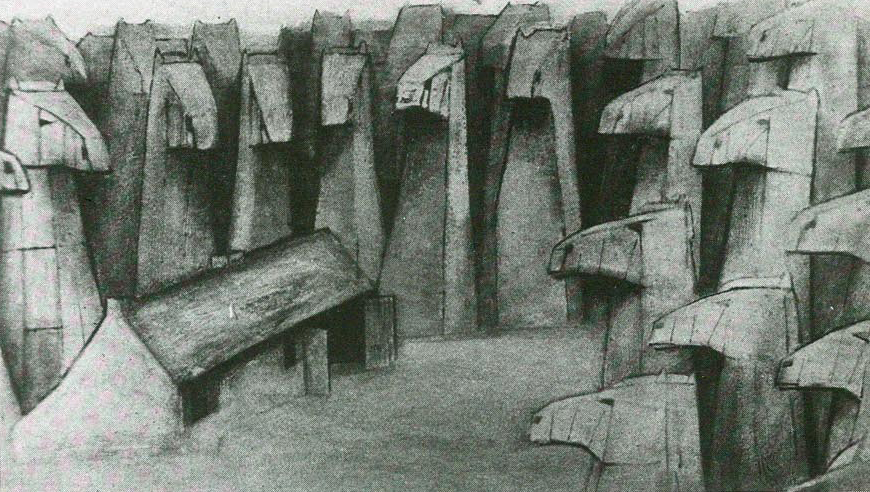
The blacksmith has a love for horses, but unfortunately his surroundings are totally devoid of them. So he builds a horse head out of metal to worship. Unfortunately, the horse head appears to have an ability to grow and reproduce, surrounding his house like a forest.
‘Pegasus’ is a beautiful and surreal film. Unfortunately, it ends quite abruptly, leaving behind a sense that not everything has been said, yet.
Watch ‘Pegasus’ yourself and tell me what you think:
Director: Wolfgang Reitherman
Release Date: November 8, 1973
Rating: ★★★
Review:
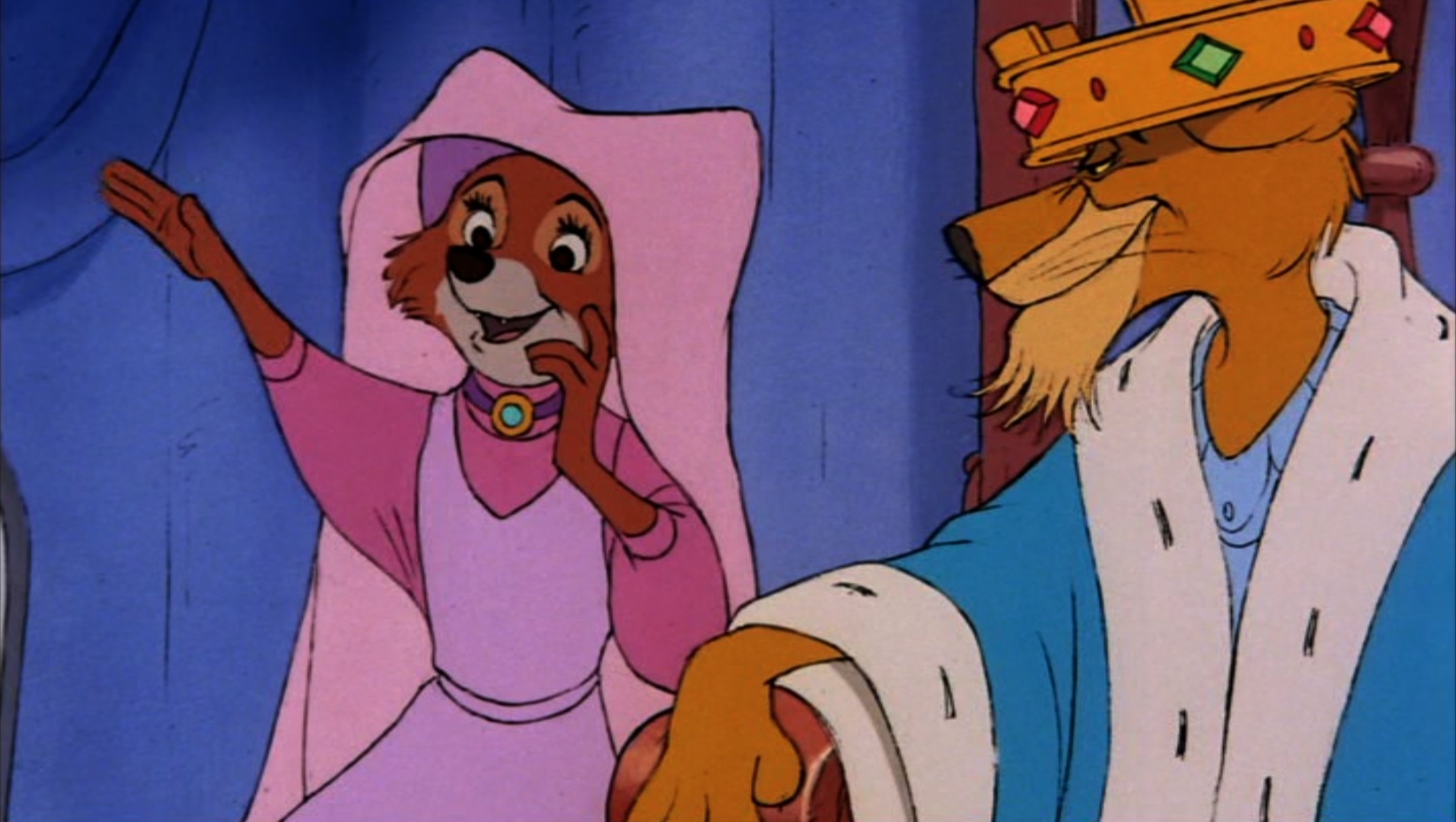
‘Robin Hood’ was Walt Disney studio’s 21st feature. The film’s story and designs lean heavily on the 1938 feature ‘The Adventures of Robin Hood’, starring Errol Flynn.
But by now the characters are portrayed as animals, a relic of an abandoned feature film project about Reynard the fox called ‘Chanticleer’. This great idea doesn’t lead to a great film, however. Despite the fine character designs, the strong voice cast (a nice mix of British and American accents) and the often superb animation, Robin Hood must be placed among the weaker Disney features.
Many of the character designs are so reminiscent of those in ‘Jungle Book’, the film almost feels like a rip-off. There’s a bear, voiced by Phil Harris, the voice of Baloo, there’s a snake with the power of hypnosis and there are some funny vultures. The story evolves at a remarkably slow pace, taking almost half an hour to introduce the characters (first Robin and Little John, then Prince John and Sir Hiss, followed by the Sheriff, and in another scene Maid Marian and Lady Kluck), before some sort of plot sets in.
More than any earlier Disney feature ‘Robin Hood’ seems particularly aimed at children: both great drama and great comedy are absent and danger is never really felt, save for two very short moments. The great finale is anything but that, and King Richard serves as an off-stage deus ex machina, putting an equally welcomed as unsatisfying end to the film.
In a 1973 letter to animator Larry Ruppel, cited in John Canemaker’s book ‘Walt Disney’s Nine Old Men & The Art of Animation’, animator Frank Thomas expressed the film’s shortcomings:
“We obviously decided to keep it on the ‘fun’ side, but I have worried that the audiences would feel it was too flimsy – that we were not being quite serious enough with our characters. For instance, does anyone really fear Prince John? Is Robin ever worried about his ability to achieve something or even how it should be done? Did winning Maid Marian make any difference in Robin’s behavior. In real life it would have.”
The rather tinned music doesn’t help, either. What’s more, the film’s three forgettable songs are all presented within a twelve minutes period of the film (0’46-0’58), with which the film reaches dead waters after the tournament scene, which was less spectacular than it could be in the first place. Even worse, the dance scene blatantly reuses complete dance animation sequences from ‘Snow White and the seven dwarfs’ (1937), ‘Jungle Book’ (1967) and ‘Aristocats’ (1970). All these aspects give the film a cheap feel. It frustrated younger animators like Don Bluth, who thought the film lacked both quality and soul, and it indirectly led to Bluth’s departure in 1979, during the production of ‘The Fox and the Hound‘ (1981).
The film’s best moments are the opening song ‘Oo-De-Lally’, sung by Roger Miller (as Alan-a-Dale), sir Hiss flying around with his head in a balloon and propelling himself like a helicopter, and King John as a whole. This is by all means a marvelous character, perfectly voiced by Peter Ustinov, and animated with gusto. Because of the film’s strong visuals (after all, it’s the only Robin Hood film starring foxes), the film fares better in memory than by actually watching it.
In all, Robin Hood is a timid, rather lifeless and all too safe feature, which makes painfully clear that in the seventies Disney’s glory days lay years behind. Indeed, it would take the studio another fifteen years to crawl out of the uncertain times the studio went through after Walt Disney’s death.
Watch the trailer for ‘Robin Hood’ and tell me what you think:
‘Robin Hood’ is available on Blu-Ray and DVD
Director: René Laloux
Release Date: May 11, 1973
Rating: ★★★★★ ♕
Review:
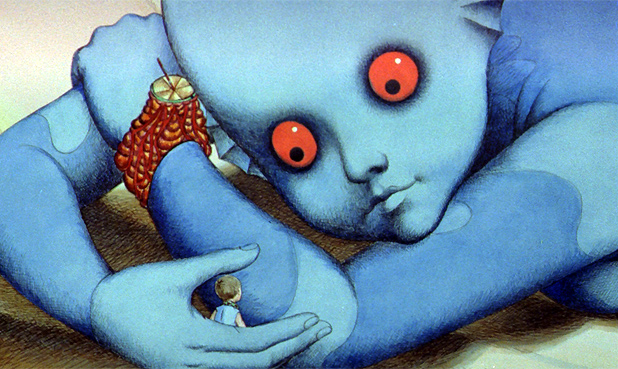
‘La planète sauvage’ is an old love of mine. I first watched it when I was ca. six or seven. It took me fifteen years before I learned which film I had actually watched, and it would take me another ten years before I could watch it again. However, all the time the film’s powerful images never left me.
‘La planète sauvage’ is a science-fiction feature, which tells about the life of humans (‘Oms’, which sounds like the french word for humans, ‘hommes’) on a strange planet occupied by story-block-high humanoid giants, called Draags. To them humans are no more than pets and pests. By accident, a pet Om, Terr (symbolically named after the French word for Earth, terre), learns the Draags’ knowledge and he leads his fellow humans into an uprising.
However, ‘La planète sauvage’ is not particularly famous for its straightforward and rather cliche plot. Its strength lies in its effective use of Roland Topor’s very surrealistic designs, which makes the depicted planet incomprehensible, foreign and scary. For example, the Draag’s behavior is so strange, that despite their humanoid form they feel very alien, indeed. The film’s original technique of combining drawn animation with cut-out adds to the surreal atmosphere. Even the space funk music accompanying the action sounds outlandish.
Even though the animation sometimes is rather stiff and at times even ridiculously poor, the graphic imaginary is so strong that these shortcomings never spoil the enjoyment of the film. On the contrary, the film’s totally unique and disturbing atmosphere and its philosophical questions about what makes man human make watching ‘La planète sauvage’ a very rewarding experience.
Together with Bruno Bozzetto’s ‘Allegro non troppo’ (1976) and Martin Rosen’s ‘Watership Down’ (1978) Laloux’s film must be counted among the most outstanding features of the seventies. René Laloux would make two other science fiction features, ‘Les maîtres du temps‘ (1981) and ‘Gandahar‘ (1988), but these do not reach the stunning originality of the visuals in this film.
Watch the trailer for ‘La Planète sauvage’:


 Dr. Grob's Animation Review