
You are currently browsing the category archive for the ‘Canadian Films’ category.
Directors: Norman McLaren & Evelyn Lambart
Release date: 1965
Rating: ★★★★
Review:
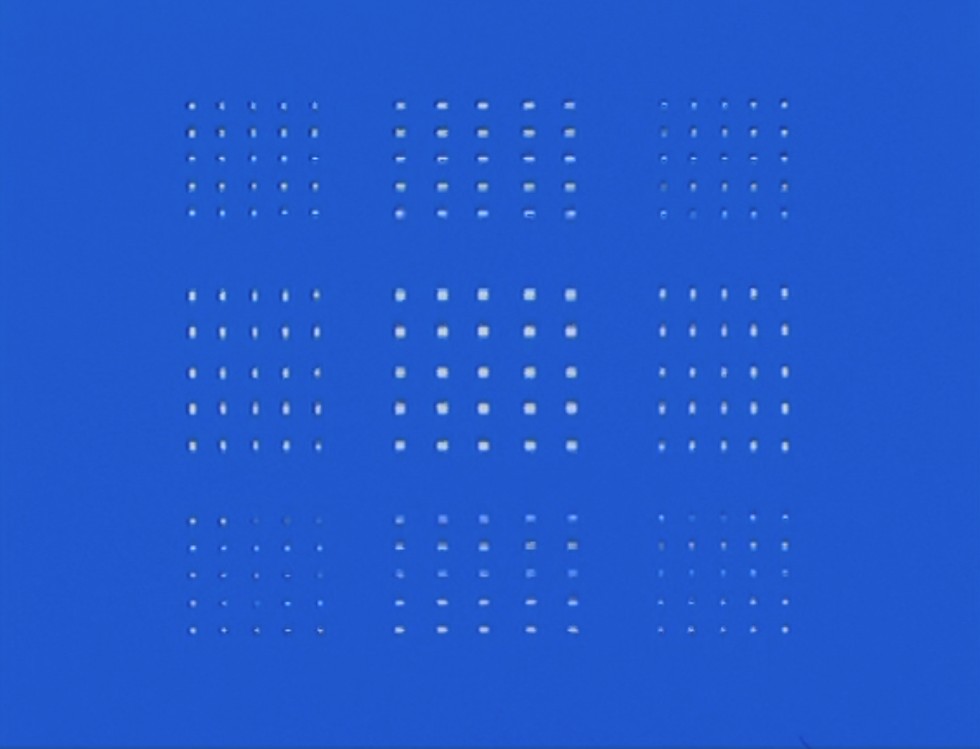
‘Mosaic’ starts with Norman McLaren himself entering an empty stage with a ball, while whistling. When he places the ball in empty air, it soon turns into a dot, which quickly splits into four dots, then nine, then sixteen and so on, until very complex patterns of dots fill the screen. The result is somewhat like a moving Piet Mondriaan painting, with the dots forming endless patterns, which change color over time.
It’s thanks to McLaren’s and Evelyn Lambart’s geniuses that this highly abstract film remains entertaining throughout, and seems to follow some inner logic. Indeed, McLaren himself said that ‘Mosaic’, like ‘Lines Vertical‘ and ‘Lines Horizontal‘ followed the structure of Hindu classical music, which also start with an easy pattern (a raga), which becomes increasingly complex and fast moving.
Watch ‘Mosaic’ yourself and tell me what you think:
‘Mosaic’ is available on the DVD-box ‘Norman McLaren – The Master’s Edition’
Directors: Norman McLaren & Evelyn Lambart
Release date: 1962
Rating: ★★★
Review:

‘Lines Horizontal’ is essentially ‘Lines Vertical‘ from 1960, but turned 90 degrees, re-colored and with a new, rather folky soundtrack by Peter Seeger. Even though the patterns are essentially the same, the result feels like a new film, especially because the horizontal lines cause some different effects to the eye, like creating non-existent triangles.
‘Lines Vertical’ and ‘Lines Horizontal’ both are extreme films in that they only use parallel lines, but Norman McLaren and Evelyn Lambart are able to turn this extreme concepts into intriguing films, thanks to their timing and overall structure, which follows an inner logic.
Watch ‘Lines Horizontal’ yourself and tell me what you think:
‘Lines Horizontal’ is available on the DVD-box ‘Norman McLaren – The Master’s Edition’
Director: Norman McLaren
Release date: 1961
Rating: ★★★½
Review:

‘New York Lightboard’ is a direct-on-film animation film that was never meant for the cinema. Instead, it was a commercial film commissioned by the Canadian Governmental Tourism Office to be projected in an endless loop on a big screen on Times Square in New York City.
The film is both in black and white and silent, but McLaren makes the commercial a very playful one, with letters bouncing and playing with each other, and metamorphosis running wild (we watch. e.g. the letters Canada change into a fish, which turns into a bird, which becomes a smiling sun, etc.).
Most of the film is pretty abstract, but there’s also some fine animation of swimming fish, a galloping horse, a man in a canoe and of Hamlet and Laertes fighting. Apart from the words Canada and ‘Dial PL 7-4917’ (for more information), the most recurring elements are animated fireworks.
The whole film seems a little too playful and too experimental for a general audience, but it certainly must have drawn attention. There’s also a short equally silent documentary called ‘New York Lightboard Record’ in which we watch the film on a screen on Times Square, and some of the responses of the audience watching it.
Watch ‘New York Lightboard’ & ‘New York Lightboard Record’ yourself and tell me what you think:
‘New York Lightboard’ and ‘New York Lightboard Record’ are available on the DVD-box ‘Norman McLaren – The Master’s Edition’
Director: Norman McLaren
Production date: March 17, 1966
Rating: ★★★
Review:
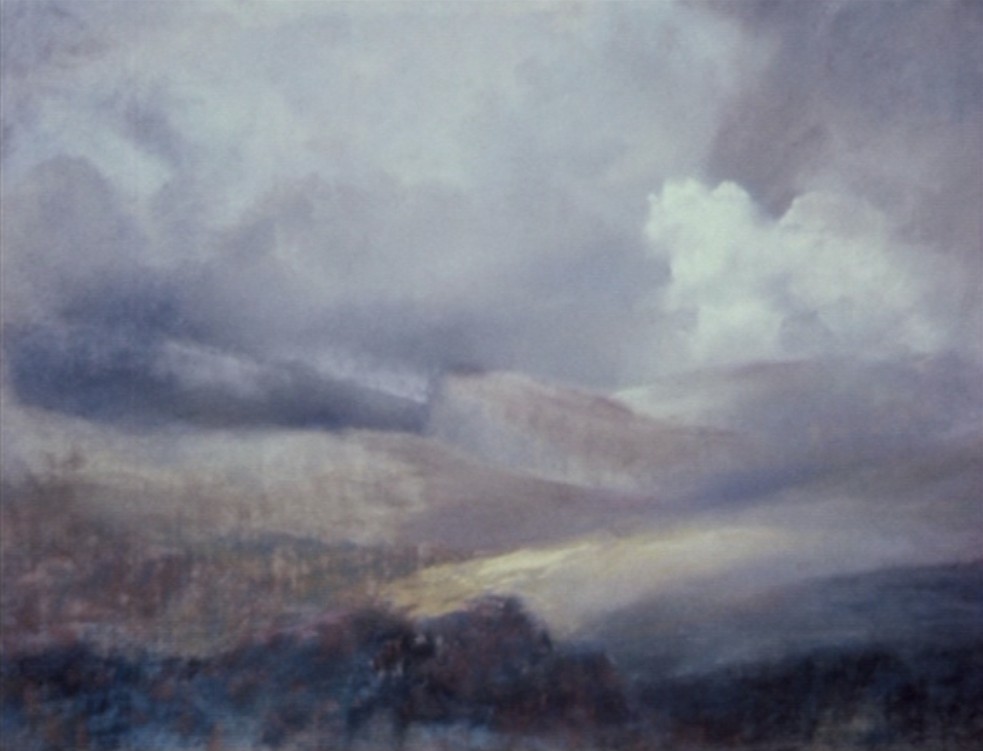
‘The Seasons’ is an unfinished film in which Norman McLaren tried to emulate the Canadian landscape in several moving paintings.
The ever changing pastel paintings never cease to amaze, with their metamorphosis of clouds, seascapes and landscapes, but McLaren deemed the film too abstract to entertain and never finished it. Thus, we are left with loose images without a soundtrack, and indeed, in this state, the result is still a little too boring to sit out, despite its short length of only four minutes. And yet, the images themselves are so beautiful it’s a pity this short never reached a final state.
‘The Seasons’ is available on the DVD-box ‘Norman McLaren – The Master’s Edition’
Director: Norman McLaren
Production date: ca. 1961
Rating: ★
Review:

This unfinished film from ca. 1961 must be the most extreme Norman McLaren ever made. In fact this is one of the most extreme films in the entire history of cinema. The film consists of a black and a white image only that are altered in different rhythms to cause a flickering effect. The electronic soundtrack matches the flickering.
It’s a testimony of McLaren’s genius that even such an extreme film contains some rhythm and variation, and even a sense of a build-up, but the idea remains too extreme to be entertaining, and the continuous stroboscope effect quickly wears done the viewer.
‘The Flicker Film’ is available on the DVD-box ‘Norman McLaren – The Master’s Edition’
Director: Norman McLaren
Release date: 1972
Rating: ★★
Review:

In the final stages of his career Norman McLaren apparently got interested in ballet, for three of his final films (‘Pas de deux’, ‘Ballet Adagio’ and ‘Narcissus’) are on the movements of ballet dancers.
‘Ballet Adagio’ is the most straightforward of the three: it is a documentary recording of a two and a half minute pas de deux, danced by David and Anna Marie Holmes, played on a quarter speed and set to the faux-Albinoni adagio in G minor by Remo Giazotto.
There’s no trickery, let alone animation involved – it’s just the two dancers on an empty stage doing their thing. Due to the slow motion one gets ample opportunity to watch the sheer virtuosity of the two dancers, the sometimes almost impossible stunts of the two, and their muscle movements. But, as there’s nothing else going on, the result is as fascinating as it is boring. It doesn’t really matter, for the film’s intentions were purely educational, giving ballet students an opportunity to study movement.
Watch ‘Ballet Adagio’ yourself and tell me what you think:
‘Ballet Adagio’ is available on the DVD Box ‘Norman McLaren – The Master’s Edition’
Director: Paul Driessen
Release date: 1975
Rating: ★★★
Review:
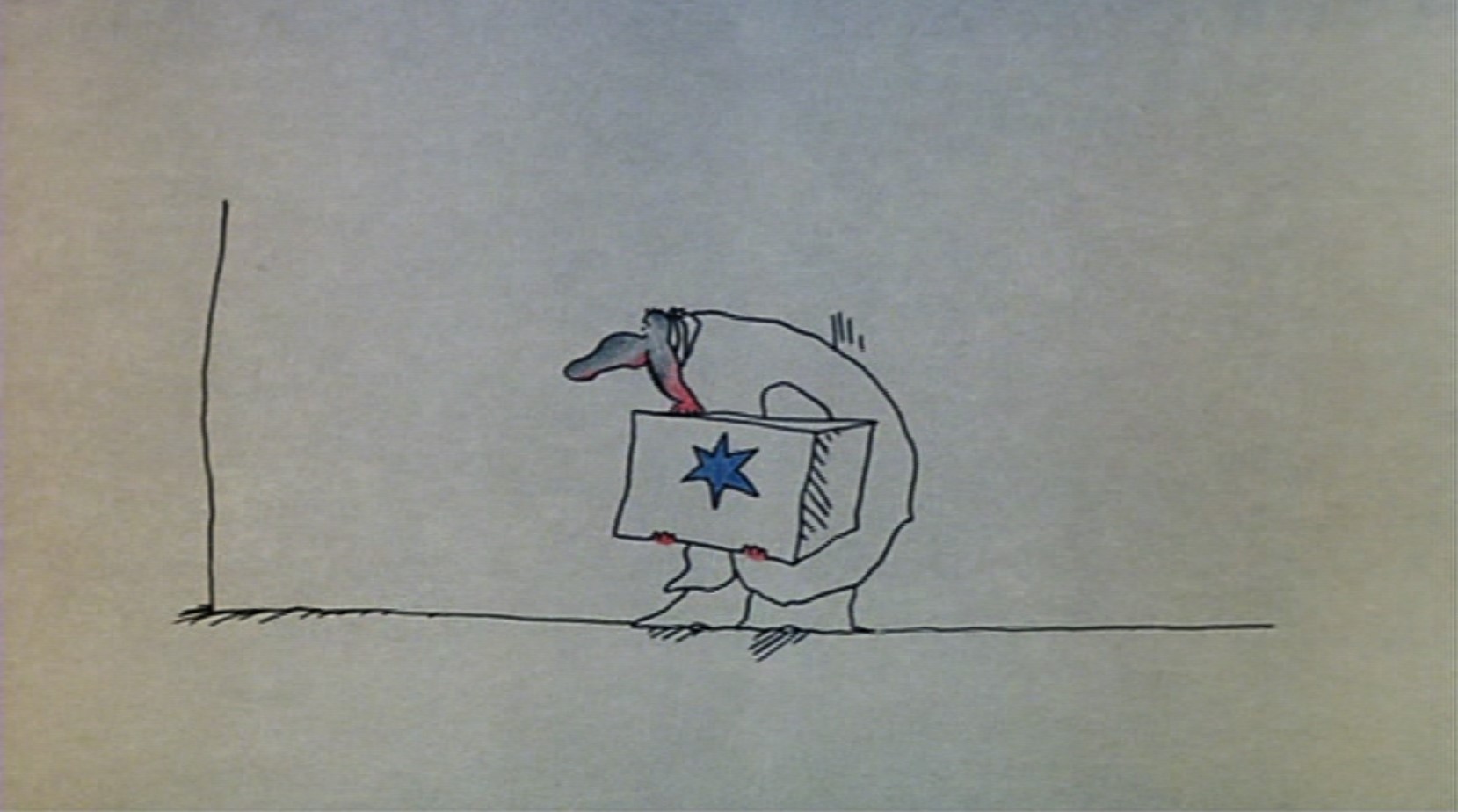
‘An Old Box’ is Paul Driessen’s own variation on the Hans Christian Andersen fairy tale ‘The Little Match Girl’.
In his own film a poor man paints an old box in order to entertain people, but he is at the wrong corner of the town, and nobody passes by, while a short distance away a county fair takes place.
In this short Driessen introduces his idiosyncratic way of showing background art only when necessary. Thus lines indicating backgrounds appear from and dissolve into nothingness as we progress from scene to scene.
Likewise, Driessen’s color use is very limited, emphasizing the most important elements. Only in the very end the animator bursts into a fantastical multi-colored perspective animation before returning to the prevailing depressing grays of the rest of the short.
Watch ‘An Old Box’ yourself and tell me what you think:
‘An Old Box’ is available on the DVD ‘Des histoires pas comme les autres’
Director: Paul Driessen
Release date: 1974
Rating: ★★★
Review:
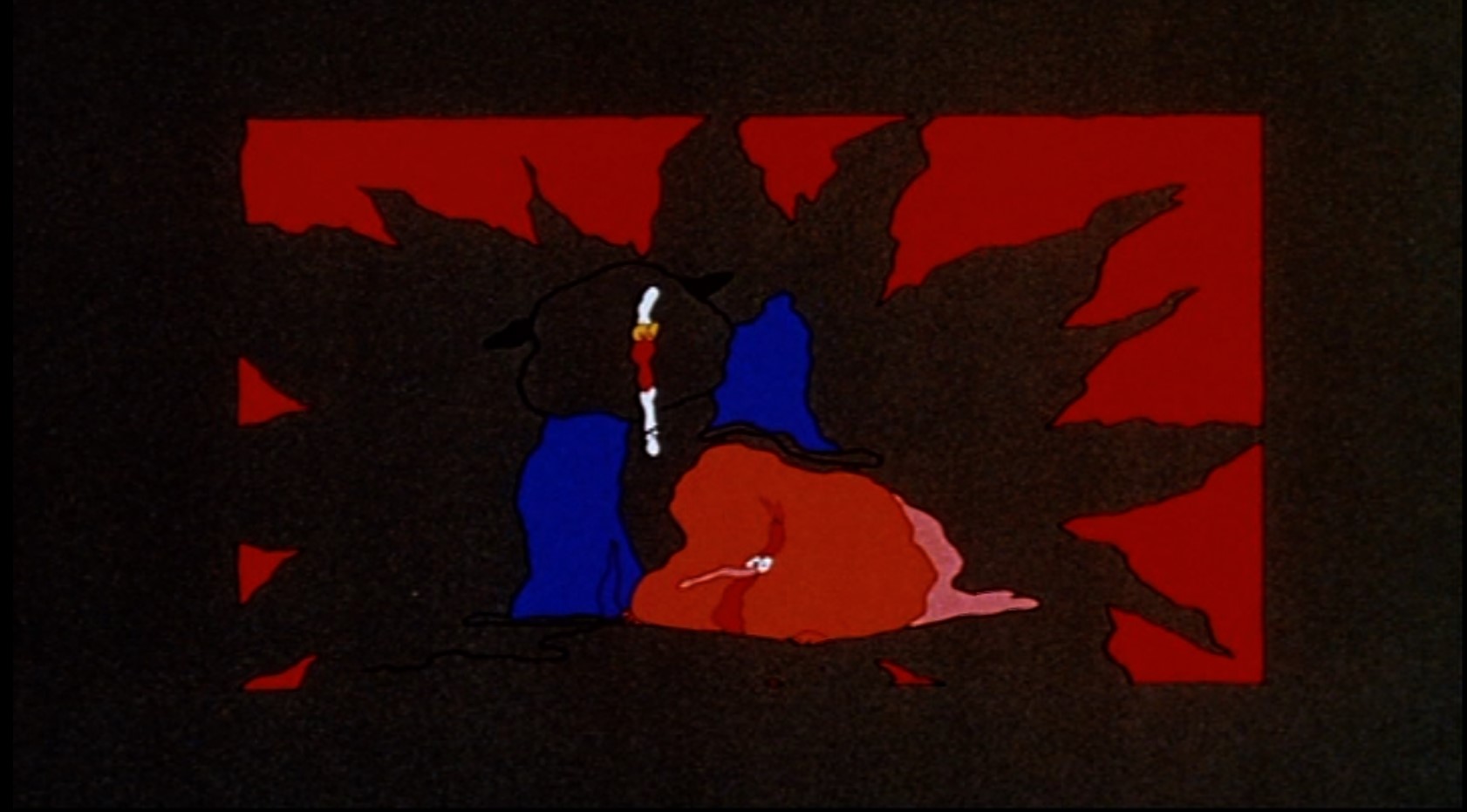
‘Cat’s Cradle’ is an early film by Dutch animator Paul Driessen for the National Film Board of Canada.
This is one of Driessen’s most enigmatic films, in which the images seem to flow in a stream-of-consciousness-like fashion, bridged by a string spun by tiny spider. Somehow the tale, if there is one, has a retrograde character, but it’s hard to make head or tail of Driessen’s narrative in this short.
The background art again is very limited and made of monochromes, and Driessen’s typical morbid humor is very present. For example, the spider is handled by a man, who in turn turns out to hang at a gallows pole.
Watch ‘Cat’s Cradle’ yourself and tell me what you think:
‘Cat’s Cradle’ is available on the DVD ‘Des histoires pas comme les autres’
Director: Paul Driessen
Release date: 1972
Rating: ★★★½
Review:
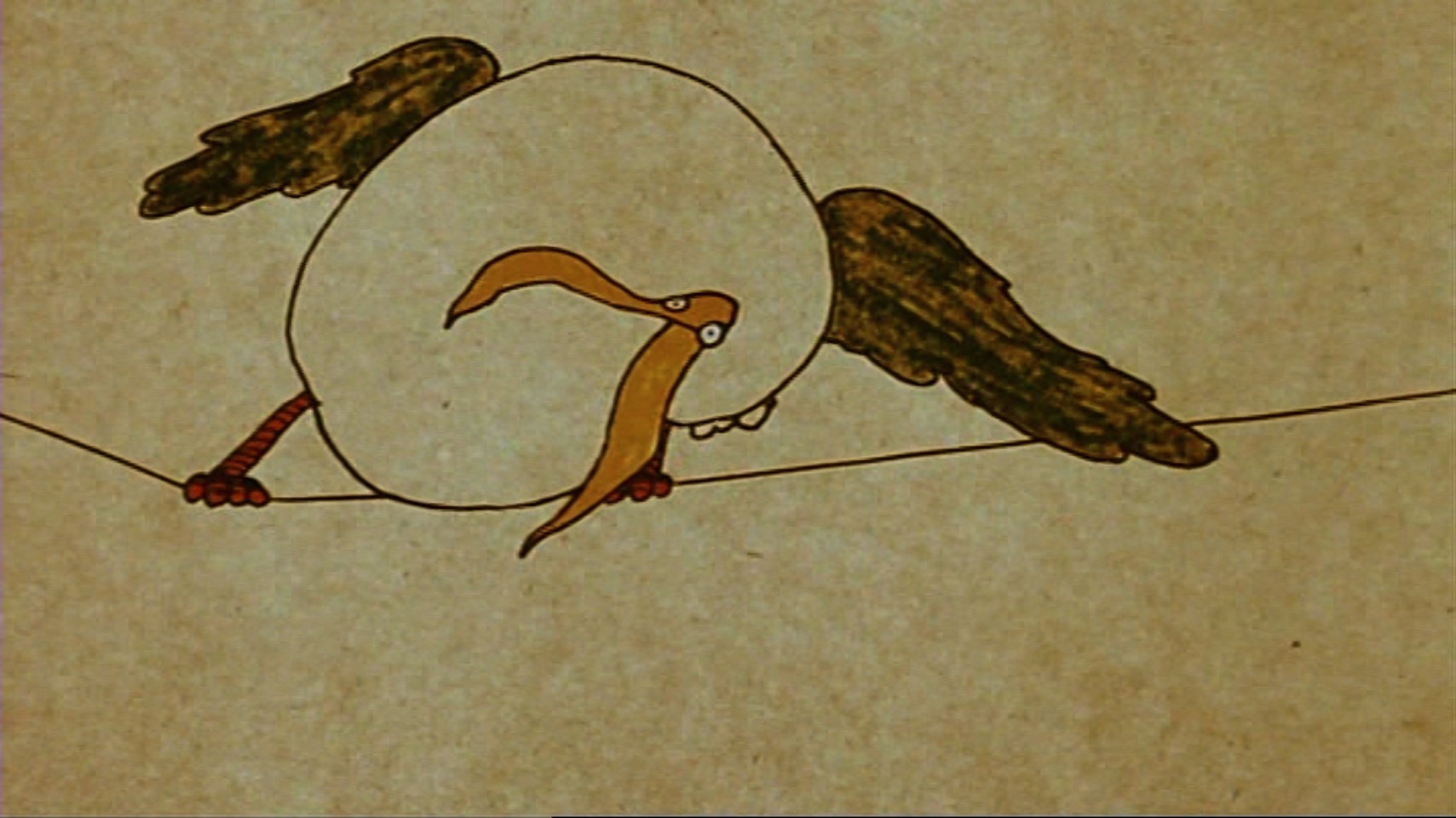
‘Air!’ was the first animated short Dutch animator Paul Driesen made for the National Film Board of Canada. In this very short film (it only takes two minutes) everything and everyone is gasping for air. Only at the very end we experience why.
Driessen makes the most of the barest background art: a monochrome background with a single horizontal line, which in each scene depicts something else. This is an early short by the Dutch master, but the film already showcases Driessen’s idiosyncratic animation style and morbid sense of humor.
Watch ‘Air!’ yourself and tell me what you think:
https://www.nfb.ca/film/air_fr/
‘Air’ is available on the DVD ‘Des histoires pas comme les autres’
Directors: André Leduc & Bernard Longpré
Release date: 1974
Rating: ★
Review:

Monsieur Pointu is a clown played by Paul Cormier, who also provides the short’s fiddle soundtrack. The clown tries to play the fiddle, but this turns out harder than it seems.
‘Monsieur Pointu’ consists of general clown routines, exaggerated and augmented by animation. André Leduc’s and Bernard Longpré’s pixilation animation is quite impressive, although the black screen also helps with all the tricks.
Unfortunately, their command of pixilation is much better than their comic timing, and literally none of the antics is funny. In fact, the action is very tiresome, and with its twelve minutes the short overstays its welcome extensively, especially if you don’t like clowns anyway, like me.
Watch ‘Monsieur Pointu’ yourself and tell me what you think:
‘Monsieur Pointu’ is available on the DVD ‘Best of the Best – Especially for Kids!’
Director: Caroline Leaf
Release date: 1974
Rating: ★★★★
Review:

‘The Owl Who Married a Goose: An Eskimo Legend’ was the first film acclaimed animator Caroline Leaf made for the National Film Board of Canada.
Done entirely in sand animation (in fact, Caroline Leaf was one of the very first animations to explore this technique for an entire film) the short tells about an owl, who marries a goose, but cannot follow her life style, with disastrous results. The legend is told and sung by real inuit, who also provide the goose’s and owl’s voices. As their Inuktitut language remains untranslated, one is lost in what is said, but luckily Leaf’s charming animation tells it all.
With its simple designs, effective animation and original soundtrack ‘The Owl Who Married a Goose: An Eskimo Legend’ created quite a stir, and the film surely is one of the most Canadian the NFB ever made. After this film Leaf set off to a great career as one of the most interesting of independent animation film makers, creating such intriguing masterpieces like ‘The Street’ (1976) and ‘Two Sisters’ (1990).
Watch ‘The Owl Who Married a Goose: An Eskimo Legend’ yourself and tell me what you think:
‘The Owl Who Married a Goose: An Eskimo Legend’ is available on the DVD ‘Best of the Best – Especially for Kids!’
Director: Michael Mills
Release date: 1971
Rating: ★★½
Review:
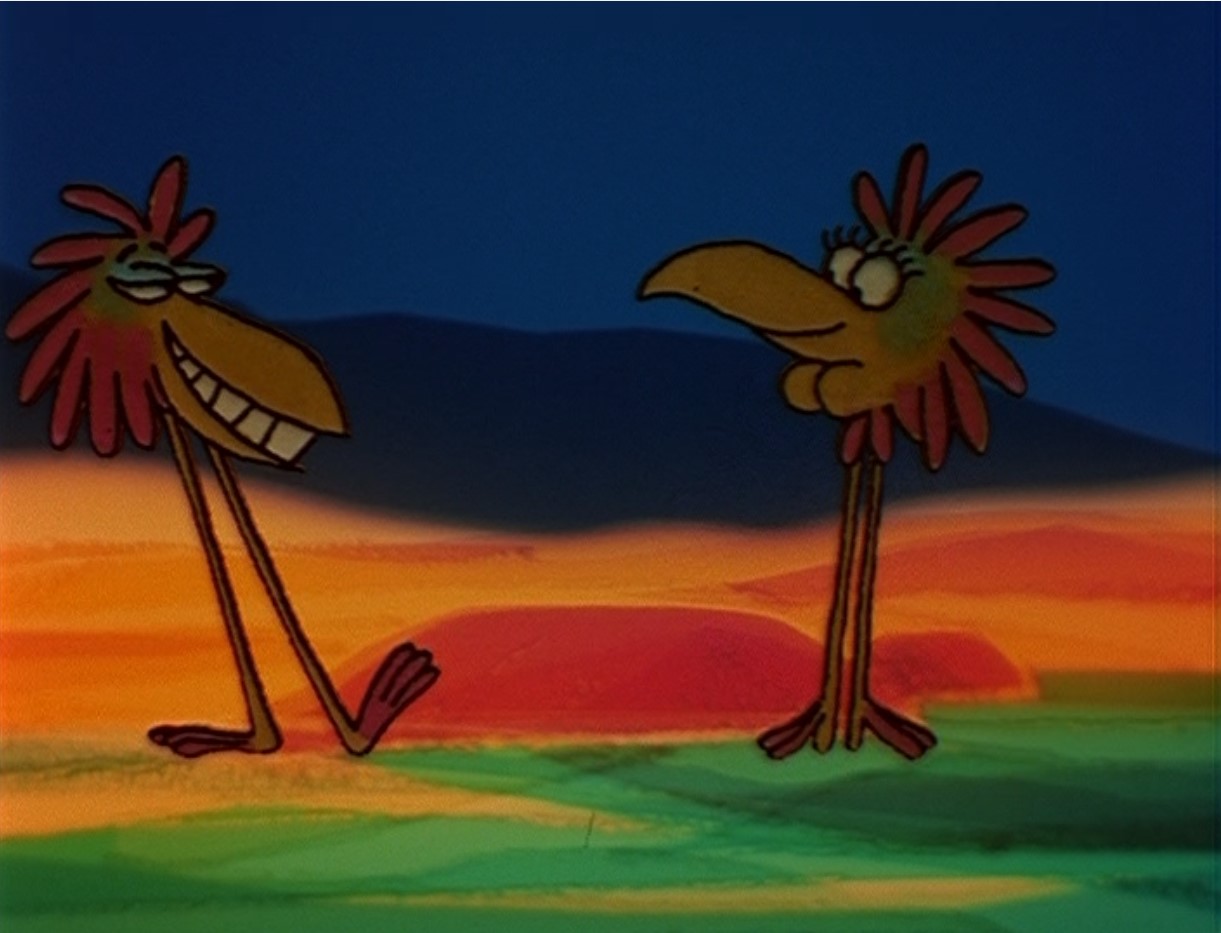
‘Evolution’ is Michael Mills’ cartoony take on the biological concept. The short features several fantasy creatures, starting with single cells in a pond (which all look like eye balls).
Mills depicts the origin of sex, the struggle of life, and the colonization of land, but none of his images are remotely serious, and most scenes consist of short gags. Unfortunately, the short is not too funny, and feels a little empty, ending quite abruptly and disappointingly.
Five years later Bruno Bozzetto did a much better job when depicting the same subject in his Boléro section of ‘Allegro non troppo’ (1976)
Watch ‘Evolution’ yourself and tell me what you think:
‘Evolution’ is available on the DVD ‘Best of the Best – Especially for Kids!’
Director: Koji Yamamura
Release date: September 17, 2011
Rating: ★★★
Review:

‘Muybridge’s Strings’ is Koji Yamamura’s ode to the great Eadweard Muybridge (1830-1904), pioneer of recording of movement and (thus) of cinema.
Yamamura adopts different techniques to tell his tale, using pencils, pens, and paint to a mesmerizing effect. His film style is surreal, non-linear and associative, and very hard to follow indeed. I’ve learned from this film that Muybridge shot his wife’s lover, but there also images of a woman and a child, often with heads as clocks, which are more difficult to decipher. I guess Yamamura wants to say something on the passing of time, but then the connection to Muybridge is loose and vague. Nevertheless, the film is a marvel to look at, and the sound design, too, is superb.
Watch an excerpt from ‘Muybridge’s Strings’ yourself and tell me what you think:
‘Muybridge’s Strings’ is available on the The Animation Show of Shows Box Set 9
Directors: Amanda Forbis & Wendy Tilby
Release date: June 1, 2011
Rating: ★★★
Review:
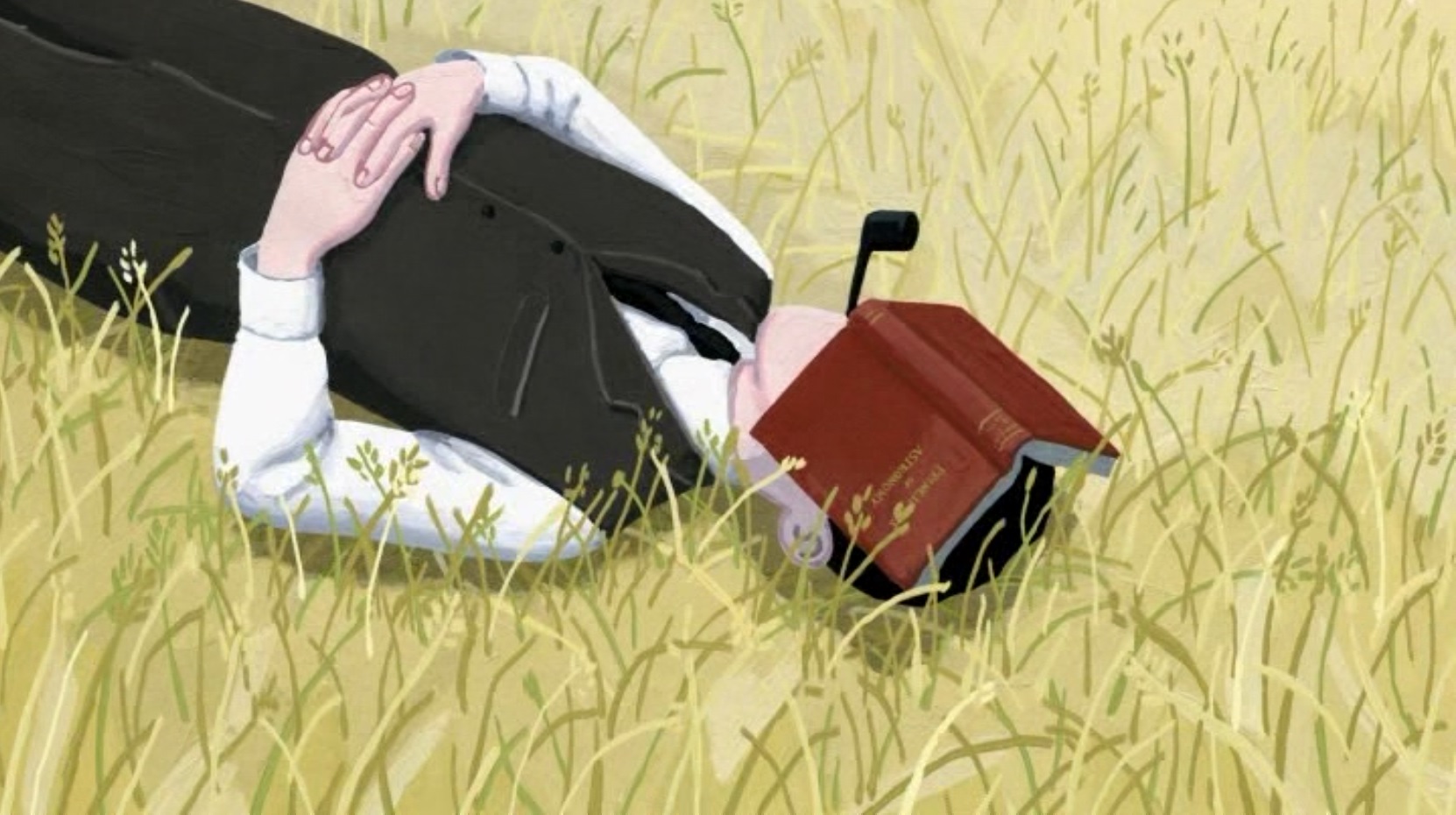
In this short Amanda Forbis and Wendy Tilby tell about a young Englishman migrating to Alberta, Canada in 1909, where he ends in a small hut on the countryside. The young man’s letters to his father and mother paint a rosier picture than his actual circumstances deserve.
For their short Forbis and Tilby use a very attractive form of painted animation, mixed with a little traditional animation. They tell their story using “interviews” with people who knew him and with intertitles, which often rather puzzling tell us about comets.
The film is told rather tongue-in-cheek, but the story is ultimately tragic, and the film could be seen as a meditation on loneliness and failure. But it’s to the viewer to connect the loose snippets of information together in his head, for Forbis and Tilby don’t tell their story straightforward, but associatively and free flowing. The soundtrack is great, using very fitting original songs, as well as old recordings and an instrumental rendering of Gilbert & Sullivan’s big hit ‘I Am the Very Model of a Modern Major-General’.
Watch ‘Wild Life’ yourself and tell me what you think:
‘Wild Life’ is available on the The Animation Show of Shows Box Set 9
Director: Michèle Cournoyer
Release Date: 1996
Rating: ★★★★
Review:
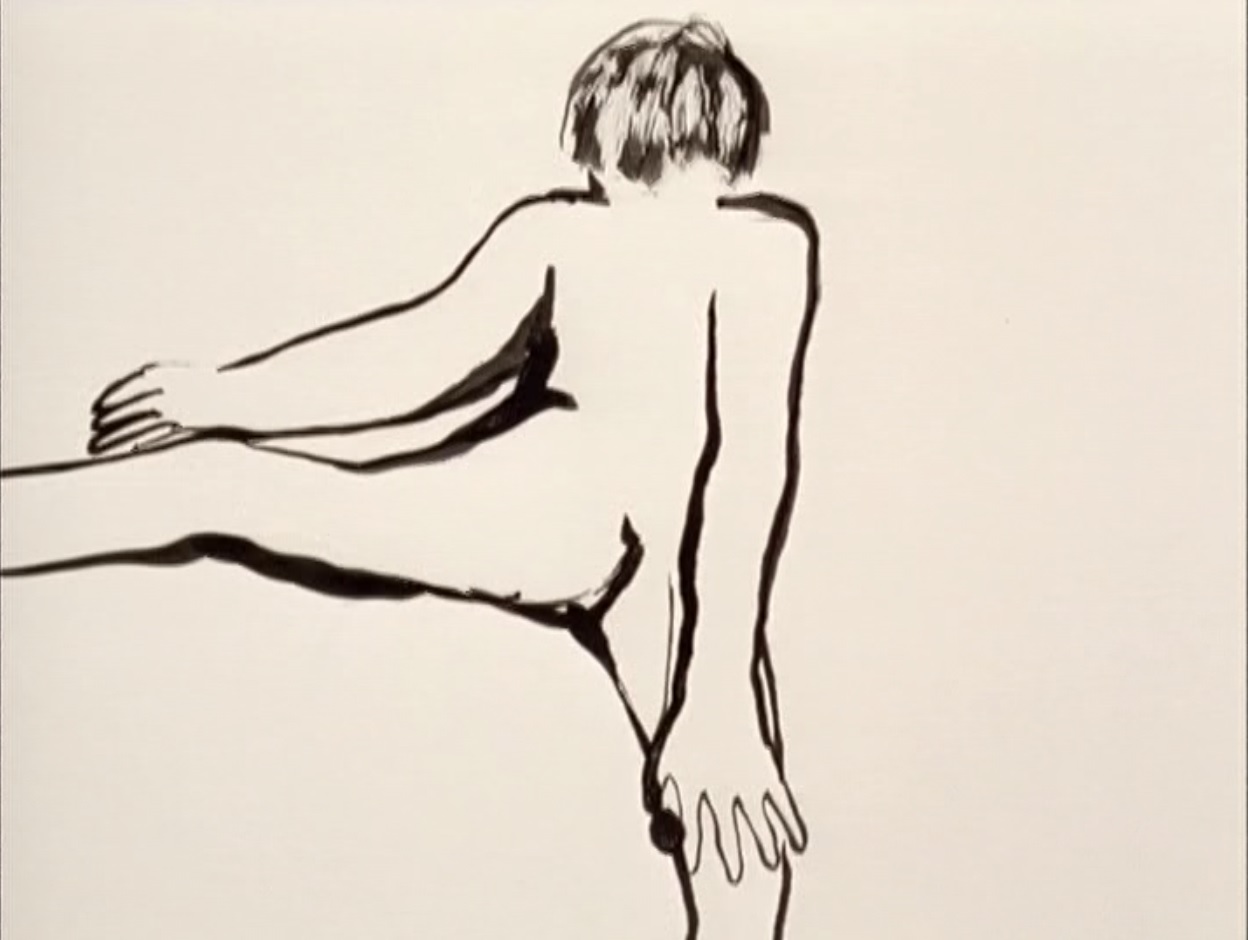
‘Le chapeau’ is a nonlinear, stream-of-consciousness-like film of flowing pen drawings morphing into each other on a white empty canvas, using the hat as a recurring motive.
The film is very associative, but it clearly says something about the male gaze and how it reduces women to mere objects of desire. The images show e.g. a female dancer dancing nude for a male audience, and images of sex. Most disturbing are the images in which the adult woman suddenly changes into a little girl and back, suggesting child abuse.
Cournoyer’s animation is flowing, her pen drawings are rough and sketchy, and her use of metamorphosis is mesmerizing. The result is a powerful, if rather uncomfortable short.
Watch ‘Le chapeau’ yourself and tell me what you think:
‘How Wings Are Attached to the Backs of Angels’ is available on the DVD ‘Desire & Sexuality – Animating the Unconscious Vol.2’
Director: Craig Welch
Release Date: 1996
Rating: ★★★½
Review:
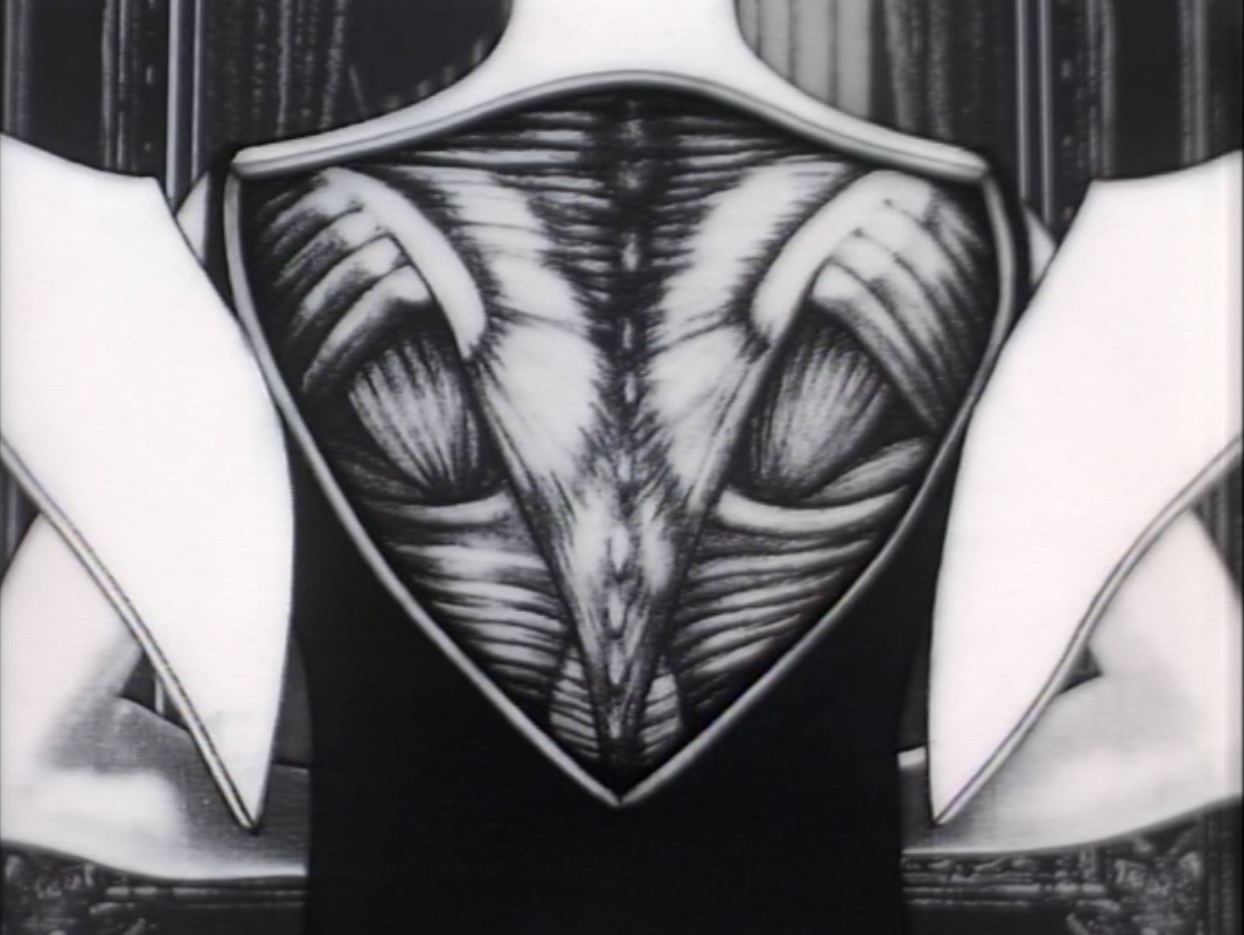
In ‘How Wings Are Attached to the Backs of Angels’ Craig Welch combines traditional animation, cut-out animation and pixilation to tell a puzzling but ominous tale about a man obsessed with contraptions and redesigning humans into angels. In one of his contraptions he attaches wing bones to a skeleton, but then a real woman (the pixilated actress Louise Leroux) appears…
Most disturbing is the scene in which the man caresses the woman’s shoulder blades, imaging their inner workings. The discomfort is enhanced by the use of a real woman. Welch’s cinematic style seems to be influenced by that of Raoul Servais and Terry Gilliam, and shares a high level of surrealism with these celebrated film makers. The animator certainly knows how to show and don’t tell; his film retains a morbid atmosphere throughout, all by suggestion and by clever cutting.
Watch ‘How Wings Are Attached to the Backs of Angels’ yourself and tell me what you think:
‘How Wings Are Attached to the Backs of Angels’ is available on the DVD ‘Desire & Sexuality – Animating the Unconscious Vol.2’
Director: Michèle Lemieux
Release Date: February 15, 2012
Rating: ★★★★½
Review:
One of the most original devices for animation is the pinscreen, deviced by Alexandre Alexeïeff and his wife Claire Parker in the 1930s. Already in 1933 Alexeïeff himself demonstrated the power of this instrument with ‘Une nuit sur le mont chauve‘. However, it almost seemed that the use of machine would die with the great master.
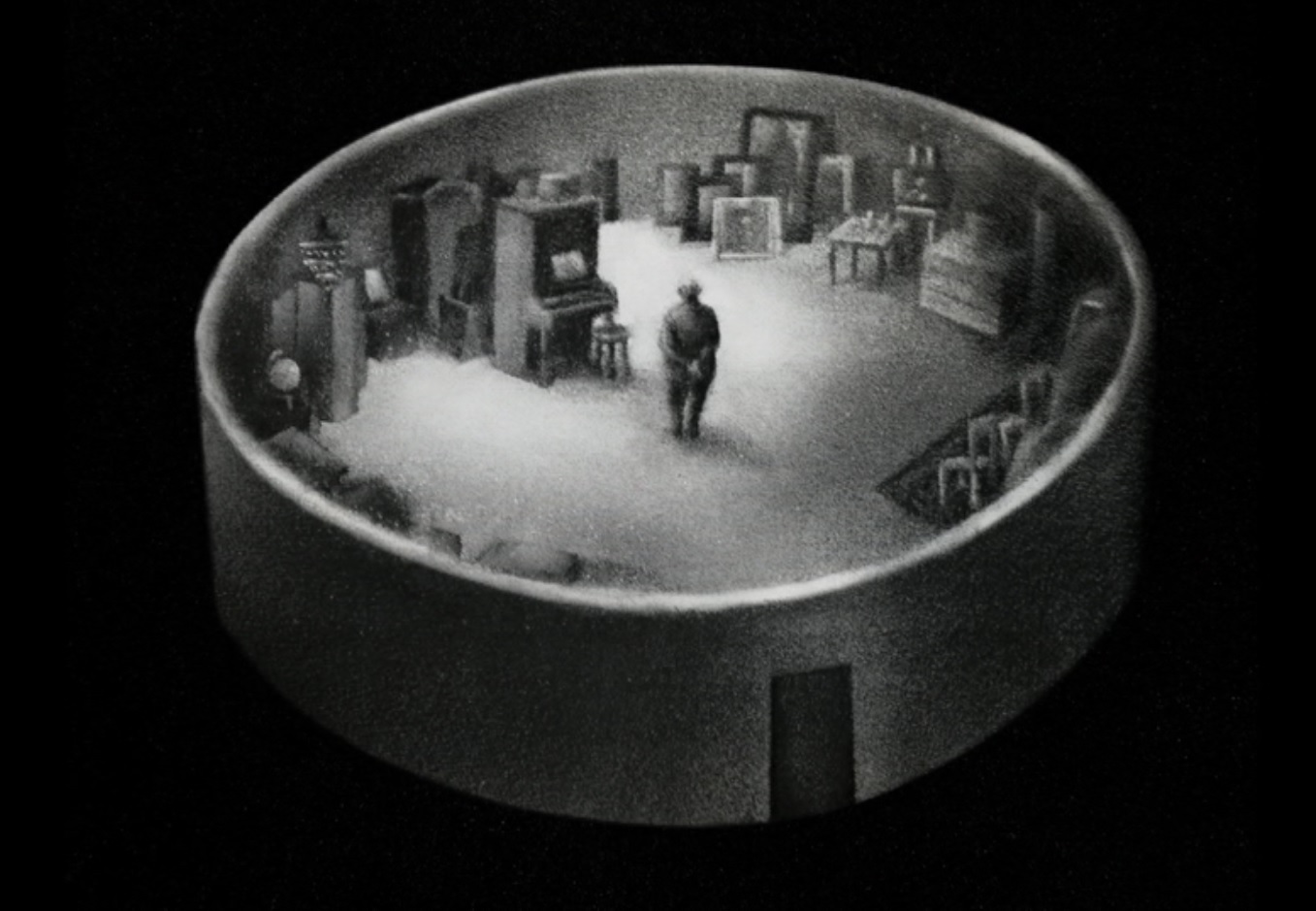
Luckily, Canadian animator Jacques Drouin has continued this tradition, and passed it on to Michèle Lemieux. With its soft black and white images the pinscreen is especially fit for poetical images, and Lemieux’s film certainly is very lyrical. The film is subtitled ‘four meditations on space and time’, and consists of four parts, only bridged by the short’s protagonist, a piano playing man, living in a round chamber.
There’s no traditional story and no dialogue, and little music (which can only be heard during one episode and the finale). But the images are very absorbing, and the sound design is superb. The first episode, in which the man watches some strange phenomenons in the sky, is most intriguing, as is the second episode, which makes great use of metamorphosis. The third, however, is rather static, and relies a little too much on the music to evoke mood. Most disturbing is the fourth chapter, ‘The return of Nothingness’, in which a flying object sucks all objects in the man’s room away from him.
Lemieux ends her beautiful, if rather puzzling film with the pinscreen itself, and she cleverly uses the device to depict the man’s transfiguration. In all, Lemieux proves a very capable animator on this intriguing device, and one hopes she’ll make more animation films this way.
Watch an excerpt from ‘Here and the Great Elsewhere’ yourself and tell me what you think:
‘Here and the Great Elsewhere’ is available on The Animation Show of Shows DVD Box Set 8
Director: Mark Osborne
Release Date: May 22, 2015
Rating: ★★½
Review:

Antoine de Saint-Exupéry’s ‘Le petit prince’ (The Little Prince) is arguably France’s most beloved children’s book, so it’s no surprise that it would be made into a film someday. Surprisingly, it was the American filmmaker Mark Osborne (co-director of ‘Kung Fu Panda’) to take up the glove. His script, however, is entirely original, and builds around the classic booklet, and is not a direct interpretation of it.
Parts of the original story are still present in the final film, and these fragments without doubt form the visual highlights of the entire movie: these passages are done in a very charming stop-motion style, convincingly capturing Antoine de Saint-Exupéry’s illustration style. However, the story of the little prince is interwoven with Osborne’s framing story, and in itself quite hard to follow, especially if you have not read the book yourself. In fact, the surrounding story is more entertaining than these excerpts from the book. Even worse, it takes 17 minutes before this story starts, and half way the movie the contents of Saint-Exupéry’s book are finished, leaving a staggering 49 minutes of original material still to come.
Antoine de Saint-Exupéry’s little book deals with what it means to grow up, and with loss, and Osborne’s surrounding story tries to expand on that idea. This story arc is told in computer animation, and set in a caricature of our world, in which ca. everything is square, including the trees. The opening shots of this world, a bird-eyed view of the city, which looks like a print board in its extreme regularity, form a great introduction to the story. In this world every citizen thrives to be essential, including the nameless little girl, who stars this film, and her mother. For example, the Werth Academy, the school the little girl aspires to attend is covered with posters stating ‘What do you want to be when you grow up? Essential’.
As the girl’s first attempt to attend this school misfires, the mother conceives a new plan that includes moving into a proper neighborhood (one of those ultra-square blocks) and a whole vacation period of intense study for the little girl, laid out in a depressingly detailed planning board. But then it appears their house neighbor is the only oddball in this conformist world: an old man, who lives in an old, cranky house, and whose life is devoted to fantasy and child’s play.
It’s this old man who tells the little girl about the little prince (in fact he’s the pilot from the story, ignoring the fact that the real pilot, Antoine de Saint-Exupéry himself, died prematurely in a plane crash). Thus the old man draws the little girl into his magical world, allowing her to be a child again, instead of a miniature version of an adult.
Now, this is all very well, and the film’s messages that it’s important to recognize what’s important in life (no, it’s not money), and to accept that to love means to lose, is sympathetic, but this, alas, does not make ‘The Little Prince’ a good movie.
As said, the storytelling is erratic, with the passages of ‘The Little Prince’ sensu stricto being dispersed too fragmentary to entertain themselves, and the film’s messages are stated way too clearly, making the film heavy-handed. Moreover, after the story is finished the film devotes much screen time to a very long dream sequence in which the little girl rediscovers the little prince in adult form on a bureaucratic little planet. At this point the film lost me completely, for nothing in this sequence has a grain of the little book’s original charm. Instead, it only seems to destroy it. This is not a very respectful way to treat the original material.
But even without the dream sequence the film is overlong. It plods on with a frustratingly relaxed speed, and knows no surprises. Even then, the final roundup feels rushed, too open, and unconvincing. After all, the little girl herself may have changed, but the rest of the world is the same dull square conformist place it had been before…
The computer animation, done in Canada, is fair to excellent, and the rendering is okay, if not living up to contemporary American standards. I particularly enjoyed the animation of the stuffed fox. As said, the world building is excellent in this film, with its over-the-top squareness. The human designs, on the other hand, are pretty generic, and betray little originality. In fact, the beautiful passages of stop-motion based on De Saint-Exupéry’s drawing style make one regret that the film makers didn’t dare to make the whole film in this much more daring and more interesting visual style. The soundtrack is notable for some period songs, like ‘Boum!’ (1938) by Charles Trenet, and a lovely new song by French singer Camille called ‘Suis-moi’ (Follow Me).
In all, ‘The Little Prince’ is a charming film with some sympathetic messages, but it’s also highly uneven and overlong and could have done with some severe editing and more daring choices. Moreover, one can ask whether this film does the original book the justice it deserves. I, at least, would have preferred a short based on the scenes from the book itself, and done solely in stop-motion, for, without doubt these images are the most gorgeous of the entire film.
Watch the trailer for ‘The Little Prince’ yourself and tell me what you think:
‘The Little Prince’ is available on Blu-Ray and DVD
Directors: Norman McLaren & Evelyn Lambart
Release Date: 1960
Rating: ★★★½
Review:

‘Lines Vertical’ is one of the most extreme films Norman McLaren ever made.
Together with collaborator Evelyn Lambart he manages to make a film consisting of vertical lines only, made directly on film. The whole film consists of white vertical lines moving across the screen against monochrome backgrounds. The film starts with one line, then two, then three, and so on, until ca. twenty lines fill the screen in a constant ballet.
At one point the lines get a three-dimensional quality, resembling rotating columns. The movements of the lines follow Maurice Blackburn’s serene score, which is clearly inspired by Chinese classical music. It’s a testimony of the genius of both McLaren & Lambart that they can even pull off such a boring concept, and turn it into a successful film, even if it’s not the most engaging one.
Watch ‘Lines Vertical’ yourself and tell me what you think:
‘Lines Vertical’ is available on the DVD-box set ‘Norman McLaren – The Master’s Edition’
Director: Norman McLaren
Release Date: 1959
Rating: ★★★½
Review:
 In ‘Short and Suite’ a jazzy score for clarinet, piano and double bass by E. Rathburn is interpreted by dots, shapes and lines, scratched directly on film.
The film knows no narrative, and is highly abstract, but at one point one can clearly see flowers and even human shapes. The film consists of several episodes, following more or less frantic parts within the score. McLaren’s images are very well-timed to the music, and the shapes get extra dimensions by the shadows they cast on the black and monochrome backgrounds.
‘Short and Suite’ may not be among McLaren’s best, it’s still a nice example of his great art.
Watch ‘Short and Suite’ yourself and tell me what you think:
‘Short and Suite’ is available on the DVD-box set ‘Norman McLaren – The Master’s Edition’


 Dr. Grob's Animation Review