You are currently browsing the category archive for the ‘computer-animated films’ category.
Director: Lee Unkrich
Release date: October 20, 2017
Rating: ★★★★★ ♕
Review:

The 2010s were a disappointing decade for the Pixar studio: the studio largely lost its role as game changer, spitting out a lot of sequels and meagre films that couldn’t stand the comparison with their great movies of the 2000s. Yet, three of their films shone far brighter than the others and showed that the studio still had it: Toy Story 3 from 2010, ‘Inside Out’ from 2015, and ‘Coco’ from 2017.
With ‘Coco’ the studio followed a recent Disney trend to give American minorities their own animated movie. After Afro-Americans (‘The Princess and the Frog’, 2009) and Polynesians (‘Moana’, 2016), ‘Coco’ stars Mexicans only, taking place in Mexico, and focusing on the typically Mexican holiday ‘Día de muertos’, the Mexican variant on All Souls’ Day and All Saints’ Day (1 and 2 November).
Now ‘Coco’ wasn’t the first animated feature film around Día de Muertos, which was 20th Century Fox’s ‘The Book of Life’ (2014), and like the former film ‘Coco’ takes partly place in the land of the dead. But there the comparison stops, and while ‘The Book of Life’ boasts more daring design choices, ‘Coco’ is by far the better film in terms of animation, art direction, background art and storytelling.
Moreover, the animated depiction of the dead as vivid skeletons is even older, as they also appear in ‘Corpse Bride’ (2005) and in the charming stop motion shorts ‘Hasta los huesos’ (René Castillo, 2001) and ‘Día de los muertos’ (Kirk Kelley, 2002). One can safely say, both Mexico’s idiosyncratic holiday and the depiction of the afterlife are of a particular interest to film makers. Let’s not venture into earlier depictions of the afterlife, in cinema or otherwise, although I have to say the concept of the afterlife in Coco has much in common with that of Kevin Brockmeier’s novel ‘The Brief History of the Dead’ from 2006: in both afterworlds one only really dies when he’s not remembered.
‘Coco’ tells about young boy Miguel, who aspires to be a musician, but who grows up in a family of shoemakers in which music is banned. When on ‘Día de muertos’ Miguel steals a guitar from the grave of his idol Ernesto de la Cruz he gets into much more trouble than he had bargained for…
Why the film is called ‘Coco’ instead of ‘Miguel’ only becomes clear at the very end of the film, in a scene that forms the emotional highlight of the movie, and is one of the most moving scenes in animation, overall.
But from the beginning ‘Coco’ evokes wonder. Even the background story is told superbly, with the help of garlands depicting the life of Miguel’s ancestors in attractive 2D animation. Miguel’s own world, too, is of unsurpassed richness. His family house, his village, the graveyard – all are complex and elaborate sets, depicted in the richest detail, which render them instantly believable. But nothing prepares the viewer for the jaw dropping depiction of the netherworld – which is more colorful and more fantastic than anything depicted on the animated screen before. The color designs are superb throughout anyway, with a strong focus on orange. The lighting, too, never ceases to amaze – there’s a beautiful golden glaze in the evening scenes. And yet, the graveyard scenes are even more awe inspiring, with their complex lighting by numerous flickering candles.
But all this would be in vain if the film’s story wasn’t good, as well. But ‘Coco’ can boast a story that is as entertaining as it is emotional. The story is rich and surprising and knows no dead moment at all. Sure, there are a few obligate scenes (like the breakup scene – omnipresent in American feature animation), but for once they do work. For example, the tiring family message, an obligatory Disney feature, is more interesting than usual, because Miguel’s family is actually hindering him in his dreams, and he can only reconcile with them after his family members have changed, too. The only complaints I have is that Miguel runs all too easily into his former ancestor, not only once, but twice. This is a coincidence too good to be true, and one hard to swallow. Moreover, it’s a quite unclear how the gentle romantic Hector changed into the opportunistic bum he apparently became in the afterworld.
The film boasts some great humor, too, for example Miguel runs into a skeleton nude, and there’s a great scene involving the deceased Frida Kahlo. Much of the humor comes from Hector’s antics, and of a street dog called Dante, which mysteriously follows Miguel into the afterlife (the Blu-Ray reveals that Dante is a so-called Xoloitzcuintle, a dog race traditionally guiding the dead to the Aztec underworld – when one sees the real thing one is amazed how well Dante resembles his real-life counterparts).
Less successful, especially in a film about the power of music, are the songs, with Miguel’s finale song being particularly annoying. But even the song ‘Remember me’, which takes a very important place in the story, is not half the classic song it supposed to be. That it’s sung in English instead of Spanish is a missed opportunity and contributes to the feeling of a deluded version of the real Ranchera thing.
Nevertheless, this is nit-picking, and these minor flaws hardly hamper a film, which is of a most magical nature. ‘Coco’ takes full advantage of the power of animation, and never ceases to amaze. The film is not only one of Pixar’s best films of the 2010s, but it should also be included into the studio’s all-time best list, as well as being one of the best films of the 2010s by any studio.
Watch the trailer for ‘Coco’ yourself and tell me what you think:
‘Coco’ is available on Blu-Ray and DVD
Directors: Charlie Bean, Paul Fisher & Bob Logan
Release date: September 22, 2017
Rating: ★★
Review:

One of the biggest feature animation surprises of 2014 was ‘The Lego Movie’. On paper this joint venture between Warner Animation and the famous toy company from Denmark should have been something terrible. After all, it was based on an existing toy line, a recipe for disaster. But the opposite happened and ‘The Lego Movie’ turned out to be one of the funniest, most sophisticated, and deepest animation film of the 21st century. The film was followed in 2017 by the equally funny ‘The Lego Batman Movie’, deepening the title character as he appeared in ‘The Lego Movie’. Warner Animation and Lego were clearly on a roll.
Or were they? Appearing in the very same year as ‘The Lego Batman Movie’, ‘The Lego Ninjago Movie’ uses several of the ingredients of the previous films, but with a remarkably disappointing result. True, there are some good gags, especially those referring to the characters being made of Lego, but more often such gags feel like they have been done before, and better. Even worse, compared to the two earlier films, both the story, the world and the characters are very weakly developed. Apparently, the film was based on a long-lasting television series, but the film hardly betrays that fact. Instead, the movie feels as only half-baked, and assembled too quickly for its own good.
The problems of ‘The Lego Ninjago Movie’ are legion. The film uses elements of both wuxia and mecha films, but can’t satisfy lovers of either genre, as the film makers do very little with these elements. The whole setting of Lloyd being both the leader of the Ninjago squad and the son of Garmadon, the very nemesis they continually combat, is preposterous to start with. That these Ninjago warriors are also some teenager friends at a high school (even though one is a robot) only adds to the implausibility. So does the fact that Garmadon has four hands. The plot gets particularly silly when ‘the monster’ arrives, but when the Ninjago squad goes on a quest in a forest, the film seriously starts to drag. The son-dad relationship becomes a tried and tiresome cliché, and halfway one realizes he doesn’t care for these characters, at all. And then the overlong finale must start, yet…
On the top side the film starts with Jackie Chan, who is always pleasant to watch, even though he’s completely wasted in this film. And the textures of the Lego elements are surprisingly good, rendering them very tactile, indeed. Moreover, the film makes some surprising and rather silly choices in its use of pop music. But it should be clear that none of this can rescue a sloppy, lazy film that seriously lacks the heart and attention given to the first two Lego movies.
Watch the trailer for ‘The Lego Ninjago Movie’ yourself and tell me what you think:
‘The Lego Ninjago Movie’ is available on Blu-Ray and DVD
Directors: Pierre Coffin & Kyle Balda
Release date: June 14, 2017
Rating: ★★★
Review:

The third installment of the Despicable Me franchise (not counting the spin-off ‘Minions‘ from 2015) is also the weakest of the trio. Like the other two the film is a fun ride, full of humor and action, but this time the film makers simply wanted to tell too much in one film. There are no less than six plot lines in this film divided over different main characters.
The first, and most enjoyable one considers Gru and his apparent arch nemesis Evil Bratt, a former child-actor from the 1980s gone bad. Evil Bratt, excellently voiced by Trey Parker of South Park fame, is a delightful villain, and the film makers indulge in 1980s tropes to make this character. For example, Evil Bratt sports a mustache and a mullet, and his weapons are based e.g., on bubblegum, Rubik’s cube, and a keytar. Moreover, whenever he appears, he’s accompanied by a 1980s hit, e.g., ‘Jump’ by Van Halen, ‘Take on Me’ by A-Ha, ‘Into the Groove’ by Madonna, and even ’99 Luftballons’ by German star Nena. The film immediately starts with this character, and it’s thanks to this wonderful villain that ‘Despicable me 3’ keeps on the right side between failure and entertainment, if barely so.
Much less interesting are the other story lines: Gru and Lucy are fired, and Gru desperately tries to get his former job back. In a third and totally unexpected twist Gru suddenly discovers he has a twin brother (also voiced by Steve Carrell, voice of Gru), who wants to be a villain, like Gru used to be, but who clearly lacks the skills. The fourth story line involves the minions, who walk out of Gru, a fifth involves Agnes (the youngest of Gru’s three adopted children) and her wish to see a unicorn. And the sixth is about Lucy, and how she tries to be a substitute mom for the girls, especially to Margo, the eldest of the three.
Now, the first three plot lines, all involving Gru, at least intertwine into one, albeit rather loose narrative, but the other three feel forced and superfluous: they’re only there to give the other characters something to do. And even then, Judith, the middle one, is lost in the plot.
Much of the action takes place in ‘Freedonia’ (a clear nod to the Marx Brothers), while the finale takes place in Hollywood. Freedonia clearly is modelled as some French Mediterranean island, and betrays the Illumination studio’s French origin.
The character animation, like in the other installments, is delightfully cartoony and over the top, and better suited for the broad comedy than for the more subtle moments, and only Margo is animated straight, acting like a normal girl, and not like a cartoon character. By now, the effect animation is so good that one hardly notices. For example, the water and smoke animation is excellent and feels so natural, one easily forgets it’s animated, too. I also liked how the film makers made the 1980s Evil Bratt episodes look like old video recordings. The cinematography, too, is top notch, throughout.
But all the quality cannot rescue an overcrowded film that scores high on action, but very low on originality and heart. There’s even an obligatory breakup scene, which feels extra unnecessary, because it lasts so shortly. ‘Despicable Me 3’ is well made, but also mediocre, and with the exception of Evil Bratt, forgettable.
Watch the trailer for ‘Despicable Me 3’ yourself and tell me what you think:
‘Despicable Me 3’ is available on Blu-Ray and DVD
Director: Brian Fee
Release date: March 28, 2017
Rating: ★★★
Review:

‘Cars’ was the first Pixar film after Toy Story to get a sequel in 2011. Unfortunately, ‘Cars 2’ was as much as a digression from the original narrative as it was disappointing. With ‘Cars 3’ the studio returned to the original source material, once again focusing on Lightning McQueen.
The film takes a brave step in showing the effects of getting older and realizing that you’re not young anymore, and thus is a film more appealing to parents than to youngsters. The whole idea of characters getting older is a bold one in animation land, and the film does a good job in the depiction of passing the torch from one generation to a new one.
Unfortunately, Lightning McQueen never was a wholly sympathetic character, and he certainly isn’t in this film. When his reign on the racetrack is threatened by a new generation of rookies, he desperately tries to stay in place. But his reckless and selfish behavior leads to disaster, and when he’s offered a training program, he’s too impatient and too self-centered to follow the rules, wrecking some expensive equipment and putting his younger trainer into danger.
In fact, this trainer, the female car Cruz Ramirez (wonderfully voiced by Cristela Alonzo), by far is the most interesting character of the movie. She’s apparently from a humbler background and shows McQueen that some people must struggle hard to achieve the confidence and success he took for granted. But the film is not her story, and this important message is pushed aside by McQueen’s struggle with his own ageing and mortality.
In this, the film relies heavily on McQueen’s relation to his own mentor, Doc Hudson. This character was voiced by Paul Newman, who passed away in 2008, so his dialogue comes from unused recordings for the first film. This mentor-theme is pushed rather forcefully and heavy-handedly into the story, with a series of flashbacks in which McQueen realizes how he has mistreated Cruz as a low point of stating the obvious.
Moreover, for a large part the film blindly follows the rules of the sports film, with an unlikely outsider winning from the established and unsympathetic competitor thanks to an unconventional training scheme. This training part, under the auspices of Smokey, Doc Hudson’s former partner, is by far the weakest part of the film. This cliché path fills most of the second part of the film, hampering a story that could have been more daring and more original.
The characters from the first film are hardly present in ‘Cars 3’. Even Mater’s role is surprisingly modest, considering he was the leading character of ‘Cars 2’. Especially disappointing is the role of Sally, McQueen’s girlfriend. In fact, McQueen hardly behaves as if he were in a relationship, at all. There’s no conflict at all between him and Sally when he goes training at the other side of the continent, nor when he sees the younger woman Cruz more than he sees her. This somehow feels like a missed opportunity.
Meanwhile, the effect animation, the background art, the scene setting, and lighting are all of the highest quality. The world building of ‘Cars 3’ feels so effortless, one can focus on the characters and forget how well it is done. In fact, the character animation of the cars themselves remain the weakest element of the animation, as the car-living-being-combination remains a bit uncanny and unconvincing, with those large continuous eyes filling the front window, and those odd mouths in the bumper regions.
‘Cars 3’ pleasantly rounds up McQueen’s story, from an all too hasty rookie in ‘Cars’ to a veteran who realizes his days are over, but who manages to pass his knowledge to a new generation. I certainly hope Pixar does not make the same mistake as with ‘Toy Story’ and leaves the franchise with a perfect ending after three films.
Watch the trailer for ‘Cars 3’ yourself and tell me what you think:
Director: Dave Mullins
Release date: March 12, 2017
Rating: ★★★★
Review:
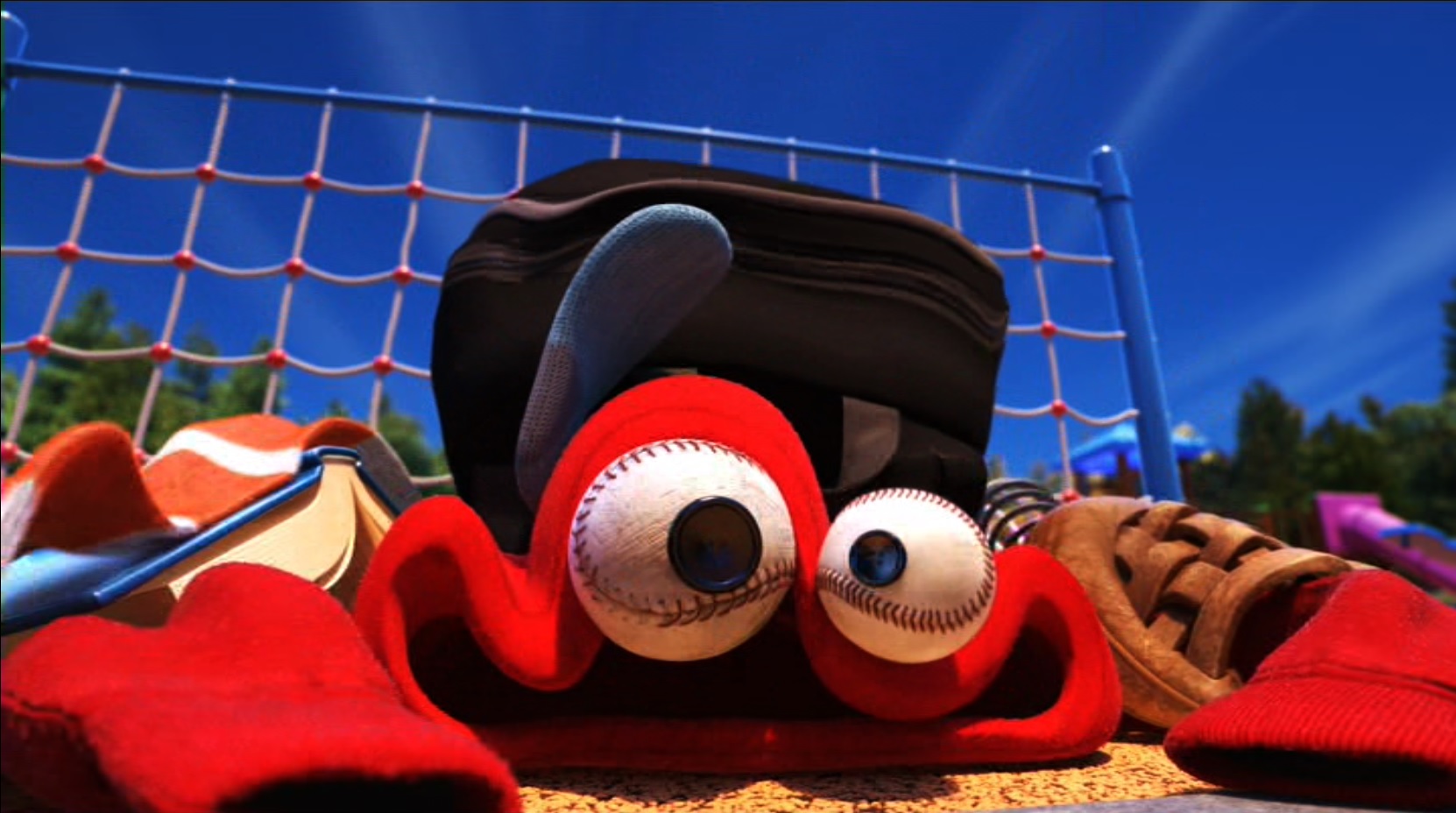
When, after recess, the playground of a school is empty, a mysterious being creeps out of the lost and found box to collect all lost toys from the site. He brings all these toys back to his lost and found box so children can find them there. But when he watches a bully taking toys from other children, he comes into action…
‘Lou’ is a short that is well-made but in an uninteresting generic Disney-Pixar style. Nevertheless, the story is well-told. There’s no dialogue, but the film manages to move the audience through clever timing and a well-placed flashback, showing the origin of the bully’s behavior. This part may be over-simplistic, but does give some depth to the bully character.
Moreover, the mysterious lost and found thing is a wonderful invention: it is essentially shapeless and only exists through the lost items. During the chase scene the thing thus changes its form repeatedly, in a wonderful sequence of variations on the same set of items. The origin of the title of the film is only revealed in the end.
Watch ‘Lou’ yourself and tell me what you think:
‘Lou’ is available on the Blu-Ray & DVD of ‘Cars 3‘ and on those of ‘Pixar Short Film Collection 3’
Director: David Soren
Release date: May 21, 2017
Rating: ★★★★★
Review:

In Captain Underpants two boys, George Beard and Harold Hutchins, write and draw comic book stories together. Unfortunately, their elementary school is the dullest, most depressing place on earth, thanks to the mean principal, Mr. Krupp. But then one day, somehow their comic book hero, Captain Underpants, comes alive, and he is even dumber than George and Harold had imagined…
This movie was one of the surprises of 2017. I saw this movie in a plane, not expecting much from a film with such a childish title, but boy, was I pleasantly surprised! Compared to this film most of the American computer-animated output of the 2010s feels pretty generic. Dreamworks’ ‘Captain Underpants: The First Epic Movie’, on the other hand, boasts visuals that are incomparable to any other animated feature.
Moreover, the film’s story is delightfully unpredictable, and knows neither dull moment nor any of the cliches invading almost every American animated feature of the era. Even the moral, the value of laughter and that of friendship, is played rather casually, and never takes over from the sheer mayhem put on the screen. On the contrary, a lot of what’s happening on the screen is pleasantly over the top. I liked the use of Yello’s song ‘Oh Yeah’ when the two children make a particularly cool entrance, and when later an Einstein-like villain from ‘New Switzerland’ joins in, mayhem is ensured.
Most of the film is genuinely silly, and even though its target audience obviously is about as old as George and Harold, the film is enjoyable to everyone. What certainly helps is the great voice cast. Both George and Harold are voiced by adults (Kevin Hart and Thomas Middleditch), and Ed Helms does a great job as both Mr. Krupp and Captain Underpants. It’s also interesting to note that Mr. Krupp isn’t only bad, he’s depicted as a shy and lonesome human, too.
Of course, much of the charm of ‘Captain Underpants: The First Epic Movie’ comes from the original source material, the illustrated children’s book series by American author and illustrator Dav Pilkey, which already counted twelve volumes by the time this movie was made. The film is apparently based on the first and fourth volume first four volumes [thanks Jonathan Wilson for the correction]. During production Pilkey worked closely together with director David Soren, and that certainly has paid off.
The film has translated Pilkey’s charming drawing style into 3D computer animation surprisingly well. What’s better, several parts are animated in 2D, in the children’s comic book style, there’s even a sequence in cut-out animation. Even the animation during the end titles is nice to watch. But the most outlandish sequence comes when Harold’s imagination of the future runs away with him. This scene was done by Screen Novelties in live action, with sock puppets, with hilarious results.
In all, ‘Captain Underpants: The First Epic Movie’ is a pleasant and very welcome diversion from Dreamworks, and one of the best animated movies of 2017, which with e.g., ‘Coco’ and ‘The Breadwinner’ was a strong animated feature year, anyway.
Watch the trailer for the ‘Captain Underpants: The First Epic Movie’ yourself and tell me what you think:
‘Captain Underpants: The First Epic Movie’ is available on Blu-Ray and DVD
Director: Chris McKay
Release date: January 29, 2017
Rating: ★★★★★
Review:

After the successful and surprisingly intelligent ‘The Lego Movie’ it was only natural for Warner Bros. to make another Lego themed movie. This time they took the character of Batman, who also co-stars ‘The Lego Movie’ and made the dark knight the star of a very funny sequel.
Compared to ‘The Lego Movie’, ‘The Lego Batman Movie’ is less deep and less layered, and the film wears its family theme on its sleeve, but like ‘The Lego Movie’ this sequel is really, really funny. The film makers play with all the batman tropes, and never take the superhero too seriously. In that respect, the film immediately starts off greatly, with Batman himself commenting on the opening titles. Another hilarious scene arrives a little bit later when we watch Batman waiting for the microwave.
Batman is a superhero, but pretty much a loser, as well. In fact, during most of the film, Batman is an ass, more of a self-centered, egotistic obligate loner than the usual tormented superhero. The Joker, too, is not just a supervillain, but one who longs for a special love-hate relationship with his foe. The film also introduces Robin and kickass female character Barbara Gordon (who’ll later turn into Batgirl). Part of the success of all these characters and how they are presented lies in the great voice acting. Especially, Will Arnett is a treat as the over-serious, pompous, self-important gravelling voice of Batman himself. Zach Galifianakis is a surprisingly emotional Joker, while Michael Cera shines as the overenthusiastic, geeky Robin. Rosario Dawson gives us a strong Barbara Gordon, and Ralph Fiennes a worthy Alfred, Batman’s butler.
Apart from the family theme, the plot revolves around the Joker letting all supervillains free from the Phantom Zone (a prison inside another dimension, borrowed from the Superman world). Because the film makers could browse the complete Warner Bros. catalogue, the villains include King Kong, the Wicked Witch from the West, Sauron, Voldemort, the Gremlins, the dinosaurs from Jurassic Park, Agent Smith from ‘The Matrix’, and the Dalek from Dr. Who. Like Batman none of these villains are treated with respect. For example, the Dalek are introduced as “British Robots! (ask your nerd friends)”.
Being a Lego movie, the character animation is pretty jumpy, while some of the special effects are done in Lego, too (flames, lava). But both the world building, the textures, the lighting and camera movements are top notch, and together with Lorne Balfe’s epic score contribute to the action part of the movie. The result is a deft combination of exciting adrenaline-rich action and plain silliness. In any case, the film moves at a reckless speed, pouring gags over the audience almost non-stop, while retaining the family theme at heart. Even if it’s not as good as ‘The Lego Movie’ was, this is a fun film all the way. In fact, I prefer ‘The Lego Batman’ over the all too dark and serious recent Batman movies any time.
Watch the trailer for the ‘The Lego Batman Movie’ yourself and tell me what you think:
‘The Lego Batman Movie’ is available on Blu-Ray and DVD
Director: Rob Gibbs
Release date: November 1, 2011
Rating: ★★
Review:
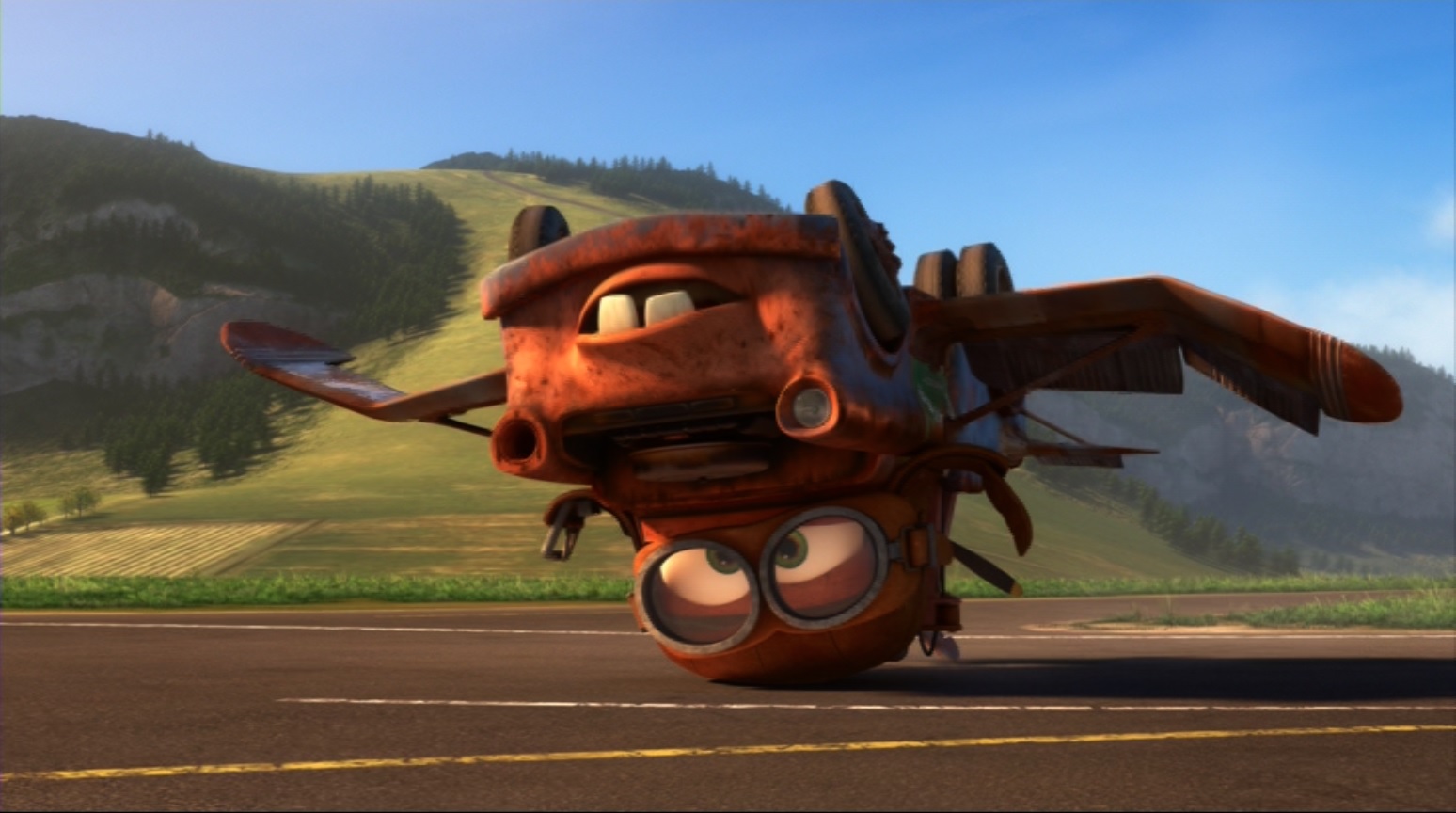
‘Air Mater’ is a late addition to ‘Mater’s Tall Tales’, being aired a year (minus a day) after the ninth episode. In this episode Mater visits a town of planes and takes the air.
Mater’s tall tale is amusing, if very shallow and completely forgettable. Worse, the whole film seems an exercise for the ‘Planes’ feature, released by Disney (not Pixar) in 2013, and feels like an advertisement.
Watch an excerpt from ‘Air Mater’ and tell me what you think:
‘Air Mater’ is available on the Blu-Ray/DVD of ‘Cars 2’ and on the Blu-Ray/DVD ‘Pixar Short Films Collection Volume 2’
Director: Gary Rydstrom
Release date: June 24, 2011
Rating: ★★★
Review:

‘Hawaiian Vacation’ is the first of three ‘Toy Story Toons’ produced in 2011 and 2012. The short opened for ‘Cars 2‘ and is set in Bonnie’s house after the events of ‘Toy Story 3’.
The film opens on a wintery day with Bonnie’s family going on a vacation to Hawaii. Ken and Barbie have been hiding in her rucksack as stowaways, for Ken has decided he will give Barbie her first kiss on the tropical island. Unfortunately, they’ve been hiding in Bonnie’s school rucksack, which remains at home, but Woody and the other toys have an idea.
‘Hawaiian Vacation’ relies a lot, and maybe too much on the familiar tropes of all the Toy Story characters. The idea of friends helping out a friend distress is charming, but I wonder whether Ken and Barbie were the best choice as the film’s main protagonists. Oh well, it accounts for six minutes of unpretentious fun.
Watch an excerpt from ‘Hawaiian Vacation’ and tell me what you think:
‘Hawaiian Vacation’ is available on the Blu-Ray/DVD of ‘Cars 2’ and on the Blu-Ray/DVD ‘Pixar Short Films Collection Volume 2’
Director: Bibo Bergeron
Release date: October 12, 2011
Rating: ★★★½
Review:

‘Un monstre à Paris’ is a charming and friendly French computer animation film by Bibo Bergeron who not only directed the film, but also wrote both the story and the screenplay.
The film is set in Paris in the winter of 1910 when the river Seine caused an enormous flood in the French capital. During this winter small and timid projectionist Émile and brassy, irresponsible delivery driver and inventor Raoul create a monster by accident. But cabaret singer Lucille discovers that this monster has surprising talents. Meanwhile, arrogant, and ambitious police commissioner Victor Maynott has his own plans with both Lucille, the monster, and the Great Flood. There’s also a proboscis monkey called Charles, who talks with reference cards, an idea that also occurs in Aardman’s ‘The Pirates! In an Adventure with Scientists!’ from a year later.
‘Un monstre à Paris’ knows quite a number of characters and has arguably three main protagonists. But Bergeron plays out his story surprisingly well, giving ample time and background stories to all three of them, even if the one of Raoul and Lucille only arrives during the end titles. The film is very talkative, but not too much so, and has its focus and heart firm in place. The action and drama are further ornamented with several little gags, which never ask too much attention. The best gag may be when Maynott’s balloon starts to lose helium.
In fact, Bergeron envisioned the city of Paris as the film’s main character, and indeed, the movie uses wonderful images of the great city, not only in computer animation, but also by classic matte paintings. Bergeron’s Paris, realized by Sébastian Piquet, is crooked, asymmetrical, and rather ramshackle character, which is always pleasant to look at. In addition, in several scenes the metropolis is clouded in mist, which give the backgrounds and settings an extra poetical atmosphere. Moreover, Bergeron’s Paris is a very, very familiar Paris, also to people who’ve never been there: the film takes mostly place in Montmartre, with the finale taking place on the Eiffel tower, both locations well-known to almost everyone.
Christophe Lourdelet’s character designs are a bit of a mixed bag: the male characters are all firmly rooted in the Franco-Belgian comic tradition, especially Raoul and inspector Pâté. The women Lucille and Maud (Émile’s love interest) on the other hand, have more generic 3D computer animation designs, with all too large eyes and all too slender bodies. The monster is well-designed, being both large and overpowering and delicate and friendly. He looks best when given an Aristide Bruant-like hat and shawl. In that respect the later zoot suit is way off for a film set in 1910.
The animation, directed by Fabrice Joubert, is fair, but not outstanding, and although the film makers are very proud of the dance scenes, the dance moves herein come over as stiff and unnatural. Worse are Lucille’s performances of the song ‘La Seine’. It seems the film makers didn’t know what to do with her long slender arms, which are all over the place. Compare the animation of Lucille with Preston Blair’s animation of Red in e.g., ‘Red Hot Riding Hood’ (1943) and the difference between an approximation of natural movement and natural song and dance animation becomes clear. The effect animation, on the other hand is fine: the water, the clouds and the mist all look very fine.
The songs are quite out of tune with the otherwise faithful 1910 setting, being all too modern and typical products of 2011, not 1910. Composer M (Matthieu Chedid) also provides the monster’s voice, singing in a very high voice, apparently to accentuate the creature’s innocent, childish and fragile nature. Lucille is lovely voiced by Belgian singer Vanessa Paradis of Eurovision Song Contest fame, and her rendering of ‘La Seine’ is very pleasant, even if the song doesn’t sound like a French cabaret song of the 1910s, at all.
In all, ‘Un monstre à Paris’ is not perfect, but certainly well-told and entertaining. The film may be more conventional than contemporary French films like ‘Une vie de chat’ (2010), ‘Le tableau’ (2011) or ‘Ernest & Célestine’ (2012), it still shows the extraordinary rich breeding ground of animation that France has been in the 21st century thus far.
Watch the trailer for ‘A Monster in Paris’ yourself and tell me what you think:
‘A Monster in Paris’ is available on Blu-Ray and DVD
Directors: Kresten Vestbjerg Andersen, Thorbjørn Christoffersen & Philip Einstein Lipski
Release date: September 29, 2011
Rating: ★★★
Review:

Arguably the least serious animated feature to be released in 2011 is a surprising little entry from Denmark called ‘Ronal the Barbarian’. The film is set in a bare fantasy world called ‘Metallonia’, and makes fun of many sword and sorcery tropes, as well as ‘Lord of the Rings’ and several leather metal cliches from the early eighties. Especially fans of Judas Priest should be delighted. In this respect, the end song accompanying the end titles is one of the film’s highlights, spoofing e.g. Led Zeppelin and Queen.
With its men walking around in tiny strings, with its lusty amazonians, with an oracle on a toilet, and with its many references to sex this could be a film too immature for its own good, but actually, the film makers play their story surprisingly straight, and despite all the parody and nonsense the film does have heart. It does help that fun is made of both male and female characters, and neither the overblown machos nor the incapable amazonians can be taken too seriously.
‘Ronal the Barbarian’ tells about Ronal, the only barbarian of ‘the tribe of Kron’ to be feeble, cowardly, and weak. When on one day his whole tribe is kidnapped and taken away, he must go on a dreaded quest, helped by an oversexed teenager bard called Alibert, by a very strong and heroic “shield maiden” called Zandra, and by a rather silly hippie-like elf called Elric.
Unfortunately, the characters are little more than vignettes. Ronal, to begin with, has little to counter his weakness. He seems to be a bit smarter than his fellow tribe members, but he’s far from cunning, and certainly not instantly likeable: during the first half of the film, he’s often whining and moaning, which makes the budding love story between him and Zandra hard to believe. Ronal’s transition to a more heroic character is more believable, especially because he remains clumsy and weak until the very end.
Alibert, too, is a character on the shallow side: his interest in dames is practically his only character trait, and he fails as comic relief, but not as a friend. In the end, he is as loyal to Ronal as Sam to Frodo. Elric isn’t a round character at all, but a pure caricature of everything elfish as depicted in Peter Jackson’s ‘The Lord of the Rings’ trilogy. Most interesting of the four is shield maiden Zandra, because she must deal with a tradition that is a curse to her. Zandra’s subplot is vital to the film and make it into a deeper product than could be expected.
Unfortunately, Zandra is not designed too well. Her eyes remind too often those of South Park characters, and she’s depicted as being quite stout and clearly older than the puny Ronal, making their romance less likely, again.
The quest story ticks all the familiar boxes: there’s an evil and almost invincible opponent, there’s a heavily guarded hidden kingdom, there’s a legend important to the plot, and there’s even room for the all too obligate breakup scene so common in animation films these years. And, of course, Ronal does grow into the hero he has to be in the end. But I must say the film makers tell their tale well, and there are no dead points or superfluous scenes during the film whatsoever. The focus stays with Ronal most of the time, and even when it doesn’t, the scenes still serve the plot completely.
For a European film the 3D computer animation is fair, if not outstanding. The rendering is on the poor side, but it does its job, and the world building is convincing enough for the story. The animation, too, is most of the time okay if nothing to write home about. Especially the animation on lesser characters is visibly mediocre, and there’s little character animation, although the animators do their best in two scenes in which the thought processes of respectively Ronal and Zandra are depicted. But, as most of the action is far from serious, and even rather silly, most of the animation does its job quite nicely. Like the designs, the animation is often broad and jerky, enhancing the comic effect. The effect animation itself, too, is excellent, and helps the world building a lot, especially during the finale.
‘Ronal the Barbarian’ is no masterpiece, but as said, the film is told well, and accounts for 90 minutes of pure fine entertainment. It’s no more than that, but the film clearly doesn’t aspire to. So I’d say: quest fulfilled!
Watch the trailer for ‘Ronal the Barbarian’ yourself and tell me what you think:
‘Ronal the Barbarian’ is available on Blu-Ray and DVD
Director: John Lasseter
Release date: June 24, 2011
Rating: ★★½
Review:

During the 2000s the Pixar studio without doubt was the leading American animation studio, pushing the envelope with classics like ‘Monsters, Inc.’ (2001), ‘Finding Nemo’ (2003), ‘The Incredibles’ (2004) and ‘Wall-E’ (2008). The 2010s, however, were a different affair, with the studio releasing a few disappointing originals (‘Brave’ from 2012 and ‘The Good Dinosaur’ from 2015), while regressing to a depressingly large number of sequels (seven out of eleven releases). Now, if they were all as good as ‘Toy Story 3’ (2010), then this would be a rather minor problem, but this is not a case.
‘Cars 2’ is the sad herald of the new era. Sure, the film knows high production values, boasting overwhelming visuals, fast cutting, professional cinematography, and storytelling, capable character animation etc. etc., but for the Pixar studio the film feels disappointingly unambitious and empty. Now, ‘Cars’ (2006) itself was the weakest feature of the 2000s, but commercially it was highly successful, not in the least in the merchandize area. So, it was a likely candidate for a sequel.
In retrospect, ‘Cars’ was a modest affair, with its rural setting. ‘Cars 2’on the other hand takes place all over the globe, with alternate versions of Tokyo, Paris, Italy (the fictive ‘Porto Corsa’) and London. These settings are highly colorful, but feel rather plastic and never become entirely convincing (for example, what’s the function of a Notre Dame in the Cars world? Even if a Pope Cars does exist as we can see in one of the scenes in Italy). The plot, too, is outrageously outlandish, modeled on the James Bond films and starring a British spy car called Finn McMissile (Michael Caine), who accidentally recruits Mater, whom he thinks is an American spy.
Thus ‘Cars 2’ is Mater’s film. There’s a minor subplot featuring Mater’s and Lightning McQueen’s friendship being put to the test, and indeed, this forms the rather shallow ‘heart’ of the film, and provides the film’s moral messages (e.g., by McQueen himself in the 84th minute), but this weakly developed plot cannot compete against the spy plot extravaganza. Mater blunders through the spy plot like a rather lame car version of Inspector Clouseau, but his knowledge of old cars does come in handy, and in the end Mater turns out to be less dimwitted than everybody thought.
Now, Mater is little more than comic relief, and one hardly relates to him, even if he’s more sympathetic than Lightning McQueen ever was (and McQueen certainly isn’t in this film). Unfortunately, Mater’s antics are rather tiresome, not funny, and the film’s focus on this shallow character certainly contributes to its feeling of emptiness. In fact, the film is at its best when sticking to the spy plot itself, with the cool spy car Finn McMissile and his female help Holley Shiftwell trying to uncover an evil plot involving one Professor Zündapp (with Erich von Stroheim-like monocle). The plot, like in most James Bond films, is rather outlandish and over-the-top, not to say highly improbable, but the film makers clearly enjoy the spy spectacle, enhanced by Michael Giacchino’s excellent spy movie score.
These scenes are given much more love than the original Cars characters. In fact, apart from Mater and McQueen the rest of the gang is hardly seen and they only marginally contribute to the plot (Doc Hudson apparently has died, just like his voice actor Paul Newman, who passed away in 2008). Instead, we, like McQueen, must endure a boasting Italian race car called Francesco Bernoulli (John Turturo) and meet a grandfatherly old Fiat 500 called uncle Topolino, which is both the nickname of that car model and Mickey Mouse’s Italian name.
Being rich in spectacle, but disappointing in the humor department, and lacking great characters, and most of all heart, ‘Cars 2’ is as entertaining as it is empty and forgettable. Even the small background puns (Towkyo, a Ratatouillan Paris restaurant called ‘Gustow’, adverts for Lassetyre) cannot save the film. Even worse, ‘Cars 2’ also introduces boats and planes with faces. This development would lead to the abysmal spin-off ‘Planes’ (2013), not by Pixar but by the Disneytoon Studios, a film that is an embarrassment to both Disney and Pixar. With the equally unnecessary ‘Cars 3’ Pixar would luckily return to more rewarding waters, with its ‘A Star Is Born’-like plot.
Watch the trailer for ‘Cars 2’ yourself and tell me what you think:
‘Cars 2’ is available on Blu-Ray and DVD
Director: Tomer Eshed
Release date: June 23, 2011
Rating: ★★
Review:

‘Flamingo Pride’ tells about a flamingo who’s apparently the only straight guy at an enormous gay dance festival. Then he falls in love with a female stork flying by…
‘Flamingo Pride’ turns the tables around, making being straight the minority. That is, in the flamingo community, because outside their own festival all birds seem to be straight and having classic role patterns.
It’s not very clear what the film tries to tell us. For starters it is a bit confusing that apparently all flamingos are gay, and none of the other birds is. Moreover, the gay flamingos pretty much look like gay stereotypes. None of them, not even ‘our hero’ has a grain of personality.
At least the film isn’t as funny as it was meant to be. The short is hampered by some ugly designs (the flamingos have teeth, for example), and odd camera movements, which distract from instead of enhance the main protagonist’s emotions. More problematical was that I couldn’t quite follow its story: the role of the two tigers is puzzling, as is the flamingo’s subsequent move.
I’m afraid I find ‘Flamingo Pride’ to be a rather immature and mediocre animation film about sex with some unwelcome gay stereotyping.
Watch ‘Flamingo Pride’ yourself and tell me what you think:
‘Flamingo Pride’ is available on The Animation Show of Shows DVD Box Set 8
Director: Rosto A.D.
Release date: June 10, 2011
Rating: ★★★★
Review:
One of the most virtuoso and most idiosyncratic animated film makers ever to emerge from The Netherlands was Rosto (real name Robert Stoces). His films ‘(the rise and fall of the legendary) Anglobilly Feverson’ (2002) and ‘Jona/Tomberry’ created quite a stir, the latter winning the Grand Prix Canal+ prize at the Cannes Film Festival. In these fantastic films Rosto mixed live action, puppetry, and computer animation into a seamless mix. Moreover, they showed a unique if erratic voice that was completely its own.
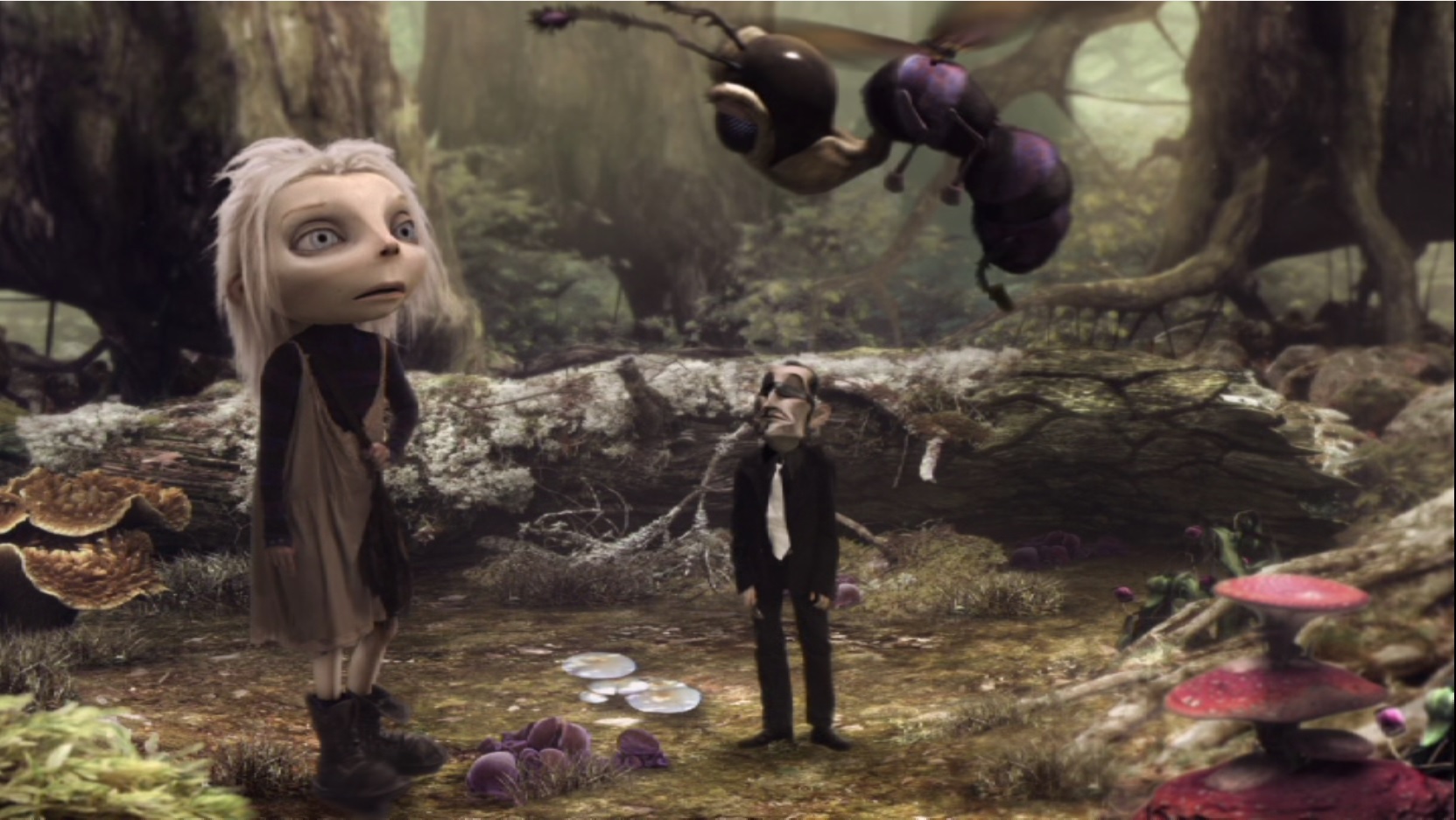
‘The Monster of Nix’, Rosto’s most ambitious project, is no different. The film lasts half an hour and took six years to make. The short is essentially a musical with a rather post-modern tale-biting story, vaguely reminiscent of ‘The Neverending Story’. The film stars a boy called Willy (based on Rosto’s own son Max and aptly voiced by Joe Eshuis), who lives with his grandmother in a small village, surrounded by woods. Short after the film starts, Willy can’t find his grandmother. Even worse, many villagers have lost people and things, so Willy goes on a quest to seek his grandma and to find the evil monster behind this, finding strange creatures like Virgil, a giant swallow with human hands for claws and the woody “langemen” on his way.
‘The Monster of Nix’ boasts collaborators like Terry Gilliam (voicing a wood ranger), Tom Waits (voicing Virgil) and The Residents (performing two songs), as well as high production values. As expected from a Rosto film, the visuals are very strange, but compelling and overwhelming, seamlessly merging live action and animation to a unique mix. There are several rock music references, which are also typical of Rosto’s style, and there’s a spooky atmosphere akin to Tim Burton.
Rosto even composed the songs himself. Unfortunately, his score is more weird than attractive, and his story isn’t entirely convincing, either, reaching a rather dead point half way, never to recover entirely. But because of its unique atmosphere the film is well worth a watch.
Sadly, Rosto died in 2019, only fifty years old. His death is a grave loss to the Dutch animation world.
Watch the trailer for ‘The Monster of Nix’ yourself and tell me what you think:
‘The Monster of Nix’ is available on DVD
Director: Enrico Casarosa
Release date: June 6, 2011
Rating: ★★★½
Review:

In ‘La Luna’ a little boy accompanies his father and grandfather on a boat trip with an original and unexpected destination.
This cute little film features dialogue, but as this is quasi-Italian gibberish, the story is told through the expressions and body movements of the three characters. There’s a subtle undercurrent of passing on traditions and finding your own voice within tradition.
The film explores no new territories technically, but features a superb color design, rendered in beautiful blues and yellows. The sound design, too, is worth mentioning. Especially, the sound of the stars is very well done. Less successful is Michael Giacchino’s score, which sugarcoats the action too much.
‘La Luna’ was shown before ‘Brave‘. With this film director Enrico Casarosa clearly digs into his own Italian roots. The result is a modest homage to a child’s wonder and fantasy.
Watch ‘La Luna’ yourself and tell me what you think:
‘La Luna’ is available on the Blu-Ray and DVD of ‘Brave’, as well as on the ‘Pixar Short Films Collection, Vol. 2’
Director: Jennifer Yuh Nelson
Release date: May 26, 2011
Rating: ★★★★½
Review:

‘Kung Fu Panda’ (2008) was a nice if not too outstanding film, so it came as a pleasant surprise that its successor was even a better film. In fact, I crown ‘Kung Fu Panda 2’ one of the best animated sequels ever, on par with ‘Toy Story 2’ (1999) and ‘Shrek 2’ (2004).
‘Kung Fu Panda 2’ te film immediately grabs attention with a Lord of the Rings-like introduction, rendered in gorgeous 2D animation, making clever use of cut-out techniques to simulate a shadow play. This sequence introduces the film’s villain, Lord Shen, a white peacock and one of the most layered villains one can find in animated film. Masterly voiced by Gary Oldman, in fact Lord Shen is comparable with other great villains like Saruman, with whom he shares a fortress full of furnaces, and Darth Vader, who also massacred the hero’s kin before the start of the film.
This background story also gives extra and necessary weight to the character of Po, who becomes more dimensional than in the first film, now having to battle the ghosts from the past inside his head, which clearly hinders him in finding the ‘inner peace’ Master Shifu tells him to seek. Moreover, we now have a background story for our hero. Indeed, the film end with a clear invitation to a sequel. Indeed, there would be a ‘Kung Fu Panda 3’ in which Po’s story was round up, if rather disappointingly.
Because of this deepening of Po’s character, ‘Kung Fu Panda 2’, much more than its predecessor, is a delightful combination of adventure, action, comedy, and drama (Po’s reminiscence scene is actually moving). Moreover, ‘Kung Fu Panda’ shares a theme with the classic wuxia movie ‘Once Upon a Time in China’ (1991) exploring the tensions between kung fu and firearms. In this respect Po delivers the movie’s best line when addressing two demoralized kung fu masters: “you stay in your prison of fear with bars made of hopelessness and all you get are three square meals a day of shame!”. Not that ‘Kung Fu Panda 2’ long dwells on Po’s inner turmoil, the film is very action-rich: the first great kung fu battle comes quickly, and is followed by several others, ending with a spectacular finale.
Overall, ‘Kung Fu Panda 2’ is an impressive piece of teamwork. Everything clicks in this film: the story is engaging and well-told, the animation is outstanding, especially the character animation on Po, Po’s dad, and Lord Shen. The cinematography is breathtaking, full of dynamic camera movements and fast cutting, the color schemes are daring and beautiful, and the soundtrack by Hans Zimmer & John Powell, with its mock-Chinese ingredients, very apt for both the action and the emotions involve. Their music during the paper dragon scene must get especially mention.
Not that ‘Kung Fu Panda 2’ is entirely without its flaws, however. By now Po has become nearly invincible, which renders him slightly flatter, despite the deepening of his emotional side. Moreover, the other characters are less prominent than in the first film (especially Master Shifu hardly gets any screen time), even if they still shine much more than in ‘Kung Fu Panda 3’, which reduces the five to mere background players. Then there’s an obligate ‘all is lost’ moment, so typical for modern Western computer animation films (see e.g., ‘Rango’ from the same year and ‘The Pirates! In an Adventure with Scientists!’ from a year later) and a scene in which the villain says ‘What?!’, replicated by the same studio in ‘How to Train Your Dragon 2’ (2014). But these are minor defects of an otherwise great piece of animated entertainment.
Watch the trailer for ‘Kung Fu Panda 2’ yourself and tell me what you think:
‘Kung Fu Panda 2’ is available on Blu-Ray and DVD
Director: Michel Ocelot
Release Date: February 13, 2011
Rating: ★★★½
Review:

This is a review of the 2011 film, not to be confused with the television series from 1992, which explores a similar style.
After two Kirikou movies (1998, 2005) and the praised ‘Azur & Asmar’ (2006) French director Michel Ocelot returned to the silhouette style he had explored in ‘Les trois inventeurs’ (1979) and in ‘Les contes da la nuit’ (1992) in particular. The result was a series of ten episodes for Canal+ called ‘Dragons et princesses’. These were aired in 2010, and more or less compiled in the feature film ‘Les contes de la nuit’ from the next year. This film compiles five of the ten stories from ‘Dragons et princesses’ and adds an extra one, called ‘La Fille-biche et le fils de l’architecte’ (The Young Doe and the Architect’s Son).
All stories are original, conceived by Ocelot himself, including the dialogue. Yet, their style is firmly rooted in ancient storytelling and fairytales. Thus, the heroes are pretty emblematic, a given that is emphasized by the bridging ‘story’. In these bridging episodes an old man teams up with two children to invent the stories. The children then act them out, while the old man does some background research on architecture and clothing and such. The two youngsters are then dressed by robot arms, and the tale can begin.
And so, each tale stars the same two children, and almost of them are about love. To be fair, these bridging parts make very little sense, and after the sixth story we don’t even return to this setting.
Much more interesting are the stories themselves. Set in different times and places, they have a surprising universal character and really feel as a homage to classic storytelling, a form of narrative other modern animation film makers seem to have lost. In fact, Ocelot’s most obvious inspiration is Lotte Reiniger (1899-1981), who also told classic tales in silhouette animation. Ocelot truly is her artistic successor, even though he trades the scissors and cut-out animation for 2D computer graphics.
As all stories are told in silhouette, the story depends greatly on body language and dialogue. It’s a little unfortunate then that the 2D computer animation is often rather stiff and unconvincing. At times the heroes’ faces are seen from the front, showing their eyes, but not their mouths, which makes one depend on the dialogue even more.
The stories themselves nevertheless are entertaining. The first, ‘the night of the werewolf’ takes place at the Burgundian court of the 15th century and tells about two rival sisters. The third, ‘The Chosen One of the Golden City’ takes place in Mexico in the 16th century and tells about a conquistador visiting a city of gold. This story knows some very stylized background art. The fourth, ‘Tom-Tom Boy’ is set in West Africa and takes us back to the world of ‘Kirikou et la sorcière’ (1998), with its bare breasted women. The fifth, ‘The Boy Who Never Lied’ is set in medieval Tibet, and certainly the most tragic of the collection. The mountainous background art in this story has the most 3D-feel to it of the whole lot. The final story, ‘The Young Doe and the Architect’s Son’ returns to France. Set in the 13th century it features very detailed gothic background art and a short piece of 3D computer animation.
The best story, however, is the second, ‘TJ and the Beauty Unknowing’. This story starts in the Caribbean, but soon the hero enters the land of the death, in which he must fulfill three tasks to save his life. This story makes great use of the tropes of ancient fairy tales, without following the classic love story tropes of the other entries.
Watch the trailer for ‘Tales of the Night’ yourself and tell me what you think:
Les Contes de la nuit (Tales of the Night) is available on DVD
Director: Carlos Saldanha
Release Date: March 22, 2011
Rating: ★★
Review:

I will get down to business at once: I didn’t like this movie. It’s not so easy to pinpoint what’s wrong with it, though, and clearly most people rank this film higher than I do (it gets a pretty solid 6,9 on IMDb for example), but I’ll try to unravel what I think is wrong with this picture.
‘Rio’ tells about Blu, a blue macaw who by chance ends up with little girl Linda in Moose Lake, Minnesota (Wikipedia says Blu is a Spix’s Macaw, but I’m pretty sure the film makers intended Blu to be a fantasy species). A short sequence shows us how Linda and Blu grow up together as inseparable friends. Linda even names her bookshop after her pet. Then ornithologist Túlio comes along, telling Linda that Blu may be the last male of his species, and that he wants him to mate with a newly found female in Rio de Janeiro, Brazil. Linda reluctantly agrees, and the rest of the film takes part in Rio de Janeiro, where the two birds get stolen, and Linda and Túlio have a hard time getting them back…
Now, from the outset it becomes clear that Blu and Jewel, the wild female, are meant for each other, despite their obvious differences and life histories, but the film also immediately couples Linda and Túlio in a far from subtle fashion. And when little boy Fernando declares he’s an orphan, and we follow him for a little while in his loneliness, we know where he will end up at the conclusion of the film.
In other words, utter predictability is one of Rio’s main flaws. Outside of that it never deviates from familiar tropes. There are the two inept henchmen, there’s your obligate break-up scene, there are two birds whose sole existence seems to be comic relief. Everything in ‘Rio’ is tried and done. Even worse, in ‘Rio’ it isn’t done so well. For example, the two comic relief birds, Pedro and Nico are hardly funny and both have very shallow personalities.
The latter is the problem of all personas in ‘Rio’. Even main star Blu is hardly defined. An early scene with some Canadian geese suggests he’s a bit of a nerd, but during most of the film Blu’s actions follow from the facts that he has been a pet whole his life, and that he cannot fly. These can hardly be called character traits. During the break-up scene he even acts like a complete jerk, for no apparent reason. Voice actor Jesse Eisenberg has difficulties in breathing some sympathy into Blu, anyway.
Even worse fairs Linda, of whom I can only say she loves Blu and that she feels out of place in Brazil, and Túlio, who’s depicted as a quirky, not to say rather loony scientist. Why does he have to be loony, why can’t he just be a devoted scientist, for @#% sake!
Because Linda and Túlio hardly have a story arc together their bonding feels forced. Because Blu and Linda are forced to spend some time together, their bonding feels more natural, even if it follows all predictable patterns.
Another problem I have with the story is that it lacks a strong villain. Sure, the cockatoo Nigel is evil enough, but in the end he’s only a henchman of some petty crime thieves. In the all too quick and easy round up at the end of the film all visible criminals are punished, except for the mysterious off-screen buyer of the two rare birds. A very unsatisfying ending, indeed!
‘Rio’ isn’t a musical, but Nigel sings one of two songs that suddenly emerge. The song gives Nigel some background story, but he doesn’t need one and the song is completely superfluous. The other song is an R&B song by Pedro (musician will.i.am of Black Eyed Peas fame) and Nico (actor Jamie Foxx). Curiously, the two actors are black, not Latino. In fact, only Rodrigo Santoro, who voices Túlio, is a Brazilian, and George Lopez (Rafael) the only other Latino among the main characters.
And this brings me to another problem with ‘Rio’: Rio de Janeiro is well-depicted visually, but aurally little is done with the rich musical tradition of Brazil. True, the film opens and ends with an English language samba, and the toucan Rafael shortly sings ‘The girl of Ipanema’, but the two original songs mentioned above have no grain of Brazil in them, nor does the rest of the soundtrack, which consists of rather standard and uninteresting action fare. Likewise, the film fails to convey the magic of the Brazilian carnival. The parade is wisely chosen as the place of the grand finale, but unfortunately this is cut short in favor of one taking place on a plane. This makes sense in forcing Blu to fly (but nonetheless his sudden ability to do so feels more magical than natural), but also feels like a missed opportunity.
Apart from all story problems, ‘Rio’ also suffers from all too generic designs. Nothing in the film breathes particularly ‘Blue Sky’ and the film has none of the character ‘Ice Age’ (2002) and ‘Dr. Seuss’ Horton Hears a Who!’ (2008) had. Moreover, the human designs and animation are surprisingly weak in this film. I particularly disliked the design of Linda, and the animation of Fernando, which looked disappointingly wooden. These straight characters fair less well than the broad comic ones, like the two henchmen Tipa and Armando, who are much more delightful to watch.
In all, ‘Rio’ is a too mediocre and too generic film to become an all-time classic. Instead, the film is a good example of the lazy, trope-driven plots and more and more common designs that started to overtake American animated feature film making during the 2010s.
Watch the trailer for ‘Rio’ yourself and tell me what you think:
‘Rio’ is available on Blu-Ray and DVD
Director: Gore Verbinski
Release Date: April 3, 2011
Rating: ★★★★
Review:

One of the most original mainstream feature films to come out of the United States in the 2010s was ‘Rango’, a Western with desert animals.
‘Rango’ was the brainchild of director and co-producer Gore Verbinski, a live action director of ‘Pirates of the Caribbean’ fame. The film was made at Paramount, which hadn’t had an animation studio of its own since the closure of the Paramount Cartoon Studio in 1967. In fact, the animation was essentially done at Industrial Light & Magic, supervised by Hal Hickel. Apparently, Paramount gave Verbinski a lot of freedom, because ‘Rango’ is a pretty quirky movie, boasting an original visual style and none too serious storytelling.
Star of this original Western is a pet Chameleon (Johnny Depp) with a lot of fantasy, who accidentally ends up in the Mojave Desert, where he poses as some kind of Western hero called Rango, prompting the villagers to appoint him as a much-needed sheriff. Rango then has to solve an aquatic crime, which he does cluelessly, but with much bravado.
The first thing that strikes ‘Rango’ as different from all other American computer animated films, is its surprisingly gritty visual style. Rango himself, for example, has a crooked neck and an asymmetrical head, while his love interest Beans is a lizard, whose curls do not hide the fact that she’s clearly a reptile. One of the villains, Gila monster Bad Bill looks particularly rough, while the mayor, a tortoise, looks uncannily like actor Fred MacMurray. Another curious addition is ‘the spirit of the West’, who looks like an aged version of Clint Eastwood’s ‘man with no name’ persona. The whole film breaths spaghetti western, especially in its cinematography and Hans Zimmer’s musical score.
‘Rango’ doesn’t really deviate from the familiar story lines of current American animated features, however. For example, there’s an ‘all hope is lost’ moment, a familiar trope in the 2000s and 2010s, but the story is unpredictable enough to entertain throughout. Moreover, apart from a unique visual style, the film boasts some off-the-wall story devices, like a band of mariachi owls, who bridge several scenes, frequently predicting the chameleon is going to die.
Although the crime plot is played with seriousness, the film never loses sight of its own silliness. There are some peculiar touches, like Rango talking to a halved armadillo, or Beans suddenly freezing mid-sentence. Much of the dialogue is delightfully funny, and there are plenty of references to Western cinema, as well as one to ‘Fear and Loathing in Las Vegas’ (1998), which also starred Johnny Depp.
Despite the silliness, the film boasts surprisingly high production values. The animation, the cinematography, the rendering and the soundtrack are all of a fine quality. The film’s scruffy look may not appeal to everyone, but is a welcome diversion from the mainstream.
‘Rango’ was such a commercial and critical success, even winning the Academy Award for Best Animated Feature that Paramount was confident to create its own animation studio, releasing its first feature, ‘The SpongeBob Movie: Sponge Out of Water’. Nevertheless, until now the studio has failed to carve out a unique spot in the crowded feature animation field. It at least never again released such a quirky movie like ‘Rango’.
Watch the trailer for ‘Rango’ yourself and tell met what you think:
‘Rango’ is available on Blu-Ray and DVD
Director: Martin Georgiev
Release Date: October 17, 2012
Rating: ★★★
Review:
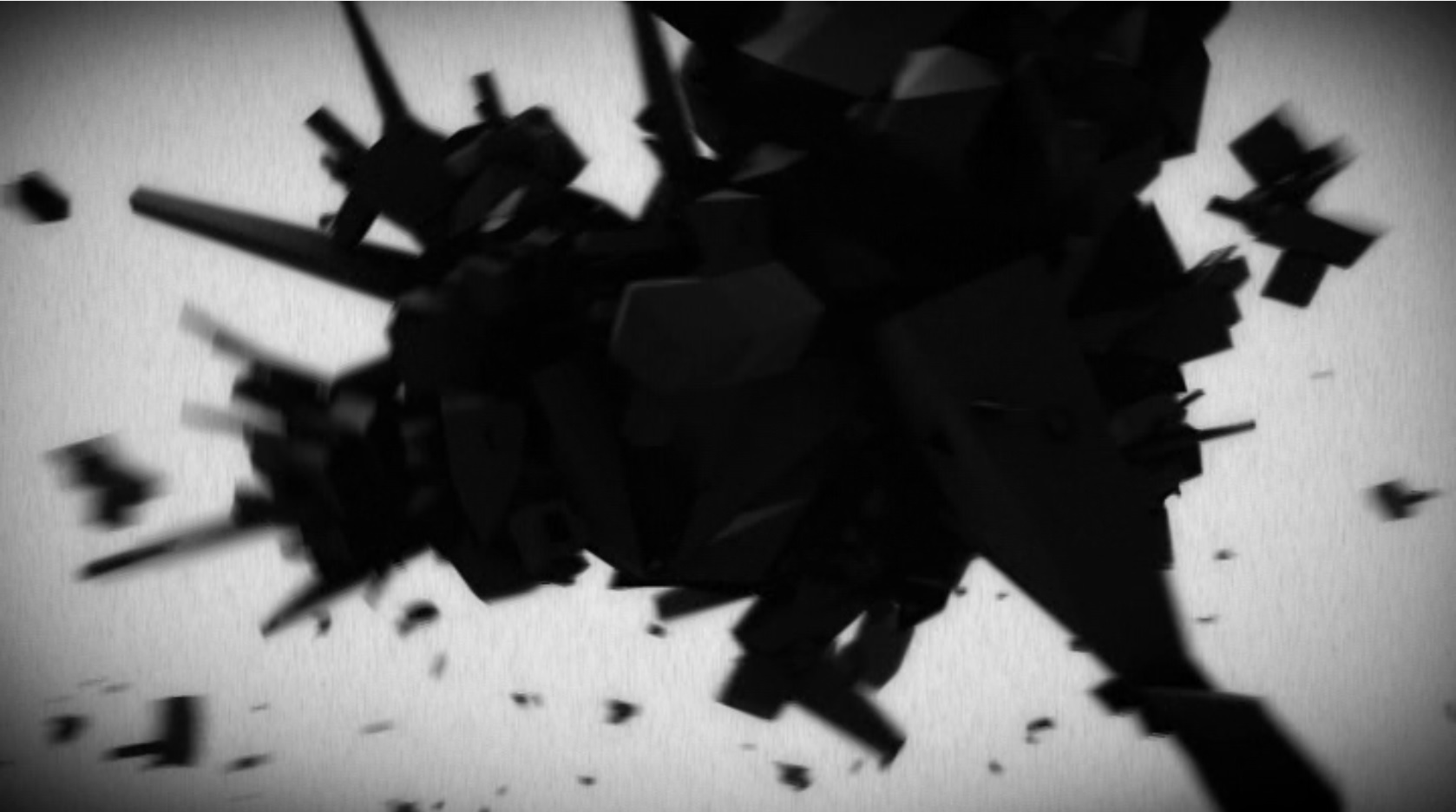
‘7596 Frames’ is a computer animated film taking place in an endless black and white landscape, in which countless abstract black shapes fly by due to an extraordinarily strong current.
One of the abstract shapes crashes amidst the debris already present, and starts to wander against the never changing wind, gaining material as it walks along, as objects keep on flying into him. When the semi-abstract figure has grown too heavy for its legs to carry it collapses, but manages to become a more dragon-like shape. At this point it comes under attack, and in the end its struggle is in vain.
At points Martin Georgiev manages to give his semi-abstract forms real character, allowing the viewer to sympathize with the creature’s helpless struggle and its suffering before its final defeat. The camera is never still, and takes some striking positions to show the creature’s efforts, e.g. taking a worm’s-eye view to show the thing towering above. Less successful is the industrial music, which unfortunately adds nothing to the animation.
Watch a preview of ‘7596 Frames’ yourself and tell me what you think:
‘7596 Frames’ is available on The Animation Show of Shows Box Set 9


 Dr. Grob's Animation Review