Directors: Stephen J. Anderson & Don Hall Release Date: April 15, 2011 Rating: ★★★★★ Review:
In 1961 Walt Disney obtained the film rights to A.A. Milne’s famous books, and over the years made five short specials about the character (1966-1983), of which the second (Winnie the Pooh and the Blustery Day, 1968) and third (Winnie the Pooh and Tigger Too, 1974) have become absolute classics. In 1977 the first three were stitched together into the feature film ‘The Many Adventures of Winnie the Pooh’, and its in this form they’re available on home media today.
Now, one can lament the fact that many children will know Winnie the Pooh better by its Disney version than by E.H. Shepard’s original irreplaceable illustrations, but within animation history these specials are highlights of inventive story-telling and wonderful character animation. A particular delight are the playful interactions of the characters with the pages of the book they appear in. Moreover, Disney retained the contrast between the naive stuffed animals and the pompous forest animals, Rabbit and Owl, who only think they’re wiser than their plush counterparts.
Unfortunately, following these classic specials, Disney took more and more liberties with the Pooh franchise, resulting in television series, direct to video movies, and even video games. Also, the three feature films made by the Disneytoon Studio division, ‘The Tigger Movie’ (2000), ‘Piglet’s Big Movie’ (2003) and ‘Pooh’s Heffalump Movie’ (2005) seemed to drift away more and more from the source material than either desired or necessary.
In this light one cannot but be weary before approaching the 2011 film, called ‘Winnie the Pooh’ in surprisingly plain fashion. However, the film deviates significantly from the trends set in the previous decade: first, it was made by the Walt Disney Animation Studios itself, being Disney’s last hand drawn animated feature to date, and the quality of animation simply is undeniable. Especially Andreas Deja’s animation of Tigger is fantastic. Moreover, there’s only a little computer animation, most notably the swarm of bees and some flowing honey. Second, the film returns to the original source material, mixing two original chapters together: ‘Eeyore loses a Tail’ from Winnie-the-Pooh (1926) and ‘The Search for Small’ from ‘The House at Pooh Corner’ (1928).
The film is surprisingly concise, only lasting 51 minutes, and not dragging one second of it. On the contrary, I rank ‘Winnie the Pooh’ as one of the best told and most entertaining of all 2010s animation films. The film successfully revives the playful spirit of the original specials, greatly helped by using John Cleese as its narrator. There’s plenty of humor, mostly deeply rooted in the interplay between the contrasting characters. For example, at one point Owl boasts he has “achieved completion of [his] autobiographical treatise”, prompting Winnie the Pooh to reply “Oh. Was it painful?”. In another sequence there’s a great confusion when the words ‘not’ and ‘knot’ are mixed together.
Two of the original songs are reused, the ones introducing Winnie the Pooh himself, and Tigger’s song. Five original songs are added, penned by Robert Lopez and Kristen Anderson-Lopez. These are functional, pleasant and short enough to please even a musical aversion-bearer like me. Even better, the Backson song is accompanied by a wonderful fantasy sequence emulating the 1950s cartoon modern style. The ‘Everything is Honey’ song is illustrated with surreal images of honey pots in the forms of e.g. crabs, jellyfish and whales.
The voice cast, too, is excellent. As the voice of Pooh Jim Cummings does an excellent Sterling Holloway imitation, Bud Luckey sounds delightfully gloomy as Eeyore, while Craig Ferguson and Tom Kenny make their characters Owl and Rabbit perfectly pompous and self-important.
Even the end titles are a delight. First, the film’s adventures are retold using stills of the live action puppets in Christopher Robin’s room, then the rest of the titles are accompanied by several antics of the characters, much in the vein of the titles of ‘Finding Nemo’ (2003). And there’s a surprise at the very end of them, so keep watching!
In all, ‘Winnie the Pooh’ is a wonderful surprise, a true gem of a film, no doubt delighting children and adults alike. Unfortunately, it was to be the Disney studio’s last traditionally animated feature. It’s unbelievably sad that the high art of drawn animation was abandoned even by the studio that had elevated the technique to inconceivable heights in the first place. I surely hope Disney will return to this art form one day.
Director: Tatsuyuki Nagai Airing of first episode: April 14, 2011 Rating: ★★★½ Review:
After ‘Erased‘ this is only the second Japanese anime series I’ve seen. The two series are from the same A-1 Pictures studio, and they are about of the same quality, so how they compare to others I wouldn’t know. Like ‘Erased’ ‘Anohana: The Flower We Saw That Day’ deals with friendship and loss, this time featuring on a group of six high school friends.
In the first of eleven episodes we learn that Teenager boy Jintan, who has dropped out of school, is troubled by a childish blonde girl called Menma, but it turns out he’s the only one seeing her. Soon we learn that Menma is dead, and that she was part of a group of friends led by Jintan when they were kids. After her death the group fell apart, but Menma is back to fulfill her wish. Unfortunately, she herself doesn’t know anymore what her wish was…
Menma’s unknown wish is the motor of the series, as the friends slowly and partly reluctantly regroup as they are all needed to fullfil Menma’s wish. On the way we learn that each of them had a particular relationship to either Jintan or Menma, and they all have their own view on the day of Menma’s fatal death. And what’s more, there are more traumas to overcome.
‘Anohana: The Flower We Saw That Day’ is surprisingly similar to the later ‘Erased’: there’s a jumping from the now to the past (although in Anohana these are flashbacks, not real jumps through time), there’s a supernatural element, there’s a group of friends, and one important mysterious girl who’s dead.
The first episode contains enough mystery to set the series in motion, but the show progresses painfully slowly, and at times I got the feeling Mari Okada’s screenplay was stretched over too many episodes. Especially episode five and six are of a frustratingly static character. In these episodes Jintan, the main character, is particularly and annoyingly passive, hardly taking any action to help Menma or himself, while Menma’s continuous cooing sounds get on the nerve.
The mystery surely unravels stunningly slowly in this series, and only episode seven ends with a real cliffhanger. Even worse, there are some serious plot holes, hampering the suspension of disbelief. Most satisfying are episode eight and ten, which are both emotional, painful, and moving. In contrast, the final episode is rather overblowing, with tears flowing like waterfalls. In fact, the episode barely balances on the verge of pathos. To be sure, such pathos occurs regularly throughout the series. In addition, there are a lot of unfinished sentences, startled faces, strange expressions, often unexplained, and all these become some sort of mannerisms.
The show is animated quite well, with intricate, if unassuming background art. Masayoshi Tanaka’s character designs, however, are very generic, with Menma being a walking wide-eyed, long-haired anime cliché. Weirdly, one of Anaru’s friends looks genuinely Asian, with small black eyes, while all main protagonists, with the possible exception for Tsuruko are depicted with different eye and hair colors, making them strangely European despite the obvious Japanese setting. For example, Menma has blue eyes and white hair, while Anaru has hazel eyes and red hair.
In all, if you like an emotional ride, and you have patience enough to watch a stretched story, ‘Anohana: The Flower We Saw That Day’ may be something for you. The series certainly has its merits, but an undisputed classic it is not.
Watch the trailer for ‘Anohana: The Flower We Saw That Day’ and tell me what you think:
‘Anohana: The Flower We Saw That Day’ is available on DVD
Director: Carlos Saldanha Release Date: March 22, 2011 Rating: ★★ Review:
I will get down to business at once: I didn’t like this movie. It’s not so easy to pinpoint what’s wrong with it, though, and clearly most people rank this film higher than I do (it gets a pretty solid 6,9 on IMDb for example), but I’ll try to unravel what I think is wrong with this picture.
‘Rio’ tells about Blu, a blue macaw who by chance ends up with little girl Linda in Moose Lake, Minnesota (Wikipedia says Blu is a Spix’s Macaw, but I’m pretty sure the film makers intended Blu to be a fantasy species). A short sequence shows us how Linda and Blu grow up together as inseparable friends. Linda even names her bookshop after her pet. Then ornithologist Túlio comes along, telling Linda that Blu may be the last male of his species, and that he wants him to mate with a newly found female in Rio de Janeiro, Brazil. Linda reluctantly agrees, and the rest of the film takes part in Rio de Janeiro, where the two birds get stolen, and Linda and Túlio have a hard time getting them back…
Now, from the outset it becomes clear that Blu and Jewel, the wild female, are meant for each other, despite their obvious differences and life histories, but the film also immediately couples Linda and Túlio in a far from subtle fashion. And when little boy Fernando declares he’s an orphan, and we follow him for a little while in his loneliness, we know where he will end up at the conclusion of the film.
In other words, utter predictability is one of Rio’s main flaws. Outside of that it never deviates from familiar tropes. There are the two inept henchmen, there’s your obligate break-up scene, there are two birds whose sole existence seems to be comic relief. Everything in ‘Rio’ is tried and done. Even worse, in ‘Rio’ it isn’t done so well. For example, the two comic relief birds, Pedro and Nico are hardly funny and both have very shallow personalities.
The latter is the problem of all personas in ‘Rio’. Even main star Blu is hardly defined. An early scene with some Canadian geese suggests he’s a bit of a nerd, but during most of the film Blu’s actions follow from the facts that he has been a pet whole his life, and that he cannot fly. These can hardly be called character traits. During the break-up scene he even acts like a complete jerk, for no apparent reason. Voice actor Jesse Eisenberg has difficulties in breathing some sympathy into Blu, anyway.
Even worse fairs Linda, of whom I can only say she loves Blu and that she feels out of place in Brazil, and Túlio, who’s depicted as a quirky, not to say rather loony scientist. Why does he have to be loony, why can’t he just be a devoted scientist, for @#% sake!
Because Linda and Túlio hardly have a story arc together their bonding feels forced. Because Blu and Linda are forced to spend some time together, their bonding feels more natural, even if it follows all predictable patterns.
Another problem I have with the story is that it lacks a strong villain. Sure, the cockatoo Nigel is evil enough, but in the end he’s only a henchman of some petty crime thieves. In the all too quick and easy round up at the end of the film all visible criminals are punished, except for the mysterious off-screen buyer of the two rare birds. A very unsatisfying ending, indeed!
‘Rio’ isn’t a musical, but Nigel sings one of two songs that suddenly emerge. The song gives Nigel some background story, but he doesn’t need one and the song is completely superfluous. The other song is an R&B song by Pedro (musician will.i.am of Black Eyed Peas fame) and Nico (actor Jamie Foxx). Curiously, the two actors are black, not Latino. In fact, only Rodrigo Santoro, who voices Túlio, is a Brazilian, and George Lopez (Rafael) the only other Latino among the main characters.
And this brings me to another problem with ‘Rio’: Rio de Janeiro is well-depicted visually, but aurally little is done with the rich musical tradition of Brazil. True, the film opens and ends with an English language samba, and the toucan Rafael shortly sings ‘The girl of Ipanema’, but the two original songs mentioned above have no grain of Brazil in them, nor does the rest of the soundtrack, which consists of rather standard and uninteresting action fare. Likewise, the film fails to convey the magic of the Brazilian carnival. The parade is wisely chosen as the place of the grand finale, but unfortunately this is cut short in favor of one taking place on a plane. This makes sense in forcing Blu to fly (but nonetheless his sudden ability to do so feels more magical than natural), but also feels like a missed opportunity.
Apart from all story problems, ‘Rio’ also suffers from all too generic designs. Nothing in the film breathes particularly ‘Blue Sky’ and the film has none of the character ‘Ice Age’ (2002) and ‘Dr. Seuss’ Horton Hears a Who!’ (2008) had. Moreover, the human designs and animation are surprisingly weak in this film. I particularly disliked the design of Linda, and the animation of Fernando, which looked disappointingly wooden. These straight characters fair less well than the broad comic ones, like the two henchmen Tipa and Armando, who are much more delightful to watch.
In all, ‘Rio’ is a too mediocre and too generic film to become an all-time classic. Instead, the film is a good example of the lazy, trope-driven plots and more and more common designs that started to overtake American animated feature film making during the 2010s.
Watch the trailer for ‘Rio’ yourself and tell me what you think:
Directors: Stevie Wermers-Skelton & Kevin Deters Release Date: March 5, 2011 Rating: ★★★★ Review:
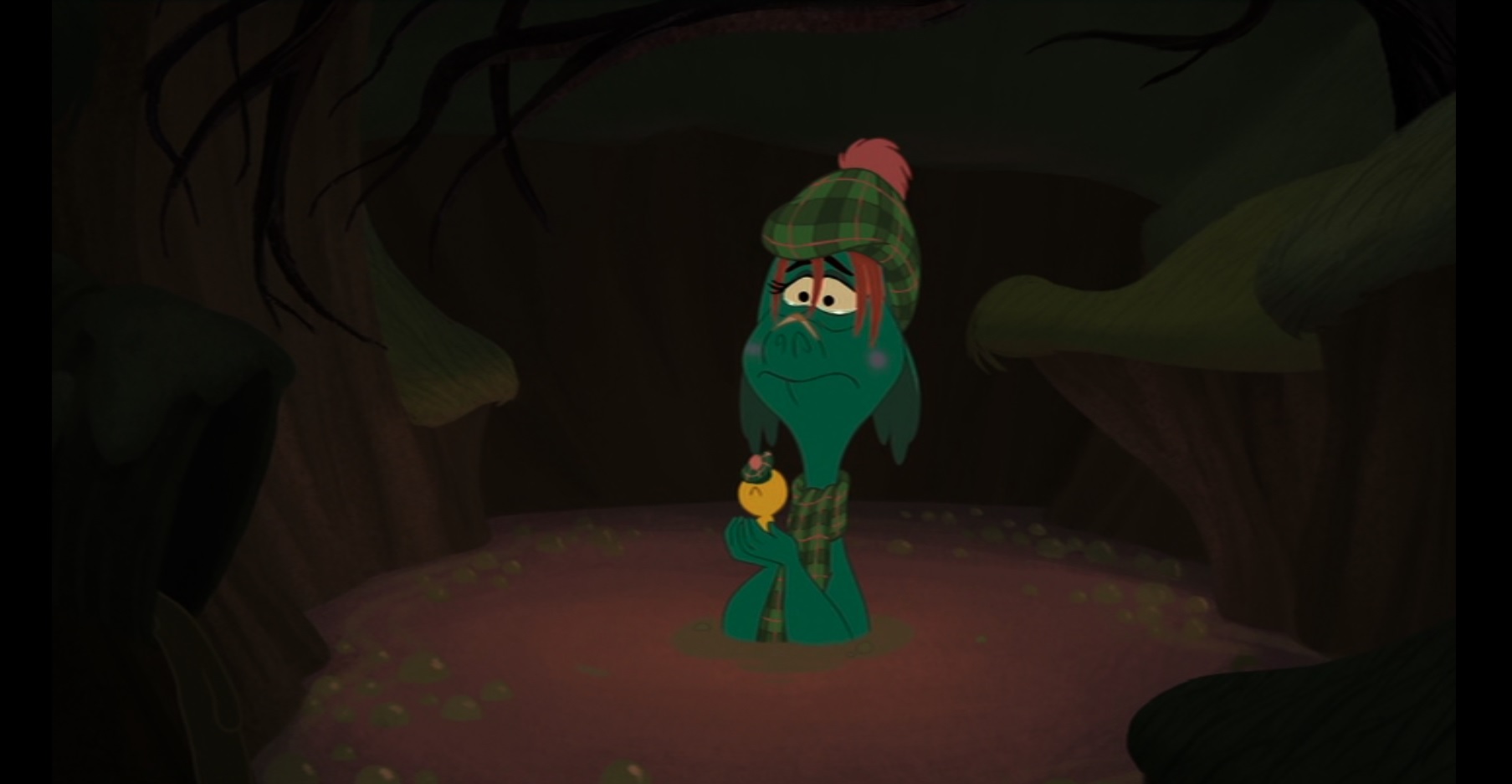
The theatrical release of ‘Winnie the Pooh‘ (2011) came with a charming short called ‘The Ballad of Nessie’. Narrated by Scotsman Billy Connolly in Dr. Seuss-like rhymes the short tells about Nessie, who has to leave her small pond when one McFroogle turns it into a golf course.
Everything in ‘The Ballad of Nessie’ breathes nostalgia. The short is very reminiscent of Disney shorts from the 1950s, not only because of its use of rhyming narration, but also because of the full animation combined with cartoon modern designs, and Mary Blair-inspired background art. I especially liked the tartan hills in the background.
The short is not particularly funny, but clearly made with love, and a welcome return to traditional animation in a time even Disney abandoned its own classic art form for computer graphics.
Watch ‘The Ballad of Nessie’ yourself and tell met what you think:
‘The Ballad of Nessie’ is available on the Blu-Ray and DVD of ‘Winnie the Pooh’
Director: Gore Verbinski Release Date: April 3, 2011 Rating: ★★★★ Review:
One of the most original mainstream feature films to come out of the United States in the 2010s was ‘Rango’, a Western with desert animals.
‘Rango’ was the brainchild of director and co-producer Gore Verbinski, a live action director of ‘Pirates of the Caribbean’ fame. The film was made at Paramount, which hadn’t had an animation studio of its own since the closure of the Paramount Cartoon Studio in 1967. In fact, the animation was essentially done at Industrial Light & Magic, supervised by Hal Hickel. Apparently, Paramount gave Verbinski a lot of freedom, because ‘Rango’ is a pretty quirky movie, boasting an original visual style and none too serious storytelling.
Star of this original Western is a pet Chameleon (Johnny Depp) with a lot of fantasy, who accidentally ends up in the Mojave Desert, where he poses as some kind of Western hero called Rango, prompting the villagers to appoint him as a much-needed sheriff. Rango then has to solve an aquatic crime, which he does cluelessly, but with much bravado.
The first thing that strikes ‘Rango’ as different from all other American computer animated films, is its surprisingly gritty visual style. Rango himself, for example, has a crooked neck and an asymmetrical head, while his love interest Beans is a lizard, whose curls do not hide the fact that she’s clearly a reptile. One of the villains, Gila monster Bad Bill looks particularly rough, while the mayor, a tortoise, looks uncannily like actor Fred MacMurray. Another curious addition is ‘the spirit of the West’, who looks like an aged version of Clint Eastwood’s ‘man with no name’ persona. The whole film breaths spaghetti western, especially in its cinematography and Hans Zimmer’s musical score.
‘Rango’ doesn’t really deviate from the familiar story lines of current American animated features, however. For example, there’s an ‘all hope is lost’ moment, a familiar trope in the 2000s and 2010s, but the story is unpredictable enough to entertain throughout. Moreover, apart from a unique visual style, the film boasts some off-the-wall story devices, like a band of mariachi owls, who bridge several scenes, frequently predicting the chameleon is going to die.
Although the crime plot is played with seriousness, the film never loses sight of its own silliness. There are some peculiar touches, like Rango talking to a halved armadillo, or Beans suddenly freezing mid-sentence. Much of the dialogue is delightfully funny, and there are plenty of references to Western cinema, as well as one to ‘Fear and Loathing in Las Vegas’ (1998), which also starred Johnny Depp.
Despite the silliness, the film boasts surprisingly high production values. The animation, the cinematography, the rendering and the soundtrack are all of a fine quality. The film’s scruffy look may not appeal to everyone, but is a welcome diversion from the mainstream.
‘Rango’ was such a commercial and critical success, even winning the Academy Award for Best Animated Feature that Paramount was confident to create its own animation studio, releasing its first feature, ‘The SpongeBob Movie: Sponge Out of Water’. Nevertheless, until now the studio has failed to carve out a unique spot in the crowded feature animation field. It at least never again released such a quirky movie like ‘Rango’.
Watch the trailer for ‘Rango’ yourself and tell met what you think:
Director: Martin Georgiev Release Date: October 17, 2012 Rating: ★★★ Review:
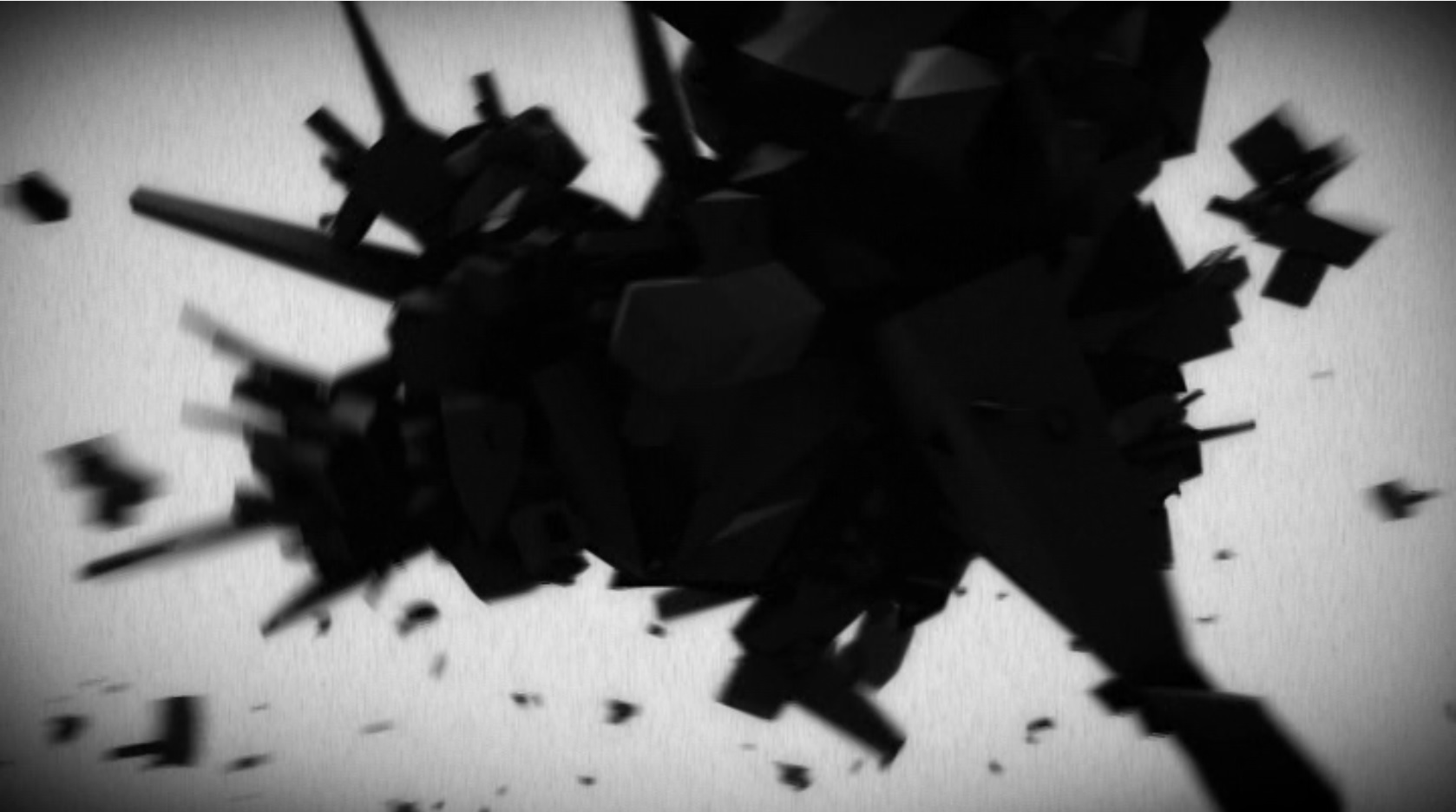
‘7596 Frames’ is a computer animated film taking place in an endless black and white landscape, in which countless abstract black shapes fly by due to an extraordinarily strong current.
One of the abstract shapes crashes amidst the debris already present, and starts to wander against the never changing wind, gaining material as it walks along, as objects keep on flying into him. When the semi-abstract figure has grown too heavy for its legs to carry it collapses, but manages to become a more dragon-like shape. At this point it comes under attack, and in the end its struggle is in vain.
At points Martin Georgiev manages to give his semi-abstract forms real character, allowing the viewer to sympathize with the creature’s helpless struggle and its suffering before its final defeat. The camera is never still, and takes some striking positions to show the creature’s efforts, e.g. taking a worm’s-eye view to show the thing towering above. Less successful is the industrial music, which unfortunately adds nothing to the animation.
Watch a preview of ‘7596 Frames’ yourself and tell me what you think:
‘7596 Frames’ is available on The Animation Show of Shows Box Set 9
Directors: Frank Braun & Claudius Gentinetta Release Date: July 16, 2010 Rating: ★★★★½ Review:
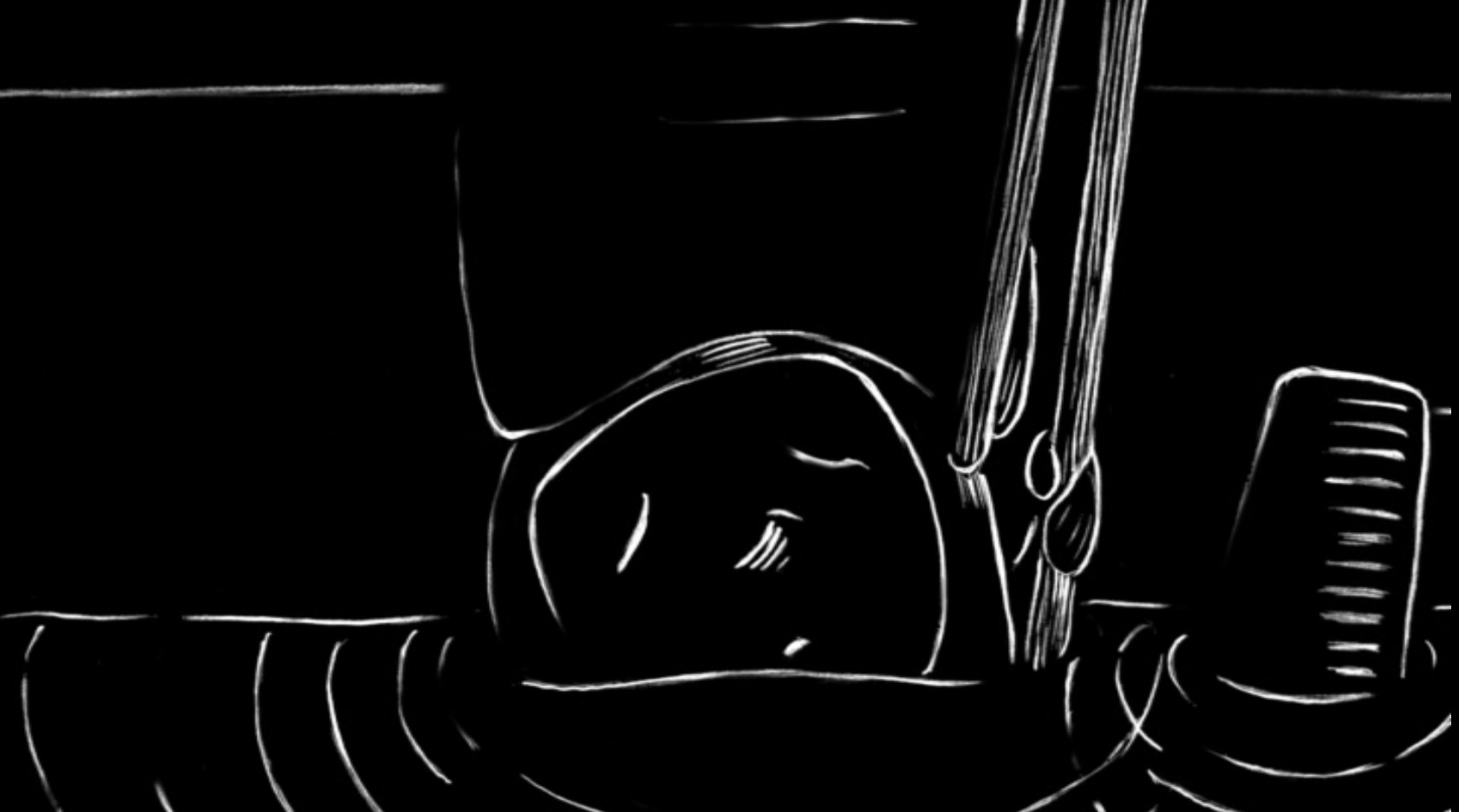
‘Schlaf’ is a black and white film using white lines on a black canvas. The film is very poetic and follows the rhythm of a snoring person, with images alternatingly speeding past the camera, or being more or less calm, allowing the viewer to register what’s in them.
Once one realizes he watches an enormous ocean liner full of people with oars, one also notes the ship is sinking, as if the ship depicts the sleeping person’s consciousness drowning into a sea of sleep. The idea is so strikingly original and its execution so well done, ‘Schlaf’ easily holds the attention throughout, despite the puzzling imagery.
Watch ‘Schlaf’ yourself and tell met what you think:
‘Schlaf’ is available on The Animation Show of Shows Box Set 9
Director: Andreas Hykade Release Date: February 24, 2010 Rating: ★★★★★ Review:
After a sublime narrative trilogy on the loss of innocence (consisting of ‘Wir lebten im Gras‘ from 1995, ‘Ring of Fire’ from 2002, and ‘The Runt‘ from 2006), Andreas Hykade made a surprising move to a non-narrative film with ‘Love & Theft’.
In this film Hykade uses many animation cycles and continuous metamorphosis, not to tell a story, but to bring a homage to the great characters of animation and comics in mesmerizing and hallucinating images that never fail to entertain.
Greatly helped by Heiko Maile’s score, ‘Love and Theft’ knows an almost perfect build-up, starting very modestly in black and white, and with the simplest drawings. The first recognizable characters morphing into each other are Charlie Brown and Hello Kitty, soon followed by Mickey Mouse, Goofy and Spiderman, and later e.g. Spongebob Squarepants, Bert from Sesame Street, Tweety, Blossom from the Powerpuff Girls, Betty Boop, Ryan Larkin (as depicted in Chris Landreth’s animated short ‘Ryan’ from 2004), Gromit, Droopy, Koko, Donald Duck, the penguin from ‘The Wrong Trousers‘, Barbapapa, and countless others, including even Karl Marx, Che Guevara and Adolf Hitler.
Once changed into color, the animation goes completely berzerk, as one long psychedelic kaleidoscope. This particular sequence seems to owe something to Jim Woodring’s Frank, and somehow Andreas Hykade manages to capture the comic’s surreal atmosphere very well in this otherwise semi-abstract film.
Rarely were animation cycles and metamorphosis employed so creatively and entertainingly. ‘Love & Theft’ is a film that can be watched over and over again, without losing its gripping power.
Watch ‘Love & Theft’ yourself and tell met what you think:
‘Love & Theft’ is available on The Animation Show of Shows Box Set 9
Director: William Joyce Release Date: January 30, 2011 Rating: ★★★½ Review:
In ‘The Fantastic Flying Books of Mr. Morris Lessmore’ a young man is swept away by a storm to an unknown land where he come to live in a mansion full of living books.
‘The Fantastic Flying Books of Mr. Morris Lessmore’ is a gentle, wordless film that seems to want to say something about the magic of books, and that reading good books will lead to more reading, and a lifetime of adventure.
The short is full of references. The young man himself looks a little like Buster Keaton, while the storm scene is a direct visual quote from ‘The Wizard of Oz’ (1939). Like that film ‘The Fantastic Flying Books of Mr. Morris Lessmore’ plays with color and black and white, this time to illustrate how books can color your life.
‘The Fantastic Flying Books of Mr. Morris Lessmore’ is well made, and makes good use of the animated medium to tell a fantastic story, but the art design is, to be frank, very conventional and unadventurous, and the story rather puzzling, which actually hampers the message. Moreover, John Hunton’s music, with its ‘pop goes the weasel’ theme is a bit obnoxious and very in your face. Many critics clearly think otherwise, as ‘The Fantastic Flying Books of Mr. Morris Lessmore’ won the Academy Award for best animated short of 2011.
Watch ‘The Fantastic Flying Books of Mr. Morris Lessmore’ yourself and tell me what you think:
‘The Fantastic Flying Books of Mr. Morris Lessmore’ is available on the DVD box set ‘The Animation Show of Shows Box Set 7’
Directors: Gary Trousdale & Kirk Wise Release Date: June 21, 1996 Rating: ★★★ Review:
After feature adaptations of several fairy tales and children’s books, and even a non-fiction book on aerial warfare (‘Victory through Air Power’ from 1943), ‘The Hunchback of the Notre Dame’ marks the studio’s very first animated adaptation of classic literature, in this case the historical novel of the same name from 1831 by French author Victor Hugo.
Of course, Disney’s version is not the first movie adaptation of Hugo’s hefty book. The most famous predecessors are a silent version from 1923 starring Lon Chaney as the title character, and one from 1939 starring Charles Laughton. The latter adaptation changed Hugo’s bleak and depressive ending into a more uplifting one. Disney gladfully follows suit, ending its own film remarkably upbeat, which is something the more avid Victor Hugo fan will hardly get used to. But more about that later.
The film starts with a ‘Pinocchio’-like opening shot with the camera zooming into the streets of Paris. Immediately it becomes clear that this new adaptation of ‘The Hunchback’ will be a musical, because the first song, ‘The Bells of Notre Dame’ kicks in right away. It is sung by puppet player Clopin (Paul Kandel), whom we zoom into shortly, and who is the initial narrator of the tale, telling about events occurring twenty years before. This is the first of nine songs in 81 minutes, making ‘The Hunchback of the Notre Dame’ one of the most song-rich of the Disney musicals.
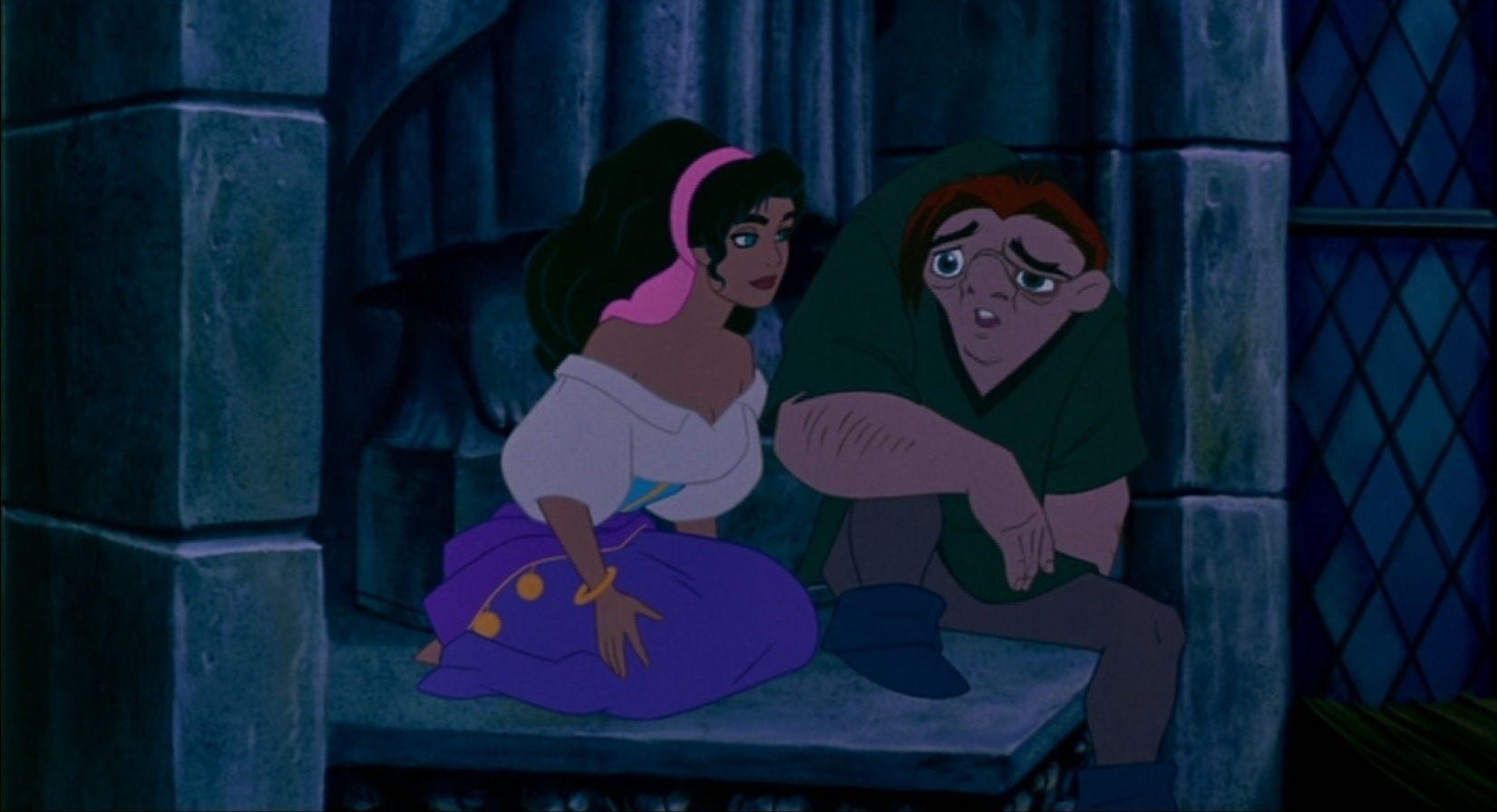
After the six-minute intro the film’s title appears, and we immediately cut to young adult Quasimodo (voiced by Tom Hulce of Amadeus fame), who remains misshapen as in the original novel, having both an asymmetrical body and face, with one bad eye, a hump, and a limping walk. But the animators also immediately make clear that this is a friendly, kind-hearted, and harmless person. Disney’s Quasimodo is kind and gentle and has a nice voice (by Tom Hulce), so we as an audience hardly must overcome any prejudice.
Moreover, within the limitations of the character’s literally description, the character designers really tried to make Quasimodo as appealing as possible. For example, compare his appearance to that of either Chaney or Laughton, who both look much uglier, and must overcome initial repulsion by the audience by great acting. Disney’s Quasimodo, on the other hand, is instantly likeable, and the viewer even struggles to comprehend why he isn’t loved more by the citizens of Paris.
Quasimodo’s first scene also shows the weird dualism of this movie: at one hand the studio really wants to tell a serious story, with heavy-handed themes, and dramatic music. On the other hand, the film makers apparently don’t dare to leave the cuddly-wuddly world of earlier Disney children’s films, and this leads to a schizophrenic end product, failing to be either entirely for children or the dark tale it could have been.
For example, the studio gives Quasimodo three humanized gargoyles to talk to (perhaps another idea taken from the 1939 film version, which ends with Quasimodo talking to a gargoyle). The appearance of the three gargoyles feels disappointingly formulaic and out-of-tune after the dramatic introduction. The childish half of the movie is further enhanced by the present of an intelligent pet goat and an equally humanized horse called Achilles. These two animal characters don’t speak, but clearly belong to the world of obligate animal sidekicks, which permeate the Disney films since ‘The Little Mermaid’ (1989).
True, the gargoyles appear only to be real to Quasimodo, turning to stone as soon as any other character is in the same room, but as we often watch them move without Quasimodo being aware of them, we’re led into believing these stone characters are real, and only pretending to be lifeless when other people are around.
Despite the presence of these cute characters, ‘The Hunchback of the Notre Dame’ is arguably Disney’s darkest movie since ‘Pinocchio’ (1940), addressing issues like prejudice, discrimination, intolerance, and hypocrisy.
Most striking in this respect is the character of the villain judge Frollo, voiced forcefully by Tony Jay. His lust for Esmeralda is clearly an adult theme. This becomes most apparent in the character’s own song of desire, with its erotic fantasy depictions of Esmeralda depicted in the flames he watches. Masterly animated by Kathy Zielinski, this is arguably the movie’s best song, highlighting the complexity of the character. Frollo isn’t just bad, he’s torn inside. Frollo all too willingly marries his lust to his sense of justice and sees no problem in purging the town’s gypsies only to find his object of desire. In fact, Frollo is the most interesting character of the whole film, and certainly one of the most interesting of all Disney villains, for his evilness comes from partly from fanatism and bigotry, and is not purely selfish, even though that’s an important component of his character, too.
Another adult theme is the love triangle between Quasimodo, Esmeralda (voiced by Demi Moore) and captain Phoebus. Esmeralda is the focal point of the movie, being the object of desire of the three male leads, if in different ways for each of them. Phoebus is a bland hero character, and the only one who doesn’t sing. At one point Quasimodo actually believes Esmeralda loves him, and he has to overcome his jealousy of his more handsome rival to help Phoebus finding Esmeralda.
Yet, as the film makers don’t really choose between a light-hearted and a serious narrative, the film remains an odd blend. For example, Quasimodo’s rescue scene is played out very dramatically and seriously. But this scene is followed by a rather frivolous storming of the cathedral, full of silly gags and broad, cartoony animation. One can even hear the Goofy yell when the soldiers fall from great heights to a – I’d say – certain death. This lack of choice troubles and harms the film big time. A Disney cliché scene in which a character seems dead but turns out not to be (see ‘Pinocchio’ and ‘Jungle Book’) doesn’t help either.
But what really becomes hard to swallow is the film’s ending, which is all too happy, defying every believability. In Disney’s version Quasimodo seemingly starts a revolution, and the film makers want us to believe that following the film’s events the Middle Ages stopped right there and propelled all citizens of Paris into a post-modern world of tolerance and rainbow harmony, free from despotism, prejudice, and discrimination. If only. For example, ninety years after the events depicted here Paris would witness the atrocities of the St. Bartholomew’s Day massacre. I’m afraid that although Victor Hugo’s original ending may the more gruesome, it’s also the more realistic one.
The film is more successful as a musical than as a retelling of Victor Hugo’s novel. Alan Menken’s music is in the same modern musical vein as earlier Disney musicals, like ‘Beauty and the Beast’ (1991) and ‘Aladdin’ (1992), but the tone is much more dramatic, verging on the edge of bombast. Unique for this movie is that the score remains its musical character even when there’s no singing. An unexpected element of his score is Menken’s use of leitmotivs. Especially Frollo is identified by a particularly well-composed melody, which recurs throughout the movie. Menken may count this melody as one of his very best ever. Frollo’s song is the film’s dramatic highlight, and as said the best song of the whole film, but Menken’s score reaches epic heights during the rescue scene, when a choir singing in Latin adds to the musical suspense.
The only real mistake in the score is the Gargoyle’s song, the film’s only light-hearted tune. In this tune we’re suddenly confronted with many anachronisms and French cliches completely out of tune with the rest of the movie, like images of a casino, a barber, and a grand piano. What worked in ‘Aladdin’ falls completely flat in ‘The Hunchback of the Notre Dame’. These anachronisms come across as a lack of ideas, instead of original twists, and pull the viewer out of the story, instead of taking him further in. Yet, it must be said that even this song shows the grim image of three people being hanged, even if it’s in puppet form. In the same way, a later song by a bunch of scoundrels remains very merry, even though it’s about killing.
The film’s design is noteworthy for its moody color palette, with blues, purple and orange as its principal colors, which permeate almost all scenes. The human designs are more elaborate, yet less artful than before, with Esmeralda and Phoebus being particularly bland. Unfortunately, somehow, it’s this more generic design that would become standard in the final traditionally American animated films of the late nineties and early 2000s.
The human designs may lack character, their animation is by all means outstanding, and shows that the Disney studio was at the very top of its craft. An example is the Topsy-Turvy song. Set at the Feast of Fools (which was actually forbidden by 1431, while the action takes place in 1482, but this is Victor Hugo’s error), this song features elaborate movement, fast cutting, all kinds of camera angles, and many different characters, both traditionally animated and computer animated. But all the movement and the characters’ emotions remain readable all the time. In fact, one can watch this sequence in silence and still know what’s going on.
Other pieces of animation I particularly like is when Frollo wriggles his sword out of a piece of wood while entering the cathedral, and the one in which Esmeralda asks Quasimodo to come outside, shot from Quasimodo’s perspective, thus making Esmeralda reaching out to us. But these are just examples in a film overflowing with excellent character animation.
Computer animation is limited to special effects, especially for creating crowd scenes. With help of computers, the studio could generate crowds of hundreds of people, without having to animate each person individually. When one looks closer, the animation looks terribly stiff and lifeless, but as the eye normally follows the fully animated leads, the result is convincing enough, and luckily not out of tune with the fully animated lead characters.
In all, ‘The Hunchback of the Notre Dame’ is a well-made film with a very interesting musical score, and great animation. It’s a daring piece into more serious territory, something the studio would never repeat. And I understand why, because as long as the Disney studio doesn’t dare to leave its compulsory family character, it will never succeed in retelling dramatic stories like Victor Hugo’s ‘The Hunchback of the Notre Dame’ convincingly. This film certainly fails to do so, despite all the effort, and remains a schizophrenic product that leaves the viewer wondering what it could have been if the studio would have made more daring choices.
Watch the trailer for ‘The Hunchback of the Notre Dame’ and tell me what you think:
‘The Hunchback of the Notre Dame’ is available on Blu-Ray and DVD
‘Inflata Dee Dee/The Justice Friends: Can’t Nap/Monstory’ was the last episode of the first season Dexter’s Laboratory, and thus, alas, the last of the Dexter’s Laboratory episodes to be released on DVD. Why the other seasons never saw a home media treatment is a mystery to me. It sure is an eternal shame that this great show is not available in its entirety.
In ‘Inflata Dee Dee’ Dee puts Dexter’s “hydroplasmatic inflation suit” on, making her floating like a bubble in Dexter’s lab, much to the little boy’s annoyance.
What follows is an almost classic chase sequence in which Dexter tries several ways to bring Dee Dee down. One involves a particularly silly suit with springs and a plunger. We also learn that Dee Dee has a watch with indicates when it’s time to play with Dexter. Dexter’s Laboratory rarely was so looney tunes-like.
The Justice Friends: Can’t Nap
Director: Genndy Tartakovsky Stars: The Justice Friends Rating: ★ Review:
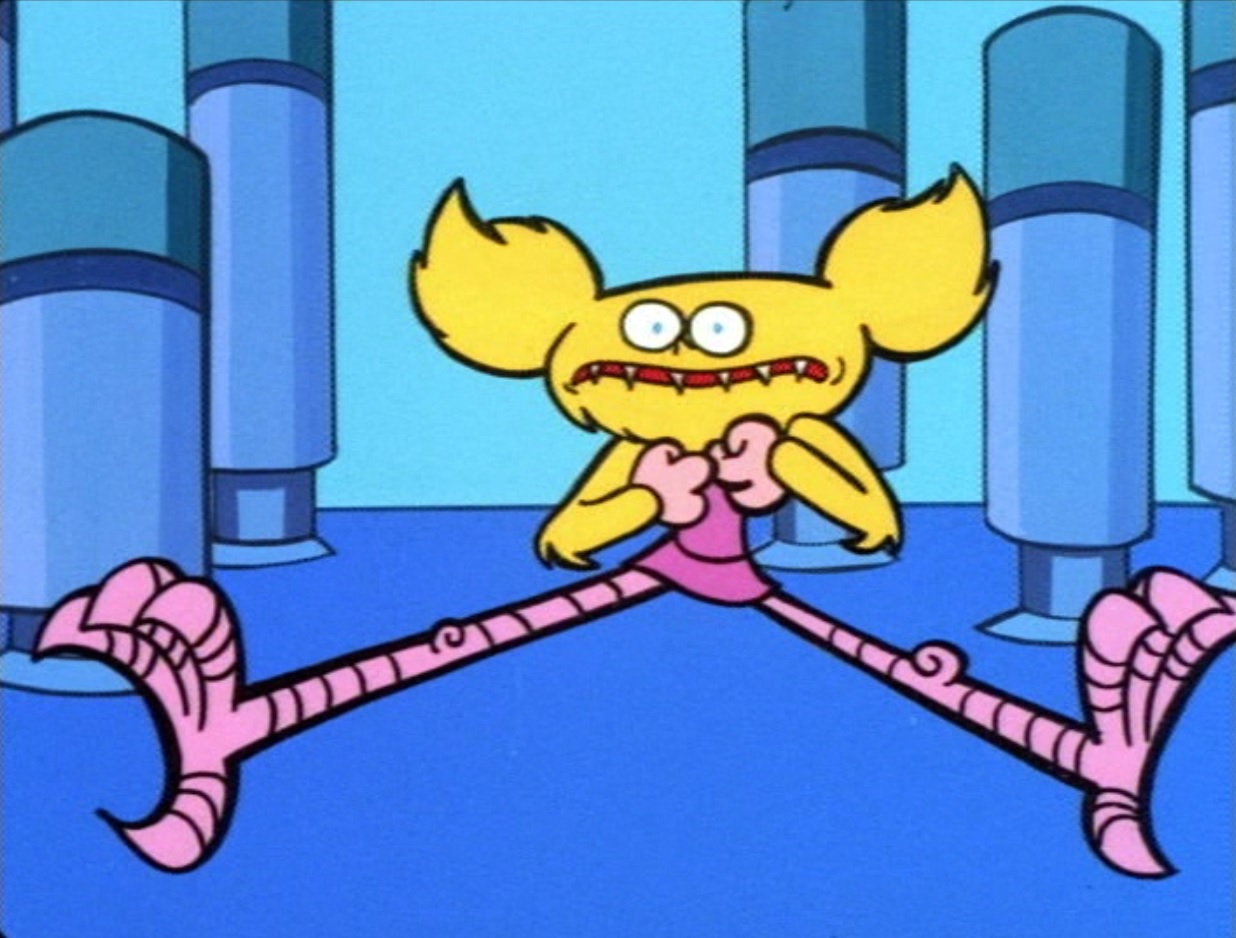
In another tiresome episode of ‘Justice Friends’ Valhallen takes a justice friend called White Tiger home, which behaves like a cat. Unfortunately, Major Glory is allergic to cats, and with help of Krunk goes at lengths to get rid of the creature.
‘Cat Nap’ is anything but funny, leaving the opening scene, which involves a particularly silly supervillain called Mental Mouse as the most inspired part of the episode. Nevertheless, White Tiger is well-animated, perfectly blending human and cat-like moves.
When Dee Dee visits Dexter to tell him a particularly stupid story, Dexter grabs an ampule with a silencer to shut her up. Unfortunately, he grabs the wrong elixir…
‘Monstory’ is great fun and knows some nice references, not only to Godzilla and other monster movies, but also to ‘Horton Hears a Who’ and ‘King-Size Canary’ (1947). The transformation scenes are particularly good, especially the first one involving Dee Dee. Also great is the montage in which a caterpillar-like Dexter lies dormant in a cocoon, with Dee Dee waiting for him to emerge.
‘Inflata Dee Dee/The Justice Friends: Can’t Nap/Monstory’ is available on the DVD ‘Dexter’s Laboratory Season One: All 13 Episodes’
Directors: Paul Rudish & Genndy Tartakovsky Stars: The Justice Friends Rating: ★ Review:
In ‘Bee Where?’ a bee visits the home of the three justice friends, scaring Major Glory to death.
This must be one of the most tiresome of all Justice Friends episodes. It just drags and drags on, without getting funny. Even the antics with the open or closed windows fails to become funny, lacking proper timing.
‘Mandarker’ sees the return of Mandark, whose laboratory is still destroyed.
This time the two combat to win first prize at the science fair, a prize normally going to Dexter. It becomes clear Mandark goes to great lengths to achieve his goal, while Dexter has become arrogant enough to assume he will win anyway. Nevertheless, once Mandark enters the fair, events get a different turn.
It’s always nice to see the two rivals, but the best part of this episode is the finale in which the dialogue consists of the words Dexter and Mandark, only.
‘Dexter’s Rival/The Justice Friends: Bee Where/Mandarker’ is available on the DVD ‘Dexter’s Laboratory Season One: All 13 Episodes’
This episode starts with Dexter activating an alien communicator.
Almost immediately he gets a visit of three aliens in a flying saucer. Unfortunately, they’re mostly interested in taking Dexter with them for further examination, but Dexter manages to send Dee Dee with them, instead. First he enjoys the bliss of her absence, but before soon remorse kicks in.
The scenes in which Dexter is taking in by guilt are a great echo of other guilt-cartoons like ‘Pudgy Picks a Fight‘ (1937) or ‘Donald’s Crime’ (1945). Also very entertaining is the heroic sequence in which Dexter ascends his space ship, which borrows elements from both Battlestar Galactica and Star Wars.
The Justice Friends: Ratman
Director: Genndy Tartakovsky Stars: The Justice Friends Rating: ★★★½ Review:
In this episode Krunk and Valhallen clog the toilet, so they have to go down in the basement to fix things. But something is lurking there.
‘The Justice Friends: Ratman’ is pretty silly, and overtly tongue-in-cheek, but also all too talkative. I’m not sure about the addition of the laughing track, which does add to the corniness, but which is also pretty annoying itself. Best is Tartakovsky’s staging, with the Justice Friends frequently taking dramatic poses.
In ‘Dexter’s Debt’ Dexter gets confronted by a bill from NASA of 200 million dollars.
Dexter’s attempts to raise the money are feeble, indeed, and what’s worse, Dee Dee outdoes him every time. ‘Dexter’s Debt’ greatly plays on the relationship between brother and sister, while both Dexter’s mom and dad get more screenplay than usual. Highlight, however, is the entrance of the two NASA men.
‘Spacecase/The Justice Friends: Ratman/Dexter’s Debt’ is available on the DVD ‘Dexter’s Laboratory Season One: All 13 Episodes’
In ‘The Way of the Dee Dee’ Dee Dee shows Dexter that he has become out of touch with nature, so Dexter begs her to show him ‘the way of the Dee Dee’.
With Dee Dee as his guru Dexter steps leaves not only his lab, but dares to go outside. What follows are some antics in the backyard, but for the final challenge Dee Dee takes Dexter back to the lab for some self expression…
‘The Way of the Dee Dee’ plays with the themes of gurus and enlightenment. The scene in which Dexter steps into the light, accompanied by sitar music is the episode’s highlight in that respect.
The Justice Friends: Say Uncle Sam
Director: Genndy Tartakovsky Stars: The Justice Friends Rating: ★★ Review:
Major Glory’s Uncle Sam will come to visit, so Major Glory teaches his friends how to behave, much to the latter’s distress.
Highlight of this otherwise dragging episode is the scene in which Major Glory calls his justice friends to assemble, accompanied by some particularly heroic music.
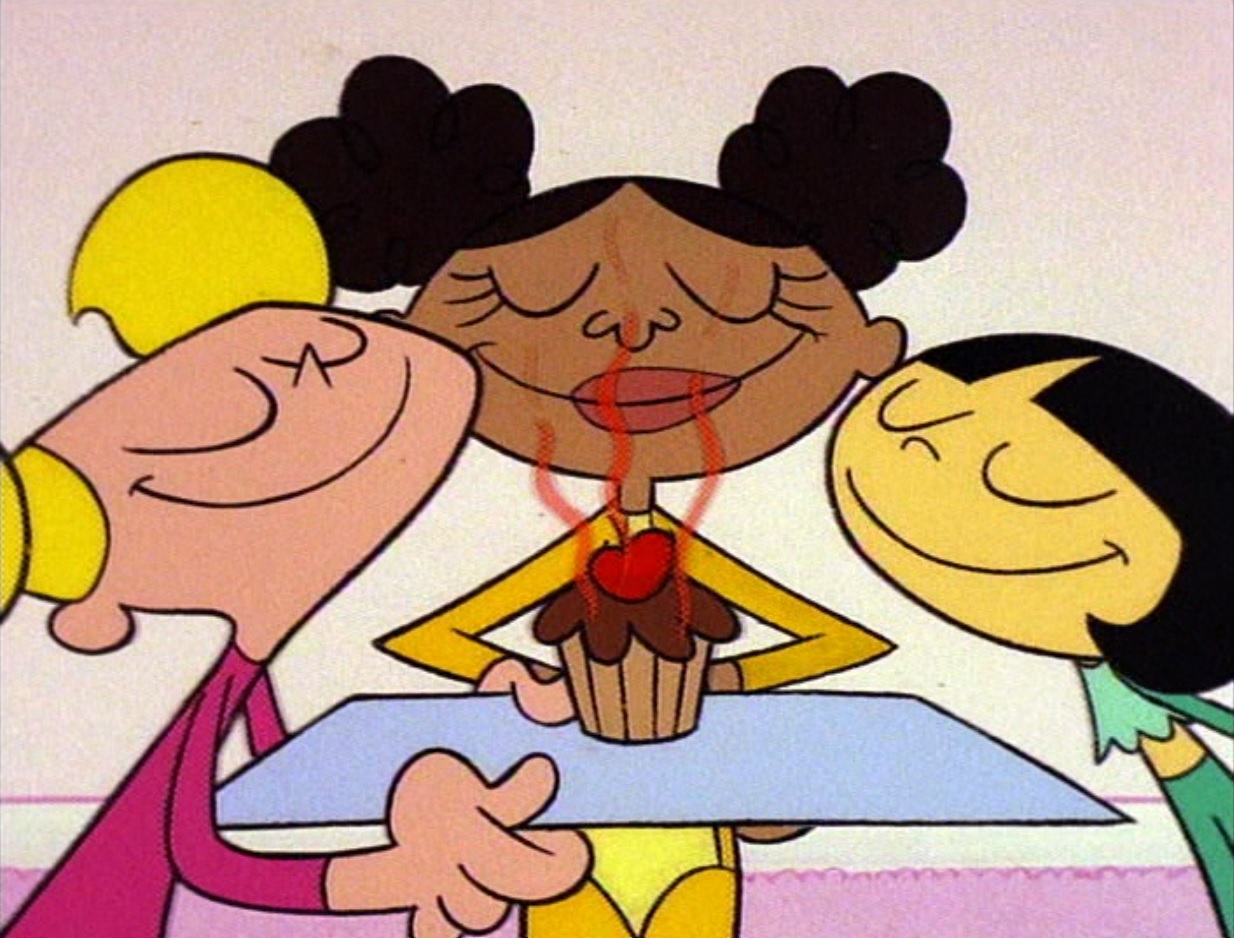
Once again, Dexter goes to Dee Dee’s room, this time to observe the behavior of girls. But then he’s discovered by Dee Dee and her friends Lee Lee and Mee Mee…
Dexter is presented as being completely unable to communicate with the girls, who, in one scene, treat him like a shy animal.
‘Way of the Dee Dee/The Justice Friends: Say Uncle Sam/Tribe Called Girl’ is available on the DVD ‘Dexter’s Laboratory Season One: All 13 Episodes’
Director: Rob Renzetti Stars: Dexter Rating: ★★★★½ Review:
‘Dee Dee’s absence in his lab makes Dexter worried, so he concludes his big sister must be up to something.
In order to find out Dee Dee’s supposedly evil scheme, he uses a shrink ray, shrinking himself, ignoring the possible side-effects of imagination running wild due to the shrinking. Dee Dee, who has been playing with dolls all along, makes great use of this side-effect.
‘Dollhouse Drama’ is one of the most inspired Dexter’s Laboratory episodes of all. The episode builds on earlier idea, presented in ‘Dee Dee’s Room‘: that of Dexter’s imagination running wild in Dee Dee’s room. The scenes in which Dexter stars in Dee Dee’s soap opera story are no less than fantastic, and form a faint echo of the drug-influenced Perky Pat plays in Philip K. Dick’s novel ‘The Three Stigmata of Palmer Eldritch’ (1965). I wonder whether this is pure coincidence or not.
The Justice Friends: Krunk’s Date
Director: Genndy Tartakovsky Stars: The Justice Friends Rating: ★★½ Review:
The bridging episodes within Dexter’s Laboratory three-part episodes were always the weakest, and ‘The Justice Friends: Krunk’s Date’ is no exception.
In this episode of the Justice Friends the Infraggable Krunk falls in love with a member of the enemy team, called She-Thing. This episode drags on, and milks the idea of the Krunk falling in love, while the two teams are clobbering each other way too long. Highlight of this tiresome and disappointing episode is the villain, ‘Comrade Red’, who’s some kind of ridiculous Soviet superhero.
‘The Big Cheese’ is a great episode in which Dexter tries to learn French while sleeping. Unfortunately, the record player gets stuck on a single word: ‘omelette du fromage’…
‘The Big Cheese’ is one of the all time classsic episodes of Dexter’s Laboratory, and one that viewers still remember 25 years after viewing. The whole idea of Dexter being able to utter ‘omelette du fromage’ only is hilarious in itself, but the execution is even better, taking unexpected turns. Especially, the montage sequence is an absolute delight, as is the catastrophic punchline of the episode. But to me the best part are Dee Dee’s first two expressions when she realizes Dexter can only say ‘omelette du fromage’.
Note that one of Dexter’s records is ‘Steven Hawks Sings’, which clearly refers to Stephen Hawking.
‘Dollhouse Drama/The Justice Friends: Krunk’s Date/The Big Cheese’ is available on the DVD ‘Dexter’s Laboratory Season One: All 13 Episodes’
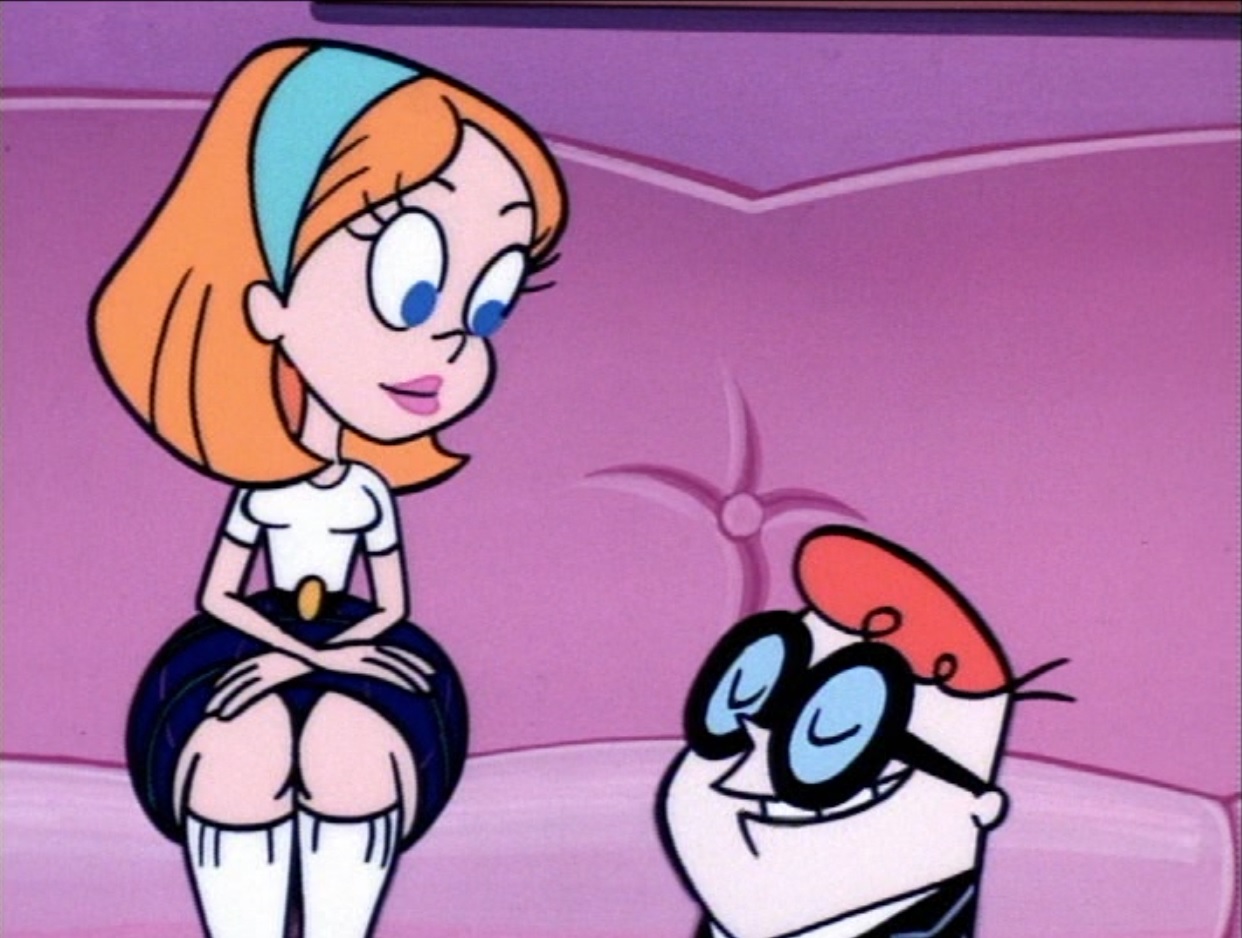
‘Babysitter Blues’ immediately makes clear that Dexter is in love with his babysitter. The scene in which he prepares the room for her arrival is priceless, with its strong posings on the little boy.
But when Lisa, the babysitter, arrives, it quickly turns out she has a boy friend, prompting Dexter to think out a devilish scheme.
Dexter is far from sympathetic in this cartoon, and the love theme with ca. ten years age difference between Dexter and Lisa is a little bit uncomfortable, but the episode still is great fun. Apart from the opening scene highlight of this episode is Dee Dee looking for something without knowing for what.
‘The Justice Friends: Valhallen’s Room’ starts with Major Glory calling the others for breakfast. When Valhallen doesn’t show up, he and Krunk enter his room…
This episode contains some nice references to Norse mythology, but otherwise is very tiresome and not even remotely funny. Most enjoyable of this otherwise forgettable short are the dramatic poses of Major Glory and his American themed breakfast.
This episode starts with Dexter having a nightmare. Apparently he has had many lately, so Dexter builds himself a dream machine, which requires Dee Dee as its operator.
The premise of this scheme is all too predictable, and after Dexter’s initial dream there’s little to enjoy. Even Dexter’s second dream doesn’t really deliver, and most frustratingly, the episode ends abruptly and inconclusively.
‘Babysitter Blues/The Justice Friends: Valhallen’s Room/Dream Machine’ is available on the DVD ‘Dexter’s Laboratory Season One: All 13 Episodes’
‘When Life Departs’ is a cute little Danish film in which eight children share their thoughts on death.
Their musings include ideas on the soul, on heaven, on hell, on God and reincarnation. These are illustrated with very simple, but very charming color pencil drawings on monochrome backgrounds. The drawing deliberately have a childlike, pseudo-clumsy quality, but the animation is, in fact, of a very high degree. Especially the depiction of the children talking is very well done. Despite the simplicity of the drawings these scenes betray a wide range of emotions and involuntary gestures in a short time span.
One stunning scene is one child’s view of heaven, illustrated by an ever in-zooming background animation, as if one flies through the endless heavenly landscapes. At times the pleasant animation helps to keep the subject light. Nevertheless, the story of a boy who has lost his baby brother remains poignant and infinitely sad.
Watch ‘When Life Departs’ yourself and tell met what you think:
‘When Life Departs’ is available on The Animation Show of Shows Box Set 3
The first season of Dexter’s Laboratory took a five month hiatus, only to reappear on the screen in November for another seven episodes. ‘Star Spangled Sidekicks etc.’ is the first of these, and the most obvious change is that Dial M for Monkey has been replaced by The Justice Friends, which are introduced in this episode.
Star Spangled Sidekicks
Director: Genndy Tartakovsky Stars: Dexter, Major Glory Rating: ★★★★★ Review:
‘Star Spangled Sidekicks’ opens with an episode of Major Glory beating the evil Doctor Diablos. When Major Glory wins the day we cut to Dexter and Dee Dee watching the show on television dressed in Major Glory fanwear.
When Major Glory announces he will recruit a new sidekick at the local mall, both sister and brother apply. Dexter, of course, has the most advanced suit, but it’s Dee Dee who wins the superhero’s heart.
‘Star Spangled Sidekicks’ treats Dee Dee and Dexter as real children and greatly blends fantasy and reality. Highlight is Dexter’s pompous speech in which he declares his aim to become Major Glory’s sidekick.
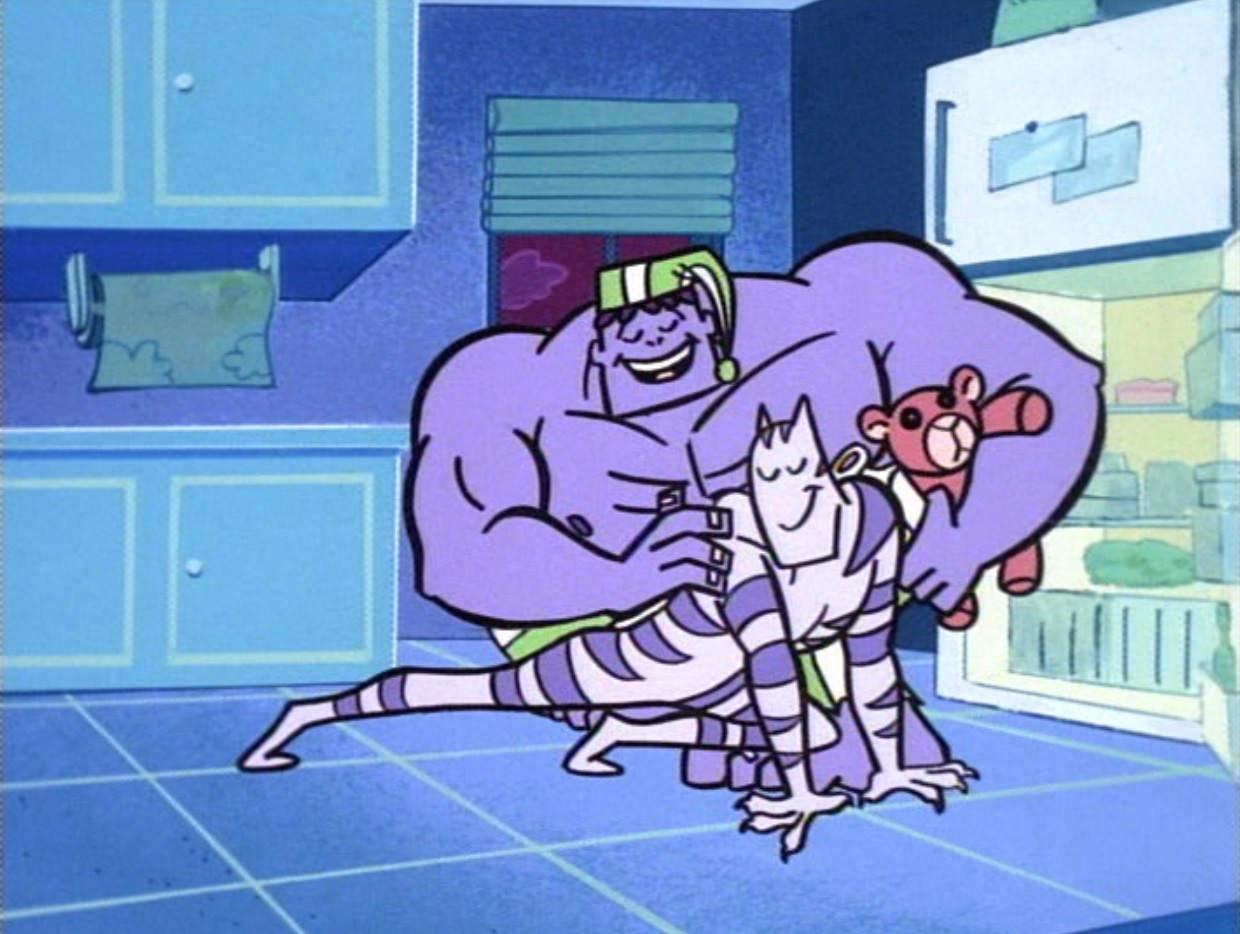
‘The Justice Friends’ were the successors to ‘Dial M for Monkey’ as the bridging episode of the ‘Dexter’s Laboratory’ series. The Justice Friends were first introduced in the Dial M for Monkey episode ‘Rasslor‘ and consist of the Captain America-like Major Glory, the purple Incredible Hulk-like the Infraggable Krunk and the Thor-like Valhallen, who looks like a longhaired metalhead. The premise of these bridging sequences is that the three superheroes have to “face the challenges of every day life”.
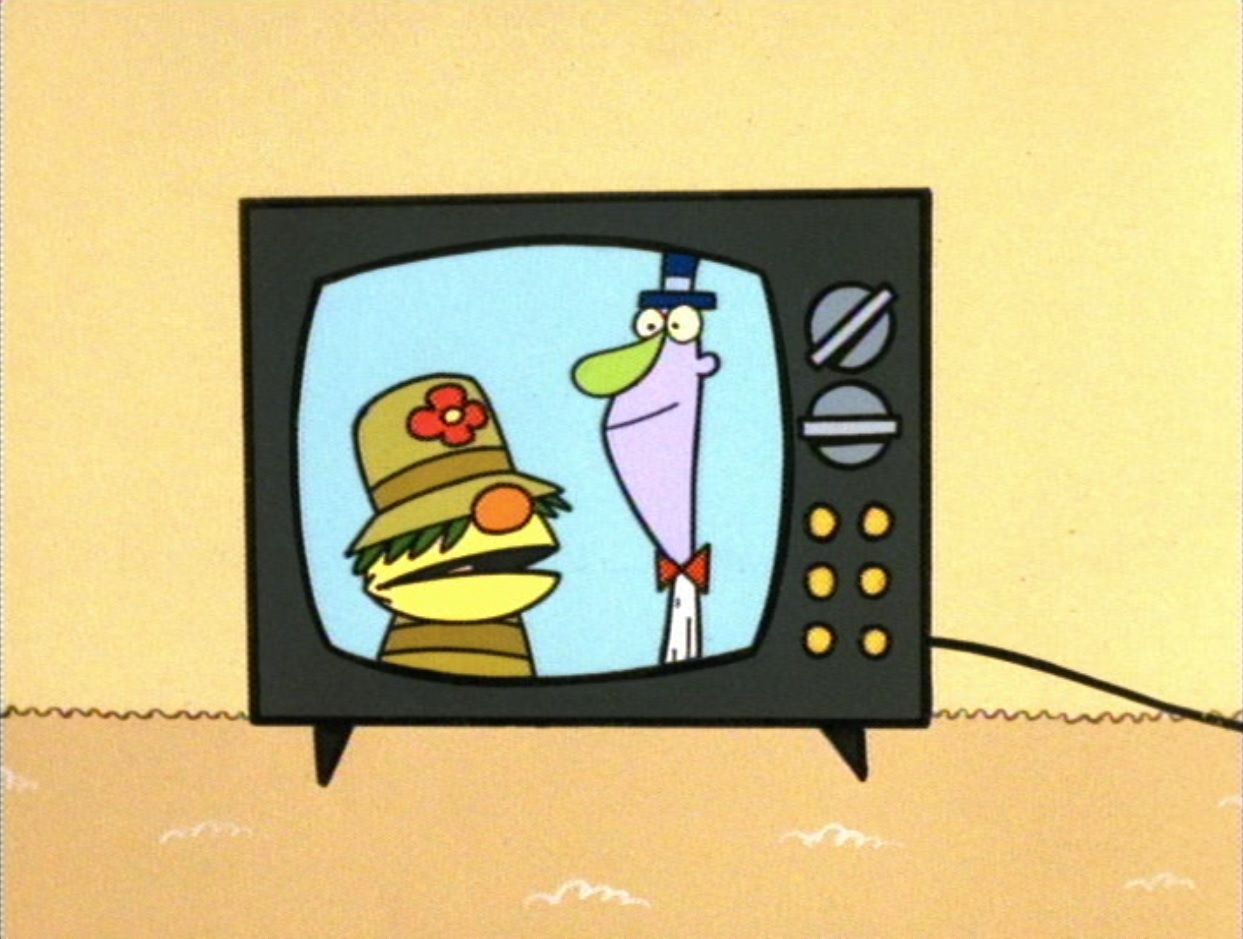
Their first episode opens with Major Glory defeating a Joker-like “disgruntled postman’, while Valhallen confronts a Minotaur villain, and Krunk tries to rescue a kitten from a tree. But they all have to go home to watch their favorite program on tv by half past five. Unfortunately, they all want to watch a different program.
Highlight of the show is ‘Puppet Pals’, the incredibly lame show Krunk wants to watch. ‘Puppet Pals’ stars two muppets that tell corny jokes, which all end in the two clobbering each other.
‘Game Over’ opens with Dexter and Dee Dee playing a computer game called ‘primal fighter’, which Dee Dee wins. But then Dexter gets an old computer game called ‘Master Computer’ from his dad…
‘Game Over’ is one of the most inspired of all Dexter’s Laboratory episodes. It’s chock full references to computer games and films, including Pac Man, Tron and Star Wars, while showing the development computer games had made in the past fifteen years. At the same time it plays nicely on the competitive brother-and-sister relationship between Dexter and Dee Dee. Rarely the genre of cyperpunk was such much fun.
‘Star Spangled Sidekicks/The Justice Friends: TV Super Pals/Game Over’ is available on the DVD ‘Dexter’s Laboratory Season One: All 13 Episodes’
The cinematic duo of Alain Gagnol and Jean-Loup Felicioli belong to France’s most interesting animation film makers.
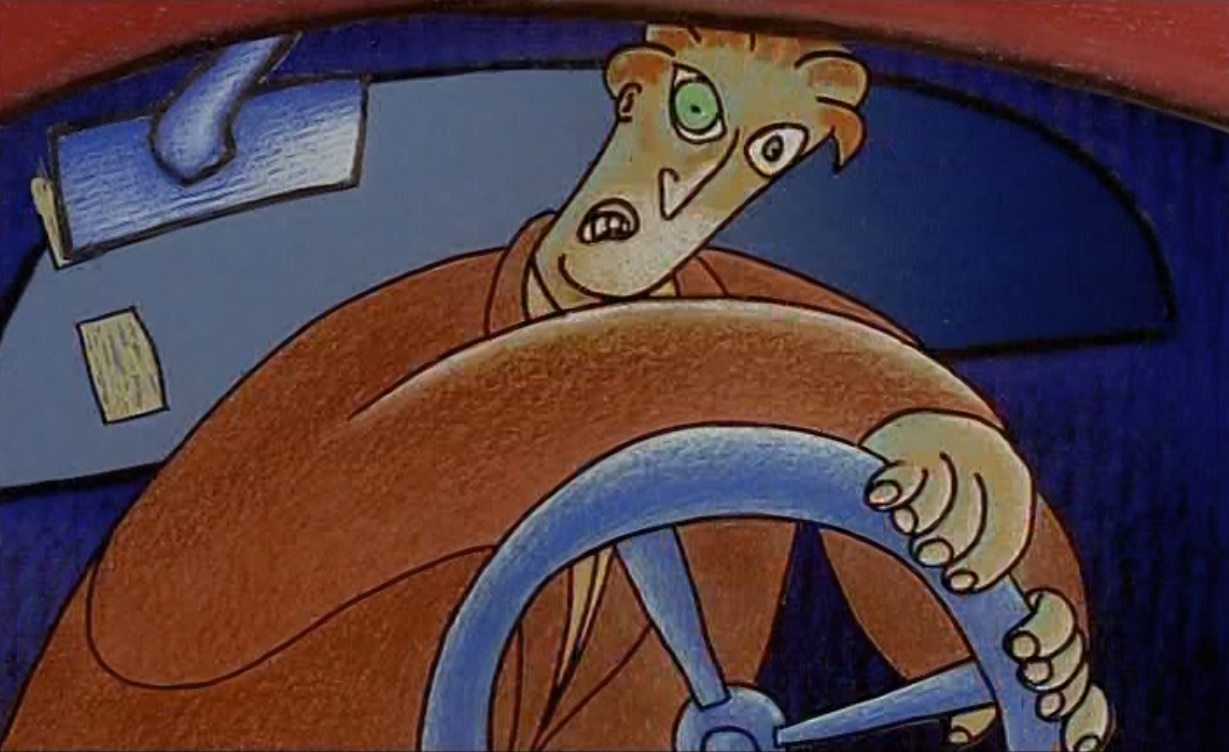
In the 2010s the two came to prominence with the equally idiosyncratic as entertaining animated feature films ‘Une vie de chat’ (A Cat in Paris, 2010) and ‘Phantom Boy‘ (2015). But even way back in 1996 they made an impression at animation festivals with ‘L’égoïste’ (The Egotist), a very short film about a man only loving himself. When the man falls in love with a woman, it’s because she resembles himself. All’s well until…
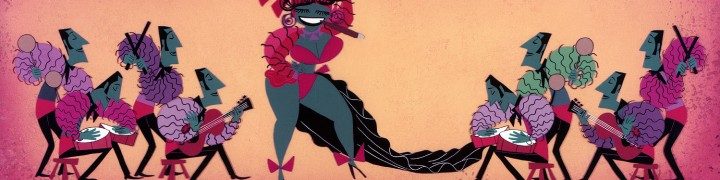
‘L’égoïste’ was made at the Folimage studio, which would be associated with Gagnol and Felicioli from then on. While Gagnol provided the scenario and the animation, Felicoli was responsible for the graphic design, which is a charming and very colorful type of expressionism. Both characters and background art is heavily distorted, with houses and furniture being skewed and crooked. The animation is relatively sparse but effective.
The film uses a narrator, being the voice of the egotist and unfortunately all too present music by Serge Besset. As the music hardly comments on the images this is the weakest aspect of a film that otherwise impresses because of its original visual style and very lean story telling.
‘L’égoïste’ is available on the DVD ‘Pris de Court – 14 films courts de Alain Gagnol & Jean-Loup Felicioli’ which features English soundtracks
Director: Phil Mulloy Release Date: 1996 Rating:★★★★½ Review:
‘Thou Shalt Not Covet Thy Neighbours Wife’ is the tenth and last of Phil Mulloy’s Ten Commandment films. This installment is the longest of the ten, clocking nine minutes compared to the usual four to five, and also the funniest.
In this short we follow Buck, who falls in love with his dog-loving married neighbor Sally-Ann. In order to be with her he swaps places with the dog…
Mulloy’s tale is more sophisticated than this synopsis, but it’s best not to reveal too much, lest not to spoil the fun. Joel Cutrara’s voice over is only heard in the beginning. During the rest of the cartoon the fun is greatly enhanced by the cartoony voices and silly images. Mulloy’s Ten Commandment series may be a mixed bag, the series at least ends with a bang.
‘Thou Shalt Not Covet Thy Neighbours Wife’ is available on the DVD ‘Phil Mulloy Extreme Animation’
Animation Backgrounds
A blog dedicated to background paintings from animation films. Kept until 2016.
Animation Scoop
Animation historian Jerry Beck’s animation film news blog.
Cartoon Brew
Topical blog on animation film, led by animation historian Amid Amidi.
Cartoon Modern
Amid Amidi’s blog on modern design cartoon art from the forties, fifties and sixties.
Cartoon Research
THE site on classic animation research, hosted by cartoon historian Jerry Beck.
Cartoons Theory
Frank Beef analyzes classic cartoons. Kept until 2020.
Century Film Project
Michael reviews films of 100 years old and older, roughly in chronological order.
Classic Cartoons
A similar blog featuring many stills and comic strips. Kept until 2012.
Comet over Hollywood
Jessica Pickens reviews classic Hollywood films, especially musicals.
Deja View
Top ex-Disney animator Andreas Deja’s own blog.
Disney History
Esteemed Disney historian Didier Ghez on the latest books on Disney history.
Feeling Animated
Paul Astell brings us thorough reviews of animated features.
Flickers in Time
Short and to the point reviews of classic films (lately mostly pre-code talkies) by an anonymous retired Foreign Service Officer from California















 Dr. Grob's Animation Review