Director: Jack Hannah Release Date: July 1961 Stars: Woody Woodpecker Rating: ★ Review:
‘Franken-stymied’ starts with a classic stormy scene and Woody Woodpecker trying to hide from the storm in a castle.
Inside the castle a Frankenstein-like mad scientist has made a chicken-plucking robot called Frankie, and as soon Woody arrives, Frankie starts plucking him (luckily we see no effect – throughout these scenes Woody keeps all his tail feathers, no matter how many times they are plucked). It takes a while before Woody can take control, and in the end he manages to cover the scientist in feathers and make Frankie go after the unfortunate villain.
‘Franken-stymied’ was made by talented Disney veterans like Jack Hannah (direction), Don Lusk (animation), Homer Brightman (story) and Clarence Wheeler (music), but it doesn’t show. The cartoon suffers from bad timing, awful dialogue, canned music, ugly designs and poor animation, as if the budget was way too tight to deliver anything decent. Clearly, ‘Franken-stymied’ never comes near any Disney product, but even worse: it cannot even compete with Walter Lantz films from only one year earlier.
Watch ‘Franken-stymied’ yourself and tell me what you think:
This is Woody Woodpecker cartoon No. 109
To Woody Woodpecker’s debut film: Sufferin’ Cats
To the next Woody Woodpecker cartoon: Busman’s Holiday
‘Franken-stymied’ is available on the DVD-set ‘The Woody Woodpecker and Friends Classic Cartoon Collection Volume 2″ as part of the ‘Woody Woodpecker Show’
Director: Paul J. Smith Release Date: January 1961 Stars: Inspector Willoughby Rating: ★★★★½ Review:
‘Rough and Tumbleweed’ introduces Inspector Willoughby, an incarnation of the little guard from ‘Salmon Yeggs‘ (1958).
Inspector Willoughby is a very, very Droopy-like character: he is small, undisturbed and persistent and even sounds like Bill Thompson, the voice of Droopy. The animators added a funny jumpy walk to the character.
In his first film Willoughby tries to arrest fierce bandit Boy McCoy. This leads to several gags in the best Tex Avery tradition. Particularly inspired is the scene in which Boy McCoy tries to get a train to run over a safe full of dynamite, which is attached to his leg. Unfortunately, there are two train tracks, and a multitude of trains pass by without McCoy succeeding in his plan. It’s nice to watch such inspired comedy in a cartoon made as late as 1961, when the golden age arguably was already over.
Watch ‘Rough and Tumbleweed’ yourself and tell me what you think:
‘Rough and Tumbleweed’ is available on the DVD-set ‘The Woody Woodpecker and Friends Classic Cartoon Collection Volume 2″ as part of the ‘Woody Woodpecker Show’
Director: Alex Lovy Release Date: April 20, 1960 Stars: Woody Woodpecker Rating: ★★★ Review:
‘Ballyhooey’ was the last Walter Lantz cartoon directed by Alex Lovy. In 1959 Lovy left Lantz to become an associate producer for the now clearly successful Hanna-Barbera studio.
It’s perhaps ironic that the cartoon actually spoofs television. In this cartoon Woody Woodpecker trying to watch his favorite quiz show, but he has to sit through a multitude of commercials (“but first a word of our sponsor”). When the quiz arrives Woody thinks he has the right answer and rushes to the studio.
At this point the cartoon becomes less static (the first part was just a string of commercials), but also less funny. Woody’s antics at the studio feel out of place and old-fashioned when compared to the more biting satire of the first half. In this respect ‘Ballyhooey’ isn’t really a successful cartoon, but Woody Woodpecker’s annoyance during the first part, and the absurdity of the multiple commercials make the short a fun watch.
Watch ‘Ballyhooey’ yourself and tell me what you think:
This is Woody Woodpecker cartoon No. 98
To the previous Woody Woodpecker cartoon: Pistol-Packin’ Woodpecker
To the next Woody Woodpecker cartoon: Heap Big Hepcat
‘Ballyhooey’ is available on the DVD-set ‘The Woody Woodpecker and Friends Classic Cartoon Collection Volume 2″ as part of the ‘Woody Woodpecker Show’
The short also forms the closing chapter on a long tradition of concert cartoons with cartoon stars conducting, which goes all the way back to the Mickey Mouse short ‘The Barnyard Concert‘ from 1930. True, ‘Baton Bunny’ is not the last of such cartoons (it was e.g. followed by MGM’s ‘Carmen Get It (1962) starring Tom & Jerry, and ‘Pink, Plunk, Plink‘ (1966) starring the Pink Panther), but these cartoons are hardly the classics ‘Baton Bunny’ certainly is.
Bugs Bunny is the sole performer in the cartoon – we don’t even see the orchestra members, only their instruments. Bugs Bunny and the orchestra play Franz von Suppés overture ‘Morning, Noon and Night in Vienna’ (1844), which Bugs conducts not only with his hands, but also with his ears and feet. Like earlier conductors Mickey (‘The Band Concert‘, 1935) and Tom (‘Tom & Jerry at the Hollywood Bowl‘, 1950) Bugs has some troubles while conducting: with a fly, echoing Mickey’s problems with a bee in ‘The Band Concert’, and with his collar and cuffs, echoing Mickey’s problems with his over-sized costume. Highlight is Bugs’ reenactment of a Western pursuit featuring a cowboy, an Indian and the cavalry, only using his ears to change into each character.
But throughout the cartoon Bugs is beautifully animated, with strong expressions, and deft hand movements. It’s a sheer pity that in the end, the fly turns out to be Bugs’ only audience. But Bugs is not too proud to bow for the tiny creature that had troubled him so much just before. Apart from the animation and Michael Maltese’s entertaining story, ‘Baton Bunny’ profits from Maurice Noble’s beautiful background art, and great staging. Thus the short is a wonderful testimony of Warner Bros. cartoon art of the late fifties.
Watch ‘Baton Bunny’ yourself and tell me what you think:
Director: James Algar Release Date: December 17, 1958 Rating: ★★½ Review:
‘Grand Canyon’ is not an animation film. I include it in my blog though, because of its obvious ties to ‘Fantasia’ (1940).
In fact, ‘Grand Canyon’ feels like an extra ‘live-action segment to Fantasia (like ‘Fantasia’ the film starts with the sounds of the orchestra preparing to play). Fantasia-veteran James Algar directed this extraordinary Cinemascope short, which was photographed and produced by Ernst A. Heiniger and set to Ferde Grofé’s ‘Grand Canyon Suite’ (1931). It’s a genuine mood piece, a visual interpretation of Ferde Grofé’s impressionistic music. Thus ‘Grand Canyon’ is not really a documentary, nor does it tell a story. It’s a combination of the music and images of the vast landscape only.
Grofé’s suite is in five parts, which all are played. Part one, ‘Sunrise’, is accompanied by panorama shots, made from a plane. In Part two, ‘Painted Desert’, we dive into the canyon, with images of a rather turbulent Colorado river. Part three,’On the trail’ is devoted to animals, with shots of a lynx, a spider, a roadrunner, a snake, a Gila monster, a Western spotted skunk, and a puma with some cubs. Part four, ‘Cloudbust’ shows us images of clouds, a thunderstorm and snow, and finally, part five, shows us miscellaneous images of a landscape in the now, an owl, a hare, and an eagle who takes us back to the plane shots, while the sun sets.
The complete film lasts almost half an hour. The result is a strange and only moderately entertaining mixture between Fantasia and the True Life Series.
Watch ‘Grand Canyon’ yourself and tell me what you think:
‘Grand Canyon’ is available as an extra on the ‘Sleeping Beauty Platinum Edition’ DVD-set
Władysław Starewicz was a stop motion pioneer, who had made some very important films in the 1910s, 1920s and 1930s. ‘Winter Carousel’ was the last film he completed, and the short’s style is practically the same as that of his films of forty years earlier: the film is essentially silent, and populated by various animals, whose rather gritty look is typical for the Polish-Russian filmmaker.
‘Winter Carousel’ stars brown bear Patapouf and his rather mischievous friend Rabbit, who had been introduced in Starewicz previous film, ‘Nez au Vent’ (Nose in the Wind, 1956). In ‘Winter Carousel’ the duo encounters a jolly snowman, who apparently is father Winter, and a female polar bear. Both Patapouf and Rabbit are clearly interested in the female creature, and the three go skating together, playing blind man’s buff, and riding a Christmas tree carousel. This part of the film is a delightful sequence: Starewicz’s arctic backgrounds are pretty evoking, there’s a unique sense of poetry in the images, and his suggestion of speed during the skating and carousel scenes is impressive.
But then suddenly Father Winter starts to melt and reveals a female wooden creature (clearly a goddess of spring) underneath. Thus, strangely, the last five minutes of the film take place in spring. Unfortunately, from that moment all suggestions of narrative are thrown out of the window, and things just happen on the screen. We watch Patapouf en Rabbit gamble with some dice, watching a performance by a grasshopper and drinking in a long, plotless and completely superfluous kind of epilogue. None of theses spring images matches the winter scenes, and in the end the film is too uneven and too rambling to be a lasting work.
The animation is at times quite good, especially in Rabbit’s and Patapouf’s little gestures, but the complete result is unfortunately rather boring. In fact, this product, already old-fashioned and hopelessly dated by its release, is a rather sad ending to Starewicz’s great career. With this film he only managed to proof that he was a relic from another era.
Watch ‘Winter Carousel’ yourself and tell me what you think:
‘Winter Carousel’ is available on the DVD ‘The Cameraman’s Revenge & other Fantastic Tales’
Director: Norman McLaren Release Date: 1956 Rating: ★★★★ Review:
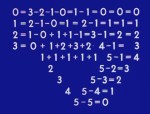
With ‘Rythmetic’ McLaren attempted to make arithmetic more fun for children.
Indeed, the complete film consists of additions and subtractions of numbers up to 8. The white numbers slowly fill the blue screen, accompanied by McLaren’s trademark rhythmical electronic sounds, which he made by scratching directly on film.
The complete film may be a little dry, it is nevertheless surprisingly playful, especially given the fact one watches only one blue screen filling with numbers and equations. McLaren manages to evoke something human in those numbers, through subtle animation. For example, in the end some zeros start fooling around, disrupting the equations, much to the distress of some equation marks who repeatedly try to get the zeros back in line. This finale in itself is so much fun to watch, it alone makes watching the film worthwhile.
Watch ‘Rythmetic’ yourself and tell me what you think:
‘Rythmetic’ is available on the DVD-box ‘Norman McLaren – The Master’s Edition’
‘The White Serpent’ (also known as ‘Madame White Snake’ or as ‘Panda and the Magic Serpent’) is a feature of firsts: it was the first feature made by the Tōei Studio, Japan’s first post-war feature, the first one in color, and the first to be released in the United States.
The film somewhat forms the herald of a new era within Japanese animation, and is sometimes regarded as the starting point of the Japanese animation industry. The Tōei studio at least had the intention to become the Oriental Disney. Indeed, the foundation of the Tōei Dōga studio two years earlier was partly inspired by the Japanese release of Disney’s ‘Snow White and the Seven Dwarfs’ (1937), which made an enormous impression on Japanese animators. Another catalyst was the coming of television, for which the studio could make numerous commercials.
For its feature film studio boss Hiroshi Okawa firmly preferred universal tales. As Disney already had mined the European legacy, the Tōei studio turned his attention to Asia. Thus, the film tells an ancient Chinese legendary love story, more or less immediately familiar to Japanese, Chinese, Taiwanese, and other East Asian audiences, greatly enhancing the film’s export possibilities.
The film starts with a prologue to a song, in which we watch a boy befriend a snake. Unfortunately the adults don’t approve, and he has to set the snake free. This part uses shadow-like cutout figures with little to no animation, and has a certain elegant cartoon modern feel to it. This is replaced by classic full animation as soon as the real story starts. For the abandoned snake turns out to be an immortal spirit, who now takes the shape of a beautiful girl, Pai Nang, and who revisits her former owner, the now adult Hin Hsien.
Unfortunately, their love is disrupted by a bonze called Hokai, who fights evil spirits and who takes Pai Nang for one. Typically for a Japanese film, Hokai is no real villain, but a man who tries to save Hin Hsien on incorrect assumptions. Also starring are a fish spirit who turns into a little girl called Hsiang Ching, and two animal sidekicks called Panda and Mimi (a fox), who seem to have walked straight from a Disney movie, although they are clearly nipponified on the way. When Hin Hsien is banished, the two go looking for him, and on the way they beat and befriend an animal gang of robbers and thieves.
The fight between Panda and the gang leader, a large pig, is one of the highlights of the movie. Another is the celestial combat between Pai Nang and Hokai, an extraordinary scene by all means, as is Pai Nang’s journey through heaven in search for the dragon ruler of all spirits.
Overall the film has a poetic and magical atmosphere, greatly enhanced by Chui Kinoshita’s evocative music, and the narrative moves at a leisurely speed, sometimes aided by a voice over. The animation varies from fair to excellent. Especially the animals are very well done. There’s no attempt at lip synch, however, and at times the voices seem detached from their animated bodies. On the other hand, this feat would have made overdubbing rather easy, and as the film was designed to be distributed all over Asia, this must have been a conscious choice.
Overall, the animation style has more in common with contemporary European products than with Disney animation. There’s a poetic elegance and naivety to it that certainly adds to the movie’s charm. Indeed, the film was a success in Japan, and attracted all kinds of animators to the Tōei studio, including a young Hayao Miyazaki, who joined Tōei in 1963.
In all, ‘The White Serpent’ is by all means a successful start of a new era, and a film that still entertains today.
Watch the 1958 trailer for ‘The White Serpent’ yourself and tell me what you think:
‘The White Serpent’ is available as a French DVD-release called ‘le serpent blanc’
Director: Paul J. Smith Release Date: November 3, 1958 Stars: Woody Woodpecker, Dooley Rating: ★★½ Review:
‘Jittery Jester’ takes place in a medieval castle where Dooley is court jester to a bored king.
Then the King hears Woody Woodpecker singing his own variation on ‘The Woodchuck Song’ from 1904. The king finds our hero infinitely more funny than Dooley, and he orders Dooley to catch the bird. During the obligate chase scene the king is too often the unwilling victim of Dooley’s attempts to catch Woody. In the end Woody is the new jester, using Dooley in his pranks.
Like many other Woody Woodpecker cartoons from 1958 ‘Jittery Jester’ is a rather run-of-the-mill chase cartoon, which features some anachronisms like a speedboat and dynamite. The draw bridge scene is the most inspired, even if it’s as predictable as the other gags in the cartoon.
This is Woody Woodpecker cartoon No. 88
To the previous Woody Woodpecker cartoon: Tree’s a Crowd
To the next Woody Woodpecker cartoon: Tom Cat Combat
‘Jittery Jester’ is available on the DVD-set ‘The Woody Woodpecker and Friends Classic Cartoon Collection Volume 2’
Director: Paul J. Smith Release Date: September 8, 1958 Stars: Woody Woodpecker Rating: ★★½ Review:
Woody rides a bus through Colonel Fleabush’s 60,000 acre estate full of trees.
Woodpeckers are not welcome there, and when the colonel discovers Woody, he orders his big yellow cat Filbur to catch the bird. What follows is a typical chase cartoon in which all the trees are destroyed.
Filbur is distinguished by a typical laugh (provided by Daws Butler), and sounds a little like Muttley from the later Hanna-Barbera television series ‘Wacky Races’ (1968-1969). The chase sequence is very formulaic and has little to offer, especially as Smith’s timing is a little too relaxed to make the gags work. The short also features three puns on trees, while the Latin tree names the colonel utters are all nonsensical.
Watch ‘Tree’s a Crowd’ yourself and tell me what you think:
This is Woody Woodpecker cartoon No. 87
To the previous Woody Woodpecker cartoon: Everglade Raid
To the next Woody Woodpecker cartoon: Jittery Jester
‘Tree’s a Crowd’ is available on the DVD-set ‘The Woody Woodpecker and Friends Classic Cartoon Collection Volume 2’
Director: Paul J. Smith Release Date: August 11, 1958 Stars: Woody Woodpecker, Gabby Gator Rating: ★★½ Review:
‘Everglade Raid’ opens with Woody Woodpecker reading a newspaper add telling tourists to come to the Everglades to make a fortune on alligator bags.
So Woody goes to Florida, where he encounters a hungry alligator, voiced by Daws Butler as a variation on the Southern wolf from the Droopy cartoon ‘The Three Little Pups‘ (1953). What follows is a chase cartoon with blackout gags, in which the alligator tries to catch Woody, and vice versa. In the end the alligator succeeds, yet it is Woody who has the last laugh.
‘Everglade Raid’ suffers from slow timing and a surplus of dialogue, but some of the animation is very fine, especially the alligator’s walk cycle. Later, the alligator was christened Gabby Gator, and he would return in ‘Southern Fried Hospitality’ (1960). The character lasted until 1963.
Watch ‘Everglade Raid’ yourself and tell me what you think:
Director: Paul J. Smith Release Date: July 14, 1958 Stars: Woody Woodpecker Rating: ★★★½ Review:
‘His Better Elf’ starts with Woody Woodpecker being poor, full of debts and living near a city dump.
Suddenly a four-leaf clove grows through the floor, which turns into a leprechaun woodpecker (a miniature green Woody) called O’Toole, who speaks in rhyme. First O’Toole demonstrates his powers, and then he grants Woody three wishes.
Woody’s first wish is, as expected, to become filthy rich. But O’Toole grants him the wish by placing him inside the National Bank, and soon a cop tries to arrest Woody for bank robbing. The rest of the cartoon is essentially a chase cartoon with the cop trying to catch Woody, and O’Toole sabotaging these attempts, using a lot of dynamite. In the end Woody uses his third wish to sent the little pest to hell.
‘His Better Elf’ is a genuine gag cartoon, but it’s a pity the wish concept isn’t used more, but instead taken over by a routine cartoon chase. There’s a shot featuring a moving background when Woody is caught by two policemen, a rare feat since the early 1930s.
Watch an excerpt from ‘His Better Elf’ yourself and tell me what you think:
This is Woody Woodpecker cartoon No. 85
To Woody Woodpecker’s debut film: Half Empty Saddles
To the next Woody Woodpecker cartoon: Everglade Raid
‘His Better Elf’ is available on the DVD-set ‘The Woody Woodpecker and Friends Classic Cartoon Collection Volume 2’
Director: unknown Production Date: 1959 Stars: Tom Puss and Ollie Bungle Rating: ★ Review:
‘The Bungle Cure’ is based on the Tom Poes comic strip ‘De Bommelkuur’ (1953), one of the weakest of all Tom Poes comics. And indeed, the film based on this story, is equally weak.
The short starts with Tom Puss driving the sick Ollie Bungle to the mountains, because the doctor has advised the sick bear to get some mountain air. Unfortunately, in the mountains they end up in a feud between two mountain tribes, the Grimps and the Knarks. The two tribes are equally fanatical in helping Mr. Bungle to heal. Their zeal make Mr. Bungle flee to a deserted island in a mountain lake, where Tom Puss discovers that Mr. Bungle has been cured, after all.
‘The Bungle Cure’ may function as a nice story for children, but has little to offer otherwise. As with the other Tom Puss & Mr. Bungle films the animation is extremely limited and the short relies heavily on dialogue. Most interesting is the minimal background art, which has maintained some of the panache of Marten Toonder’s own comic strips.
‘The Bungle Cure’ is available on the DVD inside the Dutch book ‘De Toonder Animatiefilms’
Director: unknown Production Date: 1959 Stars: Tom Puss and Ollie Bungle Rating: ★★ Review:
‘The Weather Crystal’ is the second of nine Tom Puss films that were made for the American television market, but which were never released.
This short is based on a Tom Puss comic made for the Dutch Donald Duck magazine in 1959. In this film Tom Puss and Ollie find find a crystal that controls the weather. Ollie Bungle immediately conceives a plan to sell the weather, but as every client asks for something different, all goes wrong.
This is a very weak story, with both Tom Puss and Ollie Bungle behaving completely out of character (in Marten Toonder’s original comic strip none of the two would think of exploiting a commercial enterprise). Moreover, the short places the two in a human world, instead of the fable world they usually live in.
‘The Weather Crystal’ is available on the DVD inside the Dutch book ‘De Toonder Animatiefilms’
Director: unknown Production Date: 1959 Stars: Tom Puss and Ollie Bungle Rating: ★★★ Review:
In 1959 an unknown American distribution company asked Marten Toonder to produce some animated shorts for the American television market starring Toonder’s comic strip stars Tom Poes (Tom Puss, a white cat) and Olivier B. Bommel (Ollie Bungle, a large bear).
Nine films were conceived, but the Americans were displeased with Ollie Bungle’s voice, which was provided by a black man. Even worse, the so-called distribution company turned out to be a fraud, and these films were never shown anywhere.
The DVD accompanying Jan-Willem de Vries’s Dutch language book ‘De Toonder Animatiefilms’ has included eight of these films. They are a strange mix of Toonder’s elaborate cartoon style and Hanna-Barbera-like cartoon modernism. For example, Tom Puss and Ollie Bungle look more angular than ever, and both suddenly wear bow-ties, an all too obvious Hanna-Barbera influence. The animation in these shorts is very limited, and unfortunately the films rely too heavily on rather tiring dialogue, but this is countered by some effective staging.
‘The Magic Hat’ is clearly based on the Tom Poes story ‘De kniphoed’ (1955), and apart of Tom Puss and Ollie Bungle, features Bungle’s butler, Joost, magician Hocus Pas and a rather unrecognizable chief constable Bulle Bas (all unnamed in the cartoon). As the 65 page comic strip has been squeezed into a five minute film, the story has been greatly simplified. The result is no masterpiece, but still makes a pleasant watch, and the film is a good example of the huge influence the Hanna-Barbera studio had on the rest of the world.
‘The Magic Hat’ is available on the DVD inside the Dutch book ‘De Toonder Animatiefilms’
Director: Han van Gelder Release Date: 1958 Rating: ★★★★ Review:
In this film director-animator Han van Gelder uses his unique technique of mixing cut-out with stop-motion for a short advertising film for Blooker cocoa.
The film tells about the Incas who invented cocoa, and how the Spanish conquistadors brought cocoa with them to Europe, where Jan Blooker’s factory uses only the best cocoa for its chocolate. The jump from the conquistadors to Blooker is a rather abrupt and not all too convincing one.
For this film Van Gelder uses UPA-inspired cartoon modern style characters and backgrounds. The film’s story isn’t too interesting, but these designs certainly make it a fun watch. The Blooker factory only lasted until 1962, but the brand is still available today.
Watch ‘Van Inca tijd tot Blooker tijd’ yourself and tell me what you think:
Director: Børge Ring Release Date: 1958 Rating: ★★★★ Review:
This is the story of a man full of debts who marries a rich woman for her money, but he gets remorse when he discovers the rich lady is bald.
The story is a humorous old Irish ballad called ‘Very Unfortunate Man’, translated by Annie M.G. Schmidt into Dutch and sung by Dutch actor Otto Sterman. Danish animator Børge Ring provides the story with strong cartoon modern images in the best UPA tradition, matched by equally stylized background art and color schemes by Alan G. Standen. The two give the otherwise rather Dutch film a very international feel, both in design and quality. The complete cartoon may be quite on the light side, it is nevertheless a delight to watch.
‘Lokkend goud of gouden lokken’ is available on the DVD inside the Dutch book ‘De Toonder Animatiefilms’
Director: Han van Gelder Release Date: 1957 Rating: ★★★★ Review:
‘De verzonken klokken’ is a very beautiful animation short in which director Han van Gelder combines two-dimensional cut-out figures with three-dimensional sets to unique results.
The story is narrated by Dutch actor Ton Lutz, and written by Jan Gerhard Toonder, the brother of producer Marten Toonder, who based his narrative on legends from Zeeland.
The film tells about a sexton who falls in love with the beautiful girl Neeltje, but when she rejects him, he gets drunk and rings the church bells in the middle of the night, until the complete clock tower gets swallowed by the sea. In the end Neeltje marries school master Piepkema, but at their wedding they hear the church bells ringing from the sea. Piepkema provides a moral in rhyme that this ringing means that the sexton’s soul has found no rest, but Van Gelder shows us the Sexton at the bottom of the sea, happily in love with a mermaid, defying the classic Christian moral.
‘De verzonken klokken’ knows little, but effectively used animation. Van Gelder’s character designs and sets are simply gorgeous, and give the film a unique atmosphere. There are also some very convincing water rippling effects in the underwater scenes.
Watch ‘De verzonken klokken’ yourself and tell me what you think:
Director: Lew Keller Release Date: January 16, 1959 Stars: Ham and Hattie Rating: ★★★ Review:
‘Picnics are Fun and Dino’s Serenade’ is the last of only four Ham and Hattie cartoons, and one of UPA’s last theatrical cartoons, overall (it was followed by only four Mr. Magoo cartoons).
‘Picnics are Fun’ is a particular highlight within the series. In this charming children’s song Mel Leven, with his ukelele, sings about the delight of picnicking. His song clearly is about picnic in the countryside, and features a pool, a waterfall, and wild flowers. But Lew Keller places Hattie on the roof top of a tall building, juxtaposing the song’s rural lyrics with surprisingly urban images. Especially when Leven sings about “the clean country air” the brown images become poignant indeed. At the same time this little film is an ode to children’s fantasy, which can change a roof top into a forest worth picnicking in.
‘Dino’s Serenade’ is less successful. The song is sung by Hal Peary, who had used mock-Japanese in ‘Saganaki’ and who uses mock-Italian in this song. ‘Dino’s Serenade’ is a song about love, and Lew Keller’s images are most original, as Dino provides the complete setting for the song himself: not only his violin, but also the Italian restaurant, and the girl, who long looks like a lifeless doll. Unfortunately, a rival uses Dino’s serenade to woo the girl, leaving Dino empty-handed, yet the song ends on an upbeat note: “It’s a good day to make love”.
Like all ‘Ham and Hattie’ cartoon, ‘Picnics are Fun and Dino’s Serenade’ is a delight to watch: the designs are beautiful, and the characters are appealing, even in their extremely limited animation. It’s a pity no more were made.
Watch ‘Picnics are Fun and Dino’s Serenade’ yourself and tell me what you think:
‘Picnics are Fun and Dino’s Serenade’ is available on the DVD box set ‘UPA – The Jolly Frolics Collection’
Director: Lew Keller Release Date: October, 1958 Stars: Ham and Hattie Rating: ★★½ Review:
‘Spring and Saganaki’ is the third cartoon within the short ‘Ham and Hattie’ series.
‘Spring’ is another gentle children’s song by Mel Leven, sung by him accompanied by his ukelele. This part is notable for its very beautiful background art. For the second song Ham changes into Japanese farmer Saganaki, who wants to join an army of Samurai. This part is in fact a story told in rhyme. Unfortunately, the episode is hampered by singer Hal Peary’s mock-Japanese and the more trite song by Mel Leven and Jim Murakami, which is reminiscent of similar pseudo-ethnic swing songs from the 1930s. The result is the weakest of the four Ham and Hattie cartoons. Yet, as the designs are still top notch, ‘Spring and Nagasaki’ remains a delight to watch, if not to listen to.
Watch ‘Spring and Saganaki’ yourself and tell me what you think:
‘Spring and Saganaki’ is available on the DVD box set ‘UPA – The Jolly Frolics Collection’
Animation Backgrounds
A blog dedicated to background paintings from animation films. Kept until 2016.
Animation Scoop
Animation historian Jerry Beck’s animation film news blog.
Cartoon Brew
Topical blog on animation film, led by animation historian Amid Amidi.
Cartoon Modern
Amid Amidi’s blog on modern design cartoon art from the forties, fifties and sixties.
Cartoon Research
THE site on classic animation research, hosted by cartoon historian Jerry Beck.
Cartoons Theory
Frank Beef analyzes classic cartoons. Kept until 2020.
Century Film Project
Michael reviews films of 100 years old and older, roughly in chronological order.
Classic Cartoons
A similar blog featuring many stills and comic strips. Kept until 2012.
Comet over Hollywood
Jessica Pickens reviews classic Hollywood films, especially musicals.
Deja View
Top ex-Disney animator Andreas Deja’s own blog.
Disney History
Esteemed Disney historian Didier Ghez on the latest books on Disney history.
Feeling Animated
Paul Astell brings us thorough reviews of animated features.
Flickers in Time
Short and to the point reviews of classic films (lately mostly pre-code talkies) by an anonymous retired Foreign Service Officer from California
 ‘Franken-stymied’ starts with a classic stormy scene and Woody Woodpecker trying to hide from the storm in a castle.






 Dr. Grob's Animation Review