
You are currently browsing the tag archive for the ‘Chuck Jones’ tag.
Director: Chuck Jones
Release date: December 28, 1963
Stars: Road Runner & Wile E. Coyote
Rating: ★★★★
Review:
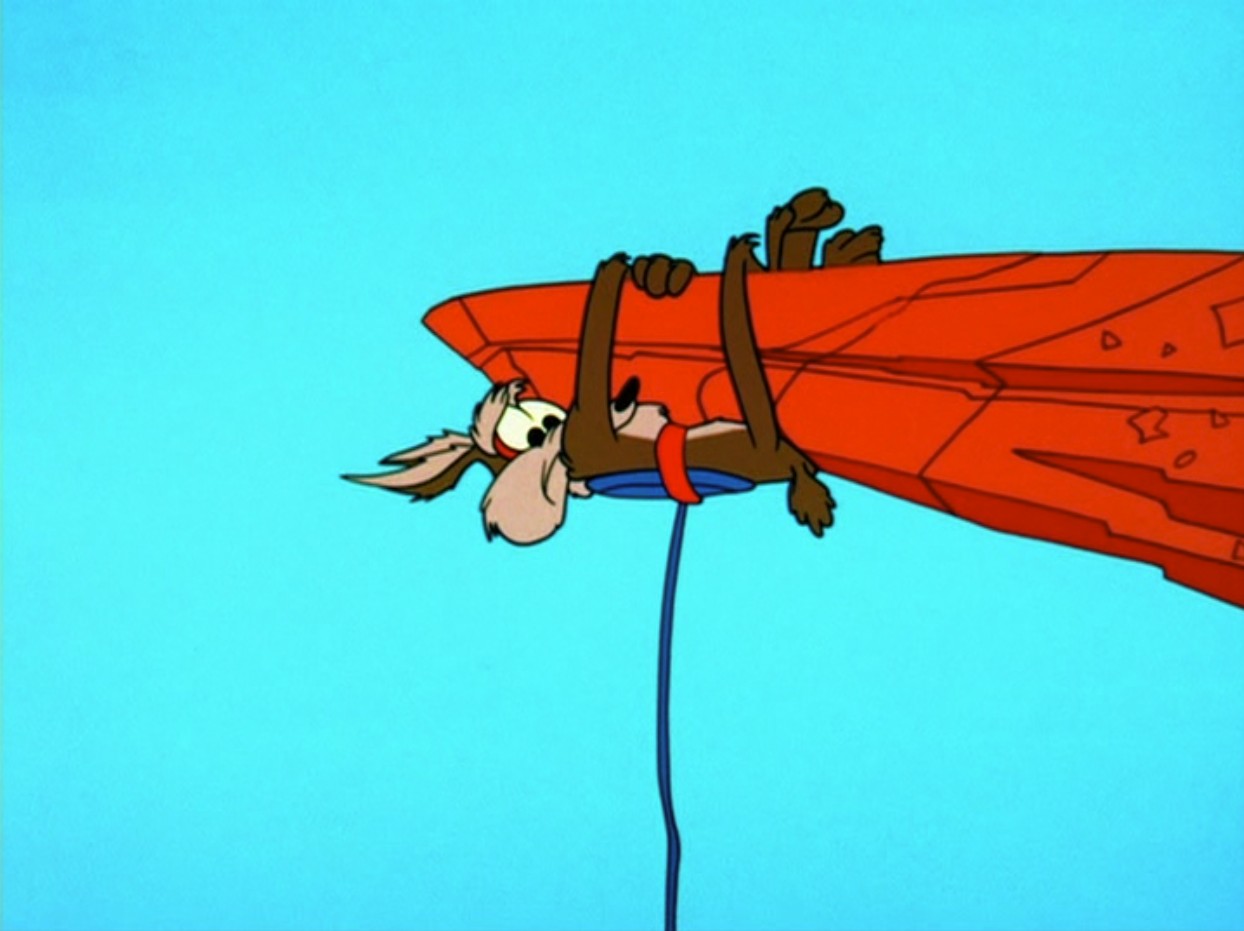
‘To Beep or not to Beep’ is a late, but fine entry in the Road Runner series, exemplifying Chuck Jones’ late, rather deft style.
The short is noteworthy for a string of gags that all use a large catapult, which of course, fails the coyote repeatedly. Apart from the catapult gags, the giant spring gag is a nice one. Note the extreme deformation of the coyote’s body when it gets caught in a telephone wire: the coyote’s eyes and feet stretch for several meters at that point.
The animation and background art are gorgeous throughout, and even Bill Lava’s music is apt.
Watch an excerpt from ‘To Beep or not to Beep’ yourself and tell me what you think:
‘To Beep or not to Beep’ is available on the DVD-set ‘Looney Tunes Golden Collection Volume Three’
Director: Chuck Jones
Release date: April 27, 1963
Rating: ★★★★
Review:
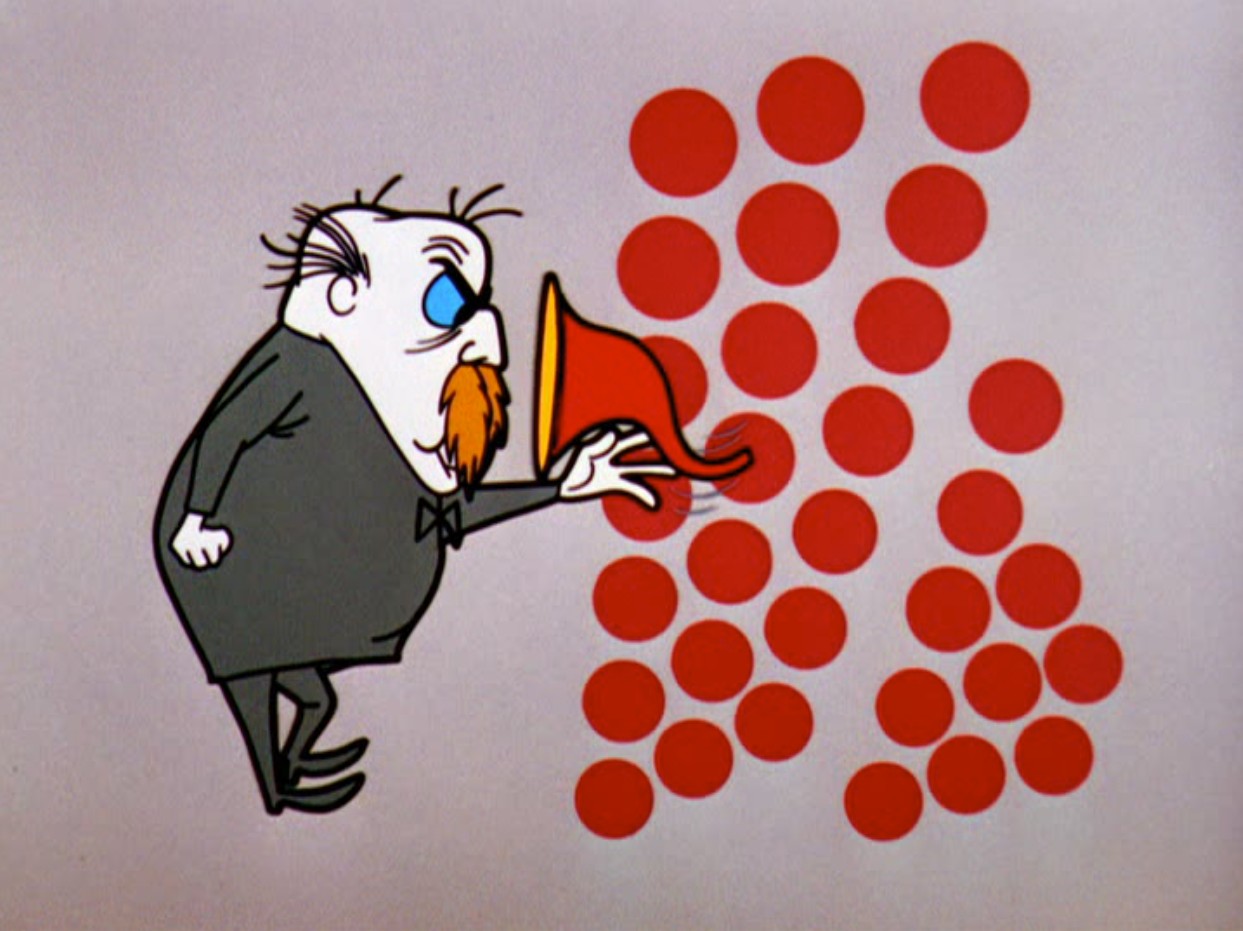
‘Now Hear This’ is a cartoon on sound. The film is one of the most original cartoons by a major studio of the 1960s, for its ultra-modern designs and idiosyncratic narrative. The film knows a stream-of-consciousness-like way of storytelling, exploiting an inner logic, but with only a dreamlike coherence.
In the film Chuck Jones and his crew only use monochrome backgrounds, with shapes, lines and typography emphasizing both the action and the emotional response. Only the three main characters (a devil, a deaf Briton and a small character dressed in pink) are drawn and animated traditionally, with the Briton being the audience’s connection to what happens on the screen.
Being a film on sound, sound effect man Tregg Brown goes berzerk in creating and combining the craziest sounds, from the decades-old ‘rubber band’ sound snippet to bizarre new sound effects accompanying lines, shapes and words. The result is as mesmerizing as it is rewarding in its originality. It’s striking that the studio could produce such an avant-garde film in its final days, which were mostly populated with much less inspired products.
Watch excerpts from ‘Now Hear This’ yourself and tell me what you think:
‘Now Hear This’ is available on the DVD-set ‘Looney Tunes Golden Collection Volume Six’
Directors: Chuck Jones & Abe Levitow
Release date: December 29, 1962
Rating: ★★★
Review:

‘Martian Through Georgia’ is narrated by Ed Prentiss and tells about a Martian (typically designed as a little green man, if a rather frog-like one).
This Martian is so bored by his own society, his psychiatrist advices him to travel. So the Martian sets out for Earth, where things are very different, indeed. Nevertheless, the Martian finds little happiness on our planet, and in the end goes back home, with renewed love for his home planet (or at least one of its female inhabitants).
‘Martian Through Georgia’ knows a very lame and disappointing ending and is far from funny, but the film’s character designs and animation are of a high quality. Yet, the film’s main attraction are its avant-garde layouts by Maurice Noble and background art by Philip DeGuard. Noble goes completely wild, so the artwork becomes a marvel from start to end. So even if the story fails to inspire, the film’s looks remain entertaining throughout.
Watch excerpts from ‘Martian Through Georgia’ yourself and tell me what you think:
‘Martian Through Georgia’ is available on the DVD-set ‘Looney Tunes Golden Collection Volume Six’
Director: Chuck Jones
Release date: June 6, 1964
Stars: Road Runner & Wile E. Coyote
Rating: ★★★
Review:

‘War and Pieces’ was the last Road Runner cartoon directed by Chuck Jones himself, although there would follow fourteen more by other directors.
It’s a nice, if not too outstanding entry, with seven attempts, including a bizarre ‘secrets of the harem’ kinetoscope gag as well as invisible paint. The most outlandish is the one in which the coyote shoots himself right through the earth only to meet a Chinese roadrunner at the other side.
The background art is gorgeous throughout this cartoon, but particularly noteworthy during these Chinese scenes, which apparently inspired Maurice Noble to some of the craziest designs. These make ‘War and Pieces’ more than just a nice watch.
Watch an excerpt from ‘War and Pieces’ yourself and tell me what you think:
‘War and Pieces’ is available on the Blu-Ray ‘Looney Tunes Collector’s Choice Vol. 3’
Director: Chuck Jones
Release date: February 25, 1961
Rating: ★★½
Review:
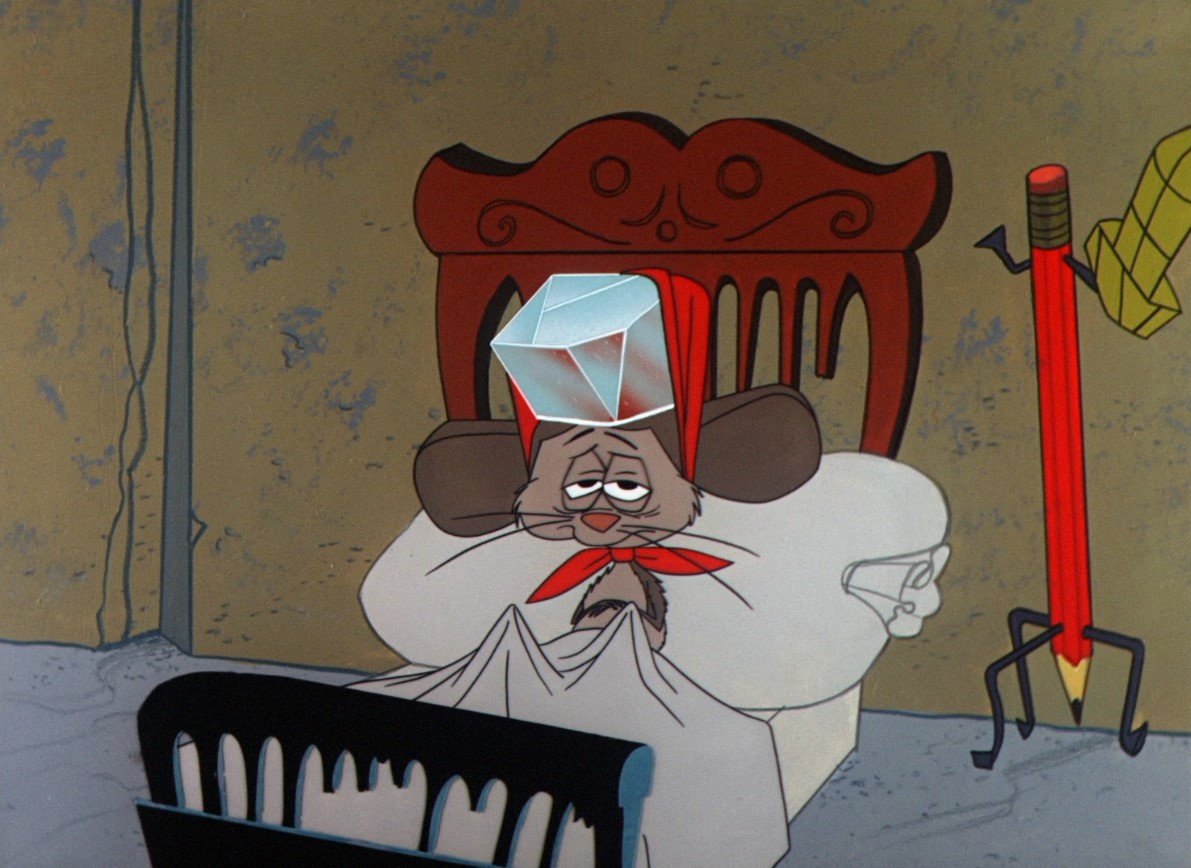
This short starts with a mouse eating his way through the largest uncut rum cake and getting drunk.
For a while we watch some fine silent comedy, but when the mouse mistakes a diamond for ice, the cartoon turns into an ordinary chase cartoon starring two talkative cops, with one being a late addition to a plethora of characters inspired by Lon Chaney jr.’s Lennie in the 1939 film ‘Of Mice and Men’.
These sequences are more tiresome than funny, but give the viewer ample time to watch the gorgeous background art, with its beautiful cityscapes. The animation, too, is top notch, but these elements cannot rescue the rather uninspired story.
Watch an excerpt from ‘The Mouse on 57th Street’ yourself and tell me what you think:
‘The Mouse on 57th Street’ is available on the Blu-Ray ‘Looney Tunes Collector’s Choice Vol. 3’
Director: Abe Levitow
Release date: October 24, 1962
Rating: ★★½
Review:
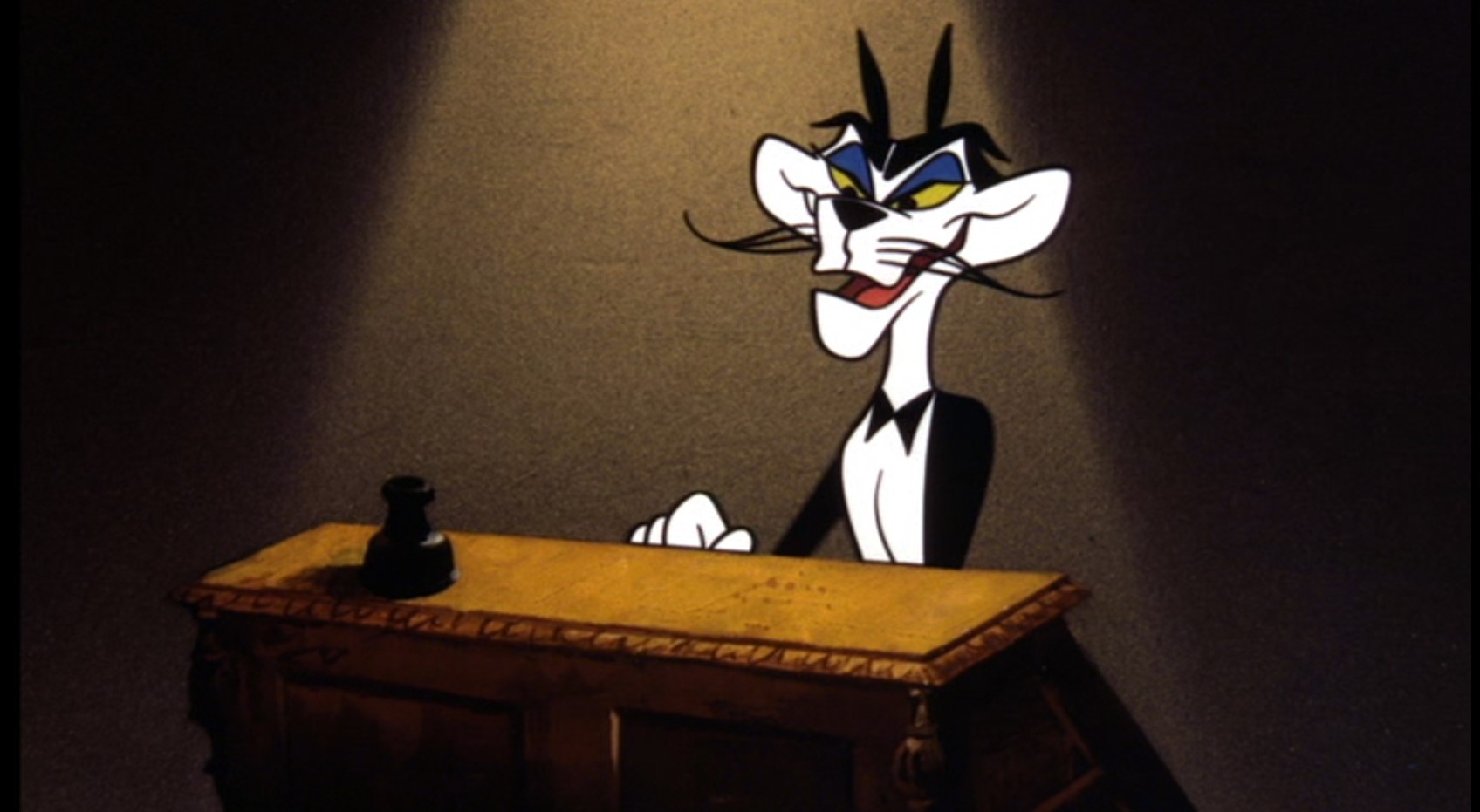
‘Gay Purr-ee’ was the second of only two feature films made by UPA, the first being ‘1001 Arabian Nights’ from 1959 and starring the studio’s only star, Mr. Magoo. In fact, ‘Gay Purr-ee’ was the artistic swansong of the once famed animation studio. Most daring and influential in the 1950s, by the early 1960s UPA had become only a shadow of its former self, as this feature film painfully demonstrates.
In fact, UPA had already entered a stage of decay when Steve Bosustow, one of the founding members of the studio sold his interests to businessman Henry G. Saperstein. Saperstein had no interest in UPA’s “fine-art crap” (as quoted in Adam Abraham’s excellent book on the studio ‘When Magoo Flew’, p. 212) and was only interested in making the cartoons as cheaply as possible. When Saperstein fired Bosustow in 1961, one can say UPA was in fact braindead. It’s thus the more surprising that the studio did make such a costly product as a feature film anyway.
‘Gay Purr-ee’ was distributed for Warner Bros. and the film breathes that studio as much, if not more than the UPA vibe. There’s of course the bad pun in the title, a Warner Bros. trademark. Then the film stars cats, not humans, breaking with a long UPA tradition, but fitting perfectly in the Warner Bros. practice. Moreover, the story was by Chuck Jones and his wife Dorothy. In fact, Jones was moonlighting when he worked for this feature film, and when Warner Bros. found out, he was duly fired because of breach of contract. Jones clearly was responsible for the designs of the three lead characters, if less so for supporting characters like Robespierre and Mme. Rubens-Chatte. To add to the Warner Bros. vibe, the film was directed by Jones’ former animator and co-worker Abe Levitow, and Warner Bros. voice man Mel Blanc voices several characters.
The UPA influence, in fact, is only visible in the gorgeous background art, supervised by Victor Haboush, who had worked on layout and background art for Disney features ‘Peter Pan’, ‘Lady and the Tramp’ and ‘Sleeping Beauty’. The background art of ‘Gay Purr-ee’ is strikingly modern, with bold fauvist color schemes, an unmistakable Van Gogh-influence in the Provencal scenes, and allusions to various other painters in the Parisian ones. In fact, the background art can count as the film’s highlight, for the rest of the movie, unfortunately, is not that good, and the viewer has ample time to marvel at the gorgeous background paintings and pastels.
The film has several problems:
First, the animation doesn’t follow the background layouts. Painted sidewalks are completely ignored, and when Jaune Tom and Robespierre ride the rails, there’s no connection between their walk and the ties they’re supposed to step on.
Second, there’s Dorothy and Chuck Jones’s story: the film takes place in Paris at the end of the 19th century, and tells about a female cat called Mewsette (yes, a pun) who lives in the countryside, but longs to go to Paris. This story is a variation of the age-old trope of a country girl going to the big city only to become ensnared there. Back in 1920 Władysław Starewicz had already made an animation film with this theme called ‘Dans les griffes de l’araignée’ (In the Spider’s Grip). The Joneses add little to this cliché, and the story unfolds in an all too predictable pattern. Moreover, the villain Meowrice’s (yes, another pun) scheme is an all too bizarre one. It would be more logical if he would put poor Mewsette into prostitution, but this was of course off limits in a family film.
Third, there’s the wonky level of anthropomorphism. The cats all walk on fours, and are clearly cats, especially when interacting with men, but at the same time Meowrice is able to write a letter, and there’s a Moulin-rouge-like bar (called Mewlon Rouge, yes, yes) in which cats dance and drink alcohol. The inconsistency is neither explained nor resolved and hampers the overall believability of the film.
Fourth, the characters are not that interesting. Mewsette is more spoiled and naive than sympathetic, Jaune Tom clearly has his heart in the right place, but his only other character trait is that he loves chasing mice. Meowrice is clearly a villain from the very beginning, and his dual character is never played out well. I guess Robespierre was included as comic relief, but he has a particularly weak voice (by Red Buttons) and he is tiresome, not funny. Most interesting and best designed is the opportunistic Mme. Rubens-Chatte, but her role is small and her change of heart all too predictable.
Fifth, Abe Levitow’s all too relaxed direction slows the film down. Excitement or fear are shown, but not felt. Just before the finale there’s a long sequence in which Meowrice describes portraits of Mewsette by several of the leading painters of the era, including Monet, Gauguin and Picasso. This is fun of course, but of no consequence to the narrative, and stalls the story. Then there’s a grand finale on a train, but this, too, is lacking the necessary tension. Never does the viewer fear that things could go wrong.
And finally, sixth, the film contains eight songs by the famed duo of Harold Arlen and Yip Harburg, who have enriched the world with their songs for ‘The Wizard of Oz’ (1939), but none of the songs for ‘Gay Purr-ee’ even remotely approach the quality of the ones for the former musical. Even singer Judy Garland, who sings most of the songs, cannot raise these above the level of forgettable. Even worse, the songs contribute to the slowness of the film, as none of them propels the story forward, but only drag the narrative down. For example, when Jaune Tom sings ‘Little Drops of Rain’ in which he expresses his longing for Mewsette, we watch nice semi-abstract images of sea life, but nothing happens, and the story only resumes after the song.
‘Gay Purr-ee’ still is well animated, and one of the last products of the golden age of studio animation, which came to its end somewhere in the 1960s. It’s thus still worth a watch for anyone interested in the era, but barely a rewarding one, and after viewing what lingers is the background art, and the sad notion that a lot of talent was wasted on a feature film that just was not that good. The UPA animation studio, meanwhile, lasted until 1970, but never regained its artistic heights of the 1950s, or even that of ‘Gay Purr-ee’, for that matter.
Watch the trailer for ‘Gay Purr-ee’ yourself and tell me what you think:
‘Gay Purr-ee’ is available on Blu-Ray and DVD
Director: Chuck Jones
Release date: June 8, 1963
Stars: Bugs Bunny & Wile E. Coyote
Rating: ★★
Review:
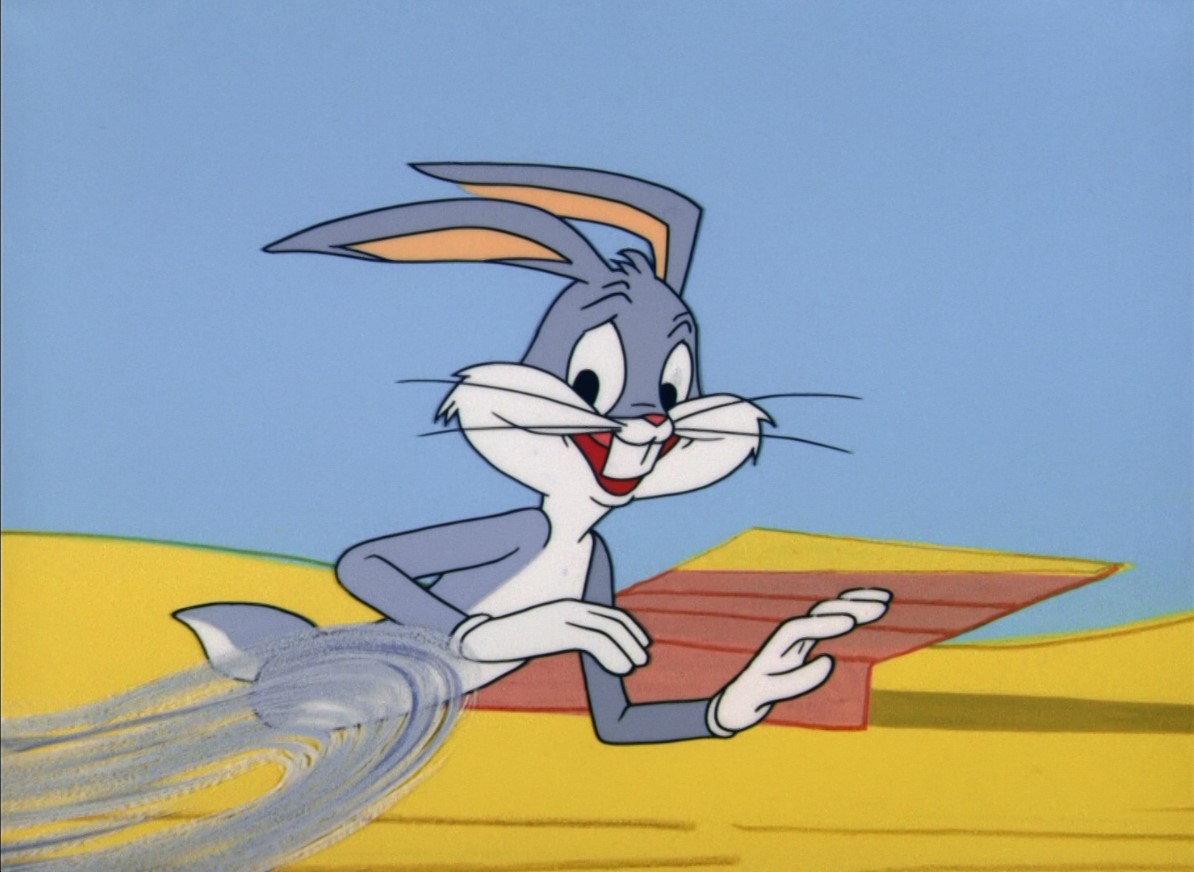
‘Hare-breadth Hurry’ is the last of five cartoons in which Chuck Jones combined the Coyote with Bugs Bunny. This is a particularly weird one, as Bugs Bunny replaces the Road Runner, as he explains at the beginning of the short.
The coyote, thus, is his silent self as in other Road Runner cartoons, and not the suave talkative character of ‘Operation: Rabbit’ (1952) or ‘To Hare Is Human’ (1956). In fact, this is a Road Runner cartoon in everything but the coyote’s co-star. In two of the gags Bugs doesn’t even participate, with the coyote hampering himself.
The gags are fair, but Bugs is very talkative, addressing the audience several times, and he’s actually the most tiresome aspect of the cartoon. The end scene, which features a string of gags around a telephone, is the most inspired, but I can hardly count ”Hare-breadth Hurry’ among either the coyote’s or Bugs Bunny’s classics.
Watch ‘Hare-breadth Hurry’ yourself and tell me what you think:
This is Bugs Bunny cartoon No. 161
To the previous Bugs Bunny cartoon: The Million-Hare
To the next Bugs Bunny cartoon: The Unmentionables
‘Hare-breadth Hurry’ is available on the Blu-Ray ‘Looney Tunes Collector’s Choice Vol. 2’
Director: Chuck Jones
Release date: June 3, 1961
Stars: Road Runner & Wile E. Coyote
Rating: ★★★
Review:
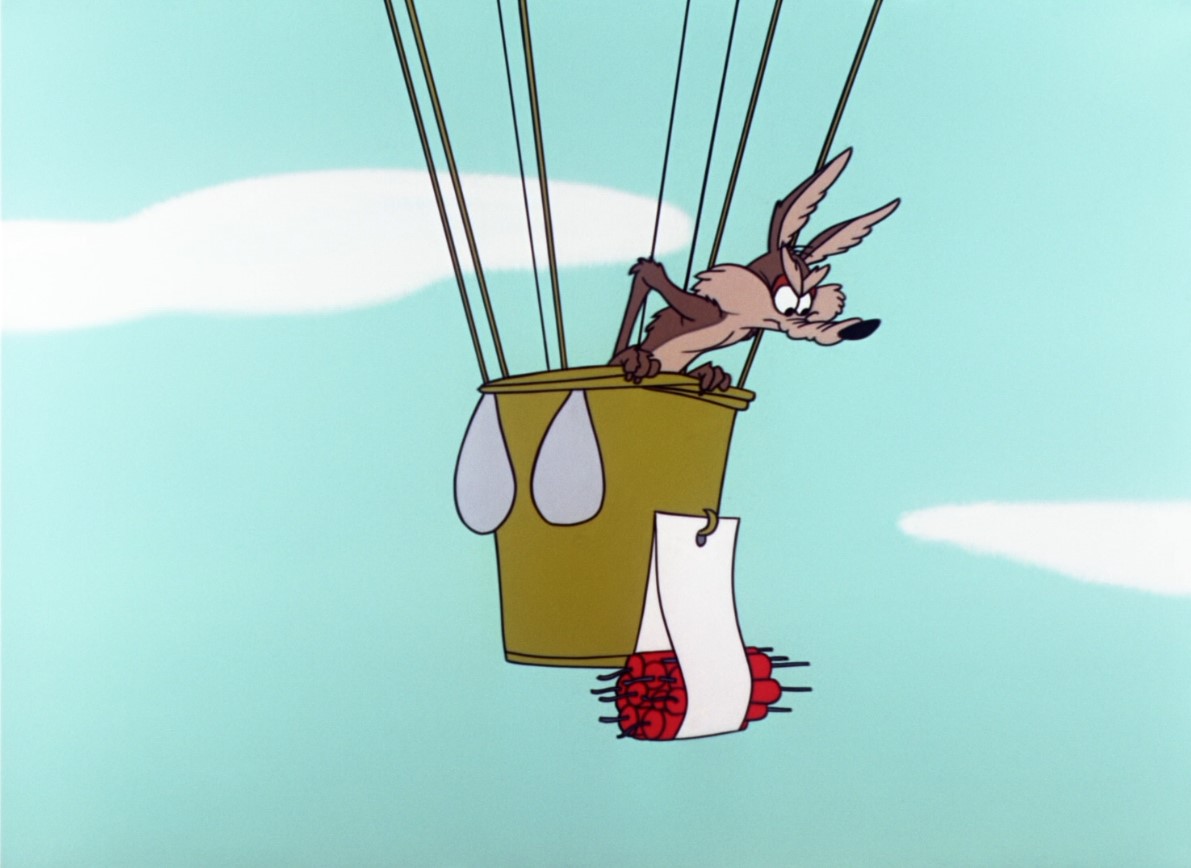
The twentieth Road Runner cartoon is a surprisingly inspired one. The short starts with the Coyote introducing himself and the Roadrunner with signs. What follows are seven attempts, with the third influencing all subsequent ones.
Both the animation and the background art are beautiful, Jones’ timing is excellent and the gags are fine. Milt Jackson’s score, on the other hand, makes one long for Carl Stalling, and there’s a level of mannerism that is a little irritating. Especially the extreme lagging of the coyote’s upper body, when zooming off, feels more tiresome than funny. Nevertheless, it’s a surprise that such a late Road Runner cartoon can still be of such a fine quality.
Watch an excerpt from ‘Lickety-Splat’ yourself and tell me what you think:
‘Lickety-Splat’ is available on the Blu-Ray ‘Looney Tunes Collector’s Choice Vol. 2’
Director: Chuck Jones
Release date: November 30, 1963
Stars: Bugs Bunny
Rating: ★
Review:

‘Transylvania 6-5000’ is one of those late Warner Bros. Cartoons, which are equally beautiful to look at as they are boring to watch.
In this short Bugs Bunny wanted to travel to Pittsburgh, Pennsylvania, only to end up in Transylvania, where he encounters a vampire with the name Count Bloodcount.
The cartoon is very talkative, and features an annoying female two-headed bird. Worse are the central gags, which are all constructed around the words Abacadabra, which turn the count into a vampire, and ‘hocus pocus’, which turn him back to a human form, again. These sequences suffer from a lack of inner logic and sloppy timing, and are hardly as funny as intended. Bill Lava’s canned music doesn’t help, either.
Despite its gorgeous settings, one cannot conclude but that the Warner Bros. studio ran out of inspiration and of ideas quickly in the early 1960s, contributing to its own shutdown after only one other cartoon, ‘Señorella and the Glass Huarache‘ (which, incidentally, is more fun than this jaded Bugs Bunny cartoon). And yet, already in 1964 Warner Bros. cartoons appeared again, now produced by the DePatie-Freleng cartoon studio of Pink Panther fame. And thus four more Bugs Bunny cartoon were released in 1964, before the character was retired.
Watch ‘Transylvania 6-5000’ yourself and tell me what you think:
This is Bugs Bunny cartoon No. 164
To the previous Bugs Bunny cartoon: Mad as a Mars Hare
To the next Bugs Bunny cartoon: Dumb Patrol
‘Transylvania 6-5000’ is available on the DVD-box ‘Looney Tunes Golden Collection Volume Five’
Director: Chuck Jones
Release date: May 20, 1961
Stars: Bugs Bunny, Daffy Duck
Rating: ★★
Review:
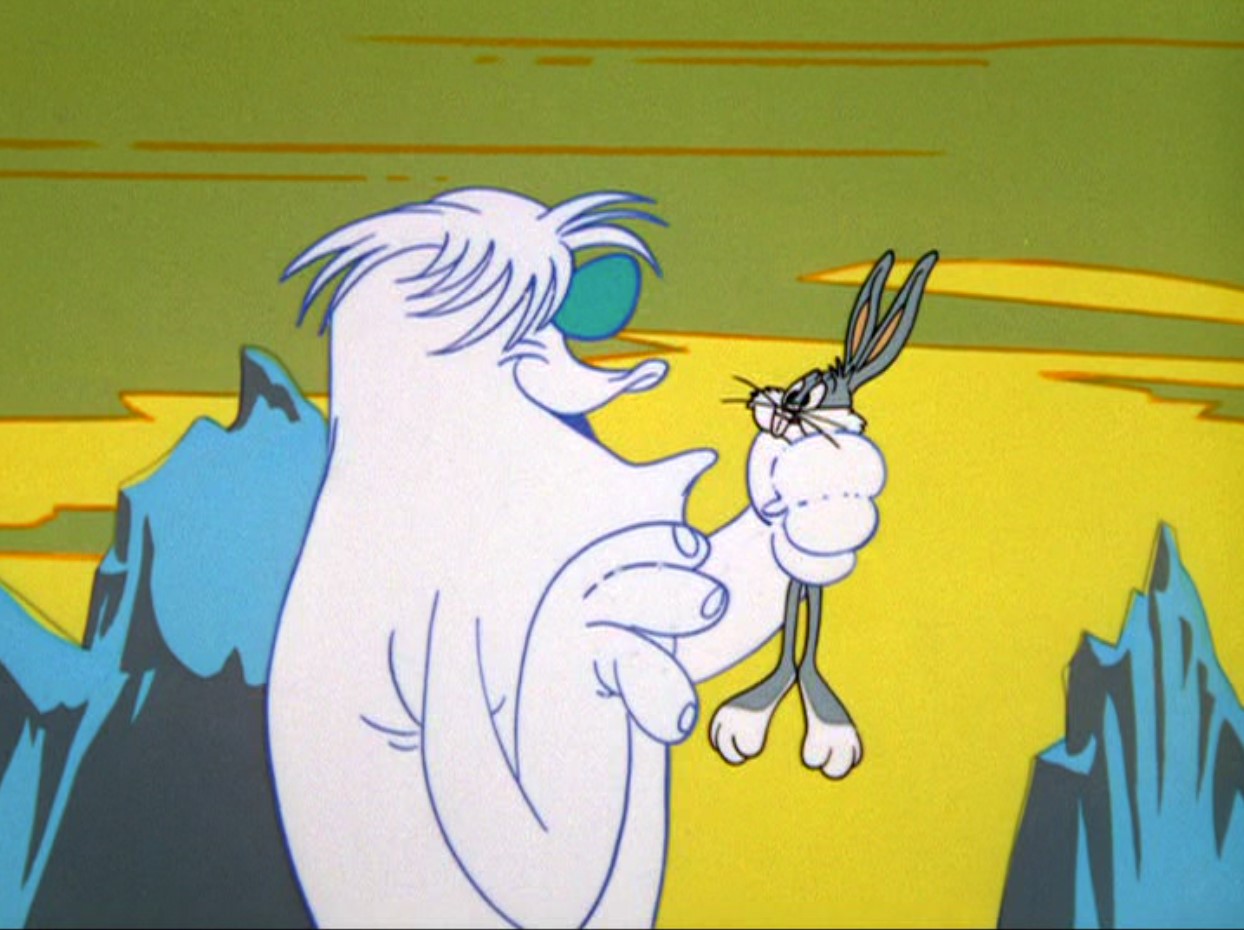
By the early 1960s the classic age of animated cartoons was clearly over. ‘The Abominable Snow Rabbit’ clearly shows the insipid state of affairs. Although both animation and background art are still top notch, and a delight to watch, the gags are uninspired and stale, and never reach the heights from similar films of the early 1950s.
In this cartoon Bugs and Daffy both travel underground, apparently on their way to Palm Springs, only to end up in the Himalayas, where they encounter a very cartoony and blue-nosed abominable Snowman. The Snowman is a late addition to a plethora of characters based on Lon Cheney’s depiction of Lenny in ‘Of Mice and Men’ from 1939, without adding anything. Apart from the jaded gags, the cartoon suffers from a large amount of dialogue, rendering the cartoon almost like the “illustrated radio” Chuck Jones detested in contemporary television animation.
Watch ‘The Abominable Snow Rabbit’ yourself and tell me what you think:
This is Bugs Bunny cartoon No. 153
To the previous Bugs Bunny cartoon: Lighter than Hare
To the next Bugs Bunny cartoon: Compressed Hare
This is Daffy Duck cartoon No. 87
To the previous Daffy Duck cartoon: Person to Bunny
To the next Daffy Duck cartoon: Daffy’s Inn Trouble
‘The Abominable Snow Rabbit’ is available on the DVD-box ‘Looney Tunes Golden Collection Volume Five’
Directors: Chuck Jones & Abe Levitow
Release Date: January 10, 1959
Stars: Bugs Bunny
Rating: ★★★★½
Review:

‘Baton Bunny’ is the last of Chuck Jones’s great tributes to classical music, following ‘Long-Haired Hare‘ (1949), ‘Rabbit of Seville‘ (1950) and ‘What’s Opera, doc?‘ (1957).
The short also forms the closing chapter on a long tradition of concert cartoons with cartoon stars conducting, which goes all the way back to the Mickey Mouse short ‘The Barnyard Concert‘ from 1930. True, ‘Baton Bunny’ is not the last of such cartoons (it was e.g. followed by MGM’s ‘Carmen Get It (1962) starring Tom & Jerry, and ‘Pink, Plunk, Plink‘ (1966) starring the Pink Panther), but these cartoons are hardly the classics ‘Baton Bunny’ certainly is.
Bugs Bunny is the sole performer in the cartoon – we don’t even see the orchestra members, only their instruments. Bugs Bunny and the orchestra play Franz von Suppés overture ‘Morning, Noon and Night in Vienna’ (1844), which Bugs conducts not only with his hands, but also with his ears and feet. Like earlier conductors Mickey (‘The Band Concert‘, 1935) and Tom (‘Tom & Jerry at the Hollywood Bowl‘, 1950) Bugs has some troubles while conducting: with a fly, echoing Mickey’s problems with a bee in ‘The Band Concert’, and with his collar and cuffs, echoing Mickey’s problems with his over-sized costume. Highlight is Bugs’ reenactment of a Western pursuit featuring a cowboy, an Indian and the cavalry, only using his ears to change into each character.
But throughout the cartoon Bugs is beautifully animated, with strong expressions, and deft hand movements. It’s a sheer pity that in the end, the fly turns out to be Bugs’ only audience. But Bugs is not too proud to bow for the tiny creature that had troubled him so much just before. Apart from the animation and Michael Maltese’s entertaining story, ‘Baton Bunny’ profits from Maurice Noble’s beautiful background art, and great staging. Thus the short is a wonderful testimony of Warner Bros. cartoon art of the late fifties.
Watch ‘Baton Bunny’ yourself and tell me what you think:
https://www.dailymotion.com/video/x6h503w
This is Bugs Bunny cartoon No. 140
To the previous Bugs Bunny cartoon: Pre-hysterical Hare
To the next Bugs Bunny cartoon: Hare-Abian Nights
‘Baton Bunny’ is available on the DVD-box ‘The Looney Tunes Golden Collection Volume 1″
Director: Chuck Jones
Release Date: May 9, 1942
Rating: ★★½
Review:
 In 1942 Chuck Jones found his own voice as a director. Gone were the Disneyesque characters and settings. Instead, Jones put forward his own recognizable character designs, a very original animation approach based on strong poses, and an unprecedented emphasis on facial expressions.
Gone, too, were the cute, childish subjects, now replaced by wild, mature and gag rich stories. Suddenly Jones became one of the most recognizable directors in the field, equaled only by Bob Clampett. The most obvious example of this change is ‘The Dover Boys‘ from September 1942, but the new style is already very present in the Conrad Cat cartoons from January/February (‘The Bird Came C.O.D.’, ‘Conrad the Sailor‘ and ‘Porky’s Cafe’ ).
‘The Draft Horse’, from May, is also a nice example of Jones’s new self-assurance. The short features a plow horse who, after reading a billboard saying ‘Horses wanted for US Army’ plows all the way to the next army training camp to get himself enlisted. His race is depicted marvelously: we don’t see the horse himself, but we watch several images of the countryside wrecked by his plow, accompanied by a frantic rendering of Gioacchino Rossini’s William Tell overture.
Besides an example of Jones’s new style, ‘The Draft Horse’ was also the first Warner Bros. cartoon penned by Tedd Pierce, after his return from his move to the Max Fleischer studios. Highlight of the cartoon is the horse acting out a complete war scene for the eyes of a bewildered colonel. This scene, animated by Ken Harris, can match the much praised scene from ‘Brave Little Tailor’ (1938, animated by Frank Thomas), in which Mickey Mouse tells his story of how he beat seven [flies] in one blow. In this scene the horse looks like a forerunner of Charlie Dog, who does an equally hilarious performance in ‘Often an Orphan‘ (1949).
Unfortunately, the rest of the cartoon doesn’t live up to the high standards set here. Tedd Pierce’s story is too loosely jointed to engage the viewer, falling back on spot gags. Soon the horse ends in a war exercise, and he flees home with equal speed. In the end we watch him knitting V-sweaters as part of the ‘Bundles for Blue Jackets’ program, in which local ladies knitted sweaters for navy men.
‘The Draft Horse’ mocks the over-zealous response after the United States had entered World War II. At the same time, it shows that every citizen can do his part, even when he is not in the army itself. The horse is designed interestingly, remaining halfway anthropomorphization. For example, he retains his hoofs, and remains on all fours half of the time.
Watch ‘The Draft Horse’ yourself and tell me what you think:
https://www.dailymotion.com/video/x5pce36
‘The Draft Horse’ is available on the DVD-set ‘Looney Tunes Golden Collection Volume Six’
Director: Bob Clampett
Release Date: December 20, 1941
Stars: Bugs Bunny, Elmer Fudd
Rating: ★★★½
Review:
 When Tex Avery left Warner Bros. in 1941, Bob Clampett inherited his unit.
This is best visible in ‘Wabbit Twouble’, which features the same rich oil background art as Avery’s earlier cartoons. The short is Clampett’s only third Merrie Melody (and thus color cartoon), and his first take on Bugs Bunny, who still was only one-and-a-half year and seven cartoons old. Clampett’s take on the rabbit is quite different from his contemporaries. In a way he goes all the way back to Bugs Bunny’s forerunner in ‘Porky’s Hare Hunt‘ (1938), with Bugs Bunny taunting Elmer just for fun.
Elmer comes to ‘Jellostone park’ for rest and relaxation. But as soon as he has installed himself, Bugs starts nagging him. Bugs Bunny’s best trick is giving Elmer glasses which he paints black, making Elmer think it has become night already. Also involved in the routine is a bear, who even replaces Bugs as Elmer’s main problem. This leads to a chase scene, which is very remarkable as it almost consists of poses only, with little to no movement in between. Chuck Jones would expand on this animation on poses in ‘The Dover Boys‘, and this animation technique would become more dominant in the postwar era.
‘Wabbit Twouble’ features very unusual opening credits. First Bugs Bunny’s name is photographed using real carrots. Second, the credits are written on a moving landscape, a device that would be used extensively by Chuck Jones in the late 1950s and 1960s, and third, the names of all contributors are written in ‘Elmerfuddese’: thus ‘Wobert Cwampett’, ‘Sid Suthewand’ and ‘Cawl W. Stawwing’. This sequence alone shows how important Arthur Q. Bryan’s voice had become for the Elmer Fudd character, after only six cartoons.
Even more interesting, ‘Wabbit Twouble’ suddenly shows a fatter design of Elmer, which was modeled on Arthur Q. Bryan’s looks, so the animators could also use the actor’s funny movements. Unfortunately, Elmer lost a lot of his appeal with this fatty design, and it was only used in three more cartoons (‘The Wabbit Who Came to Supper‘, ‘The Wacky Wabbit’ and ‘Fresh Hare’, all from 1942). With Friz Freleng’s ‘The Hare-Brained Hypnotist‘ Elmer luckily was his normal self again.
Watch ‘Wabbit Twouble’ yourself and tell me what you think:
https://www.dailymotion.com/video/x3ft9a5
This is Bugs Bunny cartoon No. 7
To the previous Bugs Bunny cartoon: All This and Rabbit Stew
To the next Bugs Bunny cartoon: The Wabbit Who Came to Supper
‘Wabbit Twouble’ is available on the Blu-Ray set ‘Looney Tunes Platinum Collection: Volume 2’ and on the DVD-set ‘Looney Tunes Golden Collection Volume One’
Director: Chuck Jones
Release Date: June 8, 1940
Rating: ★★½
Review:
 Many of Chuck Jones’s early cartoons of 1938-1941 have a Disney-like character, but ‘Tom Thumb in Trouble’ arguably tops them all in Disney overtones.
The short stars a particularly small Tom Thumb, being indeed the size of his father’s thumb. When the father goes to work and leaves Tom alone to do the dishes, Tom Thumb almost drowns, but he is rescued by a little yellow bird. Unfortunately, his father blames the bird, and Tom Thumb walks away into the woods because of that. In the end all are reunited.
There’s absolutely nothing funny about this sentimental and cloying tale, and one wonders what Jones was thinking. This cartoon would have fit the years 1934-1936, not 1940. The animation, however, is stunning, with the very realistic father being an animation highlight within Warner Bros.’ 1940 output, topping even the realistic humans in ‘Old Glory‘, as he appears to have been animated with more confidence and ease. The staging, too, is nothing but impressive, with its strikingly original and dramatic angles, often turning the father into a towering figure.
But the short owes nothing to the output of Jones’s colleagues, and the only aspect that makes it typically Warner Bros. is Carl Stalling’s music, which makes clever use of classical music, with Richard Wagner’s Ride of the Valkyries during Tom Thumb’s flight into the winter woods as a particular highlight.
Watch ‘Tom Thumb in Trouble’ yourself and tell me what you think:
https://www.dailymotion.com/video/x6dtc1t
‘Tom Thumb in Trouble’ is available on the DVD set ‘Looney Tunes Golden Collection Volume 5’
Director: Chuck Jones
Release Date: February 1, 1941
Stars: Sniffles
Rating: ★★★½
Review:
 In the seventh of twelve Sniffles cartoons Sniffles suddenly has a number of lookalikes, who are as annoying as the title character himself.
In the opening scene we watch them all fleeing from a cat. When Sniffles wishes out loud that the cat should have a bell, the others immediately put him on the job.
Like other Sniffles cartoons, ‘Sniffles Bells the Cat’ is slow and pretty unfunny. Yet the chase scenes show some beautiful background art, emphasizing the vastness of the house for a little mouse like Sniffles. Moreover, Carl Stalling’s music is extraordinarily beautiful in this cartoon.
However, the cartoon is most important in the development of Jones’s mature style. Like in ‘Bedtime for Sniffles’ Jones excels in giving the cute little character a surprisingly broad range of emotions, especially when Sniffles realizes he has to tie the bell to the cat himself. This scene is the undisputed highlight of the cartoon and shows that even at this early stage Jones knew hardly an equal in handling facial expressions. The cat, too, is animated delightfully when he performs the old shell game with considerable deftness. These two scenes contain the seeds of more to come, and make the cartoon one of Sniffles’s best, despite its slugged pace.
Watch ‘Sniffles Bells the Cat’ yourself and tell me what you think:
‘Sniffles Bells the Cat’ is available on the Blu-Ray set ‘Looney Tunes Mouse Chronicles: The Chuck Jones Collection’
Director: Chuck Jones
Release Date: November 23, 1940
Stars: Sniffles
Rating: ★★★½
Review:
 This Christmas cartoon opens with a stunning scene in which the camera zooms over a winter village scene. ‘Bedtime for Sniffles’ may not be a ‘Pinocchio’, this is still a very atmospheric opening intro to the Christmas spirited cartoon.
Cut to Sniffles, who wants to stay awake until Santa comes. Unfortunately the radio plays a lullaby, drowsing our cute little hero.
Because this is a cartoon about the familiar problem of trying to stay awake despite a desire to sleep, this is a more entertaining short than most other Sniffles cartoons, and a great antecedent to the classic Tom & Jerry cartoon ‘Sleepy Time Tom’ (1951), which covers similar grounds. The animation of Sniffles’s eyes when he tries to stay awake, is priceless, and is an early showcase of Jones’s upcoming mastery of facial expressions. Sniffles’s reluctant walk into bed, too, points forward to Jones’s mature style.
Apart from this, ‘Bedtime for Sniffles’ excels in great background art, and lovely lay-outs, with delightful details, like a walnut functioning as a waste basket, and cigarette paper substituting for a towel.
Watch ‘Bedtime for Sniffles’ yourself and tell me what you think:
https://www.dailymotion.com/video/x3afe84
‘Bedtime for Sniffles’ is available on the Blu-Ray set ‘Looney Tunes Mouse Chronicles: The Chuck Jones Collection’
Director: Chuck Jones
Release Date: July 20, 1940
Stars: Sniffles
Rating: ★
Review:
 In the 1930s Frank Tashlin had made the most beautiful cartoons at Warner Bros. When Chuck Jones inherited his unit at the end of 1938, he too made the most beautiful shorts of all.
‘The Egg Collector’ is a prime example, with stunning background art, original camera angles (a clear Tashlin influence), great shading and excellent animation. However, unlike Tashlin’s cartoons, Jones’s were extremely slow. ‘The Egg Collector’, for example , moves at such a sluggish speed, one almost falls asleep while watching it.
The short stars the little mouse Sniffles, Jones’s very first returning character, and his friend, the bookworm from ‘Sniffles and the Bookworm’ (1939). They read in a book about egg collecting, and wish to collect an owl’s egg, not realizing that the fact that eats small rodents means it can possibly eat them. Thus they are on their way to a church nearby, where they soon discover the real nature of the barn owl. There’s little humor in this cute and boring cartoon, although the little owl’s hoots are very charming. The design of the little owl is exactly the same as the one in ‘Little Brother Rat‘.
Carl Stalling accompanies the church scenes with particularly solemn music, based on Felix Mendelssohn’s stage music for A Midsummernight’s Dream. His score rarely sounded so German as it does in this particular short.
Watch ‘The Egg Collector’ yourself and tell me what you think:
https://www.dailymotion.com/video/x3odk7v
‘The Egg Collector’ is available on the Blu-Ray set ‘Looney Tunes Mouse Chronicles: The Chuck Jones Collection’
Director: Chuck Jones
Release Date: May 11, 1940
Stars: Sniffles
Rating: ★
Review:
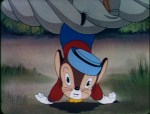 In ‘Sniffles Takes a Trip’ Sniffles goes on a holiday to the country meadows for some peace and quietness.
The short opens with Sniffles walking the rails and singing a tune in his all too childish voice. When he arrives at the meadows, he tries to get some rest in his hammock, but is hindered by a woodpecker. In his next attempt, he hangs his hammock between the legs of a crane, who quickly walks into a pond. Sniffles’s last trial is at night, when he gets so scared, he rushes back to the city.
‘Sniffles Takes a Trip’ is the Sniffles’s fourth film, and in this cartoon the little mouse is even cuter than before. The cartoon is genuinely Disney-like in character: it’s beautifully animated, its backgrounds are lush and artful, and the humor is mild and devoid of conflict.
Unfortunately, the short is also utterly boring, being even much less entertaining than Sniffles’s earlier films. The woodpecker scene mimics a similar one in the Donald Duck cartoon ‘Self Control‘ (1938), another example of the huge Disney influence on Chuck Jones’s earliest efforts as a director.
Watch ‘Sniffles Takes a Trip’ yourself and tell me what you think:
https://www.dailymotion.com/video/x3eyhqt
‘Sniffles Takes a Trip’ is available on the Blu-Ray set ‘Looney Tunes Mouse Chronicles: The Chuck Jones Collection’ and the DVD-set ‘Looney Tunes Golden Collection Volume Six’
Director: Chuck Jones
Release Date: December 2, 1939
Stars: Sniffles
Rating: ★★★
Review:
 ‘Sniffles and the Bookworm’ opens with Sniffles taking refuge in a bookshop to escape the winter cold.
Inside Sniffles encounters the bookworm, who’s scared of the little mouse, and asks two book characters, the pied piper and a viking, for help. This first act is acted out completely silently, and is very, very Silly Symphony-like. Its uninteresting comedy is greatly helped by Carl Stalling’s score, who makes excellent use of music from Franz Schubert’s Moment musical no. 3.
When Sniffles turns out to be small, the pied piper suddenly starts playing the clarinet, with Sniffles joining in. Thus starts the second part, in which Sniffles, the bookworm and several nursery rhyme characters play and sing some peppy swing tune. Unfortunately, a particularly angular version of Frankenstein’s monster awakes, too, and soon spoils the fun. This second act is hardly more interesting than the first, but the swing music is nice.
With ‘Sniffles and the Bookworm’, the third cartoon starring Sniffles, Chuck Jones gives his own twist on his precursor Frank Tashlin’s books-come-to-life series (e.g. ‘Have You Got any Castles?‘ and ‘You’re an Education‘ from 1938). Despite the paper-thin story about Sniffles and the bookworm itself it’s all there: book characters coming to life at night, characters performing some jazz music, and a threat which ends the fun – this all done with the highest production values possible at Leon Schlesinger’s studio at the time.
It’s hard to call the bookworm a classic character (after all, Sniffles himself isn’t really interesting). Yet, the bookworm would return in two other Sniffles cartoons: ‘The Egg Collector‘ (1940) and ‘Toy Trouble‘ (1941).
Watch ‘Sniffles and the Bookworm’ yourself and tell me what you think:
‘Sniffles and the Bookworm’ is available on the Blu-Ray set ‘Looney Tunes Mouse Chronicles: The Chuck Jones Collection’
Director: Chuck Jones
Release Date: September 2, 1939
Stars: Sniffles
Rating: ★★★½
Review:
 ‘Little Brother Rat’ is the second cartoon featuring that cute little mouse Sniffles.
In this short Sniffles has to perform tasks at a party. The cartoon opens with Sniffles plucking a whisker from a cat. His second task is stealing an owl’s egg. The egg soon hatches into a little, far from life-like baby owl. The owl appears to be a precursor of the Minah-Bird, Jones’s famous dimension-defying bird, or even Droopy in ‘Northwest Hounded Police‘, as it is as capable of being in unexpected places.
‘Little Brother Rat’ is far from funny, but the night scenes are very beautiful, and Carl Stalling’s score is excellent.
Watch ‘Little Brother Rat’ yourself and tell me what you think:
‘Little Brother Rat’ is available on the Blu-Ray set ‘Looney Tunes Mouse Chronicles: The Chuck Jones Collection’


 Dr. Grob's Animation Review