You are currently browsing the tag archive for the ‘love’ tag.
Director: Joel Crawford
Release date: November 25, 2020
Rating: ★★½
Review:
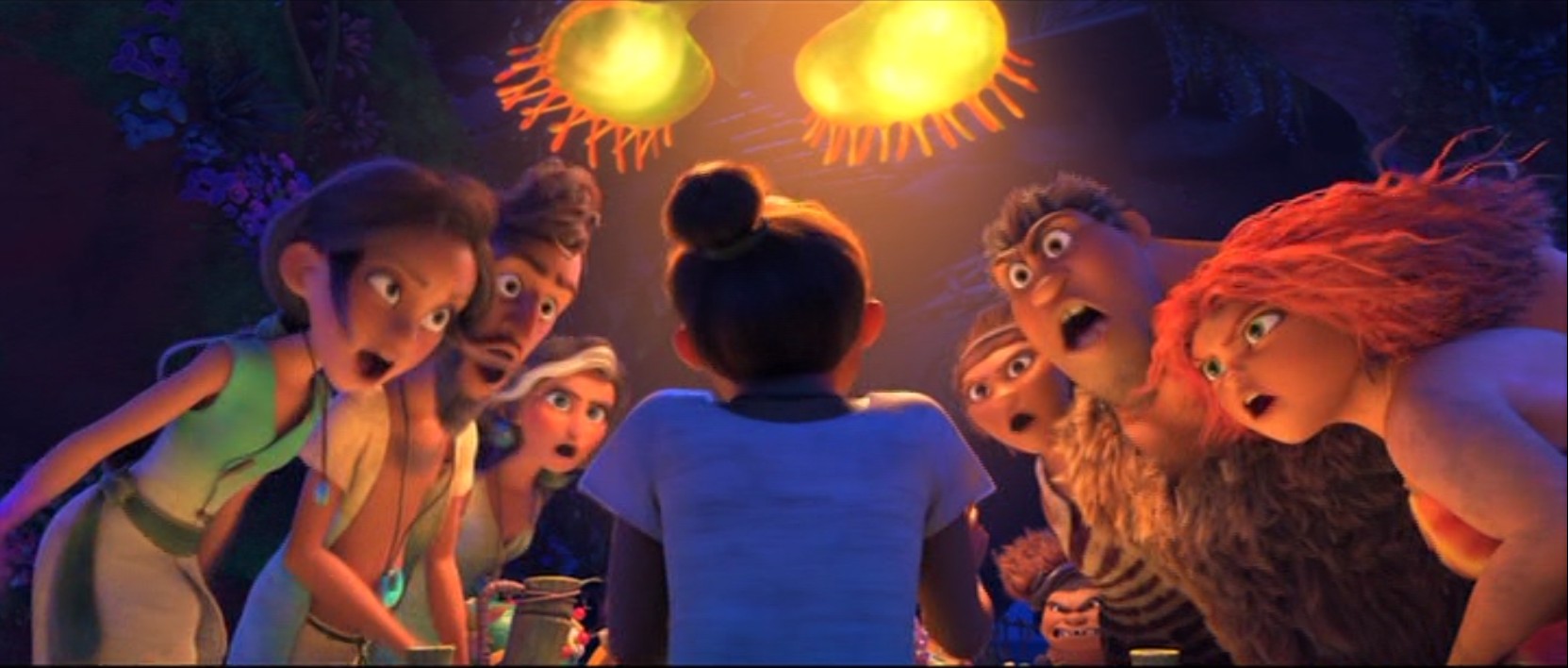
‘The Croods’ (2013) was a pleasant surprise, with for once a less slim girl as its main protagonist, trying to free herself from her over-protecting dad. The film’s main flaw was its inconsistent fantasy world – I still think an ordinary prehistoric environment would have suited the film better. Nevertheless, the success of this film certainly made one curious after a sequel, which arrived seven years later with ‘The Croods: A New Age’.
Unfortunately, this film doesn’t live up to expectations, and that’s mainly because the film makers couldn’t decide whose film this was supposed to be, making this film frustratingly unfocused. But there’s also a hidden message inside this film that is uncomfortably disturbing.
True, in ‘The Croods’ it was equally unclear whether it was Eep’s or her father Grug’s movie, because in this film it was Grug not Eep who made the greatest progression. But in ‘The Croods: A New Age’ Eep’s story gets even further deluded. In this film the Croods meet the Bettermans, acquaintances of Guy. The Bettermans, like the name implies, are more advanced people, who live in a sort of Swiss Family Robinson-like setting with a rather Willy Wonka-like farm, but who come across as leftist upper-class snobs. Daughter Dawn Betterman, who has grown in an all too lonely and protective environment, is instantly likeable, but her parents, Phil and Hope, are clearly designed to be loved to hate.
Now Dawn is set up to be Guy’s mate, but surprisingly, she and Eep never become real rivals, and there’s even a ‘Whole New World’ like sequence with Eep showing Dawn what’s out there beyond her guarding walls. One could say that this is a feminist statement, but this pales when compared to the two great European animation films from the same year, ‘Wolfwalkers’ and ‘Calamity, une enfance de Martha Jane Cannary’, whose feminism is much more prominent and daring. Compared to these films, Eep’s emancipation is trite and disappointing.
Moreover, the Bettermans’s plan with Dawn and the influence of the Bettermans on Guy are still a problem for Eep, but as said, this story arc is deluded by other story arcs. At one point it seems that Guy is the one to follow, but then we jump to the juxtaposition of Grug and Phil, and later again to one with a common enemy, all too clearly designed to team the two families together (in fact, this story element is blatantly copied from ‘How to Train Your Dragon’ from the same studio, without altering any of its premise, except for the species involved).
Within all the antics Eep’s story gets lost, while the inevitable change of the Bettermans themselves remains forced and unconvincing. Nevertheless, their change is the most problematic part of this film. The Bettermans are clearly depicted as left-wing self-complimentory, arrogant upper-class people, who have lost a sense of community, not unlike the San Fransisco people in the South Park episode ‘Smug Alert’ from 2006, or the Chalfens in Zadie Smith’s novel ‘White Teeth’ from 2000, to name two other examples of this trope.Note for example, how the Bettermans are all too unconnected individuals, each going their separate ways, while the Croods stick together and retain a “real” family relationship. In many ways one could say that ‘The Croods: A New Age’ is a film about class struggle, with a disturbing anti-elite stance, depicting left wing intelligentsia as the problem, and the ordinary commoners (the Croods, in this cage) as being on the right side of morality. This makes this film an appallingly conservative one, and even shamelessly populist. Its hidden message (in which the Bettermans must change the most, not the Croods) would do good in the present Trump era: the leftist are the ones to hate and who must change their ways…
Apart from this message, the film, like the first, suffers from unconvincing world building, with all too silly species, like literal wolf spiders. The all too fluorescent colors, too, are getting on the nerves over time. No, one must conclude that the main attraction of ‘The Croods’ remains Eep, and when she’s not present the film quickly becomes tiresome and even questionable.
Watch the trailer for ‘The Croods: A New Age’ yourself and tell me what you think:
The Croods: A New Age’ is available on Blu-Ray and DVD
Director: Masaaki Yuasa
Release date: June 10, 2019
Rating: ★★
Review:
One of the most interesting animation directors to come from Japan is Masaaki Yuasa. He brought us very idiosyncratic movies as ‘Mindgame’ (2004) and ‘Night Is Short, Walk on Girl’ (2017). Both features have striking visuals that make them stand out within the vast anime canon.
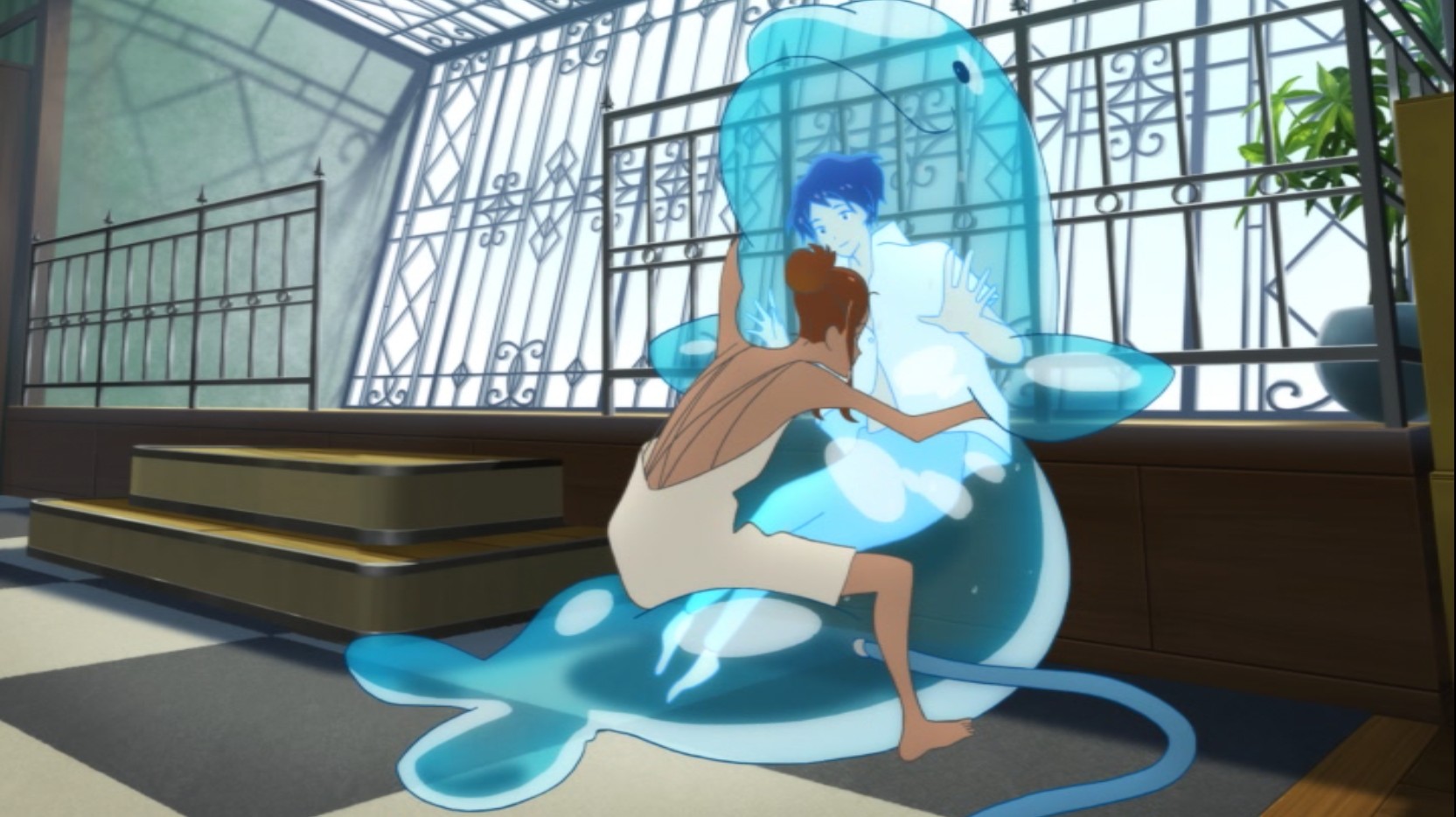
‘Ride Your Wave’, Yuasa’s feature film from 2019, is remarkably normal compared to these earlier features. True, the human designs are strangely elongated, there are some distorted shots, and strange perspectives, and the color designs are brighter than usual in anime, but the background art is much more standard anime fare. The story, too, has nothing of the mind-blowing qualities of the earlier features. In fact, ‘Ride Your Wave’ is a disappointingly normal love story with a supernatural element, an almost obligate story ingredient in Japanese feature animation.
‘Ride Your Wave’ tells about a surfing girl who falls in love with a fire fighting boy, but then disaster strikes… Yuasa uses standard montage techniques to tell of the lovers’ bliss, and equally standard flashback techniques and repetitions of what people had said to make his message come across. This makes the film all too explanatory and heavy-handied. In fact, there’s little to enjoy in ‘Ride Your Wave’ besides the designs and some shots, and the film doesn’t rise above the standard fare. From Yuasa we certainly expect better…
Watch the trailer of ‘Ride Your Wave’ yourself and tell me what you think:
‘Ride Your Wave’ is available on Blu-Ray and DVD
Director: Makoto Shinkai
Release date: July 19, 2019
Rating: ★★
Review:
In 2016 Makoto Shinkai rightfully scored a huge hit with his feature film ‘Your Name’. This film’s successor, ‘Weathering with You’ from 2019, unfortunately isn’t half as good.
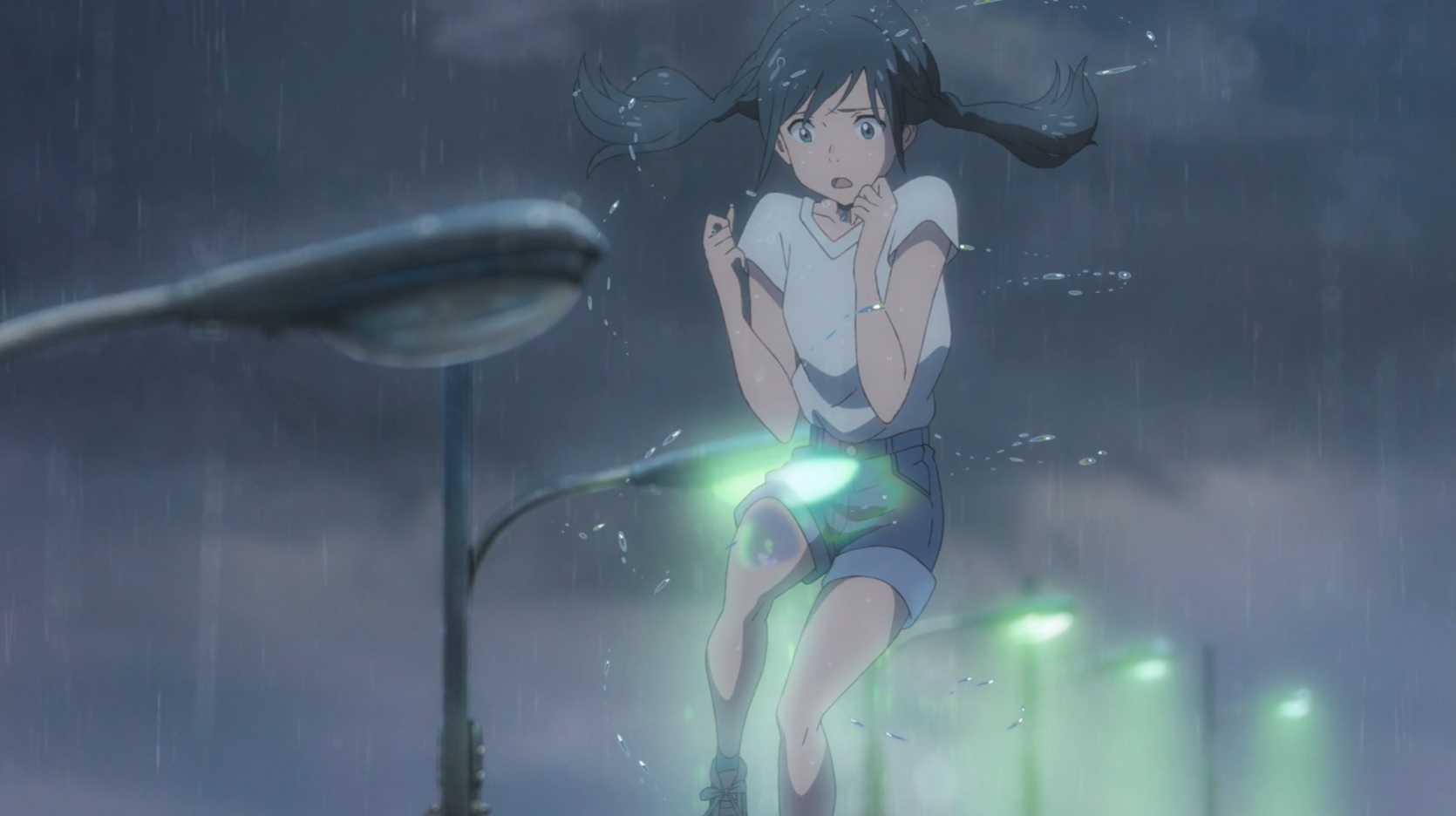
Like ‘Your Name’ the film is well made, sporting intricate background art, beautiful lighting and fine animation, if not particularly outstanding. But the story, with its high level of spiritualism and its bizarre ending, leaves much to be desired, not in the least because it overstretches its own believability. This already starts with the film’s premise: that Tokyo has been shrouded in rain for months, without any chance of the sun. In this depressing environment there is Hina, a girl who is able to pray for the sun, if only briefly and only locally…
But Hina is not the main protagonist of the film and even remains pretty enigmatic throughout. This is reserved for Hodaka, an sixteen years old boy who has run from home and tries to find his luck in Tokyo, only to discover that this is quite hard without having the legal age to work or a proper identity card. Hodaka is the narrator of the story, and we largely watch the events through his eyes.
Perhaps because the story tells about teenagers the emotions run free in this film, and these are at times quite overblown. One almost rejoices when reality finally checks in with the youngsters’ fantasy life.
Much happens during the course of the film, but little of it makes sense, least of all the aftermath, in which Tokyo is flooded after all. I can’t make head or tail of Shinkai’s tale or his message, and I was for most of the time quite bored. This of course left ample time to admire the background art, but these beautiful sceneries can’t save a film that succumbs under its own pretentions.
Watch the trailer of ‘Weathering with You’ yourself and tell me what you think:
‘Weathering with You’ is available on Blu-Ray and DVD
Director: Floor Adams
Release date: February 23, 2019
Rating: ★★★★
Review:
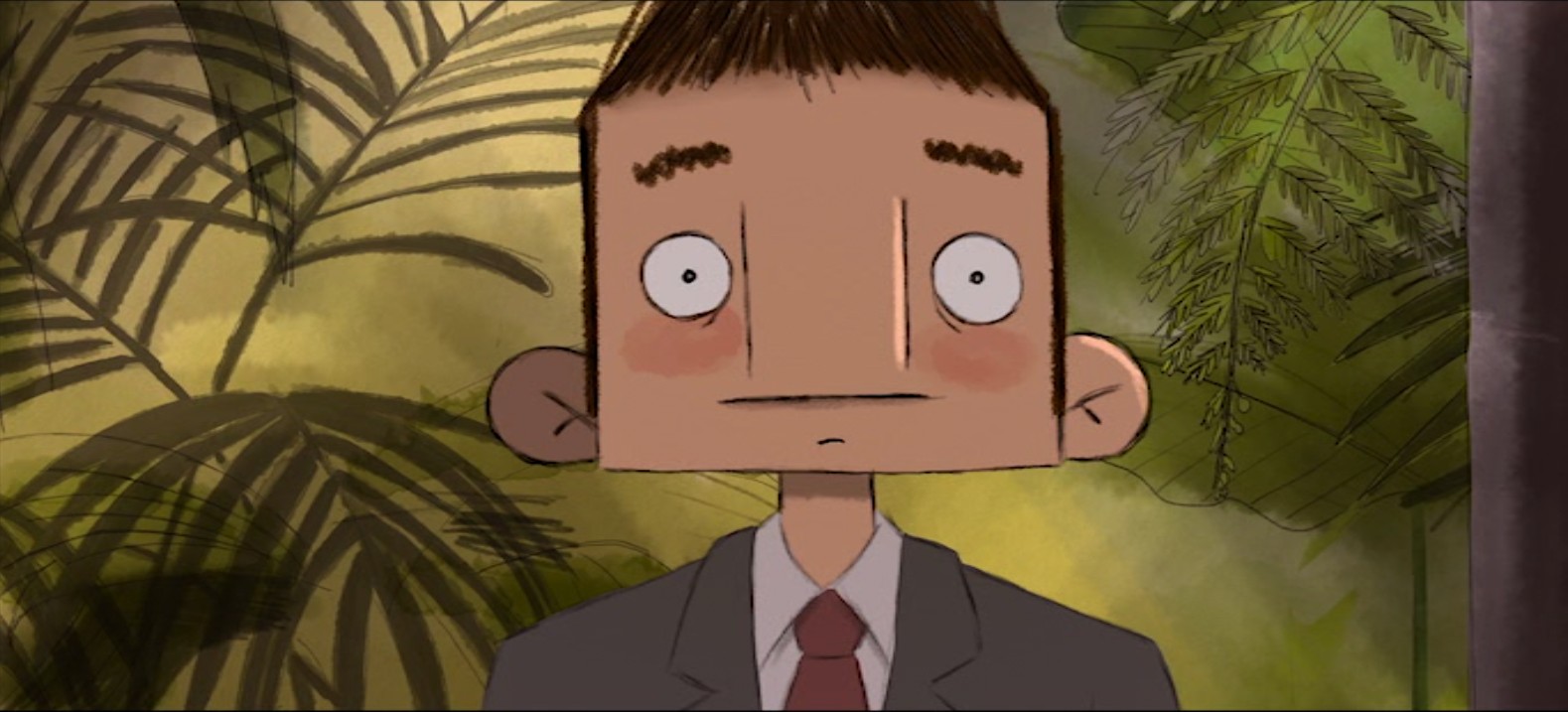
Christopher is a man on the autism spectrum, He loves his model Stuka dive bomber airplanes, but he has difficulties with social relationships. When is older brother invites him along to a party, a whole new adventure for him starts.
Christopher’s autism is shown by a homunculus inside his head who has to look up and memorize everything and thus easily gets an information overload, for example when too much is happening at the same time during the party. Christopher clearly is as sympathetic as he is social awkward, but I cannot help but admire the patience of his love interest Gwen, who has to suffer a lot through Christopher’s erratic behavior.
‘Mind My Mind’ is a nice insight in the mind of a person on the autism spectrum, but succeeds not entirely or convincingly in making the audience believe he can function easily in society.
The designs are pleasant, although I found the homunculus too sketchy a character. The animation meanwhile, is fair, and focuses on the characters’ emotions and relationships. Despite being a Dutch-Belgian co-production, the voices are in English, and thus the film can be enjoyed by a large audience.
Watch the trailer of ‘Mind My Mind’ yourself and tell me what you think:
‘Mind My Mind’ is available on DVD
Director: Shinichiro Ushijima
Release date: July 24, 2018
Rating: ★★★★
Review:
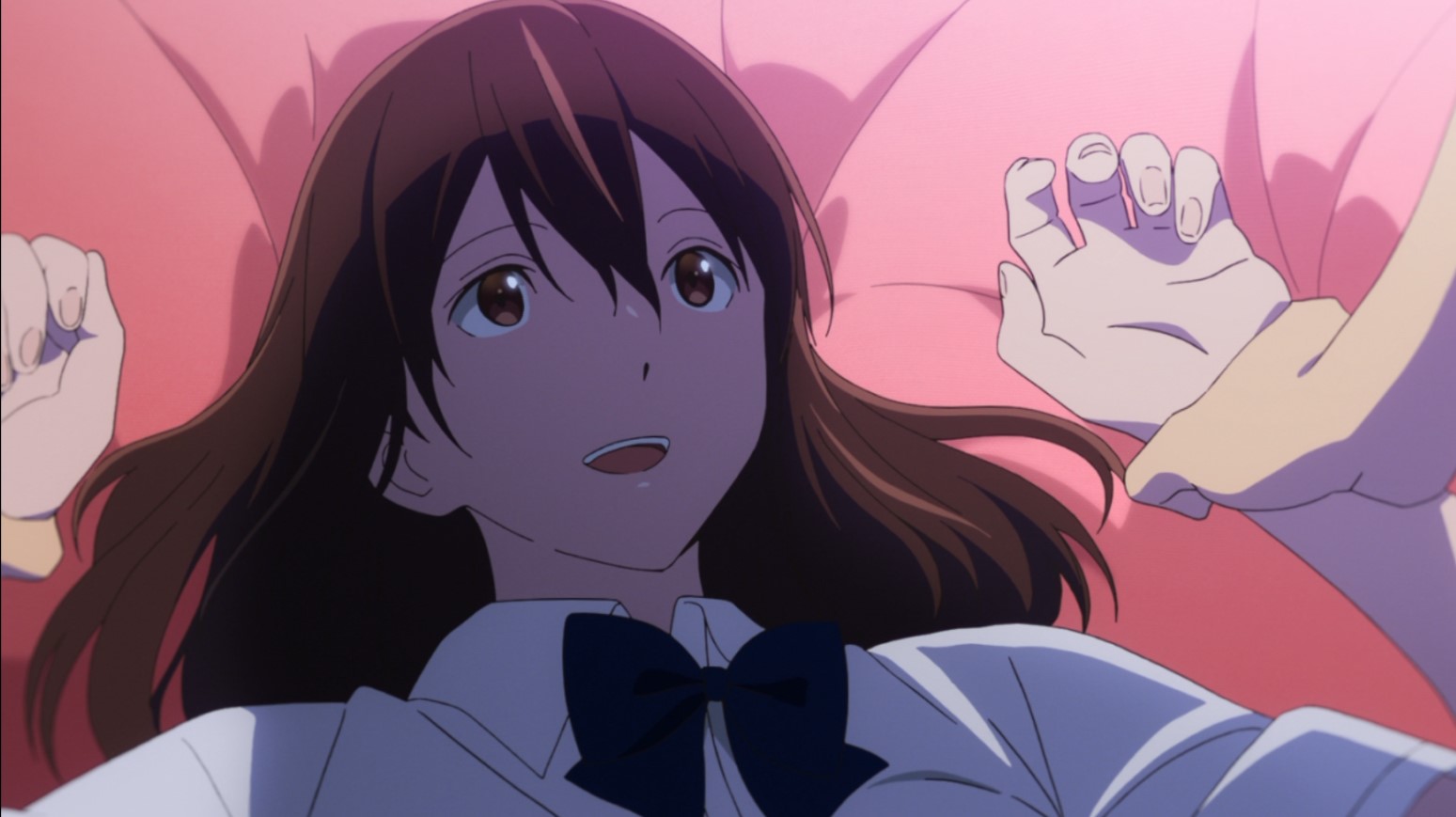
‘I Want to Eat You Pancreas’ is the first of only two animated feature films by the rather obscure Studio VOLN, which at least I had never heard of before. Studio VOLN isn’t even a big player in the television anime world, with only four series produced thus far. Strangely enough the studio made both its feature films in 2018.
The title of this film, which is a literal translation of the Japanese one, is a contender of the strangest film title of all time award, but what it means is revealed soon enough. The film is based on a novel, and as Japanese animation films often go, there’s nothing that implies the need for animation (except, maybe, for the long spiritual finale).
The film is told by a seventeen year old anonymous schoolboy (his name is only revealed in the very end). He tells about his surprising friendship with a fellow classmate, a girl called Sakura Yamauchi. Sakura is an apt name this character, as Sakura means ‘cherry blossom’, which is a symbol of impermanence in Japan, while the Sakura of the film is already dying from a pancreatic disease at her tender age of seventeen.
Sakura is a bit too much of a pixie girl, and although we also follow her own emotions and anxieties, it’s the story teller’s transformation through her influence that is the film’s focus. At the film’s start the unnamed narrator is a phlegmatic loner, always buried in a book, but indifferent to others and unwilling to commit himself to any relationship. Obviously, the extravert Sakura is going to change all that.
Highlight of this journey is a trip by the two to another town. Part of this trip is told in an original way by still images with dialogue on top, but even better are the scenes in the hotel, which are full of erotic tension. The film’s finale, on the other hand, with its overlong diary sequence is overblown and threatens to harm the complete film. Nevertheless, don’t forget to wait after the end titles!
Throughout, the background art and lighting are both of an extraordinary beauty, making the film a pleasant watch. The character designs, animation and soundtrack on the other hand are very generic and leave much to be desired. In fact, often the animation doesn’t transcend that of the average anime television series. There’s a little computer animation, but this is only used functionally on background art, traffic, fireworks, and such.
Even if the film is not the most interesting one in terms of animation, the film is (for most of the time) well-told, and its emotional tale does move. By all means the film shows that feature animation can be so much more than family entertainment, a message that is still lost on the American studio system.
Watch the trailer for ‘I Want to Eat You Pancreas’ yourself and tell me what you think:
‘I Want to Eat You Pancreas’ is available on Blu-Ray and DVD
Director: John Musker
Release date: 1977
Rating: ★★
Review:
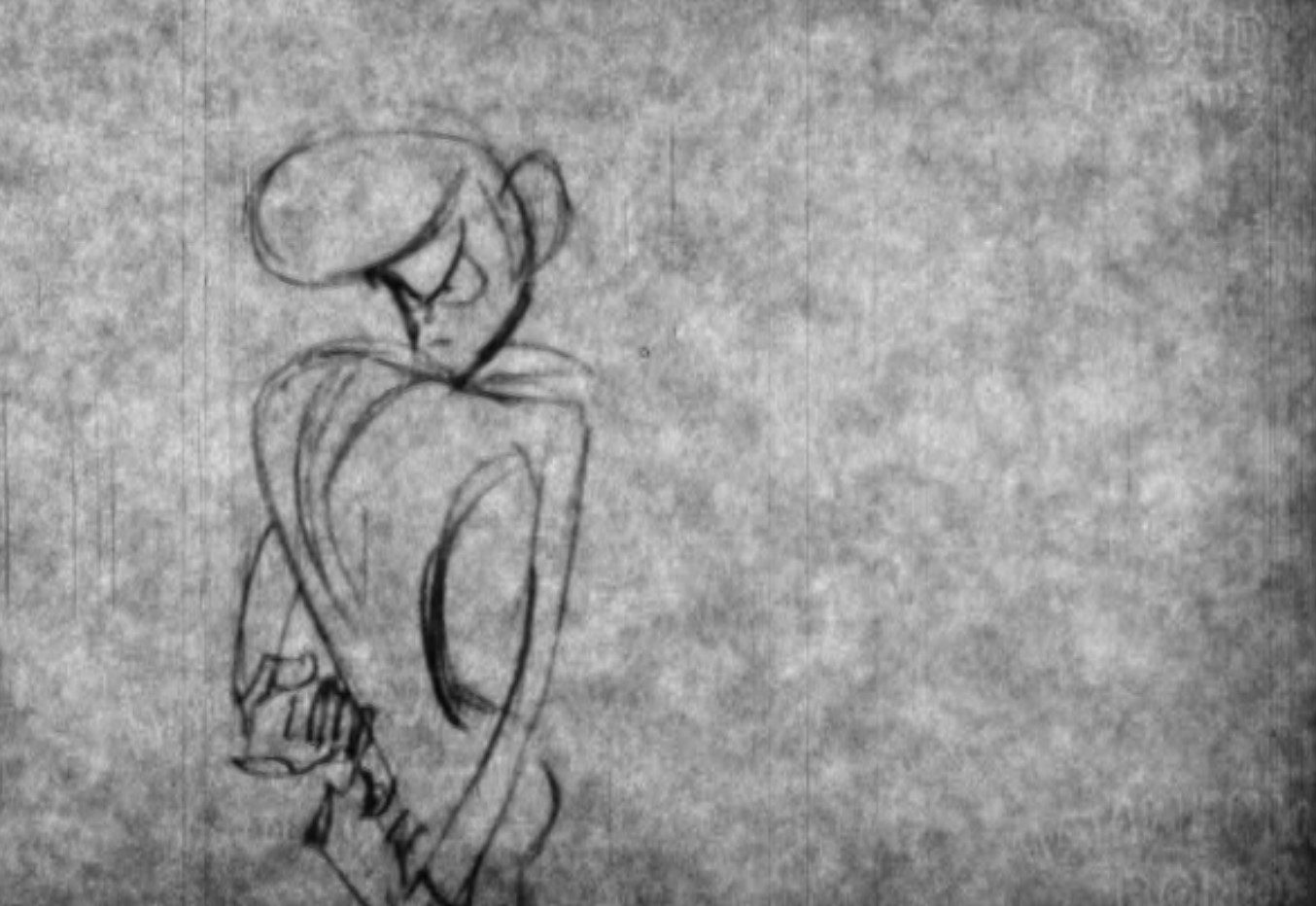
‘Little Darlin” is a short animation film that apparently never transcended the pencil test phase. Made by John Musker (of later e.g. ‘The Little Mermaid, ‘Aladdin’ and ‘Moana’ fame) at CalArts, the film immediately shows Musker’s great talent as an animator. All classic animation techniques can be found in this short film, and all are done with the virtuosity of a great talent.
Unfortunately, the film’s designs and story are much less appealing, and the overacting of all three protagonists is tiresome, not funny.
‘Little Darlin” is available on the DVD ‘Giants’ First Steps’
Director: Eiichi Yamamoto
Airing date: June 27, 1973
Rating: ★★★½
Review:
The late sixties and early seventies saw some striking experiments in the animated feature film. These films left the tried paths of family film and aimed at a more adult audience. In Europe Walerian Borowczyk arguably made the first experimental animated feature with ‘Théâtre de Monsieur & Madame Kabal (Theatre of Mr & Mrs Kabal)’ (1967), René Laloux made quite an impact with ‘La planète sauvage’ (1973), while in the UK George Dunning’s ‘Yellow Submarine’ (1968) caused a revolution, inspiring for example ‘János Vitéz’ (Johnny Corncob) in Hungary. Meanwhile in the US Ralph Bakshi experimented with more adult themes in ‘Fritz the Cat’ (1972) and ‘Heavy Traffic’ (1973).
In Japan, Osamu Tezuka led the way with his Mushi Productions studio, releasing three more adult themed feature films: first ‘A Thousand and One Nights’ in 1969, followed by ‘Cleopatra’ (1970) and ‘Belladonna of Sadness’ from 1973.
All three were directed by Eiichi Yamamoto, but in contrast to the earlier two features Tezuka had no direct involvement in ‘Belladonna of Sadness’. Even more striking, the great master left his own studio halfway production. Thus, ‘Belladonna of Sadness’ is very, very different from Tezuka’s own rather cartoony creations.
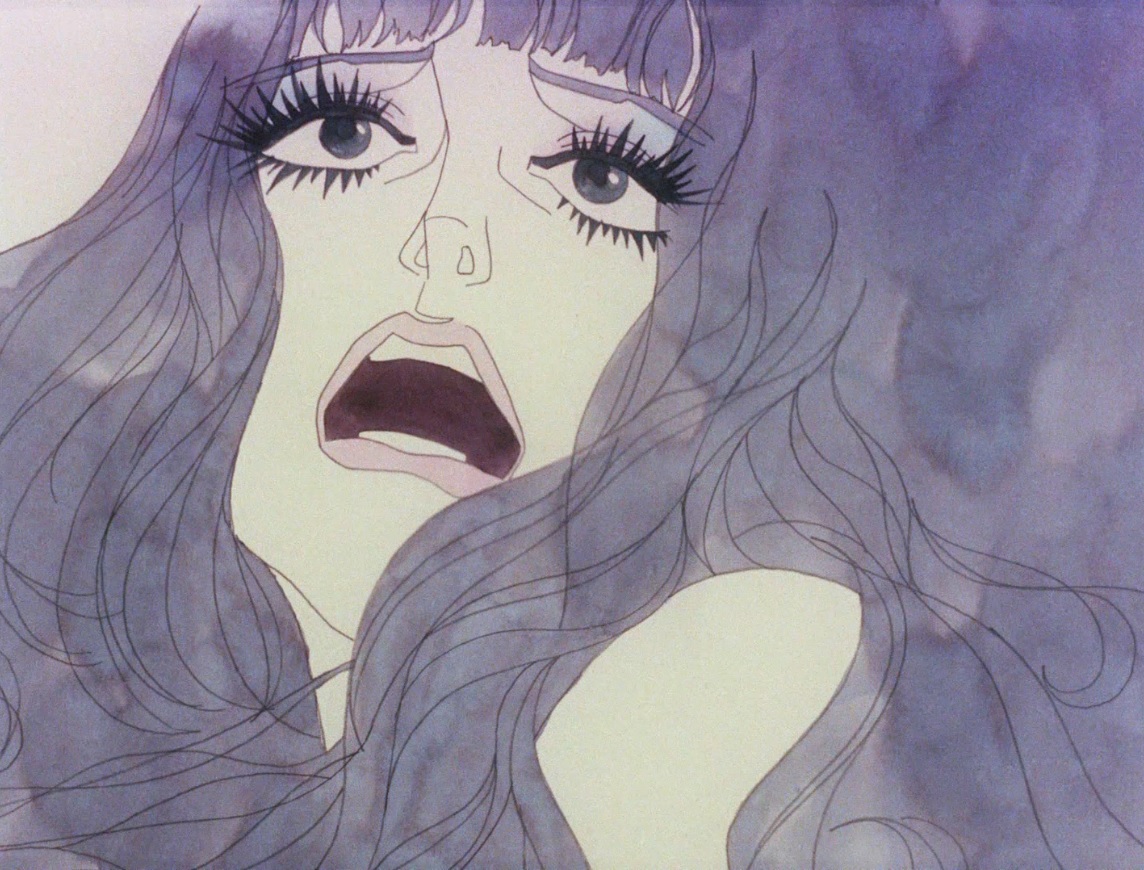
According to Yamamoto he wanted his film to be a Japanese answer to ‘Yellow Submarine’, and to make it one the drew inspiration from the artwork by Kuni Fukai. However, Kunai’s dark and disturbing artwork is quite the opposite from Dunning’s cheerful fantasies. On the Blu-ray Fukai calls his own work from the early seventies ‘decadent’, and that certainly is an apt description. Fukai’s drawings are baroque, graphical, lush, and highly erotic. They have a distinct neo-art-nouveau character, which is both very psychedelic and very seventies. For Belladonna of Sadness’ Fukai functioned as the art director, and his drawings form the base of the complete film, which uses animation only sparingly, often leaving the camera tracking over the static artwork.
And what artwork! ‘Belladonna of Sadness’ sure is a marvel to look at. The watercolor-and-pen drawings are all interesting and of a high artistic quality. Fukai almost always uses a white canvas, in which the drawings more or less disappear, and there’s ample and expressive ornamentation to accentuate the feeling of the scene. There are some odd design choices, however. For example, the villain looks like he has no eyes and as if three bones are stuck into his skull, making him rather grotesque and unbelievable.
Animation, as said, is only used only sparingly. There is no lip-synchronization, whatsoever, and some of the animation is crude and simple. The most interesting animation occurs when the events are not shown directly, but only suggested. For example, in the best erotic scenes more is hinted at than shown, and when the world is struck with the plague, we watch the landscape melt. There are certainly some trippy scenes, full of metamorphosis, which form the best parts of the movie. The undisputed highlight of the film comes when the baroque images are suddenly changed for a rapid-fire delivery of much more cartoony designs in bold seventies colors. This frenzy of animated images is followed by beautiful glass painted animation full of metamorphosis.
The psychedelic images are further enhanced by the soundtrack, which mixes psychedelica, spacefunk and rock into a very seventies-like mix, akin to Alain Goraguer’s soundtrack for ‘La planète sauvage’ from the same year, albeit of a lesser quality. There are even a few songs to enhance the mood.
In contrast to the beautiful art the story of ‘Belladonna of Sadness’ is subpar, and even objectionable. The film is based on ‘La sorcière’ (1862) by Jules Michelet, a non-fiction book on witchcraft, and the film’s story is set in a fictive oppressive kingdom in which a peasant girl becomes a witch. However, Yamamoto’s and Yoshiyuki Fukuda’s screenplay apparently only uses the book as a source of inspiration, as their own tale is as predictable as it is boring.
Yamamoto apparently instructed Fukai that his film was ‘porn but make it a love story’. Well, the movie is certainly porn, but hardly a love story. The two lovers Jean and Jeanne are more vignettes than characters, and if anything, Jean is a weak and will-less coward. Worse, the porn is exploitive, featuring several rapes and a lot of violence. As can be expected, there is a lot of female nudity, but hardly any male one, although penises are omnipresent, especially as the devil takes the shape of a penis himself. Jeanne’s best moment comes when she reveals herself as a full-blown witch, which provides one of the film’s most iconic moments. But during most of the film she’s used and abused by powers beyond her control. The ending, too, is unsatisfying, and all too abrupt, forcingly trying to make the porn story into something political.
Thus, ‘Belladonna of Sadness’ may transcend normal porn (it’s certainly weird and original enough to do so), but not that of a cheap comic. There’s no depth to the story, at all, and the film’s exploitive character gives a bad taste in the mouth. Nevertheless, the movie is a feast of the eye and stands as a great example of the sheer experimentation that were the seventies.
Watch the trailer for ‘Belladonna of Sadness’ yourself yourself and tell me what you think:
‘Belladonna of Sadness’ has been released on Blu-Ray, but this is currently out of print
Directors: Bruno Chauffard & Glenn McCoy
Release date: December 5, 2017
Rating: ★★★
Review:
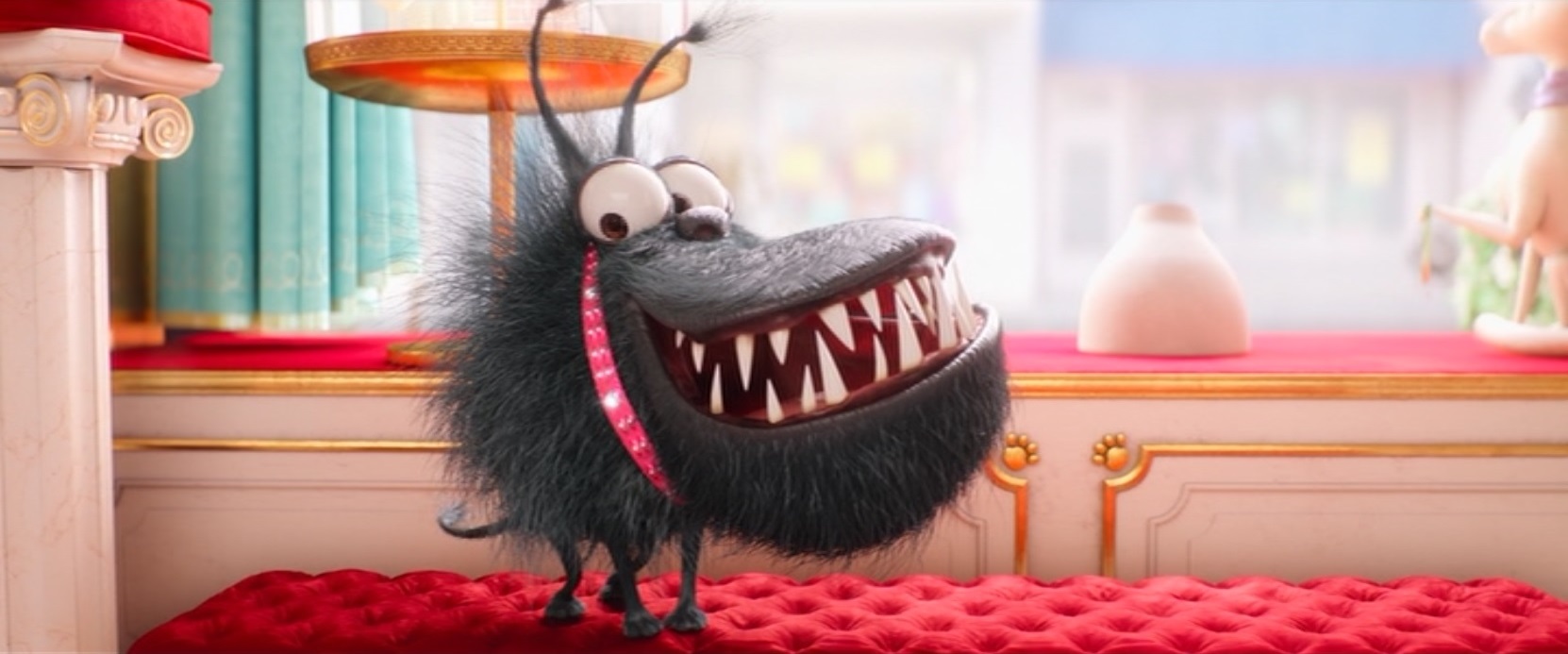
‘The Secret Life of Kyle’ stars Gru’s monstrous dog from the ‘Despicable Me’ films.
In this short Gru’s dog, Kyle, has fallen in love with a neighboring poodle. When he discovers a rival Alsatian Kyle obtains a fancy collar for his love interest, but in the end he wins her over with the squeeky toy he carries around.
‘The Secret Life of Kyle’ is a nice, if forgettable short offering some swell silent comedy in the best cartoon tradition, but without adding anything to it.
Watch ‘The Secret Life of Kyle’ yourself and tell me what you think:
‘The Secret Life of Kyle’ is available on the Blu-Ray and DVD of ‘Despicable Me 3’
Director: Masaaki Yuasa
Release date: April 7, 2017
Rating: ★★★★★
Review:

Japan knows several distinguished animation directors, from Hayao Miyazaki to Mamoru Hosoda, but perhaps no feature director* is so original as Masaaki Yuasa. He created quite a stir with ‘Mind Game’ (2004) and kept on pouring out original work since then.
What’s striking about Yuasa’s films is that they don’t follow the general anime aesthetic, at all, on the contrary. ‘Night Is Short, Walk on’ is an excellent example in that respect. This mind-blowing feature film boasts human designs that are very different from your typical anime, highly original color schemes, more offbeat background art, interludes in a line-less style with vibrant digital coloring, wild, even grotesque animation (for example, watch people swallow in the first scene), and a highly original, almost stream-of-consciousness-like way of storytelling, using unpredictable editing techniques, and an occasional split screen, surprising camera angles, extreme perspectives, and moving background art, when necessary (there’s a very impressive example when Senpai runs up an exterior staircase).
Apart from Yuasa’s way of storytelling the plot of ‘Night Is Short, Walk on’ is highly original in its own right. The two main protagonists don’t even have names but are referred to as Otome (maiden) and Senpa (senior). We follow the two for one night, a night in which apparently anything can happen. Otome, a young woman, is ready to discover the adult world, while Senpa, who’s madly in love with her, has decided to finally express his feelings to her. Meanwhile, during this one night, both people meet a plethora of strange people, bizarre situations, and odd gatherings in a free-flowing narrative that nevertheless can be cut into four parts, which naturally flow into each other. Nevertheless, it’s best not to know anything about the plot, and just let it come to you. You’ll be in for quite a ride. What’s more, despite all its weirdness, ‘Night Is Short, Walk on Girl’ is essentially a film about love, and unexpectedly gentle despite all the mayhem surrounding the main story.
Surprisingly for such a visually stunning film, ‘Night Is Short, Walk on Girl’ is based on a novel, by Tomihiko Morimi. His novel was divided into four seasons, which explains the high number of events in the film version. Morimi was also responsible for the novel on which Yuasa’s earlier series ‘The Tatami Galaxy’ (2010) was based, and the series and ‘Night Is Short, Walk on Girl’ are very similar in visual style and general atmosphere.
In all ‘Night Is Short, Walk on Girl’ is hardly like anything you’ve seen before, and a great testimony of what can be done in animation. In my opinion this is one of the most important animation films of the decade. Highly recommended.
* There are also several highly original independent Japanese directors of shorts, e.g. Kōji Yamamura, Atsushi Wara & Mirai Mizue. Check them out!
Watch the trailer for ‘Night Is Short, Walk on Girl’ yourself and tell me what you think:
‘Night Is Short, Walk on Girl’ is available on Blu-Ray and DVD
Director: Gorō Miyazaki
Release date: July 17, 2011
Rating: ★★★★
Review:

Like ‘Ocean Waves’ (1993) and ‘Whisper of the Heart‘ (1995) ‘From Up on Poppy Hill’ is one of those Ghibli films that could do well without animation. There’s no fantasy or metamorphosis around. Instead, the film is a modest little human drama. In fact, the film has much in common with the two earlier Ghibli features. Like ‘Whisper of the Heart’ ‘From Upon Poppy Hill’ has a female teenager star, and like ‘Ocean Waves’ there’s a strong air of nostalgia pervading the movie, especially in the gorgeous and evocative background art.
‘From Upon Poppy Hill’ takes place in harbor town Yokohama, somewhere between 1961 and 1963, before the 1964 Summer Olympics in Tokyo and after the release of the melancholic song ‘I Look Up as I Walk’ by Japanese crooner Kyu Sakamoto, which is heard several times during the movie, and which even became famous in the West back then, with the silly and out-of-place title ‘the Sukiyaki song’.
‘From Upon Poppy Hill’ focuses on teenager Umi Matsuzaki who lives with her grandmother and little brother at a boarding house with five female boarders, for whom Umi cooks breakfast and dinner. Umi’s mother is a professor, who’s abroad most of the time, while her father, a seafarer, has died in the Korean war (1950-1953). Each day Umi raises some signal flags in remembrance of her father. These are seen by Shun Kazama, a schoolmate who works at a tugboat. Both Umi and Shun thus are hard working children, so typical for the Ghibli studio.
The story focuses on the love that grows between Umi and Shun, and some unforeseen complications it raises. But there’s also an important subplot in which Shun and his fellow students try to protect their old club house called ‘The Latin Quarter’ against demolishing. Only when Umi starts to help, leading an army of female students, the protest gains momentum. The clubhouse scenes provide some comic relief in an otherwise emotional deep and heart-breaking story of friendship, love, and loss.
It’s impressive how the film makers show the emotions in the subtlest of ways. For example, at one point Shun evades Umi’s presence, but we see her reaction to this neglect only sparingly on her face, and with the slightest of actions. Thus, when Umi finally lets her emotions flow, it hits the viewer all the harder.
Hayao Miyazaki’s son Gorō Miyazaki does an excellent job as a director, and the animation is top notch, especially on the main characters. There are a few flashback scenes and there’s a short dream sequence, but otherwise there’s a strong unity of time and place, with all the action taking place in only a few settings and in a limited time frame. The film thus stays focused all the time, even when showing minor deviations from the main plot, like one of the boarders leaving the house.
In all, ‘From Upon Poppy Hill’ may be a modest film, in its emotional depth it’s in no way less impressive than the studio’s more outlandish masterpieces like ‘Spirited Away’ (2001) or ‘Ponyo on the Cliff by the Sea’ (2008). Highly recommended.
Watch the trailer for ‘From Up on Poppy Hill’ yourself and tell me what you think:
‘From Up on Poppy Hill’ is available on Blu-Ray and DVD
Airing Date: December 4, 1996
Dollhouse Drama
Director: Rob Renzetti
Stars: Dexter
Rating: ★★★★½
Review:

‘Dee Dee’s absence in his lab makes Dexter worried, so he concludes his big sister must be up to something.
In order to find out Dee Dee’s supposedly evil scheme, he uses a shrink ray, shrinking himself, ignoring the possible side-effects of imagination running wild due to the shrinking. Dee Dee, who has been playing with dolls all along, makes great use of this side-effect.
‘Dollhouse Drama’ is one of the most inspired Dexter’s Laboratory episodes of all. The episode builds on earlier idea, presented in ‘Dee Dee’s Room‘: that of Dexter’s imagination running wild in Dee Dee’s room. The scenes in which Dexter stars in Dee Dee’s soap opera story are no less than fantastic, and form a faint echo of the drug-influenced Perky Pat plays in Philip K. Dick’s novel ‘The Three Stigmata of Palmer Eldritch’ (1965). I wonder whether this is pure coincidence or not.
The Justice Friends: Krunk’s Date
Director: Genndy Tartakovsky
Stars: The Justice Friends
Rating: ★★½
Review:

The bridging episodes within Dexter’s Laboratory three-part episodes were always the weakest, and ‘The Justice Friends: Krunk’s Date’ is no exception.
In this episode of the Justice Friends the Infraggable Krunk falls in love with a member of the enemy team, called She-Thing. This episode drags on, and milks the idea of the Krunk falling in love, while the two teams are clobbering each other way too long. Highlight of this tiresome and disappointing episode is the villain, ‘Comrade Red’, who’s some kind of ridiculous Soviet superhero.
The Big Cheese
Director: Genndy Tartakovsky
Stars: Dexter
Rating: ★★★★★ ♕
Review:

‘The Big Cheese’ is a great episode in which Dexter tries to learn French while sleeping. Unfortunately, the record player gets stuck on a single word: ‘omelette du fromage’…
‘The Big Cheese’ is one of the all time classsic episodes of Dexter’s Laboratory, and one that viewers still remember 25 years after viewing. The whole idea of Dexter being able to utter ‘omelette du fromage’ only is hilarious in itself, but the execution is even better, taking unexpected turns. Especially, the montage sequence is an absolute delight, as is the catastrophic punchline of the episode. But to me the best part are Dee Dee’s first two expressions when she realizes Dexter can only say ‘omelette du fromage’.
Note that one of Dexter’s records is ‘Steven Hawks Sings’, which clearly refers to Stephen Hawking.
‘Dollhouse Drama/The Justice Friends: Krunk’s Date/The Big Cheese’ is available on the DVD ‘Dexter’s Laboratory Season One: All 13 Episodes’
Airing Date: November 27, 1996
Babysitter Blues
Directors: Craig McCracken & Rob Renzetti
Stars: Dexter
Rating: ★★★
Review:
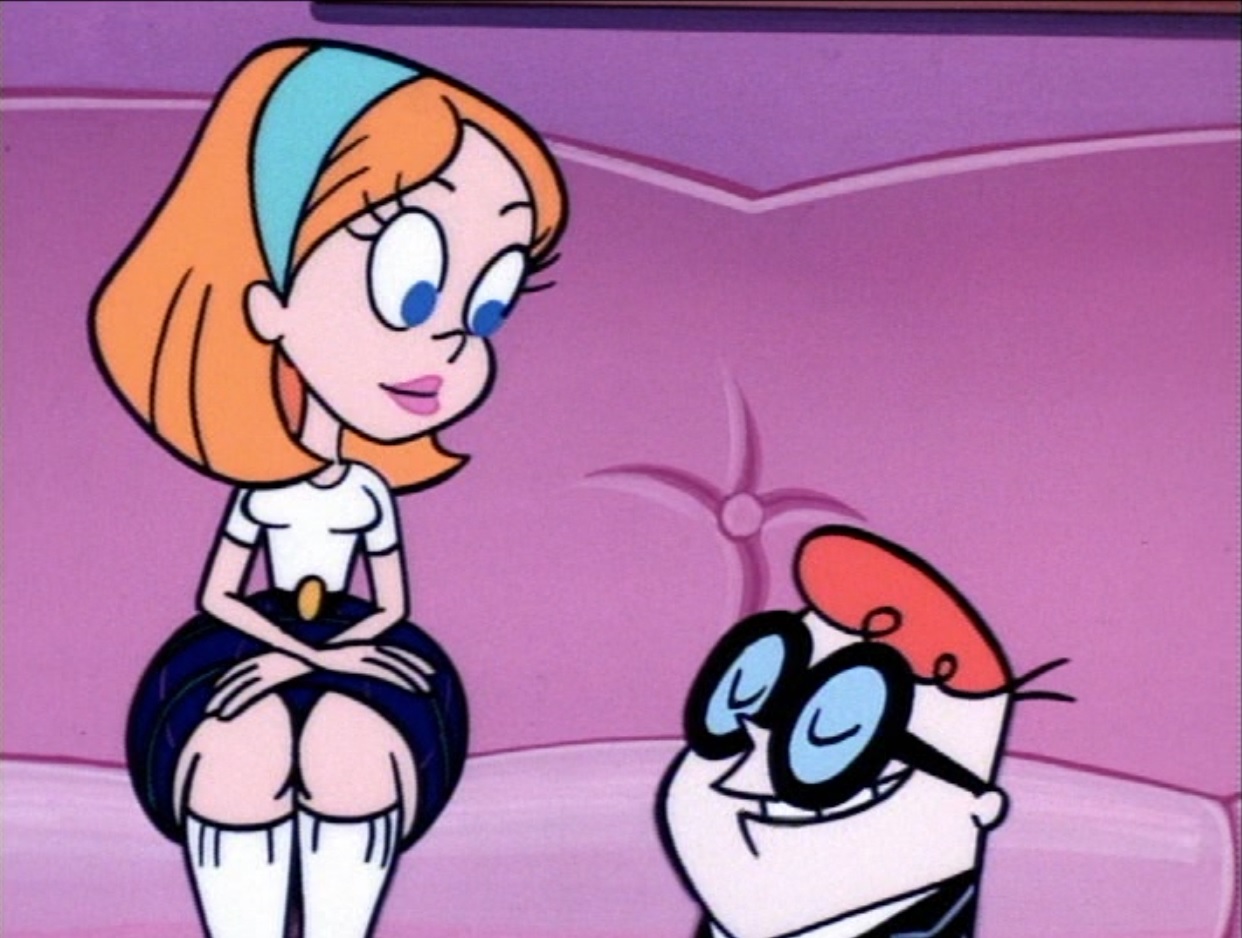
‘Babysitter Blues’ immediately makes clear that Dexter is in love with his babysitter. The scene in which he prepares the room for her arrival is priceless, with its strong posings on the little boy.
But when Lisa, the babysitter, arrives, it quickly turns out she has a boy friend, prompting Dexter to think out a devilish scheme.
Dexter is far from sympathetic in this cartoon, and the love theme with ca. ten years age difference between Dexter and Lisa is a little bit uncomfortable, but the episode still is great fun. Apart from the opening scene highlight of this episode is Dee Dee looking for something without knowing for what.
The Justice Friends: Valhallen’s Room
Director: Genndy Tartakovsky
Stars: Justice Friends
Rating: ★
Review:

‘The Justice Friends: Valhallen’s Room’ starts with Major Glory calling the others for breakfast. When Valhallen doesn’t show up, he and Krunk enter his room…
This episode contains some nice references to Norse mythology, but otherwise is very tiresome and not even remotely funny. Most enjoyable of this otherwise forgettable short are the dramatic poses of Major Glory and his American themed breakfast.
Dream Machine
Directors: Rob Renzetti & Genndy Tartakovsky
Stars: Dexter
Rating: ★★
Review:

This episode starts with Dexter having a nightmare. Apparently he has had many lately, so Dexter builds himself a dream machine, which requires Dee Dee as its operator.
The premise of this scheme is all too predictable, and after Dexter’s initial dream there’s little to enjoy. Even Dexter’s second dream doesn’t really deliver, and most frustratingly, the episode ends abruptly and inconclusively.
‘Babysitter Blues/The Justice Friends: Valhallen’s Room/Dream Machine’ is available on the DVD ‘Dexter’s Laboratory Season One: All 13 Episodes’
Directors: Donovan Cook & Bob Hatchcock
Airing Date: July 6, 1996
Stars: Duckman
Rating: ★★★½
Review:
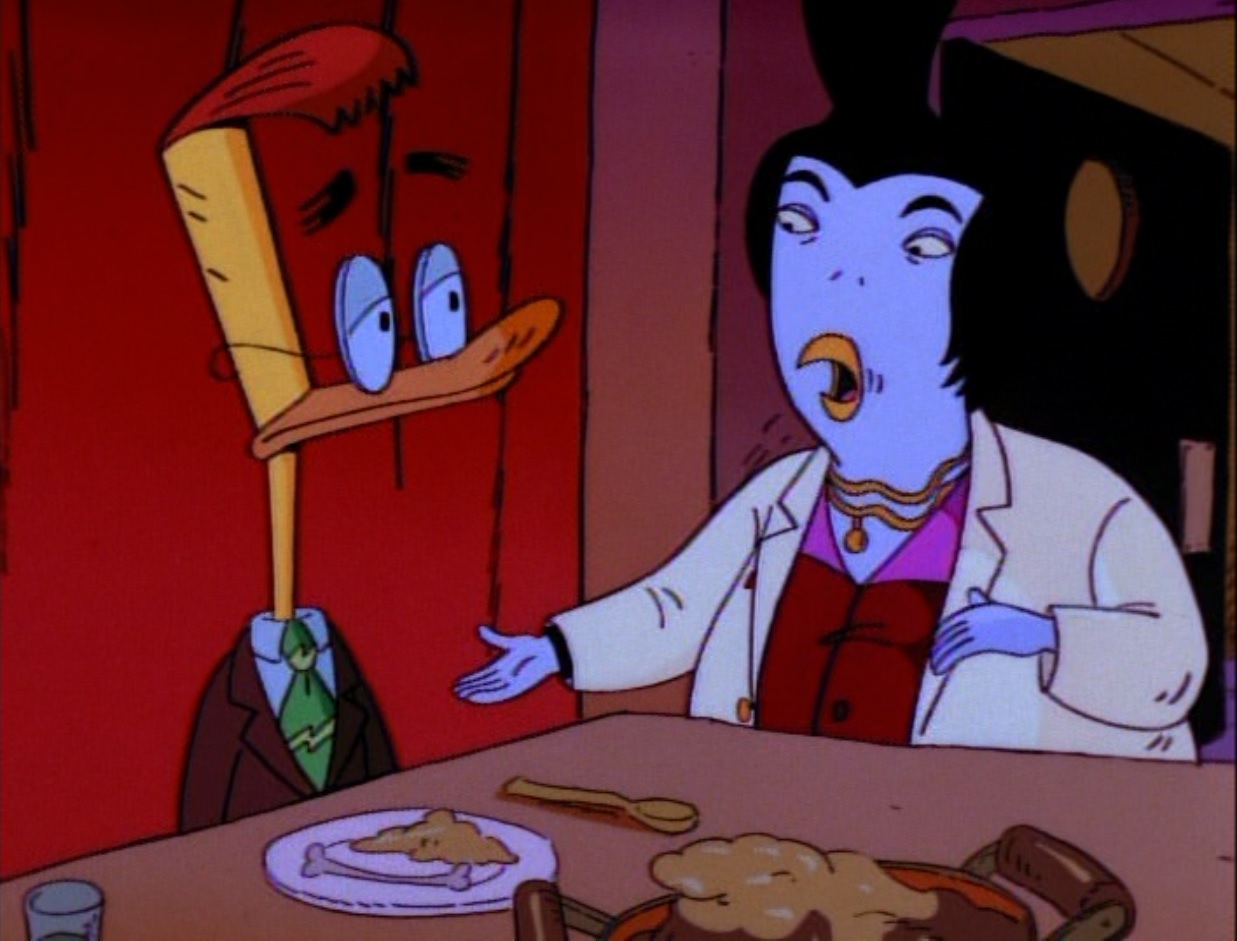
The final episode of season three sees the return of Duckman’s arch nemesis King Chicken, not seen since ‘Color of Naught‘, episode four from the same season.
This time King Chicken is not behind some evil scheme, but simply turns out to be the father of Tammy, Ajax’s new girlfriend, whom Duckman, Aunt Bernice and Ajax are visiting one night. During the episode we never see Tammy, but the visit turns out to be surprisingly interesting.
For this finale episode the creative team once again returned to comedy based on the personas and their mutual relationships, and the result is rewarding. The awkward visit proves to be much more interesting than mindless absurdism of the previous two episodes. The team even manages to make the ending a particularly poignant one, ending the series on a surprisingly emotional tone, at a time I thought they were forgotten how to do that.
Watch ‘Cock Tales for Four’ yourself and tell me what you think:
This is Duckman episode no. 42
To the previous Duckman episode: The Amazing Colossal Duckman
To the next Duckman episode: Dammit, Hollywood
‘Cock Tales for Four’ is available on the DVD-box ‘Duckman – The Complete Series’
Airing Date: May 11, 1996
Dexter’s Rival
Director: Genndy Tartakovsky
Stars: Dexter, Dee Dee, Mandark
Rating: ★★★★
Review:

‘Dexter’s Rival’ introduces Dexter’s arch nemesis, Mandark (who apparently is called Astronominoff in real life).
In this episode Mandark outwits Dexter in every single task at school, being genuinely smarter than Dexter is. Even Mandark’s lab is much bigger than Dexter’s (and even contains a death star lurking outside). This of course, greatly upsets Dexter, but then he discovers that Mandark has one weak spot…
Mandark immediately is a priceless character – his arrogance, his typical way of talking and his trademark offbeat laughter make him a perfect foe. The way he perceives Dee Dee is a particular highlight of this episode, turning Dexter’s big sister in a piece of pure romantic beauty.
Dial M for Monkey: Simion
Directors: Paul Rudish & Genndy Tartakovsky
Stars: Dial M for Monkey
Rating: ★★★
Review:

In ‘Dial M for Monkey: Simion’ monkey does not only have superpowers, he also lives in a futuristic science fiction world, even though this episode has the same introduction as the previous two Monkey episodes.
In this episode we see a little more of agent Honeydew, but most of the time is devoted to a very long speech by the villain, Simion. This tale of revenge simply bursts with familiar superhero tropes, but that doesn’t necessarily make it very funny. Like the other ‘Dial M for Monkey’ episodes ‘Simion’ remains mediocre at best, and the episode pales when compared to the bridging Dexter’s Laboratory episodes, ‘Dexter’s Rival’ and ‘Old Man Dexter’.
Old Man Dexter
See the post devoted to this episode
‘Dexter’s Rival/Dial M for Monkey: Simion/Old Man Dexter’ is available on the DVD ‘Dexter’s Laboratory Season One: All 13 Episodes’
Directors: Donovan Cook & Raymie Muzquiz
Airing Date: March 9, 1996
Stars: Duckman
Rating: ★★★★½
Review:
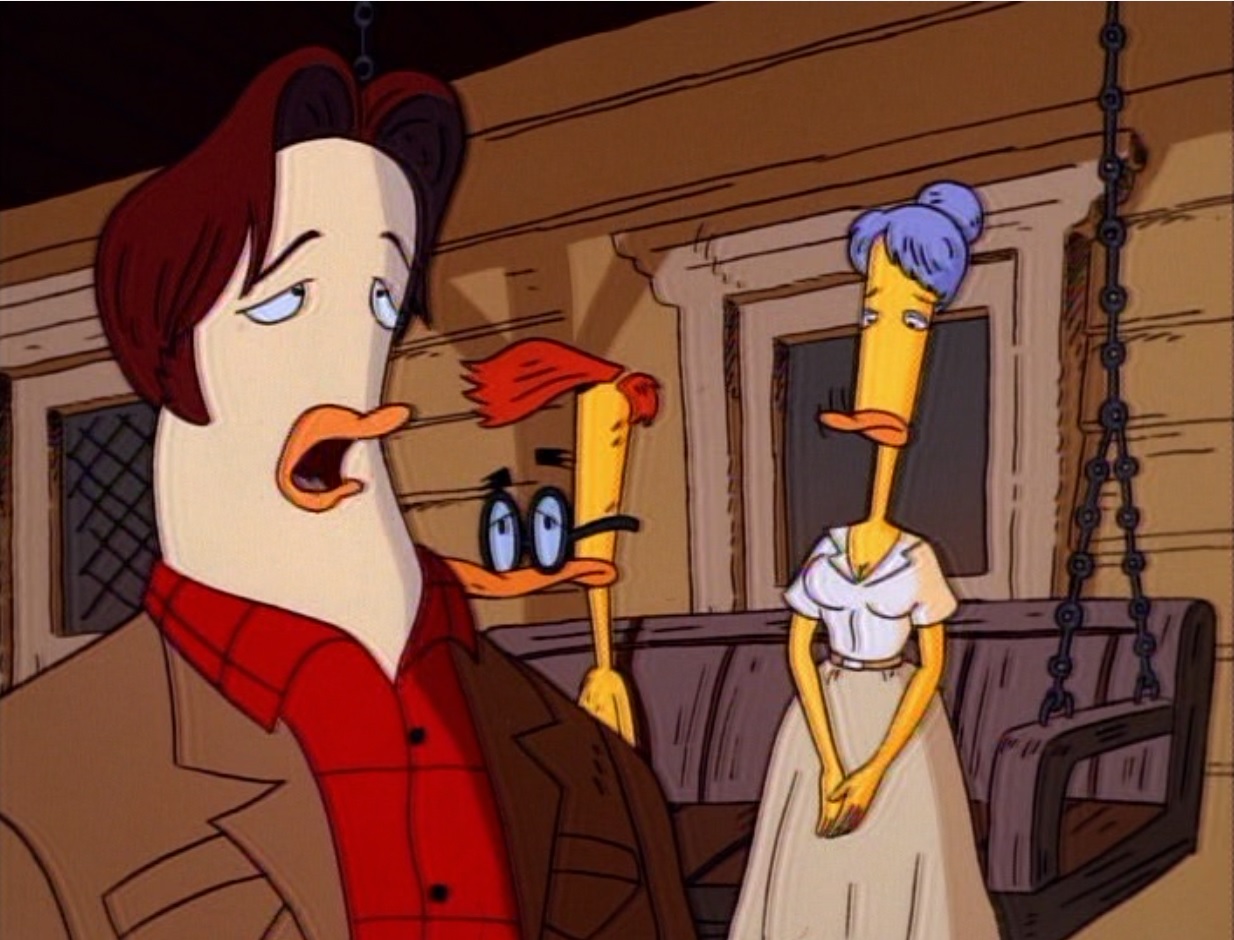
‘The Girls of Route Canal’ finally reveals how Duckman met Beatrice, the mother of Ajax, Mambo and Charles.
It’s the latter two who prompt Duckman to reminisce about how he found the love of his life. They have girl problems of their own, wanting to woe Amanda and Alexis, who are taken by two bullies.
‘The Girls of Route Canal’ is certainly not devoid of comedy, far from it; priceless, for example, is Mambo’s and Charles’ wondering why they like Amanda and Alexis so much. Also great is Cornfed’s short cameo. But overall this is a gentle and surprisingly genuinely romantic episode. This makes ‘The Girls of Route Canal’ one of those scarce episodes in which Duckman is actually more than a completely ignorant, selfish beast. This makes ‘The Girls of Route Canal’ a welcome diversion from more one-dimensional episodes like ‘Apocalypse Not‘ and ‘Clear and Presidente Danger‘.
Watch ‘The Girls of Route Canal’ yourself and tell me what you think:
This is Duckman episode no. 31
To the previous Duckman episode: Clear and Presidente Danger
To the next Duckman episode: The Mallardian Candidate
‘The Girls of Route Canal’ is available on the DVD-box ‘Duckman – The Complete Series’
Directors: Charlie Kaufman & Dick Johnson
Release Date: September 4, 2015
Rating: ★★★½
Review:
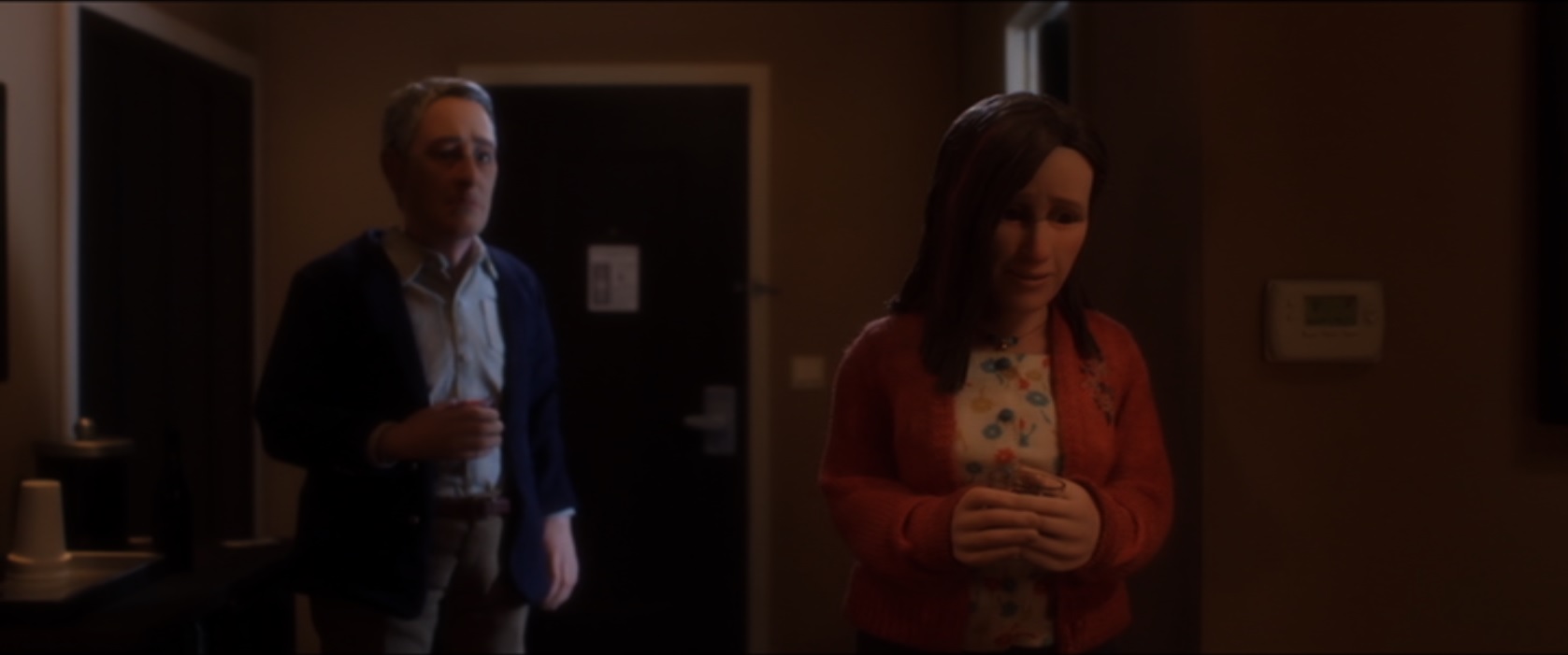
A welcome new phenomenon of the 21th century was the arrival of live action directors turning to animation, and to stop motion, in particular. Wes Anderson was the first, directing the gritty ‘Fantastic Mr. Fox’ (2009), while maintaining his idiosyncratic style. Next was Gore Verbinski, with the peculiar ‘Rango‘ (2011), and in 2015 Charlie Kaufman followed with ‘Anomalisa’, which fits very well in his oeuvre. ‘Anomalisa’ is extra welcome, because this is an adult film, not a family film, which normally appears to be the only type of animated films allowed in the U.S.
Main protagonist of this film is British customer service expert Michael Stone (voiced by David Thewlis), who is invited to give a speech on customer service in Cincinati, Ohio. Michael seems to suffer from a disease, which could almost only dreamed up by Kaufman: to him all people look and sound the same, making it impossible to distinguish between them. All the people Michael encounters have the same plain face, and the same voice (provided by Tom Noonan). Children, women, men, film stars and even opera singers – they’re all utterly indistinguishable to him.
But then he hears a voice, different from all the others, and desperately tries to contact her. This voice belongs to one Lisa (voiced by Jennifer Jason Leigh), a telephone sales employee from a food company based in Akron, Ohio. Lisa is homely and insecure, especially when accompanied by her much more beautiful friend Emily (we viewers cannot judge that, however, as we see Emily only through Michael’s eyes, which means she has the same bland face and voice as all other characters in the film). Lisa thinks she’s ugly and stupid, thus she’s utterly puzzled by Michael’s interest in her, and not very convinced, either. But Michael’s so glad he’s found someone different that he even dreams of leaving his wife and son, to spend the rest of his life Lisa, whom he calls Anomalisa, as she’s the only one different in a sea of sameness.
It’s important to note that Michael Stone is far from a sympathetic character: he’s self-absorbed, evidently hardly interested in other people, and clearly bored to death with his current life. Even though he has a wife and son at his home in California, he tries to have sex as soon as he has arrived in Cincinnati. So one could argue that his disease is only symbolic of his disinterest in others, but Kaufman does play it as a real disease. For example, when waiting for his old flame Bella, he only acknowledges her after she has recognized him.
Nevertheless, it’s clearly Michael’s own negative attitude which eventually spoils his idyll… Next morning Lisa quickly loses her special charm to him, fading into the sameness of others at a breathtaking speed. The scene in which this takes place, is the most horrifying of the entire movie, despite a nightmare scene preceding it. Especially because at this point our sympathy has long since shifted to Lisa, instead of Michael, who remains, in the end, a pedantic, egotistical prick.
Unfortunately, this great scene is followed by one in which Michael finally delivers his speech. This is a very unconvincing, disappointing scene, by all means. It’s not only rather superfluous, it also stretches the plausibility too much, and almost spoils the entire movie.
Apart from a short prelude in which Michael arrives by plane, a short scene at a “toy store”, and a short postlude, which takes place at his own home, the entire film is set in a very common and extremely bland hotel in Cincinnati, Ohio, where Michael is invited to give a speech on customer service. The hotel setting and short time span (the whole film takes place in less than 24 hours) gives the movie a unity of time and space, rarely encountered in current films. Indeed, the hotel’s bland browns and beiges color the film, adding to its visual character. Incidentally, the hotel is called ‘Fregoli’, after a disorder called the Fregoli delusion, in which the patient thinks several people are, in fact, one and the same person. Note that this Fregoli delusion is markedly different from Michael’s disease – he perceives people as different beings, but cannot distinguish them from each other.
The claustrophobia of the film is greatly enhanced by the stop motion, which always provides a sense of surrealism. Indeed, stop motion is such a logical choice for such an outlandish concept that one almost cannot believe the film is based on a stage play.
The film makes use of very lifelike sets and puppets. Nevertheless the puppets have different proportions than real people (the heads, hands and feet being larger than in real life), and have clearly visible seams at the eyes and ears, as the puppets have replaceable mouth parts. These seams give the puppets a rather uncanny edge. Kaufman even plays with this concept. At one point, Michael seems to be able to cut his own facial part loose, and in a nightmare scene it just drops to the floor, exposing the inner workings of his puppet self.
The realism of the puppets thus is mostly achieved through animation. Indeed, the animation of the puppets, directed by Duke Johnson, is of an extraordinarily high level. Highlight of the film is the sex scene, which in all its awkwardness and clumsiness is one of the most real sex scenes ever put to film, despite being acted out by puppets. The animators used reference from real sex actors for this scene, which took several months to shoot, and the result is a stunning tour-de-force of stop motion.
In all, ‘Anomalisa’ is a unique stop motion film. It’s admittedly not without its flaws, but Kaufman can proudly add it to his oeuvre of weird tales, and the film certainly is a welcome departure from the family film tropes of standard American studio animation.
Watch the trailer for ‘Anomalisa’ yourself and tell me what you think:
‘Anomalisa’ is available on Blu-Ray and DVD
Director: Kevin Lima
Release Date: April 7, 1995
Stars: Goofy, Max, Pete
Rating: ★★★
Review:

‘A Goofy Movie’ arguably is the least known of Disney’s theatrical movies from the studio’s Renaissance period. The film is not even in its official canon of animated features. Maybe because it was Disney’s first animated theatrical feature based on a television series, in this case ‘Goof Troop’, which run from September to December 1992.
Now I’ve never seen an episode of this television series myself, but I comprehend that it does resolve around Goofy being a single father of his son, Maximilian (in short Max), and being neighbor to Pete, who is a single father of a son, too, Pete Junior or P.J. in short. ‘A Goofy Movie’ uses exactly this premise, focusing on the relationship between Goofy and his son, with Max being the undisputed main character of the movie.
Now, Goofy’s family life has always been odd, being the classic Disney character that changed the most during his career. And indeed, he has been seen having a son in a few of his classical cartoons, starting with ‘Fathers are People’ from 1951, but by that time Goofy had transformed into everyman George J. Geef, and this son clearly isn’t Max, as he’s called George Geef jr. In both ‘Goof Troop’ and ‘A Goofy Movie’ Goofy once again is his clumsy self, so he has evolved once more. Pete, too, has had a son in earlier entries, most notably in ‘Bellboy Donald’ from 1942. In ‘A Goofy Movie’ he’s not really the villain of the old days of old, but still a disruptive voice, not taking Goofy for full, and giving him ill advice.
Voice artist Bill Farmer reprises his role as Goofy from ‘Goof Troop’ and is an excellent successor to Pinto Colvig. Max is voiced by Jason Marsden, a different voice than in ‘Goof Troop’, in which he was voiced by a woman (Dana Hill). But this is understandable as the events in ‘A Goofy Movie’ take place several years after the ones in ‘Goof Troop’. Max’s singing voice is provided by Aaron Lohr.
Added to the mix, and apparently not present in ‘Goof Troop’, is Max’s love interest Roxanne, and the film starts with Max’s last day at school, on which he tries to impress Roxanne, in which he succeeds, and he manages to ask her on a date to a party. Unfortunately, his father, realizing he might be losing grip on his son, has planned a trip for two to some fishing lake, and Max invents a totally unconvincing lie of why he has to cancel the date, involving both Max’s and Roxanne’s pop idol Powerline (who, voiced by Tevin Campbell, sounds a little like Michael Jackson).
As said, the father-son relationship between Goofy and Max is the focal point of the cartoon, and as such the film is surprisingly realistic and down to earth, with Max being ashamed of his old-fashioned, awkward and clumsy father, and Goofy uncomprehending of Max’s interests as an independent teenager. However, the two learn to know and to respect each other on a rather forced road trip through America. In this respect, one can see ‘A Goofy Movie’ as a forerunner of ‘Finding Nemo’ (2003), which explores a similar theme.
The road trip, which takes place on Route 66, and which takes the two Goofs all through America, forms the main part of the film, and it’s surprising to note that this piece of Americana was animated in studios in Paris, France and Sydney, Australia. Unfortunately, ‘A Goofy Movie’ defies all realism in several scenes, hampering the heartfelt story with outlandish scenes, like the two Goofs encountering Bigfoot, falling off a cliff with their car, and escaping a waterfall in an all too improbable and inconsistent series of events.
Moreover, for a film starring Goofy there’s surprisingly little humor – it’s all not that goofy. Yet, the team has managed to keep Goofy’s optimistic and naive character, while adding some depth to the former simpleton, mostly his struggle in being a father to Max. Indeed, the film is at its best when keeping focus on the relationship between Goofy and Max. This focal point remains interesting despite the deviations from reality.
As a film of the early nineties, ‘A Goofy Movie’ is an obligate musical, and the movie knows three nice if forgettable songs by Carter Burwell, sung by Max, with Goofy joining in in two of them. They at least succeed in not being obnoxious.
The animation is of a very high quality, with considerable attention detail. There are some nice touches, like Max’s reflection in a window, or colors turning blue when Goofy gets sad.
In all, ‘A Goofy Movie’ is a nice little movie with a surprisingly mature theme. The film may not be a masterpiece, it’s of enough quality to be worth a watch.
Watch the trailer for ‘A Goofy Movie’ yourself and tell me what you think:
‘A Goofy Movie’ is available on Blu-Ray and DVD
Director: Raymie Muzquiz
Airing Date: March 18, 1995
Stars: Duckman
Rating: ★★★½
Review:

‘Married Alive’ start with Duckman’s house being in the baddest shape imaginable, with everything broken and undefined gore lying in heaps everywhere.
It turns out that aunt Bernice has been away, but when she returns, she’s not even mad, but sings Giacomo Puccini’s aria ‘O mio babbino caro‘, because she’s in love. During her holiday a billionaire and media magnate called Baron von Dillweed proposed to her to star the first infomercial-wedding ever. Duckman only starts to worry when Bernice reveals she’ll move to Switzerland and take the boys with her. At that point Duckman comes into action, and uses his dormant detective skills to unmask the baron in his own unique way.
This episode features a short reference to Indiana Jones, Cornfed doing karaoke, and Duckman grinding Fluffy and Uranus to rice, but the episode’s highlight must be aunt Bernice’s lovesick behavior.
Watch ‘Married Alive’ yourself and tell me what you think:
This is Duckman episode no. 15
To the previous Duckman episode: Papa Oom M.O.W. M.O.W.
To the next Duckman episode: Days of Whining and Neurosis
‘Married Alive’ is available on the DVD-box ‘Duckman – The Complete Series’
Director: Raymie Muzquiz
Stars: Duckman
Airing Date: June 4, 1994
Rating: ★★★★★

‘About Face’ is one of the deepest of the Duckman episodes, and together with ‘Psyche‘ and ‘American Dicks’ forms the highlight of the first season.
Despite the usual dose of absurd humor and fast verbal wisecracking, the episode is actually moving, and knows an unexpectedly touching and somber ending, a very rare feat in both animated series and television comedy, indeed.
In this episode Mambo accidentally swallows a model of the titanic, which prompts Duckman to call 911. He immediately falls in love with the sweet voice on the other side of the line, and when she calls back, he immediately sets out to date her. Her name turns out to be Angela, and she is the sole person with whom Duckman not only feels like a good person, but also behaves like one.
Problem is, she’s “facially challenged” as Cornfed puts it, not to say hideously ugly (this trait is played out grotesquely, with people becoming terrified, fainting and fleeing when she walks by, echoing the skunk gags in Tex Avery’s ‘Little ‘Tinker’ from 1948). But then she decides to change all this…
This is one of the Duckman episodes deepening the character of the series’ protagonist, and actually make the audience feel for him. Notwithstanding, the episode contains plenty of comedy, with as highlights the scene in which Duckman is holding a telephone conversation with his beloved while his house burns down, and the scene in which Cornfed and his own date are mime dancing to no music.
Watch ‘About Face’ yourself and tell me what you think:
This is Duckman episode no. 12
To the previous Duckman episode: American Dicks
To the next Duckman episode: Joking the Chicken
‘About Face’ is available on the DVD-box ‘Duckman – The Complete Series’
Director: Lew Keller
Release Date: January 16, 1959
Stars: Ham and Hattie
Rating: ★★★
Review:
‘Picnics are Fun and Dino’s Serenade’ is the last of only four Ham and Hattie cartoons, and one of UPA’s last theatrical cartoons, overall (it was followed by only four Mr. Magoo cartoons).
‘Picnics are Fun’ is a particular highlight within the series. In this charming children’s song Mel Leven, with his ukelele, sings about the delight of picnicking. His song clearly is about picnic in the countryside, and features a pool, a waterfall, and wild flowers. But Lew Keller places Hattie on the roof top of a tall building, juxtaposing the song’s rural lyrics with surprisingly urban images. Especially when Leven sings about “the clean country air” the brown images become poignant indeed. At the same time this little film is an ode to children’s fantasy, which can change a roof top into a forest worth picnicking in.
‘Dino’s Serenade’ is less successful. The song is sung by Hal Peary, who had used mock-Japanese in ‘Saganaki’ and who uses mock-Italian in this song. ‘Dino’s Serenade’ is a song about love, and Lew Keller’s images are most original, as Dino provides the complete setting for the song himself: not only his violin, but also the Italian restaurant, and the girl, who long looks like a lifeless doll. Unfortunately, a rival uses Dino’s serenade to woo the girl, leaving Dino empty-handed, yet the song ends on an upbeat note: “It’s a good day to make love”.
Like all ‘Ham and Hattie’ cartoon, ‘Picnics are Fun and Dino’s Serenade’ is a delight to watch: the designs are beautiful, and the characters are appealing, even in their extremely limited animation. It’s a pity no more were made.
Watch ‘Picnics are Fun and Dino’s Serenade’ yourself and tell me what you think:
‘Picnics are Fun and Dino’s Serenade’ is available on the DVD box set ‘UPA – The Jolly Frolics Collection’


 Dr. Grob's Animation Review