
You are currently browsing the tag archive for the ‘television’ tag.
Director: Unknown
Airing date: May 27, 2020
Stars: Bugs Bunny, Gossamer
Rating: ★★½
Review:
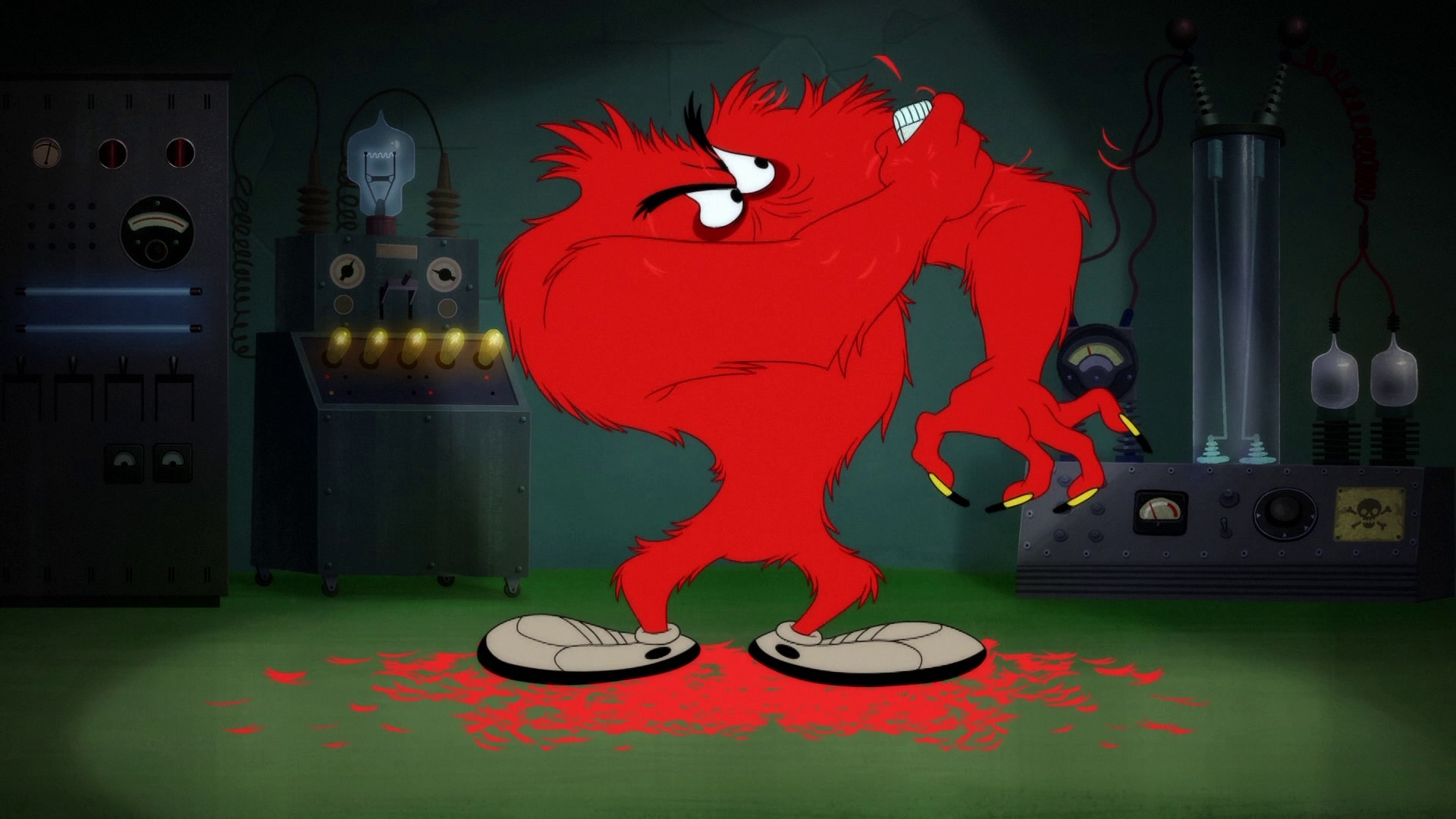
‘Big League Beast’ is the first cartoon of the second episode of ‘Looney Tunes Cartoons’ and in this short Bugs Bunny is reunited with the evil scientist and red monster with sneakers from ‘ Water, Water Every Hare‘ (1952).
This red monster was christened ‘Gossamer’ by Chuck Jones in 1980, and Bugs Bunny addresses the hairy fellow by this name. Unfortunately, the plot is rather weak (Bugs Bunny wants to see the big (baseball) game on the scientist’s television) and the gags are more of a homage to Jones’s classic shorts than adding anything new.
Watch the opening of ‘Big League Beast’ yourself and tell me what you think:
‘Big League Beast’ is available on the Blu-Ray-set ‘Bugs Bunny 80th Anniversary Collection’
Director: Robert McKimson
Release date: April 1, 1963
Stars: Bugs Bunny, Daffy Duck
Rating: ★★★
Review:
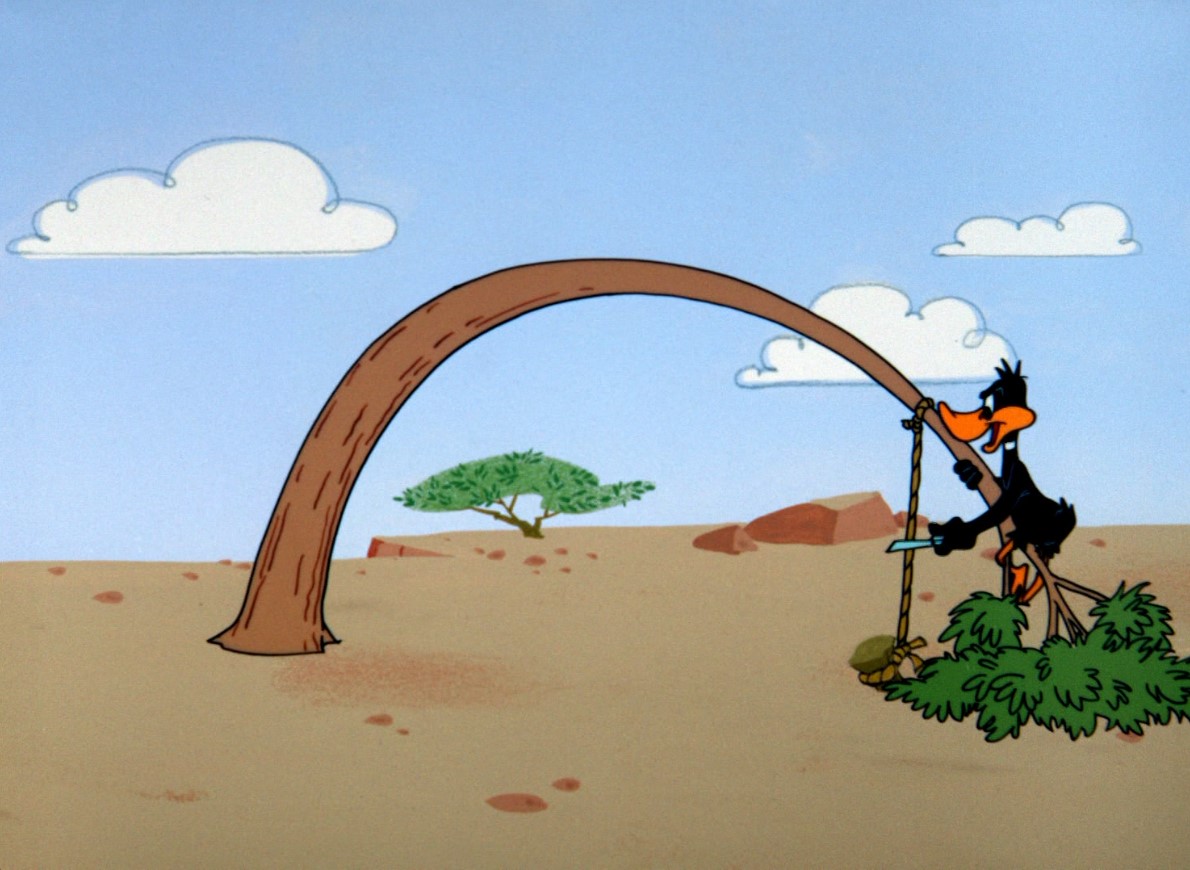
In ‘The Million-Hare’ Daffy Ducks spends his holiday at Bugs’s place, watching tv. The action only starts when their two names are mentioned on tv as contestants in a ‘buddy race’: whoever gets first to the studio, wins.
What follows is a series of rather Roadrunner-like gags, in which gravity often is as much Daffy’s enemy as it were the coyote’s in the Roadrunner films. The cartoon is very talkative, but some of the gags are good. I liked Bugs’s wonderings about Daffy’s abilities.
The staging on the other hand, is often rather odd. I especially thought that the characters were a little too big on the screen several times.
Watch two excerpts from ‘The Million-Hare’ yourself and tell me what you think:
This is Bugs Bunny cartoon No. 160
To the previous Bugs Bunny cartoon: Devil’s Feud Cake
To the next Bugs Bunny cartoon: Hare-Breath Hurry
This is Daffy Duck cartoon no. 92
To the previous Daffy Duck cartoon: Fast Buck Duck
To the next Daffy Duck cartoon: Aqua Duck
‘The Million-Hare’ is available on the Blu-Ray-set ‘Bugs Bunny 80th Anniversary Edition’
Directors: William Hanna & Joseph Barbera
Airing date: November 16, 1962
Stars: The Flintstones
Rating: ★★★
Review:
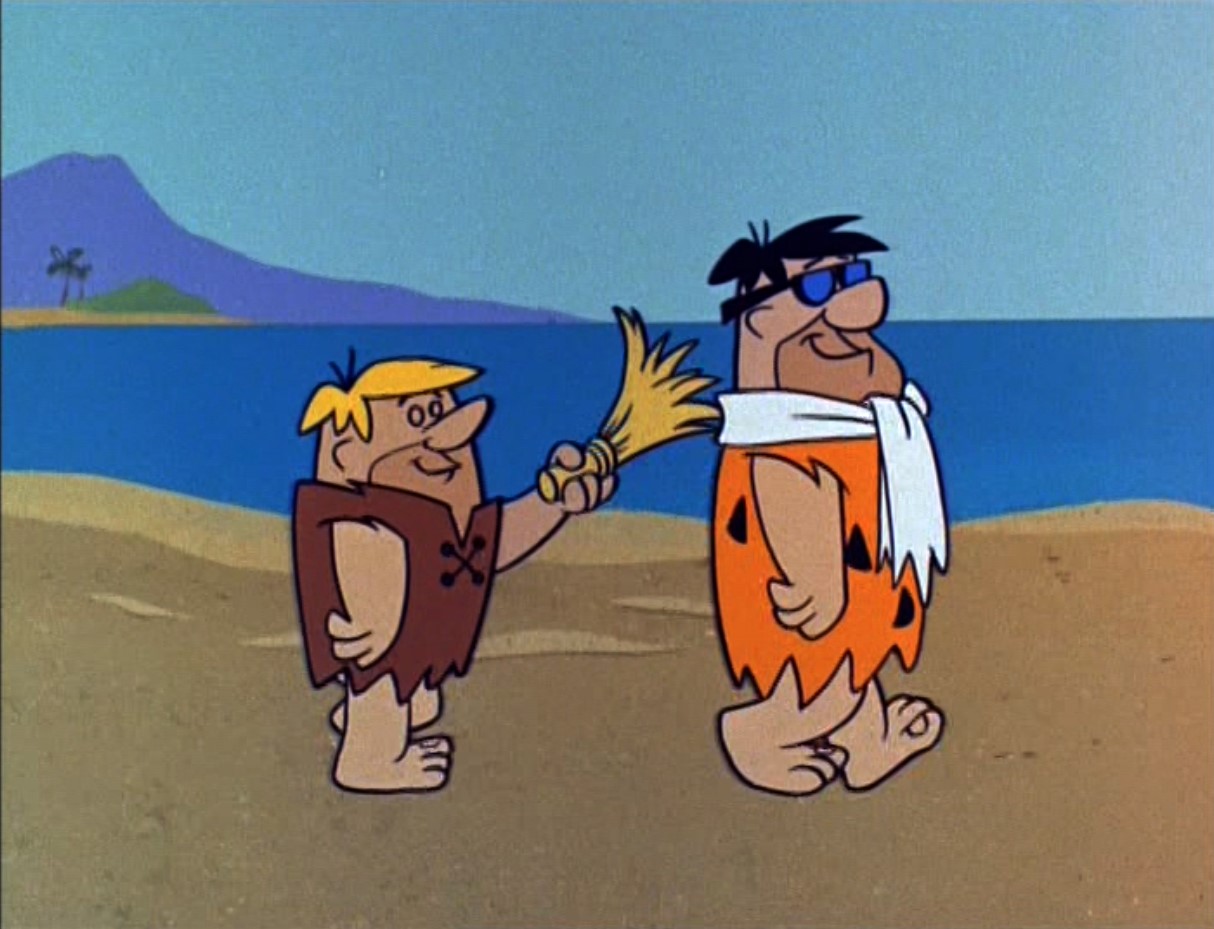
Surprisingly many Flintstones episodes deal with the average viewer’s dream to become an actor. In the third season ‘Hawaiian Escapade’ is the second after ‘Dino Goes Hollyrock‘.
This episode feels mostly like a remake from ‘The Monster from the Tarpits‘ from the first series. In both episodes Fred ends up as a stunt double, and even the Hollywood star, Larry Lava, is a faint echo of the Gary Granite of the former episode. There’s also an echo from ‘Hollyrock, Here I Come‘, another episode from the first season, as in both episodes, fame goes to Fred’s head.
The rehash of earlier tried tropes make ‘Hawaiian Escapade’ rather dull and uninspired. Even the stone age gags fall flat. Much more interesting is the running gag of Wilma burning Fred’s steak, and the cute finale.
Watch an excerpt from ‘Hawaiian Escapade’ yourself and tell me what you think:
This is The Flintstones Season Three episode 10
To the previous The Flintstones episode: Baby Barney
To the next Flintstones episode: Ladies’ Day
‘Hawaiian Escapade’ is available on the Blu-Ray ‘The Flintstones – The Complete Series’ and the DVD-box ‘The Flintstones Season 3’
Directors: William Hanna & Joseph Barbera
Airing date: September 14, 1962
Stars: The Flintstones
Rating: ★★★
Review:

The third season of The Flintstones kicks off with an episode devoted to Dino, Fred and Wilma’s purple pet dinosaur. The dog-like dinosaur appears to have a favorite television program called Sassie, starring a female dinosaur with a wig.
When Fred discovers that the show looks for a new star, he goes on an audition with Dino. Dino, however, only shows to be a great performer after discovering he will be in a love scene with Sassie. After one scene, Dino is hired, and Fred paid off and sent home, much to his own regret, but then Dino discovers something…
This episode has a rather slow start and is surprisingly low on gags, but its finale has a nice emotional touch. The cheap and old-fashioned melodrama of the tv show is fun, but the highlight of the episode is Dino’s reaction to his manager’s and director’s plans with him.
Watch an excerpt from ‘Dino Goes Hollyrock’ yourself and tell me what you think:
This is The Flintstones Season Three episode 1
To the previous The Flintstones episode: Take Me Out to the Ball Game
To the next Flintstones episode: Fred’s New Boss
‘Dino Goes Hollyrock’ is available on the Blu-Ray ‘The Flintstones – The Complete Series’ and the DVD-box ‘The Flintstones Season 3’
Director: Henry Selick
Date: 1975
Rating: ★
Review:
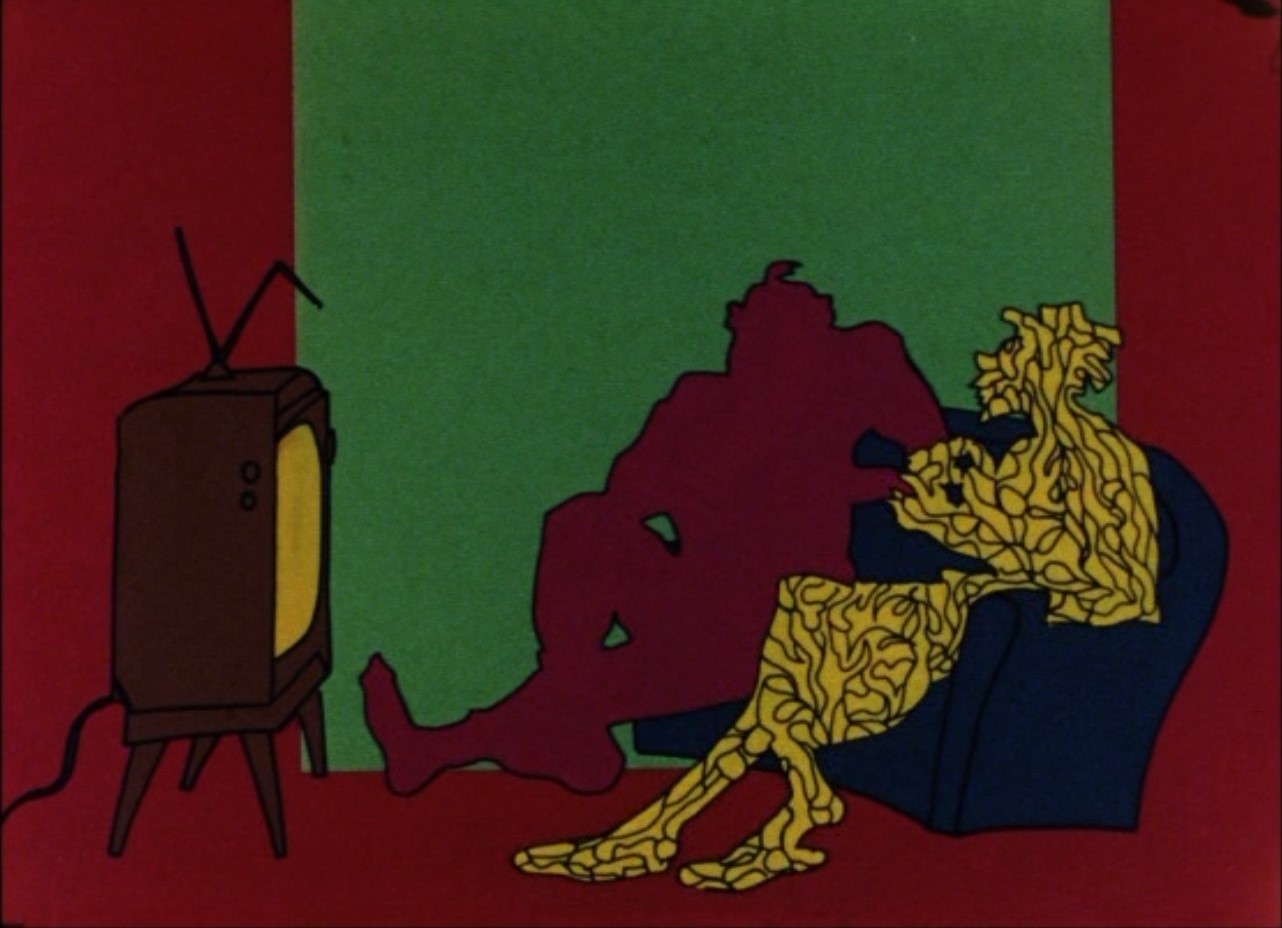
Made by Henry Selick (of later ‘James and the Giant Peach‘ and ‘Coraline’ fame’) at Syracuse University ‘Tube Tales’ is a rather experimental short about the influence of television.
The film features a couple watching a television set, which vomits numerous adverts out on the two. The most idiotic is one on welding. Selick’s designs are angular, and pretty ugly, and with its mere three minutes the short overstays its welcome big time.
Watch ‘Tube Tales’ yourself and tell me what you think:
‘Tube Tales’ is available on the DVD ‘Giants’ First Steps’
Director: Julian Antonisz
Release date: 1970
Rating: ★★★
Review:

‘How Is That…?’ is another children’s film by Julian Antonisz and this film is made in the same vein as ‘How Learning Came Back tothe Woods’. This time a little girl tells us how television works.
Antonisz again illustrates the narration with very rough designs, and cut-out animation of household objects on top of a light table. For examples, the people wear real glasses, and some nature is suggested by real flowers and plants.
‘How Is That…’ is not too serious. At several points things go wrong, and a ‘Please Stand By’ sign is shown. The result is a very original and delightful little avant-garde film for children.
Watch ‘How Is That…?’ yourself and tell me what you think:
‘How Is That…?’ is available on the DVD-set ‘Anthology of Polish Children’s Animation’
Airing Date: November 20, 1996
The first season of Dexter’s Laboratory took a five month hiatus, only to reappear on the screen in November for another seven episodes. ‘Star Spangled Sidekicks etc.’ is the first of these, and the most obvious change is that Dial M for Monkey has been replaced by The Justice Friends, which are introduced in this episode.
Star Spangled Sidekicks
Director: Genndy Tartakovsky
Stars: Dexter, Major Glory
Rating: ★★★★★
Review:

‘Star Spangled Sidekicks’ opens with an episode of Major Glory beating the evil Doctor Diablos. When Major Glory wins the day we cut to Dexter and Dee Dee watching the show on television dressed in Major Glory fanwear.
When Major Glory announces he will recruit a new sidekick at the local mall, both sister and brother apply. Dexter, of course, has the most advanced suit, but it’s Dee Dee who wins the superhero’s heart.
‘Star Spangled Sidekicks’ treats Dee Dee and Dexter as real children and greatly blends fantasy and reality. Highlight is Dexter’s pompous speech in which he declares his aim to become Major Glory’s sidekick.
The Justice Friends: TV Super Pals
Directors: Craig McCracken & Genndy Tartakovsky
Stars: Justice Friends
Rating: ★★★½
Review:
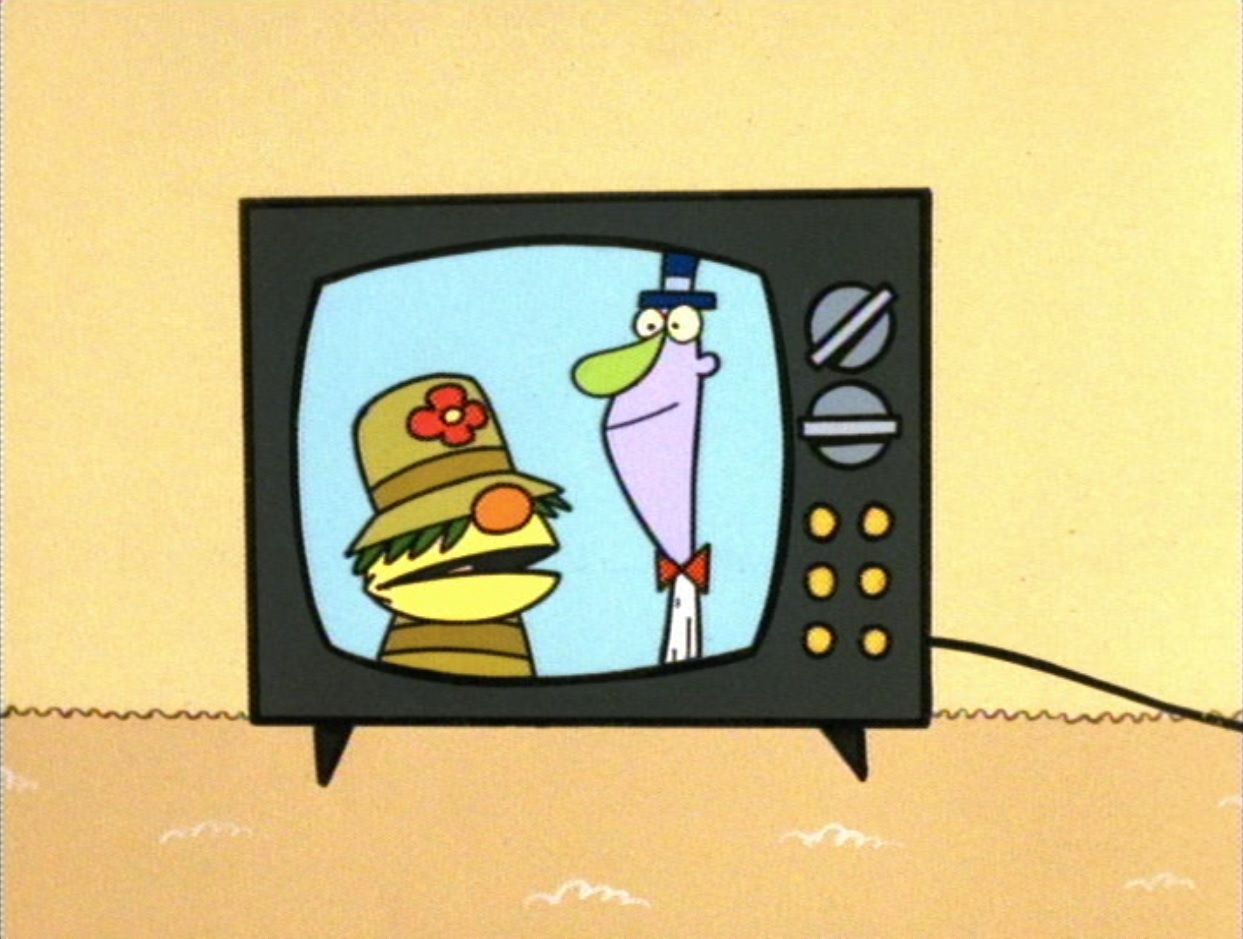
‘The Justice Friends’ were the successors to ‘Dial M for Monkey’ as the bridging episode of the ‘Dexter’s Laboratory’ series. The Justice Friends were first introduced in the Dial M for Monkey episode ‘Rasslor‘ and consist of the Captain America-like Major Glory, the purple Incredible Hulk-like the Infraggable Krunk and the Thor-like Valhallen, who looks like a longhaired metalhead. The premise of these bridging sequences is that the three superheroes have to “face the challenges of every day life”.
Their first episode opens with Major Glory defeating a Joker-like “disgruntled postman’, while Valhallen confronts a Minotaur villain, and Krunk tries to rescue a kitten from a tree. But they all have to go home to watch their favorite program on tv by half past five. Unfortunately, they all want to watch a different program.
Highlight of the show is ‘Puppet Pals’, the incredibly lame show Krunk wants to watch. ‘Puppet Pals’ stars two muppets that tell corny jokes, which all end in the two clobbering each other.
Game Over
Directors: Craig McCracken & Genndy Tartakovsky
Stars: Dexter
Rating: ★★★★★
Review:

‘Game Over’ opens with Dexter and Dee Dee playing a computer game called ‘primal fighter’, which Dee Dee wins. But then Dexter gets an old computer game called ‘Master Computer’ from his dad…
‘Game Over’ is one of the most inspired of all Dexter’s Laboratory episodes. It’s chock full references to computer games and films, including Pac Man, Tron and Star Wars, while showing the development computer games had made in the past fifteen years. At the same time it plays nicely on the competitive brother-and-sister relationship between Dexter and Dee Dee. Rarely the genre of cyperpunk was such much fun.
‘Star Spangled Sidekicks/The Justice Friends: TV Super Pals/Game Over’ is available on the DVD ‘Dexter’s Laboratory Season One: All 13 Episodes’
Director: John Eng
Stars: Duckman
Airing Date: May 28, 1994
Rating: ★★★★★

In what is arguably one of the most inspired Duckman episodes of all, Duckman is the unlikely star of a reality television show called ‘American Dicks’, a spoof on the television series Cops, which first appeared on television in 1989, and still runs.
In this episode Duckman suppossedly is followed by a cameraman with a hand-held camera, which leads to scenes with odd staging, distorted body parts, as Duckman and the others repeatedly talk into the camera, and even animated backgrounds, a rare feat since the early 1930s.
Moreover, the images are more often than not in constant motion, suggesting camera movements and even walking. This is done with such skill that the ‘documentary camera style’ is evoked very convincingly, despite the looney images within them.
This episode is one of the very few episodes in which Duckman veritably is a private detective, even if he turns out to be the worst and most oblivious one around, leaving it to Cornfed to solve the case.
What doesn’t help is that Aunt Bernice interferes with the program when she learns that the audience is predominantly male between the age of 20 and 55. Promptly, she advertises herself as wedding material. During the finale there are even severe closeups of her breasts and buttocks.
Even the kids get their moments in this episode, which is full of great gags, both in visually as in the soundtrack. A true classic.
Watch ‘American Dicks’ yourself and tell me what you think:
This is Duckman episode no. 11
To the previous Duckman episode: Cellar Beware
To the next Duckman episode: About Face
‘American Dicks’ is available on the DVD-box ‘Duckman – The Complete Series’
Director: Raymie Muzquiz
Stars: Duckman
Airing Date: March 12, 1994
Rating: ★★★★½

Already in its second episode the Duckman series mocks the medium on which it appears itself: The episode starts with Duckman zapping through countless channels, one even more stupid than the other.
When he finally finds a show he likes, he gets overruled by the rest of the family, who all want to watch ‘Mother Mirabelle’s Home Miracle Network’.
This show clearly lampoons pseudo-religious shows on television, but not too easily. Strikingly, Duckman almost dies and has a near-death experience, which makes him a believer.
The scenes in heaven form the highlight of the episode, but it’s also great to watch Duckman being disguised as Vincent van Gogh or on a hopeless mission to convert the public as a hare krishna at one airport.
The episode also lampoons the art world, with the villain clearly being a caricature of Andy Warhol, assisted by a gift wrapping Christo.
Watch an excerpt from ‘T.V. or Not to Be’ yourself and tell me what you think:
This is Duckman episode no. 2
To the first Duckman episode: I, Duckman
To the next Duckman episode: Gripes of Wrath
‘T.V. or Not to Be’ is available on the DVD-box ‘Duckman – The Complete Series’
Directors: William Hanna & Joseph Barbera
Airing Date: April 7, 1961
Stars: The Flintstones
Rating: ★★★
 ‘Fred Flintstone: Before and After’ starts with a television studio in search of a ‘before man’ for their commercial for ‘Fat Off Reducing Method’.
B.J., the president of the company picks Fred from the street. An outrageously proud Fred invites all his friends to watch him on television, only to realize afterwards he was the ‘fat guy’, not the muscular after guy…
In a very unlikely follow up scene the studio offers Fred $1000 if he can reduce his weight with 25 pounds. It remains completely mysterious what the studio would gain with this bet. In any case, Fred sets out to eat less, only to discover that it’s much, much harder than he thought. So, he seeks help from ‘Food Anonymous’….
‘Fred Flintstone: Before and After’ suffers from a rather weak and implausible story, and rather repetitive scenes of Fred not dieting at all. For a while it seems that the $1000 reward doesn’t play any role, at all. Nevertheless, Fred’s wild looks when begging for a burger are priceless and belong to the best pieces of character animation on the whole show. However, the episode’s highlight is in the beginning, when Fred thinks he’s on camera, and goes berzerk.
‘Fred Flintstone: Before and After’ rounds up the first season of The Flintstones. Five seasons would follow, lasting until 1966. In the first season the series had shown to be an original mix of sitcom, slapstick comedy, sight gags and cartoon humor. Moreover, the series proved that cartoons could be prime time material, although that lesson would only get a real follow up when The Simpsons started airing in 1989.
Watch an excerpt from ‘Fred Flintstone: Before and After’ yourself and tell me what you think:
This is the 26th and final episode of Flintstones Season One
To the previous Flintstones episode: Rooms for Rent
‘Fred Flintstone: Before and After’ is available on the DVD-set ‘The Flintstones: The Complete First Season’
Directors: William Hanna & Joseph Barbera
Airing Date: December 2, 1960
Stars: The Flintstones
Rating: ★★½
 The wives win a trip to Hollyrock with their slogan ‘Mother McGuire’s Meatballs don’t bounce’. Within two days Fred and Barney miss their wives so much they decide to follow them.
Before soon, both Wilma and Fred are asked to star in a new television series called ‘The Frogmouth’. But within a day Fred is overdoing it, and the producer makes him nervous to get rid of him.
‘Hollyrock, Here I Come’ plays on the American myth that anybody can become a star. The best gag of this only moderately funny episode comes from the guy on TV announcing the winning slogan. The timing of this gag is surprisingly sharp for the series, which is generally does not display any fast gags. Another highlight is the great wild-eyed take on Fred when Wilma tells him she won a trip to Hollyrock, and he thinks he can go.
As always the concept of a stone age television is rather puzzling, a mystery that is pushed further by the animated commercial.
Watch ‘Hollyrock, Here I Come’ yourself and tell me what you think:
https://www.dailymotion.com/video/x6uoutd
This is Flintstones Season One Episode 10
To the previous Flintstones episode: The Engagement Ring
To the next Flintstones episode: The Golf Champion
‘Hollyrock, Here I Come’ is available on the DVD-set ‘The Flintstones: The Complete First Season’
Directors: William Hanna & Joseph Barbera
Airing Date: November 11, 1960
Stars: The Flintstones
Rating: ★

This episode starts with Barney getting tickets to a big fight in town.
Meanwhile, their wives promise one Edna Boulder to make Fred and Barney babysit her little son Egbert, so they can go to the bridge tournament together. So, Fred and Barney stay home to watch the fight on television. Unfortunately, their area is blackened out (the replacement is a recital by Alice Blue Jean and her Magic Banjo), thus Fred decides to watch it at Joe Rockhead’s place, who lives outside the blackened era.
Yet, Joe is not home, and in the least convincing of the story twists, Fred busts in Joe’s door to watch the fight anyway. In another unlikely event little Egbert puts his clothes on Joe’s pooch (a little brontosaur), which promptly jumps out of the window, making Fred and Barney think it’s the baby.
The story of this episode rambles, to say the least, and contains an Irish policeman trope. Worse, the designs of the characters are pretty weird. Fred’s design in particular is very inconsistent and off model. On the upside, there’s a nice primitive elevator, and a bird functioning as a car horn. This bird is the first animal talking to the camera, a Flintstones trope that would occur throughout the series.
This is Flintstones Season One Episode 7
To the previous Flintstones episode: The Monster from the Tarpits
To the next Flintstones episode: At the Races
‘The Baby Sitters’ is available on the DVD-set ‘The Flintstones: The Complete First Season’
Directors: William Hanna & Joseph Barbera
Airing Date: October 21, 1960
Stars: The Flintstones
Rating: ★★½
 This episode starts with a conversation between Fred and Wilma providing the back story: due to a stupid action by Fred, Barney got fired. So, Fred helps his neighbor out by making him the caddie of his rich and influential golf partner, Mr. Boulder.
Barney’s authentic instructions makes the big shot win for once, so Barney gets a job as a debt collector, with his first victim happening to be Fred…
This episode is just one another example of Fred’s tendencies to deceive his wife, refusing to tell Wilma he has gambled the money away, necessary to pay the television bill. The story progresses at an even, rather slow speed, and is only moderately funny. The best scenes are the golf scene and the chase between Fred and Barney, with the latter looking like a television set with legs.
This episode is the first to feature Dino (although he has been in the titles since the beginning). Nevertheless, Dino’s appearance is restricted to the first scene, and no mentioning of him occurs during the rest of the episode.
Watch an excerpt from ‘No Help Wanted’ yourself and tell me what you think:
This is Flintstones Season One Episode 4
To the previous Flintstones episode: The Swimming Pool
To the next Flintstones episode: The Split Personality
‘No Help Wanted’ is available on the DVD-set ‘The Flintstones: The Complete First Season’
Director: Alex Lovy
Release Date: April 20, 1960
Stars: Woody Woodpecker
Rating: ★★★
Review:
 ‘Ballyhooey’ was the last Walter Lantz cartoon directed by Alex Lovy. In 1959 Lovy left Lantz to become an associate producer for the now clearly successful Hanna-Barbera studio.
It’s perhaps ironic that the cartoon actually spoofs television. In this cartoon Woody Woodpecker trying to watch his favorite quiz show, but he has to sit through a multitude of commercials (“but first a word of our sponsor”). When the quiz arrives Woody thinks he has the right answer and rushes to the studio.
At this point the cartoon becomes less static (the first part was just a string of commercials), but also less funny. Woody’s antics at the studio feel out of place and old-fashioned when compared to the more biting satire of the first half. In this respect ‘Ballyhooey’ isn’t really a successful cartoon, but Woody Woodpecker’s annoyance during the first part, and the absurdity of the multiple commercials make the short a fun watch.
Watch ‘Ballyhooey’ yourself and tell me what you think:
This is Woody Woodpecker cartoon No. 98
To the previous Woody Woodpecker cartoon: Pistol-Packin’ Woodpecker
To the next Woody Woodpecker cartoon: Heap Big Hepcat
‘Ballyhooey’ is available on the DVD-set ‘The Woody Woodpecker and Friends Classic Cartoon Collection Volume 2″ as part of the ‘Woody Woodpecker Show’
Director: Dave Fleischer
Release Date: February 5, 1932
Stars: Bimbo, Betty Boop
Rating: ★
Review:
 Even though ‘The Robot’ was released half a year after ‘The Herring Murder Case’ (1931) it features Bimbo in his design before his make-over in that film.
In this film Bimbo is courting a female character, who only wants to marry him, when he can lick ‘One Round Mike’ in a boxing match. Bimbo accepts, but when it’s his turn he builds a robot out of his car to win the game.
Betty Boop has a small cameo in this cartoon when she rushes outside to revive Bimbo’s car-robot (or is she Bimbo’s girlfriend but in a different design? The Fleischers were inconsistent enough to be unclear on this). Apart from this short scene, there’s little to enjoy in ‘The Robot’. The most interesting part maybe Bimbo’s way of courting his sweetheart, which he does by ‘television’, a sort of Skype avant la lettre.
Strangely enough, the idea of a boxing robot was reused in ‘Mickey’s Mechanical Man‘ from 1933, with equally weak results. There was something going on in 1932 with boxing robots anyway, for also Popeye socks a robot in the ring in the Popeye Sunday comic strip of April, 24 and May 1, 1932. In any case, to most people in the Great Depression robots were the ultimate terror, as unemployment already was a major problem. Luckily, no robot would be used in any factory until the 1960s. And boxing robots still haven’t seen the light of day, yet.

Spread from the April 1934 issue of Modern Mechanix and Inventions
More on the robot craze of the early 1930s can be found here and here.
Watch ‘The Robot’ yourself and tell me what you think:
This is Talkartoon No. 32
To the previous Talkartoon: Boop-Oop-a-Doop
To the next Talkartoon: Minnie the Moocher
‘The Robot’ is available on the French DVD Box Set ‘Betty Boop Coffret Collector’
Director: Charles Nichols
Release Date: September 21, 1951
Stars: Pluto, Milton
Rating: ★★★★½
Review:
 ‘Cold Turkey’ was the very last Pluto cartoon, although Pluto would return in Mickey Mouse’s last three cartoons (1952/1953).
The short couples Pluto to Milton, the zany cat who had been introduced in ‘Puss-Cafe‘ the previous year, only to star in three cartoons.
‘Cold Turkey’ opens with some live action footage on a television set featuring a wrestling match. Pluto and Milton sleep right through it, only to awake at an add for hot turkey. The pair first tries to get the turkey out of the television set, then try to find it in the kitchen. When they discover one in the fridge, the companionship turns into rivalry.
‘Cold Turkey’ is less funny than either ‘Puss-Cafe’ or ‘Plutopia‘, the other two cartoons featuring Milton, but it’s still an enjoyable short. The best part may be the pedal bin scene. It’s sad to see the Pluto series ending when its makers had finally made it into a funny one, with its last eleven cartoons being among the best of the entire series.
Watch ‘Cold Turkey’ yourself and tell me what you think:
This is Pluto’s 43rd and last cartoon
To the previous Pluto cartoon: Plutopia
‘Cold Turkey’ has been released on the Walt Disney Treasures DVD-set ‘The Complete Pluto Volume Two’
Director: Tex Avery
Release Date: December 26, 1953
Stars: Droopy, The Wolf
Rating: ★★★★★
Review:
 ‘The Three Little Pups’ starts as a pastiche of the Disney classic ‘Three Little Pigs‘ (1933) with dogs instead of pigs, and the wolf being a dogcatcher.
However it changes into a typical Avery-cartoon as soon as the wolf has failed to blow the smart little pup’s dog house down. He then goes completely berserk on trying to break the house down only to freeze and say into the camera in a remarkably laid-back Southern voice, provided by Daws Butler: “Well, that’s a well-built dog house, man”.
This is clearly a completely different wolf than we had seen before in Tex Avery’s cartoons. Instead of having wild takes, his reactions to his humiliations are absurdly stolid. All through the picture, he remains completely calm, and several times we can hear him whistling the civil war tune ‘Kingdom Coming’, accompanied by the barest minimum of percussion. This would become his signature song in his reappearances in the Tex Avery one-shot ‘Billy Boy’ (1954), and in two of Michael Lah’s Droopy cartoons: ‘Sheep Wrecked‘ (1958) and ‘Blackboard Jumble’ (1957), which reuses some animation from ‘The Three Little Pups’.
Incidentally, the wolf is not the first animated character to whistle this tune. Twenty years earlier, Pooch the Pup already whistled it in the Walter Lantz cartoon ‘King Klunk‘ (1933). Avery worked at Lantz at the time – is it possible he remembered the tune from this cartoon?
The phlegmatic Southern Wolf is by all means a hilarious character to watch, and he plays surprisingly well against the equally deadpan Droopy. Add lots of gags, Tex Avery’s superb timing and spot on music by Scott Bradley, and we have a fine cartoon of excellent comedy. ‘Meow, man!’
Note the anti-television gags in this short. Tex Avery would make more of those in ‘Drag-along Droopy’ (1954). During the 1950s television made things difficult indeed for theatrical cartoons. Less and less visits were paid to the cinemas, and so studios were forced to cut down their costs. This process ultimately led to the demise of the theatrical cartoon, and to the decline of American studio animation in general, which reached an all-time low in the 1970s, only to be revived again at the end of the 1980s.
Watch ‘The Three Little Pups’ yourself and tell me what you think:
‘The Three Little Pups’ is available on the DVD-set ‘Tex Avery’s Droopy – The Complete Theatrical Collection’ and on the French DVD-box ‘Tex Avery’
Director: Bruno Bozzetto
Release Date: 1983
Rating: ★★
Review:
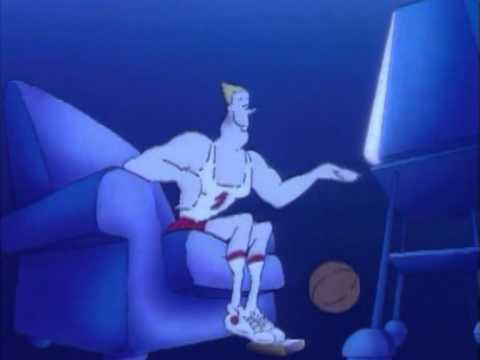 ‘Sigmund’ is a very short cartoon, commissioned for the 1984 Olympic Games in Los Angeles.
The cartoon consists of one scene in a blue room in which a bespectacled little boy imagines himself as the sport stars he watches on television. The little boy’s imagination is shown by metamorphosis: we watch him change into the sport stars, growing with every metamorphosis.
‘Sigmund’ is a sweet short, but neither memorable, funny or one of Bozzetto’s best.
Watch ‘Sigmund’ yourself and tell me what you think:
Director: Osvaldo Cavandoli
Release Date: 1974
Stars: La Linea
Rating: ★★★★
Review:
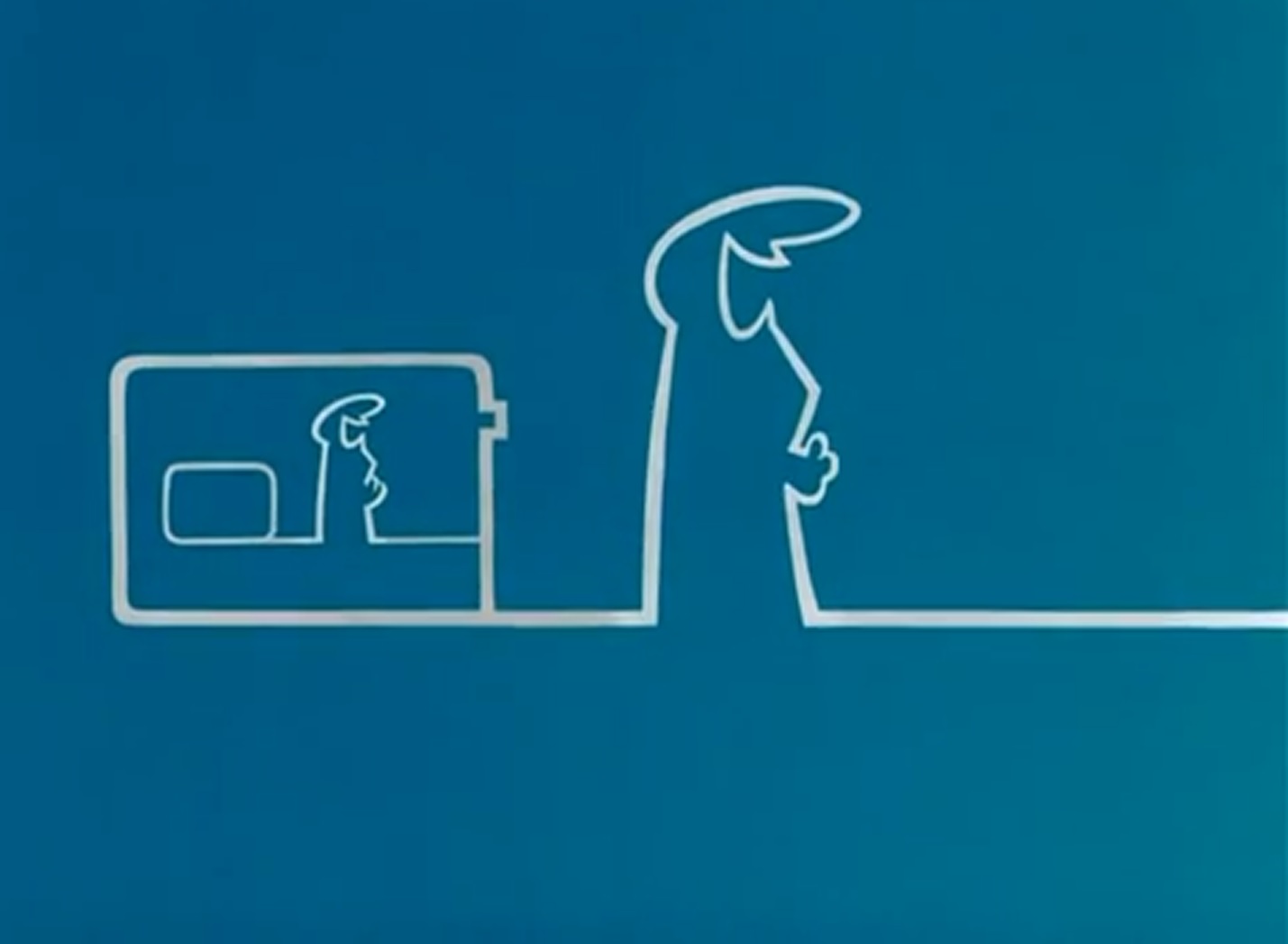 La Linea is an Italian television series, which takes graphic design, introduced by UPA to the animated screen, to the max.
The first of all La Linea shorts defines the complete series: it consists of numerous unrelated gags around the jabbering little man Linea, who lives in a 2-dimensional world, consisting of only one white line, of which he is part.
This cheerful, but temperamental guy has some characteristics that return in every single episode: First, he talks an Italian-sounding sort of gibberish, provided by voice actor Carlo Bonomi. Second, he always walks to the left of the screen. Third, he always encounters at least one interruption of the line during his walk. Fourth, he frequently argues with his off-screen creator, of whom we only see his hand drawing things for the little guy. And Fifth, our hero has also has an intoxicating laugh, which is heard at least once.
All designs are extremely stylized, yet perfectly recognizable, and beautifully animated. The backgrounds are monochromic, changing from green to red to blue etc. All these elements make this series such a classic, even though most of the episodes are completely plotless, and only last about 2 minutes.
In this particular episode La Linea encounters a turtle, a television set, a tap and a woman. He plays golf and takes a rollercoaster ride. It doesn’t make any sense, but it’s fun. Franco Godi’s music in this particular cartoon is more present than in the following ones, using a tune with voices instead of the instrumental background music of later cartoons.
Watch ‘La Linea episode 1’ yourself and tell me what you think:
‘La Linea episode 1’ is available on the DVD ‘La Linea 1’


 Dr. Grob's Animation Review