
You are currently browsing the category archive for the ‘European films’ category.
Director: Raoul Servais
Release Date: 1973
Rating: ★★★
Review:
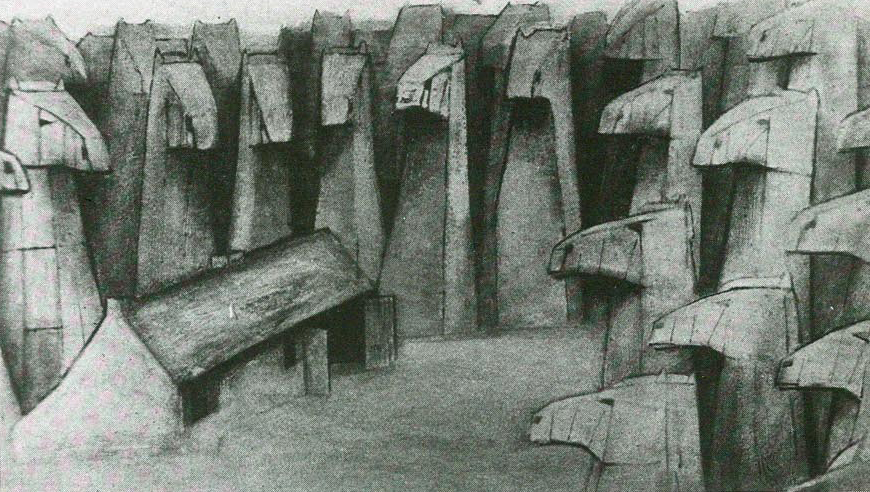 ‘Pegasus’ tells about a lonely blacksmith who lives in the countryside.
The blacksmith has a love for horses, but unfortunately his surroundings are totally devoid of them. So he builds a horse head out of metal to worship. Unfortunately, the horse head appears to have an ability to grow and reproduce, surrounding his house like a forest.
‘Pegasus’ is a beautiful and surreal film. Unfortunately, it ends quite abruptly, leaving behind a sense that not everything has been said, yet.
Watch ‘Pegasus’ yourself and tell me what you think:
Director: Raoul Servais
Release Date: 1971
Rating: ★★½
Review:
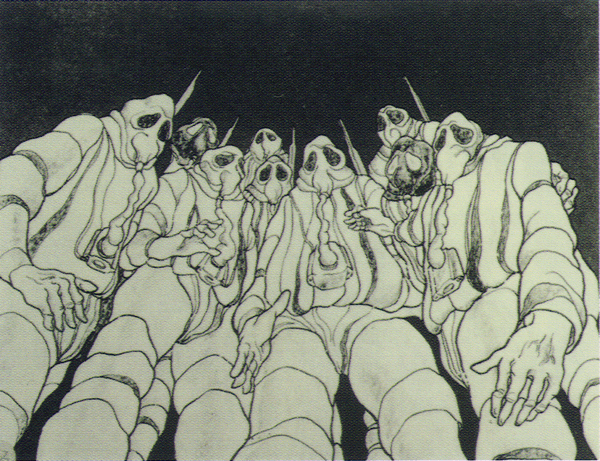 Operation X-70 is a half silly, half scary short by Belgian film maker Raoul Servais.
It tells about a poisonous gas, which turns people into spiritual beings. The gas is advertised as a ‘clean weapon’, because it doesn’t kill people. When the gas is accidentally bombed on the Benelux (Belgium, Holland and Luxemburg), it turns people into angels.
The film impresses with its weird idea, its dark and gloomy atmosphere, and its anti-war message. However, like Raoul Servais’s earlier film ‘Goldframe’ (1968), the film suffers from an all too present dialogue. In the end the short’s images are more lasting than the film itself is.
Watch ‘Operation X-70’ yourself and tell me what you think:
Director: Georges Schwizgebel
Release Date: 1977
Rating: ★★★
Review:
 In ‘Hors-jeu’ we watch a soccer match change into a basketball match and into an ice hockey game. When violence enters, however, the game stops.
With this short film Schwizgebel builds on the concepts introduced in his previous film, ‘Perspectives‘. In ‘Hors-jeu’ he incorporates sound-effects and a rather surrealistic play with the rotoscoped images into his style. Surrealism would dominate his next film, ‘Le ravissement de Frank N. Stein‘ (1982), but in its visual style ‘Hors-jeu’ looks more forward to later films, like ‘78 Tours‘ (1985).
Watch ‘Hors-jeu’ yourself and tell me what you think:
http://v.youku.com/v_show/id_XNzU1MjYzMjg=.html
‘Hors-jeu’ is available on the DVD ‘Les Peintures animées de Georges Schwizgebel’
Director: Georges Schwizgebel
Release Date: 1975
Rating: ★★★
Review:
 As the title implies, this short film is a study in perspectives. It also seems to address the arbitrariness of things, as we see a walking woman change into herself, into skaters and into a running dog, whenever our perspective of her changes. The film uses effective piano music by Bach.
‘Perspectives’ introduces several aspects of Schwizgebel’s mature style: the painted canvas, the rotoscoped movements, the constant changing of perspectives, the prominent shadows and his mastery of metamorphosis. In his next films Schwizgebel would expand on this technique, which would eventually lead to such masterpieces as ‘La jeune fille et les nuages’ (2000) and ‘L’Homme sans ombre’ (2004).
Watch ‘Perspectives’ yourself and tell me what you think:
http://v.youku.com/v_show/id_XNzU1MzkzOTY=.html
‘Perspectives’ is available on the DVD ‘Les Peintures animées de Georges Schwizgebel’
Director: Georges Schwizgebel
Release Date: 1974
Rating: ★★★★
Review:
 In ‘le vol d’Icare’ a man wants to fly like the birds. In the end he succeeds.
More important than the plot, however, is the technique of this film, which makes use of huge pixels, giving it a very digital look. Even though the man and the birds are extremely simplified, their motions are instantly recognizable. Even more remarkable is that the film contains some kind of baroque feel, amplified by Louis Couperin’s harpsichord music.
‘Le Vol d’Icare’ was Swiss animator Georges Schwizgebel’s first animated film. It doesn’t resemble his later films. In fact, it doesn’t resemble any other animation film. But it already shows Schwizgebel’s originality and virtuosity, and it can be considered his first masterpiece.
Watch ‘Le vol d’Icare’ yourself and tell me what you think:
‘Le vol d’Icare’ is available on the DVD ‘Les Peintures animées de Georges Schwizgebel’
Director: Osvaldo Cavandoli
Release Date: 1974
Stars: La Linea
Rating: ★★★★
Review:
 La Linea is an Italian television series, which takes graphic design, introduced by UPA to the animated screen, to the max.
The first of all La Linea shorts defines the complete series: it consists of numerous unrelated gags around the jabbering little man Linea, who lives in a 2-dimensional world, consisting of only one white line, of which he is part.
This cheerful, but temperamental guy has some characteristics that return in every single episode: First, he talks an Italian-sounding sort of gibberish, provided by voice actor Carlo Bonomi. Second, he always walks to the left of the screen. Third, he always encounters at least one interruption of the line during his walk. Fourth, he frequently argues with his off-screen creator, of whom we only see his hand drawing things for the little guy. And Fifth, our hero has also has an intoxicating laugh, which is heard at least once.
All designs are extremely stylized, yet perfectly recognizable, and beautifully animated. The backgrounds are monochromic, changing from green to red to blue etc. All these elements make this series such a classic, even though most of the episodes are completely plotless, and only last about 2 minutes.
In this particular episode La Linea encounters a turtle, a television set, a tap and a woman. He plays golf and takes a rollercoaster ride. It doesn’t make any sense, but it’s fun. Franco Godi’s music in this particular cartoon is more present than in the following ones, using a tune with voices instead of the instrumental background music of later cartoons.
Watch ‘La Linea episode 1’ yourself and tell me what you think:
‘La Linea episode 1’ is available on the DVD ‘La Linea 1’
Director: René Laloux
Release Date: May 11, 1973
Rating: ★★★★★ ♕
Review:
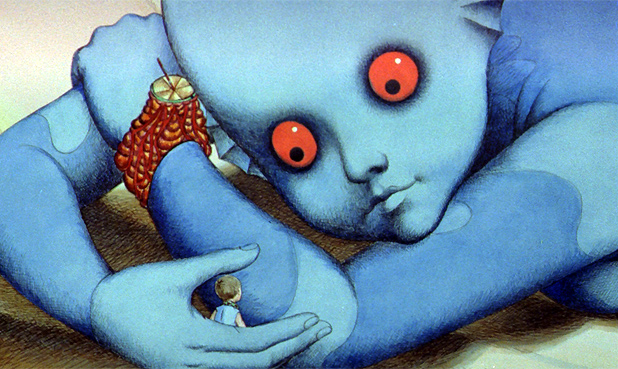
‘La planète sauvage’ is an old love of mine. I first watched it when I was ca. six or seven. It took me fifteen years before I learned which film I had actually watched, and it would take me another ten years before I could watch it again. However, all the time the film’s powerful images never left me.
‘La planète sauvage’ is a science-fiction feature, which tells about the life of humans (‘Oms’, which sounds like the french word for humans, ‘hommes’) on a strange planet occupied by story-block-high humanoid giants, called Draags. To them humans are no more than pets and pests. By accident, a pet Om, Terr (symbolically named after the French word for Earth, terre), learns the Draags’ knowledge and he leads his fellow humans into an uprising.
However, ‘La planète sauvage’ is not particularly famous for its straightforward and rather cliche plot. Its strength lies in its effective use of Roland Topor’s very surrealistic designs, which makes the depicted planet incomprehensible, foreign and scary. For example, the Draag’s behavior is so strange, that despite their humanoid form they feel very alien, indeed. The film’s original technique of combining drawn animation with cut-out adds to the surreal atmosphere. Even the space funk music accompanying the action sounds outlandish.
Even though the animation sometimes is rather stiff and at times even ridiculously poor, the graphic imaginary is so strong that these shortcomings never spoil the enjoyment of the film. On the contrary, the film’s totally unique and disturbing atmosphere and its philosophical questions about what makes man human make watching ‘La planète sauvage’ a very rewarding experience.
Together with Bruno Bozzetto’s ‘Allegro non troppo’ (1976) and Martin Rosen’s ‘Watership Down’ (1978) Laloux’s film must be counted among the most outstanding features of the seventies. René Laloux would make two other science fiction features, ‘Les maîtres du temps‘ (1981) and ‘Gandahar‘ (1988), but these do not reach the stunning originality of the visuals in this film.
Watch the trailer for ‘La Planète sauvage’:
Director: Fernando Cortizo
Release Date: October 31, 2012
Rating: ★★★★½
Review:
 2012 was a good year for stop motion animation fans: no less than four stop motion features were released that year. In March we had Aardman’s ‘The Pirates! In an Adventure with Scientists!’, followed by Laika’s ‘ParaNorman’ in August and Disney’s ‘Frankenweenie’ in September. Least known among these was the last release, from October: ‘O Apóstolo’ from Spain.
Somehow, stop motion feature film makers seem to favor horror-inspired plots, and ‘O Apóstolo’ is no exception. However, unlike ‘ParaNorman’ or ‘Frankenweenie’, ‘O Apóstolo’ is not a lighthearted family film. Instead, it’s a dark gothic thriller, and it succeeds surprisingly well in maintaining a high level of suspense throughout most of the picture.
Both the film’s theme and setting are typical Spanish: the film is drenched in a catholic atmosphere, and it’s set in a remote village on the road to Santiago de Compostela, famous for its numerous pilgrims. We follow the thief Ramon, who has escaped from prison to turn to this village to collect a treasure his cell mate has hidden there.
We soon discover that there is something terribly wrong with the little village. Its inhabitants seem to lure innocent pilgrims, and try to keep them there. It remains long unknown why, keeping the suspense at a high level. And even when the obligatory explanation of the events comes, the makers present it elegantly: the explanation, despite being long and quite absurd, is beautifully done in 2D animation with quasi-medieval designs, accompanied by a song.
Luckily, the film also has its lighter moments, mostly in a subplot, involving a particularly unsympathetic archbishop, who goes on his way to invest the loss of pilgrims. It’s soon clear that the film makers have plotted a punishment for this haughty, selfish character.
Apart from the gripping plot, ‘O Apóstolo’ excels in gorgeous production values. The little village and its sinister forest surroundings are conceived with stunning detail. They are as rich as any life action background, and contribute highly to the dark and creepy atmosphere. The puppets are designed less originally than the other features mentioned above, but retain a certain realism, which makes it possible to relate to them, especially with the main protagonist, Ramon the thief. The sole exception is the priest, whose appearance is too absurd and too sinister to blend in. It’s a pity, because his dominant presence casts a shadow on the more underplayed (and underdesigned) other village characters, whose threat is much more subtle, and therefore more disturbing.
In all, ‘O Apóstolo’ easily draws you in. It is without doubt one of the most original and best animated films of 2012. It definitely deserves to be more well-known.
Watch the official trailer of ‘O Apóstolo’ and tell me what you think:
Directors: Bill Jones, Jeff Simpson & Ben Timlett
Release Date: November 2, 2012
Stars: Graham Chapman
Rating: ★★★
Review:
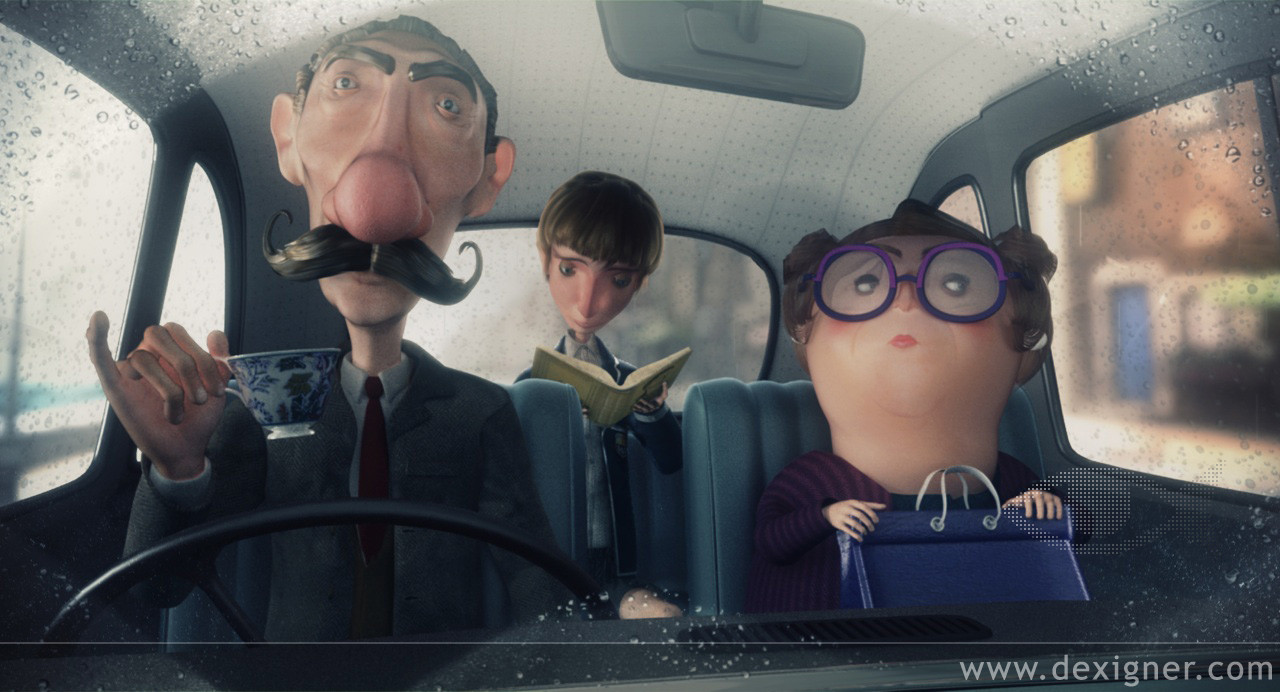 ‘A Liar’s Autobiography: The Untrue Story of Monty Python’s Graham Chapman’ is a film adaptation of Graham Chapman’s own nonsensical autobiography.
At first the film appears to follow Chapman’s book closely, using his own voice over from a audiobook recording. In fact, apart from one song all of Chapman’s vocalizations are by Graham Chapman himself, using various sources. Other former Monty Python members provide some voices, too.
The film adaptation of Chapman’s book is excellent, perfectly blending his dry humor with tongue-in-cheek images. However, the film makers want to make the film a biopic, leaving the book half way and adding some chapters of their own. At this point the film starts to drag. It becomes less humorous and more wandering, with lots of images drenched in sex and alcohol. And so, the film fades out ingloriously, leaving less an impression than it did when it started.
‘A Liar’s Autobiography’ was made by no less than fourteen different animation studios, and the overall array of styles is refreshing and at times mesmerizing. At the same time it can become a bit tiring to watch a changing of style at every scene, and sometimes the design is subpar, or downright ugly. The result is a moderately entertaining film that remains shallow and unmoving, nonetheless.
Watch the trailer of ‘A Liar’s Autobiography: The Untrue Story of Monty Python’s Graham Chapman’ yourself and tell me what you think:
Director: Leonid Amalrik & Olga Khodataeva
Release Date: 1942
Rating: ★★★★
Review:
 ‘Kino-Circus’ (also called Cinema Circus) is the most inspired of the anti-fascist war propaganda cartoons made in the Soviet Union.
The short is called ‘a cartoon satire in three acts’ and features a Charlie Chaplin-like character, who introduces us to three staged satires, all featuring Adolf Hitler:
In the first, ‘Adolf the dog trainer and his pooches’, Hitler throws a bone at his three dogs, Benito Mussolini, Miklós Horthy and Ion Antonescu, the leaders of his allies Italy, Hungary and Romania, respectively.
In the second, ‘Hitler visits Napoleon’, Hitler asks Napoleon’s tomb for advice, but the deceased drags him into the tomb. It’s the most prophetic of the three, for indeed both Napoleon and Hitler were defeated in Russia.
In the third, ‘Adolf the juggler on powder kegs’, Hitler juggles with several burning torches on a pile of powder-barrels, representing the countries he has occupied. When he accidentally drops one of the torches, the barrels explode. The animation is particularly silly in this sequence and a delight to watch.
After the grim political posters from 1941, ‘Kino-Circus’ is more lighthearted. The film ridicules Hitler more than it makes him threatening. Quite surprising since in1942 Nazi Germany was still a serious threat to the Soviet Union: Leningrad suffered under a long siege, and the Soviet Union had only just begun its counter-attack.
Interestingly, both directors of ‘Kino-Circus’ later became famous for their sweet fairy tale films.
Watch ‘Kino-Circus’ yourself and tell me what you think:
‘Kino-Circus’ is available on the DVD box set ‘Animated Soviet Propaganda’
Director: Panteleimon Sasonov
Release Date: 1941
Rating: ★★½
Review:
 ‘The Vultures’, like ‘4 newsreels‘ and ‘Fascist Boots on our Homeland‘ is a so-called political poster. Like the other two films from 1941 it is soviet propaganda at its most aggressive.
‘The Vultures’ is the least interesting of the set. Its opening shot is its best part: opening with two eyes in the dark, just like ‘The Skeleton Dance‘ (1929). These eyes appear to belong to a fascist vulture. he and the other fascist vultures (battle planes) are chased away and destroyed by the Soviet airfleet in a rather silly and playful-looking air battle, accompanied by heroic march music.
About the director of ‘The Vultures’, Panteleimon Sasonov (1895-1950), little can be found. Giannalberto Bendazzi tells us in his excellent book ‘Cartoons – one hundred years of cinema animation’ that he made an animation film called ‘The Tale of the Pope and Baldo his Servant’ in 1939.
Watch ‘The Vultures’ yourself and tell me what you think:
‘The Vultures’ is available on the DVD box set ‘Animated Soviet Propaganda’
Directors: Aleksandr Ivanov & I. Vano
Release Date: 1941
Rating: ★★★½
Review:
 Like ‘4 Newsreels‘, ‘Fascist Boots on our Homeland’ is a so-called ‘political poster’, a short propaganda film that knows no competition in its vicious imagery.
In ‘Fascist Boots on our Homeland’ a horrific fascist pig marches on, trembling several European countries until he gets beaten by the Red Army. The film also contains a very patriotic song and rather associative imagery, including that of Russian soldiers riding horseback, a heroic image from the Russian civil war (1917-1923).
It’s interesting to compare the Soviet images of Nazis with that of American propaganda films from the same era. Whereas in American propaganda, like ‘Der Fuehrer’s Face‘ fascist leaders were caricatured and ridiculed, in the Soviet Union they were depicted as monsters and swines. The whole difference may be that the Soviet Union was invaded, while the United States were not.
Indeed, the US were less kind to the Japanese, who did stain American soil: they were all portrayed as silly, but treacherous Untermenschen, whom one could easily kill without remorse (e.g. in ‘Bugs Bunny nips the Nips’ from 1944 and the Popeye film ‘You’re a sap, Mr. Jap‘ from 1942).
Watch ‘Fascist Boots on our Homeland’ yourself and tell me what you think:
‘Fascist Boots on our Homeland’ is available on the DVD box set ‘Animated Soviet Propaganda’
Directors: Valentina Brumberg, Zinaida Brumberg, Aleksandr Ivanov, Olga Khodataeva and Ivan Ivanov-Vano
Release Date: 1941
Rating: ★★★
Review:
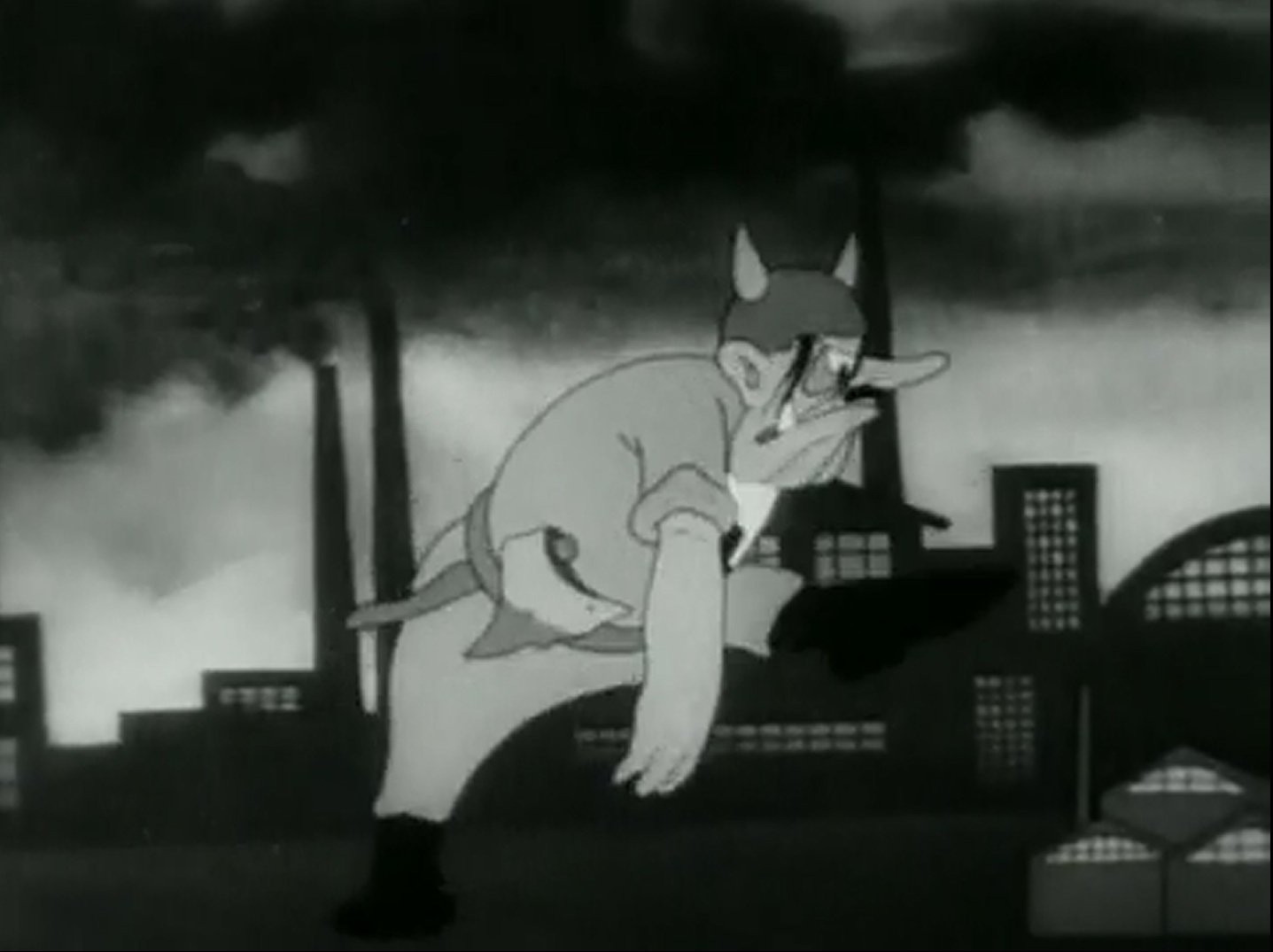 The Soviet propaganda film ‘4 Newsreels’ consists of four so-called ‘political posters’, which are as blatant as propaganda can get.
The first, ‘What Hitler wants’, shows us an extremely ugly and vicious caricature of Hitler marching towards the Soviet Union until he is pierced by the Soviet bayonet.
In the second, ‘Beat the fascist pirates’, sea serpent-like German submarines are defeated by the Soviet fleet.
The third, ‘Strike the Enemy on the front and at home’, is typical for the paranoid society Stalinist Russia was, warning against treacherous fascist spies, foreign agents and saboteurs: “Be vigilant! Remember, our enemy is cunning!”.
The fourth, ‘A mighty handshake’, tells us about the union between England and the Soviet Union against Nazi Germany, showing two mighty giant soldiers shaking hands and crushing a tiny rat-like Hitler in doing so.
Obviously, Germany’s invasion of the Soviet Union left no room for subtleties.
‘4 Newsreels’ was directed by five veterans of animated Soviet propaganda. All had made animated films since the 1920s. Of the five, Ivan Ivanov-Vano (1900-1987) would become the most successful, directing animated films up to the 1970s. Luckily, he and Olga Khodataeva would be able to show a gentler side in numerous animated fairy tale films for children.
Watch ‘4 Newsreels’ yourself and tell me what you think:
‘4 Newsreels’ is available on the DVD box set ‘Animated Soviet Propaganda’
Director: Władysław Starewicz
Release Date: 1922
Rating: ★★★★★
Review:
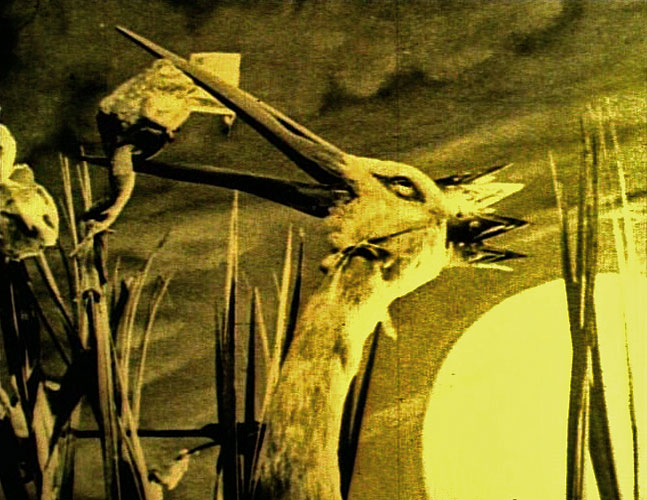 After the October revolution, Władysław Starewicz fled to France, where he continued to make stop motion films until his death in 1965. ‘The Frogs Who Wanted a King’ is the fourth film he made in France, and probably his most political.
The film is based on one of Aesop’s fables. Some frogs ask Jupiter for a king. Jupiter sends them one, but the king looks like a tree and does nothing at all. The frogs don’t like him, so Jupiter sends them a stork, who, naturally, eats the unfortunate amphibians.
The message may be that it’s better to have a dull government than one that kills you, a message Starewicz could certainly relate to, being forced to exile by the oppressing communist regime in Russia.
Once again, Starewicz’ animation is top notch. The film has a particularly fable-like character, taking place in its own, very convincing universe.
Watch ‘The Frogs Who Wanted a King’ yourself and tell me what you think:
Director: Władysław Starewicz
Release Date: 1913
Rating: ★★★½
Review:
 ‘The Insects’ Christmas’ is Starewicz’s next film after his masterpiece ‘The Cameraman’s Revenge‘.
Although the short uses insects again, it’s a whole different film, turning to the sweet subject of Christmas. It’s probably the first animated film about Christmas ever made.
The plot is surprisingly simple: Father Christmas climbs down a Christmas tree, awakes some insects and a frog, who are hibernating underground, and he invites them to a Christmas party. He gives them presents and they all go skiing and skating.
This film’s story cannot be compared to the mature plot of ‘The Cameraman’s revenge‘. It’s more like a child’s dream of Christmas. The film reuses puppets from ‘The Cameraman’s Revenge’ and others, and even though the animation is less engaging than in Starewicz’s earlier film, it is still of a stunning virtuosity, making the result still a delight to watch. Note, for example, the illusion of wind in the animation of Father Christmas’s coat.
Watch ‘The Insects’ Christmas’ yourself and tell me what you think:
‘The Insects’ Christmas’ is available on the DVD ‘The Cameraman’s Revenge & other Fantastic Tales’
Director: Władysław Starewicz
Release Date: November 9, 1912
Rating: ★★★★★ ♕
Review:
 ‘The Cameraman’s Revenge’ is one of the earliest animation films ever made, and a very early masterpiece (it predates ‘Gertie the Dinosaur‘ by two years). Surprisingly, it’s a film about adultery involving insects.
The plot of this stop motion film is as follows: Mr. Beetle commits adultery with a dragonfly, who is a dancer at a nightclub. Unbeknownst to him his secret behavior is filmed by a rival grasshopper who happens to be a cameraman. Meanwhile, Mrs. Beetle also commits adultery, with a beetle who is also a painter. But they’re discovered by Mr. Beetle on his arrival home. Mr. Beetle chases the painter out of his house. Nevertheless he forgives his wife and takes her to the cinema. However, the film that is shown reveals his infidelity, which creates a riot and the married couple ends in jail for destroying the movie box.
‘The Cameraman’s Revenge’ is an extraordinary film, and without doubt one of the first masterpieces of animation. Unlike Émile Cohl’s stop motion, Starewicz’s animation is stunning and very convincing. The insects are very lifelike, and move surprisingly realistically. The insects’ gestures are subtle, clearly evoking their emotions. For example, there’s a beautiful and very lifelike little scene of a beetle servant lighting the fireplace, animated without any hint of overacting. On the other hand, Mr. Beetle clearly is a brute, but we can also watch him in a seductive mood.
Throughout, Starewicz’s storytelling is economical and mature. The film’s subject is highly original for an animation film, even today. It’s almost unbelievable that such a modern film was made in Czarist Russia.
Watch ‘The Cameraman’s Revenge’ yourself and tell me what you think:
‘The Cameraman’s Revenge’ is available on the DVD ‘The Cameraman’s Revenge & other Fantastic Tales’
Director: Vyacheslav Kotyonochkin
Release Date: 1967
Rating: ★★★
Review:
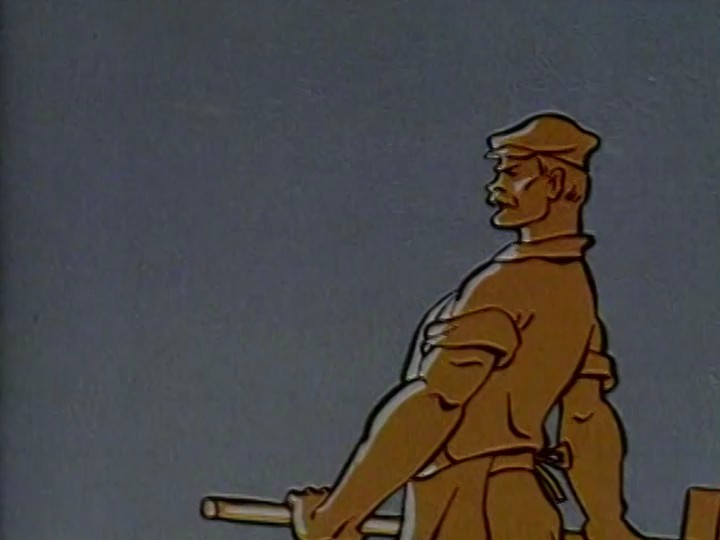 ‘Prophets and Lessons’ is a Soviet propaganda film. It tells us how every time the Western world predicted the Soviet Union to fail, but that these predictions never came true.
Its chapters are all conceived in the same order: first we see animated capitalist predict something, then we see a giant Soviet blacksmith strike his mighty hammer and finally we see live action footage of the Soviet Union’s successes.
The separate chapters are the Soviet revolution, the civil war, the five year plans, the Second World War, the reconstruction after the war and the Soviet space program. The action is silent, and the imagery rather outdated (more like that of the 1920s than of the 1960s).
‘Prophets and Lessons’ is one of the most obviously propagandistic animation films ever made in the Soviet Union. Its overtly propagandistic message, its repetitive character, and its outdated symbolism make it rather tiresome to watch.
Surprisingly, two years later, the director of this humorless film, Vyacheslav Kotyonochkin, would launch a successful series of comic cartoons, called ‘Ну, Погоди!’ (‘Just Wait!’), featuring a very cartoony wolf.
Watch ‘Prophets and Lessons’ yourself and tell me what you think:
‘Prophets and Lessons’ is available on the DVD box set ‘Animated Soviet Propaganda’
Director: Vitold Bordzilovsky
Release Date: 1966
Rating: ★★★½
Review:
 ‘Proud Little Ship’ is a Soviet propaganda film, which is clearly directed to children.
Three little boys make a small red ship as a copy of the famous cruiser ‘The Aurora’. This little ship sails the seas and is greeted with enthusiasm among all the people of the world.
There are some mean militarists who try to destroy the little ship, but they do not succeed. These militarists are drawn extremely silly, while the rest of the people are drawn rather realistically and appear as noble and gentle. Nevertheless, these drawing styles blend surprisingly well. Moreover the design and choreography of movement is often gorgeous.
All the action is silent, while the story is told by a narrator, who provides the clearest propagandistic message of the film: “the proud little ship sailed as a messenger of a happy life, which, as spring after winter, would certainly come to all people”.
Although ‘Proud Little Ship’ is overtly propagandistic, it’s also an enjoyable and beautiful film. One almost forgets that the message is not concerning world peace, but the ‘glorious’ communist revolution…
Watch ‘Proud Little Ship’ yourself and tell me what you think:
‘Proud Little Ship’ is available on the DVD box set ‘Animated Soviet Propaganda’
Director: Jan Švankmajer
Release Date: 1967
Rating: ★★★★★
Review:
 ‘Historia Naturae, Suita’ is an abstract, yet morbid and disturbing film.
It uses drawings, models, skeletons, stuffed and live animals, which change into each other and which perform morbid dances. Their antics are interspersed with a close up of a man eating meat.
We see molluscs (Aquatilia, foxtrot), insects (Hexapoda, bolero), fish (Pisces, blues), reptiles (Reptilia, tarantella), birds (Aves, tango), mammals (Mammalia, menuet), monkeys (Simiae, polka) and man (Homo, waltz), successively.
It shows us that we, men, are made from the same mortal matter as the rest of the animal kingdom, which in this film appear to us only as collectibles or food. This unsettling reminder is emphasized by the last shot, in which the human is replaced by a skull, eating…
The music is a perfect match to the surrealistic imagery, with its rather abstract, uncanny and atonal renderings of the dance forms mentioned.
Watch ‘Historia Naturae, Suita’ yourself and tell me what you think:
http://www.totalshortfilms.com/ver/pelicula/379
‘Historia Naturae, Suita’ is available on the DVD ‘Jan Svankmajer – The Complete Short Films’
Director: Jan Švankmajer
Release Date: 1966
Rating: ★★★★★
Review:
 In ‘Et Cetera’ three faceless human figures demonstrate repetitive and aimless actions.
The first shows how to fly with wings, only to reach his own starting point. The second transforms himself into the animal he’s training using a whip, and the third keeps on drawing houses he cannot enter or leave.
Unlike most of Jan Švankmajer’s films, ‘Et Cetera’ uses 2d animation. It’s a clever and somehow saddening film: although the three little stories are extremely simple, they seem to tell something about the condition humaine. ‘Et Cetera’ uses great electronic music, which adds to the surrealistic atmosphere.
Watch ‘Et Cetera’ yourself and tell me what you think:
‘Et Cetera’ is available on the DVD ‘Jan Svankmajer – The Complete Short Films’


 Dr. Grob's Animation Review