
You are currently browsing the category archive for the ‘★’ category.
Director: Sean Charmatz
Release date: July 7, 2020
Stars: Tiny Diamond
Rating: ★
Review:
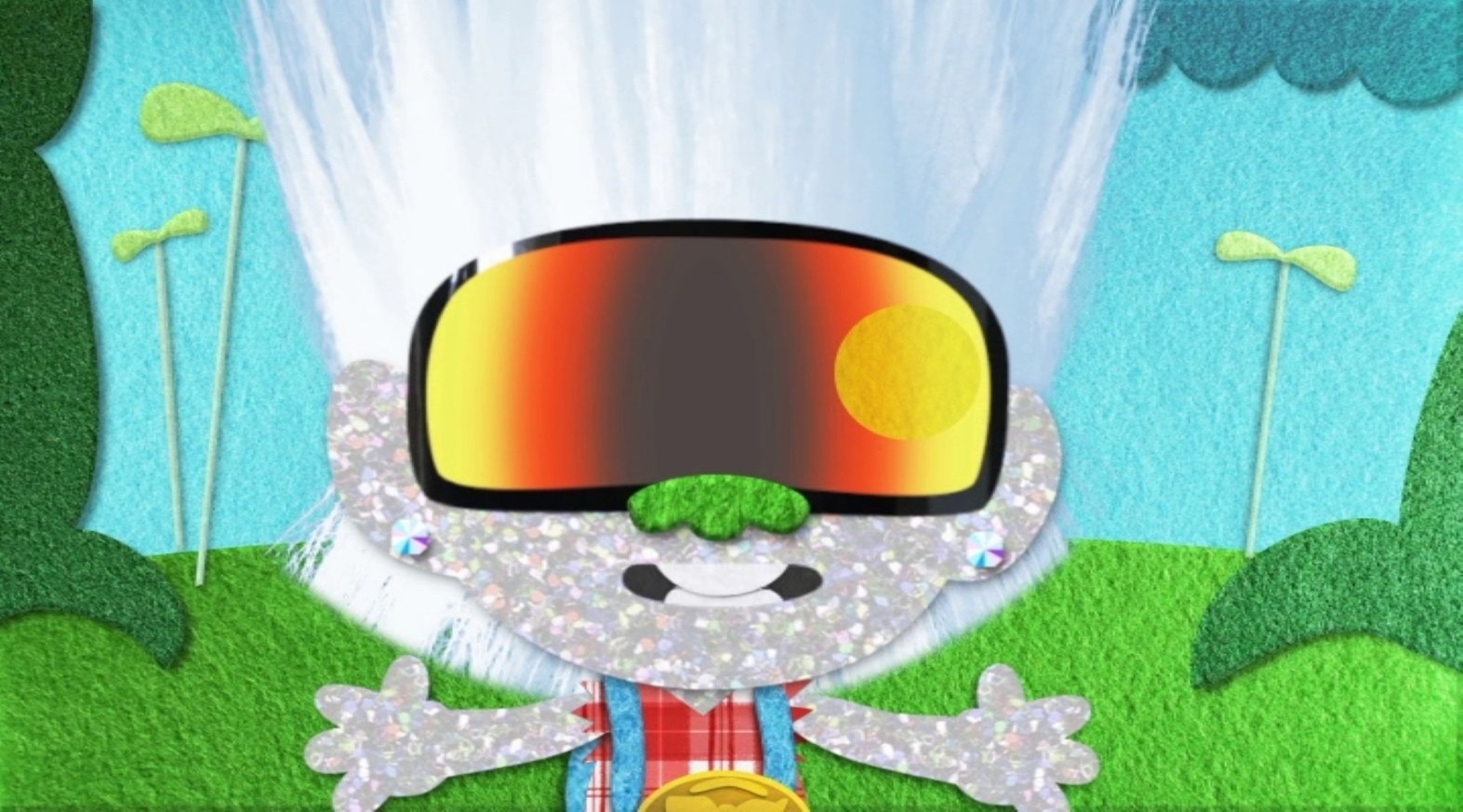
‘Tiny Diamond Goes Back to School’ is a bonus cartoon to the ‘Trolls World Tour‘ DVD. It revolves around Tiny Diamond, who was born to Guy Diamond in the feature film.
Voiced by Kenan Thompson, Tiny Diamond is indeed a tiny hip-hop troll with a deep mature voice. Now, Tiny Diamond already was pretty annoying in the feature film, and he is, too, in this short. In this short he thinks he needs a new stunning outfit to impress his friends at school, but he learns that they like hem for what he is, not what he wears.
One can see the morale of this short from miles away, and the cartoon isn’t very funny either, but I must say it is well-timed and rendered in a pleasant cut-out animation style, that is refreshing in the modern 3D computer animation world. Nonetheless, the short is as Superfluous as its forgettable.
Watch ‘Tiny Diamond Goes Back to School’ yourself and tell me what you think:
‘Tiny Diamond Goes Back to School’ is available on the Blu-Ray or DVD of ‘Trolls World Tour’
Director: Vernon Stallings
Release date: March 3, 1920
Stars: Krazy Kat
Rating: ★
Review:

Compared to other cartoonists working at the Bray studio, the work of Vernon Stallings is certainly subpar. His Krazy Kat cartoons are crude and simple, and lack the sophisticated animation of an Earl Hurd or the inventiveness of Walter Lantz.
‘The Best Mouse Loses’ is a very short cartoon in which Ignatz Mouse goes into a ringed boxing match. Arbiter Krazy Kat lets him win, much to Ignaz’s chagrin. Both the premise and the execution of this cartoon are poor, and the animation is only interesting because of some strange body elongations not seen elsewhere.
Watch ‘The Best Mouse Loses’ yourself and tell me what you think:
‘The Best Mouse Loses’ is available on the Blu-Ray-DVD combo ‘Cartoon Roots: The Bray Studios Animation Pioneers’
Director: Otto Messmer
Release date: October, 1919
Stars: Charlie Chaplin
Rating: ★
Review:
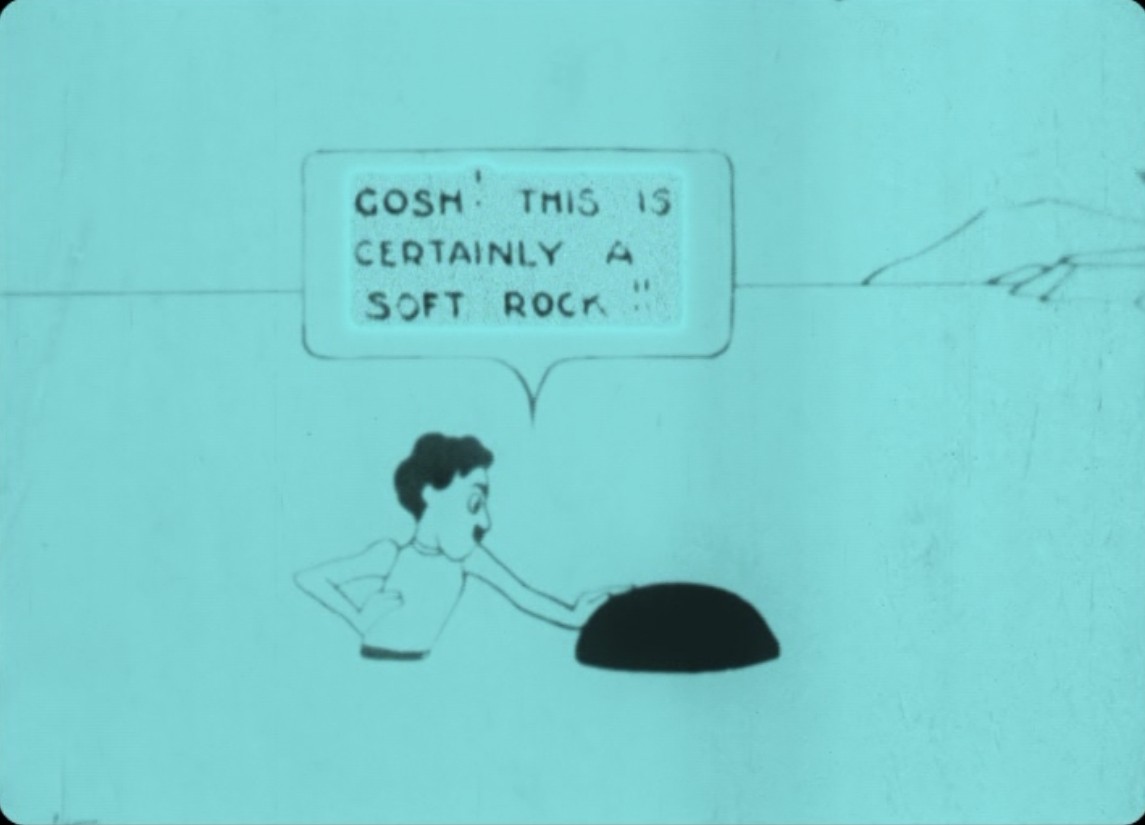
Pat Sullivan’s Charlie Chaplin animated shorts were a short lived series, spanning only two years (1918-1919) and about 16 films. ‘Charley at the Beach’ is one of the last and shows that some Charlie Chaplin’s mannerisms were transferred surprisingly well to the animated screen.
Indeed, Pat Sullivan’s Charlie Chaplin shorts were supported by the great comedian himself. Chaplin gave the animators thirty or forty photographs of himself in different poses and with these the animators could copy several of his movements. Sullivan’s prime animator was of course Otto Messmer, who a month later would create Felix the Cat.
According to Messmer his work on the Chaplin cartoons greatly influenced his work on Felix (Felix – The Twisted Tale of the World’s Most Famous Cat, p. 38), but to be honest, compared to the later Felix the cat cartoons, the animation on Charlie Chaplin is remarkably stiff and primitive. Moreover, in these Messmer makes a lot of use of text balloons, even when the images could speak for themselves, like in the hot dog scene.
‘Charley at the Beach’ is little more than a string of unrelated gags at the beach. Messmer even goes for some throwaway gags on fish. Unfortunately, several of the gags are misogynistic (Charlie Chaplin is a peeping Tom, and there’s some fat shaming) and one is even racist: when Charlie discovers a girl he fancies is black, he quickly swims away. The result is a pretty tiresome and boring film, and nowhere we can detect Messmer’s great talent, yet.
‘Charley at the Beach’ is available on the Blu-Ray ‘Cartoon Roots: Otto Messmer’s Feline Follies’
Director: Norman McLaren
Production date: ca. 1961
Rating: ★
Review:

This unfinished film from ca. 1961 must be the most extreme Norman McLaren ever made. In fact this is one of the most extreme films in the entire history of cinema. The film consists of a black and a white image only that are altered in different rhythms to cause a flickering effect. The electronic soundtrack matches the flickering.
It’s a testimony of McLaren’s genius that even such an extreme film contains some rhythm and variation, and even a sense of a build-up, but the idea remains too extreme to be entertaining, and the continuous stroboscope effect quickly wears done the viewer.
‘The Flicker Film’ is available on the DVD-box ‘Norman McLaren – The Master’s Edition’
Director: Friz Freleng
Release date: December 8, 1962
Stars: Bugs Bunny, Yosemite Sam
Rating: ★
Review:

In one of his last appearances (only two would follow in the classic era) Yosemite Sam is a cook for a king (who’s, I guess, a caricature of Charles Laughton, an actor already dead at the time).
Despite Yosemite Sam’s efforts the king is bored with what he’s offered and demands Hasenpfeffer, a dish unknown to Sam. He soon finds out, and happily Bugs Bunny comes along to borrow some carrots. What follows are some terribly unfunny routines, with too much dialogue and rather poor animation for a Warner Bros. cartoon.
Worst is the scene in which Bugs talks while laying in a large oven tray: in an obvious and unconvincing cheat only his head is animated, while his body remains perfectly still. I would expect that in a Hanna-Barbera television cartoon, not in a theatrical Warner Bros. cartoon.
Better than anything moving in this cartoon is the background art by Hawley Pratt (layouts) and Tom O’Loughlin (paintings)
Watch ‘Shishkabugs’ yourself and tell me what you think:
This is Bugs Bunny cartoon No. 158
To the previous Bugs Bunny cartoon: Bill of Hare
To the next Bugs Bunny cartoon: Devil’s Feud Cake
‘Shishkabugs’ is available on the Blu-Ray-set ‘Bugs Bunny 80th Anniversary Edition’
Directors: William Hanna & Joseph Barbera
Airing date: March 8, 1963
Stars: The Flintstones
Rating: ★
Review:
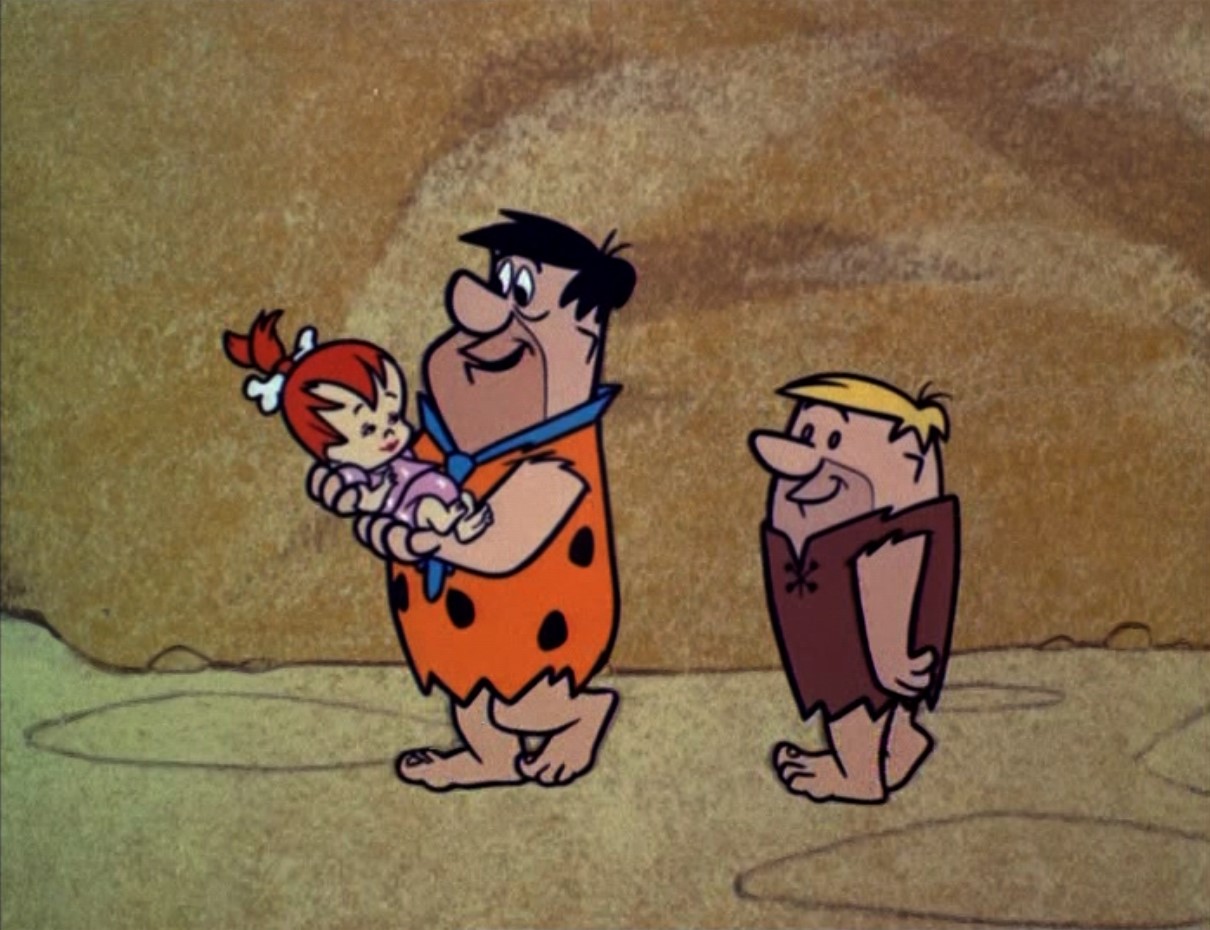
‘Ventriloquist Barney’ starts with Barney practicing and immediately mastering ventriloquism. He first fools Betty with his act, then Fred.
But the episode only really gains momentum when Barney has two tickets to a wrestling match, while Fred has to babysit Pebbles. Unfortunately, little is done with either idea, and the whole episode drags on, with the few gags falling flat after one other. Pebbles herself is cute, but little else, and this episode is so appallingly boring that one wonders if bringing her in was such a good idea in the first place.
Highlight may be the unexpected feminist message Barney delivers Fred to get him taking Pebbles with him to the wrestling match.
Watch an excerpt from ‘Ventriloquist Barney’ yourself and tell me what you think:
This is The Flintstones Season Three episode 25
To the previous The Flintstones episode: Carry on, Nurse Fred
To the next Flintstones episode: The Big Move
‘Ventriloquist Barney’ is available on the Blu-Ray ‘The Flintstones – The Complete Series’ and the DVD-box ‘The Flintstones Season
Directors: William Hanna & Joseph Barbera
Airing date: February 8, 1963
Stars: The Flintstones
Rating: ★
Review:
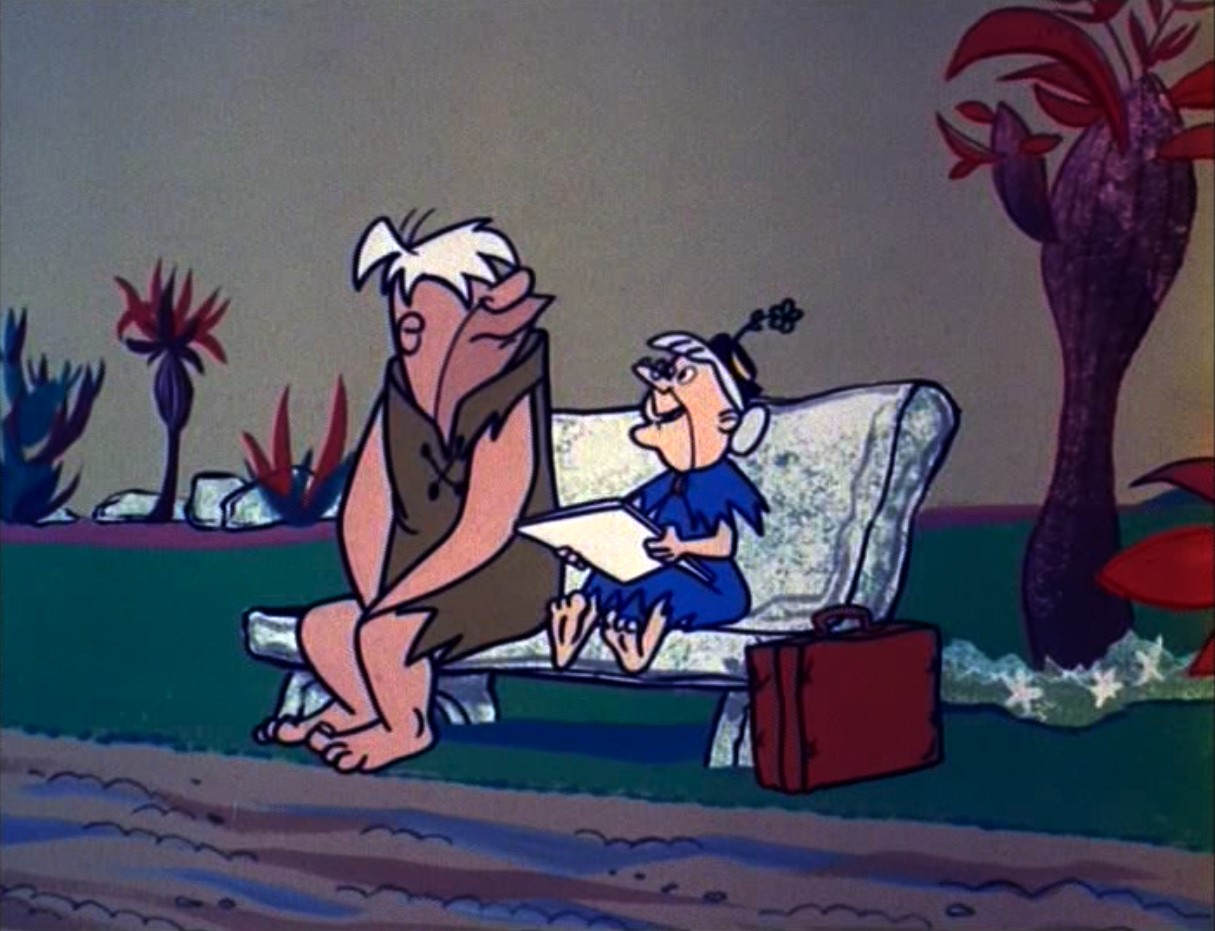
‘Foxy Grandma’is the third episode of the ‘Flintstones are getting a baby’ continuum. It’s easily the weakest of the lot. Little is done with the pregnancy idea, even though the whole plot is based on the fact that Fred doesn’t want Wilma to do housework in her condition.
Wilma naturally wants to ring her mother to help her, but Fred insists on getting a housekeeper, which turns out to be a more difficult task than imagined. The episode takes a particularly silly turn when one ‘Grandma Dynamite ‘ turns up. There’s even a surreal road gag straight from a Tex Avery cartoon.
Unfortunately, all the antics are more tiresome than funny, and the slapstick feels tried and uninspired when compared with episodes focusing on the relationship between the four main protagonists. In this episode the Rubbles hardly have a role.
The stone age gags, too, are familiar: a lawnmower dino, a hedge trimmer bird, an intercom parrot, and a saw-billed bread knife bird. The water tap mammoth can be credited with being given the lamest gag of the whole episode.
Watch an excerpt from ‘Foxy Grandma’ yourself and tell me what you think:
This is The Flintstones Season Three episode 21
To the previous The Flintstones episode: Mother-in-Law’s Visit
To the next Flintstones episode: Fred’s New Job
‘Foxy Grandma’ is available on the Blu-Ray ‘The Flintstones – The Complete Series’ and the DVD-box ‘The Flintstones Season 3’
Director: Chuck Jones
Release date: November 30, 1963
Stars: Bugs Bunny
Rating: ★
Review:

‘Transylvania 6-5000’ is one of those late Warner Bros. Cartoons, which are equally beautiful to look at as they are boring to watch.
In this short Bugs Bunny wanted to travel to Pittsburgh, Pennsylvania, only to end up in Transylvania, where he encounters a vampire with the name Count Bloodcount.
The cartoon is very talkative, and features an annoying female two-headed bird. Worse are the central gags, which are all constructed around the words Abacadabra, which turn the count into a vampire, and ‘hocus pocus’, which turn him back to a human form, again. These sequences suffer from a lack of inner logic and sloppy timing, and are hardly as funny as intended. Bill Lava’s canned music doesn’t help, either.
Despite its gorgeous settings, one cannot conclude but that the Warner Bros. studio ran out of inspiration and of ideas quickly in the early 1960s, contributing to its own shutdown after only one other cartoon, ‘Señorella and the Glass Huarache‘ (which, incidentally, is more fun than this jaded Bugs Bunny cartoon). And yet, already in 1964 Warner Bros. cartoons appeared again, now produced by the DePatie-Freleng cartoon studio of Pink Panther fame. And thus four more Bugs Bunny cartoon were released in 1964, before the character was retired.
Watch ‘Transylvania 6-5000’ yourself and tell me what you think:
This is Bugs Bunny cartoon No. 164
To the previous Bugs Bunny cartoon: Mad as a Mars Hare
To the next Bugs Bunny cartoon: Dumb Patrol
‘Transylvania 6-5000’ is available on the DVD-box ‘Looney Tunes Golden Collection Volume Five’
Director: Henry Selick
Date: 1975
Rating: ★
Review:
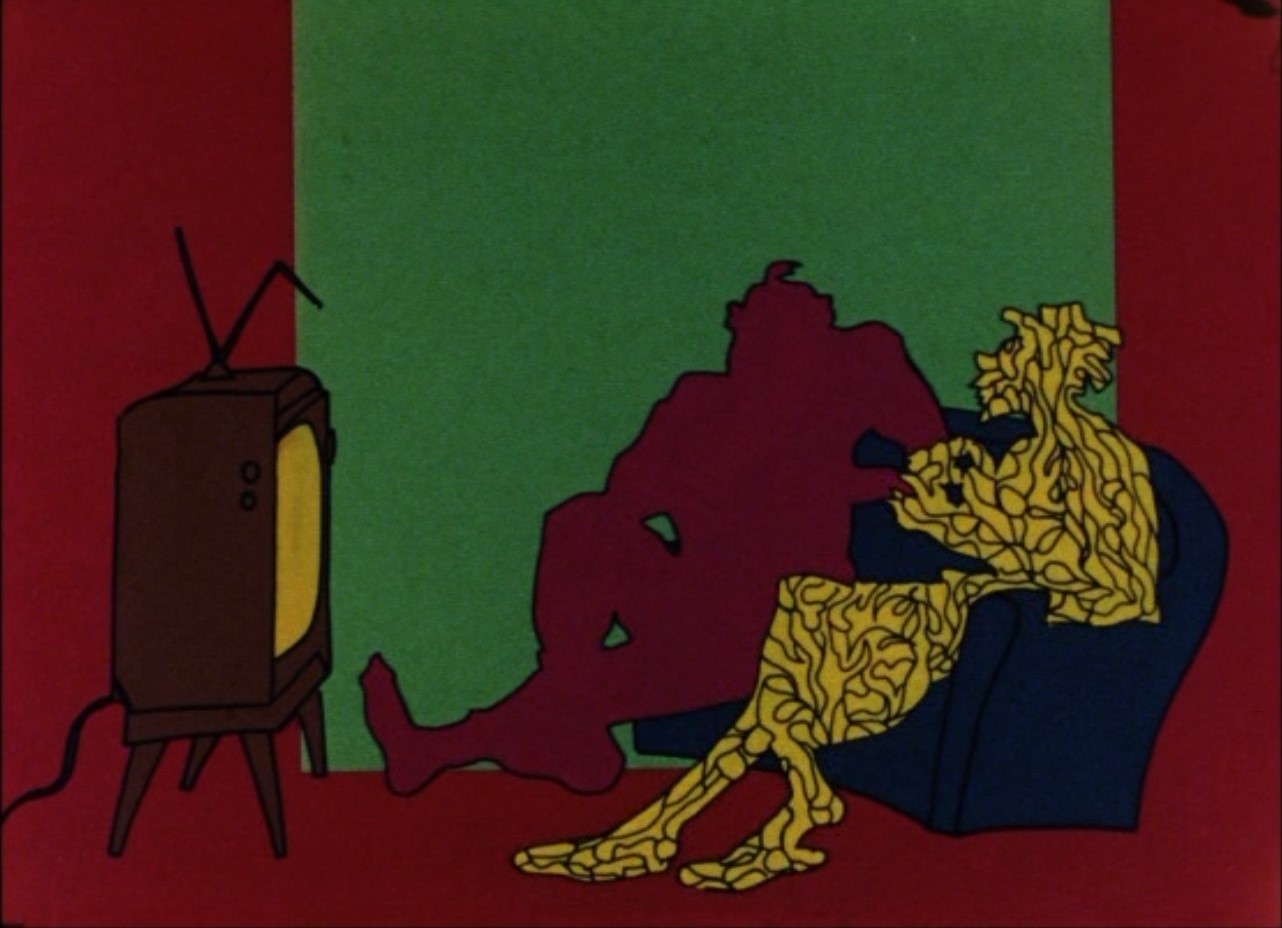
Made by Henry Selick (of later ‘James and the Giant Peach‘ and ‘Coraline’ fame’) at Syracuse University ‘Tube Tales’ is a rather experimental short about the influence of television.
The film features a couple watching a television set, which vomits numerous adverts out on the two. The most idiotic is one on welding. Selick’s designs are angular, and pretty ugly, and with its mere three minutes the short overstays its welcome big time.
Watch ‘Tube Tales’ yourself and tell me what you think:
‘Tube Tales’ is available on the DVD ‘Giants’ First Steps’
Directors: John & Faith Hubley
Release date: 1972
Rating: ★
Review:
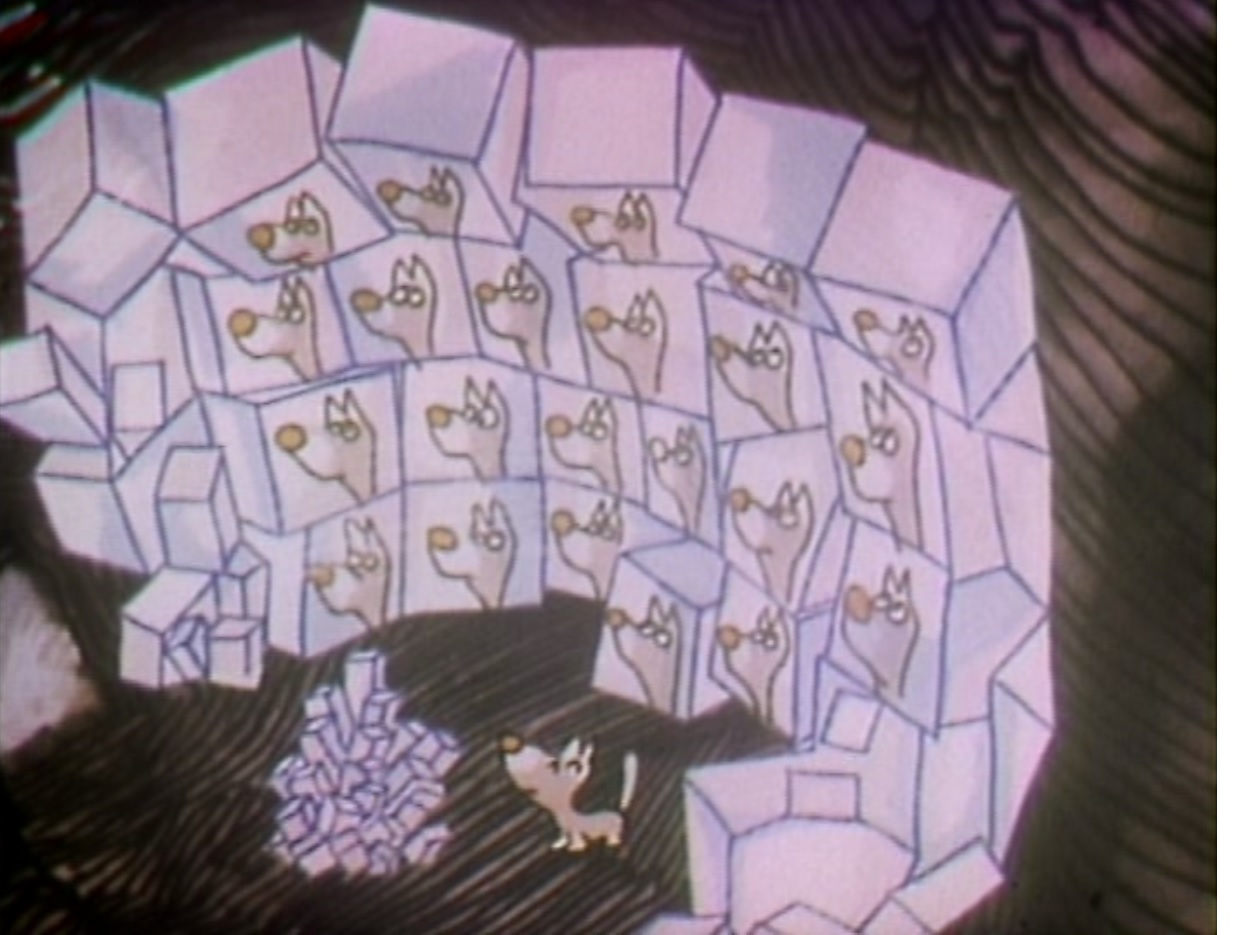
‘Dig’ is a children’s film about geology and paleontology.
A New York boy called Adam is taking his bike and dog Bones to fetch some milk, but ends up with a Rock called Rocko, who talks with a New York accent, and who takes Adam and Bones into the earth’s crust to tell about e.g. stalactites, volcanoes, earthquakes and types of rocks. In the end the trio journeys through time, from the Precambrian through the Paleozoic, Mesozoic and Cenozoic eras.
‘Dig’ boasts charming animation and a funky score by Quincy Jones, but the four songs are rather tiresome, the pacing is very slow, and the educational value negligible. The information misses context, and the images are often too vague to illustrate the message well enough. In all, ‘Dig’ certainly is not one of John and Faith Hubley’s best.
Watch ‘Dig: A Journey into the Earth’ yourself and tell me what you think:
‘Dig: A Journey into the Earth’ was released on the DVD ‘Art and Jazz in Animation’, which has been long out of print
Director: Shinichirō Watanabe
Release date: September 27, 2017
Rating: ★
Review:

Just before ‘Blade Runner 2049’ came out, three short films were released to tell of some of the events that happened between the original ‘Blade Runner’ (1982) and the new feature.
The third of these prequel shorts is an anime directed by Shinichirō Watanabe, of Cowboy Bebop fame. The short telles about the great blackout of 2022, which is mentioned in the new feature film. This is by far the weakest of the trio: Watanabe’s way of directing is hilariously heavy-handed, the dialogue frustratingly boring, and the anime designs are ugly, akin to appalling American comic art. What’s worse, we don’t care a bit about the two main replicant protagonists, due to confusing editing, which moves forward and backward in time, and due to the lack of background stories on the characters.
What Luke Scott, director of the other two (live action) shorts, did well: setting a scene in a few seconds and sticking to it, is lost on Watanabe: his tale is overtly complex and meandering within its fifteen minutes. Even the music by Flying Lotus doesn’t amount to anything and is quickly forgotten.
Watch ‘Blade Runner Black Out 2022’ yourself and tell me what you think:
‘Blade Runner Black Out 2022’ is available on the DVD and Blu-Ray of ‘Blade Runner 2049’
Airing Date: January 1, 1997
‘Inflata Dee Dee/The Justice Friends: Can’t Nap/Monstory’ was the last episode of the first season Dexter’s Laboratory, and thus, alas, the last of the Dexter’s Laboratory episodes to be released on DVD. Why the other seasons never saw a home media treatment is a mystery to me. It sure is an eternal shame that this great show is not available in its entirety.
Inflata Dee Dee
Director: Genndy Tartakovsky
Stars: Dexter
Rating: ★★★★
Review:

In ‘Inflata Dee Dee’ Dee puts Dexter’s “hydroplasmatic inflation suit” on, making her floating like a bubble in Dexter’s lab, much to the little boy’s annoyance.
What follows is an almost classic chase sequence in which Dexter tries several ways to bring Dee Dee down. One involves a particularly silly suit with springs and a plunger. We also learn that Dee Dee has a watch with indicates when it’s time to play with Dexter. Dexter’s Laboratory rarely was so looney tunes-like.
The Justice Friends: Can’t Nap
Director: Genndy Tartakovsky
Stars: The Justice Friends
Rating: ★
Review:
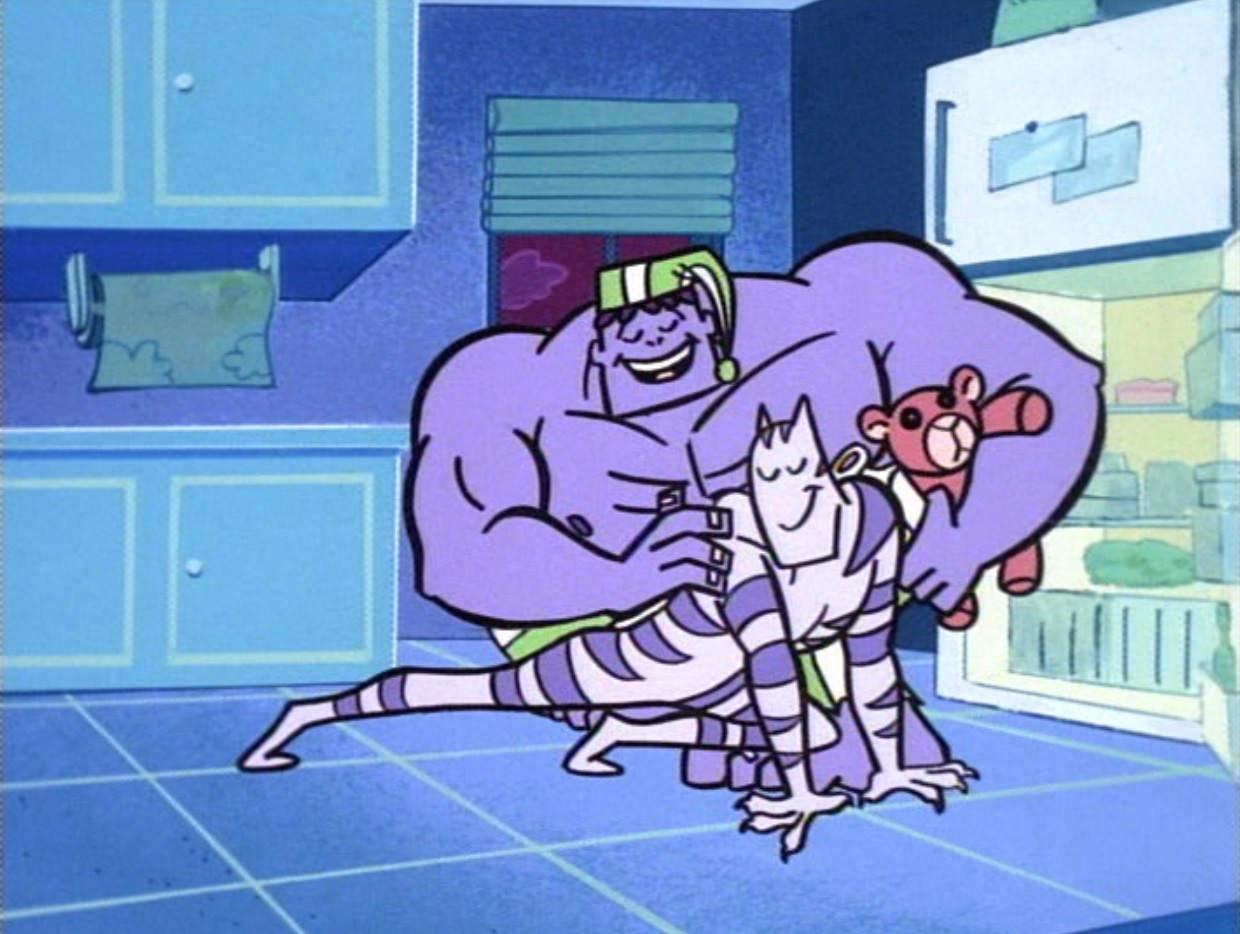
In another tiresome episode of ‘Justice Friends’ Valhallen takes a justice friend called White Tiger home, which behaves like a cat. Unfortunately, Major Glory is allergic to cats, and with help of Krunk goes at lengths to get rid of the creature.
‘Cat Nap’ is anything but funny, leaving the opening scene, which involves a particularly silly supervillain called Mental Mouse as the most inspired part of the episode. Nevertheless, White Tiger is well-animated, perfectly blending human and cat-like moves.
Monstory
Directors: Rob Renzetti & Genndy Tartakovsky
Stars: Dexter
Rating: ★★★★
Review:
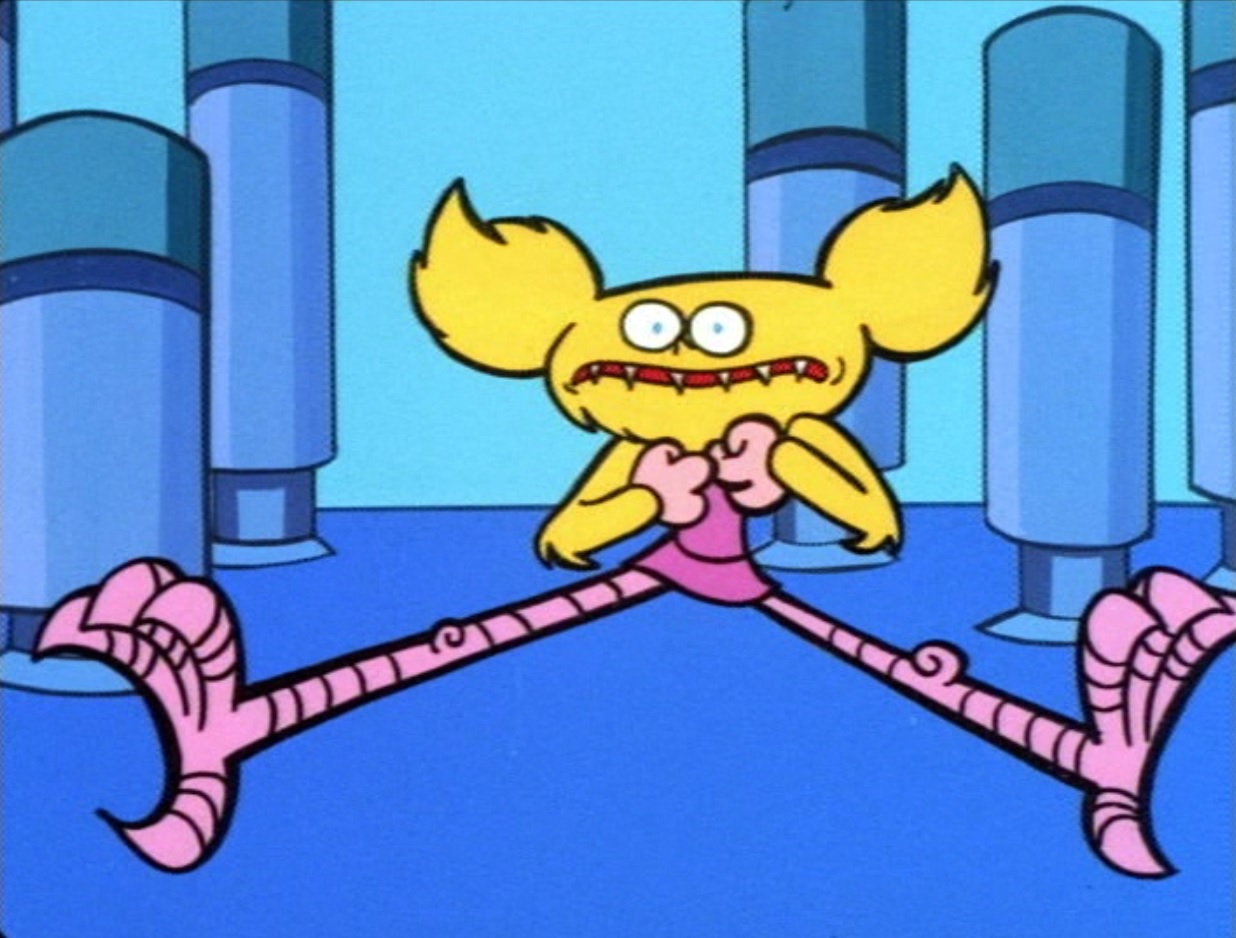
When Dee Dee visits Dexter to tell him a particularly stupid story, Dexter grabs an ampule with a silencer to shut her up. Unfortunately, he grabs the wrong elixir…
‘Monstory’ is great fun and knows some nice references, not only to Godzilla and other monster movies, but also to ‘Horton Hears a Who’ and ‘King-Size Canary’ (1947). The transformation scenes are particularly good, especially the first one involving Dee Dee. Also great is the montage in which a caterpillar-like Dexter lies dormant in a cocoon, with Dee Dee waiting for him to emerge.
‘Inflata Dee Dee/The Justice Friends: Can’t Nap/Monstory’ is available on the DVD ‘Dexter’s Laboratory Season One: All 13 Episodes’
Airing Date: 25-12-1996
Dexter’s Rival (a rerun of episode 4)
The Justice Friends: Bee Where
Directors: Paul Rudish & Genndy Tartakovsky
Stars: The Justice Friends
Rating: ★
Review:

In ‘Bee Where?’ a bee visits the home of the three justice friends, scaring Major Glory to death.
This must be one of the most tiresome of all Justice Friends episodes. It just drags and drags on, without getting funny. Even the antics with the open or closed windows fails to become funny, lacking proper timing.
Mandarker
Director: Genndy Tartakovsky
Stars: Dexter
Rating: ★★★
Review:

‘Mandarker’ sees the return of Mandark, whose laboratory is still destroyed.
This time the two combat to win first prize at the science fair, a prize normally going to Dexter. It becomes clear Mandark goes to great lengths to achieve his goal, while Dexter has become arrogant enough to assume he will win anyway. Nevertheless, once Mandark enters the fair, events get a different turn.
It’s always nice to see the two rivals, but the best part of this episode is the finale in which the dialogue consists of the words Dexter and Mandark, only.
‘Dexter’s Rival/The Justice Friends: Bee Where/Mandarker’ is available on the DVD ‘Dexter’s Laboratory Season One: All 13 Episodes’
Airing Date: November 27, 1996
Babysitter Blues
Directors: Craig McCracken & Rob Renzetti
Stars: Dexter
Rating: ★★★
Review:
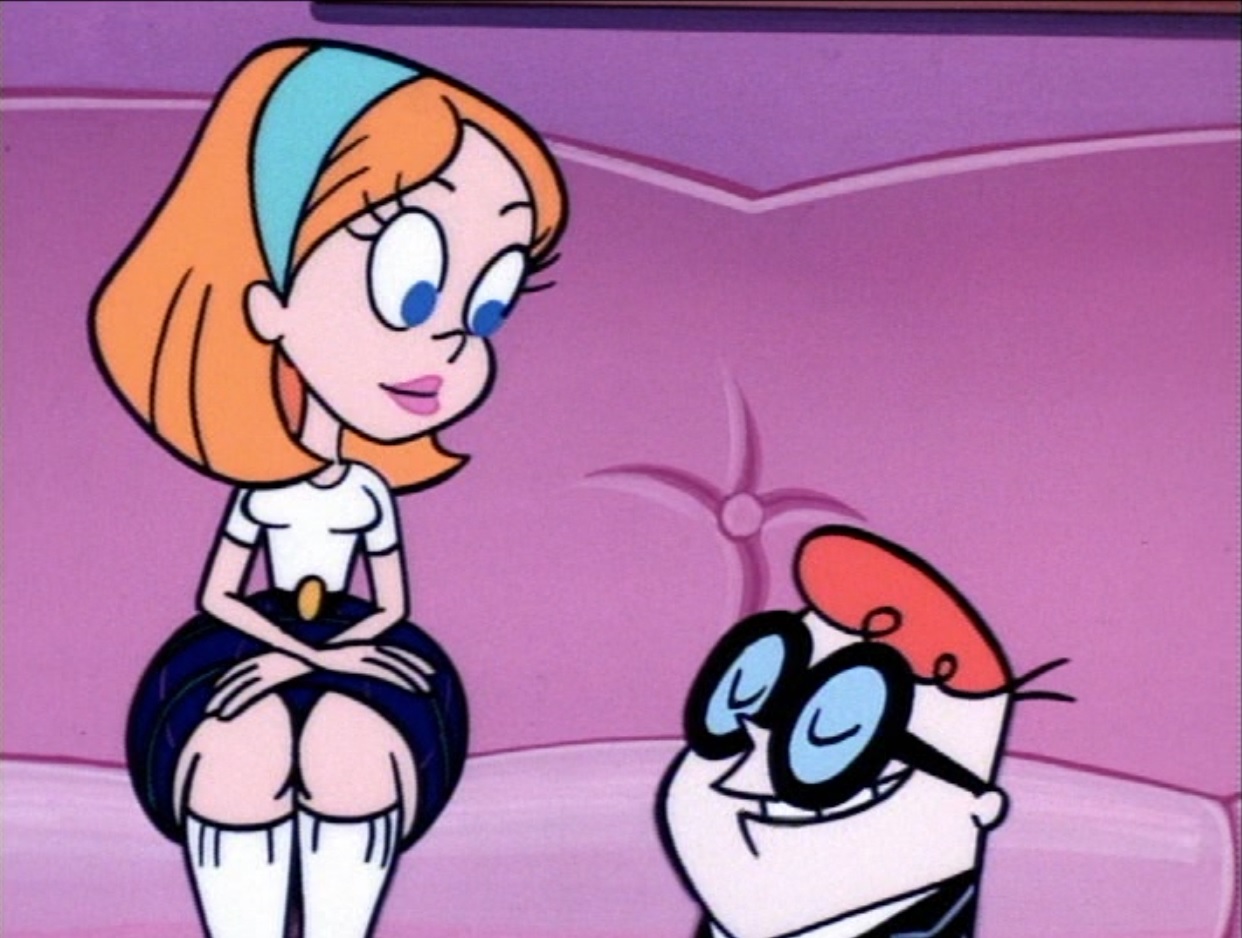
‘Babysitter Blues’ immediately makes clear that Dexter is in love with his babysitter. The scene in which he prepares the room for her arrival is priceless, with its strong posings on the little boy.
But when Lisa, the babysitter, arrives, it quickly turns out she has a boy friend, prompting Dexter to think out a devilish scheme.
Dexter is far from sympathetic in this cartoon, and the love theme with ca. ten years age difference between Dexter and Lisa is a little bit uncomfortable, but the episode still is great fun. Apart from the opening scene highlight of this episode is Dee Dee looking for something without knowing for what.
The Justice Friends: Valhallen’s Room
Director: Genndy Tartakovsky
Stars: Justice Friends
Rating: ★
Review:

‘The Justice Friends: Valhallen’s Room’ starts with Major Glory calling the others for breakfast. When Valhallen doesn’t show up, he and Krunk enter his room…
This episode contains some nice references to Norse mythology, but otherwise is very tiresome and not even remotely funny. Most enjoyable of this otherwise forgettable short are the dramatic poses of Major Glory and his American themed breakfast.
Dream Machine
Directors: Rob Renzetti & Genndy Tartakovsky
Stars: Dexter
Rating: ★★
Review:

This episode starts with Dexter having a nightmare. Apparently he has had many lately, so Dexter builds himself a dream machine, which requires Dee Dee as its operator.
The premise of this scheme is all too predictable, and after Dexter’s initial dream there’s little to enjoy. Even Dexter’s second dream doesn’t really deliver, and most frustratingly, the episode ends abruptly and inconclusively.
‘Babysitter Blues/The Justice Friends: Valhallen’s Room/Dream Machine’ is available on the DVD ‘Dexter’s Laboratory Season One: All 13 Episodes’
Director: John Eng
Airing Date: June 29, 1996
Stars: Duckman
Rating: ★
Review:

In ‘The Amazing Colossal Duckman’ Duckman grows taller each time he has a temper…
It’s hard to say anything positive about this episode, which feels not only uninspired, but even desperate in trying to squeeze some sort of story out of the Duckman character. How one now longs to the deeper and more complex character depictions of season one and two! I’m baffled that after episodes as this series got even another season…
But luckily, the next and last episode turns out to be a much more interesting affair.
Watch ‘The Amazing Colossal Duckman’ yourself and tell me what you think:
This is Duckman episode no. 41
To the previous Duckman episode: The Longest Weekend
To the next Duckman episode: Cock Tales for Four
‘The Amazing Colossal Duckman’ is available on the DVD-box ‘Duckman – The Complete Series’
Director: Raymie Muzquiz
Airing Date: June 22, 1996
Stars: Duckman
Rating: ★
Review:

The decay of the third Duckman season continues with ‘The Longest Weekend’ in which Duckman’s street goes at war with the neighboring Dutch Elm Street.
The episode is as talkative as it is pointless, and even the numerous war film references fall flat. At this point the only attractions left are Klasky-Csupo’s idiosyncratic character designs and background art, which both remain interesting throughout.
Watch ‘The Longest Weekend’ yourself and tell me what you think:
This is Duckman episode no. 40
To the previous Duckman episode: Exile in Guyville
To the next Duckman episode: The Amazing Colossal Duckman
‘The Longest Weekend’ is available on the DVD-box ‘Duckman – The Complete Series’
Airing Date: June 1, 1996
Dee Dee’s Room
Director: Genndy Tartakovsky
Stars: Dexter
Rating: ★★★★½
Review:
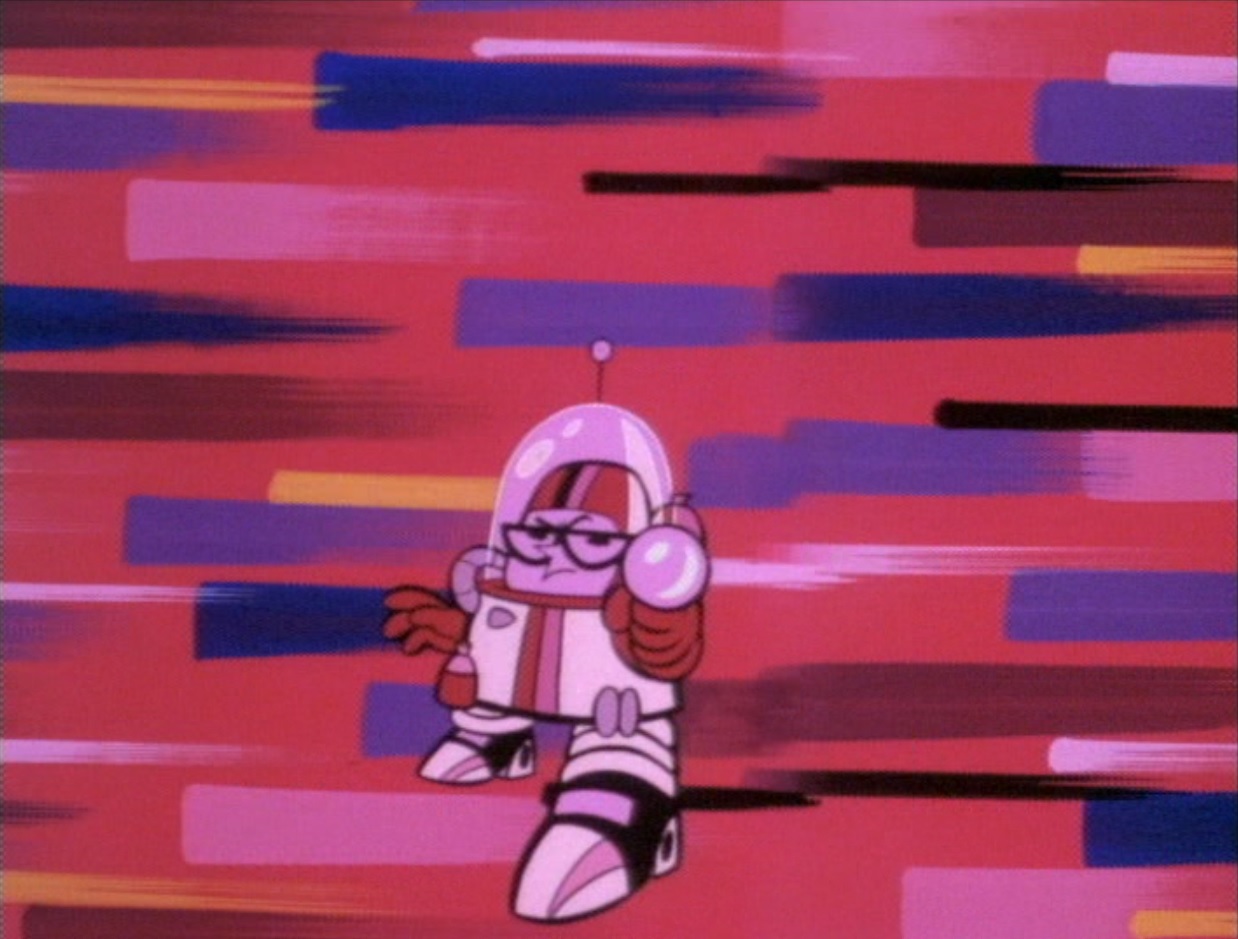
In this episode Dexter tries to retrieve a bread slicer from Dee Dee’s room.
Dexter treats his big sister’s realm as a foreign planet, and enters it in a space suit. The humor comes mostly from Dexter’s pompous, overblown voice over, making the events much more exiting than they really are.
There’s strikingly little animation in this episode, as many scenes are done in stills, and many movements done in only three or four drawings, with no inbetweening whatsoever. This visual style does add to the dreamlike atmosphere that permeates this episode. It thus is a great use of limited animation as an artistic choice, not necessarily an economical one.

Directors: Paul Rudish & Genndy Tartakovsky
Stars: Dial M for Monkey
Rating: ★
Review:
Dial M for Monkey: Huntor
‘Dial M for Monkey’ never were a successful addition to the ‘Dexter’s Laboratory’, but the ‘Huntor’ episode is particularly disappointing.
In this episode Monkey has to battle a lion-like alien hunter with an Australian accent. This is a particularly talkative opponent, and Huntor’s rambling fills almost the entire soundtrack.
This alone accounts for a tiresome watch, but this episode also demonstrates that the ‘Dial M for Monkey’ doesn’t share the same eye for design as the surrounding ‘Dexter’s Laboratory’ sequences. The character designs are more generic, more like the dull 1970s Hanna-Barbera designs than Dexter’s 1950s UPA world, and the color schemes are uninventive and ugly. In fact, ‘Huntor’ emulates the cheap, ugly and forgettable cartoon style of 1970s Hanna-Barbera Saturday morning cartoons too much for comfort. The 1970s were a low point for studio animation, and I don’t want to be reminded of that, thank you.
The Big Sister
See the post devoted to this episode
‘Dee Dee’s Room/Dial M for Monkey: Huntor/The Big Sister’ is available on the DVD ‘Dexter’s Laboratory Season One: All 13 Episodes’
Airing Date: May 25, 1996
Jurassic Pooch
Directors: Craig McCracken & Genndy Tartakovsky
Stars: Dexter
Rating: ★★
Review:
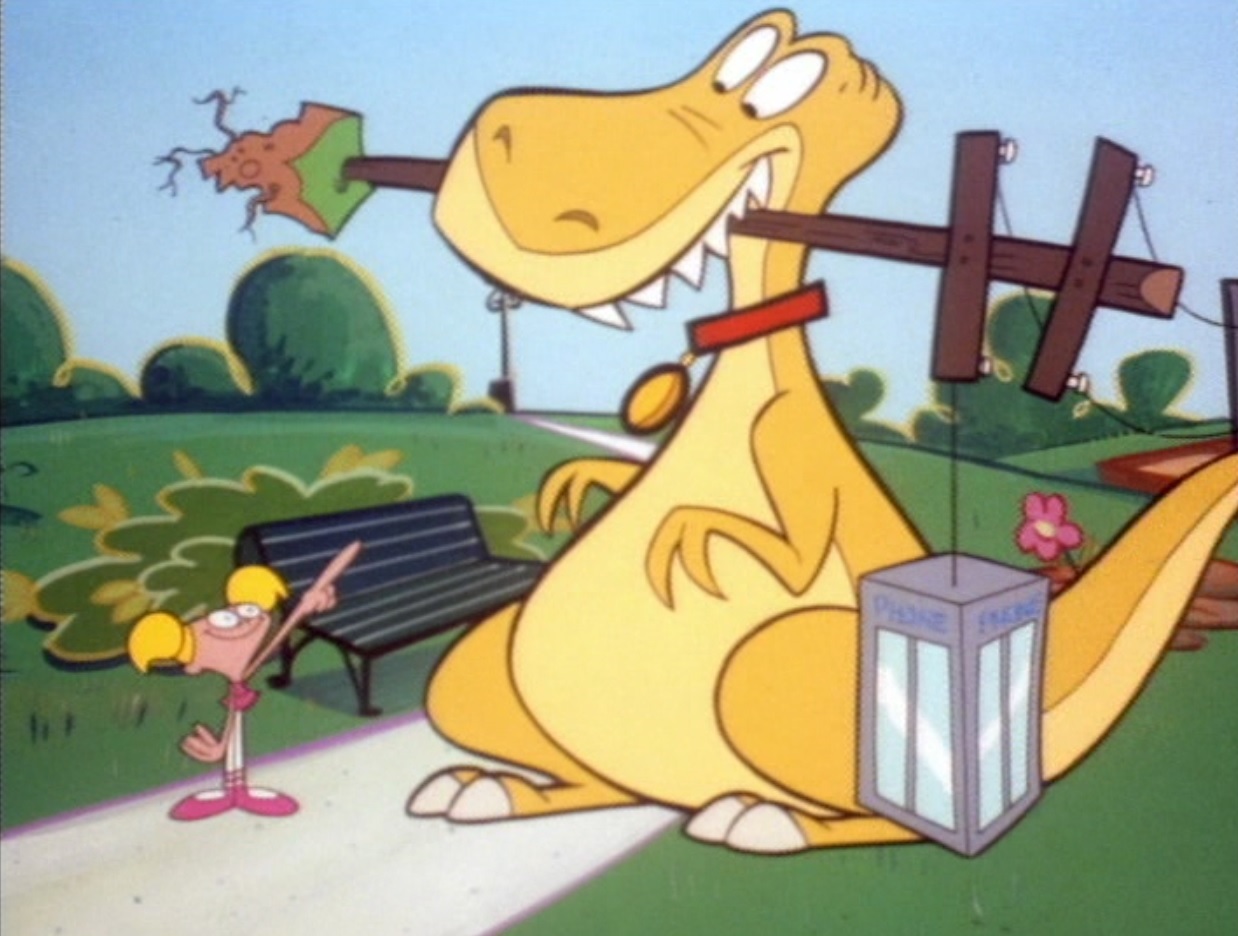
‘Jurassic Pooch’ clearly takes its inspiration from ‘Jurassic Park’: Dexter tries to revive a dinosaur from ancient DNA trapped inside amber.
Unfortunately and rather unscientifically, he’s missing the genes for the heart and the brain, which he takes from his dog. The result is a Tyrannosaur with dog characteristics.
Compared to the other characters, the dinosaur isn’t designed very well, and looks surprisingly like standard Hanna-Barbera fare. The humor, too, mostly falls flat, as the episode milks ‘giant dog’ gags to the max. The best gag may be the one in which Dexter’s cool jet plane turns into a bicycle.
Dial M for Monkey: Orgon Grindor
Directors: Paul Rudish & Genndy Tartakovsky
Stars: Dial M for Monkey
Rating: ★
Review:
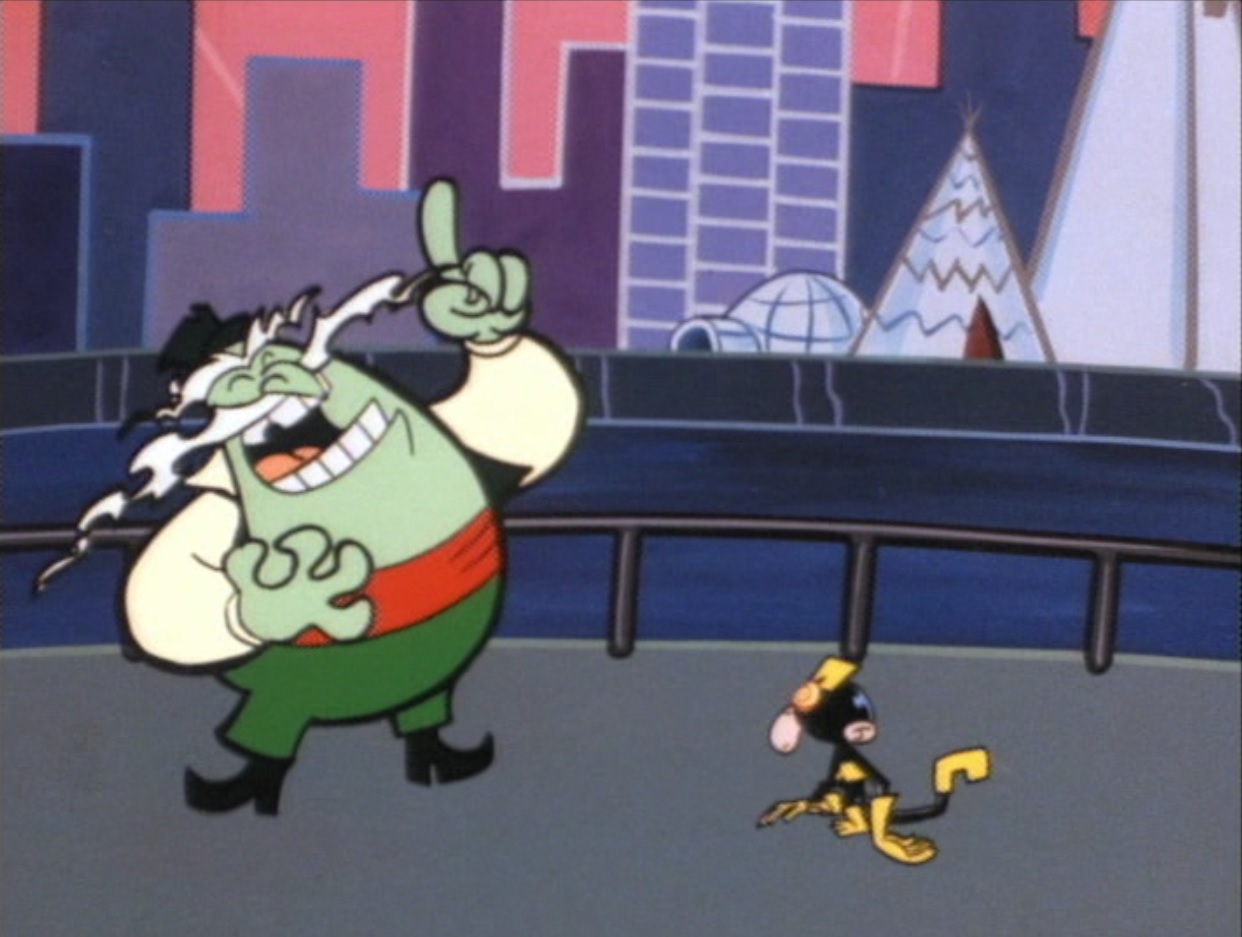
The Dial M for Monkey were the least interesting parts of the Dexter’s Laboratory show, and ‘Dial M for Monkey: Orgon Grindor’ is no exception.
In this boring episode monkey gets hypnotized by some intergalactic gypsy called Orgon Grindor. This pale-green villain looks like a blast from the past: he’s dressed like an organ grinder cliché from the 1930s, he speaks mock-Italian, and partly sings his dialogue, e.g. on the opera aria melodies of Giuseppe Verdi’s ‘La donna e mobile’ and Ruggero Leoncavallo’s ‘Ridi, Pagliacci’.
Much more interesting is the deepening of the relationship between Monkey and Agent Honeydew, who, for once, saves the day instead of Monkey. The two are depicted as being lovers in a rather risqué inter-species relationship.
Dimwit Dexter
See the post devoted to this episode
‘Jurassic Pooch/Dial M for Monkey: Orgon Grindor/Dimwit Dexter’ is available on the DVD ‘Dexter’s Laboratory Season One: All 13 Episodes’
Director: Sam Fell
Release Date: 1996
Rating: ★
Review:
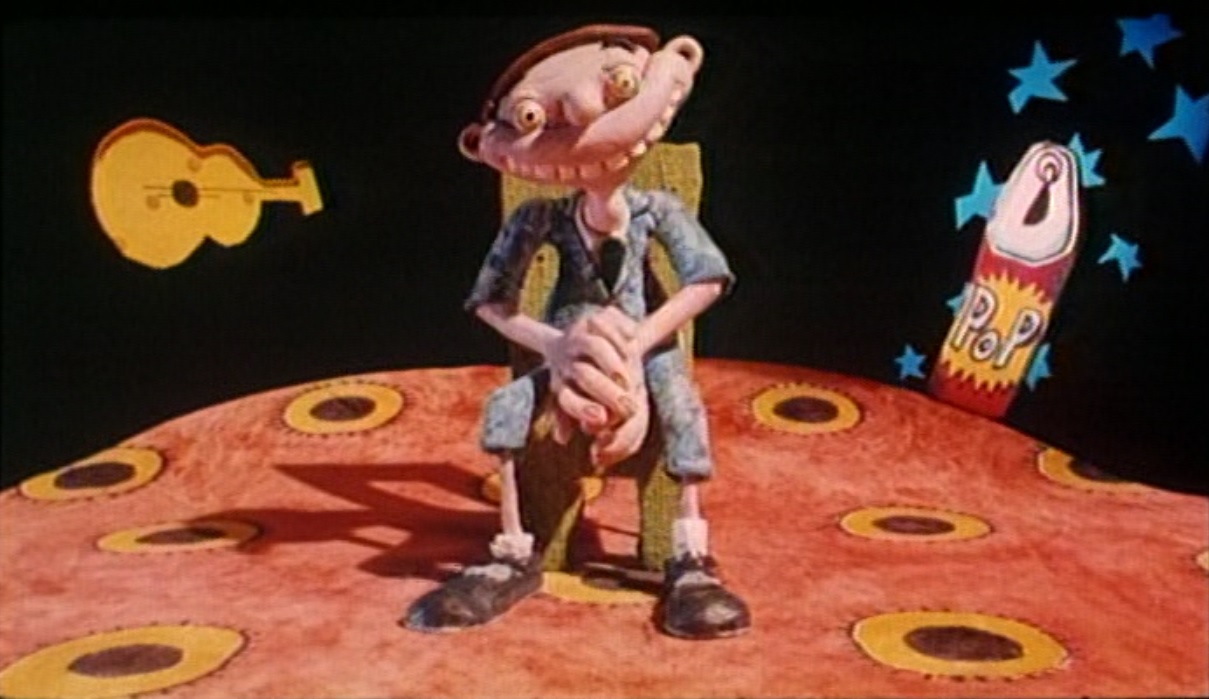
While Aardman produced masterpieces of stop motion like ‘The Wrong Trousers‘ (1993) and ‘A Close Shave‘ (1996), the studio also funded much smaller works by independent artists at their studio.
‘Pop’ is one of those. In this short a young man opens a can of soda, which makes his head explode. His goldfish (which has the same face as the young man) replaces him.
‘Pop’ makes no sense whatsoever, and is as ugly as it is unfunny. It feels like an amateurish student project and it probably wouldn’t have been on DVD if it were not an Aardman production. Unfortunately, it may have been the worst, but certainly not the only mediocre product by Aardman of the time , for subsequent films from the nineties like ‘Stage Fright, ‘Owzat‘, ‘Al Dente‘ and ‘Minotaur & Little Nerkin‘ are all very weak. The only exception is the hilarious ‘Humdrum’ from 1998.
Watch ‘Pop’ yourself and tell me what you think:
‘Pop’ is available on the DVD ‘Aardman Classics’
Director: John Eng
Airing Date: April 27, 1996
Stars: Duckman
Rating: ★
Review:
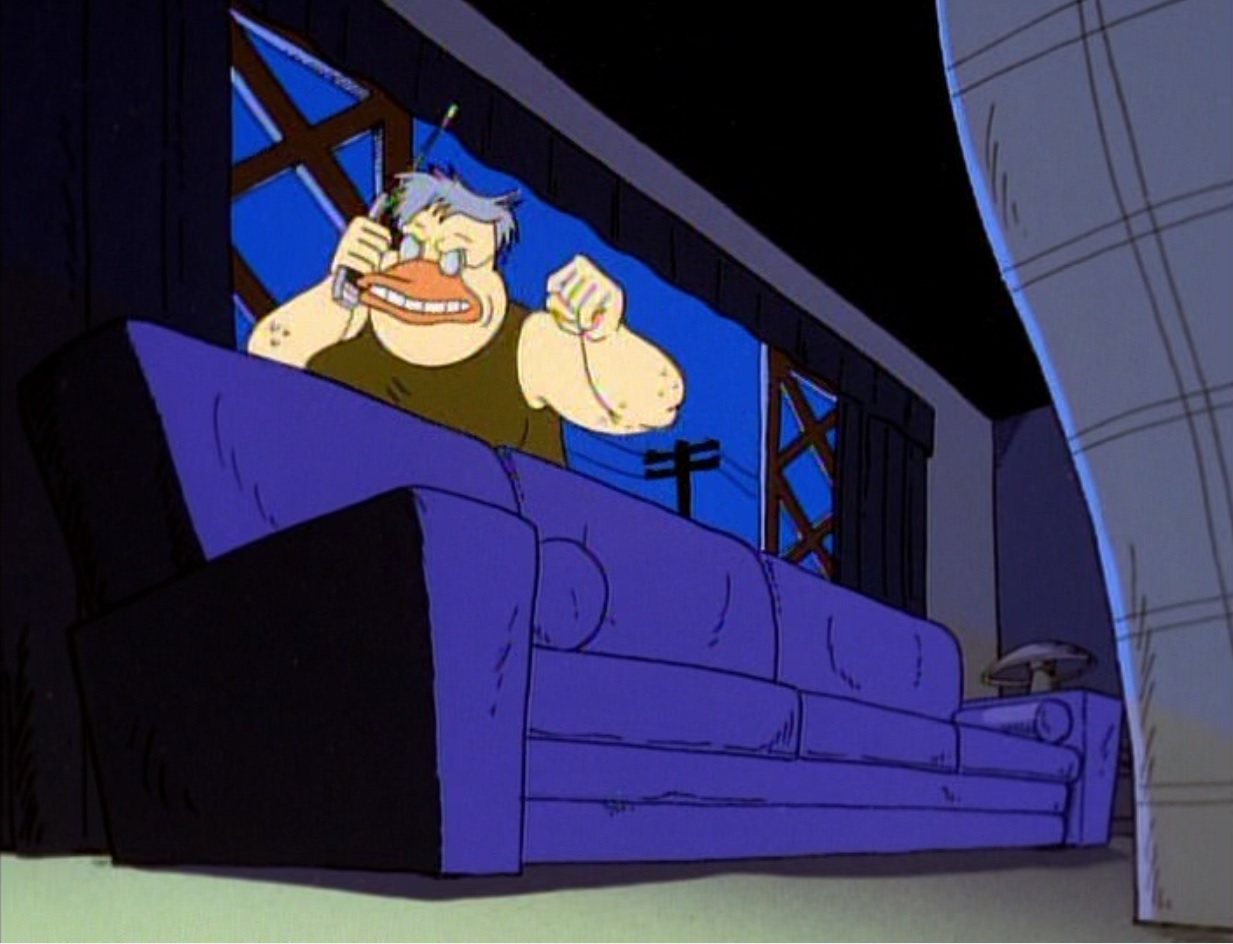
Even worse than the disappointing ‘The One with Lisa Kudrow in a Small Role’ is ‘Aged Heat’. With this episode the Duckman series hit rock-bottom.
The whole episode revolves around the age-old trope of a criminal doppelgänger. This time a female criminal called Agnes poses as her lookalike Grandmama, terrorizing the Duckman family. The result is terribly tedious and boring.
It’s a pity the story and its execution are so weak, for John Eng’s direction is admittedly quite interesting. ‘Aged Heat’ can boast some very interesting and off beat camera angles, like the viewpoint from Duckman’s perspective, when Aunt Bernice hits him in the face. Moreover, there’s quite some animated background art, especially during the birthday party scene. Unfortunately this remarkable cinematography cannot rescue the dragging story, which is the least inspired Duckman episode thus far.
Watch ‘Aged Heat’ yourself and tell me what you think:
This is Duckman episode no. 36
To the previous Duckman episode: The One with Lisa Kudrow in a Small Role
To the next Duckman episode: They Craved Duckman’s Brain!
‘Aged Heat’ is available on the DVD-box ‘Duckman – The Complete Series’


 Dr. Grob's Animation Review