You are currently browsing the category archive for the ‘★★★★★ ♕’ category.
Director: Chuck Jones
Release Date: September 19, 1942
Rating: ★★★★★ ♕
Review:
 ‘The Dover Boys’ or, as it is actually called, ‘The Dover Boys at Pimento University or The Rivals of Roquefort Hall’, is director Chuck Jones’s first masterpiece.
The short introduces his trademark of extreme poses, which in this cartoon are combined with ‘smear animation’ to unique results.
The extreme posing leads to highly stylized animation, which in itself is hilarious in its unnatural depiction of movement. In ‘The Dover Boys’ we watch both movement through poses, especially in the animation on Dan Backslide, as well as non-movement, with Dora descending the stairs as a prime example. Both techniques are important steps away from the classic squash-and-stretch animation, and from ‘believability through full animation’. Indeed, the animation style of ‘The Dover Boys’ looks forward all the way to the fifties, the era in which stylization of design and animation would flourish and dominate the animation industry. Indeed, the short’s prime animator, Bobe Cannon, would play an important role at UPA, the most influential animation film studio of the fifties.
The subject of ‘The Dover Boys’ is a sophisticated parody on melodrama, consisting of an archetypical story of a villain (called Dan Backslide) kidnapping a damsel in distress (dear Dora), taking her to his cottage in the mountains, where she is rescued by the heroes, in this case, the three Dover Boys, Tom, Dick and Larry.
Or is she? In the final scene they knock each other out, and Dora runs off into a distance with an odd bearded character in a bathing suit, who, as a running gag, hops along rather randomly throughout the picture to the music of ‘The Good Old Summertime’. This character is a relative of the equally mysterious Minah Bird from Chuck Jones’ earlier cartoon ‘Inki and the Lion’ (1941).
‘The Dover Boys’ is both innovative and funny. Its humor is as sophisticated as it is silly. In any case, the gags come fast and plenty, with hilarious nonsense as a result. An all time classic.
Watch ‘The Dover Boys’ yourself and tell me what you think:
Director: David Hand
Release Date: August 13, 1942
Rating: ★★★★★ ♕
Review:
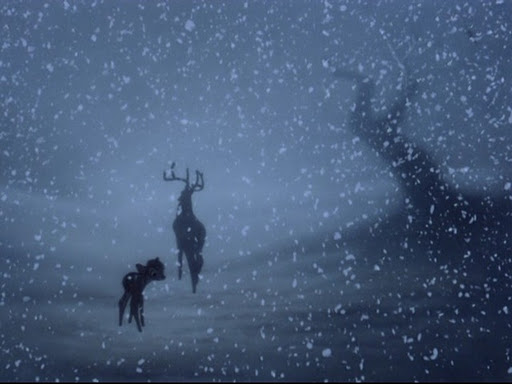 Although it was released after ‘Dumbo‘, ‘Bambi’ is essentially Disney’s fourth feature, and it was also the last in which the studio really pushed the envelope.
‘Bambi’ had been long in the making, with initial work already starting in 1937. In fact, it was initially planned as Disney’s second feature, but soon pushed back in favor of ‘Pinocchio’.
After having made such great and diverse efforts as ‘Snow White’, ‘Pinocchio‘ and ‘Fantasia’, Disney set the stakes even higher in Bambi, reaching a zenith in naturalism. But the film is way more than that: it’s a symphony of nature, utterly romantic in its depiction of forest life. It’s also a coming of age story and a depiction of the circle of life.
‘Bambi’ is full of great scenes, starting with the stunning opening scene, a long and complicated shot, which shows the vastness and depth of the forest using a multiplane camera, and which leads us straight into the story, when we come to follow friend owl in his flight.
The storytelling is very lean, it uses little dialogue and it consists of only a few distinct parts, which all concentrate on Bambi’s experiences. Most of the story is told by images and music only, and there are three pure mood pieces very reminiscent of a Silly Symphony like ‘The Old Mill‘ (1937) and parts of ‘Fantasia’: the April Shower sequence, the autumn sequence and Bambi’s love scene. In these sequences especially, it’s clear that atmosphere prevails above character development, and the studio indulges in beautiful imagery that is still impressive and enchanting today.
The film can be divided into eight sections (the titles are all mine):
1) Birth: which also introduces the lovable little rabbit Thumper;
2) Discovery of the world: including the introduction of the little skunk Flower and a rain scene, set to the beautiful song ‘April shower’;
3) The meadow: where both danger and other deer are introduced, including Bambi’s father and his later love interest, Feline;
4) Autumn: a short transitional mood piece;
5) Winter: which includes the famous skating scene, inspired by Pluto’s difficulties on ice in ‘On ice‘ (1935) and which ends with that harrowing, yet off screen death of Bambi’s mother;
6) Spring: where all our characters have become adolescents and discover the power of love;
7) Man: where man, who never is seen on screen, but whose threatening presence is so much more felt, once again brings danger into the forest, shooting animals (including Bambi) and causing a forest fire, which leads to great dramatic and apocalyptic shots of the burning forest;
and finally
8) Birth again: in which the cycle is completed.
The first five sections take almost two-thirds of the film and are responsible for Bambi’s reputation of being a childish film full of cute animals. This may be partly true, but is does no justice to the complete film, for the last three sections, starting with the death of Bambi’s mother (which essentially ends his childhood) are more artistic, more expressionistic and more dramatic. These scenes belong to the most powerful animated images ever brought to the screen.
But throughout the complete picture the artwork is stunning: the backgrounds, based on designs by Tyrus Wong, are lush and suggestive, the use of color is very clever and often amazing, and the music, which is very important to the narrative and which uses off-screen songs to evoke moods, is rich and effective. Indeed, Bambi’s soundtrack, by composers Frank Churchill and Edward Plumb, ranks among the best scores of any animation film. Backgrounds, design, color, music – all these make the film a mood piece of an astonishing quality.
The animation itself, too, is a highlight. It was supervised by four of the later so-called ‘nine old men’: Eric Larson, Milt Kahl, Frank Thomas and Ollie Johnston, and it’s the first testimony of their legendary status. The animation is amazingly well-done both in its naturalism as in its sense of character. It ranks from pure naturalism in Bambi’s mother exploring the meadow and Bambi preparing to fight to pure character animation. A highlight of the latter is Bambi having to say hello to Feline. Bambi’s behavior in this scene is perfect that of a young bashful boy.
The only deviation from believability is during the Twitterpated sequence: Eric Larson’s animation on friend Owl is zany and cartoony, as is the animation of the lovestruck Flower. The whole sequence is a little bit ridiculous, and out of place with the rest of the film. Luckily as soon as Bambi falls in love with Feline, the last part starts, which in its drama, powerful imagery and stunning effects is the undisputed highlight of the whole movie.
Bambi never ceases to amaze: it is simply beautiful.
Watch the skating scene from ‘Bambi’ yourself and tell me what you think:
Director: Władysław Starewicz
Release Date: November 9, 1912
Rating: ★★★★★ ♕
Review:
 ‘The Cameraman’s Revenge’ is one of the earliest animation films ever made, and a very early masterpiece (it predates ‘Gertie the Dinosaur‘ by two years). Surprisingly, it’s a film about adultery involving insects.
The plot of this stop motion film is as follows: Mr. Beetle commits adultery with a dragonfly, who is a dancer at a nightclub. Unbeknownst to him his secret behavior is filmed by a rival grasshopper who happens to be a cameraman. Meanwhile, Mrs. Beetle also commits adultery, with a beetle who is also a painter. But they’re discovered by Mr. Beetle on his arrival home. Mr. Beetle chases the painter out of his house. Nevertheless he forgives his wife and takes her to the cinema. However, the film that is shown reveals his infidelity, which creates a riot and the married couple ends in jail for destroying the movie box.
‘The Cameraman’s Revenge’ is an extraordinary film, and without doubt one of the first masterpieces of animation. Unlike Émile Cohl’s stop motion, Starewicz’s animation is stunning and very convincing. The insects are very lifelike, and move surprisingly realistically. The insects’ gestures are subtle, clearly evoking their emotions. For example, there’s a beautiful and very lifelike little scene of a beetle servant lighting the fireplace, animated without any hint of overacting. On the other hand, Mr. Beetle clearly is a brute, but we can also watch him in a seductive mood.
Throughout, Starewicz’s storytelling is economical and mature. The film’s subject is highly original for an animation film, even today. It’s almost unbelievable that such a modern film was made in Czarist Russia.
Watch ‘The Cameraman’s Revenge’ yourself and tell me what you think:
‘The Cameraman’s Revenge’ is available on the DVD ‘The Cameraman’s Revenge & other Fantastic Tales’
Director: Jiří Trnka
Release Date: 1965
Rating: ★★★★★ ♕
Review:
 In a self-contained world, seemingly outside space and time, an harlequin lives happily in his home.
The harlequin is an artist, a ceramist and a sculptor, making pots for his beloved plant. Unfortunately, his domestic peace is disturbed by a giant gloved hand, which orders him to sculpt a statue of a hand. As the harlequin keeps refusing, the hand uses praise, money, indoctrination, brutal force and erotics to persuade the artist to do what he’s ordered.
In the end the harlequin is caught, his hands are attached to strings worked by the hand, and he has to sculpt a giant hand in a cage. But, after finishing his works, the artist escapes and returns to his beloved home. It sadly is his own beloved plant that kills him by falling on his head, while he’s barricading the entrances to his room. The hand gives the artist a state funeral, making him posthumously part of the system.
‘The Hand’ was Czech puppet animator Jiří Trnka’s last film, and it was to be his masterpiece. Instead of diving into classic tales, he made one of his own, resulting in a most personal film and one that stands as the classic animated tale on totalitarianism.
Trnka manages to tell his tale without any dialogue. Although the puppet of the harlequin knows only one expression, his emotions are well-felt through his animation. There’s no doubt he’s symbolic for artists working in totalitarian regimes in general. The glove is a masterstroke. In its facelessness it is as scary as it is symbolic for the invisible hand of totalitarian power. The result is an equally sad and disturbing film, which shows both Trnka’s genius and the power of animation in general.
It’s no small surprise that this highly symbolic film was forbidden in communist Czechoslovakia.
‘The Hand’s message is still topical, being symbolic for artists working in oppressive regimes all over the world.
Watch ‘The Hand’ yourself and tell me what you think:
‘The Hand’ is available on the DVD ‘The Puppet Films of Jiri Trnka’
Directors: John & Faith Hubley
Release Date: September 21, 1964
Rating: ★★★★★ ♕
Review:
 One of directors John & Faith Hubley’s quintessential shorts,’The Hat’ is one of the most beautiful anti-war films ever made.
It’s an extraordinary blend of beautiful design, modern animation, improvisation and politics.
When a border guard accidentally drops his hat across the border, he and his enemy colleague argue about it and about war in general. Surprisingly, this is an improvised dialogue between jazz musicians Dizzy Gillespie and Dudley Moore, who also provide the film’s great jazz score.
The film’s leisurely speed is refreshing, its painted backgrounds of a snowy landscape are beautiful, the painted looks of the characters highly original, and its vivid animation by veteran Shamus Culhane stunning. All these aspects mount to a great and essential animation film. A classic.
Watch ‘The Hat’ yourself and tell me what you think:
‘The Hat’ is available on the DVD ‘Art and Jazz in Animation’
Director: Winsor McCay
Release Date: 1921
Rating: ★★★★★ ♕
Review:
 ‘The Pet’ is the second of the three ‘Dream of the rarebit fiend’ films Winsor McCay released in 1921. It is arguably the best of the three, and probably the best of all Winsor McCay’s films: it combines a well-executed story with a perfect command of animation. It’s too bad it isn’t more well-known.
In ‘The Pet’ a woman dreams she adopts a small animal that grows larger and larger every day, eating the cat, everything on the table, the furniture, and later on, a tree, a car and some buildings, until it explodes. The dream is totally believable with its inner logic and its wonderful execution. The growth of the animal is shown with a very imaginative use of perspective and beautiful backgrounds. For example, when the pet grows to gigantic proportions, we see it stride behind some very high buildings, towering over our heads.
More than 25 years later Tex Avery would return to the same subject in ‘King-size Canary’ (1947).
Watch ‘The Pet’ yourself and tell me what you think:
http://www.spike.com/video/dreams-of-rarebit/2917218.
This is Winsor McCay’s ninhth film
To Winsor McCay’s eight film: Bug Vaudeville
To Winsor McCay’s tenth and last film: The Flying House
Director: Winsor McCay
Release Date: July 1918
Rating: ★★★★★ ♕
Review:
 McCay’s fourth venture into animation is even more curious than the preceding three (‘Little Nemo‘, ‘How A Mosquito Operates‘ and ‘Gertie the Dinosaur‘). It’s an almost real time report of the sinking of the passenger steamer ‘The Lusitania’ by a German submarine in May 1915.
Like McCay’s earlier films, ‘The Sinking of the “Lusitania”‘ starts with some live action footage of the artist at work, helped by one Mr. Beach who provides McCay with the details on the sinking. Yet, this live action introduction is brief, and soon we cut to the real event.
The action depicted is explained by the title cards, who tell us when and how the ship was hit by two torpedoes fired from a German U-boat. The film also tells us about the number of passengers who perished, and singles out four of them. The tone of the title cards is agitated, and angry, pointing to Germany as a cruel and merciless enemy, and ending ending with the bold sentence “And they tell us not to hate the Hun!“. This message no doubt was rather welcome in a time in which the United States joined the war effort.
McCay’s animation is of a startling realism: the rolling waves, the steamer and U-boat moving in perspective, the explosions and smoke are totally convincing, and at the same time retain their graphic quality. The impact of the images is greatly enhanced by the use of cels (‘The Sinking of the “Lusitania” is the first McCay film to do so), and lovely background art of ocean skies. Despite the fine animation, the action is on the slow side, with people sometimes falling in slow motion into the sea. Yet, the slowness adds to the terrifying experience of the cruelty depicted.
The staging is superb: McCay uses only a few ‘camera angles’, most of them possible in real life, enhancing the idea of an objective record of events. Only two shots escape the documentary style: one shot of two fish fleeing from an approaching torpedo, and a final shot of a mother with child sinking into the sea. Clearly, McCay wanted the viewer to have the feeling he was witnessing the event in real time, as if he was there. Of course, the documentary style only enhances the clear propagandistic message against Germany. The bold propaganda may not have aged very well, McCay’s images certainly have: such command of perspective, such elegance of drawing and such dramatic yet convincingly ‘realistic’ staging is still impressive, one hundred years later. ‘The Sinking of the “Lusitania”‘ thus is a great example of how animation can be used in documentaries to show events that could not or have not been put on film. Strangely, this use of animation was not seen again, until the 21st century, when ‘Waltz with Bashir’ (2008) entered the cinemas.
In all, ‘The Sinking of the “Lusitania”‘ is an astonishing film, which may be both the first animated propaganda film and the first animated documentary. It’s totally unique in its drama, and, despite the propaganda, an all time masterpiece of animation.
Watch ‘The Sinking of the “Lusitania”‘ yourself and tell me what you think:
This is Winsor McCay’s fourth film
To Winsor McCay’s third film: Gertie The Dinosaur
To Winsor McCay’s fifth, unfinished film: The Centaurs
‘The Sinking of the “Lusitania”‘ is available on the DVD ‘Winsor McCay the Master Edition’
Director: Winsor McCay
Release Date: September 14, 1914
Stars: Gertie the Dinosaur
Rating: ★★★★★ ♕
Review:
 ‘Gertie the Dinosaur’ was Winsor McCay’s third animation film, and it certainly is his most famous one, still capable of entertaining new audiences.
The film follows a same story idea similar to that of ‘Little Nemo‘: during a visit to a natural history museum Winsor McCay bets the famous comic strip artist George McManus that he can make a dinosaur move. After these long nine minutes of slow live action introduction, we finally see McCay’s creation: Gertie the dinosaur.
McCay’s dinosaur appears to be a girl dinosaur. She behaves like a trained animal: she listens to what McCay is telling her, she eats a rock and a whole tree, she bows to the camera, she lifts her feet, she’s being startled by a small mammoth, which she throws into the lake, she dances, and she lifts McCay himself on to her back.
The captions in between replace dialogue, which was part of a vaudeville act with Winsor McCay talking to Gertie and she listening to him. This vaudeville show, with which McCay toured, has been recreated in the Disneyland special ‘The Story of Animated Drawing‘, which aired on November 30, 1955, and which is available on the DVD set ‘Behind the Scenes at the Walt Disney Studio’. At the 2014 Annie Awards Ceremony Bill Farmer also reenacted McCay’s vaudeville performance (included below). The reenactment makes the experience of the original film much more vivid, and watching this version is highly recommended.
The short is impressive because of its fine animation, command of perspective and detailed background art (which had to be drawn over and over again), but what really makes the film a milestone of animation is that Gertie the Dinosaur is the first animated cartoon character with personality. She’s not just any dinosaur, she’s a female dinosaur, behaving half like a trained animal, half like a small spoiled child. She cries when being scolded by McCay, and is clearly happy when performing her little dance.
Watching the interaction between her and (the off-screen) McCay is impressive, but it’s also delightful and fun. ‘Gertie the Dinosaur’ had a huge impact at the time, and inspired a whole generation of animation film pioneers (e.g. Paul Terry, Frank Moser, Pat Sullivan, Otto Messmer and the Fleischer Brothers). The film truly is an all time classic, and enjoyable to this very day.
‘Gertie the Dinosaur’ was followed by the unfinished and much less successful film ‘Gertie on Tour‘, of which McCay completed only two scenes.
Watch ‘Gertie tThe Dinosaur’ yourself and tell me what you think:
Here’s the original vaudeville show reenacted by Bill Farmer at the 41st Annie Awards Ceremony (2014):
This is Winsor McCay’s third film
To Winsor McCay’s second film: How a Mosquito Operates
To Winsor McCay’s fourth film: The Sinking of the Lusitania
Director: Dave Fleischer
Release Date: August 3, 1934
Stars: Betty Boop
Rating: ★★★★★ ♕
Review:
 ‘Poor Cinderella’ is the first of Fleischer’s Color Classics series, a series meant to compete with Walt Disney’s ‘Silly Symphonies’.
It features Fleischer’s proven star Betty Boop in her only appearance in color, and it’s undoubtedly her most elaborate cartoon.
Although filmed in the two-color technique of Cinecolor, which only uses reds and blues, its designs are lush and colorful. Nevertheless, ‘Poor Cinderella’ remained the only Color Classic in Cinecolor. The seven subsequent entries were filmed in 2-color Technicolor, using reds and greens, until Disney’s monopoly of 3-color Technicolor expired in 1936. The first full color Color Classic was ‘Somewhere in Dreamland‘ from January that year.
Apart from color, ‘Poor Cinderella’ boasts some stunning backgrounds, using Fleischer’s unique 3D-technique for the first time. In this technique 3D sets are used as a background to the animated cells to mesmerizing effects. Until the invention of the multiplane camera, which made his debut in ‘The Old Mill‘ in 1937, Fleischer’s 3D technique remained unchallenged in its wonderful creation of depth.
The story is quite faithful to the original fairy tale, albeit with some typical Fleischer touches. For instance, when the Fairy Godmother gets Betty into a wonderful outfit, the latter is seen in her underwear, something that would never happen to Disney’s Cinderella.
Oddly, Betty is red-haired and blue-eyed in this cartoon; probably to make her fit in better with the designs of those same colors. The changes between the scenes are creative and original. The Fairy Godmother is closer to human design than anything in previous Fleischer cartoons. The horses are drawn very realistically, as well, surpassing comparable designs at the Disney studio, although they do not move correctly.
‘Poor Cinderella’ was clearly made with the intention to compete with Disney, and remarkably, it does challenge that studio. Nevertheless, the Fleischer studio had difficulties to be on par with the ever advancing Disney studio, which pushed the limits of animation in almost every Silly Symphony it released, leaving the promise of ‘Poor Cinderella’ unfulfilled.
Watch ‘Poor Cinderella’ yourself and tell me what you think:
‘Poor Cinderella’ is available on the French DVD Box Set ‘Betty Boop Coffret Collector’
Director: David Hand
Release Date: June 29, 1935
Rating: ★★★★★ ♕
Review:
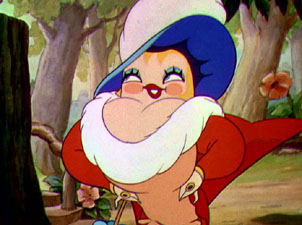 ‘Who Killed Cock Robin?’ is a musical mystery very loosely based on the nursery rhyme of the same name. Its source material notwithstanding, ‘Who Killed Cock Robin’ is the most adult Silly Symphony ever made.
True to the Silly symphony concept, all characters either sing or speak in rhyme to Frank Churchill’s music (with Jenny Wren’s sensual blues as a highlight), but in a bare seven minutes the cartoon manages to mock both the law, racialism and gay people, while displaying an unusual eroticism through Jenny Wren, who is a very fine caricature of famous Hollywood actress Mae West, a tour de force by Joe Grant (design) and Hamilton Luske (animation).
These features are especially striking when one bears in mind that the Hays Code was already active in 1935. Due to his self-censorship of the movie industry sex and violence were banned from the movies. To illustrate its effect: due to this code an erotic cartoon character like Betty Boop had to be tuned down and was turned into a goody-goody and quite a bland character. Yet, ‘Who Killed Cock Robin’ displays its satire and eroticism in full glory.
When Cock Robin has been shot by a mysterious shadow, the Keystone Cop-like police randomly arrests some bystanders: a tough-looking guy, a black bird (in those days blacks were easily arrested just because of their color) and a cuckoo who resembles Harpo Marx. They’re treated very roughly, being knocked by the cops almost all the time. And when Jenny exclaims that justice should be done, the judge simply orders to hang all verdicts even though nobody knows who’s guilty!
It’s Cupid, an obvious caricature of a homosexual, who prevents this cruel sentence. Cock Robin appears to be alive, and finally he and Jenny Wren reunite in a hot kiss. Thus ends one of the most spectacular cartoons of the 1930s.
Watch ‘Who Killed Cock Robin?’ yourself and tell me what you think:
This is Silly Symphony No. 54
To the previous Silly Symphony: The Cookie Carnival
To the next Silly Symphony: Music Land
Director: Wilfred Jackson
Release Date: October 31, 1936
Rating: ★★★★★ ♕
Review:
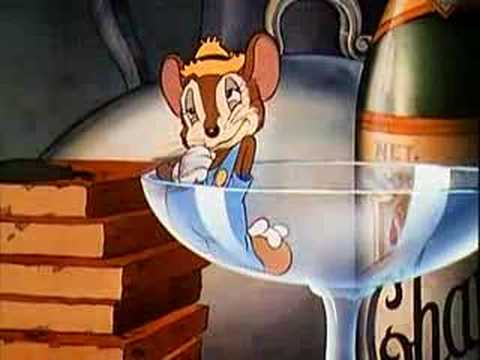 A very beautifully executed rendering of the classic tale, ‘The Country Cousin’ is a gem among the Silly Symphonies.
Its story is lean and economical, its characterization highly effective and its silent acting superb. Particularly noteworthy is the drunken performance of the Country Cousin, animated by Art Babbitt, which belongs to the highlights of animation.
Everyone who wants to know what ‘character animation’ is all about, should go and watch this cartoon. One cannot find a better example of it: the two mice look similar, but are very different in their behavior, attitude, and personality. Moreover, their personalities are played completely in mime, without any help from characteristic voices.
Besides this, ‘The Country Cousin’ contains some very realistic animation of people’s feet walking on the sidewalk. Indeed, the human realism of ‘Snow White and the Seven Dwarfs’ (1937) was not far away anymore.
Thirteen years later, Tex Avery would explore the theme of ‘The Country Cousin’ once again, albeit quite differently and way more ridiculously, in his hilarious short ‘Little Rural Riding Hood’ (1949).
Watch ‘The Country Cousin’ yourself and tell me what you think:
This is Silly Symphony No. 63
To the previous Silly Symphony: Three Blind Mouseketeers
To the next Silly Symphony: Mother Pluto
Director: Wilfred Jackson
Release Date: October 5, 1935
Rating: ★★★★★ ♕
Review:
 In ‘Music Land’ a young violin falls in love with a young saxophone, much to the disapproval of their parents, the queen of ‘The Land of Symphony’ and the king of ‘The Isle of Jazz, respectively, whose realms are separated by the ‘Sea of Discord’.
When the young saxophone is imprisoned, the feud between the two very different nations leads to a war, in which the two young lovers are almost killed… The whole story is told through music, even the characters ‘speak’ with the sounds of the instruments they are. The complete score, by Leigh Harline, is a delight to listen to.
This reading of ‘Romeo and Juliette’ is one of the most inspired of all Silly Symphonies. The very idea of musical instruments ‘speaking’ in their own sound is brilliant. But there is much more. For example, when the saxophone prince is locked up, he’s imprisoned in a metronome and when he writes a letter to his father (a caricature of bandleader Paul Whiteman, ‘the king of jazz’) he does this in staff-notation!
The complete design of the cartoon is delightful. The backgrounds are particularly beautiful, rendering a totally convincing fantasy world, in which the cartoon develops as if it were an age-old story. The concept of a battle between classical music and jazz was a topical one in the 1930s, when jazz was still regarded by many as devilish music and a threat to ‘high culture’. Nevertheless, during the second half of the 1930s jazz gradually became a respected genre, as exemplified by Benny Goodman’s concert in Carnegie Hall in 1938.
Watch ‘Music Land’ yourself and tell me what you think:
This is Silly Symphony No. 55
To the previous Silly Symphony: Who Killed Cock Robin?
To the next Silly Symphony: Three Orphan Kittens
Director: Burt Gillett
Release Date: July 1, 1933
Stars: Clarabelle Cow, Horace Horsecollar, Mickey Mouse, Minnie Mouse, Pete, Pluto
Rating: ★★★★★ ♕
Review:
 ‘Mickey’s Gala Premier’ is without doubt one of the greatest of all Mickey Mouse Cartoons.
The short both celebrates the enormous popularity Mickey enjoyed in the early 1930s, and establishes him as one of the leading actors of that period.
We’re witnessing the premiere of a new Mickey Mouse cartoon at the famous Grauman’s Chinese Theater in Hollywood, where Mickey and the gang are welcomed as celebrities (only Goofy is absent, his character was not yet established at that time).
The cartoon that is shown at the premiere is called ‘Galloping Romance’. It is an early and fantastic self-parody. This short only exists within ‘Mickey’s Gala Premier’ and is a ridiculous variation on ‘The Cactus Kid’ (1930), in which Mickey rides a number of silly animals in his pursuit of Pete, including a marimba. This self-consciously silly cartoon is way more old-fashioned than ‘Mickey’s Gala Premier’ itself.
Nevertheless, the crowd, which consists solely of well-known performers of the time, laugh their heads off and, after the show, all try to congratulate Mickey. Mickey’s wet dream appears to be being kissed by Swedish actress Greta Garbo, because it is the cartoon’s climax before it’s being revealed that all has been just a dream.
All the caricatures are the work of Joe Grant, whose work was also quoted by the Disney studio in the short special ‘Parade of the Award Nominees‘ (1932). For ‘Mickey’s Gala Premier’ Disney went directly to Grant, and the film became the story man’s first job for Disney. However, it was only two months after this film that Joe Grant became a full-time employee at the Disney studio. There he would also draw caricatures for ‘Broken Toys’ (1935) and ‘Mickey’s Polo Team’ (1936), but his main contribution would be to the story department.
The self-conscious nature of ‘Mickey’s Gala Premiere’ would remain rare at Disney’s, but it would become one of the key features of the Warner Brother Cartoons, who would produce similar cartoons as ‘You Ought to be in Pictures’ (1940) and ‘What’s Cookin’ Doc?’ (1944). Both cartoons are tributary to ‘Mickey’s Gala Premier’.
The short also sprouted several other cartoons featuring caricatures of contemporary Hollywood stars, among others ub Iwerks’s ‘Soda Squirt‘ (1933), Walter Lantz’s ‘The Merry Old Soul‘ (1933) and ‘Toyland Premiere’ (1934), Disney’s own ‘Mickey’s Polo Team’ (1936) and ‘Mother Goose goes Hollywood’ (1938), and the Warner Brothers cartoons ‘The Coo-Coo Nut Groove’ (1936), ‘Porky’s Road Race’ (1937) and ‘Hollywood Steps Out‘ (1941). Nevertheless, ‘Mickey’s Gala Premier’ was not the first in his kind, for already ten years earlier Felix the Cat made the trip to Hollywood to meet the stars in ‘Felix in Hollywood’ (1923).
Among the stars featured in ‘Mickey’s Gala Premier’ I managed to identify The Keystone Cops, Marie Dressler, Laurel & Hardy, the Marx Brothers, Maurice Chevalier, Eddie Cantor, Jimmy Durante, Harold Lloyd, Edward G. Robinson, Clark Gable, Joe E. Brown, Charlie Chaplin, Buster Keaton, Mae West, Greta Garbo, Bela Lugosi, Frederic March and Boris Karloff.
Also featured is some guy who has a striking resemblance to Prince Charles of Wales and who’s dressed as a king. This is a caricature of Will H. Hays, the president of the Motion Picture Producers and Distributors of America (MPPDA). Hays was Hollywood’s chief censor and the man behind the Hays code, the censorship Hollywood imposed on itself between 1930 and 1968. Interestingly, the censorship only became severe when Hays made place for Joseph Breen in 1934…
Watch ‘Mickey’s Gala Premier’ yourself and tell me what you think:
This is Mickey Mouse cartoon No. 58
To the previous Mickey Mouse cartoon: Mickey’s Mechanical Man
To the next Mickey Mouse cartoon: Puppy Love
Director: Burt Gillett
Release Date: July 30, 1932
Rating: ★★★★★ ♕
Review:
 ‘Flower and Trees’ was the first film (animated or not) in full technicolor and it’s therefore a milestone of cinema.
Nevertheless, it feels like a transitional film. The colors make it stunningly modern compared to the earlier Silly Symphony entries, but some of the designs still firmly belong to the black-and-white era. The designs of the flowers and the caterpillars, for instance, go all the way back to the third Silly Symphony, ‘Springtime‘ from 1929.
The birds, on the other hand, have lost their cartoony designs they still had in ‘The Bird Store‘ from six months earlier, and the villain tree is probably the most elaborate character to have hit the animated screen thus far.
For contemporary audiences, the film may seem rather silly and a bit old fashioned, but its storytelling is very economical. It contains some original visual gags (flowers brushing their teeth, a pine portrayed as a hen) and fine drama, when the rejected mean old trees sets the wood on fire. The colors are not only used as a novelty, but add to the drama, as do musical quotes from Franz Schubert’s “Erlkönig” and Gioachino Rossini’s overture to William Tell.
Technicolor was a great advancement for the Silly Symphony series. The colors created way more atmosphere and allowed for more complex designs. Because of color, the Silly Symphonies would propel animated art forward like they never did before, making Walt Disney the undisputed leader in the field.
This leadership was greatly aided by the exclusive contract Disney concluded with the Technicolor company, giving him the exclusive rights to use the new technique for animated films for three years. So, when other studios had to stick to black and white, or were obliged to use far less convincing two-color techniques, Walt Disney made the most beautiful and literally most colorful cartoons of the 1930s.
‘Flowers and Trees’ enthralled the critics so much at the time, they installed a special Academy Award for best animated short films, with ‘Flowers and Trees’ naturally being its first winner. During the 1930s Disney would win every Oscar in this category.
Watch ‘Flowers and Trees’ yourself and tell me what you think:
This is Silly Symphony No. 29
To the previous Silly Symphony: Just Dogs
To the next Silly Symphony: King Neptune
Director: Wilfred Jackson
Release Date: February 23, 1935
Stars: Clarabelle Cow, Donald Duck, Horace Horsecollar, Mickey Mouse
Rating: ★★★★★ ♕
Review:
 Almost three years after ‘Flowers and Trees’ Mickey finally made the step to color, and it’s probably because of this that ‘The Band Concert’ has such a Silly Symphony-like feel to it.
In 1935 the concept of a concert cartoon was already an old one (Mickey’s first was the ‘Barnyard Concert’ from 1930), but it finds the peak of perfection in this one.
Likewise, the use of Gioachino Rossini’s ‘overture Wilhelm Tell’ and ‘Turkey in the Straw’ in cartoons was far from new, but who would have thought that the two tunes would fit together so perfectly? The overture is played inside-out culminating in the storm sequence which brings forth a tornado. That’s how it feels, Mickey is not only conducting the storm music but even the real storm itself!
Notwithstanding the cartoon being a Mickey Mouse showcase, it’s Donald Duck who is stealing the show, like he did in the two previous Mickey Mouse cartoons he appeared in: ‘Orphan’s Benefit‘ and ‘The Dognapper‘. Being the only character in the cartoon born in color, Donald makes the transition from black-and-white to color naturally. Mickey and the other characters, on the other hand, still have a strong black-and-white feeling in their design and are less fitting in the bright world of color.
During Mickey’s concert, Donald produces an unending supply of flutes out of nothing, playing ‘Turkey in the Straw’ right through Rossini’s music (this ability of bringing forth material from out of nowhere was a capability that Donald would soon lose, but it would become a trademark of Bugs Bunny several years later). It’s a bitter irony that it’s this tune, ‘Turkey in the Straw’, which signals Mickey’s demise, because it was the same tune that made Mickey a star in the first place.
Nevertheless, ‘The Band Concert’ is without doubt Mickey’s best concert cartoon, arguably his best cartoon since ‘Steamboat Willie‘ and certainly one of the most perfect animated cartoons ever made.
Watch ‘The Band Concert’ yourself and tell me what you think:
This is Mickey Mouse cartoon No. 73
To the previous Mickey Mouse cartoon: Mickey’s Man Friday
To the next Mickey Mouse cartoon: Mickey’s Service Station
Directors: William Hanna & Joseph Barbera
Release Date: April 26, 1947
Stars: Tom & Jerry
Rating: ★★★★★ ♕
Review:
 In ‘The Cat Concerto’ Tom unexpectedly appears to be a star pianist, playing Franz Liszt’s second rhapsody in concert, and doing it with enjoyable flair.
Unfortunately his playing awakes Jerry, who sleeps inside the grand piano. This leads to a hilarious chase in and around the piano, while the playing of the music continues.
‘The Cat Concerto’ almost looks like a remake of Friz Freleng’s ‘Rhapsody Rabbit‘ from 1946. However, it shares only two gags with the earlier film: that of the mouse suddenly interjecting a boogie-woogie theme and the final gag in which the mouse steals the show. The main difference between the two films is The Cat Concerto’s higher sense of realism and its integrated story, in which every gag follows from the one preceding it in almost continuous action.
‘Rhapsody Rabbit’, in contrast, is more absurd and contains more totally unrelated black-out gags. In the end, ‘The Cat Concerto’ is the better cartoon, because of its great characterization, its outstanding animation, its perfect timing. Indeed, it won an Academy Award, and together with ‘The Band Concert‘ (1935) it can be considered the best concert cartoon of all time.
Nevertheless, there seems to be something fishy about ‘The Cat Concerto’, when compared with ‘Rhapsody Rabbit’. For more on the controversy about these two all too similar cartoons, see Thad Komorowski’s excellent blogpost on the issue.
Watch ‘The Cat Concerto’ yourself and tell me what you think:
This is Tom & Jerry cartoon No. 29
To the previous Tom & Jerry cartoon: Part Time Pal
To the next Tom & Jerry cartoon: Dr. Jekyll and Mr. Mouse
Director: Walt Disney
Release Date: August 7, 1928
Stars: Mickey Mouse, Minnie Mouse, Pete
Rating: ★★★★★ ♕
Review:

Although Mickey’s first cartoon, ‘Plane Crazy‘, couldn’t arouse any distributor, Disney made another cartoon with his new character, ‘Gallopin’ Gaucho’. It was to be Mickey’s second and last silent cartoon.
If possible, he is even ruder in this short than in ‘Plane Crazy’: according to a poster in the background, he is a sought-after criminal, we watch him smoking and drinking, and dancing a stout tango with Minnie (who’s wearing a bra in this cartoon).
Nevertheless, this cartoon is also the first in which Mickey shows to be a small, but clever and courageous hero. For when Minnie is abducted by Pete (who, in his first appearance in a Mickey Mouse cartoon, has both his legs), Mickey rescues her in a heroic fight. He then earns the kiss he tried to get by force in ‘Plane Crazy’. It was of course this character trait which was greatly expanded upon in later Mickey Mouse cartoons. Mickey’s nemesis, Pete, was in fact a much older character than Mickey – he already figured in some of the Alice cartoons and he was also Oswald’s adversary. His design was initially more dog- or bearlike, but in the Mickey Mouse cartoons it was settled that Pete was some kind of big cat.
Due to the melodrama ‘Gallopin’ Gaucho’ contains less gags than ‘Plane Crazy’, but it’s still a wonderful and fast cartoon with ingenious gags like the scene in which Mickey uses his own tail as a tackle. ‘Gallopin’ Gaucho’ also set out a storyline that was to be copied a couple of times (e.g. ‘The Cactus Kid‘ (1930), ‘Mickey in Arabia‘ (1932),’ The Klondike Kid‘ (1932)), and self-consciously parodied in ‘Gallopin’ Romance’, the film shown in ‘Mickey’s Gala Premier’ (1933). ‘Gallopin’ Gaucho’ itself was a parody of the 1927 Douglas Fairbanks film ‘The Gaucho’.
This cartoon was de facto the first production of Disney’s new fledgling studio (‘Plane Crazy’ was made secretly when Disney was still under Mintz’s contract). Ub Iwerks, who had animated ‘Plane Crazy’ single-handedly, could now be assisted by the young assistant animators Les Clark and the recently hired Wilfred Jackson to work on ‘Gallopin’ Gaucho’. Both men would have long lasting careers at the Disney studio.
Unfortunately, ‘Gallopin’ Gaucho’ didn’t stir the distributors any more than did ‘Plane Crazy’. Disney had to come with something original, if he would get Mickey on the screen. And with something original he came…
A few final trivial remarks
- Mickey has shoes in this cartoon, which he shortly looses while whistling his ostrich in one scene.
- Mickey’s eyes change from the goggly to the familiar ones during the same scene.
- The bird Mickey’s riding might very well be a Rhea, a relative of the ostrich, that lives on the pampas of Argentina, the place where the cartoon takes place.
Watch ‘Gallopin’ Gaucho’ yourself and tell me what you think:
This is Mickey Mouse cartoon No. 2
To the previous Mickey Mouse cartoon: Plane Crazy
To the next Mickey Mouse cartoon: Steamboat Willie
Director: Walt Disney
Release Date: November 18, 1928
Stars: Mickey Mouse, Minnie Mouse, Pete
Rating: ★★★★★ ♕
Review:

In 1928 Walt Disney was at a low point in his career. He had refused to work for Charles Mintz at lower wages, he had lost most of his staff to Mintz, and he had no distributor for his new cartoon star, Mickey Mouse.
Mickey’s first two cartoons, ‘Plane Crazy‘ and ‘Gallopin’ Gaucho‘, were well-made and entertaining films, but they didn’t impress any distributor. The problem was that despite their high quality, they were not really different from other cartoons, like Disney’s former own Oswald the Lucky Rabbit series. Disney had to think of something.
And he did. Mickey’s third cartoon would have the distinction of sound. Sound was an extremely fresh cinematic feature at the time. The breakthrough feature, ‘The Jazz Singer’ had only been released in October 1927, and the first all talking picture, ‘Lights of New York’ was only released in July 1928, the month in which production on ‘Steamboat Willie’ started.
Using sound creatively
Surprisingly, ‘Steamboat Willie’ was not the first cartoon to use synchronized sound. The Fleischer studio, for example, had experimented with the technique as early as 1924, and in October 1928 Paul Terry would release ‘Dinner Time’, which also used a synchronized soundtrack. However, Fleischer’s films failed to reach complete synchronicity, and Paul Terry’s film (which can be watched here) is essentially a silent and remarkably boring cartoon, which just happens to have sound to it.
‘Steamboat Willie’ on the other hand makes perfect use of the novelty of sound. Already in the opening scene we’re treated on something no less than spectacular: we watch and hear Mickey Mouse whistling a joyful tune. After watching several silent cartoons, this sole scene still has a startling effect. But all scenes in ‘Steamboat Willie’ are there to show us the novelty of sound: we watch and hear whistles blowing, cows mooing, chickens cackling, and Minnie shouting “yoo”-hoo”. And thanks to the invention of the click track all sounds are in perfect synchronization with the moving images.
However, the real treat of ‘Steamboat Willie’ comes after 4 minutes, when a goat swallows Minnie’s sheet music and guitar. What seems a disaster turns out to be a delight, for the goat becomes musical, and Mickey and Minnie turn it into some kind of hurdy-gurdy. This gag, in fact, had already been used in the silent Oswald the Lucky Rabbit cartoon ‘Rival Romeos‘ (released in March), but makes much more sense with the added sound. For now the goat-hurdy gurdy provides an intoxicating soundtrack for Mickey to improvise on, incidentally mostly by torturing animals. This musical number, based on ‘Turkey in the Straw’ is a sheer delight, and entertains even today.
The impact of ‘Steamboat Willie’
Needless to say ‘Steamboat Willie’ boosted both Mickey Mouse’s and Walt Disney’s career and it gave a valuable shot to the ailing animation industry. Yet, it also caused a setback, one that can already be seen in this cartoon. In ‘Steamboat Willie’, sound is the sole raison d’être of some of the shots (chickens cackling, a cow mooing). But more important, storyline has given way to an extensive musical number. While the two Mickey Mouse shorts that were made before, ‘Plane Crazy’ and ‘Gallopin’ Gaucho’, had strong, albeit simple stories, Steamboat Willie has almost none. It wasn’t necessary: simply watching Mickey Mouse dancing and playing to the music was marvelous enough for the audiences of that time.
Therefore, in the years after the success of ‘Steamboat Willie’, Disney would favor often tiring sing and dance routines above great story lines. It took the studio almost two years to bring back strong stories to its cartoons (Mickey’s 19th film, ‘The Fire Fighters’ from 1930, is arguably the first).
Conclusion
Nevertheless, ‘Steamboat Willie’ is a great cartoon, and a lot of fun to watch. It is still deeply rooted in the silent era: because lip synchronization had not been developed yet, the characters’ vocabulary remains rather limited. Therefore, it still uses a comic strip-like visual language to express the characters’ feelings. Yet, the musical number is both fresh and catching.
When you’ve seen Steamboat Willie, you’ll be whistling ‘Turkey in the Straw’ for days, with a smile on your face.
Watch ‘Steamboat Willie’ yourself and tell me what you think:
This is Mickey Mouse cartoon No. 3
To the previous Mickey Mouse cartoon: Gallopin’ Gaucho
To the next Mickey Mouse cartoon: The Barn Dance
Director: Walt Disney
Release Date: May 15, 1928
Stars: Mickey Mouse, Minnie Mouse
Rating: ★★★★★ ♕
Review:
 April 1928. Disney has just returned from an ill-fated journey to New York. There he had learned that he had lost his star character Oswald the Lucky Rabbit, and all his crew – all hired away by his distributor, Charles Mintz.
All, save one – only his friend and star animator Ub Iwerks has remained loyal*. And while the rest of the studio is working on the last Disney-produced Oswald cartoons, Iwerks is set to work in a separate office, secretly working on a cartoon, not for Mintz, but for Disney.
Iwerks works at an astonishing speed, and he finishes the animation on the cartoon after two weeks. This is a stunning effort by all standards. But what is even more extraordinary is that the finished product, ‘Plane Crazy’, turns out to be such a fine cartoon!
‘Plane Crazy’ is more consistent than most of the preceding Oswalds. It’s fast, it’s simply packed with gags and very funny. Moreover, it’s full of visual tricks. For example, the film opens with the behind of a cow (!), walking away from the camera. Later there are some great perspective scenes with Mickey’s plane flying under a cow’s udders, and almost crashing into two cars.
The film draws inspiration from the same event as the earlier Oswald cartoon ‘The Ocean Hop‘ (1927): Charles Lindbergh’s flight from New York to Paris on May 20-21 1927, the first non-stop flight across the Atlantic Ocean. A goggle-eyed Mickey Mouse (without shoes or gloves) wants to imitate ‘Lindy’ and builds a plane himself, helped by the other farm animals.
Unfortunately his plane crashes against a tree. Then Mickey transforms a car into a plane, and asks Minnie to fly along. After a breath taking take-off, the plane flies, and up in the air Mickey forces a kiss from Minnie, with disastrous results.
‘Plane Crazy’ is, of course, Mickey’s first cartoon and it hasn’t aged a bit. Yes, it’s a silent cartoon with sound added later. Yes, Mickey looks and behaves rather differently than he would do later, and yes, some of the gags are rather crude. Yet, Plane Crazy is outstanding for its fast-paced gags, its extraordinarily rubbery animation, its awesome use of perspectives and its effective pantomime character animation (its only piece of dialogue is Minnie asking “who, me?”).
The film is a testimony of Ub Iwerks’s extraordinary skill. Not only was he an incredibly fast animator, as this short shows he was also an original artist, with a distinct style and an excellent sense of comic timing.
Unfortunately, in 1928, the distributors didn’t see anything distinctive in Mickey. True, he was not too different from Oswald. Both characters were of more or less the same size (with Mickey being outrageously big for a mouse from the outset). Both characters were kinda likable, had a joyful, adventurous spirit, and were seen courting a love interest. Nevertheless, Disney produced a second cartoon with his new character, ‘Gallopin’ Gaucho‘.
Watch ‘Plane Crazy’ yourself and tell me what you think:
This is Mickey Mouse cartoon No. 1
To the next Mickey Mouse cartoon: Gallopin’ Gaucho
* and, to be fair, animator Johnny Cannon, and the recently hired Les Clark (one of the future Nine Old Men – who was not even approached by Mintz), and some ink and paint girls, and the janitor.
Director: Burt Gillett
Release Date: August 11, 1934
Stars: Clara Cluck, Clarabelle Cow, Donald Duck, Goofy, Horace Horsecollar, Mickey Mouse, the Orphan Mice
Rating: ★★★★★ ♕
Review:
 In ‘Orphan’s Benefit’ Mickey and the gang are giving a theatrical performance for the orphan mice we know from ‘Mickey’s Nightmare’ (1932) and other cartoons.
We watch Donald Duck reciting ‘Little Boy Blue’, Horace Horsecollar, Clarabelle Cow and Goofy as acrobats and Mickey and Clara Cluck giving a recital.
‘Orphan’s Benefit’ marks Donald Duck’s second appearance, after his debut in ‘The Wise Little Hen‘ from two months earlier, and his looks are still a bit awkward: he has black feet (because of his transition from color to black and white), an elongated bill and he is very small compared to the rest of the gang. Nevertheless, ‘Orphan’s Benefit’ marks the real birth of Donald Duck: he’s cast outside the Silly Symphonies along Mickey and his co-stars, and he’s really stealing the show. Moreover, for the first time he’s showing his temper and his typical ‘dance of anger’ (created and animated by Dick Lundy).
Besides Donald Duck this cartoon also introduces Clara Cluck, the opera-singing hen. Her career was way less successful than Donald’s: in total she would star in only seven cartoons, and she retired in 1942. Mickey’s role is reduced to a scarcely visible and embarrassingly unfunny straight man. Therefore Orphan’s Benefit marks as much the start of Donald’s career as the beginning of Mickey’s demise.
‘Orphan’s Benefit’ was the only Disney cartoon to be remade. In 1941 it appeared again, now in color and with new designs (especially of Donald Duck).
Watch ‘Orphan’s Benefit’ yourself and tell me what you think:
This is Mickey Mouse cartoon No. 68
To the previous Mickey Mouse cartoon: Mickey’s Steamroller
To the next Mickey Mouse cartoon: Mickey Plays Papa


 Dr. Grob's Animation Review