Director: Oh Sung-Yoon
Release date:
July 28, 2011
Rating:
 
★★★
Review:

I once grabbed a copy of this film from a Tesco’s in Northern Ireland because it looked visually interesting. But I must be one of the very few people who have seen this movie: the film remains totally obscure: I’ve never encountered this feature on any animation festival, review site or such, and it’s not even getting 1000 viewers on the IMDb. This film certainly deserves better, as we shall see below.

‘Daisy, a Hen into the Wild’ turns out to be a Korean film: it was made by Lotte Entertainment and Myung Films, both based in South Korea, and indeed the film’s visuals are a strange mix of Western and Eastern tropes. Especially the character designs are a mixed bag, with some animals looking very Disneyesque (e.g., the little Duckling), others genuinely Asian (e.g., the barnyard ducks and the otter mayor). Most ridiculous is the heroic gander Wilson, who’s a strange combination of a duck and a handsome anime hero, with a waving hairdo.

Nevertheless, ‘Daisy a Hen into the Wild’ is a very attractive film to look at. The coloring is bold and glowing, with bright oranges and greens popping from the screen. Moreover, all characters have an airbrushed coloring, rendering them soft and rich in color. Even better is the background art, which consist of soft, poetical story book-like painting, unlike anything you’ll encounter in either American or Japanese cinema. In fact, the background painting style reminded me most of Jimmy Murakami’s films based on Raymond Briggs’s stories. Some of this background art is extraordinarily beautiful and a real feast to the eye. The animation is of a high level, too, if not too outstanding, often strangely blending naturalism with both Disneyesque character animation and Japanese anime animation styles. There’s a splash of functional computer animation, most interesting when showing moving sceneries.

The story is very surprising, too, and unlike any American animation film. The story takes place within one year, and tells about Daisy, one of countless hens in a battery cage. Daisy’s clearly pining away in this depressing environment. At the start of the movie, she looks sickly and sad, and yearning for the outside world, especially that of some prime fowl that can walk the barnyard freely. At one point she plays dead to escape. The escape succeeds, but if you’d think this would be a film on freedom, you’re mistaken.

It soon becomes clear the loud and naïve Daisy is ill-suited for the outside world. The barnyard fowl expels her and there’s a one-eyed weasel roaming about. Luckily, the gander Wilson helps her, as does the otter, mayor of a large pond, even though the waterfowl despise the newcomer, too. Then things take an unexpected dramatic turn, and the Daisy’s tale becomes one of motherhood, selflessness and even sacrifice.

It’s best not to reveal too much, for this film’s story takes surprising directions up to a final twist unheard of in any animation film from the Western world. For example, Daisy faces some real limits to her possibilities in the outside world, so unlike the limitless American Dream so often depicted in American animated cinema. Even if she wanted to, she can’t be everything she wants to be, and part of the film is about making brave decisions, nonetheless. The only cliché part all too familiar to Western eyes is that of an outsider winning an important competition.

The story is surprisingly serious, and the film contains very little comic relief (only in the form of the otter and some of the barnyard fowl). The Korean makers don’t shun the cruelty of nature and show that every creature has its own very good reasons for what it does, even if it’s killing other species. And they’re able to do so in a moving tale with an attractive visual design.

In all, ‘Daisy, a Hen into the Wild’ is an original and unconventional film that deserves to be seen more. The movie shows that South Korea can have a strong own voice in the animation world, independent of either Western or Japanese animation traditions, or least blending these to a unique style of its own.

Watch the trailer for ‘Daisy, a Hen into the Wild’ yourself and tell me what you think:

‘Daisy, a Hen into the Wild’ is available on DVD

Director: Carlo Vogele
Release date:
June 4, 2012
Rating:
 
★★★
Review:

A fish sings his last aria with the voice of Enrico Caruso, in a 1904 recording of the sad aria ‘una furtiva lagrima’ from Gaetano Donizetti’s opera ‘L’Elisir d’amore’. We see the fish at the fish market and on the way to his last destination: the frying pan, singing all the time.

The film is very well made and blends stop-motion with live action quite effortlessly (even though at one point some threads are visible). Unfortunately, this is a one idea film, with nothing surprising happening in the few minutes the short lasts.

Watch ‘Una furtiva lagrima’ yourself and tell me what you think:

‘Una furtiva lagrima’ is available on the The Animation Show of Shows Box Set 7

Director: Robert Proch
Release date:
2010
Rating:
 
★★★★
Review:

In ‘Galeria’ a woman goes shopping, accompanied by her husband, while their bull terrier has to wait outside.

Robert Proch treats this simple and rather boring subject with the greatest of elegance. His film is rendered in black and white only, with some occasional reds, and the semi-abstract pen drawings burst with animated life.

Add some original stagings, some great metamorphosis, a rather associative way of story-telling, and an excellent score by Tupika, and we can conclude that ‘Galeria’ is one of those shorts that shows what animation can do. Despite its dull subject matter, ‘Galeria’ is a triumph of imagination, and its dance-like quality is a delight to watch throughout.

Watch ‘Galeria’ yourself and tell me what you think:

‘Galeria’ is available on the The Animation Show of Shows Box Set 7

Director: Koji Yamamura
Release date:
September 17, 2011
Rating:
 
★★★
Review:

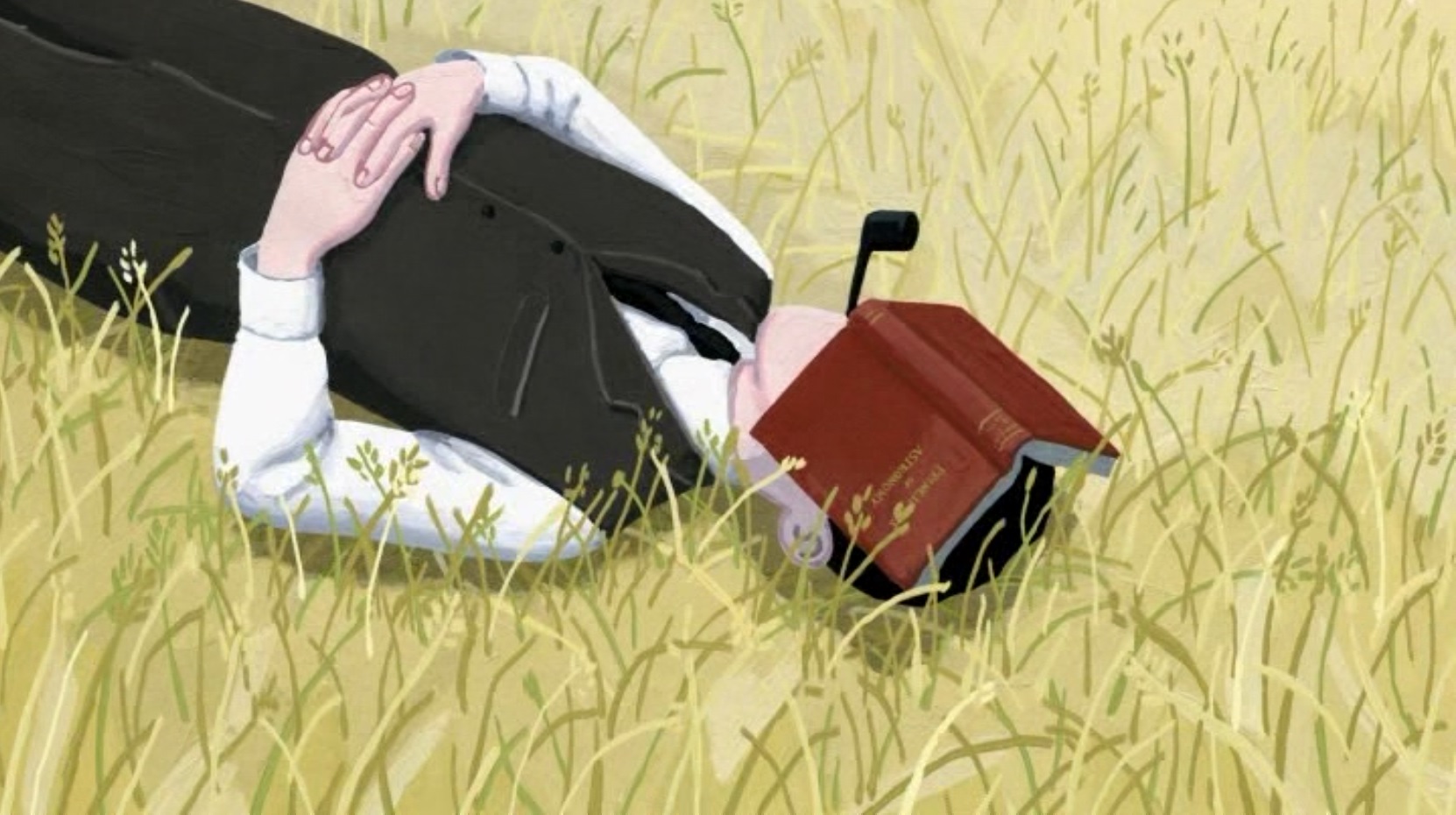
‘Muybridge’s Strings’ is Koji Yamamura’s ode to the great Eadweard Muybridge (1830-1904), pioneer of recording of movement and (thus) of cinema.

Yamamura adopts different techniques to tell his tale, using pencils, pens, and paint to a mesmerizing effect. His film style is surreal, non-linear and associative, and very hard to follow indeed. I’ve learned from this film that Muybridge shot his wife’s lover, but there also images of a woman and a child, often with heads as clocks, which are more difficult to decipher. I guess Yamamura wants to say something on the passing of time, but then the connection to Muybridge is loose and vague. Nevertheless, the film is a marvel to look at, and the sound design, too, is superb.

Watch an excerpt from ‘Muybridge’s Strings’ yourself and tell me what you think:

‘Muybridge’s Strings’ is available on the The Animation Show of Shows Box Set 9

Directors: Amanda Forbis & Wendy Tilby
Release date:
June 1, 2011
Rating:
 
★★★
Review:

In this short Amanda Forbis and Wendy Tilby tell about a young Englishman migrating to Alberta, Canada in 1909, where he ends in a small hut on the countryside. The young man’s letters to his father and mother paint a rosier picture than his actual circumstances deserve.

For their short Forbis and Tilby use a very attractive form of painted animation, mixed with a little traditional animation. They tell their story using “interviews” with people who knew him and with intertitles, which often rather puzzling tell us about comets.

The film is told rather tongue-in-cheek, but the story is ultimately tragic, and the film could be seen as a meditation on loneliness and failure. But it’s to the viewer to connect the loose snippets of information together in his head, for Forbis and Tilby don’t tell their story straightforward, but associatively and free flowing. The soundtrack is great, using very fitting original songs, as well as old recordings and an instrumental rendering of Gilbert & Sullivan’s big hit ‘I Am the Very Model of a Modern Major-General’.

Watch ‘Wild Life’ yourself and tell me what you think:

‘Wild Life’ is available on the The Animation Show of Shows Box Set 9

Director: Gorō Miyazaki
Release date:
July 17, 2011
Rating:
 
★★★★
Review:

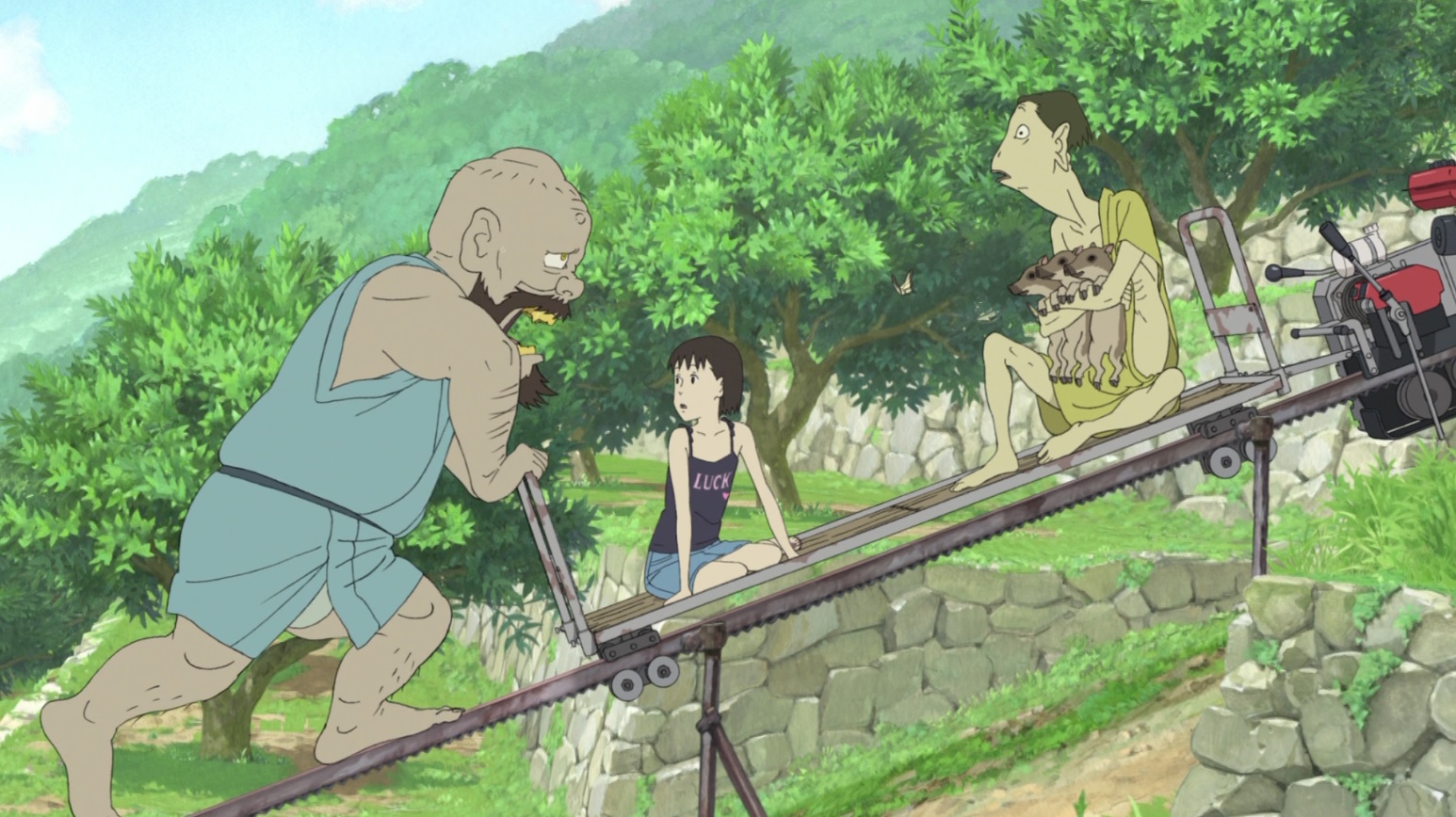
Like ‘Ocean Waves’ (1993) and ‘Whisper of the Heart‘ (1995) ‘From Up on Poppy Hill’ is one of those Ghibli films that could do well without animation. There’s no fantasy or metamorphosis around. Instead, the film is a modest little human drama. In fact, the film has much in common with the two earlier Ghibli features. Like ‘Whisper of the Heart’ ‘From Upon Poppy Hill’ has a female teenager star, and like ‘Ocean Waves’ there’s a strong air of nostalgia pervading the movie, especially in the gorgeous and evocative background art.

‘From Upon Poppy Hill’ takes place in harbor town Yokohama, somewhere between 1961 and 1963, before the 1964 Summer Olympics in Tokyo and after the release of the melancholic song ‘I Look Up as I Walk’ by Japanese crooner Kyu Sakamoto, which is heard several times during the movie, and which even became famous in the West back then, with the silly and out-of-place title ‘the Sukiyaki song’.

‘From Upon Poppy Hill’ focuses on teenager Umi Matsuzaki who lives with her grandmother and little brother at a boarding house with five female boarders, for whom Umi cooks breakfast and dinner. Umi’s mother is a professor, who’s abroad most of the time, while her father, a seafarer, has died in the Korean war (1950-1953). Each day Umi raises some signal flags in remembrance of her father. These are seen by Shun Kazama, a schoolmate who works at a tugboat. Both Umi and Shun thus are hard working children, so typical for the Ghibli studio.

The story focuses on the love that grows between Umi and Shun, and some unforeseen complications it raises. But there’s also an important subplot in which Shun and his fellow students try to protect their old club house called ‘The Latin Quarter’ against demolishing. Only when Umi starts to help, leading an army of female students, the protest gains momentum. The clubhouse scenes provide some comic relief in an otherwise emotional deep and heart-breaking story of friendship, love, and loss.

It’s impressive how the film makers show the emotions in the subtlest of ways. For example, at one point Shun evades Umi’s presence, but we see her reaction to this neglect only sparingly on her face, and with the slightest of actions. Thus, when Umi finally lets her emotions flow, it hits the viewer all the harder.

Hayao Miyazaki’s son Gorō Miyazaki does an excellent job as a director, and the animation is top notch, especially on the main characters. There are a few flashback scenes and there’s a short dream sequence, but otherwise there’s a strong unity of time and place, with all the action taking place in only a few settings and in a limited time frame. The film thus stays focused all the time, even when showing minor deviations from the main plot, like one of the boarders leaving the house.

In all, ‘From Upon Poppy Hill’ may be a modest film, in its emotional depth it’s in no way less impressive than the studio’s more outlandish masterpieces like ‘Spirited Away’ (2001) or ‘Ponyo on the Cliff by the Sea’ (2008). Highly recommended.

Watch the trailer for ‘From Up on Poppy Hill’ yourself and tell me what you think:

‘From Up on Poppy Hill’ is available on Blu-Ray and DVD

Director: John Lasseter
Release date:
June 24, 2011
Rating:
 
★★½
Review:

During the 2000s the Pixar studio without doubt was the leading American animation studio, pushing the envelope with classics like ‘Monsters, Inc.’ (2001), ‘Finding Nemo’ (2003), ‘The Incredibles’ (2004) and ‘Wall-E’ (2008). The 2010s, however, were a different affair, with the studio releasing a few disappointing originals (‘Brave’ from 2012 and ‘The Good Dinosaur’ from 2015), while regressing to a depressingly large number of sequels (seven out of eleven releases). Now, if they were all as good as ‘Toy Story 3’ (2010), then this would be a rather minor problem, but this is not a case.

‘Cars 2’ is the sad herald of the new era. Sure, the film knows high production values, boasting overwhelming visuals, fast cutting, professional cinematography, and storytelling, capable character animation etc. etc., but for the Pixar studio the film feels disappointingly unambitious and empty. Now, ‘Cars’ (2006) itself was the weakest feature of the 2000s, but commercially it was highly successful, not in the least in the merchandize area. So, it was a likely candidate for a sequel.

In retrospect, ‘Cars’ was a modest affair, with its rural setting. ‘Cars 2’on the other hand takes place all over the globe, with alternate versions of Tokyo, Paris, Italy (the fictive ‘Porto Corsa’) and London. These settings are highly colorful, but feel rather plastic and never become entirely convincing (for example, what’s the function of a Notre Dame in the Cars world? Even if a Pope Cars does exist as we can see in one of the scenes in Italy). The plot, too, is outrageously outlandish, modeled on the James Bond films and starring a British spy car called Finn McMissile (Michael Caine), who accidentally recruits Mater, whom he thinks is an American spy.

Thus ‘Cars 2’ is Mater’s film. There’s a minor subplot featuring Mater’s and Lightning McQueen’s friendship being put to the test, and indeed, this forms the rather shallow ‘heart’ of the film, and provides the film’s moral messages (e.g., by McQueen himself in the 84th minute), but this weakly developed plot cannot compete against the spy plot extravaganza. Mater blunders through the spy plot like a rather lame car version of Inspector Clouseau, but his knowledge of old cars does come in handy, and in the end Mater turns out to be less dimwitted than everybody thought.

Now, Mater is little more than comic relief, and one hardly relates to him, even if he’s more sympathetic than Lightning McQueen ever was (and McQueen certainly isn’t in this film). Unfortunately, Mater’s antics are rather tiresome, not funny, and the film’s focus on this shallow character certainly contributes to its feeling of emptiness. In fact, the film is at its best when sticking to the spy plot itself, with the cool spy car Finn McMissile and his female help Holley Shiftwell trying to uncover an evil plot involving one Professor Zündapp (with Erich von Stroheim-like monocle). The plot, like in most James Bond films, is rather outlandish and over-the-top, not to say highly improbable, but the film makers clearly enjoy the spy spectacle, enhanced by Michael Giacchino’s excellent spy movie score.

These scenes are given much more love than the original Cars characters. In fact, apart from Mater and McQueen the rest of the gang is hardly seen and they only marginally contribute to the plot (Doc Hudson apparently has died, just like his voice actor Paul Newman, who passed away in 2008). Instead, we, like McQueen, must endure a boasting Italian race car called Francesco Bernoulli (John Turturo) and meet a grandfatherly old Fiat 500 called uncle Topolino, which is both the nickname of that car model and Mickey Mouse’s Italian name.

Being rich in spectacle, but disappointing in the humor department, and lacking great characters, and most of all heart, ‘Cars 2’ is as entertaining as it is empty and forgettable. Even the small background puns (Towkyo, a Ratatouillan Paris restaurant called ‘Gustow’, adverts for Lassetyre) cannot save the film. Even worse, ‘Cars 2’ also introduces boats and planes with faces. This development would lead to the abysmal spin-off ‘Planes’ (2013), not by Pixar but by the Disneytoon Studios, a film that is an embarrassment to both Disney and Pixar. With the equally unnecessary ‘Cars 3’ Pixar would luckily return to more rewarding waters, with its ‘A Star Is Born’-like plot.

Watch the trailer for ‘Cars 2’ yourself and tell me what you think:

‘Cars 2’ is available on Blu-Ray and DVD

Director: Tomer Eshed
Release date:
June 23, 2011
Rating:
 
★★
Review:

‘Flamingo Pride’ tells about a flamingo who’s apparently the only straight guy at an enormous gay dance festival. Then he falls in love with a female stork flying by…

‘Flamingo Pride’ turns the tables around, making being straight the minority. That is, in the flamingo community, because outside their own festival all birds seem to be straight and having classic role patterns.

It’s not very clear what the film tries to tell us. For starters it is a bit confusing that apparently all flamingos are gay, and none of the other birds is. Moreover, the gay flamingos pretty much look like gay stereotypes. None of them, not even ‘our hero’ has a grain of personality.

At least the film isn’t as funny as it was meant to be. The short is hampered by some ugly designs (the flamingos have teeth, for example), and odd camera movements, which distract from instead of enhance the main protagonist’s emotions. More problematical was that I couldn’t quite follow its story: the role of the two tigers is puzzling, as is the flamingo’s subsequent move.

I’m afraid I find ‘Flamingo Pride’ to be a rather immature and mediocre animation film about sex with some unwelcome gay stereotyping.

Watch ‘Flamingo Pride’ yourself and tell me what you think:

‘Flamingo Pride’ is available on The Animation Show of Shows DVD Box Set 8

Director: Juan Pablo Zaramella
Release date:
June 6, 2011
Rating:
 
★★★★½
Review:

‘Luminaris’ is a charming and original pixilation film by the JPZtudio from Argentina. The short tells about a man working at a factory that produces light bulbs in a very original way. But the man has plans of his own.

The film evokes a very original, surreal world with gusto. Its sets, costumes and overall design all help to create this parallel world, but special mention must go to the film makers’ superb use of sunlight. They let their personas move with the sun, which looks absolutely convincing on the screen, but must have been a labor of outrageous patience in reality.

The result is a modest but magical little short that connects without any dialogue, greatly helped by the attractive music by Osmar Maderna.

Watch ‘Luminaris’ yourself and tell me what you think:

‘Luminaris’ is available on The Animation Show of Shows DVD Box Set 8

Director: Rosto A.D.
Release date:
June 10, 2011
Rating:
 
★★★★
Review:

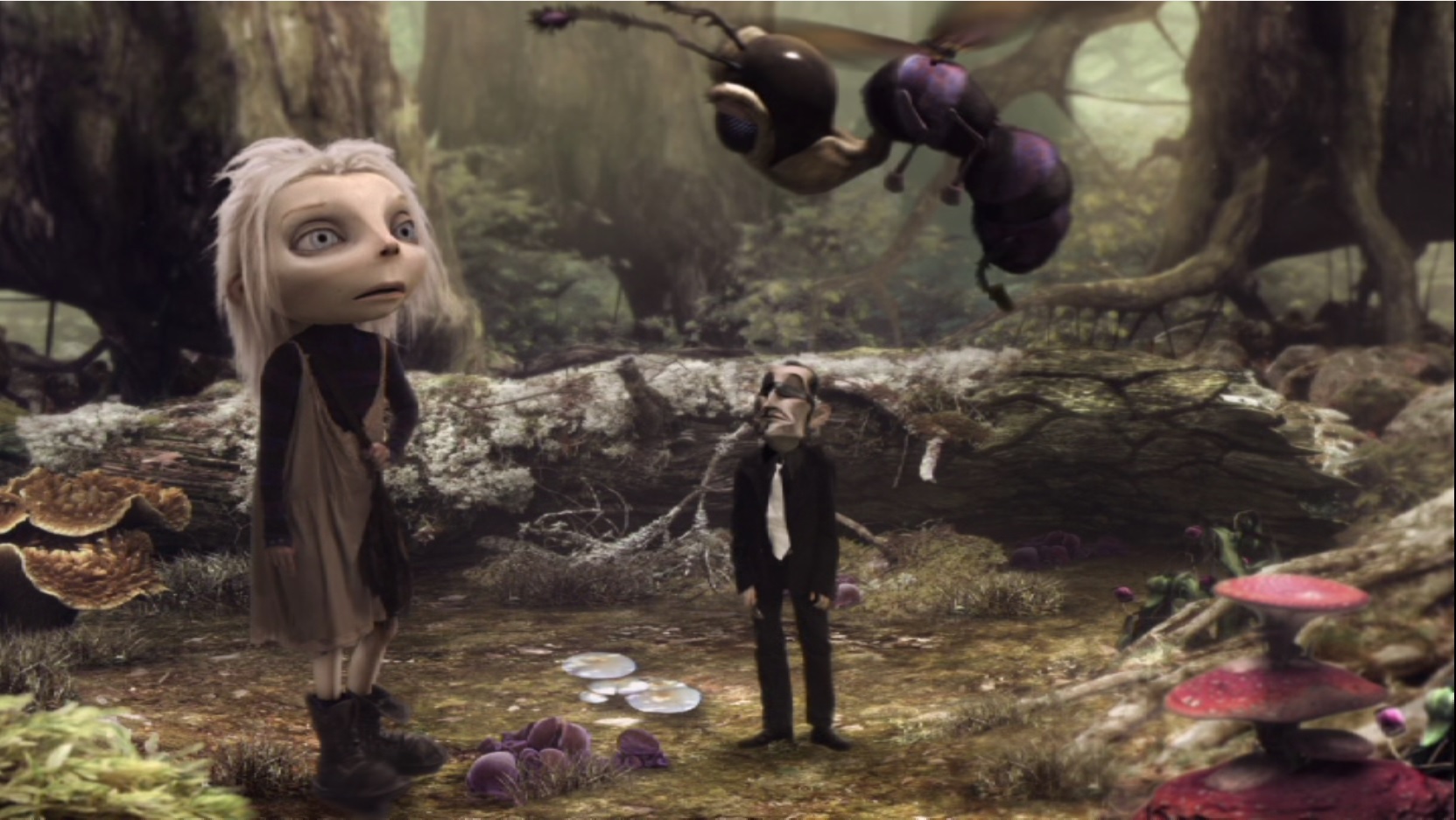
One of the most virtuoso and most idiosyncratic animated film makers ever to emerge from The Netherlands was Rosto (real name Robert Stoces). His films ‘(the rise and fall of the legendary) Anglobilly Feverson’ (2002) and ‘Jona/Tomberry’ created quite a stir, the latter winning the Grand Prix Canal+ prize at the Cannes Film Festival. In these fantastic films Rosto mixed live action, puppetry, and computer animation into a seamless mix. Moreover, they showed a unique if erratic voice that was completely its own.

‘The Monster of Nix’, Rosto’s most ambitious project, is no different. The film lasts half an hour and took six years to make. The short is essentially a musical with a rather post-modern tale-biting story, vaguely reminiscent of ‘The Neverending Story’. The film stars a boy called Willy (based on Rosto’s own son Max and aptly voiced by Joe Eshuis), who lives with his grandmother in a small village, surrounded by woods. Short after the film starts, Willy can’t find his grandmother. Even worse, many villagers have lost people and things, so Willy goes on a quest to seek his grandma and to find the evil monster behind this, finding strange creatures like Virgil, a giant swallow with human hands for claws and the woody “langemen” on his way.

‘The Monster of Nix’ boasts collaborators like Terry Gilliam (voicing a wood ranger), Tom Waits (voicing Virgil) and The Residents (performing two songs), as well as high production values. As expected from a Rosto film, the visuals are very strange, but compelling and overwhelming, seamlessly merging live action and animation to a unique mix. There are several rock music references, which are also typical of Rosto’s style, and there’s a spooky atmosphere akin to Tim Burton.

Rosto even composed the songs himself. Unfortunately, his score is more weird than attractive, and his story isn’t entirely convincing, either, reaching a rather dead point half way, never to recover entirely. But because of its unique atmosphere the film is well worth a watch.

Sadly, Rosto died in 2019, only fifty years old. His death is a grave loss to the Dutch animation world.

Watch the trailer for ‘The Monster of Nix’ yourself and tell me what you think:

‘The Monster of Nix’ is available on DVD

Director: Enrico Casarosa
Release date:
June 6, 2011
Rating:
 
★★★½
Review:

In ‘La Luna’ a little boy accompanies his father and grandfather on a boat trip with an original and unexpected destination.

This cute little film features dialogue, but as this is quasi-Italian gibberish, the story is told through the expressions and body movements of the three characters. There’s a subtle undercurrent of passing on traditions and finding your own voice within tradition.

The film explores no new territories technically, but features a superb color design, rendered in beautiful blues and yellows. The sound design, too, is worth mentioning. Especially, the sound of the stars is very well done. Less successful is Michael Giacchino’s score, which sugarcoats the action too much.

‘La Luna’ was shown before ‘Brave‘. With this film director Enrico Casarosa clearly digs into his own Italian roots. The result is a modest homage to a child’s wonder and fantasy.

Watch ‘La Luna’ yourself and tell me what you think:

‘La Luna’ is available on the Blu-Ray and DVD of ‘Brave’, as well as on the ‘Pixar Short Films Collection, Vol. 2’

Directors: Joann Sfarr & Antoine Delesvaux
Release date: June 1, 2011
Rating:
 ★★½
Review:

‘Le chat du Rabbin’ is the film version of the comic strip series of the same name, which comprises eleven volumes thus far. At the time the film was made there were five albums, and the film retells the contents of volume one, two and five very faithfully, with a lot of panels and dialogue being transformed directly from comic strip drawings to film scenes.

Perhaps this is no wonder, as the comic’s author Joann Sfar co-directed the film. He must have had an important vote in the production, because the film flawlessly transcends Sfar’s idiosyncratic drawings to the animated screen.

‘Le chat du rabbin’ is set in Algiers, the capital of Algeria, when it was still a French colony. It’s a little hard to date the time setting of the film, but because carbon dating is mentioned and because of the presence of jazz guitarist Django Reinhardt this limits the time period between 1947 and 1953. In Algiers, the French, Jews, and Muslims all live together harmoniously, and we follow a rabbi of the Sephardic community, and his cat, who turns into a talking creature after swallowing a parrot.

It’s the cat who is the narrator of the film, and we see the events often through his eyes, although, unfortunately, this isn’t maintained consequently. The scenes with the talking cat, mostly recreating the first book, are the film’s best, for the cat turns out to be a skeptic and he asks his master philosophical and theological questions, which are all valid, but drive the poor rabbi mad.

Unfortunately, not only the cat, but the whole movie is rather talkative, and far too dialogue rich, a problem all too common in all French cinema. But this is not the movie’s main problem. No, regrettably, the film also shares the many story problems of the original comic books. Sfar seems to have started his comic book series without a plan, and the volumes are highly different in tone and content. Story ideas are introduced and dropped, and there’s a frustrating lack of focus.

The same accounts for the film. For example, halfway the cat loses his speech again, and with the film immediately loses its main attraction. Even worse, the most interesting character of both the comic books and the film is Zlabya, the rabbi’s daughter, but she lacks a story arc, and is rarely seen, especially during the second half of the film, which focuses on the contents of volume five, in which the attention shifts to a far less interesting character of Russian origin in search of a mythical city of Jews somewhere in Ethiopia. With this part we also leave Algiers and all hope of a consistent story. I actually find the Russian’s quest utterly boring, and I wish the film makers dared to stay in Algiers and tell more about Zlabya. What certainly doesn’t help is an irritating and incomprehensible encounter with famous comic book character Tintin, who turns out to be a complete dork in this film.

The film’s designs are delightful, transferring Sfar’s sketchy comic book’s drawings very well, and applying very attractive color schemes, which evoke the subtropical, Mediterranean, and North African settings excellently. Especially the background art is gorgeous. Although heavily hatched, and thus very graphical, the animation reads very well against those background drawings, and it’s nice to see such a consistency of style from animated drawings to background art. There are even some very attractive Van Gogh influences visible in some of the night scenes.Olivier Davaud’s music, too, attributes to the Arabian atmosphere, with its quasi-Arabic style elements.

The animation, on the other hand, is not always that good. For example, when Zlabya plays the piano, the animation and the music aren’t in tune, at all. The animation is at its best when deviating from realism, as in the cat’s dream. In this dream sequence a bolder style is explored, with a lot of metamorphosis, absent from the rest of the film. The finale, too, explores a bolder style, just like the comic book does in these scenes, and I guess with this Sfar tries to tell us by then we’ve abandoned reality and entered the realm of tall tales. These scenes are certainly interesting to look at, but as said before, by then I at least had lost all interest already.

In all, ‘Le chat du Rabbin’ is a visually very attractive film, showing what traditional animation still can do in terms of original styling, but its rambling tale and its lack of focus make the film a frustrating watch. But to be honest, when reading the original comic strips one will experience the same frustration, thus the original source material is to blame. One wishes Sfar was as good a story teller as a visual artist, but let’s face it, he isn’t.

Watch the trailer for ‘Le chat du Rabbin’ yourself and tell me what you think:

‘Le chat du Rabbin’ is available on Blu-Ray and DVD

Director: Jennifer Yuh Nelson
Release date:
May 26, 2011
Rating:
 
★★★★½
Review:

‘Kung Fu Panda’ (2008) was a nice if not too outstanding film, so it came as a pleasant surprise that its successor was even a better film. In fact, I crown ‘Kung Fu Panda 2’ one of the best animated sequels ever, on par with ‘Toy Story 2’ (1999) and ‘Shrek 2’ (2004).

‘Kung Fu Panda 2’ te film immediately grabs attention with a Lord of the Rings-like introduction, rendered in gorgeous 2D animation, making clever use of cut-out techniques to simulate a shadow play. This sequence introduces the film’s villain, Lord Shen, a white peacock and one of the most layered villains one can find in animated film. Masterly voiced by Gary Oldman, in fact Lord Shen is comparable with other great villains like Saruman, with whom he shares a fortress full of furnaces, and Darth Vader, who also massacred the hero’s kin before the start of the film.

This background story also gives extra and necessary weight to the character of Po, who becomes more dimensional than in the first film, now having to battle the ghosts from the past inside his head, which clearly hinders him in finding the ‘inner peace’ Master Shifu tells him to seek. Moreover, we now have a background story for our hero. Indeed, the film end with a clear invitation to a sequel. Indeed, there would be a ‘Kung Fu Panda 3’ in which Po’s story was round up, if rather disappointingly.

Because of this deepening of Po’s character, ‘Kung Fu Panda 2’, much more than its predecessor, is a delightful combination of adventure, action, comedy, and drama (Po’s reminiscence scene is actually moving). Moreover, ‘Kung Fu Panda’ shares a theme with the classic wuxia movie ‘Once Upon a Time in China’ (1991) exploring the tensions between kung fu and firearms. In this respect Po delivers the movie’s best line when addressing two demoralized kung fu masters: “you stay in your prison of fear with bars made of hopelessness and all you get are three square meals a day of shame!”. Not that ‘Kung Fu Panda 2’ long dwells on Po’s inner turmoil, the film is very action-rich: the first great kung fu battle comes quickly, and is followed by several others, ending with a spectacular finale.

Overall, ‘Kung Fu Panda 2’ is an impressive piece of teamwork. Everything clicks in this film: the story is engaging and well-told, the animation is outstanding, especially the character animation on Po, Po’s dad, and Lord Shen. The cinematography is breathtaking, full of dynamic camera movements and fast cutting, the color schemes are daring and beautiful, and the soundtrack by Hans Zimmer & John Powell, with its mock-Chinese ingredients, very apt for both the action and the emotions involve. Their music during the paper dragon scene must get especially mention.

Not that ‘Kung Fu Panda 2’ is entirely without its flaws, however. By now Po has become nearly invincible, which renders him slightly flatter, despite the deepening of his emotional side. Moreover, the other characters are less prominent than in the first film (especially Master Shifu hardly gets any screen time), even if they still shine much more than in ‘Kung Fu Panda 3’, which reduces the five to mere background players. Then there’s an obligate ‘all is lost’ moment, so typical for modern Western computer animation films (see e.g., ‘Rango’ from the same year and ‘The Pirates! In an Adventure with Scientists!’ from a year later) and a scene in which the villain says ‘What?!’, replicated by the same studio in ‘How to Train Your Dragon 2’ (2014). But these are minor defects of an otherwise great piece of animated entertainment.

Watch the trailer for ‘Kung Fu Panda 2’ yourself and tell me what you think:

‘Kung Fu Panda 2’ is available on Blu-Ray and DVD

Director: Eric Khoo
Release Date: May 17, 2011
Rating: ★★★
Review:

The film ‘Tatsumi’ celebrates the work of Japanese manga artist Yoshihiro Tatsumi (1935-2015). Tatsumi is the inventor of the gegika manga style, a grittier, more alternative form of manga for adults. The film re-tells five of Tatsumi’s short stories in this this style, all from 1970-1972. These stories are bridged by excerpts from his drawn autobiography ‘A Drifting Life’ from 2008.

Thus, the film is completely drawn (only in the end we see the real Yoshihiro Tatsumi), but to keep the manga style intact the film was animated with Toon Boom Software, specialized in ‘animatics’, which brings story boards to life. Thus, full animation, although present, is rare, and most of the motion is rather basic, often lacking any realism of movement. The animation is enhanced by limited digital effects, and the first and last story are digitally manipulated to make the images look older.

The complete film thus is little more than slightly enhanced comic strips. One wonders if this is the best way to present Tatsumi’s work, as most probably his stories work better in their original manga form, but of course the movie is a great introduction to his work, which without doubt is fascinating and original.

Tatsumi’s manga style clearly deviates from his example, the great Osamu Tezaku. Tatsumi’s style is more raw, sketchier and knows nothing of the big eyes so common in manga. All but one story use a voice over narrator. And all but one are in the first person. The stories themselves are gritty, dark, depressing and bleak. The second story, ‘Beloved Monkey’, in which a factory worker falls in love with a girl at a zoo, is particularly bitter. The outer two take place just after the end of World War II and show the effects of Japan’s traumatic loss. All are about the losers in life, struggling at the bottom of society. As Tatsumi himself says near the end of the movie:

“The Japanese economy grew at a rapid pace. Part of the Japanese population enjoyed the new prosperity. The people had a great time. I couldn’t bear to watch it. I did not share in the wealth, and neither did the common people around me. My anger at this condition accumulated within me into a menacing black mass that I vomited into my stories.”

Surprisingly, the protagonists of all first-person stories, including the autobiography, all look more or less the same, as if Tatsumi couldn’t create more than one type of hero. Only the third story, ‘Just a Man’, the only one to use a third person narrator, stars a different and older man, while the last story, the utterly depressing ‘Good-bye’, is the only one to have a female protagonist. Tatsumi’s own life story is told in full color which contrasts with his short stories, which are mostly in black and white. Tatsumi’s autobiography is less compelling than his story work but adds to the understanding of the artist and his work.

Surprisingly, for such a Japanese film ‘Tatsumi’ was made in Singapore and animated in Indonesia.  According to Wikipedia Singaporean director Eric Khoo was first introduced to the works of Yoshihiro Tatsumi during his military service, and immediately was stricken by his stories. When ‘A Drifting Life’ was published in Singapore in 2009, Khoo realized that Tatsumi still was alive and wanted to pay tribute to him. Tatsumi himself was greatly involved in the film and narrates his own life story. The movie is a great tribute to one of the more original voices in Japanese manga, and well worth watching, if you can tolerate a dose of sex and violence.

Watch the trailer for ‘Tatsumi’ yourself and tell me what you think:

‘Tatsumi’ is available on Blu-Ray and DVD

Director: Makoto Shinkai
Release date: May 7, 2011
Rating:
 ★★★
Review:

After the intimate and realistic ‘5 Centimeters per Second’ (2007) director Makoto Shinkai embarked on an ambitious, long and way more fantastical project, which is ‘Children Who Chase Lost Voices’. The film remains an oddball inside Shinkai’s oeuvre and shows a huge Ghibli-influence absent from his other films.

The film starts realistically enough, with little schoolgirl Asuna exploring some gorgeous nature at the other side of a railway bridge and visiting a secret hideout there. But the fantasy immediately kicks in when she brings forth a strange radio-like apparatus based on some sort of crystal. The use of this device triggers a series of events that eventually leads her to no less than the boundary between life and the afterlife.

‘Children Who Chase Lost Voices’ knows high production values. Like ‘5 Centimeters per Second’ the background art is no less than stunning to begin with, especially the views of and from Asuna’s hill are gorgeous pieces of mood and light. Other scenes are perfect renderings of a hot summer. And like in the previous films, some of these intricate background paintings are only visible for a few frames. Typically for Japanese films some shots are just short mood pieces, in this film surprisingly often depicting insects, like dragonflies and cicadas.

The animation, too, is excellent, as is the shading on the characters themselves. The character design, on the other hand, is less original, and remarkably reminiscent of Miyazaki’s and Takahata’s work at the Toei Studios during the 1970s.

But this is only one of the obvious Ghibli-influences. Asuna herself is almost a typical Miyazaki-heroin: living without a father and a largely absent mother she’s depicted cooking and caring for herself and doing all the household work. She’s thus one of those working children that crowd the old master’s films. She’s joined by a cat called Mimi, which immediately brings Jiji to mind from ‘Kiki’s Delivery Service’ (1989). There’s a villain that echoes colonel Muska from ‘Laputa: Castle in the Sky’ (1986), and there are some God-animal hybrids seemingly coming straight out of ‘Princess Mononoke’ (1997).

Shinkai absolutely succeeds in painting Asuna’s world. It’s a pity that most of the film takes place in Agartha, a mythical place underground the design of which is less compelling and even disappointing. When compared to the fantastical works of Ghibli’s ‘Laputa: The Castle in the Sky’, ‘Princess Mononoke’ or ‘Spirited Away’ (2001) Shinkai’s worldbuilding clearly is subpar. For example, this subterranean world knows blue skies, sunlight, clouds, and rain, which all go unexplained. Apparently, there are no stars, but that’s about it. The underworld characters live in some quasi-medieval society, but this too, is hardly worked out or explained to the viewer. Shinkai’s erratic handling of the underworld seriously harms its believability. After all, it’s hardly different from ours, and both its reason of existence and its purpose remain vague and undecided.

It doesn’t help that Asuna explores this world with one Mr. Morisaki, who is a member of some secret society, but who descends into the earth to retrieve his deceased wife. Both Morisaki’s background story and introduction make frustratingly little sense. For example, there’s a flashback which seems to indicate he was alive during world war I, and for no apparent reason and with little likelihood he poses as Asuna’s substitute teacher. The secret society is utterly unnecessary to the plot, which is too complex for its own good. Moreover, Morisaki remains a vague and unconvincing character getting much too much screen time, and he never turns into either the scary villain Muska was in ‘Laputa: The Castle in the Sky’ or one of those cleverly ambivalent antagonists of Miyazaki’s other films.

In fact, the scenes in Agartha start to drag, and the film loses focus, when leaving Asuna to concentrate on one of the underworld’s inmates, a boy called Shin. In the end Asuna is an all too will-less pawn in Morisaki’s scheme and she lacks her own clear story arc. This is in fact the film’s core problem: this should be Asuna’s story, but the film loses her halfway. It doesn’t help that Asuna’s own relationship to her deceased father is hardly developed, if at all. Particularly puzzling is a scene in which Asuna suddenly utters that Morisaki is like her father. Now where did that come from?!

The roles of Shin and the mute Manna remain vague, too, and feel half-baked. For example, Manna is abandoned halfway the film not to return. Instead, they add to the complexity of the story, further obscuring Asuna’s story arc. During the finale, in which Morisaki finally meets God (!) and Asuna is even depicted in the afterlife (!!) the last traces of believability go out of the window. Compare this rather blunt and all too direct storytelling with the Orpheus myth itself, which is clearly one of its inspirational sources, and one regrets Shinkai didn’t go for much more mystery.

The aftermath, in which our protagonists wander all the way back home is even worse, done in a short montage the story deflates over the end titles, accompanied by a cheesy song. This is a disappointing ending of an overlong and poorly timed film, indeed. Add some unnecessary gore, a plethora of unresolved story lines, three all too forced explanation scenes, and one can only conclude that Shinkai utterly fails where Miyazaki succeeds.

Luckily, ‘Childern Who Chase Lost Voices’ remained a one-time experiment. With his next film, ‘The Garden of Words’ Shinkai returned to much more familiar terrain, with far better results.

Watch the trailer for ‘Children Who Chase Lost Voices’ yourself and tell me what you think:

‘Children Who Chase Lost Voices’ is available on Blu-Ray and DVD

Director: Michel Ocelot
Release Date: February 13, 2011
Rating: ★★★½
Review:

This is a review of the 2011 film, not to be confused with the television series from 1992, which explores a similar style.

After two Kirikou movies (1998, 2005) and the praised ‘Azur & Asmar’ (2006) French director Michel Ocelot returned to the silhouette style he had explored in ‘Les trois inventeurs’ (1979) and in ‘Les contes da la nuit’ (1992) in particular. The result was a series of ten episodes for Canal+ called ‘Dragons et princesses’. These were aired in 2010, and more or less compiled in the feature film ‘Les contes de la nuit’ from the next year. This film compiles five of the ten stories from ‘Dragons et princesses’ and adds an extra one, called ‘La Fille-biche et le fils de l’architecte’ (The Young Doe and the Architect’s Son).

All stories are original, conceived by Ocelot himself, including the dialogue. Yet, their style is firmly rooted in ancient storytelling and fairytales. Thus, the heroes are pretty emblematic, a given that is emphasized by the bridging ‘story’. In these bridging episodes an old man teams up with two children to invent the stories. The children then act them out, while the old man does some background research on architecture and clothing and such. The two youngsters are then dressed by robot arms, and the tale can begin.

And so, each tale stars the same two children, and almost of them are about love. To be fair, these bridging parts make very little sense, and after the sixth story we don’t even return to this setting.
Much more interesting are the stories themselves. Set in different times and places, they have a surprising universal character and really feel as a homage to classic storytelling, a form of narrative other modern animation film makers seem to have lost. In fact, Ocelot’s most obvious inspiration is Lotte Reiniger (1899-1981), who also told classic tales in silhouette animation. Ocelot truly is her artistic successor, even though he trades the scissors and cut-out animation for 2D computer graphics.

As all stories are told in silhouette, the story depends greatly on body language and dialogue. It’s a little unfortunate then that the 2D computer animation is often rather stiff and unconvincing. At times the heroes’ faces are seen from the front, showing their eyes, but not their mouths, which makes one depend on the dialogue even more.

The stories themselves nevertheless are entertaining. The first, ‘the night of the werewolf’ takes place at the Burgundian court of the 15th century and tells about two rival sisters. The third, ‘The Chosen One of the Golden City’ takes place in Mexico in the 16th century and tells about a conquistador visiting a city of gold. This story knows some very stylized background art. The fourth, ‘Tom-Tom Boy’ is set in West Africa and takes us back to the world of ‘Kirikou et la sorcière’ (1998), with its bare breasted women. The fifth, ‘The Boy Who Never Lied’ is set in medieval Tibet, and certainly the most tragic of the collection. The mountainous background art in this story has the most 3D-feel to it of the whole lot. The final story, ‘The Young Doe and the Architect’s Son’ returns to France. Set in the 13th century it features very detailed gothic background art and a short piece of 3D computer animation.

The best story, however, is the second, ‘TJ and the Beauty Unknowing’. This story starts in the Caribbean, but soon the hero enters the land of the death, in which he must fulfill three tasks to save his life. This story makes great use of the tropes of ancient fairy tales, without following the classic love story tropes of the other entries.

Watch the trailer for ‘Tales of the Night’ yourself and tell me what you think:

Les Contes de la nuit (Tales of the Night) is available on DVD

Directors: Stephen J. Anderson & Don Hall
Release Date: April 15, 2011
Rating: ★★★★★
Review:

In 1961 Walt Disney obtained the film rights to A.A. Milne’s famous books, and over the years made five short specials about the character (1966-1983), of which the second (Winnie the Pooh and the Blustery Day, 1968) and third (Winnie the Pooh and Tigger Too, 1974) have become absolute classics. In 1977 the first three were stitched together into the feature film ‘The Many Adventures of Winnie the Pooh’, and its in this form they’re available on home media today.

Now, one can lament the fact that many children will know Winnie the Pooh better by its Disney version than by E.H. Shepard’s original irreplaceable illustrations, but within animation history these specials are highlights of inventive story-telling and wonderful character animation. A particular delight are the playful interactions of the characters with the pages of the book they appear in. Moreover, Disney retained the contrast between the naive stuffed animals and the pompous forest animals, Rabbit and Owl, who only think they’re wiser than their plush counterparts.

Unfortunately, following these classic specials, Disney took more and more liberties with the Pooh franchise, resulting in television series, direct to video movies, and even video games. Also, the three feature films made by the Disneytoon Studio division, ‘The Tigger Movie’ (2000), ‘Piglet’s Big Movie’ (2003) and ‘Pooh’s Heffalump Movie’ (2005) seemed to drift away more and more from the source material than either desired or necessary.

In this light one cannot but be weary before approaching the 2011 film, called ‘Winnie the Pooh’ in surprisingly plain fashion. However, the film deviates significantly from the trends set in the previous decade: first, it was made by the Walt Disney Animation Studios itself, being Disney’s last hand drawn animated feature to date, and the quality of animation simply is undeniable. Especially Andreas Deja’s animation of Tigger is fantastic. Moreover, there’s only a little computer animation, most notably the swarm of bees and some flowing honey. Second, the film returns to the original source material, mixing two original chapters together: ‘Eeyore loses a Tail’ from Winnie-the-Pooh (1926) and ‘The Search for Small’ from ‘The House at Pooh Corner’ (1928).

The film is surprisingly concise, only lasting 51 minutes, and not dragging one second of it. On the contrary, I rank ‘Winnie the Pooh’ as one of the best told and most entertaining of all 2010s animation films. The film successfully revives the playful spirit of the original specials, greatly helped by using John Cleese as its narrator. There’s plenty of humor, mostly deeply rooted in the interplay between the contrasting characters. For example, at one point Owl boasts he has “achieved completion of [his] autobiographical treatise”, prompting Winnie the Pooh to reply “Oh. Was it painful?”. In another sequence there’s a great confusion when the words ‘not’ and ‘knot’ are mixed together.

Two of the original songs are reused, the ones introducing Winnie the Pooh himself, and Tigger’s song. Five original songs are added, penned by Robert Lopez and Kristen Anderson-Lopez. These are functional, pleasant and short enough to please even a musical aversion-bearer like me. Even better, the Backson song is accompanied by a wonderful fantasy sequence emulating the 1950s cartoon modern style. The ‘Everything is Honey’ song is illustrated with surreal images of honey pots in the forms of e.g. crabs, jellyfish and whales.

The voice cast, too, is excellent. As the voice of Pooh Jim Cummings does an excellent Sterling Holloway imitation, Bud Luckey sounds delightfully gloomy as Eeyore, while Craig Ferguson and Tom Kenny make their characters Owl and Rabbit perfectly pompous and self-important.

Even the end titles are a delight. First, the film’s adventures are retold using stills of the live action puppets in Christopher Robin’s room, then the rest of the titles are accompanied by several antics of the characters, much in the vein of the titles of ‘Finding Nemo’ (2003). And there’s a surprise at the very end of them, so keep watching!

In all, ‘Winnie the Pooh’ is a wonderful surprise, a true gem of a film, no doubt delighting children and adults alike. Unfortunately, it was to be the Disney studio’s last traditionally animated feature. It’s unbelievably sad that the high art of drawn animation was abandoned even by the studio that had elevated the technique to inconceivable heights in the first place. I surely hope Disney will return to this art form one day.

Director: Tatsuyuki Nagai
Airing of first episode: April 14, 2011
Rating:
 ★★★½
Review:

After ‘Erased‘ this is only the second Japanese anime series I’ve seen. The two series are from the same A-1 Pictures studio, and they are about of the same quality, so how they compare to others I wouldn’t know. Like ‘Erased’ ‘Anohana: The Flower We Saw That Day’ deals with friendship and loss, this time featuring on a group of six high school friends.

In the first of eleven episodes we learn that Teenager boy Jintan, who has dropped out of school, is troubled by a childish blonde girl called Menma, but it turns out he’s the only one seeing her. Soon we learn that Menma is dead, and that she was part of a group of friends led by Jintan when they were kids. After her death the group fell apart, but Menma is back to fulfill her wish. Unfortunately, she herself doesn’t know anymore what her wish was…

Menma’s unknown wish is the motor of the series, as the friends slowly and partly reluctantly regroup as they are all needed to fullfil Menma’s wish. On the way we learn that each of them had a particular relationship to either Jintan or Menma, and they all have their own view on the day of Menma’s fatal death. And what’s more, there are more traumas to overcome.

‘Anohana: The Flower We Saw That Day’ is surprisingly similar to the later ‘Erased’: there’s a jumping from the now to the past (although in Anohana these are flashbacks, not real jumps through time), there’s a supernatural element, there’s a group of friends, and one important mysterious girl who’s dead.

The first episode contains enough mystery to set the series in motion, but the show progresses painfully slowly, and at times I got the feeling Mari Okada’s screenplay was stretched over too many episodes. Especially episode five and six are of a frustratingly static character. In these episodes Jintan, the main character, is particularly and annoyingly passive, hardly taking any action to help Menma or himself, while Menma’s continuous cooing sounds get on the nerve.

The mystery surely unravels stunningly slowly in this series, and only episode seven ends with a real cliffhanger. Even worse, there are some serious plot holes, hampering the suspension of disbelief. Most satisfying are episode eight and ten, which are both emotional, painful, and moving. In contrast, the final episode is rather overblowing, with tears flowing like waterfalls. In fact, the episode barely balances on the verge of pathos. To be sure, such pathos occurs regularly throughout the series. In addition, there are a lot of unfinished sentences, startled faces, strange expressions, often unexplained, and all these become some sort of mannerisms.

The show is animated quite well, with intricate, if unassuming background art. Masayoshi Tanaka’s character designs, however, are very generic, with Menma being a walking wide-eyed, long-haired anime cliché. Weirdly, one of Anaru’s friends looks genuinely Asian, with small black eyes, while all main protagonists, with the possible exception for Tsuruko are depicted with different eye and hair colors, making them strangely European despite the obvious Japanese setting. For example, Menma has blue eyes and white hair, while Anaru has hazel eyes and red hair.

In all, if you like an emotional ride, and you have patience enough to watch a stretched story, ‘Anohana: The Flower We Saw That Day’ may be something for you. The series certainly has its merits, but an undisputed classic it is not.

Watch the trailer for ‘Anohana: The Flower We Saw That Day’ and tell me what you think:

‘Anohana: The Flower We Saw That Day’ is available on DVD

Director: Carlos Saldanha
Release Date: March 22, 2011
Rating: ★★
Review:

I will get down to business at once: I didn’t like this movie. It’s not so easy to pinpoint what’s wrong with it, though, and clearly most people rank this film higher than I do (it gets a pretty solid 6,9 on IMDb for example), but I’ll try to unravel what I think is wrong with this picture.

‘Rio’ tells about Blu, a blue macaw who by chance ends up with little girl Linda in Moose Lake, Minnesota (Wikipedia says Blu is a Spix’s Macaw, but I’m pretty sure the film makers intended Blu to be a fantasy species). A short sequence shows us how Linda and Blu grow up together as inseparable friends. Linda even names her bookshop after her pet. Then ornithologist Túlio comes along, telling Linda that Blu may be the last male of his species, and that he wants him to mate with a newly found female in Rio de Janeiro, Brazil. Linda reluctantly agrees, and the rest of the film takes part in Rio de Janeiro, where the two birds get stolen, and Linda and Túlio have a hard time getting them back…

Now, from the outset it becomes clear that Blu and Jewel, the wild female, are meant for each other, despite their obvious differences and life histories, but the film also immediately couples Linda and Túlio in a far from subtle fashion. And when little boy Fernando declares he’s an orphan, and we follow him for a little while in his loneliness, we know where he will end up at the conclusion of the film.

In other words, utter predictability is one of Rio’s main flaws. Outside of that it never deviates from familiar tropes. There are the two inept henchmen, there’s your obligate break-up scene, there are two birds whose sole existence seems to be comic relief. Everything in ‘Rio’ is tried and done. Even worse, in ‘Rio’ it isn’t done so well. For example, the two comic relief birds, Pedro and Nico are hardly funny and both have very shallow personalities.

The latter is the problem of all personas in ‘Rio’. Even main star Blu is hardly defined. An early scene with some Canadian geese suggests he’s a bit of a nerd, but during most of the film Blu’s actions follow from the facts that he has been a pet whole his life, and that he cannot fly. These can hardly be called character traits. During the break-up scene he even acts like a complete jerk, for no apparent reason. Voice actor Jesse Eisenberg has difficulties in breathing some sympathy into Blu, anyway.

Even worse fairs Linda, of whom I can only say she loves Blu and that she feels out of place in Brazil, and Túlio, who’s depicted as a quirky, not to say rather loony scientist. Why does he have to be loony, why can’t he just be a devoted scientist, for @#% sake!

Because Linda and Túlio hardly have a story arc together their bonding feels forced. Because Blu and Linda are forced to spend some time together, their bonding feels more natural, even if it follows all predictable patterns.

Another problem I have with the story is that it lacks a strong villain. Sure, the cockatoo Nigel is evil enough, but in the end he’s only a henchman of some petty crime thieves. In the all too quick and easy round up at the end of the film all visible criminals are punished, except for the mysterious off-screen buyer of the two rare birds. A very unsatisfying ending, indeed!

‘Rio’ isn’t a musical, but Nigel sings one of two songs that suddenly emerge. The song gives Nigel some background story, but he doesn’t need one and the song is completely superfluous. The other song is an R&B song by Pedro (musician will.i.am of Black Eyed Peas fame) and Nico (actor Jamie Foxx). Curiously, the two actors are black, not Latino. In fact, only Rodrigo Santoro, who voices Túlio, is a Brazilian, and George Lopez (Rafael) the only other Latino among the main characters.

And this brings me to another problem with ‘Rio’: Rio de Janeiro is well-depicted visually, but aurally little is done with the rich musical tradition of Brazil. True, the film opens and ends with an English language samba, and the toucan Rafael shortly sings ‘The girl of Ipanema’, but the two original songs mentioned above have no grain of Brazil in them, nor does the rest of the soundtrack, which consists of rather standard and uninteresting action fare. Likewise, the film fails to convey the magic of the Brazilian carnival. The parade is wisely chosen as the place of the grand finale, but unfortunately this is cut short in favor of one taking place on a plane. This makes sense in forcing Blu to fly (but nonetheless his sudden ability to do so feels more magical than natural), but also feels like a missed opportunity.

Apart from all story problems, ‘Rio’ also suffers from all too generic designs. Nothing in the film breathes particularly ‘Blue Sky’ and the film has none of the character ‘Ice Age’ (2002) and ‘Dr. Seuss’ Horton Hears a Who!’ (2008) had. Moreover, the human designs and animation are surprisingly weak in this film. I particularly disliked the design of Linda, and the animation of Fernando, which looked disappointingly wooden. These straight characters fair less well than the broad comic ones, like the two henchmen Tipa and Armando, who are much more delightful to watch.

In all, ‘Rio’ is a too mediocre and too generic film to become an all-time classic. Instead, the film is a good example of the lazy, trope-driven plots and more and more common designs that started to overtake American animated feature film making during the 2010s.

Watch the trailer for ‘Rio’ yourself and tell me what you think:

‘Rio’ is available on Blu-Ray and DVD
Directors: Stevie Wermers-Skelton & Kevin Deters
Release Date: March 5, 2011
Rating: ★★★★
Review:

The theatrical release of ‘Winnie the Pooh‘ (2011) came with a charming short called ‘The Ballad of Nessie’. Narrated by Scotsman Billy Connolly in Dr. Seuss-like rhymes the short tells about Nessie, who has to leave her small pond when one McFroogle turns it into a golf course.

Everything in ‘The Ballad of Nessie’ breathes nostalgia. The short is very reminiscent of Disney shorts from the 1950s, not only because of its use of rhyming narration, but also because of the full animation combined with cartoon modern designs, and Mary Blair-inspired background art. I especially liked the tartan hills in the background.

The short is not particularly funny, but clearly made with love, and a welcome return to traditional animation in a time even Disney abandoned its own classic art form for computer graphics.

Watch ‘The Ballad of Nessie’ yourself and tell met what you think:

‘The Ballad of Nessie’ is available on the Blu-Ray and DVD of ‘Winnie the Pooh’

Enter your email address to follow this blog and receive notifications of new posts by email.

Join 915 other subscribers
Bookmark and Share

Categories