Directors: Max Lang & Jan Lachauer Release Date: December 25, 2012 Rating: ★★★½ Review:
One of the most interesting series to emerge in the 21st century were the BBC half hour specials based on children’s books by Julia Donaldson and Axel Scheffler. This series was produced by Magic Light Pictures and mostly animated by Studio Soi in Germany.
Starting with the extraordinarily succesful ‘The Gruffalo’ (2009) these films prove not only to be very faithful to the source material, but to bring an unsurpassed plasticity to the computer animation, giving the characters the solidity of stop-motion. This is partly done by the animation itself, which practically never goes beyond what’s possible with stop motion puppets (for example there’s practically no squashing and stretching), and partly by giving them a clay-like texture.
But the makers’ secret ingredient is their use of real sets, thus placing the computer-created characters in fitting stop-motion worlds. This is so well-done you keep on wondering whether what you see is stop-motion or computer animated. This unique blend gives the film their specific and utterly charming character.
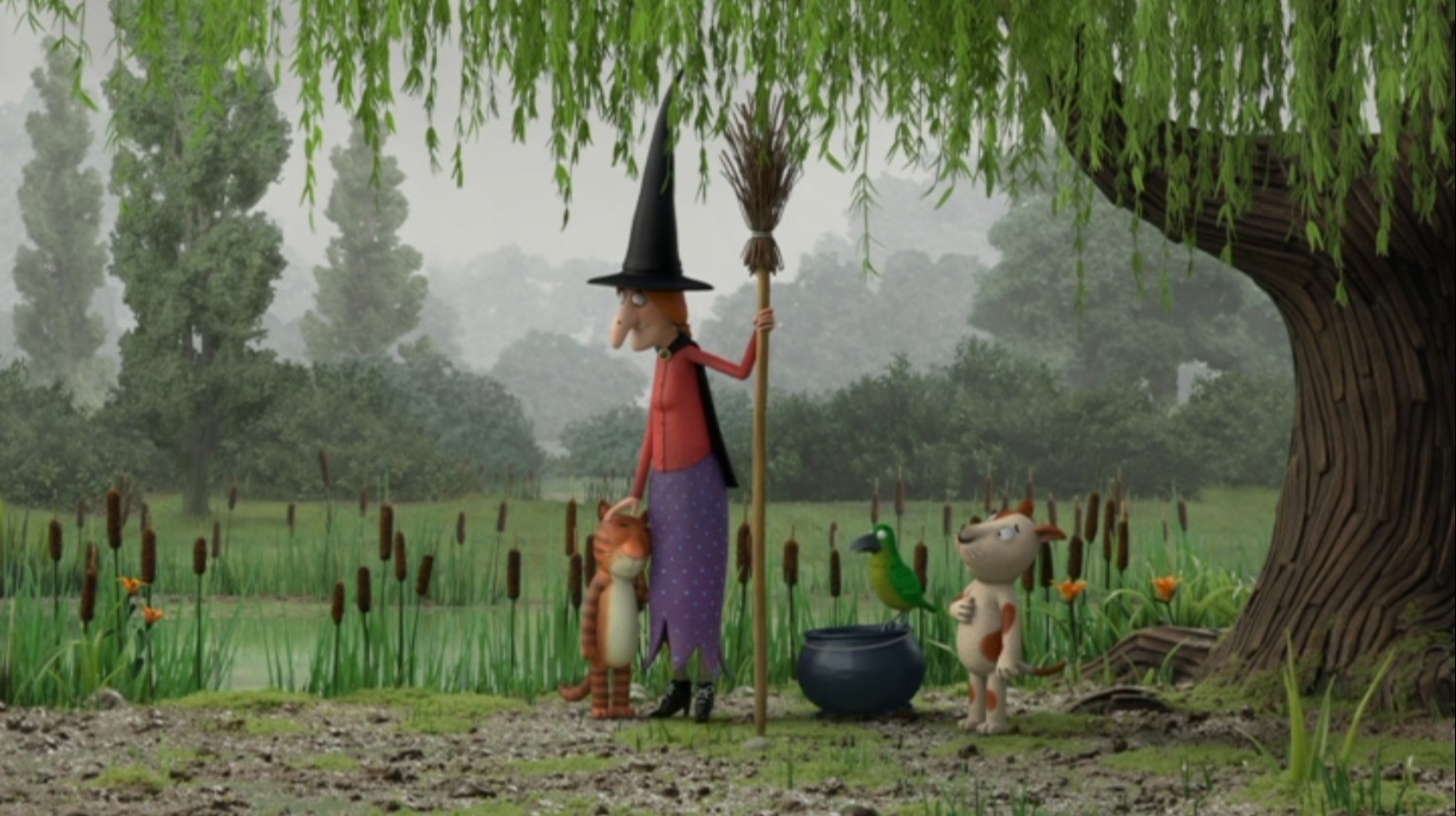
‘Room on the Broom’, the third entry in the series, is an excellent example. The story tells about a friendly witch who flies on a broom with her cat, but at times she drops something on the ground. This is then found by an animal who asks for a place on the broom. The repetition and rhyme no doubt work excellently for small children, but elder viewers will delight in the cat’s wordless reactions to his mistress’s enthusiastic invitations. His body language and facial expressions form the pinnacle of pantomime animation, but there are touches of wordless comedy on all the characters. In the end a ‘Town Musicians of Bremen’-like story twist is introduced.
Even if ‘Room on the Broom’ isn’t the undisputed classic ‘The Gruffalo’ certainly is, it’s still a delightful film, able to enchant both the young and old alike.
Watch the trailer for ‘Room on the Broom’ yourself and tell me what you think:
Director: Brian Larsen Release Date: November 13, 2012 Rating: ★★ Review:
In ‘The Legend of Mor’du’ the witch from ‘Brave‘ tells the viewer the background story of the feature film, and the origin of the bear Mor’du.
The witch is animated in 3D, just like the feature film, but her story is animated in 2D, featuring angular designs, strong color schemes, and very little animation. In fact, the story itself is little more than an animatic. Unfortunately, the story is of little interest, and the attempts of humor only disturb the narrative, instead of enhancing it. ‘Brave’ wasn’t a very strong film to begin with, and ‘The Legend of Mor’du’ only succeeds in proving that many of the feature’s story problems already start at its foundation.
Watch an excerpt from ‘The Legend of Mor’du’ yourself and tell me what you think:
‘The Legend of Mor’du’ is available on the Blu-Ray and DVD of ‘Brave’
Director: John Kahrs Release Date: November 2, 2012 Rating: ★★★½ Review:
It’s nice to see the Walt Disney studio does not completely forget about traditional animation, and deploys it once and a while, albeit it a short only six minutes long. ‘Paperman’ clearly is made with a computer, but mixes 3D animation with 2D for once (in a novel technique called ‘final line advection’), and tells a charming love story.
A young office worker meets a girl at an underground platform in 1940s New York, but loses her again. When he sees her again from his office, in a building across the street, he tries to grab her attention by throwing paper planes into the direction of her open window, to no avail. But then something magical happens.
‘Paperman’ is told without dialogue, letting the facial expressions and body language of the characters speak for themselves, thus giving the animators plenty to work with. They succeed in making the girl friendly and lovable and the man clumsy, but determinant. They’re both likable enough to make the viewer yearn for their reunion. Unfortunately, the animation of the ‘magic planes’ is less convincing, and this magical scene overstretches the plausible believable quite a bit.
The film is shot in black-and-white, except for the girl’s lips and lipstick, whose reds stand out. The shades of grey especially succeed in enhancing the dull atmosphere of the man’s office.
In all ‘Paperman’ is quite delightful, and it managed to win the Academy Award for Best Animated Short Film, the first Disney short to win an Oscar in that category since ‘It’s Tough to be a Bird’ from 1969.
Watch ‘Paperman’ yourself and tell me what you think:
‘Paperman’ is available on the Blu-Ray and DVD of ‘Wreck-it Ralph‘
Directors: Sam Fell & Chris Butler Release Date: August 3, 2012 Rating: ★★★★★ Review:
Laika’s ‘ParaNorman’ is the first of no less than three horror-themed American animated features released in 2012. It was followed in September by Disney’s ‘Frankenweenie’ and Sony’s ‘Hotel Transylvania’. For the Laika Studios this was familiar terrain, as both the earlier ‘Corpse Bride’ (2005) and ‘Coraline’ (2009) had been horror themed.
For a while the studio even seemed to be a sort of one-trick pony in that respect (but this notion was ultimately defied by the very different ‘Kubo and the Two Strings’ from 2016 and especially the surprisingly colorful ‘Missing Link’ from 2019).
‘ParaNorman’ plays with horror tropes from the start, beginning with opening credits, rendered in a 1950s horror movie style. And in the first scene we see Norman watching a cheap horror movie on television. We soon learn that Norman shares an ability with Cole from ‘The Sixth Sense’ (1999): he can see dead people. Perhaps this ability explains the boy’s preoccupation with horror and science fiction, which is exemplified by ca. all objects in his room.
But then we learn that the fictional Massachusetts town in which he lives, Blithe Hollow (a clear reference to ‘Sleepy Hollow’ of the early horror story by Washington Irving), has its own preoccupation with witchcraft. Its city slogan is ‘a great place to hang’ and features a stunningly morbid picture of a witch hanging from a gallows pole. It’s this hanging of a witch and the witch’s curse that becomes central to the film’s story.
The film is very well-told and pleasantly concise, taking place over a period of only two days. As soon as some zombies appear that everybody can see the film becomes a rollercoaster ride that remains exciting to the very end. A deadline (no pun intended) adds to the suspense. The only dud is a rather forced break-up scene around 55 minutes of a type that seemed to be almost obligatory in animated studio cinema of the time (see e.g., ‘Up’ from 2009, ‘The Pirates! In an Adventure with Scientists!’ from 2012 or ‘The Secret Life of Pets’ from 2016).
There’s some pretty morbid humor involved (e.g., when Norman tries to retrieve a book from his dead uncle), but the film makers manage to keep the horror light to permeate every scary scene with some goofiness. But the witch is genuinely scary, with help of added computer animation. Despite the horror and the excitement, the film’s message is surprisingly profound and mature, and its finale very moving. It’s very refreshing to watch the whole distinction between good and bad, between heroes and villains, being quite blurred in this movie.
‘ParaNorman’ is by all means a film made at the highest artistic level. The art, the handicraft, the animation, the cinematography – they’re all extremely virtuoso, and awe-inspiring. Most importantly ‘ParaNorman’ can boast the most original art design we’ve seen in ages in an American animated studio feature. Especially Heidi Smith’s character design should be mentioned. The puppets have a very distinct and surprisingly asymmetrical design that is both daring and refreshing, but still communicating and appealing. Especially stunning are the lips, with have a certain watery gloss, and the ears, which are a little translucent, just like real lips and ears. The sets and props, too, are angular and crooked, and are the perfect backgrounds for the idiosyncratic dolls to move in. Especially the family’s car is a delight to watch in that respect. And I’d like to add that even the end credits are very appealing.
‘ParaNorman’ is not the best animated feature of 2012, that distinction must go to Don Hertzfeldt’s ‘It’s Such a Beautiful Day’, but of all American studio productions the film is certainly the most satisfying, and must be counted among Laika’s best works, together with ‘Coraline’ (2009) and ‘Missing Link’ (2019).
Watch the trailer for ‘ParaNorman’ yourself and tell me what you think:
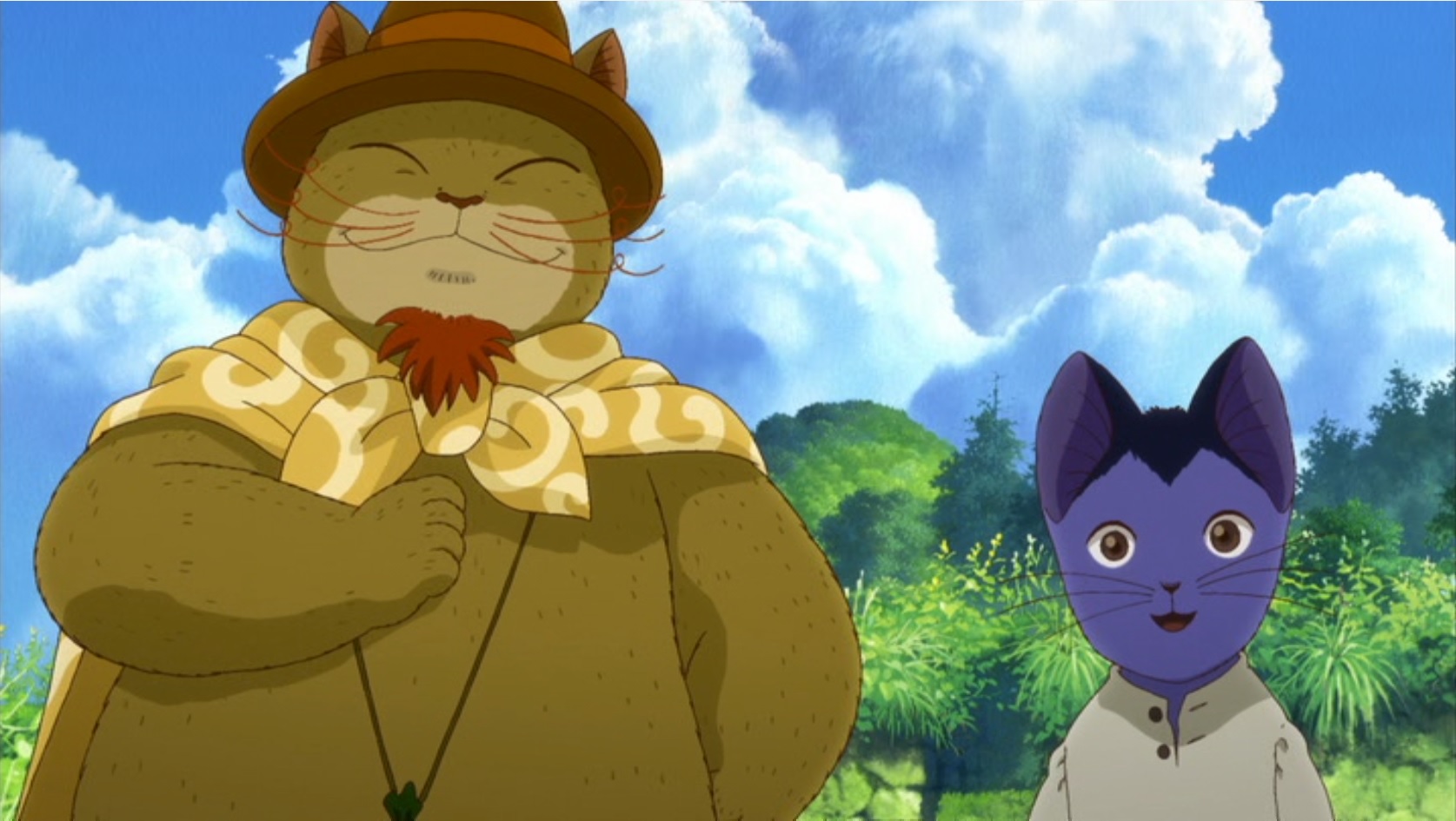
‘The Life of Budori Gusuko’ is a film adaption of the novel of the same name by Kenji Miyazawa from 1932. Earlier director Gisaburō Sugii had filmed ‘Night on the Galactic Railroad’ (1985) by the same writer. Strangely, in both films, the characters are inexplicably depicted as cats. The reason of this goes completely beyond me, as Sugii does nothing with the idea of the characters being cats. They’re just humans in a cat shape.
I haven’t seen ‘Night on the Galactic Railroad’, yet, but I understand this film is some kind of classic. I wish I could say the same of ‘The life of Budori Gusuko’, but not so. This film is very disappointing in almost every aspect.
The story tells about Budori Gusuko, a blue cat, and the son of a lumberjack somewhere in the mountains. One year summer never comes, and famine comes to the land. Gusuko’s family disappears, and during the film he keeps on looking for his lost younger sister Neri. Starvation and loss presses Gusuko to leave the mountains…
The story takes place in some parallel world, but Sugii’s world building is annoyingly sloppy. The mountains in which Gusuko grows up are unmistakably European in character, but when Gusuko descends into the valley, we suddenly see very Asian rice paddies. Once we’re in the city, the setting becomes some sort of steampunk, with fantastical flying machines, while Gusuko’s second and third dream take place in some undeniably Japanese fantasy world. The volcano team, too, is typically Japanese.
But worse than that is the story itself. The film is frustratingly episodic, with things just happening on the screen, with little mutual relationship or any detectable story arc. A voice over is used much too much, and there are three very long dream sequences that add very little to the story, and the inclusion of which is more irksome than welcome.
The main problem is that Gusuko’s life story is not particularly interesting. The character himself is frustratingly passive and devoid of character. And worse, after the dire straits in the mountains, he hardly suffers any setbacks. Down in the valley he gets help and work immediately from a friendly but rather reckless farmer called Red Beard. Only when bad harvests hit the valley, too, Gusuko is forced to leave him, too, to descend once more to the city.
Likewise, in the city, Gusuko immediately reaches his goal. There’s some vague climate theme, but Gusuko’s proposed solution is questionable to say the least. Because we learn so little about Gusuko’s motives and inner world (the three dream sequences don’t help a bit) Gusuko’s last act comes out of nowhere. Nor do we care, because Gusuko never gained our sympathy in the first place. The resulting film is appallingly boring.
It must be said that ‘The Life of Budori Gusuko’ can boast some lush and outlandish background art, qualitative if unremarkable animation, adequate effect animation, and a modest dose of apt computer animation when depicting moving doors, lamps, factory parts, flying machines and of Gusuko ascending the stairs. There’s even some puppet animation during the second dream scene. Moreover, the sparse chamber music score is pleasant and effective. Composer Ryōta Komatsu makes clever use of strings, harpsichord, accordion, and percussion. But all these positive aspects cannot rescue a film whose central story is a bad choice to start with.
Surprisingly, this was not the first animated adaptation of the novel. In 1994 the Japanese Animal-ya studio had made another adaptation. It puzzles me what the Japanese see in this terribly boring tale with its questionable message.
Watch the trailer for ‘The Life of Budori Gusuko’ yourself and tell me what you think:
‘The Life of Budori Gusuko’ is available on Blu-Ray and DVD
Director: Rich Moore Release Date: October 29, 2012 Rating: ★★★★★ Review:
2012 was the year in which Disney computer animation surpassed Pixar computer animation. Sure, Disney’s ‘Tangled’ from 2010 already was a good film, but Pixar’s ‘Toy Story 3’ from the same year happened to be outrageously good. Pixar’s 2012 film ‘Brave’ on the other hand was a disappointment, while Disney delivered the excellent ‘Wreck-It Ralph’. It seemed executive producer John Lasseter had transferred the magic from his former studio to Disney’s counterpart.
As it turns out ‘Wreck-It Ralph’ is a pretty un-Disney-like movie: it’s not a fairytale, it’s not a musical, there’s no talk of family values, and although there’s a sense of nostalgia, it’s one to the fairly recent dawn of computer games of the early 1980s. Because ‘Wreck-It Ralph’ is a delightful ode to the classic Arcade computer game, in the same way ‘Who Framed Roger Rabbit’ (1988) an ode was to classic cartoons. Thus, Roger-Rabbit-style, there are many cameos from classic video games, like Pac-Man, Super Mario (the dragon Bowser), Frogger, Streetfighter, as well as Sonic the Hedgehog and his nemesis Doctor Eggman. I’ve never played many games myself, so have to admit I missed many of the cameos, and was actually surprised to learn that ‘Tapper’ had been a real game back in 1983.
None of these cameos contribute to the story, however, except for Q*Bert (1982), who directs Fix-it Felix Jr. and Sergeant Calhoun to Wreck-It Ralph’s whereabouts. For the main story the studio designed three totally believable new games: ‘Fix-it Felix jr.’, which is clearly modelled on Nintendo’s ‘Donkey Kong’ (1981), ‘Hero’s Duty’, a first-person shooter game reminiscent of ‘Halo’ and ‘Call of Duty’, and ‘Sugar Rush’, a candy-themed racing game starring little girls. Especially the latter game is excellently designed, with marvelous world building and great characters and scenery based on sugars and sweets.
These arcade games, and others, are connected to each other by the electricity cables, which come together in a central power strip, which is shown as some sort of train terminal for the game characters. ‘Wreck-It Ralph’ further borrows the concept of ‘Toy Story’ that the characters are alive and behaving independently when no humans are around. Thus, when the arcade closes, the game characters’ workday is over and they go and visit each other.
Star of the film is Wreck-It Ralph, the bad guy of the game ‘Fix-it Felix jr.’. He opens and closes the film with his voice over (which appears to be his monologue for ‘Bad-anon’, an ‘Alcoholics Anonymous’-like support group for bad guys in computer games. Ralph is fed-up being a bad guy, and when his fellow game-mates celebrate their game’s 30th anniversary without him, he sets out to become a hero, too, and win a medal, thus seriously jeopardizing his own and other games. He accidentally ends up in the game ‘Sugar Rush’ where he meets the bratty little girl, “glitch” and fellow outcast Vanellope von Schweetz. Despite Ralph’s initial dislike for this kid, the two must team up to get what they want, thus adding a surprising buddy element to the film.
‘Wreck-It Ralph’ is a remarkably well-told film: the pacing is excellent, the story unpredictable, the characters must fight no less than two enemies, cleverly intertwining several story elements. Even the obligate break-up scene, which invades so many American feature animation films from this era, actually works for once, because the two don’t break up because Ralph is behaving selfishly, but because he actually tries to protect Vanellope. Indeed, when he does what he does this leads to a particularly heartbreaking scene, which forms the emotional highlight of the movie.
Moreover, the comedy comes directly from the characters themselves, and doesn’t rely on cultural references or fart jokes. And what great characters! Ralph (aptly voiced by John C. Reilly) is a pretty straight guy, lovable as an outcast in search for recognition and acceptation, Vanellope von Schweetz (excellently voiced by comedian Sarah Silverman) is delightfully bratty, annoying and adorable. Sergeant Tamora Jean Calhoun (Jane Lynch) only talks in heavy-handed, overblown sentences like “Doomsday and Armageddon just had a baby and it… is… ugly!”, in which she keeps true to the genre of her game. But my favorite character is Fix-it Felix jr. (Jack McBrayer), a character so goody-goody his speech is of the prissiest character. His interaction with the super-tough Calhoun is a delight to watch. The only letdown is King Candy (Alan Tudyk), whose voice and mannerisms are too obviously based on Ed Wynn as the Mad Hatter in Disney’s ‘Alice in Wonderland’ (1951). Why the character couldn’t get a voice or mannerisms of his own is a mystery to me.
The animation, too, is also excellent. The animators have managed to mix character animation with the typical jumpy animation of the earliest games, especially in animating the other characters within Ralph’s game, but at times also Ralph and Felix are animated this way. The story is so captivating, and the quality of the animation, design, background art and cinematography is so high, one all forgets about these technical aspects, allowing one to get totally submerged into the film. ‘Wreck-It Ralph’ feels effortless, which is the highest degree an animated feature can obtain. Especially when considering this is a film with a surprisingly complex plot, set in several, mostly totally original worlds. The film is not the best animated feature of 2012, that distinction must go to Don Hertzfeld’s ‘It’s Such a Beautiful Day’, and it must allow Laika’s ‘ParaNorman‘ getting second place, but of all computer animated features premiered that year, it’s the absolute winner.
Watch the trailer for ‘Wreck-It Ralph’ yourself and tell me what you think:
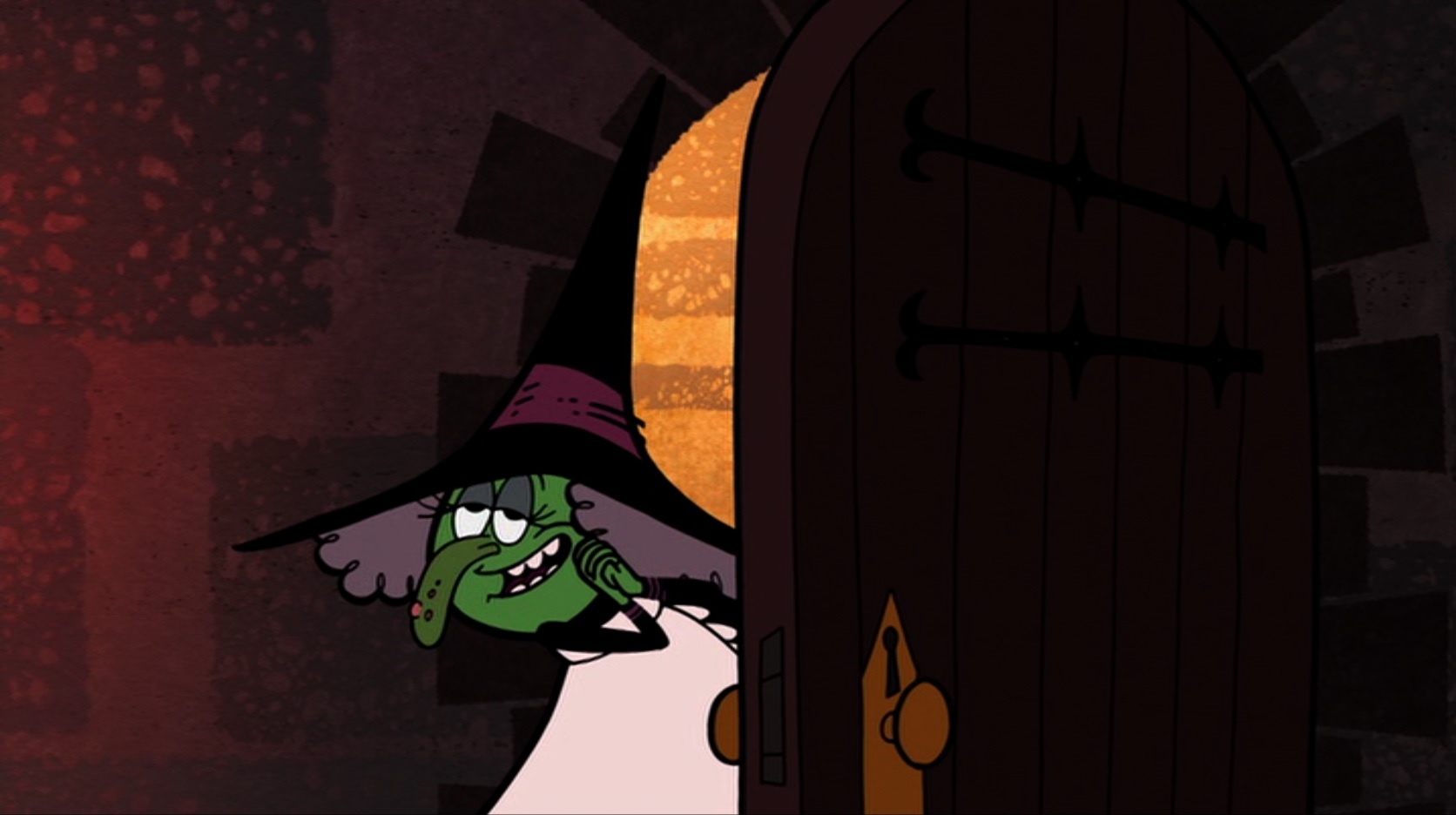
This short is set in Hotel Transylvania from the film of the same name and features Bigfoot trying to sleep, while being hindered by a green witch, who in fact tries to keep him sleeping.
Surprisingly, Tartakovsky’s crew animated this cartoon in 2D, not 3D, and the short features Tartakovsky’s comedy style as we know it from his television series ‘Dexter’s Laboratory’. Thus we watch strong poses, outrageous takes and jumpy animation.
Unfortunately, the film is too short to build up some great comedy. The witch essentially wakes Bigfoot only twice. If you compare this to say Tex Avery’s ‘The Legend of Rockabye Point’ it’s easy to see where this film remains stuck in being a nice attempt, while Tex Avery’s is the pinnacle of comedy. Funny animation alone isn’t enough, a film needs gags, too.
Watch ‘Goodnight Mr. Foot’ yourself and tell me what you think:
‘Goodnight Mr. Foot is available on Blu-Ray and DVD ‘Hotel Transylvania’
Director: Michel Ocelot Release Date: October 3, 2012 Rating: ★★½ Review:
‘Kirikou et les hommes et les femmes’ is the third movie about Kirikou, the brave little infant who lives in some West-African village and who battles the evil witch Karaba.
Like the second movie, ‘Kirikou et les bêtes sauvages’ (2005), but unlike the first movie, the feature consists of five stories, all lasting ca. a quarter of an hour. These stories clearly assume that one is already familiar with the main story, as told in the masterful ‘Kirikou et la Sorcière’ from 1998. They are told by Kirikou’s grandfather, and all take place in Kirikou’s little village or its direct surroundings.
The first story is mainly comical and tells about Kirikou’s mother taking in the stout woman, who’s rather ungrateful, and snores, too. In the second story the old man of the village has disappeared and Kirikou tricks Karaba’s all-seeing fetish on the roof to look for him. The third and fourth story make unwelcome and rather unconvincing leaves from the fairy tale setting of Kirikou’s first film, and suddenly place Kirikou’s village in the real world.
The third story is an all too obvious tale about racism and acceptance, while the fourth is a homage to the art of storytelling. The main problem with this episode is that storytelling itself is rather unfit for cinema, and thus this episode only makes the viewer long for an encounter with a real griot telling you the story of Sundiata Keita, the founder of the Mali empire. The fifth and last story is one about the power of music, in which Kirikou and his friends learn to play some instruments. In this episode Kirikou’s mother turns out to be an excellent flute player meeting gender inequality, as she’s not allowed to play because she is a woman.
All these stories end with the village rejoicing and dancing to the same melody, celebrating Kirikou’s cleverness. Unfortunately, none of these stories is very engaging and certainly not one of these stories comes near the narrative power of ‘Kirikou et la Sorcière’. Much more, by placing Kirikou’s village into the real world, the setting loses a lot of its magic, and in fact it makes Karaba’s presence suddenly absurd. In the end, the film feels superfluous and unnecessary, even unwelcome, spoiling the enchantment of the first film.
What certainly doesn’t help is the switch from traditional animation to 3D computer animation. The film uses a quite unique way of placing 2D designs on 3D characters (a very similar method was developed independently for ‘Couleur de peau: miel’). And, indeed, the makers have succeeded in keeping the ligne claire of the original designs, but nevertheless the 3D animation feels rather poor and remarkably stiff, never coming near the charm of the original hand drawn animation.
Much better than either the animation or the stories themselves are Ocelot’s hand-painted backgrounds, which retain the strange atmosphere of ‘Kirikou et la Sorcière’. Thibault Agyeman’s score is also a delight and makes clever use of traditional African instruments like the kora and balafon.
‘Kirikou et les hommes et les femmes’ is not a bad film, the stories themselves are told well enough. But let’s face it: this is a sequel that adds nothing to the first film and doesn’t do it any service by its unnecessary expansion and unwelcome added realism.
Watch the trailer for ‘Kirikou et les hommes et les femmes’ yourself and tell me what you think:
‘Kirikou et les hommes et les femmes’ is available on DVD with English subtitles
Director: Tim Burton Release Date: September 20, 2012 Rating: ★★★½ Review:
‘Frankenweenie’ was the third horror-themed animated feature of 2012, after ’ParaNorman’ and ’Hotel Transylvania’. Based on a short live action film director Tim Burton made way back in 1984 when still working at Disney, Again made at Disney, the new ‘Frankenweenie’ is obviously an ode to classic horror cinema, and to ‘Frankenstein’ from 1931 in particular.
Indeed, the references to other films are all over the place, and as horror is not my specialty, I’m sure I have not nearly caught half of them. It already starts with the town’s name, ‘New Holland’, which is a direct reference to the Dutch settlement in which Irving Washington’s tale of horror ‘The Legend of Sleepy Hollow’ (1820) takes place.
Main protagonist Victor’s surname is Frankenstein. His eccentric science teacher takes after horror actor Vincent Price, while Edgar, one of his school mates, looks like the hunchbacked Fritz in ‘Frankenstein’. Another school mate looks like a mix between Buster Keaton and the monster of Frankenstein, and so on and so forth. In the finale Burton even throws references to 1950s movie monsters into the mix, unfortunately diluting the theme on the way.
In any case ‘Frankenweenie’ suffers from a lack of focus. Not only can’t Burton stick to the Frankenstein theme, but his film is also stuffed with ideas that lead nowhere. For example, there’s an evil neighbor, whose role is hardly played out. He lives up to a festival day called ‘Dutch Day’, but again very little is done with the concept. This neighbor guards one Elsa van Helsing (yes, there’s another reference), a probable love interest to Victor, but this story idea isn’t developed beyond conception. Then there’s the father who worries Victor becomes too weird – and again, this story idea is only used to get the story at the point at which Victor can revive his deceased dog, after which this subplot never returns.
There’s a particularly large number of villains in this film: the neighbor is evil, Edgar is evil, Toshiaki (yet another of Victor’s schoolmates) is evil, but like the other story elements their particular stories are touched, not played out. We mostly learn that reviving animals apparently is deadly easy. Best of the oddball characters that fill the film is a wide-eyed girl with a cat that prophecies in its poo.
Tim Burton certainly has indulged in stuffing his film with references, but what he wanted to tell with his story is less clear. There’s even a completely idiotic message (voiced by Victor’s science teacher) that science can only succeed when you put your heart into it. Really?! If you’d believe this, you’d believe science is more like magic than a method.
Despite the weak story, the film’s finale consists of twenty minutes of pure action and excitement, ending in a burning windmill (yes, echoing ‘Frankenstein’). This sequence is full of stunning cinematography and complex sets. There’s even a moment of real horror, including a scare moment. Unfortunately, after the action sequence the films ends forced and cliché with e.g., an applauding crowd, missing an opportunity for a more intelligent and daring ending.
It’s a shame ‘Frankenweenie’ doesn’t deliver story-wise, for the film’s looks are a delight. In design ‘Frankenweenie’ is clearly the successor of Burton’s earlier and similarly horror-themed stop-motion films, ‘The Nightmare Before Christmas’ (1993) and, more obviously, ‘Corpse Bride’ (2005). Like in those earlier films, the puppets are top-heavy, with long slender limbs. But unlike these two earlier films, ‘Frankenweenie’ is no musical, and Burton made the bold move to film this movie in black and white, enhancing the classic feel. The cinematography is at times no less than marvelous, like in the reviving scene, or the scenes at the graveyard.
The animation is fine, but sometimes on the bland side, especially on Victor’s parents and secondary characters, whose expressions are too often rather empty gazes. Moreover, nowhere do the animators manage to blow genuine feelings into the puppets (most of the characters are just weird anyway), and the film lacks proper emotion, even in its most desperate scenes.
‘Frankenweenie’ is not a bad film, it’s too well crafted for that, but when compared to Burton’s earlier movie ‘Corpse Bride’ or to Laika’s contemporary and comparable ‘ParaNorman’ it just falls short on its potential. Especially ‘ParaNorman’ does well what ‘Frankenweenie’ does not: staying focused, spinning a tale with a clear message, building characters you care for, and giving the film a surprising twist. At least we should be thankful that 2012 brought us no less than two stop motion features, keeping the old technique alive and kicking in a sea of computer animation.
Watch the trailer for Frankenweenie’ yourself and tell me what you think:
2012 was the year of animated horror. No less than three American animated feature films of that year were horror themed: Laika’s ‘Paranorman’, Disney’s ‘Frankenweenie’ and Sony’s ‘Hotel Transylvania’. Of these three ‘Hotel Transylvania’ is the least scary (it isn’t scary at all), the least original and the least impressive.
‘Hotel Transylvania’ marked the feature direction debut of Genndy Tartakovsky, the Russian-American genius behind Cartoon Network hits Dexter’s Laboratory and Samurai Jack. Both series were impressive efforts of style and animation, being conceived in a strong idiosyncratic and very attractive style, making full use of limited animation in the best UPA sense, instead of the dull cheapstake sense of Saturday morning television television of the 1970s and 1980s.
In that respect, ‘Hotel Transylvania’ is quite a letdown. Neither the design nor the 3D computer animation shows anything betraying Tartakovsky’s style, and are, in fact, pretty generic. True, the animation style is very cartoony, with wild takes and jerky movements, and this undoubtedly at least partly betrays his influence, but Sony Pictures Animation already had adopted this style in ‘Cloudy with a Chance of Meatballs’ (2009). The most interesting piece of cartoony animation is the absurdly smooth way Count Dracula strides, which looks like a homage to Dora Standpipe’s moves in ‘The Dover Boys at Pimento University or The Rivals of Roquefort Hall’ (1942), but may also have been inspired by the Martian woman in ‘Mars Attacks!’ (1996) .
‘Cloudy with a Chance of Meatballs’ (2009) also was a more stylized film than ‘Hotel Transylvania’, which struggles with the homogeneity of its design. Some characters retain some plastic cartoony appearance (Count Dracula, the Monster of Frankenstein), while others are over-textured, adding unnecessary realism to their appearance (Wayne the Werewolf, Murray the mummy).
There’s even an unsettling difference between the two love interests who form the heart of the film: the rather goofy youngster Johnny is designed and animated broadly, and hard to take seriously. During the first half of the film he comes across as incredibly stupid and empty, and his transition into a genuine love interest isn’t entirely convincing. Dracula’s daughter Mavis, on the other hand, shows some real depth, and she is the only character animated straight and sincerely between a multitude of cartoony monsters. In fact, Mavis is the only character one cares for, and it’s a shame we see so little of her.
This is because ‘Hotel Transylvania’ is not her story, but that of her father, count Dracula, and this tale of a single, overprotective father owes a little too much to ‘Finding Nemo’ (2003). Somehow this theme was in the air, because the next year Illumination would follow suit with ‘Despicable Me 2’. Count Dracula’s progress unfortunately is pretty formulaic, as are the themes of friendly monsters (done better by Dreamworks in ‘Monsters vs. Aliens’ from 2009) and ‘the ‘enemy is not as bad as he seems’ (done more successfully in ‘Paranorman’). And by 2012 the happy musical finale, so fresh as it had been in ‘Shrek’ (2001) already was an all too tried way to end things. Also, the premise of the hotel isn’t entirely convincing. Count Dracula may be convinced the outer world is a threat, but his guest flock from all over the globe – they surely should know better?
Don’t get me wrong. ‘Hotel Transylvania’ is not a bad movie. It’s even quite enjoyable. On the up side the voice cast is quite good. Adam Sandler actually does a good job as Count Dracula, Selena Gomez is excellent as Mavis, and Kevin James, Steve Buscemi and Cee-Lo Green fit their characters Frankenstein, Wayne and Murray very well. There are some fine gags, the film moves at a lively pace, and the story at least moves forward without any sidetracks.
But all the tropes, the almost obligatory fart joke, all the formulaic plot twists, the uninspired designs and stock characters and the generic music make that the film doesn’t stand out from the crowd. This film is just mediocre. Surely, Genndy Tartakovsky should be able to do better. At least it didn’t help that he was only the sixth (!) director involved in this film. At least we can enjoy some of his appealing 2D artwork during the titles, but that’s of course cold comfort after the real thing. Nevertheless, ‘Hotel Transylvania’ would sprout two sequels, with a third coming this way this year.
Watch the trailer for ‘Hotel Transylvania’ and tell me what you think:
‘Hotel Transylvania’ is available on Blu-Ray and DVD
Based on a manga from the mid-1980s by Hinako Sugiura ‘Miss Hokusai’ is one of those rare animation films unquestionably directed to an adult audience. The film celebrates Japanese artist Katsushika Hokusai (1760-1849) and his daughter, fellow artist Katsushika Ōi (ca. 1800-ca. 1866), whose art matches her father’s.
The film is no biopic, however, only spanning a short time, when Ōi is ca. twenty years old. Moreover, the film consists of a multitude of short scenes, mostly seemingly unrelated and hardly building a story. For example, there are two artists romantically interested in Ōi, but this amounts to no romance. Ōi seems vaguely interested in her own sexuality, but also this theme is hardly worked out.
The most substantial story line is that of Ōi’s younger stepsister O-Nao, who is blind, and whom Hokusai refuses to visit. However, there’s no real story arc, and the film fades in and out without much conflict or personal progress. Emotions remain understated throughout, and it’s telling that the film’s most delightful scene involves a boy playing with O-Nao in the snow, a scene in which Ōi hardly takes part.
It doesn’t help that Ōi mostly is a taciturn, frowning, and uninviting character, who rarely smiles. Her father is more colorful, but cold, selfish and equally clammed-up and phlegmatic. Neither of the two is very sympathetic, and the charm of the film lies not particularly with these characters, but with a series of supernatural events related to Hokusai’s art.
The other characters, mostly artists, are too sketchy to be of real interest. To Western viewers Totoya Hokkei, one of Hokusai’s students, is most interesting, for here’s a rare Japanese anime character actually depicted with slit eyes, depicting the epicanthic fold. There’s also a dog, which I guess, is supposed to be some sort of comic relief.
Above all, the film manages to paint a very lively portrait of Edo (19th century Tokyo), especially the busy Nihonbashi bridge, which is rendered beautifully with help of computer animation. This bridge takes a central place in the narrative, and the films starts and ends with it. Hokusai’s famous Great Wave off Kanagawa can also be seen briefly around the 21-minute mark. Computer animation is also used effectively in the scene in which Ōi runs through the nightly streets of Edo.
The traditional animation is fair, but not exceptional, and firmly rooted in Japanese anime traditions. The soundtrack uses very uninteresting modern music and is mostly at odds with the 19th century scenes.
In all, ‘Miss Hokusai’ is too fragmentary, too unfocused, and too bland to entertain. Both Hokusai and Ōi ultimately deserve better.
Watch the trailer for ‘Miss Hokusai’ yourself and tell me what you think:
Director Tomohiko Itō Airing of first episode: January 8, 2016 Rating: ★★★½ Review:
‘Erased’ (the Japanese title translates as “The Town Where Only I Am Missing”) is an anime miniseries consisting of a mere twelve episodes and telling about young adult Satoru, who’s apparently often transported a few moments back in time to prevent some horrible disaster.
This is a weird concept to start with, especially because it’s never explained nor used consistently during the series. But this is the starting point of the complete series. Anyhow, when a mysterious killer goes rampant, threatening Satoru’s own very existence, he’s suddenly sent back not a few moments back into time, but way back to February 1988, when Satoru was eleven years old. Moreover, Satoru’s transferred to a different place, as well, his childhood hometown of Chiba, near Tokyo.
Satoru, who keeps his adult mind, knows he must do something about his classmate Kayo, a girl who has visible bruises because she’s molested by her mother, but who also is the first victim of a child-abducting serial killer that terrorizes the neighborhood, something Satoru knows beforehand, because he relives the past. He has only a few days to set things right. Will he be able to rescue Kayo and the other children from the clutches of the murderer, this time?
The series thus plays with the wish to go back in time to do things differently than you have had before. Satoru certainly changes the behavior of his eleven-years old self, changing from a rather distant, lonesome child into one who becomes a responsible and valuable friend, discovering the power of friendship along the way.
Now this is the first anime series I’ve seen in its entirety, so to me it’s difficult to assess the series’ value compared to others. In the distant past I’ve seen episodes from ‘Heidi’ (1974), ‘Angie Girl’ (1977-1978), and ‘Candy Candy’ (1975-1979), as well as ‘Battle of the Planet’s (1978-1980), the Americanized version of ‘Gatchaman’, but that’s about it – the only other more recent series I’ve seen is ‘FLCL’ (2000-2001), but I’ve only seen the first couple of episodes, so I cannot judge that series in its entirety.
Nevertheless, ‘Erased’ receives a high rating on IMDb, thus is clearly valued as one of the better series. And I can see why. The series is very good with cliffhangers, and there’s enough suspense to keep you on the edge of your seat most of the time. Moreover, apart from the time travelling and killer plot, there’s a sincere attention to the horrid effects of child abuse. Even better still, the series shows how being open and friendly towards others can make a significant positive change to their lives, as well as to your own. This is a rare and very welcome message, which the series never enforces on the viewer, but shows ‘by example’.
I particularly liked the fact that each episode starts with an intro, which is not an exact recapture of events in the previous episode, but which contains new footage, subtly shedding new light on the events. Nevertheless, ultimately, the thriller plot, which its red herrings, false alarms, and rather unconvincing villain, is less impressive than the subplots on child abuse and friendship.
Indeed, the series’ best parts all play in February-March 1988, not in the present, with the gentle eight episode, ‘Spiral’ forming the series emotional highlight. The creators succeed in giving these school parts an air of nostalgia, as exemplified by the leader of the series, which is intentionally nostalgic, focusing on Satoru’s childhood, before becoming more confused, indicating a lot, without revealing anything. Oddly, the intro is accompanied by neo-alternative guitar rock, suggesting more the early nineties than late 1980s.
Anyhow, when focusing on the relationships between the children the series is at its very best. In fact, I wonder why the creators didn’t make this series without the rather enforced killer plot. In my opinion the series needn’t any, although it certainly accounts for some chilling moments, like when Satoru becomes a victim of child abduction himself…
Unfortunately, the creators of ‘Erased’ are better in building its subplots than ending them. The last three episodes become increasingly unconvincing. They quickly lost me, making me leave the series with a rather sour taste in my mouth. The finale certainly stains the whole series and diminishes its power.
I have difficulties to say something about the design and animation. The animation, typically for television anime, is rather limited, but still looks fine, as does the staging. The character designs and background painting, however, don’t transcend the usual Japanese conventions, and are indeed pretty generic. In that respect, ‘FLCL’, the only other anime series I can say something about, is much more cutting edge.
In all, ‘Erased’ is a gripping series with a very welcome attention to the horrors of child abuse and the benefits of friendship. I’d certainly say it deserves a watch, even if it can turn out a little disappointing one, given the series’ potential.
Watch the trailer for ‘Erased’ and tell me what you think:
Director: Julia Gromskaya Release Date: 2012 Rating: ★★★½ Review:
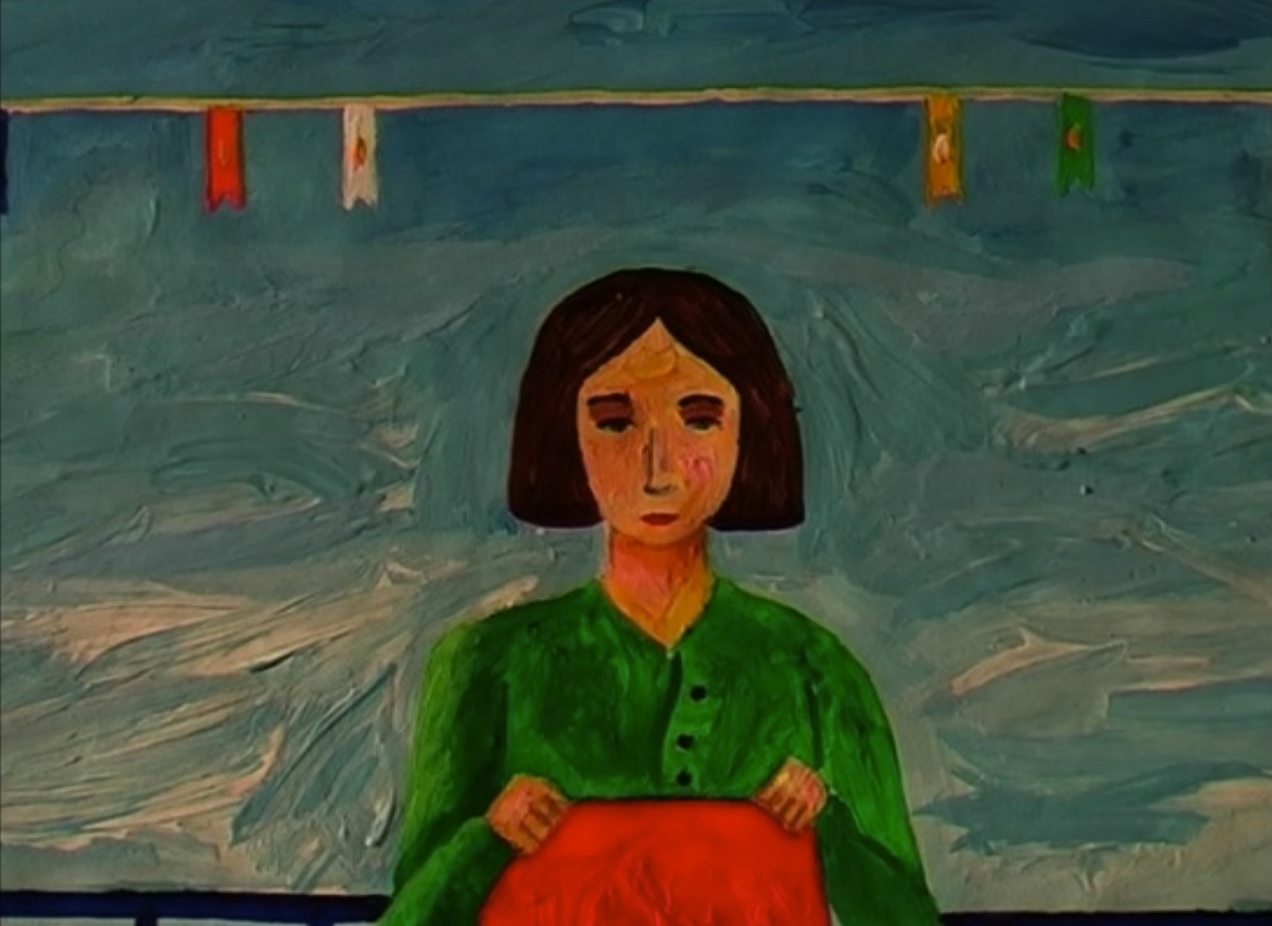
‘Fiumana’ shows that Georges Schwizgebel’s particular way of animating has made school. Julia Gromskaya adapts Schwizgebel’s painting techniques and constantly shifting perspective to tell a tale of a woman waiting for her man, while drowning in her memories.
Gromskaya’s film is much more stream-of-consciouslike than Schwizgebel’s films, however, and has strong surrealist overtones, with some original metamorphosis going on while the images flow into each other. For example, at one point the woman’s eyes change into boats on a river, which in turn changes into the smoke of the man’s pipe.
Gromskaya’s painting style, too, differs from Schwizgebel’s, and is much more fauvist and naive. Her flow of images is supported by a gentle chamber music score by Francesca Badalini. The result is a puzzling yet beautiful film that is over before you know it.
Watch ‘Fiumana’ yourself and tell me what you think:
‘Fiumana’ is available on the DVD-box ‘The Animation Show of Shows Box Set 7’
Director Mamoru Hosoda rose to prominence with the feature films ‘The Girl Who Leapt Through Time’ (2006) and ‘Summer Wars’ (2009), both made at the Madhouse studio.
To make his next film, ‘Wolf Children’ he created his own studio, Chizu, allowing him to make ‘author films’. And indeed, Hosoda has proven to be a strong voice in Japanese animated cinema, especially with ‘The Boy and the Beast’ (2015). Many place ‘Wolf Children’ in the same league, but I’d disagree, as I will explain below.
‘Wolf Children’ tells about Hana, a student who falls in love with an enigmatic boy, who turns out to be half man half wolf. She bears him two children, who have inherited her boyfriend’s dualistic nature, but then he dies, and she must raise the two on her own. But how will she manage as her children are both human and wolf?
The film encompasses a long time period, up to ca. twenty years, and from time to time a voice over (by Hana’s daughter Yuki) takes over. The film thus is very episodic, but also remarkably low key, poetic and tranquil. Several scenes are mood pieces, only carried by music, letting the images do the work. Moreover, most of the emotions are seen from a distance, and the most dramatic moment of the movie, Yuki’s rescue of her little brother Ame, isn’t even shown.
Unfortunately, the episodic nature also means that the film lacks focus. The story doesn’t stay with Hana but diverts to the experiences of Yuki and Ame and back, story lines are introduced and dropped as well as characters. For example, when Hana moves to the countryside, several scenes are devoted to her relationship with the villagers, most importantly one grumpy old Nirasaki. But later this theme is dropped, and the characters are not seen again.
Hosoda does succeed in showing how little events in children’s lives can change their character and outlook on life forever. Indeed, Yuki and Ame go different directions in life, proving that one upbringing can have very different outcomes.
Despite the film’s interesting message, the lack of focus, the episodic nature, the slow speed, and the sheer length (the film clocks almost two hours) all hamper the film. One wishes Hosoda dared to be more concise, killing more darlings.
Moreover, stylistically the film doesn’t deviate from the general anime style. As all other anime films of the era, the movie exploits very realistic and intricate background art, and the character design feels generic and uninspired, despite being designed by Yoshiyuki Sadamoto of ‘Nadia: The Secret of Blue Water’ (1990) and ‘Neon Genesis Evangelion’ (1995) fame. In fact, with their rather ugly line work and flat colors, the characters contrast greatly with the often beautiful background art, and are simply subpar.
The animation and cinematography, on the other hand, are excellent, and there’s some clever use of computer animation, especially during the scene in which Yuki and Ame run through a snow-covered forest.
‘Wolf Children’ is certainly an interesting and by no means a bad movie, but for a director being able to do his own thing, Hosoda certainly could have been more daring artistically, and more focused storywise.
Watch the trailer for ‘Wolf Children’ yourself and tell me what you think:
Director: Natalia Chernysheva Release Date: September 2012 Rating: ★★★★ Review:
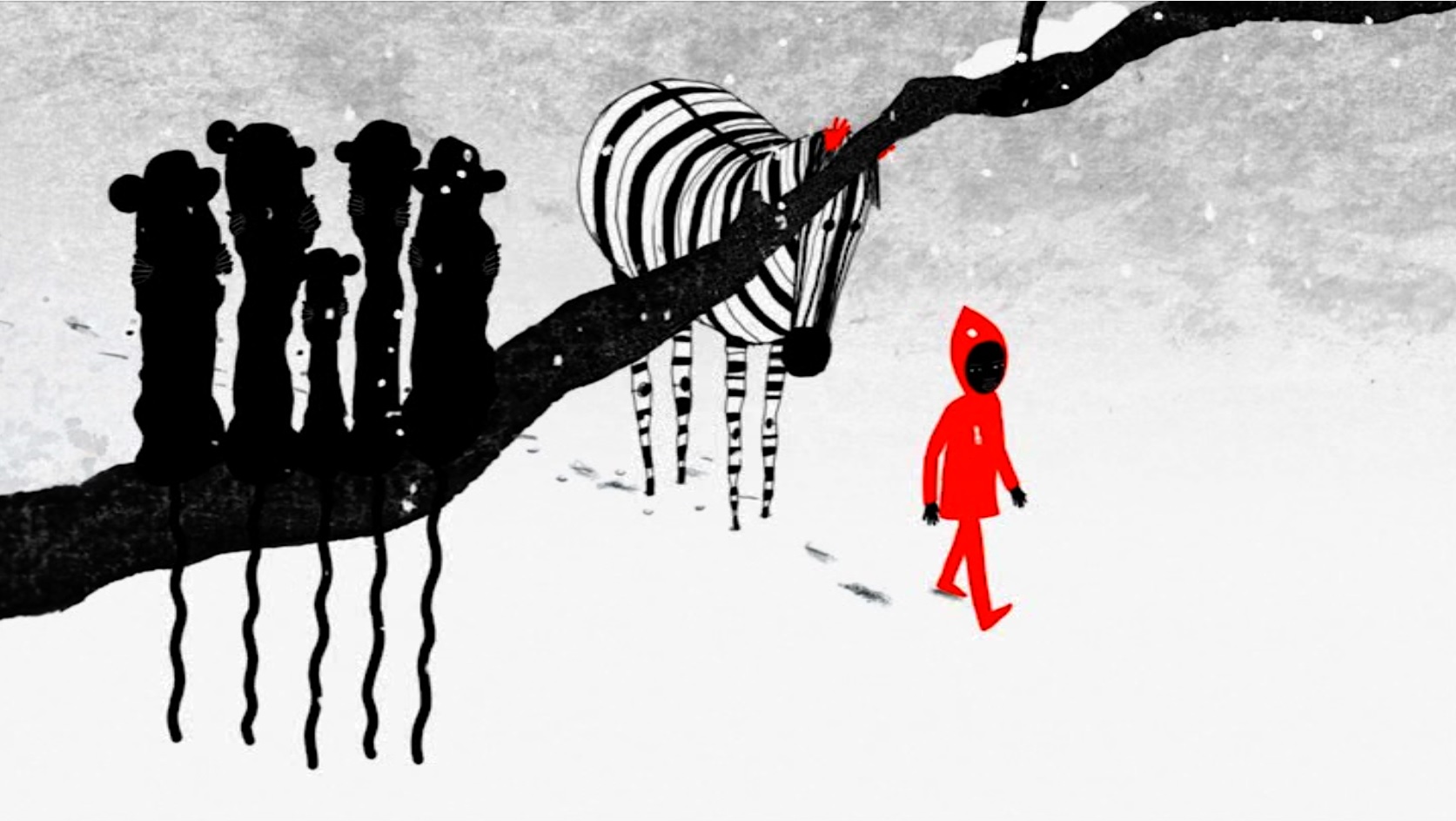
In ‘Snowflake’ a little boy in Africa gets a paper-cut snowflake by mail. That night he dreams his surroundings are covered with snow, making all animals shiver.
This is a charming little film done in a quasi-naive style, and making good use of black and whites, with occasional flashes of color. Especially the scenes in which the boy explores the snow-covered world are beautiful, with his red coat, shawl, hood and mittens standing out against the blacks, whites and greys of the animals and their surroundings. Also noteworthy is Chernysheva’s excellent timing, and the sound design, which is spot on.
Watch ‘Snowflake’ yourself and tell me what you think:
‘Snowflake’ is available on the Belgian DVD ‘Haas & Hert en andere verhaaltjes’
Director: Anna Kadykova Release Date: September 2012 Rating: ★★★½ Review:
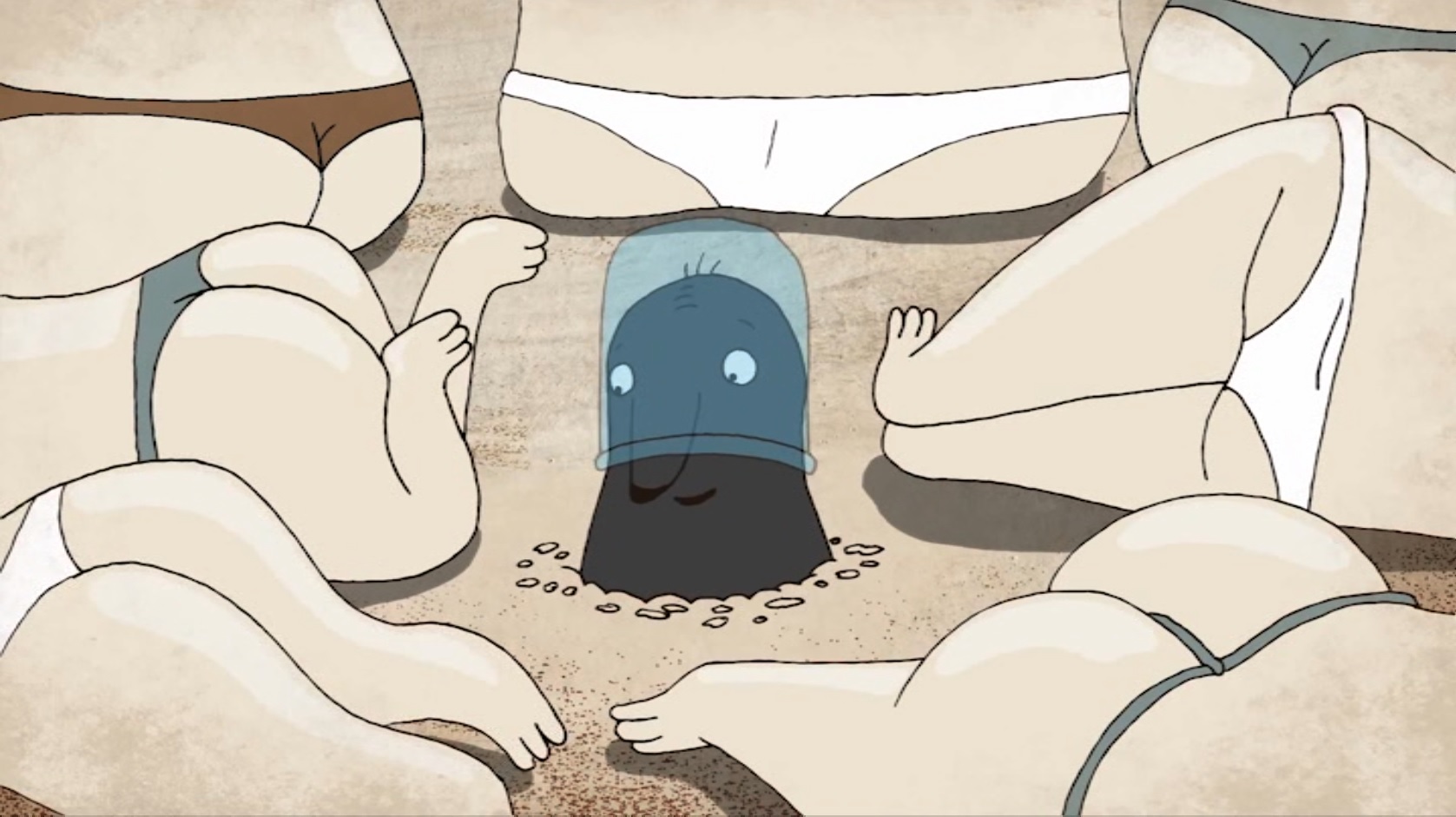
A little mole, living in a grey, polluted city discovers images of the sea in an abandoned magazine. He longs to go there, and travels, like moles do, underground to go there. Unfortunately, the beach is as crowded as the city was.
‘The Mole at the Sea’ (also known as ‘Moe Goes to the Beach’) is a charming little film, with lots of little jokes, many of which are slightly on the surreal side. Kadykova’s style is instantly likable, and her timing excellent. Especially the scenes of the over-crowded beach are nice to watch.
Watch ‘The Mole at the Sea’ yourself and tell me what you think:
‘The Mole at the Sea’ is available on the Belgian DVD ‘Haas & Hert en andere verhaaltjes’
Director: Joel Simon Release Date: July 5, 2012 Rating: ★★★★ Review:
‘Macropolis’ was commissioned by the ‘Unlimited Programme’, part of the London 2012 Cultural Olympiad, and dedicated to deaf and disabled arts and culture.
The short stars a toy cat, who’s rejected from the factory because he’s only got one eye. He teams up with a little toy dog with only one leg. The cat gives the dog a leg prosthesis, the dog gives the cat an eye patch and together they try to catch the truck which delivers all the other toys to the toy store.
‘Macropolis’ is a gentle little film which succeeds in moving the audience without any dialogue. The stop motion is mixed with pixillation and live action, and filmed partly outdoors. A nice touch is that the film makers don’t hide the fact that stop motion takes a lot of time, and the background is buzzing with movement as the two little animals wander the streets.
Watch ‘Macropolis’ yourself and tell me what you think:
‘Macropolis’ is available on the Belgian DVD ‘Haas & Hert en andere verhaaltjes’
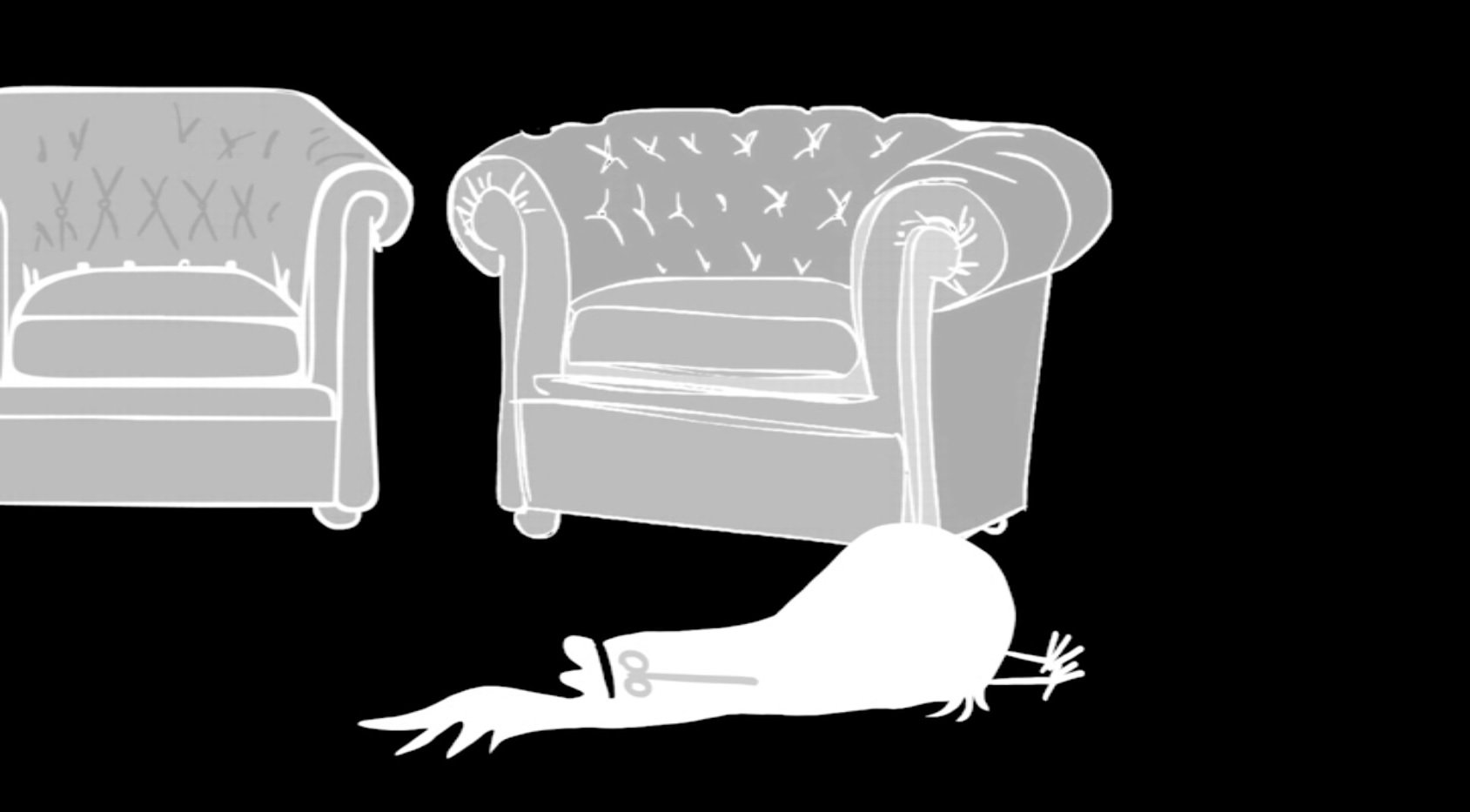
‘Duo de Volailles, Sauce Chasseur’ is a short comedy film in which a white and a black chicken are threatened by a fox in their own home.
The film is is black and white itself and tries to play with the idea that the white chicken is invisible in light and the black chicken invisible in the dark. Thus the film features a lot of on and off switching of lights.
Unfortunately, the film never succeeds in getting funny. Hecquet’s facial designs on the fox are more trite than funny, and his timing is sloppy. It certainly doesn’t help that at one point the two chickens start dancing a tango. How this deludes the fox is beyond me, because both thus remain visible to the fox throughout. Hecquet’s use of split screen is a rather petty try to make the action more exciting than it really is. The end result is a disappointingly tiresome film that never lives up to its clever premise.
Watch ‘Duo de Volailles, Sauce Chasseur’ yourself and tell me what you think:
‘Duo de Volailles, Sauce Chasseur’ is available on the Belgian DVD ‘Haas & Hert en andere verhaaltjes’
Director: Lena von Döhren Release Date: February 14, 2012 Rating: ★★★½ Review:
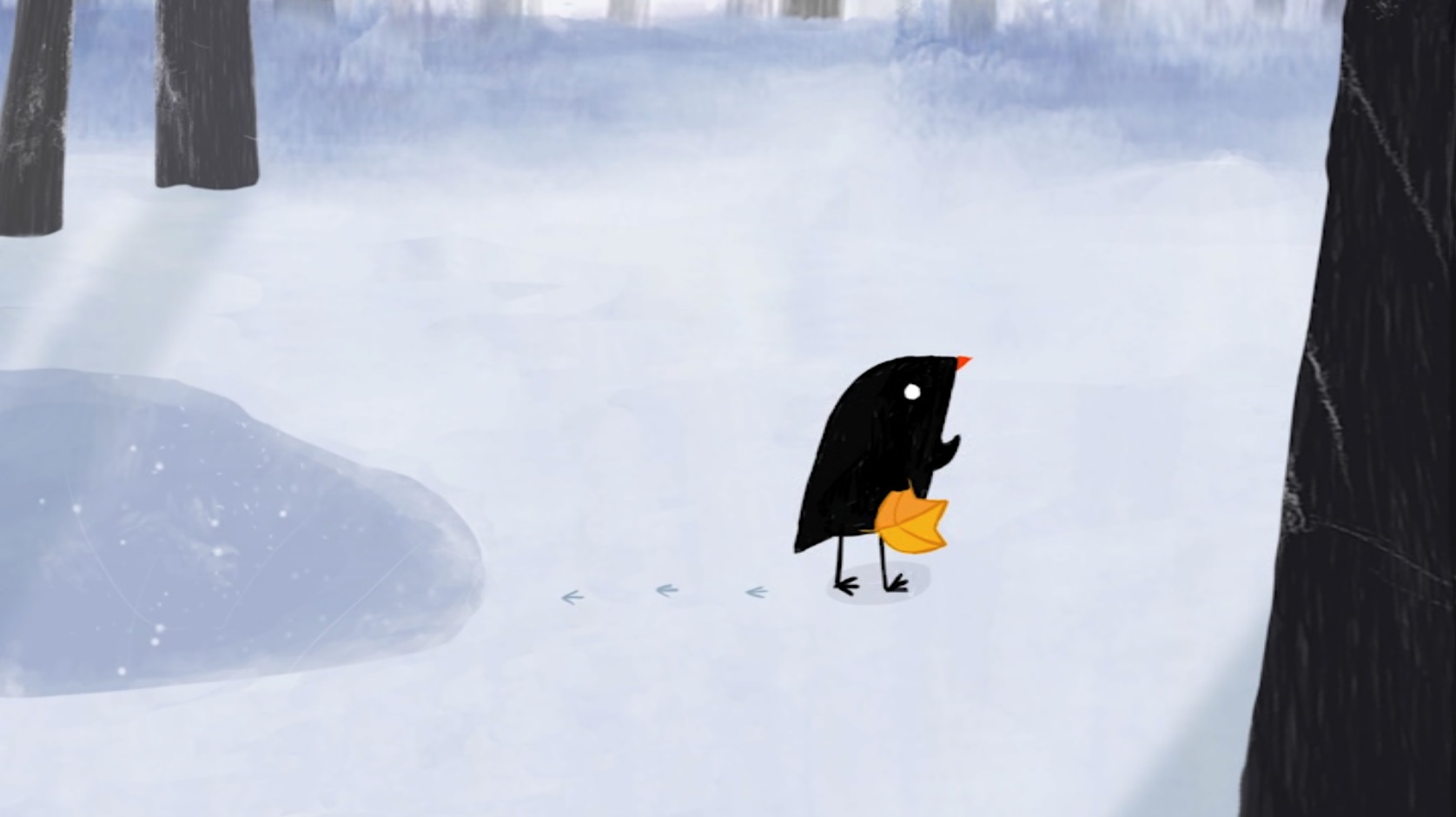
‘Der kleine Vogel und das Blatt’ is a charming little film starring a small bird caring for a single leaf.
When the leaf falls off, the little bird tries to retrieve it, while being chased by a hungry fox. The film uses no dialogue, but simple, attractive designs, and excellent timing. Animated in 2D in the computer, the film makes great use of its winter setting.
Watch ‘Der kleine Vogel und das Blatt’ yourself and tell me what you think:
‘Der kleine Vogel und das Blatt’ is available on the Belgian DVD ‘Haas & Hert en andere verhaaltjes’
Directors: Mark Andrews & Brenda Chapman Release Date: June 10, 2012 Rating: ★★★½ Review:
It’s hard to call ‘Brave’ the first Pixar letdown, that questionable honor goes to ‘Cars 2’ from the previous year, but the film certainly is a disappointment, not delivering upon its potential.
The film had a rather troubled production, with writer/director Brenda Chapman being replaced halfway by Mark Andrews, and somehow it shows. ‘Brave’ is arguably the first Pixar film that comes across as a half-baked product, with story ideas not worked out to the max.
The film’s premise is good: ‘Brave’ is the first Pixar film with a female protagonist, a princess even, surprisingly placing the film in a long Disney tradition. But Merida is not your average princess. The Scottish red-haired girl is a feisty character, a talented archer, a lover of action and adventure, and bound to step in her father’s footsteps, who’s a great warrior himself. Unfortunately, her mother stifles her into a more traditional role of womanhood, constantly telling her what a princess ought and not ought to do. Even worse, her mother prepares Merida for marriage, with several suitors coming over to compete for her. Unfortunately, not one of them is suiting marriage material (for example, one talks unintelligible, without any obvious reason), and Merida isn’t interested in this prospect, anyway, so she plans to compete herself, as she’s by far the best archer of the lot, repeating the arrow-splitting act of ‘Robin Hood’ (1973).
So far so good, but then the tale suddenly abandons the archery subplot completely. Instead, it dwindles away into a tale of magic, in which Merida deliberately poisons her mother, changing the poor woman into a bear. Unfortunately, at this point the story of independence is abandoned completely, as Merida now must bond with her bear-mother and to protect her against the men, who gladly would kill the beast. Sure, Merida’s mother now learns what Merida has learned outside the castle, but Merida’s insight in her mother’s ways is less worked out, and there’s a very unconvincing scene in which she steps in her mother’s footsteps, addressing the men, guided by her mother’s gestures. Anyhow, as soon Merida’s mother has turned into a bear, her problems are obviously bigger than Merida’s own, and thus the attention naturally shifts from the curly teenager to the poor woman, which contributes to a lack of focus, which permeates the film anyhow. I believe the very idea of turning Merida’s mother into a bear is a fundamental problematical one, a mistake central to the film’s story problems, especially when compared to the similar ‘Brother Bear’ (2003) and ‘The Emperor’s New Groove’ (2000) in which the main protagonist himself turns into an animal.
At any rate, after the archery scene the story begins to falter, leaving an awful lot of plot holes open. For example, there’s an ancient legend on four clans, but this idea is worked out badly, and hardly connected to the main story. The function of the killing of the giant bear Mor’du is puzzling – wouldn’t it have been better to show that only united the clans could be able to defeat the bear?
‘Brave’ also wastes an opportunity to become a real feminist film. First, in spite of it all, Merida still is a princess, and thus far from an ordinary woman – and her plight is slight when compared to that of her (invisible) less high-born sisterhood. If one compares her burden to that of Robyn in Cartoon Saloon’s ‘Wolfwalkers’ (2020) the difference becomes clear. Robyn is depicted working all day, shut off from the real world, while Merida at least can practice archery and such. Second, the role pressure solely comes from her mother, not society – and it’s even implied her father couldn’t care less whether Merida behaves like a princess or not. I think it would have served the film better if Merida’s plight were compared to that of a brother, but the film makers gave the princess a triplet as siblings, which are too young for comparison, and whose only function in the story is as comic relief. At one point they too turn into bears, but nobody seems to care…
No, it’s not the story, nor a feminist message that defines ‘Brave’, it’s texture. The Pixar studio made tremendous progress in depicting cloth and hair in this film, advancing computer animation once again. Merida’s extremely curly hair stands out as particularly well done, but so do the tartans of the tribes, which for the first time look like real fabric. Strangely, the building and rendering of the nature settings has aged less well – the light often is too sharp, leading to overexposed settings, especially on the sunlit grass and leaves. Moreover, the trees are too obviously generated, and look pretty fake. Luckily, the story is entertaining enough that this is soon forgotten.
Another design choice that I like less is the magnification of human sexual dimorphism: Merida’s father is almost three times the size of her slender mother or herself. Unfortunately, this depiction of men and women only diminishes the possible message of equality. Even worse, all the men are depicted as dim-witted and fight-ready, leaving the queen as seemingly the only sane person in this world.
‘Brave’ may be a disappointment, the film still is very well animated. The voice acting is superb, too, starring several Scottish and English actors, so no fake accent can be heard. The soundtrack is fair, with its quasi-Celtic themes, and the cinematography is excellent, but all this cannot rescue a rambling story, leaving ‘Brave’ a film as excellent as it is unsatisfying. A studio like Pixar certainly could and should have done a better job.
Watch the trailer for ‘Brave’ yourself and tell me what you think:
Animation Backgrounds
A blog dedicated to background paintings from animation films. Kept until 2016.
Animation Scoop
Animation historian Jerry Beck’s animation film news blog.
Cartoon Brew
Topical blog on animation film, led by animation historian Amid Amidi.
Cartoon Modern
Amid Amidi’s blog on modern design cartoon art from the forties, fifties and sixties.
Cartoon Research
THE site on classic animation research, hosted by cartoon historian Jerry Beck.
Cartoons Theory
Frank Beef analyzes classic cartoons. Kept until 2020.
Century Film Project
Michael reviews films of 100 years old and older, roughly in chronological order.
Classic Cartoons
A similar blog featuring many stills and comic strips. Kept until 2012.
Comet over Hollywood
Jessica Pickens reviews classic Hollywood films, especially musicals.
Deja View
Top ex-Disney animator Andreas Deja’s own blog.
Disney History
Esteemed Disney historian Didier Ghez on the latest books on Disney history.
Feeling Animated
Paul Astell brings us thorough reviews of animated features.
Flickers in Time
Short and to the point reviews of classic films (lately mostly pre-code talkies) by an anonymous retired Foreign Service Officer from California









 Dr. Grob's Animation Review