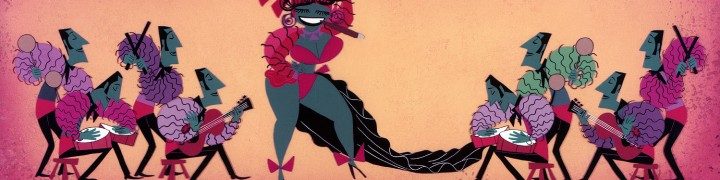
Osamu Tezuka is known as the founder of commercial animation in Japan, but he never lost sight of the artistic possibilities of animation.
No film of his shows this more clearly than ‘Jumping’, arguably the best film he ever made. In ‘Jumping’ we watch the world from the eyes of rope jumping girl. As the short progresses she jumps higher and higher, and further and further, even jumping to Africa, to a war-ridden country and into a mushroom cloud, straight into hell.
‘Jumping’ is not only strikingly original, it is very well-made with its constantly moving backgrounds, and as funny as it is disturbing in its finale. The mushroom cloud, the nightmare of man, but especially of the Japanese, the only nation to have experienced it, is a frightful sight, even in this animated short. Together with the girl, we sigh with relief when in the end of the film we return to the familiar and peaceful territory of our home street.
‘Jumping’ maybe a clear product of the cold war era, its impact is still at work today, and its message still as significant.
Watch ‘Jumping’ yourself and tell me what you think:
Directors: Ron Clements, Burny Mattinson, Dave Michener & John Musker Release Date: July 2, 1986 Rating: ★★★½ Review:
In the dark ages of animation that were the 1970s and most of the 1980s, the Disney studio produced two animated features that shone just more brightly than the others: ‘The Rescuers’ (1977) and ‘The Great Mouse Detective’, coincidentally both about mice.
Thirty years later ‘The Rescuers’ has gained some kind of classic status, whereas ‘The Great Mouse Detective’ has not. That’s a pity, for it’s a surprisingly entertaining film, far outshining all other Disney features between ‘The Rescuers’ and ‘The Little Mermaid’ (1989).
Based on the children’s book series ‘Basil from Baker Street’ by Eve Titus, ‘The Great Mouse Detective’ tells about the Sherlock Holmes-like mouse Basil, who – indeed – lives in the same house as his far more widely known human counterpart.
The story is propelled by an intro, a story device also used in ‘The Rescuers’, in which the father of little mouse Olivia Flaversham is kidnapped. Enter Dr. Dawson, a Watson-like mouse, who, like Watson, is the narrator of the story, and who teams up with Olivia to find Basil, the famous detective. Soon the plot directs to the film’s supervillain, Professor Ratigan, brilliantly voiced by Vincent Price, who had collaborated with Disney before in the Tim Burton short ‘Vincent’.
Although all characters are voiced and animated well, Ratigan, animated by Glen Keane, arguably the best animator of his generation, stands in a class at his own: every single frame of his screen presence is a delight. He even gets the first of only two songs in the movie, and his pompous screen persona, both enjoyable and threatening, is comparable with the other classic Disney villains Hook (‘Peter Pan’, 1953), Shere Khan (‘Jungle Book’, 1967) and the later Jafar (‘Aladdin’, 1992).
In its final scene ‘The Great Mouse Detective’ introduces one novelty: computer-animated backgrounds, which blend surprisingly well with the hand-drawn characters. It’s an impressive piece of work, and it shows the possibilities of computer animation. Needless to say, more was to come later.
‘The Great Mouse Detective’ covers much more familiar ground than the erratic ‘The Black Cauldron’ did, and indeed the studio feels clearly more at ease with this picture. It doesn’t really look forward, except for the stunning computer animated clockwork backgrounds of the final scene, but who cares? It is the first film by the new young team to show sheer joy. ‘The Great Mouse Detective’ is a delight from the introduction scene to its grand finale. By now, the studio could leave its lowest point behind.
Watch an excerpt from ‘The Great Mouse Detective’ yourself and tell me what you think:
Directors: Ted Berman & Richard Rich Release Date: July 24, 1985 Rating: ★★½ Review:
‘The Black Cauldron’ was the first new Disney animation film I saw when I was a kid. At the age of twelve I found it an exciting and scary adventure. Unfortunately, watching it again many years later my views have changed.
‘The Black Cauldron’ was a clear attempt by a young team to bring something new to the screen. It was to be Disney’s first and only step in the realm of ‘epic fantasy’, a genre explored before by Ralph Bakshi in the unsuccessful features ‘Wizards’ (1977), ‘The Lord of the Rings’ (1978) and ‘Fire and Ice’ (1983), by Jim Henson’s much more interesting puppet movie ‘The Dark Crystal’ (1982), and by the then popular television series ‘He-Man and the Masters of the Universe’ (1983-1985), whose evil character, Skeletor, looks remarkably similar to the Horned King in ‘The Black Cauldron’.
The film’s source however, is much older, and lies in the first two novels of the children’s fantasy series ‘The Chronicles of Prydain’ (1964-1968) by Lloyd Alexander, and the Disney studio already started working on it in 1971. The film tries to squeeze the contents of Alexander’s two books into 77 minutes and it shows.
The Disney studio clearly is at unease with the serious atmosphere of the epic fantasy. It’s the only animated Disney feature not to feature any song at all, and even the comic reliefs Gurgi and Flweddur Fllam are hardly funny. Instead, the studio follows ex-Disney artist Don Bluth into a much darker realm. With ‘The secret of NIMH.’ (1982) Bluth had shown that an animated feature could contain a more serious and darker tone, and ‘The Black Cauldron’ is clearly Disney’s own attempt at it.
This is exemplified most by the Horned King, and his army of skeletons. The horned king is nothing more than a skull himself, and remarkably scary for a Disney film. Not only this villain, but most of ‘The Black Cauldron’ is drawn in grim tones, however, and there is hardly any air from the gloomy atmosphere.
The story, on the other hand, is remarkably light. And here lies the main problem with ‘The Black Cauldron’. Despite his evil appearance, the Horned King never tries to harm our heroes, and his castle is leaky as a sieve. Taran and princess Eilonwy can wander about in the dungeons of the castle undisturbed, where Taran absurdly easily finds a magic sword. The escape, too, is an easy one. And it seems that outside his castle the horned king has no power, at all. And when he finally has his army of the dead, it is destroyed when it’s still crossing the drawbridge. Ironically, the feature’s scariest scene is when the horned king dies.
The story is hampered by its episodic character. Most of what happens is a result of chance, and our heroes wander around cluelessly throughout the film. The film’s hero, Taran, suffers from a badly cast voice and remains a bland character, who, unlike Gurgi, fails to steal the audience’s heart. Moreover, the character animation wanders at times, sometimes becoming over-excessive, and the film contains one conflict scene that feels utterly forced and superfluous. The film’s message only appears at 56 minutes, with an almost gratuity ‘you must believe in yourself’, which hardly forms a turning point in the series of events.
The film’s undisputed highlight lies in its inspired soundtrack by Elmer Bernstein and in the character of the furry creature Gurgi, who, with hindsight, looks like the inspiration for Gollum in Peter Jackson’s ‘The Lord of the Rings’, in his speech and behavior. The cowardly Gurgi for example attaches to Taran half-heartedly, calling him ‘master’, just like Gollum does with Frodo in ‘The Lord of the Rings’.
‘The Black Cauldron’ was a failure at the box office. And thus it proved to be an experiment the studio never repeated. The next year, Disney returned to much more familiar territory with ‘The Great Mouse Detective’ with much better results. Indeed, the studio’s final breakthrough in its attempts to rejuvenate, ‘The Little Mermaid’ (1989), was the result of a return to the successful princess films ‘Snow White and the Seven Dwarfs’ (1937), ‘Cinderella’ (1950) and ‘Sleeping Beauty’ (1959).
Watch the trailer for ‘The Black Cauldron’ yourself and tell me what you think:
‘The Black Cauldron’ is available on DVD and Blu-Ray
Director: Tim Burton Release Date: October 1, 1982 Rating: ★★★★ Review:
‘Vincent’ a is short film, which director Tim Burton made while still working at Disney.
The short is as typical for Tim Burton as it is atypical for Disney. First, it’s a stop-motion film, something the studio was not famous for, at all. The only other stop-motion film ever released by the studio was ‘Noah’s Ark‘ from 1959. Second, the film is in black and white, and third, it has a genuine horror theme, miles away from the child friendly worlds of contemporary Disney films, like ‘The Fox and the Hound‘ (1981) or ‘Mickey’s Christmas Carol‘ (1983).
The film uses the deep voice of classic horror star Vincent Price to tell the story of Vincent in rather Dr. Seuss-like rhyme. Vincent is a little seven year old boy, who wants to be like, well… Vincent Price. Because his mind has become twisted by reading stories by Edgar Allen Poe, Vincent imagines himself a madman haunted by his deceased wife, and locked in by a cursed house. In the end his imagination runs haywire, taking hold of him.
Burton does an excellent job mixing horror with silliness. The result is a rather twisted version of ‘Gerald McBoingBoing’ – equally weird, equally expressionistic, but much darker. In ‘Vincent’ you find much of the Tim Burton to come. It’s not hard to see the link between this wonderful short and ‘The Nightmare Before Christmas‘ (1993), ‘Corpse Bride‘ (2005) or with his live action films like ‘Beetlejuice’ (1988) or ‘Sleepy Hollow’ (1999).
Interestingly, in the same year, Vincent Price would also lend his voice to the Michael Jackson song ‘Thriller’.
Watch ‘Vincent’ yourself and tell me what you think:
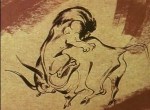
‘Lion and Ox’ is one of Fyodor Khitruk’s most serious films. It’s a very beautiful short about an ox who befriends a lion. Unfortunately, a devious little fox sets the two against each other, with fatal results.
This simple fable is told without words. They’re not necessary, for the animation is stunning. Apart from the fox, the animals are animated very reallistically, but they still retain a strong sense of emotion, telling the tale in expressions. The designs are very graphic, with beautiful ink lines. The backgrounds, too, are gorgeous, and reminiscent of Chinese paintings in their suggestions of the savanna by using a few powerful paintbrushes.
Watch ‘Lion and Ox’ yourself and tell me what you think:
Director: Jan Švankmajer Release Date: 1983 Rating: ★★★★½ Review:
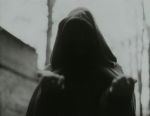
After his not all too successful adaptation of ‘The Fall of the House of Usher‘ (1980), Czech film maker Jan Švankmajer returns to Edgar Allen Poe with ‘The Pendulum, the Pit and Hope’, with much better results.
In ‘The Pendulum, the Pit and Hope’ Švankmajer tries to visualize Edgar Allen Poe’s most sensory and scariest story, ‘The Pit and the Pendulum’. He succeeds masterfully, merging the viewer with the protagonist, and retaining the horror of the discoveries of the torture chamber.
The story is told very straightforward, in black and white, without dialogue, voice over or music, giving it a raw and uncanny sense of realism. Švankmajer rejects Poe’s deus ex machina, however, but takes the story to a better, if more depressing conclusion.
‘The Pendulum, the Pit and Hope’ is essentially a live action movie, and contains little animation. However, in its disturbing take on Poe it is one of Švankmajer’s masterpieces, and definitely deserves to be better known.
Watch ‘The Pendulum, the Pit and Hope’ yourself and tell me what you think:
Director: Jan Švankmajer Release Date: 1983 Rating: ★★★★★ Review:
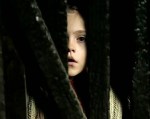
In ‘Down to the Cellar’ Jan Švankmajer explores the fears of a child.
The film’s story is pretty straightforward: we watch a little girl (engagingly played by young Monika Belo-Cabanová) descending the stairs. She has to fetch some potatoes in a deep, dark cellar. However, her task will not be an easy one. Already her way down the stairs to the cellar is frightening, when she’s hindered by two adults who regard her all too knowlingly.
In the cellar, the girl sees strange things happening, like old shoes fighting over her croissant, and a cat growing to gigantic proportions. Even the potatoes won’t cooperate, rolling back into the case she picked them from. Worse, the cellar appears to be inhabited by the same two adults, who perform strange rites for her very eyes. Their invitations to the girl are dubious, and luckily the girl declines. Unfortunately, at the end of the short, she has to face her fears, once again.
‘Down to the Cellar’ contains a hard to define, but strong and disturbing threat of child abuse. The short is mostly shot in live action, and contains only a little stop motion animation. However, it’s arguably Švankmajer’s most moving film. Švankmajer keeps the child’s perspective throughout the movie, and we immediately sympathize with the little girl and her plight, sharing her state of wonder, fear and despair.
Švankmajer would explore the film’s theme again in his fourth feature film, ‘Otesánek’ (2000).
Watch ‘Down the Cellar’ yourself and tell me what you think:
Director: Jan Švankmajer Release Date: 1982 Rating: ★★★★★ ♕ Review:
Together with ‘Jabberwocky‘ (1971), ‘Dimensions of a Dialogue’ can be considered Švankmajer’s masterpiece. It mixes excellent design with virtuoso animation and astonishingly original story material.
With ‘Dimensions of a Dialogue’ Švankmajer defined a style he would maintain into the early 1990s, resulting in most of his best films, including the feature lengths ‘Alice‘ (1987) and ‘Faust‘ (1994). ‘Dimensions of a Dialogue’ contains three different ‘dialogues’, without using any real dialogue in the soundtrack. These three dialogues are pure visual encounters, making this film very universal.
Like in all his films, Švankmajer’s visual language is highly surreal. Yet, the three dialogues follow their own inescapable inner logic, with disturbing results. The film does not as much feature dialogue as well as rather violent clashes. It seems to show the inability of humans to communicate.
The first, ‘Factual dialogue’, is the most violent of the three episodes. It shows three heads moving in a 2-dimensional space. The three heads are clearly inspired by renaissance painter Giuseppe Arcimboldo and consist of food, household tools and office equipment, respectively. The heads devour eachother, destroying their parts more and more before spitting them out. Like ‘Et Cetera‘ (1966) there is a sense of pointlessness in this endless string of violence, which tells something about humanity.
The second part, ‘A passionate dialogue’, is the most virtuoso episode of the three. ‘In this part Švankmajer and his animating collaborator Vlasta Pospíšilová introduce a new level in claymation. The film features a stunningly realistic human couple made out of clay. The man and woman are animated beautifully when they embrace passionately, until they become one moving lump of clay of pure desire. When they part again, however, there’s some leftover: a little lump of formless clay yearning for affection. Unfortunately, neither of the two lovers accepts this petty piece of clay, and the innocent leftover brings the couple to rage. In their conflict they once again become a clay lump, but now one of utter destruction…
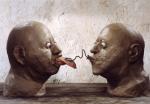
The third part, ‘An exhausting dialogue’, is the most comical one, and seems to portray a discussion going haywire. It features two realistic heads on a table, producing a toothbrush and toothpaste, bread and butter, a shoe and a shoelace and a pencil and a sharper in more and more absurd combinations to the exhaustion of both. The soundtrack is perfect throughout the picture, but exceptionally so in this third part in its combination of Jan Klusák’s music and train sounds.
‘Dimensions of a Dialogue’ is inexplicable, but communicates on a subconscious level, like all great surreal art. It perfectly shows the power of animation in showing the human condition using the very outskirts of imagination. The result is no less than one of best animation films ever.
Watch ‘Dimensions of Dialogue’ yourself and tell me what you think:
‘Dimensions of Dialogue’ is available on the DVD ‘Jan Svankmajer – The Complete Short Films’ and on the DVD ‘Annecy – Le coffret du 50e Anniversaire’
Director: Jan Švankmajer Release Date: 1980 Rating: ★★ Review:
Jan Švankmajer retells this famous story by Edgar Allen Poe using a narrating voice over and black and white images of several different objects.
The images, some of which are animated, are sometimes quite disturbing, and are at points even able to evoke the horror of the story. However, most of the time they seem totally unrelated to the narration, and their visual power in fact often distracts from the voice over, making the story very hard to follow, indeed.
‘The House of Usher’ is a daring experiment in cinematographic storytelling, but not really a successful one, and Švankmajer would not repeat it. Nevertheless, three years later, the Czech film maker would return to Edgar Allen Poe, in ‘The Pendulum, the Pit and Hope‘, with much better results.
Watch ‘The Fall of the House of Usher’ yourself and tell me what you think:
‘The Fall of the House of Usher’ is available on the DVD ‘Jan Svankmajer – The Complete Short Films’
Director: Friz Freleng Release Date: April 21, 1945 Stars: Bugs Bunny, Yosemite Sam Rating: ★★★★½ Review:
‘Hare Trigger’ introduces that tiny yet explosive adversary to Bugs Bunny, Yosemite Sam.
His introduction music is Franz Schubert’s Erlkönig, and train robbery is his profession. However, on the train he encounters Bugs, who gives the short-tempered bandit a hard time.
The cartoon contains a shot of an über-cool Bugs rolling a cigarette, a gag repeated and improved on in ‘Bugs Bunny Rides Again‘ (1948). The short also contains live action footage in the ‘club bar’ wagon. The gun drawing scene is a highlight, as is Yosemite Sam’s death scene, which bugs invokes with ketchup. The cartoon ends brilliantly with a tongue-in-cheek cliffhanger.
According to Freleng he needed a stronger adversary to Bugs than Elmer Fudd ever was, and Yosemite Sam perfectly fitted the job. He was a delightful opponent to Bugs Bunny, and he became Friz Freleng’s favorite bad guy, lasting until 1964, and starring 31 cartoons in total, nearly all with Bugs Bunny. Perhaps Freleng was so fond of the character because he was partly based on Freleng himself.
In any case, he soon took Sam out of his Western origin, making him a.o. a pirate (‘Buccaneer Bunny‘, 1948), a foreign soldier (‘Bunker Hill Bunny‘, 1950) and a sheik (‘Sahara Hare’, 1955). Free from his Western origins Yosemite Sam could be Bugs Bunny in every country and every period of time, and in this respect he anticipates the Little Guy, the Pink Panther’s adversary, who also sprouted from Friz Freleng’s imagination.
Watch ‘Hare Trigger’ yourself and tell me what you think:
Director: Chuck Jones Release Date: January 9, 1943 Stars: Daffy Duck, Elmer Fudd Rating: ★★★½ Review:
In ‘To Duck or not to Duck’ Elmer Fudd shoots Daffy out of the sky. The duck then challenges the ‘sportsman’ for a boxing match, something which takes place immediately for a crowd of ducks. Needless to say, the match is far from fair.
‘To Duck or not to Duck’ is the first Warner Bros. cartoon to star both Daffy and Elmer. The poor hunter is good fowl for the foul-playing duck and his brethren. When Elmer gets his revenge in the end, we’re almost surprised.
The cartoon knows some good gags, but Jones’s timing is still sloppy, and not every gag hits the screen well. Highlight may be Daffy’s ridiculously haughty humphing at Elmer Fudd’s apology for shooting him.
Note the surprisingly empty backgrounds in this cartoon.
Watch ‘To Duck or not to Duck’ yourself and tell me what you think:
This is Daffy Duck cartoon No. 17
To the previous Daffy Duck cartoon: My Favorite Duck
To the next Daffy Duck cartoon: The Wise Quacking Duck
‘My Favorite Duck’ is available on the DVD-set ‘Looney Tunes Golden Collection Volume Six’
Director: Chuck Jones Release Date: December 5, 1942 Stars: Daffy Duck, Porky Pig Rating: ★★★★ Review:
‘My Favorite Duck’ is Chuck Jones’s third try on Daffy Duck (after ‘Daffy Duck and the Dinosaur‘ from 1939 and ‘Conrad the Sailor‘ from 1942), and his first cartoon starring both Daffy and Porky Pig.
In this cartoon he finally manages to get grip of Daffy’s wacky character: Daffy’s antics are not only annoying, they’re also funny, and well-timed, and Porky is much more sympathetic victim to his antics than Caspar Caveman and Conrad ever were.
When Porky goes camping, the duck nags him, protected by the law which forbids Porky to harm any duck. Nonetheless, in the end, the tables are turned and Porky has his revenge. However, at that point the film breaks, and Daffy tells us ‘what happened’, or does he?
The film break gag first appeared in Max Fleischer’s Popeye cartoon ‘Goonland‘. Six years later Jones reused this wonderful film break gag in ‘Rabbit Punch‘ (1948).
Like in other Chuck Jones cartoons from this era, the beautifully stylized backgrounds are a highlight on their own.
Watch ‘My Favorite Duck’ yourself and tell me what you think:
‘Das musikalische Auto’ is a Toonder studio film commissioned by Nazi Germany.
It’s a strange little tale of a man who ‘improves’ an old car into a musical instrument. He tours around the countryside, until his car crashes against a tree.
The soundtrack of this film has been lost, so we don’t know how the musical car sounds, but the film feels uninspired: the story lacks any logic, and the animation is primitive and raw. It contains some elements both 1930s Fleischer and Disney, without reaching either peaks.
In his autobiography Marten Toonder states that the idea of this cartoon had its origins in the German UFA studio, who wanted a story on a tumble toy. Toonder soon gave the tumble toy arms and legs, but he and his studio only halfheartedly worked on this ill-conceived idea, and it shows. Nevertheless, some of the designs are quite charming: the backgrounds have an unmistakable Toonder-touch, and the animals in the cartoon do look good.
‘Das musikalische Auto’ is available on the DVD inside the Dutch book ‘De Toonder Animatiefilms’
‘Serenata nocturna‘, Marten Toonder’s and Joop Geesink’s first stop motion film, did raise interest of Philips, and the Dutch electronics company commissioned another short to advertise the Philishave, an electronic razor. This resulted in ‘Phi-garo in het woud’.
in ‘Phi-garo in het woud’ a bearded gnome tries to impress a female elf, but she rejects him. The gnome gets a shave at the local barber, but the elf still rejects him. Then a witch shows him the Philips Philishave, which does the trick.
‘Phi-Garo in het woud’ is less entertaining than ‘Serenata nocturna’, its story less logical, and its designs more generic than in the earlier cartoon. The animation, however, is a little more assured. More commissions were now to follow.
Watch ‘Phi-garo in het woud’ yourself and tell me what you think:
‘Phi-garo in het woud’ is available on the DVD inside the Dutch book ‘De Toonder Animatiefilms’
Director: Joop Geesink Production Date: September 1942 Rating: ★★★★ Review:
‘Serenata nocturna’ is the first collaboration between two Dutch animation film pioneers, Marten Toonder and Joop Geesink.
The collaboration results in a charming little advertising film about a Mexican who tries to serenade his love, to no avail. He tries several instruments, without success. But then he magically produces a Philips Radio, and finally his love is impressed.
The puppet animation in this short is very reminiscent of that of George Pal, the Hungarian animator, who had an important puppet film studio in Eindhoven in the late 1930s, and who had made several films for Dutch electronics company Philips himself. Pal, however, had exchanged The Netherlands for the United Kingdom, and finally emigrated to the United States in December 1939, leaving The Netherlands without any animation studio of importance. Now, Toonder and Geesink tried to fill this gap. Perhaps, Philips would be interested to commission films from them.
However, the inexperience of both animators shows: the animation still looks primitive, with a lot of excessive movement. The short’s story, however, is funny and still entertaining today. Indeed, Philips saw potential, and would become an important commissioner to both film makers.
Toonder would soon abandon stop motion, but Geesink would continue in the field, creating one of the most successful stop motion animation studios of the post-war era.
Watch ‘Serenata nocturna’ yourself and tell me what you think:
‘Serenata nocturna’ is available on the DVD inside the Dutch book ‘De Toonder Animatiefilms’
The dumb dog Willoughby was a minor Warner Brothers character, created by Tex Avery, and starring a few cartoons in the early 1940s.
The dog kept changing names, and that’s probably one of the reasons he never got famous. ‘The Heckling Hare’ was his third cartoon, and in it he remains nameless. Tex Avery puts him against his much more famous creation, Bugs Bunny. Penned by Michael Maltese, the result is an inspired cartoon, full of gags.
Willoughby swaps places with Elmer Fudd in hunting rabbits. He’s of course no more successful than Elmer, and Bugs tricks him a lot. The best scene is when Bugs makes the dumb dog making faces, while he puts forward a sign to the audience reading “Silly, isn’t he?”.
However, the cartoon is most famous for its finale: for it ends with a lengthy fall from a cliff by both characters. This scene is obviously cut short in the final version. Producer Leon Schlesinger didn’t like the original ending, which apparently involved no less than two other falls, and ordered the cut. Rumors have it that this was the reason for Tex Avery to leave Warner Bros. This isn’t true. Tex Avery wanted to do a series combining live action animals with animated mouths. Schlesinger wasn’t interested, so Avery ended up doing this series, Christened ‘Speaking of the Animals’ at Paramount. However, this was not a success, and by September 1941 Avery was making cartoons again, now at MGM, where he would direct his greatest shorts.
In his book ‘Chuck Amuck’ Chuck Jones argues that ‘The Heckling Hare’ was the cartoon that re-established Bugs Bunny’s character, after three somewhat misguided cartoons by himself, Tex Avery and Friz Freleng. Bugs Bunny certainly is much more himself and in any of the previous cartoons. In any case, he would meet Willoughby again in the dog’s very last cartoon, ‘Hare Force’ (1944), directed by Friz Freleng, in which the dog is called ‘Sylvester’.
Watch ‘The Heckling Hare’ yourself and tell me what you think:
No sooner were the Fleischer brothers removed from their own studio, or their stars Superman and Popeye were fully put to the war effort.
No other American cartoon stars featured in as many propaganda shorts fighting the foe. Superman stars in five, of which ‘Japoteurs’ is the first.
In this entry three Japanese spies try to steal the world’s largest bomber on its test flight. Of course, Lois flies along, and both she and the plane have to be rescued by Superman.
‘Japoteurs’ is an unfortunate cartoon, which adds to the idea of a fifth column of Japanese within The United States, making every Japanese person suspicious. Indeed, due to this type of paranoia, during the war no less than 110,000 Japanese Americans, including women and children, were put into internment camps.
This is Superman film No. 10
To the previous Superman film: Terror on the Midway
To the next Superman film: Showdown
Director: Dick Lundy Release Date: March 12, 1943 Stars: Donald Duck Rating: ★★★½ Review:
Donald Duck is looking for a plane at ‘Ben Buzzard’s (crashed) used planes’.
Ben Buzzard sells a ramshackle plane to Donald and makes him signing a swindling contract in which an insurance company will pay the swindler $10,000,- in case of an accident. The buzzard then tries to make Donald crash.
Unfortunately, the comedy doesn’t quite work. First, because it’s hard to believe that the anthropomorphized buzzard can fly on his own, while the equally anthropomorphized Donald cannot. Second, Ben Buzzard’s attacks become more open and open, but at no point it’s made clear whether Donald realizes why he’s being attacked.
‘Flying Jalopy ‘was the last cartoon Dick Lundy directed at Disney. In October 1943 he left Disney to become an animator and director at Walter Lantz, where he directed several Woody Woodpecker shorts, including ‘Wet Blanket Policy‘, which uses the same idea, but with way better results, resulting in a far more hilarious cartoon. It even uses the same buzzard character, but Lantz’s Buzz Buzzard would become way more famous than Ben Buzzard ever was.
Watch ‘Flying Jalopy’ yourself and tell me what you think:
This is Donald Duck cartoon No. 40
To the previous Donald Duck cartoon: Donald’s Tire Trouble
To the next Donald Duck cartoon: Fall out – Fall in
Director: Dick Lundy Release Date: July 24, 1942 Stars: Donald Duck Rating: ★★★ Review:
Donald is a gold miner, who has to deal with a donkey again (see ‘The Village Smithy‘ from the same year) and a gigantic and nonsensical ore processing machine.
Like contemporary Donald Duck cartoons directed by Dick Lundy, like ‘The Village Smithy’ and ‘Donald’s Garden‘ the cartoon is filled with situation comedy only. This type of comedy reaches its apex in an almost endless scene of Donald being stuck into the head of a pickaxe. Granted, the number of ways Donald can get stuck in it is impressive, but there’s a strong sense of milking the gag, and the result is more tiresome than funny.
Watch ‘Donald’s Gold Mine’ yourself and tell me what you think:
Directors: Bill Roberts, Jack Kinney, Hamilton Luske & Wilfred Jackson Release Date: August 24, 1942 Stars: Donald Duck, Goofy, Joe Carioca Rating: ★★★★ Review:
‘Saludos Amigos’ was the first result of a two-month trip to South America Walt Disney made with eighteen people from his staff, including animator Norm Ferguson and designers Mary and Lee Blair.
This trip was financed by the Coordinator of Inter-American affairs, and ‘Saludos Amigos’ feels like an advertisement for South America. It’s the first of several ‘package films’ Disney made in the 1940s, and like its followers, it is uneven. There is not much of a story, just a live action travelogue across Bolivia, Chile, Argentine, and Brazil. In between there are four cartoon sequences: Donald Duck as a tourist at Lake Titicaca, the story of Pedro the airplane, Goofy as a Gaucho and a samba sequence featuring Donald and a new character, Joe Carioca.
Donald’s antics at Lake Titicaca are only mildly funny, until its finale, the suspension bridge scene, which evokes a genuine sense of heights. Pedro the airplane is a children’s story using a narrator. It’s probably the first animation film starring a humanized vehicle, and very successful at that. Pedro is well-designed, being both a plane and a likable little boy. His story reaches an exciting climax when Pedro gets caught in a storm near Aconcagua. ‘Goofy as a gaucho’ is a nice follow-up to ‘How to ride a horse’ from ‘The Reluctant Dragon‘ (1941), with Goofy acting as an Argentine gaucho. This sequence is based on the art of Argentine painter Florencio Molina Campos (1891-1959), without being as gritty. The result is both educational and funny.
However, the real highlight of the film is its finale, in which Donald meets the Brazilian parrot Joe Carioca. Both dance to a samba, following a background which is created ‘on the spot’ by a brush. This sequence is alive with creativity, seemingly introducing a new era of more stylized images and brighter colors, which would dominate the 1940s and 1950s.
Joe Carioca was such an intoxicating character, he was returned to the screen, where he would reunite with Donald in ‘The Three Caballeros‘ (1944) and ‘Melody Time‘ (1948), in still more stylized and colorful scenes.
Watch an excerpt from ‘Saludos Amigos’ yourself and tell me what you think:
Animation Backgrounds
A blog dedicated to background paintings from animation films. Kept until 2016.
Animation Scoop
Animation historian Jerry Beck’s animation film news blog.
Cartoon Brew
Topical blog on animation film, led by animation historian Amid Amidi.
Cartoon Modern
Amid Amidi’s blog on modern design cartoon art from the forties, fifties and sixties.
Cartoon Research
THE site on classic animation research, hosted by cartoon historian Jerry Beck.
Cartoons Theory
Frank Beef analyzes classic cartoons. Kept until 2020.
Century Film Project
Michael reviews films of 100 years old and older, roughly in chronological order.
Classic Cartoons
A similar blog featuring many stills and comic strips. Kept until 2012.
Comet over Hollywood
Jessica Pickens reviews classic Hollywood films, especially musicals.
Deja View
Top ex-Disney animator Andreas Deja’s own blog.
Disney History
Esteemed Disney historian Didier Ghez on the latest books on Disney history.
Feeling Animated
Paul Astell brings us thorough reviews of animated features.
Flickers in Time
Short and to the point reviews of classic films (lately mostly pre-code talkies) by an anonymous retired Foreign Service Officer from California
 Osamu Tezuka is known as the founder of commercial animation in Japan, but he never lost sight of the artistic possibilities of animation.