
You are currently browsing the category archive for the ‘★★★½’ category.
Director: David Gemmill
Airing date: May 27, 2020
Stars: Bugs Bunny, Yosemite Sam
Rating: ★★★½
Review:

‘Looney Tunes Cartoons’ was a television series that ran from 2020 to 2024 and which was a surprising revival of the classic Warner Bros. Cartoons of the 1940s and 1950s, featuring the same stars and the same frantic classic animation of the originals, but with slightly more modern designs and animation influences from the Renaissance period, most obviously from ‘Ren and Stimpy’.
The third disc of the ‘Bugs Bunny 80th Anniversary Edition’ Blu-Ray set contains nine Bugs Bunny shorts from the first season of this series and these show the high quality of this revival series. At their worst the cartoons are mere homages, but at their best they reshuffle the classic characters into new situations with new gags.
‘Harm Wrestling’, for example, the third cartoon from the very first episode, takes Yosemite Sam back to his Western roots, where he claims to be the arm wrestling champion of ‘Tough City’. Then, of course, Bugs Bunny comes along. This short reuses some classic gags from the 1940s, but add new ones and some particularly Ren & Stimpy-like takes on Yosemite Sam. Bugs Bunny, meanwhile, looks most like his 1940s self, harking mostly back to the Robert McKimson design for the Bob Clampett unit.
Watch ‘Harm Wrestling’ yourself and tell me what you think:
‘Harm Wrestling’ is available on the Blu-Ray-set ‘Bugs Bunny 80th Anniversary Collection’
Director: Earl Hurd
Release date: December 4, 1918
Stars: Bobby Bumps and Fido
Rating: ★★★½
Review:

In ‘Bobby Bumps Puts a Beanery on the Bum’ Bobby Bumps and Fido answer to an ad ‘boy wanted in to help in kitchen’ from the ‘Quick Lunch Beanery’.
What follows is a rather aimless string of gags, most remarkable of which is one in which Fido makes a cat eat its words by rolling up the cat’s speech balloon and shovel it down its throat. The cartoon ends all too abruptly, when Bobby pours ink over the cook who chased him out of the beanery.
More interesting than anything of this, however, is the opening scene in which a hand draws Bobby Bumps lying down in perfect perspective. Bobby Bumps helps the hand coloring him, only then follows Fido and the scenery. The Bobby Bumps cartoons were drawn elegantly anyhow, making them stand out of the 1910s crowd, and even though ‘Bobby Bumps puts a Beanery on the Bum’ isn’t the best entry in the series, in this respect it’s now exception.
Watch ‘Bobby Bumps Puts a Beanery on the Bum’ yourself and tell me what you think:
‘Bobby Bumps Puts a Beanery on the Bum’ is available on the DVD-set ‘Popeye the Sailor 1933-1938’
Directors: Max Lang & Daniel Snaddon
Release date: December 25, 2019
Rating: ★★★½
Review:

‘The Snail and the Whale’ is yet another Magic Light Pictures production based on a Julia Donaldson and Axel Scheffler book. Like all the books and films based on them since 2009’s ‘The Gruffalo’ the film is told in rhyme. But because this adventure takes place mostly at sea, there’s much more CGI involved than usual, and the film thus is less tactile than Magic Light Pictures earlier productions.
The story is cute and shows that even the smallest can make a difference. Yet, the film is less compelling than say ‘The Gruffalo’ (2009), ‘Room on the Broom‘ (2012) or ‘Stick Man’ (2015) and that’s because of the source material, which just isn’t on the same level of story telling. The small gags present in earlier films are also lacking, and for a too large part we just watch the little snail enjoy its travels without anything else happening.
The animation, of course, is top notch, and the designs are, as always, appealing, although the human figures are much less interesting than the animals, and the whale is rendered rather straight. You can also sense the difficulty of the interaction between the two animals, because of the gigantic size difference. The result is a charming film, if not among Magic Light Pictures’ best works.
Watch the trailer of ‘The Snail and the Whale’ yourself and tell me what you think:
‘The Snail and the Whale’ is available on DVD
Director: Andrew Erekson
Release date: September 27, 2019
Rating: ★★★½
Review:
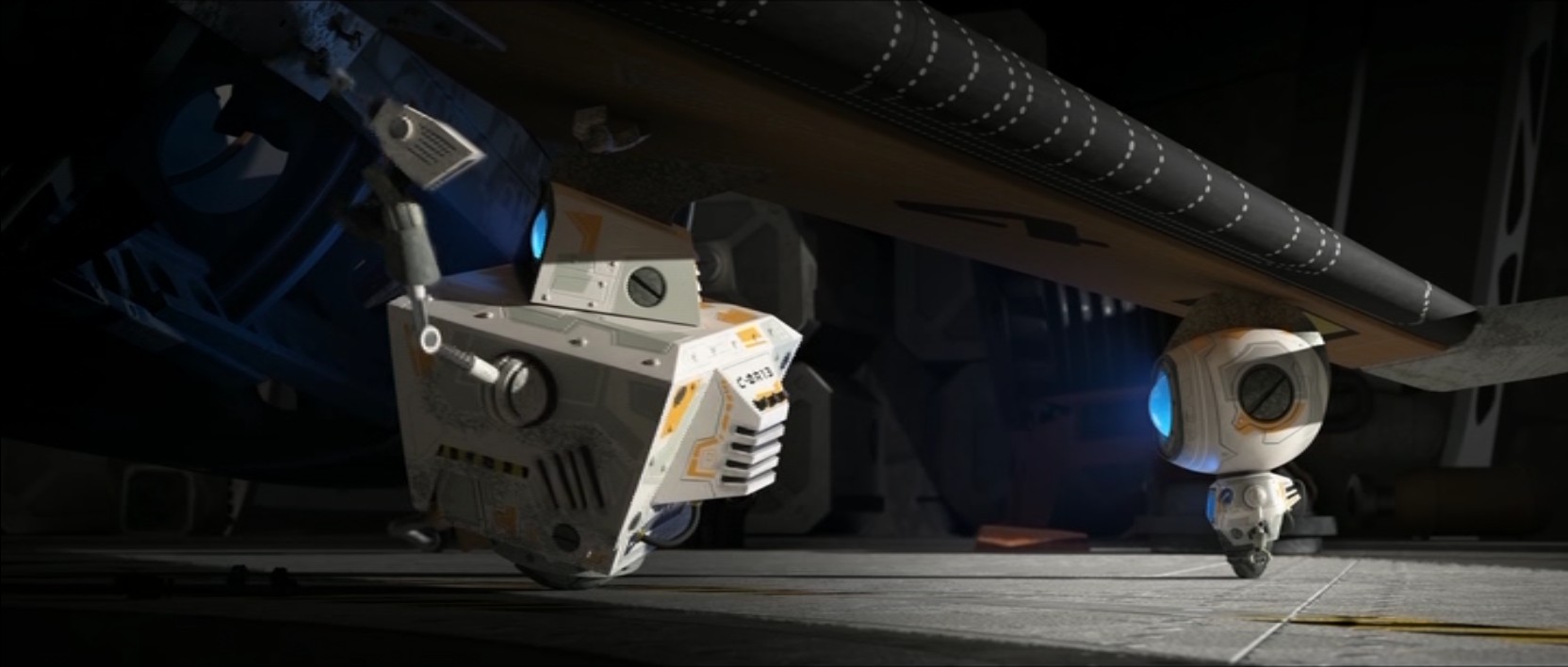
In the Dreamworks short ‘Marooned’ a little robot on the moon dreams of going to Earth. He tries to build a rocket to achieve his goal, but then he finds another robot in the moon dust…
‘Marooned’ is a cute little short full of subtle character animation and silent comedy. One quickly identifies with the little robot and his plight. Moreover, the short excels in pleasant looks: the moon is rendered in stark contrasts, and the whole short has a particular neo-fifties look. Even the Earth looks stylized.
The only criticism I have is that not every action is staged that well: some little scenes are harder to follow than should.
Watch the trailer of ‘Marooned’ yourself and tell me what you think:
‘Marooned’ is available on the Blu-Ray and DVD of ‘Abominable’
Director: Norman McLaren
Release date: 1961
Rating: ★★★½
Review:

‘New York Lightboard’ is a direct-on-film animation film that was never meant for the cinema. Instead, it was a commercial film commissioned by the Canadian Governmental Tourism Office to be projected in an endless loop on a big screen on Times Square in New York City.
The film is both in black and white and silent, but McLaren makes the commercial a very playful one, with letters bouncing and playing with each other, and metamorphosis running wild (we watch. e.g. the letters Canada change into a fish, which turns into a bird, which becomes a smiling sun, etc.).
Most of the film is pretty abstract, but there’s also some fine animation of swimming fish, a galloping horse, a man in a canoe and of Hamlet and Laertes fighting. Apart from the words Canada and ‘Dial PL 7-4917’ (for more information), the most recurring elements are animated fireworks.
The whole film seems a little too playful and too experimental for a general audience, but it certainly must have drawn attention. There’s also a short equally silent documentary called ‘New York Lightboard Record’ in which we watch the film on a screen on Times Square, and some of the responses of the audience watching it.
Watch ‘New York Lightboard’ & ‘New York Lightboard Record’ yourself and tell me what you think:
‘New York Lightboard’ and ‘New York Lightboard Record’ are available on the DVD-box ‘Norman McLaren – The Master’s Edition’
Director: Alex Lovy
Release date: February 3, 1968
Rating: ★★★½
Review:

The Warner Bros. Studio was in its fifth incarnation and almost at the end of its life (the studio closed down in 1969) when ‘Norman Normal’ was released. The film is one of the most original of the entire Warner Bros. output, and remarkable for being a collaboration with musician Paul Stookey, the Paul of famed folk trio Peter, Paul and Mary.
‘Norman Normal’ knows a pleasant cartoon modern design and there’s no funny animal in sight. Instead, the short is rather puzzling and hardly knows a narrative, but seems to say something about emotional blackmail in society, and how trying to fit in in society can conflict with one’s own moral standards.
Introduced by a colorful beat band, we follow Norman who struggles with an abject order by his boss, while he seems at loss at a party. Especially the party sequence is strikingly modern, addressing the pushy coercion into drinking alcohol, while Norman himself questions a joke on being funny at the expense of a minority group. I didn’t expect such modern stances in a 1960s cartoon, at all.
Unfortunately, the short is too directionless and ends too abruptly to become a classic, but it’s certainly an interesting product of the 1960s, an era of more experimental approach to storytelling, both in live action and animation.
The film’s title song also appeared on Peter, Paul and Mary’s 1966 release ‘The Peter, Paul and Mary Album’. According to Wikipedia more ‘Norman Normal’ cartoons were envisaged, but this would remain the only one.
Watch a video clip based on ‘Norman Normal’ yourself and tell me what you think:
‘Norman Normal’ is available on the DVD-set ‘Looney Tunes Golden Collection Volume Six’
Director: Robert McKimson
Release date: February 29, 1964
Rating: ★★★½
Review:

‘Bartholomew versus the Wheel’ is an oddball cartoon in both the Warner Bros. Canon and in Robert McKimson’s oeuvre. Narrated by a little boy the film tells about a dog, Bartholomew, who hates wheels, and bites them all. But things change when he tries to bite an airplane wheel.
‘Bartholomew versus the Wheel’ is a sweet little narrative directed at children and knows very charming cartoon modern designs that are unlike any other Warner Bros cartoon. Bartholomew himself has a very handsome rounded design, and the humans are often of a monochrome cartoon modern design. Also striking is the background art, which emulates children pencil drawings. This film thus is another pleasant surprise out of the studio’s last days.
Watch ‘Bartholomew versus the Wheel’ yourself and tell me what you think:
‘Bartholomew versus the Wheel’ is available on the DVD-set ‘Looney Tunes Golden Collection Volume Six’
Director: Robert McKimson
Release date: February 27, 1960
Rating: ★★★½
Review:

‘Wild Wild World’ is an obvious parody on the documentary series ‘Wide Wide World’, which run on NBC from 1955 to 1958. Of all cavemen cartoons ‘Wild Wild World’ is the one most directly anticipating The Flintstones, who would make their debut only seven months after the release of this cartoon.
The film is introduced and narrated by one Cave Darroway (a caricature of the original televison series’ host Dave Garroway), but the main cartoon is supposedly found footage (in “cromagnonscope”) from 75,000,000 B.C., which would explain the dinosaurs but not the cavemen. The trope of cavemen and dinosaurs existing together is almost as old as cinema itself, but ‘Wild Wild World’ goes at lengths to show the society of 75 million years ago as being just like ours, with sky scrapers, barbers, elevators and such.
The film exploits a pleasant cartoon modern design and knows a running gag of three hunters trying to catch a dinosaur, to no avail. These cavemen are drawn all too tiny compared to the dinosaurs, exaggerating the prehistoric animals’ sizes way too much.
‘Wild Wild World’ is more of a curiosity than a classic Warner Bros. cartoon, but shows that the studio could be inspired even in its nadir.
Watch excerpts from ‘Wild Wild World’ yourself and tell me what you think:
‘Wild Wild World’ is available on the DVD-set ‘Looney Tunes Golden Collection Volume Six’
Director: Robert McKimson
Release date: July 16, 1964
Stars: Bugs Bunny
Rating: ★★★½
Review:
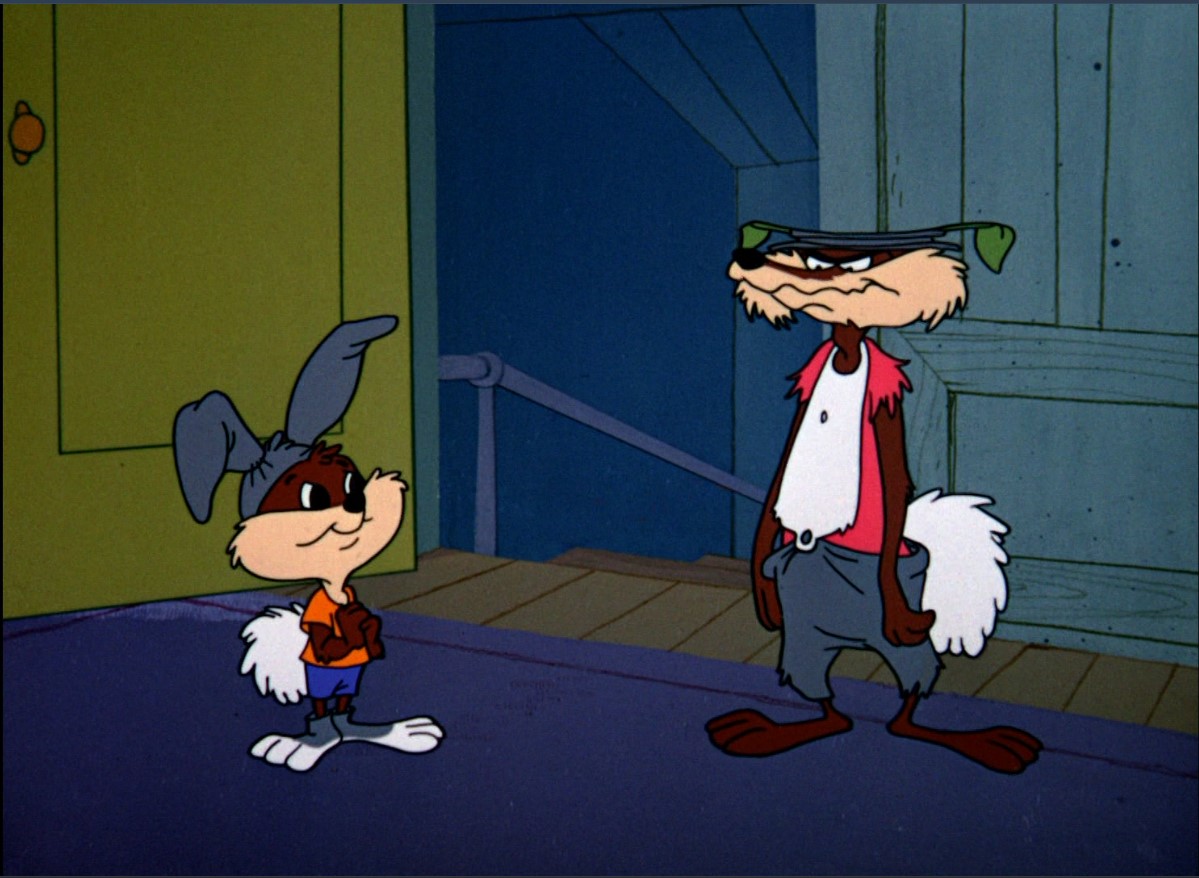
‘False Hare’ starts with two wolves, ‘Big Bad’ and his nephew, who unconvincingly pose as rabbits to make Bugs Bunny join their ‘club del conejo’ (or Rabbit Club). Bugs is way ahead of the duo, and only plays along because he is bored.
The gags, which involve a falling safe, an iron maiden, a cannon and a lot of dynamite are surprisingly fine, and this makes ‘False Hare’ anything but a sad farewell to our hero. Sure, the short is no standout, but at least we can laugh with Bugs to the very end.
The wolf and his nephew [ who had been introduced in ‘Now Hare This’ from 1958 as Isla points out in the comments below] seem destined for a long series of cartoons, but in fact ‘False Hare’ was the very last Bugs Bunny cartoon of the classic era, and the second to last cartoon made at the original Warner Bros. studio (‘Señorella and the Glass Huarache‘ being the final one). Thus we would never see this comic duo again. Note the cameo of Foghorn Leghorn.
Watch ‘False Hare’ yourself and tell me what you think:
This is the 168th and last Bugs Bunny cartoon
To the previous Bugs Bunny cartoon: The Iceman Ducketh
‘False Hare’ is available on the Blu-Ray-set ‘Bugs Bunny 80th Anniversary Edition’
Directors: William Hanna & Joseph Barbera
Airing date: February 1, 1963
Stars: The Flintstones
Rating: ★★★½
Review:
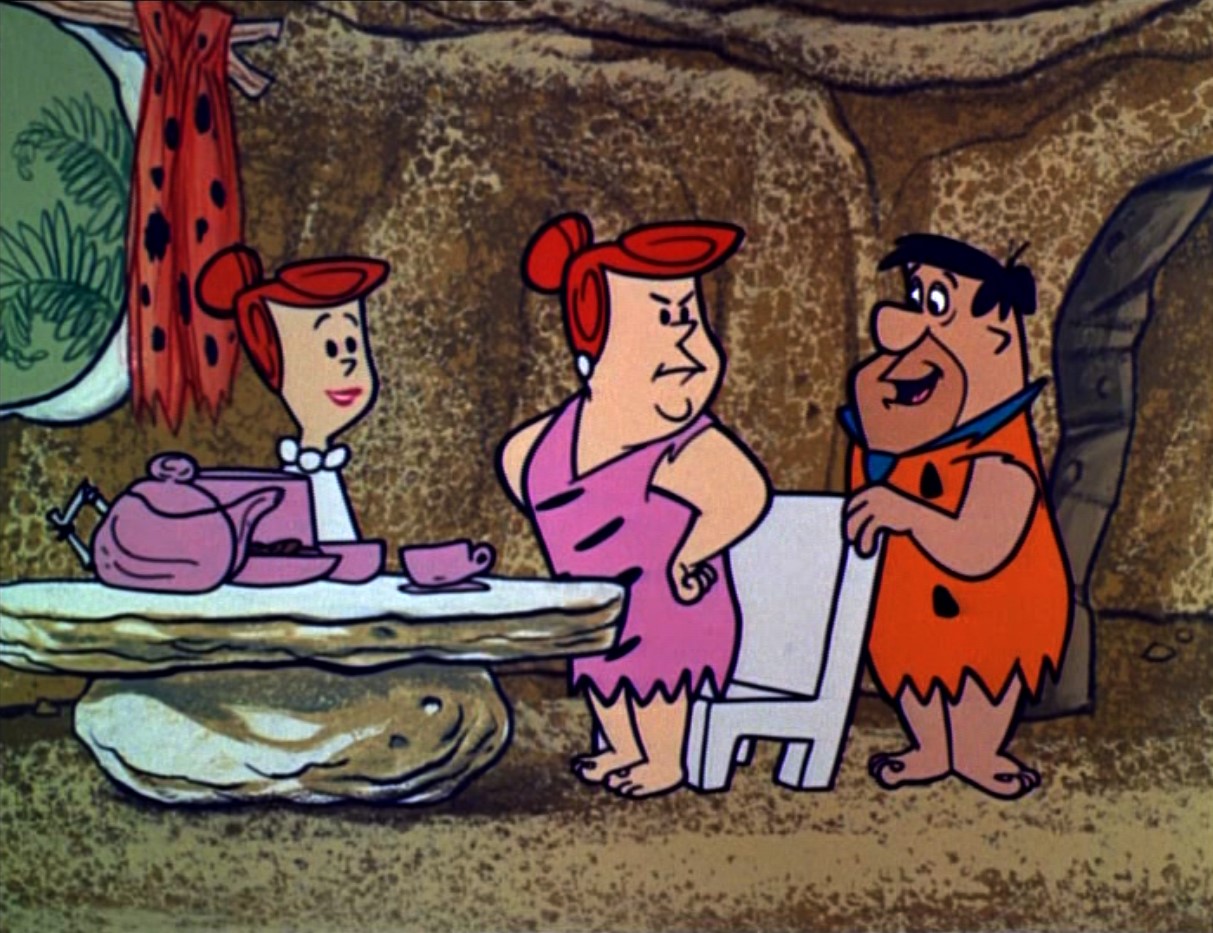
The second episode of the ‘The Flintstones get a baby’ continuum is all around a visit of Fred’s mother-in-law. True to formula, Wilma’s mother is a genuine hag, but Fred tries his best, repeating to himself ‘I love my mother-in-law’ over and over again. When Barney suggests Fred work overtime as a taxi driver, the episode takes a surprising turn.
‘Mother-in-Law’s Visit’ is hampered by the all too old evil mother-in-law trope, but rescued by the fine comedy during the taxi night. Nevertheless, the silliest part is when a motor agent takes Fred and his mother-in-law to a maternity hospital, thinking she will deliver any time soon.
Outside of the comedy, the episode’s highlight is watching Wilma walking around pregnant, being the first animated cartoon character shown to be in expectation.
Watch an excerpt from ‘Mother-in-Law’s Visit’ yourself and tell me what you think:
This is The Flintstones Season Three episode 20
To the previous The Flintstones episode: The Surprise
To the next Flintstones episode: Foxy Grandma
‘Mother-in-Law’s Visit’ is available on the Blu-Ray ‘The Flintstones – The Complete Series’ and the DVD-box ‘The Flintstones Season 3’
Directors: William Hanna & Joseph Barbera
Airing date: January 4, 1963
Stars: The Flintstones
Rating: ★★★½
Review:
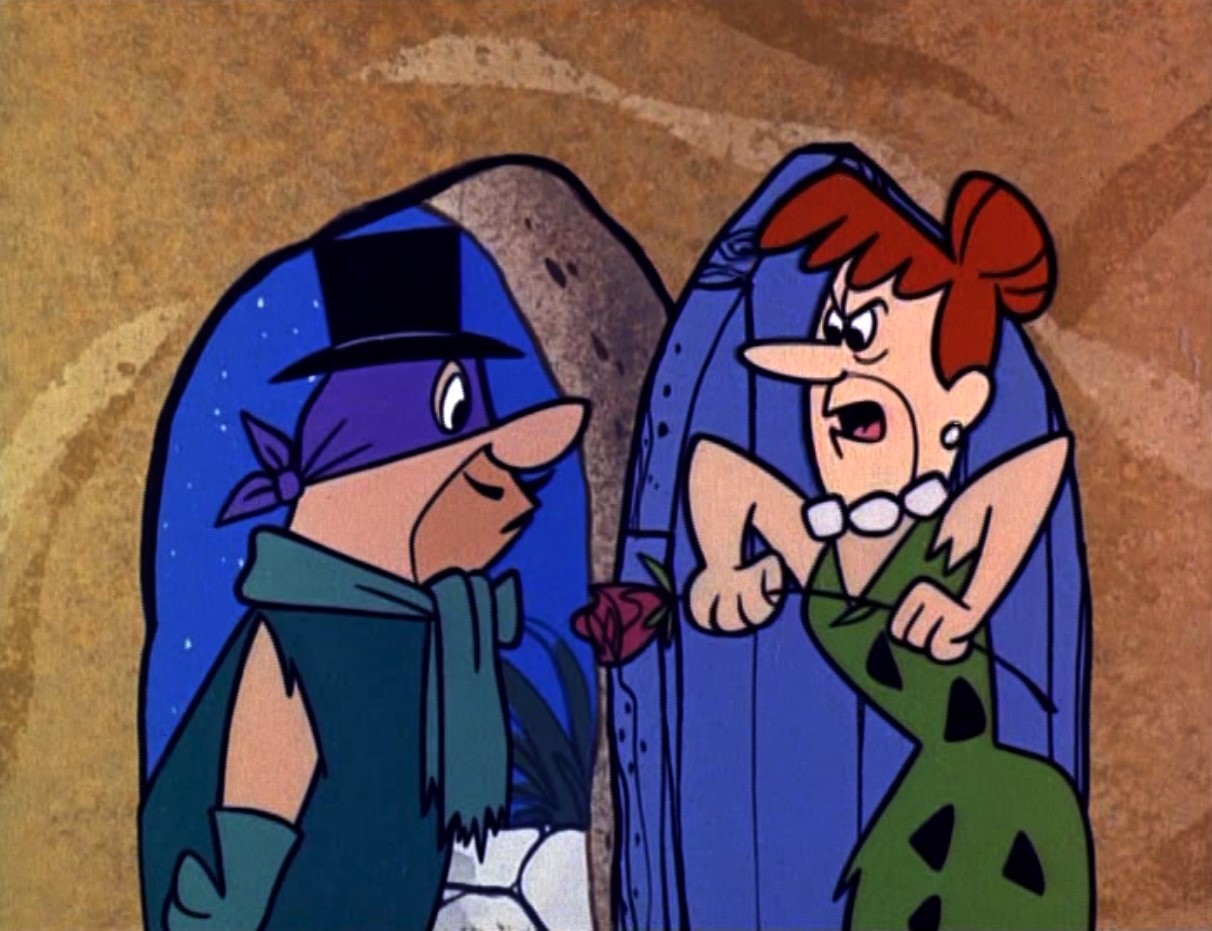
‘The Kissing Burglar’ is literally about a kissing burglar, a crook with apparently a romantic side to him. Wilma and Betty are all excited about meeting him, so Fred decides to teach Wilma a lesson.
The kissing burglar is a pretty silly character, especially because he’s shown to have a jealous wife, and there are some cartoony antics. But in the end the episode turns out to be a nice play on Fred and Wilma’s relationship to each other. Especially the end scene is a beauty, in that respect.
The stone age gags meanwhile are scarce. They makers don’t even show how the night lamps work, but the typewriter is well done.
Watch an excerpt from ‘The Kissing Burglar’ yourself and tell me what you think:
This is The Flintstones Season Three episode 16
To the previous The Flintstones episode: Flashgun Freddie
To the next Flintstones episode: Wilma the Maid
‘The Kissing Burglar’ is available on the Blu-Ray ‘The Flintstones – The Complete Series’ and the DVD-box ‘The Flintstones Season 3’
Directors: William Hanna & Joseph Barbera
Airing date: October 19, 1962
Stars: The Flintstones
Rating: ★★★½
Review:
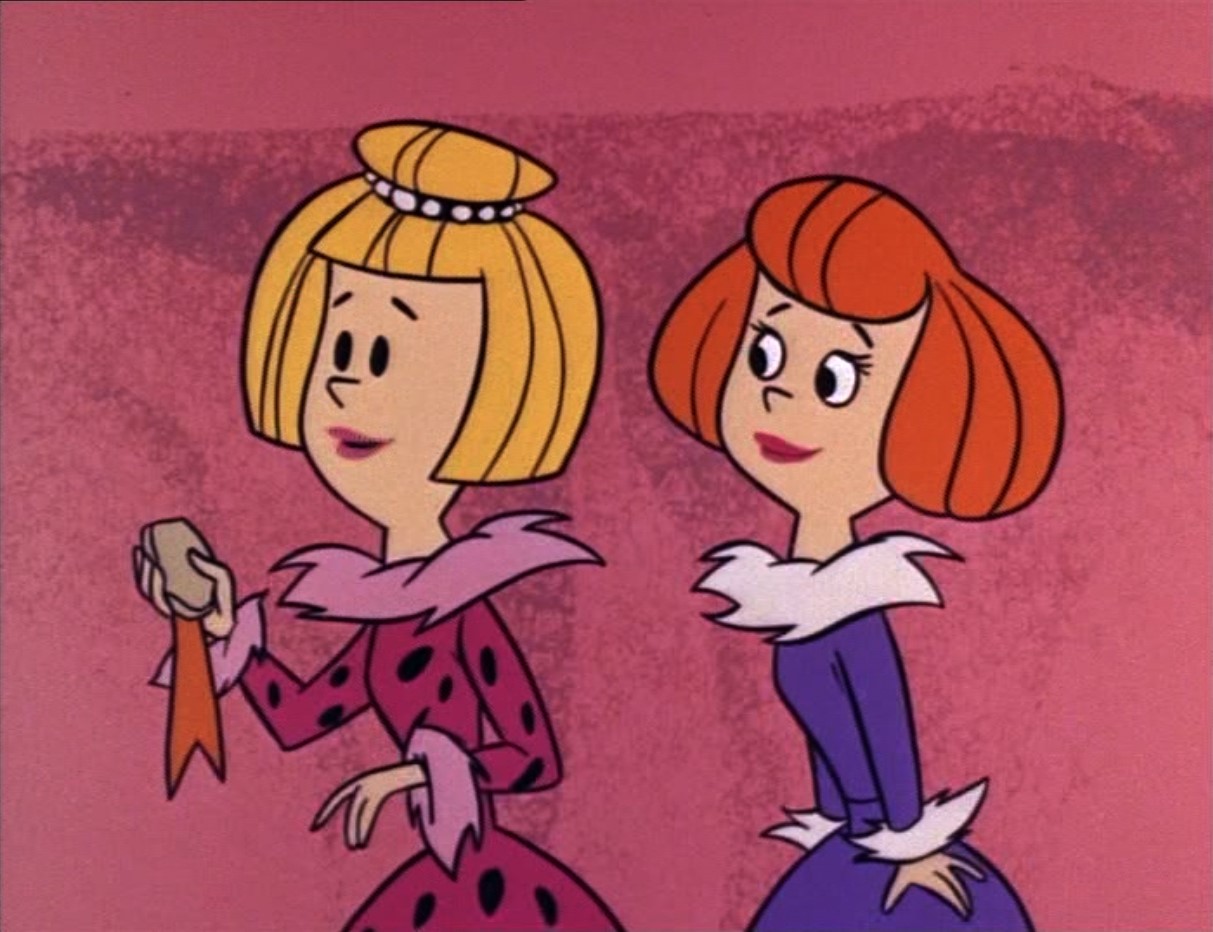
Here’s Snow in Your Eyes’ starts with Wilma grouching over housework. Then she hears that Fred and Barney are invited to a state convention of the Royal Order of Water Buffaloes in Stone Mountain, a luxurious ski resort, and naturally she assumes she and Betty can go, too.
Unfortunately, Fred has to talk her out of that idea, as there wasn’t enough money for the wives, so the girls stay home. But when Betty and Wilma discover there’s a beauty contest at the very place, they change their minds, and go anyway to keep an eye on their husbands.
‘Here’s Snow in Your Eyes’ knows a quite complicated plot, which also involves a diamond theft, but for once the guys have nothing to hide, and the episode is one of two happily married couples. Unfortunately the beauty contest subplot ends abruptly, and one gets the feeling there’s was more to the story material than what finally materialized in this episode. Nevertheless, this is one of the more enjoyable Flintstones episodes from the third season, with fun little scenes, some nice takes on all four main characters, and an enjoyable final scene.
Watch an excerpt from ‘Here’s Snow in Your Eyes’ yourself and tell me what you think:
This is The Flintstones Season Three episode 6
To the previous The Flintstones episode: The Twitch
To the next Flintstones episode: The Buffalo Convention
‘Here’s Snow in Your Eyes’ is available on the Blu-Ray ‘The Flintstones – The Complete Series’ and the DVD-box ‘The Flintstones Season 3’
Directors: Bob Persichetti, Peter Ramsey & Rodney Rothman
Release date: December 14, 2018
Rating: ★★★½
Review:

For American feature animation 2018 was mostly a rather uneventful year. True, the year started off well with the release of ‘Isle of Dogs’, and it was also the year of Nina Paley’s second animation feature, ‘Seder-Masochism’, but for the rest it was a year of uninventive sequels (Pixar’s ‘Incredibles 2’, Disney’s ‘Ralph Breaks the Internet, Sony’s ‘Hotel Transylvania 3: Summer Vacation’) and mediocre stand-alones (Warner Bros.’ ‘Smallfoot’ and Illumination’s ‘The Grinch’).
But then, at the closing of the year suddenly a complete game-changer entered the scene: ‘Spider-Man into the Spider-Verse’. The film was brought by Sony Animation, the most evasive from all major animation studios, releasing both gruesomely bad movies like ‘The Smurfs’ (2013) and ‘The Emoji Movie’ (2017), as well as more interesting experiments, like ‘Surf’s Up’ (2007). This animated Spider-Man feature certainly falls into the latter category, bringing the animation world a totally new aesthetic.
Like all other films mentioned (sans ‘Seder-Machochism’) ‘Spider-Man into the Spider-Verse’ is a 3D computer-animated film, but unlike all others this feature has a distinct comic book style, complete with clearly visible halftone dots, and even color-shifts that look like misprinting of color layers when the ‘camera’ gets out of focus. The film even adds other stylistic elements from comic books, like page-turning effects, text panels and panel-like split screens to enhance the comic book feel. Even though traditional texturing and rendering is completely in place, never does the art aspire to be realistic, but always to keep the comic book feel intact.
‘Spider-Man into the Spider-Verse’ thus is a delight to watch, and a welcome fresh take on traditional 3D computer animation. In fact, the excitement the film stirred in the animation world is comparable to that of ‘The Matrix’ (1999) in the live action film industry. That its stylistic innovation was not an isolated event was proved by subsequent films like ‘Puss in Boots: The Last Wish’ (Dreamworks, 2022) and ‘Teenage Mutant Ninja Turtles: Mutant Mayhem’ (Paramount, 2023). Certainly the latter took heed of the lessons from ‘Spider-Man’.
The story of ‘Spider-Man into the Spider-Verse’ is another reboot of the then 56 years old comic. This time we follow a black teenager from Brooklyn called Miles, who is a son from an over-protective cop, but who leans more towards his less well-behaved uncle Aaron. The most remarkable event in the film is that the original Spider-Man, Peter Parker, actually dies, and Miles, who due to unexplained events is bitten by a radio-active spider, too, must take his place.
In fact, the plot is much more complicated, and involves villain Kingpin trying to get his deceased wife and son back from a parallel universe opened by a portal devised by Doctor Olivia “Liv” Octavius, another villain who apparently is the successor to Doc Ock (I’m hardly familiar with the Spider-Man world, so these villains are unknown to me).
The portal also imports five spider-men from alternate universes (and I guess, the Alchemax spider that bit Miles), most importantly a less successful middle-aged Peter Parker and a young Spider-Woman called Gwen, but also a manga girl-spider-man, a black and white film-noir Spider-man and even a looney tune-like spider-man-pig called ‘Spider-Ham’. Part of the fun is the play with these alternate universe characters, some of which are gleefully silly, but I must say the main story is told pretty heavy-handedly.
In fact, the film’s story is hardly as good as the visuals: it’s hard to follow, it’s full of plot-holes, it has some rather forced scenes (most notably the utterly improbable scene in May Parker’s basement, and a believe-in-yourself-like scene in which Miles really becomes a Spider-Man), and a large dose of melodrama that I could hardly stand. Moreover, the finale is taking place in such a messy setting, I had no idea what was going on.
No, did ‘Spider-Man into the Spider-Verse’ not have the astonishing looks it has, I wouldn’t have been entertained so much, the fun parallel world plot notwithstanding. But as it is, ‘Spider-Man into the Spider-Verse’ is one of the most important animated features from the 2010s, a status corroborated by its equally praised sequel, ‘Spider-Man: Across the Spider-Verse’ from 2023.
Watch the trailer for ‘Spider-Man into the Spider-Verse’ yourself and tell me what you think:
‘Spider-Man into the Spider-Verse’ is available on Blu-Ray and DVD
Director: Milorad Krstić
Release date: August 9, 2018
Rating: ★★★½
Review:
One of the more surprising and more original animated feature films from 2018 was this little gem from Hungary. Conceived and directed by Milorad Krstić, a director of Slovenian origin, ‘Ruben Brandt’ shows that one can make an adult animation film without an immature focus on sex and violence (there is violence in this feature film, because ‘Ruben Brandt’ is a crime thriller, but this violence is part of the plot, and not a gratuitous display of gore).
‘Ruben Brandt’ tells about a psychiatrist treating some criminals, who in turn help him overcome his nightmares by collecting artworks from all over the world. This plot is exciting, but on the flimsy side and as nonsensical as a James Bond movie. Moreover, the film fails to solve all the initiated plotlines, and the all too easy ending is a bit of a letdown.
Nevertheless, ‘Ruben Brandt’ remains an entertaining watch from start to finish, not only because of the surreal atmosphere, enhanced by the depiction of several of the art collector’s nightmares, but because of the film’s idiosyncratic looks.
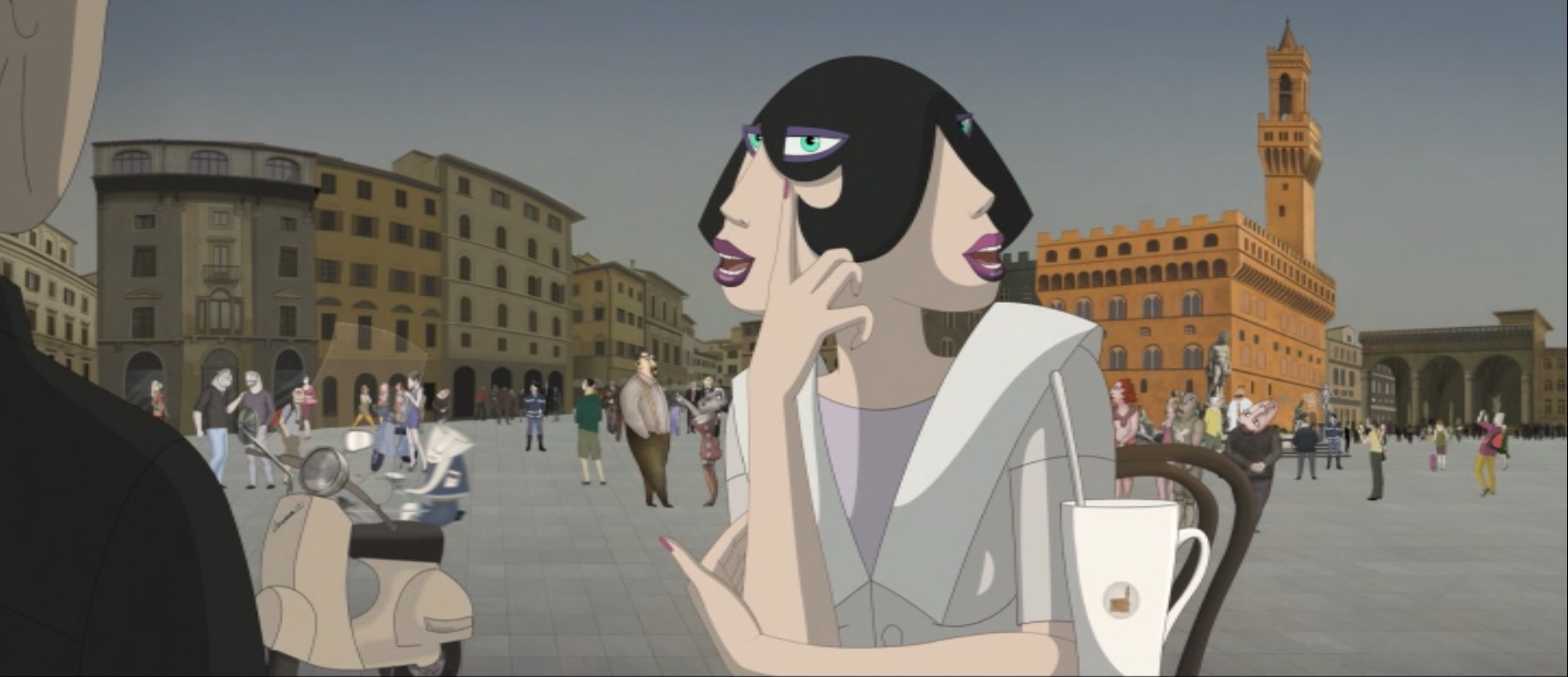
Being a film on art, the film draws a huge inspiration from its subject, and the film breathes art in almost every frame. According to the end titles the film cites more than fifty art works, and part of the fun of watching the movie is to identify a reference in the background. Moreover, the color schemes, the designs and especially the character designs are very bold and unlike anything in any other animation film.
True, the three main characters Ruben Brandt, Kowalski and Mimi look fairly normal, even if their facial designs are already unique, but their co-stars can have two noses, eyes placed above each other, an eye placed inside an ear, three eyes, three breasts, and so forth and so on. There’s even a character with a Janus head, who is only two-dimensional, a characteristic used in the plot. The background characters are often even more bizarre, let alone the birds and fish depicted, and even if the movie were dull (which it certainly isn’t) one can enjoy the surreal imagery.
The film uses both traditional and computer animation and although the computer animation is less satisfying than the traditional animation, the mix is very well done.
In all, ‘Ruben Brandt’ is a highly authentic film that shows surrealism is far from dead, and with his grotesque designs Krstić shows that even 3D computer animation can be exciting and strikingly original.
Watch the trailer for ‘Ruben Brandt, Collector’ yourself and tell me what you think:
‘Ruben Brandt, Collector’ is available on Blu-Ray and DVD
Director: Denis Do
Release date: June 11, 2018
Rating: ★★★½
Review:
‘Funan’ is a film by Denis Do, a French film maker of Cambodian descent, and the film is partly based on the memories of his own mother.
‘Funan’ means ‘the new people’ in the Khmer language, and this is an apt description of the radical ideology of the Khmer Rouge, an extreme communist movement that took power in Cambodia from 1975 to 1979, only to plunge the nation in one of the severest mass killings in human history, with the ultimate goal to rise as a ‘new nation’ of autarkic, non-intellectual people.
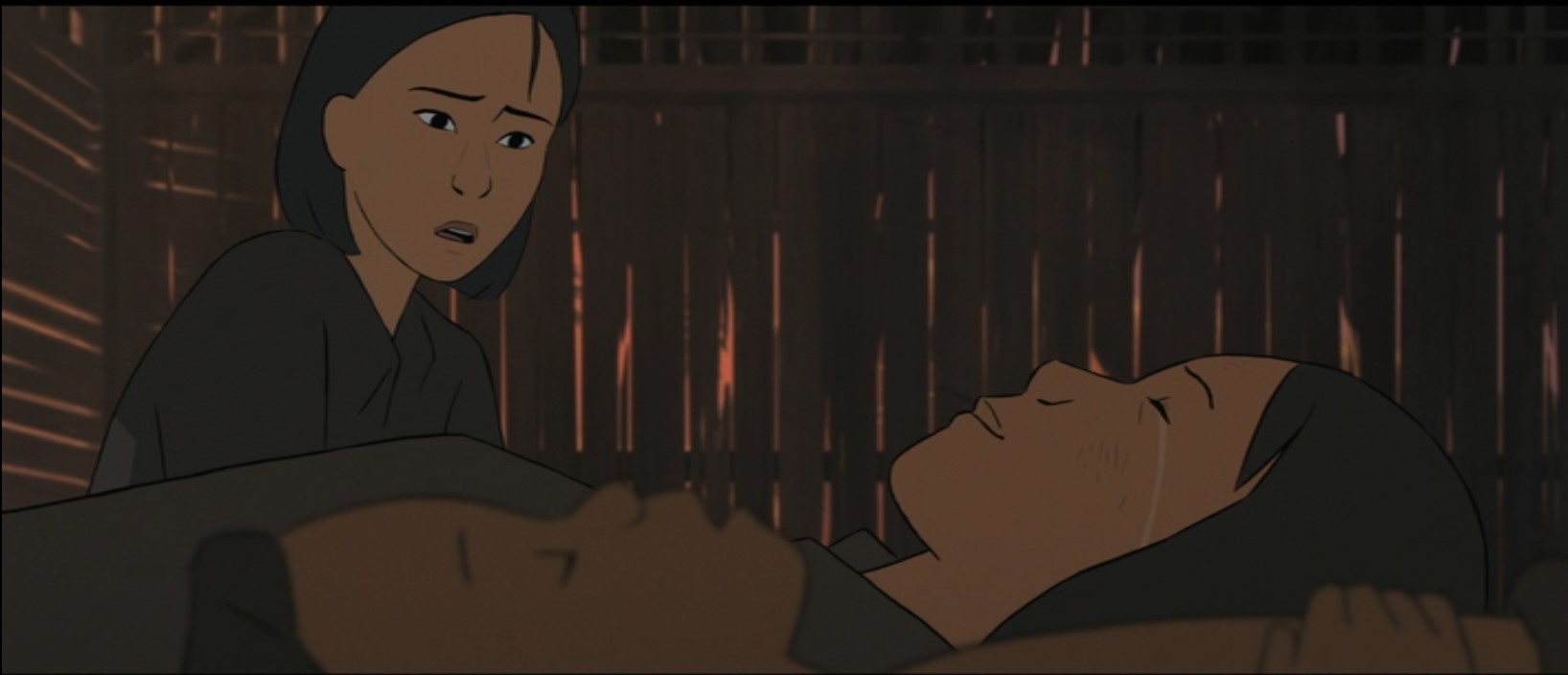
‘Funan’ thus tells about Cambodia’s darkest years, and does so by following one family from Phnom Penh, which almost immediately falls apart, and which succumbs one by one to various aspects of the terror, be it brutal murder, forced labor, famine or rape. We especially follow a couple, Chou and Khuon, and their son Sovanh, who gets separated from his parents near the start of the film.
Luckily, the film eschews gross images, keeping the watch tolerable, but strangely enough, this also means one feels the hardship and sorrow less than one should. The film’s rather episodic nature certainly doesn’t help, and one has a little trouble relating to these people, perhaps because they aren’t introduced very well (the happy bliss of pre-Khmer rouge existence is shown all too shortly), and because the film is told in a plethora of very short scenes, instead of a few well-chosen longer ones. Especially Sovanh’s story is too fragmentary to follow, and his experiences are only hinted at, although it’s clear that the young boy sees a lot of cruelty and death.
The 2D animation is fair, with the human character designs rooted in the French ligne claire tradition, while the background is painted and lineless. Both coloring and lighting are clearly digitally done, and to be frank, rather uninteresting.
I suspect the film could be more daring and more idiosyncratic in its designs and storytelling, especially when compared to Elsa Duhamel’s similar, but far more interesting short ‘Bach-Hong’, which tells of the coming of the communists to Saigon, Vietnam. Duhamel cleverly sticks to a single story, illustrating the regime’s cruelty by one, ostensibly minor detail in the nation’s history.
Do, on the other hand, seems to want to tell everything, and indeed he succeeds in painting a picture of these black years, but I suspect he had better chosen less scenes, and less characters, for now, unfortunately, the film remains at an emotional distance, and that can hardly be the film maker’s purpose. Yet, I am glad personal films like this are being made, for films like ‘Funan’ save tragedies like that of Cambodia from oblivion, and remind us that peace and safety aren’t guaranteed, at all.
Watch the trailer for ‘Funan’ yourself and tell me what you think:
‘Funan’ is available on Blu-Ray and DVD
Director: Paul Driessen
Release date: 1972
Rating: ★★★½
Review:
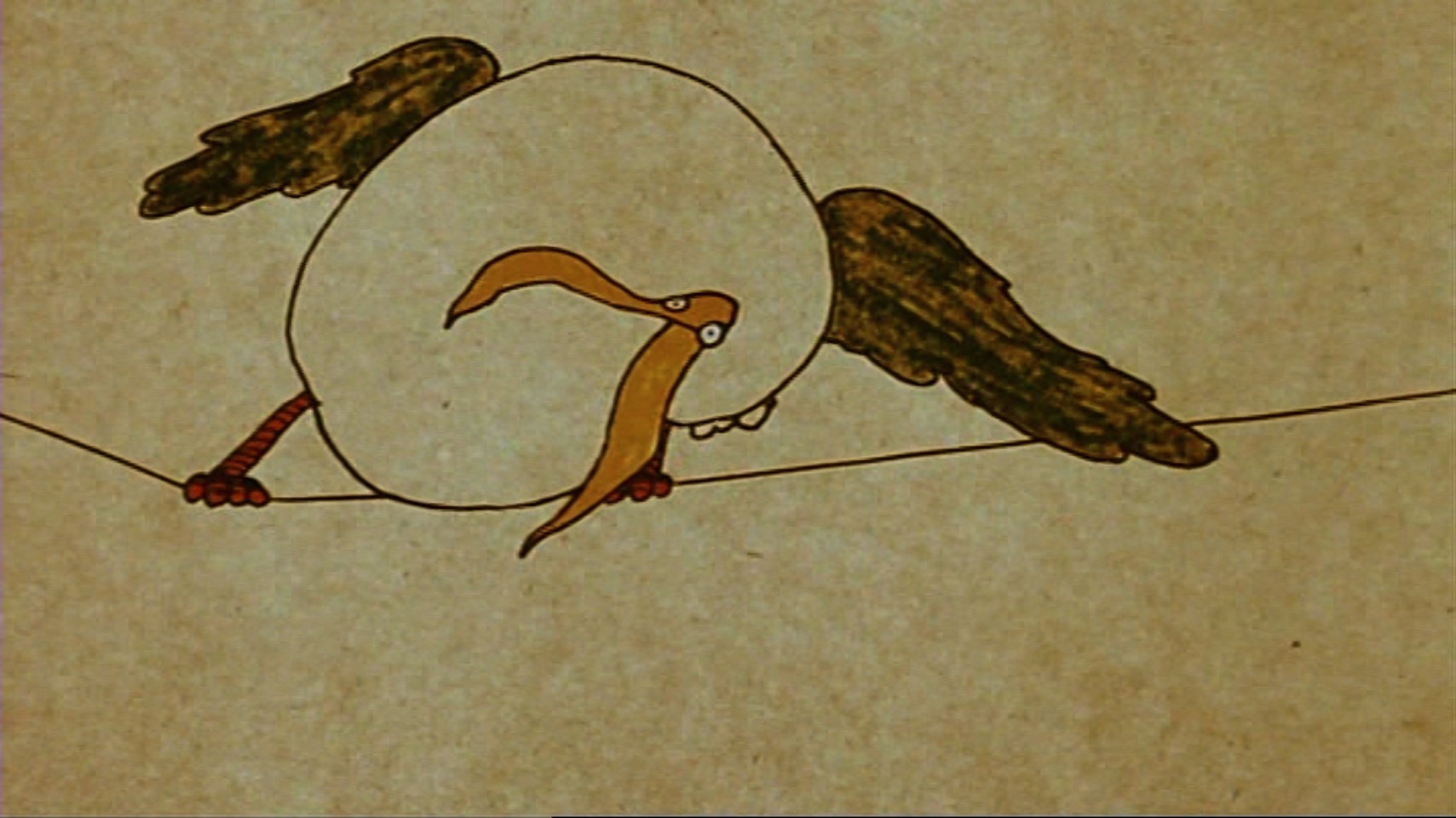
‘Air!’ was the first animated short Dutch animator Paul Driesen made for the National Film Board of Canada. In this very short film (it only takes two minutes) everything and everyone is gasping for air. Only at the very end we experience why.
Driessen makes the most of the barest background art: a monochrome background with a single horizontal line, which in each scene depicts something else. This is an early short by the Dutch master, but the film already showcases Driessen’s idiosyncratic animation style and morbid sense of humor.
Watch ‘Air!’ yourself and tell me what you think:
https://www.nfb.ca/film/air_fr/
‘Air’ is available on the DVD ‘Des histoires pas comme les autres’
Director: Eiichi Yamamoto
Airing date: June 27, 1973
Rating: ★★★½
Review:
The late sixties and early seventies saw some striking experiments in the animated feature film. These films left the tried paths of family film and aimed at a more adult audience. In Europe Walerian Borowczyk arguably made the first experimental animated feature with ‘Théâtre de Monsieur & Madame Kabal (Theatre of Mr & Mrs Kabal)’ (1967), René Laloux made quite an impact with ‘La planète sauvage’ (1973), while in the UK George Dunning’s ‘Yellow Submarine’ (1968) caused a revolution, inspiring for example ‘János Vitéz’ (Johnny Corncob) in Hungary. Meanwhile in the US Ralph Bakshi experimented with more adult themes in ‘Fritz the Cat’ (1972) and ‘Heavy Traffic’ (1973).
In Japan, Osamu Tezuka led the way with his Mushi Productions studio, releasing three more adult themed feature films: first ‘A Thousand and One Nights’ in 1969, followed by ‘Cleopatra’ (1970) and ‘Belladonna of Sadness’ from 1973.
All three were directed by Eiichi Yamamoto, but in contrast to the earlier two features Tezuka had no direct involvement in ‘Belladonna of Sadness’. Even more striking, the great master left his own studio halfway production. Thus, ‘Belladonna of Sadness’ is very, very different from Tezuka’s own rather cartoony creations.
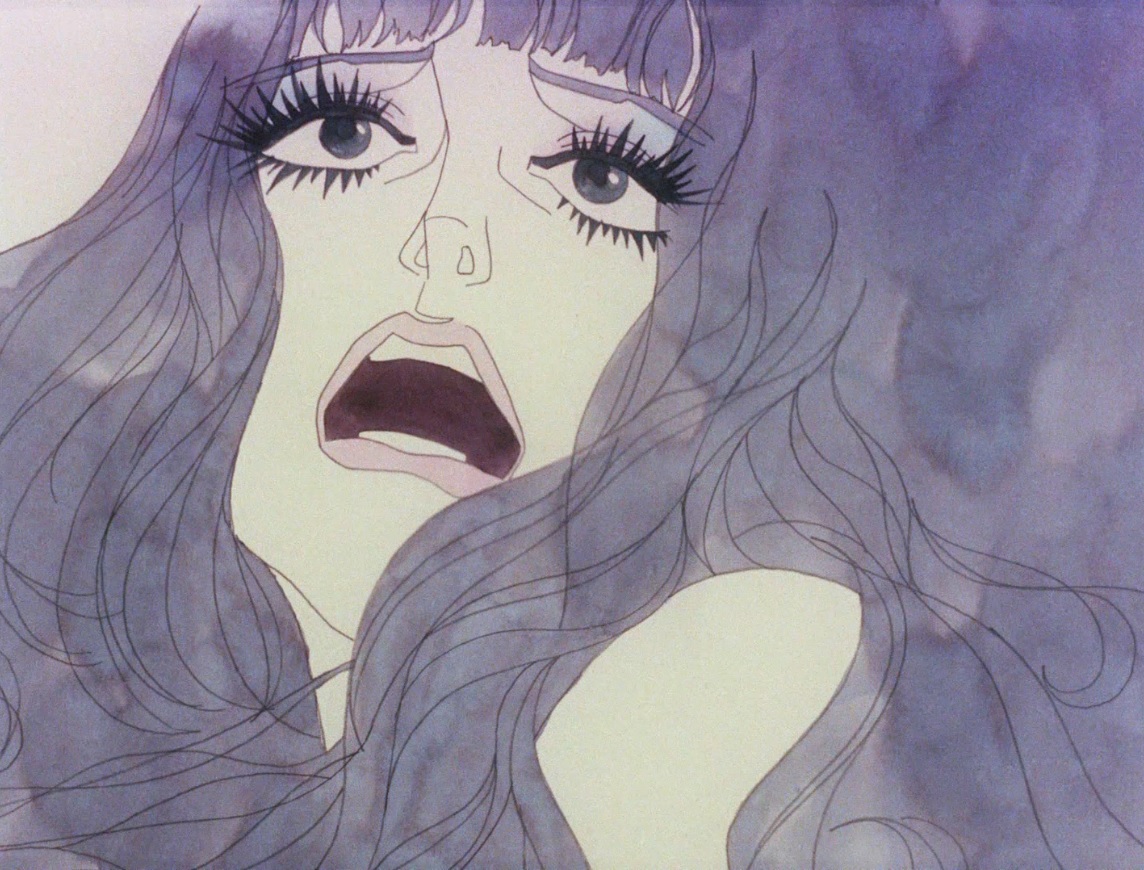
According to Yamamoto he wanted his film to be a Japanese answer to ‘Yellow Submarine’, and to make it one the drew inspiration from the artwork by Kuni Fukai. However, Kunai’s dark and disturbing artwork is quite the opposite from Dunning’s cheerful fantasies. On the Blu-ray Fukai calls his own work from the early seventies ‘decadent’, and that certainly is an apt description. Fukai’s drawings are baroque, graphical, lush, and highly erotic. They have a distinct neo-art-nouveau character, which is both very psychedelic and very seventies. For Belladonna of Sadness’ Fukai functioned as the art director, and his drawings form the base of the complete film, which uses animation only sparingly, often leaving the camera tracking over the static artwork.
And what artwork! ‘Belladonna of Sadness’ sure is a marvel to look at. The watercolor-and-pen drawings are all interesting and of a high artistic quality. Fukai almost always uses a white canvas, in which the drawings more or less disappear, and there’s ample and expressive ornamentation to accentuate the feeling of the scene. There are some odd design choices, however. For example, the villain looks like he has no eyes and as if three bones are stuck into his skull, making him rather grotesque and unbelievable.
Animation, as said, is only used only sparingly. There is no lip-synchronization, whatsoever, and some of the animation is crude and simple. The most interesting animation occurs when the events are not shown directly, but only suggested. For example, in the best erotic scenes more is hinted at than shown, and when the world is struck with the plague, we watch the landscape melt. There are certainly some trippy scenes, full of metamorphosis, which form the best parts of the movie. The undisputed highlight of the film comes when the baroque images are suddenly changed for a rapid-fire delivery of much more cartoony designs in bold seventies colors. This frenzy of animated images is followed by beautiful glass painted animation full of metamorphosis.
The psychedelic images are further enhanced by the soundtrack, which mixes psychedelica, spacefunk and rock into a very seventies-like mix, akin to Alain Goraguer’s soundtrack for ‘La planète sauvage’ from the same year, albeit of a lesser quality. There are even a few songs to enhance the mood.
In contrast to the beautiful art the story of ‘Belladonna of Sadness’ is subpar, and even objectionable. The film is based on ‘La sorcière’ (1862) by Jules Michelet, a non-fiction book on witchcraft, and the film’s story is set in a fictive oppressive kingdom in which a peasant girl becomes a witch. However, Yamamoto’s and Yoshiyuki Fukuda’s screenplay apparently only uses the book as a source of inspiration, as their own tale is as predictable as it is boring.
Yamamoto apparently instructed Fukai that his film was ‘porn but make it a love story’. Well, the movie is certainly porn, but hardly a love story. The two lovers Jean and Jeanne are more vignettes than characters, and if anything, Jean is a weak and will-less coward. Worse, the porn is exploitive, featuring several rapes and a lot of violence. As can be expected, there is a lot of female nudity, but hardly any male one, although penises are omnipresent, especially as the devil takes the shape of a penis himself. Jeanne’s best moment comes when she reveals herself as a full-blown witch, which provides one of the film’s most iconic moments. But during most of the film she’s used and abused by powers beyond her control. The ending, too, is unsatisfying, and all too abrupt, forcingly trying to make the porn story into something political.
Thus, ‘Belladonna of Sadness’ may transcend normal porn (it’s certainly weird and original enough to do so), but not that of a cheap comic. There’s no depth to the story, at all, and the film’s exploitive character gives a bad taste in the mouth. Nevertheless, the movie is a feast of the eye and stands as a great example of the sheer experimentation that were the seventies.
Watch the trailer for ‘Belladonna of Sadness’ yourself yourself and tell me what you think:
‘Belladonna of Sadness’ has been released on Blu-Ray, but this is currently out of print
Director: Jeroen Jaspaert
Airing date: December 25, 2017
Rating: ★★★½
Review:
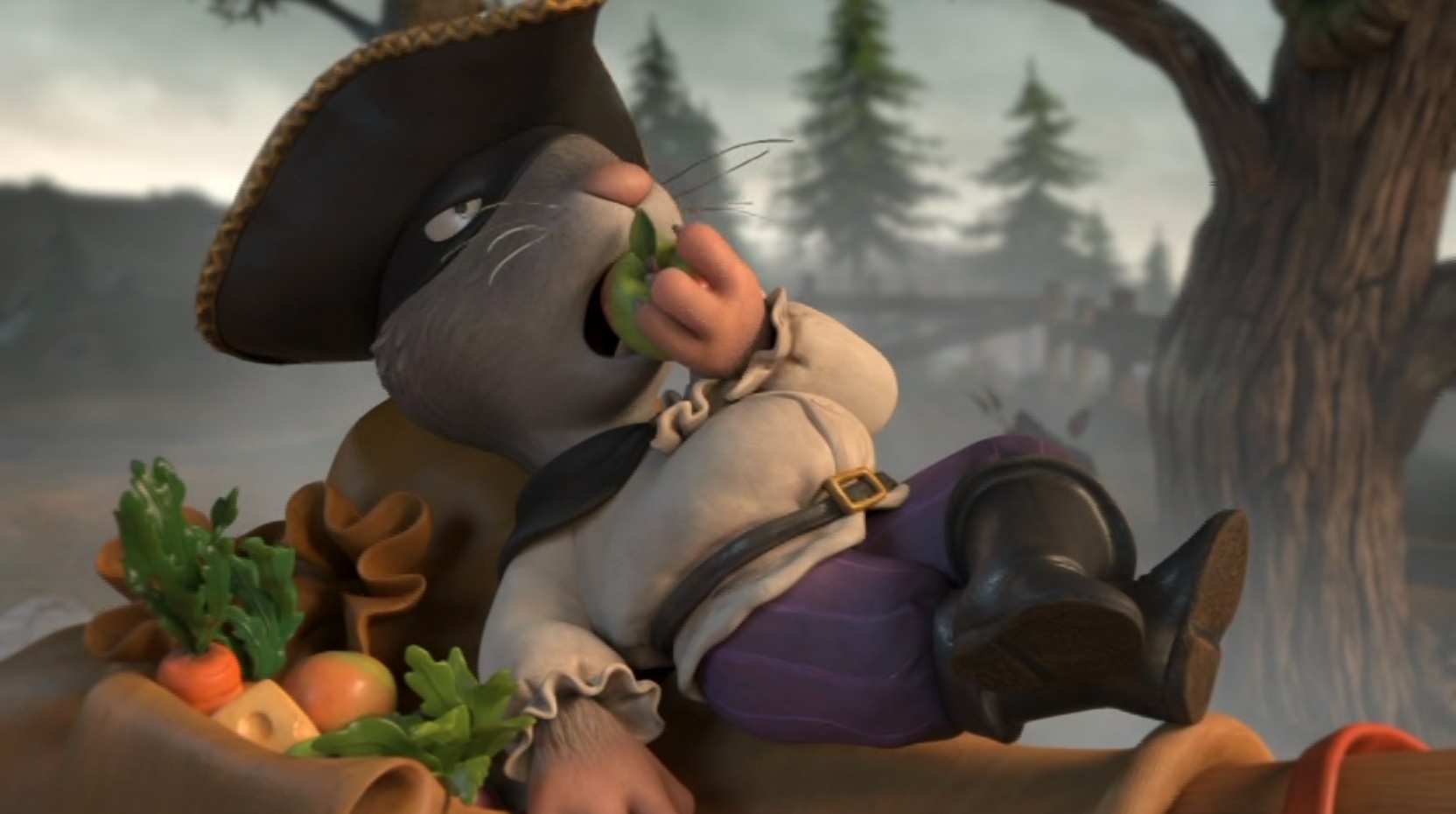
‘The Highway Rat’ is the sixth animated Christmas special by Magic Light Pictures. Like all the others (save ‘Revolting Rhymes’ from 2016) the film is based on a children’s book by Julia Donaldson and Axel Scheffler, and like all, narrated in rhyme.
The film boasts the same charming stop-motion-like computer animation and elaborate real sets as the others, and features excellent music by René Aubry, but frankly, the film’s source material is less engrossing than for example ‘The Gruffalo’ (2009) or ‘Room on the Broom‘ (2012). The first half consists of the highway rat taking away food from passing animals only, and the creature’s punishment and reform feel rather obligate and uninspired.
Nevertheless, the film remains a wonderful thing to look at, as neither the animation nor the visuals cease to charm. Especially entertaining is the silent comedy, mostly provided by the Highway Rat’s horse. Done with great subtlety and excellent use of eye expressions this is animation at its very best.
Watch an excerpt from ‘The Highway Rat’ yourself and tell me what you think:
‘The Highway Rat’ is available on DVD
Director: Hiromasa Yonebayashi
Release date: July 8, 2017
Rating: ★★★½
Review:

‘Mary and the Witch’s Flower’ is the first film by Studio Ponoc, founded by Yoshiaki Nishimura, who was a producer for Studio Ghibli before. Director Hiromasa Yonebayashi, too, is a Studio Ghibli alumnus, being an animator for the famed studio since 1997, and directing the studio’s 21st feature film ‘When Marnie Was There’ (2014).
It comes to no surprise then that ‘Mary and the Witch’s Flower’ is very, very Ghibli-like. Already the packaging of the DVD would fool anyone. But the similarity doesn’t stop there: even the opening titles emulate Ghibli; the character designs, too, are very Ghibli-like; the film is based on a British children’s book, just like Ghibli’s ‘Howl’s Moving Castle’ (2004), ‘Arrietty’ (2010) and ‘When Marnie Was There’; the film stars a young female protagonist (Mary) who has to survive without her parents, just like ‘Kiki’s Delivery Service’ (1997), ‘Spirited Away’ (2001) and ‘From Up on Poppy Hill’ (2010); Mary is a witch like Kiki; she’s accompanied by a cat who plays an important part just like Kiki and like Shizuku in ‘Whisper of the Heart’ (1995), and the film is partly set in a fantasy world, just like ‘Spirited Away’.
Now, this is immediately the film’s main flaw: studio Ponoc imitates Ghibli very well but doesn’t bring anything original of its own. The final product is practically indistinguishable from the source of inspiration. That doesn’t mean, however, that ‘Mary and the Witch’s Flower’ is a bad movie. The story is told well enough, the animation is top notch, and the fantasy world looks great. I certainly had a good time watching it, and would recommend the movie to all lovers of the Studio Ghibli product. But Studio Ponoc’s debut could and should have been something much more of their own. If you compare, for example, ‘Mary and the Witch’s Flower’ to the idiosyncratic ‘Night Is Short, Walk on Girl’ from the same year, it becomes clear which studio brings something original to the world, and which one does not.
Watch the trailer for ‘Mary and the Witch’s Flower’ yourself and tell me what you think:
‘Mary and the Witch’s Flower’ is available on Blu-Ray and DVD
Director: Witold Giersz
Release date: 1970
Rating: ★★★½
Review:

‘The Wonderful March’ is a traditional animation film, which retells the story ‘The Marvelous March of Jean François’ (1965) by John Raymond.
Jean François is a drummer boy in Napoleon’s army, who’s told to march ever onward. Following this direction rather obsessively, Jean François travels the world, using his drum e.g. as a boat and as a basket for a balloon, only to return to Napoleon in the end, right in the battle of Waterloo.
The film’s conclusion is a bit puzzling and rather disappointing. Nevertheless, ‘The Wonderful March’ can boast very pleasant images, full of painted animation, and charming music by Polish composer Kazimierz Serocki.
Watch ‘The Wonderful March’ yourself and tell me what you think:
‘The Wonderful March’ is available on the DVD-set ‘Anthology of Polish Children’s Animation’


 Dr. Grob's Animation Review