
You are currently browsing the category archive for the ‘★★★★★’ category.
Director: Pete Docter
Release date: October 11, 2020
Rating: ★★★★★
Review:
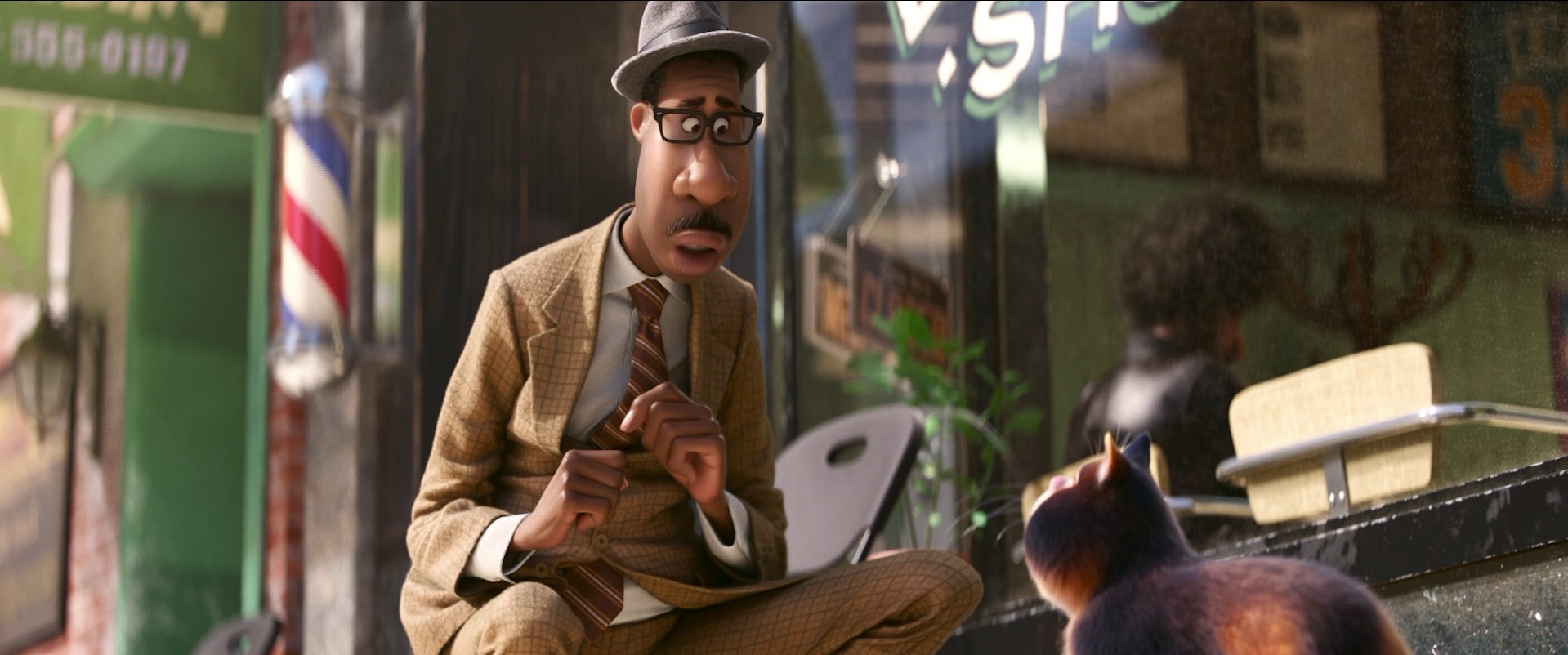
From the 2010s on Pixar’s output became very erratic. Excellent films became rarer, and too much of their output was just okay or even subpar. That said, the studio’s summits were still higher than anything in American studio animation around it, as ‘Soul’ for example proves.
What sets Pixar apart from all other American animation studios is its will to tackle more profound life questions, and not just the tired ‘importance of family’ trope that floods Disney films or the ‘believe in yourself’ message that has become the stale message of almost any American animation film around. No, ‘Soul’ ticks nothing less than the question of what it means to be alive and does so in a surprisingly subtle way, never laying the moral too thick.
‘Soul’ tells about Joe Gardner (a wonderful Jamie Foxx), an aspiring jazz pianist in New York, who finds himself teaching jazz to untalented school children and still depending on his mother, while he still longs for a breakthrough, despite being past his prime. Then opportunity knocks…
‘Soul’ is one of those extremely rare animation films starring African American people, and like the great predecessor in this respect, ‘The Princess and the Frog’ (2009), we see the black protagonist change into another shape for quite a while, because for a substantial part of the movie we watch ‘Joe Gardner’ wander ‘the great before’ in his spirit form. One almost starts to wonder if the American studios don’t dare to make their audiences watch black characters for too long. But luckily, we quite quickly return to New York and to its black community. I love how the film is about blacks without being about being black. The film also stars a very strong (and not totally sympathetic) female star saxophone player called Dorothea Williams, and jazz indeed plays an important part in the feature, even if the film isn’t about jazz, or music, at all.
For in ‘the great before’ Joe meets ‘22’, a soul terrified of life, and dodging being born for centuries. ‘22’ (greatly voiced by Tina Fey) simply refuses being born, and she isn’t able either, because she hasn’t found her spark, yet. It’s up to Joe to find it with her, otherwise he’ll never return to Earth.
The before-life scenes belong to the great world building sequences of any fantasy film. The new souls, for example, are guided by weird two-dimensional beings, all called ‘Jerry’, who look like they’ve walked away from a Picasso painting. There’s nothing of ‘this world is actually like contemporary America’, like that of ‘Monsters, Inc.’, ‘Cars’ or ‘Onward’. Even the colorful afterlife in ‘Coco’ looks rather mundane compared to this place, with its clear 1950s cartoon modern designs and strange surroundings.
‘Soul’ knows a wonderful plot with many surprise turns and unexpected twists and certainly entertains to the very end. The only very weak spot is Joe’s all too easy return to the other world in the end. This return was clearly needed for the plot, but the sequence feels forced and fails to convince, unfortunately breaking the suspense of disbelief. Nonetheless, the film certainly shows what it means to be alive, and there are sequences of great beauty and deep emotion, given to us in subtle doses and understated character animation. In all, ‘Soul’ belongs to the best animation film can offer, and it is arguably the first animated masterpiece of the new decade.
Watch the trailer for ‘Soul’ yourself and tell me what you think:
‘Soul’ is available on Blu-Ray and DVD
Director: Rémi Chayé
Release date: June 28, 2020
Rating: ★★★★★
Review:
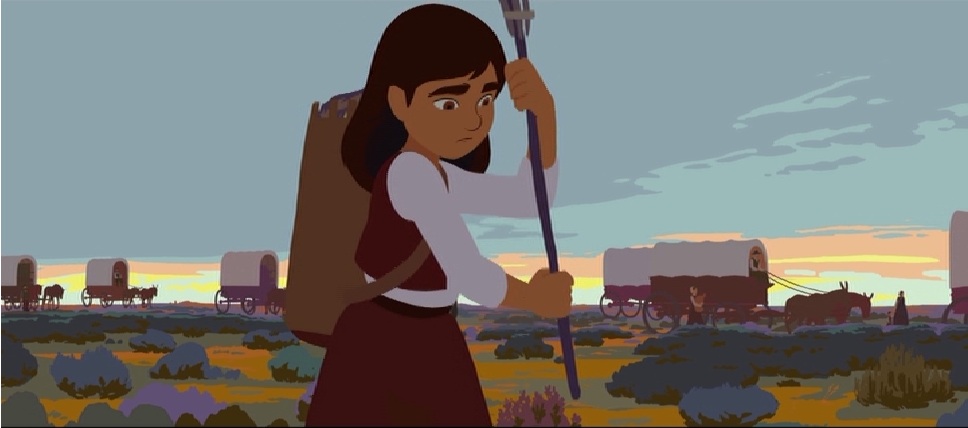
In 2015 Rémi Chayé surprised the animation world with his strong feature film ‘Tout en haut du monde’ (Long Way North), but his second feature, ‘Calamity, une enfance de Martha Jane Cannary’ arguably is even better.
Like the previous film ‘Calamity’ excels in an absolutely gorgeous digital background art, showing the prairies and mountains of the West in a plethora of colors, making each frame a delight to watch. But of course, this isn’t enough to sustain a feature film, and I am glad I can say that the story is also very good.
Like ‘Tout en haut du monde’ ‘Calamity’ stars a strong young female protagonist, and even more than in the previous film, ‘Calamity’ deals with the oppressive gender roles women were forced into, even if it didn’t suit their characters, ambitions and talents, at all. The film, of course, is based on real life enfant terrible Calamity Jane (1852-1903), but only vaguely so, and the film is called ‘A childhood’ and not ‘THE Childhood’, because the events depicted are mostly fictional and do not correspond to what we know about the historical Martha Jane Can(n)ary.
Nevertheless, with this film Chayé succeeds in making a subtle yet strong feminist statement. In fact, ‘Calamity’ is one of two strong European animation films from 2020 showing the historical plight of women, and how a masculine society kept them down for ages, for ‘Wolfwalkers’ by Cartoon Saloon tackles the same issues.
In the film we follow young Martha Jane (ca. 12-14 years old, I guess) accompanying her father and her two younger siblings on a caravan to Oregon. Her rather clumsy father is quite an outcast in the caravan, and Martha Jane is frequently mocked by Ethan, the son of the caravan’s leader, Mr. Abraham. When Martha Jane’s father breaks his ribs and must lay down in the wagon, and when goods get stolen from the caravan there’s an opportunity for Martha to break out of her role as an obedient girl, which she does with gusto, defying all counterforces she meets.
During the film Martha Jane poses as a boy called Marcus for a long time, and the only implausibility is when she gets chained to a real boy called Jonas. How she manages to maintain her disguise during these days baffles me. Otherwise, this is a strong coming of age film, which shows that women can be the equals of men, if they’re only allowed to.
Apart from gorgeous background art, the film includes appealing character designs, an effective, often surprisingly Japanese-like animation style and appropriate music. The result is one of the best feature films of 2020, on the same level as the more famous ‘Soul’ and ‘Wolfwalkers’.
Watch the trailer for ‘Calamity, a Childhood of Martha Jane Cannary’ yourself and tell me what you think:
‘Calamity, une enfance de Martha Jane Cannary (Calamity, a Childhood of Martha Jane Cannary)’ is available on Blu-Ray and DVD
Director: Friz Freleng
Release date: September 7, 1963
Stars: Bugs Bunny
Rating: ★★★★★
Review:
In the 1960s the quality of the Warner Bros. Cartoons rarely reached the heights of the best of the 1940s and 1950s, but there were a few which did so.
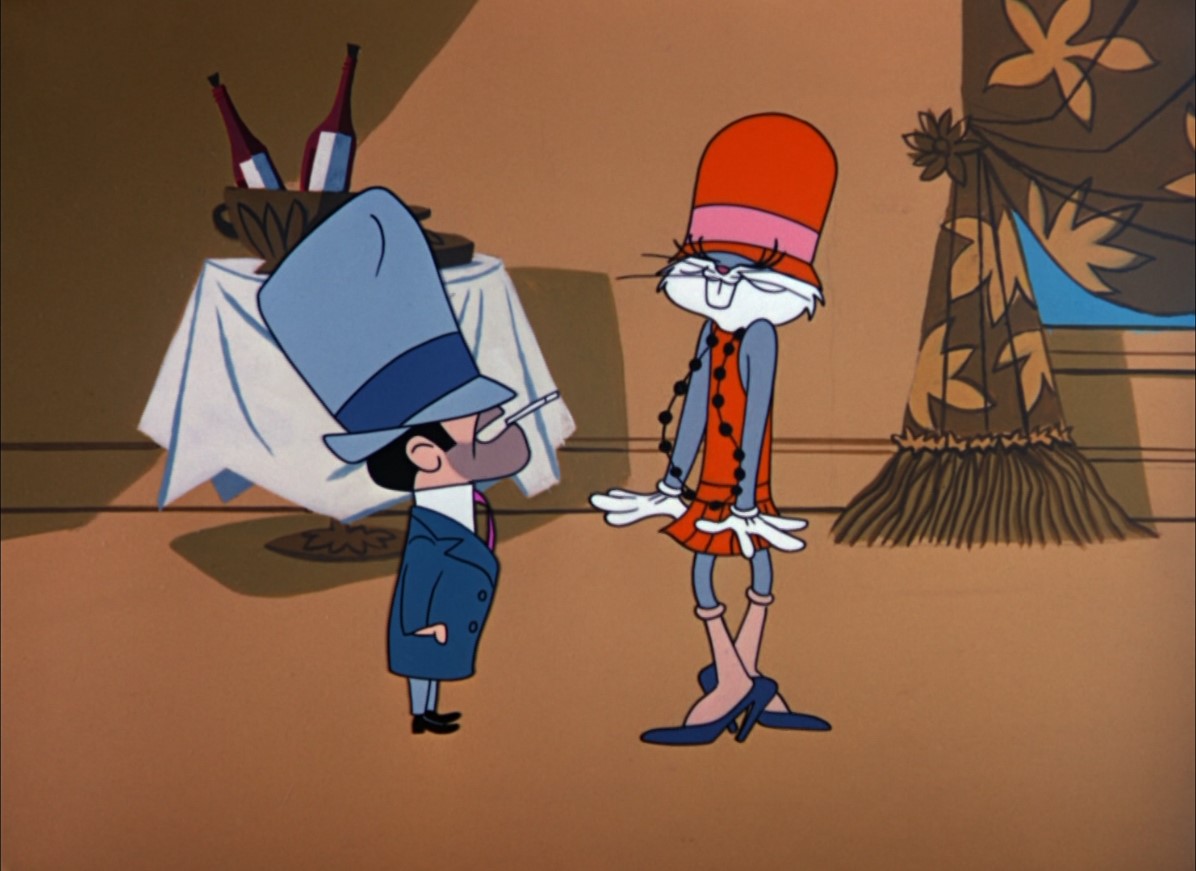
‘The Unmentionables’ surely is one of them. The cartoon obviously parodies the television series ‘The Untouchables’, with Bugs Bunny as Elliott Ness (or Elegant Mess, as he’s called in the cartoon). Luckily, ‘The Unmentionables’ doesn’t rely much on the parody element, but has many gags of its own, like silly gangsters (a series of gags harking all the way back to ‘The Great Piggy Bank Robbery’ of 1946) and a great example of Friz Freleng’s timeless lightswitch routines.
The cartoon also sees the welcome return of that infamous gangster duo Rocksy and Mugsy, who make their final appearance here. And then there’s Bugs as a flapper girl! Even the opening shots are wonderful, with some nice 1920s scenes drawn in a retro-1920s art deco style. The whole cartoon is a delight and one of the studio’s final best moments.
Watch ‘The Unmentionables’ yourself and tell me what you think:
This is Bugs Bunny cartoon No. 162
To the previous Bugs Bunny cartoon: Hare-Breath Hurry
To the next Bugs Bunny cartoon: Mad as a Mars Hare
‘The Unmentionables’ is available on the Blu-Ray-set ‘Bugs Bunny 80th Anniversary Edition’
Director: Bill Justice
Release date: December 1962
Stars: Ludwig von Drake
Rating: ★★★★★
Review:
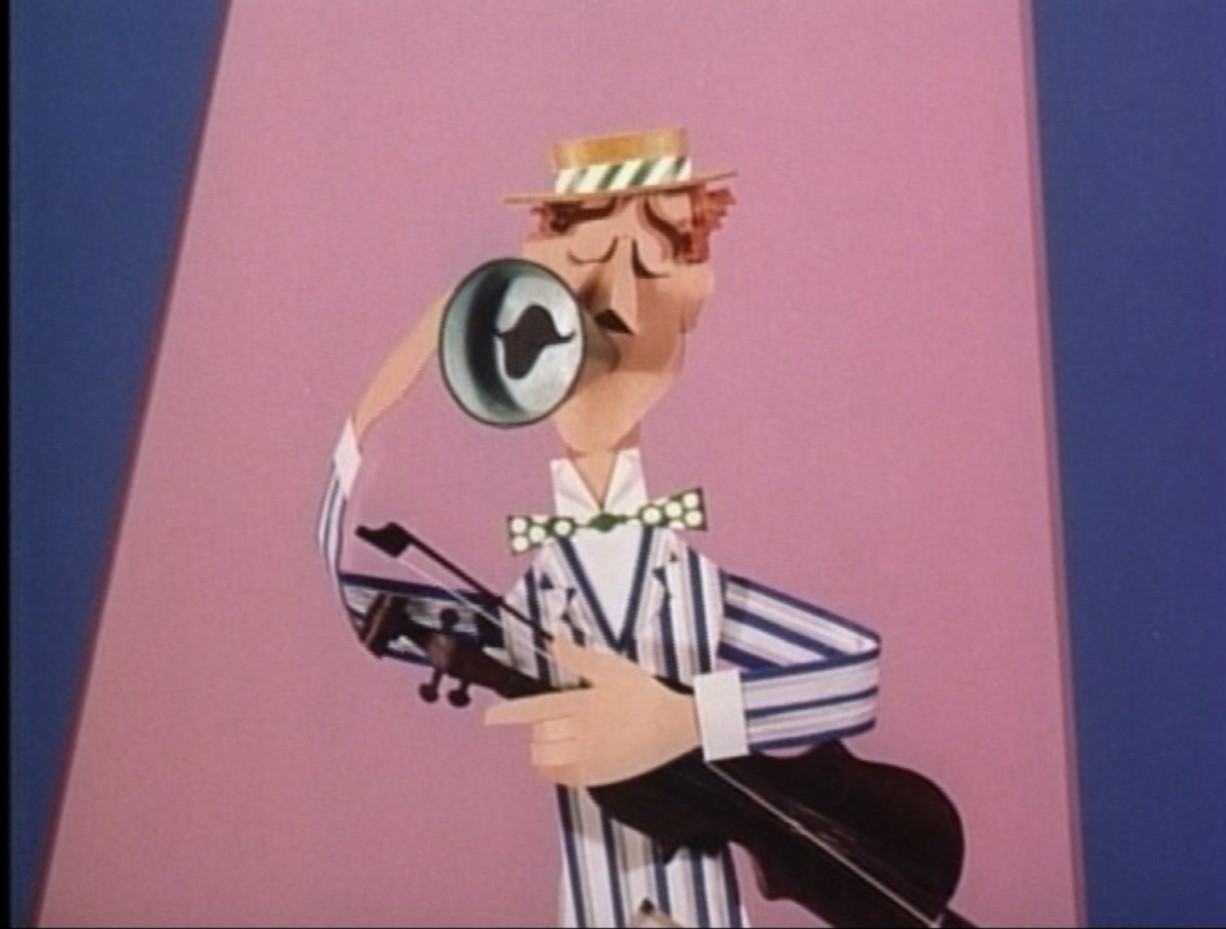
‘A Symposium on Popular Songs’ is the only theatrical cartoon to star Ludwig von Drake. This looney professor was created in 1961 when the Disney television series needed a new host, due to their move from ABC to NBC.
Voiced by an inspired Paul Frees, Von Drake is a wonderful character: he’s very talkative, often saying wrong things and correcting himself, and he has very lively hand gestures. Moreover, his talking is accompanied by all sorts of little sight gags, which makes his ‘lecture’ a delight to watch.
In ‘A Symposium on Popular Songs’ Von Drake leads the viewer along seven of his ‘greatest hits’, which are all wonderfully conceived parodies of 20th century popular music from ragtime to rock ‘n roll. All these hits were penned by the Sherman brothers, and it’s obvious that the two had a great time writing this spoof music, the highlight probably being their parody on the boogie-woogie of the Andrew Sisters.
Von Drake himself is traditionally animated, but his songs are accompanied by delighftul stop-motion and cut-out animations, designed by Xavier Atencio and animated by Bill Justice. In the first song, ‘Rutabaga Rag’, the two indulge in traditional stop-motion of vegetables dancing to the music. But in the subsequent songs the two favor a more sophisticated blend of cut-out and stop-motion, both attractively designed and well-animated.
After the ragtime we get a Charleston (‘Charleston Charlie’, sung by a flapper girl), an Al Jolson-like post-1929-crash song called ‘Although I Dropped a Hundred Thousand in the Market, Baby (I Found a Million Dollars in Your Smile)’, a Bing Crosby-like crooner song called ‘I am blue for you’, in which the crooner (no more than a head with a rudimentary armless stick-body) figures as a bouncing ball illustrating the lyrics, the aforementioned Andrews Sisters-like boogie-woogie song titled ‘The Boogie Woogie Bakery Man’, a doo-wop song called ‘Puppy Love’, and finally a wild rock ‘n’ roll song called ‘Rock, Rumble and Roar’, which is the only one delivered by Ludwig von Drake in person, but it figures excerpts from all six earlier songs.
The result is a wonderful cartoon that is both nonsensical, entertaining and educational.
Watch ‘A Symposium on Popular Songs’ yourself and tell me what you think:
‘A Symposium on Popular Songs’ is available on the DVD ‘Walt Disney Treasures: Disney Rarities’
Director: Wes Anderson
Release date: February 15, 2018
Rating: ★★★★★
Review:
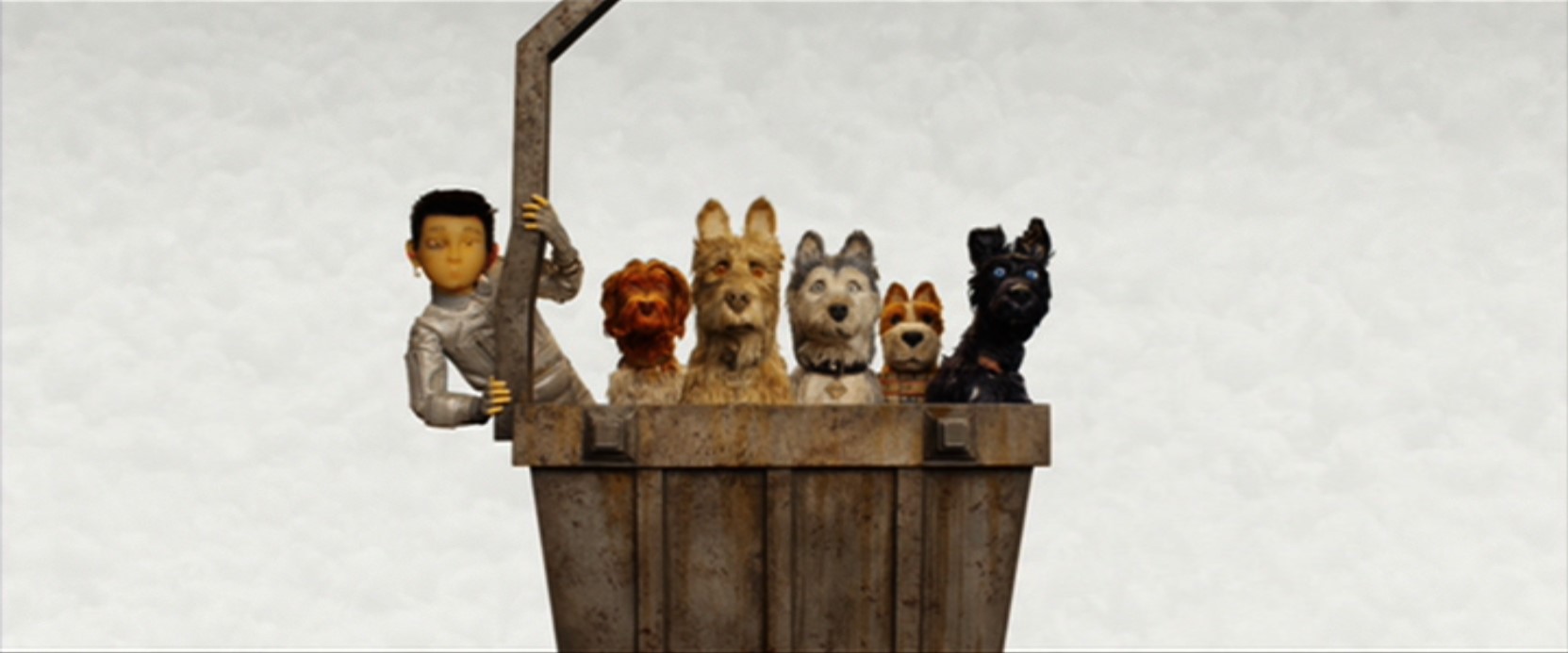
The 21st century saw a few live action directors and film makers crossing over to animation, often with original films that were welcome deviations from the standard family fare of Pixar, Dreamworks, Sony, Illumination and the like. One of these directors was Wes Anderson, whose live action films already have a very distinct flavor, let alone his animation work.
In 2009 Wes Anderson brought us ‘Fantastic Mr. Fox’, his own quirky take of the classic children’s book by Roald Dahl, adding some ‘The Royal Tenenbaums’-like flavor to it. It seemed a one off, like all other animation adventures by live action directors, but in 2018 Wes Anderson surprised everyone by making yet another animation movie, this time with a completely original story of his own.
‘Isle of Dogs’ is a sort of fantasy-dystopia film set in Japan. Surprisingly, much of the dialogue is in Japanese, and not always translated, adding to the film’s idiosyncrasy. The film tells about the cat-loving Kobayashi clan who wants to get rid of all the dogs. When a Kobayashi mayor gets into power in the fictive town of Megasaki, he banishes all dogs to a garbage dump island…
The film knows quite a lot human characters, but uses mostly a dog-viewpoint and is even narrated by a dog (voiced by Courtney B. Vance). The film focuses on a stray dog called Chief, whose life changes when a young boy arrives on the island, looking for his own former pet, Spots.
Where all other film makers would make the boy and the dogs be able to talk with each other, Anderson keeps their languages strictly separated, with the dogs not getting a thing the boy says, and vice versa. As the boy speaks Japanese, we, the audience, too, cannot always follow what the boy tries to say – a bold move.
The dog communication is all in English, and Anderson makes use of a lot of familiar names to voice his animated creatures, like Edward Norton, Jeff Goldblum, Bill Murray and Scarlett Johansson, just to name a few. Even Yoko Ono has a small role as a scientist of the same name.
Like ‘Fantastic Mr. Fox’ ‘Isle of Dogs’ is a stop motion film, and a very virtuoso one, too. The animation, directed by Mark Waring, is superb throughout and there are crowd scenes with tens to hundreds of puppets, and both dog and human characters are very intricately designed. Like in Anderson’s first animated film, all animals have a rather scruffy look, giving the film a very individual look. There are some typical quirks in the animation, like dogs sneezing at random moments. I also like Anderson’s use of cartoony fight clouds. As far as I know he’s the first to use those in a stop-motion film.
As with his other films Anderson employs a very typical use of the camera, often showing symmetrical images, and sometimes using close ups in a rather Spaghetti Western-like fashion. There’s also a little 2D animation to depict events on television. The background art, too, is unique. Apart from elaborate sets, the film uses rather flat background art, with a typical cut-out look. The quasi-Japanese score by Alexandre Desplat, an Anderson favorite, adds to the film’s unique atmosphere.
The film’s story says something about populism, and how misleading information can lead to unjust decisions, but the film is too silly to emphasize this point. Likewise, the film’s heart lies with Chief, but much more interesting than his development are the dry dialogues, and the running gag of one dog hearing a rumor the others never heard of. In fact, apart from the film’s looks, the dialogues form the film’s main attraction, as they are often very funny.
Unfortunately, the film’s finale is not the best part, and the defeat of the villains a little too easy, but otherwise ‘Isle of Dogs’ is a real treat, and with its unique style a very welcome diversion from the often run-of-the-mill fare of American studio animation.
Watch the trailer for ‘Isle of Dogs’ yourself and tell me what you think:
‘Isle of Dogs’ is available on Blu-Ray and DVD
Director: Nina Paley
Release date: February 11, 2008
Rating: ★★★★★
Review:
Unlike the European and Japanese animation field, the American animation studio system is unkind to author films. Walt Disney’s ‘Lilo & Stitch’ (Chris Sanders, 2002) probably comes closest, apart from several feature films based on animated television series. Thankfully, some individual artists have filled this gap, most notably Bill Plympton, releasing no less than seven features. Other notable artists are Don Hertzfeldt (‘It’s Such a Beautiful Day’ from 2012), and Nina Paley. Amazingly, all these artists mostly work totally alone, which makes their accomplishments even more stunning.
Nina Paley ‘Sita Sings the Blues’ for example, is written, directed and produced by Paley alone, which took her five to six years, and which could only be finished with help from crowd-funding, being one of the first animated projects to use this type of fund raising.
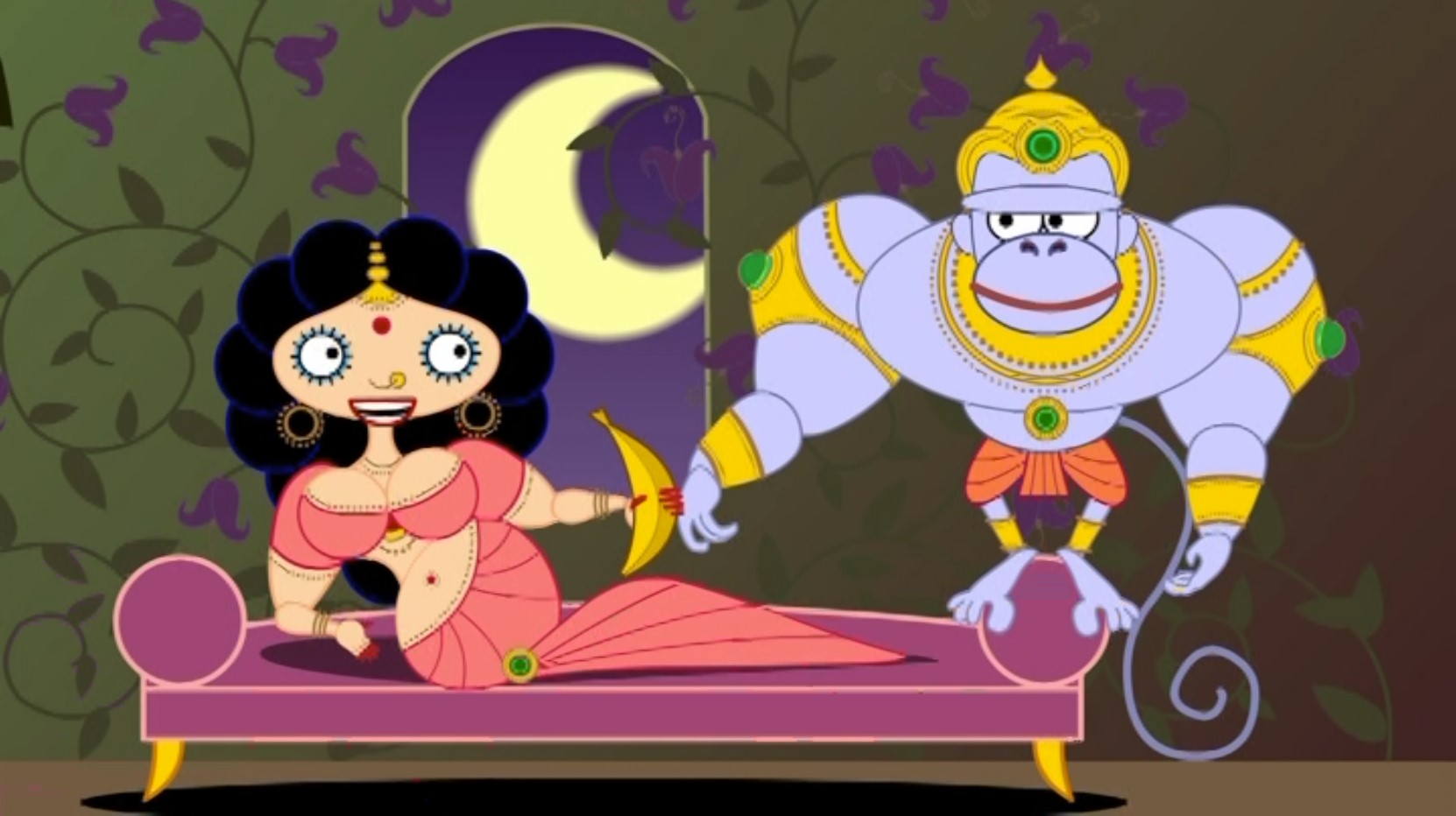
‘Sita Sings the Blues’ retells the Indian epic ‘The Ramayana’, but it’s also a personal film, in which Paley links her own situation to that of Sita, the perfect wife to the hero Rama. The most incongruous element are the eleven songs by 1920s jazz singer Annette Hanshaw, an artist sadly almost forgotten, whom Paley had discovered prior to the film making. The linking of these sweet and gentle tin pan alley songs to the Ramayana is as odd as it is effective, and the pairing certainly contributes to the uniqueness of the film.
The film uses several different animation styles: Nina Paley’s own personal story is told in a traditional scribbly animation style, with sets based on photographic material. These parts are the least attractive of the lot, even though Paley shows to be a very able animator in this classic cartoon style. The Ramayana is retold by three Indians (Aseem Chhabra, Bhavana Nagulapally and Manish Acharya) who are depicted as traditional shadow puppets of Hanuman, Sita, and Rama, respectively. The story they are telling together is shown in tongue-in-cheek cut-out animation.
The ‘official’ story is also told in cut-out animation, using very attractive recreations of traditional Indian paintings. But the best parts to look at are the songs, which are done in a most attractive cartoon modern design. In these song parts Paley reuses a lot of animation cycles, but actually she makes excellent use of the flash medium, and she makes the most of her limited animation.
Apart from these five alternating styles, there’s also a short sequence using rotoscope and a much more pop-art influenced videoclip-like filming style. All these are apparently done in Macromedia flash.
As said, ‘Sita Sings the Blues’ retells the Ramayana, reducing the huge epic to its barest elements. For example, Lakshmana is hardly mentioned, and the monkey king Sugriva not at all. Moreover, unlike the traditional poem, the focus is on Sita, not Rama, and Paley highlights the questionable parts from the original poem (one at the end of the Yuddha Kanda, and another in the Uttara Kanda), in which Rama treats Sita very unfairly indeed, just like Paley’s own partner does in real life. This makes ‘Sita Sings the Blues’ a feminist film, which sheds a welcome critical light on the traditional depiction and treatment of women, then and now.
As the story is told by three people, who remember the story differently and interpret it in different ways, this leads to some very funny moments. But Paley adds some humor, too, in the ‘official’ story part, for example when the female rakshasa (a sort of demon) Shurpanakha tells her brother Ravana about the beauty of Sita, comparing all her body parts with lotuses.
As said, the Annette Hanshaw songs boast the most attractive designs, and like traditional opera arias, they shed an emotional light on the events. However, Paley cleverly propels the story forward even during these sequences. Yet, as the songs are featured in their entirety, typically lasting ca. 3 minutes, they also drag the film down. As there are eleven of them, one tends to grow a little weary of them as the film progresses. Nevertheless, ‘Sita Sings the Blues’ does a great job in restoring interest in this almost forgotten singer. Unfortunately, the Hanshaw songs were not free from copyright, causing Paley a lot of trouble, and eventually causing her to release the film completely free from copyright.
The Annette Hanshaw songs are juxtaposed to some Indian pop music, mostly by artist Masaladosa. Particularly strong is the angry song which follows the scene in which Paley gets dumped by email. The complete soundtrack is as attractive as the film’s visual designs, and the two complement each other very well.
In all, ‘Sita Sings the Blues’ is not without its flaws, but as it is made by a single woman, it’s no less than a tour-de-force, and the result is a very interesting personal film, which makes one think. Moreover, the film shows the great power and endless possibilities of animation, and single-handedly puts Paley into the pantheon of the medium’s greats. In 2018 Paley made yet another feature called ‘Seder-Masochism’, which unfortunately has attracted much less attention.
Watch the trailer for ‘Sita Sings the Blues’ yourself and tell me what you think:
‘Sita Sings the Blues’ is available on DVD
Director: Nedeljko Dragić
Release date: 1974
Rating: ★★★★★
Review:
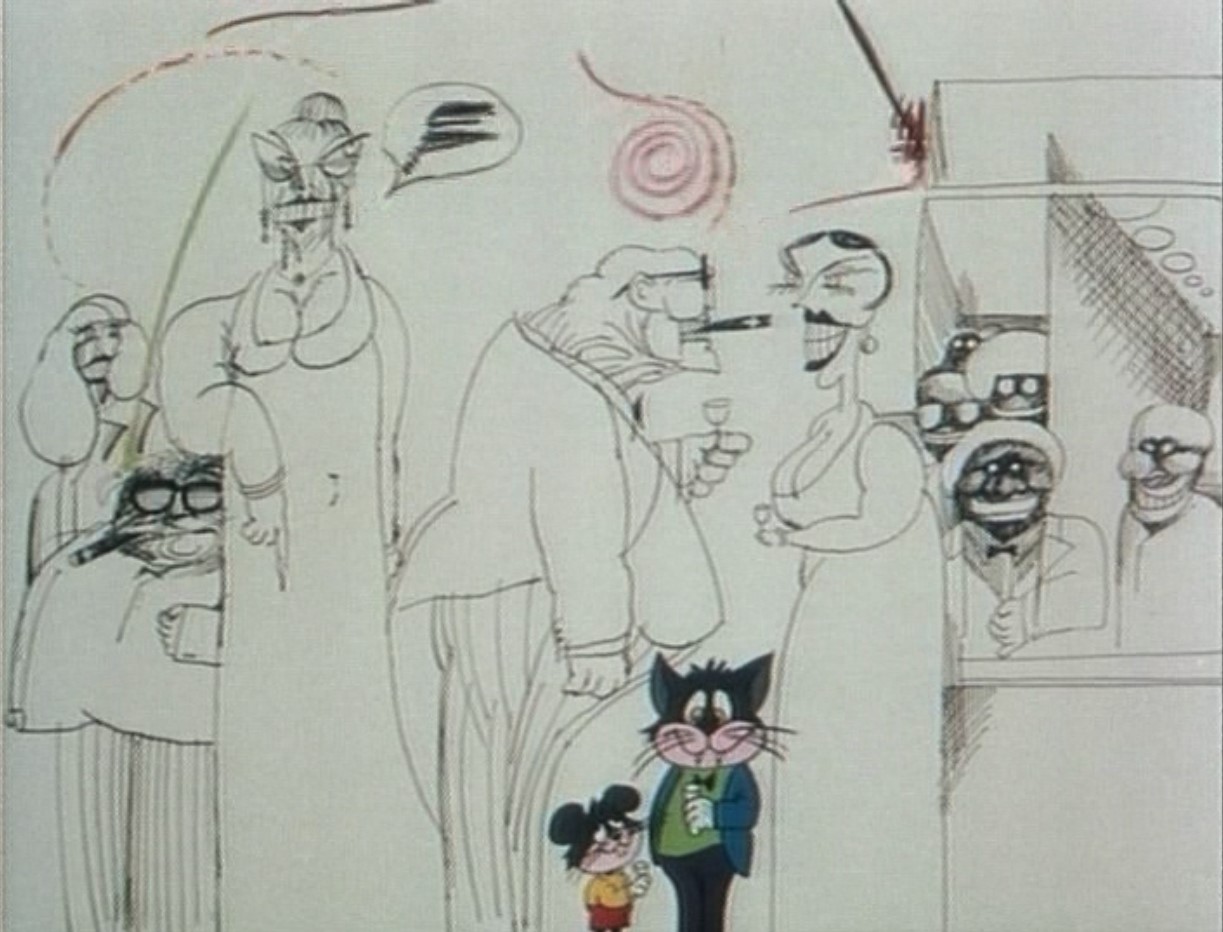
This animated short is very akin to the later ‘Satiemania’ by Zdenko Gašparović. The film features drawings and paintings on a white canvas, which change and morph in a stream-of-consciousness-like fashion.
The short starts with rather Saul Steinberg-like images of a man walking, while changing into all kinds of forms, figurative and abstract. The man then changes into a driver, while all the metamorphosis continues. This part contains some spectacular perspective and moving background animation.
The films then shifts to a party scene, in which a very cartoony mouse and cat form a running gag. From this point the film seems to say something about modern life and modern Western commercialism. As the film progresses, the images get more and more agitated, as if depicting the stressful life in the modern city. The film ends with another walking figure, showing a lonely man on an island inside.
‘Diary’ is a tour de force of imagination, and the images never cease to amaze. Nevertheless, the film’s purpose remains puzzling and leaves the viewer with more questions than answers.
Watch ‘Diary’ yourself and tell me what you think:
‘Diary’ is available on the DVD ‘The Best of Zagreb Film: Be Careful What You Wish For and The Classic Collection’
Director: Nora Twomey
Release date: September 8, 2017
Rating: ★★★★★
Review:

2017 was a good year for the animated feature film: Warner Bros., Dreamworks and the French Polivari and Panique studios gave us great laughs with ‘The Lego Batman Movie’, ‘Captain Underpants: The First Epic Movie’, and ‘ Le grand méchant renard et autres contes…’ (The Big Bad Fox and Other Tales), respectively; Pixar amazed us with the magnificent ‘Coco’, and the Japanese Science Saru studio made quite an impression with the mind-blowing film‘Night Is Short, Walk on Girl’.
However, the most important and most moving animated feature film was the Irish-Canadian-Luxembourgian co-production ‘The Breadwinner’. This was the third feature by the Irish Cartoon Saloon studio, which can be regarded as the most welcome and most original studio additions to the animated feature field of the 21st century, thus far. The Breadwinner’ shares with their previous two films, ‘The Secret of Kells’ (2009) and ‘The ‘Song of the Sea’ (2014) a very charming traditional animation style, and a surprisingly graphic overall design, although the latter is rather toned down in ‘The Breadwinner‘ when compared to the earlier two movies. But unlike the other two, ‘The Breadwinner’ completely lacks the Irish flavor, being set in, of all places, Afghanistan.
Based on the book by Deborah Ellis from 2000 ‘The Breadwinner’ is set in Kabul, the unfortunate country’s capital during the first Islamic Emirate of Afghanistan (better known as the Taliban regime, 1996-2001). By the time the film was made, this extremely oppressive regime was a ghost of the past, at least in Kabul (the Taliban never fully disappeared from the country), but sadly, since August 2021 this misogynist, backward movement is in full charge of the country, once again.
‘The Breadwinner’ makes no mistake how hard it is to live in such a violent, insecure country, where arbitrariness prevails, and where women have no rights, at all, whatsoever. The film follows the eleven-year-old Afghan girl Parvana, who lives with her disabled father, her mother, elder sister Soraya, and a baby brother called Zaki in a tiny house in Kabul. When the father gets arrested and thrown into a prison far outside town, the family quickly get into way more problems than they already had: as women cannot do anything outside without a man, their means to even obtain food completely come to a standstill. At this point Parvana takes an important decision to save her family’s life…
‘The Breadwinner’ is a very believable story, much more subtle than almost anything coming out of the United States. For example, the Afghan people are portrayed as real people, with a rich an ancient culture. Added to the sense of authenticity is the use of Afghan voices (except for the brabbling Zaki), while Mychael and Jeff Danna’s score clearly borrows from the Afghan musical tradition. Thus, the film’s Afghanistan is a convincing one, not a caricature seen through Western eyes. Moreover, although the film makes no mistake about the oppressive and misogynist nature of the Taliban regime, there are many shades of gray between the heroes and villains. Even the villain that causes Parvana’s family’s demise is shown in one last shot as not only evil, but insecure and afraid, too. Moreover, Parvana remains a relatable character, throughout. Despite her courage and adult responsibility, she remains a child, and is shown delighting in childish behavior, especially with her friend Shauzia.
Contrasted with Parvana’s dire circumstances are the images of a story she tells her beloved (her first audience is her baby brother, but she also tells the tale to others, and others even blend in, altering the direction of the story while doing so. These images are rendered in the most colorful, storybook illustration-like, faux cut-out animation, and tell about a boy who goes on a quest to retrieve his village’s seeds from an evil elephant king. This fantastical tale is picked up several times during the movie, and often reflects the events depicted in real life. Especially in the finale, in which the two seem to come together, this dual story telling comes to a harrowing conclusion.
As said, the film’s design is less graphic than that of Cartoon Saloon’s Celtic features. The background art is semi-realistic, with depressing greys, browns and yellows depicting the seemingly treeless town of Kabul. The character design is more graphic, with especially Zaki being an echo of the character designs from the earlier films. Noteworthy is the background art of a rather surreal scene in which Parvana and Shauzia are seen in a field full of abandoned tanks. The traditional animation is a delight, not only the very moving animation of the main characters, but also the cartoony quasi-cut-out animation of Parvana’s story. There’s only a little computer animation present, mostly for crowd scenes.
In all, ‘The Breadwinner’ is one of the best, most adult and most moving animation films to come out of any animation studio, and should be considered a modern classic.
According to director Nora Twomey ‘The Breadwinner’ may be set in Afghanistan but tells a universal story of all children growing up in oppressive countries, everywhere. Yet, we are still waiting for the animated depictions of their stories, while Afghanistan has been the subject of no less than three other animated feature films since then: ‘The Swallows of Kabul’ from 2019 and ‘My Sunny Maad’ and ‘Flee’ from 2021. Surely, the people of say North Korea, Syria, Eritrea, the Central African Republic, or Yemen deserve better.
Watch the trailer for ‘The Breadwinner’ yourself and tell me what you think:
‘The Breadwinner’ is available on Blu-Ray and DVD
Director: David Soren
Release date: May 21, 2017
Rating: ★★★★★
Review:

In Captain Underpants two boys, George Beard and Harold Hutchins, write and draw comic book stories together. Unfortunately, their elementary school is the dullest, most depressing place on earth, thanks to the mean principal, Mr. Krupp. But then one day, somehow their comic book hero, Captain Underpants, comes alive, and he is even dumber than George and Harold had imagined…
This movie was one of the surprises of 2017. I saw this movie in a plane, not expecting much from a film with such a childish title, but boy, was I pleasantly surprised! Compared to this film most of the American computer-animated output of the 2010s feels pretty generic. Dreamworks’ ‘Captain Underpants: The First Epic Movie’, on the other hand, boasts visuals that are incomparable to any other animated feature.
Moreover, the film’s story is delightfully unpredictable, and knows neither dull moment nor any of the cliches invading almost every American animated feature of the era. Even the moral, the value of laughter and that of friendship, is played rather casually, and never takes over from the sheer mayhem put on the screen. On the contrary, a lot of what’s happening on the screen is pleasantly over the top. I liked the use of Yello’s song ‘Oh Yeah’ when the two children make a particularly cool entrance, and when later an Einstein-like villain from ‘New Switzerland’ joins in, mayhem is ensured.
Most of the film is genuinely silly, and even though its target audience obviously is about as old as George and Harold, the film is enjoyable to everyone. What certainly helps is the great voice cast. Both George and Harold are voiced by adults (Kevin Hart and Thomas Middleditch), and Ed Helms does a great job as both Mr. Krupp and Captain Underpants. It’s also interesting to note that Mr. Krupp isn’t only bad, he’s depicted as a shy and lonesome human, too.
Of course, much of the charm of ‘Captain Underpants: The First Epic Movie’ comes from the original source material, the illustrated children’s book series by American author and illustrator Dav Pilkey, which already counted twelve volumes by the time this movie was made. The film is apparently based on the first and fourth volume first four volumes [thanks Jonathan Wilson for the correction]. During production Pilkey worked closely together with director David Soren, and that certainly has paid off.
The film has translated Pilkey’s charming drawing style into 3D computer animation surprisingly well. What’s better, several parts are animated in 2D, in the children’s comic book style, there’s even a sequence in cut-out animation. Even the animation during the end titles is nice to watch. But the most outlandish sequence comes when Harold’s imagination of the future runs away with him. This scene was done by Screen Novelties in live action, with sock puppets, with hilarious results.
In all, ‘Captain Underpants: The First Epic Movie’ is a pleasant and very welcome diversion from Dreamworks, and one of the best animated movies of 2017, which with e.g., ‘Coco’ and ‘The Breadwinner’ was a strong animated feature year, anyway.
Watch the trailer for the ‘Captain Underpants: The First Epic Movie’ yourself and tell me what you think:
‘Captain Underpants: The First Epic Movie’ is available on Blu-Ray and DVD
Director: Masaaki Yuasa
Release date: April 7, 2017
Rating: ★★★★★
Review:

Japan knows several distinguished animation directors, from Hayao Miyazaki to Mamoru Hosoda, but perhaps no feature director* is so original as Masaaki Yuasa. He created quite a stir with ‘Mind Game’ (2004) and kept on pouring out original work since then.
What’s striking about Yuasa’s films is that they don’t follow the general anime aesthetic, at all, on the contrary. ‘Night Is Short, Walk on’ is an excellent example in that respect. This mind-blowing feature film boasts human designs that are very different from your typical anime, highly original color schemes, more offbeat background art, interludes in a line-less style with vibrant digital coloring, wild, even grotesque animation (for example, watch people swallow in the first scene), and a highly original, almost stream-of-consciousness-like way of storytelling, using unpredictable editing techniques, and an occasional split screen, surprising camera angles, extreme perspectives, and moving background art, when necessary (there’s a very impressive example when Senpai runs up an exterior staircase).
Apart from Yuasa’s way of storytelling the plot of ‘Night Is Short, Walk on’ is highly original in its own right. The two main protagonists don’t even have names but are referred to as Otome (maiden) and Senpa (senior). We follow the two for one night, a night in which apparently anything can happen. Otome, a young woman, is ready to discover the adult world, while Senpa, who’s madly in love with her, has decided to finally express his feelings to her. Meanwhile, during this one night, both people meet a plethora of strange people, bizarre situations, and odd gatherings in a free-flowing narrative that nevertheless can be cut into four parts, which naturally flow into each other. Nevertheless, it’s best not to know anything about the plot, and just let it come to you. You’ll be in for quite a ride. What’s more, despite all its weirdness, ‘Night Is Short, Walk on Girl’ is essentially a film about love, and unexpectedly gentle despite all the mayhem surrounding the main story.
Surprisingly for such a visually stunning film, ‘Night Is Short, Walk on Girl’ is based on a novel, by Tomihiko Morimi. His novel was divided into four seasons, which explains the high number of events in the film version. Morimi was also responsible for the novel on which Yuasa’s earlier series ‘The Tatami Galaxy’ (2010) was based, and the series and ‘Night Is Short, Walk on Girl’ are very similar in visual style and general atmosphere.
In all ‘Night Is Short, Walk on Girl’ is hardly like anything you’ve seen before, and a great testimony of what can be done in animation. In my opinion this is one of the most important animation films of the decade. Highly recommended.
* There are also several highly original independent Japanese directors of shorts, e.g. Kōji Yamamura, Atsushi Wara & Mirai Mizue. Check them out!
Watch the trailer for ‘Night Is Short, Walk on Girl’ yourself and tell me what you think:
‘Night Is Short, Walk on Girl’ is available on Blu-Ray and DVD
Director: Chris McKay
Release date: January 29, 2017
Rating: ★★★★★
Review:

After the successful and surprisingly intelligent ‘The Lego Movie’ it was only natural for Warner Bros. to make another Lego themed movie. This time they took the character of Batman, who also co-stars ‘The Lego Movie’ and made the dark knight the star of a very funny sequel.
Compared to ‘The Lego Movie’, ‘The Lego Batman Movie’ is less deep and less layered, and the film wears its family theme on its sleeve, but like ‘The Lego Movie’ this sequel is really, really funny. The film makers play with all the batman tropes, and never take the superhero too seriously. In that respect, the film immediately starts off greatly, with Batman himself commenting on the opening titles. Another hilarious scene arrives a little bit later when we watch Batman waiting for the microwave.
Batman is a superhero, but pretty much a loser, as well. In fact, during most of the film, Batman is an ass, more of a self-centered, egotistic obligate loner than the usual tormented superhero. The Joker, too, is not just a supervillain, but one who longs for a special love-hate relationship with his foe. The film also introduces Robin and kickass female character Barbara Gordon (who’ll later turn into Batgirl). Part of the success of all these characters and how they are presented lies in the great voice acting. Especially, Will Arnett is a treat as the over-serious, pompous, self-important gravelling voice of Batman himself. Zach Galifianakis is a surprisingly emotional Joker, while Michael Cera shines as the overenthusiastic, geeky Robin. Rosario Dawson gives us a strong Barbara Gordon, and Ralph Fiennes a worthy Alfred, Batman’s butler.
Apart from the family theme, the plot revolves around the Joker letting all supervillains free from the Phantom Zone (a prison inside another dimension, borrowed from the Superman world). Because the film makers could browse the complete Warner Bros. catalogue, the villains include King Kong, the Wicked Witch from the West, Sauron, Voldemort, the Gremlins, the dinosaurs from Jurassic Park, Agent Smith from ‘The Matrix’, and the Dalek from Dr. Who. Like Batman none of these villains are treated with respect. For example, the Dalek are introduced as “British Robots! (ask your nerd friends)”.
Being a Lego movie, the character animation is pretty jumpy, while some of the special effects are done in Lego, too (flames, lava). But both the world building, the textures, the lighting and camera movements are top notch, and together with Lorne Balfe’s epic score contribute to the action part of the movie. The result is a deft combination of exciting adrenaline-rich action and plain silliness. In any case, the film moves at a reckless speed, pouring gags over the audience almost non-stop, while retaining the family theme at heart. Even if it’s not as good as ‘The Lego Movie’ was, this is a fun film all the way. In fact, I prefer ‘The Lego Batman’ over the all too dark and serious recent Batman movies any time.
Watch the trailer for the ‘The Lego Batman Movie’ yourself and tell me what you think:
‘The Lego Batman Movie’ is available on Blu-Ray and DVD
Director: Hiroyuki Okiura
Release date: September 10, 2011
Rating: ★★★★★
Review:
To me the Japanese Production I.G. studio is a company hard to grasp what it’s about. Since 1987 the studio produces television series, OVAs, feature films, video games and even music. With its vast production quantity seems more important than quality, and production more important than vision or style. For example, of its fifty plus feature films only a very few created a stir in the West, and these are as diverse as ‘Ghost in the Shell’ (1995), ‘Jin-Roh: The Wolf Brigade’ (2000), ‘Giovanni’s Island’ (2014) and ‘Miss Hokusai’ (2015).
Of all these ‘A Letter to Momo’ comes closest to an author film. The film was conceived, written and directed by Hiroyuki Okiura, after he had directed the widely acclaimed ‘Jin-Roh: The Wolf Brigade’. The whole film took a staggering seven years to make, but the amount of work visibly pays off, because ‘A Letter to Momo’ can be placed among the best films ever to come out of Japan, being on the same level as the best from Ghibli, Momaru Hosoda or Makoto Shinkai. It’s therefore highly incomprehensible that the film remains Okiura’s only own creation.
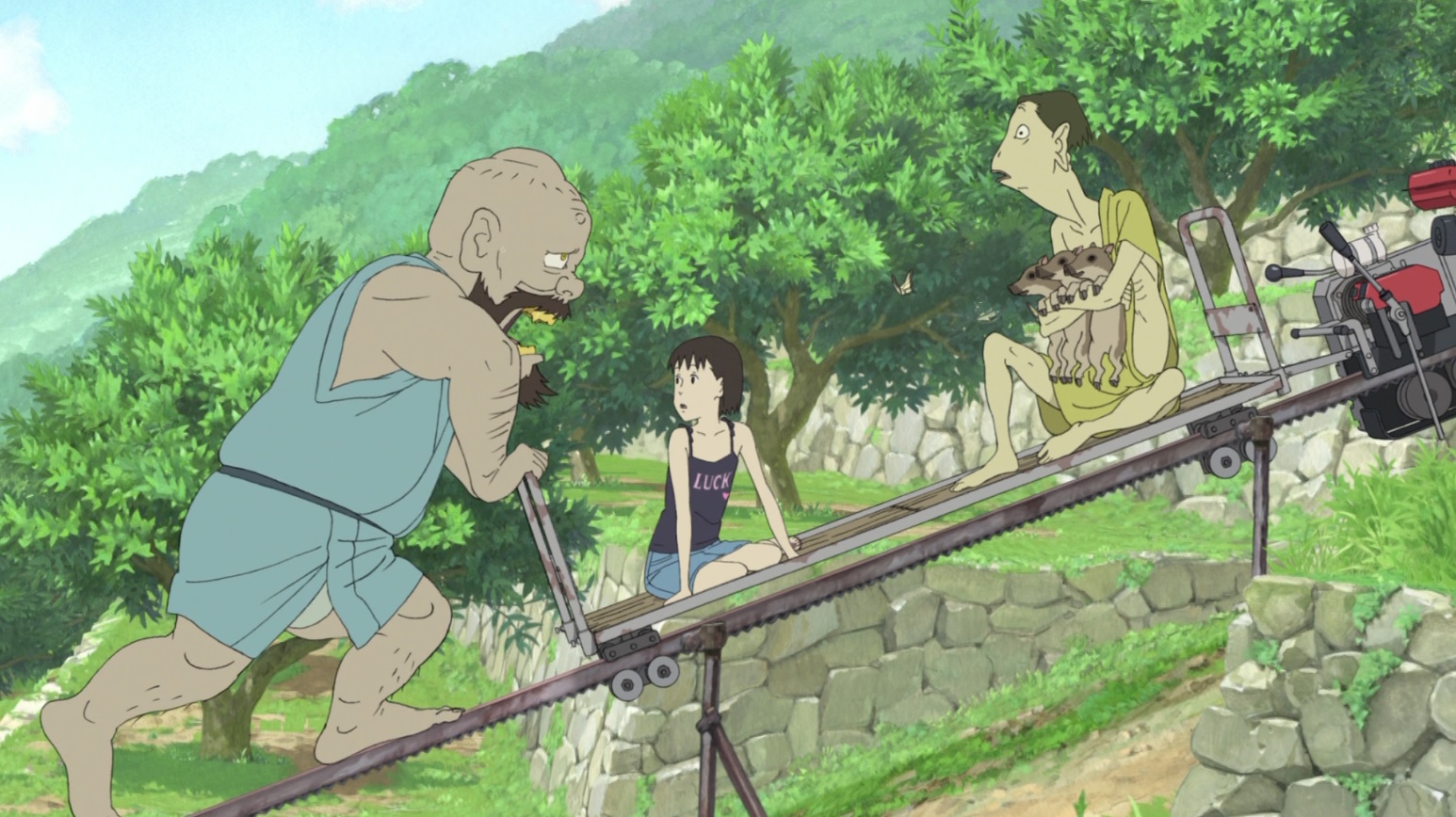
‘A Letter to Momo’ takes place in one hot summer on the island, and tells about Momo, an eleven year old girl whose father has unexpectedly died, and who moves with her mother Ikuko from buzzling Tokyo to the place of her mother’s roots: a quiet rural town on the remote Osaki Shimojima island, somewhere Southeast of Hiroshima in the Seto inland sea. Both events are clearly traumatic experiences to the young teenager, who remains shy, stubborn, withdrawn, and taciturn, despite her mother’s efforts to befriend her with the local children, who surely are willing enough to let her join their group. These early scenes are shown on a leisurely speed, depicting Momo’s boredom, isolation, and loneliness very well.
But things get worse, Momo’s new home turns out to be haunted: there are voices in the attic, and some vague creature seems to follow her mom when she’s off to work. Soon, a trio of goblins manifest themselves to the young girl, and she has a hard time getting used to their presence. During the movie she must learn to live with them, and she finally figures out why they are there in the first place.
The fantasy sequences with the three dimwitted goblins are fun, but throughout the movie Momo’s emotions remain central to the story, especially the loss Momo experiences after her father’s death, her relationship with her mother, who’s also grief-stricken, and her slow opening to the island children. A recurring metaphor of Momo’s transition from being shy, miserable, and scared to a teenager capable of enjoying life once again is shown in a few swimming scenes, in which the island children jump from a high bridge into the sea.
The human drama and the fantasy finally come together in a breathtaking finale when a typhoon visits the island. This sequence is the most Ghibli-like of the whole film. This is the dramatic highlight of a film that otherwise remains modest in how it tells its sweet and moving tale.
The looks of ‘A Letter to Momo’ are no less than gorgeous. The film boasts a rather unique style, with a very high level of realism. The drawings are exceptional for their surprisingly attractive and very thin line work, and the animation, supervised by Masashi Ando, is no less than excellent. Especially, the command of the human form is breathtaking. It apparently took four years to animate the complete film, but every animation drawing of Momo and her mother is a beauty to look at, and absolutely conveys a wide range of emotions and expressions, rarely resorting to anime cliches, if ever. For example, it’s startling to watch someone cough as realistically as Ikuko does in this film. ‘A Letter to Momo’ is also one of those rare Japanese animation film in which the characters actually do look Japanese, with black hair, porcelain to yellow-brown skins and eyes of more realistic proportions than usually encountered in anime.
The background art, supervised by Hiroshi Ôno (who previously worked on ‘Kiki’s Delivery Service’) is gorgeous, too. It does not deviate from artwork of other Japanese animation films, but again, its level of realism is staggering. The documentary on the Blu-Ray I have of this film shows pictures of the real thing, and the film makers have captured the island of Osaki Shimojima astonishingly well. Moreover, they’ve managed to do so, while keeping the background paintings very attractive and always in service of the animated action. There’s a small dose of computer animation, which always remains modest and functional (a boat, a fan, some moving background art), and which doesn’t disrupt the graphic quality of the film.
In all, ‘A Letter to Momo’ is a heart-warming tale on loss and grief, very well made and one of the most gorgeous animation films to come out of Japan to look at. Highly recommended.
Watch the trailer for ‘A Letter to Momo’ yourself and tell me what you think:
‘A Letter to Momo’ is available on Blu-Ray and DVD
Directors: Stephen J. Anderson & Don Hall
Release Date: April 15, 2011
Rating: ★★★★★
Review:

In 1961 Walt Disney obtained the film rights to A.A. Milne’s famous books, and over the years made five short specials about the character (1966-1983), of which the second (Winnie the Pooh and the Blustery Day, 1968) and third (Winnie the Pooh and Tigger Too, 1974) have become absolute classics. In 1977 the first three were stitched together into the feature film ‘The Many Adventures of Winnie the Pooh’, and its in this form they’re available on home media today.
Now, one can lament the fact that many children will know Winnie the Pooh better by its Disney version than by E.H. Shepard’s original irreplaceable illustrations, but within animation history these specials are highlights of inventive story-telling and wonderful character animation. A particular delight are the playful interactions of the characters with the pages of the book they appear in. Moreover, Disney retained the contrast between the naive stuffed animals and the pompous forest animals, Rabbit and Owl, who only think they’re wiser than their plush counterparts.
Unfortunately, following these classic specials, Disney took more and more liberties with the Pooh franchise, resulting in television series, direct to video movies, and even video games. Also, the three feature films made by the Disneytoon Studio division, ‘The Tigger Movie’ (2000), ‘Piglet’s Big Movie’ (2003) and ‘Pooh’s Heffalump Movie’ (2005) seemed to drift away more and more from the source material than either desired or necessary.
In this light one cannot but be weary before approaching the 2011 film, called ‘Winnie the Pooh’ in surprisingly plain fashion. However, the film deviates significantly from the trends set in the previous decade: first, it was made by the Walt Disney Animation Studios itself, being Disney’s last hand drawn animated feature to date, and the quality of animation simply is undeniable. Especially Andreas Deja’s animation of Tigger is fantastic. Moreover, there’s only a little computer animation, most notably the swarm of bees and some flowing honey. Second, the film returns to the original source material, mixing two original chapters together: ‘Eeyore loses a Tail’ from Winnie-the-Pooh (1926) and ‘The Search for Small’ from ‘The House at Pooh Corner’ (1928).
The film is surprisingly concise, only lasting 51 minutes, and not dragging one second of it. On the contrary, I rank ‘Winnie the Pooh’ as one of the best told and most entertaining of all 2010s animation films. The film successfully revives the playful spirit of the original specials, greatly helped by using John Cleese as its narrator. There’s plenty of humor, mostly deeply rooted in the interplay between the contrasting characters. For example, at one point Owl boasts he has “achieved completion of [his] autobiographical treatise”, prompting Winnie the Pooh to reply “Oh. Was it painful?”. In another sequence there’s a great confusion when the words ‘not’ and ‘knot’ are mixed together.
Two of the original songs are reused, the ones introducing Winnie the Pooh himself, and Tigger’s song. Five original songs are added, penned by Robert Lopez and Kristen Anderson-Lopez. These are functional, pleasant and short enough to please even a musical aversion-bearer like me. Even better, the Backson song is accompanied by a wonderful fantasy sequence emulating the 1950s cartoon modern style. The ‘Everything is Honey’ song is illustrated with surreal images of honey pots in the forms of e.g. crabs, jellyfish and whales.
The voice cast, too, is excellent. As the voice of Pooh Jim Cummings does an excellent Sterling Holloway imitation, Bud Luckey sounds delightfully gloomy as Eeyore, while Craig Ferguson and Tom Kenny make their characters Owl and Rabbit perfectly pompous and self-important.
Even the end titles are a delight. First, the film’s adventures are retold using stills of the live action puppets in Christopher Robin’s room, then the rest of the titles are accompanied by several antics of the characters, much in the vein of the titles of ‘Finding Nemo’ (2003). And there’s a surprise at the very end of them, so keep watching!
In all, ‘Winnie the Pooh’ is a wonderful surprise, a true gem of a film, no doubt delighting children and adults alike. Unfortunately, it was to be the Disney studio’s last traditionally animated feature. It’s unbelievably sad that the high art of drawn animation was abandoned even by the studio that had elevated the technique to inconceivable heights in the first place. I surely hope Disney will return to this art form one day.
Director: Andreas Hykade
Release Date: February 24, 2010
Rating: ★★★★★
Review:

After a sublime narrative trilogy on the loss of innocence (consisting of ‘Wir lebten im Gras‘ from 1995, ‘Ring of Fire’ from 2002, and ‘The Runt‘ from 2006), Andreas Hykade made a surprising move to a non-narrative film with ‘Love & Theft’.
In this film Hykade uses many animation cycles and continuous metamorphosis, not to tell a story, but to bring a homage to the great characters of animation and comics in mesmerizing and hallucinating images that never fail to entertain.
Greatly helped by Heiko Maile’s score, ‘Love and Theft’ knows an almost perfect build-up, starting very modestly in black and white, and with the simplest drawings. The first recognizable characters morphing into each other are Charlie Brown and Hello Kitty, soon followed by Mickey Mouse, Goofy and Spiderman, and later e.g. Spongebob Squarepants, Bert from Sesame Street, Tweety, Blossom from the Powerpuff Girls, Betty Boop, Ryan Larkin (as depicted in Chris Landreth’s animated short ‘Ryan’ from 2004), Gromit, Droopy, Koko, Donald Duck, the penguin from ‘The Wrong Trousers‘, Barbapapa, and countless others, including even Karl Marx, Che Guevara and Adolf Hitler.
Once changed into color, the animation goes completely berzerk, as one long psychedelic kaleidoscope. This particular sequence seems to owe something to Jim Woodring’s Frank, and somehow Andreas Hykade manages to capture the comic’s surreal atmosphere very well in this otherwise semi-abstract film.
Rarely were animation cycles and metamorphosis employed so creatively and entertainingly. ‘Love & Theft’ is a film that can be watched over and over again, without losing its gripping power.
Watch ‘Love & Theft’ yourself and tell met what you think:
‘Love & Theft’ is available on The Animation Show of Shows Box Set 9
Airing Date: November 20, 1996
The first season of Dexter’s Laboratory took a five month hiatus, only to reappear on the screen in November for another seven episodes. ‘Star Spangled Sidekicks etc.’ is the first of these, and the most obvious change is that Dial M for Monkey has been replaced by The Justice Friends, which are introduced in this episode.
Star Spangled Sidekicks
Director: Genndy Tartakovsky
Stars: Dexter, Major Glory
Rating: ★★★★★
Review:

‘Star Spangled Sidekicks’ opens with an episode of Major Glory beating the evil Doctor Diablos. When Major Glory wins the day we cut to Dexter and Dee Dee watching the show on television dressed in Major Glory fanwear.
When Major Glory announces he will recruit a new sidekick at the local mall, both sister and brother apply. Dexter, of course, has the most advanced suit, but it’s Dee Dee who wins the superhero’s heart.
‘Star Spangled Sidekicks’ treats Dee Dee and Dexter as real children and greatly blends fantasy and reality. Highlight is Dexter’s pompous speech in which he declares his aim to become Major Glory’s sidekick.
The Justice Friends: TV Super Pals
Directors: Craig McCracken & Genndy Tartakovsky
Stars: Justice Friends
Rating: ★★★½
Review:
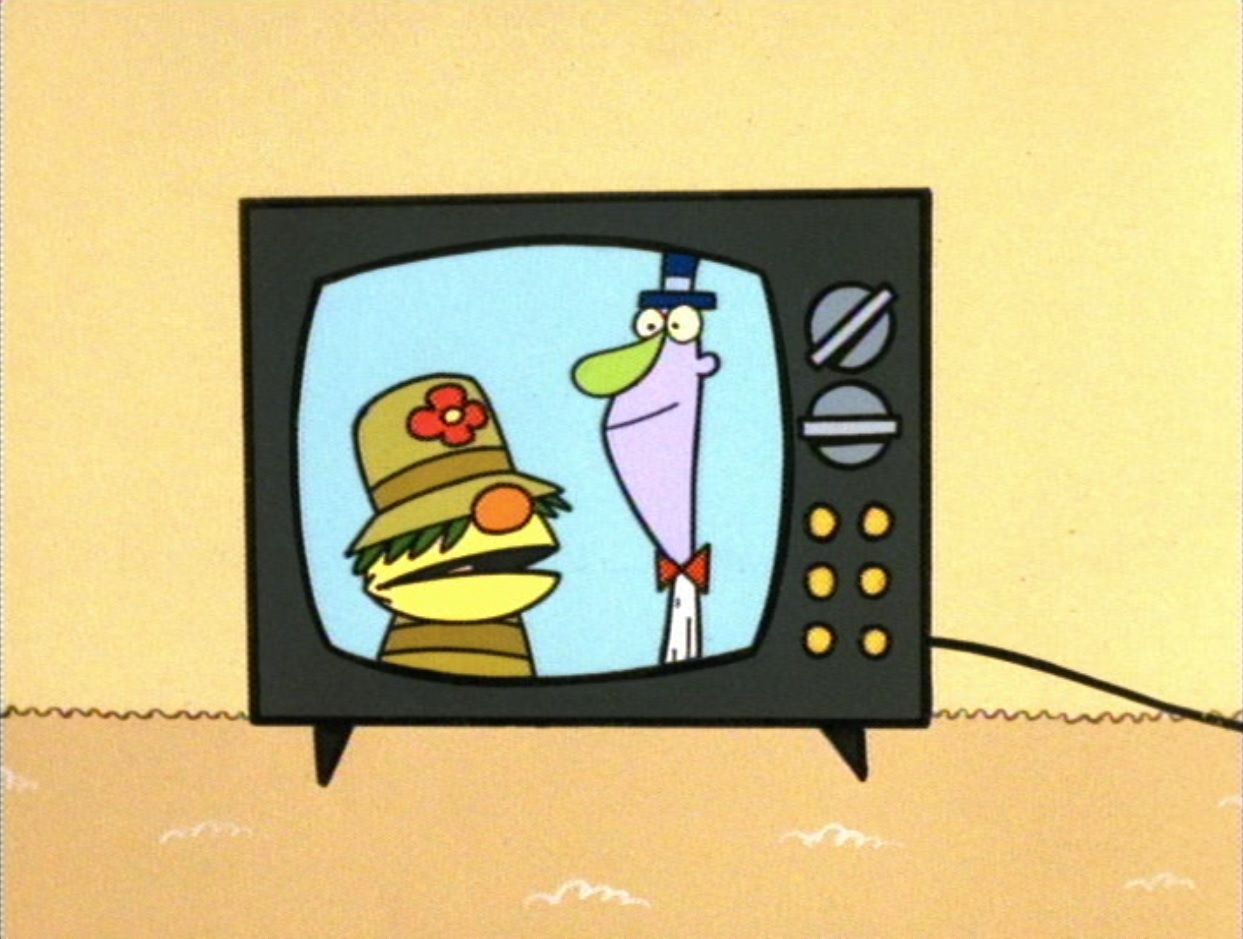
‘The Justice Friends’ were the successors to ‘Dial M for Monkey’ as the bridging episode of the ‘Dexter’s Laboratory’ series. The Justice Friends were first introduced in the Dial M for Monkey episode ‘Rasslor‘ and consist of the Captain America-like Major Glory, the purple Incredible Hulk-like the Infraggable Krunk and the Thor-like Valhallen, who looks like a longhaired metalhead. The premise of these bridging sequences is that the three superheroes have to “face the challenges of every day life”.
Their first episode opens with Major Glory defeating a Joker-like “disgruntled postman’, while Valhallen confronts a Minotaur villain, and Krunk tries to rescue a kitten from a tree. But they all have to go home to watch their favorite program on tv by half past five. Unfortunately, they all want to watch a different program.
Highlight of the show is ‘Puppet Pals’, the incredibly lame show Krunk wants to watch. ‘Puppet Pals’ stars two muppets that tell corny jokes, which all end in the two clobbering each other.
Game Over
Directors: Craig McCracken & Genndy Tartakovsky
Stars: Dexter
Rating: ★★★★★
Review:

‘Game Over’ opens with Dexter and Dee Dee playing a computer game called ‘primal fighter’, which Dee Dee wins. But then Dexter gets an old computer game called ‘Master Computer’ from his dad…
‘Game Over’ is one of the most inspired of all Dexter’s Laboratory episodes. It’s chock full references to computer games and films, including Pac Man, Tron and Star Wars, while showing the development computer games had made in the past fifteen years. At the same time it plays nicely on the competitive brother-and-sister relationship between Dexter and Dee Dee. Rarely the genre of cyperpunk was such much fun.
‘Star Spangled Sidekicks/The Justice Friends: TV Super Pals/Game Over’ is available on the DVD ‘Dexter’s Laboratory Season One: All 13 Episodes’
Director: Peter Shin
Airing Date: May 11, 1996
Stars: Duckman
Rating: ★★★★★
Review:
The opening credits of ‘The Road to Dendron’ make immediately clear that this episode at least partly is a parody of the ‘Road to…’ film series starring Bing Crosby, Bob Hope and Dorothy Lamour from 1940 to1962.
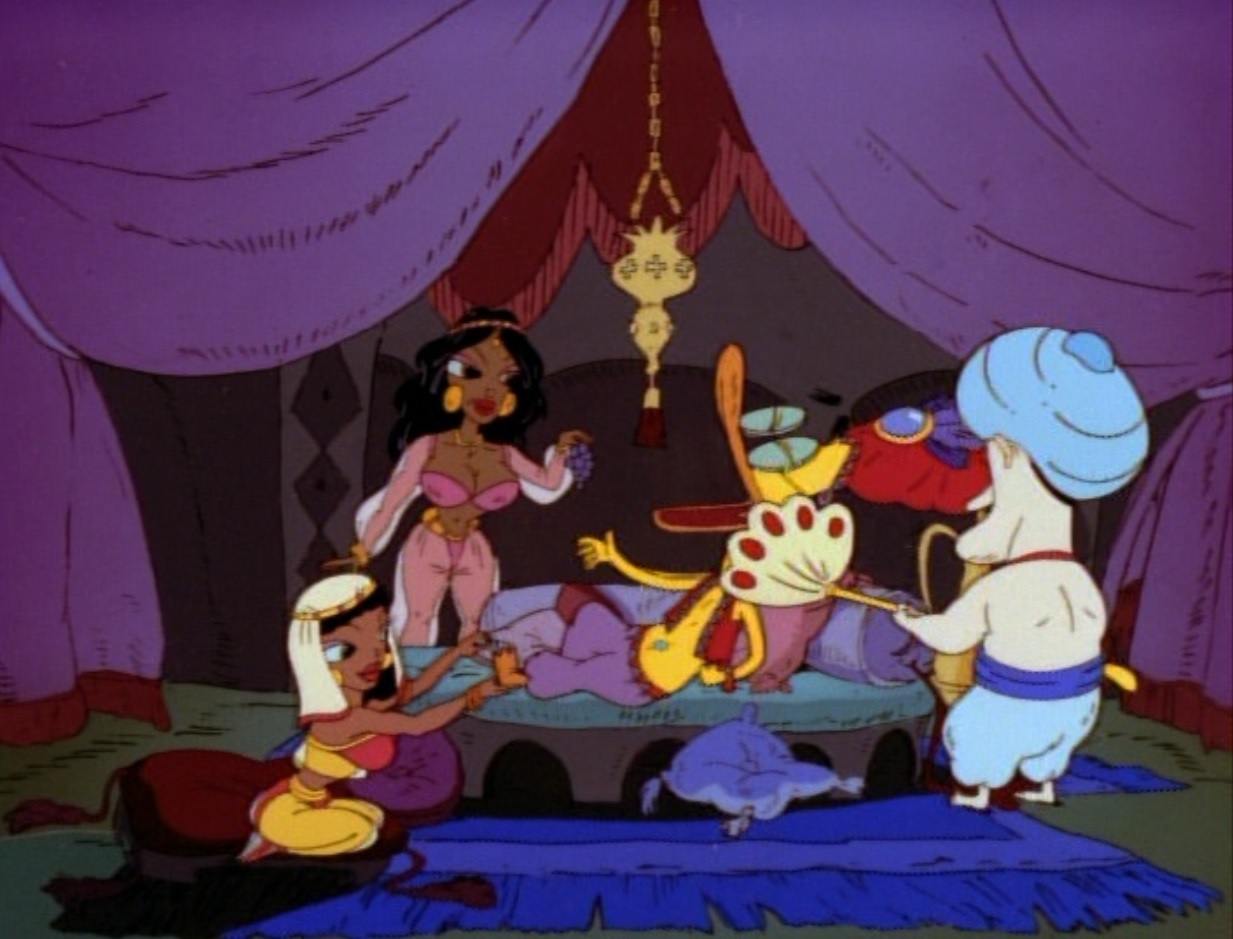
This episode only stars Duckman, Cornfed and Ajax, who are on a bus trip to Dendron, Sudan. And indeed, they even burst into song in a tune that is surprisingly catchy. Once arrived the episode unashamedly delights in bringing up a cliché version of Arabia, as depicted in 1001 Arabian nights, and as seen on the animated screen since ‘Mickey in Arabia‘ (1932). Thus there are a snake charmer, a sultan, a veiled princess, as well as numerous baskets that seem to have come straight from ‘Ali Baba and the Forty Thieves’. Moreover, some of the designs are clearly inspired by the Disney feature ‘Aladdin’.
The adventure plot makes very little sense, and the film makers know it, never trying to hide this fact. Highlights of this unpretentious episode are the ‘musical’ finale and the ridiculous acts that Duckman and Cornfed perform in order to try to prevent the Sultan and the Princess from drinking some poisoned wine.
Watch ‘The Road to Dendron’ yourself and tell me what you think:
This is Duckman episode no. 38
To the previous Duckman episode: They Craved Duckman’s Brain!
To the next Duckman episode: Exile in Guyville
‘The Road to Dendron’ is available on the DVD-box ‘Duckman – The Complete Series’
Airing Date: April 27, 1996
On April 27, 1996 the series ‘Dexter’s Laboratory’ started in earnest, creating quite a stir, and influencing many television animation film makers with its original blend of 1950s design and animation, and cinematic anime influences. The series lasted four seasons, spread over eight years, but alas, alas, only the first season has been released on DVD.
In the first season every episode consisted of two Dexter’s Laboratory parts, bridged by an episode of either ‘Dial M for Monkey’ or ‘The Justice Friends’. Neither bridging series amounted to much more than filler material, and they were almost completely dropped in the second series.
Dee Deemensional
Director: John McIntyre
Stars: Dexter, Dee Dee
Rating: ★★★★★
Review:

‘Dee Deemensional’ opens spectacularly with Dexter trying to battle a giant monster in his lab to no avail. To save the day he sends his sister back into time to warn him. But as may be expected his past self takes little heed to all Dee Dee has to say to him, and even a humiliating surrender won’t help him in the end. ‘Dee Deemensional’ is a delightful play with the concept of time travel, even though Dexter’s attempt to alter the future appears to be doomed.
Dial M for Monkey: Magmanamus
Directors: Paul Rudish & Genndy Tartakovsky
Stars: Dial M for Monkey
Rating: ★★★
Review:

‘Dial M for Monkey: Magmanamus’ introduces an off-spin character from the Dexter’s Laboratory universe. It appears that Dexter’s unassuming test monkey secretly is a superhero. This episode is penned by Craig McCracken of later Powerpuff Girls-fame, and it already shows his passion for superheroes and monster movies. Monkey has to battle an annoyed lava monster called Magmanamus, who only tries to sleep, but who’s pretty annoyed by all human noises.
This episode is noteworthy for its very limited animation, with some shots being practically stills. Only Magmanamus himself is animated quite broadly, but his character unfortunately is all too talkative and rather tiresome.
Monkey never got the same status as the surrounding Dexter episodes, and was dropped halfway the first season, although the character remained in Dexter’s Laboratory, and got one episode in Season Two. Indeed, ‘Dial M for Monkey: Magmanamus’ hardly fulfils its premise, and is more entertaining as a spoof of cheap 1960s superhero shows than as entertainment in itself.
Maternal Combat
Directors: Rob Renzetti & Genndy Tartakovsky
Stars: Dexter, Dee Dee
Rating: ★★½
Review:

Dexter’s mother is ill, so Dexter builds a ‘momdroid’ to help to clean the house. All goes well, until Dee Dee grabs the remote. ‘Maternal combat’ is one of the less inspired Dexter’s Laboratory episodes: part of it is devoted to Dee Dee’s cooking, which is hardly related to the main story, and the episode fizzles out as if the studio was out of ideas. The best part is when Dexter’s Dad returns home, and greets his wife three times, unaware that two of them are, in fact, robots.
‘Deedeemensional/Dial M for Monkey: Magmanamus/Maternal Combat’ is available on the DVD ‘Dexter’s Laboratory Season One: All 13 Episodes’
Director: Peter Avanzino
Airing Date: April 13, 1996
Stars: Duckman
Rating: ★★★★★
Review:
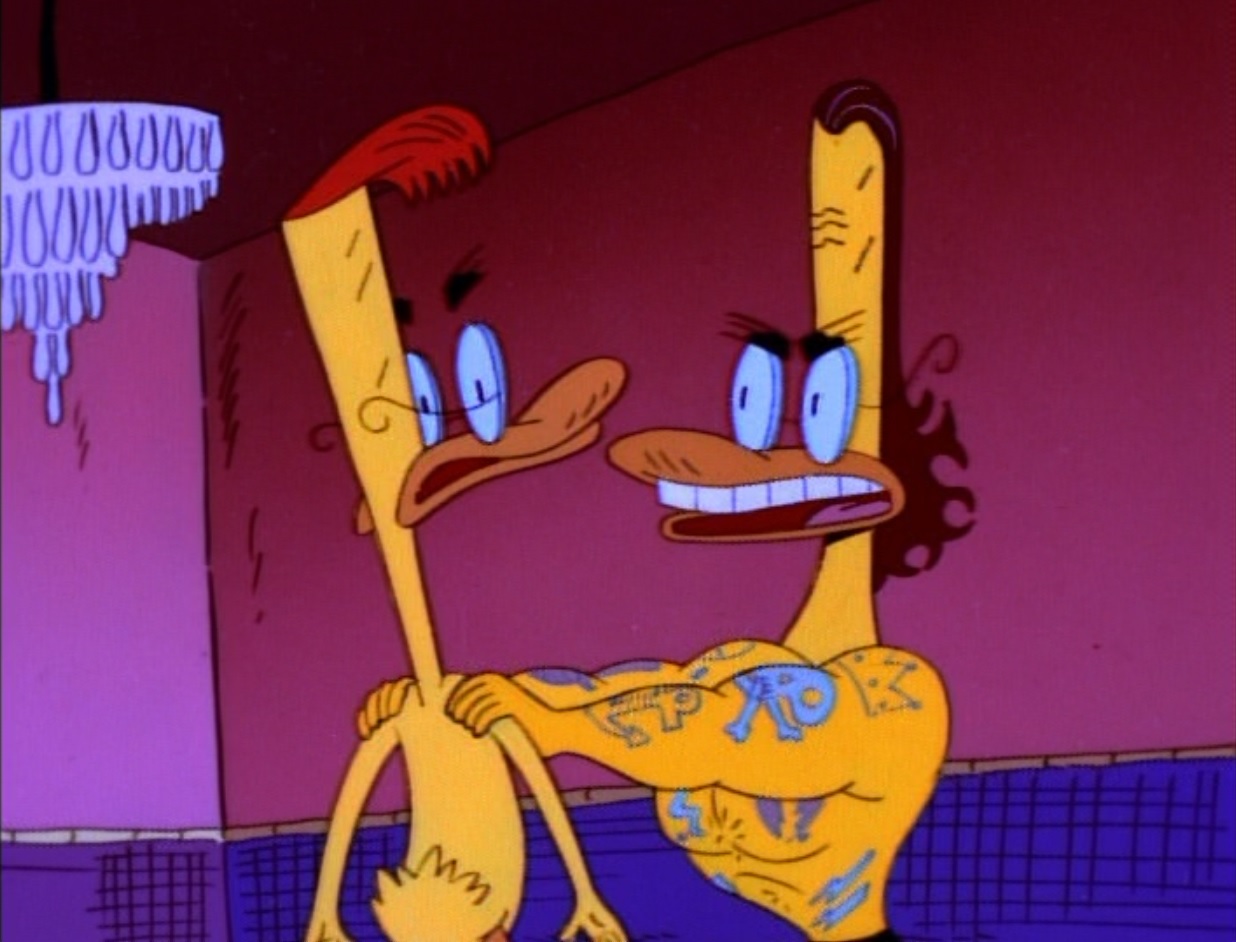
This episode starts with a simple promise by Duckman to attend the recital by the tuba-playing Mambo and Charles. But then Ajax accidentally creates a hole in the space-time continuum, which allows Duckman to gets a visit from his future self who tells him what will happen if he does go to the recital…
Before soon we’re right in the middle of a surprisingly sophisticated, even complicated episode on destiny and the consequences of one’s actions, involving multiple future selfs of Duckman, one even more outlandish than the other. At one point their appearances creates a scene of mayhem that’s got to be seen to be believed.
In short, ‘The Once and Future Duck’ is one of the best written and best directed of all Duckman episodes, relying less on wise-cracking asides, and more on the development of the inner logic of its own absurdist premises. The result is as profoundly philosophical as it is hilariously zany.
Watch ‘The Once and Future Duck’ yourself and tell me what you think:
This is Duckman episode no. 34
To the previous Duckman episode: Pig Amok
To the next Duckman episode: The One with Lisa Kudrow in a Small Role
‘The Once and Future Duck’ is available on the DVD-box ‘Duckman – The Complete Series’
Directors: Sam Fell & Chris Butler
Release Date: August 3, 2012
Rating: ★★★★★
Review:

Laika’s ‘ParaNorman’ is the first of no less than three horror-themed American animated features released in 2012. It was followed in September by Disney’s ‘Frankenweenie’ and Sony’s ‘Hotel Transylvania’. For the Laika Studios this was familiar terrain, as both the earlier ‘Corpse Bride’ (2005) and ‘Coraline’ (2009) had been horror themed.
For a while the studio even seemed to be a sort of one-trick pony in that respect (but this notion was ultimately defied by the very different ‘Kubo and the Two Strings’ from 2016 and especially the surprisingly colorful ‘Missing Link’ from 2019).
‘ParaNorman’ plays with horror tropes from the start, beginning with opening credits, rendered in a 1950s horror movie style. And in the first scene we see Norman watching a cheap horror movie on television. We soon learn that Norman shares an ability with Cole from ‘The Sixth Sense’ (1999): he can see dead people. Perhaps this ability explains the boy’s preoccupation with horror and science fiction, which is exemplified by ca. all objects in his room.
But then we learn that the fictional Massachusetts town in which he lives, Blithe Hollow (a clear reference to ‘Sleepy Hollow’ of the early horror story by Washington Irving), has its own preoccupation with witchcraft. Its city slogan is ‘a great place to hang’ and features a stunningly morbid picture of a witch hanging from a gallows pole. It’s this hanging of a witch and the witch’s curse that becomes central to the film’s story.
The film is very well-told and pleasantly concise, taking place over a period of only two days. As soon as some zombies appear that everybody can see the film becomes a rollercoaster ride that remains exciting to the very end. A deadline (no pun intended) adds to the suspense. The only dud is a rather forced break-up scene around 55 minutes of a type that seemed to be almost obligatory in animated studio cinema of the time (see e.g., ‘Up’ from 2009, ‘The Pirates! In an Adventure with Scientists!’ from 2012 or ‘The Secret Life of Pets’ from 2016).
There’s some pretty morbid humor involved (e.g., when Norman tries to retrieve a book from his dead uncle), but the film makers manage to keep the horror light to permeate every scary scene with some goofiness. But the witch is genuinely scary, with help of added computer animation. Despite the horror and the excitement, the film’s message is surprisingly profound and mature, and its finale very moving. It’s very refreshing to watch the whole distinction between good and bad, between heroes and villains, being quite blurred in this movie.
‘ParaNorman’ is by all means a film made at the highest artistic level. The art, the handicraft, the animation, the cinematography – they’re all extremely virtuoso, and awe-inspiring. Most importantly ‘ParaNorman’ can boast the most original art design we’ve seen in ages in an American animated studio feature. Especially Heidi Smith’s character design should be mentioned. The puppets have a very distinct and surprisingly asymmetrical design that is both daring and refreshing, but still communicating and appealing. Especially stunning are the lips, with have a certain watery gloss, and the ears, which are a little translucent, just like real lips and ears. The sets and props, too, are angular and crooked, and are the perfect backgrounds for the idiosyncratic dolls to move in. Especially the family’s car is a delight to watch in that respect. And I’d like to add that even the end credits are very appealing.
‘ParaNorman’ is not the best animated feature of 2012, that distinction must go to Don Hertzfeldt’s ‘It’s Such a Beautiful Day’, but of all American studio productions the film is certainly the most satisfying, and must be counted among Laika’s best works, together with ‘Coraline’ (2009) and ‘Missing Link’ (2019).
Watch the trailer for ‘ParaNorman’ yourself and tell me what you think:
‘ParaNorman’ is available on Blu-Ray and DVD
Director: Rich Moore
Release Date: October 29, 2012
Rating: ★★★★★
Review:

2012 was the year in which Disney computer animation surpassed Pixar computer animation. Sure, Disney’s ‘Tangled’ from 2010 already was a good film, but Pixar’s ‘Toy Story 3’ from the same year happened to be outrageously good. Pixar’s 2012 film ‘Brave’ on the other hand was a disappointment, while Disney delivered the excellent ‘Wreck-It Ralph’. It seemed executive producer John Lasseter had transferred the magic from his former studio to Disney’s counterpart.
As it turns out ‘Wreck-It Ralph’ is a pretty un-Disney-like movie: it’s not a fairytale, it’s not a musical, there’s no talk of family values, and although there’s a sense of nostalgia, it’s one to the fairly recent dawn of computer games of the early 1980s. Because ‘Wreck-It Ralph’ is a delightful ode to the classic Arcade computer game, in the same way ‘Who Framed Roger Rabbit’ (1988) an ode was to classic cartoons. Thus, Roger-Rabbit-style, there are many cameos from classic video games, like Pac-Man, Super Mario (the dragon Bowser), Frogger, Streetfighter, as well as Sonic the Hedgehog and his nemesis Doctor Eggman. I’ve never played many games myself, so have to admit I missed many of the cameos, and was actually surprised to learn that ‘Tapper’ had been a real game back in 1983.
None of these cameos contribute to the story, however, except for Q*Bert (1982), who directs Fix-it Felix Jr. and Sergeant Calhoun to Wreck-It Ralph’s whereabouts. For the main story the studio designed three totally believable new games: ‘Fix-it Felix jr.’, which is clearly modelled on Nintendo’s ‘Donkey Kong’ (1981), ‘Hero’s Duty’, a first-person shooter game reminiscent of ‘Halo’ and ‘Call of Duty’, and ‘Sugar Rush’, a candy-themed racing game starring little girls. Especially the latter game is excellently designed, with marvelous world building and great characters and scenery based on sugars and sweets.
These arcade games, and others, are connected to each other by the electricity cables, which come together in a central power strip, which is shown as some sort of train terminal for the game characters. ‘Wreck-It Ralph’ further borrows the concept of ‘Toy Story’ that the characters are alive and behaving independently when no humans are around. Thus, when the arcade closes, the game characters’ workday is over and they go and visit each other.
Star of the film is Wreck-It Ralph, the bad guy of the game ‘Fix-it Felix jr.’. He opens and closes the film with his voice over (which appears to be his monologue for ‘Bad-anon’, an ‘Alcoholics Anonymous’-like support group for bad guys in computer games. Ralph is fed-up being a bad guy, and when his fellow game-mates celebrate their game’s 30th anniversary without him, he sets out to become a hero, too, and win a medal, thus seriously jeopardizing his own and other games. He accidentally ends up in the game ‘Sugar Rush’ where he meets the bratty little girl, “glitch” and fellow outcast Vanellope von Schweetz. Despite Ralph’s initial dislike for this kid, the two must team up to get what they want, thus adding a surprising buddy element to the film.
‘Wreck-It Ralph’ is a remarkably well-told film: the pacing is excellent, the story unpredictable, the characters must fight no less than two enemies, cleverly intertwining several story elements. Even the obligate break-up scene, which invades so many American feature animation films from this era, actually works for once, because the two don’t break up because Ralph is behaving selfishly, but because he actually tries to protect Vanellope. Indeed, when he does what he does this leads to a particularly heartbreaking scene, which forms the emotional highlight of the movie.
Moreover, the comedy comes directly from the characters themselves, and doesn’t rely on cultural references or fart jokes. And what great characters! Ralph (aptly voiced by John C. Reilly) is a pretty straight guy, lovable as an outcast in search for recognition and acceptation, Vanellope von Schweetz (excellently voiced by comedian Sarah Silverman) is delightfully bratty, annoying and adorable. Sergeant Tamora Jean Calhoun (Jane Lynch) only talks in heavy-handed, overblown sentences like “Doomsday and Armageddon just had a baby and it… is… ugly!”, in which she keeps true to the genre of her game. But my favorite character is Fix-it Felix jr. (Jack McBrayer), a character so goody-goody his speech is of the prissiest character. His interaction with the super-tough Calhoun is a delight to watch. The only letdown is King Candy (Alan Tudyk), whose voice and mannerisms are too obviously based on Ed Wynn as the Mad Hatter in Disney’s ‘Alice in Wonderland’ (1951). Why the character couldn’t get a voice or mannerisms of his own is a mystery to me.
The animation, too, is also excellent. The animators have managed to mix character animation with the typical jumpy animation of the earliest games, especially in animating the other characters within Ralph’s game, but at times also Ralph and Felix are animated this way. The story is so captivating, and the quality of the animation, design, background art and cinematography is so high, one all forgets about these technical aspects, allowing one to get totally submerged into the film. ‘Wreck-It Ralph’ feels effortless, which is the highest degree an animated feature can obtain. Especially when considering this is a film with a surprisingly complex plot, set in several, mostly totally original worlds. The film is not the best animated feature of 2012, that distinction must go to Don Hertzfeld’s ‘It’s Such a Beautiful Day’, and it must allow Laika’s ‘ParaNorman‘ getting second place, but of all computer animated features premiered that year, it’s the absolute winner.
Watch the trailer for ‘Wreck-It Ralph’ yourself and tell me what you think:
’Wreck-It Ralph’ is available on Blu-Ray and DVD


 Dr. Grob's Animation Review