Directors:William Hanna & Joseph Barbera Airing date: November 30, 1962 Stars: The Flintstones Rating: ★★★ Review:
This episode starts with some mysterious wailing in the night, which turns out to be Barney with a toothache. The next day Fred takes Barney to the dentist, but when Fred wants to save the necessary $10 to see a fight, he changes plans.
‘Nuthin’ but the Tooth’ is one of the silliest Flintstones episodes, full of nonsensical cartoon humor and slapstick scenes. Unfortunately, the writers milk the gas gag way too long, and there’s nothing of the more subtle character comedy of other episodes.
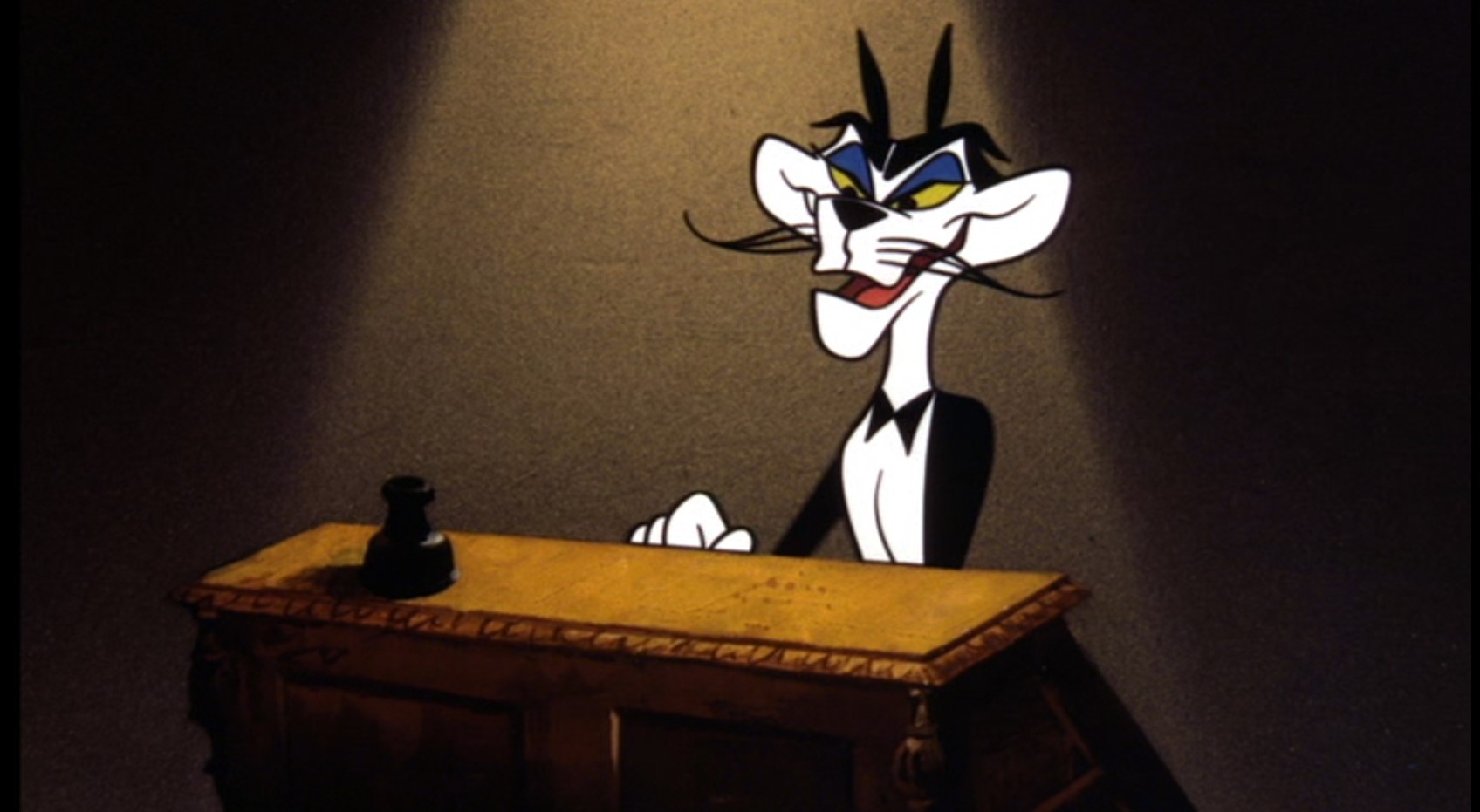
The best stone age gag is the parrot who functions as the dentist’s intercom. Notice the rare appearance of the sabretooth cat, so frequently seen during the titles, within an episode itself.
Watch an excerpt from ‘Nuthin’ but the Tooth’ yourself and tell me what you think:
This is The Flintstones Season Three episode 12 To the previous The Flintstones episode: Ladies’ Day To the next Flintstones episode: High School Fred
‘Nuthin’ but the Tooth’ is available on the Blu-Ray ‘The Flintstones – The Complete Series’ and the DVD-box ‘The Flintstones Season 3’
Directors:William Hanna & Joseph Barbera Airing date: November 23, 1962 Stars: The Flintstones Rating: ★★★★½ Review:
Until this point in the third season the Flintstones episodes were only mildly funny at best, and frankly more often than not dragged a little, but ‘Ladies Day’ is over before you know it.
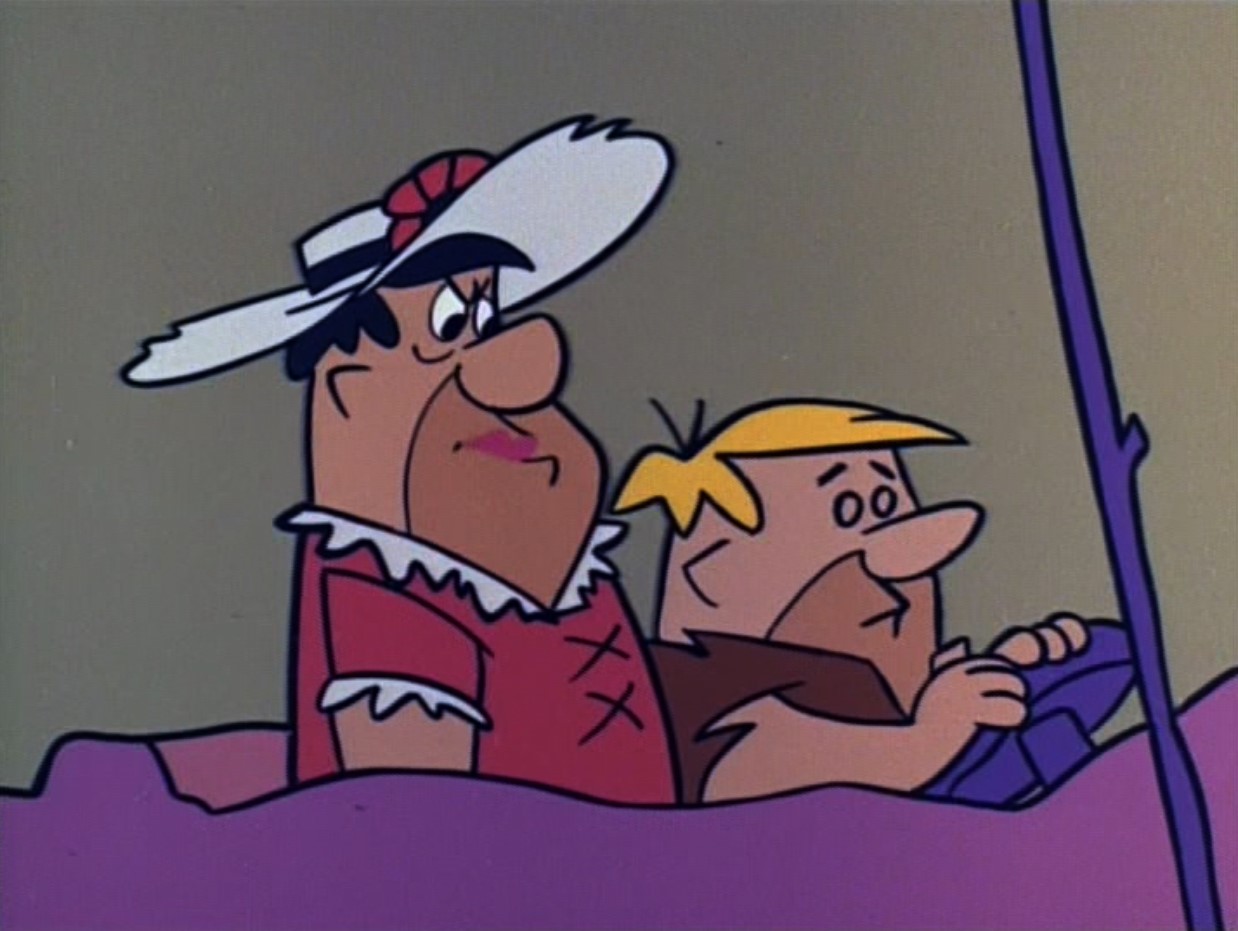
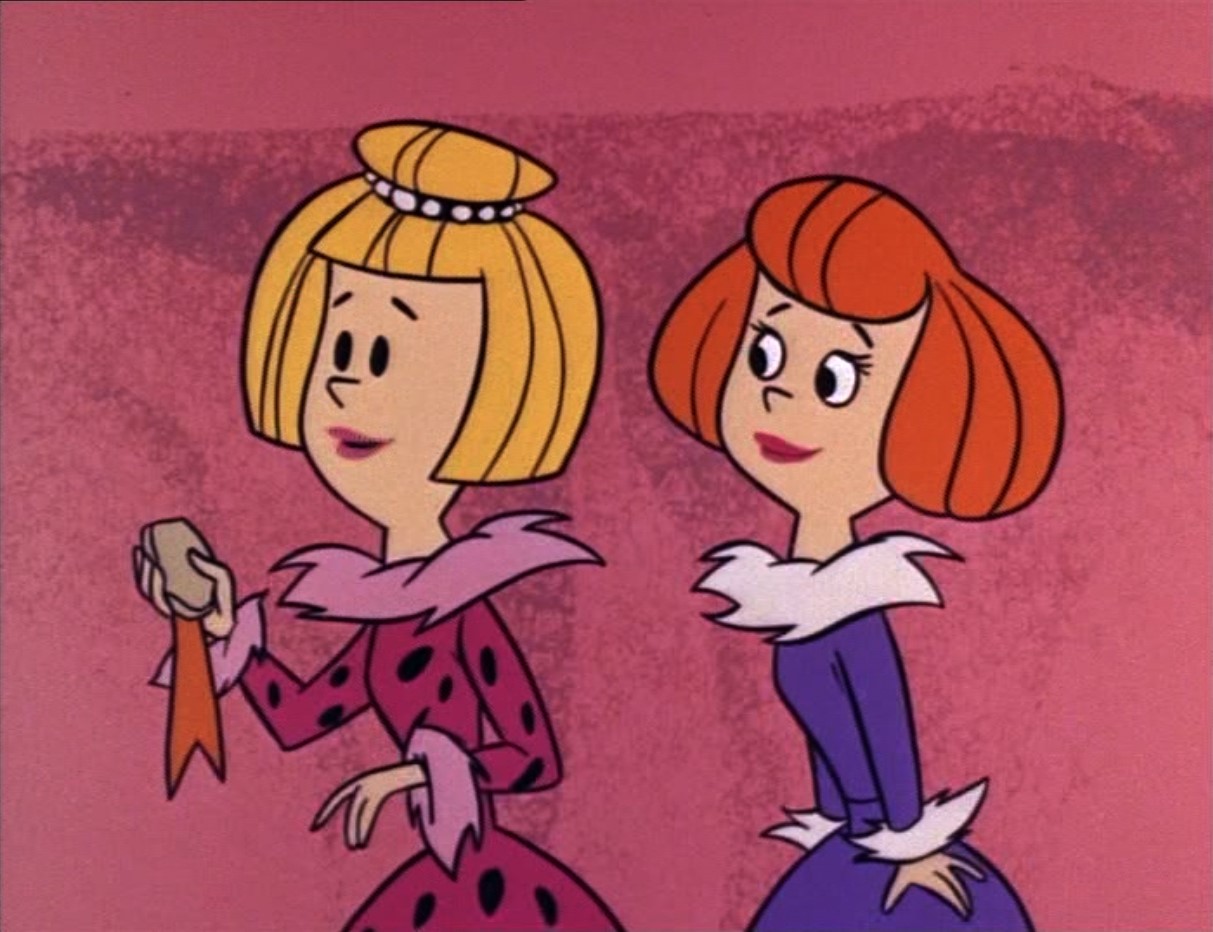
The story starts rolling when Fred wants to go to the ball game, but he’s both flat broke and he has to work. When he learns from Barney it’s “ladies’ day” at the ball game he gets an idea. What follows is a comedy of errors that involves the wives, the police and Fred’s boss and the boss’s South American customer, who appears to be a ladies man.
For once the story stays surprising throughout and the writers play nicely around with the four main characters. Naturally, there’s less room for stone age gags, and we have to do with a single crocodile acting as Betty’s laundry machine. But it doesn’t matter, for ‘Ladies’Day’ is one of the best written Flintstones episodes of all.
Watch an excerpt from ‘Ladies’ Day’ yourself and tell me what you think:
This is The Flintstones Season Three episode 11 To the previous The Flintstones episode: Hawaiian Escapade To the next Flintstones episode: Nuthin’ but the Tooth
‘Ladies’ Day’ is available on the Blu-Ray ‘The Flintstones – The Complete Series’ and the DVD-box ‘The Flintstones Season 3’
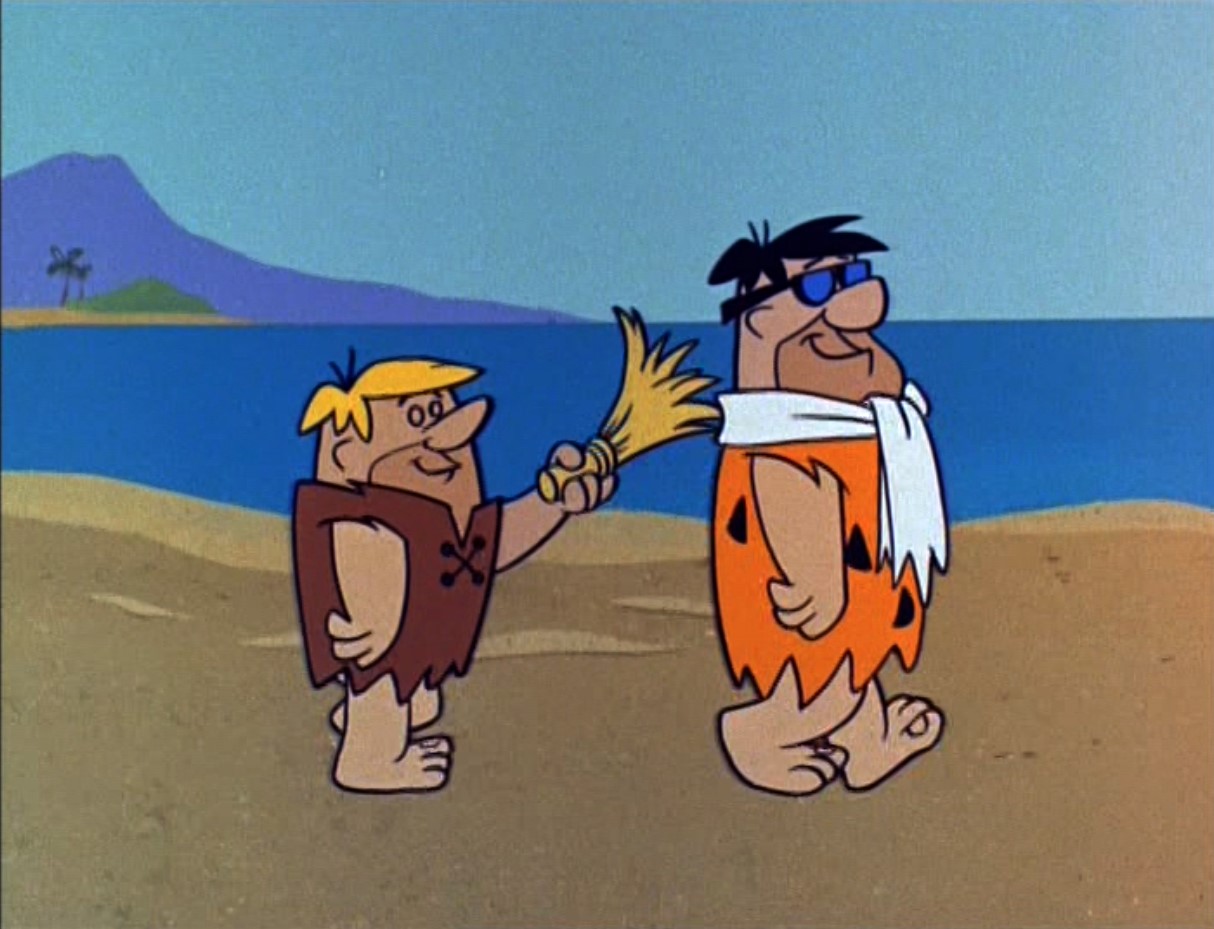
Directors:William Hanna & Joseph Barbera Airing date: November 16, 1962 Stars: The Flintstones Rating: ★★★ Review:
Surprisingly many Flintstones episodes deal with the average viewer’s dream to become an actor. In the third season ‘Hawaiian Escapade’ is the second after ‘Dino Goes Hollyrock‘.
This episode feels mostly like a remake from ‘The Monster from the Tarpits‘ from the first series. In both episodes Fred ends up as a stunt double, and even the Hollywood star, Larry Lava, is a faint echo of the Gary Granite of the former episode. There’s also an echo from ‘Hollyrock, Here I Come‘, another episode from the first season, as in both episodes, fame goes to Fred’s head.
The rehash of earlier tried tropes make ‘Hawaiian Escapade’ rather dull and uninspired. Even the stone age gags fall flat. Much more interesting is the running gag of Wilma burning Fred’s steak, and the cute finale.
Watch an excerpt from ‘Hawaiian Escapade’ yourself and tell me what you think:
This is The Flintstones Season Three episode 10 To the previous The Flintstones episode: Baby Barney To the next Flintstones episode: Ladies’ Day
‘Hawaiian Escapade’ is available on the Blu-Ray ‘The Flintstones – The Complete Series’ and the DVD-box ‘The Flintstones Season 3’
Directors:William Hanna & Joseph Barbera Airing date: November 9, 1962 Stars: The Flintstones Rating: ★★★ Review:
After ‘The Little Stranger’ ‘Baby Barney’ is the second Flintstones episode trying out Fred’s attitude to fatherhood, anticipating the great continuity later in the series.
This time Fred’s fatherhood is triggered by the coming of a rich uncle Tex, whom he promised a ‘little Tex’. It’s the unfortunate Barney who has to pose as the improbable baby. This accounts for a lot of slapstick, but in the end it’s Fred acting like a father for the first time that stays most. Stone age gags, meanwhile, are rare, as I can only mention a lawnmower dinosaur.
Watch an excerpt from ‘Baby Barney’ yourself and tell me what you think:
This is The Flintstones Season Three episode 9 To the previous The Flintstones episode: The Little Stranger To the next Flintstones episode: Hawaiian Escapade
‘Baby Barney’ is available on the Blu-Ray ‘The Flintstones – The Complete Series’ and the DVD-box ‘The Flintstones Season 3’
Directors:William Hanna & Joseph Barbera Airing date: November 2, 1962 Stars: The Flintstones Rating: ★★★ Review:
‘The Little Stranger’ starts with a Fred so grumpy Wilma sends him to a doctor to get examined. On the way Fred and Barney repeatedly meet a paper delivering little boy called Arnold, who gets the better of Fred each time. However, we have to wait until the 11th minute before the story really begins.
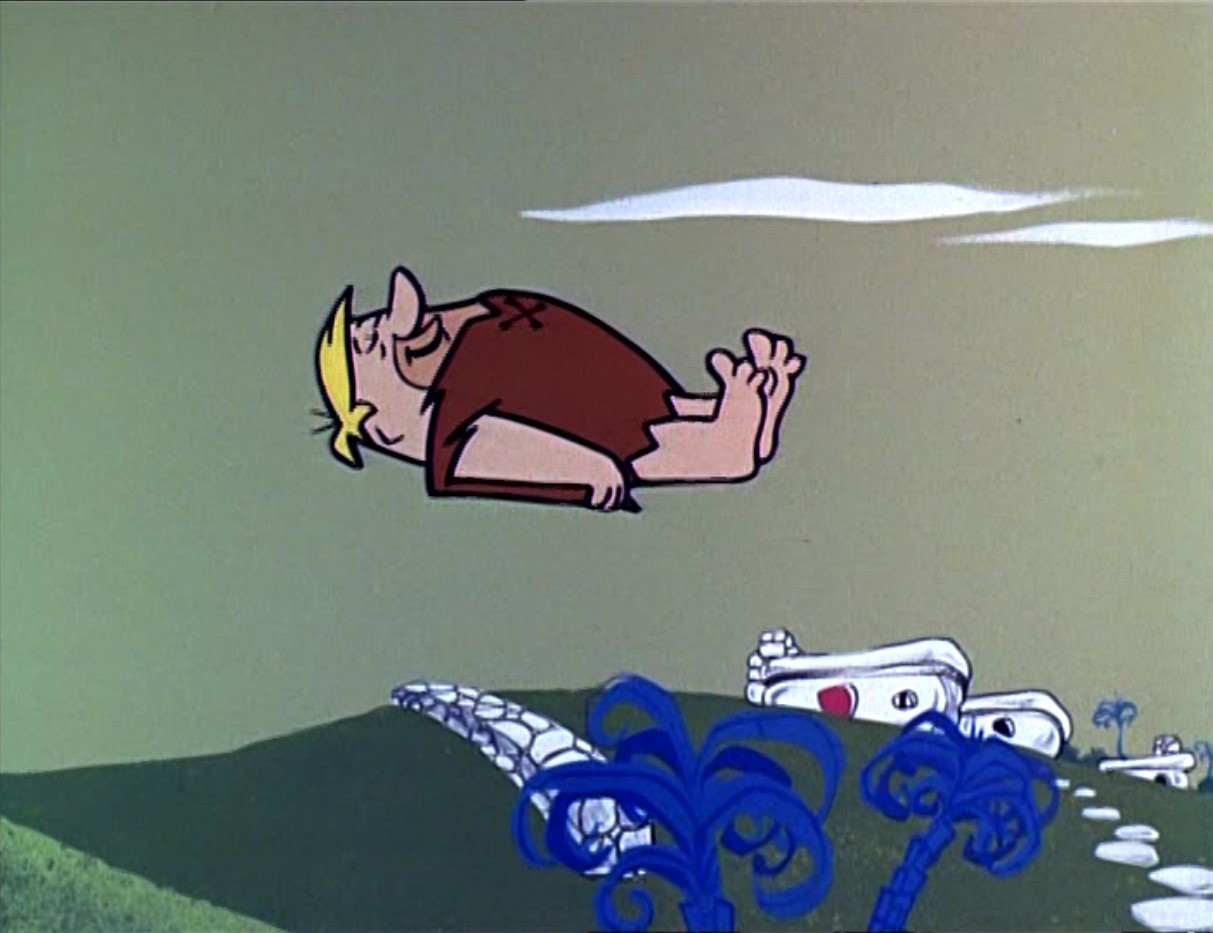
As with some of the best Flintstones episodes ‘The Little Stranger’ is a comedy of errors, and it is a delight to watch Fred’s sweet side, as well as him running back and forth when he thinks Wilma is expecting a little baby any minute. The best sight gag however, is when the doctor makes Fred inhale and exhale, a breath so powerful it moves Barney, who’s reading on a chair, through the office.
‘The Little Stranger’ feels like a prequel to the continuous story of the Flintstones getting a baby, which makes the third season so unique. It’s the first episode in which the baby idea comes up, and Fred’s reaction indeed is inviting to make the character deal with the real thing.
The stone age gags, meanwhile, are modest, and include a dish washing pelican, the now almost regular mammoth vacuum cleaner, and a bizarre bag-crocodile. Notice that for once, one of the windows is glass-covered, to get a gag with Arnold along.
Watch an excerpt from ‘The Little Stranger’ yourself and tell me what you think:
This is The Flintstones Season Three episode 8 To the previous The Flintstones episode: The Buffalo Convention To the next Flintstones episode: Baby Barney
‘The Little Stranger’ is available on the Blu-Ray ‘The Flintstones – The Complete Series’ and the DVD-box ‘The Flintstones Season 3’
Directors:William Hanna & Joseph Barbera Airing date: October 26, 1962 Stars: The Flintstones Rating: ★★ Review:
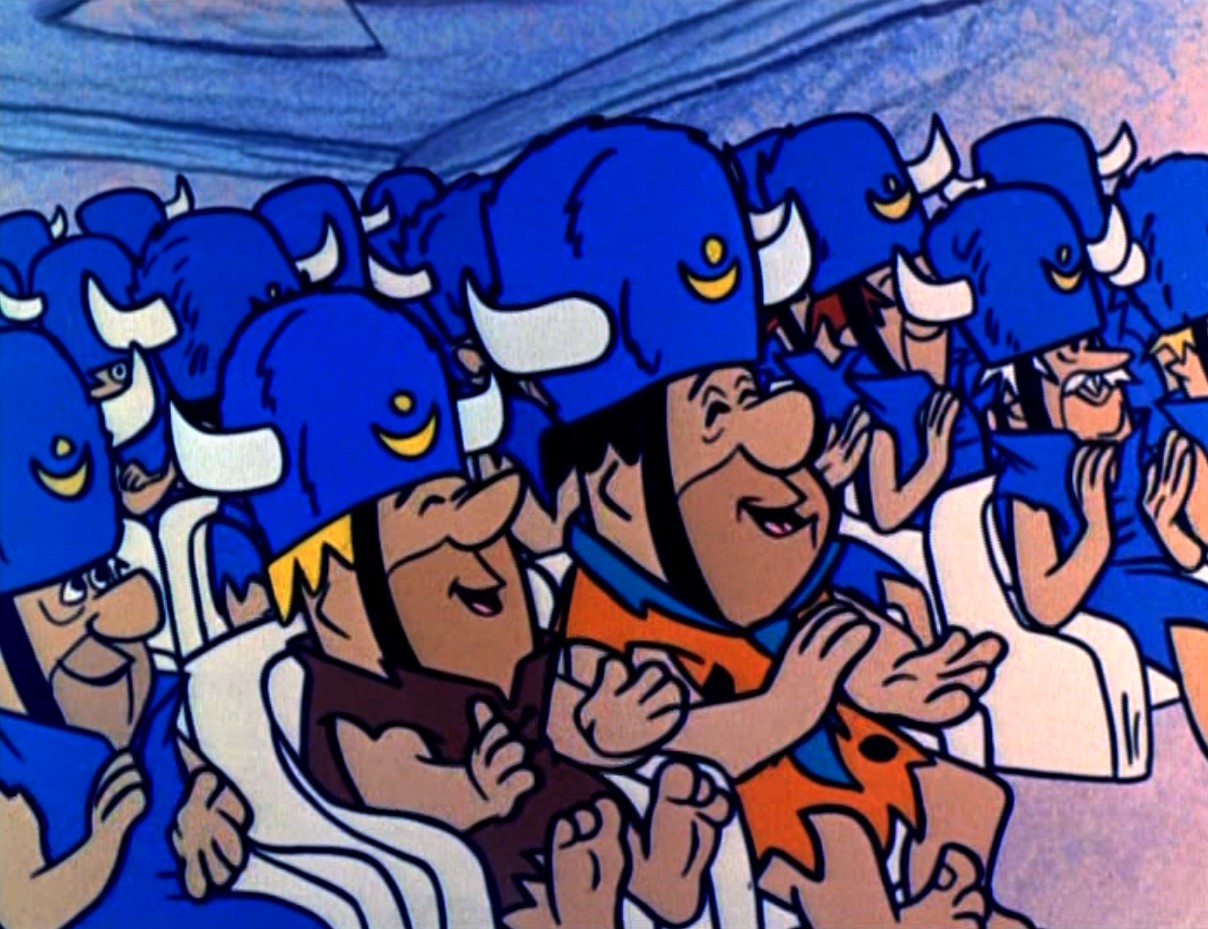
It’s Wilma’s birthday and Fred buys her a doozy dodo, a talking bird, from a seedy street vendor. At home it first seems the bird doesn’t talk after all, but when Fred and Barney are conspiring to go a three days convention of the Loyal Order of Water Buffaloes in ‘Frantic City’, the bird reveals all to their wives.
This episode follows all familiar tropes existing since the Laurel and Hardy feature ‘Sons of the Desert’ (1933) and is utterly predictable from start to end. The stone age gags bring some light into this listless episode, and involve a sneezing mini mammoth as a malfunctioning vacuum cleaner, a dinosaur bus, and best of all, a monkey-operated traffic light.
Watch an excerpt from ‘The Buffalo Convention’ yourself and tell me what you think:
Director:Abe Levitow Release date: October 24, 1962 Rating: ★★½ Review:
‘Gay Purr-ee’ was the second of only two feature films made by UPA, the first being ‘1001 Arabian Nights’ from 1959 and starring the studio’s only star, Mr. Magoo. In fact, ‘Gay Purr-ee’ was the artistic swansong of the once famed animation studio. Most daring and influential in the 1950s, by the early 1960s UPA had become only a shadow of its former self, as this feature film painfully demonstrates.
In fact, UPA had already entered a stage of decay when Steve Bosustow, one of the founding members of the studio sold his interests to businessman Henry G. Saperstein. Saperstein had no interest in UPA’s “fine-art crap” (as quoted in Adam Abraham’s excellent book on the studio ‘When Magoo Flew’, p. 212) and was only interested in making the cartoons as cheaply as possible. When Saperstein fired Bosustow in 1961, one can say UPA was in fact braindead. It’s thus the more surprising that the studio did make such a costly product as a feature film anyway.
‘Gay Purr-ee’ was distributed for Warner Bros. and the film breathes that studio as much, if not more than the UPA vibe. There’s of course the bad pun in the title, a Warner Bros. trademark. Then the film stars cats, not humans, breaking with a long UPA tradition, but fitting perfectly in the Warner Bros. practice. Moreover, the story was by Chuck Jones and his wife Dorothy. In fact, Jones was moonlighting when he worked for this feature film, and when Warner Bros. found out, he was duly fired because of breach of contract. Jones clearly was responsible for the designs of the three lead characters, if less so for supporting characters like Robespierre and Mme. Rubens-Chatte. To add to the Warner Bros. vibe, the film was directed by Jones’ former animator and co-worker Abe Levitow, and Warner Bros. voice man Mel Blanc voices several characters.
The UPA influence, in fact, is only visible in the gorgeous background art, supervised by Victor Haboush, who had worked on layout and background art for Disney features ‘Peter Pan’, ‘Lady and the Tramp’ and ‘Sleeping Beauty’. The background art of ‘Gay Purr-ee’ is strikingly modern, with bold fauvist color schemes, an unmistakable Van Gogh-influence in the Provencal scenes, and allusions to various other painters in the Parisian ones. In fact, the background art can count as the film’s highlight, for the rest of the movie, unfortunately, is not that good, and the viewer has ample time to marvel at the gorgeous background paintings and pastels.
The film has several problems:
First, the animation doesn’t follow the background layouts. Painted sidewalks are completely ignored, and when Jaune Tom and Robespierre ride the rails, there’s no connection between their walk and the ties they’re supposed to step on.
Second, there’s Dorothy and Chuck Jones’s story: the film takes place in Paris at the end of the 19th century, and tells about a female cat called Mewsette (yes, a pun) who lives in the countryside, but longs to go to Paris. This story is a variation of the age-old trope of a country girl going to the big city only to become ensnared there. Back in 1920 Władysław Starewicz had already made an animation film with this theme called ‘Dans les griffes de l’araignée’ (In the Spider’s Grip). The Joneses add little to this cliché, and the story unfolds in an all too predictable pattern. Moreover, the villain Meowrice’s (yes, another pun) scheme is an all too bizarre one. It would be more logical if he would put poor Mewsette into prostitution, but this was of course off limits in a family film.
Third, there’s the wonky level of anthropomorphism. The cats all walk on fours, and are clearly cats, especially when interacting with men, but at the same time Meowrice is able to write a letter, and there’s a Moulin-rouge-like bar (called Mewlon Rouge, yes, yes) in which cats dance and drink alcohol. The inconsistency is neither explained nor resolved and hampers the overall believability of the film.
Fourth, the characters are not that interesting. Mewsette is more spoiled and naive than sympathetic, Jaune Tom clearly has his heart in the right place, but his only other character trait is that he loves chasing mice. Meowrice is clearly a villain from the very beginning, and his dual character is never played out well. I guess Robespierre was included as comic relief, but he has a particularly weak voice (by Red Buttons) and he is tiresome, not funny. Most interesting and best designed is the opportunistic Mme. Rubens-Chatte, but her role is small and her change of heart all too predictable.
Fifth, Abe Levitow’s all too relaxed direction slows the film down. Excitement or fear are shown, but not felt. Just before the finale there’s a long sequence in which Meowrice describes portraits of Mewsette by several of the leading painters of the era, including Monet, Gauguin and Picasso. This is fun of course, but of no consequence to the narrative, and stalls the story. Then there’s a grand finale on a train, but this, too, is lacking the necessary tension. Never does the viewer fear that things could go wrong.
And finally, sixth, the film contains eight songs by the famed duo of Harold Arlen and Yip Harburg, who have enriched the world with their songs for ‘The Wizard of Oz’ (1939), but none of the songs for ‘Gay Purr-ee’ even remotely approach the quality of the ones for the former musical. Even singer Judy Garland, who sings most of the songs, cannot raise these above the level of forgettable. Even worse, the songs contribute to the slowness of the film, as none of them propels the story forward, but only drag the narrative down. For example, when Jaune Tom sings ‘Little Drops of Rain’ in which he expresses his longing for Mewsette, we watch nice semi-abstract images of sea life, but nothing happens, and the story only resumes after the song.
‘Gay Purr-ee’ still is well animated, and one of the last products of the golden age of studio animation, which came to its end somewhere in the 1960s. It’s thus still worth a watch for anyone interested in the era, but barely a rewarding one, and after viewing what lingers is the background art, and the sad notion that a lot of talent was wasted on a feature film that just was not that good. The UPA animation studio, meanwhile, lasted until 1970, but never regained its artistic heights of the 1950s, or even that of ‘Gay Purr-ee’, for that matter.
Watch the trailer for ‘Gay Purr-ee’ yourself and tell me what you think:
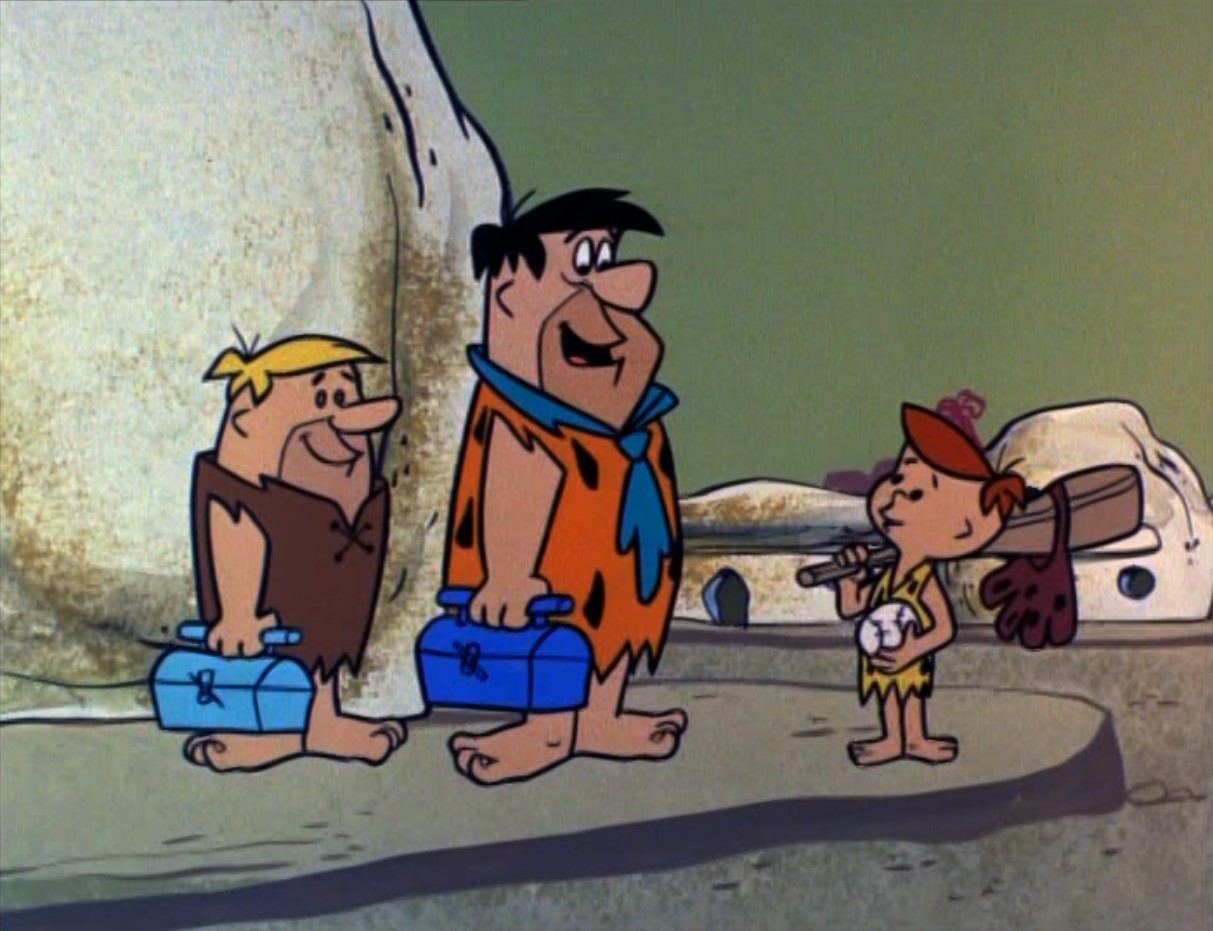
Directors:William Hanna & Joseph Barbera Airing date: October 19, 1962 Stars: The Flintstones Rating: ★★★½ Review:
Here’s Snow in Your Eyes’ starts with Wilma grouching over housework. Then she hears that Fred and Barney are invited to a state convention of the Royal Order of Water Buffaloes in Stone Mountain, a luxurious ski resort, and naturally she assumes she and Betty can go, too.
Unfortunately, Fred has to talk her out of that idea, as there wasn’t enough money for the wives, so the girls stay home. But when Betty and Wilma discover there’s a beauty contest at the very place, they change their minds, and go anyway to keep an eye on their husbands.
‘Here’s Snow in Your Eyes’ knows a quite complicated plot, which also involves a diamond theft, but for once the guys have nothing to hide, and the episode is one of two happily married couples. Unfortunately the beauty contest subplot ends abruptly, and one gets the feeling there’s was more to the story material than what finally materialized in this episode. Nevertheless, this is one of the more enjoyable Flintstones episodes from the third season, with fun little scenes, some nice takes on all four main characters, and an enjoyable final scene.
Watch an excerpt from ‘Here’s Snow in Your Eyes’ yourself and tell me what you think:
This is The Flintstones Season Three episode 6 To the previous The Flintstones episode: The Twitch To the next Flintstones episode: The Buffalo Convention
‘Here’s Snow in Your Eyes’ is available on the Blu-Ray ‘The Flintstones – The Complete Series’ and the DVD-box ‘The Flintstones Season 3’
Directors:William Hanna & Joseph Barbera Airing date: October 12, 1962 Stars: The Flintstones Rating: ★★★ Review:
‘The Twitch’ is the Flintstones’ answer to Chubby Checker’s huge success with ‘The Twist’ (1960).
In this episode Fred promises Wilma to get ‘Rock Roll’ (voiced by Hal Smith) to play for free at her auxilliary show. Rock Roll’s big hit is ‘The Twitch’, a catchy parody song, which is accompanied by the familiar twist gestures, as well as Chuck Berry’s duckwalk.
The fun is further enhanced by the final scene (a twist in itself), a series of terrible vaudeville acts and several stone age gags, like a horned crocodile-like potato peeler, a nail-polishing bird and a weird massage device. Also note the caricature of Fred Sullivan. All these aspects make ‘The Twitch’ one of the more enjoyable episodes of the Flintstones’ third season.
Watch an excerpt from ‘The Twitch’ yourself and tell me what you think:
This is The Flintstones Season Three episode 5 To the previous The Flintstones episode: Bowling Ballet To the next Flintstones episode: Here’s Snow in Your Eyes
‘The Twitch’ is available on the Blu-Ray ‘The Flintstones – The Complete Series’ and the DVD-box ‘The Flintstones Season 3’
Director:unknown Production date: ca. 1962 Stars: The Marx Brothers Rating: ★★★ Review:
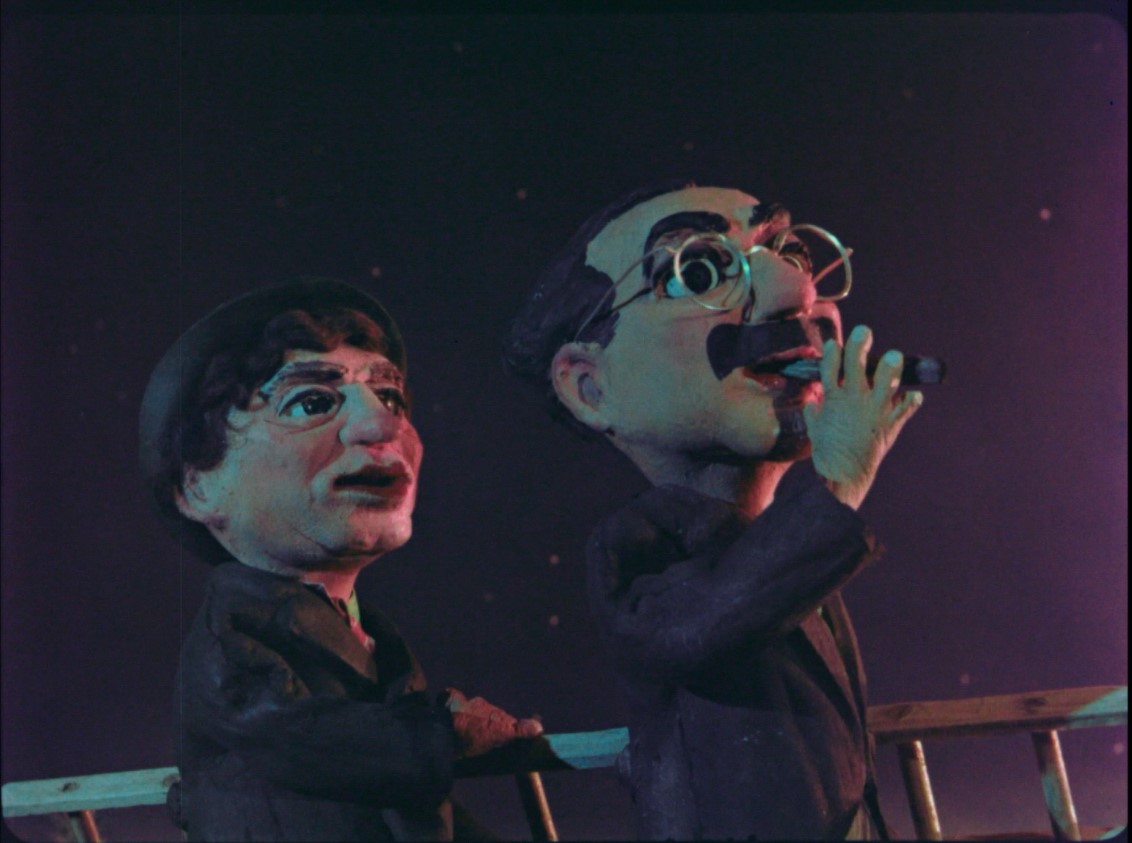
‘The Marx Brothers’ is an odd curiosity unearthed by the ever amazing Steve Stanchfield, who specializes in discovering animated oddities. Apparently this is a pilot from the early sixties by Screen Gems for a Marx Brothers cartoon series, curiously done in stop-motion (more cartoon plans were made at the time, see Jim Korkis’s excellent article on this).
The short involves the three Marx Brothers, and a stout woman called Hortense. The puppets are immediately recognizable as the Marx Brothers, but also crude and on the ugly side. The least well-done is Chico, whose puppet falls short both in looks and voice, and he hardly has any gags. Harpo should translate easier to the cartoon medium, but due to the poor timing he more comes over as an obligatory additional clown than the great comedian he could be in the live action films.
The fun comes mostly from Groucho and his side-cracks, but there’s hardly anything done with the powers of animation, the pacing is slow, and the animation not beyond fair. Moreover, the ‘story’ amounts to nothing. Most striking is a close-up of the magazine called ‘Babes’ Groucho is reading in the opening scene, which shows real nudity.
Watch ‘The Marx Brothers’ yourself and tell me what you think:
Steve Stanchfield put this short on his private DVD release ‘Top Shelf Scans (Goosed)’
Directors:William Hanna & Joseph Barbera Airing date: October 5, 1962 Stars: The Flintstones Rating: ★★ Review:
In this appallingly unfunny episode Fred secretly takes ballet lessons to restore his bowling skills.
This episode starts with a long morning routine in which Wilma tries to wake up Fred. This part contains two stone age gags: Fred shaving himself with a clam containing a bumble bee, and Wilma frying a humongous dinosaur egg. Later we watch Wilma and Betty trying to swap a giant fly, and Wilma’s gigantic Brontosaur ribs dinner for Fred.
These gags are fair, at best, but much better than the main story, which drags on, despite the deadline of a big game Fred hopes to win and its stakes being high. Why Fred doesn’t tell anyone he is taking ballet lessons in the first place is never explained, and this secrecy is as puzzling as discomforting, given the fact that Fred and Wilma are supposed to have a happy marriage.
Watch an excerpt from ‘Bowling Ballet’ yourself and tell me what you think:
This is The Flintstones Season Three episode 4 To the previous The Flintstones episode: Barney the Invisible To the next Flintstones episode: The Twitch
‘Bowling Ballet’ is available on the Blu-Ray ‘The Flintstones – The Complete Series’ and the DVD-box ‘The Flintstones Season 3’
Director:Chuck Jones Release date: June 8, 1963 Stars: Bugs Bunny & Wile E. Coyote Rating: ★★ Review:
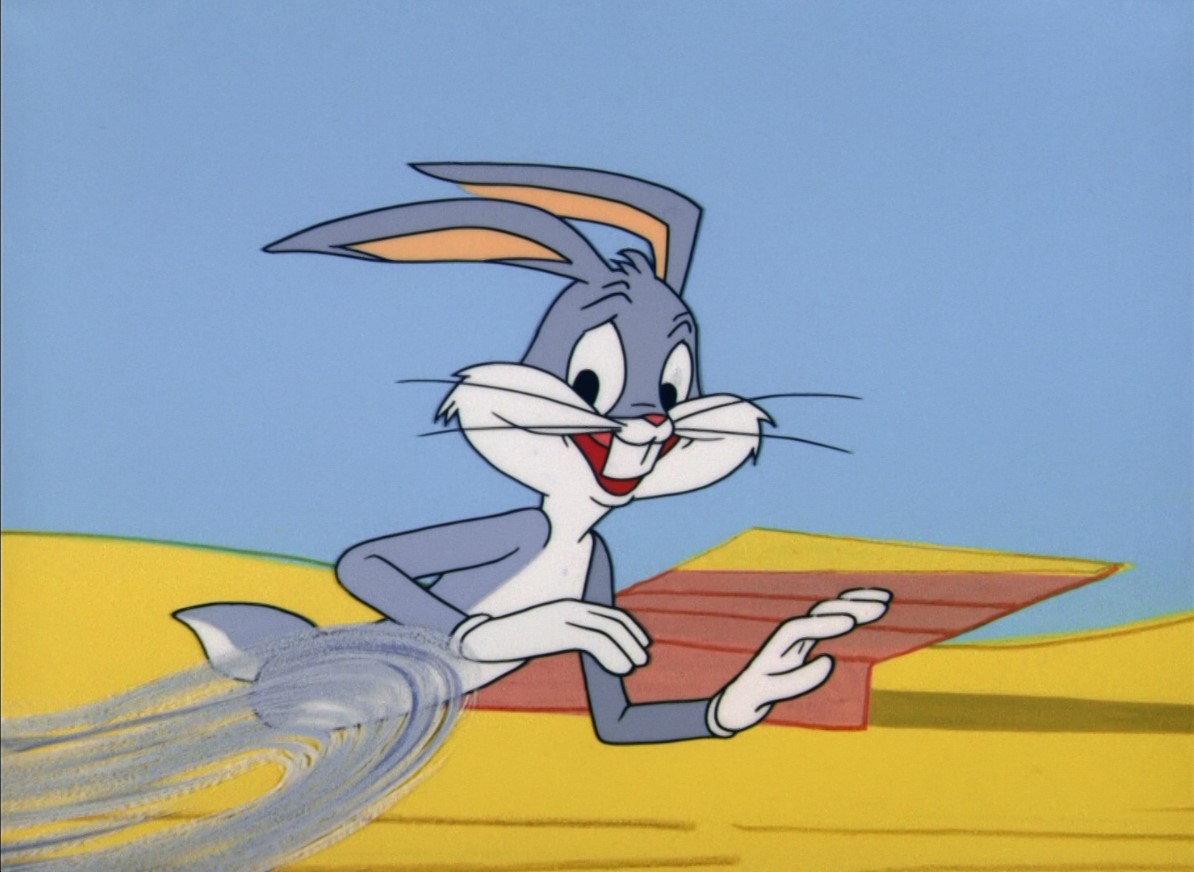
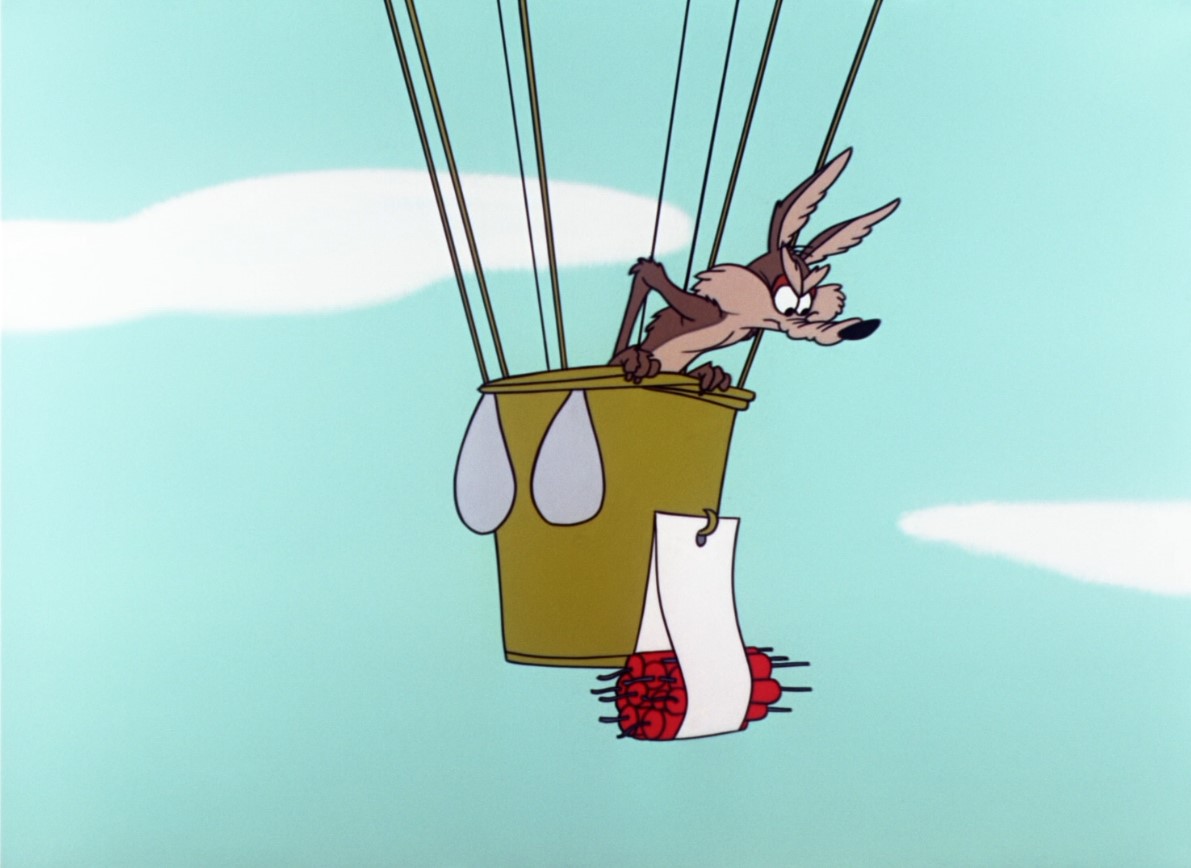
‘Hare-breadth Hurry’ is the last of five cartoons in which Chuck Jones combined the Coyote with Bugs Bunny. This is a particularly weird one, as Bugs Bunny replaces the Road Runner, as he explains at the beginning of the short.
The coyote, thus, is his silent self as in other Road Runner cartoons, and not the suave talkative character of ‘Operation: Rabbit’ (1952) or ‘To Hare Is Human’ (1956). In fact, this is a Road Runner cartoon in everything but the coyote’s co-star. In two of the gags Bugs doesn’t even participate, with the coyote hampering himself.
The gags are fair, but Bugs is very talkative, addressing the audience several times, and he’s actually the most tiresome aspect of the cartoon. The end scene, which features a string of gags around a telephone, is the most inspired, but I can hardly count ”Hare-breadth Hurry’ among either the coyote’s or Bugs Bunny’s classics.
Watch ‘Hare-breadth Hurry’ yourself and tell me what you think:
This is Bugs Bunny cartoon No. 161 To the previous Bugs Bunny cartoon: The Million-Hare To the next Bugs Bunny cartoon: The Unmentionables
‘Hare-breadth Hurry’ is available on the Blu-Ray ‘Looney Tunes Collector’s Choice Vol. 2’
Director:Friz Freleng Release date: July 15, 1961 Stars: Tweety and Sylvester Rating: ★★★ Review:
‘The Rebel Without Claws’ is the penultimate Tweety and Sylvester cartoon by the original Warner Bros. studio. In this short Tweety is a messenger pigeon in the American civil war. Sylvester, naturally, is a ‘messenger destroyer’ trying to intercept Tweety and his message.
Except for the last one, the gags are fine, and Freleng’s timing, as always, is excellent. Especially the canon gag is a marvel. Moreover, the human designs are fine examples of the cartoon modern era. But it is a little grim to see our yellow friend in the service of the confederate army, which after all fought to maintain slavery. This makes this Tweety and Sylvester cartoon the only one in which one hopes that Sylvester wins (which he, incidentally, does).
Watch ‘The Rebel Without Claws’ yourself and tell me what you think:
‘The Rebel Without Claws’ is available on the Blu-Ray ‘Looney Tunes Collector’s Choice Vol. 2’
Director:Chuck Jones Release date: June 3, 1961 Stars: Road Runner & Wile E. Coyote Rating: ★★★ Review:
The twentieth Road Runner cartoon is a surprisingly inspired one. The short starts with the Coyote introducing himself and the Roadrunner with signs. What follows are seven attempts, with the third influencing all subsequent ones.
Both the animation and the background art are beautiful, Jones’ timing is excellent and the gags are fine. Milt Jackson’s score, on the other hand, makes one long for Carl Stalling, and there’s a level of mannerism that is a little irritating. Especially the extreme lagging of the coyote’s upper body, when zooming off, feels more tiresome than funny. Nevertheless, it’s a surprise that such a late Road Runner cartoon can still be of such a fine quality.
Watch an excerpt from ‘Lickety-Splat’ yourself and tell me what you think:
‘Lickety-Splat’ is available on the Blu-Ray ‘Looney Tunes Collector’s Choice Vol. 2’
Director:Piet Kroon Release date: October 13, 2018 Rating: ★★ Review:
The Dutch animated feature film industry long consisted of one movie only, ‘Als je begrijpt wat ik bedoel’ (The Dragon That Wasn’t (Or Was He?)) from 1983. But in recent years several other films saw the light, mostly directed at youngsters: ‘Nijntje de film’ (Miffy the Movie) from 2013 , ‘Pim & Pom: Het Grote Avontuur’ and ‘Trippel Trappel – Dierensinterklaas’, which are both from 2014, and more recently ‘Knor’ (‘Oink’) from 2022 and ‘Vos en haas redden het bos’ from 2024. An oddball within this recent canon is ‘Heinz’ from 2018.
‘Heinz’ was a comic strip by René Windig and Eddie de Jong that run in Dutch newspapers from 1987 to 2000 and again from 2004 to 2006. The comic strip was about a cat, Heinz, who quickly got more anthropomorphized until he became a sort of everyman. The strip knew some continuities but remained first and foremost a gag strip. Nevertheless, the authors dreamt of an animation film at least since the early 2000s.
Although film studio Zig Zag film started working on a film already in 2002, Windig’s and De Jong’s dream never amounted to anything. That is, until the project got new backing and new support from veteran animator Piet Kroon in 2015.
Piet Kroon had ample experience in America, having directed the animation for ‘Osmosis Jones’ (2001) and having worked on stories for a wide variety of animated feature films, e.g. ‘The Iron Giant’ (1999), ‘The Tale of Despereaux’ (2008), ‘Rio’ (2011) and ‘Ferdinand’ (2017). Kroon wrote a completely new story for the film, and with this much of the charm of the original comic strip got lost, and I doubt whether Windig and De Jong are pleased with the end result.
The first aspect of the original comic strip that went out of the window was its family-friendly nature, despite being produced by Burny Bos, who produced some of the best Dutch live action children’s movies. The feature film is clearly directed to adults and has little to offer for younger audiences (in the Netherlands the film is advised for 12 years and older, that says enough). The second major change Kroon made was the setting. The original comic strip takes place in an undefined fantasy Netherlands, but the movie Heinz clearly lives in the center of Amsterdam, which incidentally is also the residence of the comic strip’s two authors.
A more profound and more disturbing change than these two is the change of character of the cat himself. In the comic strip Heinz certainly is cranky, and sometimes insufferable, but in the movie, he is a downright irresponsible drunkard and deadbeat. In fact, in the early scenes the cat is so unsympathetic one wonders why he must watch the cat’s immature antics in the first place. Heinz’s voice by Ruben van der Meer, on the other hand, is well-chosen.
Heinz’s girlfriend Dolly fares little better, as she has changed from a sweet love to a working-class shrew, while Heinz’s friend Frits is nastier and more unsympathetic than his comic book counterpart. Frits also suffers from a bad voice choice (Reinder van der Naalt). In fact, one must look hard for any sympathetic character in the film…
Kroon certainly has tried to put as many characters from the original comic strip as possible into the film, and thus the movie is simply crowded with characters, who mostly make little to no sense to anyone not familiar with the source material. These characters and the rather random inclusion of some gags from the original comic strip make the film too much of an inside joke. On the other hand, the story itself is entertaining enough: it involves time travel, takes Heinz to a remote volcano island and to New York, where he must battle an evil scientist from outer space. But the unsympathetic leads, the plethora of characters, and the random, and often repeated gags make the film a tiresome watch.
The film’s stylistic choices don’t help. The background art is pretty ugly and consists of reworked photo material against which the characters don’t read very well. The ocean is even live action footage. Again, with this method much of the original charm of the comic strip gets lost. The computer animation is a mixed bag. There are a lot of animation cycles, and especially the numerous background characters walk around like automatons with little to no life in them.
No doubt, these technical drawbacks result from an all too tight budget, as it’s a marvel that the film came about in the first place. Most charming are the depictions of Heinz’s fantasies, which consist of traditional animation of René Windig’s idiosyncratic drawings. It’s too bad only these little sequences were made this way.
In all, ‘Heinz’ is a disappointing movie that will attract small audiences, neither satisfying fans of the original comic strip nor anyone else. I cannot find any figures, but I am pretty sure the movie turned out to be a box office flop, and I regret to say unsurprisingly so.
Watch the Dutch trailer for ‘Heinz’ yourself and tell me what you think:
Director:Michel Ocelot Release date: June 11, 2018 Rating: ★★★ Review:
Michel Ocelot belongs to the great author-directors of animated feature films, bringing us such gems as ‘Kirikou et la Sorcière’ (1998), ‘Azur & Asmar’ (2006) and ‘Les Contes de la nuit’ (2011). But somehow, his latest movie, ‘Dilili à Paris’ from 2018 has escaped international attention.
The most obvious reason for this is that ‘Dilili à Paris’ is first and foremost an ode to Paris of 1900-1901*. It’s thus an utterly French film, simply crowded by famous people, many of which actively play a role in the story. I counted 26 painters, actors, dancers, authors, composers, and scientists, not counting a multitude of more in the background. Luckily, this doesn’t mean that film is a nationalistic one, for Ocelot includes a lot of foreigners in his pantheon of greats, e.g. Polish scientist Marie Curie, Romanian sculptor Constantin Brâncuși, Venezuelan composer Reynaldo Hahn, future British king Edward VII and Brazilian aviation pioneer Alberto Santos-Dumont.
In fact, by centering the film on these great minds in science and art, the film is also an ode to the fantasy and free thought of people. At the same time, the film is a firm statement against narrowmindedness, xenophobia, and oppression. Which brings us to the third theme of the film, which is a strong feminist one. In fact, apart from Dilili’s friend, the Parisian boy Orel, all main players are women, including soprano Emma Calvé (voiced by Natalie Dessay), stage actress Sarah Bernhardt, the aforementioned Marie Curie, and the feminist Louise Michel. Together with these women and many of the other famed people, Dilili and Orel unravel a secret plot in which the mysterious ‘male-masters’ kidnap little girls. Their anti-feminist scheme turns out to be one of nightmarish proportions. It’s clear that to Ocelot one should not underestimate, let alone oppress any human being, whether based on age, sex, color, nationality or whatever. A message that cannot be reinstated enough.
Dilili herself is an original heroine, a tiny Kanak girl from New Caledonia, who speaks French fluently, but who’s only brought to Paris to reenact her lifestyle in the jungle at the Exposition Universelle, a world exhibition that run from April 14 to November 12, 1900. When touring through Paris Dilili is dressed like a prize doll, and she also provides the film running gag, because to every person she meets she repeats the utterly polite sentence of ‘je suis heureuse de vous rencontrer’ (I am delighted to meet you). Of course, she experiences racism during her Parisian journeys, but this is not the film’s main theme.
Paris meanwhile comes to life in the extremely intricate background art, which is clearly based on photo material of contemporary Paris. The computer animation unfortunately is less impressive, and at times downright stiff. Especially Orel is poorly animated. When he makes friends with Dilili his moves and facial expressions are so terribly rigid, it doesn’t transcend puppet theater. The ending, too, leaves much to be desired, as the film’s finale is partly told during the end titles.
In the end the film is a little bit too crowded by famous people and certainly too poorly animated to be a masterpiece, but the mystery plot is a fine one, and the film’s message an important one. Above all ‘Dilili à Paris’ is a fine children’s film that deserves to be seen at least once.
Watch the trailer for ‘Dilili à Paris’ yourself and tell me what you think:
‘Dilili à Paris’ is available on Blu-Ray and DVD
* In fact, we can date the time period of the film pretty well, as Pablo Picasso first set foot in Paris in September 1900, and Edward VII became king on January 22, 1901, thus the events must be placed between September 1900 and January 1901.
Director:Osamu Tezuka Release date: November 1962 Rating: ★★★ Review:
‘Tales of a Street Corner’ was Osamu Tezuka’s first animated film, and the first production of his company Mushi productions, which Tezuka founded in 1961, after his contract ended at Toei Animations, Japan’s most important animation studio of that time.
The film immediately shows Tezuka’s high ambitions. First, ‘Tales of a Street Corner’ is of considerable length, clocking 39 minutes. Second, its designs echo the cartoon modern style of Europe, unlike anything previous in Japan. Third, Tezuka’s storytelling is highly poetical, reminiscent of Paul Grimault, avoiding tried story cliches. Fourth, the film has a strong anti-militaristic and pacificist tone, and is more than just mere entertainment.
It’s striking to note that, unlike Tezuka’s Astro Boy television series from a year later, ‘Tales of a Street Corner’ lacks any Japanese character. Instead, the film feels very European, both in its looks and in its music. Even the town in which the story takes place is clearly European, as are the poster violinist and pianist. These two characters form the heart of a romantic tale that Tezuka spins, with other protagonists being a little mouse, a moth, and even a broken lantern and a tree.
The whole tale is set in motion when a little girl drops her teddy bear in a gutter, but Tezuka’s story is anything but straightforward, and allows for some poetic moments, as well two series of silly gags involving numerous posters. The animation ranges from full animation to zooming into still images, with everything in between, and it is quite possible that Tezuka’s choices in the complexity of animation were motivated not only by its artistic value, but also by cost reduction.
‘Tales of a Street Corner’ is certainly charming, but as would later be more often the case with Tezuka, the director wants too much within one short. In fact, the short is overlong, and it’s unclear what he wanted the resulting film to be: a children’s film? A romance? A comedy? An anti-war statement? Now, the film is all this and thus none of that at the same time. Nevertheless, ‘Tales of a Street Corner’ remains a delight to look at throughout, and with this film Japan surely entered a new phase in animation, even if the film is still copying its European models.
Watch ‘Tales of a Street Corner’ yourself and tell me what you think:
‘Tales of a Street Corner’ is available on the DVD ‘The Astonishing Work of Tezuka Osamu’
Directors:Bob Persichetti, Peter Ramsey & Rodney Rothman Release date: December 14, 2018 Rating: ★★★½ Review:
For American feature animation 2018 was mostly a rather uneventful year. True, the year started off well with the release of ‘Isle of Dogs’, and it was also the year of Nina Paley’s second animation feature, ‘Seder-Masochism’, but for the rest it was a year of uninventive sequels (Pixar’s ‘Incredibles 2’, Disney’s ‘Ralph Breaks the Internet, Sony’s ‘Hotel Transylvania 3: Summer Vacation’) and mediocre stand-alones (Warner Bros.’ ‘Smallfoot’ and Illumination’s ‘The Grinch’).
But then, at the closing of the year suddenly a complete game-changer entered the scene: ‘Spider-Man into the Spider-Verse’. The film was brought by Sony Animation, the most evasive from all major animation studios, releasing both gruesomely bad movies like ‘The Smurfs’ (2013) and ‘The Emoji Movie’ (2017), as well as more interesting experiments, like ‘Surf’s Up’ (2007). This animated Spider-Man feature certainly falls into the latter category, bringing the animation world a totally new aesthetic.
Like all other films mentioned (sans ‘Seder-Machochism’) ‘Spider-Man into the Spider-Verse’ is a 3D computer-animated film, but unlike all others this feature has a distinct comic book style, complete with clearly visible halftone dots, and even color-shifts that look like misprinting of color layers when the ‘camera’ gets out of focus. The film even adds other stylistic elements from comic books, like page-turning effects, text panels and panel-like split screens to enhance the comic book feel. Even though traditional texturing and rendering is completely in place, never does the art aspire to be realistic, but always to keep the comic book feel intact.
‘Spider-Man into the Spider-Verse’ thus is a delight to watch, and a welcome fresh take on traditional 3D computer animation. In fact, the excitement the film stirred in the animation world is comparable to that of ‘The Matrix’ (1999) in the live action film industry. That its stylistic innovation was not an isolated event was proved by subsequent films like ‘Puss in Boots: The Last Wish’ (Dreamworks, 2022) and ‘Teenage Mutant Ninja Turtles: Mutant Mayhem’ (Paramount, 2023). Certainly the latter took heed of the lessons from ‘Spider-Man’.
The story of ‘Spider-Man into the Spider-Verse’ is another reboot of the then 56 years old comic. This time we follow a black teenager from Brooklyn called Miles, who is a son from an over-protective cop, but who leans more towards his less well-behaved uncle Aaron. The most remarkable event in the film is that the original Spider-Man, Peter Parker, actually dies, and Miles, who due to unexplained events is bitten by a radio-active spider, too, must take his place.
In fact, the plot is much more complicated, and involves villain Kingpin trying to get his deceased wife and son back from a parallel universe opened by a portal devised by Doctor Olivia “Liv” Octavius, another villain who apparently is the successor to Doc Ock (I’m hardly familiar with the Spider-Man world, so these villains are unknown to me).
The portal also imports five spider-men from alternate universes (and I guess, the Alchemax spider that bit Miles), most importantly a less successful middle-aged Peter Parker and a young Spider-Woman called Gwen, but also a manga girl-spider-man, a black and white film-noir Spider-man and even a looney tune-like spider-man-pig called ‘Spider-Ham’. Part of the fun is the play with these alternate universe characters, some of which are gleefully silly, but I must say the main story is told pretty heavy-handedly.
In fact, the film’s story is hardly as good as the visuals: it’s hard to follow, it’s full of plot-holes, it has some rather forced scenes (most notably the utterly improbable scene in May Parker’s basement, and a believe-in-yourself-like scene in which Miles really becomes a Spider-Man), and a large dose of melodrama that I could hardly stand. Moreover, the finale is taking place in such a messy setting, I had no idea what was going on.
No, did ‘Spider-Man into the Spider-Verse’ not have the astonishing looks it has, I wouldn’t have been entertained so much, the fun parallel world plot notwithstanding. But as it is, ‘Spider-Man into the Spider-Verse’ is one of the most important animated features from the 2010s, a status corroborated by its equally praised sequel, ‘Spider-Man: Across the Spider-Verse’ from 2023.
Watch the trailer for ‘Spider-Man into the Spider-Verse’ yourself and tell me what you think:
‘Spider-Man into the Spider-Verse’ is available on Blu-Ray and DVD
Director:Karey Kickpatrick Release date: September 28, 2018 Rating: ★★½ Review:
In the strange world of American computer animated feature films, movies with the same story subjects are released at the same time. This phenomenon was particularly striking in the industry’s earliest years, but in 2018-2019 it struck again. This was apparently the year of yetis, with Warner Bros.’ releasing ‘Smallfoot’ in September 2018, Laika ‘Missing Link’ in April and Dreamworks ‘Abominable’ in September 2019.
Of these three ‘Smallfoot’ was thus released first. The film was made by Warner Bros. Pictures Animation, a rather late addition to the American computer animation studio scene, debuting in 2014 with the excellent ‘The Lego Movie’. Since then, the studio has failed to get its own signature (the Lego movies are like a brand of their own, feeling more like Lego movies than Warner Bros. ones), and ‘Smallfoot’ certainly does nothing to change that.
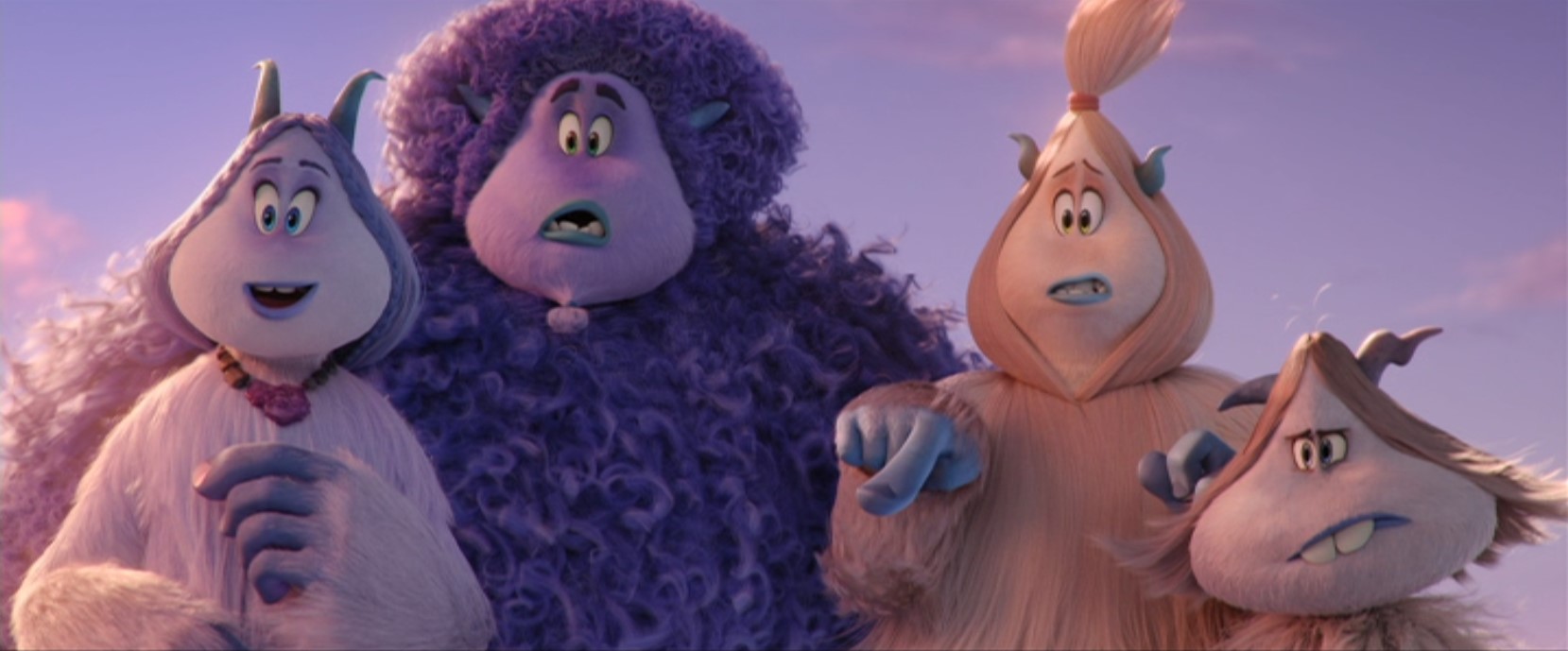
In fact, animation, design, story, and style are all so incredibly generic the film could have been made by any studio save Walt Disney and Pixar, the only studios with a distinct style. The only surprise element of ‘Smallfoot’ is the fact that it’s a musical. And although I’m no musical fan, I must say the songs are rather good. Even better, ‘Smallfoot’ is the first musical with a genuine hip hop number, with alternative rapper Common voicing the Stonekeeper (rappers had voiced animation characters before, like Tone-Lōc voicing the goanna in ‘FernGully: The Last Rainforest’ (1992), but he doesn’t rap there).
‘Smallfoot’ starts with the voice-over of Migo (Channing Tatum), a cheerful young yeti introducing his own village and its rather silly mythology. Immediately thereafter Migo sings a happy song about how perfect his world is, and we know for sure that this character is set up for a major disappointment. And indeed, when Migo is accidentally catapulted outside the village, he sees a supposedly mythical ‘smallfoot’ (a.k.a. human) and from then his world view starts to tilt.
Interestingly, the naive Migo is joined by a group of dissidents, led by a young female yeti called Meechee (voiced by Zendaia), who’s way ahead of our hero. Meechee is such an independent, curious and powerful character that when Meechee sings ‘Wonderful Life’ to Migo this is practically ‘A Whole New World’ from ‘Aladdin’ in reverse. In fact, Meechee is a much more interesting character than Migo and it’s a pity ‘Smallfoot’ isn’t her film.
The third main character is Percy Patterson, a film maker of wildlife documentaries, who apparently has reached a low point in his career. Of all the film’s characters Percy is the most annoying and the least developed. Percy’s story arc is very poor: he remains such a jerk in most of his scenes that his final redemption is utterly unbelievable. Likewise, how Percy manages altitude sickness is beyond any believability.
Unfortunately, Migo’s progress also pushes boundaries of believability. As the filmmakers seem willing to tick all the familiar boxes, Migo undergoes the obligatory breakup scene – but this is an extreme one, with Migo denying his friends and his own views in public. We know why he does it, but the motivation is in fact rather weak, and it’s an enormous breach of character. Likewise, the following reconciliation feels forced and way too easy, given this severe betrayal. And don’t start me on the glorious rainbow finale that defies all we had learned before.
‘Smallfoot’ has a strong message that one should not believe everything, but that one should investigate oneself. But the film also features a ‘deep state’ or ‘fake news’-scheme of epic proportions, so the message is a rather confusing one. If anything, I’d say the film is anti-religion, but I wonder if that is according to the film makers’ intentions.
No, apart from the songs the film’s power is in its humor. Despite all its flaws and cliches ‘Smallfoot’ is an entertaining and funny film. The roasting scene is a particular highlight in that respect. I also like the idea that humans and yetis can’t understand each other at all, and their voices mutually sound like puny squeeks and fearsome growls, respectively. So the film is not a drag, on the contrary. Nevertheless, to carve out its own niche in the crowded feature animation world, Warner Bros. animation certainly will have to do better.
Watch the trailer for ‘Smallfoot’ yourself and tell me what you think:
Director:Milorad Krstić Release date: August 9, 2018 Rating: ★★★½ Review:
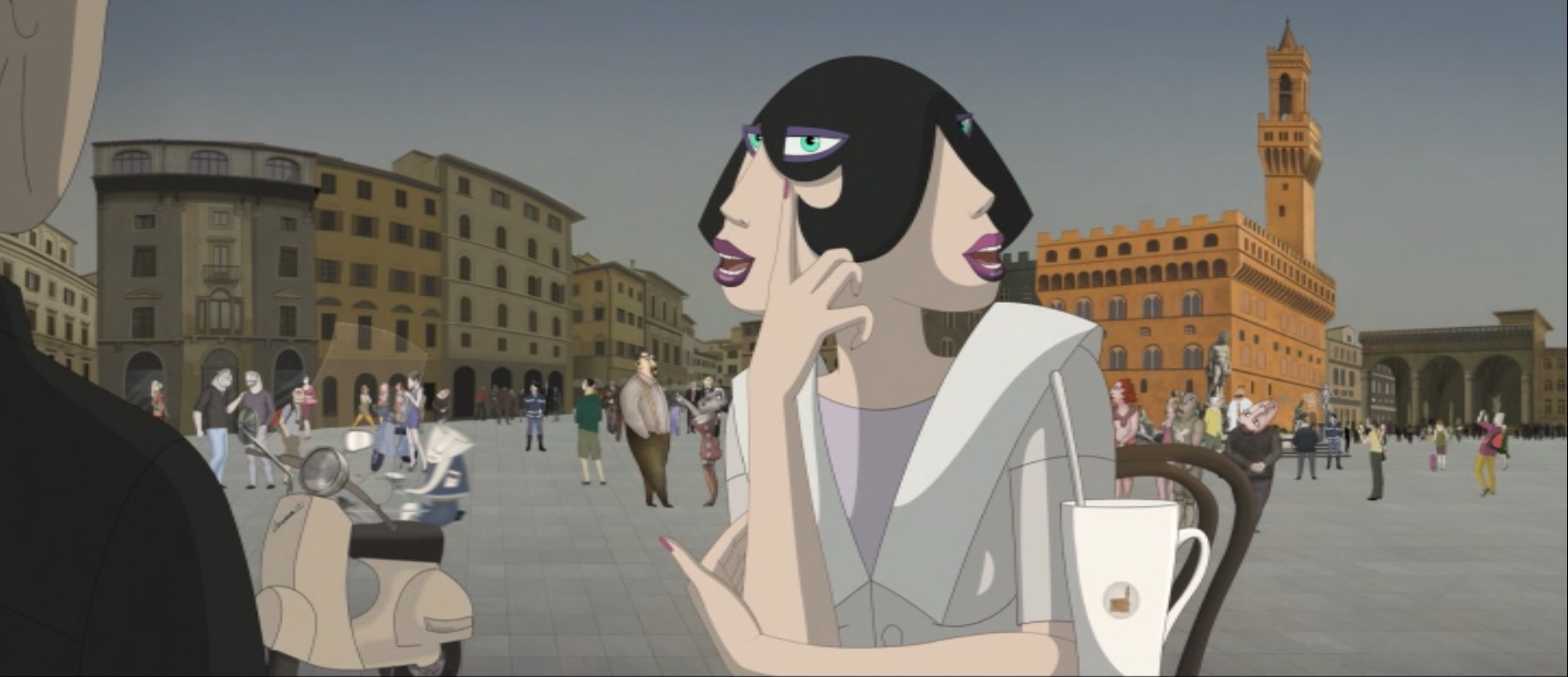
One of the more surprising and more original animated feature films from 2018 was this little gem from Hungary. Conceived and directed by Milorad Krstić, a director of Slovenian origin, ‘Ruben Brandt’ shows that one can make an adult animation film without an immature focus on sex and violence (there is violence in this feature film, because ‘Ruben Brandt’ is a crime thriller, but this violence is part of the plot, and not a gratuitous display of gore).
‘Ruben Brandt’ tells about a psychiatrist treating some criminals, who in turn help him overcome his nightmares by collecting artworks from all over the world. This plot is exciting, but on the flimsy side and as nonsensical as a James Bond movie. Moreover, the film fails to solve all the initiated plotlines, and the all too easy ending is a bit of a letdown.
Nevertheless, ‘Ruben Brandt’ remains an entertaining watch from start to finish, not only because of the surreal atmosphere, enhanced by the depiction of several of the art collector’s nightmares, but because of the film’s idiosyncratic looks.
Being a film on art, the film draws a huge inspiration from its subject, and the film breathes art in almost every frame. According to the end titles the film cites more than fifty art works, and part of the fun of watching the movie is to identify a reference in the background. Moreover, the color schemes, the designs and especially the character designs are very bold and unlike anything in any other animation film.
True, the three main characters Ruben Brandt, Kowalski and Mimi look fairly normal, even if their facial designs are already unique, but their co-stars can have two noses, eyes placed above each other, an eye placed inside an ear, three eyes, three breasts, and so forth and so on. There’s even a character with a Janus head, who is only two-dimensional, a characteristic used in the plot. The background characters are often even more bizarre, let alone the birds and fish depicted, and even if the movie were dull (which it certainly isn’t) one can enjoy the surreal imagery.
The film uses both traditional and computer animation and although the computer animation is less satisfying than the traditional animation, the mix is very well done.
In all, ‘Ruben Brandt’ is a highly authentic film that shows surrealism is far from dead, and with his grotesque designs Krstić shows that even 3D computer animation can be exciting and strikingly original.
Watch the trailer for ‘Ruben Brandt, Collector’ yourself and tell me what you think:
‘Ruben Brandt, Collector’ is available on Blu-Ray and DVD
Animation Backgrounds
A blog dedicated to background paintings from animation films. Kept until 2016.
Animation Scoop
Animation historian Jerry Beck’s animation film news blog.
Cartoon Brew
Topical blog on animation film, led by animation historian Amid Amidi.
Cartoon Modern
Amid Amidi’s blog on modern design cartoon art from the forties, fifties and sixties.
Cartoon Research
THE site on classic animation research, hosted by cartoon historian Jerry Beck.
Cartoons Theory
Frank Beef analyzes classic cartoons. Kept until 2020.
Century Film Project
Michael reviews films of 100 years old and older, roughly in chronological order.
Classic Cartoons
A similar blog featuring many stills and comic strips. Kept until 2012.
Comet over Hollywood
Jessica Pickens reviews classic Hollywood films, especially musicals.
Deja View
Top ex-Disney animator Andreas Deja’s own blog.
Disney History
Esteemed Disney historian Didier Ghez on the latest books on Disney history.
Feeling Animated
Paul Astell brings us thorough reviews of animated features.
Flickers in Time
Short and to the point reviews of classic films (lately mostly pre-code talkies) by an anonymous retired Foreign Service Officer from California








 Dr. Grob's Animation Review