
You are currently browsing the tag archive for the ‘children’ tag.
Directors: William Hanna & Joseph Barbera
Airing date: November 9, 1962
Stars: The Flintstones
Rating: ★★★
Review:

After ‘The Little Stranger’ ‘Baby Barney’ is the second Flintstones episode trying out Fred’s attitude to fatherhood, anticipating the great continuity later in the series.
This time Fred’s fatherhood is triggered by the coming of a rich uncle Tex, whom he promised a ‘little Tex’. It’s the unfortunate Barney who has to pose as the improbable baby. This accounts for a lot of slapstick, but in the end it’s Fred acting like a father for the first time that stays most. Stone age gags, meanwhile, are rare, as I can only mention a lawnmower dinosaur.
Watch an excerpt from ‘Baby Barney’ yourself and tell me what you think:
This is The Flintstones Season Three episode 9
To the previous The Flintstones episode: The Little Stranger
To the next Flintstones episode: Hawaiian Escapade
‘Baby Barney’ is available on the Blu-Ray ‘The Flintstones – The Complete Series’ and the DVD-box ‘The Flintstones Season 3’
Directors: William Hanna & Joseph Barbera
Airing date: November 2, 1962
Stars: The Flintstones
Rating: ★★★
Review:
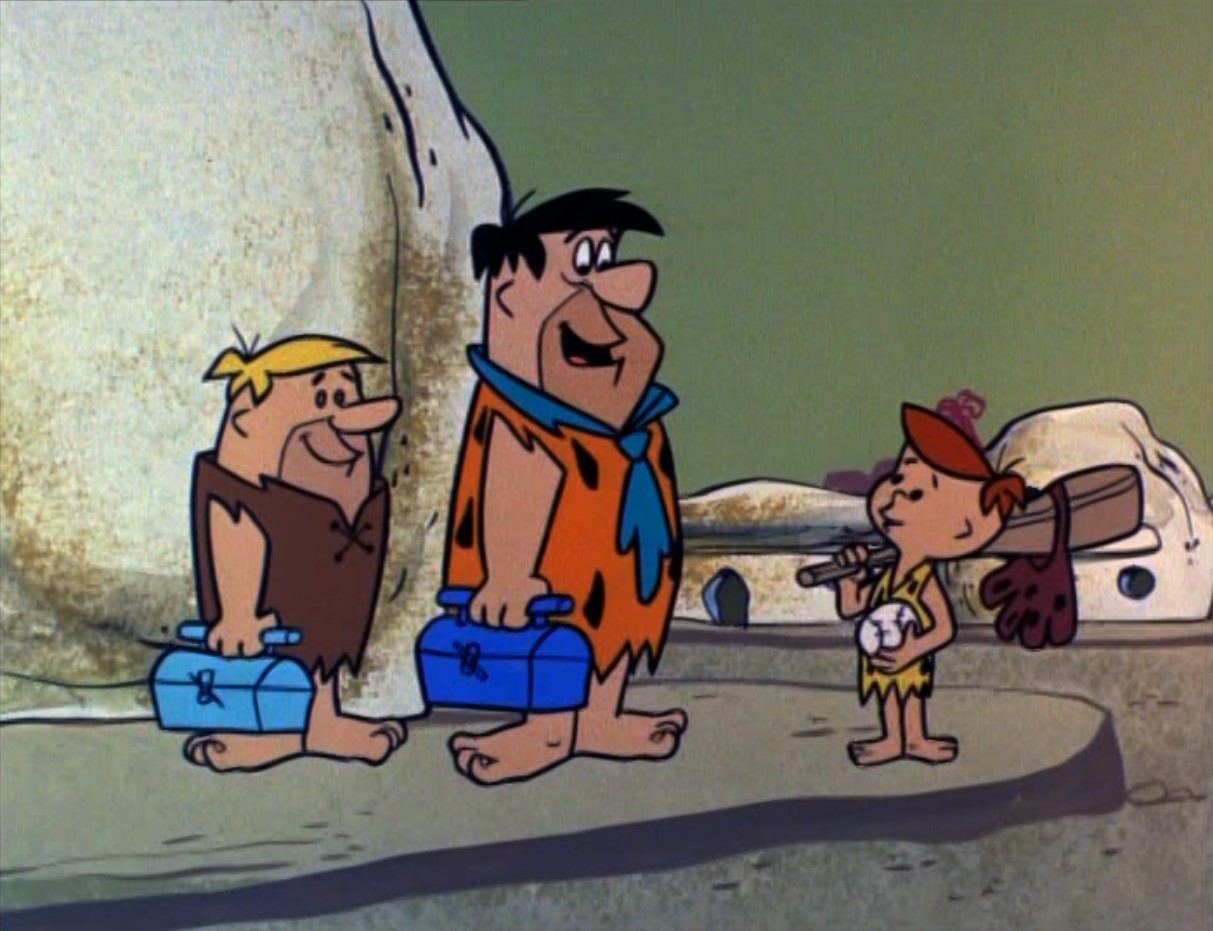
‘The Little Stranger’ starts with a Fred so grumpy Wilma sends him to a doctor to get examined. On the way Fred and Barney repeatedly meet a paper delivering little boy called Arnold, who gets the better of Fred each time. However, we have to wait until the 11th minute before the story really begins.
As with some of the best Flintstones episodes ‘The Little Stranger’ is a comedy of errors, and it is a delight to watch Fred’s sweet side, as well as him running back and forth when he thinks Wilma is expecting a little baby any minute. The best sight gag however, is when the doctor makes Fred inhale and exhale, a breath so powerful it moves Barney, who’s reading on a chair, through the office.
‘The Little Stranger’ feels like a prequel to the continuous story of the Flintstones getting a baby, which makes the third season so unique. It’s the first episode in which the baby idea comes up, and Fred’s reaction indeed is inviting to make the character deal with the real thing.
The stone age gags, meanwhile, are modest, and include a dish washing pelican, the now almost regular mammoth vacuum cleaner, and a bizarre bag-crocodile. Notice that for once, one of the windows is glass-covered, to get a gag with Arnold along.
Watch an excerpt from ‘The Little Stranger’ yourself and tell me what you think:
This is The Flintstones Season Three episode 8
To the previous The Flintstones episode: The Buffalo Convention
To the next Flintstones episode: Baby Barney
‘The Little Stranger’ is available on the Blu-Ray ‘The Flintstones – The Complete Series’ and the DVD-box ‘The Flintstones Season 3’
Director: Piet Kroon
Release date: October 13, 2018
Rating: ★★
Review:

The Dutch animated feature film industry long consisted of one movie only, ‘Als je begrijpt wat ik bedoel’ (The Dragon That Wasn’t (Or Was He?)) from 1983. But in recent years several other films saw the light, mostly directed at youngsters: ‘Nijntje de film’ (Miffy the Movie) from 2013 , ‘Pim & Pom: Het Grote Avontuur’ and ‘Trippel Trappel – Dierensinterklaas’, which are both from 2014, and more recently ‘Knor’ (‘Oink’) from 2022 and ‘Vos en haas redden het bos’ from 2024. An oddball within this recent canon is ‘Heinz’ from 2018.
‘Heinz’ was a comic strip by René Windig and Eddie de Jong that run in Dutch newspapers from 1987 to 2000 and again from 2004 to 2006. The comic strip was about a cat, Heinz, who quickly got more anthropomorphized until he became a sort of everyman. The strip knew some continuities but remained first and foremost a gag strip. Nevertheless, the authors dreamt of an animation film at least since the early 2000s.
Although film studio Zig Zag film started working on a film already in 2002, Windig’s and De Jong’s dream never amounted to anything. That is, until the project got new backing and new support from veteran animator Piet Kroon in 2015.
Piet Kroon had ample experience in America, having directed the animation for ‘Osmosis Jones’ (2001) and having worked on stories for a wide variety of animated feature films, e.g. ‘The Iron Giant’ (1999), ‘The Tale of Despereaux’ (2008), ‘Rio’ (2011) and ‘Ferdinand’ (2017). Kroon wrote a completely new story for the film, and with this much of the charm of the original comic strip got lost, and I doubt whether Windig and De Jong are pleased with the end result.
The first aspect of the original comic strip that went out of the window was its family-friendly nature, despite being produced by Burny Bos, who produced some of the best Dutch live action children’s movies. The feature film is clearly directed to adults and has little to offer for younger audiences (in the Netherlands the film is advised for 12 years and older, that says enough). The second major change Kroon made was the setting. The original comic strip takes place in an undefined fantasy Netherlands, but the movie Heinz clearly lives in the center of Amsterdam, which incidentally is also the residence of the comic strip’s two authors.
A more profound and more disturbing change than these two is the change of character of the cat himself. In the comic strip Heinz certainly is cranky, and sometimes insufferable, but in the movie, he is a downright irresponsible drunkard and deadbeat. In fact, in the early scenes the cat is so unsympathetic one wonders why he must watch the cat’s immature antics in the first place. Heinz’s voice by Ruben van der Meer, on the other hand, is well-chosen.
Heinz’s girlfriend Dolly fares little better, as she has changed from a sweet love to a working-class shrew, while Heinz’s friend Frits is nastier and more unsympathetic than his comic book counterpart. Frits also suffers from a bad voice choice (Reinder van der Naalt). In fact, one must look hard for any sympathetic character in the film…
Kroon certainly has tried to put as many characters from the original comic strip as possible into the film, and thus the movie is simply crowded with characters, who mostly make little to no sense to anyone not familiar with the source material. These characters and the rather random inclusion of some gags from the original comic strip make the film too much of an inside joke. On the other hand, the story itself is entertaining enough: it involves time travel, takes Heinz to a remote volcano island and to New York, where he must battle an evil scientist from outer space. But the unsympathetic leads, the plethora of characters, and the random, and often repeated gags make the film a tiresome watch.
The film’s stylistic choices don’t help. The background art is pretty ugly and consists of reworked photo material against which the characters don’t read very well. The ocean is even live action footage. Again, with this method much of the original charm of the comic strip gets lost. The computer animation is a mixed bag. There are a lot of animation cycles, and especially the numerous background characters walk around like automatons with little to no life in them.
No doubt, these technical drawbacks result from an all too tight budget, as it’s a marvel that the film came about in the first place. Most charming are the depictions of Heinz’s fantasies, which consist of traditional animation of René Windig’s idiosyncratic drawings. It’s too bad only these little sequences were made this way.
In all, ‘Heinz’ is a disappointing movie that will attract small audiences, neither satisfying fans of the original comic strip nor anyone else. I cannot find any figures, but I am pretty sure the movie turned out to be a box office flop, and I regret to say unsurprisingly so.
Watch the Dutch trailer for ‘Heinz’ yourself and tell me what you think:
‘Heinz’ is available on DVD (Dutch only)
Director: Osamu Tezuka
Release date: November 1962
Rating: ★★★
Review:

‘Tales of a Street Corner’ was Osamu Tezuka’s first animated film, and the first production of his company Mushi productions, which Tezuka founded in 1961, after his contract ended at Toei Animations, Japan’s most important animation studio of that time.
The film immediately shows Tezuka’s high ambitions. First, ‘Tales of a Street Corner’ is of considerable length, clocking 39 minutes. Second, its designs echo the cartoon modern style of Europe, unlike anything previous in Japan. Third, Tezuka’s storytelling is highly poetical, reminiscent of Paul Grimault, avoiding tried story cliches. Fourth, the film has a strong anti-militaristic and pacificist tone, and is more than just mere entertainment.
It’s striking to note that, unlike Tezuka’s Astro Boy television series from a year later, ‘Tales of a Street Corner’ lacks any Japanese character. Instead, the film feels very European, both in its looks and in its music. Even the town in which the story takes place is clearly European, as are the poster violinist and pianist. These two characters form the heart of a romantic tale that Tezuka spins, with other protagonists being a little mouse, a moth, and even a broken lantern and a tree.
The whole tale is set in motion when a little girl drops her teddy bear in a gutter, but Tezuka’s story is anything but straightforward, and allows for some poetic moments, as well two series of silly gags involving numerous posters. The animation ranges from full animation to zooming into still images, with everything in between, and it is quite possible that Tezuka’s choices in the complexity of animation were motivated not only by its artistic value, but also by cost reduction.
‘Tales of a Street Corner’ is certainly charming, but as would later be more often the case with Tezuka, the director wants too much within one short. In fact, the short is overlong, and it’s unclear what he wanted the resulting film to be: a children’s film? A romance? A comedy? An anti-war statement? Now, the film is all this and thus none of that at the same time. Nevertheless, ‘Tales of a Street Corner’ remains a delight to look at throughout, and with this film Japan surely entered a new phase in animation, even if the film is still copying its European models.
Watch ‘Tales of a Street Corner’ yourself and tell me what you think:
‘Tales of a Street Corner’ is available on the DVD ‘The Astonishing Work of Tezuka Osamu’
Director: Kitaro Kosaka
Release date: June 11, 2018
Rating: ★★½
Review:
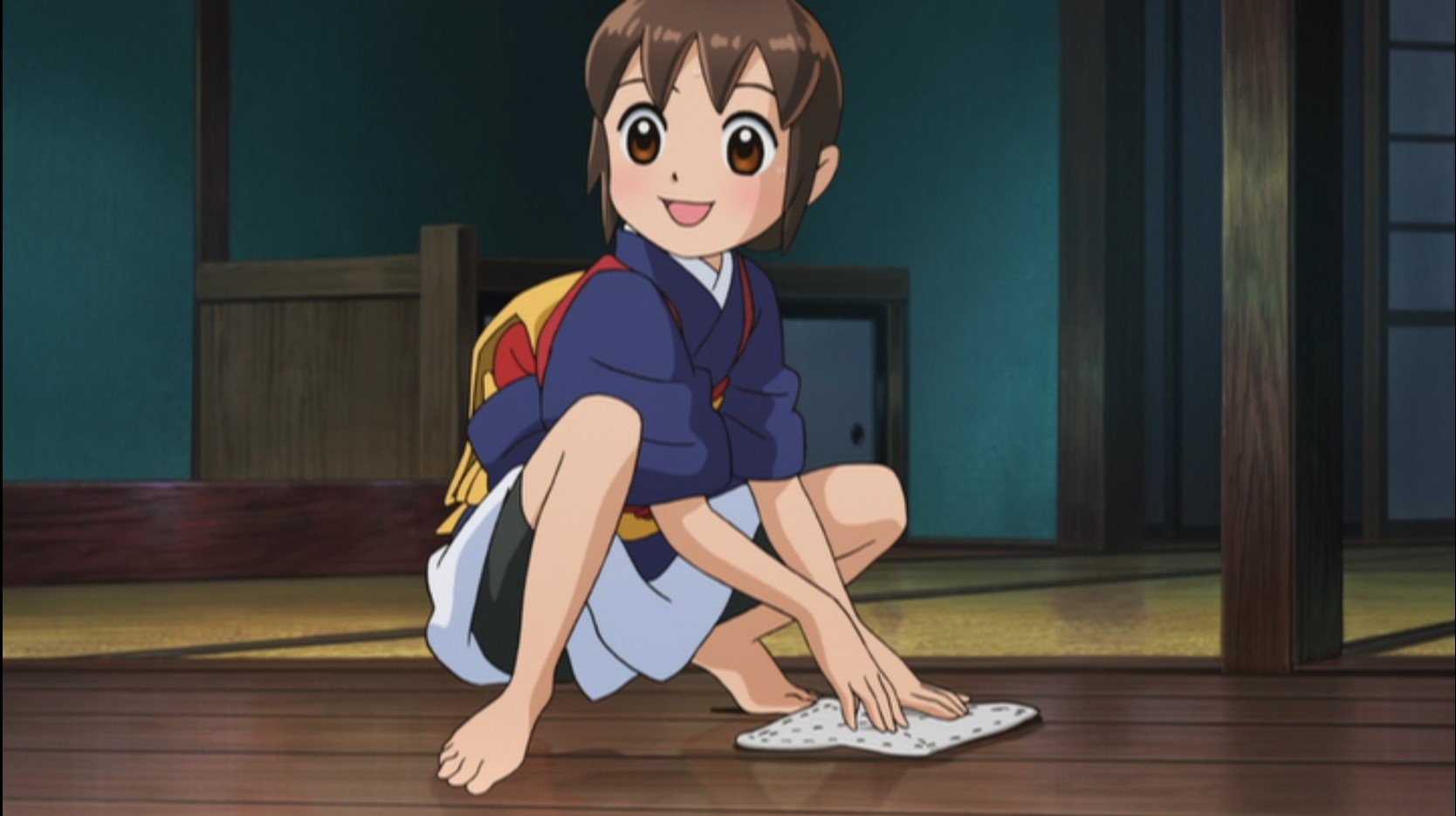
‘Okko’s Inn’ is an animated feature film by Madhouse based on a children’s novel series Hiroko Reijō. The film stars a little girl, who’s still at elementary school when she survives a terrible car accident in which her parents die. After this tragic incident she goes to live with her grandmother, who runs a ryokan, a traditional inn in a spa town near Mount Ikoma, East of Osaka, where she meets some ghost children and even a boyish demon.
Okko is supposed to help at the inn, and naturally we watch her grow into her new life and role, helped by the ghost children and little demon, whom we learn more about on the way, while Okko must deal with a girl whose family runs a larger rival inn.
The movie thus taps from familiar tropes in Japanese animation, like a girl losing her parents, and having to work, and the glories of traditional rural Japan as opposed to modern city life. The movie thus at times is reminiscent of such masterworks as ‘Spirited Away’ (2001) or ‘A Letter to Momo’ (2011). In content that is, for stylistically ‘Okko’s Inn’ is very poor. The designs are the most generic possible, with Okko herself being a particularly standard wide-eyed manga girl, and the animation is only fair. Moreover, the film lacks the subtleties of its peers. The film almost mechanically goes through the motions, as if ticking the necessary boxes, and the narrative lacks the surprising twists and turns of aforementioned examples.
It doesn’t help that the film’s message is partly told through guests of the inn, whose role seems almost to help Okko further in life. There’s a father with a son, whom Okko helps through their grief, and there’s an independent woman, a fortune teller, who befriends Okko and helps her getting more self-confident. And then there’s a third family staying, containing the biggest surprise of all.
The biggest flaw, however, is that we don’t see anything of Okko’s grief at all until the very end of the movie. Most of the time we don’t feel her trauma, we don’t feel her fear and we don’t feel any sense of readjustment. We see some of it, but we don’t feel it: in fact, Okko grows surprisingly easily into her new role. Nevertheless, there’s a scene in which Okko meets her anxieties, and this is by far the emotional highlight of the movie. Unfortunately, this powerful scene is followed by a mindless one on shopping.
‘Okko’s Inn’ is not a bad movie, but it’s not a stand-out either, and the film feels as a poor man’s version of ‘Spirited Away’. If anything, the feature shows that also the Japanese animation industry can pour out films that feel like run-of-the-mill products.
Watch the trailer for ‘Okko’s Inn’ yourself and tell me what you think:
‘Okko’s Inn’ is available on DVD and Blu-Ray
Director: Jan Iván
Release date: 1961
Rating: ★★★
Review:
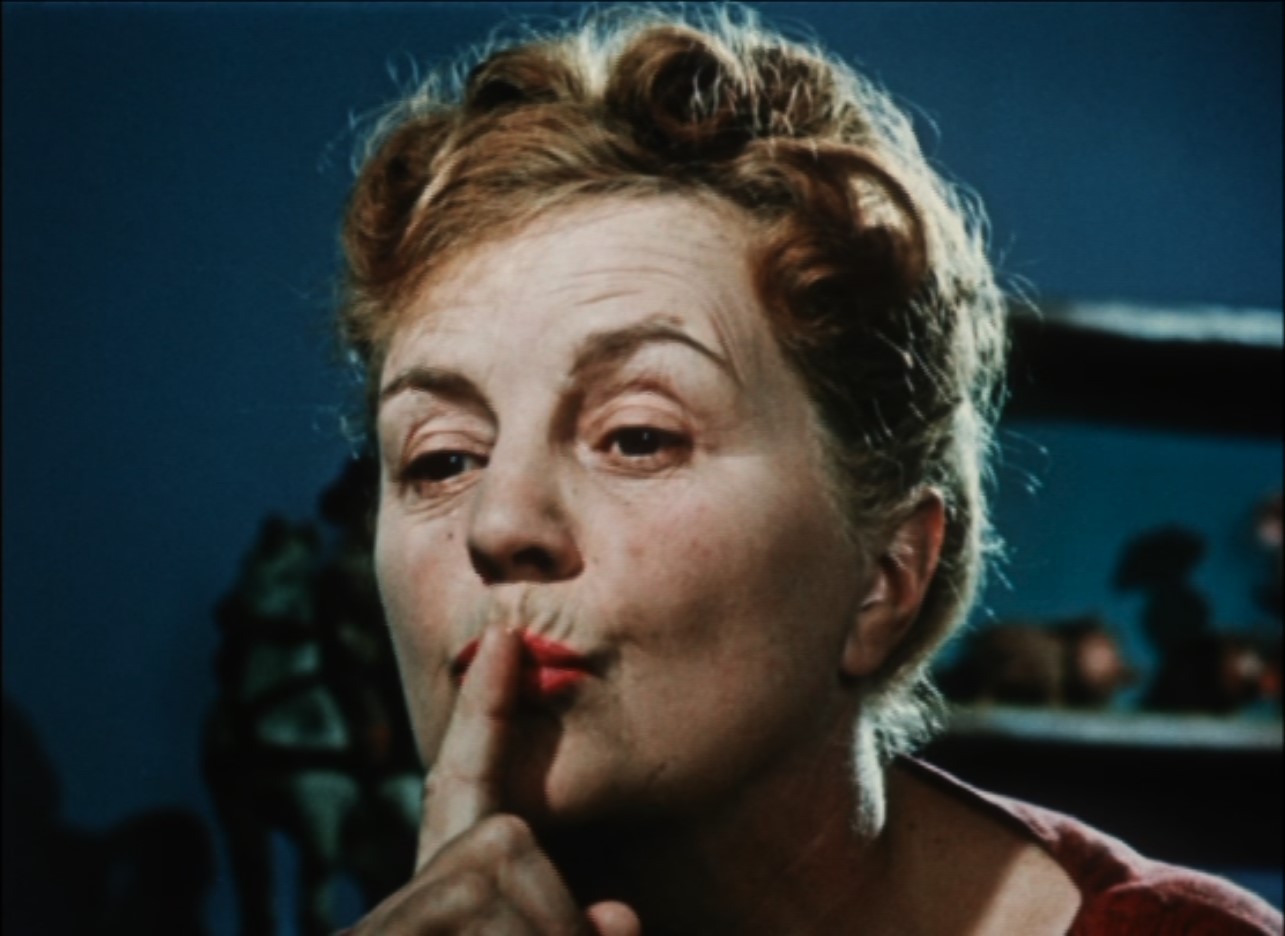
This a gentle documentary film made in honour of the Czech animation pioneer’s sixtieth birthday.
The film showcases excerpts from quite a few of Hermína Týrlová’s films, including her first, ‘Ferda the Ant’ (1944), Czechoslowakia’s first stop motion film anyhow. Other excerpts are from ‘Revolt of the Toys’ (1945), apparently an anti-fascist film, ‘The Knot in the Handkerchief’ (1958) and ‘Badly Made Toy-Man’ (1951), which is revealed as Týrlová’s favorite character.
Indeed, it’s the Badly Made Toy-Man who stars the bridging stop-motion sequences, for this documentary features quite some original animated material, made by Týrlová especially for this film. Especially, the short sequence starring the two balls of whool-characters for her upcoming ‘Two Balls of Wool’ (1962) are a delight, for this cannot be found in the final film, and is presented as a depiction of Týrlová’s imagination.
The film is narrated, and although we watch Týrlová acting out herself, e.g. recreating the painstaking ways with which she made ‘Ferda the Ant’ and interacting with children, her main audience, we do not hear her, and there are no interviews, only images. Nevertheless, the documentary succeeds in showing where Týrlová’s greatest talent lies: in creating charming animation films for children in which ordinary toys and objects come to life.
‘Hermína Týrlová’ is available on the DVD box ‘Hermína Týrlová Výběr z tvorby/Selected Works’
Director: Denis Do
Release date: June 11, 2018
Rating: ★★★½
Review:
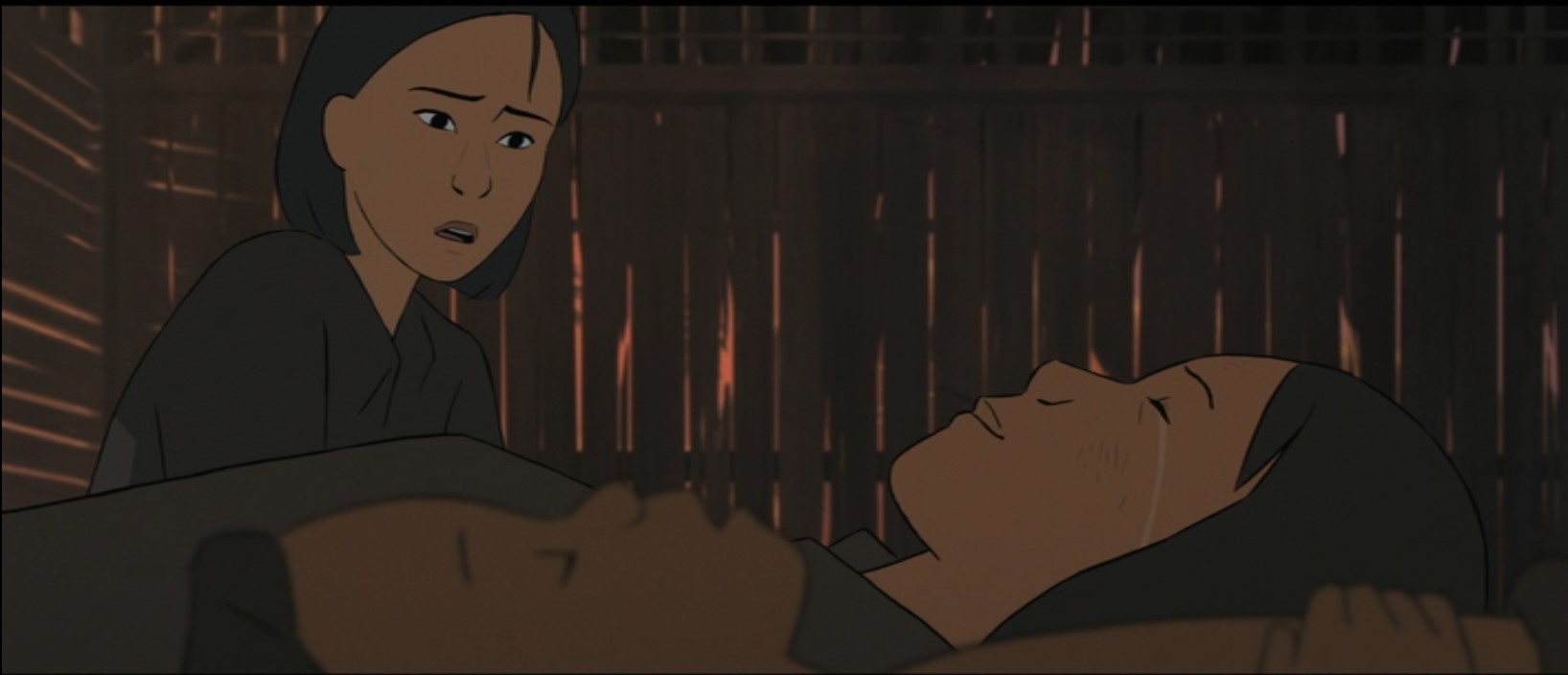
‘Funan’ is a film by Denis Do, a French film maker of Cambodian descent, and the film is partly based on the memories of his own mother.
‘Funan’ means ‘the new people’ in the Khmer language, and this is an apt description of the radical ideology of the Khmer Rouge, an extreme communist movement that took power in Cambodia from 1975 to 1979, only to plunge the nation in one of the severest mass killings in human history, with the ultimate goal to rise as a ‘new nation’ of autarkic, non-intellectual people.
‘Funan’ thus tells about Cambodia’s darkest years, and does so by following one family from Phnom Penh, which almost immediately falls apart, and which succumbs one by one to various aspects of the terror, be it brutal murder, forced labor, famine or rape. We especially follow a couple, Chou and Khuon, and their son Sovanh, who gets separated from his parents near the start of the film.
Luckily, the film eschews gross images, keeping the watch tolerable, but strangely enough, this also means one feels the hardship and sorrow less than one should. The film’s rather episodic nature certainly doesn’t help, and one has a little trouble relating to these people, perhaps because they aren’t introduced very well (the happy bliss of pre-Khmer rouge existence is shown all too shortly), and because the film is told in a plethora of very short scenes, instead of a few well-chosen longer ones. Especially Sovanh’s story is too fragmentary to follow, and his experiences are only hinted at, although it’s clear that the young boy sees a lot of cruelty and death.
The 2D animation is fair, with the human character designs rooted in the French ligne claire tradition, while the background is painted and lineless. Both coloring and lighting are clearly digitally done, and to be frank, rather uninteresting.
I suspect the film could be more daring and more idiosyncratic in its designs and storytelling, especially when compared to Elsa Duhamel’s similar, but far more interesting short ‘Bach-Hong’, which tells of the coming of the communists to Saigon, Vietnam. Duhamel cleverly sticks to a single story, illustrating the regime’s cruelty by one, ostensibly minor detail in the nation’s history.
Do, on the other hand, seems to want to tell everything, and indeed he succeeds in painting a picture of these black years, but I suspect he had better chosen less scenes, and less characters, for now, unfortunately, the film remains at an emotional distance, and that can hardly be the film maker’s purpose. Yet, I am glad personal films like this are being made, for films like ‘Funan’ save tragedies like that of Cambodia from oblivion, and remind us that peace and safety aren’t guaranteed, at all.
Watch the trailer for ‘Funan’ yourself and tell me what you think:
‘Funan’ is available on Blu-Ray and DVD
Director: Mamoru Hosoda
Release date: May 16, 2018
Rating: ★★★
Review:

‘Mirai’ was the third feature film Mamoru Hosoda made for his own studio, Studio Chizu. Hosoda favors rather episodic films about growing up, and ‘Mirai’ is no exception, although the film takes place in a much smaller time frame than ‘Wolf Children’ or ‘The Boy and the Beast’.
Main protagonist of the film is ca. four-year-old boy Kun, who lives in a design house in Yokohama (the town is depicted regularly during the film in swooping bird-eye’s view shots), but more importantly, who gets a baby sister, the Mirai from the title. Mirai also means future, and in fact, the Japanese title is ‘Mirai no Mirai’, or ‘Mirai from the future’. Indeed, Kun meets an older version of his younger sister from the future, as well as some other characters, while he struggles to adapt to the new situation he finds himself in.
Because with the coming of little Mirai a lot changes for the young boy: his parents have less attention for him, focusing more on the new baby, they’re more often tired and crabby, and they struggle with combining working and caring, now there are two children around. Needless to say, Kun has a hard time getting adjusted, and even gets jealous of his innocent baby sister.
The film focuses on some key scenes, in which Kun experiences a setback, at least in his own mind, and then something magical happens in the little courtyard of his house. First the little boy first meets a humanized form of the family dog, and then his younger sister in older form (there’s more, but I won’t spoil it here).
Unfortunately, Hosoda doesn’t stick to the boy-sister relationship, and at some point, the magic scenes also help Kun overcome his fears. Moreover, a four-year-old is a difficult and questionable protagonist of a film that wants to show the hero’s progress. After all, he is just a little boy. It’s little surprising that Hosoda spends considerable time on Kun’s parents, and their development during this crucial part of their lives. And, indeed, to be frank, Hosoda’s honest depiction of the hardships of young parenthood and of raising one’s own children is much more interesting than Kun’s ‘development’ of character.
Main attraction of the film are the five magical scenes, with the first two showing some broad comedy, as the man-dog and Mirai from the future roam around the house. The third and fourth start to feel obligatory, even though the fourth has a nice nostalgic feel to it. But with the fifth, Hosoda goes completely overboard, and one wonders why these nightmarish scenes, taking the film to a altogether other atmosphere, were even necessary. In fact, this finale, in which Hosoda wants to tell us something about family ties, is too overtly self-explanatory and spoils a film that wasn’t perfect to start with.
In fact, ‘Mirai’ drags a little, being mostly confined to the small space of Kun’s house and with Kun’s development of character as an important, but very weak story device. The film’s episodic nature doesn’t really help, spreading the story thin, a problem that also invades ‘Wolf Children’ and ‘The Boy and the Beast’. I wish Hosoda was able to keep his use of time as tight as his use of space in this movie. ‘Mirai’ is not a failure, the film is too original for that, but it’s arguably Hosoda’s weakest feature film so far, never reaching the emotional heights of either ‘Wolf Children’, ‘The Boy and the Beast’ or even his debut film, ‘The Girl Who Leapt Through Time’ from 2006.
Watch the trailer for ‘Mirai’ yourself and tell me what you think:
‘Mirai’ is available on Blu-Ray and DVD
Directors: John & Faith Hubley
Release date: 1973
Rating: ★★★★
Review:
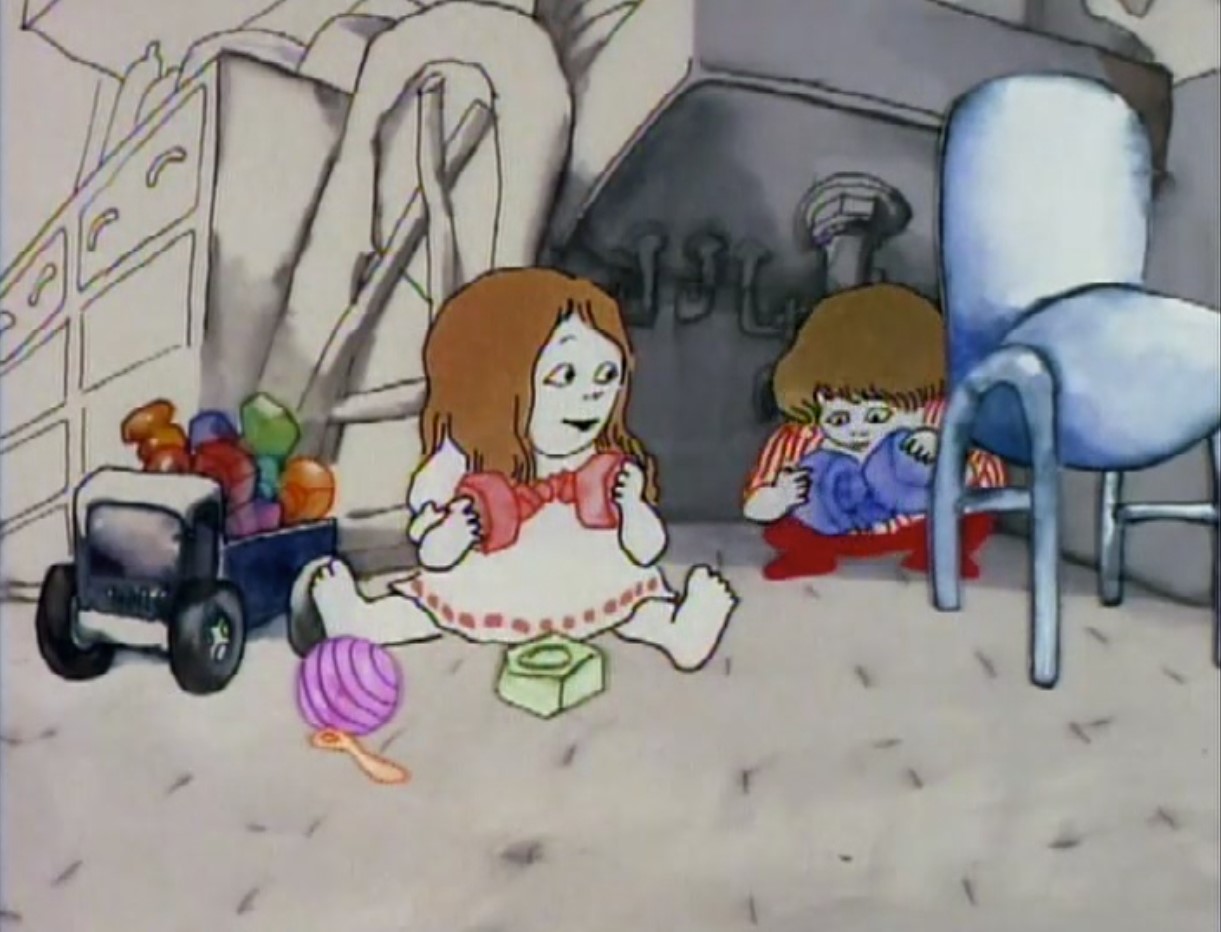
In ‘Cockaboody’ John and Faith Hubley returned to the techniques and world of ‘Moonbird‘ (1959). Once again they recorded the voices of their own children, this time the toddlers Emily and Georgia, while playing. The soundtrack is thus by design completely improvised and as children’s conversations go, all over the place.
John and Faith Hubley illustrate the dialogue with delightful drawings that augment the fantasy of the two girls. For example, when Georgia goes into a tantrum, it takes the form of a green tiger threatening her older sister. Or when Georgia utters the original word ‘cockaboody’, which gives the film its title, it’s transformed into a mysterious duck-like creature.
The watercolor background art convincingly depicts the Hubley’s house as one big place to play in. Throughout the film, we remain with the two little girls, for one little scene in which we see the mother’s reaction to the loud noises the two toddlers produce.
‘Cockaboody’ may be a rather random film, starting and ending nowhere, but in between we have a lovely ride together with the two children.
Watch ‘Cockaboody’ yourself and tell me what you think:
‘Cockaboody’ was released on the DVD ‘Selected Films of John and Faith Hubley 1956-1973’, which came with the March/April 2014 issue of magazine ‘The Believer’
Director: Nora Twomey
Release date: September 8, 2017
Rating: ★★★★★
Review:

2017 was a good year for the animated feature film: Warner Bros., Dreamworks and the French Polivari and Panique studios gave us great laughs with ‘The Lego Batman Movie’, ‘Captain Underpants: The First Epic Movie’, and ‘ Le grand méchant renard et autres contes…’ (The Big Bad Fox and Other Tales), respectively; Pixar amazed us with the magnificent ‘Coco’, and the Japanese Science Saru studio made quite an impression with the mind-blowing film‘Night Is Short, Walk on Girl’.
However, the most important and most moving animated feature film was the Irish-Canadian-Luxembourgian co-production ‘The Breadwinner’. This was the third feature by the Irish Cartoon Saloon studio, which can be regarded as the most welcome and most original studio additions to the animated feature field of the 21st century, thus far. The Breadwinner’ shares with their previous two films, ‘The Secret of Kells’ (2009) and ‘The ‘Song of the Sea’ (2014) a very charming traditional animation style, and a surprisingly graphic overall design, although the latter is rather toned down in ‘The Breadwinner‘ when compared to the earlier two movies. But unlike the other two, ‘The Breadwinner’ completely lacks the Irish flavor, being set in, of all places, Afghanistan.
Based on the book by Deborah Ellis from 2000 ‘The Breadwinner’ is set in Kabul, the unfortunate country’s capital during the first Islamic Emirate of Afghanistan (better known as the Taliban regime, 1996-2001). By the time the film was made, this extremely oppressive regime was a ghost of the past, at least in Kabul (the Taliban never fully disappeared from the country), but sadly, since August 2021 this misogynist, backward movement is in full charge of the country, once again.
‘The Breadwinner’ makes no mistake how hard it is to live in such a violent, insecure country, where arbitrariness prevails, and where women have no rights, at all, whatsoever. The film follows the eleven-year-old Afghan girl Parvana, who lives with her disabled father, her mother, elder sister Soraya, and a baby brother called Zaki in a tiny house in Kabul. When the father gets arrested and thrown into a prison far outside town, the family quickly get into way more problems than they already had: as women cannot do anything outside without a man, their means to even obtain food completely come to a standstill. At this point Parvana takes an important decision to save her family’s life…
‘The Breadwinner’ is a very believable story, much more subtle than almost anything coming out of the United States. For example, the Afghan people are portrayed as real people, with a rich an ancient culture. Added to the sense of authenticity is the use of Afghan voices (except for the brabbling Zaki), while Mychael and Jeff Danna’s score clearly borrows from the Afghan musical tradition. Thus, the film’s Afghanistan is a convincing one, not a caricature seen through Western eyes. Moreover, although the film makes no mistake about the oppressive and misogynist nature of the Taliban regime, there are many shades of gray between the heroes and villains. Even the villain that causes Parvana’s family’s demise is shown in one last shot as not only evil, but insecure and afraid, too. Moreover, Parvana remains a relatable character, throughout. Despite her courage and adult responsibility, she remains a child, and is shown delighting in childish behavior, especially with her friend Shauzia.
Contrasted with Parvana’s dire circumstances are the images of a story she tells her beloved (her first audience is her baby brother, but she also tells the tale to others, and others even blend in, altering the direction of the story while doing so. These images are rendered in the most colorful, storybook illustration-like, faux cut-out animation, and tell about a boy who goes on a quest to retrieve his village’s seeds from an evil elephant king. This fantastical tale is picked up several times during the movie, and often reflects the events depicted in real life. Especially in the finale, in which the two seem to come together, this dual story telling comes to a harrowing conclusion.
As said, the film’s design is less graphic than that of Cartoon Saloon’s Celtic features. The background art is semi-realistic, with depressing greys, browns and yellows depicting the seemingly treeless town of Kabul. The character design is more graphic, with especially Zaki being an echo of the character designs from the earlier films. Noteworthy is the background art of a rather surreal scene in which Parvana and Shauzia are seen in a field full of abandoned tanks. The traditional animation is a delight, not only the very moving animation of the main characters, but also the cartoony quasi-cut-out animation of Parvana’s story. There’s only a little computer animation present, mostly for crowd scenes.
In all, ‘The Breadwinner’ is one of the best, most adult and most moving animation films to come out of any animation studio, and should be considered a modern classic.
According to director Nora Twomey ‘The Breadwinner’ may be set in Afghanistan but tells a universal story of all children growing up in oppressive countries, everywhere. Yet, we are still waiting for the animated depictions of their stories, while Afghanistan has been the subject of no less than three other animated feature films since then: ‘The Swallows of Kabul’ from 2019 and ‘My Sunny Maad’ and ‘Flee’ from 2021. Surely, the people of say North Korea, Syria, Eritrea, the Central African Republic, or Yemen deserve better.
Watch the trailer for ‘The Breadwinner’ yourself and tell me what you think:
‘The Breadwinner’ is available on Blu-Ray and DVD
Director: Hiromasa Yonebayashi
Release date: July 8, 2017
Rating: ★★★½
Review:

‘Mary and the Witch’s Flower’ is the first film by Studio Ponoc, founded by Yoshiaki Nishimura, who was a producer for Studio Ghibli before. Director Hiromasa Yonebayashi, too, is a Studio Ghibli alumnus, being an animator for the famed studio since 1997, and directing the studio’s 21st feature film ‘When Marnie Was There’ (2014).
It comes to no surprise then that ‘Mary and the Witch’s Flower’ is very, very Ghibli-like. Already the packaging of the DVD would fool anyone. But the similarity doesn’t stop there: even the opening titles emulate Ghibli; the character designs, too, are very Ghibli-like; the film is based on a British children’s book, just like Ghibli’s ‘Howl’s Moving Castle’ (2004), ‘Arrietty’ (2010) and ‘When Marnie Was There’; the film stars a young female protagonist (Mary) who has to survive without her parents, just like ‘Kiki’s Delivery Service’ (1997), ‘Spirited Away’ (2001) and ‘From Up on Poppy Hill’ (2010); Mary is a witch like Kiki; she’s accompanied by a cat who plays an important part just like Kiki and like Shizuku in ‘Whisper of the Heart’ (1995), and the film is partly set in a fantasy world, just like ‘Spirited Away’.
Now, this is immediately the film’s main flaw: studio Ponoc imitates Ghibli very well but doesn’t bring anything original of its own. The final product is practically indistinguishable from the source of inspiration. That doesn’t mean, however, that ‘Mary and the Witch’s Flower’ is a bad movie. The story is told well enough, the animation is top notch, and the fantasy world looks great. I certainly had a good time watching it, and would recommend the movie to all lovers of the Studio Ghibli product. But Studio Ponoc’s debut could and should have been something much more of their own. If you compare, for example, ‘Mary and the Witch’s Flower’ to the idiosyncratic ‘Night Is Short, Walk on Girl’ from the same year, it becomes clear which studio brings something original to the world, and which one does not.
Watch the trailer for ‘Mary and the Witch’s Flower’ yourself and tell me what you think:
‘Mary and the Witch’s Flower’ is available on Blu-Ray and DVD
Director: Dave Mullins
Release date: March 12, 2017
Rating: ★★★★
Review:
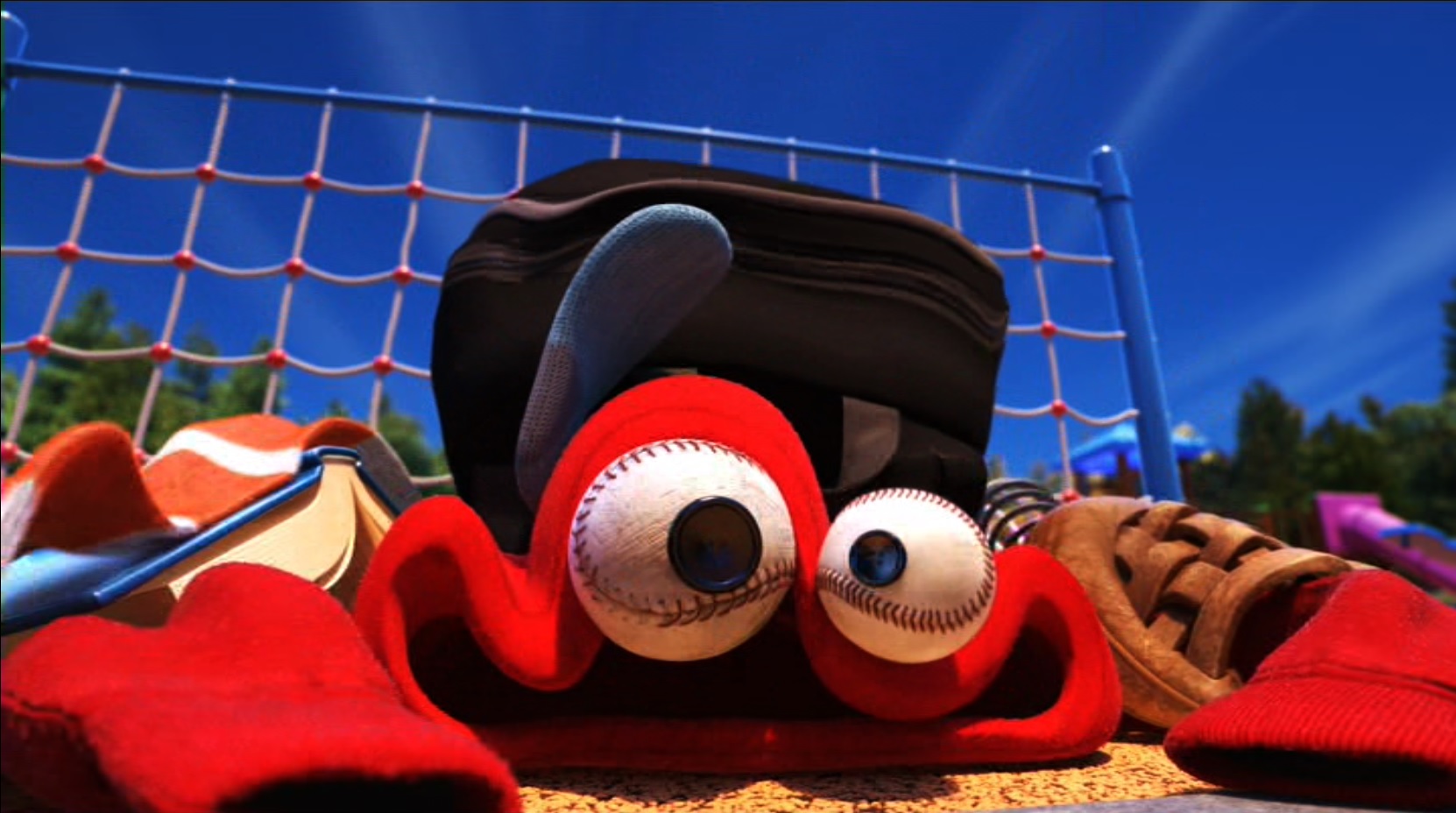
When, after recess, the playground of a school is empty, a mysterious being creeps out of the lost and found box to collect all lost toys from the site. He brings all these toys back to his lost and found box so children can find them there. But when he watches a bully taking toys from other children, he comes into action…
‘Lou’ is a short that is well-made but in an uninteresting generic Disney-Pixar style. Nevertheless, the story is well-told. There’s no dialogue, but the film manages to move the audience through clever timing and a well-placed flashback, showing the origin of the bully’s behavior. This part may be over-simplistic, but does give some depth to the bully character.
Moreover, the mysterious lost and found thing is a wonderful invention: it is essentially shapeless and only exists through the lost items. During the chase scene the thing thus changes its form repeatedly, in a wonderful sequence of variations on the same set of items. The origin of the title of the film is only revealed in the end.
Watch ‘Lou’ yourself and tell me what you think:
‘Lou’ is available on the Blu-Ray & DVD of ‘Cars 3‘ and on those of ‘Pixar Short Film Collection 3’
Director: David Soren
Release date: May 21, 2017
Rating: ★★★★★
Review:

In Captain Underpants two boys, George Beard and Harold Hutchins, write and draw comic book stories together. Unfortunately, their elementary school is the dullest, most depressing place on earth, thanks to the mean principal, Mr. Krupp. But then one day, somehow their comic book hero, Captain Underpants, comes alive, and he is even dumber than George and Harold had imagined…
This movie was one of the surprises of 2017. I saw this movie in a plane, not expecting much from a film with such a childish title, but boy, was I pleasantly surprised! Compared to this film most of the American computer-animated output of the 2010s feels pretty generic. Dreamworks’ ‘Captain Underpants: The First Epic Movie’, on the other hand, boasts visuals that are incomparable to any other animated feature.
Moreover, the film’s story is delightfully unpredictable, and knows neither dull moment nor any of the cliches invading almost every American animated feature of the era. Even the moral, the value of laughter and that of friendship, is played rather casually, and never takes over from the sheer mayhem put on the screen. On the contrary, a lot of what’s happening on the screen is pleasantly over the top. I liked the use of Yello’s song ‘Oh Yeah’ when the two children make a particularly cool entrance, and when later an Einstein-like villain from ‘New Switzerland’ joins in, mayhem is ensured.
Most of the film is genuinely silly, and even though its target audience obviously is about as old as George and Harold, the film is enjoyable to everyone. What certainly helps is the great voice cast. Both George and Harold are voiced by adults (Kevin Hart and Thomas Middleditch), and Ed Helms does a great job as both Mr. Krupp and Captain Underpants. It’s also interesting to note that Mr. Krupp isn’t only bad, he’s depicted as a shy and lonesome human, too.
Of course, much of the charm of ‘Captain Underpants: The First Epic Movie’ comes from the original source material, the illustrated children’s book series by American author and illustrator Dav Pilkey, which already counted twelve volumes by the time this movie was made. The film is apparently based on the first and fourth volume first four volumes [thanks Jonathan Wilson for the correction]. During production Pilkey worked closely together with director David Soren, and that certainly has paid off.
The film has translated Pilkey’s charming drawing style into 3D computer animation surprisingly well. What’s better, several parts are animated in 2D, in the children’s comic book style, there’s even a sequence in cut-out animation. Even the animation during the end titles is nice to watch. But the most outlandish sequence comes when Harold’s imagination of the future runs away with him. This scene was done by Screen Novelties in live action, with sock puppets, with hilarious results.
In all, ‘Captain Underpants: The First Epic Movie’ is a pleasant and very welcome diversion from Dreamworks, and one of the best animated movies of 2017, which with e.g., ‘Coco’ and ‘The Breadwinner’ was a strong animated feature year, anyway.
Watch the trailer for the ‘Captain Underpants: The First Epic Movie’ yourself and tell me what you think:
‘Captain Underpants: The First Epic Movie’ is available on Blu-Ray and DVD
Directors: Stefan Fjeldmark & Karsten Kiilerich
Release Date: 1996
Rating: ★★★★★ ♕
Review:

‘When Life Departs’ is a cute little Danish film in which eight children share their thoughts on death.
Their musings include ideas on the soul, on heaven, on hell, on God and reincarnation. These are illustrated with very simple, but very charming color pencil drawings on monochrome backgrounds. The drawing deliberately have a childlike, pseudo-clumsy quality, but the animation is, in fact, of a very high degree. Especially the depiction of the children talking is very well done. Despite the simplicity of the drawings these scenes betray a wide range of emotions and involuntary gestures in a short time span.
One stunning scene is one child’s view of heaven, illustrated by an ever in-zooming background animation, as if one flies through the endless heavenly landscapes. At times the pleasant animation helps to keep the subject light. Nevertheless, the story of a boy who has lost his baby brother remains poignant and infinitely sad.
Watch ‘When Life Departs’ yourself and tell met what you think:
‘When Life Departs’ is available on The Animation Show of Shows Box Set 3
Director: Mamoru Hosoda
Release Date: June 25, 2012
Rating: ★★★½
Review:

Director Mamoru Hosoda rose to prominence with the feature films ‘The Girl Who Leapt Through Time’ (2006) and ‘Summer Wars’ (2009), both made at the Madhouse studio.
To make his next film, ‘Wolf Children’ he created his own studio, Chizu, allowing him to make ‘author films’. And indeed, Hosoda has proven to be a strong voice in Japanese animated cinema, especially with ‘The Boy and the Beast’ (2015). Many place ‘Wolf Children’ in the same league, but I’d disagree, as I will explain below.
‘Wolf Children’ tells about Hana, a student who falls in love with an enigmatic boy, who turns out to be half man half wolf. She bears him two children, who have inherited her boyfriend’s dualistic nature, but then he dies, and she must raise the two on her own. But how will she manage as her children are both human and wolf?
The film encompasses a long time period, up to ca. twenty years, and from time to time a voice over (by Hana’s daughter Yuki) takes over. The film thus is very episodic, but also remarkably low key, poetic and tranquil. Several scenes are mood pieces, only carried by music, letting the images do the work. Moreover, most of the emotions are seen from a distance, and the most dramatic moment of the movie, Yuki’s rescue of her little brother Ame, isn’t even shown.
Unfortunately, the episodic nature also means that the film lacks focus. The story doesn’t stay with Hana but diverts to the experiences of Yuki and Ame and back, story lines are introduced and dropped as well as characters. For example, when Hana moves to the countryside, several scenes are devoted to her relationship with the villagers, most importantly one grumpy old Nirasaki. But later this theme is dropped, and the characters are not seen again.
Hosoda does succeed in showing how little events in children’s lives can change their character and outlook on life forever. Indeed, Yuki and Ame go different directions in life, proving that one upbringing can have very different outcomes.
Despite the film’s interesting message, the lack of focus, the episodic nature, the slow speed, and the sheer length (the film clocks almost two hours) all hamper the film. One wishes Hosoda dared to be more concise, killing more darlings.
Moreover, stylistically the film doesn’t deviate from the general anime style. As all other anime films of the era, the movie exploits very realistic and intricate background art, and the character design feels generic and uninspired, despite being designed by Yoshiyuki Sadamoto of ‘Nadia: The Secret of Blue Water’ (1990) and ‘Neon Genesis Evangelion’ (1995) fame. In fact, with their rather ugly line work and flat colors, the characters contrast greatly with the often beautiful background art, and are simply subpar.
The animation and cinematography, on the other hand, are excellent, and there’s some clever use of computer animation, especially during the scene in which Yuki and Ame run through a snow-covered forest.
‘Wolf Children’ is certainly an interesting and by no means a bad movie, but for a director being able to do his own thing, Hosoda certainly could have been more daring artistically, and more focused storywise.
Watch the trailer for ‘Wolf Children’ yourself and tell me what you think:
‘Wolf Children’ is available on Blu-Ray and DVD
Directors: Stephan Schesch & Sarah Clara Weber
Release Date: June 8, 2012
Rating: ★★★½
Review:
Germany is the biggest economy of Europe, but as producer of animation it’s a surprisingly minor player, especially when compared to France. It certainly didn’t help that the Nazi regime virtually wiped out all art life, and that from 1949 until 1991 the country was split into two.
When I think of post-war German animation I immediately think of Die Maus (The Mouse), the silent host of the educational children program ‘Die Sendung mit der Maus’, and of die Mainzelmännchen, the six little guys who embellish advertising blocks on German television since 1963. Germany also boasts some major independent animation artists, like Raimond Krumme, Andreas Hykade and Gil Alkabetz, but otherwise the country produces mostly rather listless feature films which make no impression whatsoever.
So it came as a surprise to me to find in a department store in Berlin an animated film based on a children’s book by Tomi Ungerer, one of the greatest children’s book artists in the world. Even more surprisingly, this is not the first German feature film based on his work. In 2007 Animation X Gesellschaft zur Produktion von Animationsfilmen mbH released a film based on Ungerer’s classic ‘Die drei Räuber’ (The Three Robbers) from 1961. I certainly wish to see that film, too, because ‘Der Mondmann’ is a pleasant surprise.
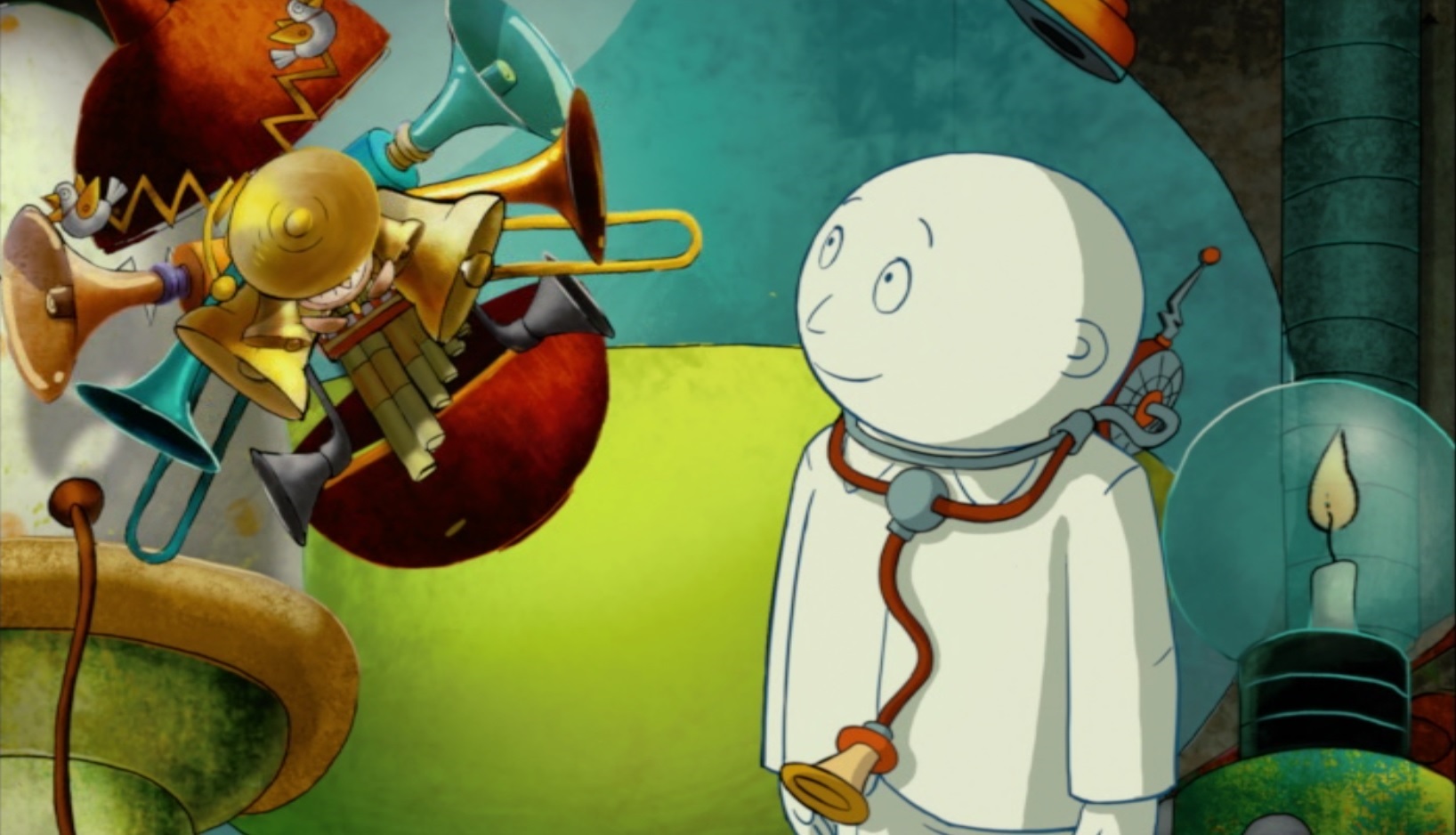
This feature film is much more elaborate than Ungerer’s original children’s book from 1966 (which Gene Deitch already turned into an animated short in 1981), but the character designs of the moon man and the children are very faithful to Ungerer’s artwork. Even better, Ungerer himself appears as the narrator of the tale (although his voice over is hardly used in the film). The adult characters, however, are more removed from Ungerer’s style, as is the extraordinarily colorful background art, which has a trace of surrealism to it. The looks of the film are on the verge of independent animation, but remain friendly and inviting nonetheless.
The story tells about the moon man, who occupies the complete sphere of the moon, and who is bored to death inside this cramped space. One day he grabs the tail of a fiery comet and descends to earth, hoping for some excitement. The shots of the moon man discovering animals and plants are particularly delightful. Earth, meanwhile, has apparently been occupied by a rather fascist looking regime (a great take is that its flag features a flag). The world president mourns he has conquered the complete world, and has nothing left to conquer, until some lady suggests to conquer the moon. Apparently, in this parallel universe space travel has not been invented, yet, while for example cell phones have.
The world depicted thus is not entirely ours, and this adds to the atmosphere of surrealism, as do several odd side gags that enter the screen and which are completely unrelated to the story. This type of throwaway gags are reminiscent of ‘La planète sauvage’ (Fantastic Planet) from 1973, and indeed, ‘Der Mondmann’ has something in common with that strange film, even if it is much friendlier, and less bizarre. These gags keep the adult audience awake in a film that is otherwise clearly directed to children. There’s also a running gag of a military officer who keeps saying “höchst bedauerlich”(most regrettable) as answers to the president’s complaints.
Anyway, both the Moon Man and the president turn to an inventor called Bunsen van der Dunkel to bring them to the moon. The moon man all too quickly discovers that Earth is not an entirely welcome place, and he discovers his role in the lives of children, who cannot sleep without him watching over them. The central theme of the film is what it means to be friends, something both Bunsen van der Dunkel and the Moon Man discover during the film.
‘Der Mondmann’ is well-told, focusing on only a handful characters, but it is also one of those delightful non-American feature animation films completely throwing American story rules overboard. For example, the film stars a father and his daughter travelling inside an American 1950s cabriolet. The two return several times during the film, but are only marginally involved in the plot. Despite being a children’s film there’s also a clear suggestion of a sex scene. The music choice, too, is pretty idiosyncratic, with important roles for the songs ‘Moon River’ sung by Louis Armstrong and ‘In-A-Gadda-Da-Vida’ by Iron Butterfly.
In all, ‘Der Mondmann’ is arguably the greatest animated feature film to come from Germany in the 2010s and well worth a watch, especially because it is available with English subtitles.
‘Der Mondmann’ is available on Blu-Ray and DVD
Director: Earl Hurd
Release Date: August 26, 1922
Stars: Bobby Bumps & Fido
Rating: ★★★★½
Review:

Earl Hurd left Paramount for Educational Pictures, and with this move his style changed from pure cartooning to a very inventive and entertaining blend of live action and animation, starring his own little son as a live action director directing the cartoon stars Bobby and Fido.
‘Fresh Fish’ is a perfect example. The opening title card is already promising, reading “Bobby Bumps Film co. Feetures & Comydies. No admitence. Aplie at Offis.” Inside, we watch Hurd jr. filming Bobby and Fido, who are on a fishing boat. First the cartoon concentrates on the cartoon gags, e.g. with Fido pitying the poor fish, before the fish tantalizes the poor dog. This sequence ends when a live action cat catches the fish and runs away with it.
But then Bobby accidentally stands on the water, a fact Hurd jr. has to point out to him. At this point Bobby falls into the water after all. The idea that gravity only works when one is aware it should work is of course a familiar cartoon trope, but this is the oldest instance of this gag type I know of.
After the fall, Bobby blames the poor scenery, which, indeed, hardly indicates the presence of water. Thus, the young director places the scenery in a tub. At first Bobby and Fido are very pleased with the added realism, but they almost drown in it.
This cartoon features quite some very effective special effects, making us easily believe the cartoon Bobby and Fido are in the same room as the cat and the director. Especially the water splashing when Bobby and Fido jump into the tub is very convincing. The result is no less than delightful, and ‘Fresh Fish’ should be regarded as one of the highlights from the silent cartoon era.
‘Fresh Fish’ is available on the Blu-Ray/DVD-combo ‘Cartoon Roots: Bobby Bumps and Fido’
Director: Andreas Hykade
Release Date: 1995
Rating: ★★★½

‘Wir lebten im Gras’ is the first of three films in which German animator Andreas Hykade explores the loss of innocence, the other two being ‘Ring of Fire’ (2000) and ‘Der Kloane’ (The Runt, 2006).
The film is also the most cryptic of the three, full of images that are very difficult to decipher. The film is set in a rather mythical place, ‘two streets away from the end of the world’ and has a timeless and universal feel.
The story is told by a boy voice over, who reminisces about his father, who told him that “All women is whore and all men is soldier”. Outside the voice over there is no dialogue. The little boy tries to see the world through his father’s eyes, but this conflicts with his softer side, and he’d rather fall in love with the enigmatic ‘dandelion girl’.
The film is less straightforward than this synopsis suggests, however, and the film is more surreal and suggestive than narrative. For example, the boy’s adventures are interjected by nightmarish dream sequences, the meaning of which is never really explained. These dream sequences are rendered in an expressionistic pastel style, reminiscent of Lorenzo Mattotti’s art work. This style contrasts highly with the simple cel animation.
Hykade’s drawing style is highly original. His human designs are simple, almost stickman-like, but genitals are very prominent, and the father is drawn as a more robust, earthly character.
The animation is very virtuoso, with a great feel for timing. Moreover, Hykade uses a lot of changing perspective, and has an admirable command of movement.
‘Wir lebten im Gras’ was Hykade’s last student film, but it certainly is his first major work. With this film Hykade proved to be a strong new voice in the animation world, a fact he consoled with his masterpiece ‘Ring of Fire’ from 2000.
Watch ‘Wir lebten im Gras’ yourself and tell me what you think:
‘Wir lebten im Gras’ is available on the DVD ‘Desire & Sexuality – Animating the Unconscious Vol. 2’
Director: Wallace Carlson
Release Date: January 9, 1919
Stars: Us Fellers
Rating: ★★★
 Wallace Carlson (1894-1967) was a comic strip artist, who had a brief career as an animator from 1914 to 1921. Carlson joined the Bray studio in 1917, for which he created the ‘Us Fellers’ series. The series stars a boy character called Dreamy Dud, whom Carlson had conceived earlier.
Dud is a boy who breaks his bank (and unfortunately the one coin therein) to buy his girlfriend Mamie some ice cream. But instead he’s punished and sent to bed without supper. At night Dud sneaks out and first imagines how his mother gets filled with remorse, while he finds a treasure. But then the figments of his imagination turn into scary monsters, and he runs home, only to get spanked.
‘Dud Leaves Home’ is a well-told film, with great attention to the child’s world and imagination. The night scenes show some pretty background art. The animation, on the other hand, is rather stiff and robotic, especially when compared to Earl Hurd’s or Raoul Barré’s animation from the same era.
Carlson left animation in 1921 to concentrate on comic strips again, creating the highly successful comic strip series ‘The Nebbs’ in 1923.
Watch ‘Dud Leaves Home’ yourself and tell me what you think:
‘Dud Leaves Home’ is available on the DVD ‘Before Walt’
Director: Earl Hurd
Release Date: November 20, 1918
Stars: Bobby Bumps
Rating: ★★★★
 In ‘Before and After’ Bobby Bumps tricks his father into buying a hair restoring lotion, with the help of his pooch Fido and two other dogs.
Bobby spends his father’s dollar on ice cream, but gets spanked in the end by father’s scalp massage machine.
This is a charming short cartoon, full of elegant designs and fine animation, even if it remains as stiff and repetitive as that of contemporary cartoons. But at least the poses look lifelike.
‘Before and After’ is available on the DVD ‘Before Walt’


 Dr. Grob's Animation Review